A hike through the Saura & Tamshaly Canyons and a visit to the Taras Shevchenko museum.
Mangystau, kazakhstan chapter two: Day 2Asia texts me to tell me they’ll pick me up from the hotel at 0900.
I get up early, shower, and pack. I’m in the lobby by 0845. Somehow, I manage to miss their arrival and wander about the parking lot until she finds me. I’m actually a little surprised to discover my guide is a woman. She leads me to the jeep and introduces me to her husband, Rustam. He’s usually the driver and guide, but she’s decided to tag along for the ride on this one. She’s an accountant and works remotely. Their two older children are teenagers and their ten-year-old is with their grandmother.
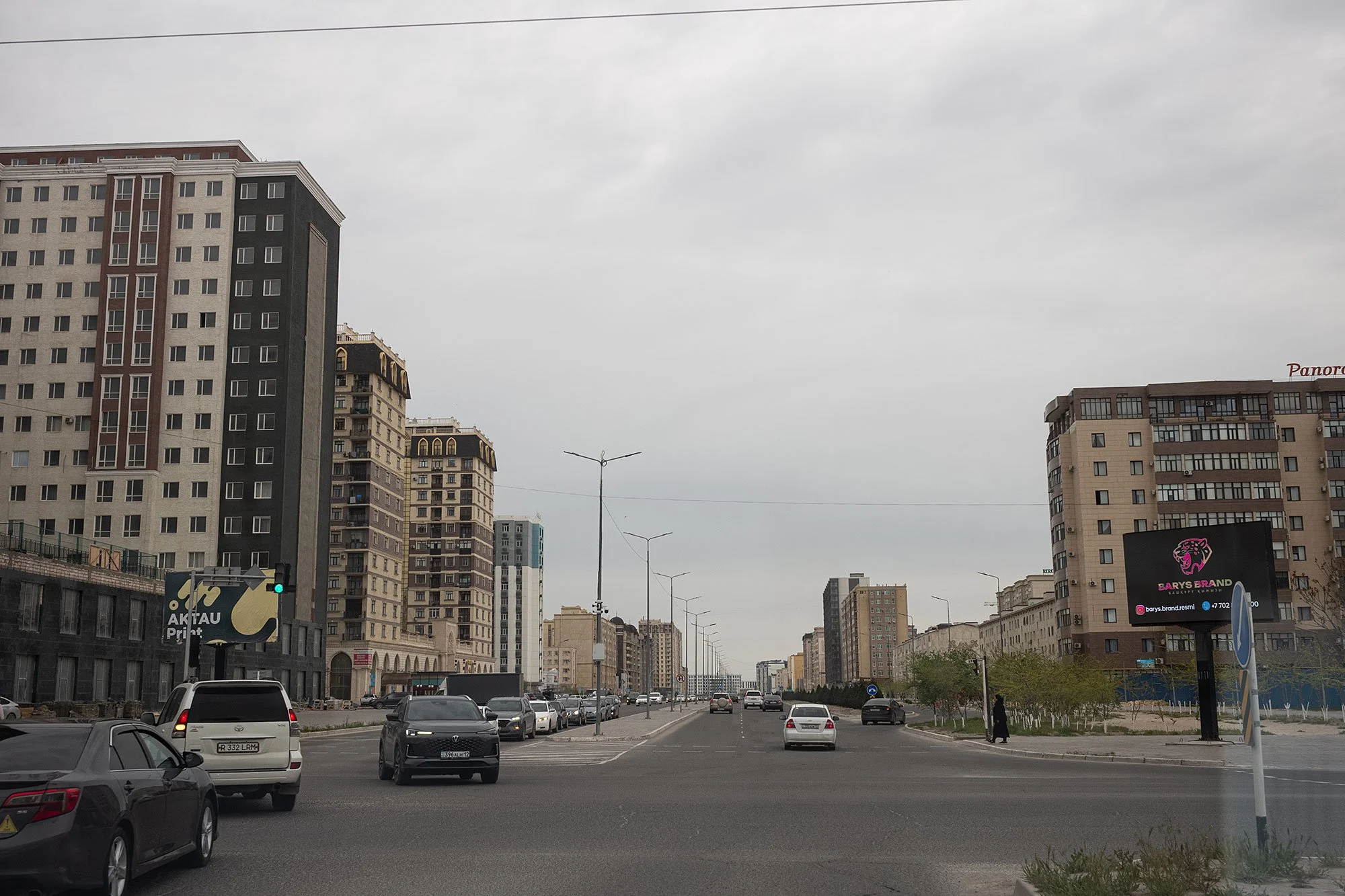
We drive out of the old town and into the new, passing wide avenues lined with blocks of new and newer apartment buildings. In some ways it reminds me of where I lived when in Muscat.
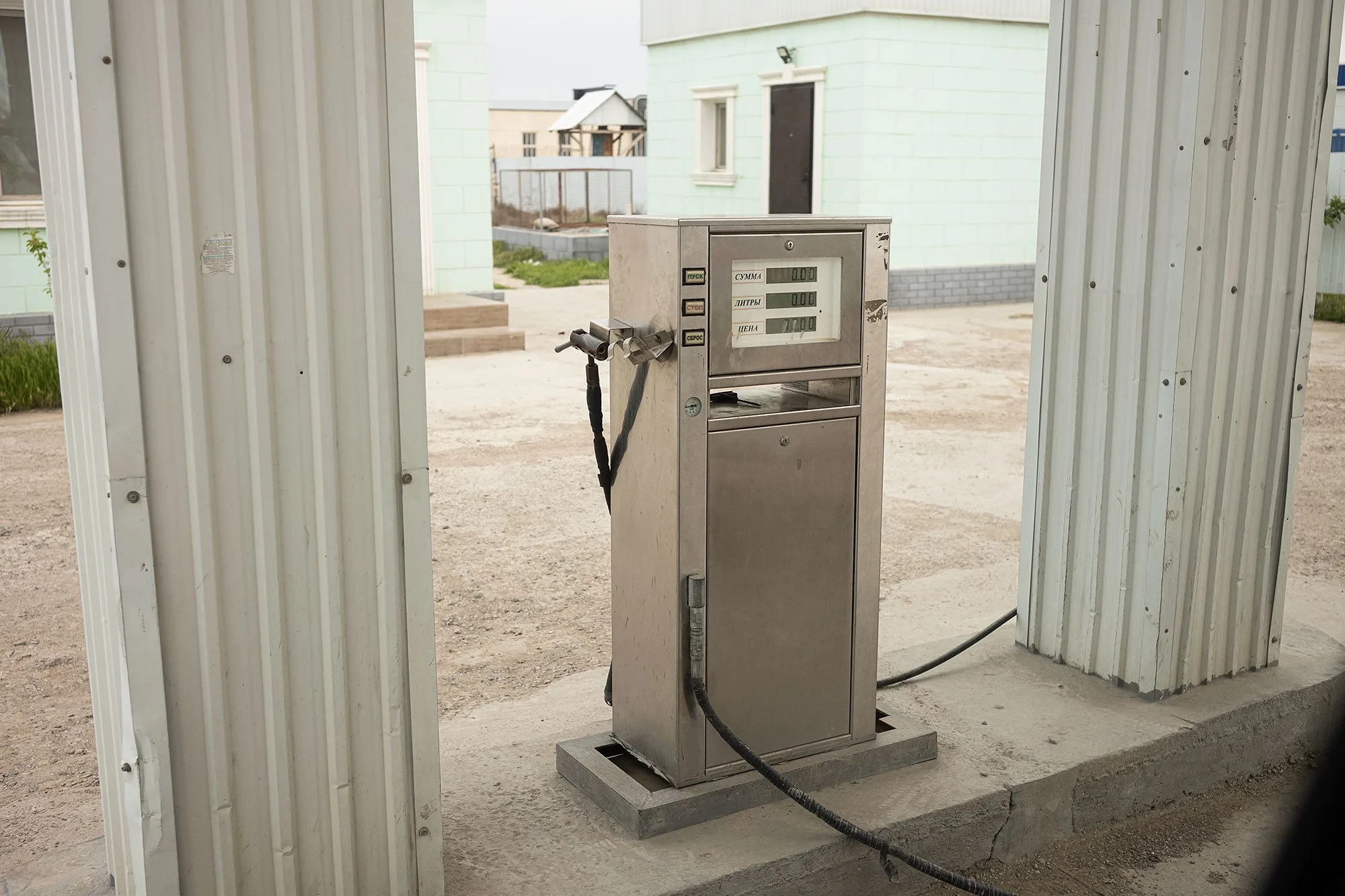
We stop for gas near the outskirts of town and I ask Asia how she met Rustum. She tells me they met at work. She was running and industrial training center and he was one of her employees. They’ve known each other for ten years. Rustam laughingly tells me he’s her slave. He pulls up a photo of the poster for Django Unchained. He points to the titular character. It’s me, he says. My wife boss.
As we drive I tell them how I appreciate that everyone seems to stop for pedestrians. It’s expected, they say. It’s not like that in New York? Nope. Rustam laughs.
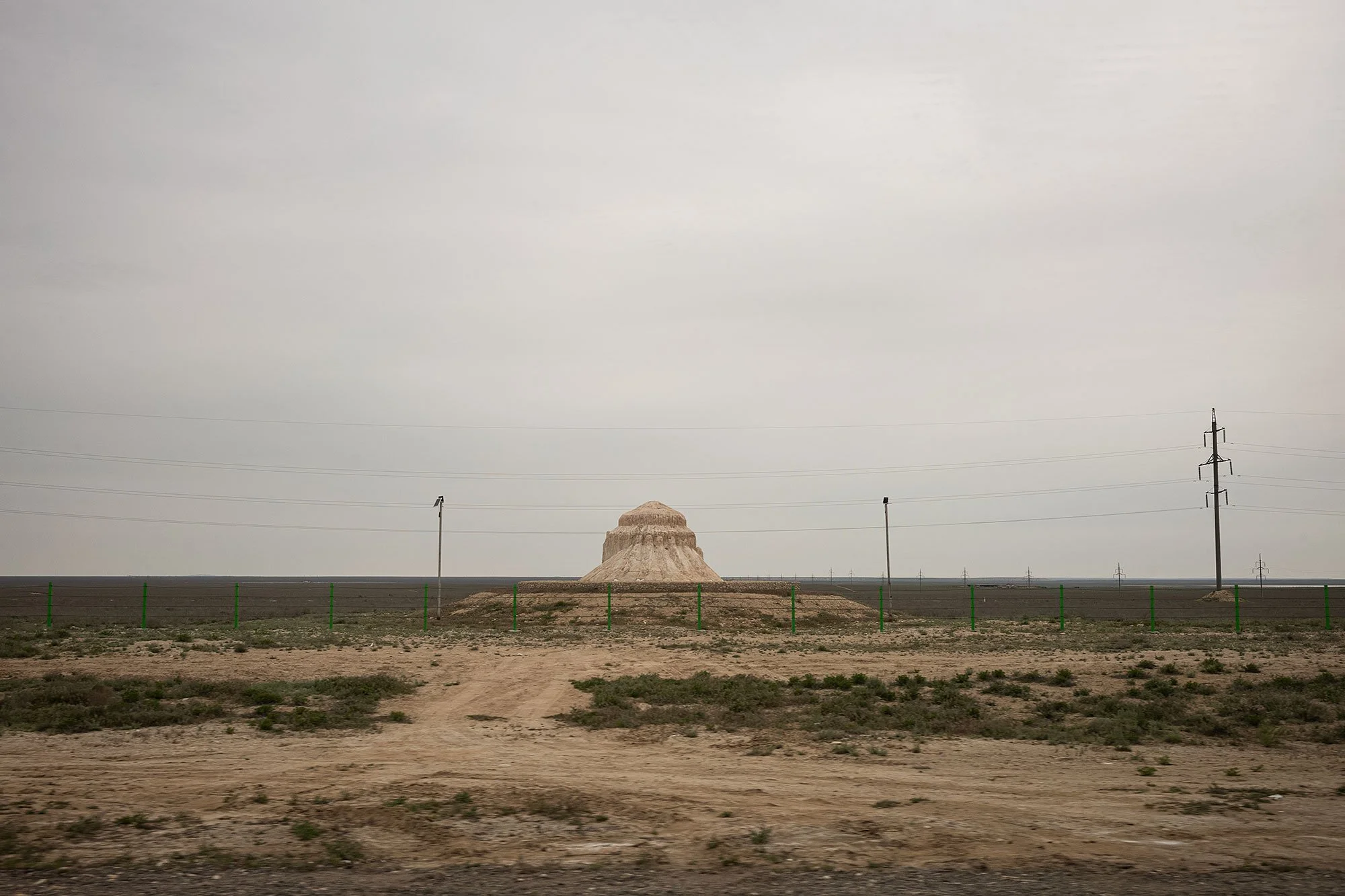
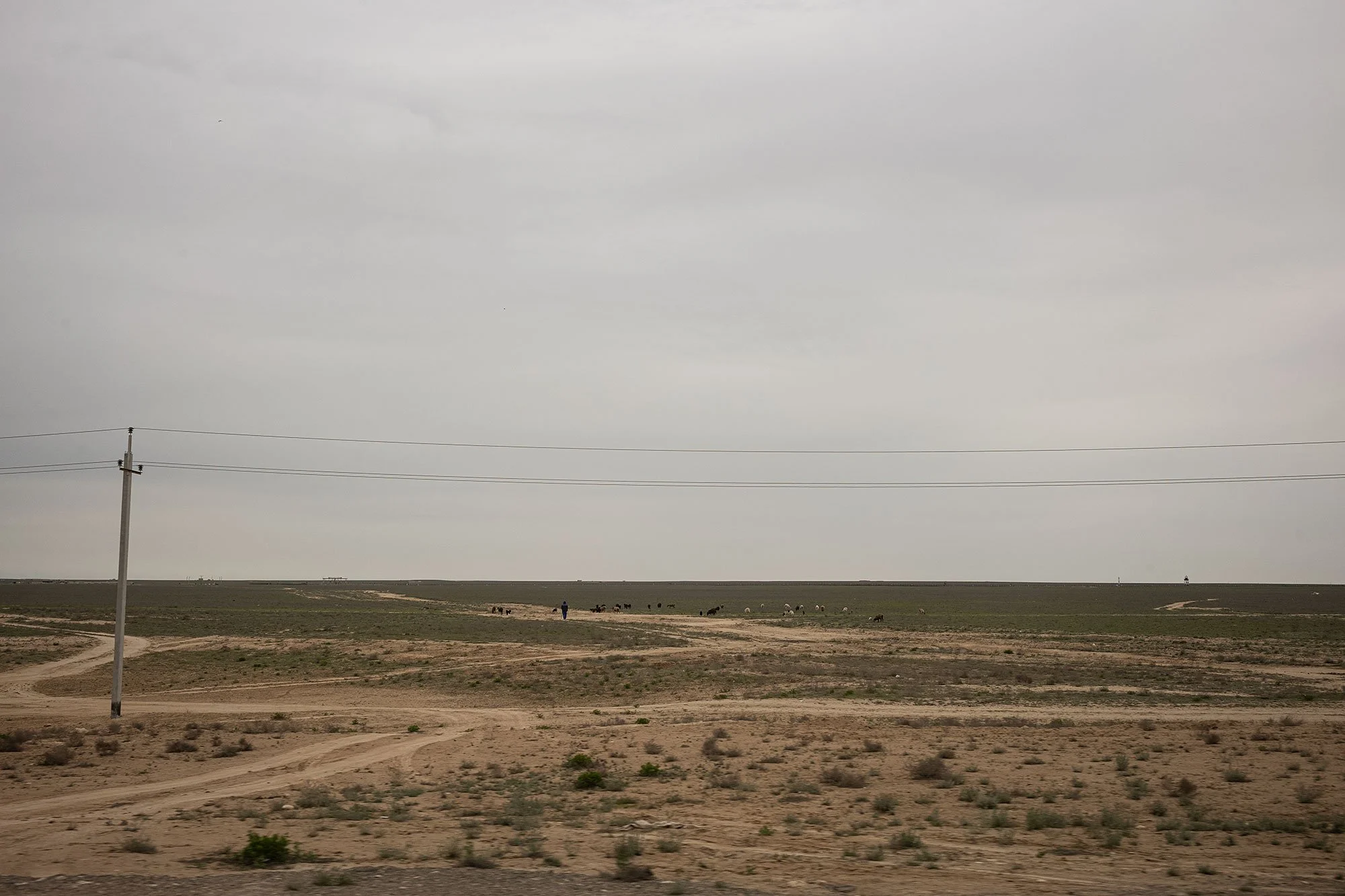
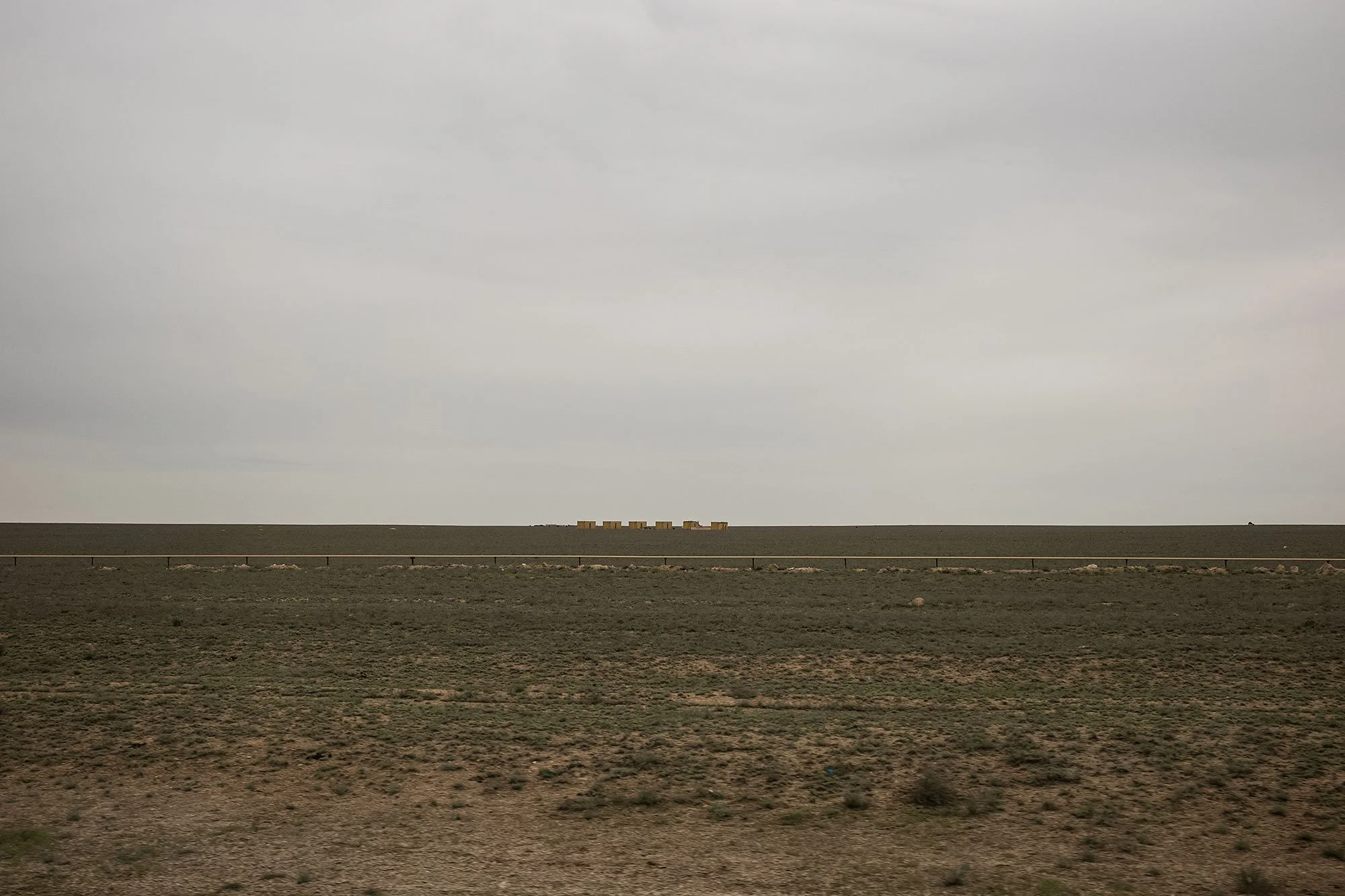
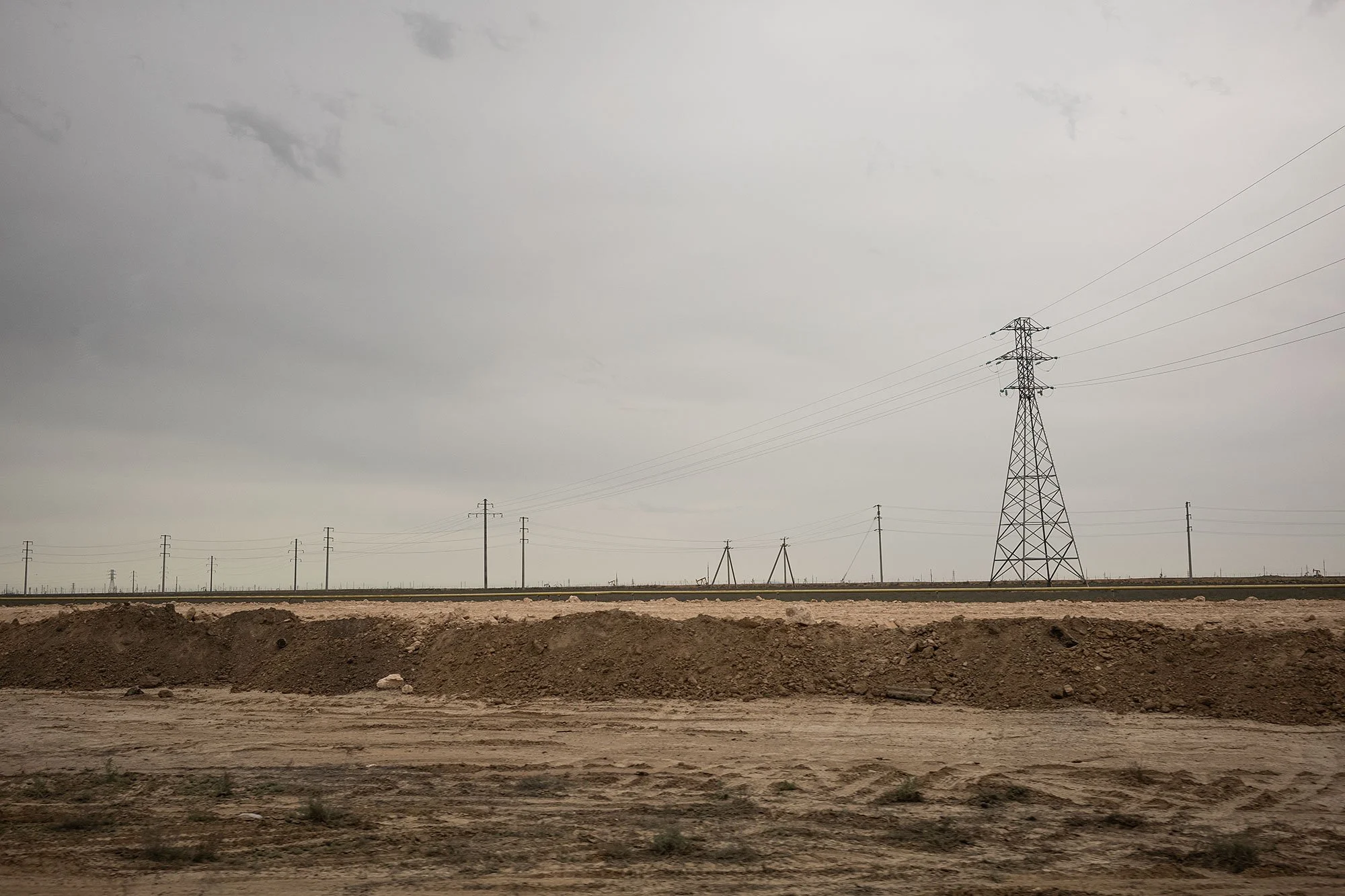
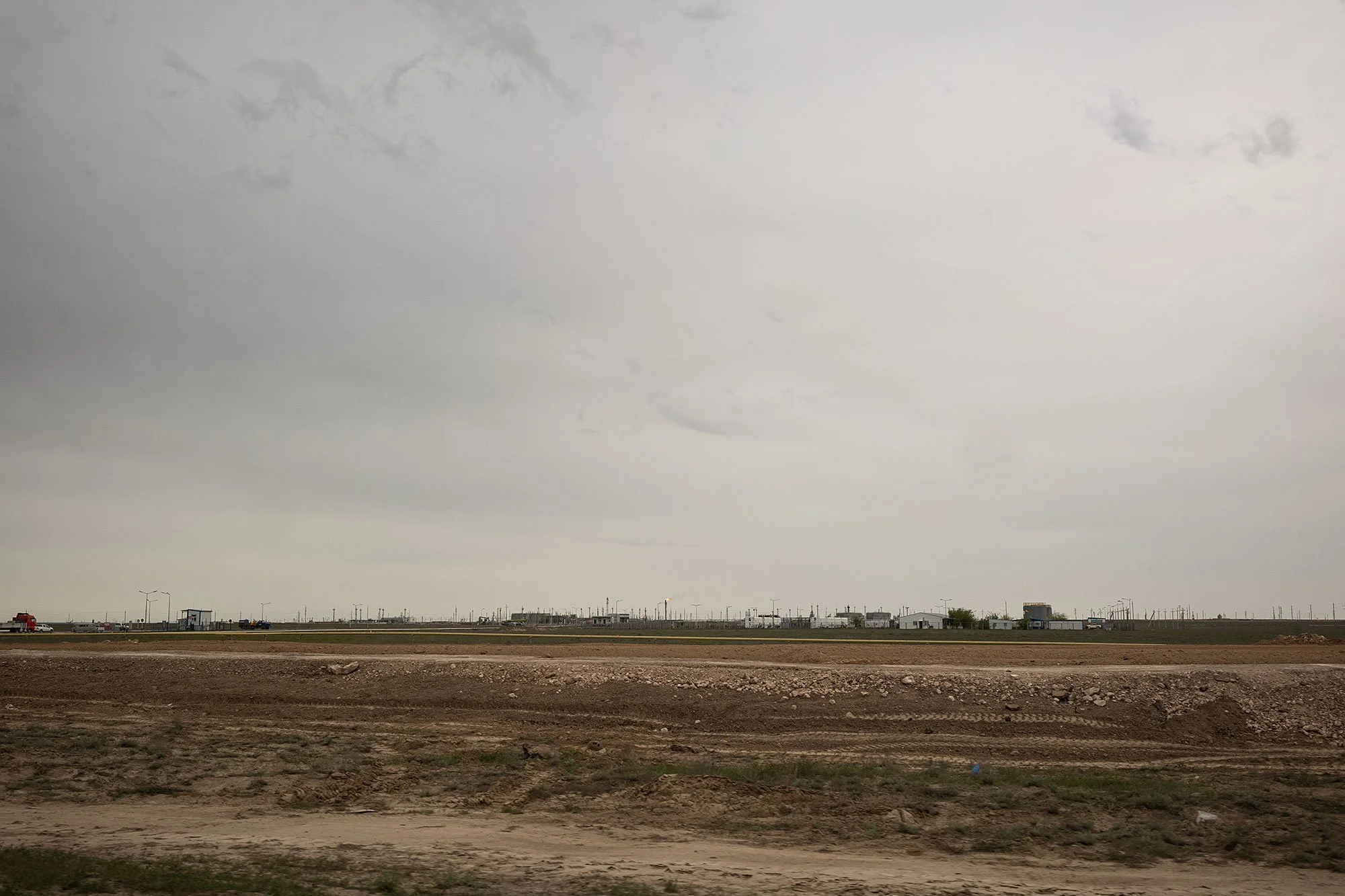
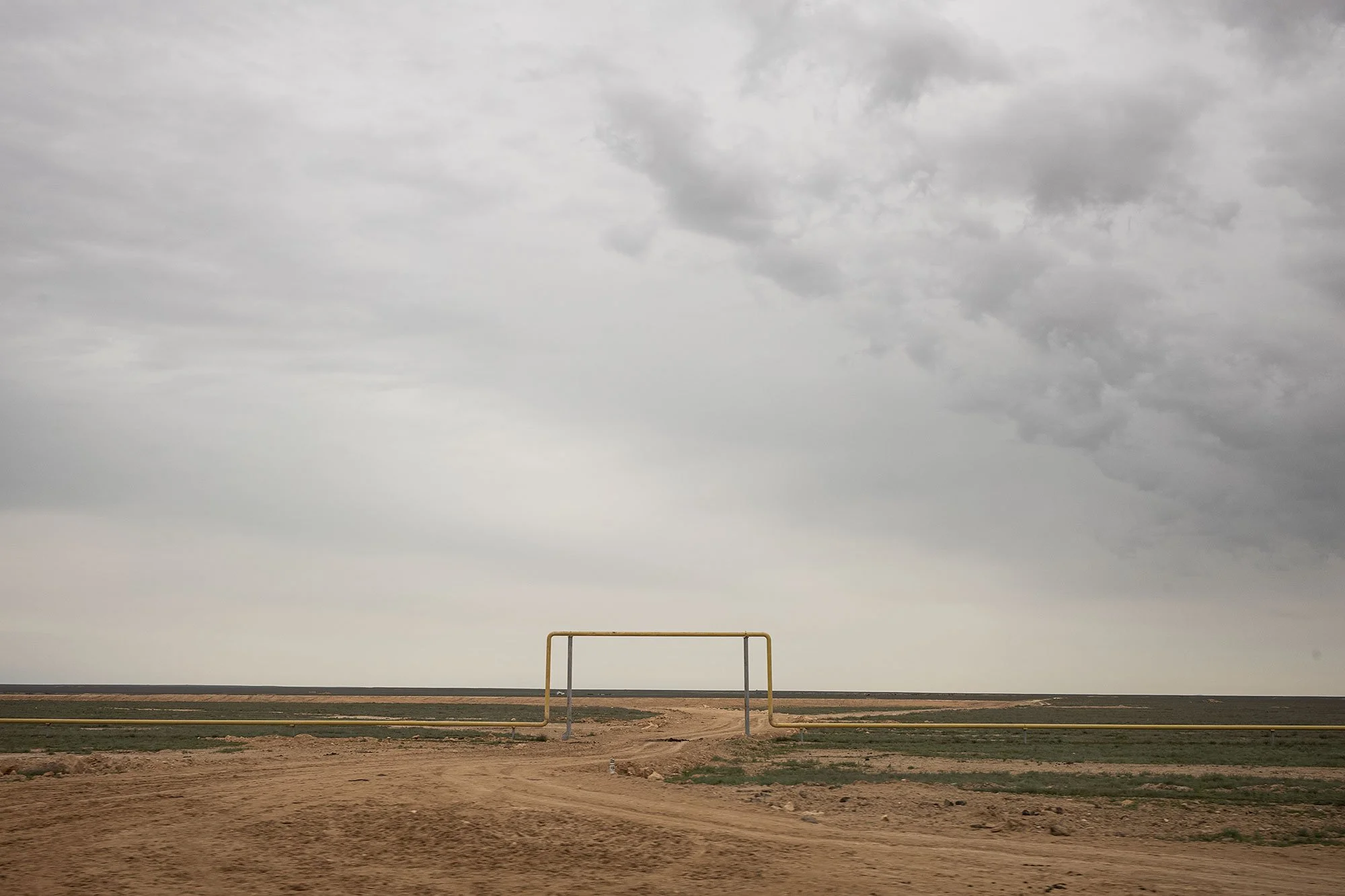
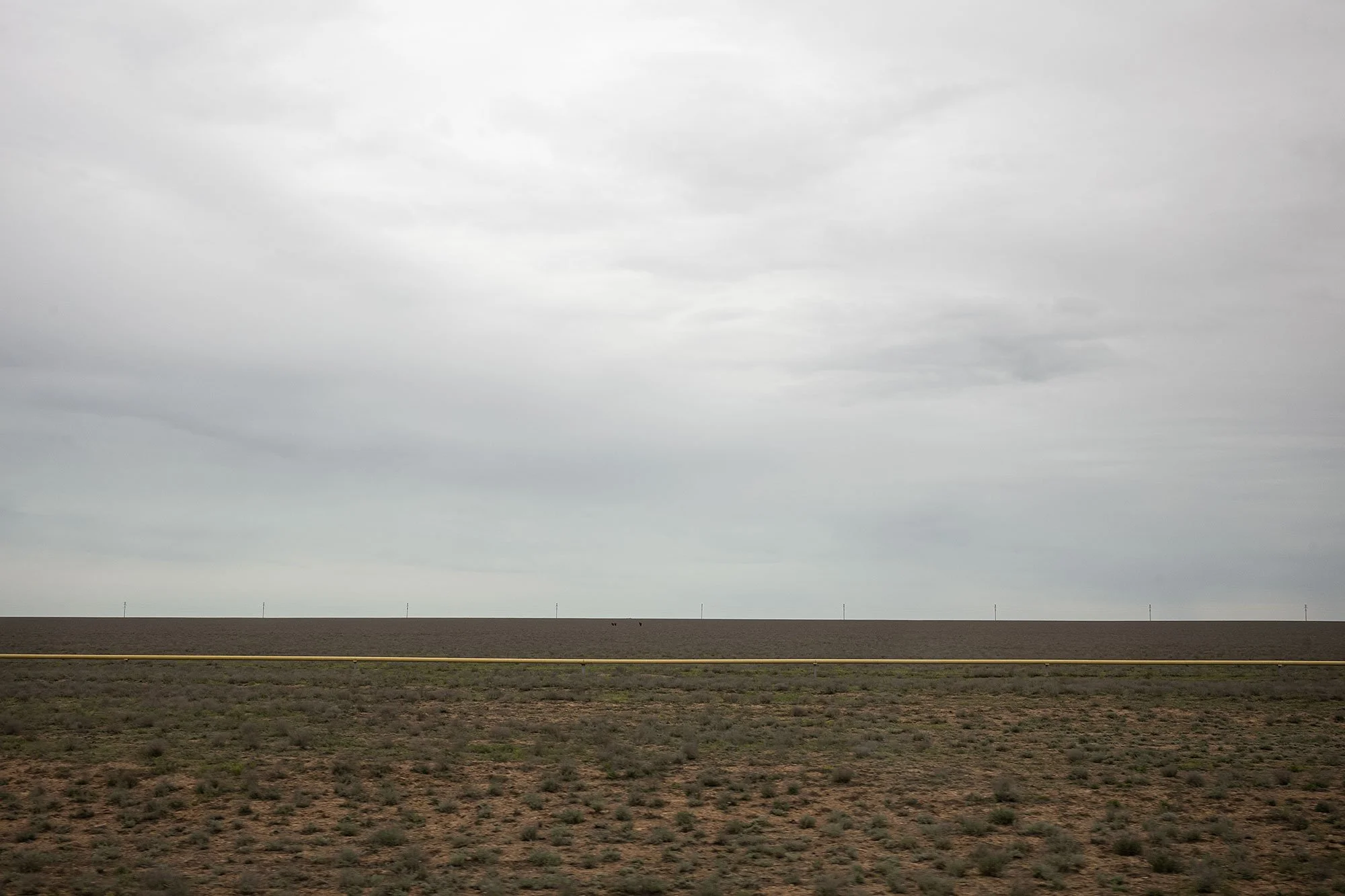
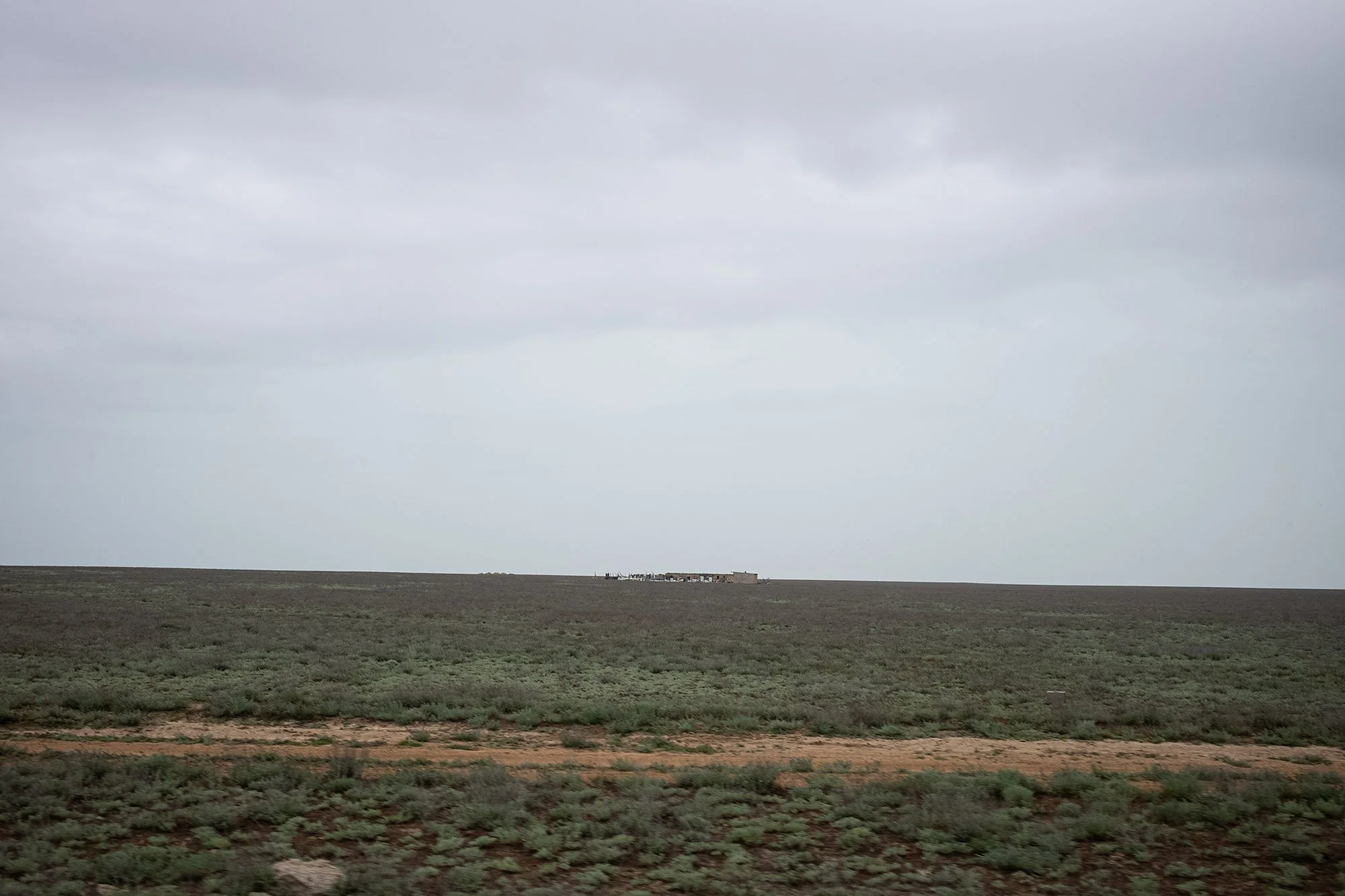
We drive out of the city and into the steppe. It’s a flat landscape; the road follows a natural gas pipeilne painted yellow. Asia speaks some English, but relies on a translator device. She tells me she understands everything I say, but it’s sometimes difficult to come up with the words in response. Rustum speaks less English, but makes up for it with a generous sense of humor and short asides.
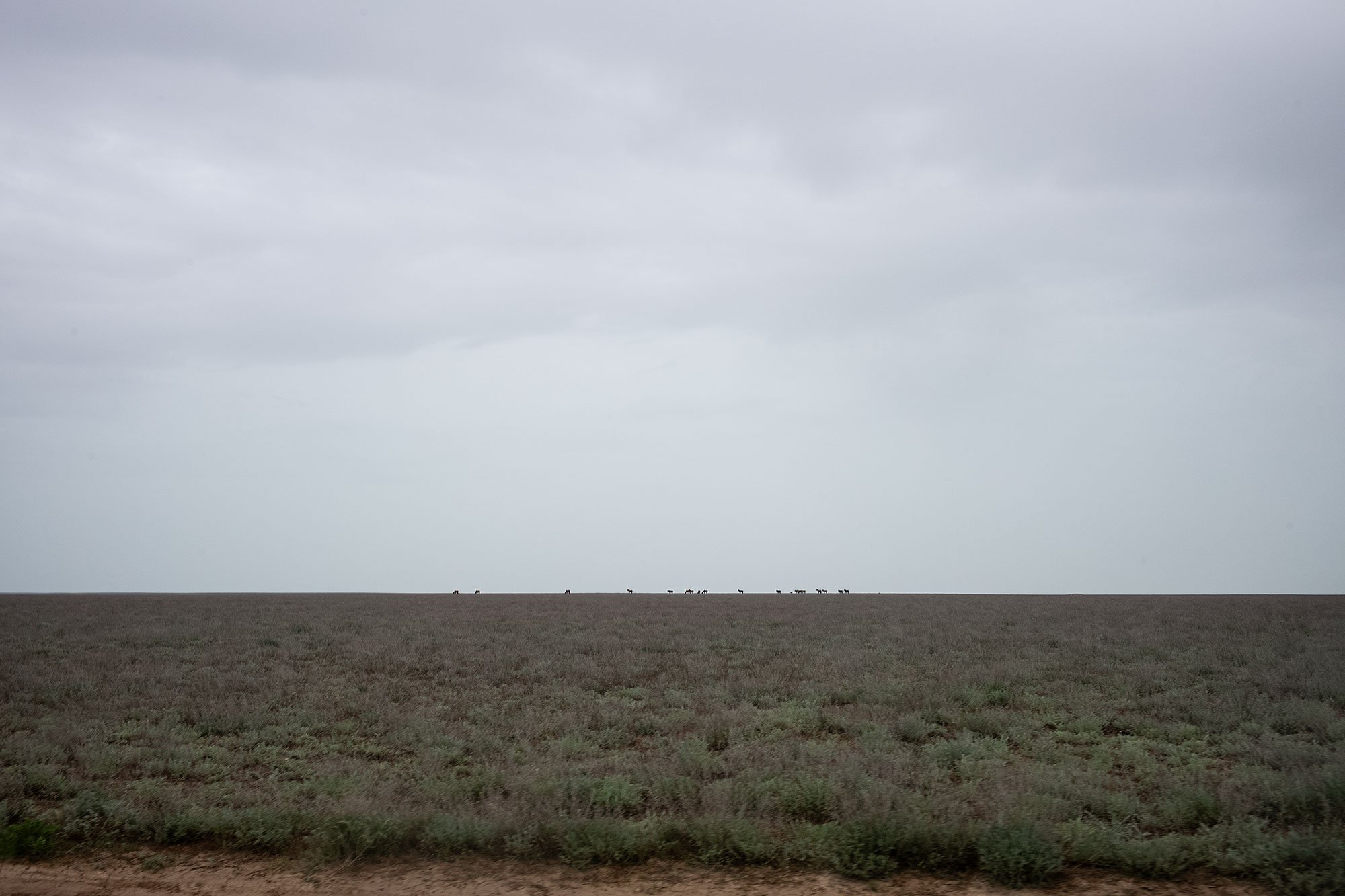
We drive past camel and horse and sheep farms. Asia is from Turkmenistan, born to a Kazakh father and Russian mother. She tells me they don’t eat horses there. They’re a symbol of the country and highly respected and prized.
They work as freelance guides and Asia tells me that they’re trying to get the tourism board in Aktau to better vet guides. She, along with other guides, wants to ensure that only guides with experience are taking people out onto the steppe. She tells me that the weather can change in an instant and guides need to know not only how to deal with the weather but also understand the roads and how to safely traverse them. She tells me Rustam has had to rescue people on many occasions, pulling their vehicles stuck in the muddy roads.
A tartar song plays on the radio and I pull out my phone to Shazam it. Rustam presses a button to show me the name of the track. Rakmet, I say. You say Rakmet? It’s Rustam confirming what his ears have heard. You know Kazakh?! One or two words. He laughs.
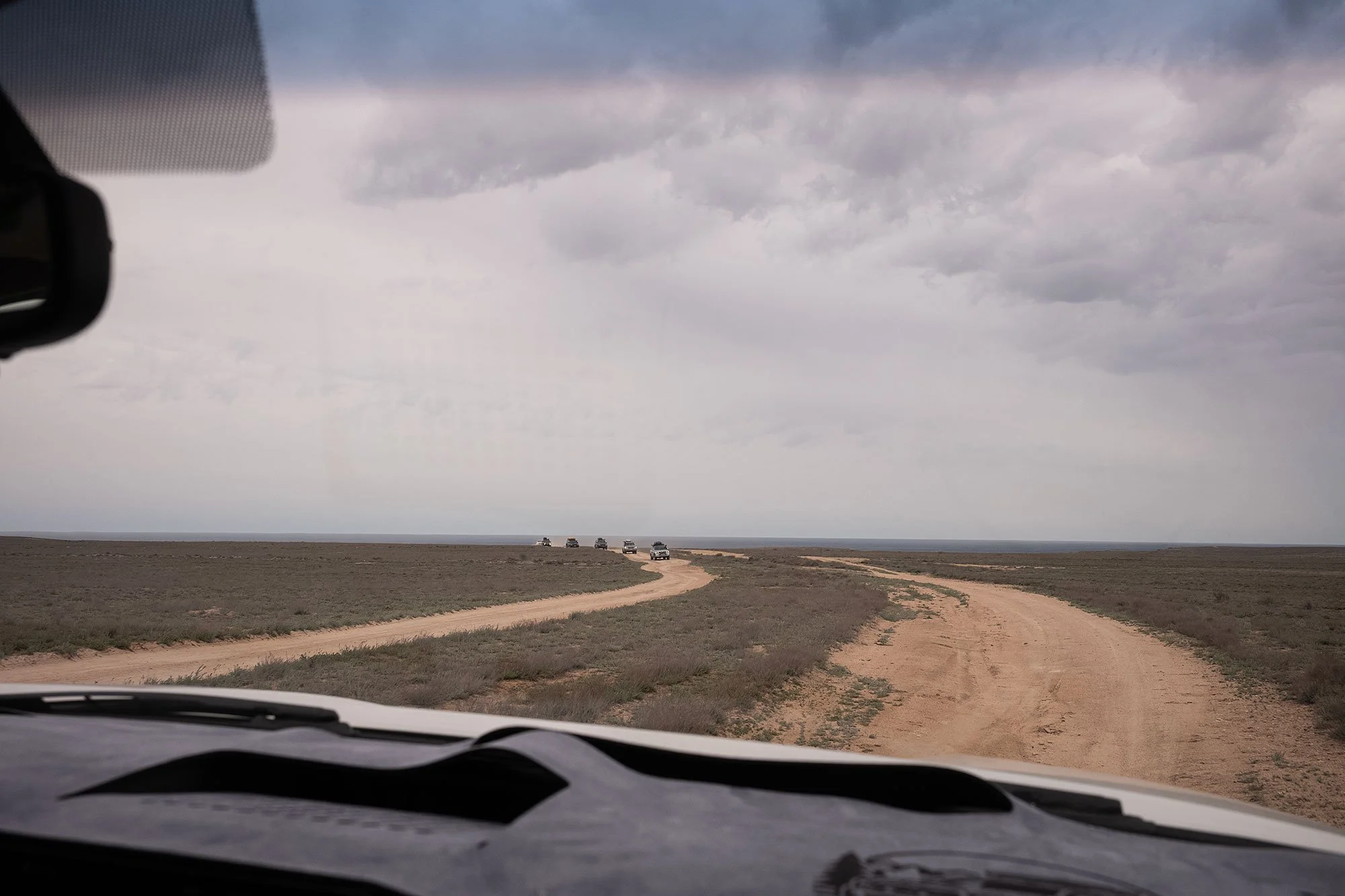
The road becomes more rough as we drive further away from the city, but only just. And this is in comparison to how pristine the roads have been thus far. We continue to drive and I see my first camel grazing in the distance. I hadn’t expected to see camels, but I’ll see many as the week goes on.
Suddenly we slow and turn onto a dirt road. There’s no signs and I wonder how he knows where to go. We drive towards the coast and along the way a convoy of vehicles pass on the other track. Rustum honks and waves and they wave back at us. It’s his uncle and a group of fellow guides and their guests coming back from the beach.
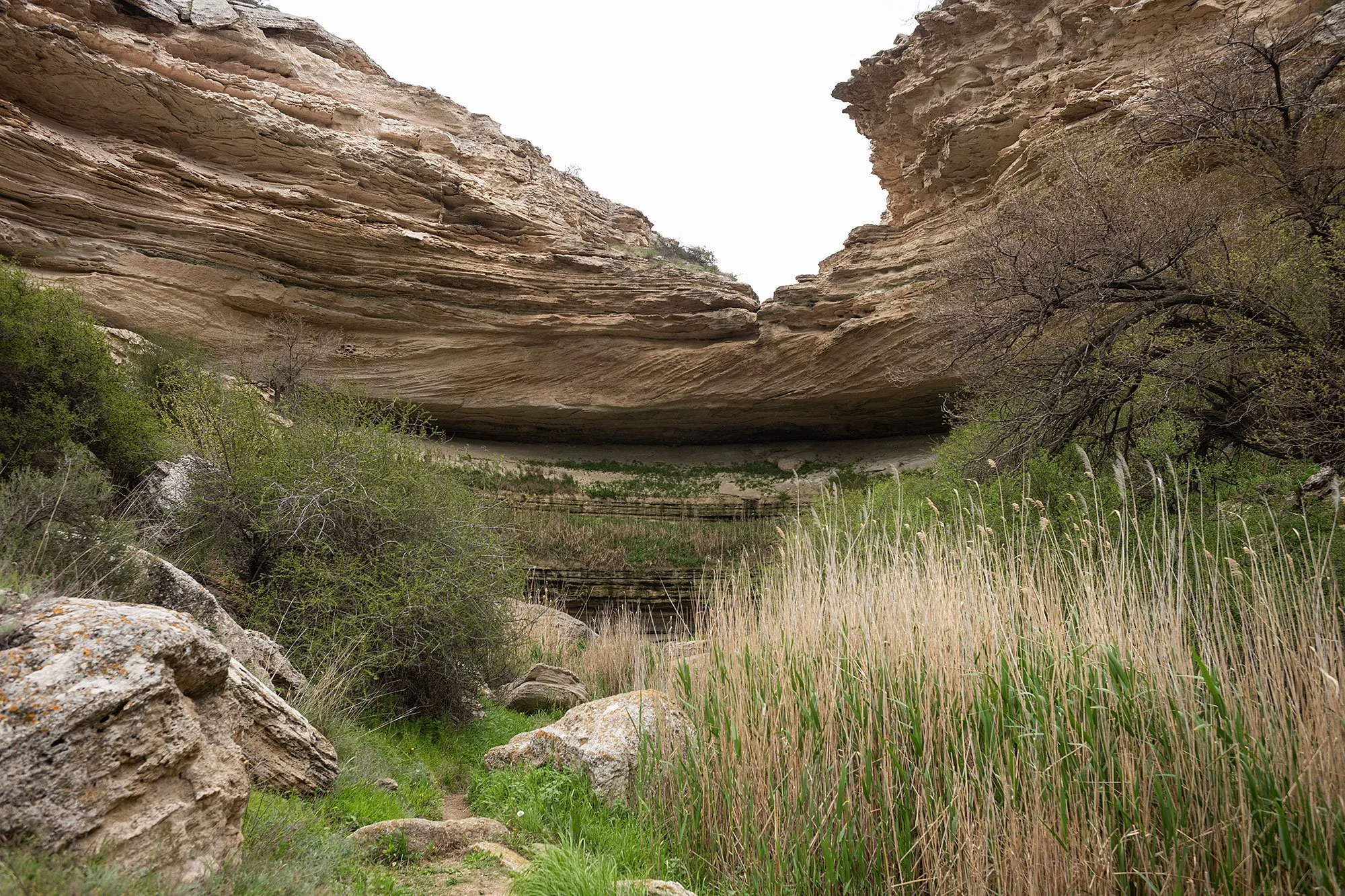
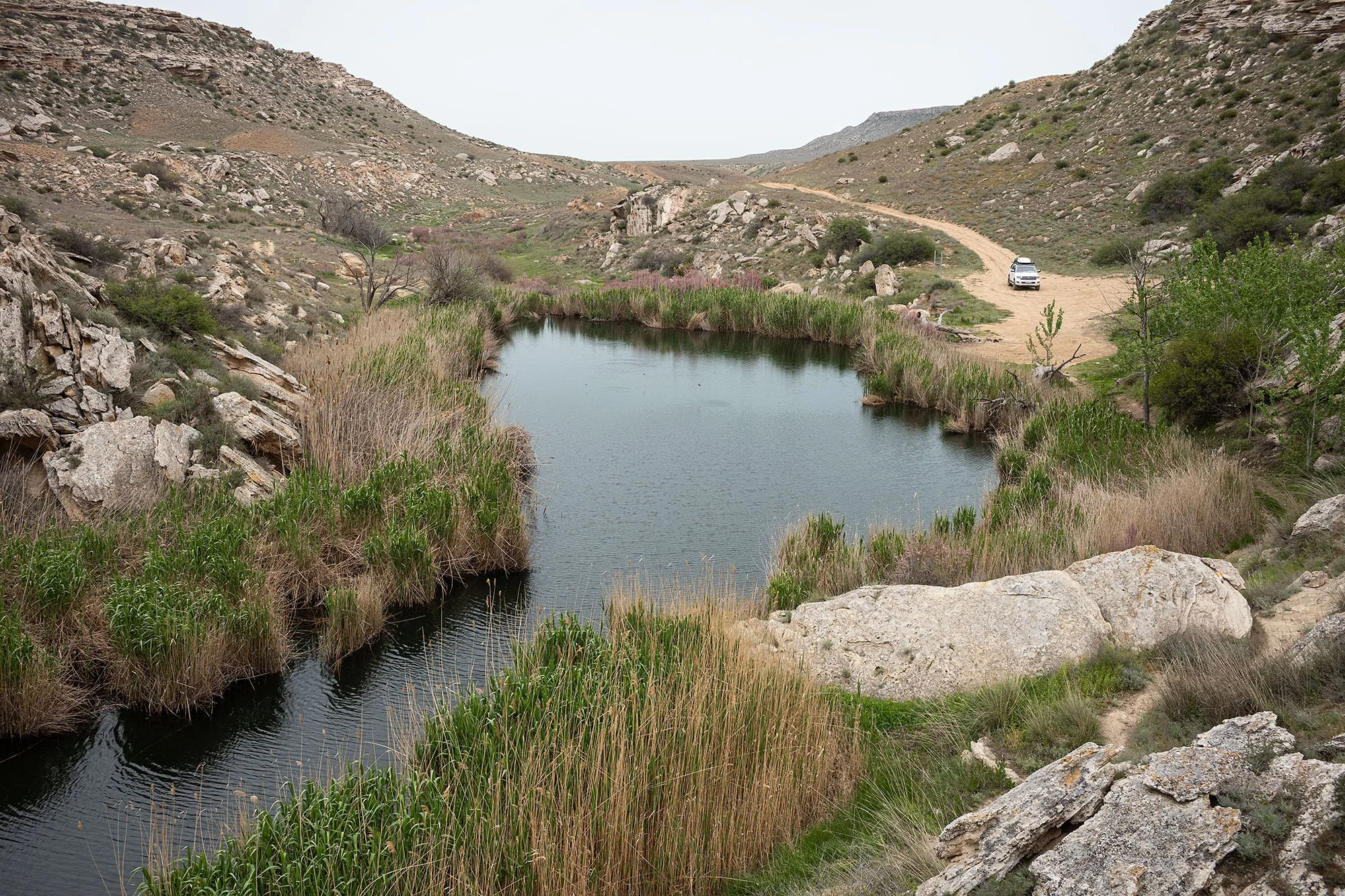
We soon arrive at our first destination, a small lake set in a box canyon. Rustam tells me it’s called Saura Lake. We walk to the edge of the canyon and peer down at the water, which might be better classified as a pond. He tells me large turtles make the pond their home but we can’t see any from our vantage point. He tells me that it’s more difficult in overcast weather. At least when the sun is shining down you can see past the surface of the water.
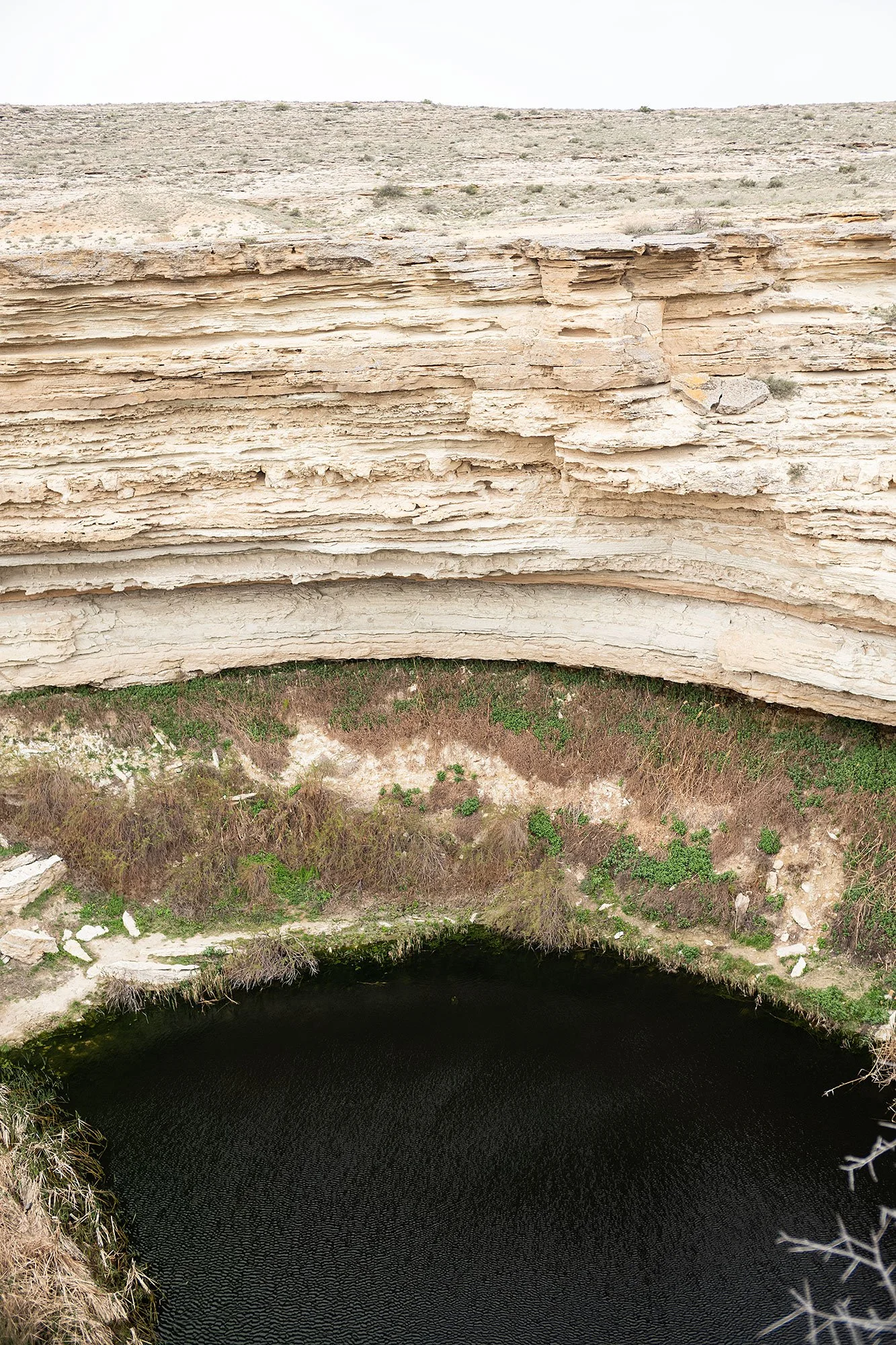
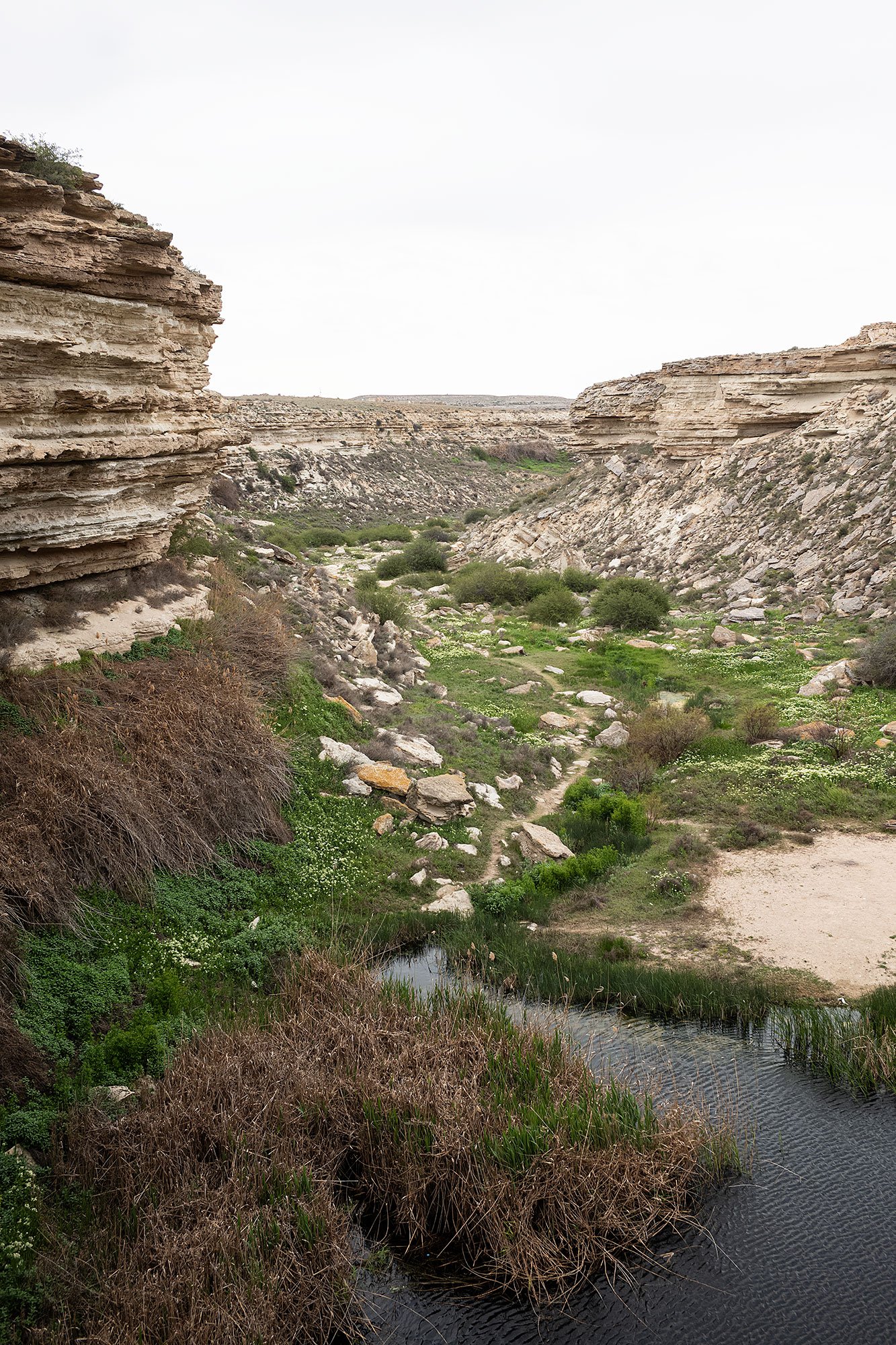
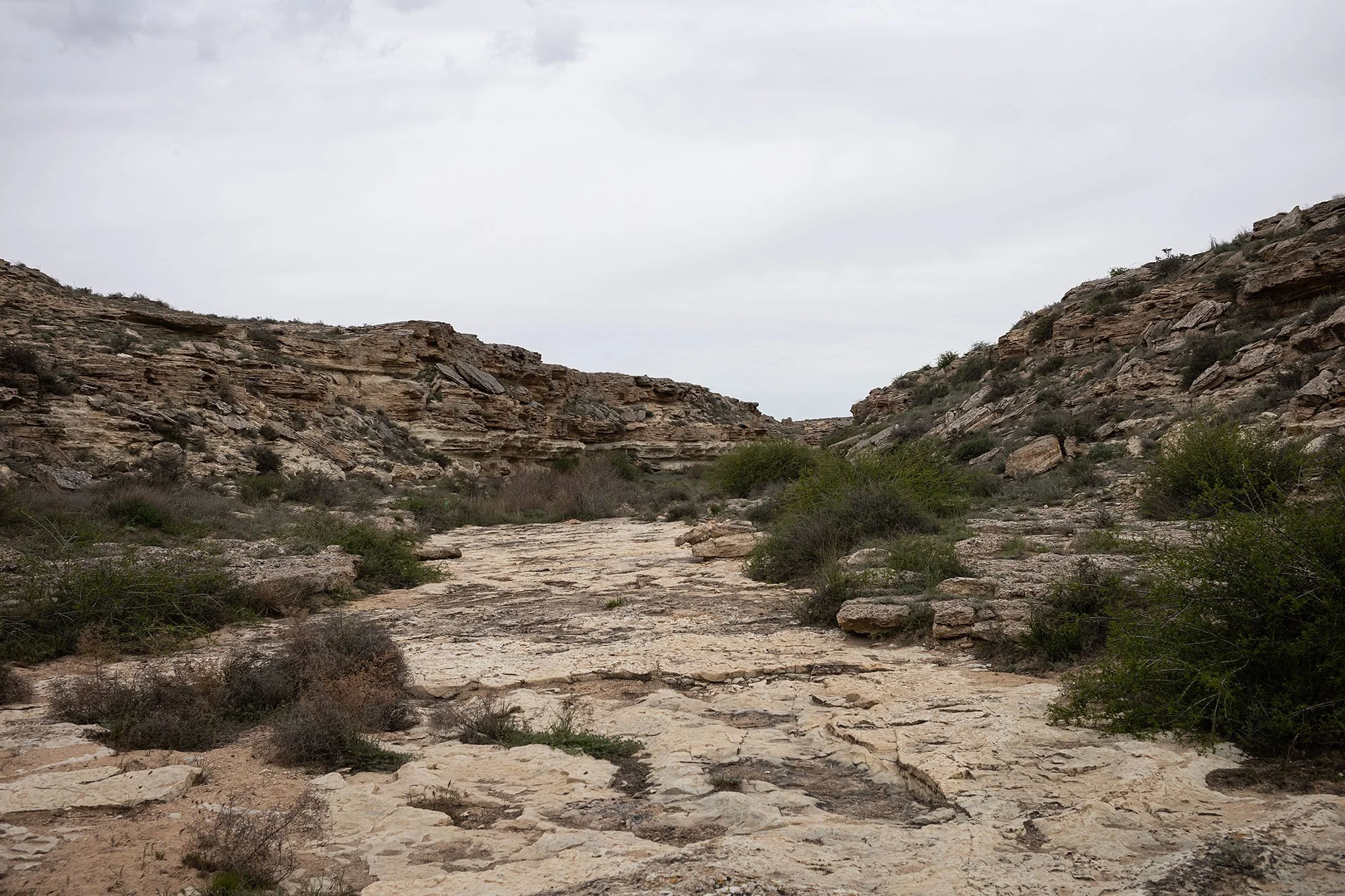
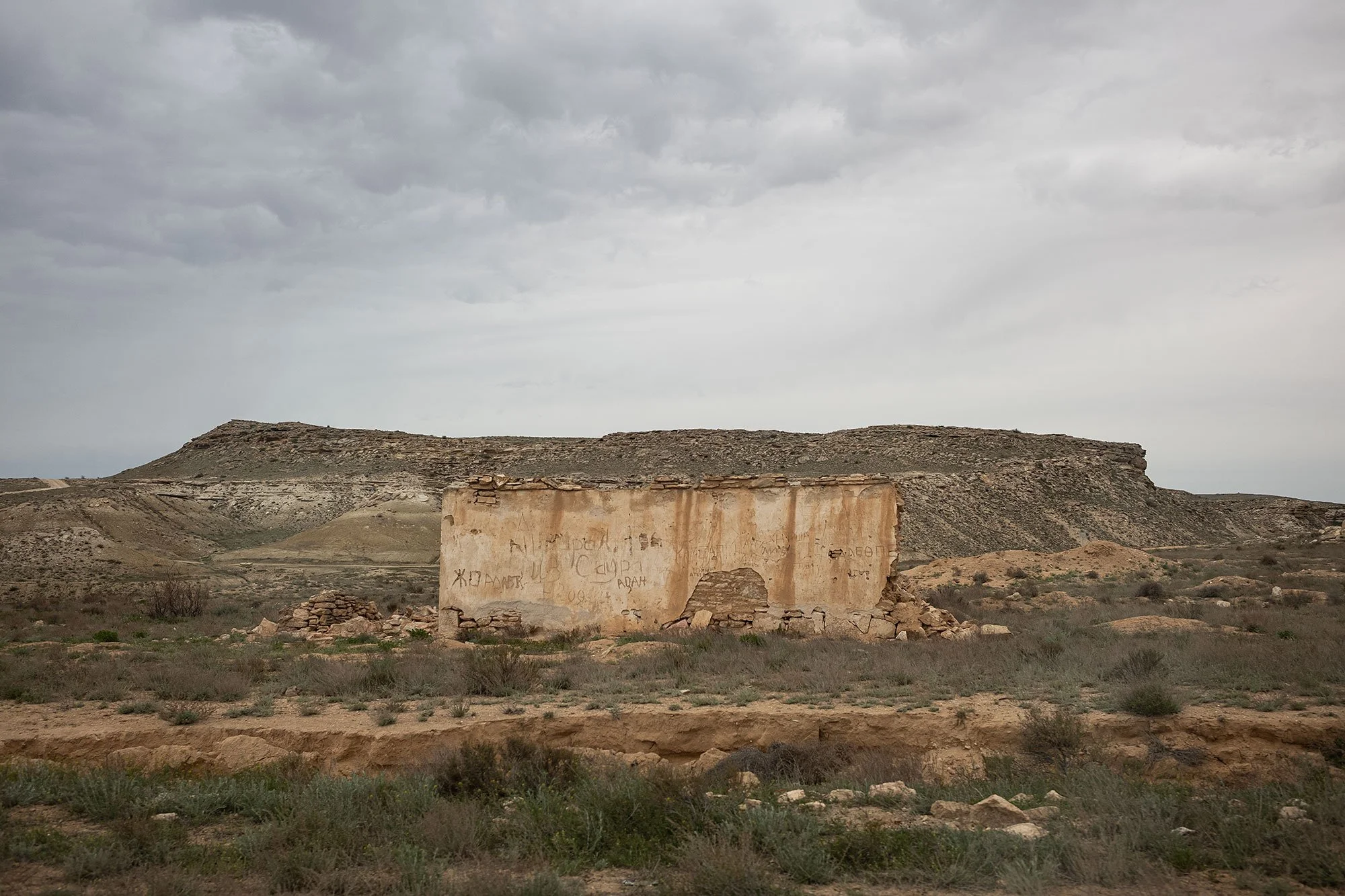
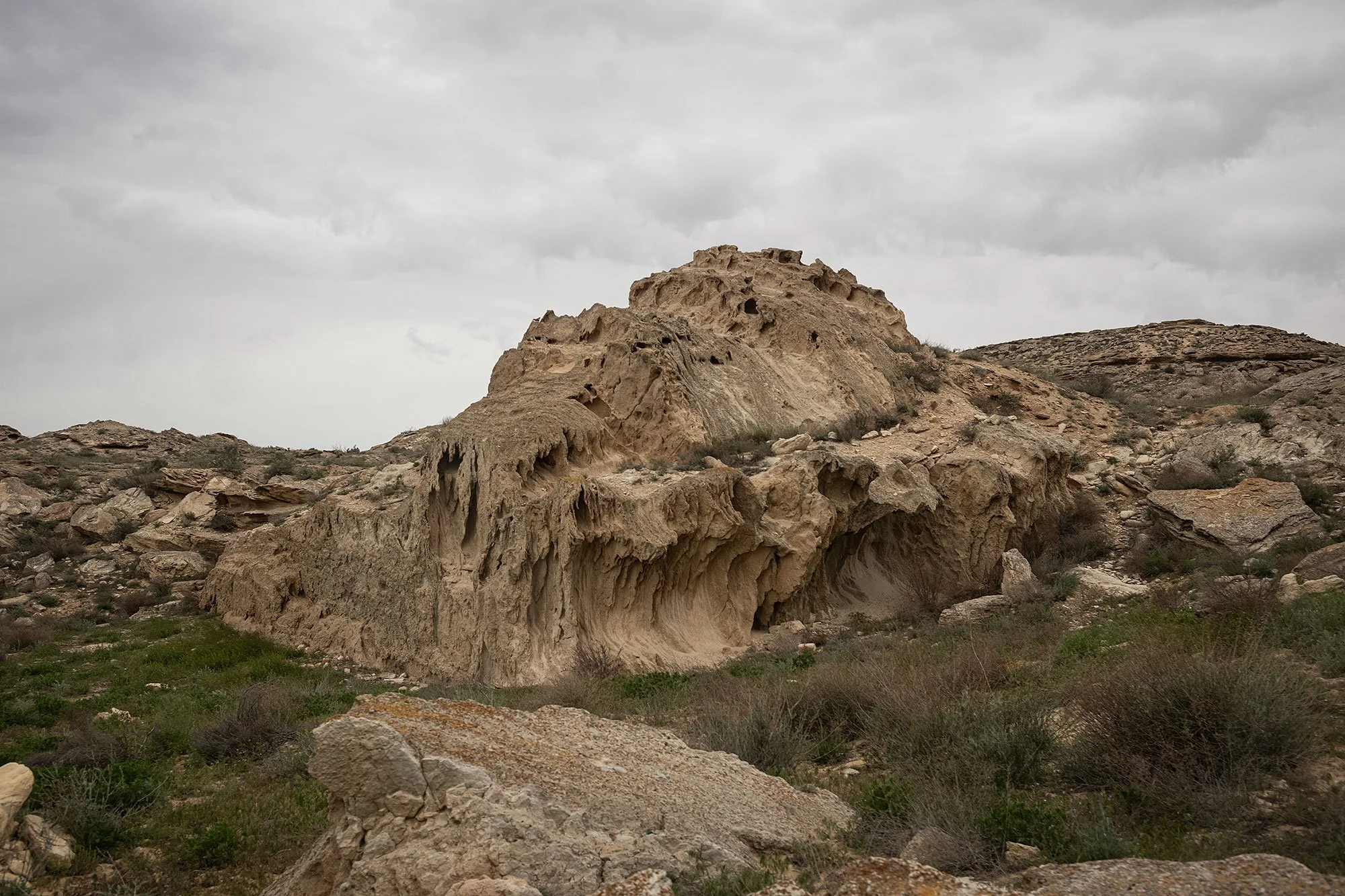
We turn to walk back to the car. I stop to take a photo of the upper canyon surface as I follow Rustum up out of the small depression we’d let ourselves into. We continue on towards the beach, driving past the bones of a picnic area waiting for the summer to start, the odd abandoned house, and limestone formations that look as if the rock is melting.
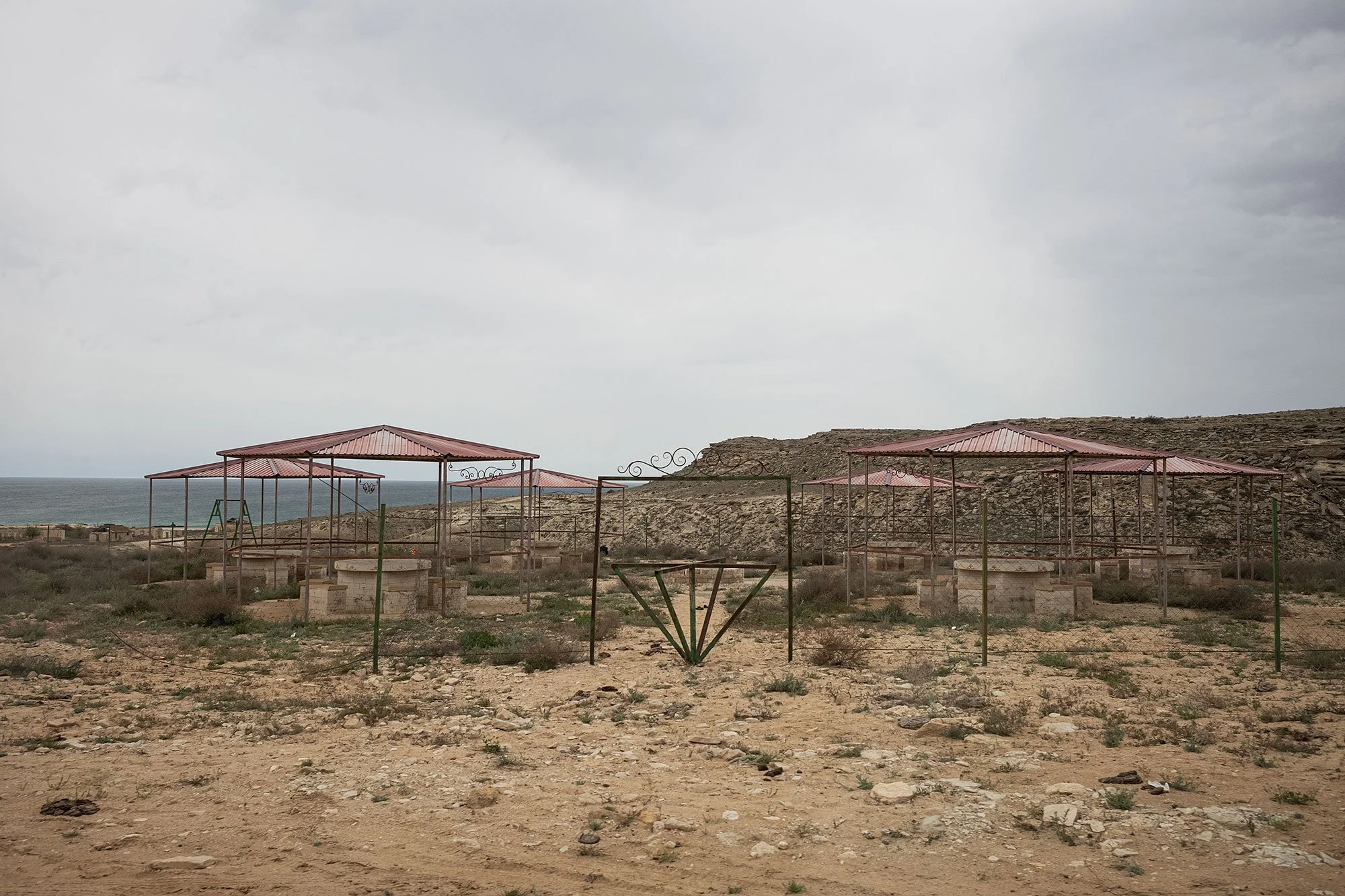
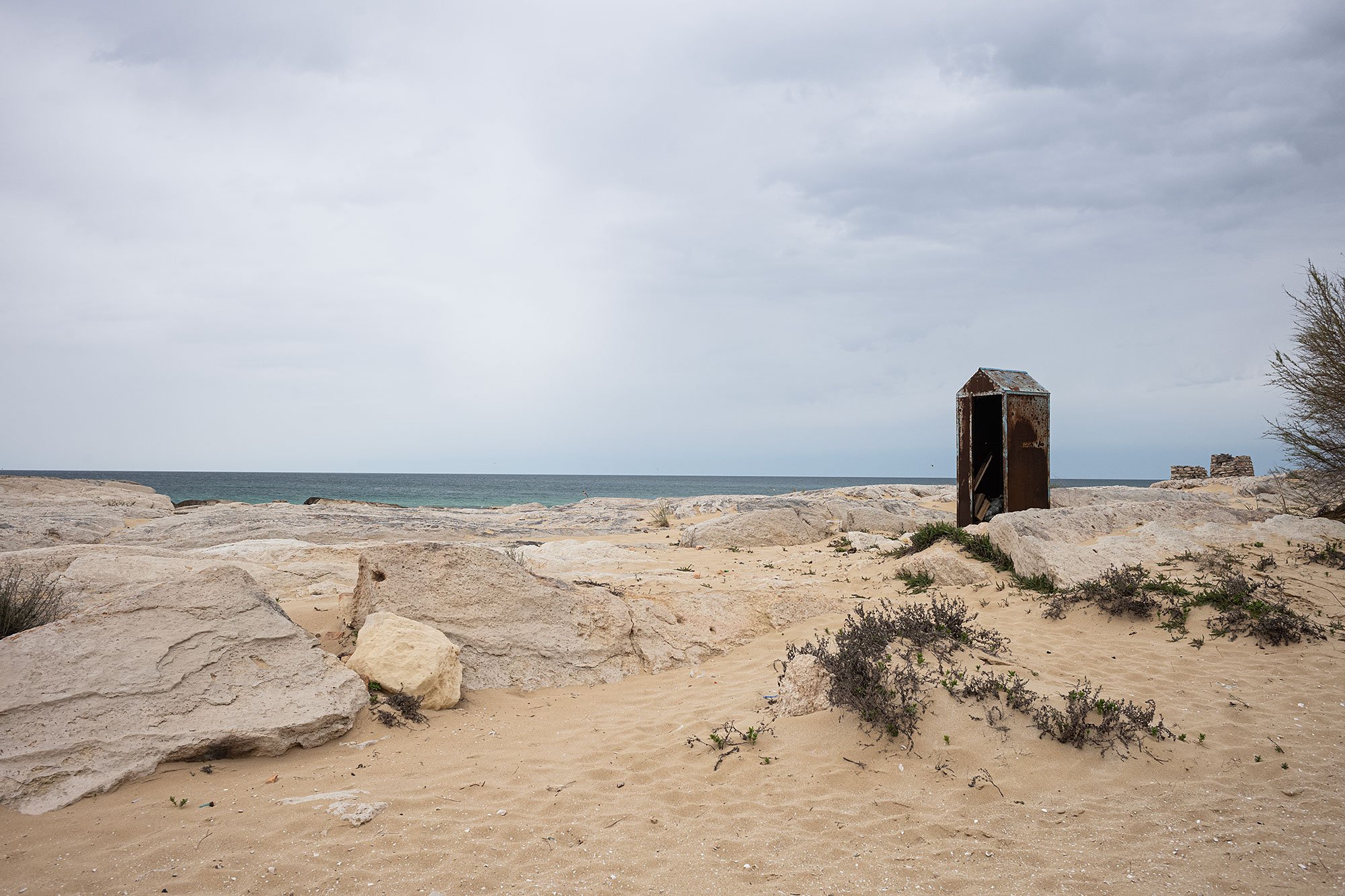
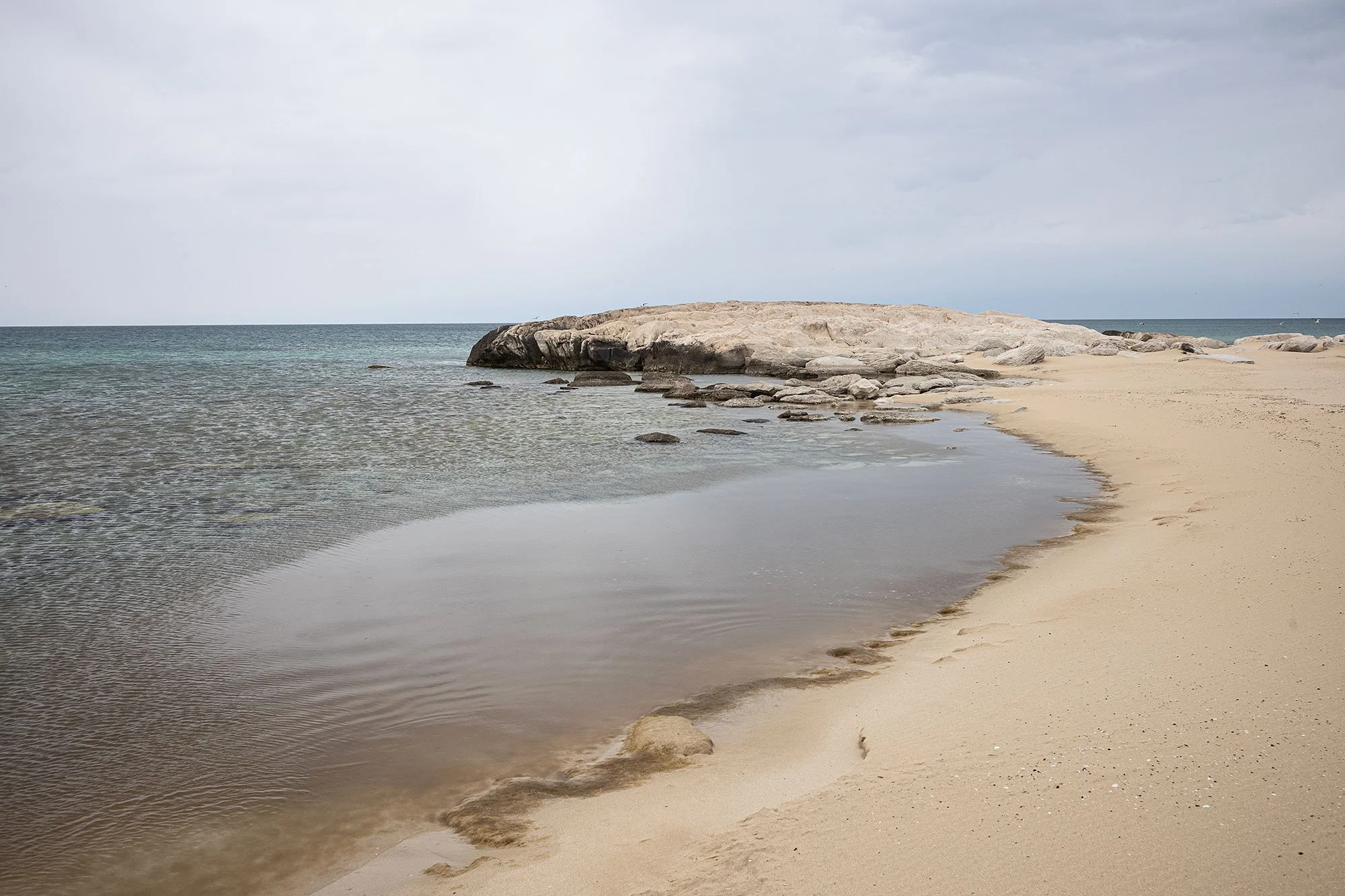
Rustum stops the car in a makeshift lot by the beach. We’ve reached Saura Beach and he tells me that I have a few minutes to explore. I don my jacket and climb down from the car. It’s a beautiful sandy beach and I can imagine it full of people in the summer, bathing in the water and in the sun. Today it’s a quiet place, the day cool and windy, the surface of the sheltered pools calm and clear. Even by the shore where the wind has rippled the surface I can see through to the pebbles and boulders below and part of me longs for a swim.
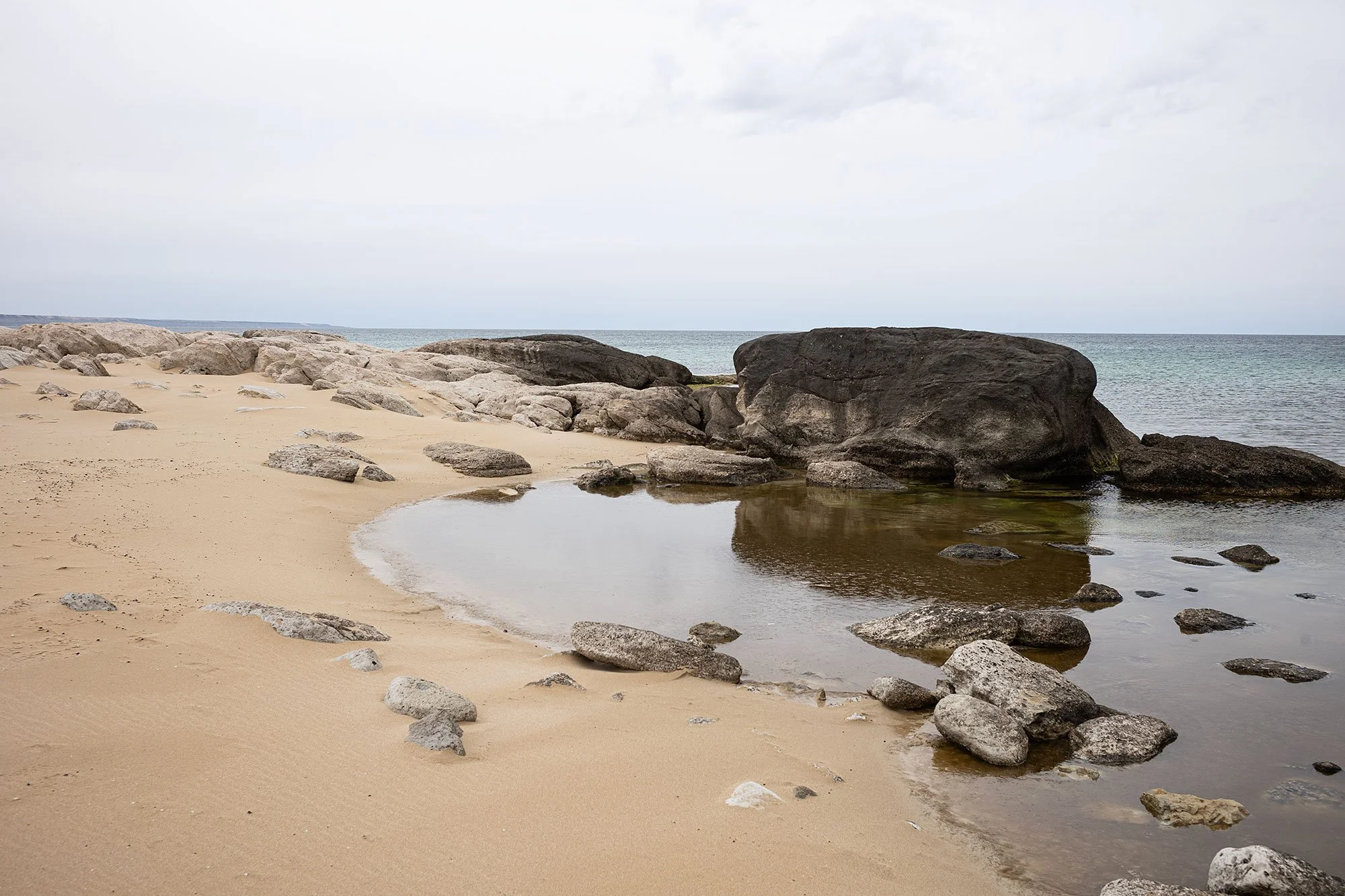
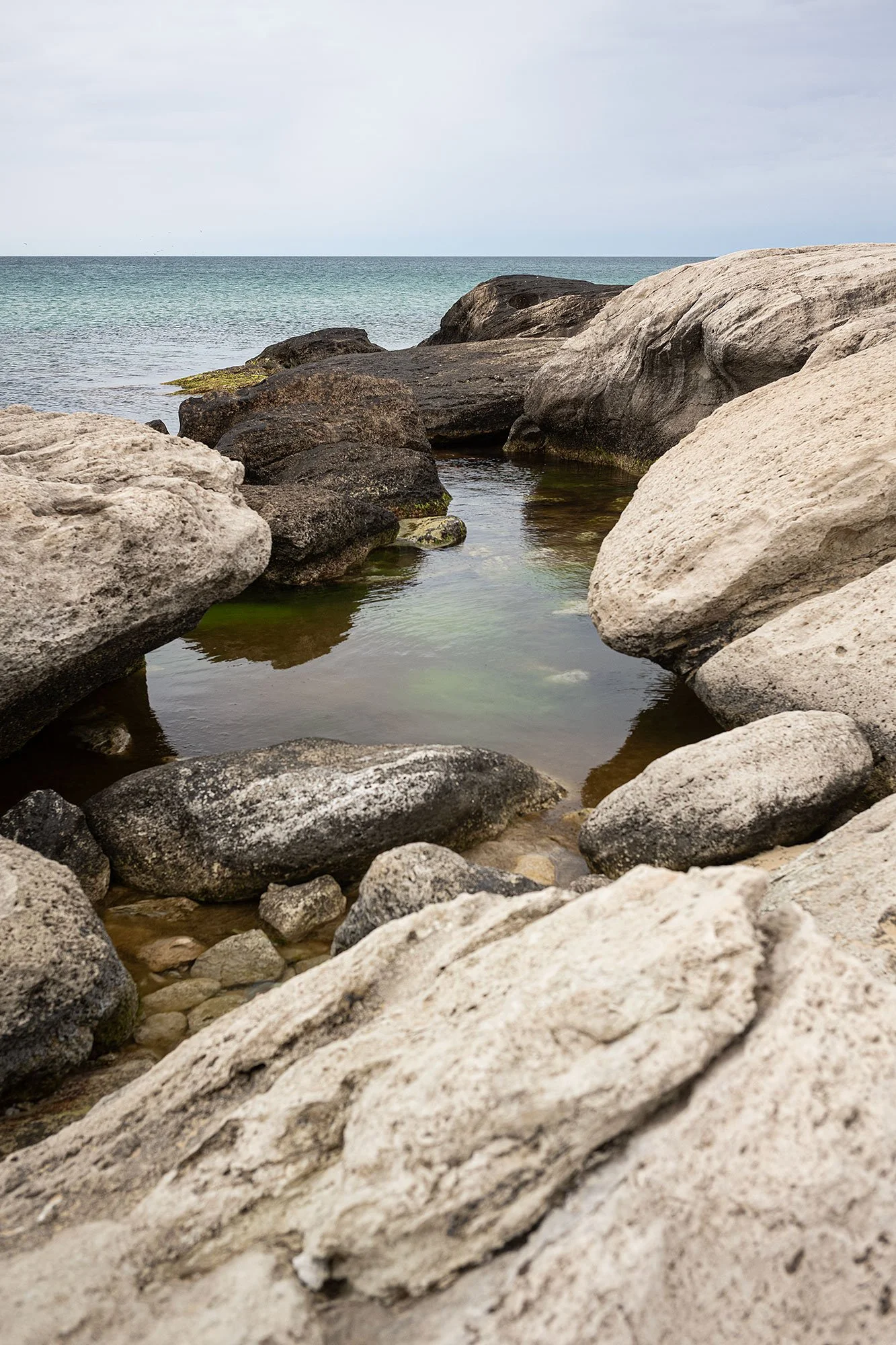
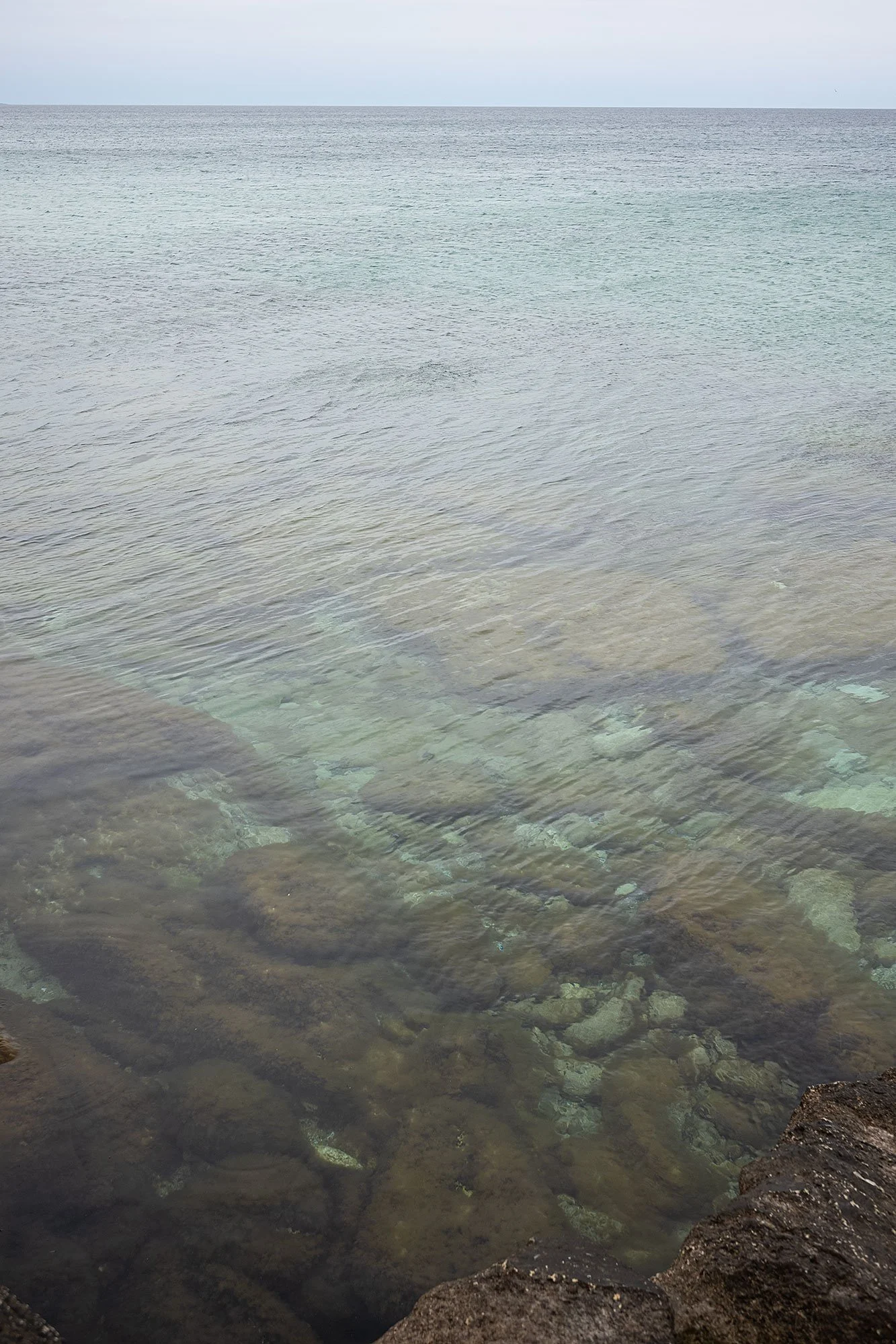
I climb back into the car and we drive back towards the main road passing an old fishing village. I spot a building slightly off in the distance and Rustum tells me it’s the weather station manager’s house.
Reaching the main road I look again for a sign that directs people to the beach. I see a mound of rocks, though those could be left over from road construction. A tire standing up on the corner may mark the spot, but who knows if that’s the case.
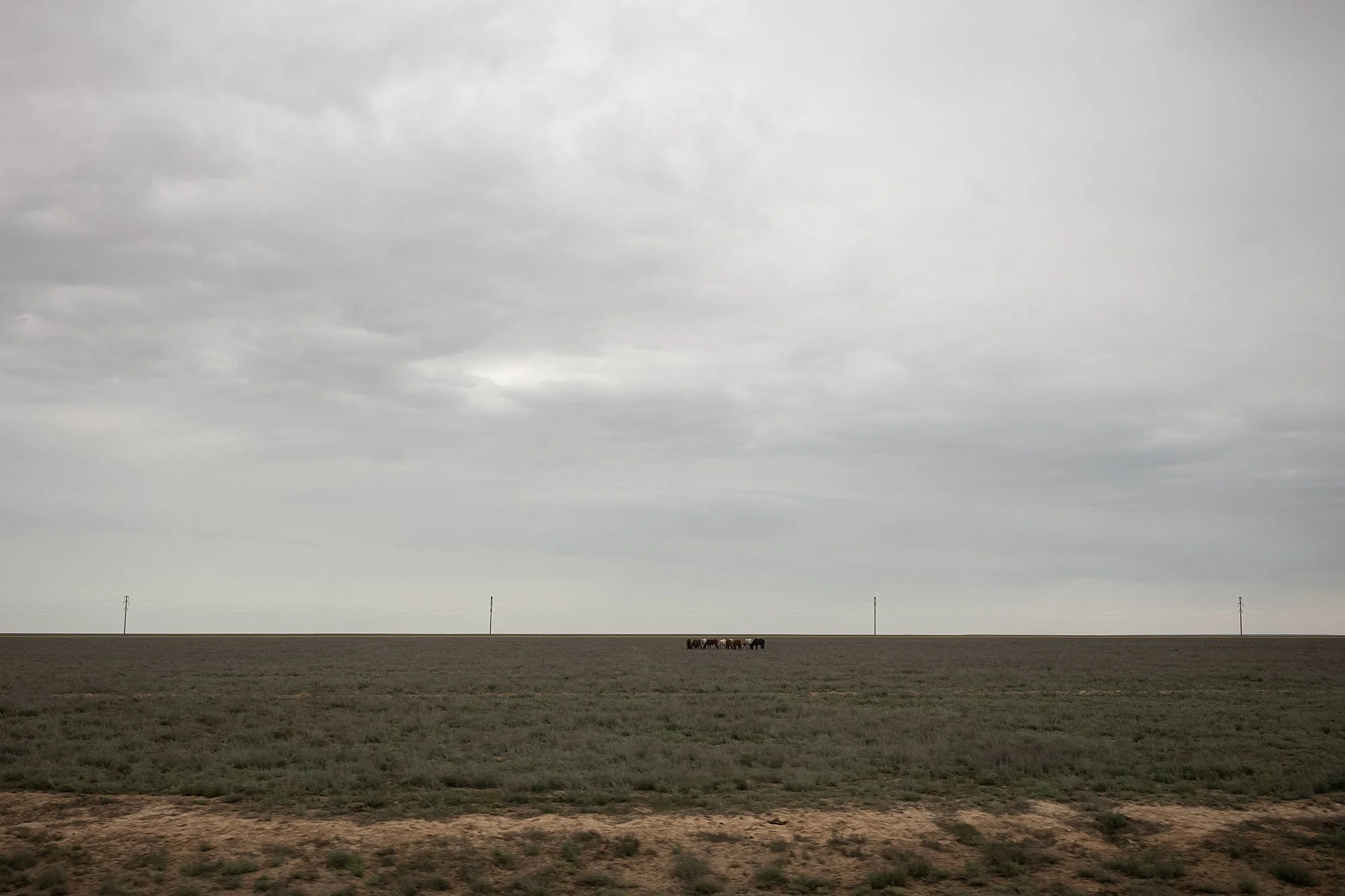
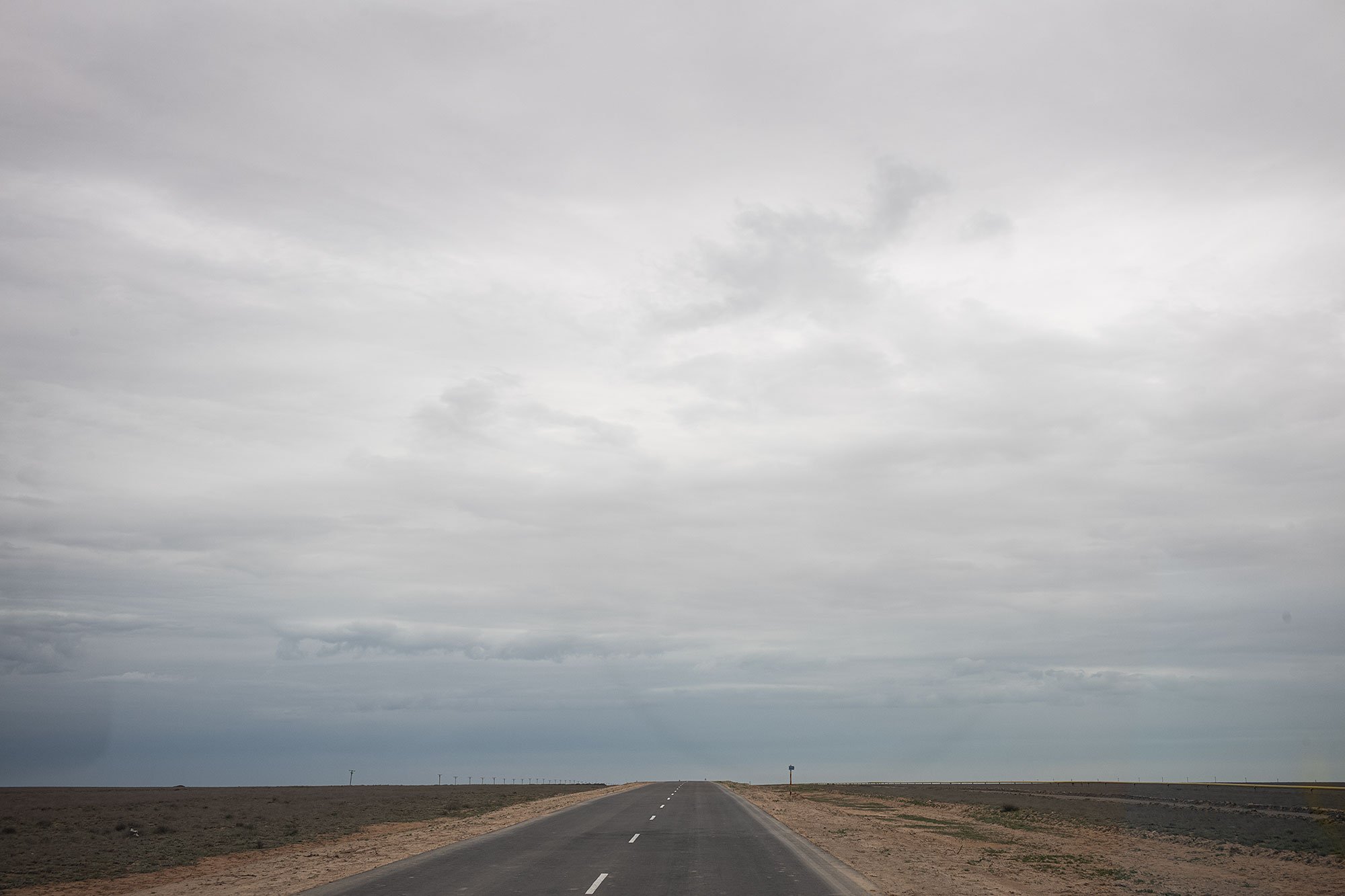
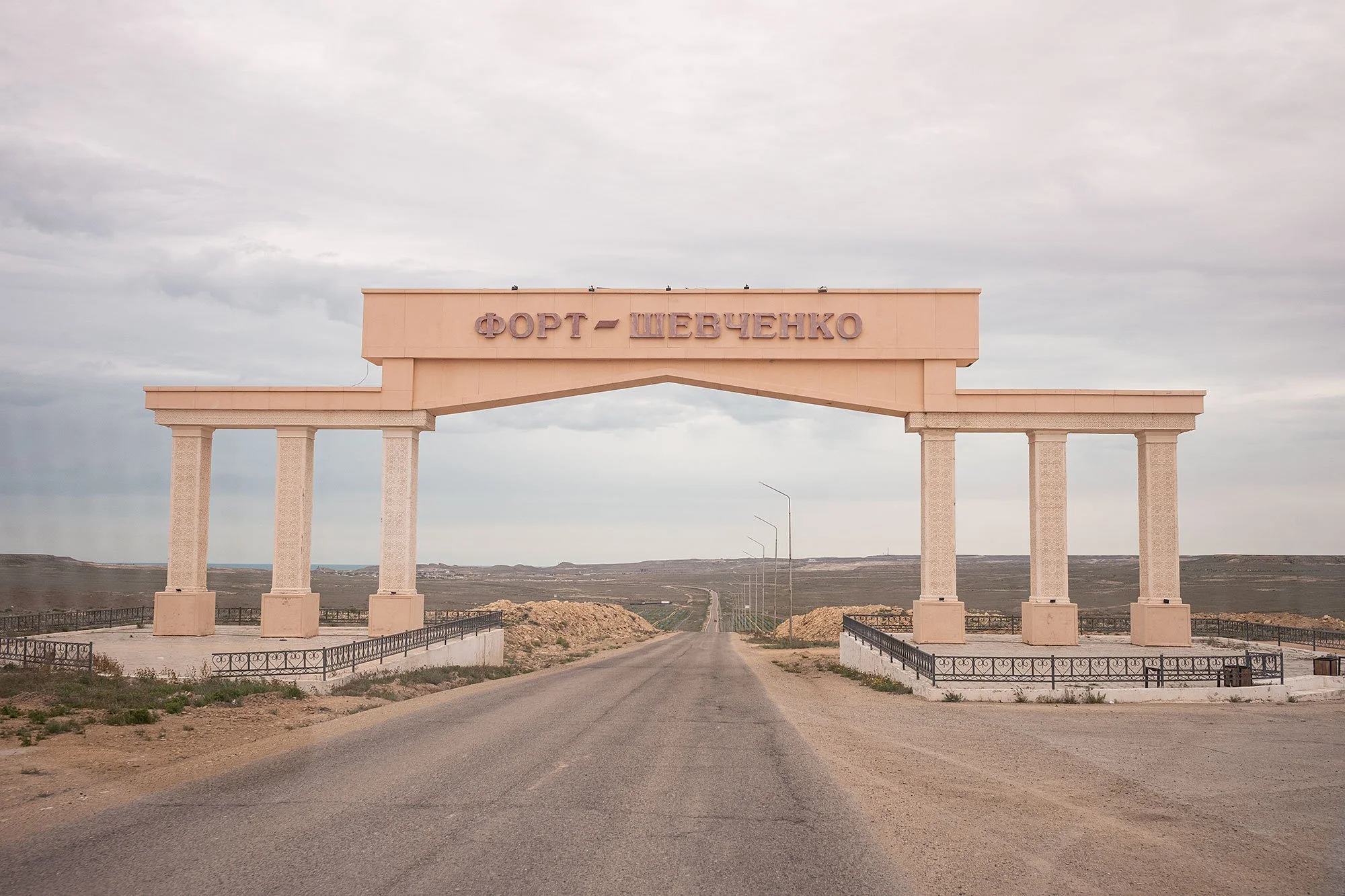
We continue driving through the mostly-deserted plains until we reach a gate that marks our arrival in Fort-Shevchenko. In some ways it reminds me of the drive to Swakopmund and seeing the city suddenly rise up out of the desert.
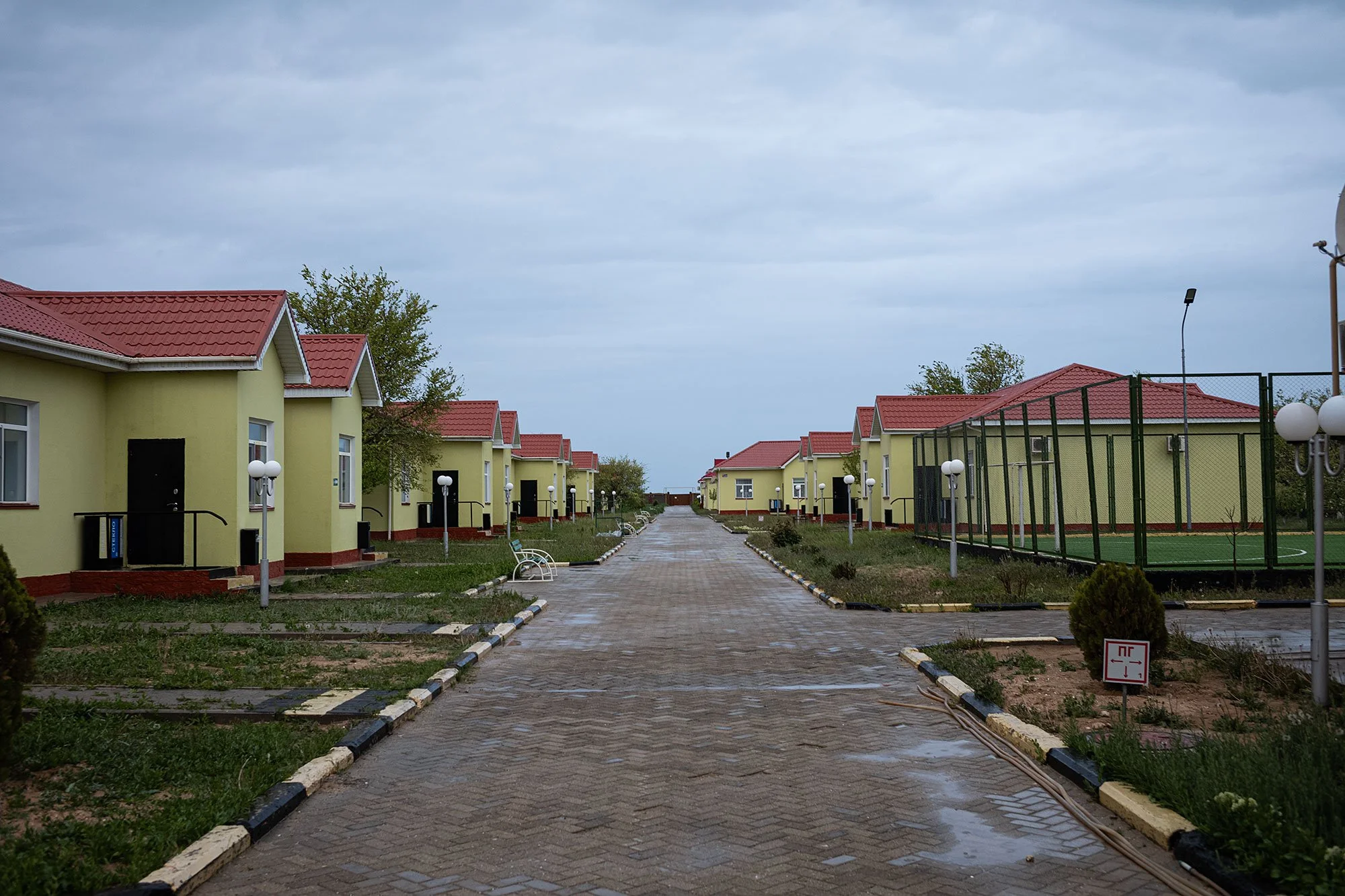
We stop for lunch at Sulo Bautino a family resort and hotel located just outside the center of town. We park outside the gate and walk through it to the cafeteria and restaurant. Rows of identical cabins stretch out in the direction of the sea.
I follow Rustum and Asia’s lead as we each grab a tray and a plate. A woman stands behind trays of food and I point and I point to the items I’d like to have. Soup? Yes, please.
Rustum and Asia have secured a table for us and I carry my tray over to them. Asia points to another section where I can get tea and bread and desserts.
The food is good. Asia tells me that it’s one of Rustum’s requirements and I’m thankful that I’ve been matched with these two for this trip.
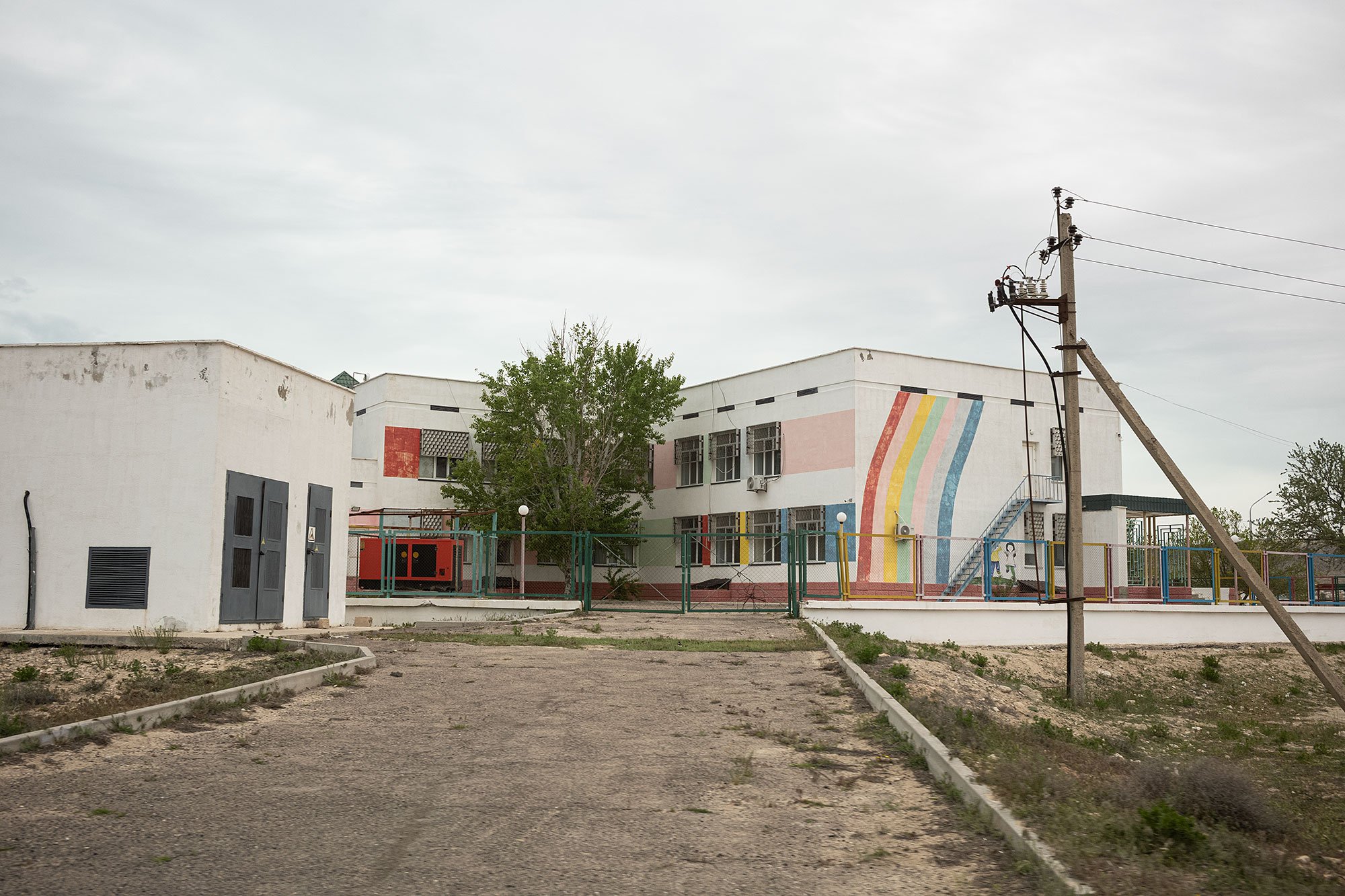
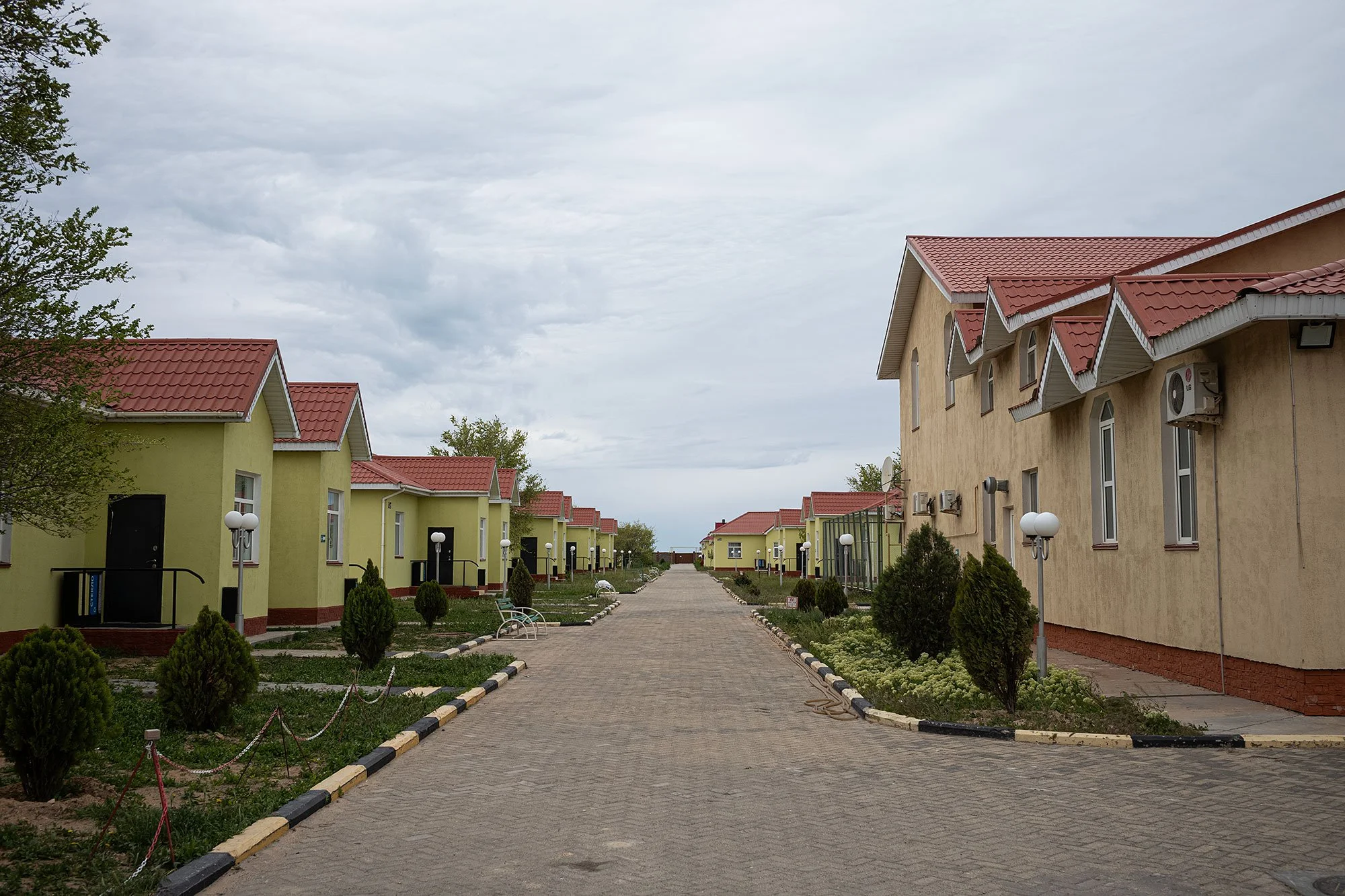
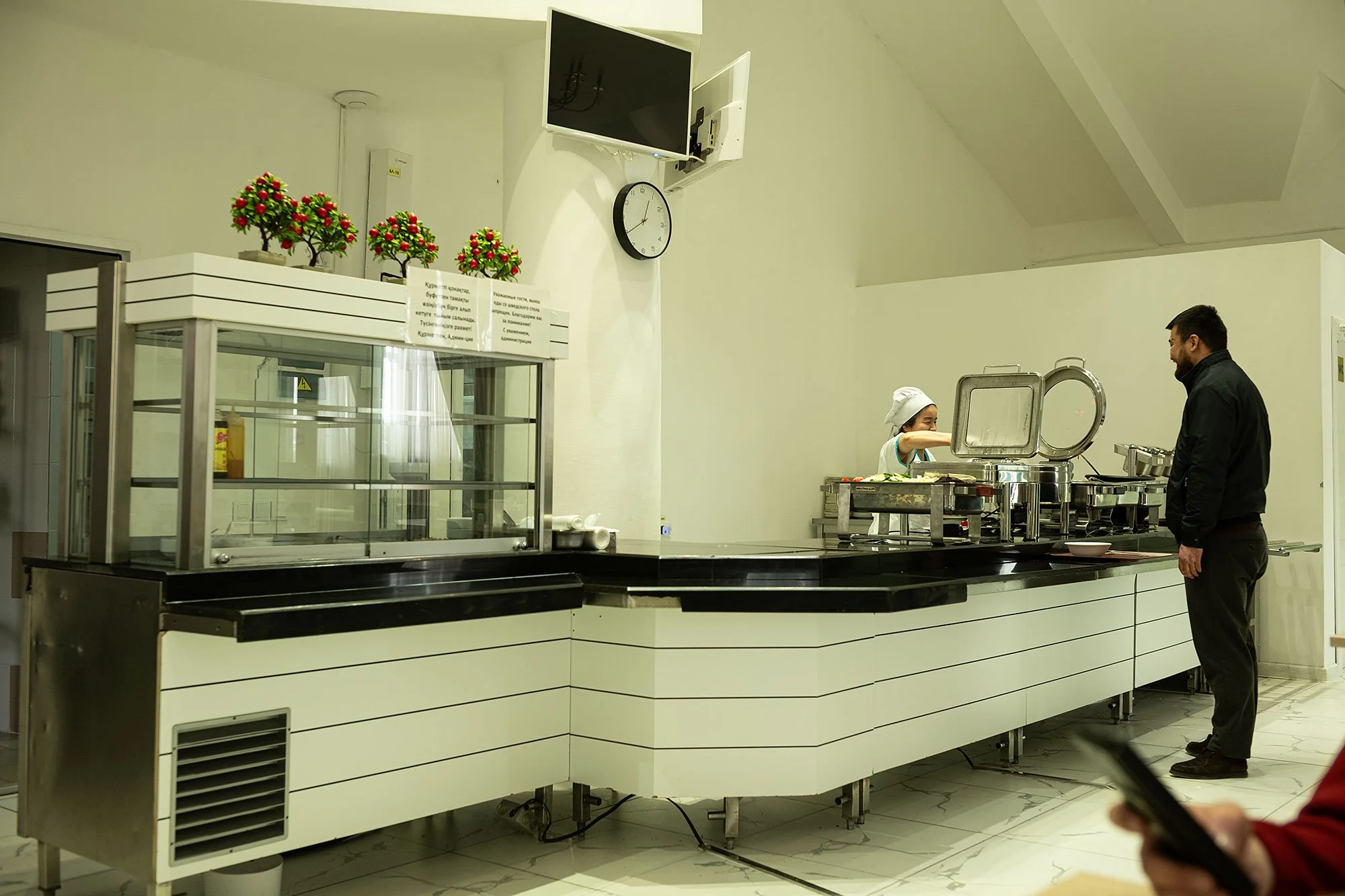
Leaving the resort Rustum drives us through Bautino. It’s a historic fishing village with around 3,200 inhabitants. He drives us past the port, which is now a major hub for offshore oil to show me some of the old houses and a monument to Alexei Bautin, the first chairman of the Council of Deputies after whom the village is named.
We don’t stop and I take a few photos from the window of the car. The weather has turned slightly and a light rain falls intermittently on the windshield.
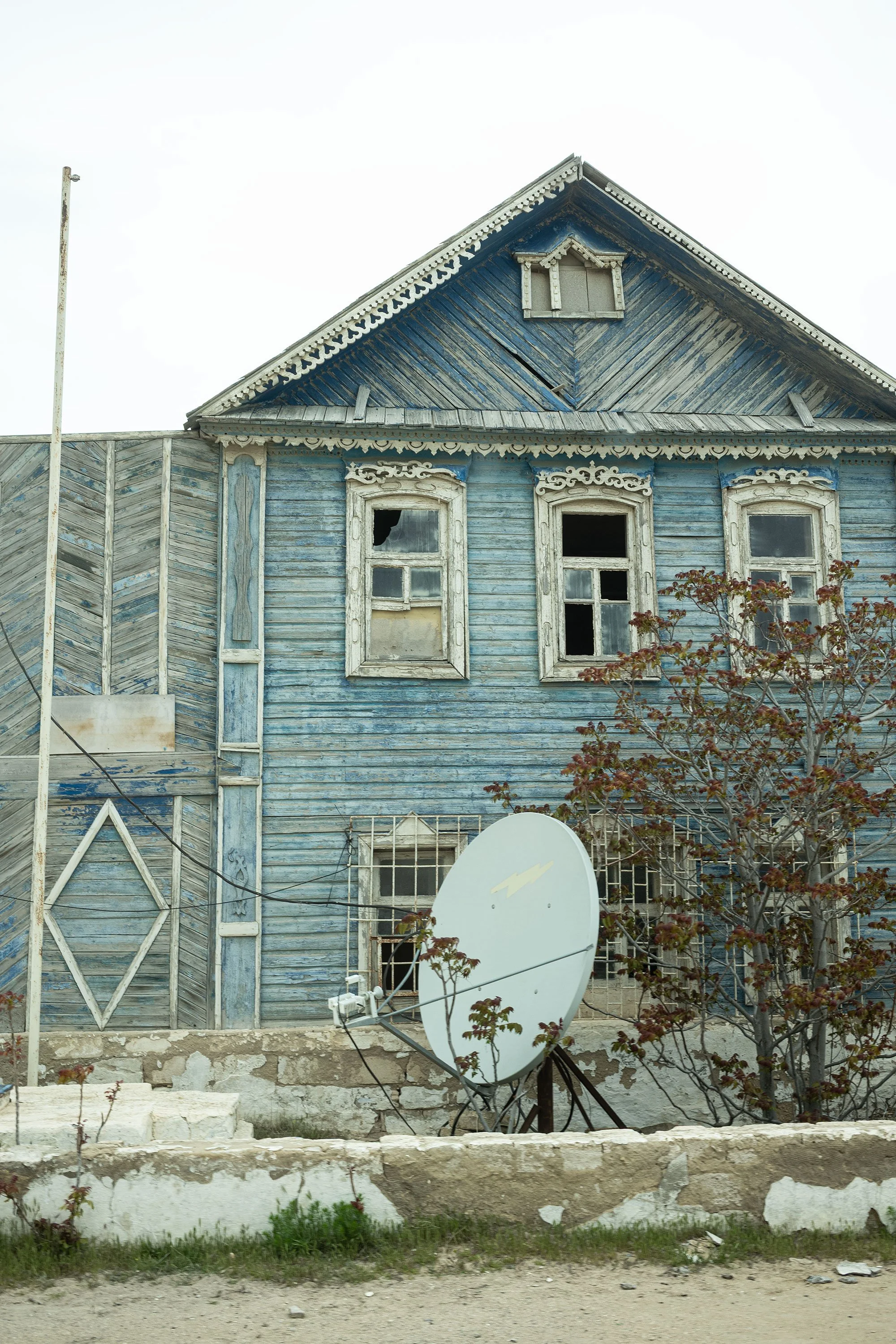
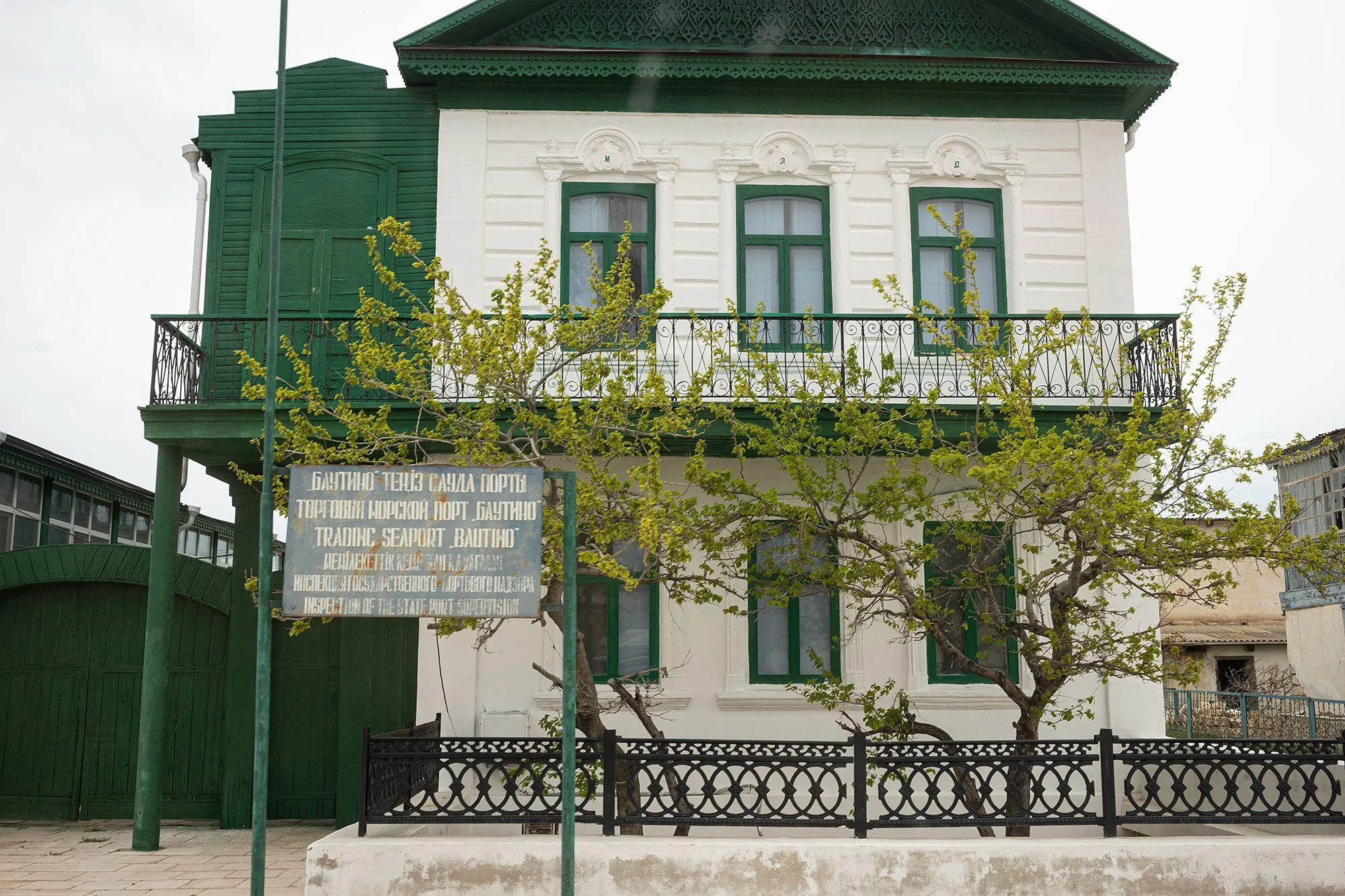
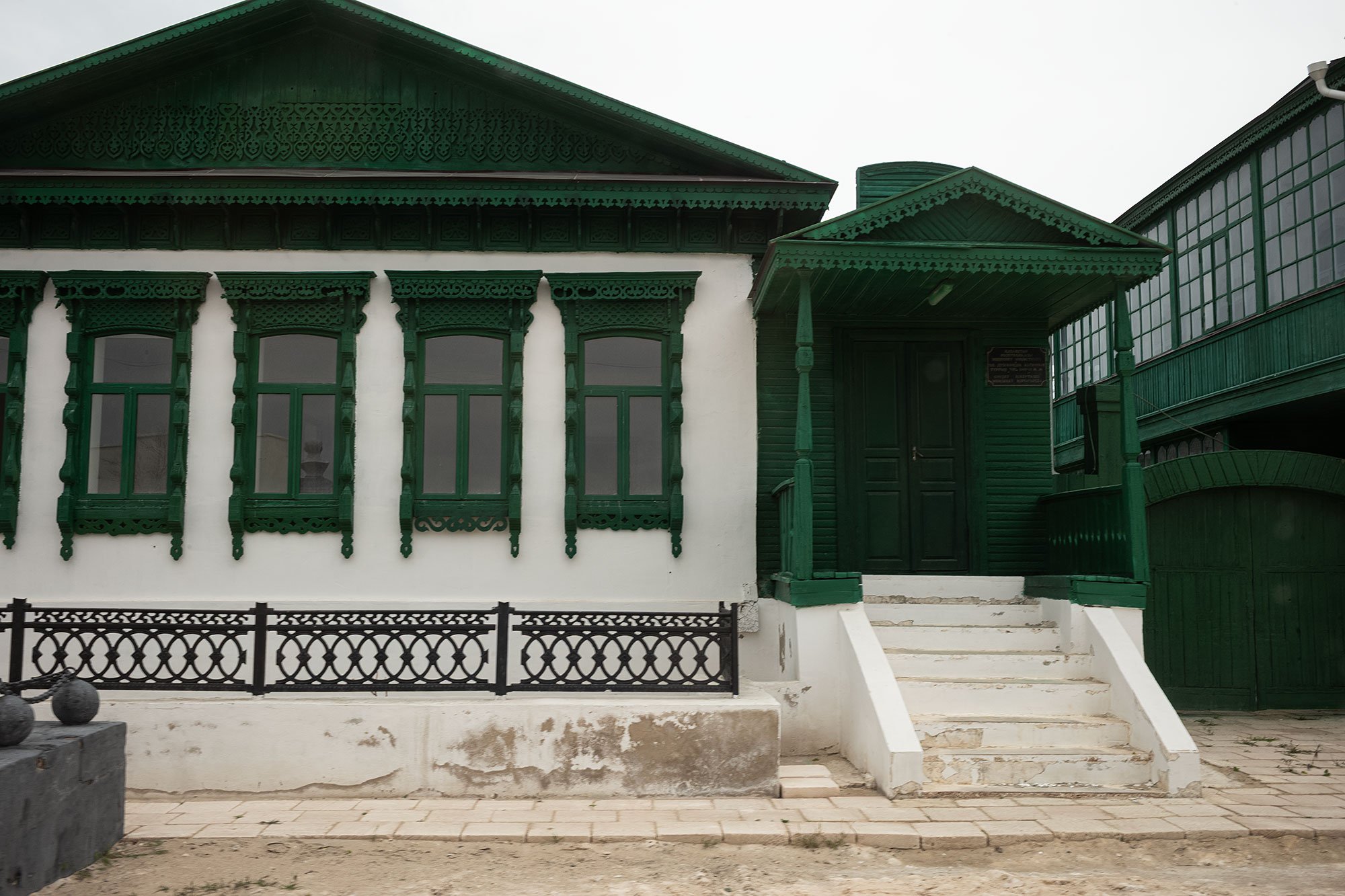
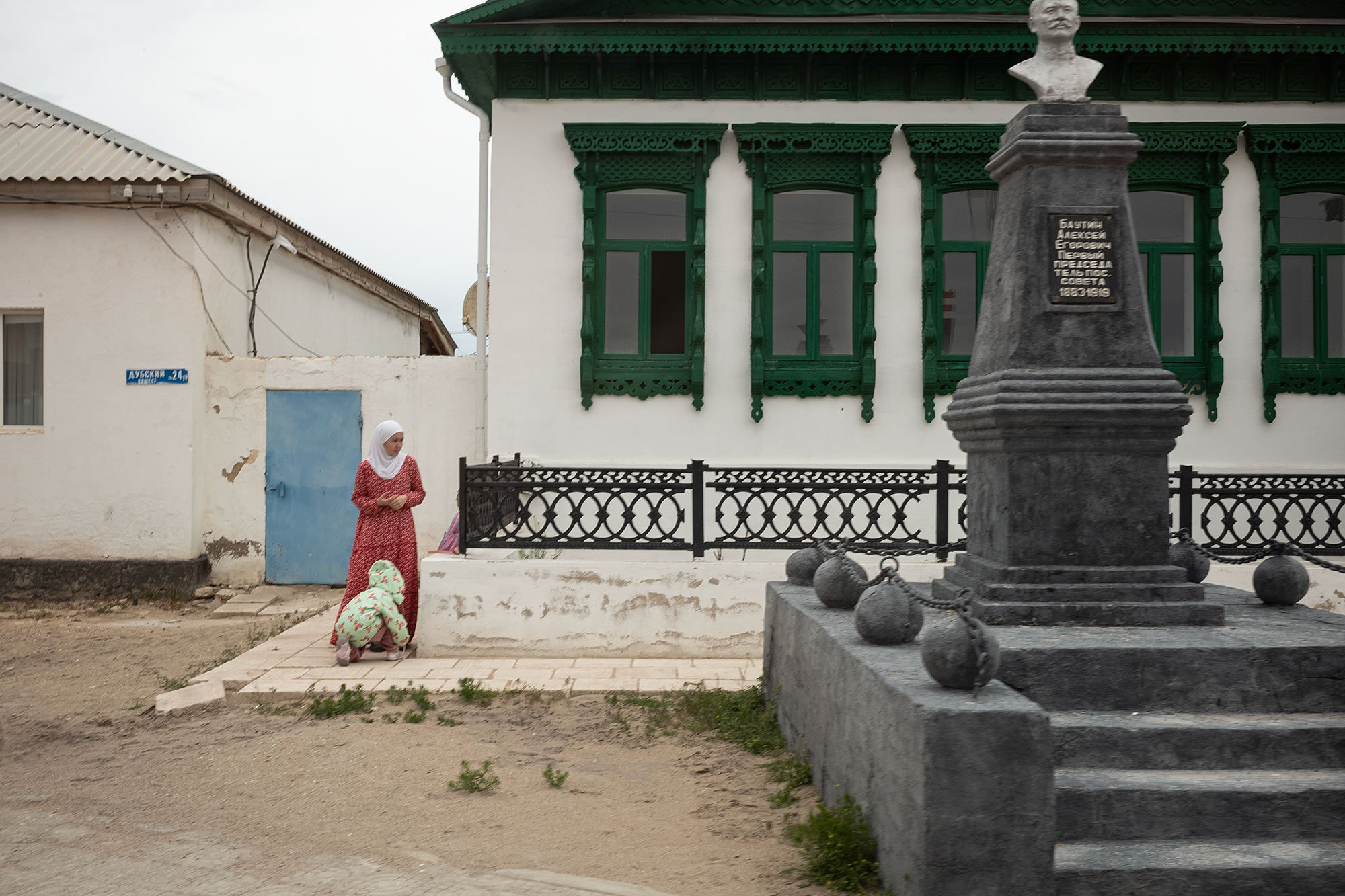
We continue on through the town. Rustum stops to pick up a few things in a small store and I ask to hop out to take photos of the rusting hulk of a ship parked in a dry lot.
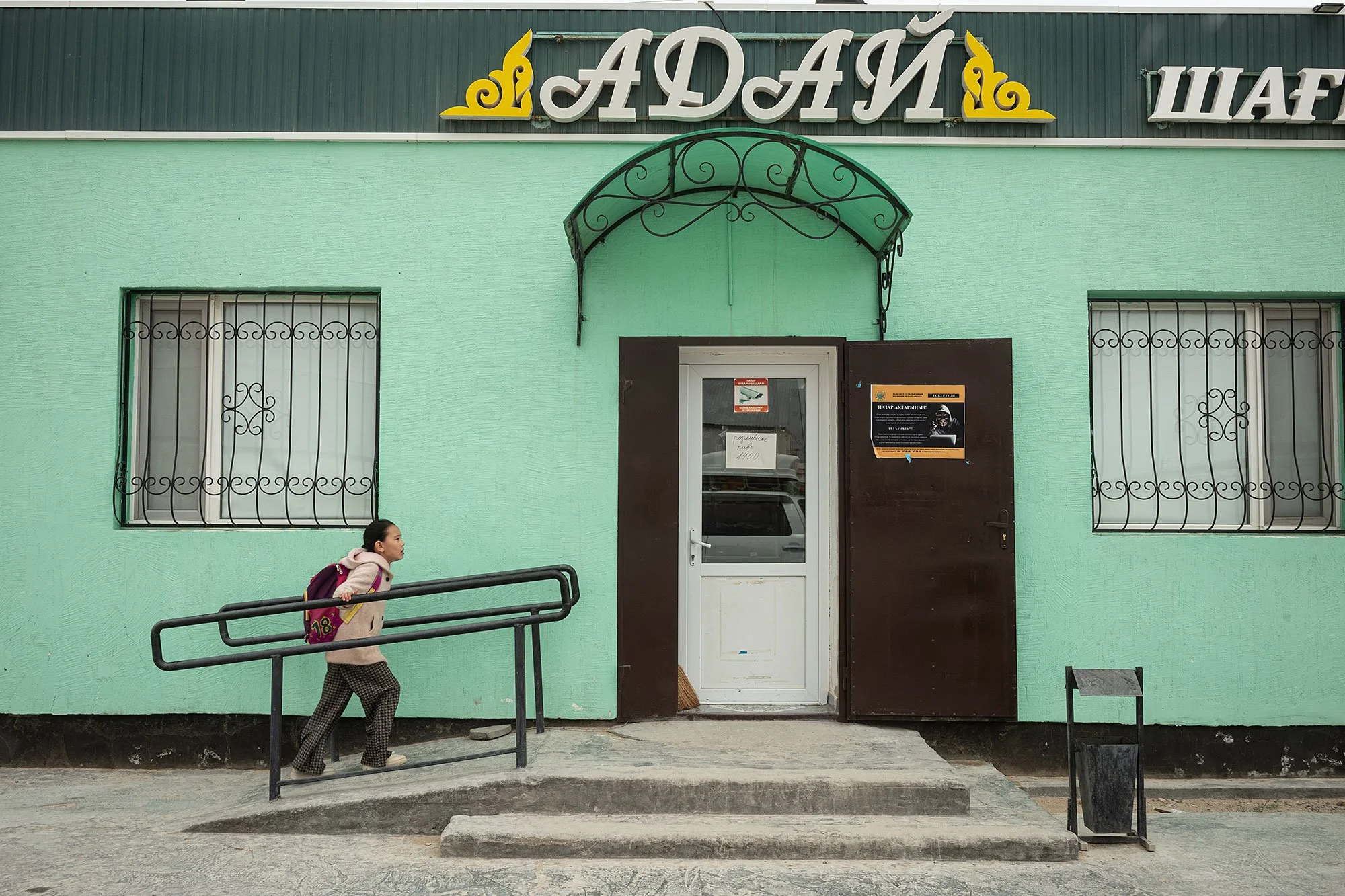
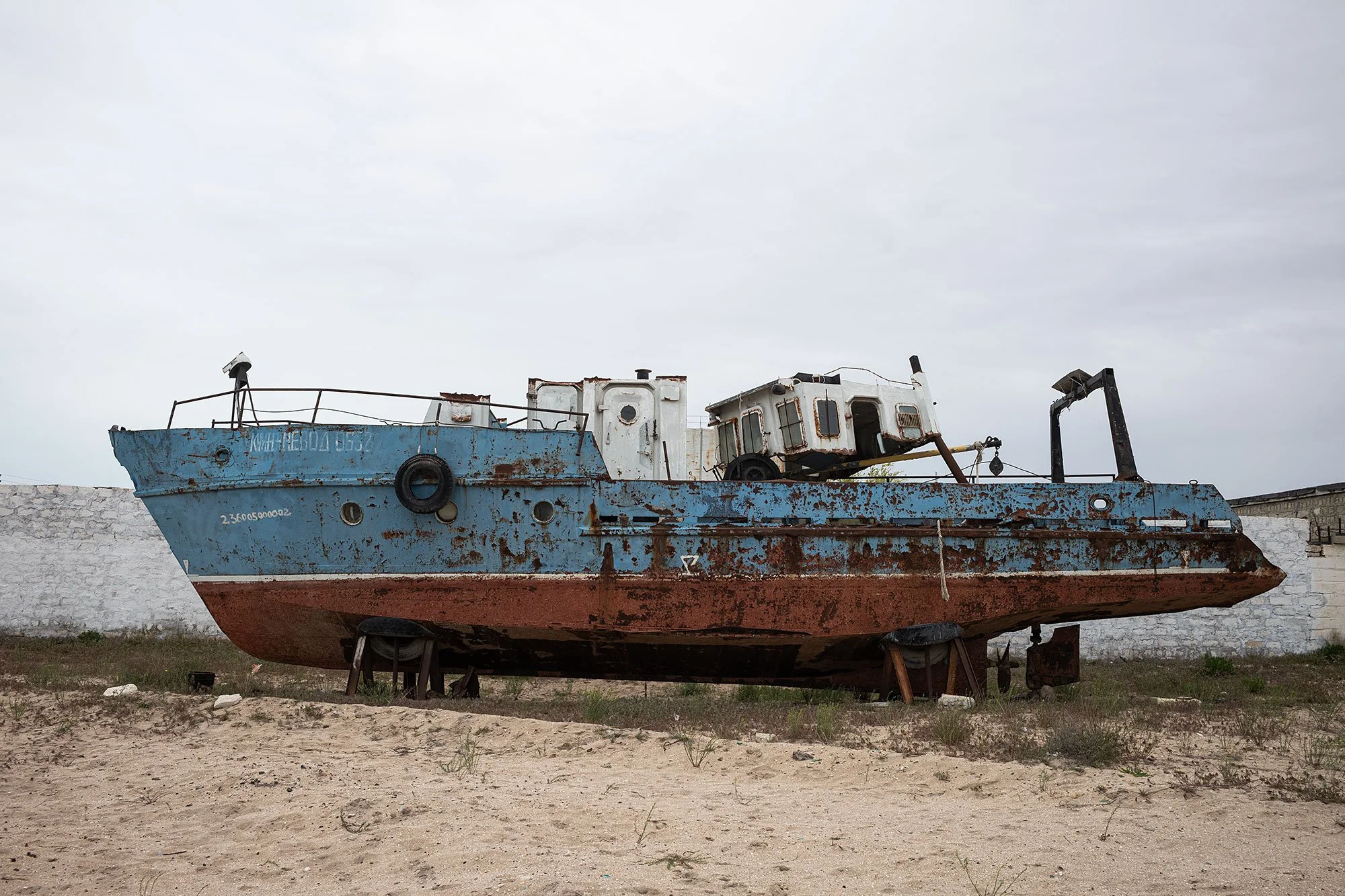
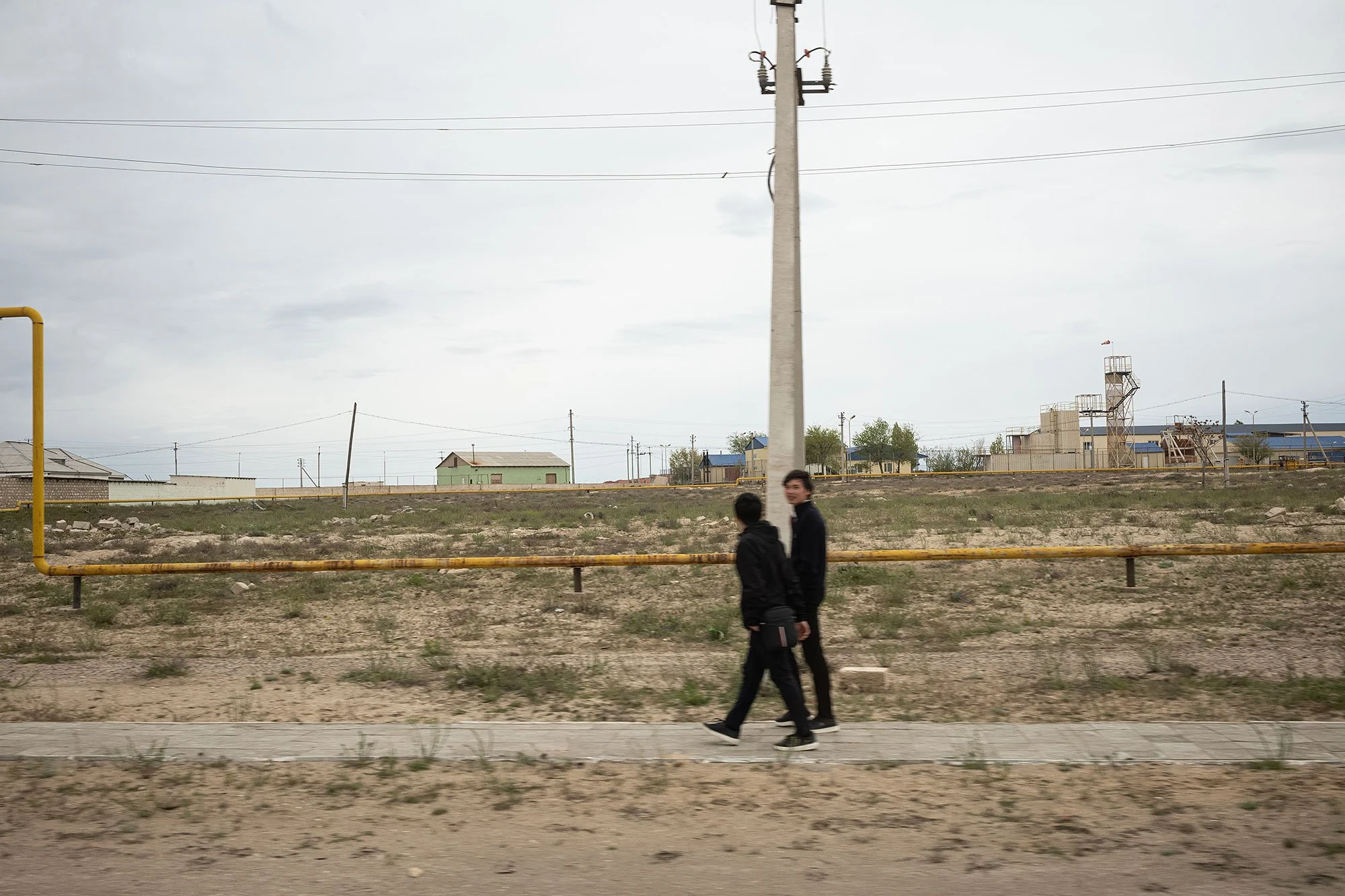
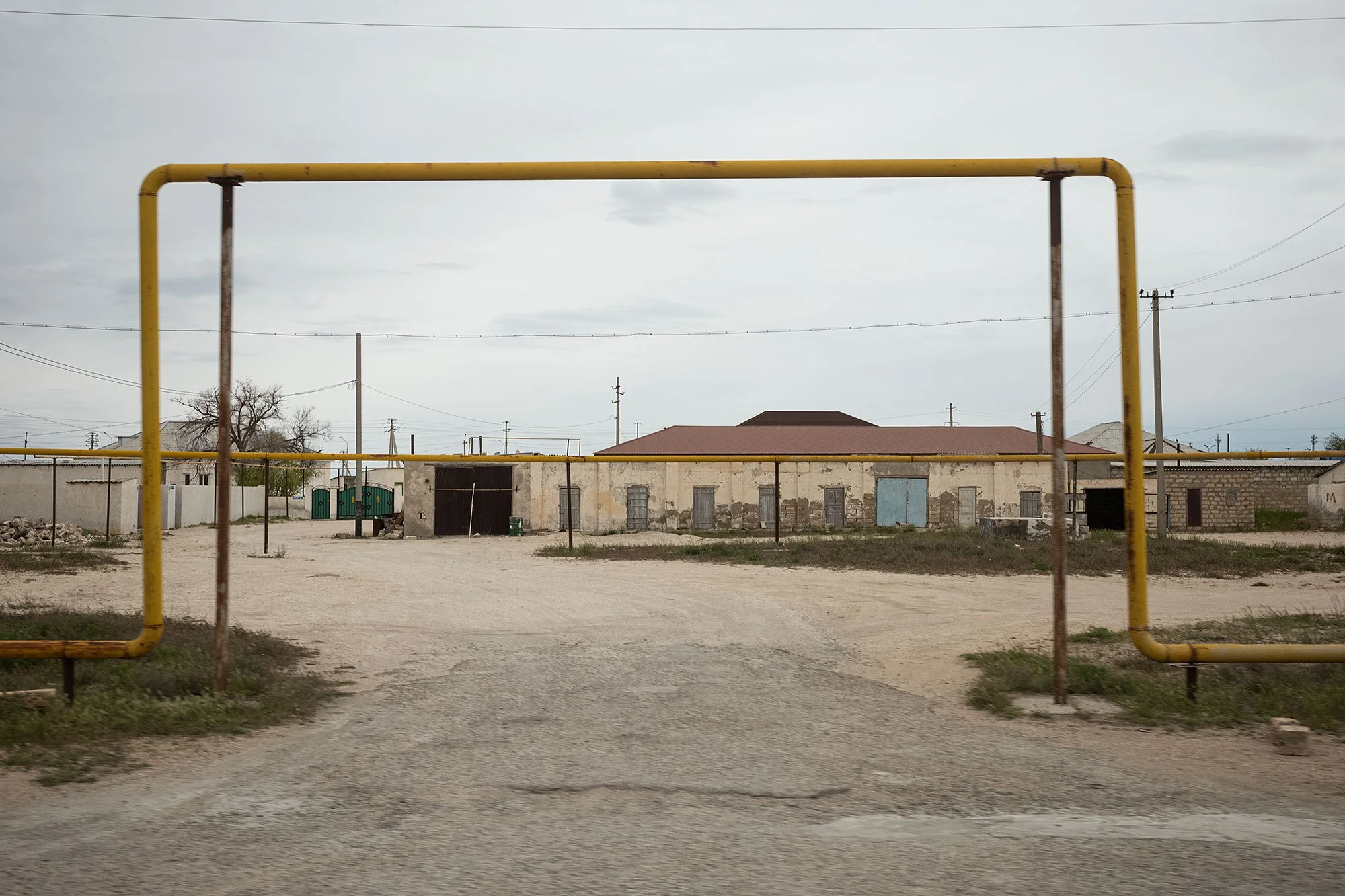
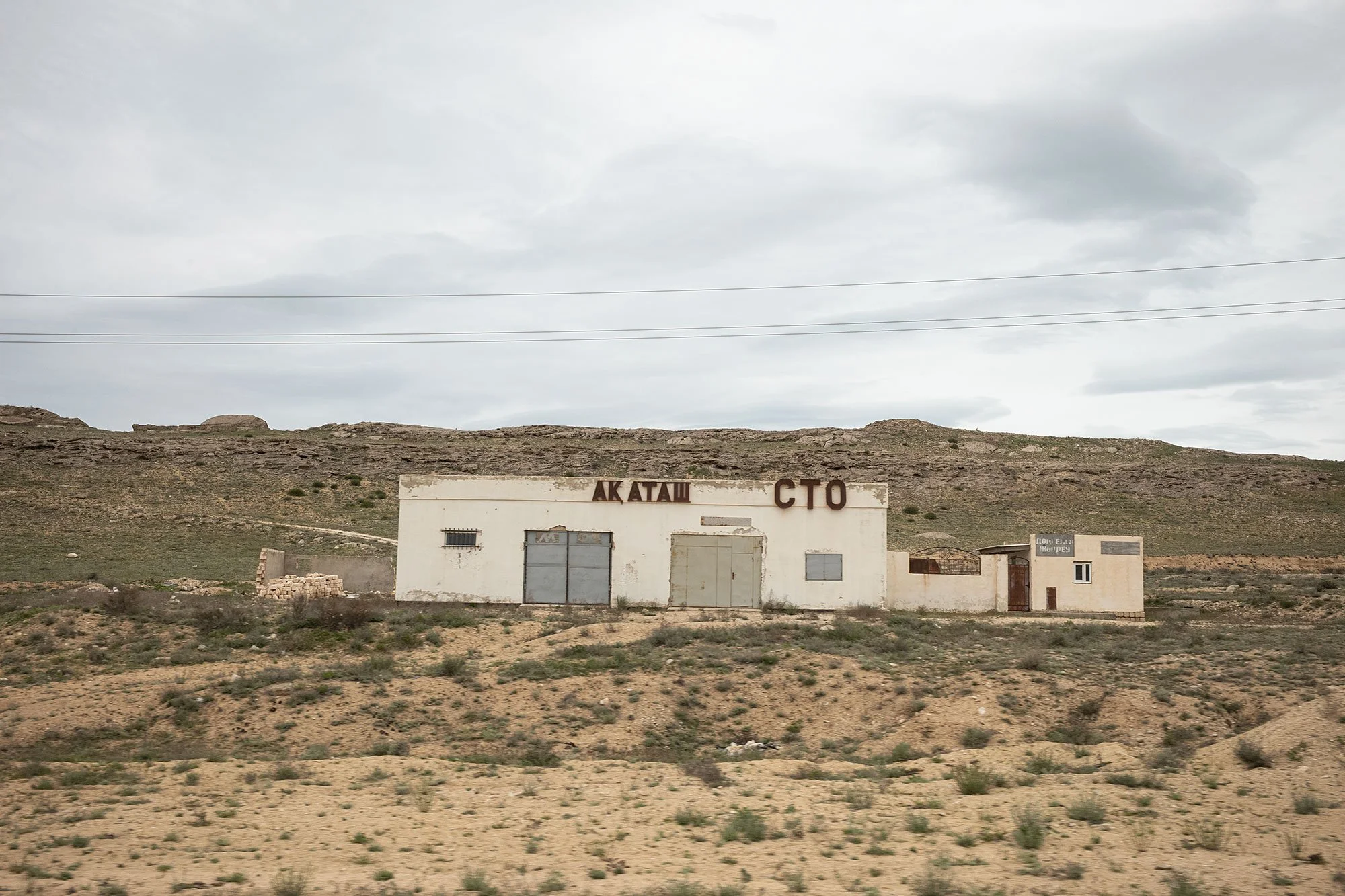
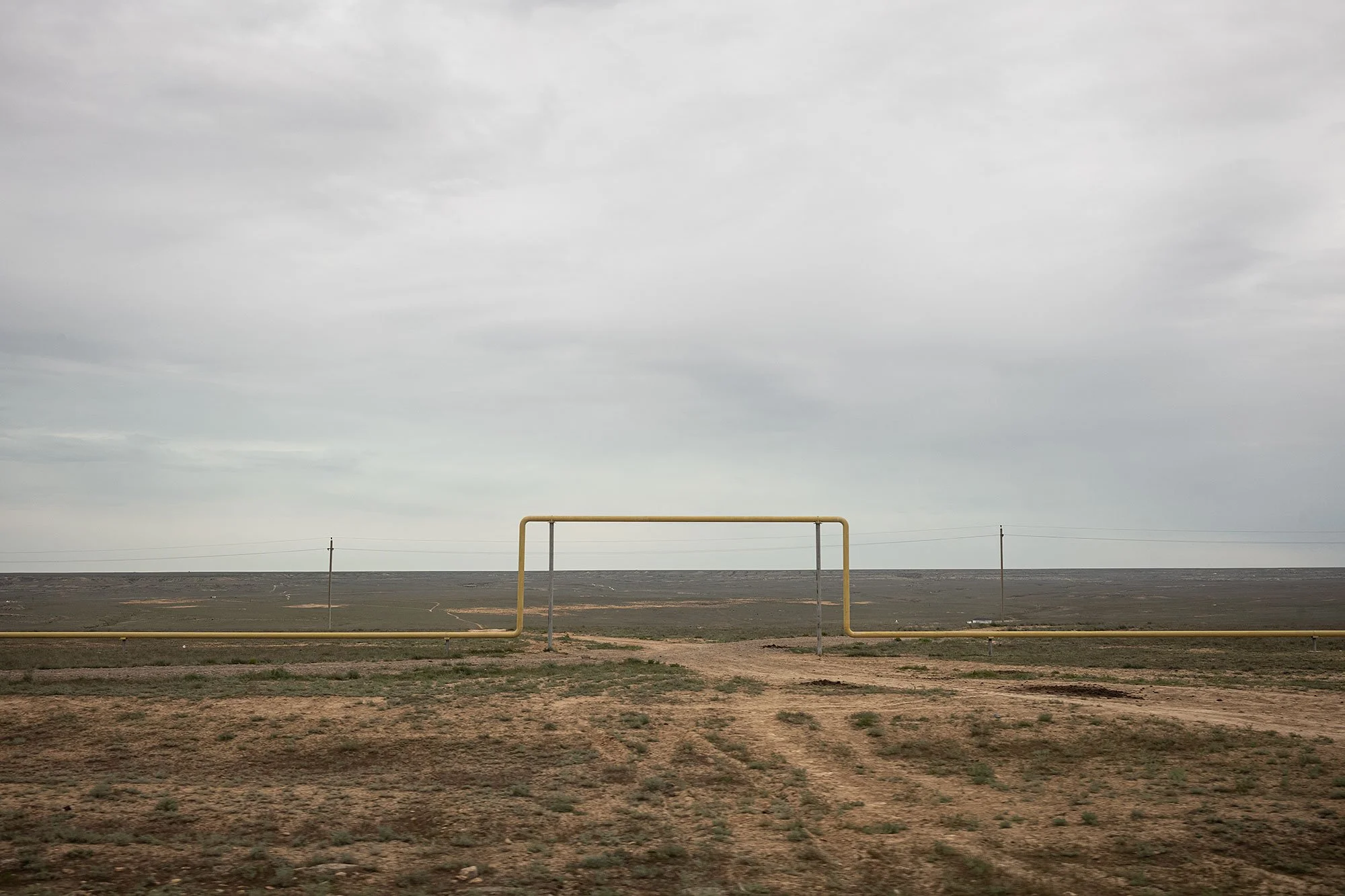
The signs of natural gas are everywhere, a yellow pipeline that runs along the street, rising up to form a thin yellow gate whenever a road or driveway connects to the main road. It’s interesting to think of the people who live here bearing witness to a constant reminder of the source of the region’s wealth. I wonder how long it takes for the bright yellow lifeline to recede into the background, how long it takes to no longer notice the lines through which flow the lifeblood of the region an the world.
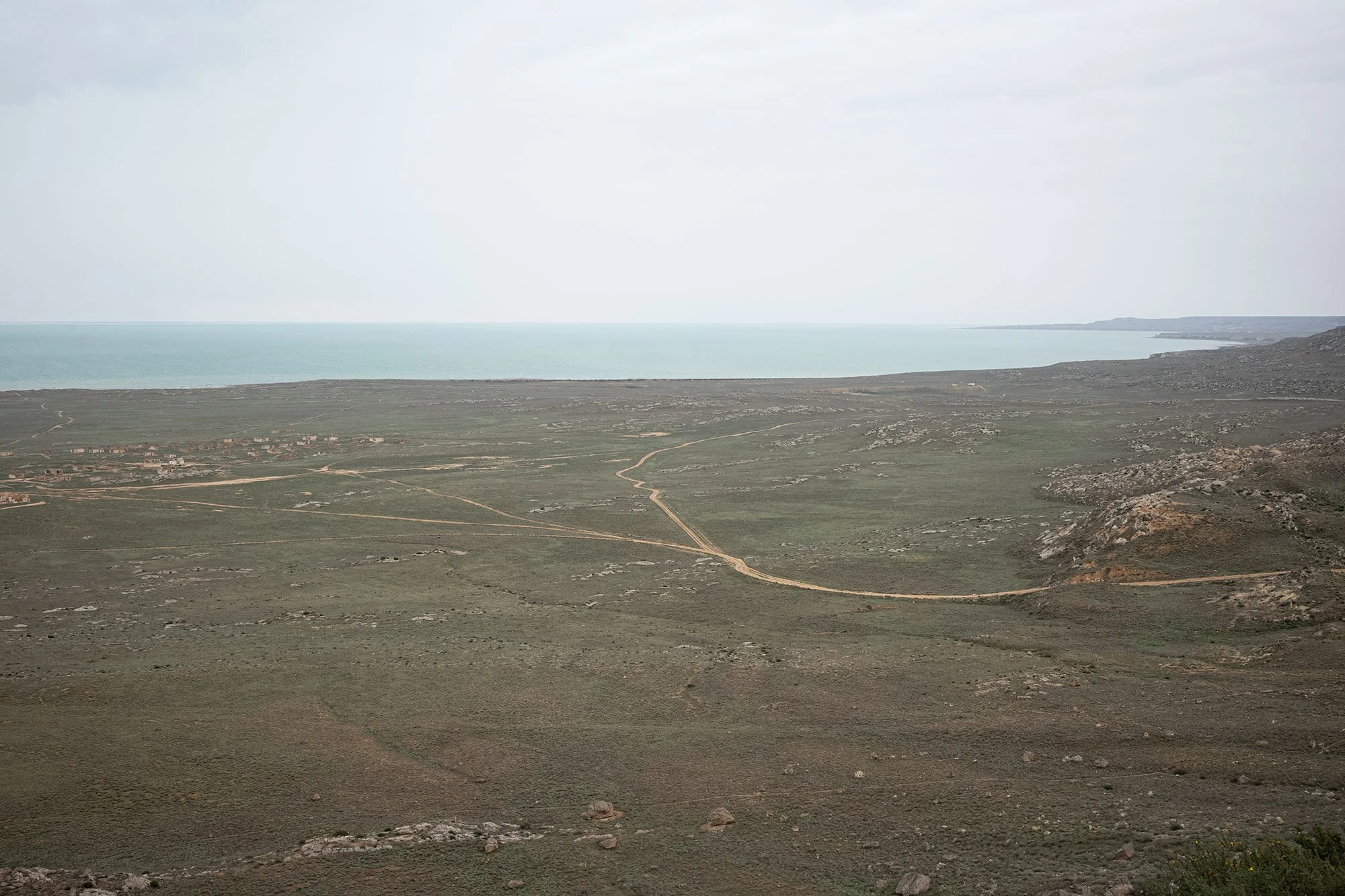
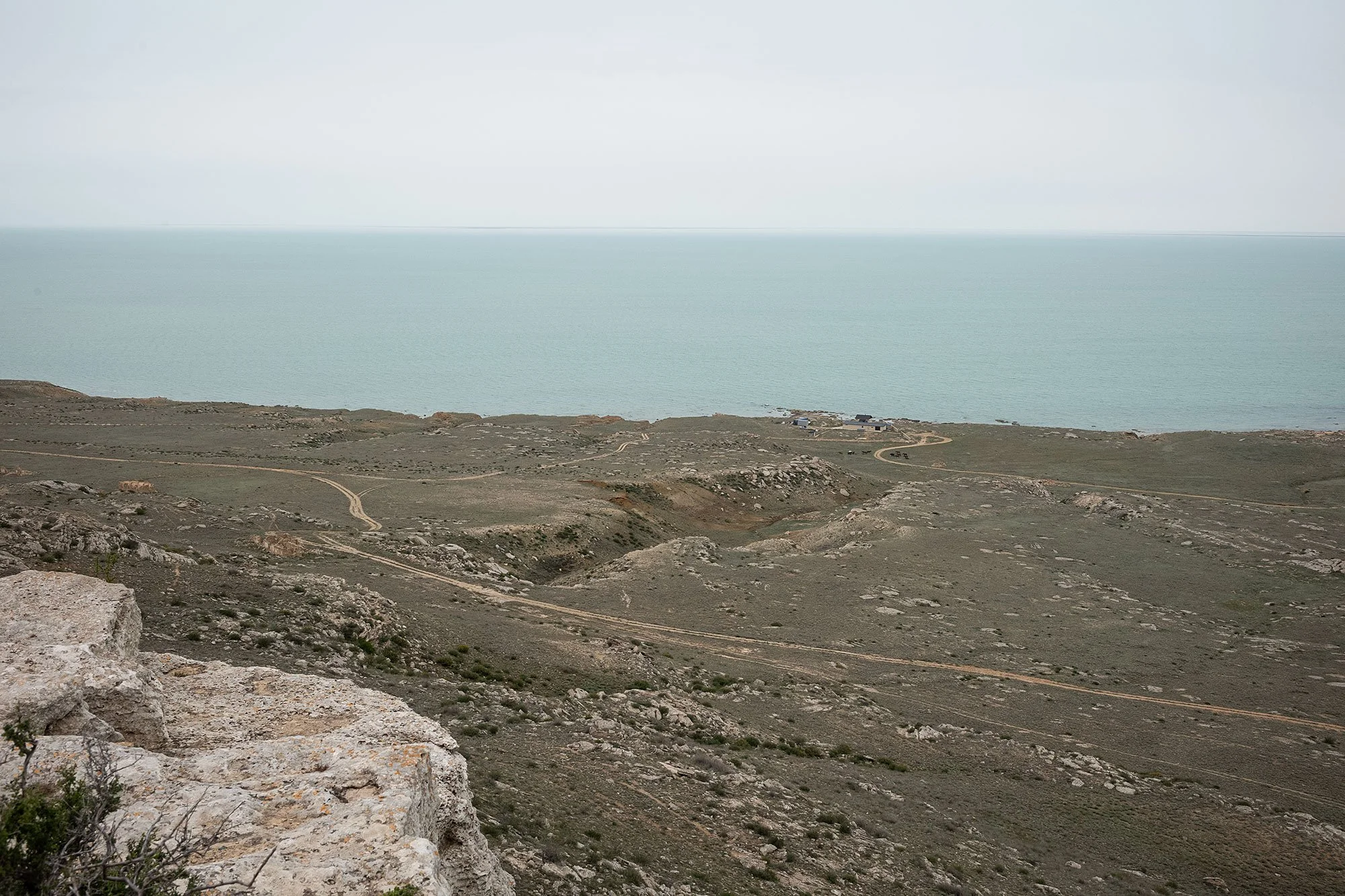
We continue driving across the steppe, inland but along the sea. Once again Rustum turns at a point off the main road onto a dirt path headed towards the Caspian. After a while we can see it from the edge of the steppe, various dirt roads leading down and around towards the water. Small villages dot the shore.
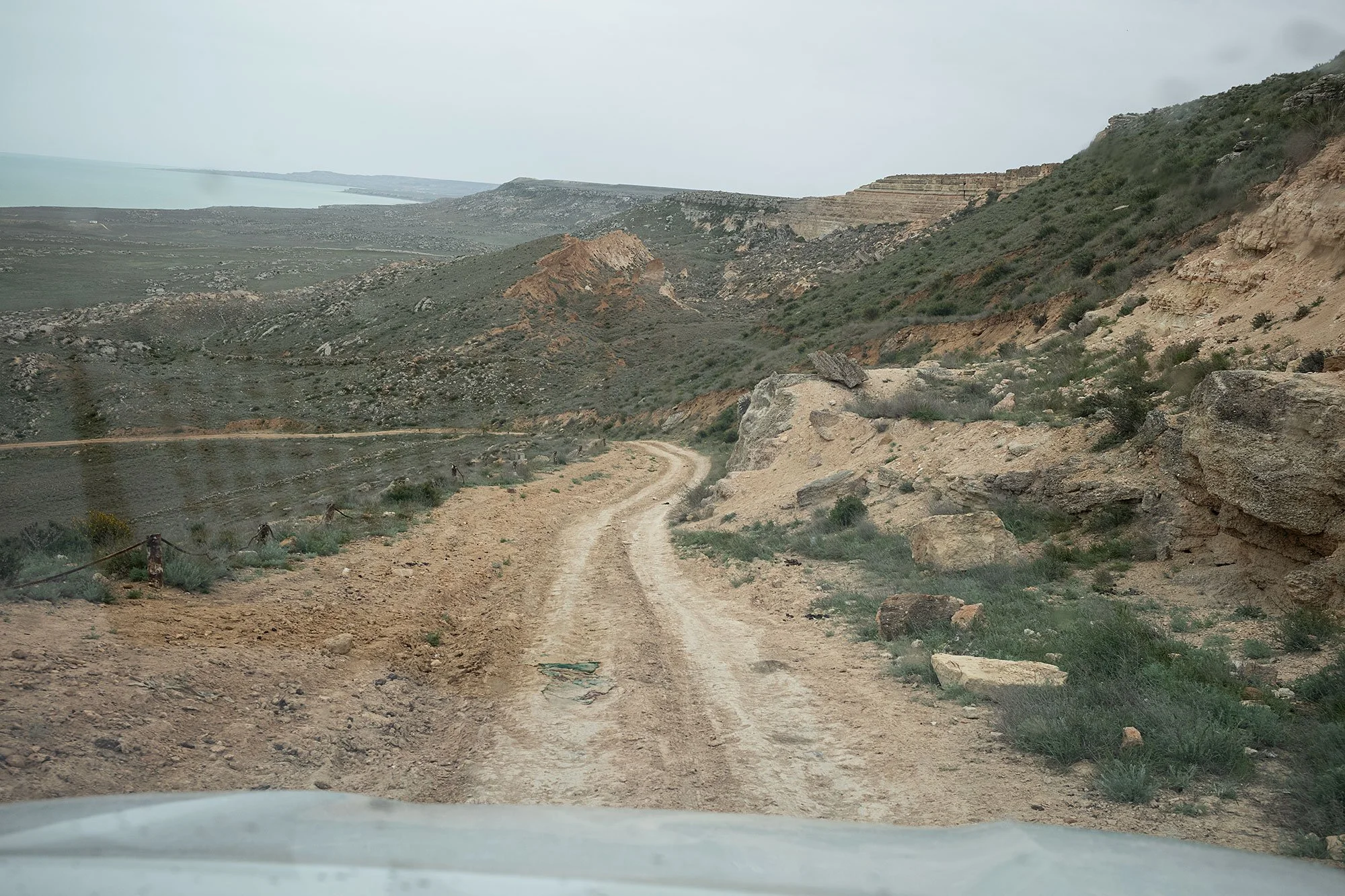
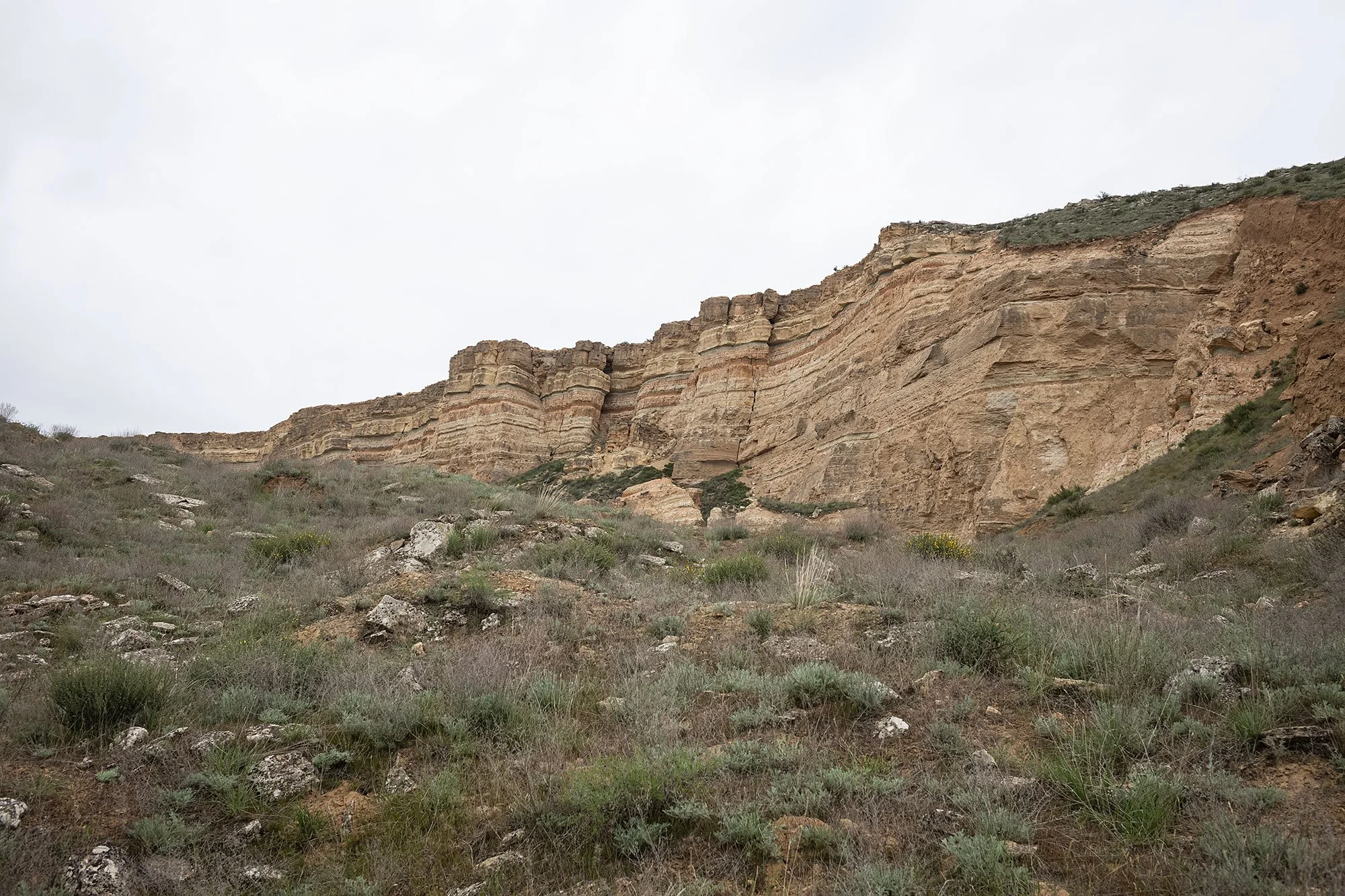
We drive down towards the water and then take a right, just below the seacliff and bounce our way towards the Tamshaly Canyon, a gorge boasting a freshwater lake and a waterfall fed by a spring that seeps through the rock. The canyon is named after these drops of water, as Tamshaly is the word for “drops” in Kazakh.
Rustum parks the car. From the small lot I can see the canyon walls to one side and a path that leads to the waterfalls on another. An orange staircase leads down from the lip of the canyon.
Asia leads me to the path to the waterfall, pointing the way forward. The rain continues to fall and I’ve put my rain jacket on over my fleece. She tells me that I have an hour or so to explore and to enjoy myself.
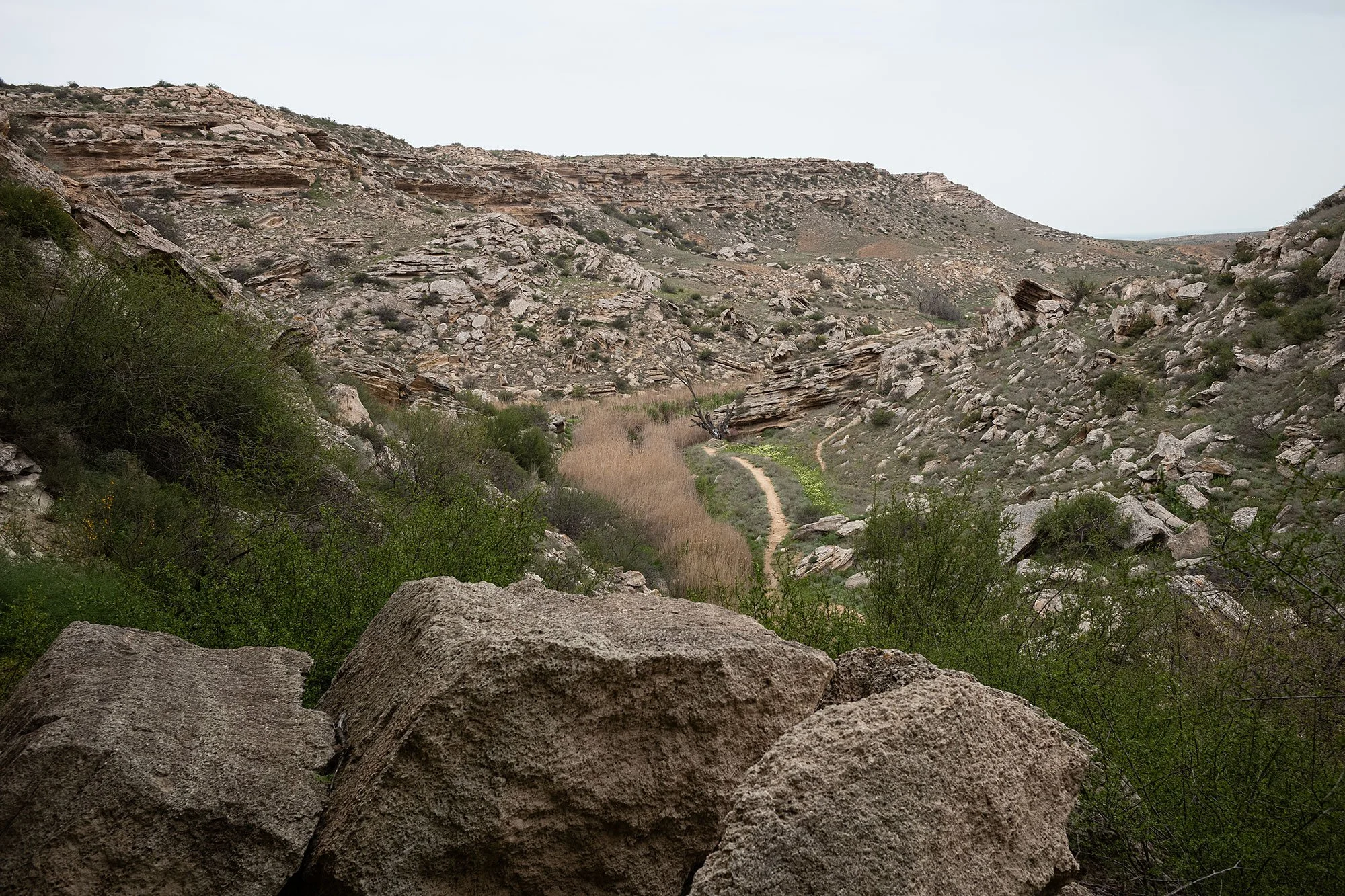
I walk to the waterfalls but there’s not much feeding the falls. I scramble up some rocks for another view and see a path that leads out around and out following the canyon away from the falls. I start to follow it and then decide against it when I find my footing start to slip.
I head back to the car and walk around the lake, climbing up towards the canyon walls below the ladder I had seen before.
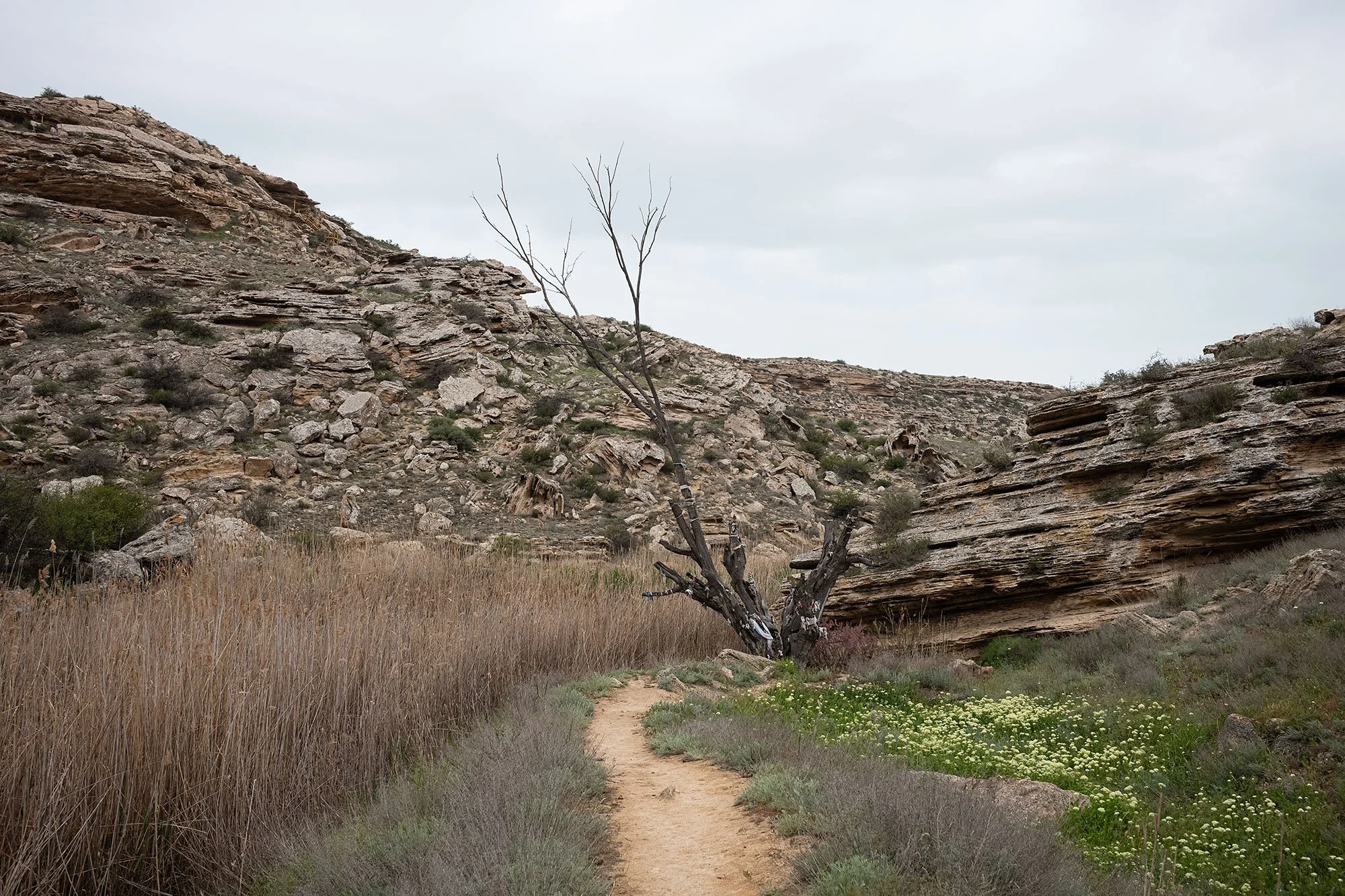
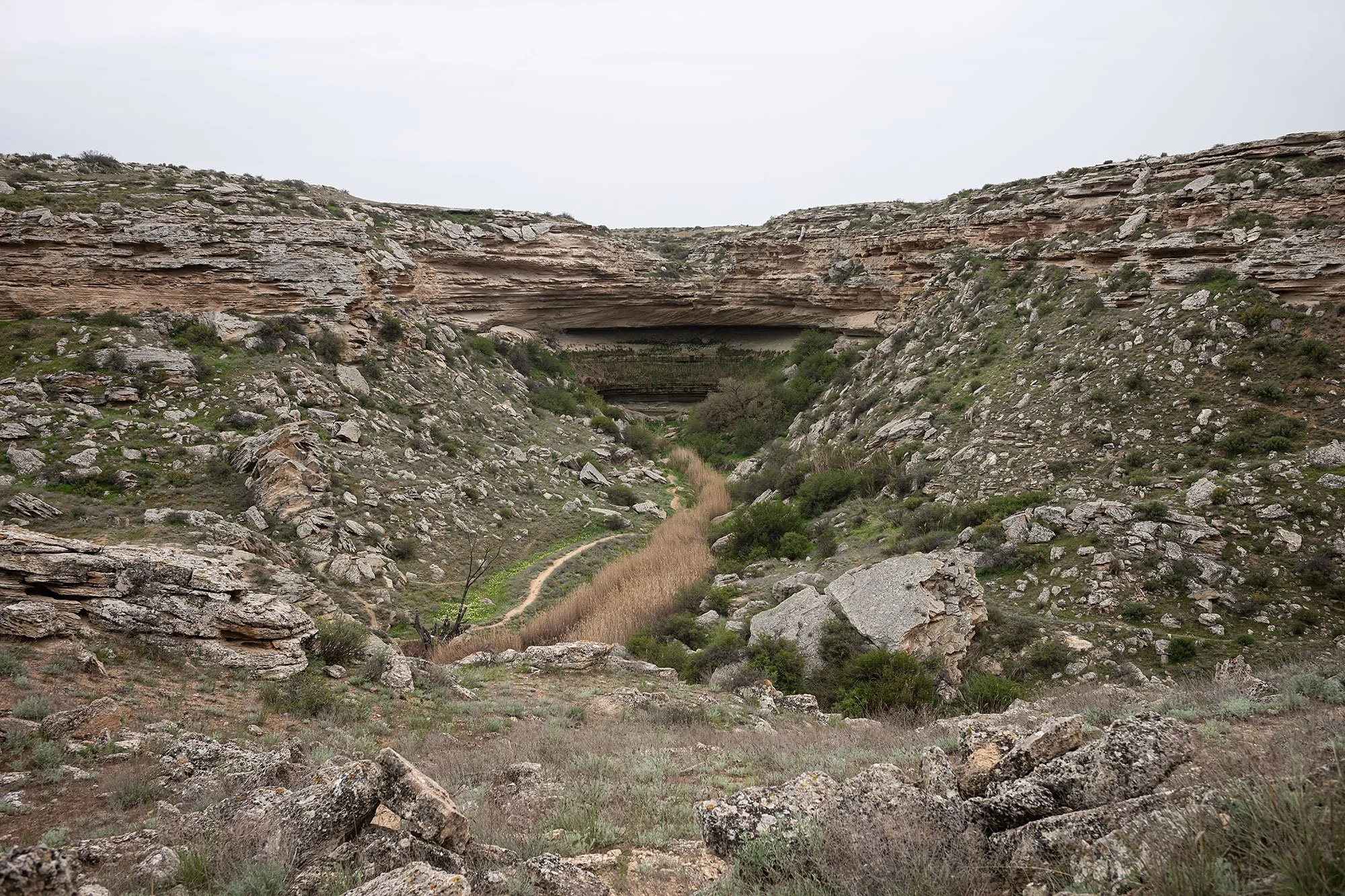
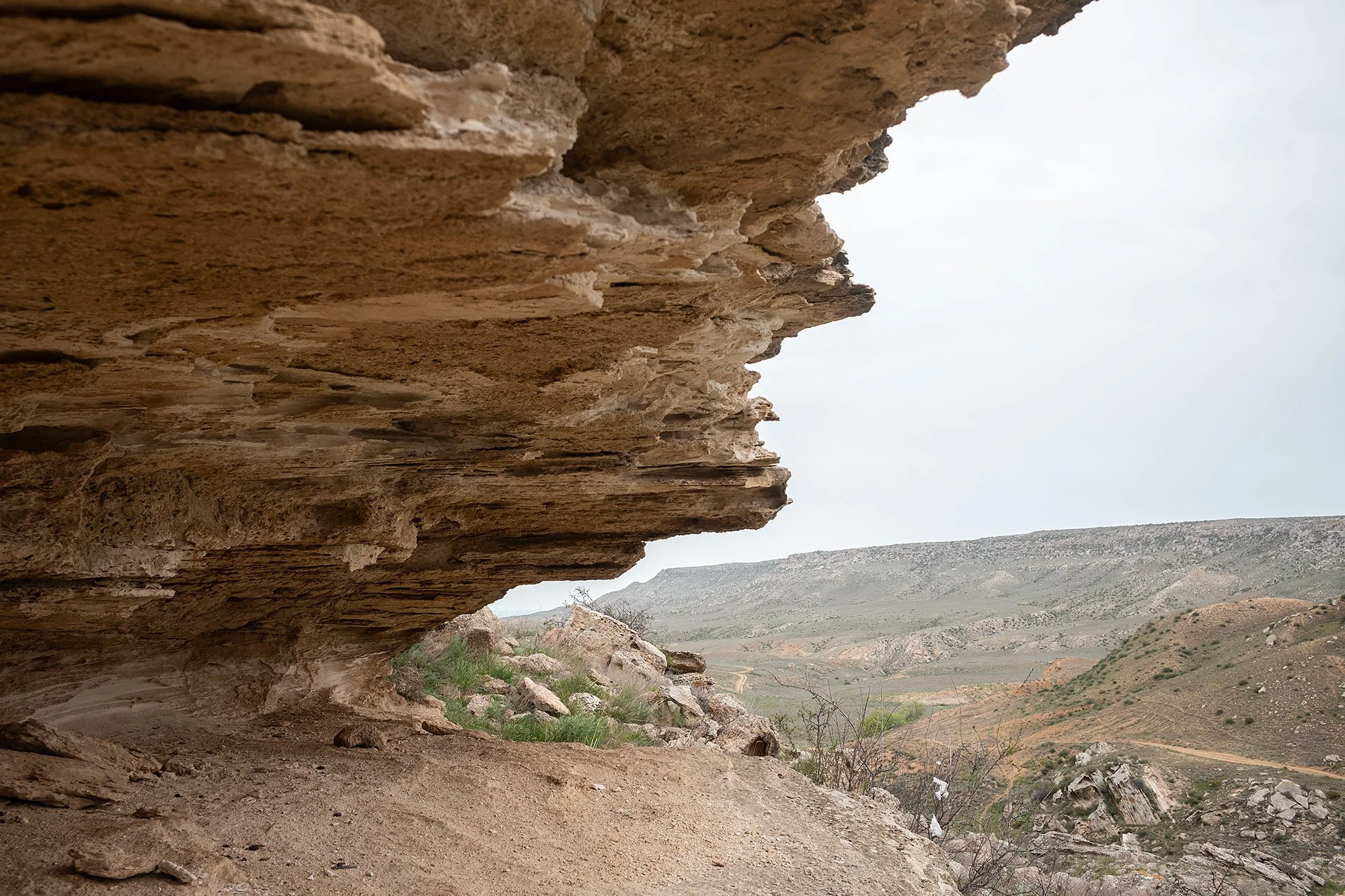
I climb up to a small clearing shielded by overhanging rock. I’ve warmed up and I take advantage of the shelter to remove my rain jacket and fleece. I stuff the latter in my backpack and put the rain jacket back on before continuing my walk.
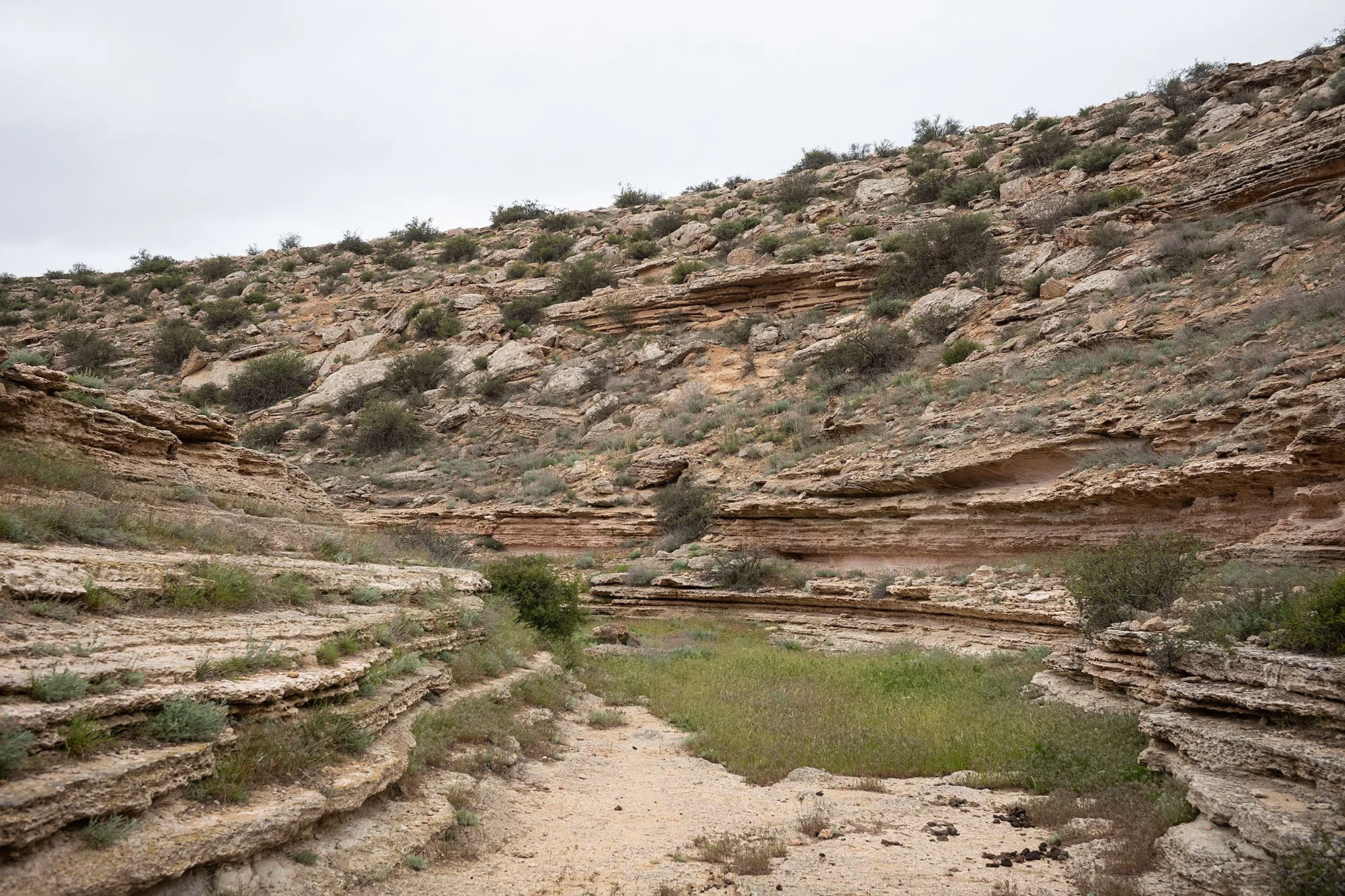
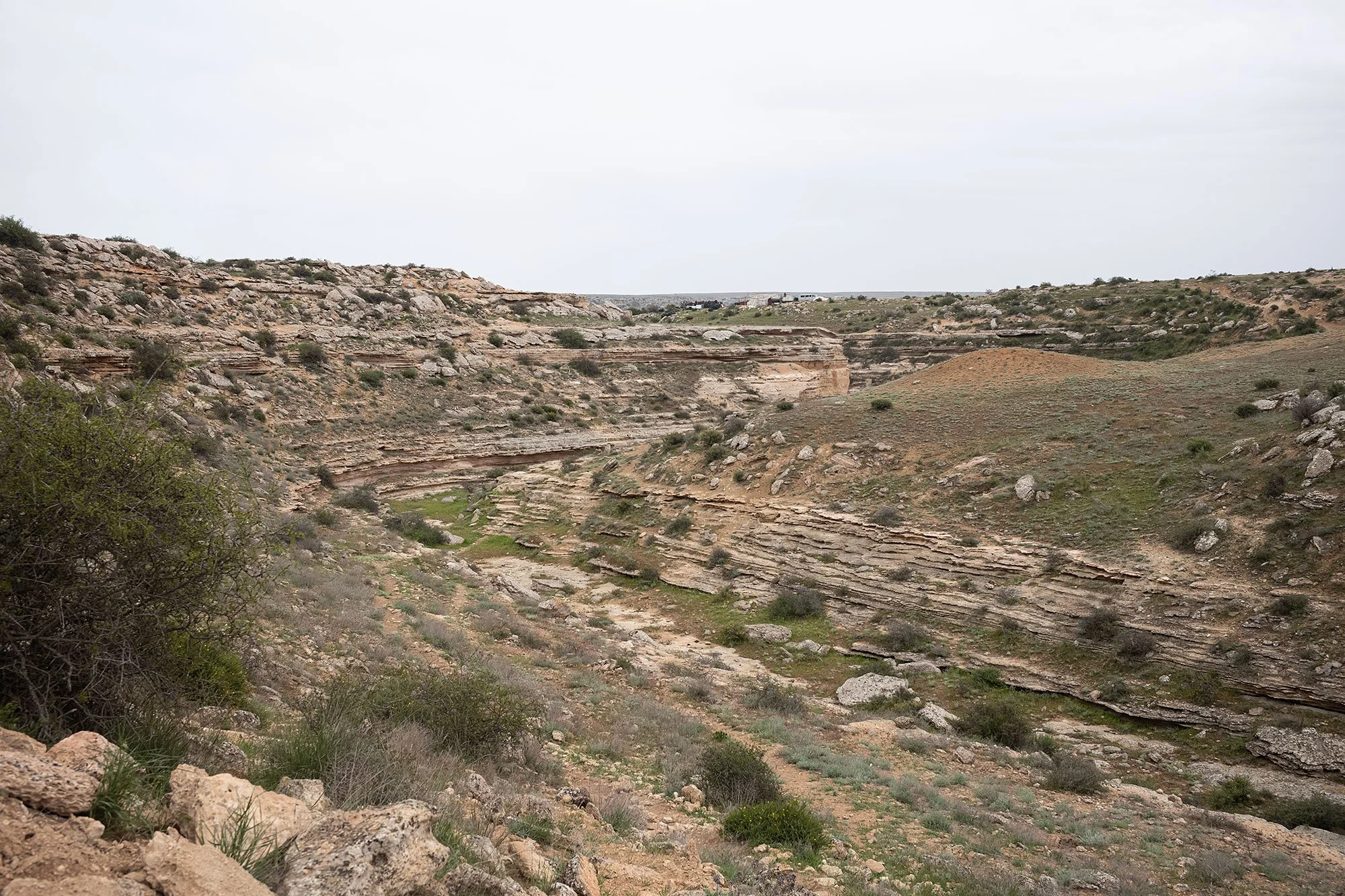
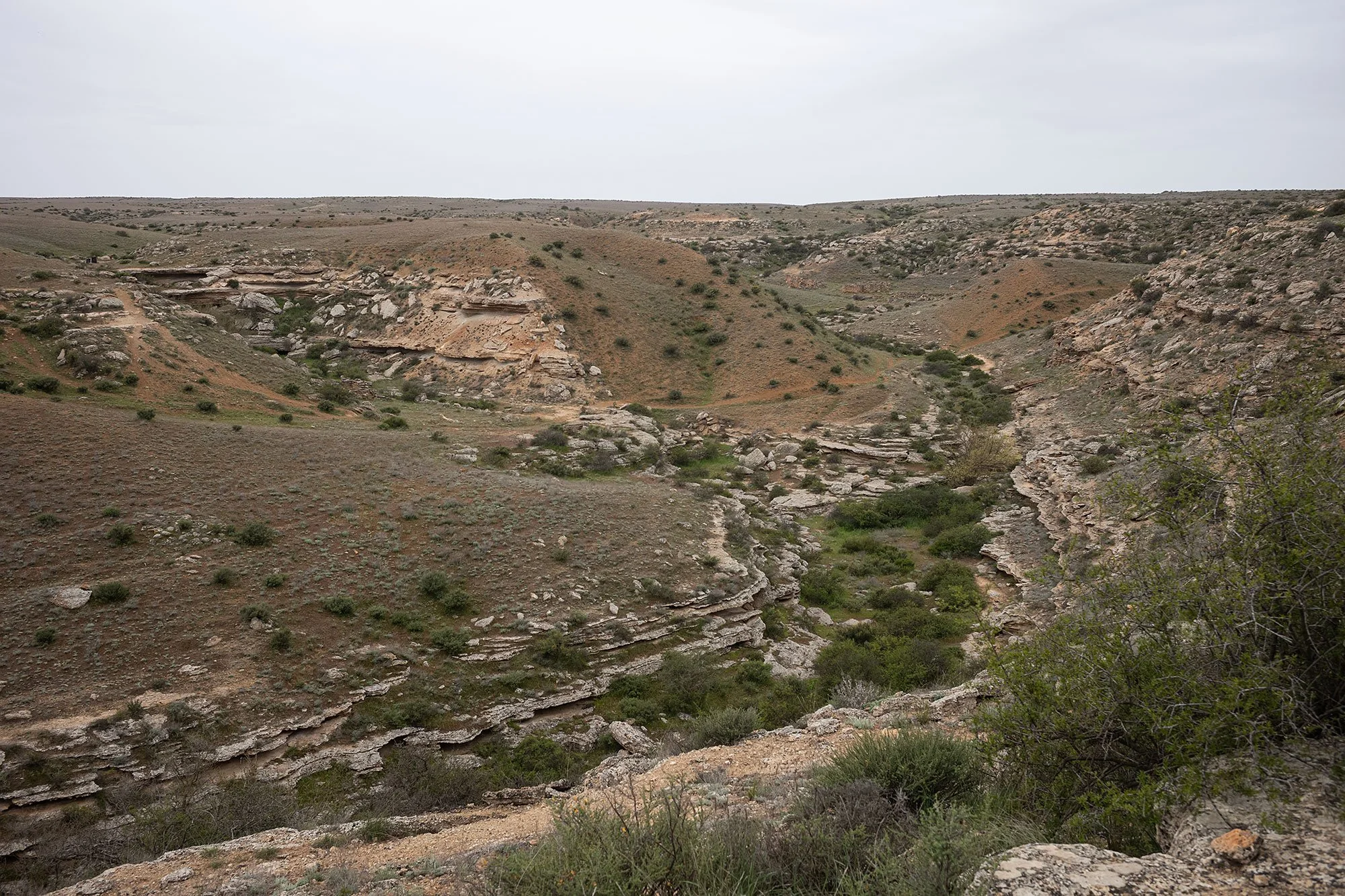
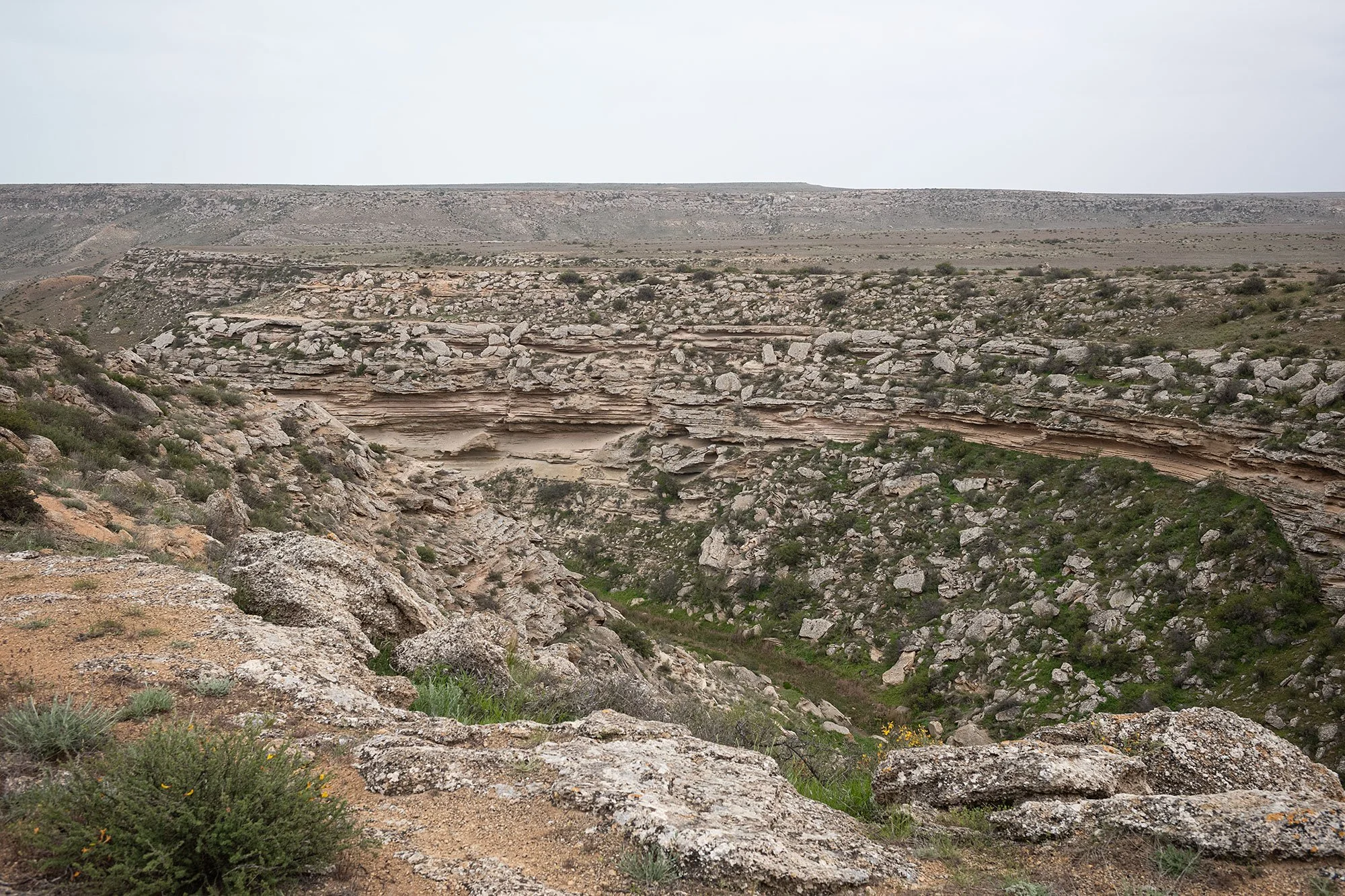
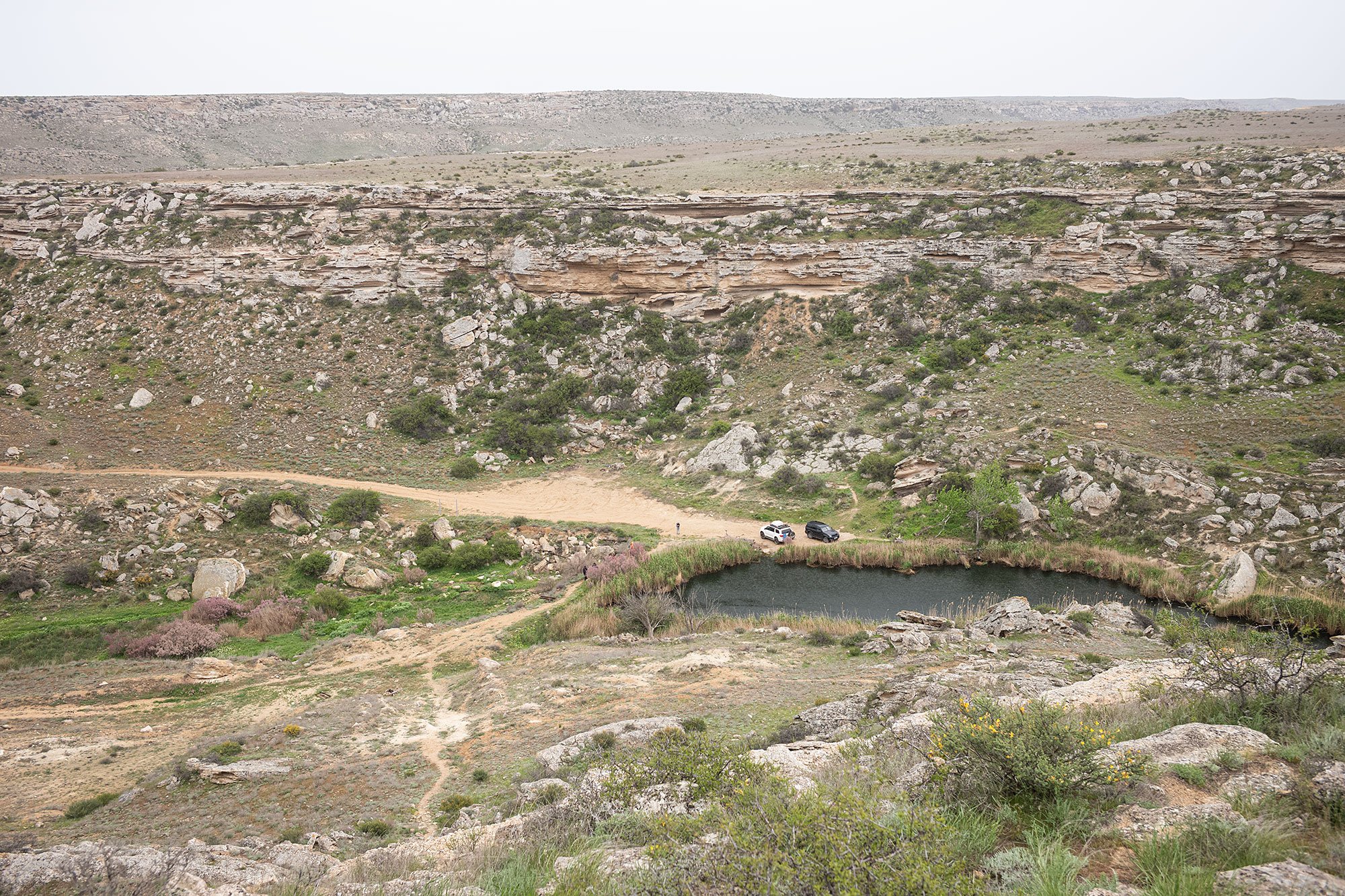
I follow the valley as it winds its way inland, following the river. The floor of the valley is marshy and wet and I soon find myself climbing back up to walk below the cliff’s edge.
I think to myself that I’ll walk just a bit more before turning back but soon the path rises even further and I can see where it emerges out from the valley to the top of the cliffs. I continue on until I’m on top, looking down at the path of the river I’ve followed.
I walk back along the cliff edge towards the car, confident that I’ll be able to descend down the staircase I’d spotted before. I hug the cliff edge as it winds its way back towards the sea, skirting some additional canyons that have been carved from the rock.
Nearing the parking lot I can see our car. Another one has parked beside it and I can see people in windbreakers standing beside the pond looking up the valley. They seem in no hurry to explore the waterfall.
I can’t see the stairs from where I stand and decide to start descending in hopes of coming across it. As I hug the rock face on my descent I notice the imprint of shells in the limestone. The shells have long been displaced, either of their own accord or having been carved out by people looking for souvenirs.
I soon spot the stairs below me and make my way over, descending to a more moderate slope that I walk down back to where I came.
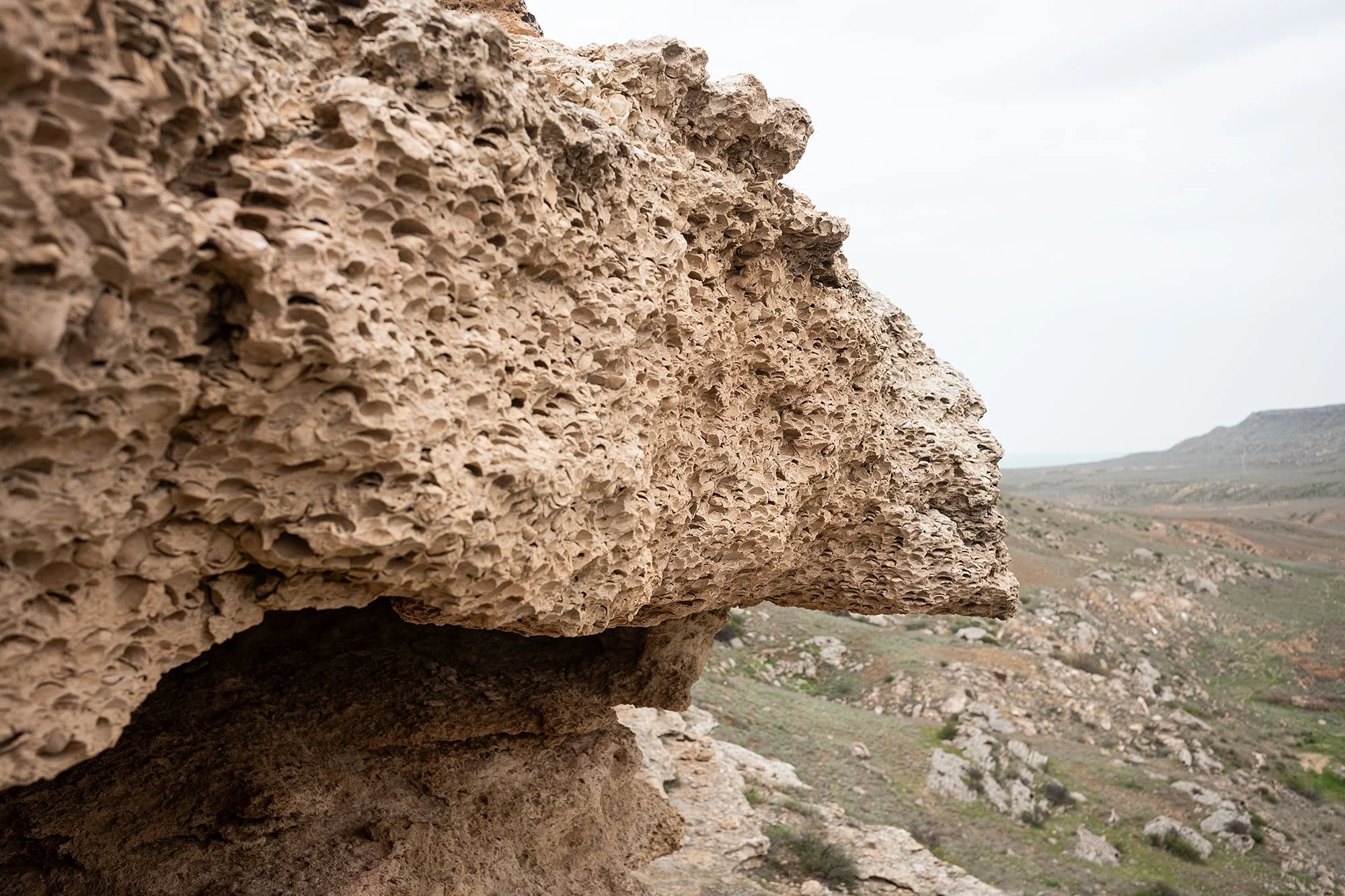
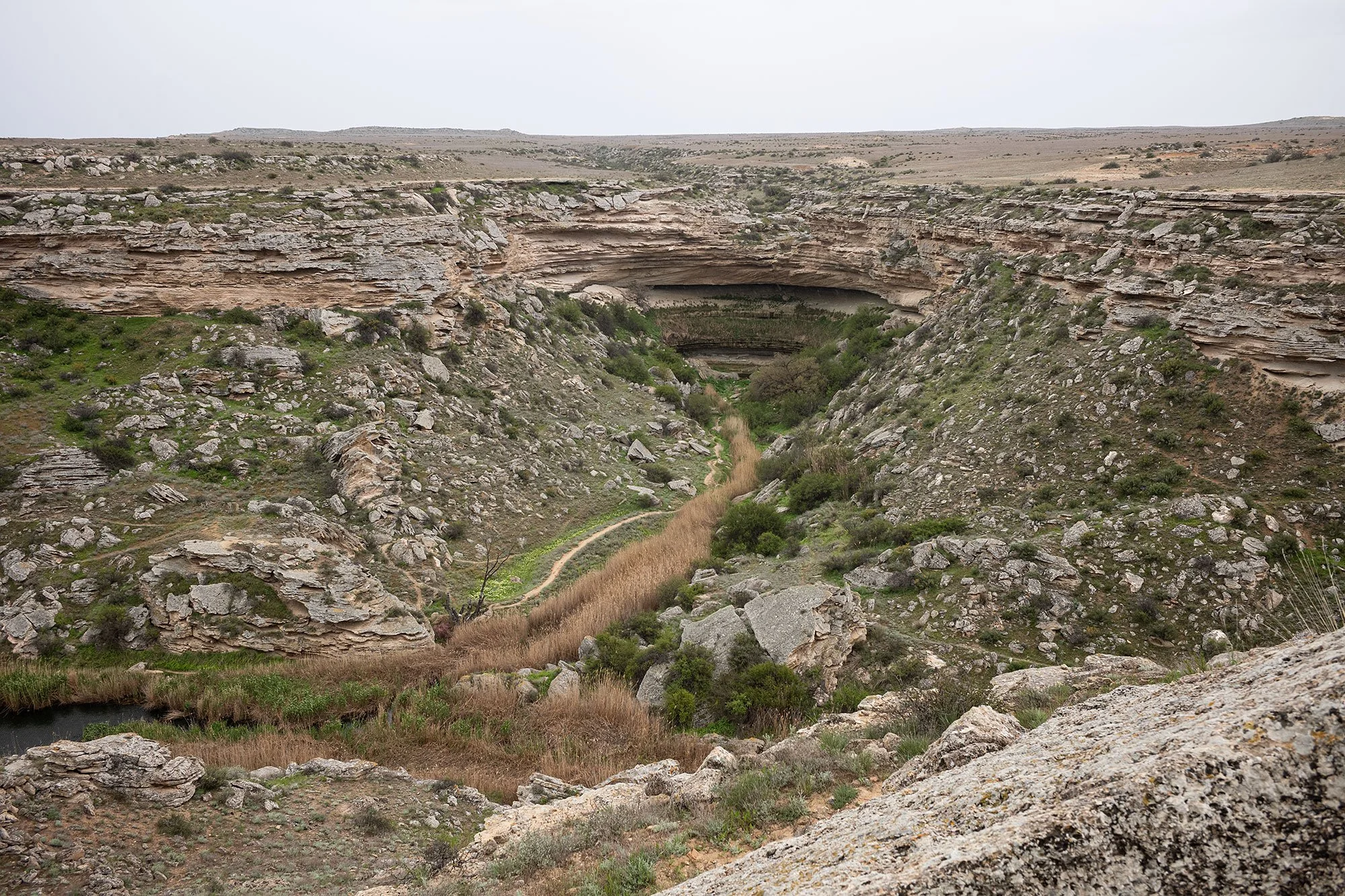
Rustum seems surprised to see me emerge from where I have. I tell him I’ve followed the valley up and out of the canyon and then walked back along the edge of the cliff, taking the stairs back down to the valley floor. I point out the path. He’s surprised I’ve walked so much so quickly.
Asia tells me we have two options for the night. The original plan is to camp here; an alternative plan is to return to Aktau and stay at the resort. She tells me that the weather forecast calls for it to rain all night and suggests it might be more comfortable and restful back in town at the hotel. I don’t think anyone wants to set up camp in the rain. Asia seems concerned I’ll be disappointed we’re not camping but I hadn’t expected to (yet) and am happy knowing there’s a warm shower in my future.
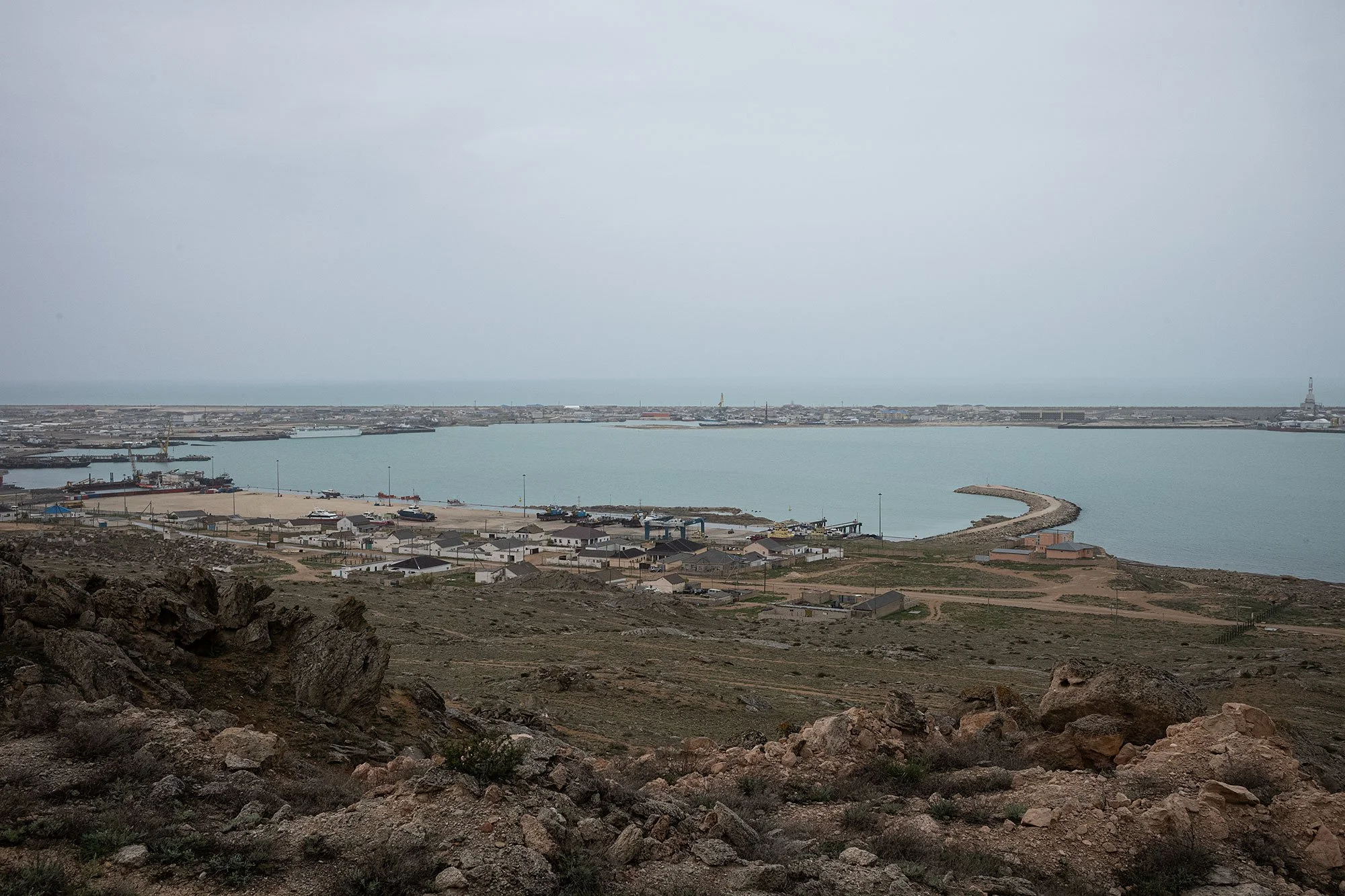
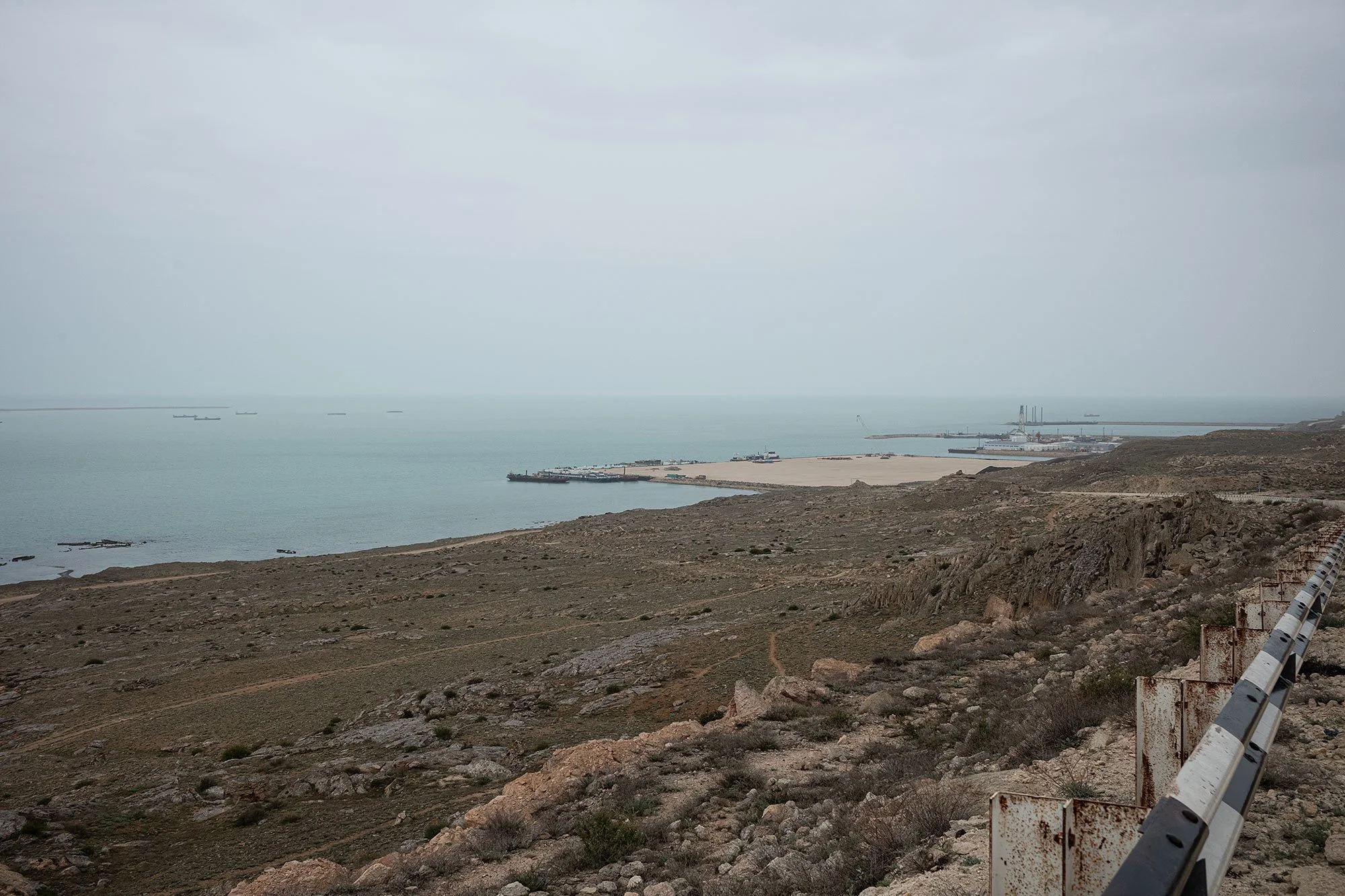
We drive back to Aktau. At the edge of the city Rustum stops at a bend in the road overlooking the sea so I can take a better look at the port. It’s been raining pretty steadily and I don’t linger.
Asia suggests we visit the Ethnographic Museum of the Mangystau Region. It’s part of a larger complex that includes the Taras Shevchenko museum and park.
It takes us a minute to figure out where to park. The official parking lot looks gated shut so we find a spot on the side of the road. There’s plenty of room.
On entering Asia enlists a guide to walk us around the exhibits. She’s excited to explore and has her phone out to document her visit. I think it’s her first time, but she later tells me she’d been before; it’d been a while, however.
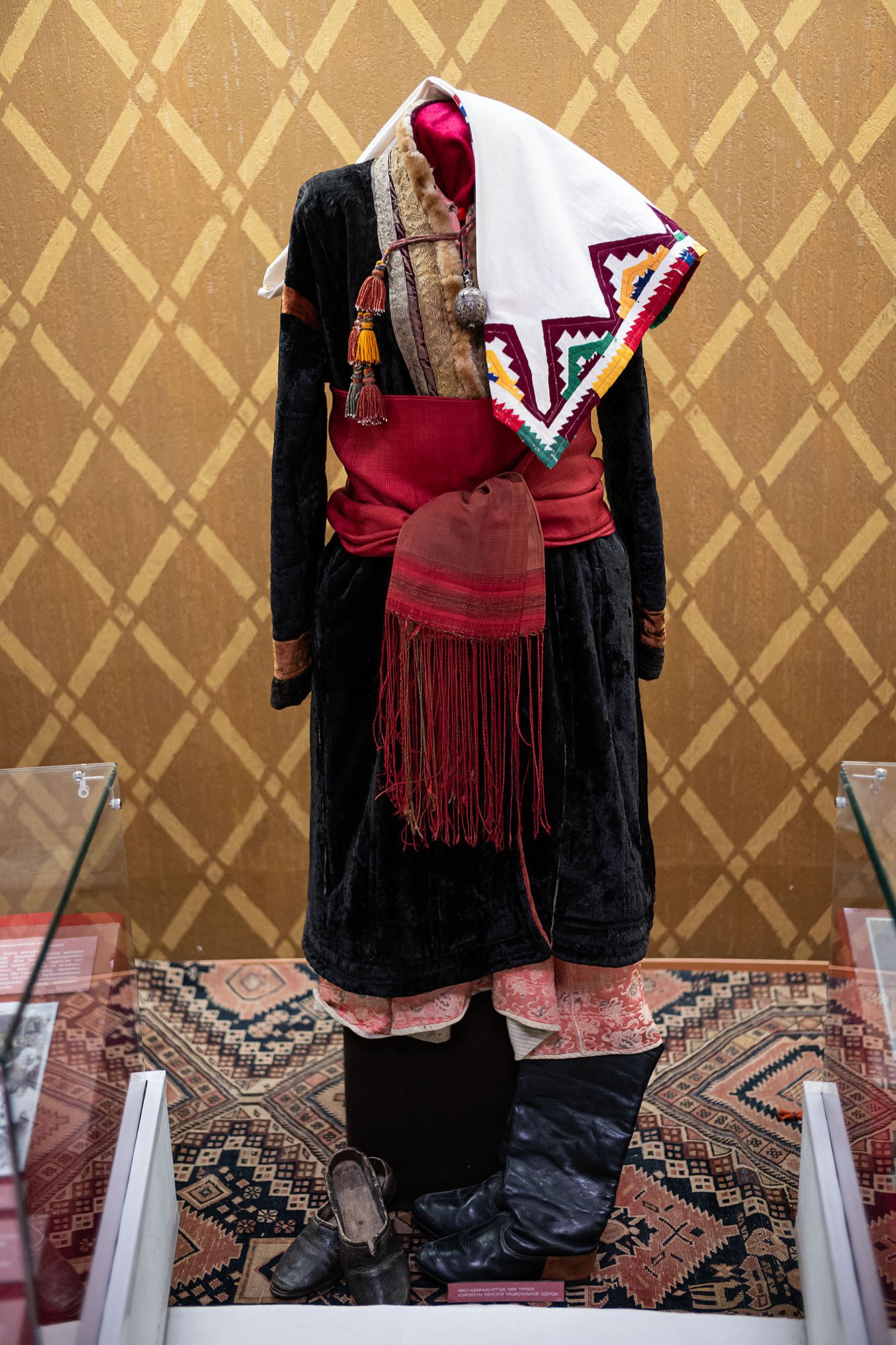
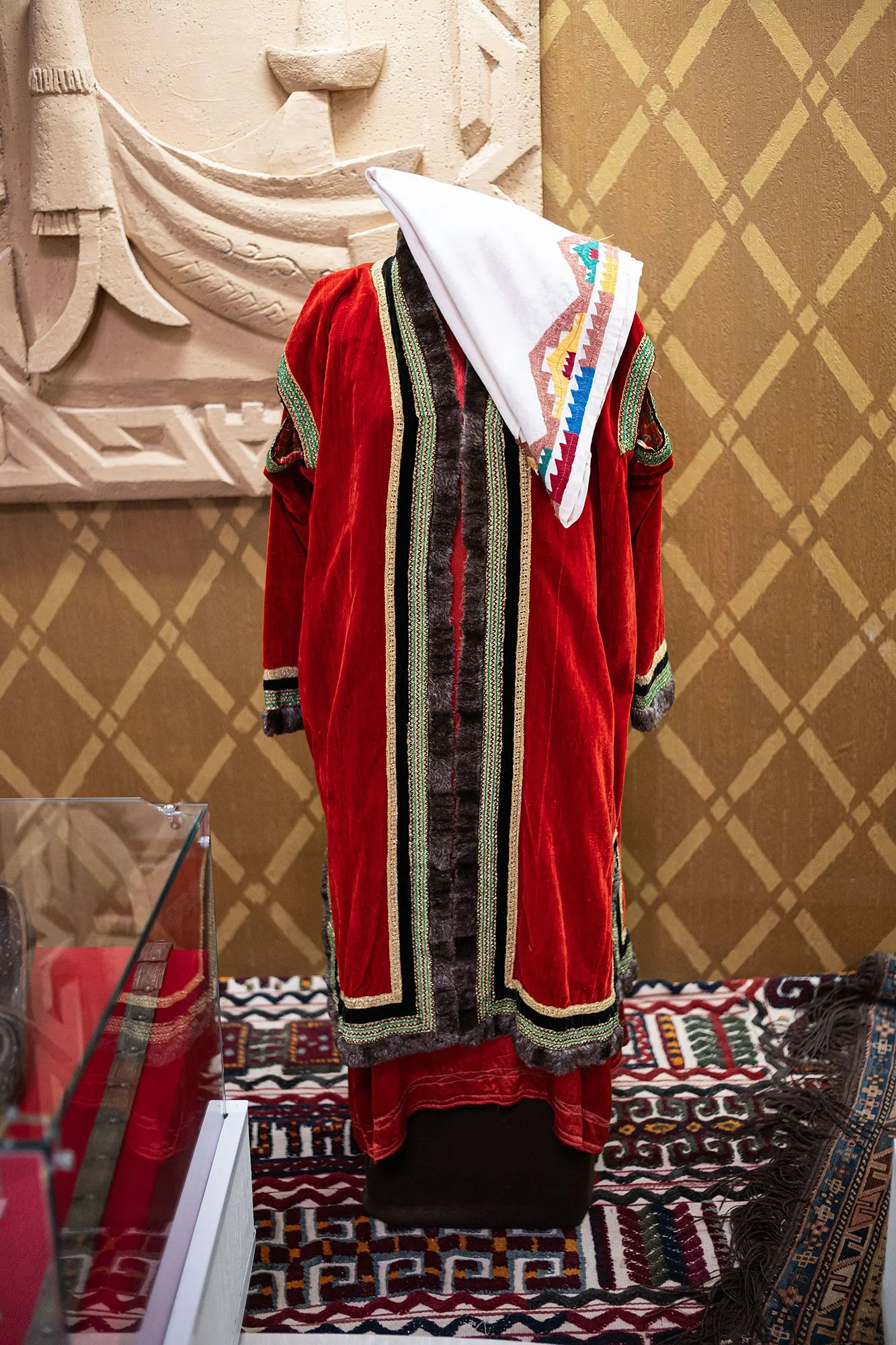
The tour is conducted in Kazakh, but I don’t mind. I make my own way around the exhibits at my own pace, sometimes in front of their small group, sometimes behind. When I come across something I’m curious about I use Google Translate to read the wall text.
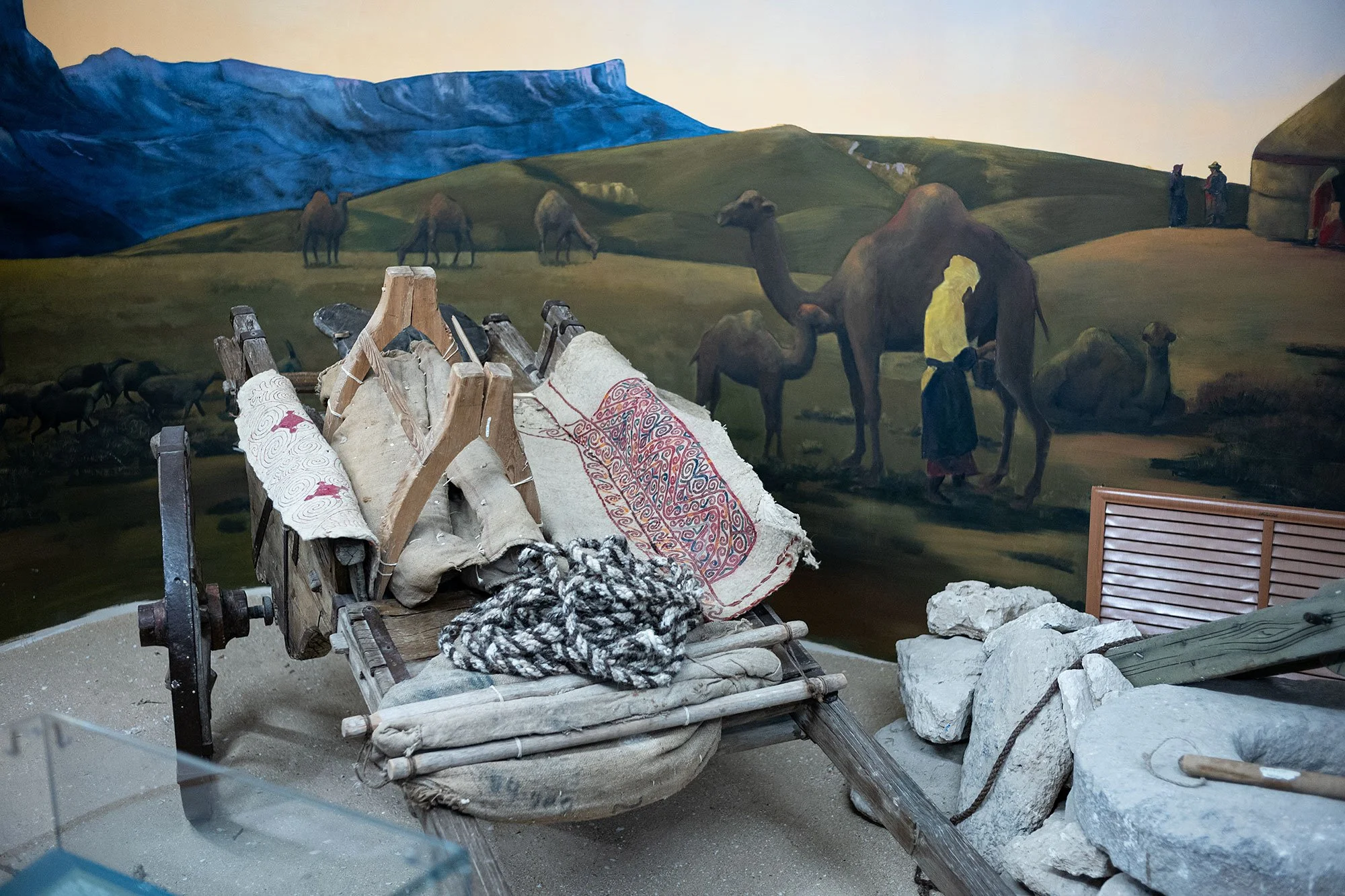
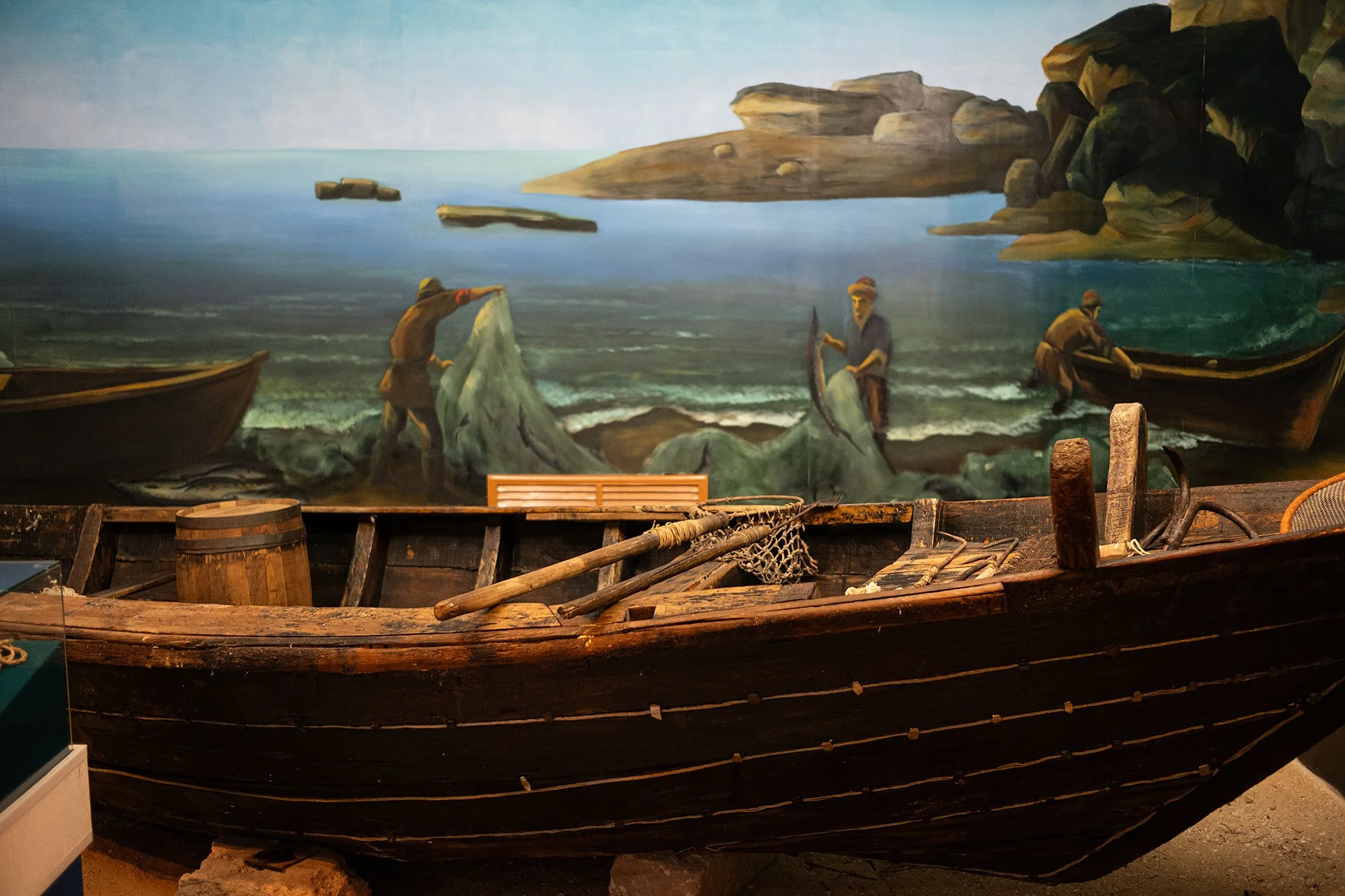
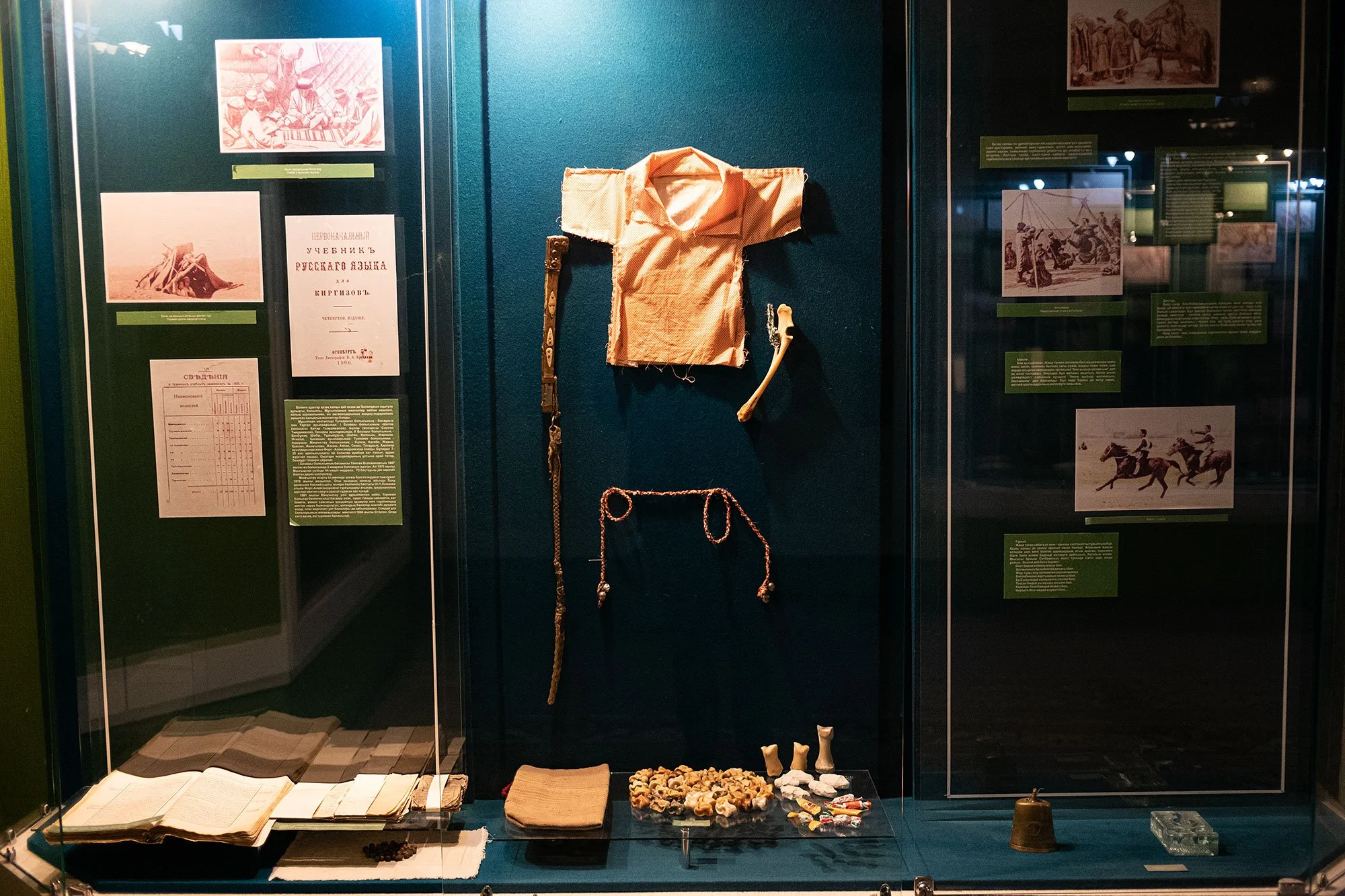
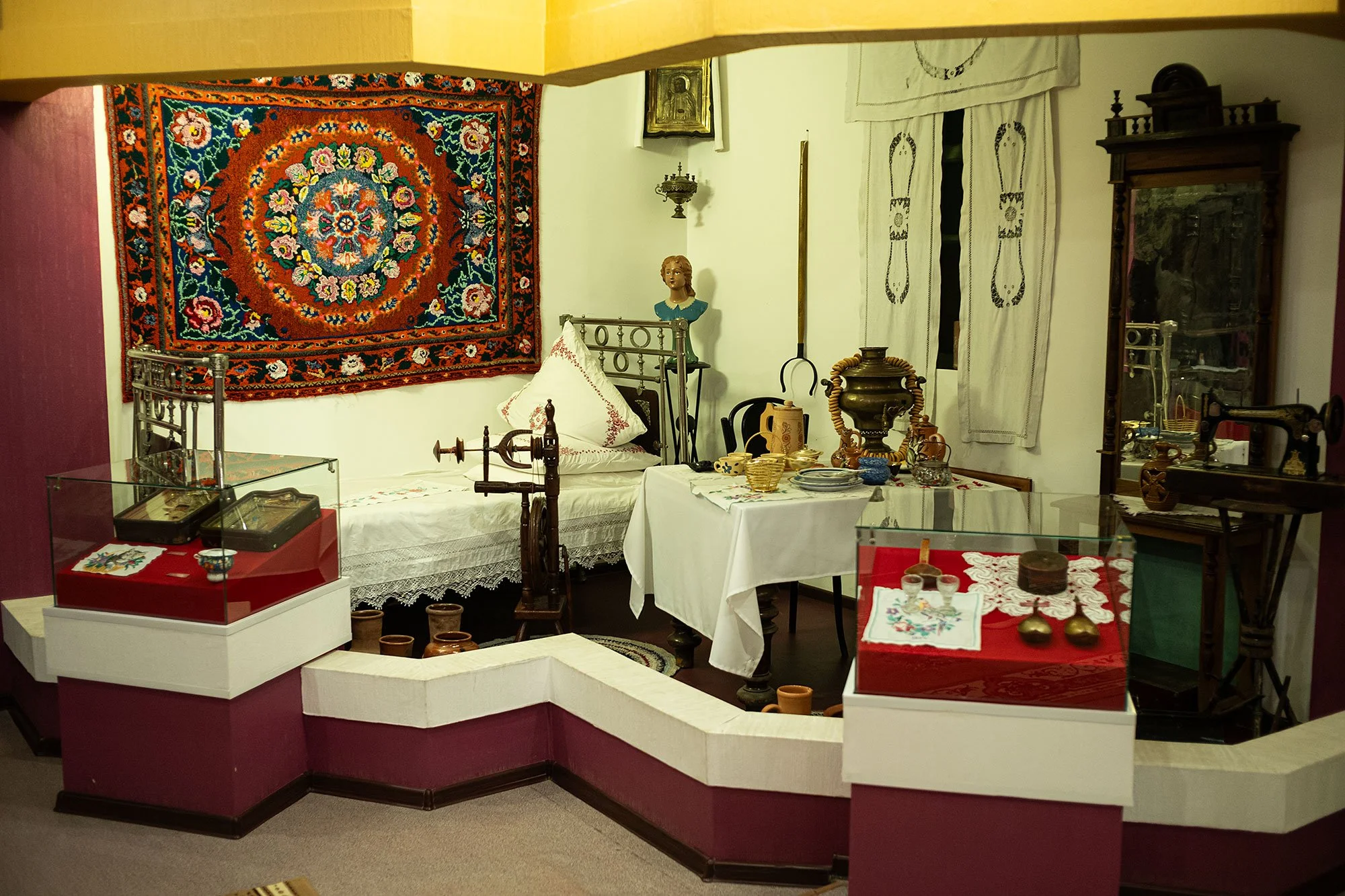
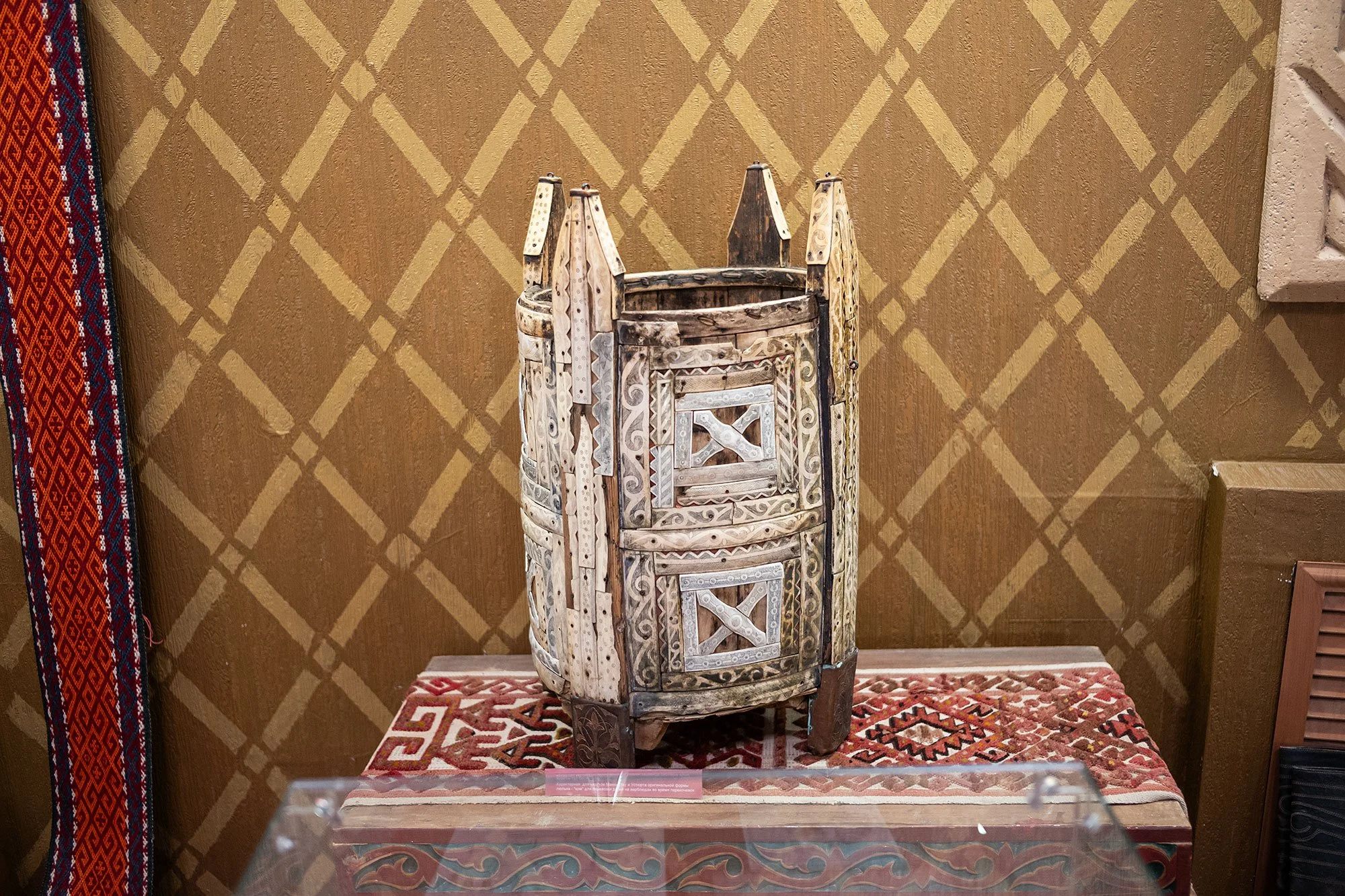
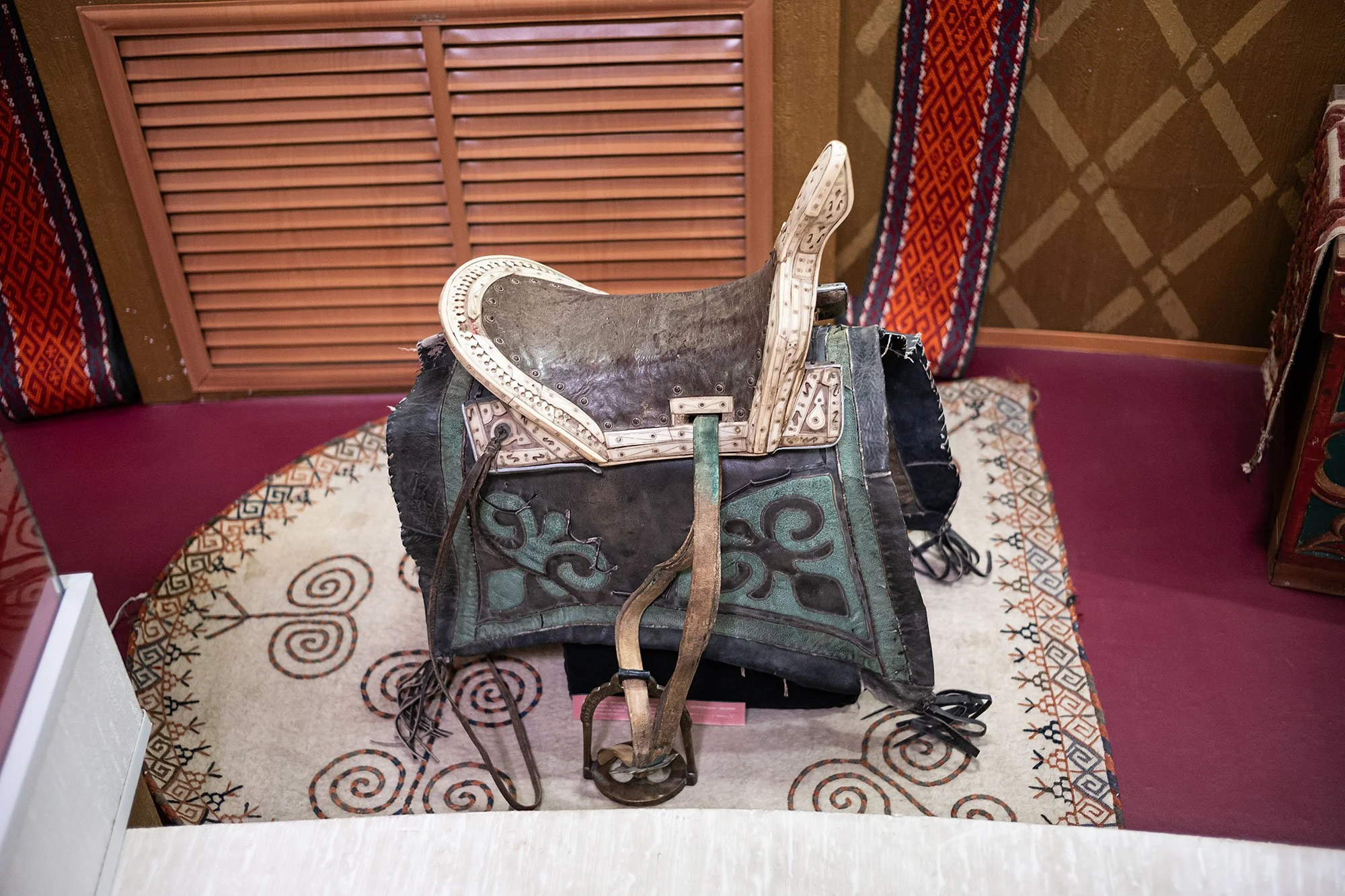
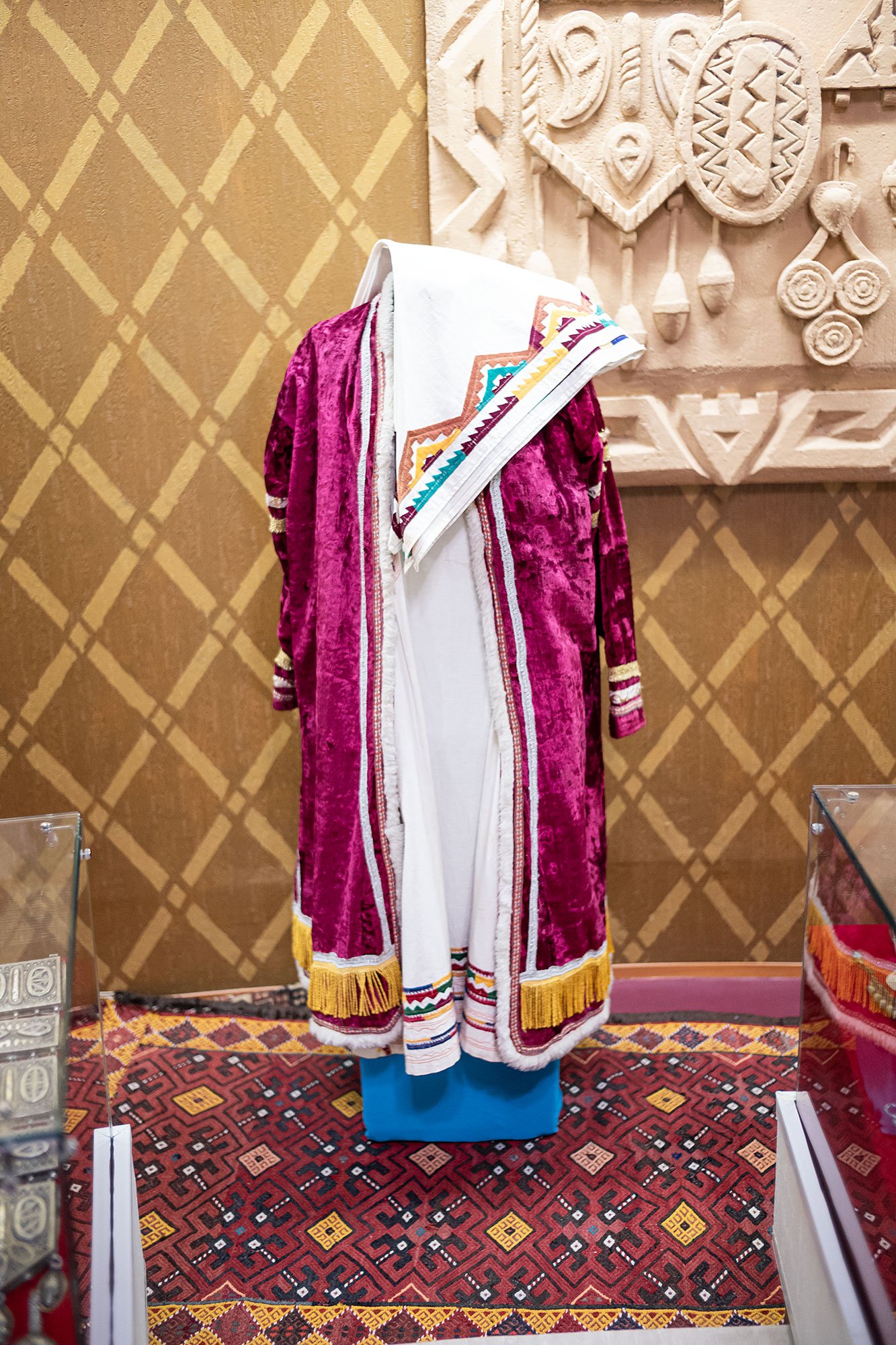
It’s a great little ethnographic museum and I find myself gravitating to the exhibits I usually do: the arts and crafts and clothing. There’s something about traditional dress that I always love: the external presentation chosen by a people and a culture.
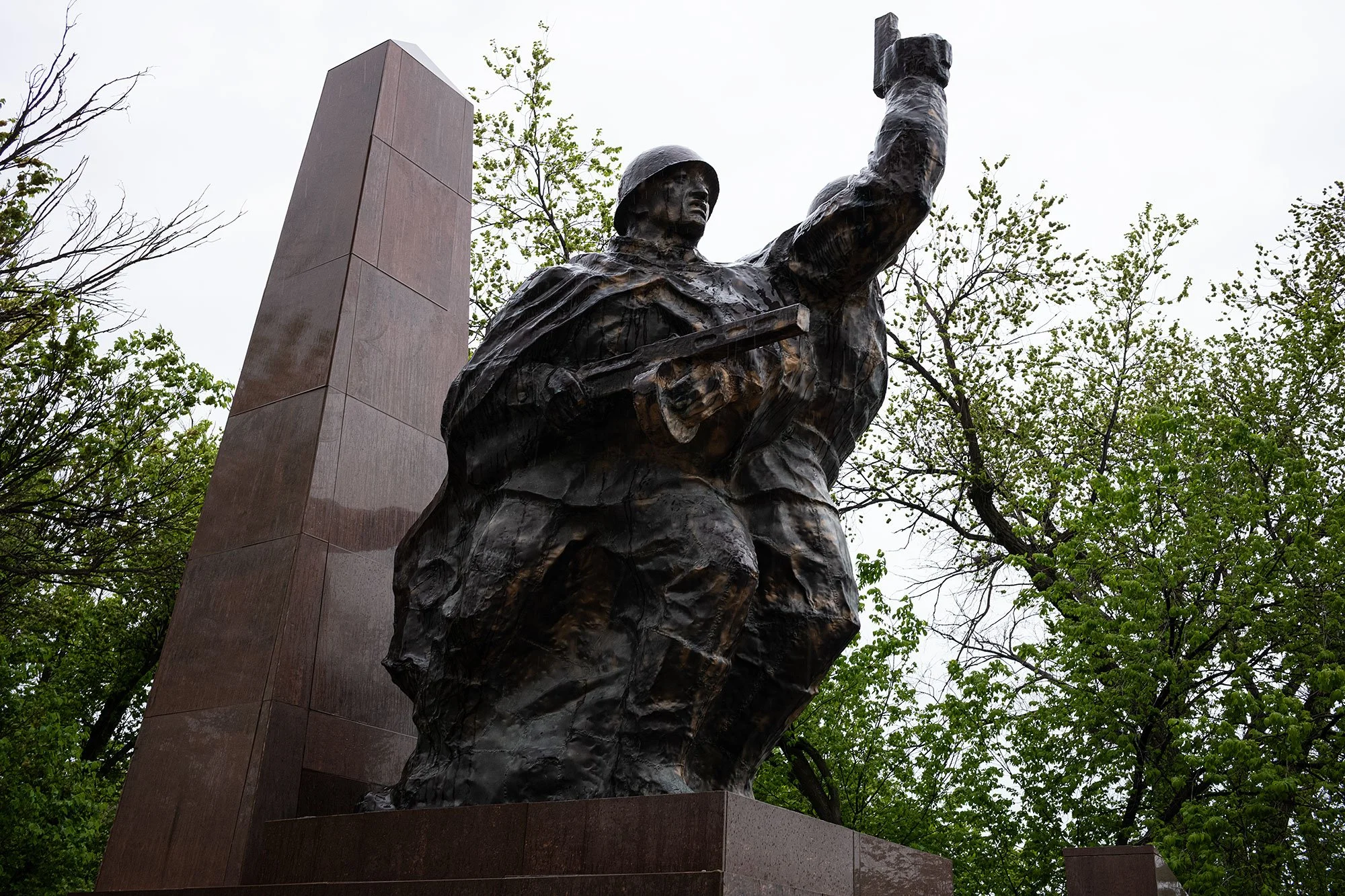
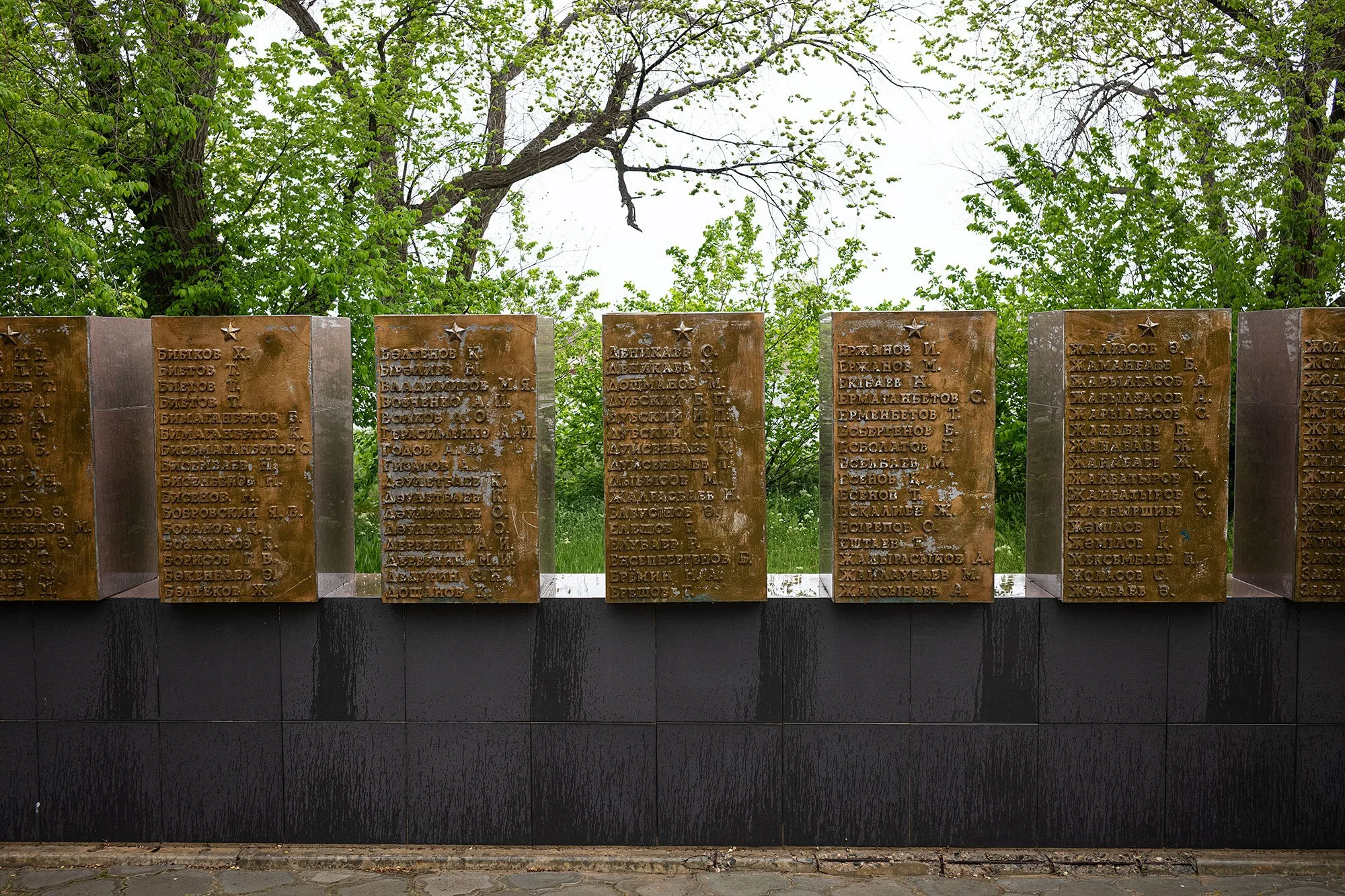
The guide leads us through a small hallway outside. We walk through the park to a museum devoted to Taras Shevchenko, along the Alley of Glory and past the Memorial Complex to the Soldiers of the Great Patriotic War (World War II). Bronze nameplates bearing the names of local soldiers who served and died in war stand alongside a statue of soldiers symbolizing their courage and the sacrifice they made.
The guide unlocks the door and leads us inside the Taras Shevchenko museum. A Ukrainian poet, artist, and political figure, Shevchenko is revered as the spiritual founding father of modern Ukrainian nationhood. Born into serfdom, his works (notably the poetry collection Kobzar) laid the foundation for the modern Ukrainian language and literature.
For his revolutionary Ukrainian poetry and involvement in the Brotherhood of Saints Cyril and Methodius (which advocated for social equality, an end to national oppression, and a federation of Slavic states under the leadership of Ukraine), Tsar Nicholas I ordered him into exile. Sentenced to ten years of forced military service, he was stationed at the Orsk Fortress and the Novopetrovsk Fortress, the latter since renamed to Fort Shevchenko.
Shevchenko had also lent his name to Aktau, which was renamed Shevchenko in 1964 in his honor. The city reverted back to its original name in 1991.
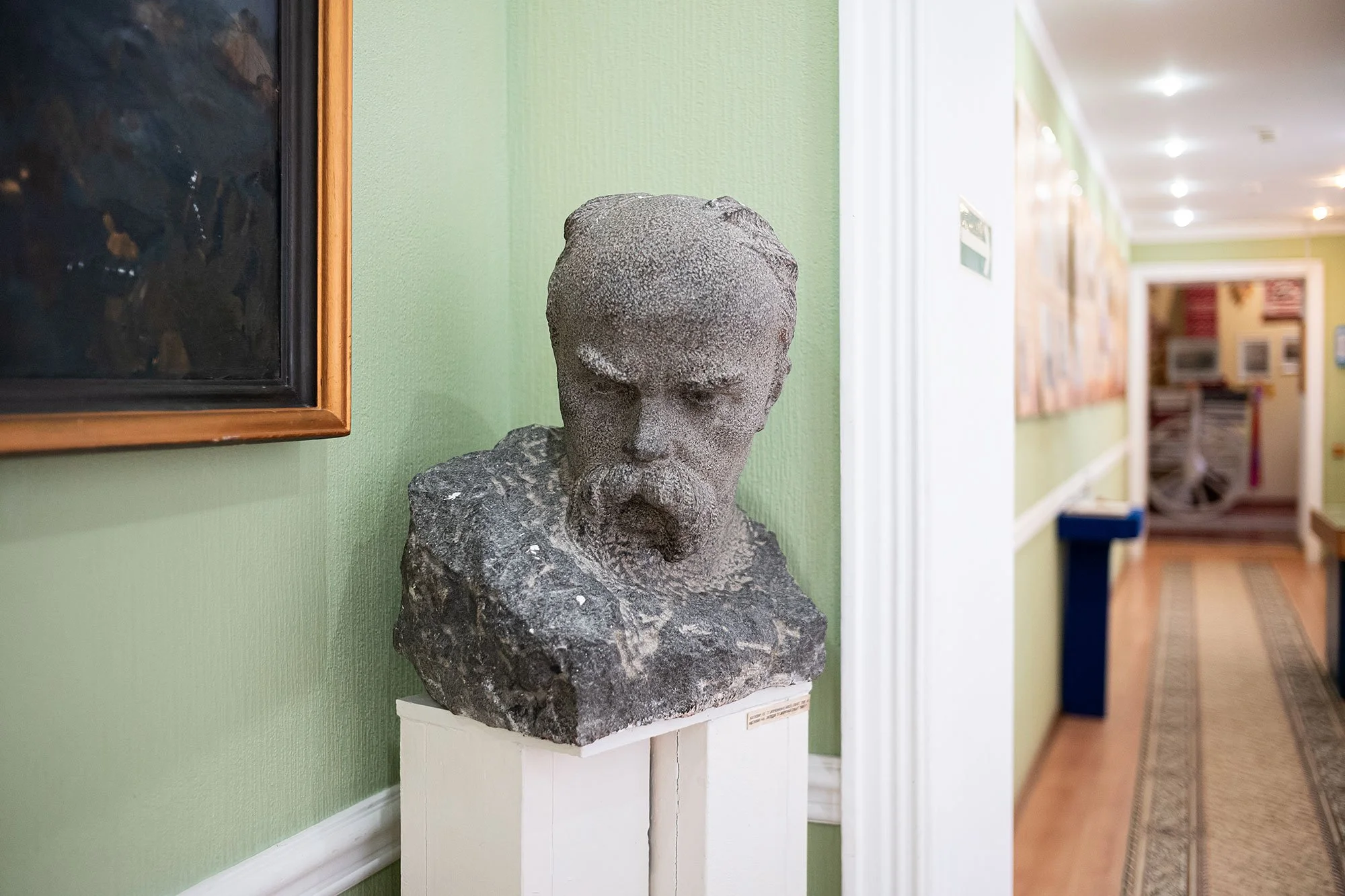
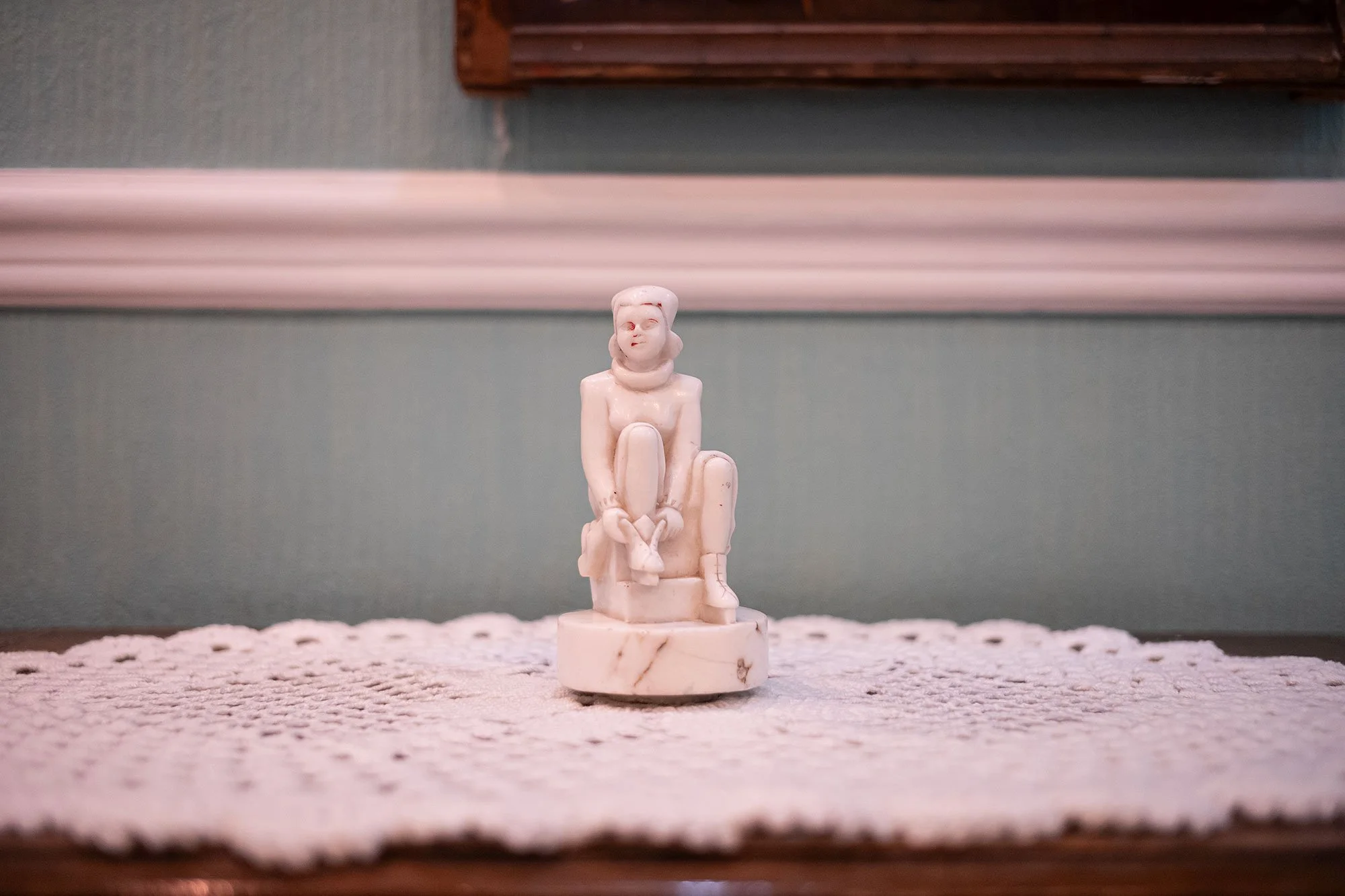
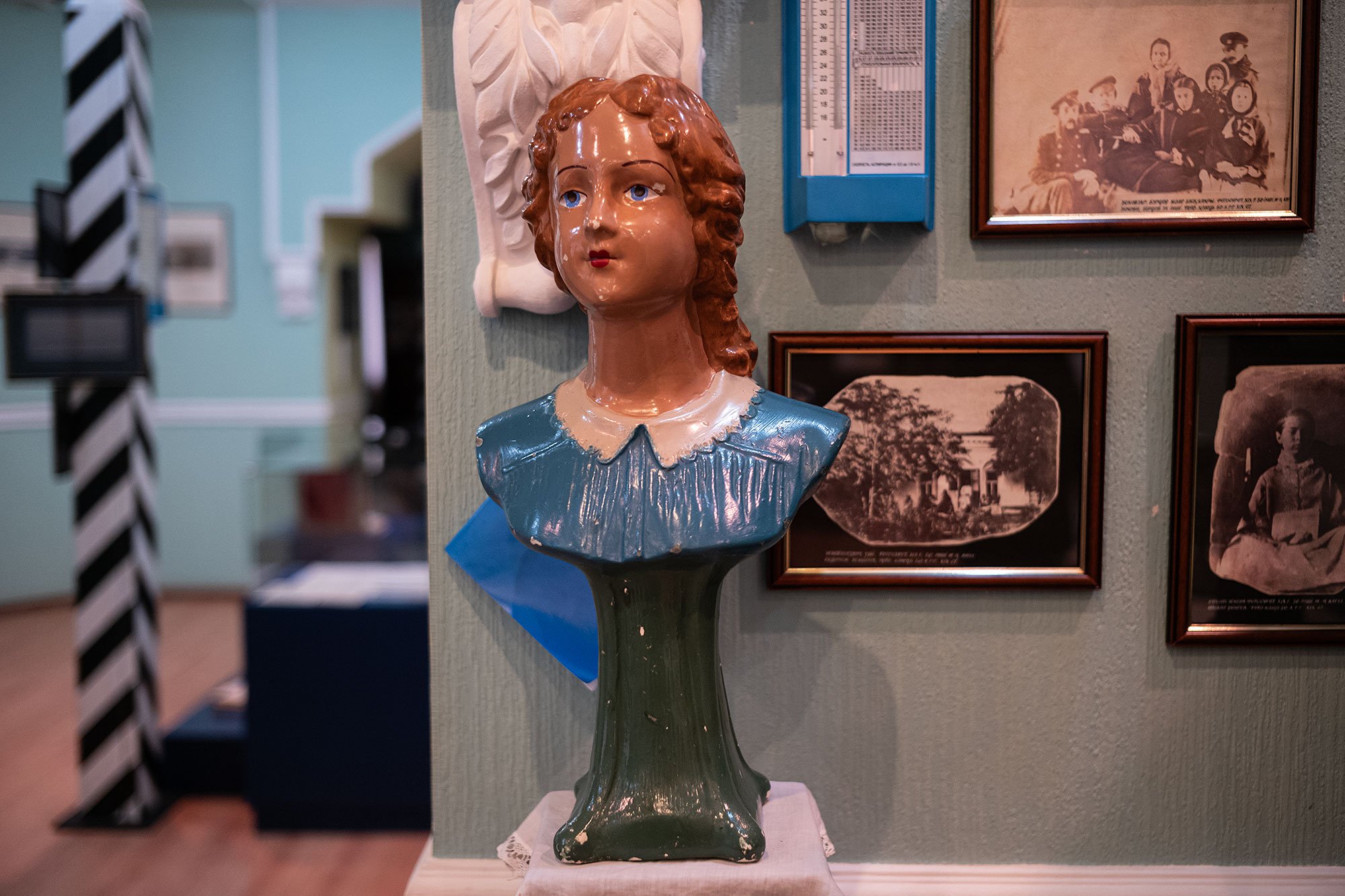
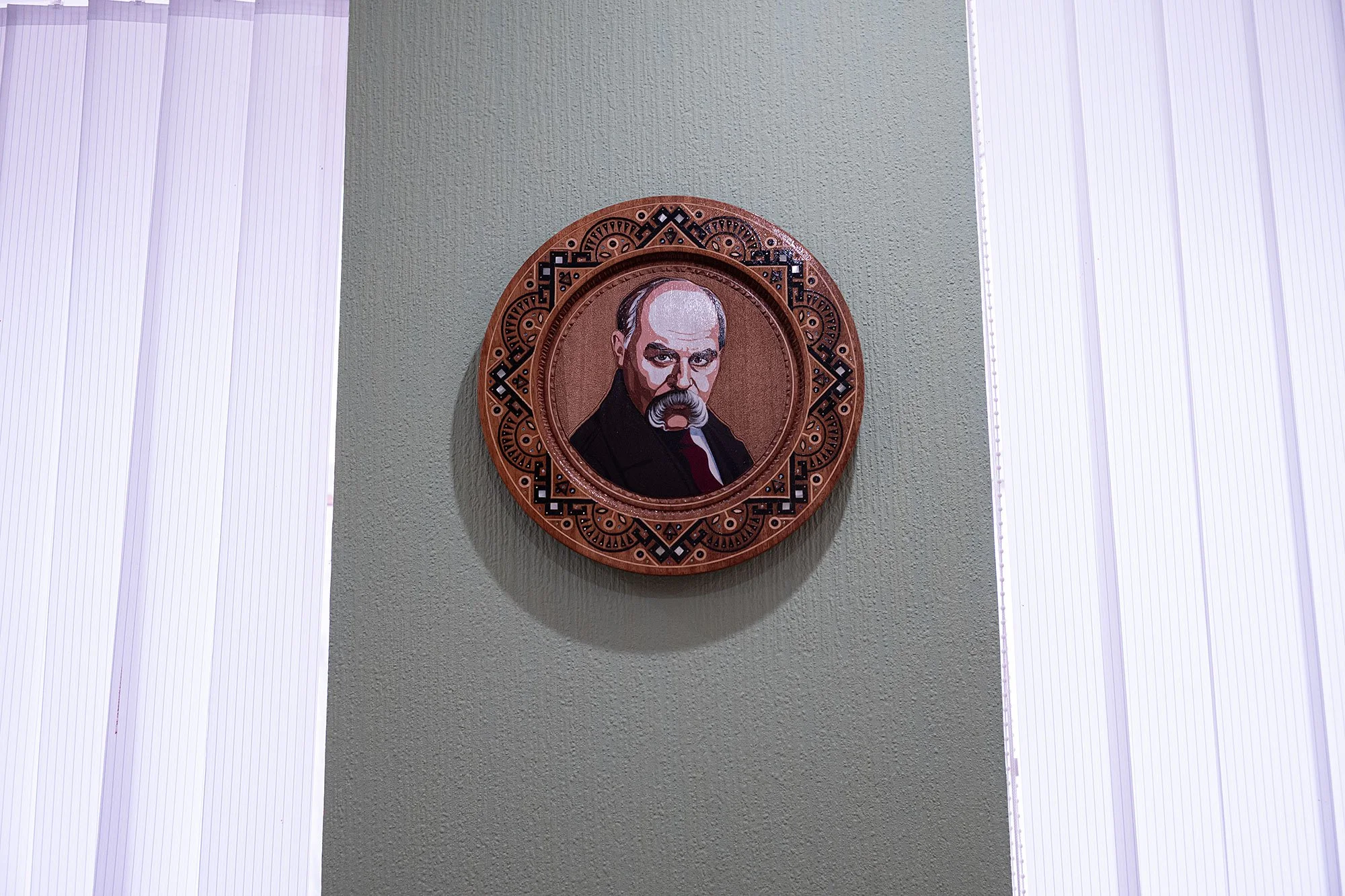
I admire the sculptures and portraits positioned about the museum, touring quickly while the guide offers more extensive information to Asia and Rustum. I go through the exhibits twice and in the end they’re waiting for me at the exit to close up.
The guide then takes us to the secret underground dugout where Shevchenko lived during his exhile and where he secretly continued to write, even though it was forbidden under the articles of his exile.
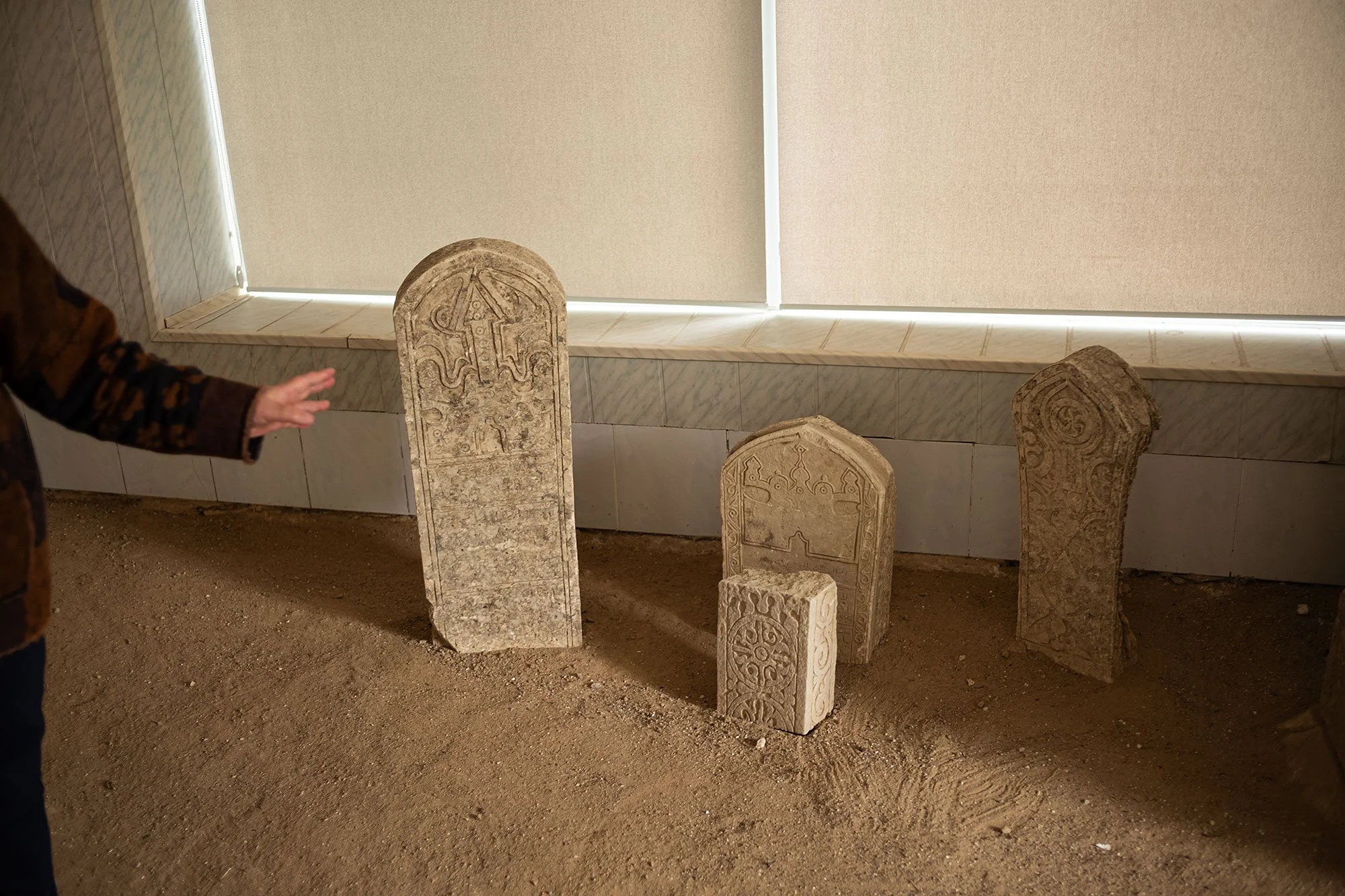
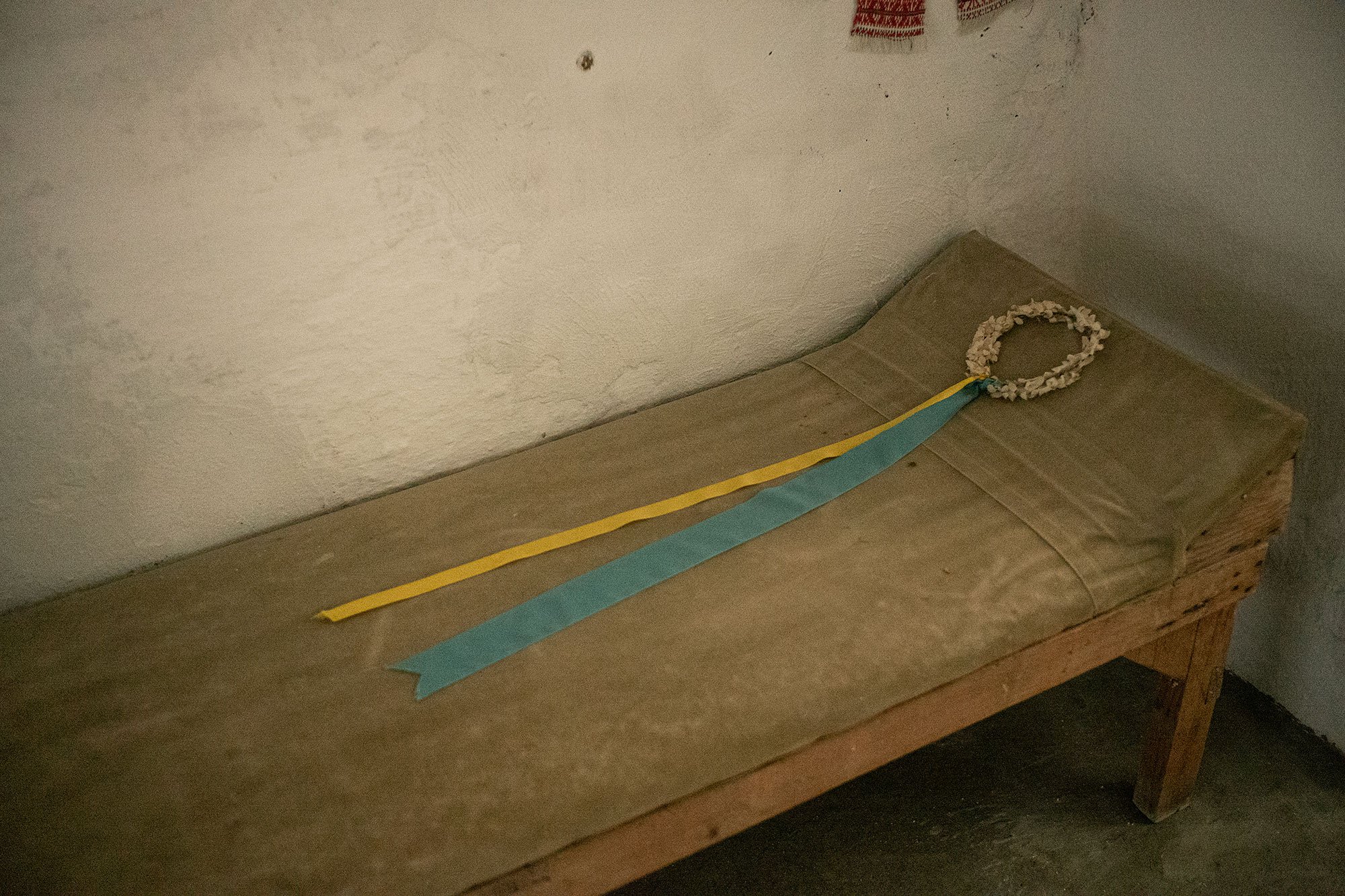
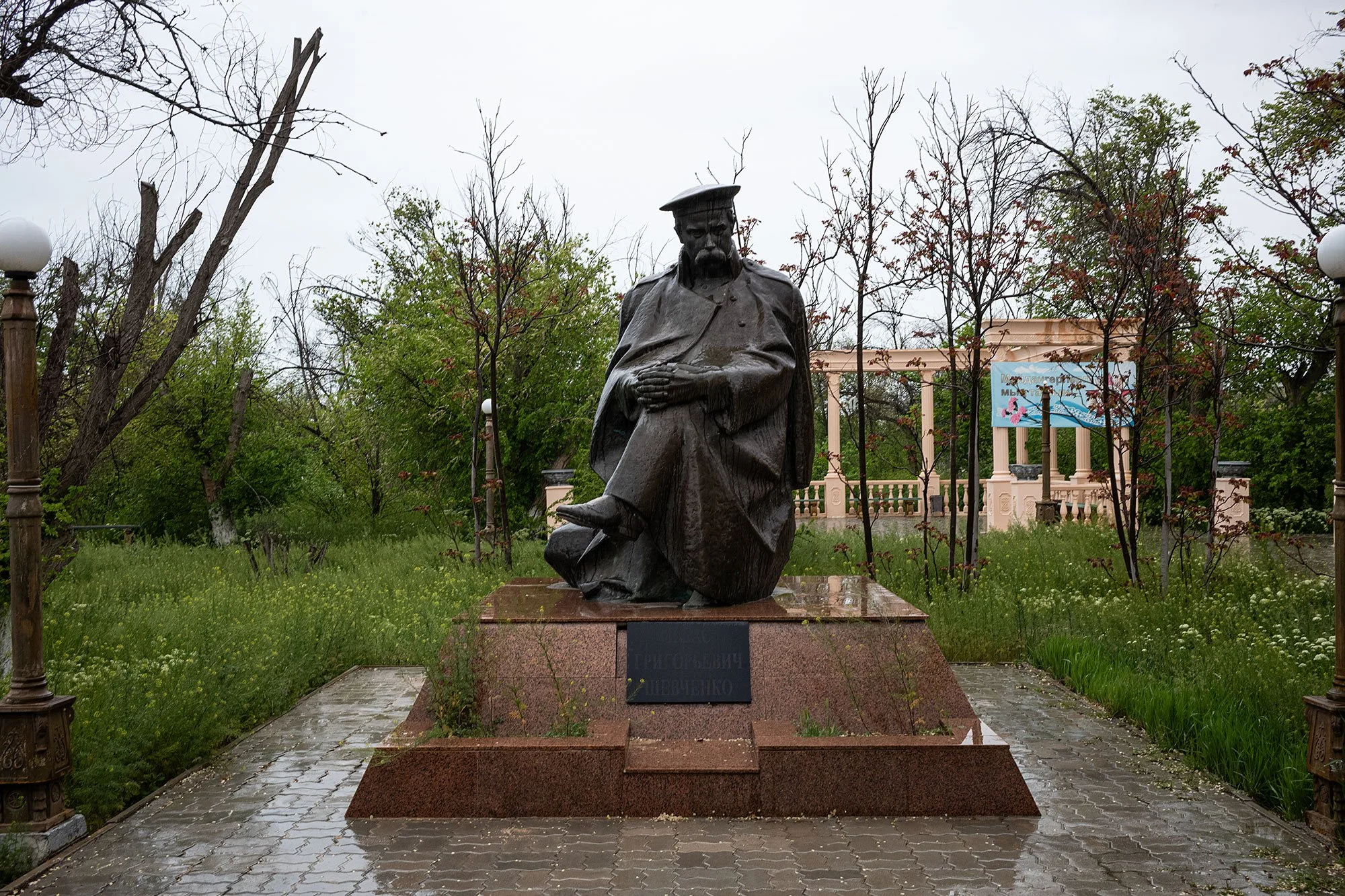
The guide takes us back outside and leads us through the park outside. We thank her for her time and drive back to the resort. Asia and Rustum check us in and walk me to my cabin; they’re staying just next door.
When we grab our bags from the car Asia expresses her concern about me being cold. She tells me they’ve brought an extra thick jacket for me. I thank her and tell her I think I’ll be ok.
Inside it’s a full service apartment with a kitchen, bedroom, and separate bathroom and shower. They tell me there’s a heated swimming pool in the back of the complex.
A delicious dinner awaits us back at the cafeteria and I ask if you have to wait for a table in the high season. Asia tells me it’s not that popular with guides; it’s on the pricier side. She tells me Rustum found this place; he appreciates good food and is willing to pay for it. The other diners we’ve seen at lunch and dinner appear to be locals working in the oil industry.
After dinner I change into my swim trunks and walk to the sports center. There are lockers available though I haven’t brought a lock. I don’t really have to worry about anyone wanting my clothes.
I swim ten laps and leave just as a number of local workers arrive. They speak no English but I understand they’re asking where I’m from. New York. New York! They take my hand and shake it enthusiastically. I return the energy. They’re all local to the region. As I take my leave they wish me well on my journey; I on theirs.
The rain has stopped by the time I step out to walk back to my cabin. Asia had texted me to delay our departure by an hour. Rustum wants to wait a little bit to let the sun dry out the roads. The rain is unseasonal and he wants to derisk our getting stuck in muddy roads. Over dinner he’d shown me photos of stuck vehicles he’s had to help pull out.
I’m happy for the extra hour of sleep. 🇰🇿
29 April 2026