Angkor III: Sunrise at Angkor Wat, Preah Khan, Neak Pean, Ta Som, East Maybon, & Banteay Samre.
Jimmy meets us at 0450. He’d suggested we bring breakfast packets with us to save time returning to the hotel after sunrise and they’re waiting for us at the front desk.
Sreang greets us and helps us into the van and then we’re off, driving through the quiet dark streets of Siem Reap back towards the temples of Angkor.
We alight before the long path that leads up to the temple moat. Yesterday, I had noted that in the past you could drive right up to the moat and be left off there. He tells us that this addition and the parking lot are newer expansions. A lot of work was done during COVID to help manage tourism, and I once again appreciate the efforts that have been and are continually being made.
Jimmy lights the path before us, as much to help us navigate uneven stones as buffalo poop.
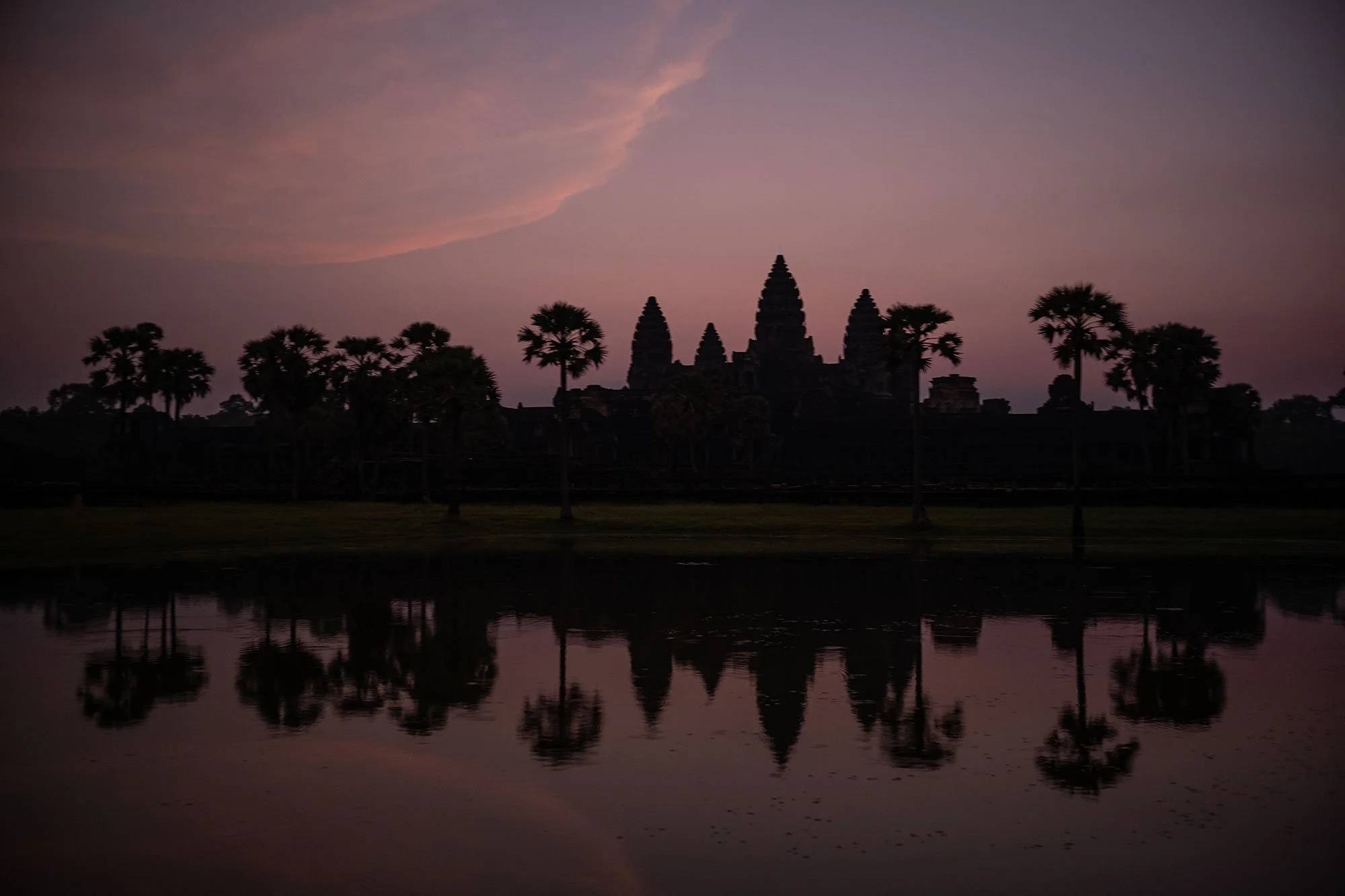
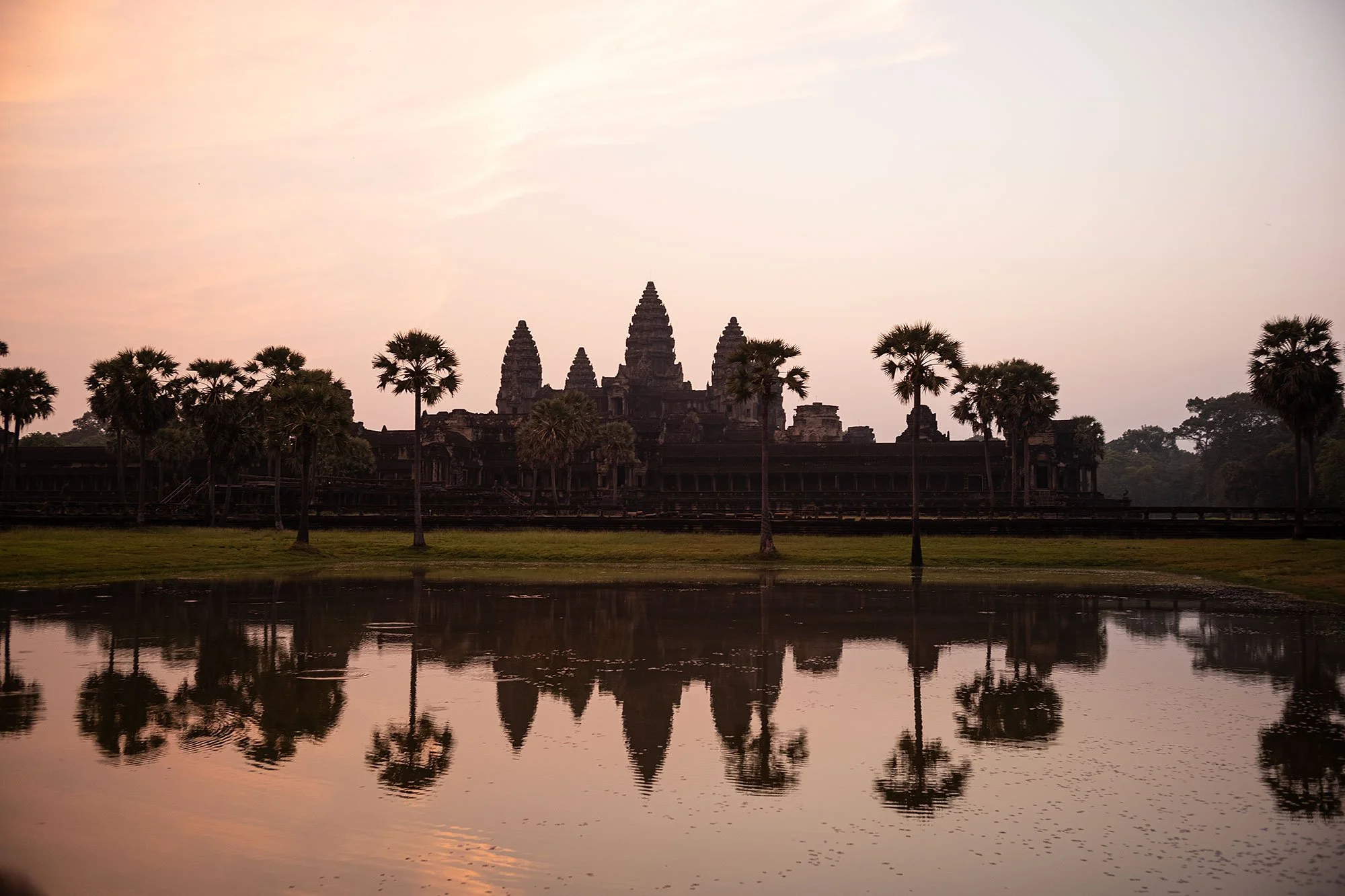
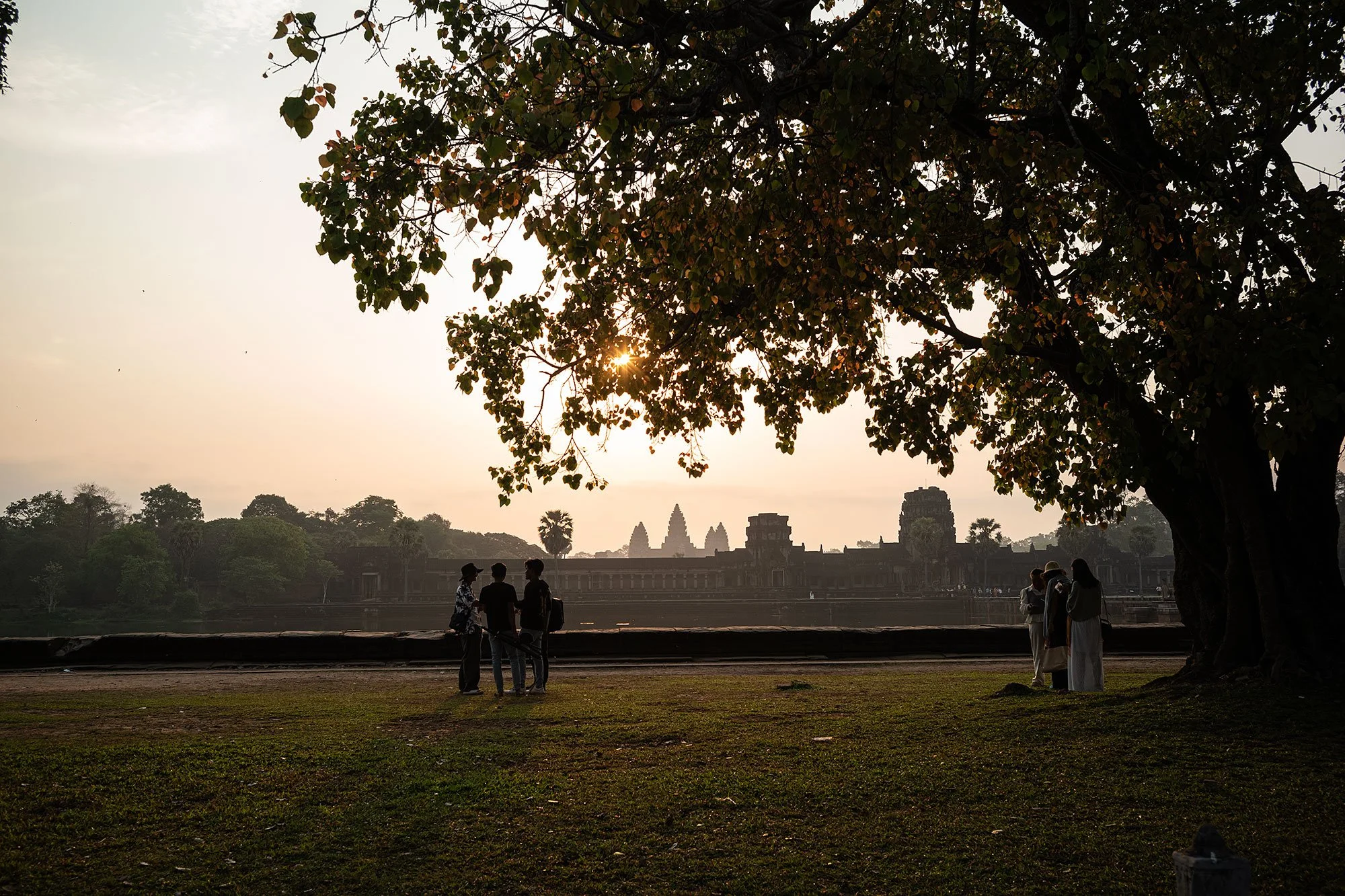
There’s already a crowd by the time we reach the reflecting pool but we get good spots on the wooden platform set up for observers, standing just behind the first row of people to have arrived who take advantage of their positions and sit on the platform edge.
There’s a hushed stillness about the crowd as everyone awaits the dawn of the new day. I wonder whether it’s in reverence to the religious significance of where we are or the lack of sleep we all must be feeling.
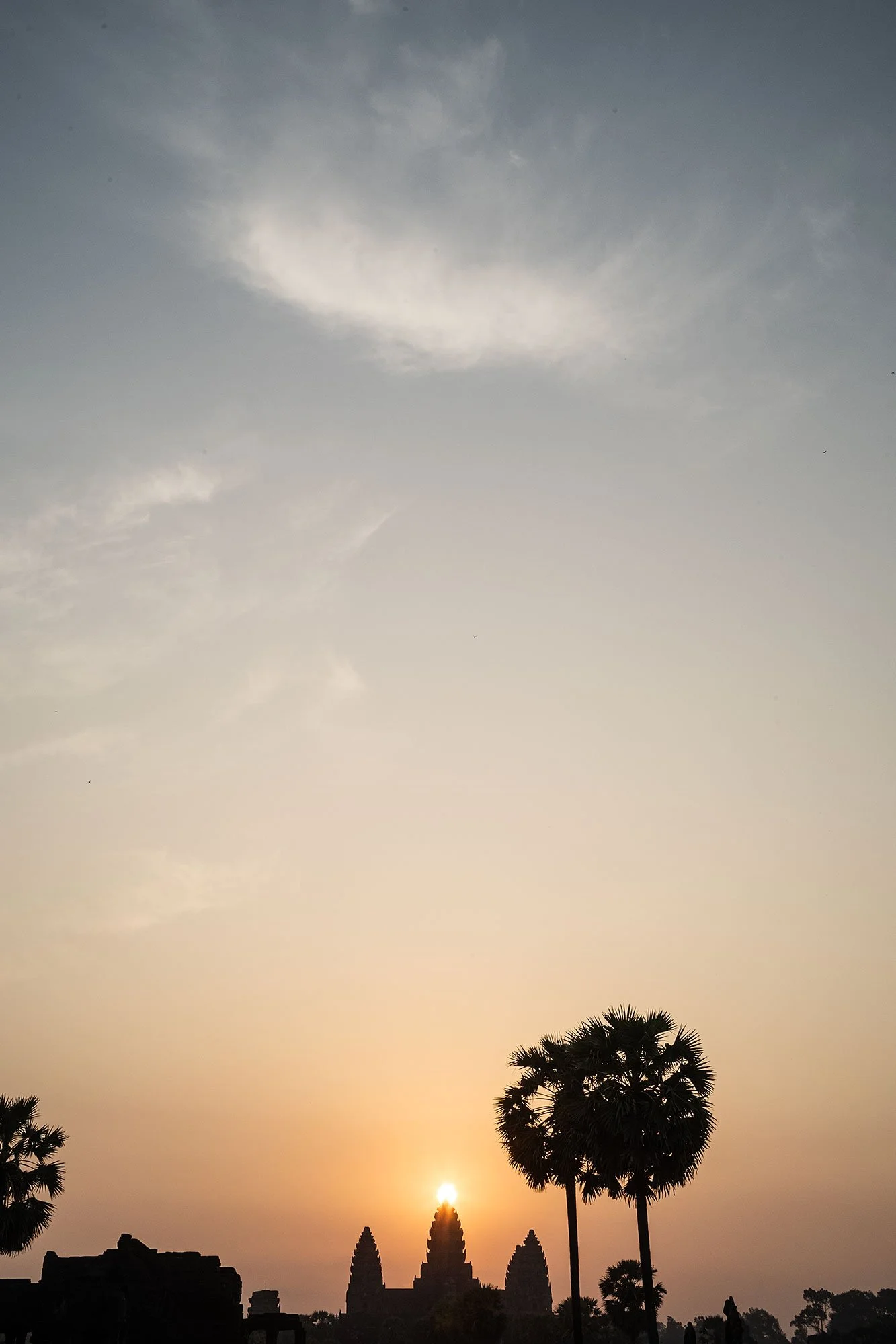
As the sun makes its way towards the horizon the skies start to lighten up. A whisp of cloud catches cotton candy vibes.
The crowds deepen as the hour approaches. What was once a single row of people lining the pool is now four or five people deep and I watch as people take out their phones at various times to photograph the temple silhouetted against the lightening sky.
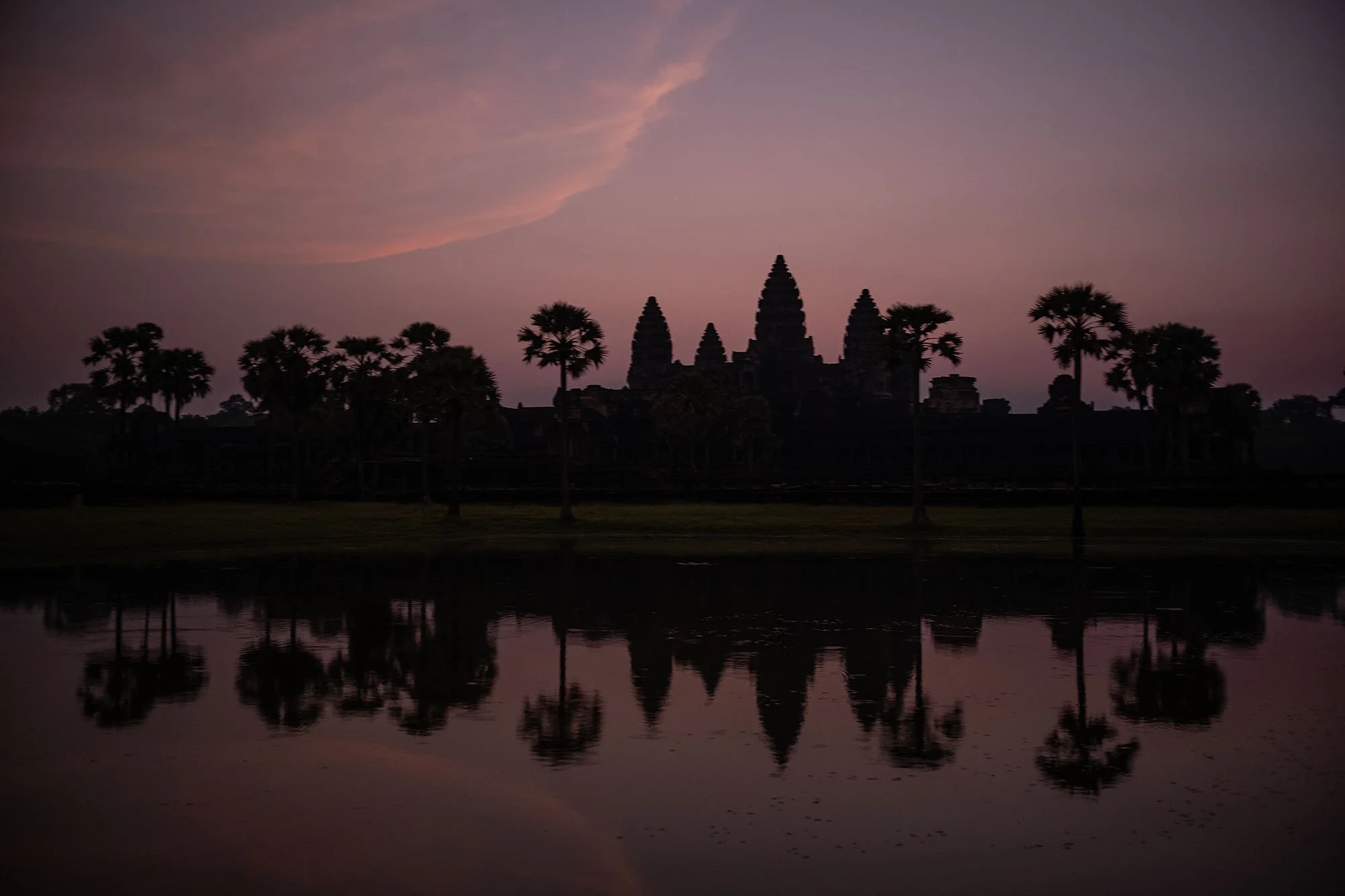
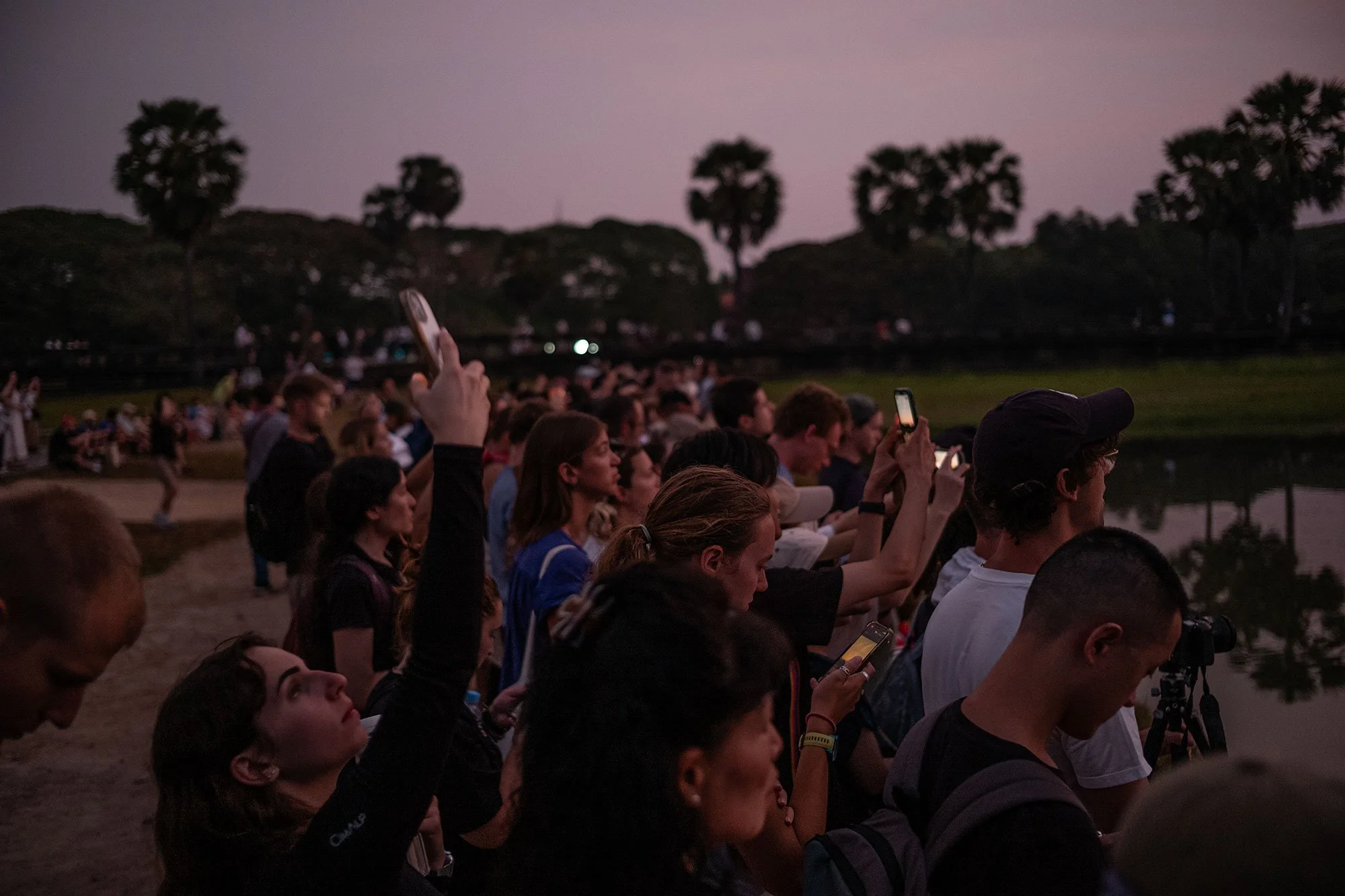
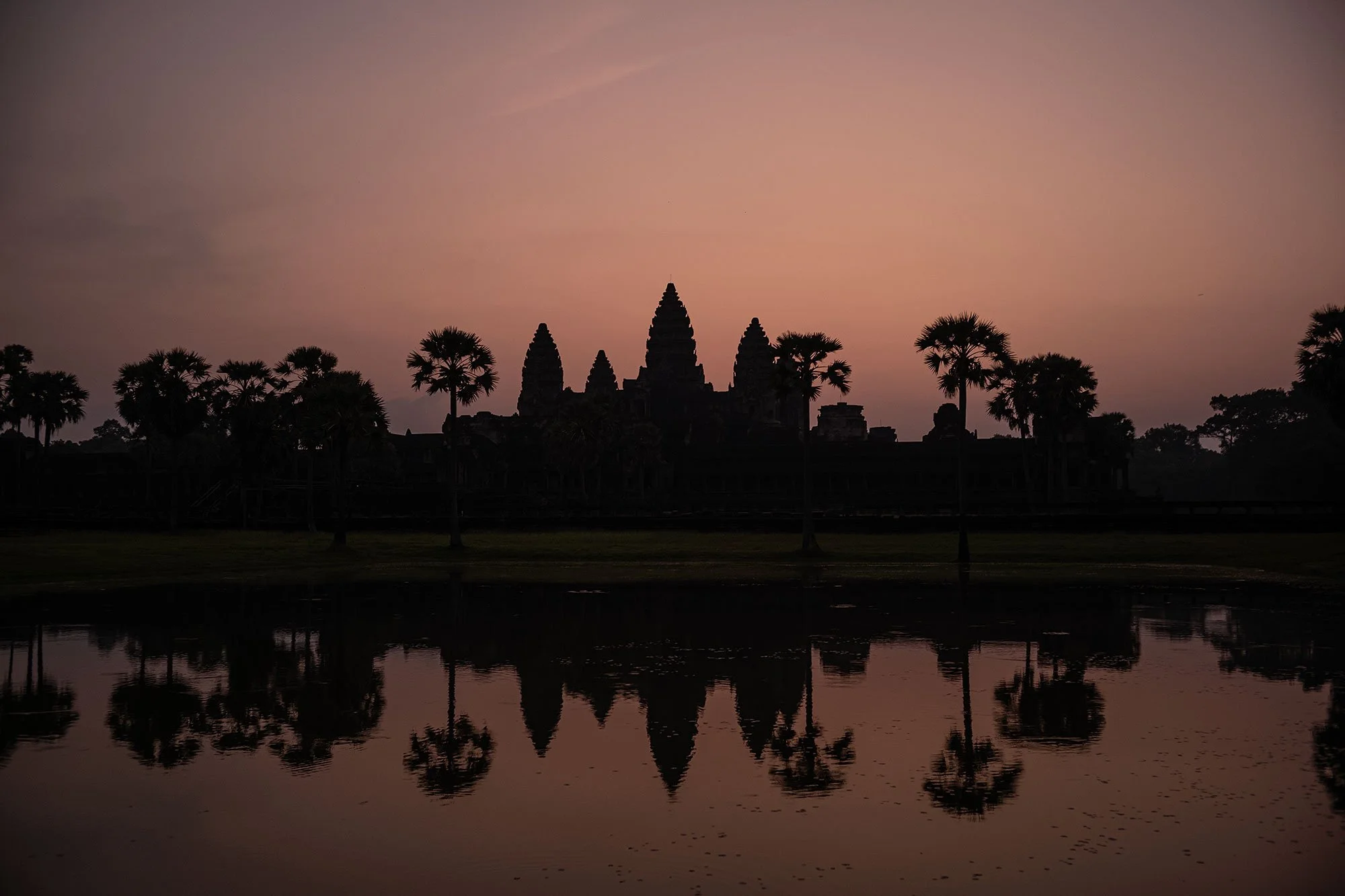
As the colors change I decide to shift position. Jimmy had told us we’d head to the causeway at 0600 to see the sun rise behind the towers, but I’m interested in centering myself earlier. I tell my cousin I’ll meet them on the causeway and walk over.
A barrier keeps people from entering the main temple enclosures, which are not yet open. The closure offers the opportunity to take photos of the temple without any people in them.
Turning around I take photos of the causeway and of the two libraries. People have arranged themselves on the buildings, leaning against the walls and sitting on the steps and platform supporting the structures.
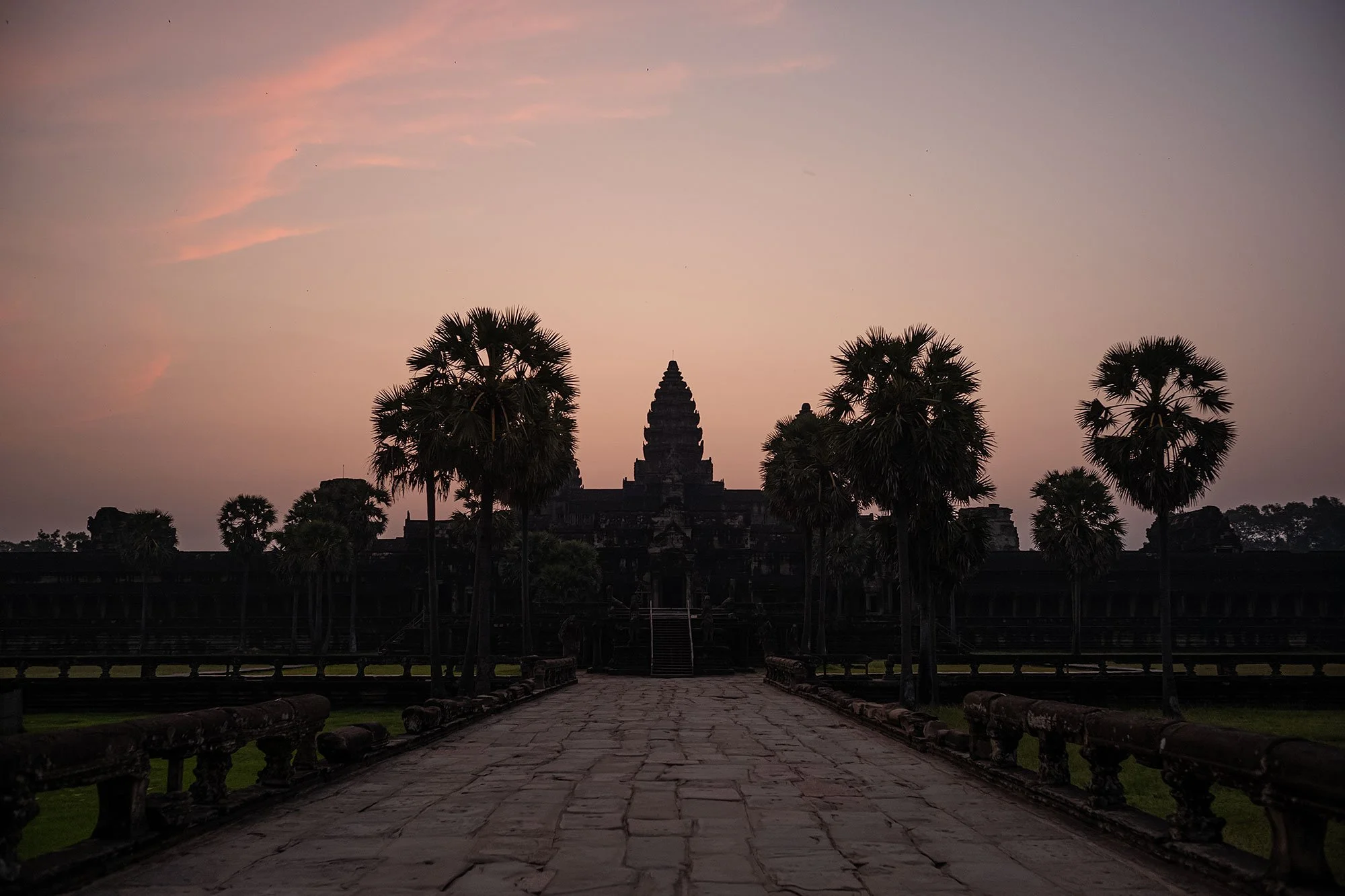
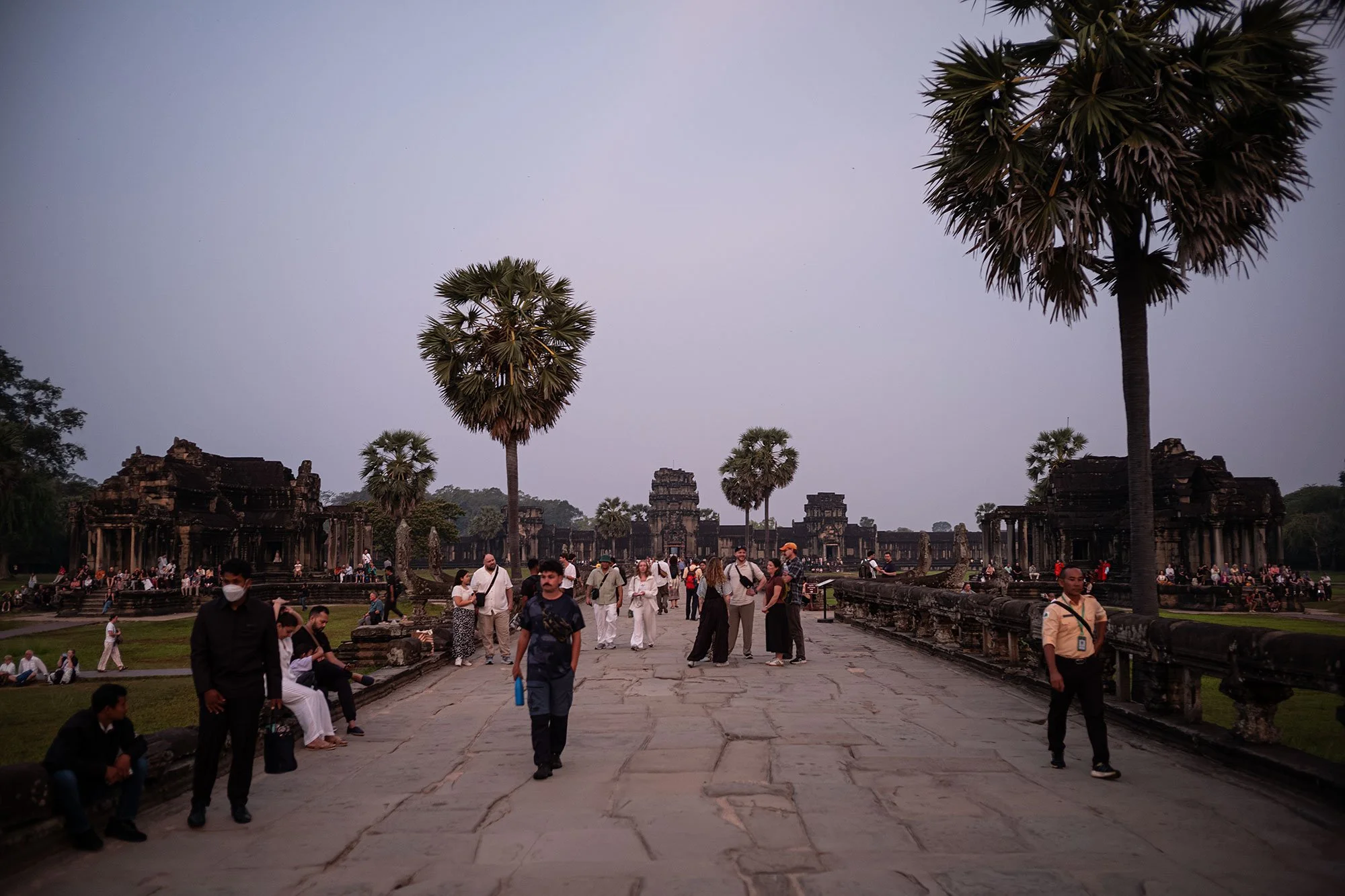
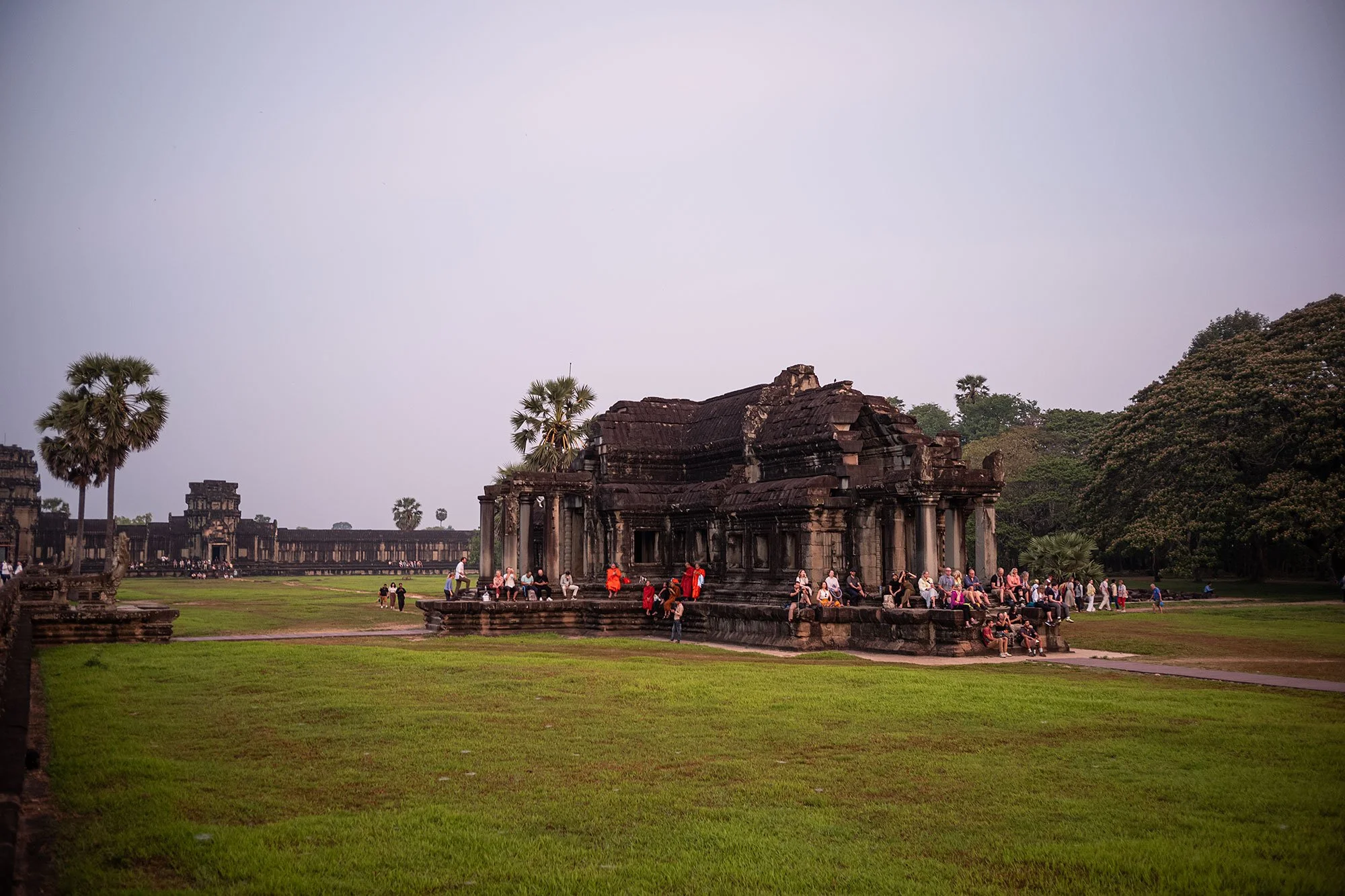
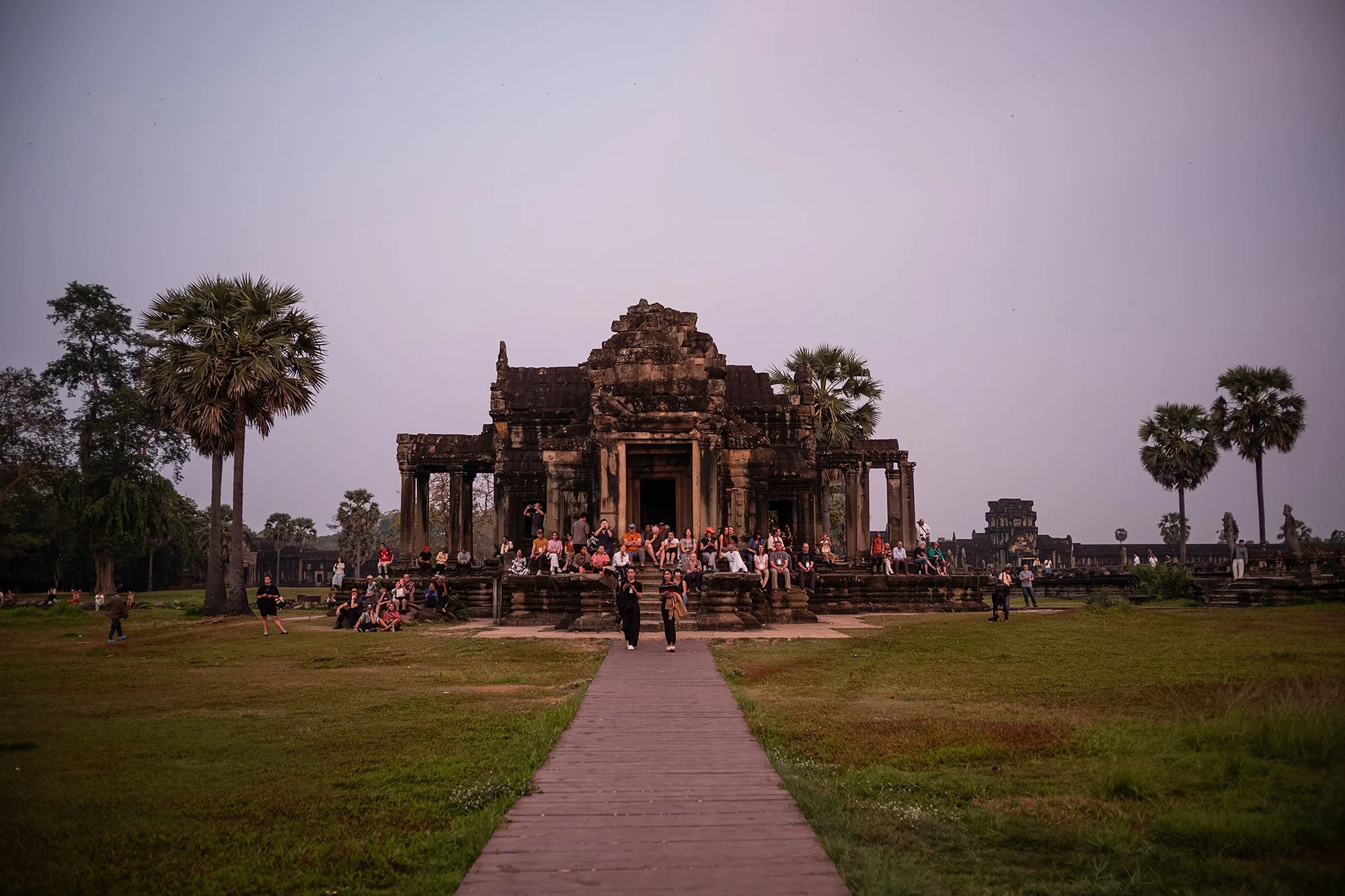
Jimmy meets my cousins and I see him leading them to the causeway. The sun is about to crest the temples and he brings us to a spot on the lawn to the north of the causeway so that we can take photos of the sun behind the central tower. He’s not the only one with the idea. In a few days it’ll be the equinox and the sun will rise directly behind it when viewed from the causeway. Jimmy shows us photos of the crowds collected to capture the moment. From where we stand already I have to raise my frame to avoid collecting a bunch of heads and raised phones in the shot.
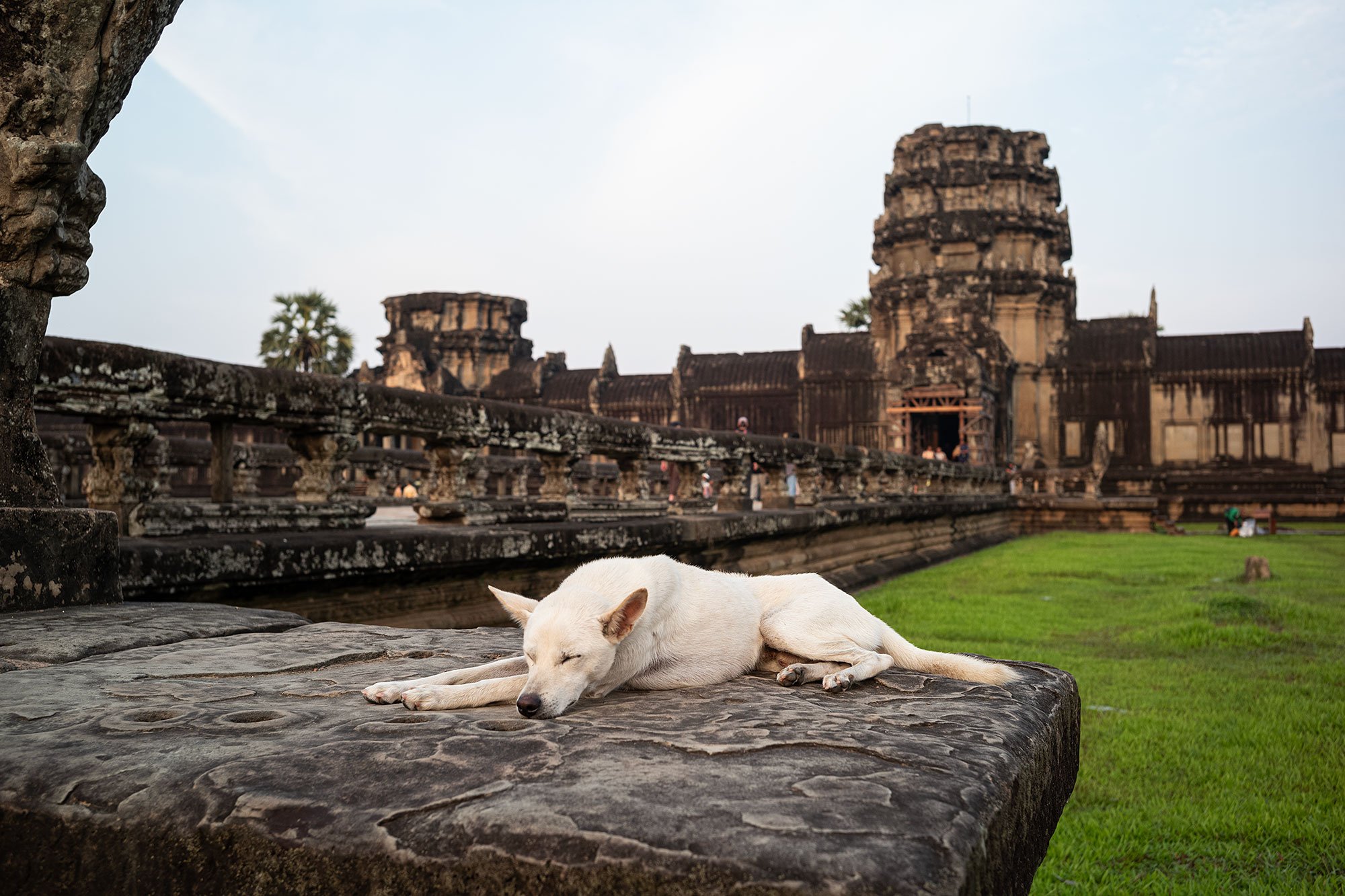
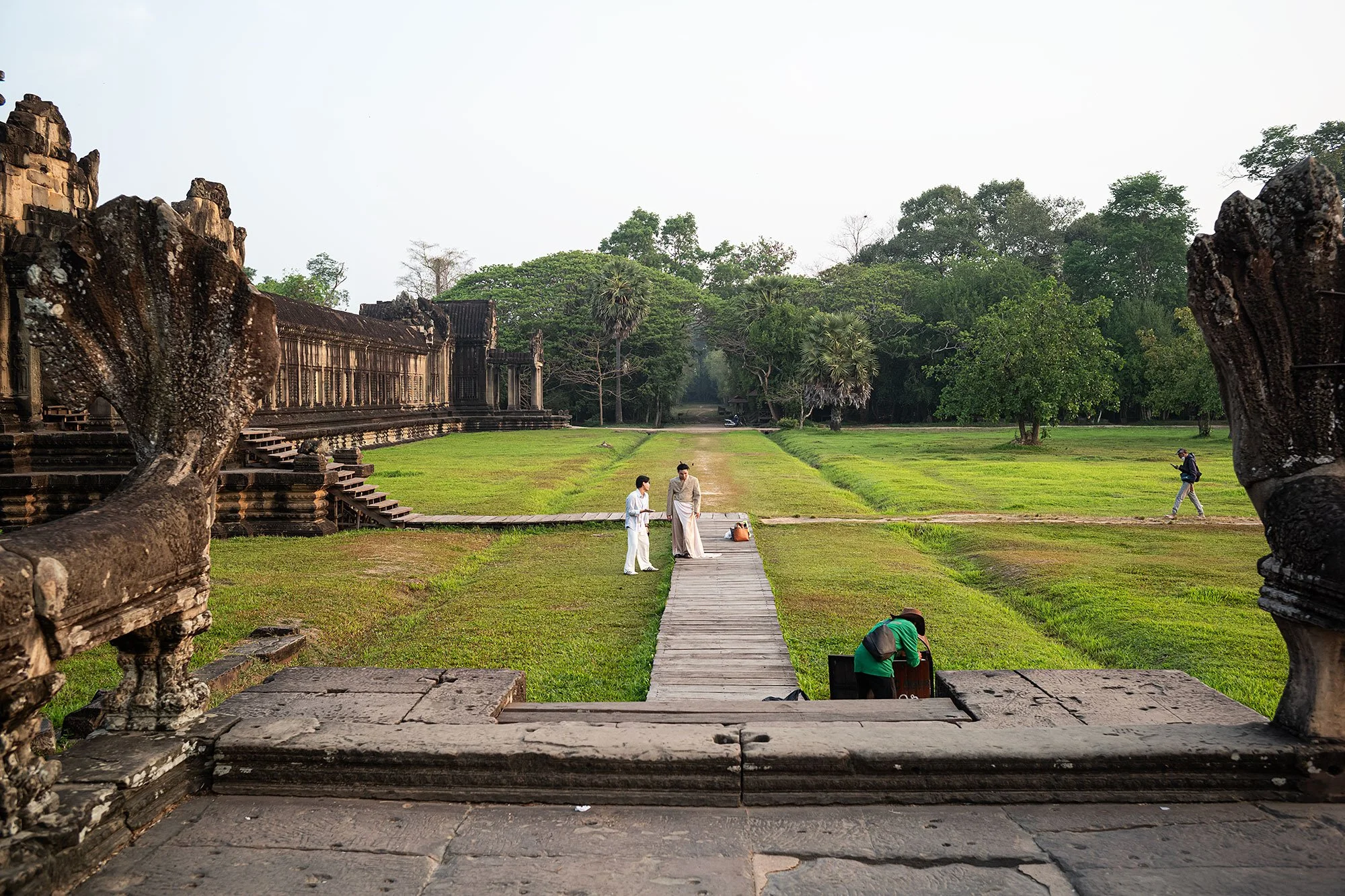
Light fills the courtyard, the grass practically glows. People dressed in traditional clothes are positioned by photographers take advantage of the light. A dog sleeps on small platform just off the causeway and I realize I’ve not seen as many street dogs compared to other countries I’ve visited as of late.
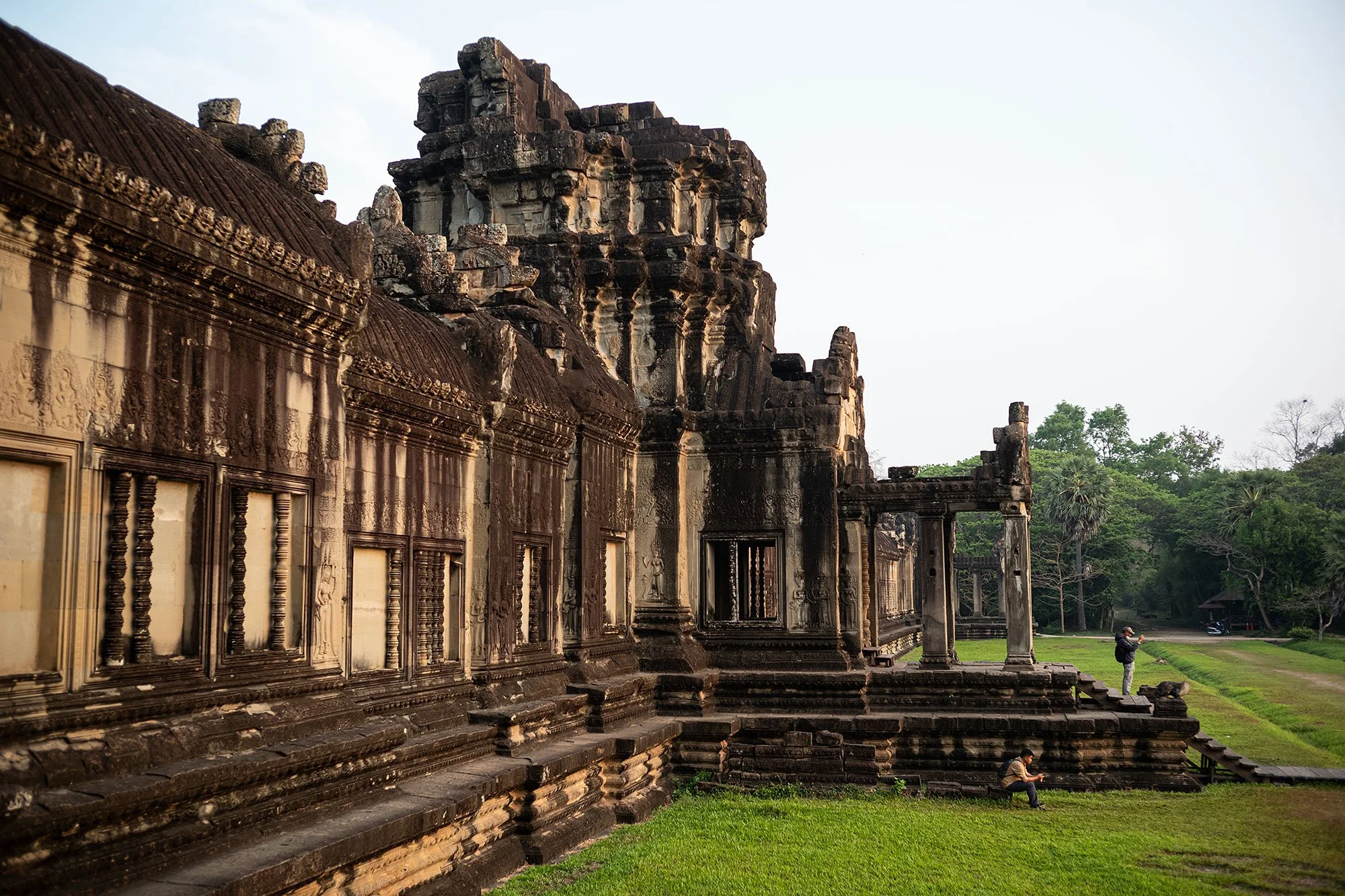
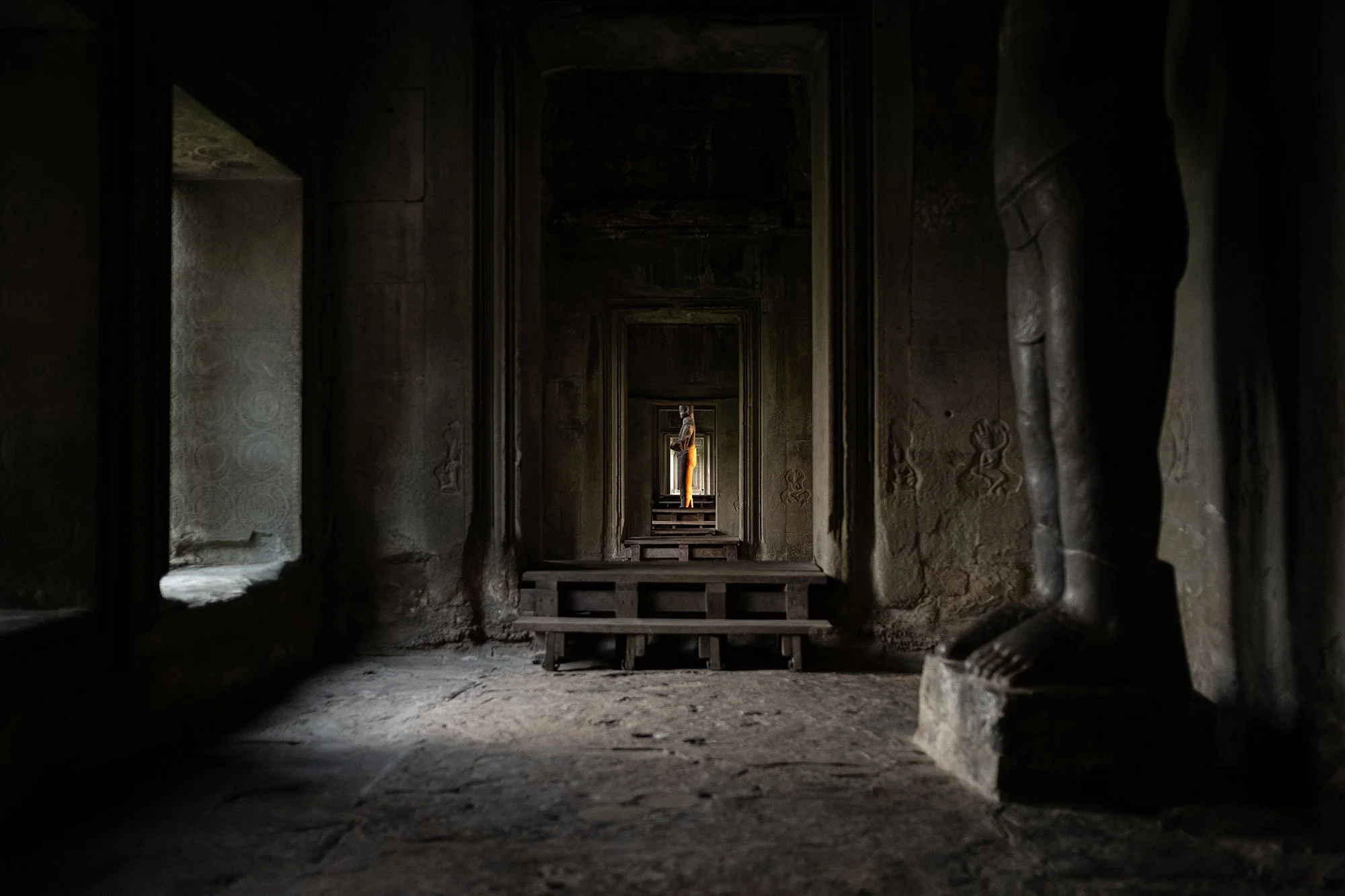
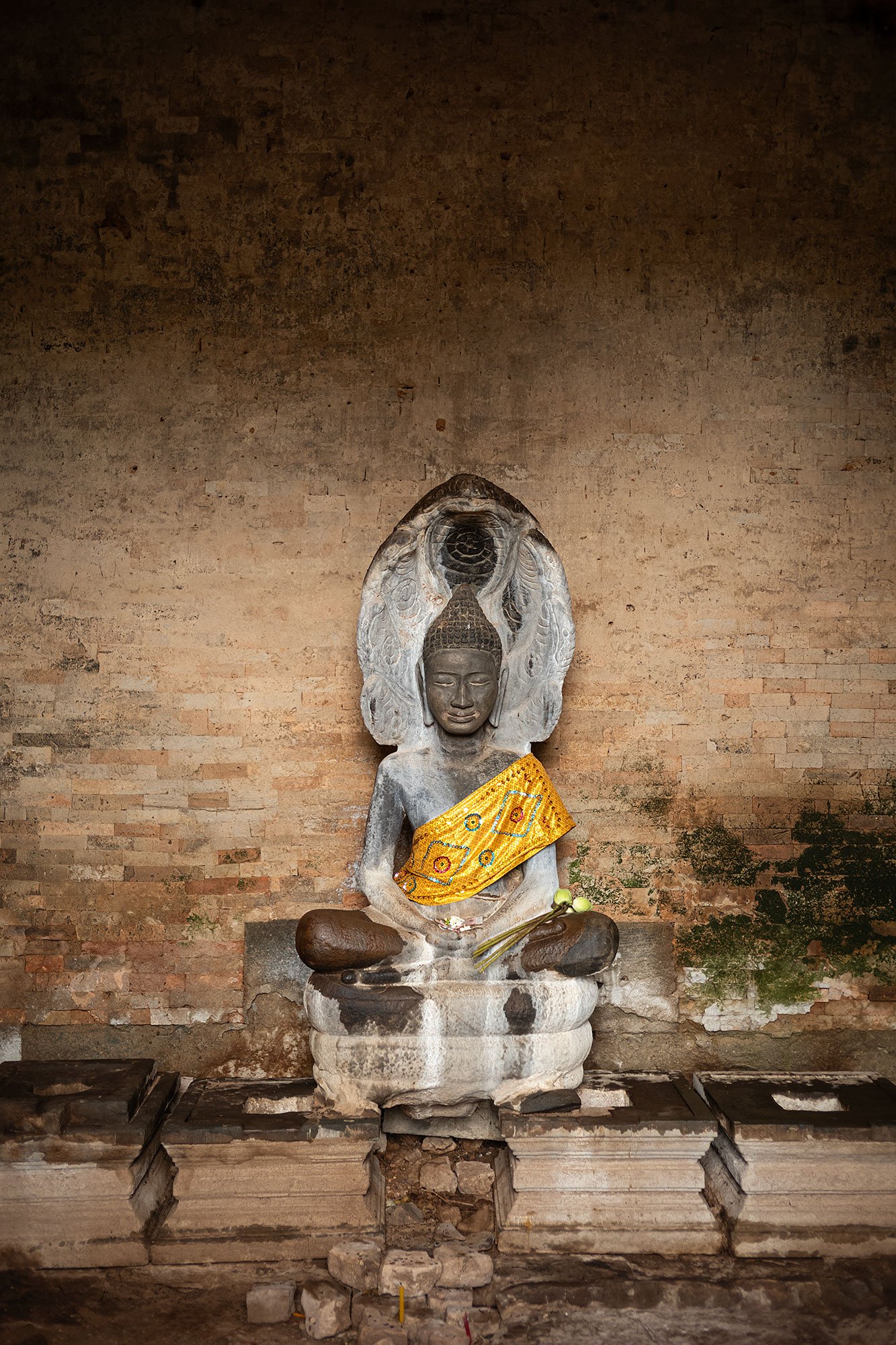
Passing through the galleries of the outer enclosure I stop to admire the statues placed within the halls. The rising sun wraps a golden sarong around one and it stands a warm beacon framed within the stone windows and doors.
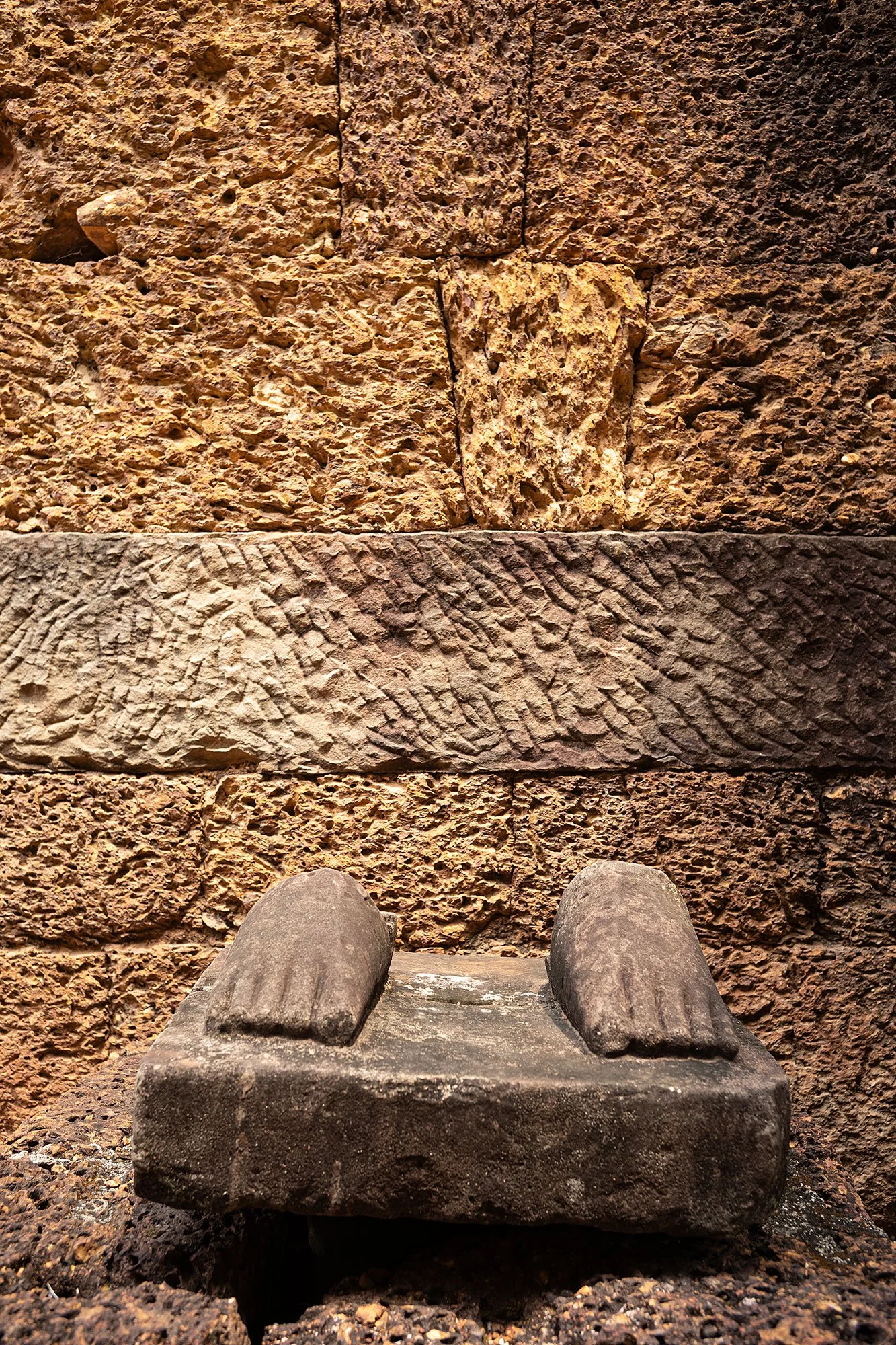
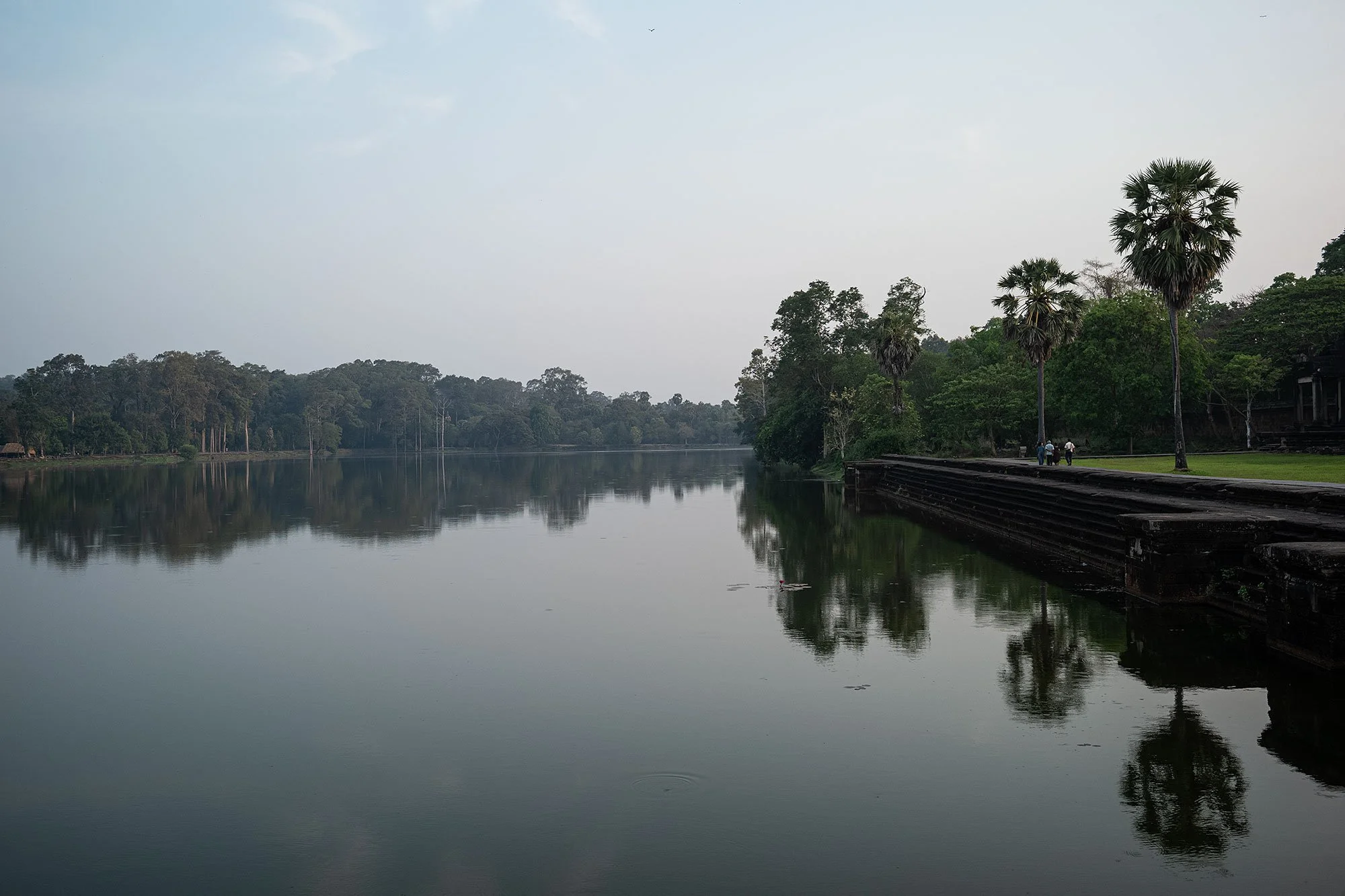
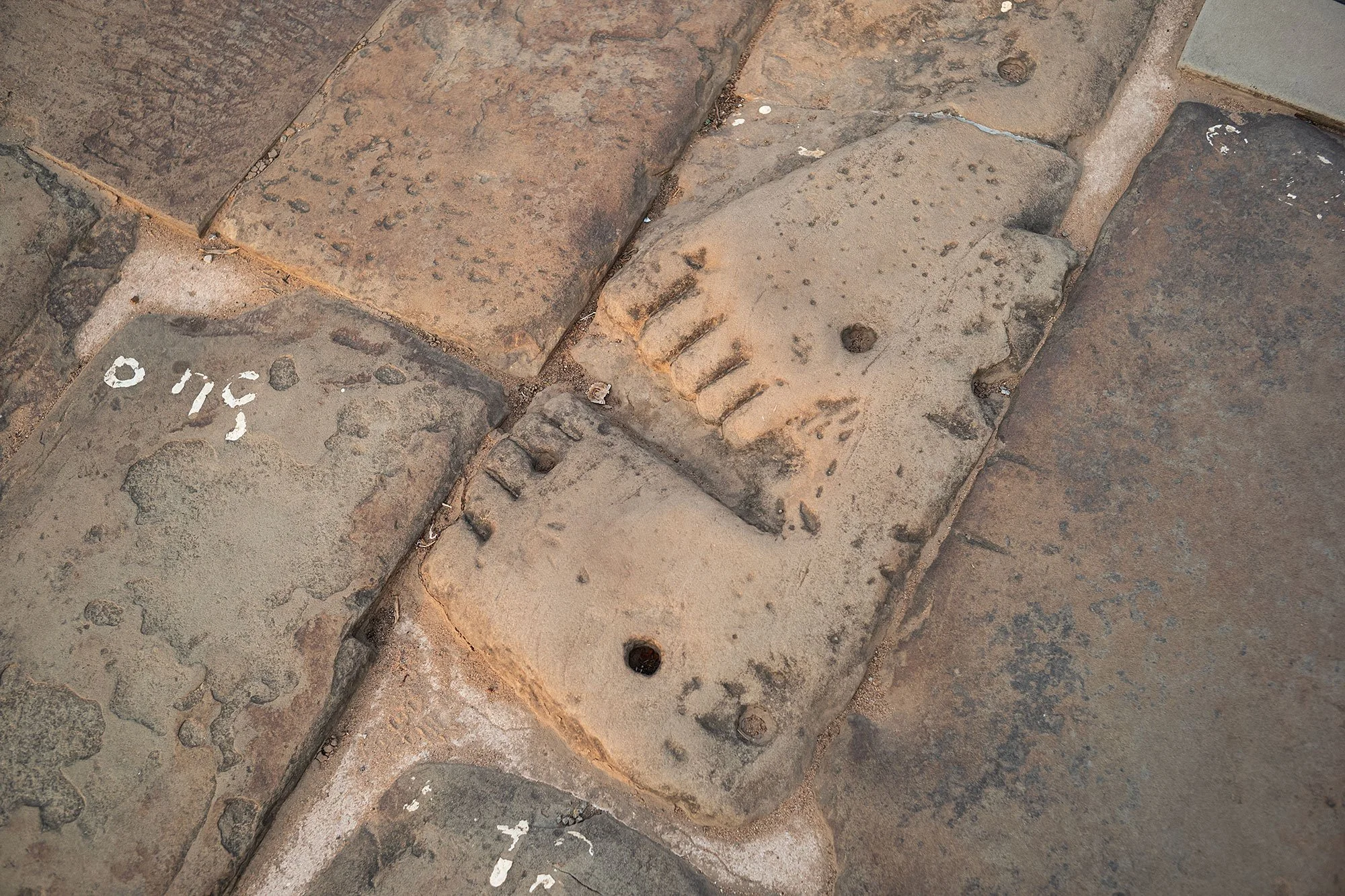
Stepping out of the temple we cross the moat, the water still. On the causeway I find feet carved into the bricks and I wonder if they were leftover or repurposed. Numbers written on adjacent stones suggest a certain level of preservation or reconstruction work has been done. Jimmy and my cousins have walked on ahead and I forget to ask him by the time I’ve caught up.
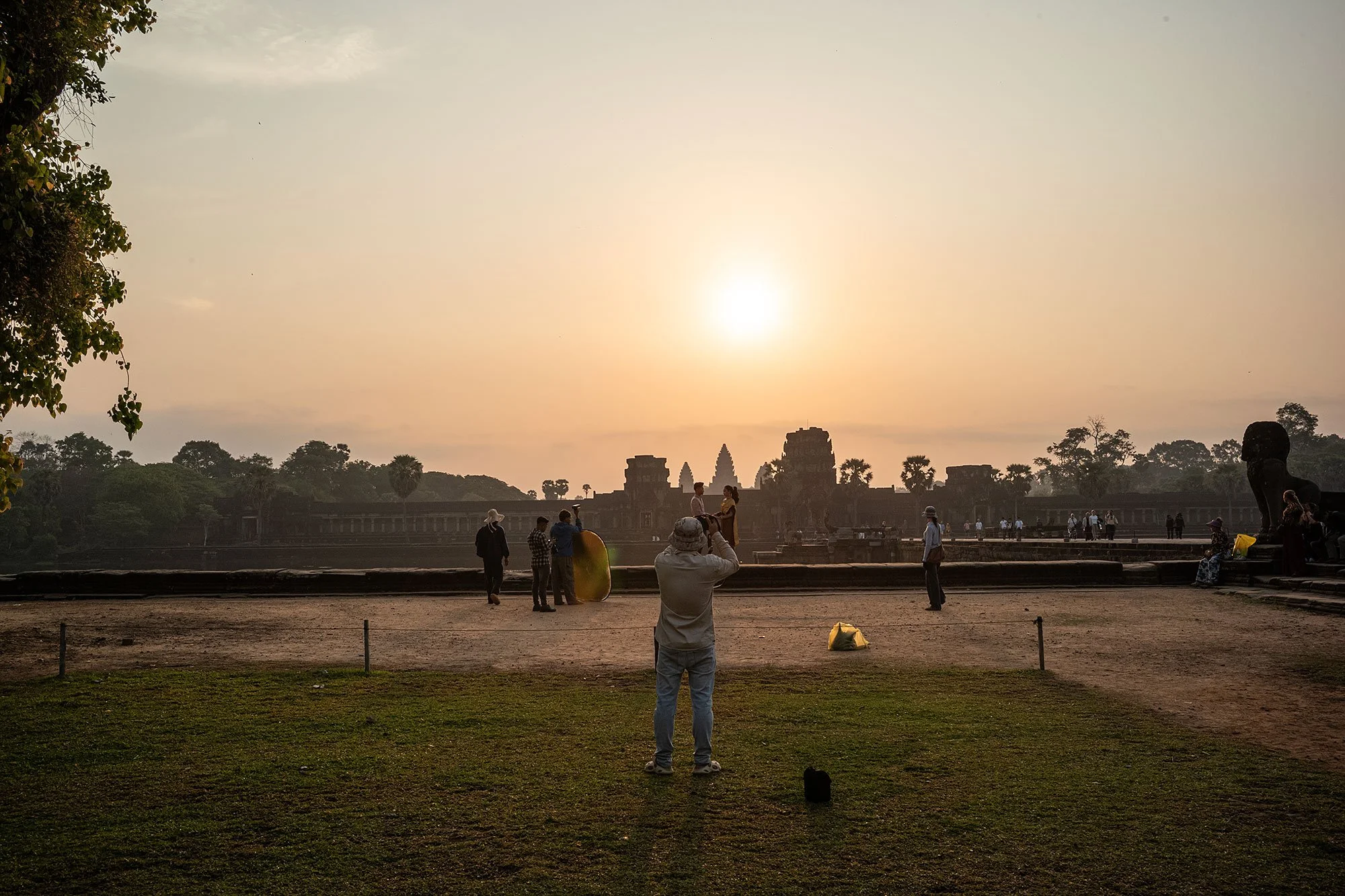
Couples dressed in traditional Khmer clothing stand alongside the moat surrounded by small crews of assstants as photographer position them with the temple and the sun behind them. The couples will have beautiful photographs when all is said and done.
We meet Sreang in the northwest corner of the temple where he’s waiting by the side of the road. Cold towels and cold bottles of water are presented to us and once we’re settled in we begin our drive to Preah Khan, the “Sacred sword.”
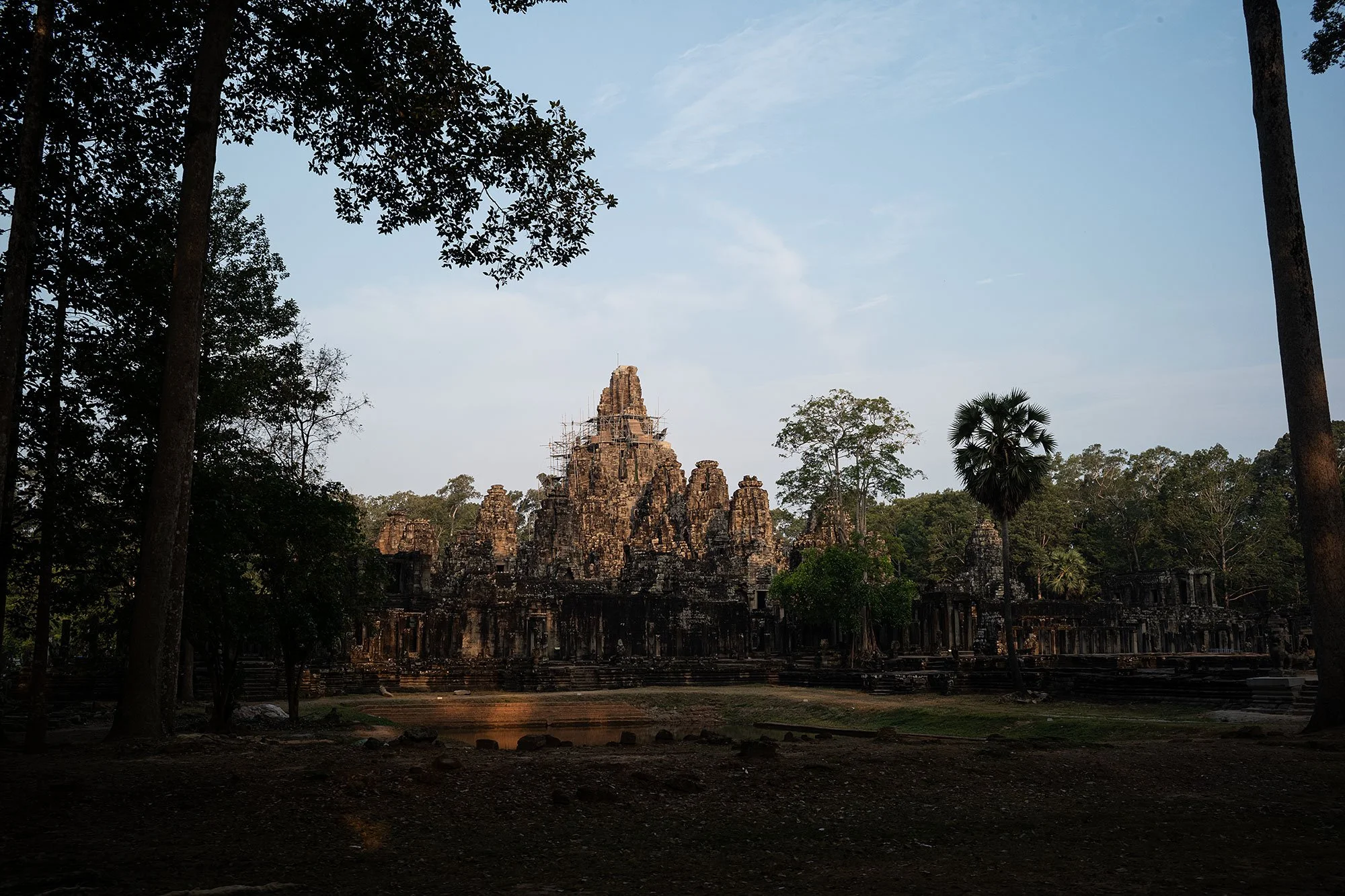
En route we pass the Bayon, its towers glowing in the morning light, and the Royal Enclosure. At this hour, the temples and ruins look empty, devoid of visitors. I remember asking Ohl to visit certain temples as they opened in 2000 so that I could be the first person there in order to soak up the atmosphere before others arrived.
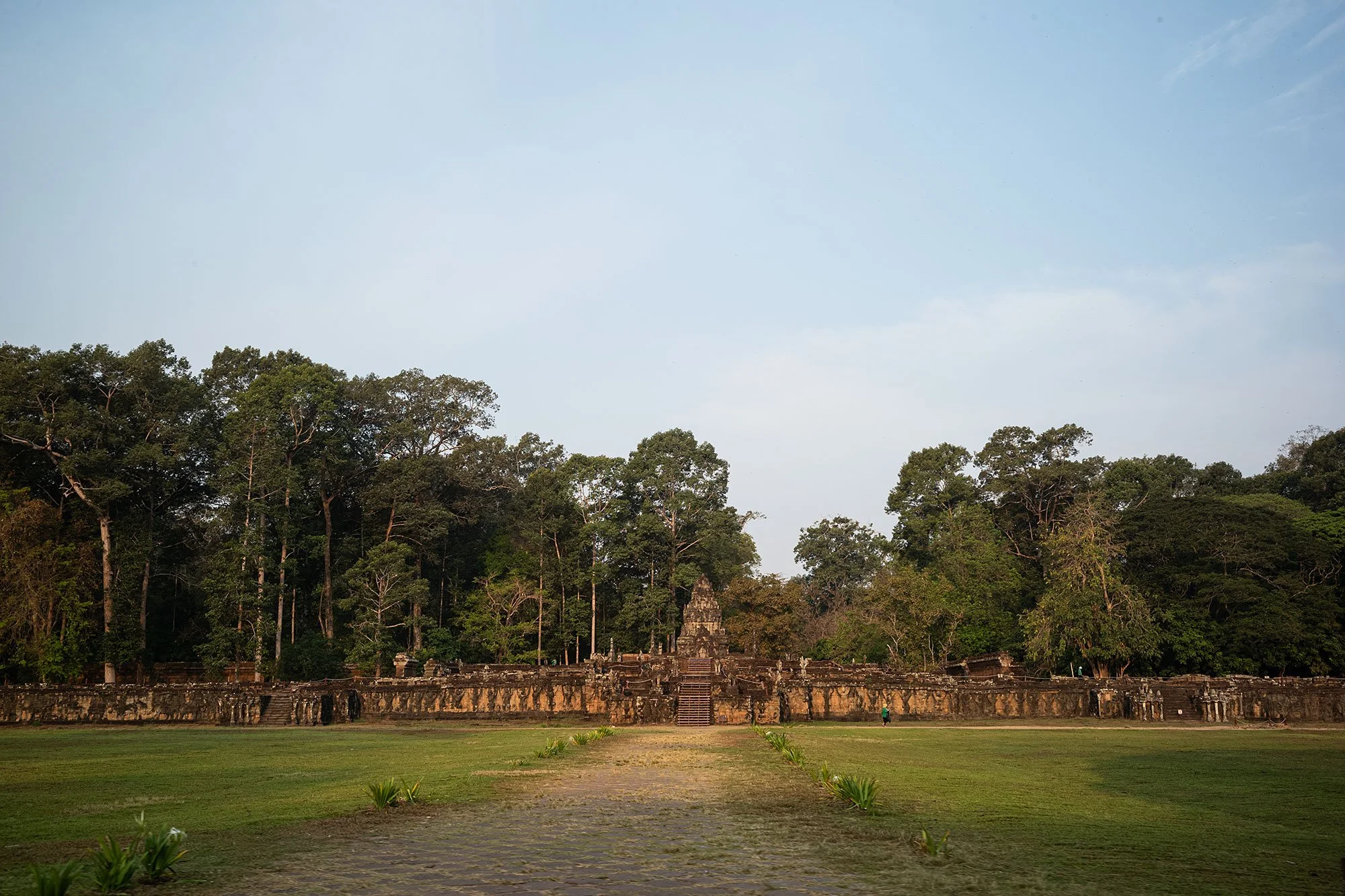
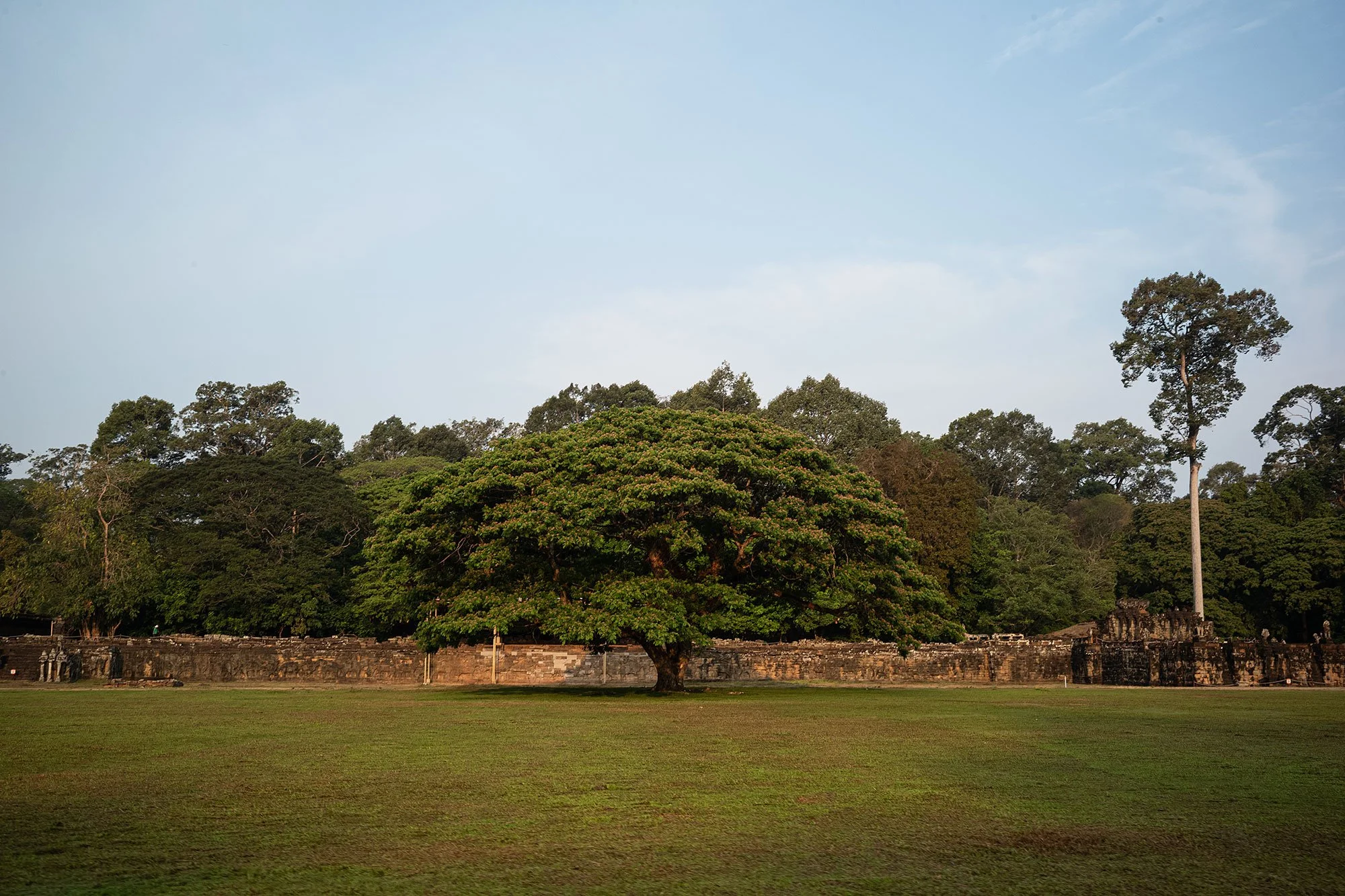
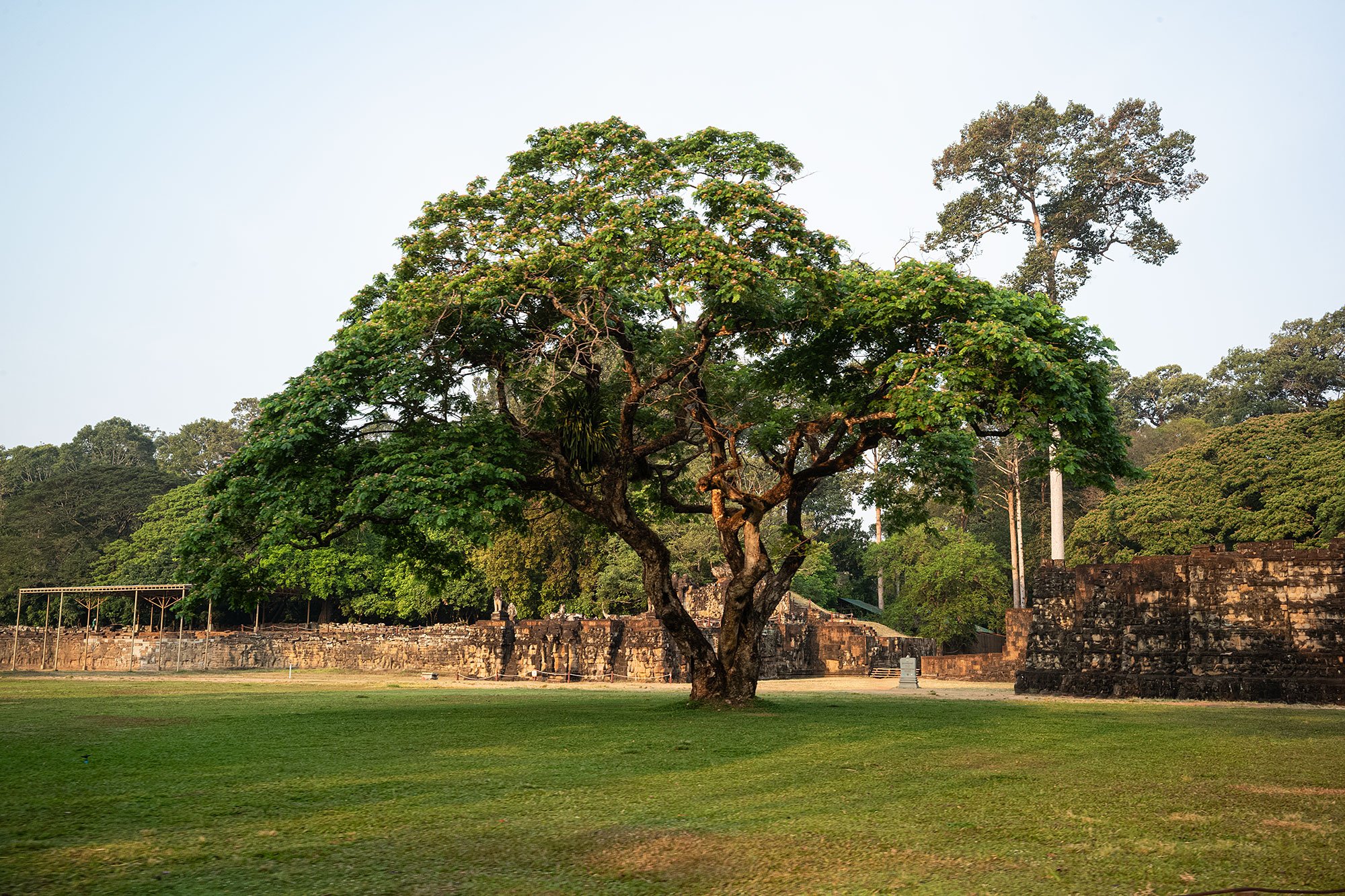
We alight near the temple and are greeted by two water buffalos grazing near the path. It’s the closest I’ve come on this trip to large animals and I wnder over to watch them as they snack alongside the road. They turn back to consider me, staring for a while before turning and continuing with their activity.
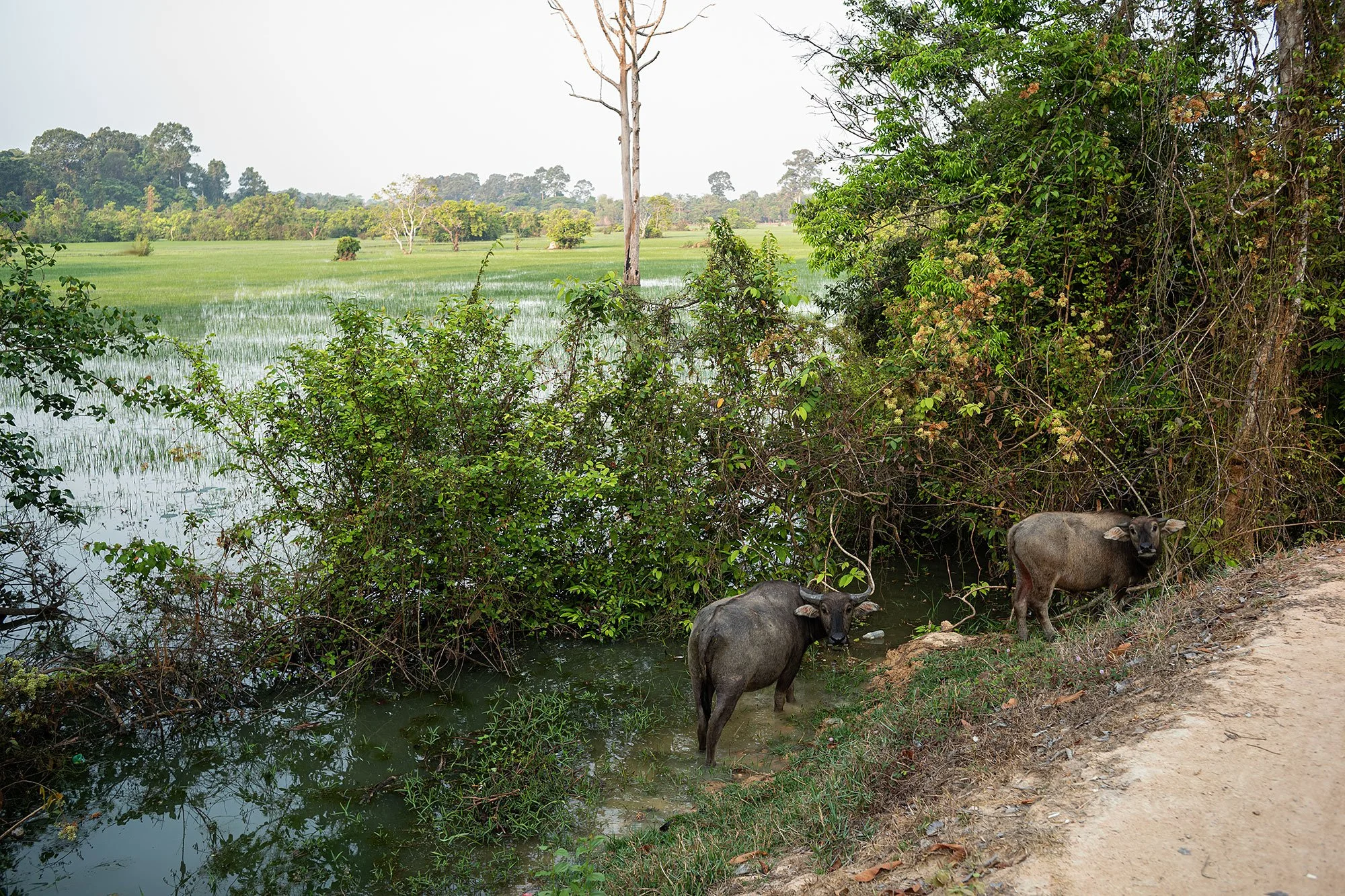
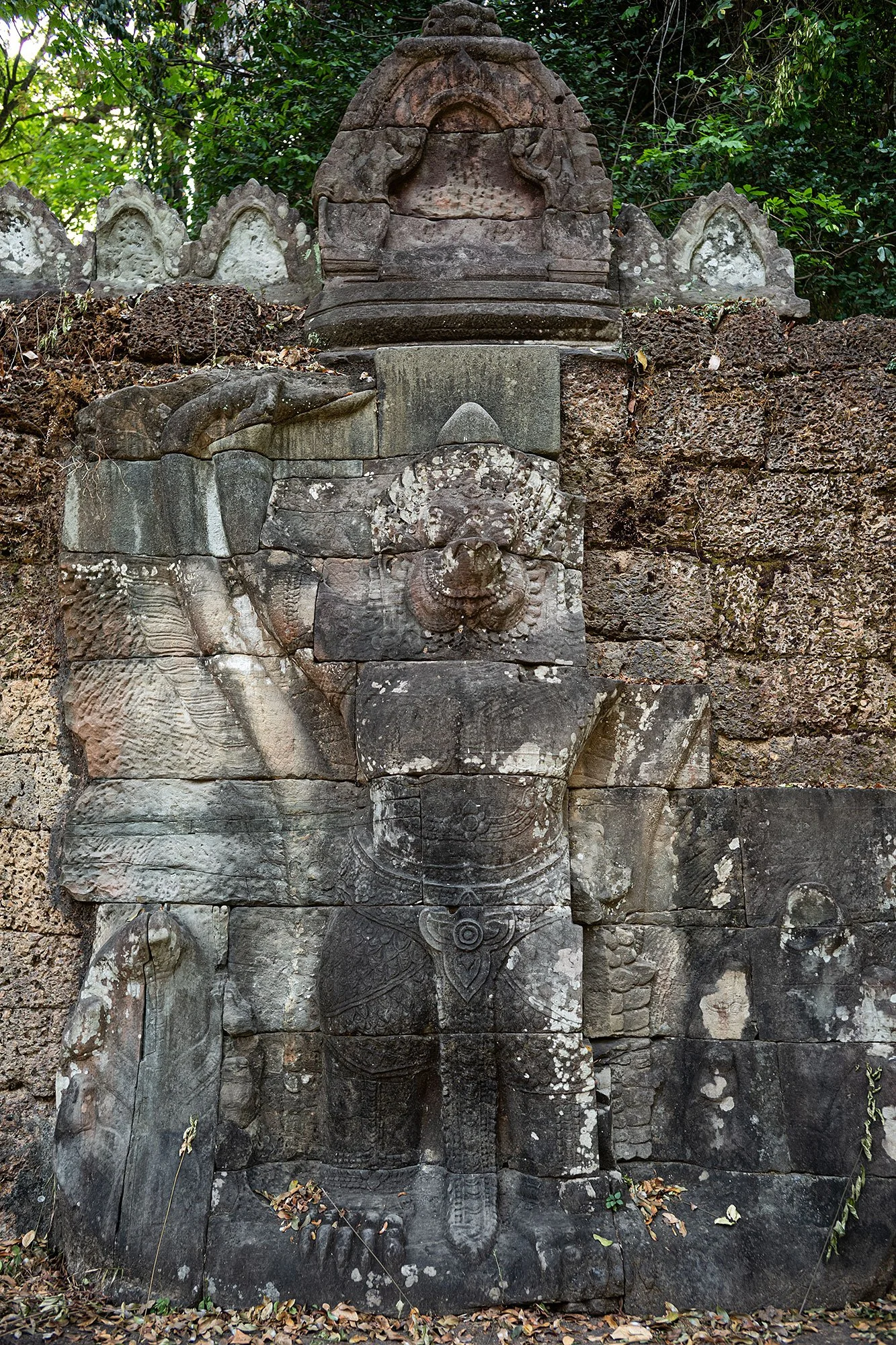
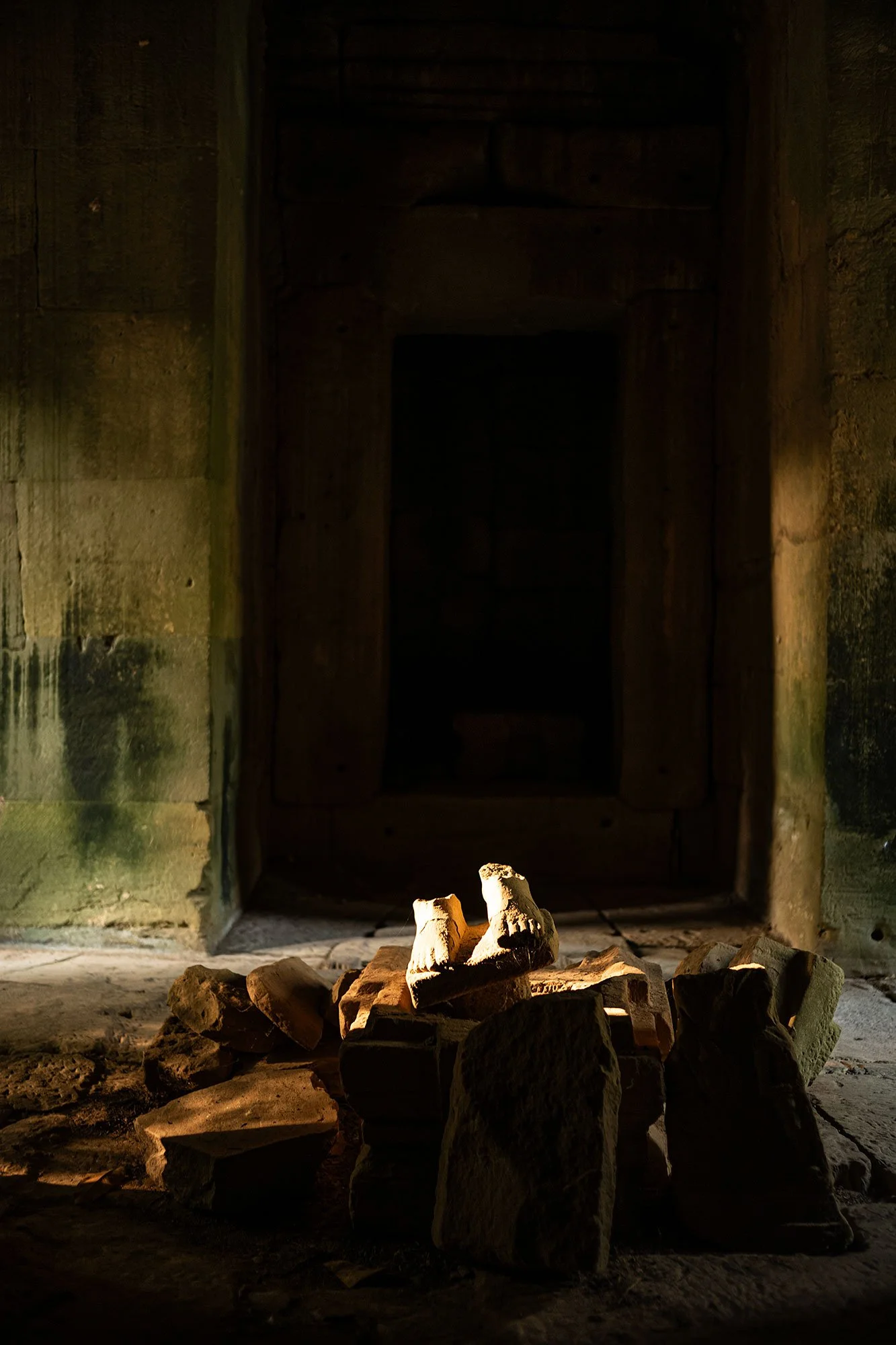
I remember a long temple with a central stupa standing open to the elements and try to remember if this was Preah Khan. We approach the temple from the west, passing a row of stone pillars leading up to a bridge that crosses the dry moat. Large garuda statues line the outer wall, and inside the stone feet are all that remain of a statue that once stood within the outer gate.
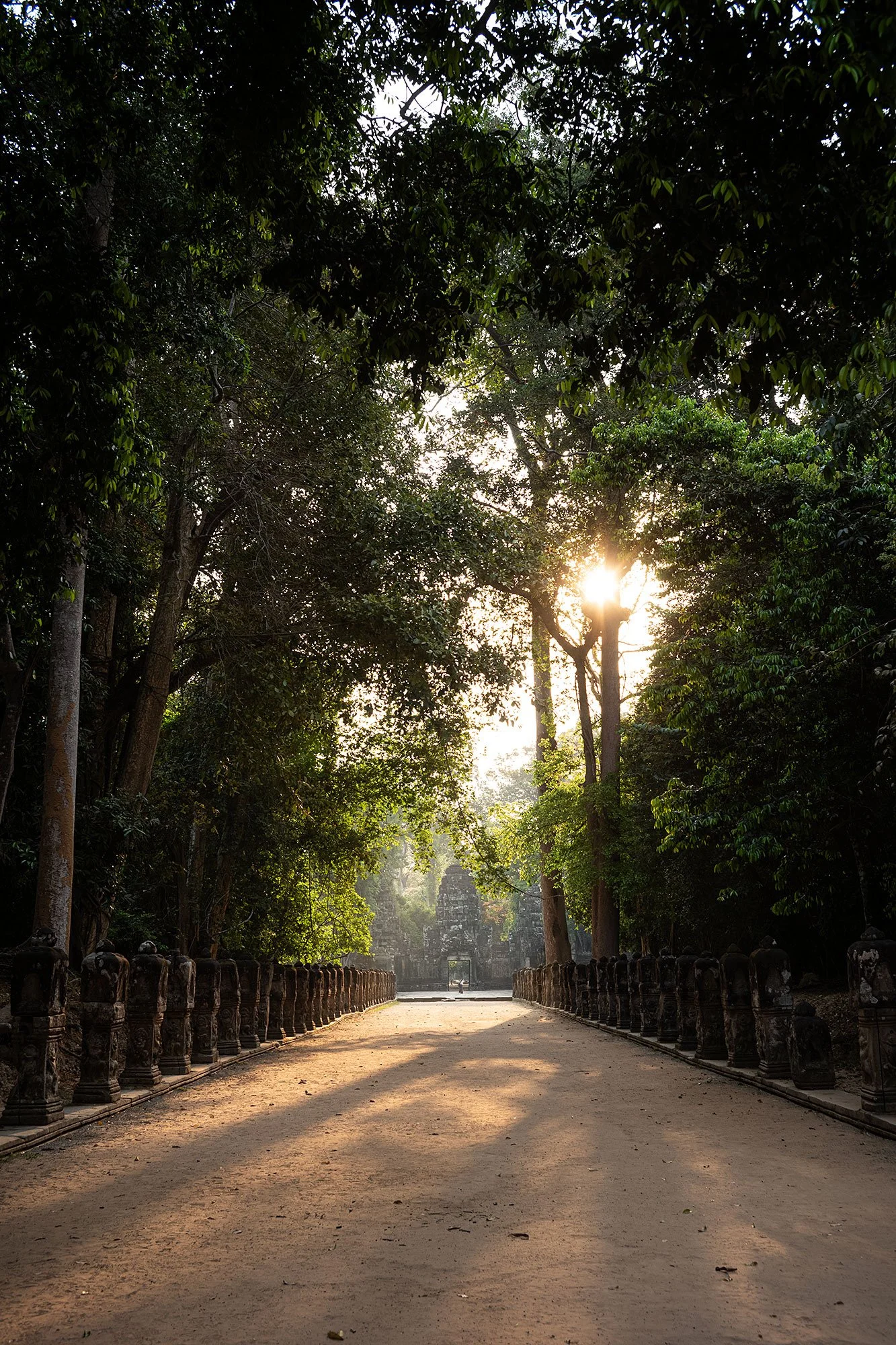
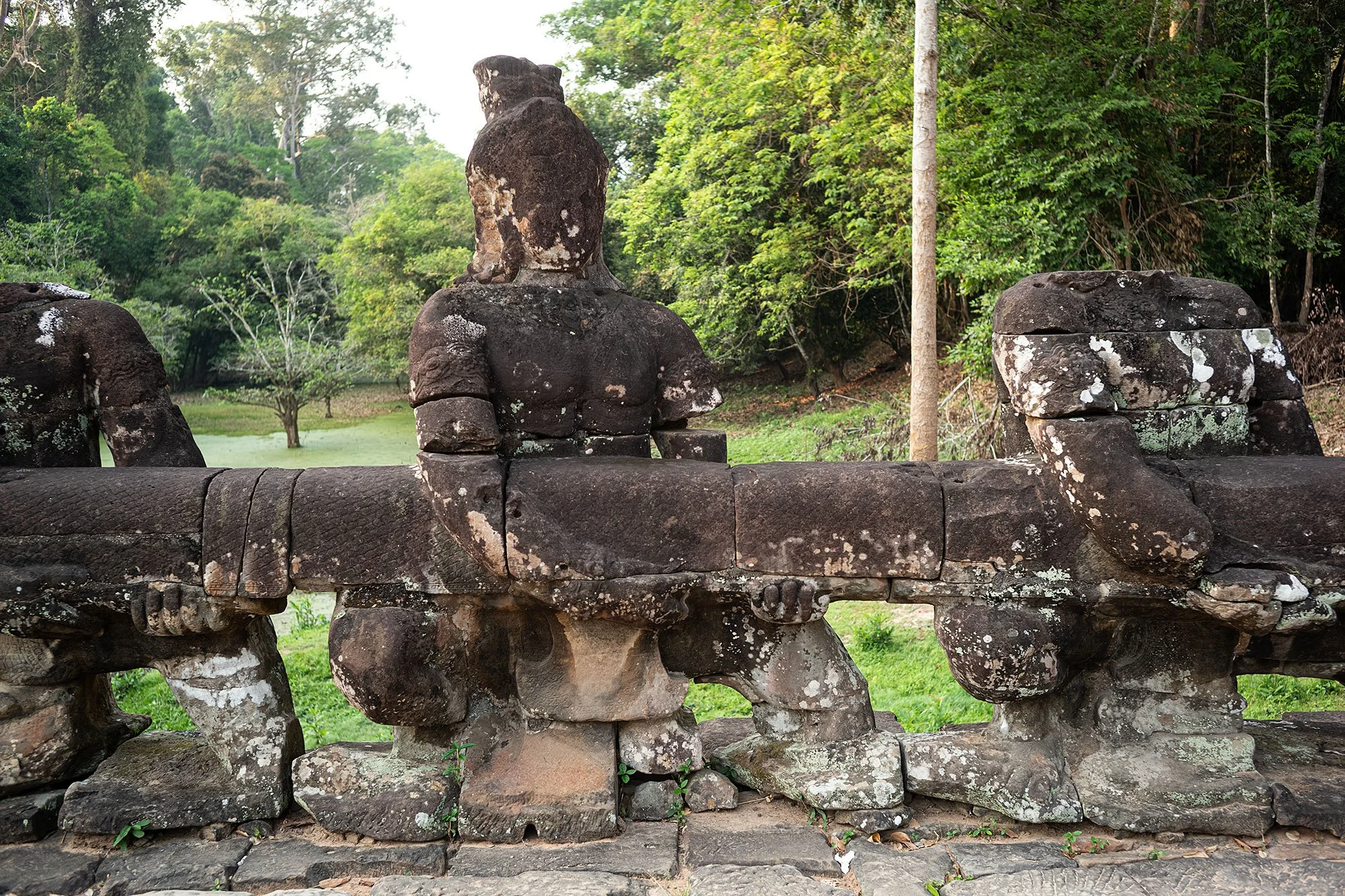
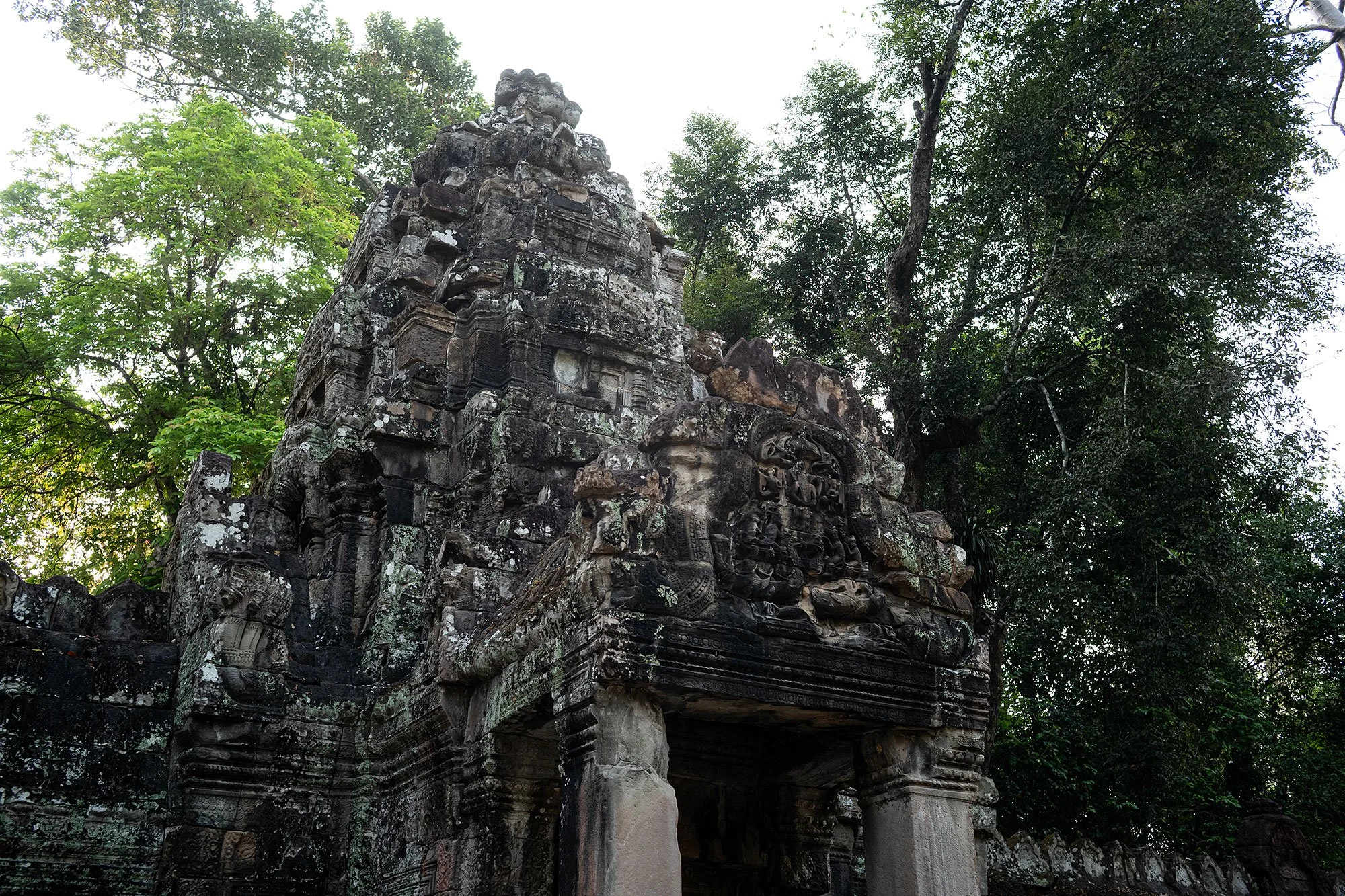
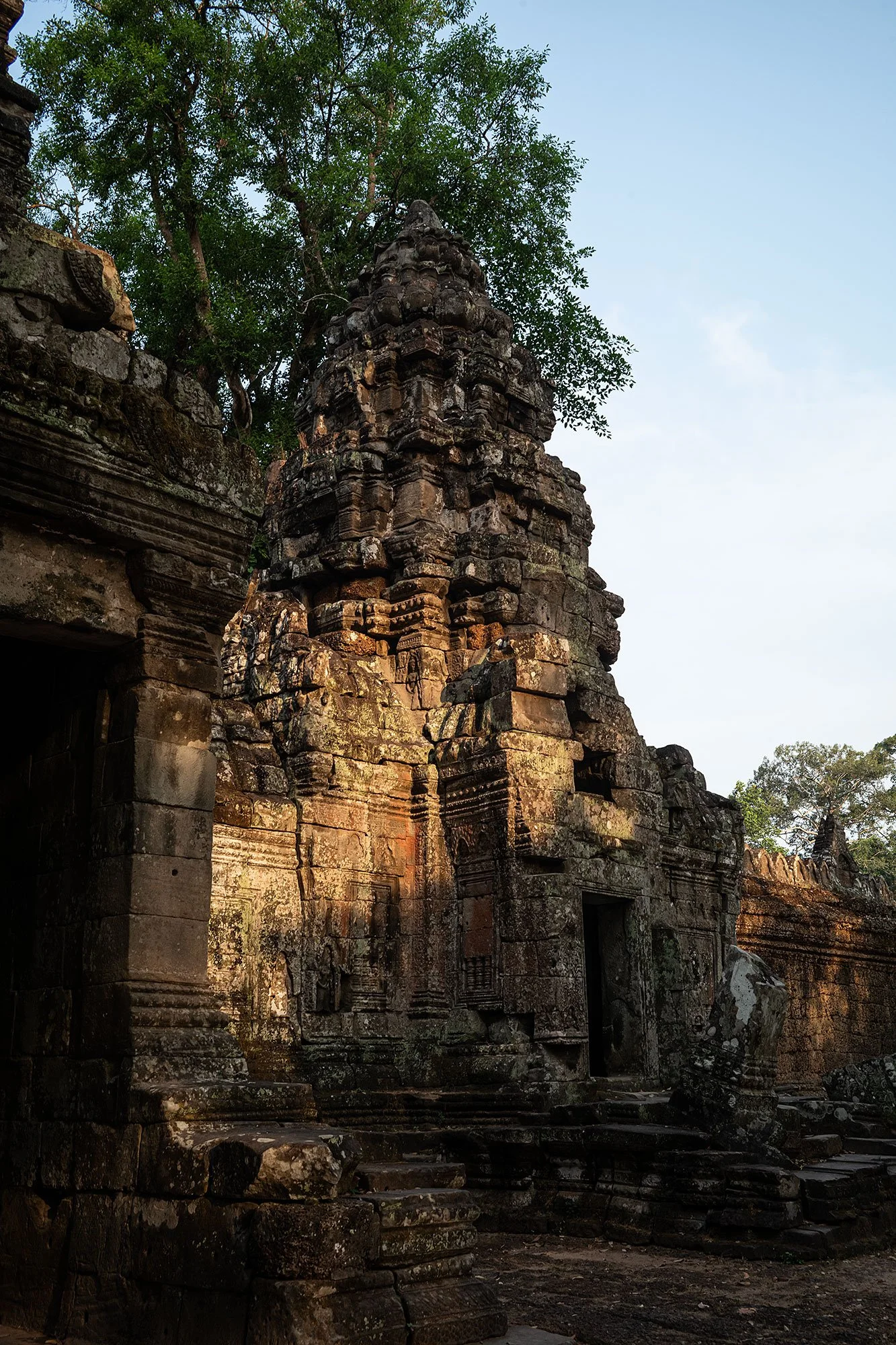
We continue through the outer enclosure. A group of musicians seated on a covered platform play traditional Khmer music as we pass. They’re landmine survivors, amputees, and visually-impared survivors of the Khmer Rouge regime and play for donations at various locations throughout the temple complex. CDs are for sale.
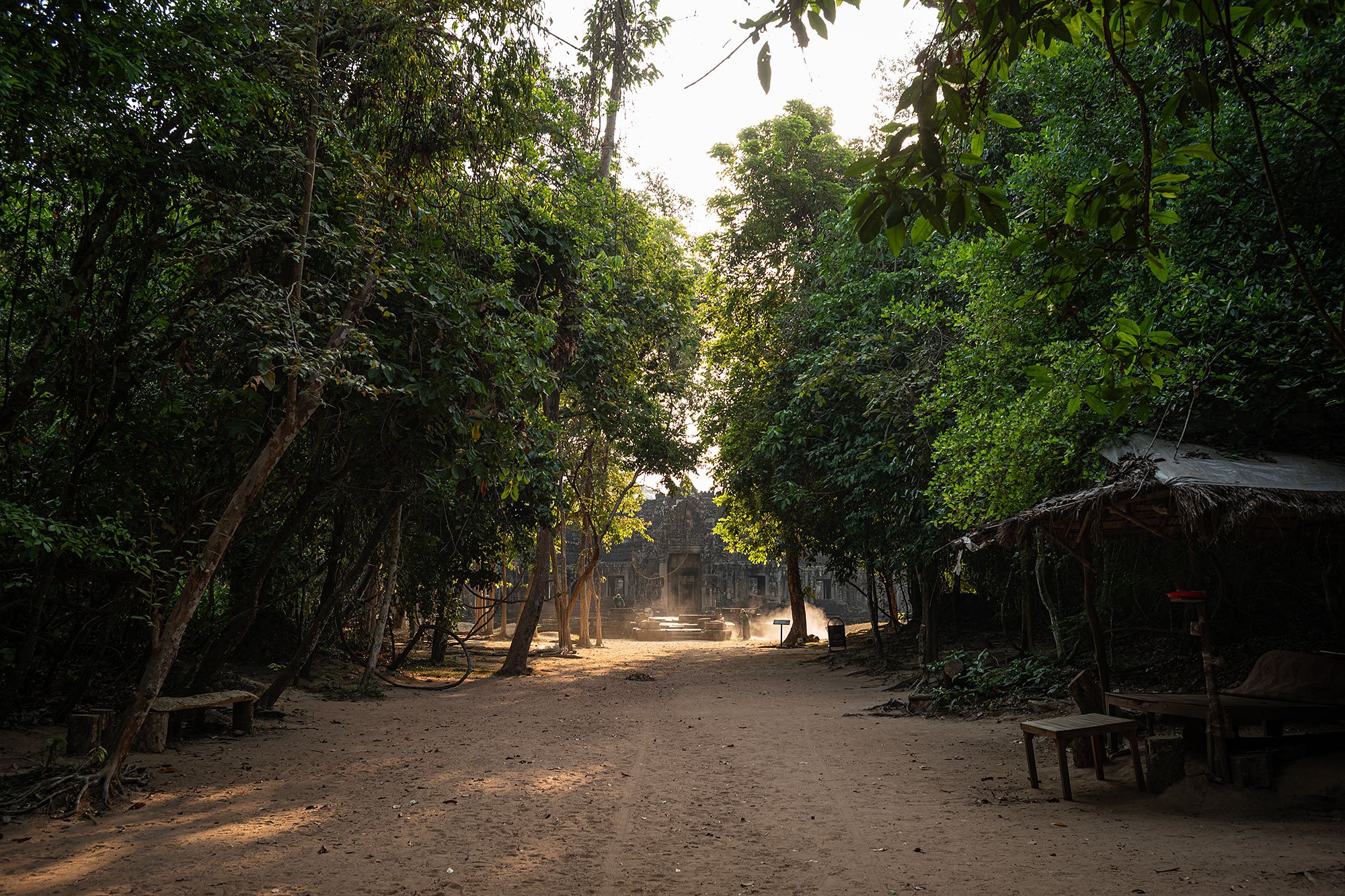
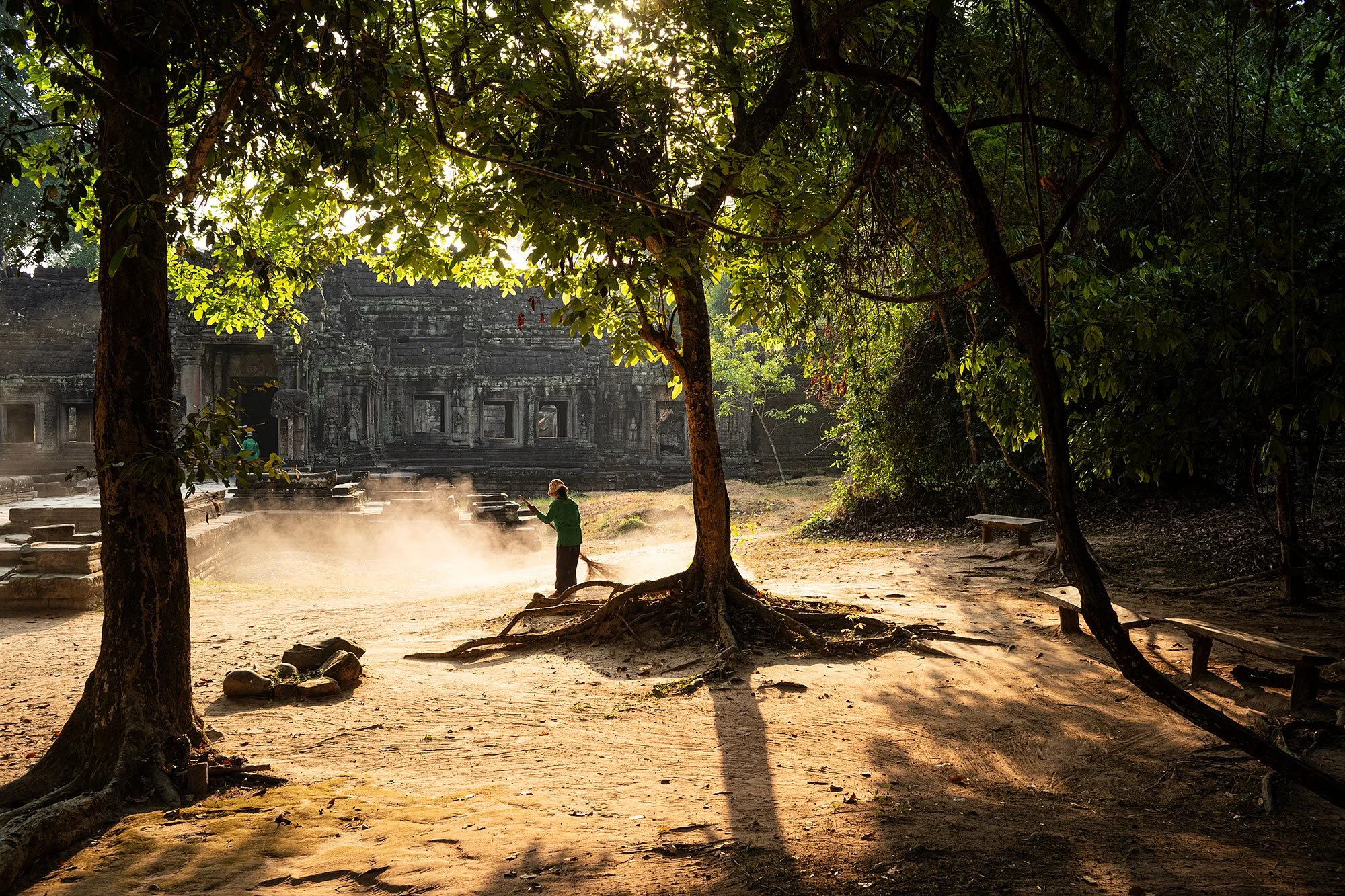
A woman sweeps the area before the main temple, sending dust into the air. Caught by the light, her actions create golden clouds that float across the entrance.
I walk ahead of my cousins and Jimmy, wanting to photograph the temple halls before other tourists arrive. I can see people approaching behind us. The temple itself consists of a maze of chambers and halls leading up to the stupa that sits in the central shrine. There’s some debate as to whether the stupa was the original object of worship or whether it’s a later addition. It’s similarity to Sri Lankan stupas suggest it may have been added post Jayavarman VII, the king who built the 12th-century Buddhist monastery to honor his father; he later built Ta Prohm to honor his mother.
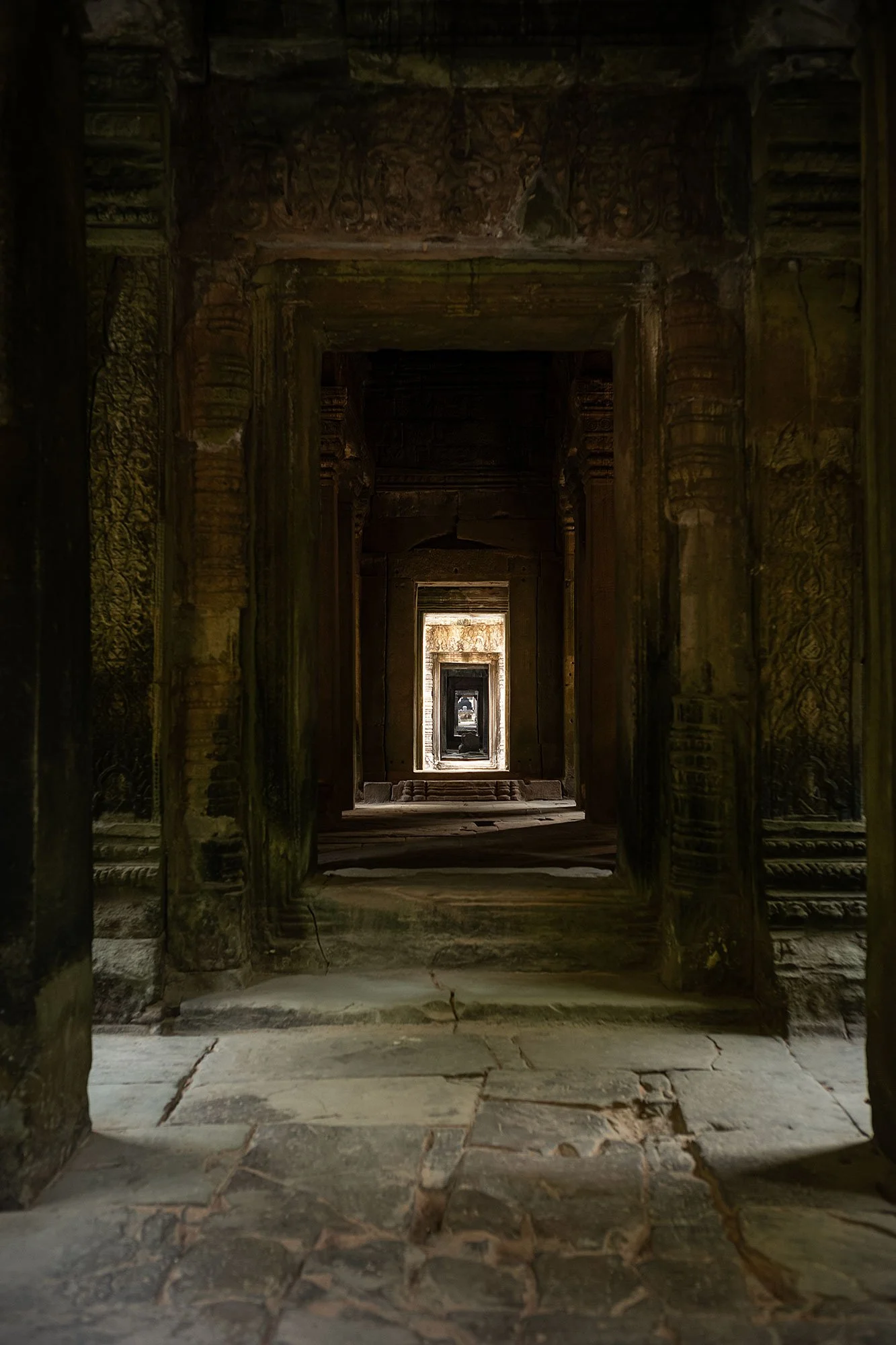
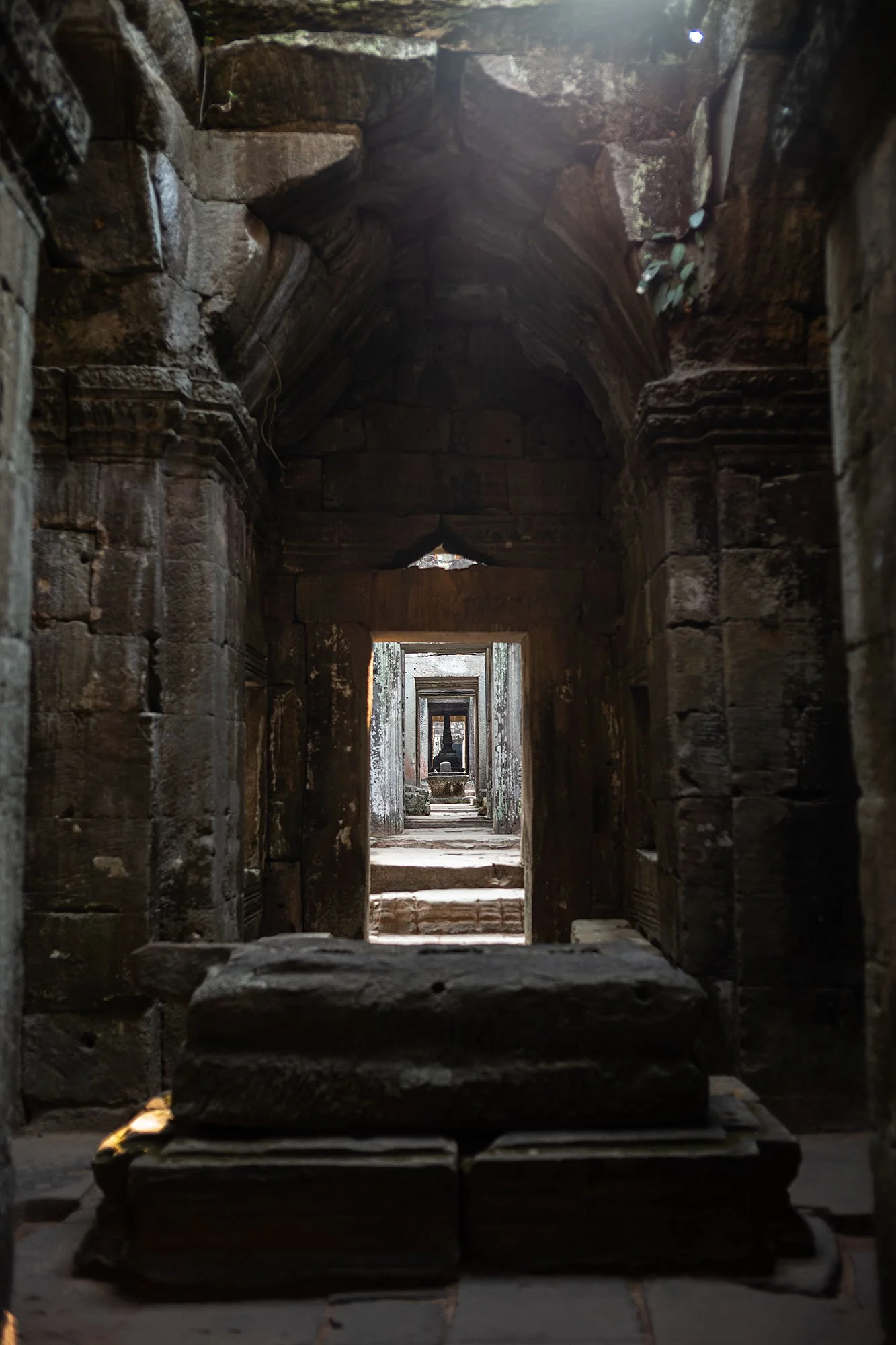
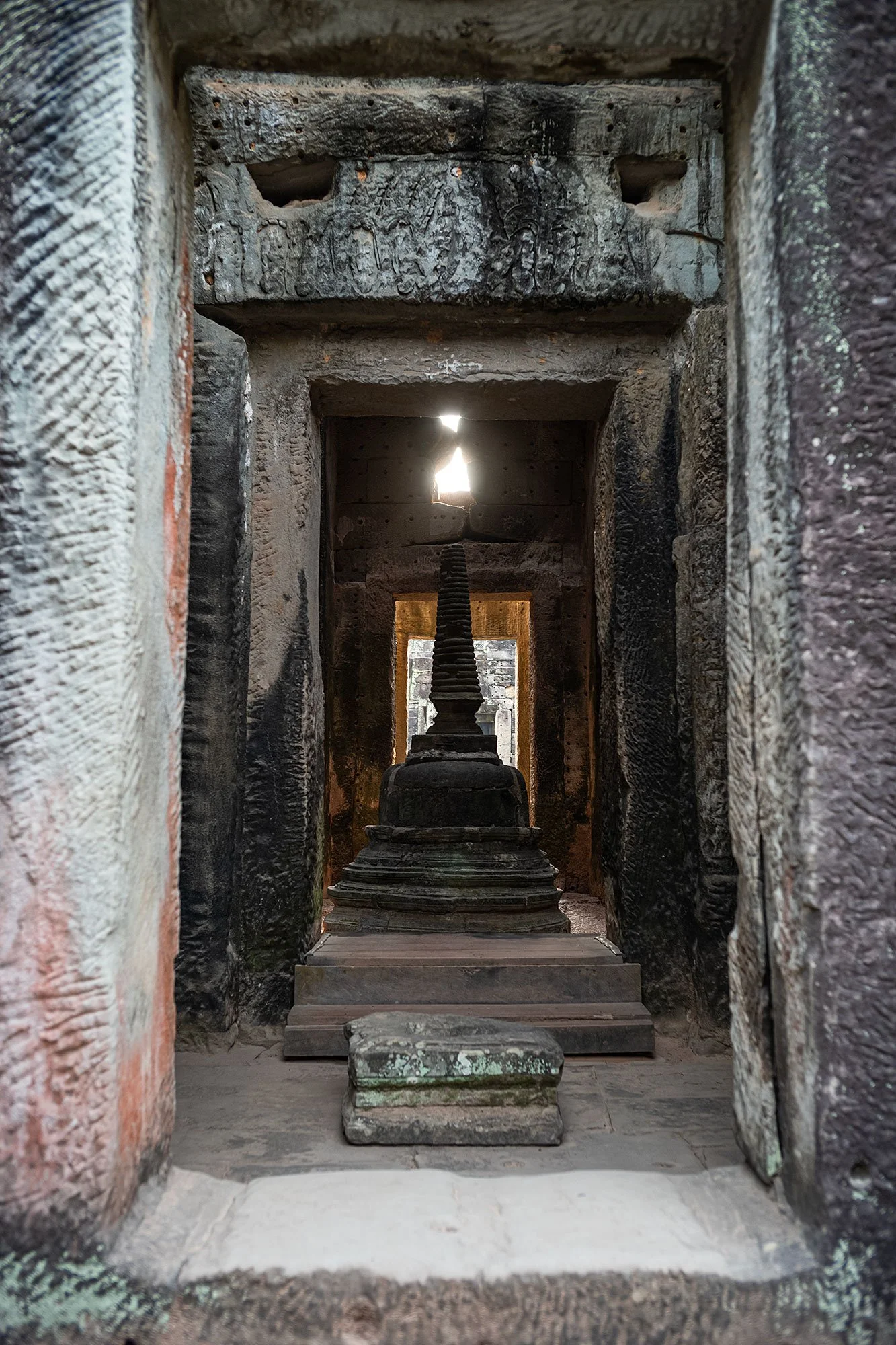
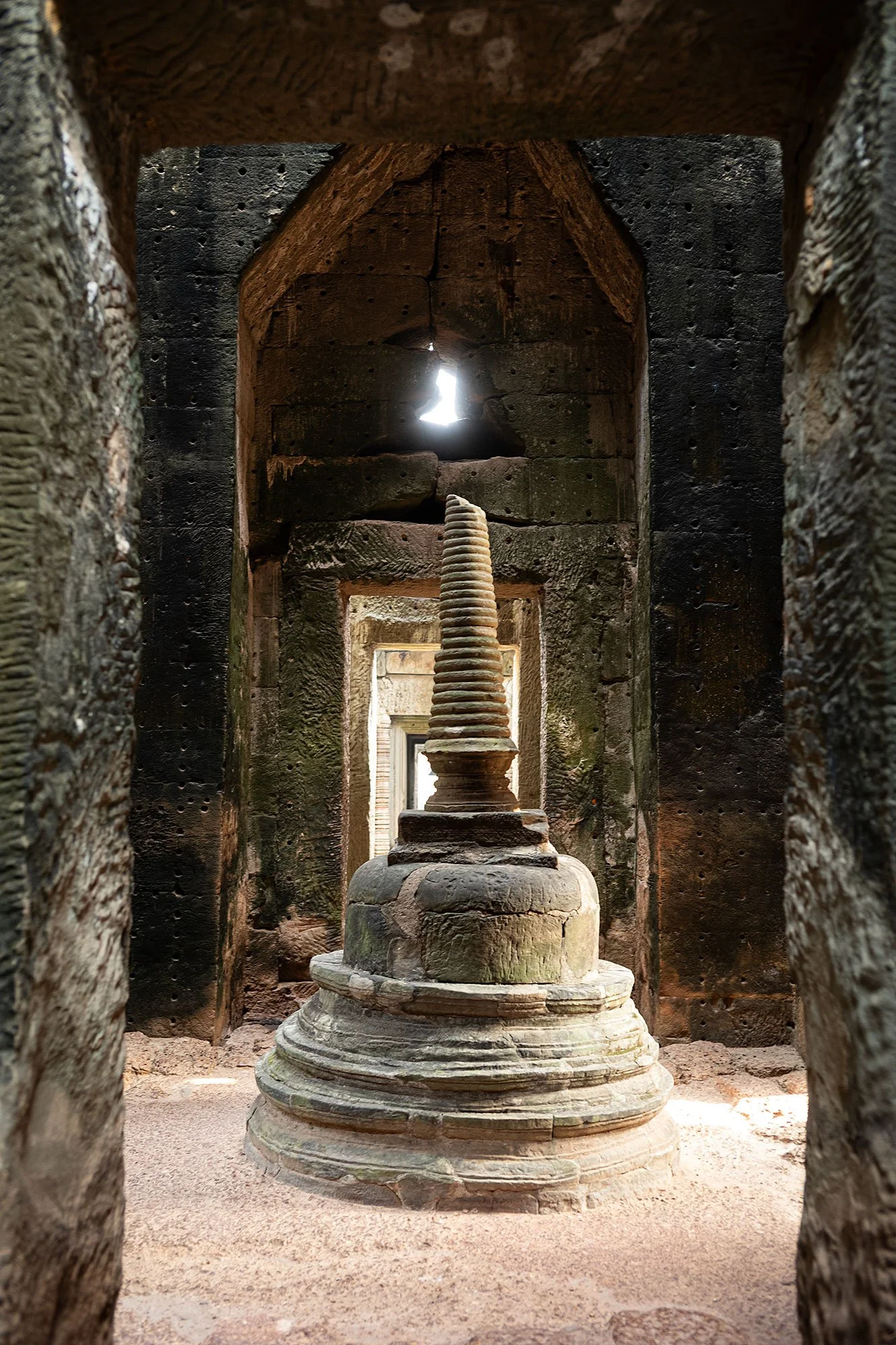
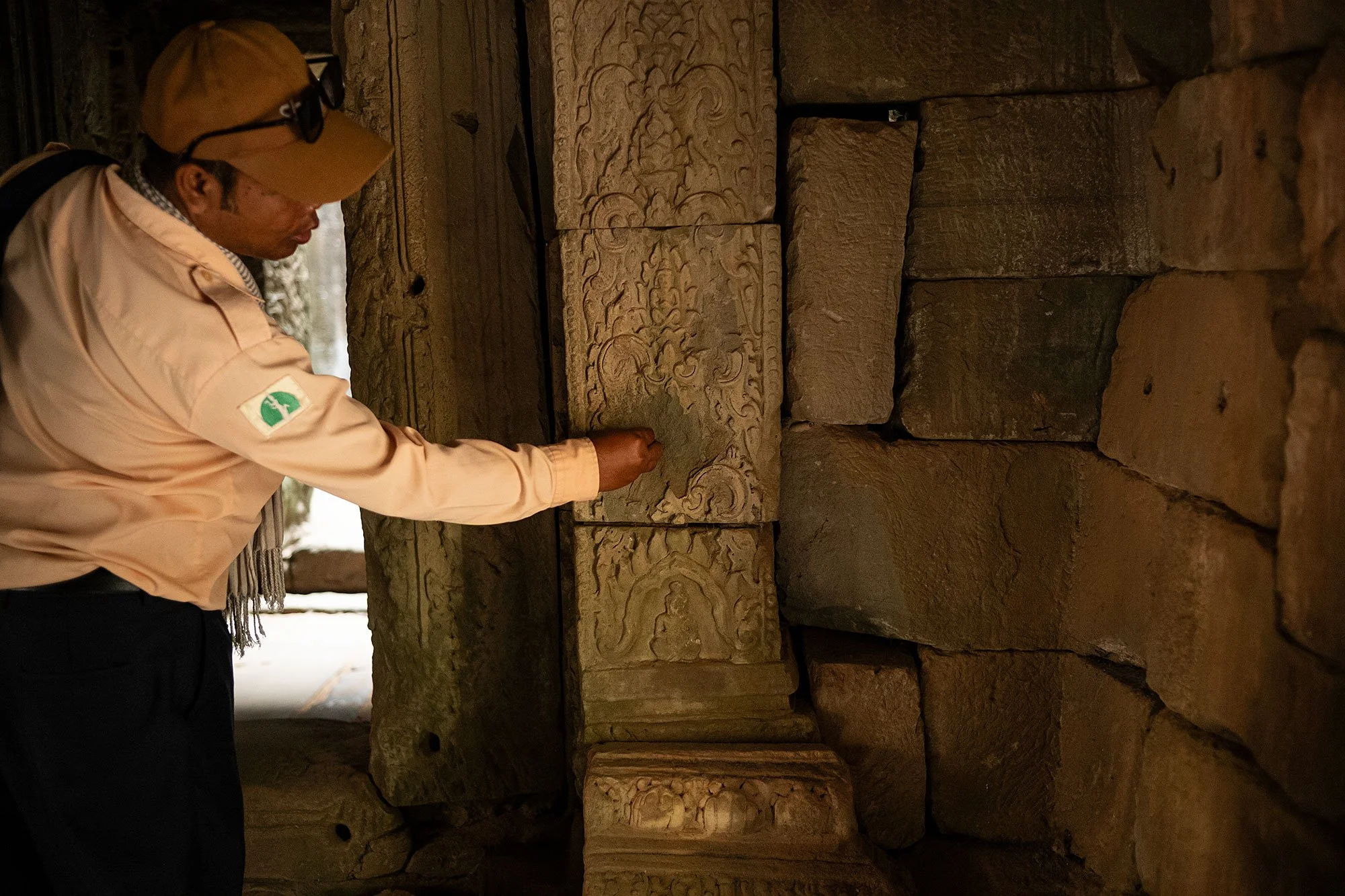
Backtracking to Jimmy and my cousins I find him pointing out bullet holes in the columns. They reflect the violent modern history of Cambodia when the Khmer Rouge used the temples as shelters.
In the past, the temple served as a royal city with wooden buildings housing monks, students, and workers inside its outer enclosure wall, which demarcates an area of 56 hectares. It’s estimated some 15,000 people lived within the vast complex.
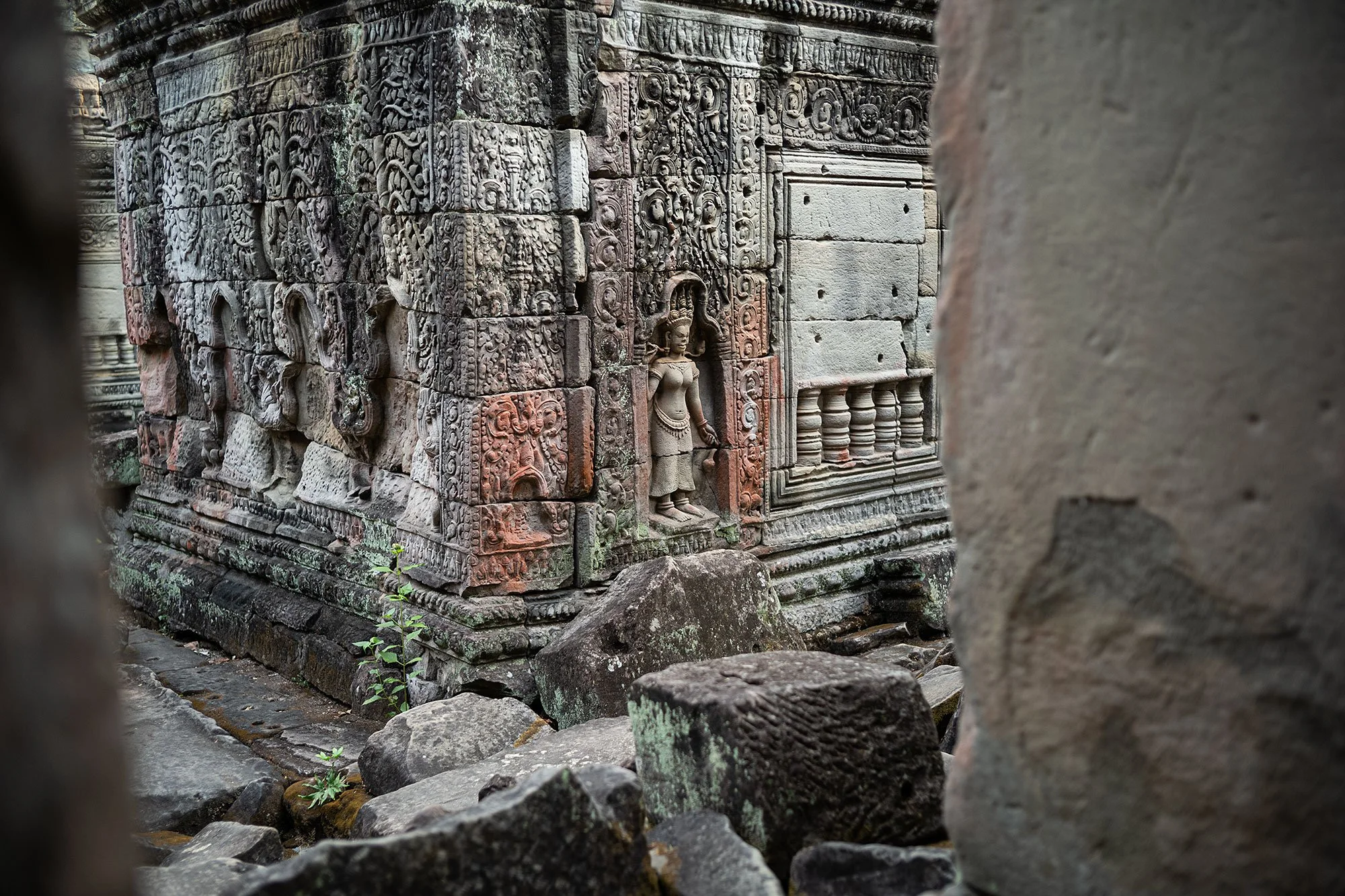
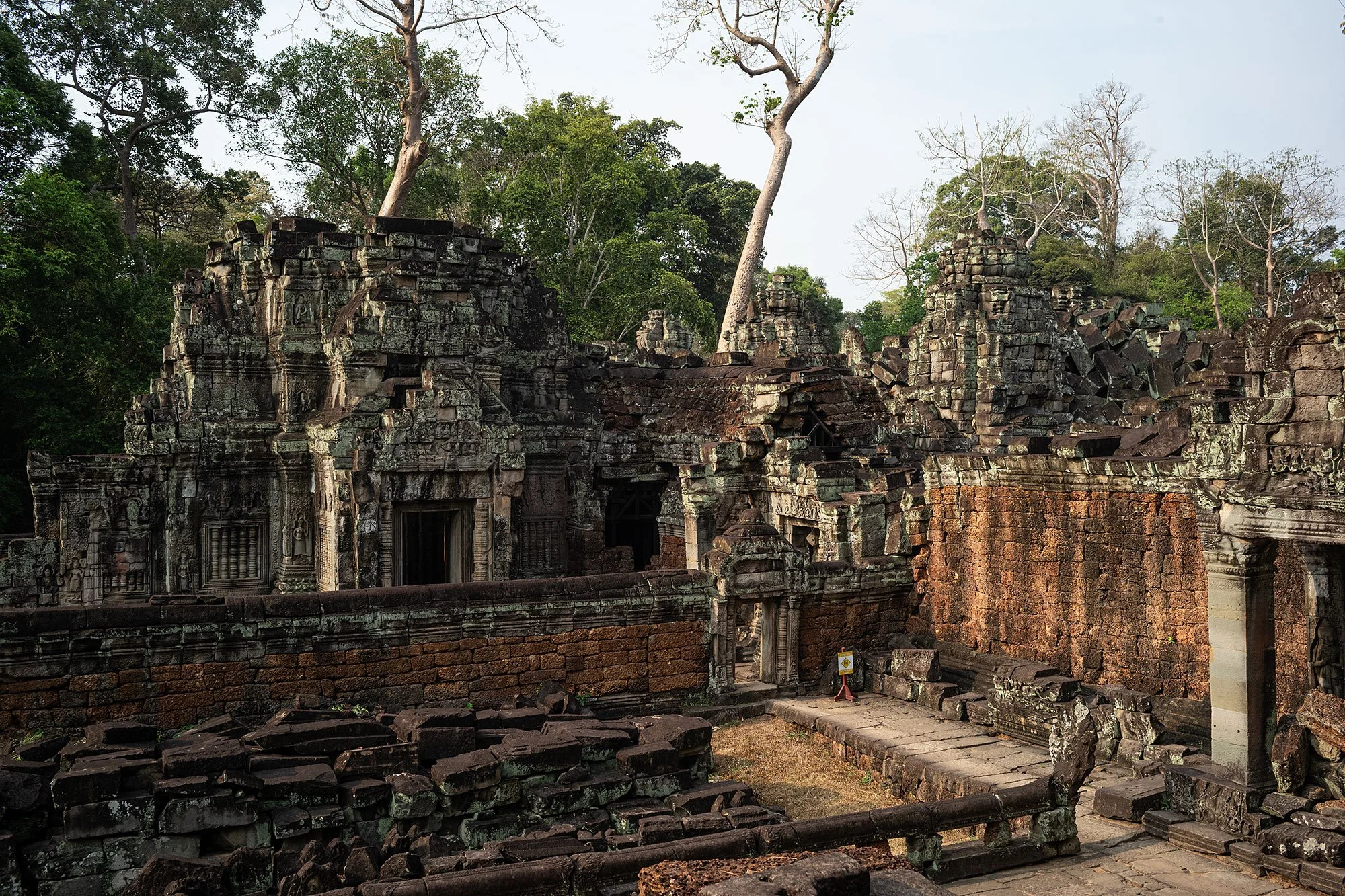
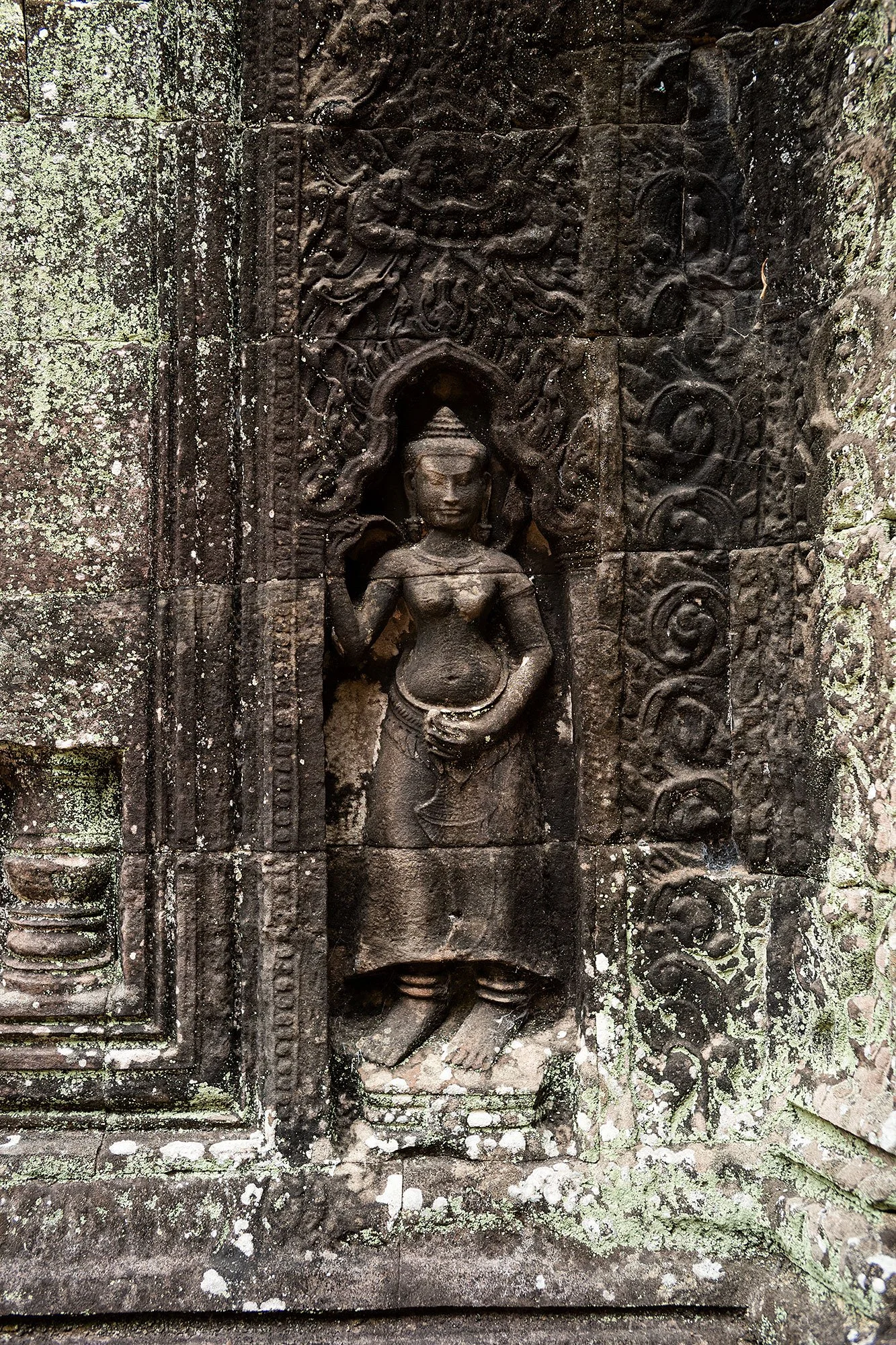
By the time we wander back to the main shrine I’m distracted by the intricate decorations and apsaras carved on the various buildings in the inner enclosure and step out to wander around, climbing over some of the stone bricks that remain piled about the ruins.
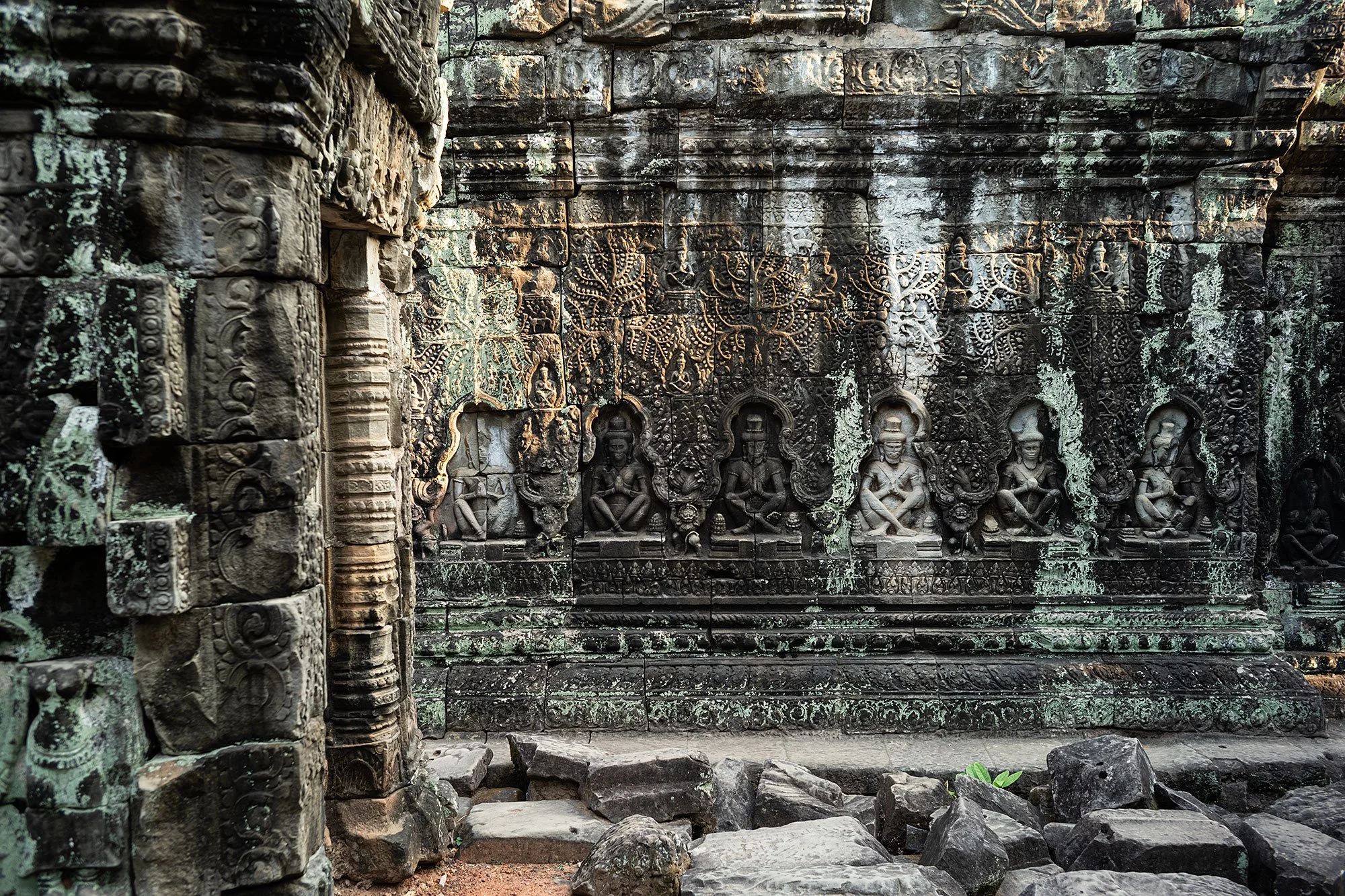
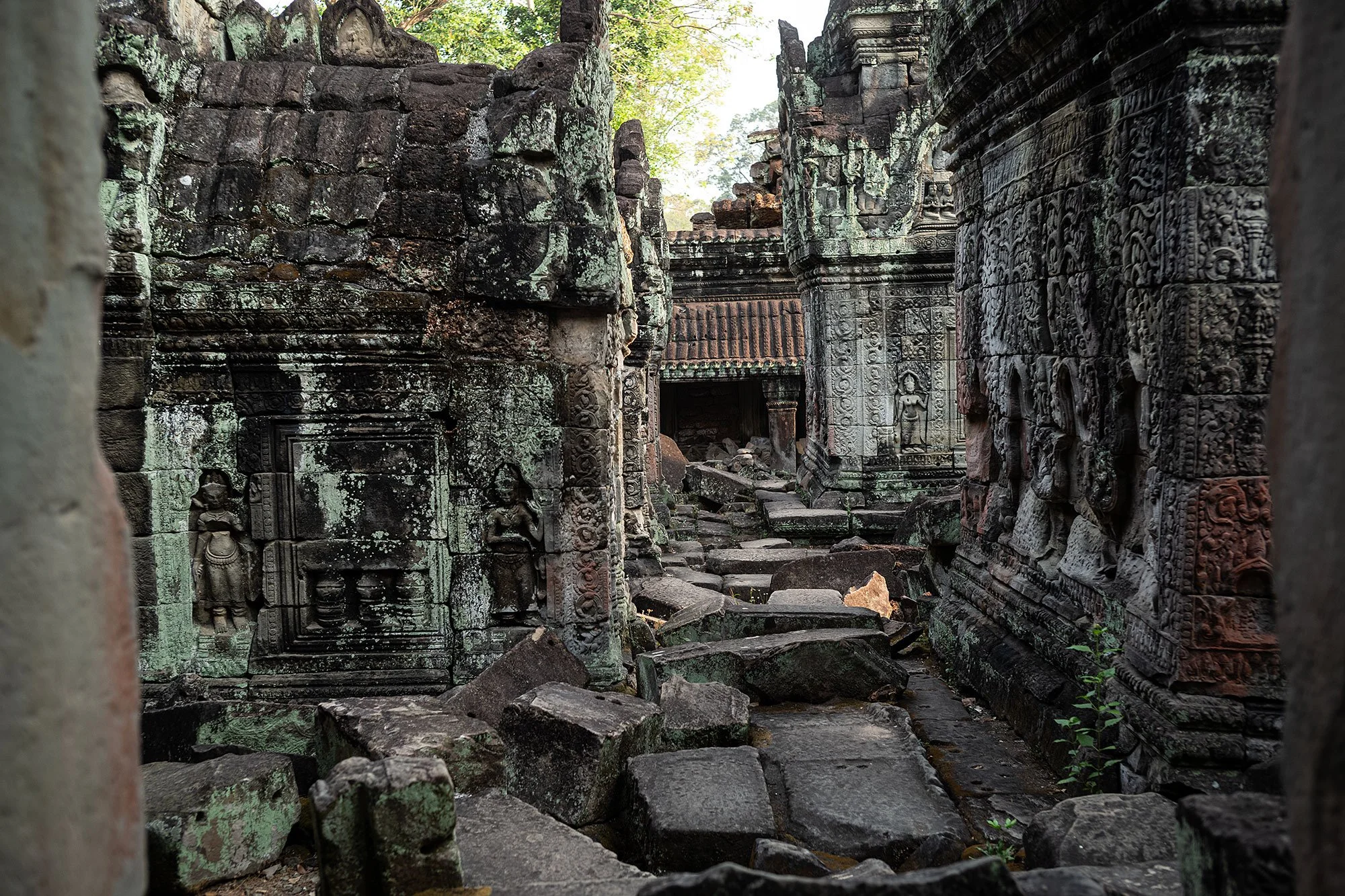
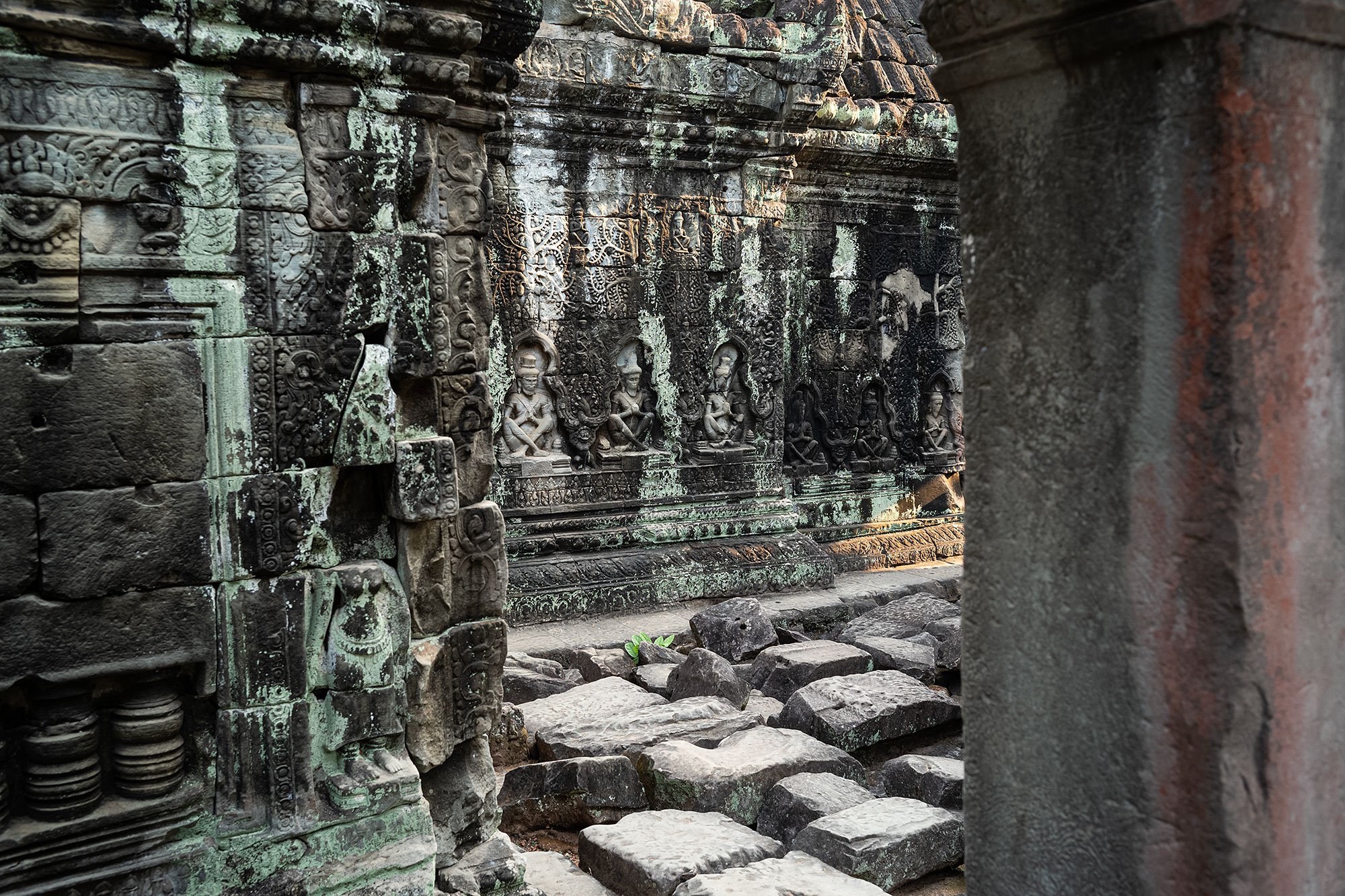
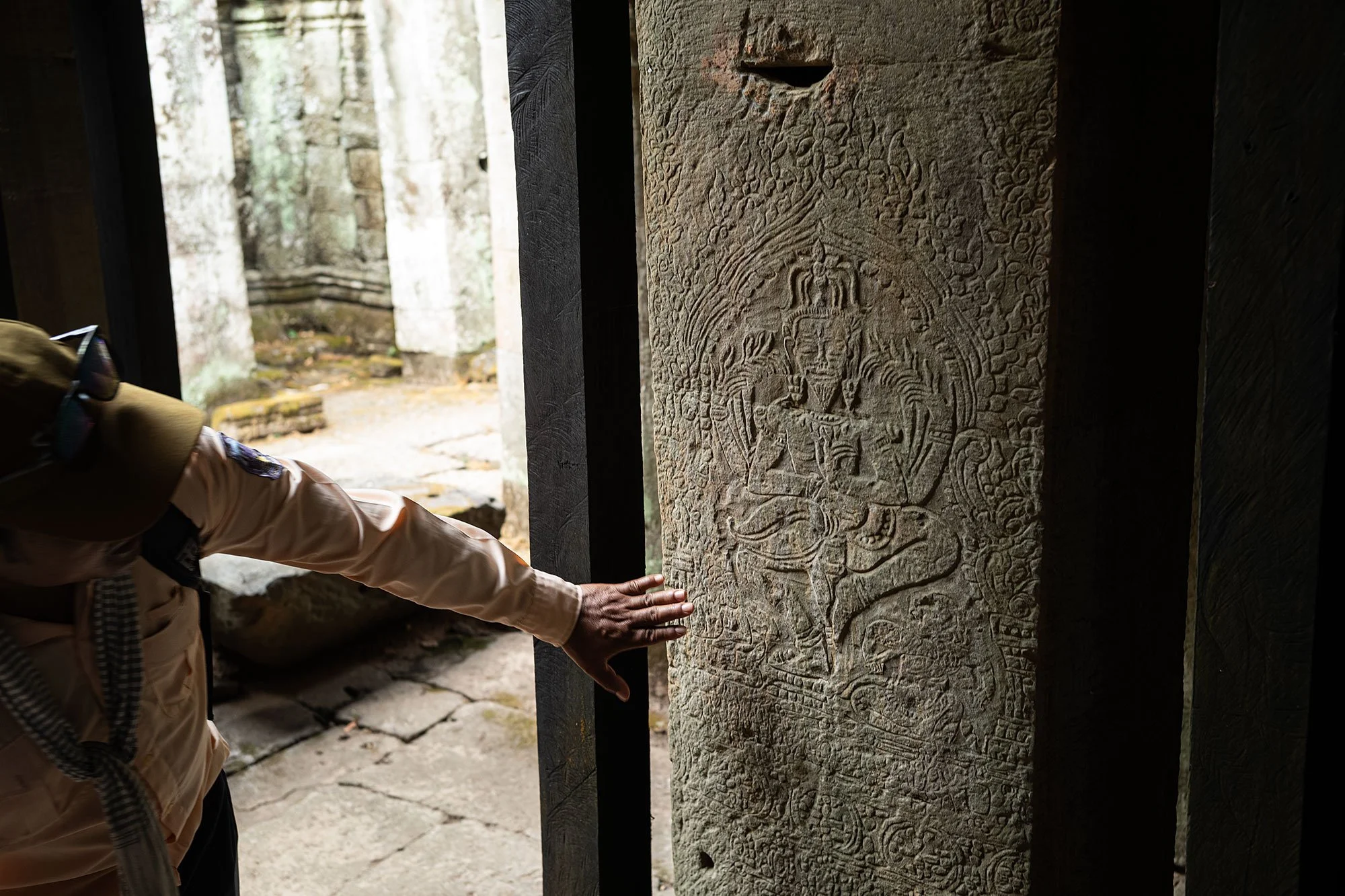
I find Jimmy pointing out an image carved into one of the columns in another part of the complex, which shows a representation of Vishnu that had been updated to depict Jayavarman VII, reflecting the shift from Hinduism to Buddhism as the state religion.
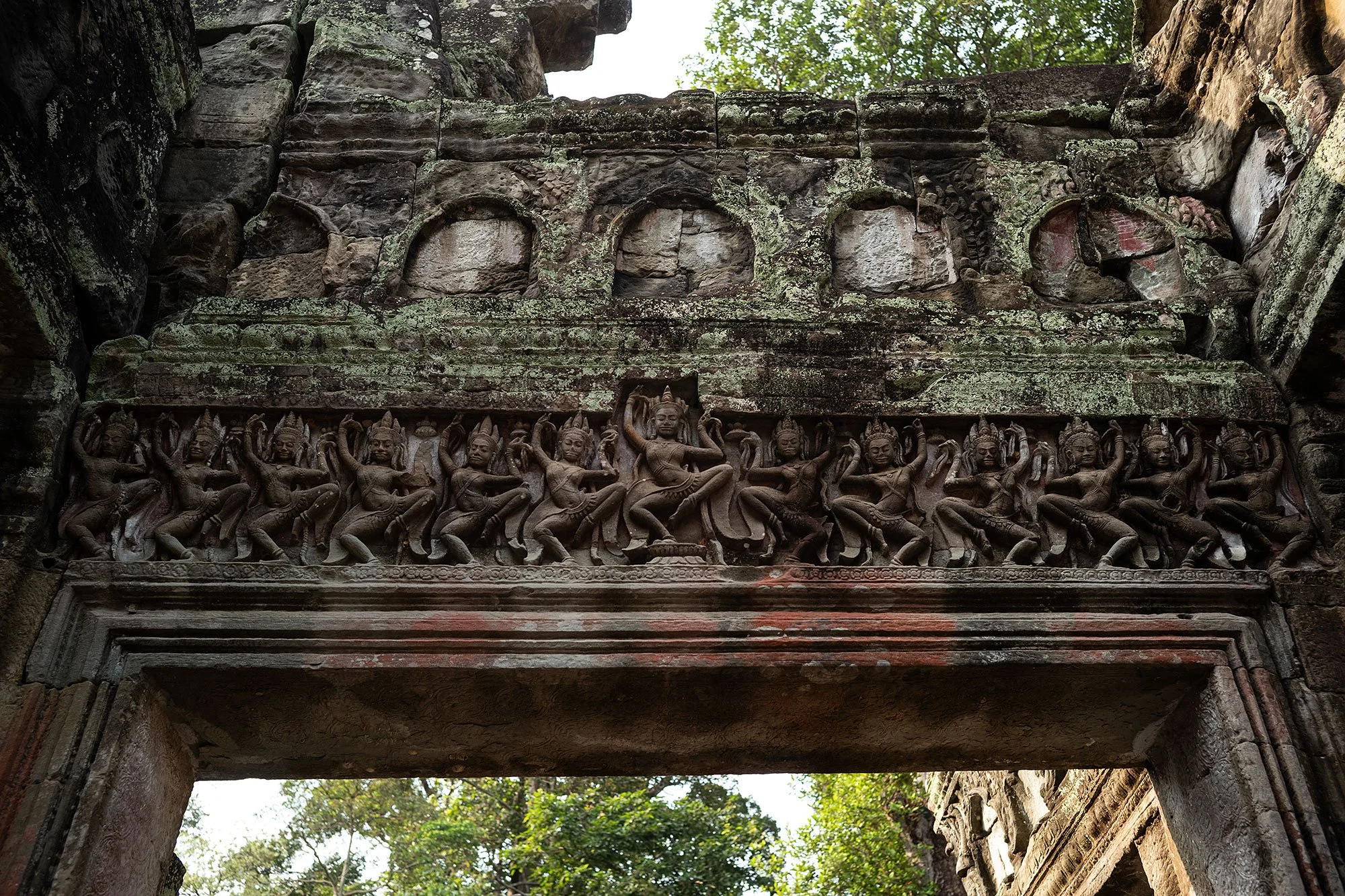
Outside, I linger behind the group to take in some details as they walk east towards the Hall of the Dancers, so-called for the Apsaras/dancers that decorate the walls and lintels. The alcoves above the dancers once held images of Buddha until they were supposedly destroyed during the reign of Jayavarman VIII, a fervent Hindu Shaivite who reversed the pro-Buddhist policies of his predecessor.
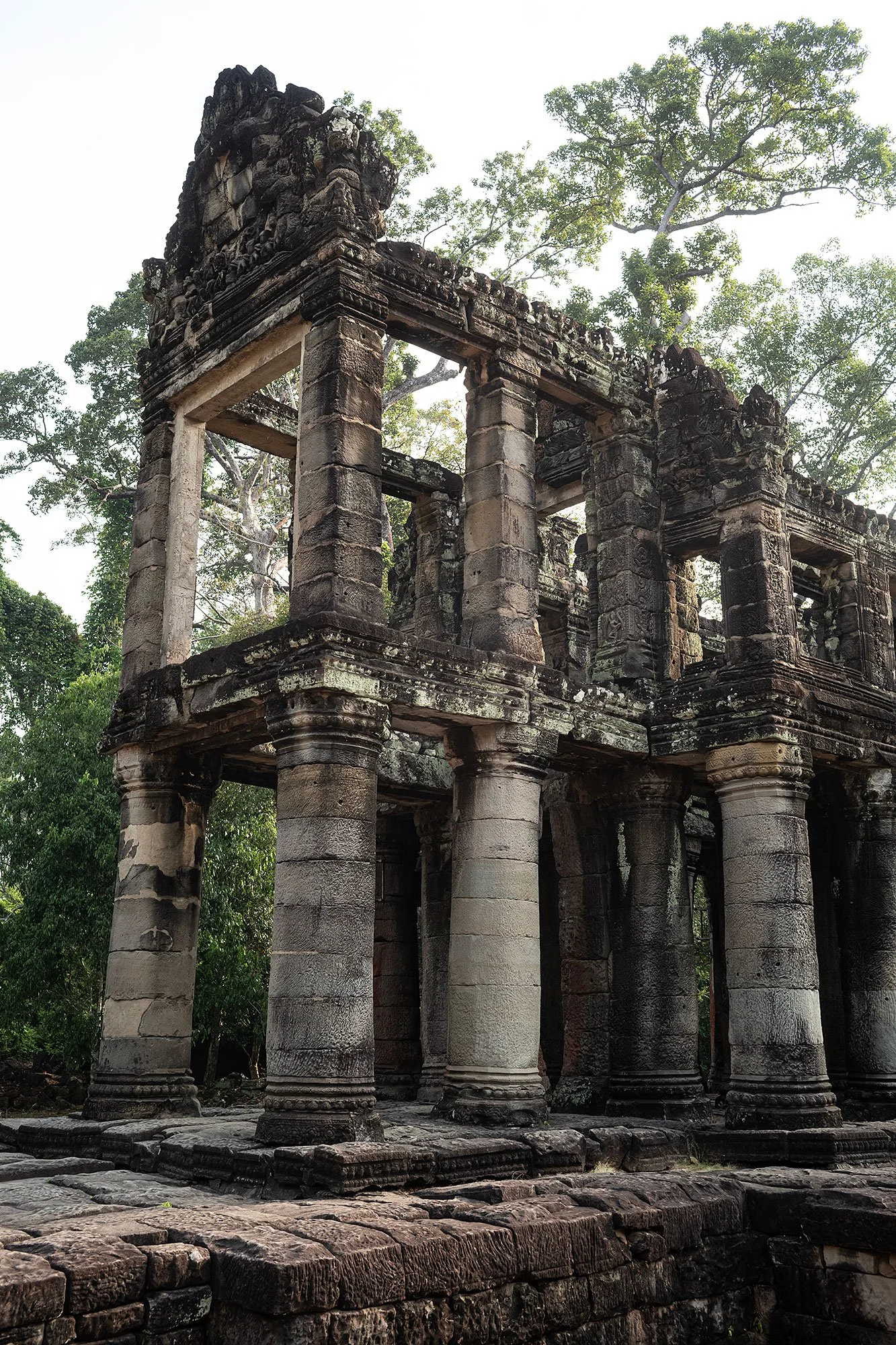
To the north stands the two-story rice harvest prayer hall, notable for the round columns supporting the second floor. No other examples of this architectural feature survive at Angkor, though there are traces of similar buildings at Ta Prohm and Banteay Kdei.
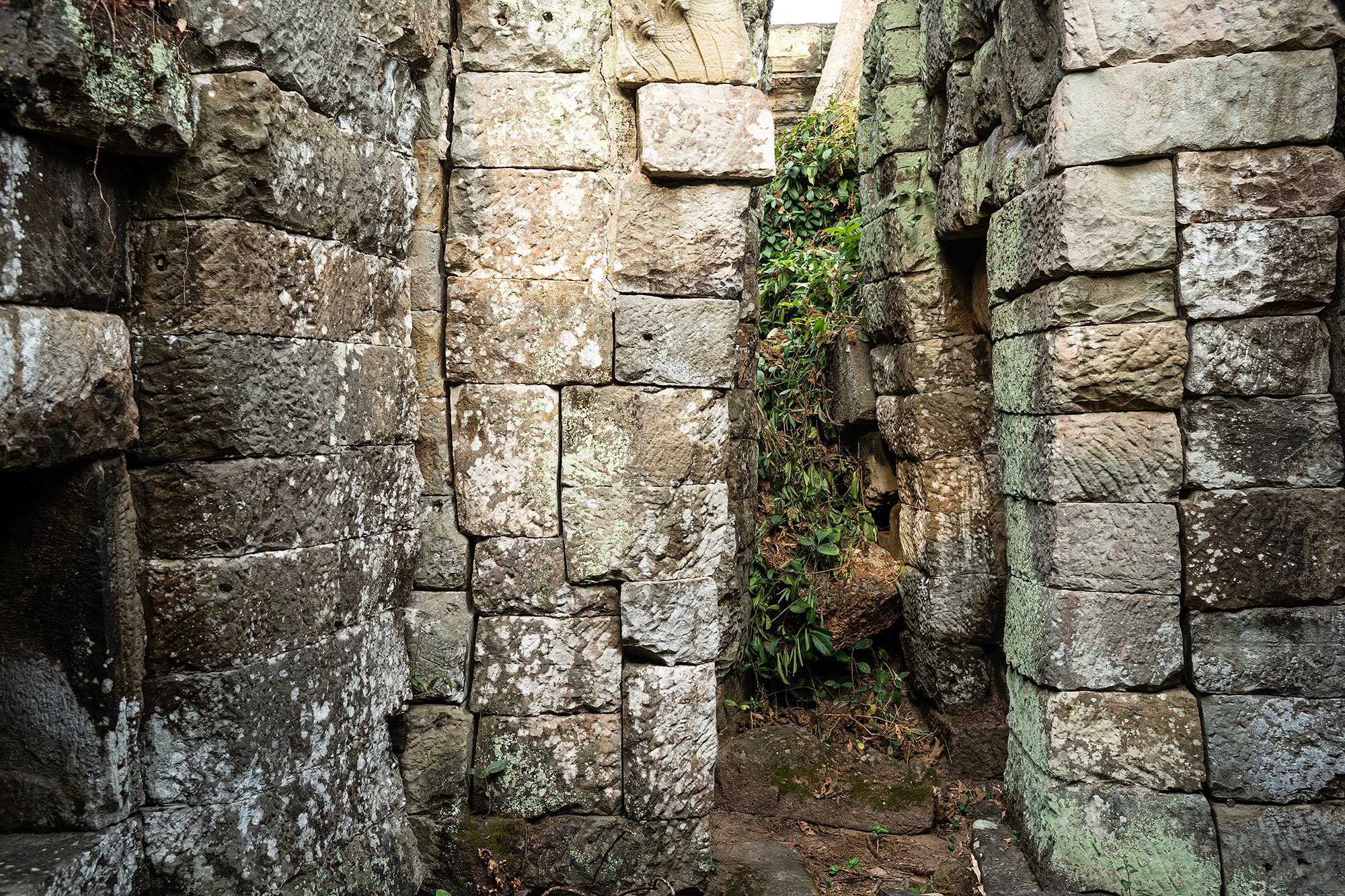
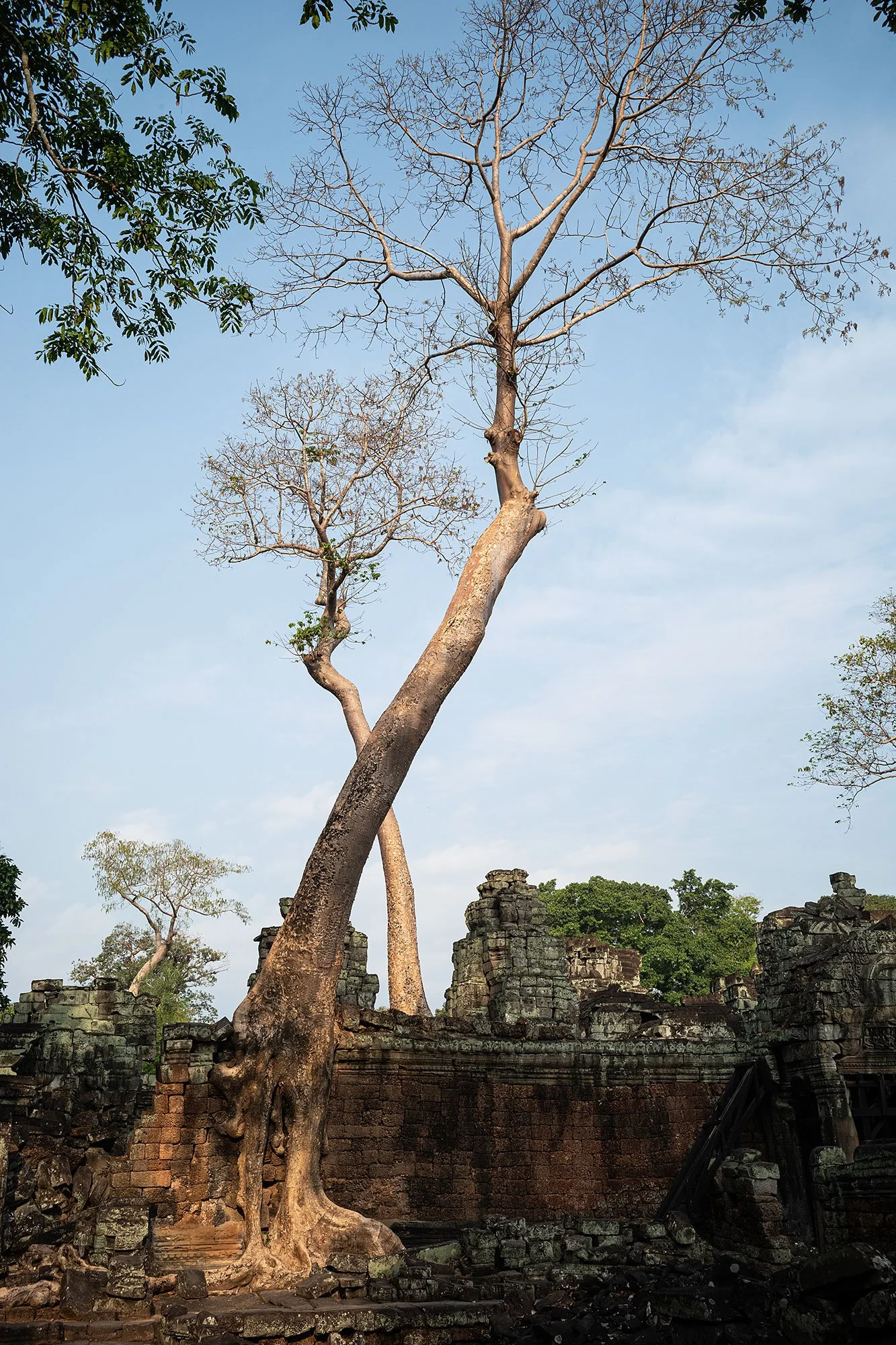
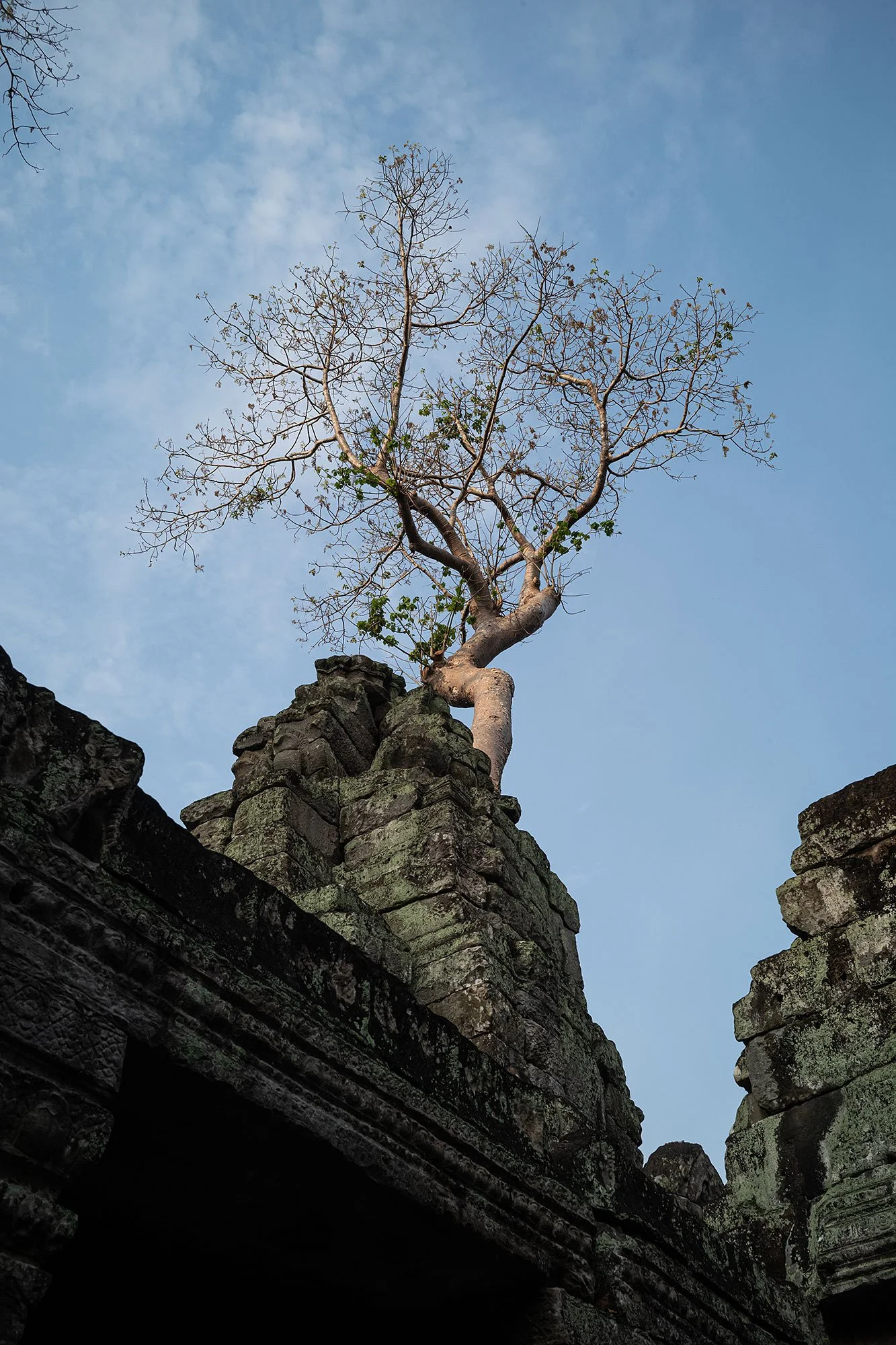
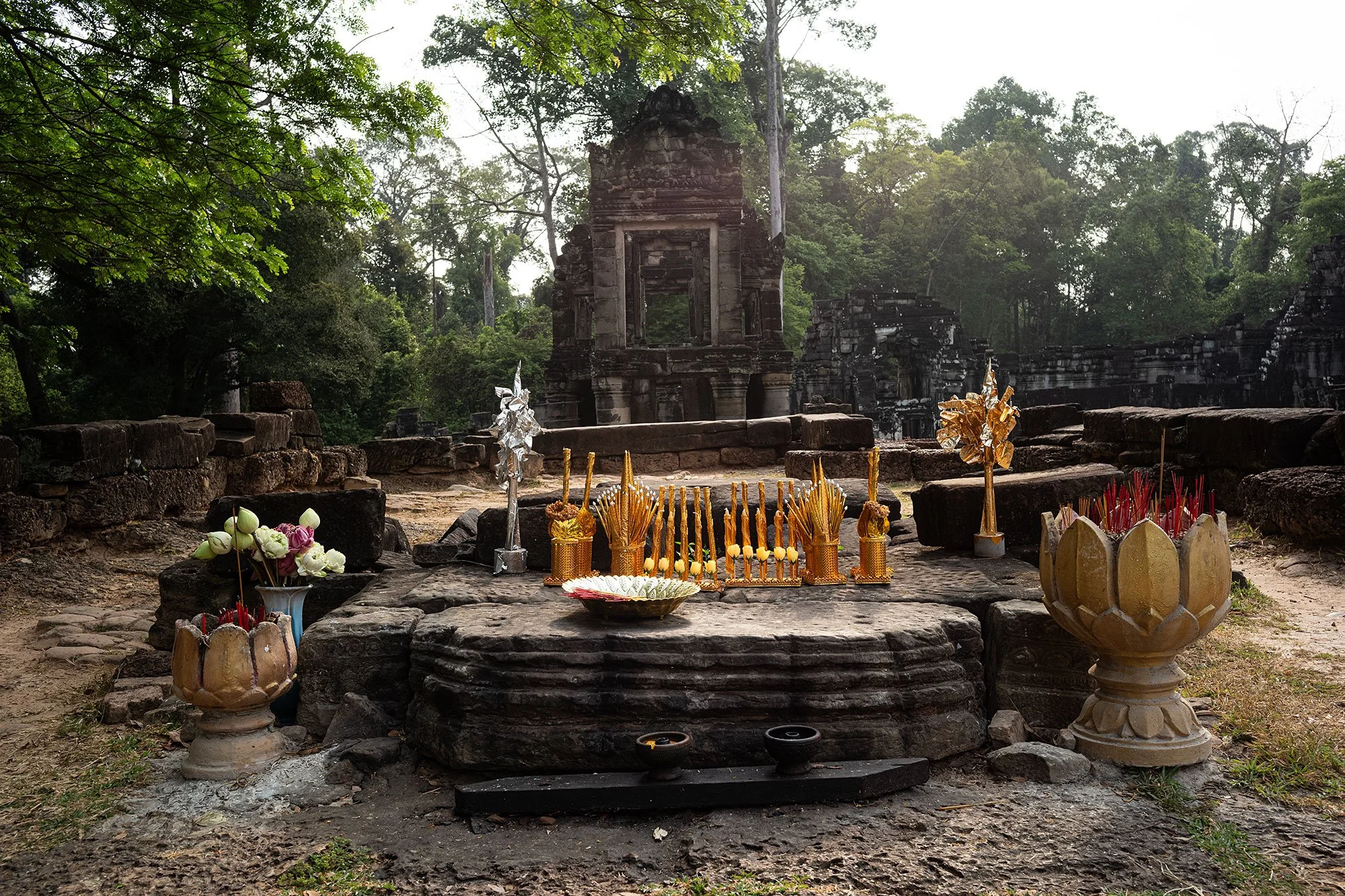
Opposite the prayer hall steep stone steps lead up to a platform with an altar. Offerings are set upon it and I ask my cousin if they have a lighter so I can burn a stick of incense. Unfortunately, we have no flames.
From the viewpoint we can look back over the ruins we have just visited before meeting Jimmy back on the ground. Once again, he’s declined the climb.
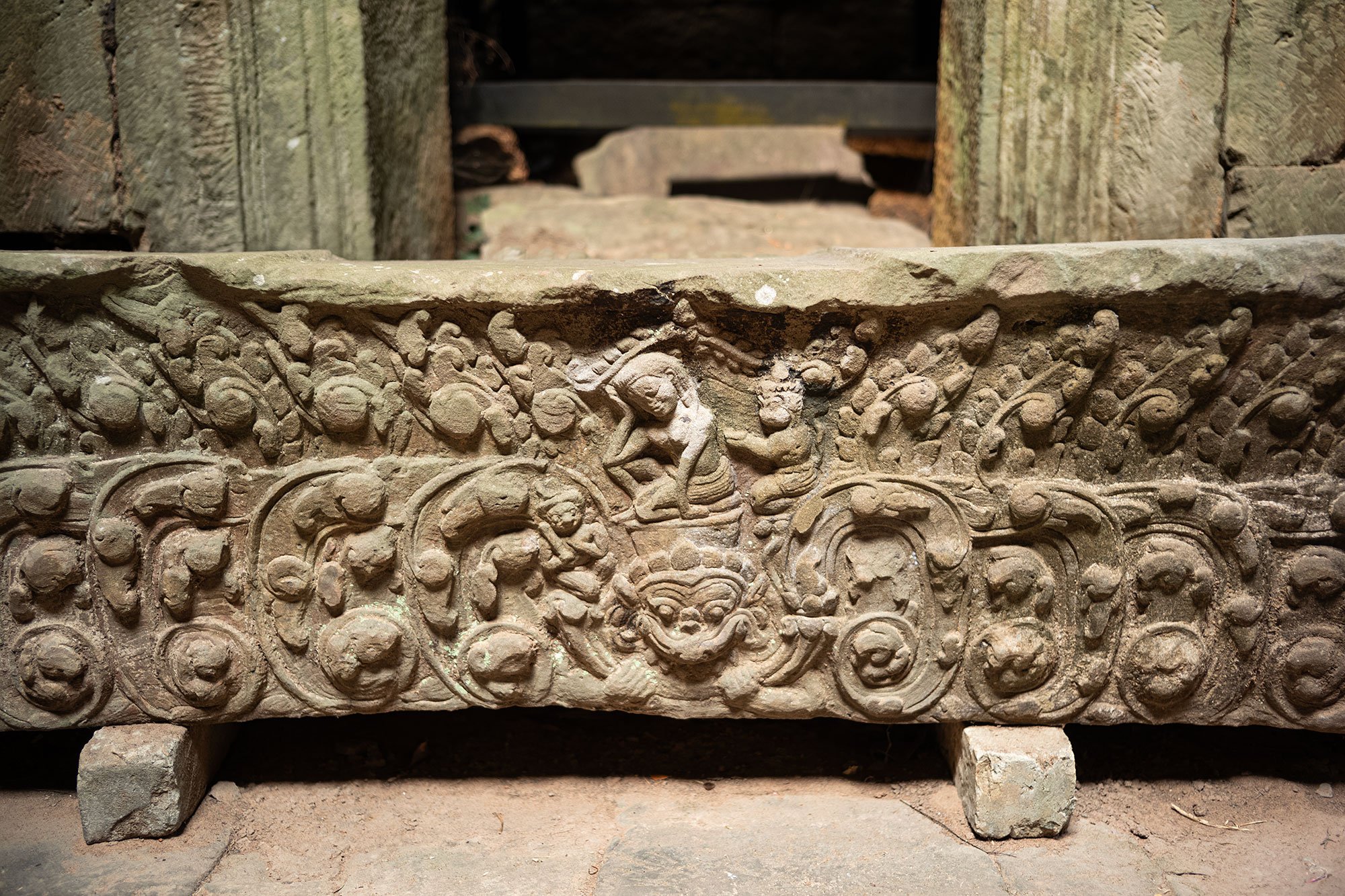
Before we leave he points out a lintel set upon the ground. In the center there’s a depiction of Sita, a monkey at her back as she looks to lament her capture, waiting for her groom Rama to come save her.
Jimmy’s been stung by a bee and he deftly works the stinger out of his skin. I dig in my pack to see if I have anything to help him with the pain. He asks if I have Tiger Balm. Unfortunately I do not. he tells me he’ll be fine.
We walk back to the car (cold towels, cold water) and drive to Neak Pean, an artificial island upon which a Buddhist temple sits encircled by a moat. Built during the reign of King Jayavarman VII, it was originally designed for medical purposes and four hospitals sit landside at the four corners of the island.
Chapels are placed at each cardinal direction, each containing the head of a different being. An elephant head in the north chapel symbolises water, the head of a horse in the west symbolizes wind. To the south the head of a lion symbolizes fire and a human head in the east chapel symbolizes earth.
On arrival we walk across a new bridge to access the island. Opened in 2022, it caps restoration efforts by the Apsara National Authority to protect the site. I don’t remember the Preah Khan Baray being flooded in 2000. Looking it up online I discover that the reservoir was reflooded in 2008 after having been dry for centuries.
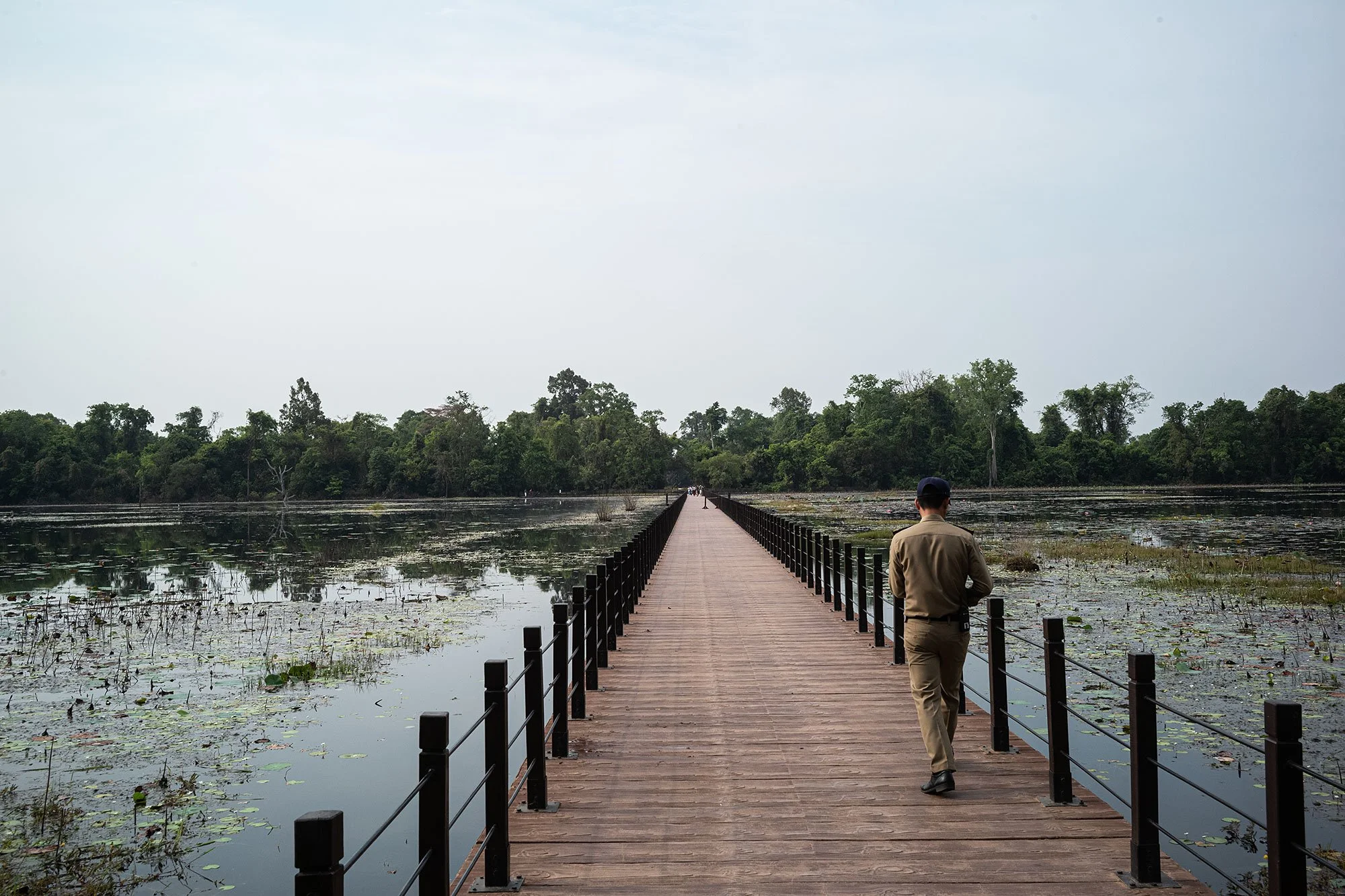
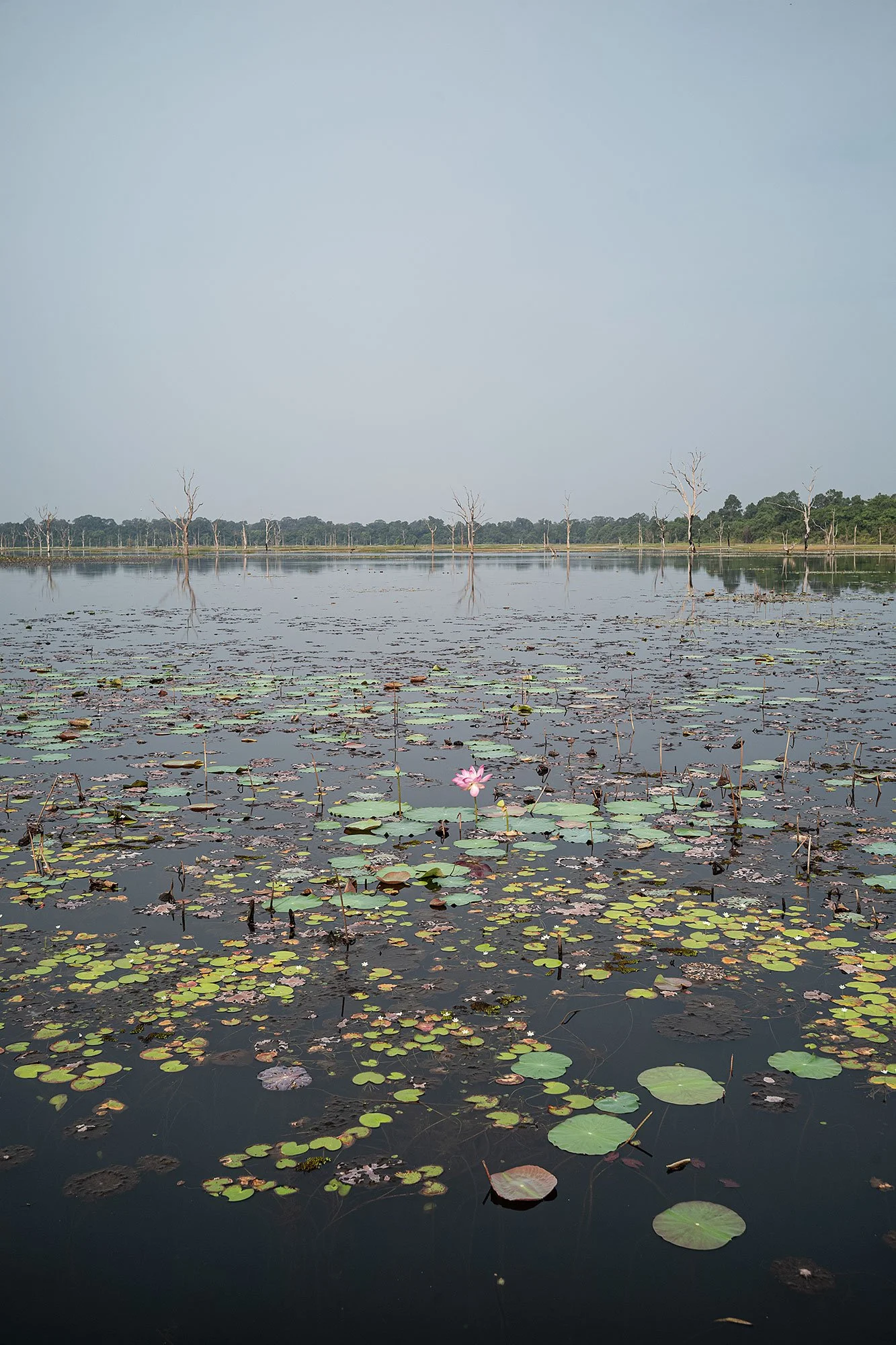
We can’t quite see most of the heads as the water has them semi-submerged and the light overhead makes seeing into the alcoves difficult. Jimmy encourages us to circumambulate the temple while he waits in the shade.
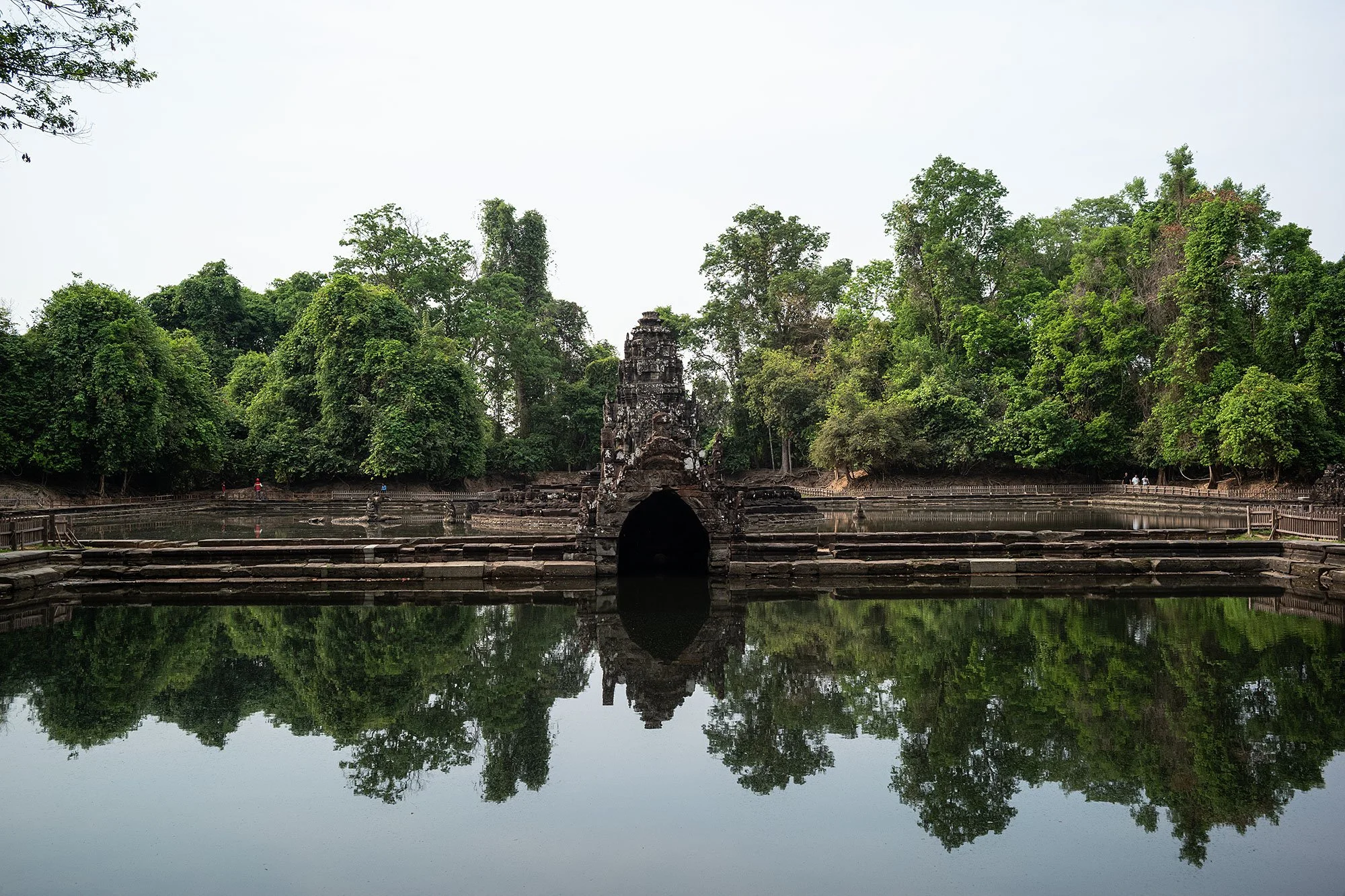
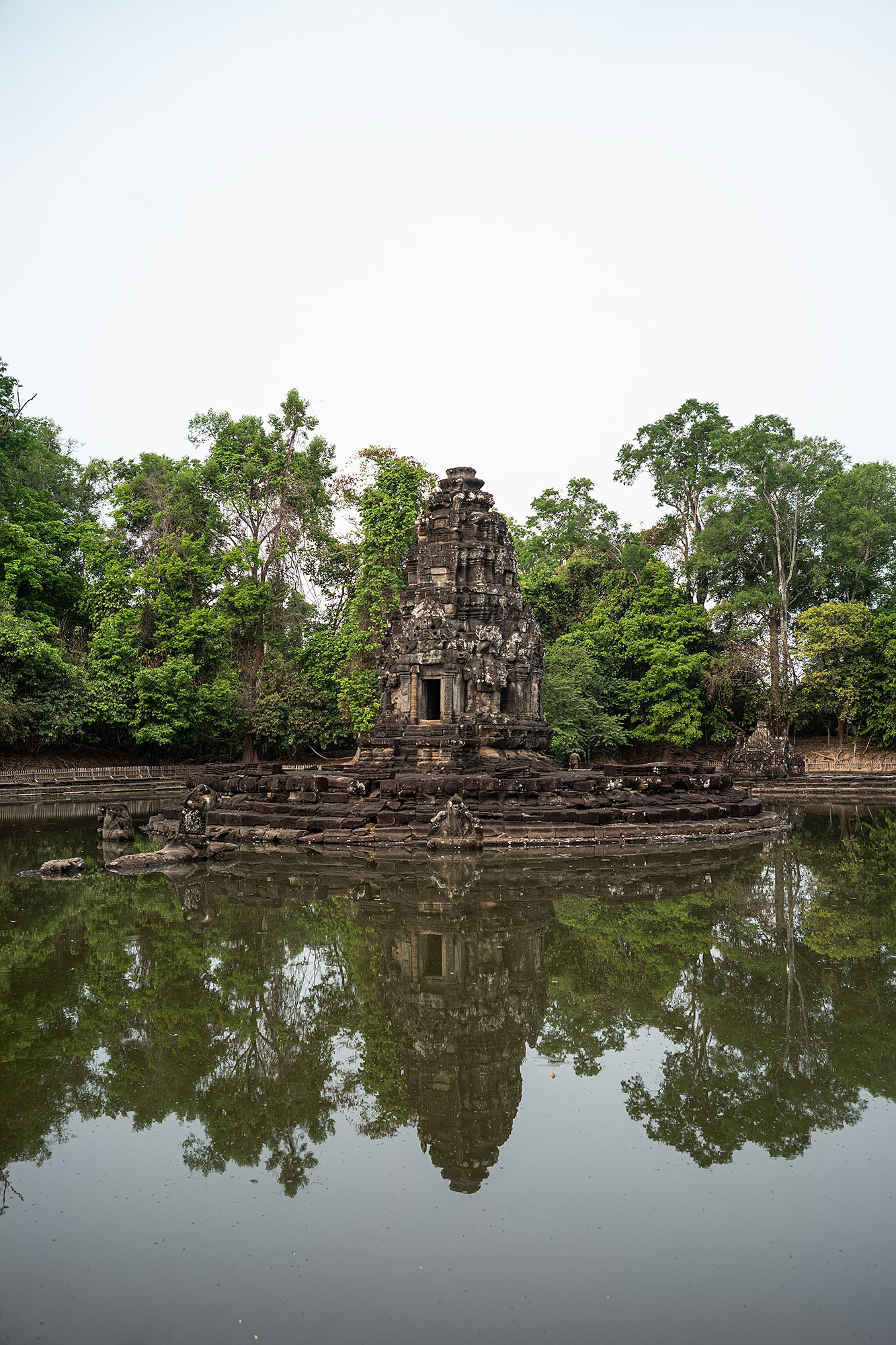
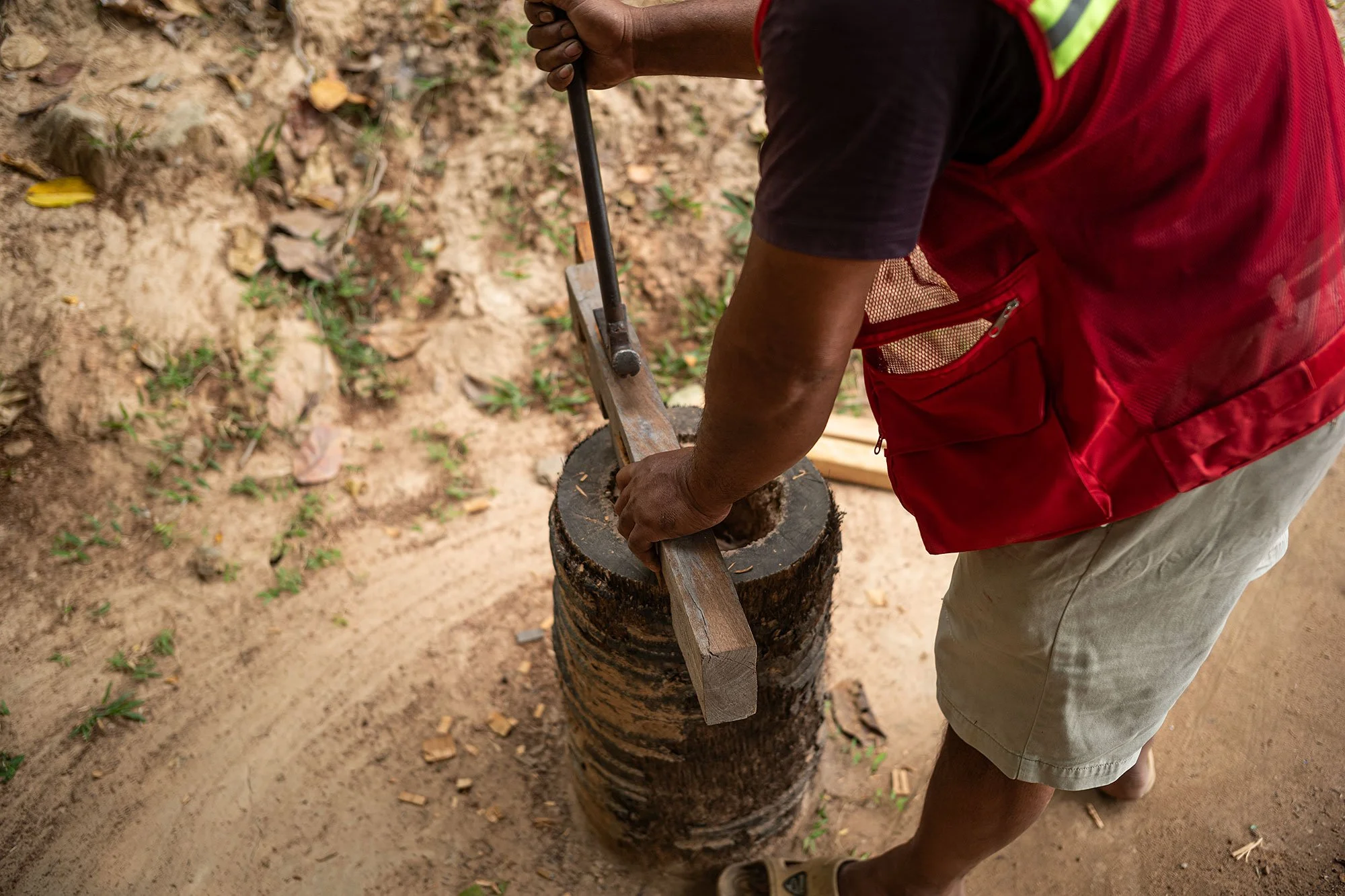
On the far side of the temple workmen build the wooden fencing surrounds the temple, keeping people from getting too close to the moat. I love seeing the work being done and ask if I can take a photo of them at work.
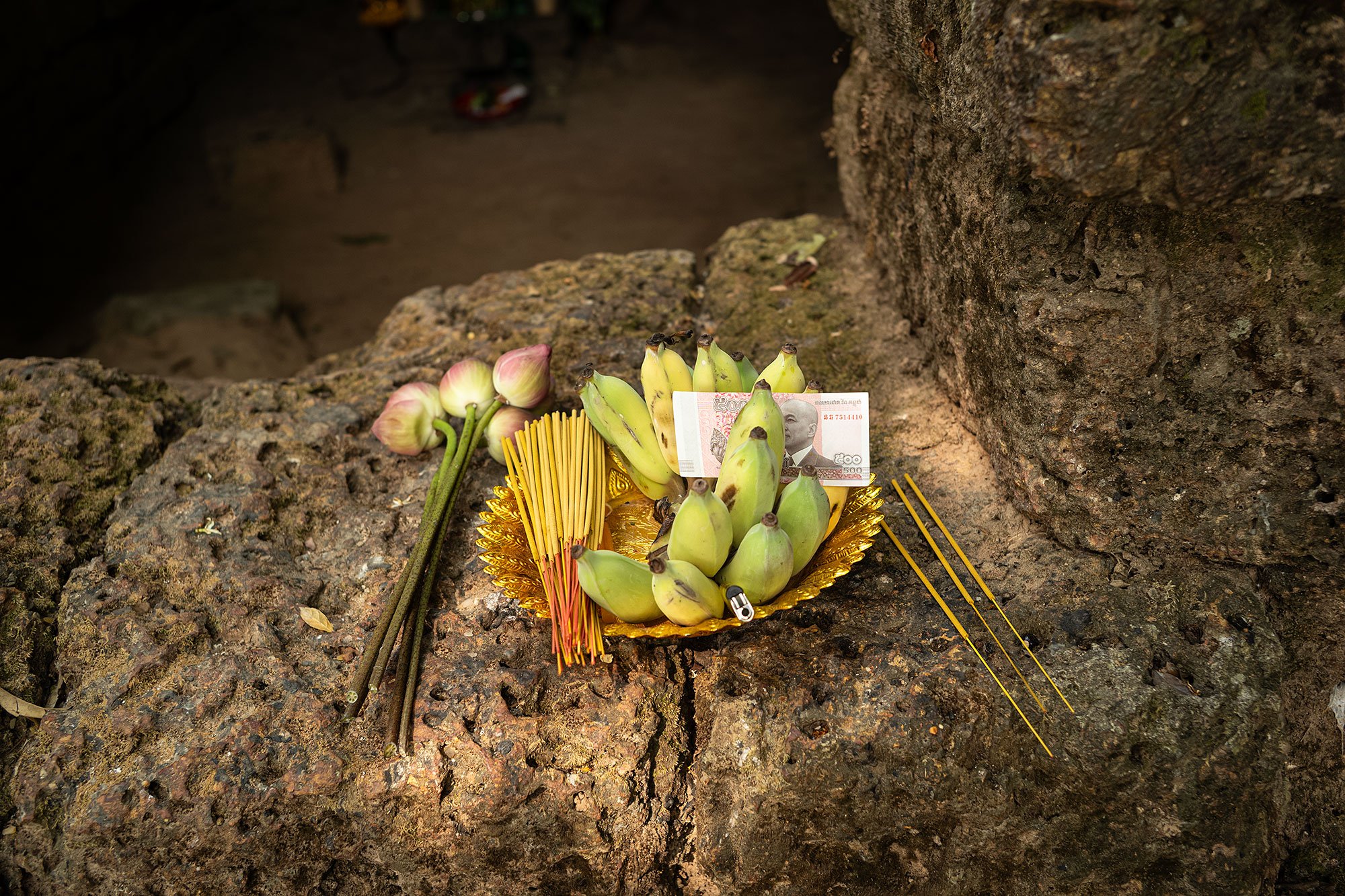
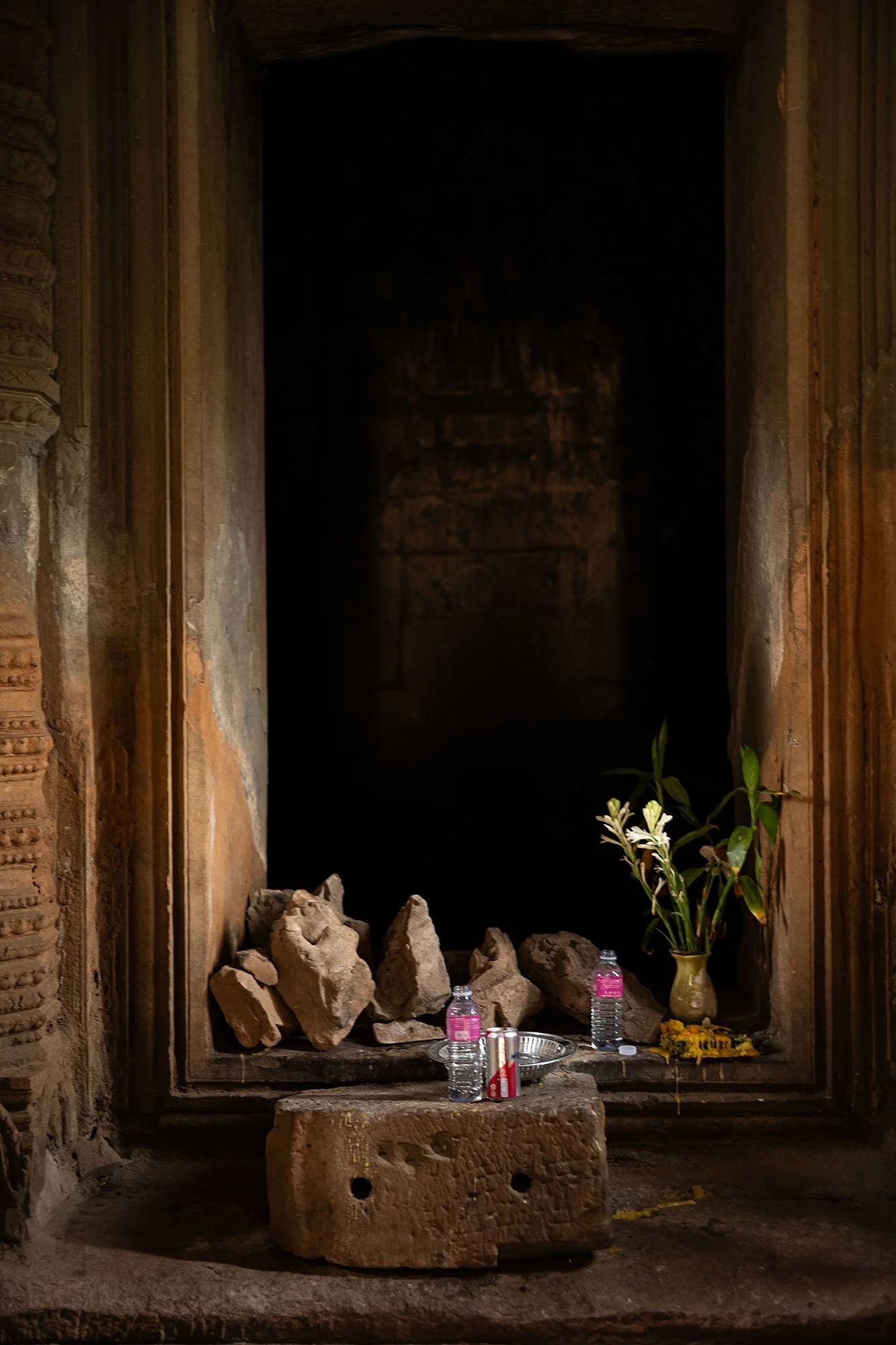
As we come close to completing our perambulations I stop to look into one of the former temples. A small shrine has been set up and offerings have been left at an opening to the site.
We walk back across the uncovered bridge, the sun hot on our heads. We’re all thankful for the cold towel and bottles of water when we reach the car.
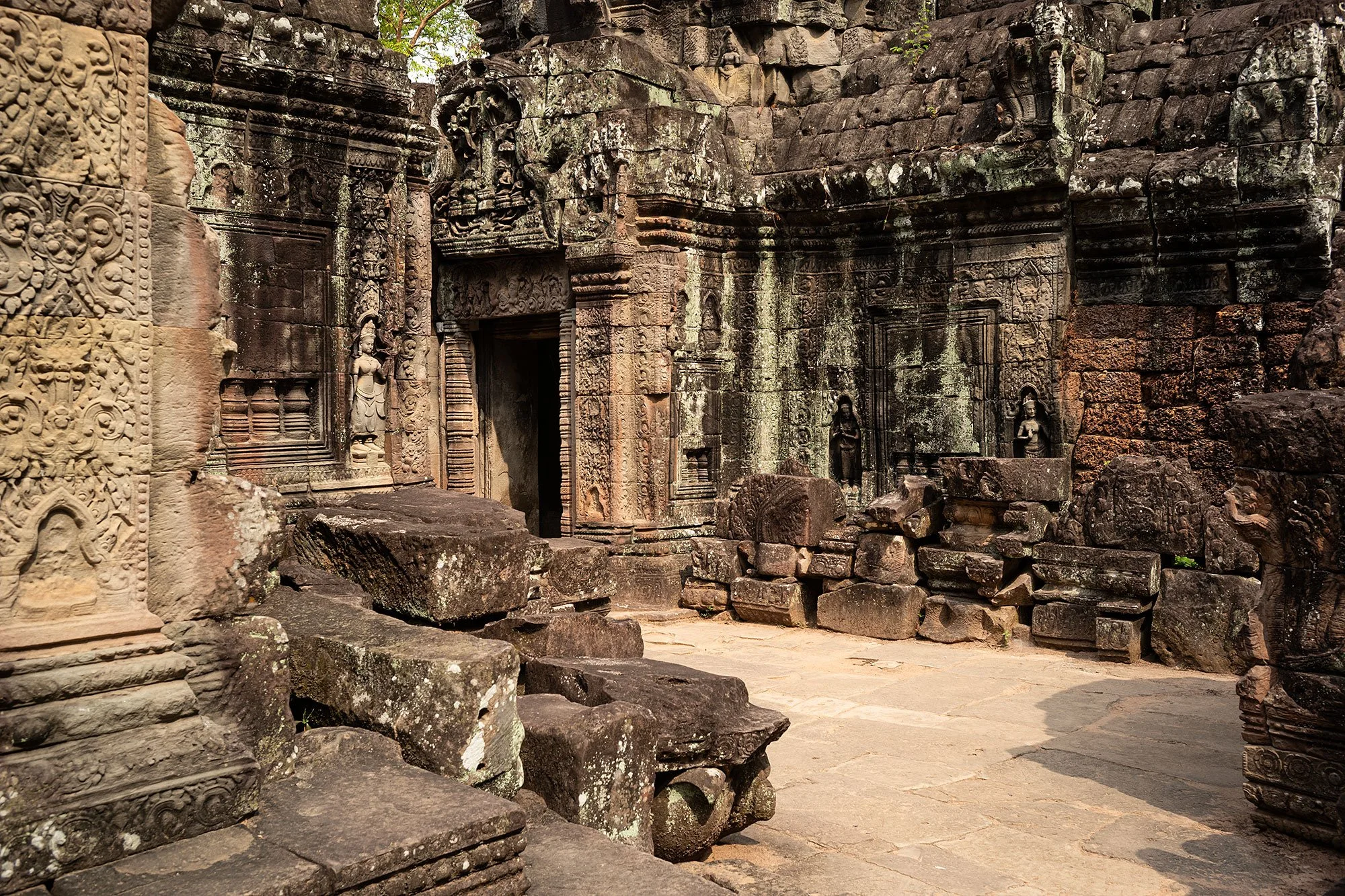
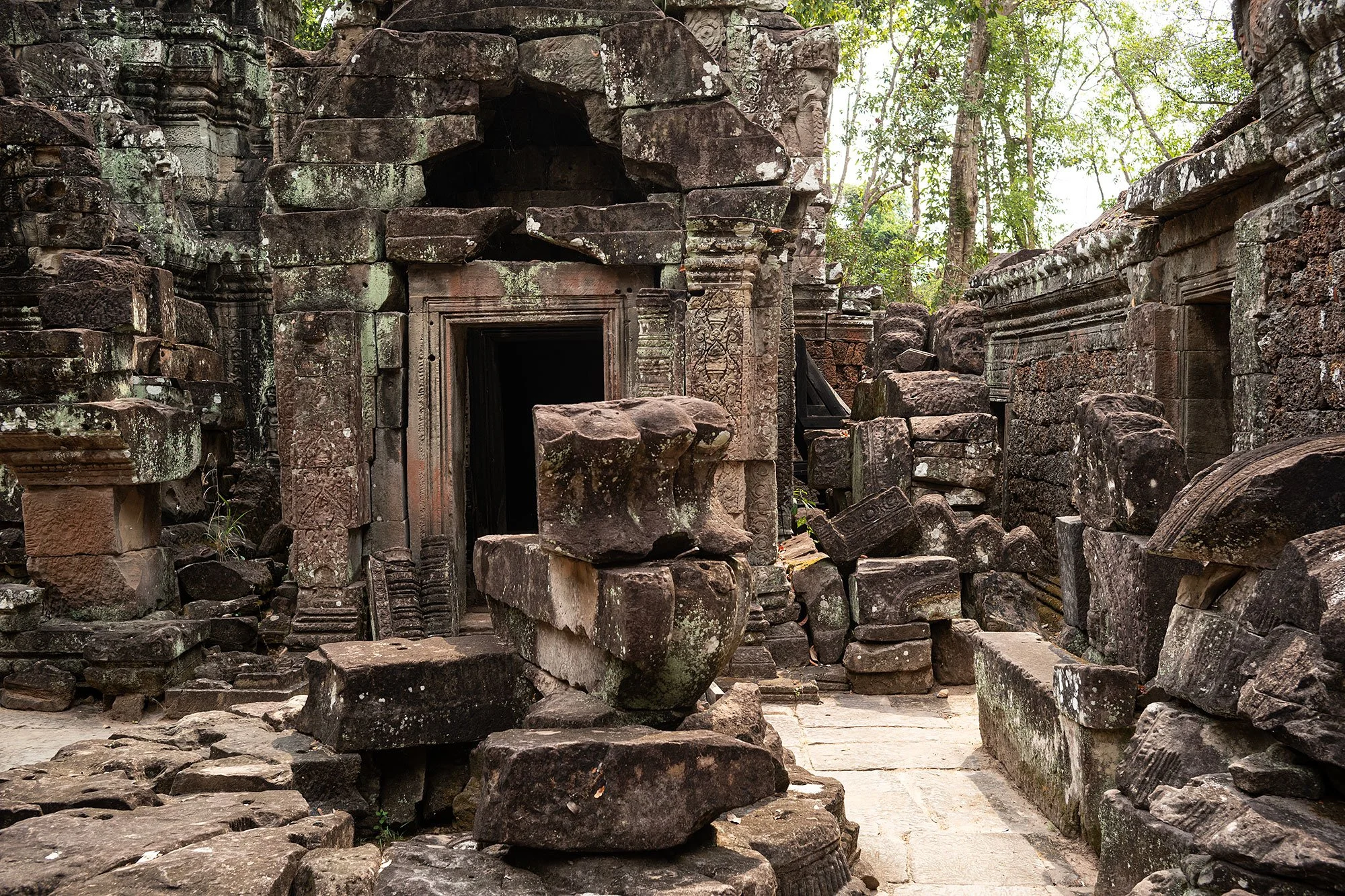
Our next stop is Ta Som, another temple built for King Jayavarman VII at the end of the 12th century. Its main gate boasts the smiling heads for which his temples are known. The temple consists of a single shrine surrounded by laterite walls.
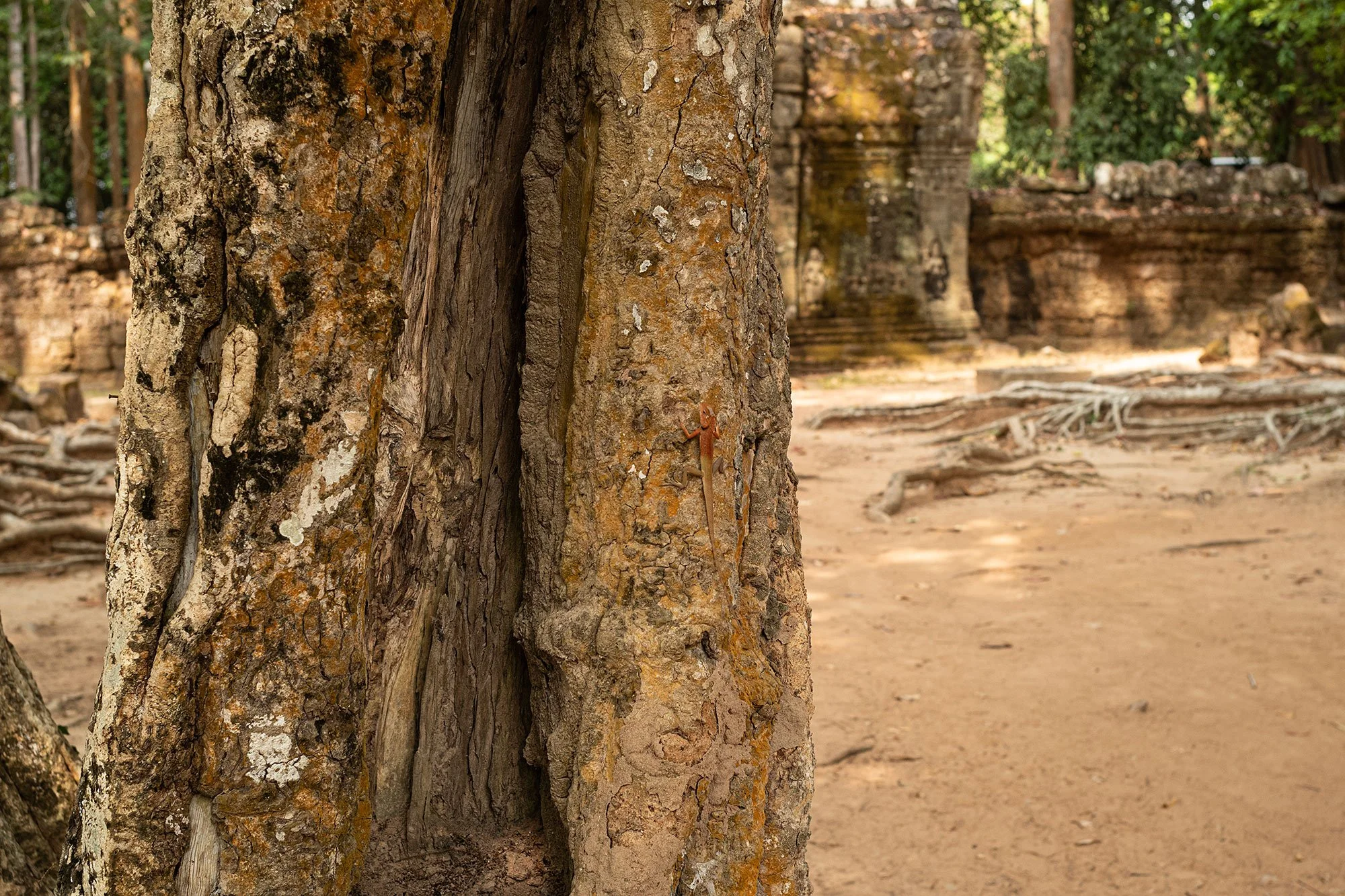
Trees grow inside the enclosure and as I walk around a tree to compose a shot spot a lizard, it’s half-red body almost completely camouflaged against the bark.
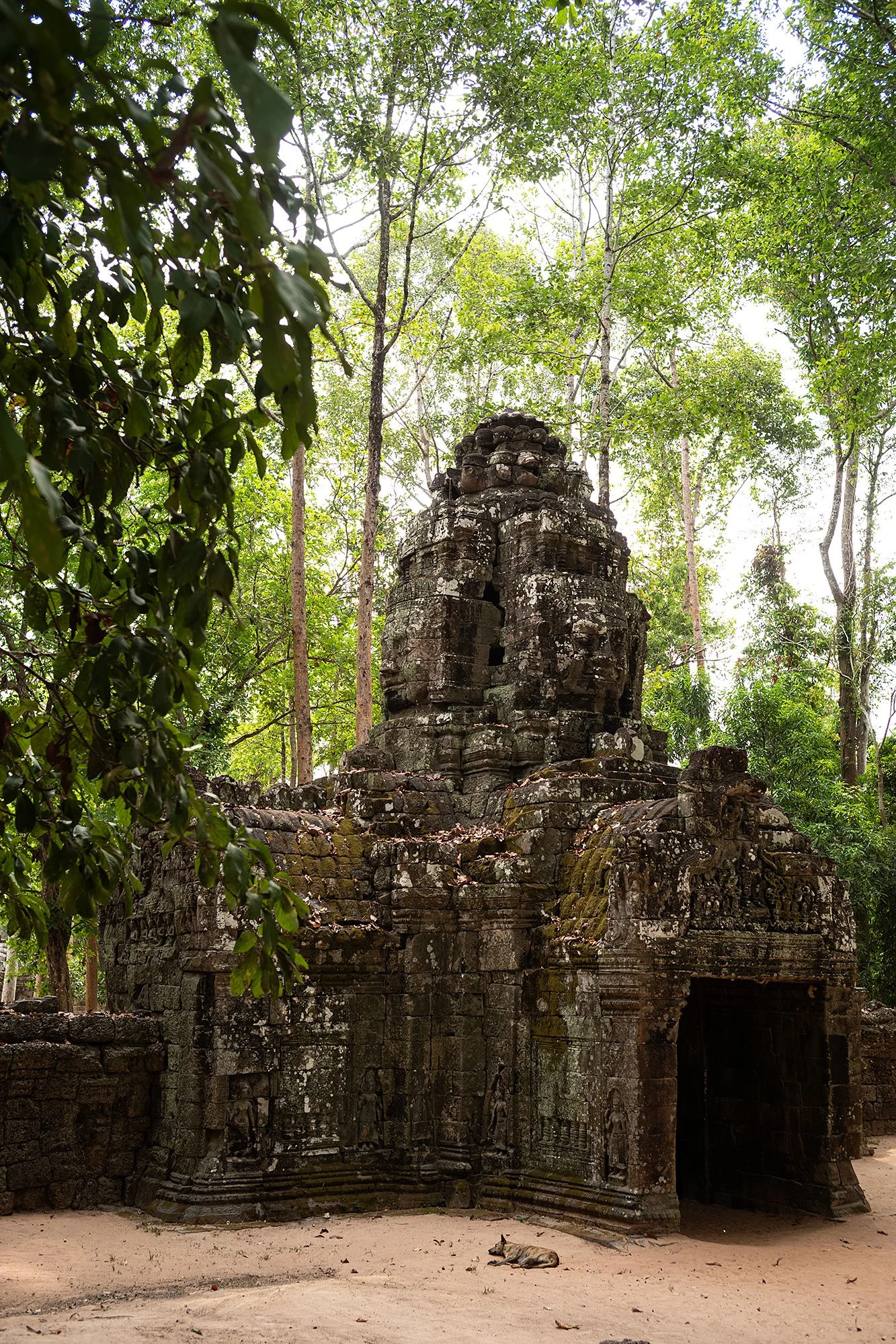
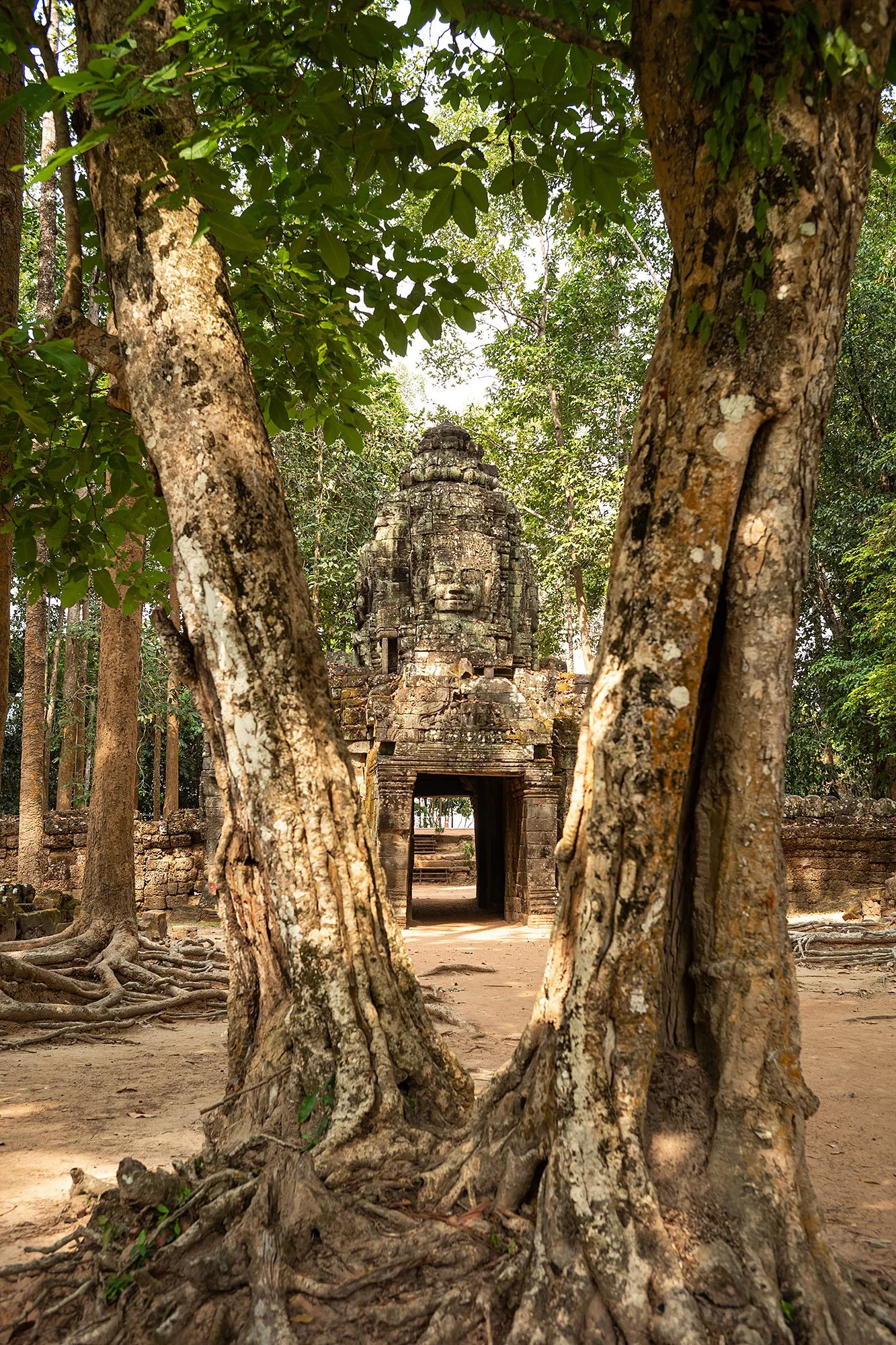
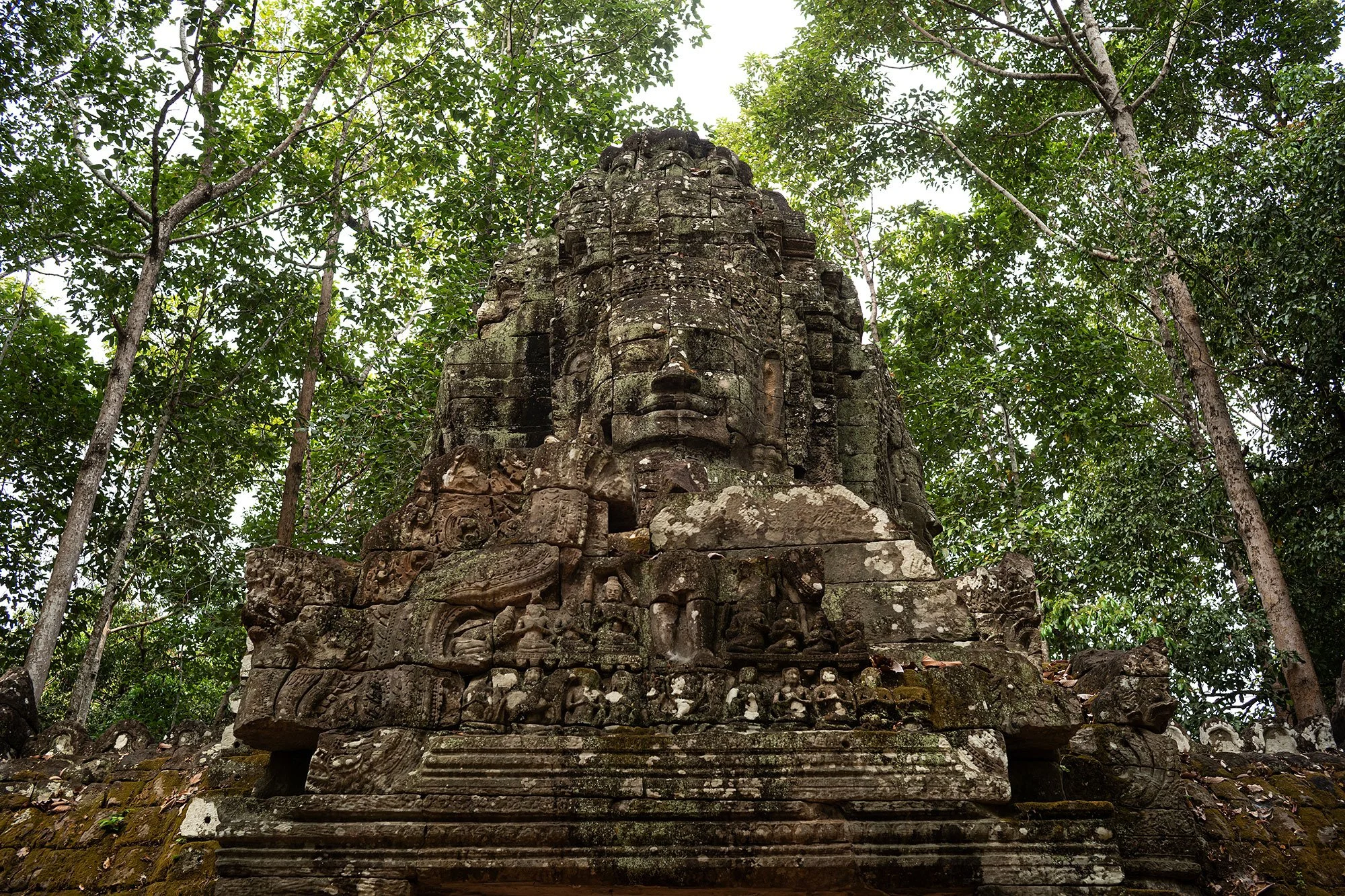
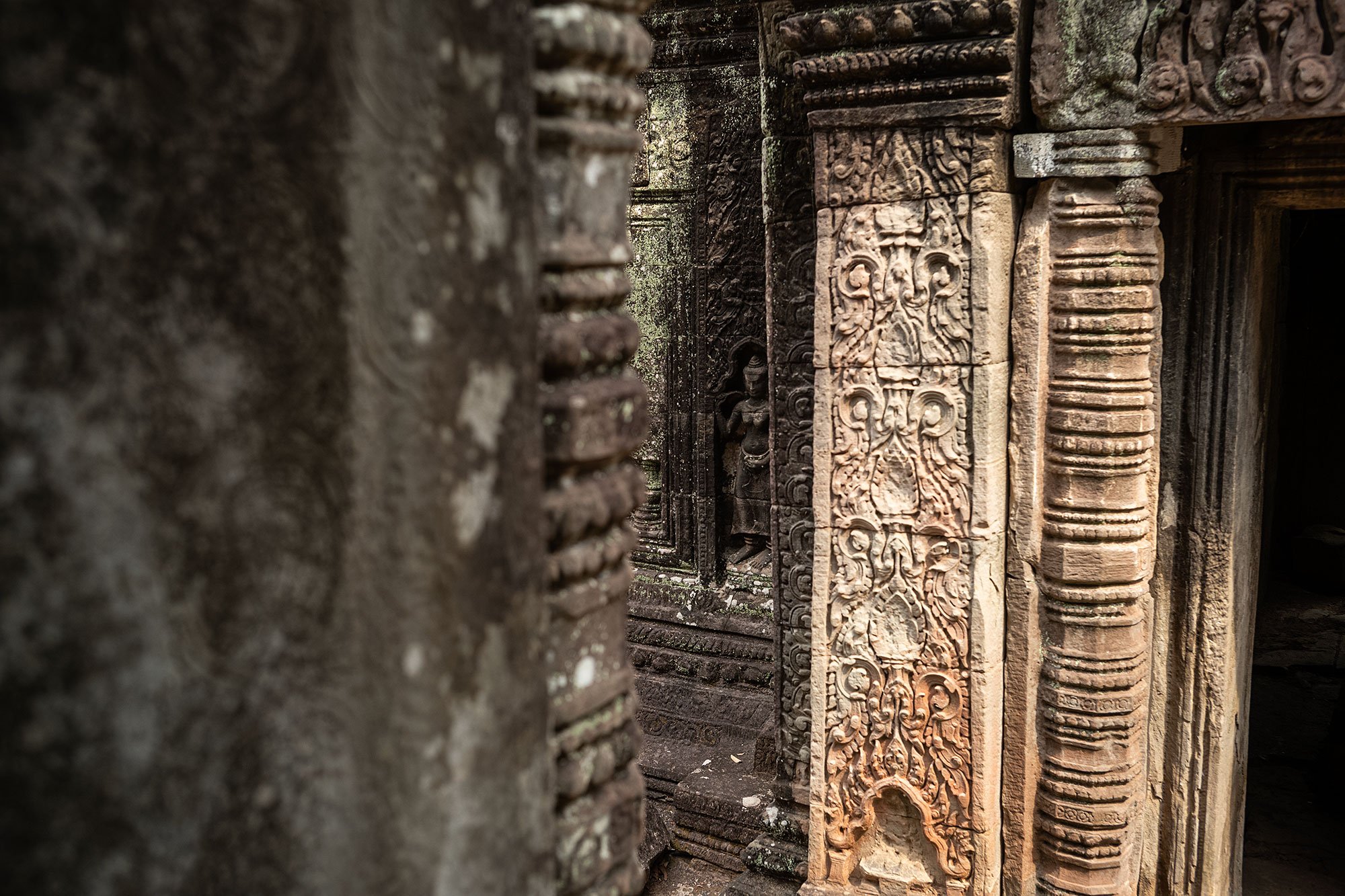
The temple is small, with an intimate feel. There are few tourists visiting and once again having the temple almost to ourselves, it’s easier to feel the wonder and sense of discovery as I walk around the inner enclosure, eager to discover what’s just around the corner.
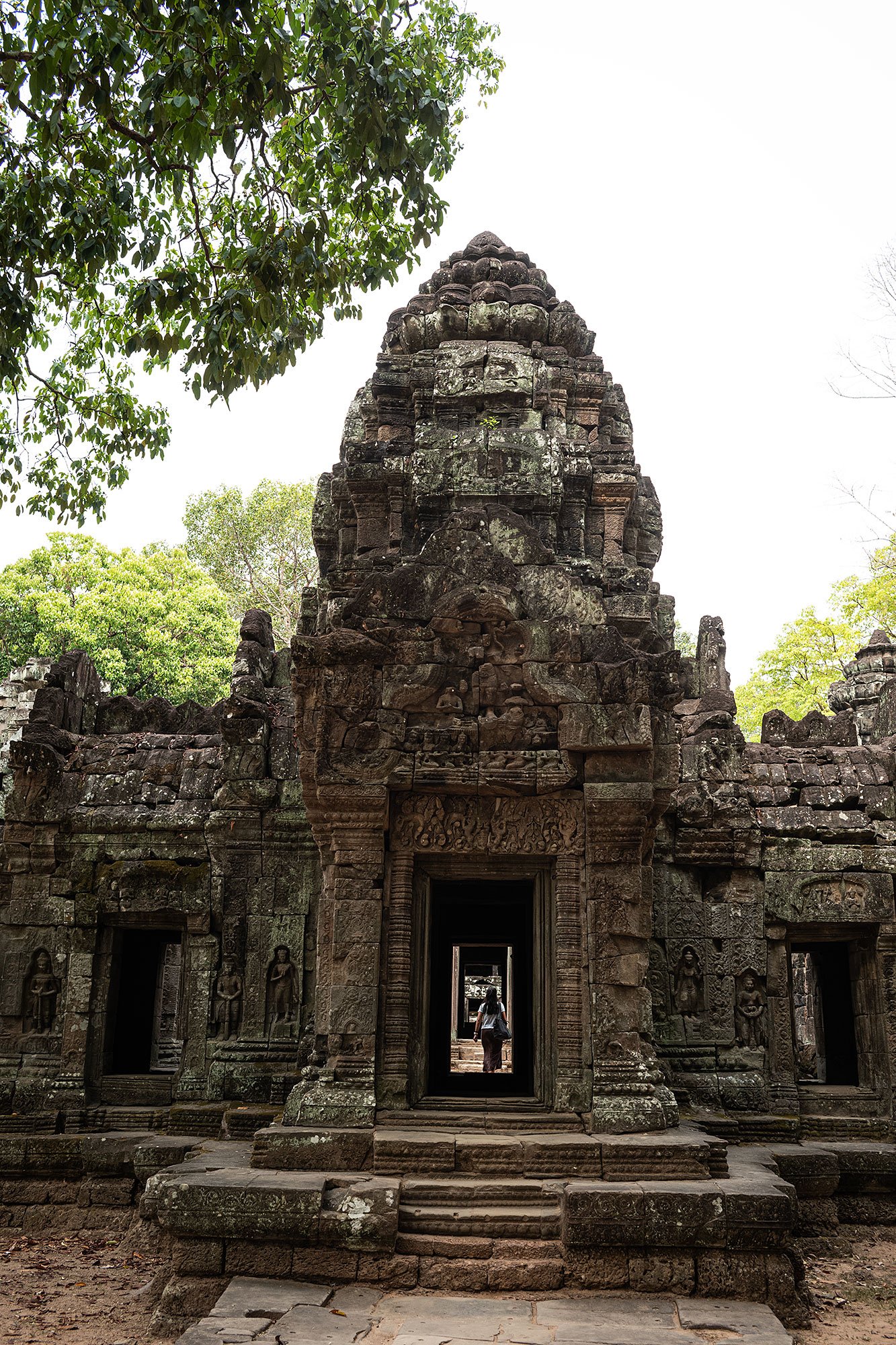
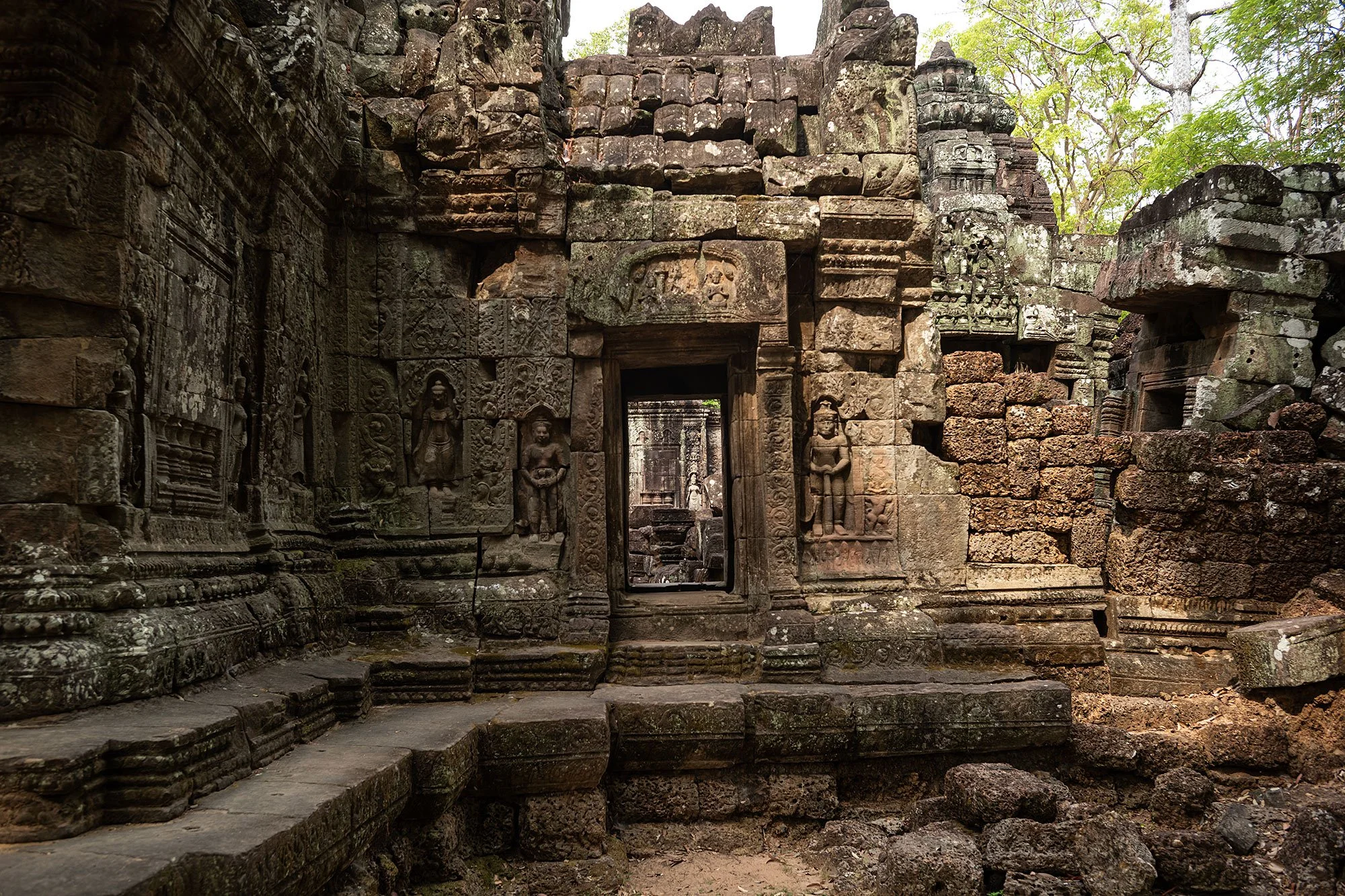
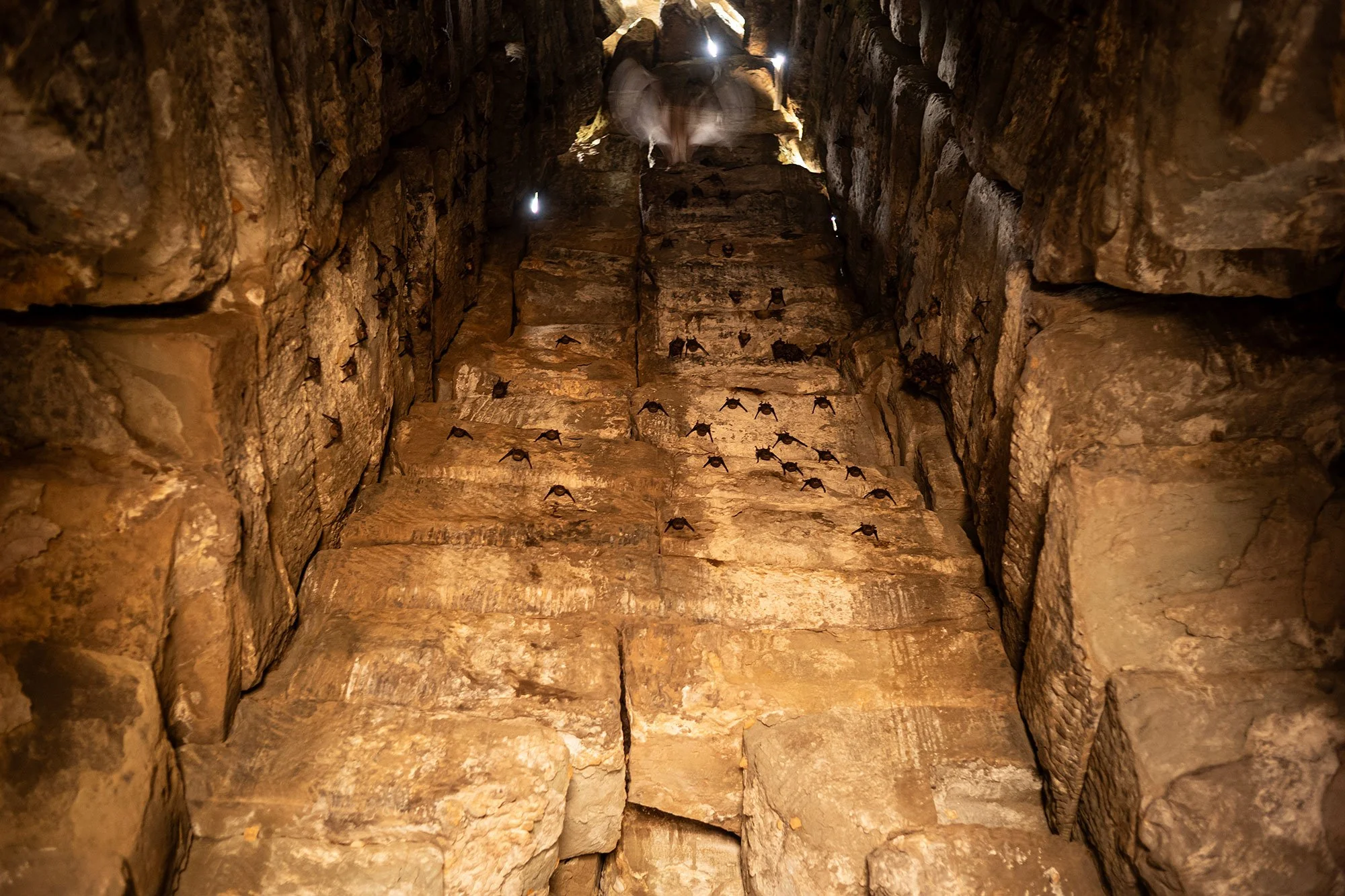
On my way out, as I pass through the gopura (entrance way) I look up to see bats clinging to the walls. I love seeing bats at ancient temple sites (some of the halls and gopuras reek of their guano) and while I’ve smelled them I haven’t seen as many as I might have hoped.
Rejoining the group I ask if they had looked up to see the bats when they emerged from the temple. Jimmy tells me to be careful looking up at them for fear of them pooping on my face. Having had a giant squirrel poop on me in India, I take his advice to heart.
Back at the car (cold towels, cold bottles of water) I joke that I could use a nap. Two more temples, Jimmy tells us, and then we can nap as it’s a 30-minute drive to reach Banteay Srei, perhaps the most intricately-carved temple in the archeological park..
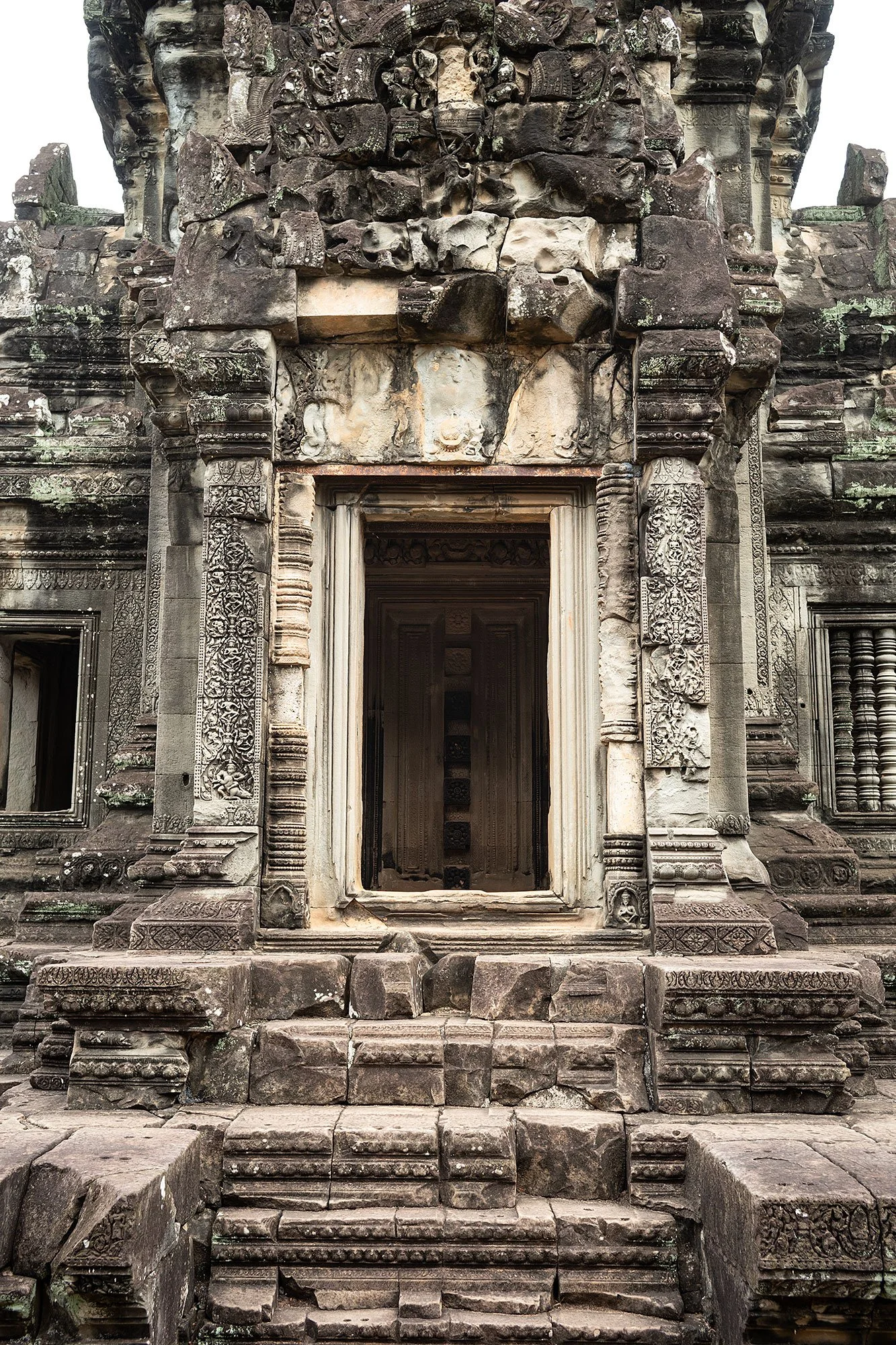
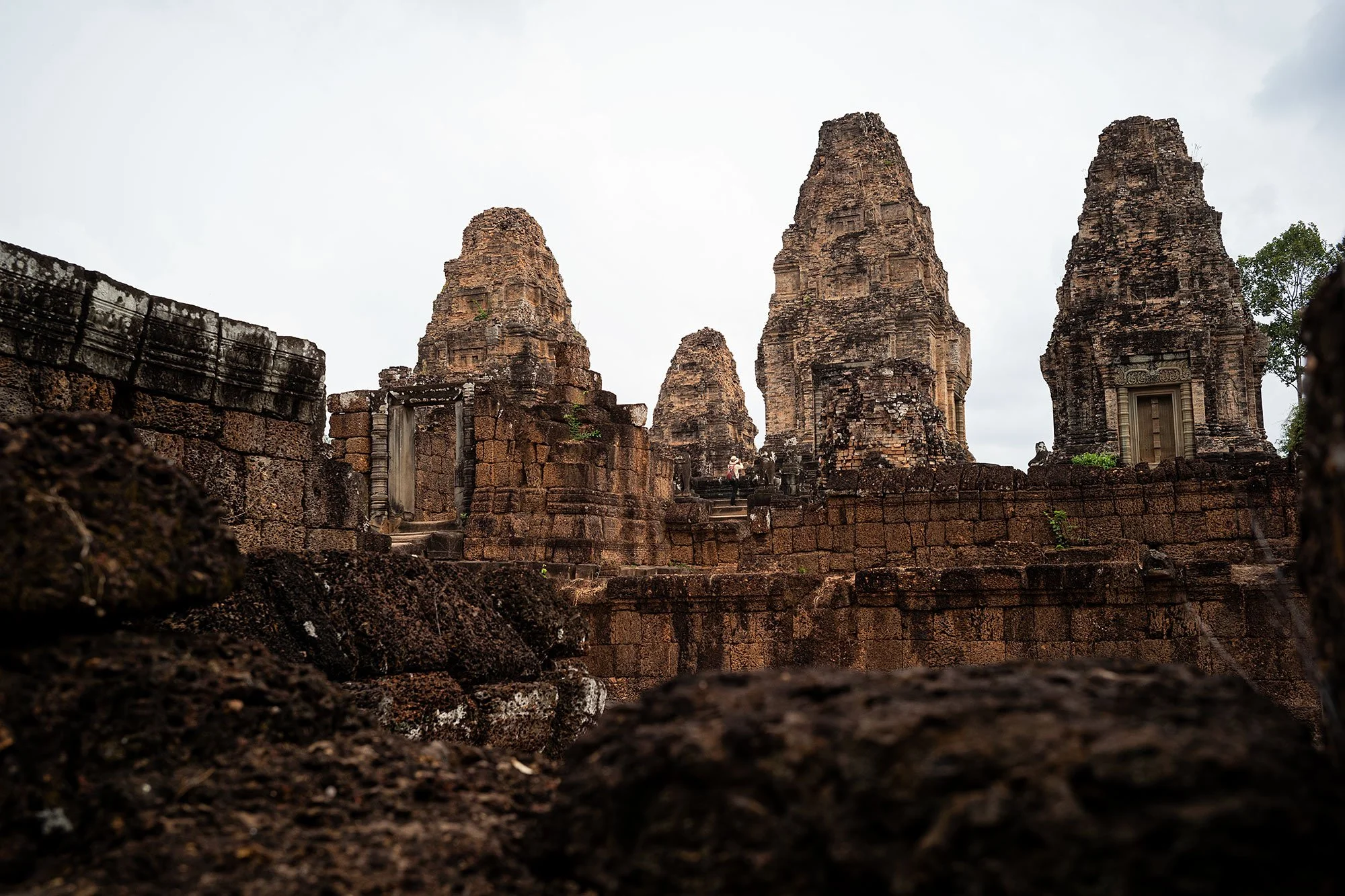
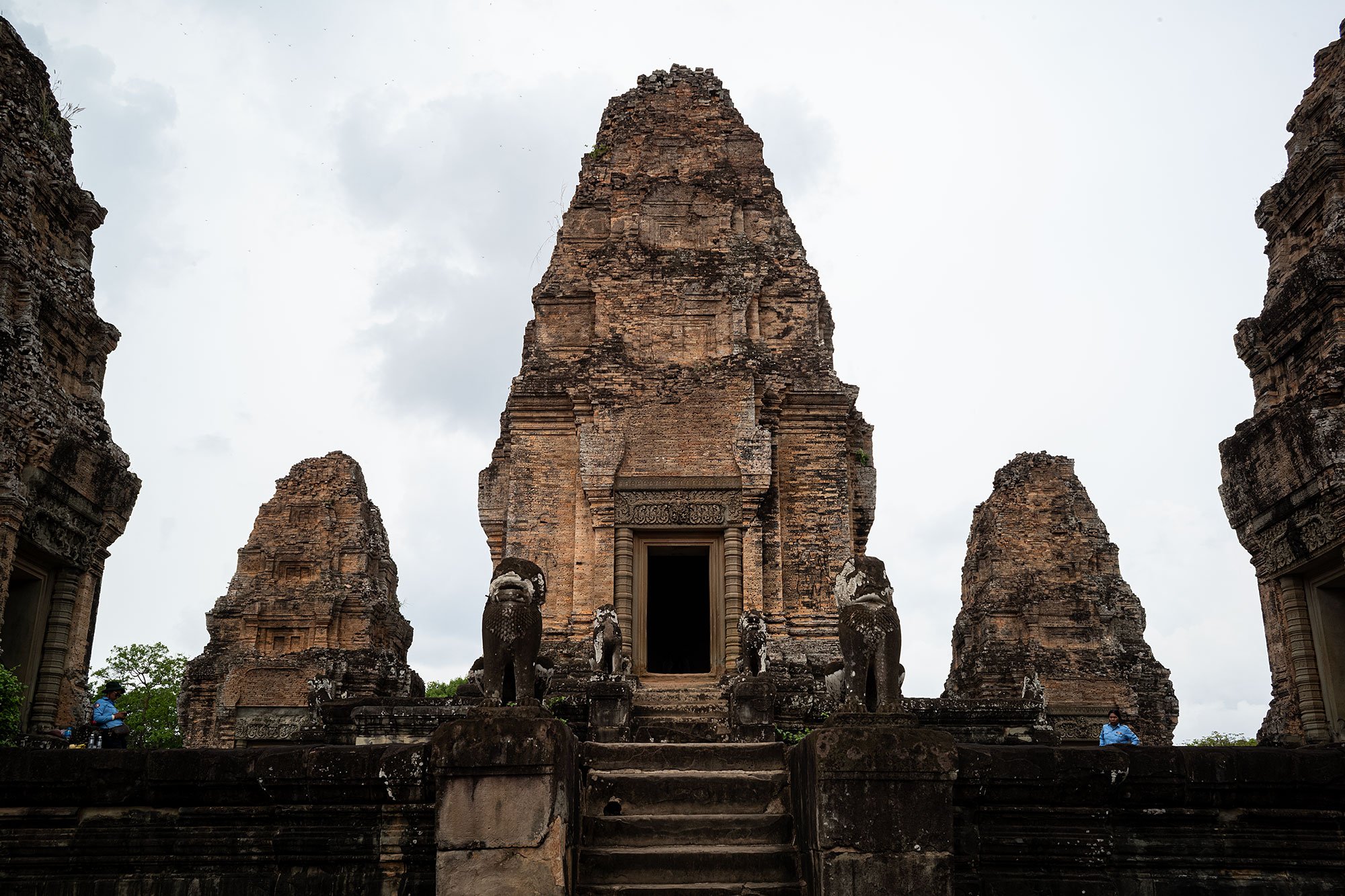
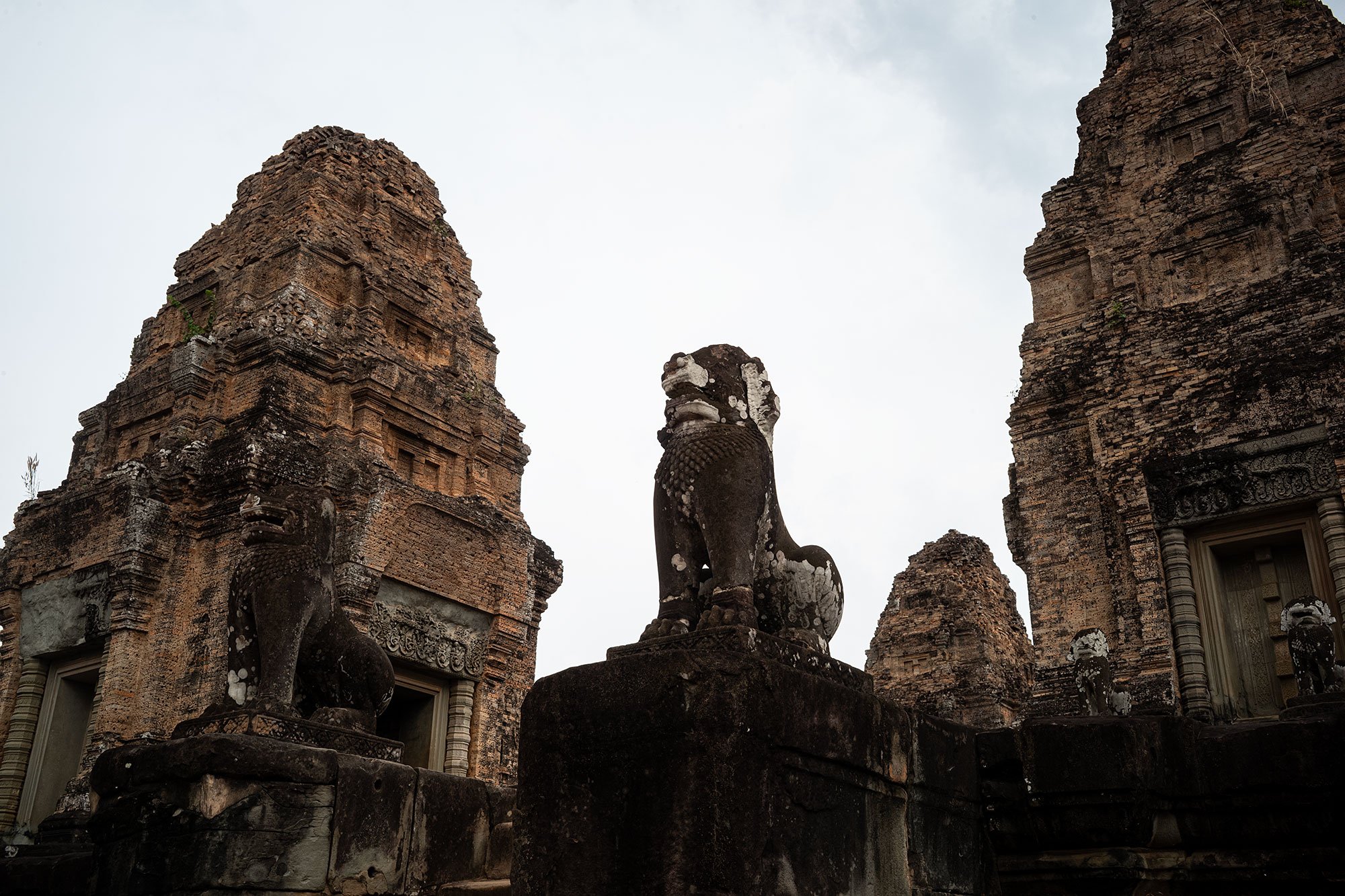
Our next stop is the East Mebon (more cold towels, cold bottles of water), a 10th-century temple constructed during the reign of King Rajendravarman. Dedicated to the Hindu god Shiva and built to honor the king’s parents, it stands on an artificial island at the center of the now-dry East Bray reservoir.
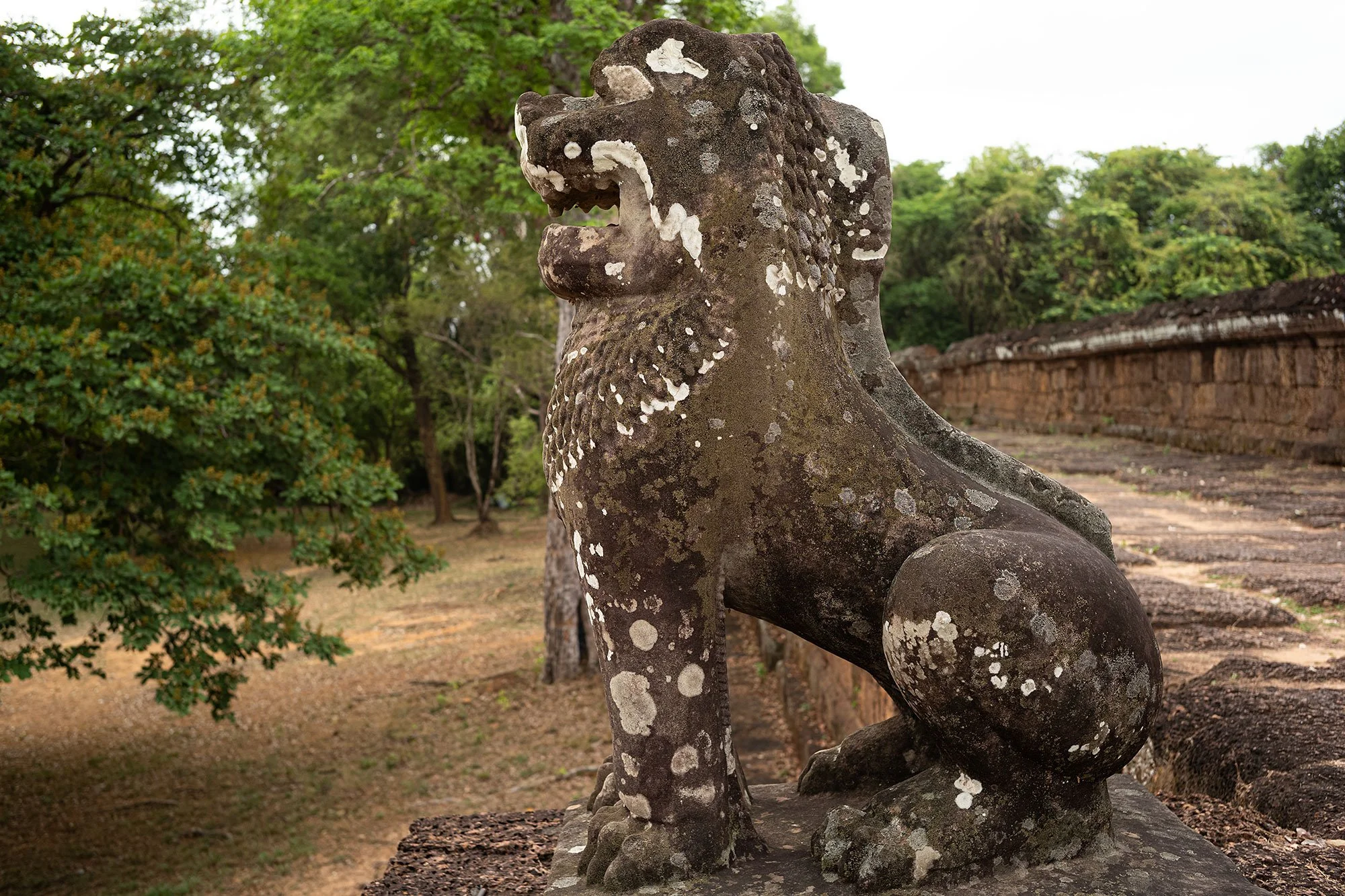
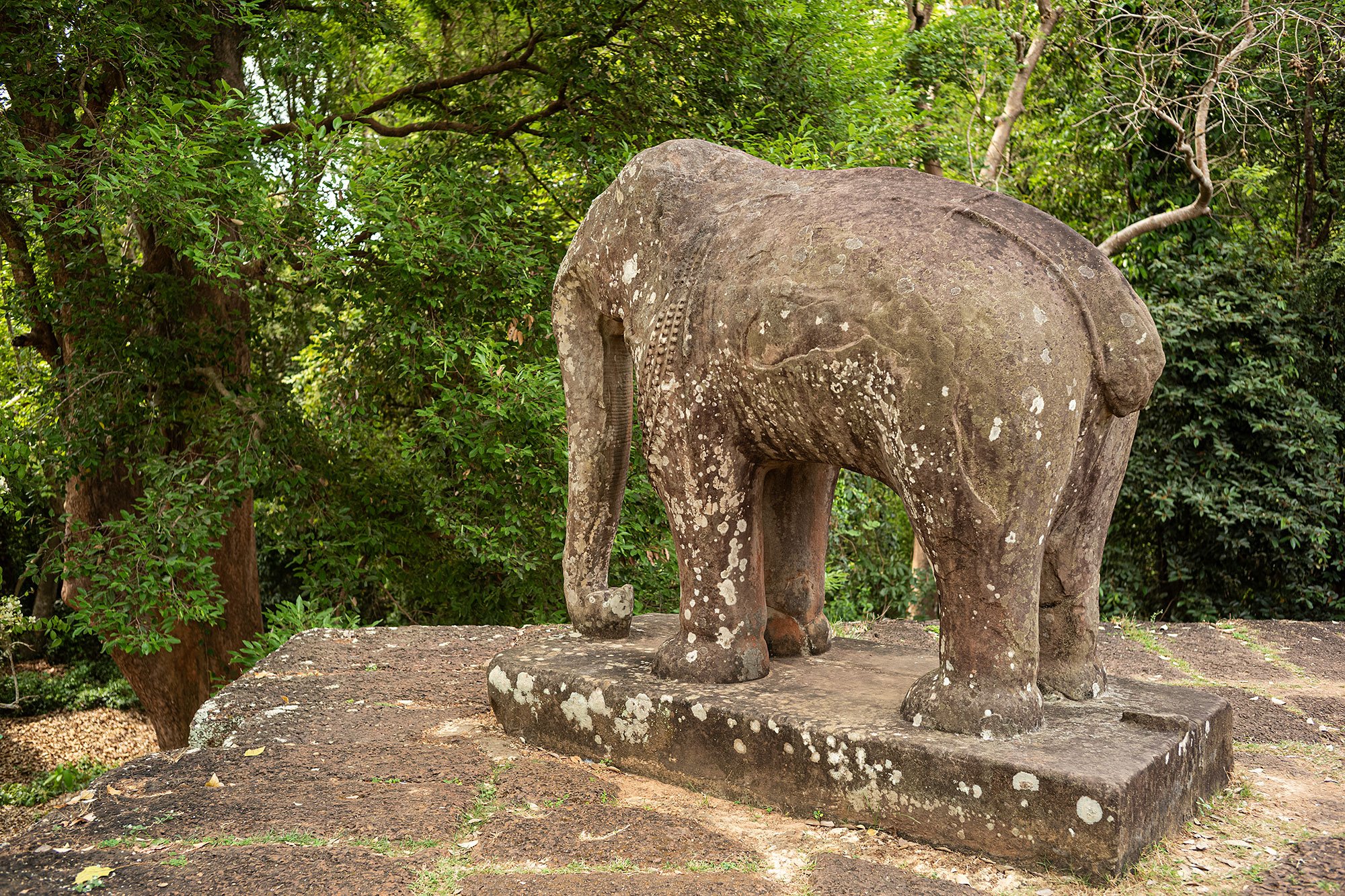
We pass two lion statues on our ascent to the first platform, and turn left to find a large elephant statue looking out from the corner. An elephant statue stands at each corner of the two platforms, staring silently out at the forest.
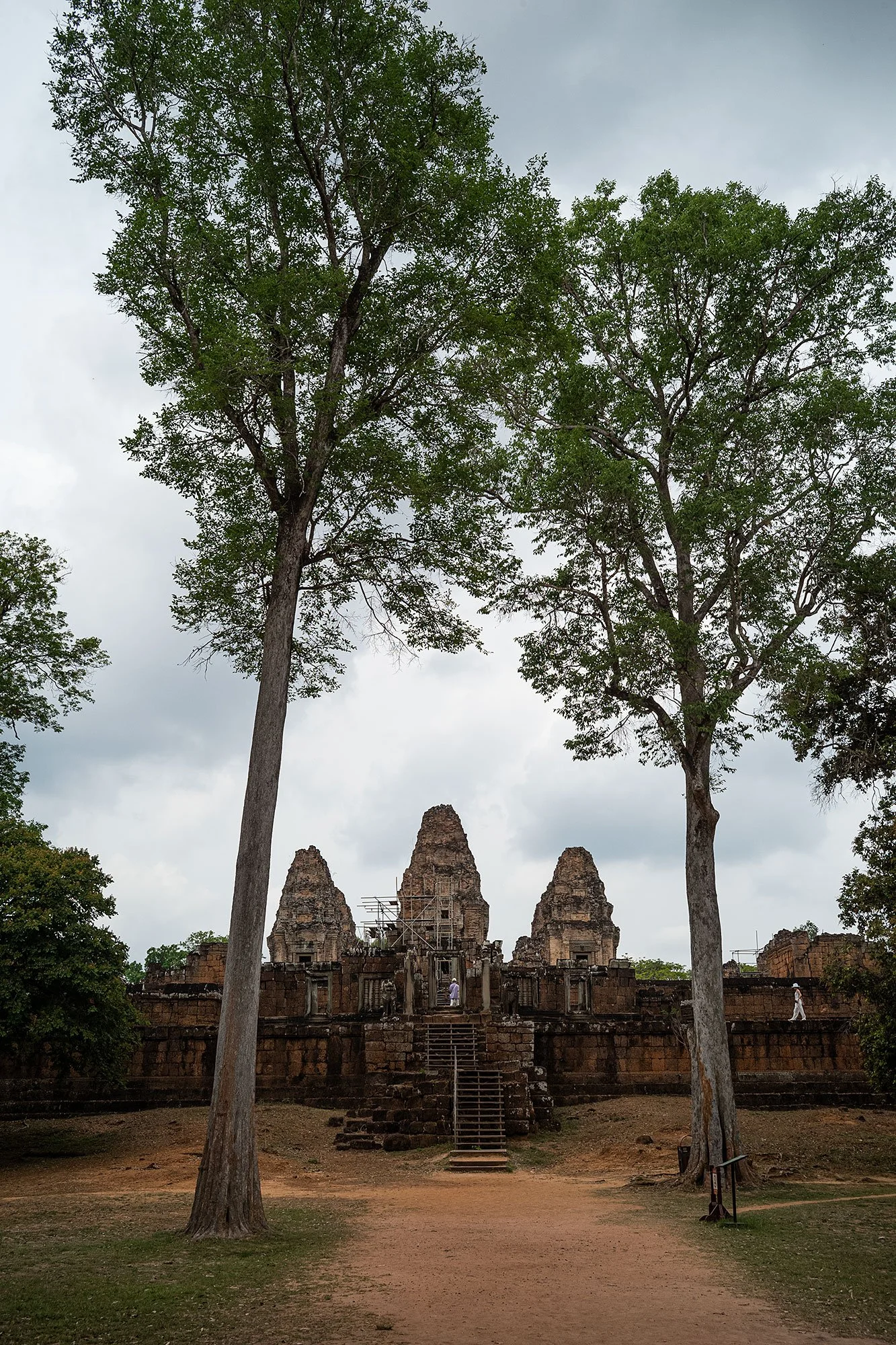
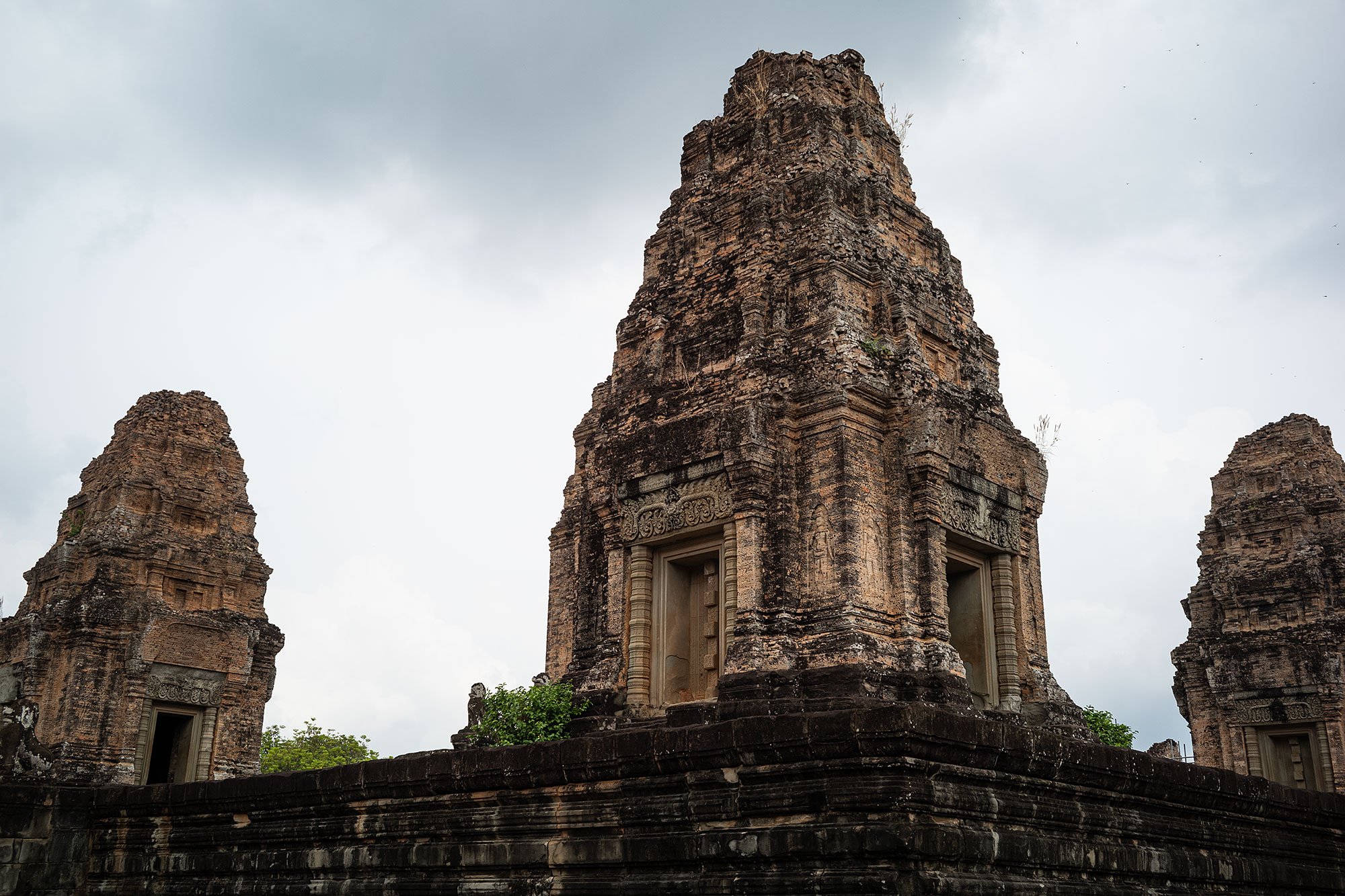
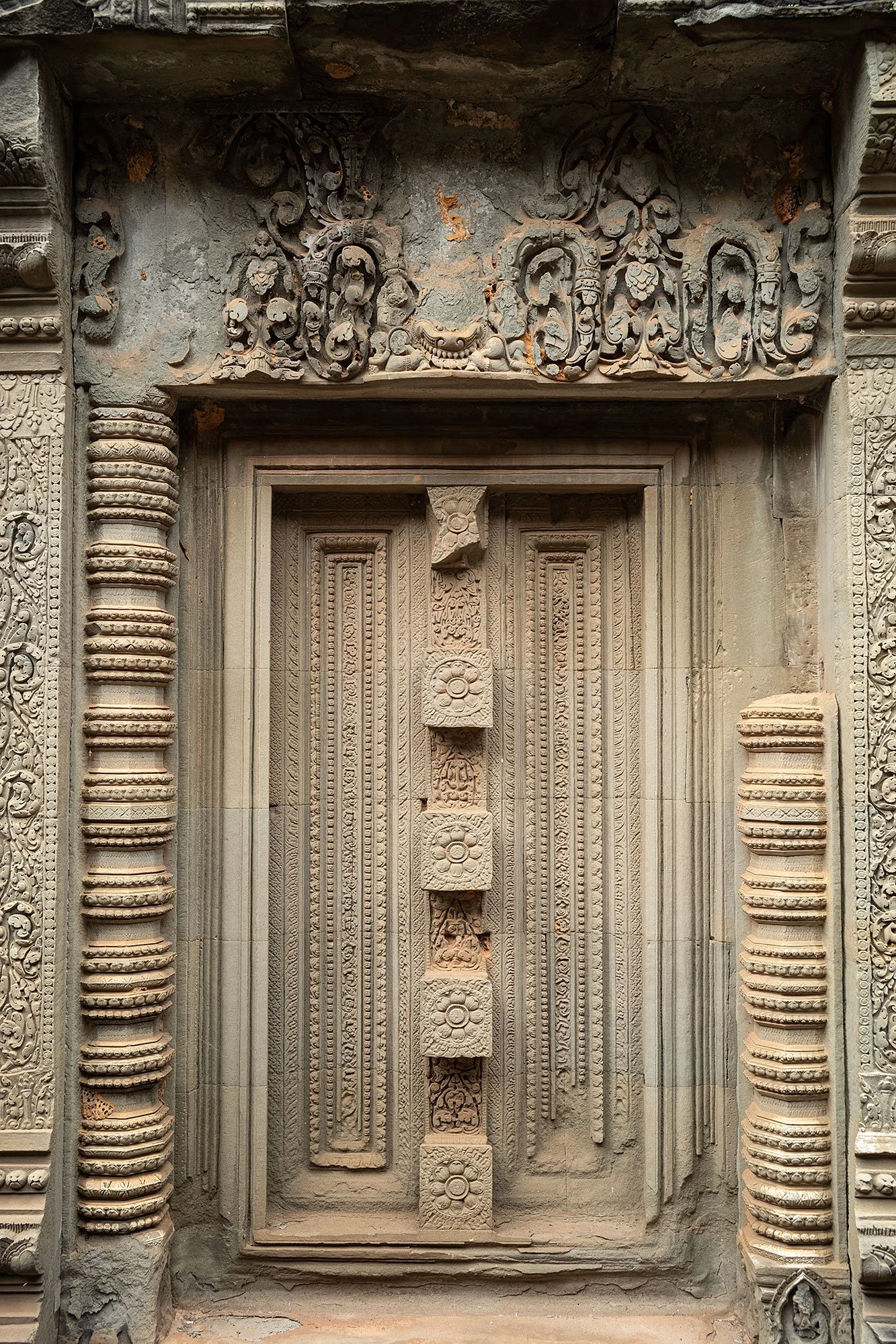
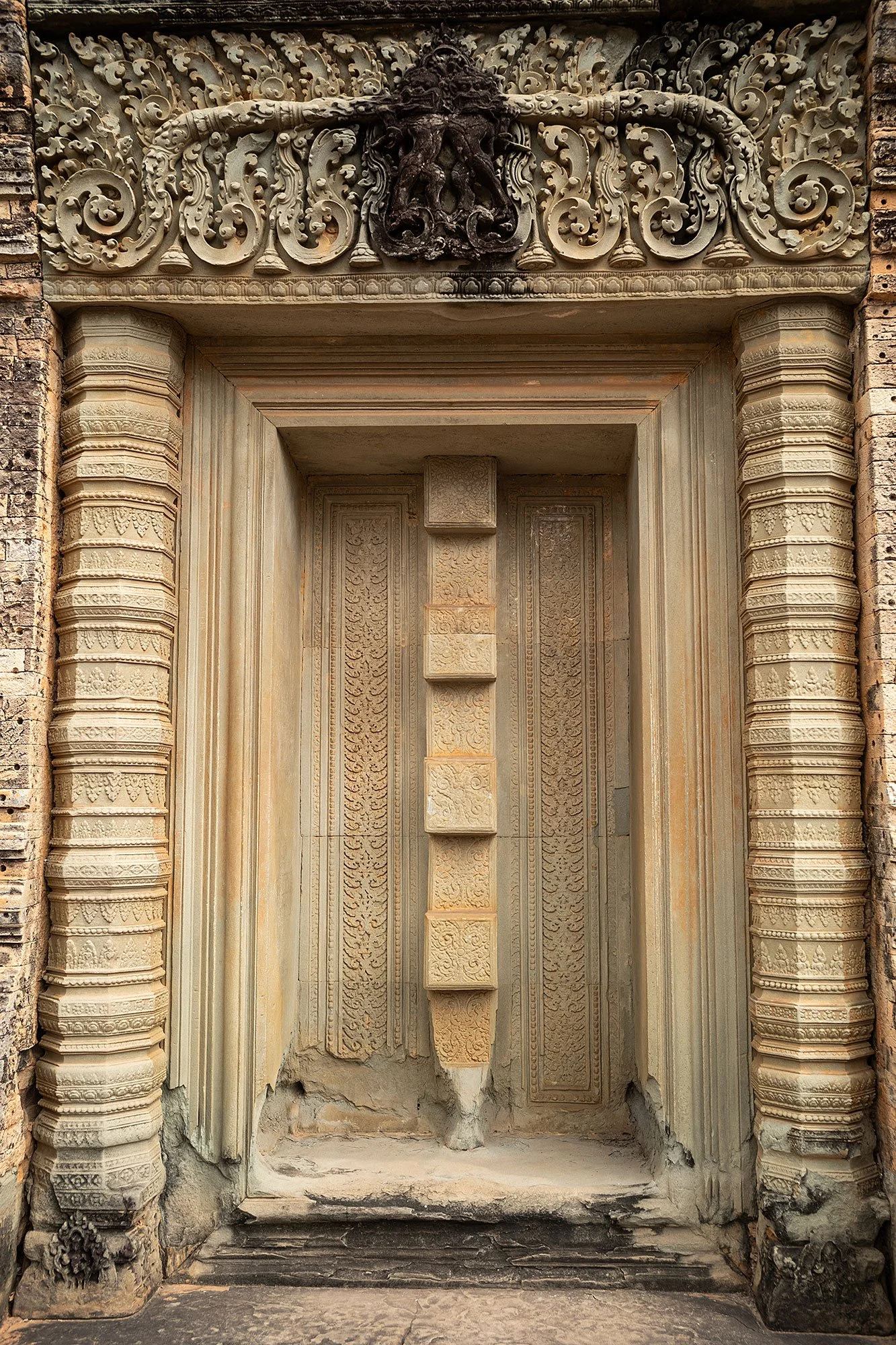
Climbing up to the top platform Jimmy points out the doors and lintels, exquisitely carved out of sandstone. They’re so well-preserved we assume that they’re reconstructions, but Jimmy assures us they are the original works, and I wonder again not only at the craftsmanship but also at the fact that save for some erosion near the base of the doors they look as if they could have been completed yesterday.
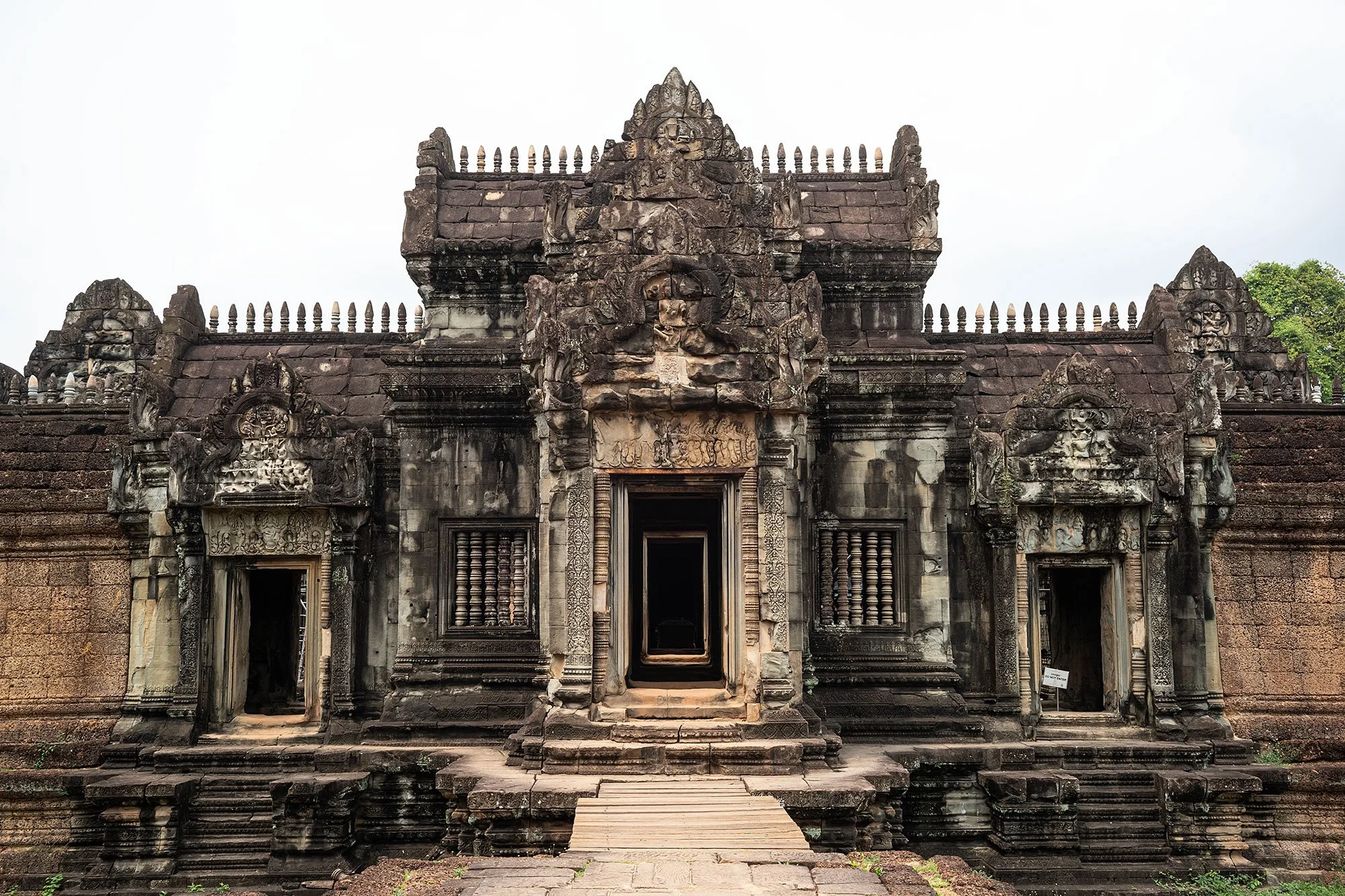
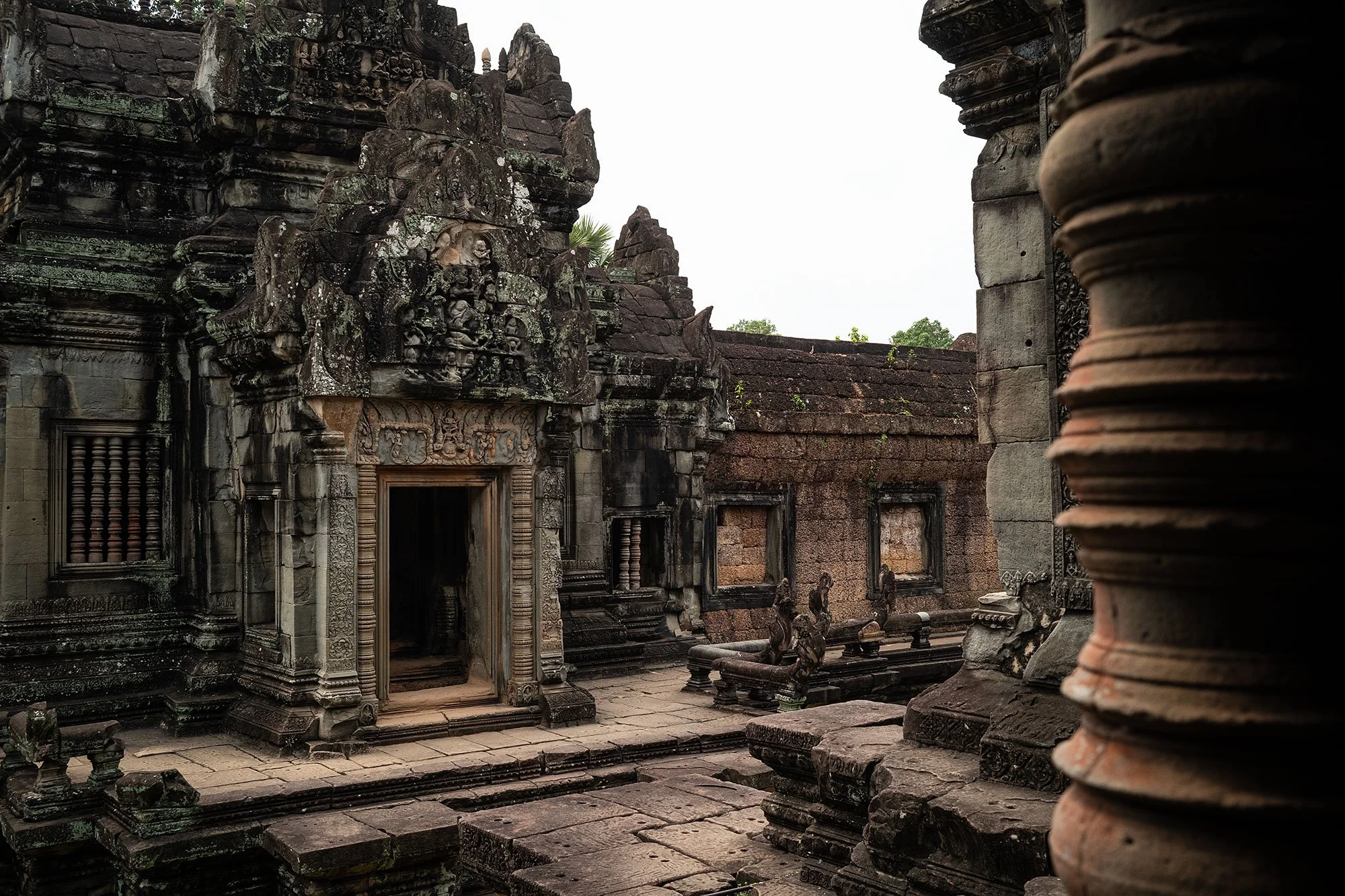
Cold towels and cold water is again on offer back at the car before Sreang drives us to Banteay Samre. Built during the reign of Suryavarman II and Yasovarman II in the early 12th century at the same time as Angkor Wat, it is a Hindu temple constructed in a similar style to its much larger counterpart.
The temple is famous for a local legend that
According to legend, a local farmer who grew the region’s most delicious cucumbers was ordered by the king to protect his crops. One night, the king snuck in to taste the cucumbers and was killed by the unwitting farmer. Leaving no heir, the royal elephant was sent to choose a successor; it chose the farmer who moved his residence from the palace to the temple enclosure.
One of the more striking elements of the temple are the hundreds of Neang Chral decorating the roofs. Currently there are efforts to restore and preserve 300 of them.
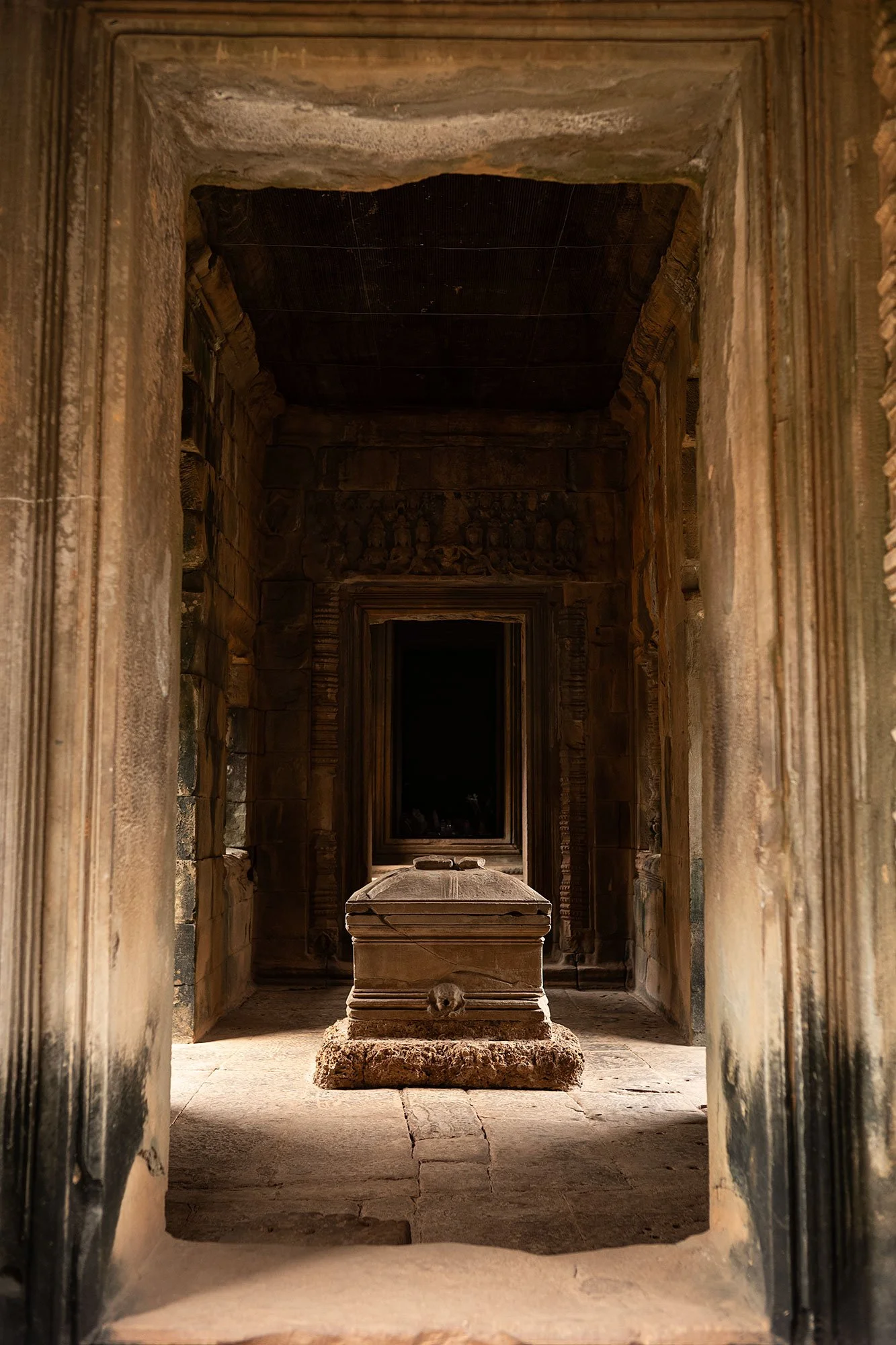
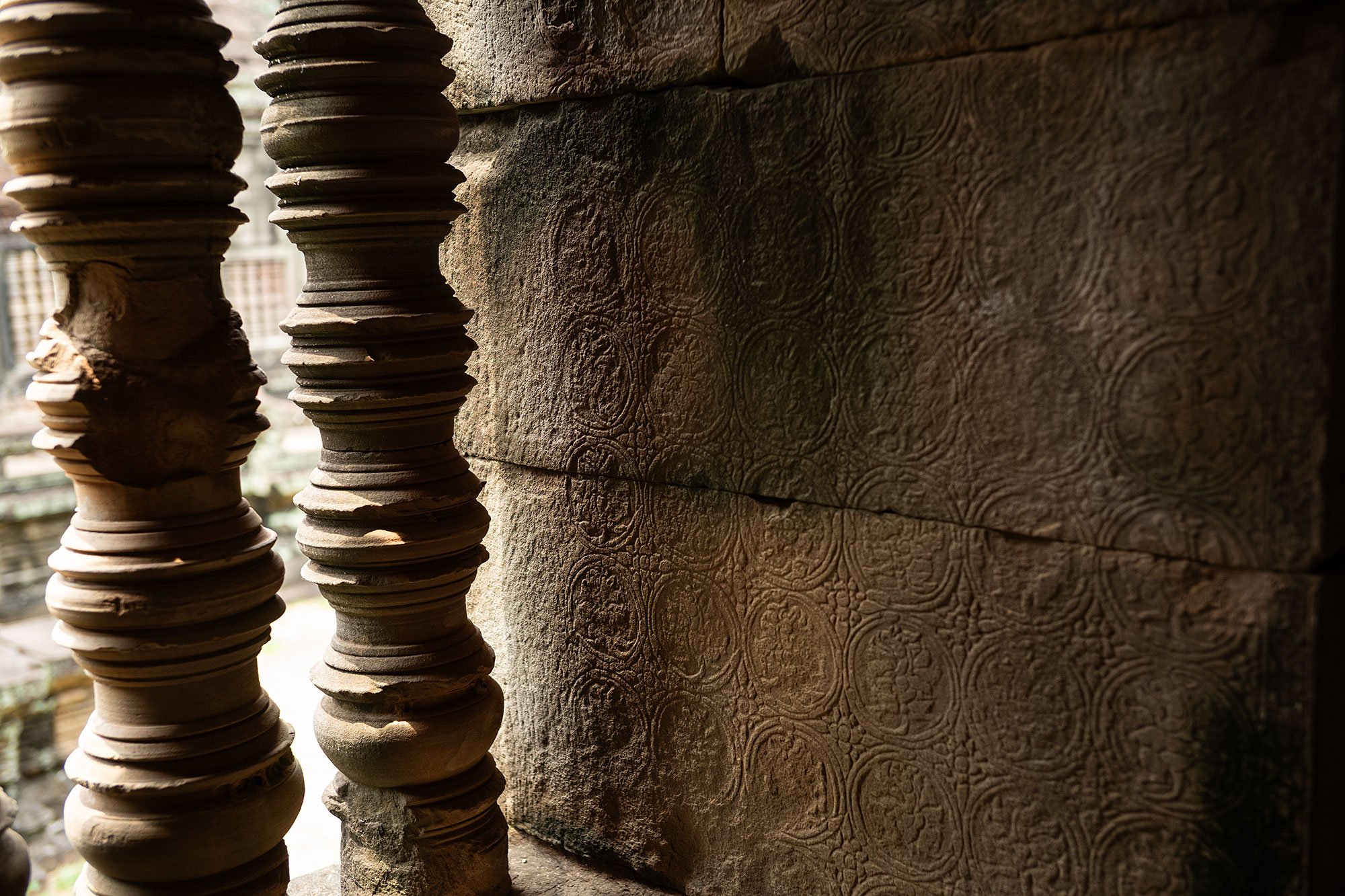
It’s great touring these smaller temples as I feel like there’s a little more time to breathe and take them in. That said, even in the smallest temple there are so many details and carvings that depict so many different elements from so many myths, legends, and histories, that it’s impossible to take it all in. Especially over the course of only two days.
At one of the temples I bought a new reference book to replace the Angkor book I had purchased in 2000. That volume is falling apart from use, and I wish I had the time to dedicate to reading about each temple in depth, seeking out all the of the details mentioned by the authors and various authorities on the internet.
What I’m really seeking is time, and I thank my 2000 self for giving myself the time to soak up the atmosphere and live for a time at the temples. I tell Alice that back then I would leave early and sometimes nap at the temples so that I would have the energy to continue exploring and learning about them, their construction, and the culture that produced them.
But for now, I am happy that we’re able to cover as much ground as we are and that my cousins are able to get such a broad overview of the site. I’m also happy for them that the roads connecting all the temples are now sealed and in great condition, vastly cutting down on travel time. The fact that our next stop, Banteay Srei, is only 30 minutes away is a testament to the work the Apsara National Authority has done. I remember it being at least an hour. 🇰🇭