Angkor IV: Banteay Srei, Pre Rup, & Banteay Kdei.
After lunch we head back to the car. Jimmy tells us it’s now naptime and as much as I’d like to look out the window as we drive to Banteay Srei it’s all I can do to keep my eyes open.
It’ll take thirty minutes to reach the temple. I can’t wait. It was my favorite temple when I visited in 2000 and I went back again and again at various times of the day to catch the light. Then, I remember it taking around an hour on poor roads. Few cars attempted the trip, though the occasional bus full of French tourists would turn up.
When we arrive I’m amazed at how developed the site has become. There’s a large parking lot and an area set aside for a number of stalls selling the usual merchandise to tourists. A new bathroom and information center are also set up and there’s a path that leads to the temple itself.
Later as we’re leaving Jimmy will point out where the makeshift parking lot used to be. I tell him I remember being able to practically drive right up to the outer walls.
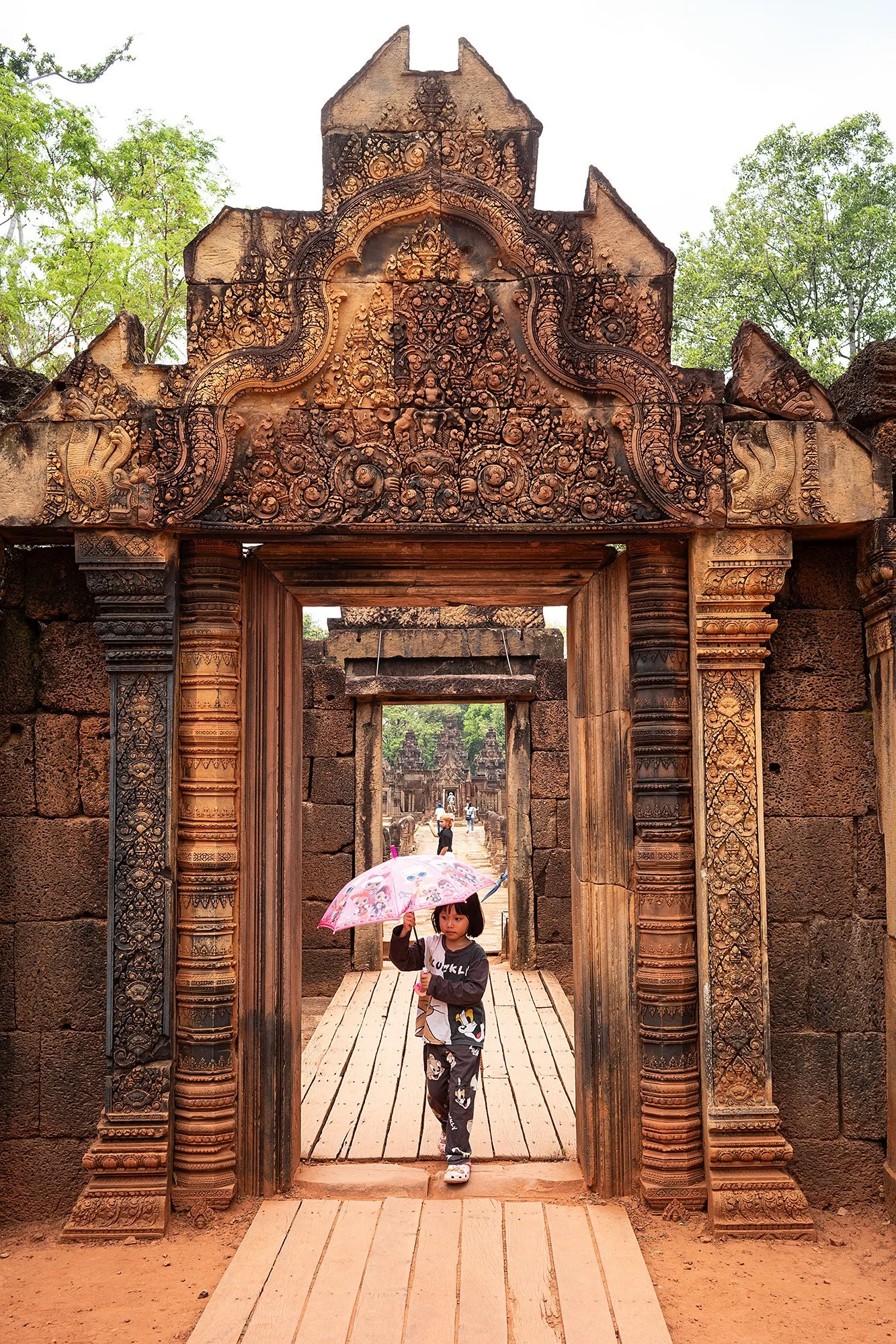
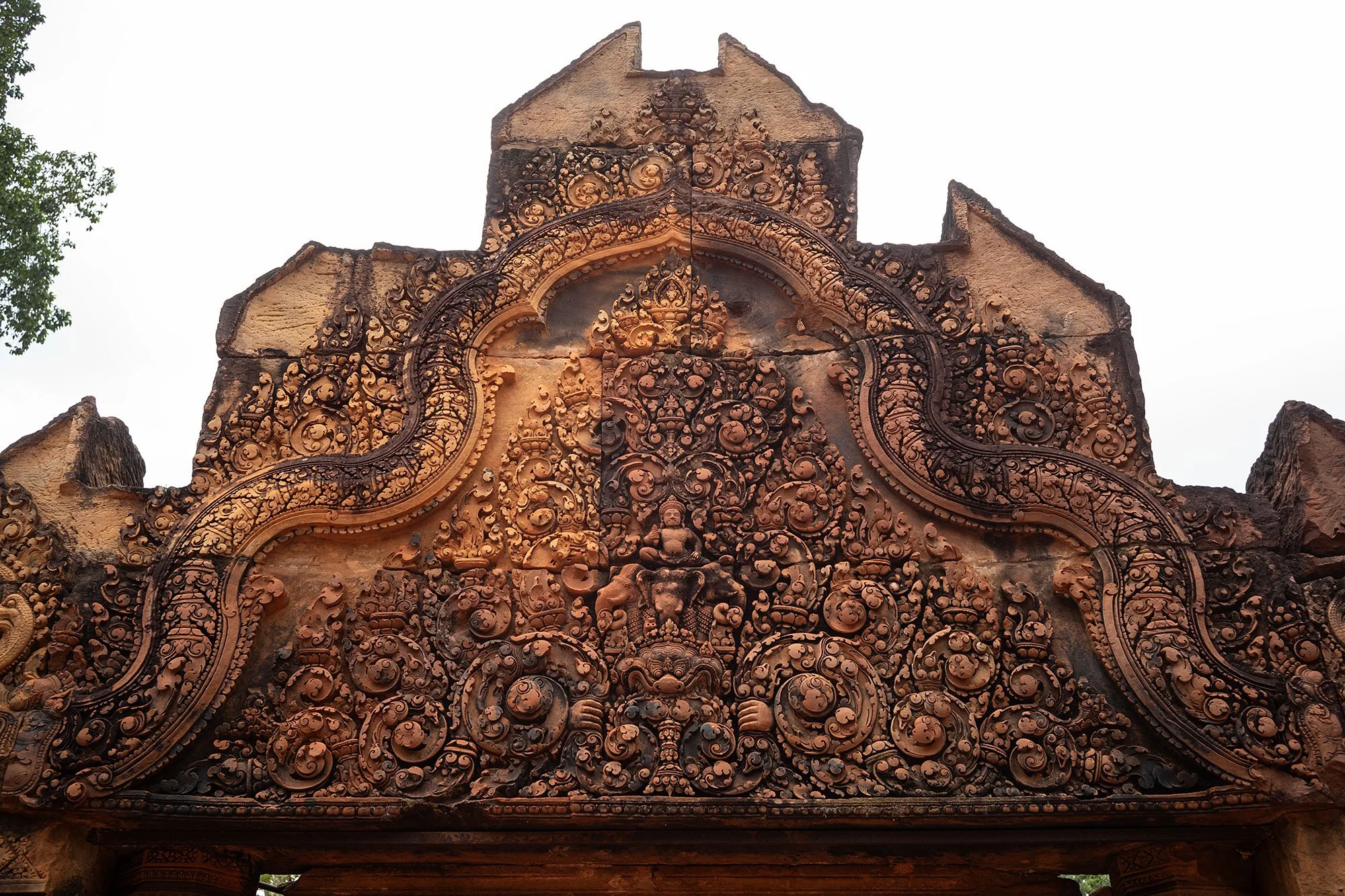
The temples are as beautiful and intricate as I remember, though I don’t quite remember the outer walls. In my mind the temples stood out in the open. It’s another detail I’d love to check when I am back at my parents house and can dig up the photos I took.
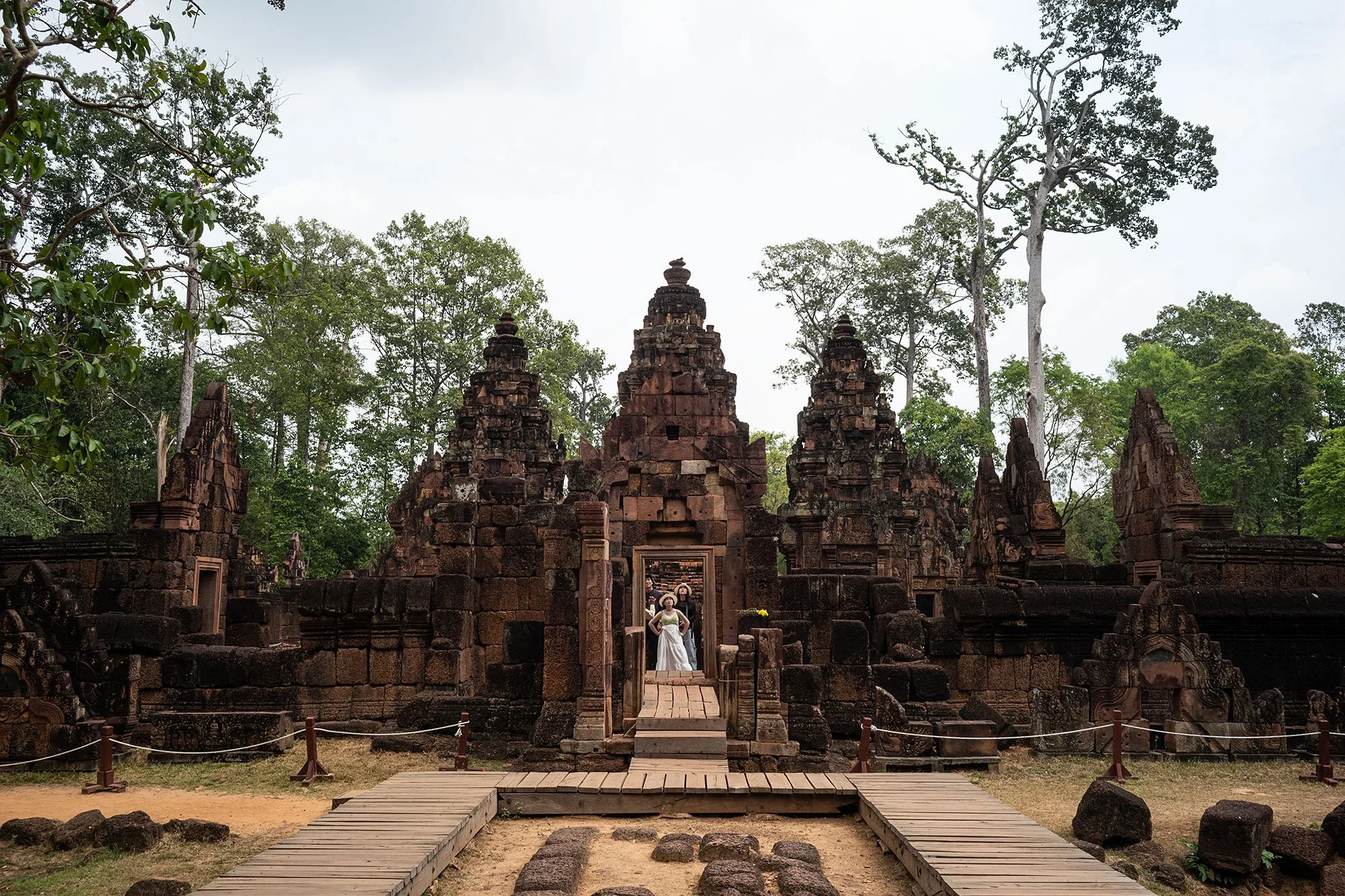
Wooden walkways and barriers have also been set up, limiting access to the temples. In 2000, there were small wooden signs on the plinths asking visitors not to climb the temples, but there was little oversight. The temple was remote and there were generally no attendants watching over it.
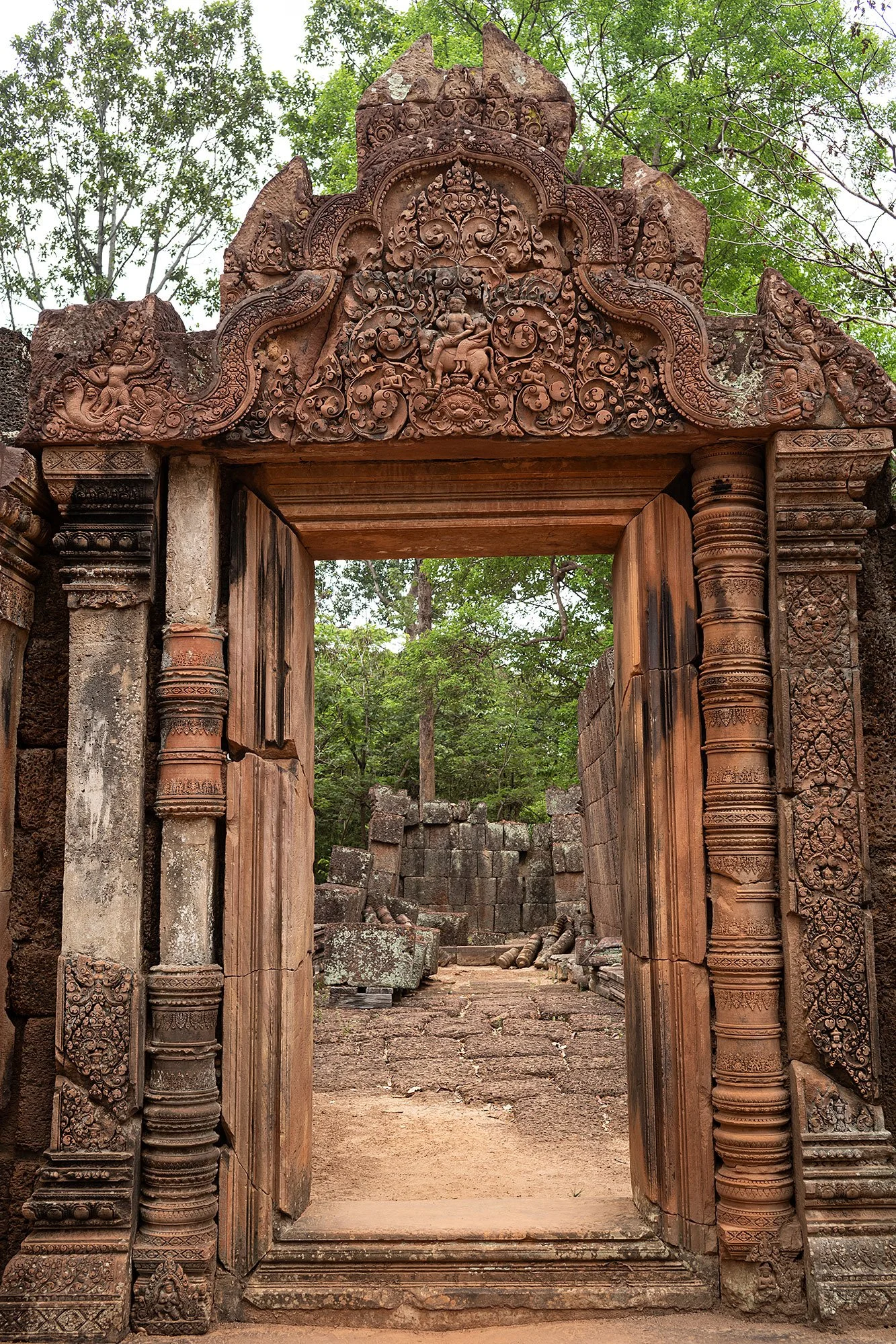
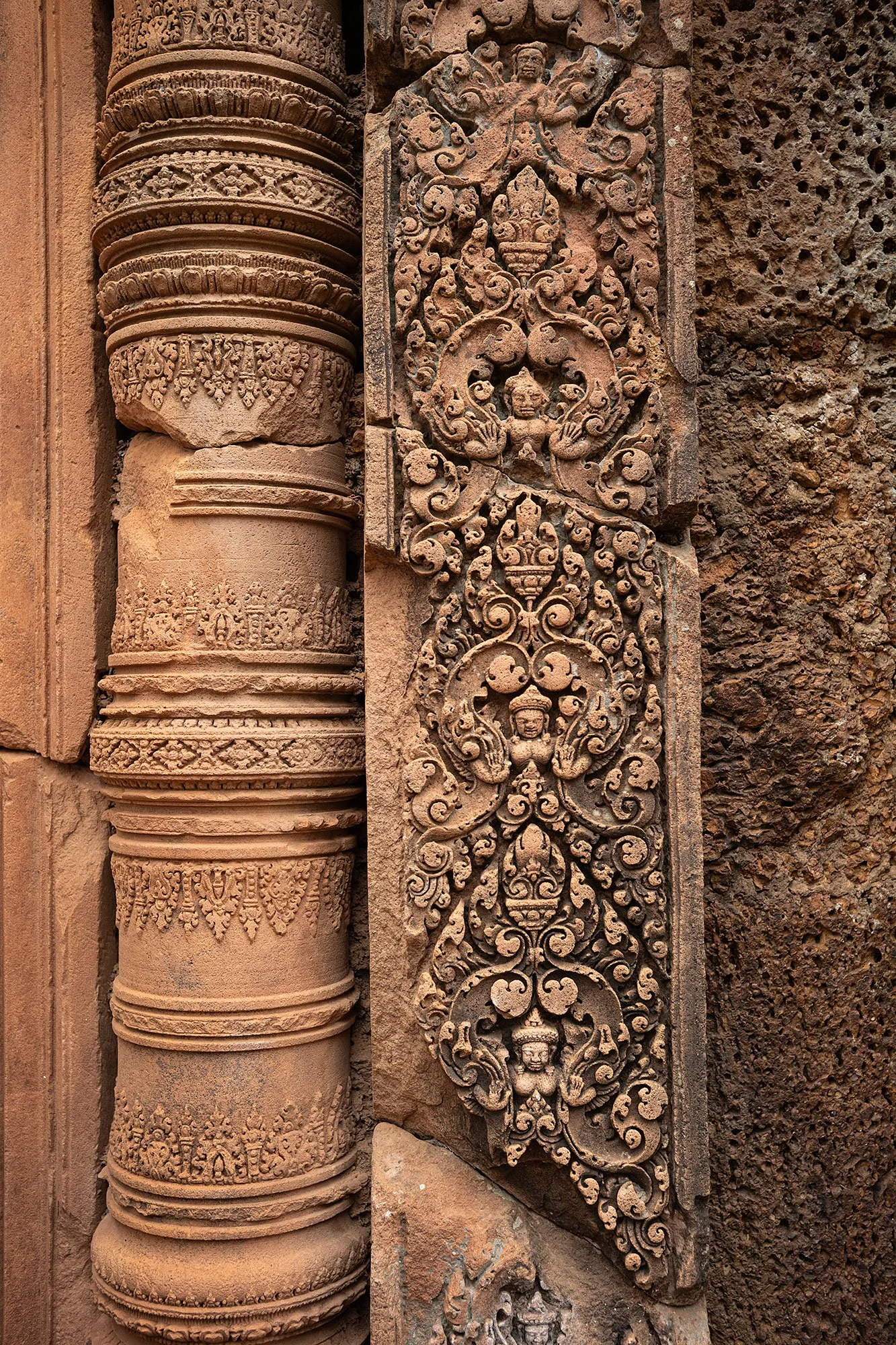
Built in the 10th century, the Hindu temple is dedicated to Shiva and Parvati, and was built by officials rather than kings.
Conscetrated in 967, Banteay Srei is the only major temple at Angkor not to have been built by kings. Its construction is attributed to the courtiers Vishnukumara and Yajnavaraha who served as counselors to King Rajendravarman II. The latter was a grandson of King Harshavarman I, a scholar and philanthropist who helped those suffering from illness, injustice, or poverty. His pupil became the future King Jayavarman V.
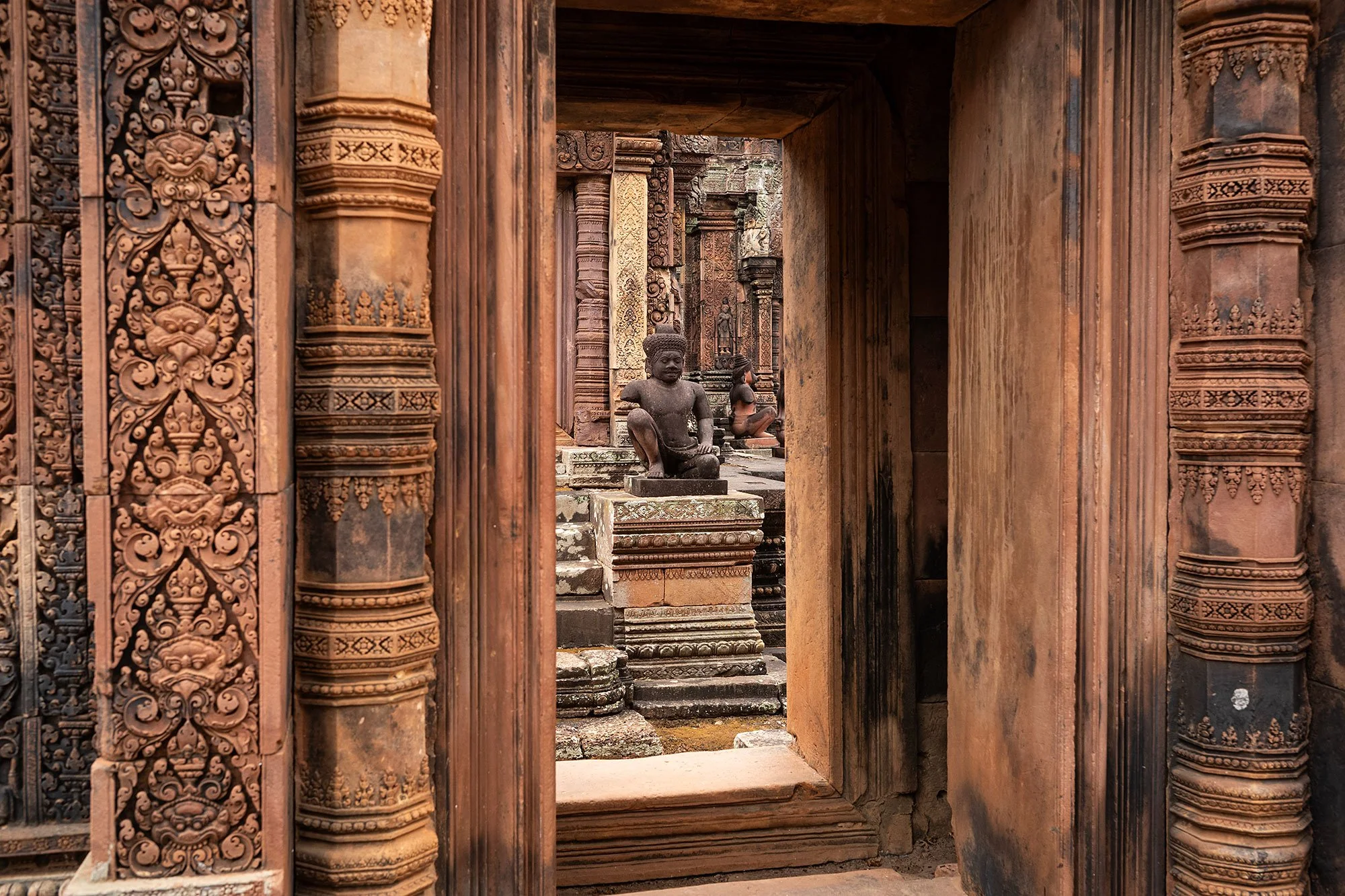
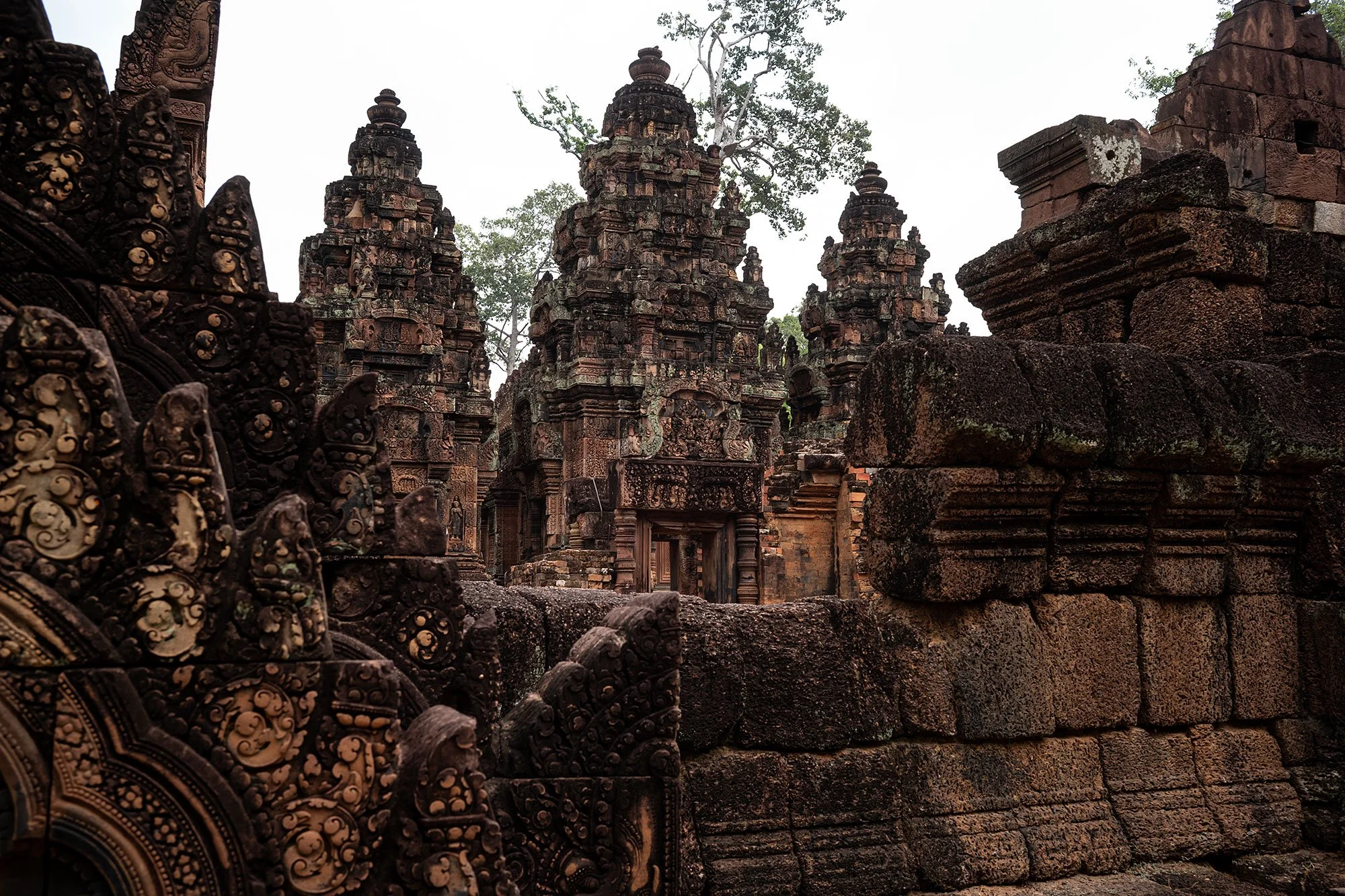
Dedicated to Shiva, the modern name meaning citadel of the women or beauty is thought to relate to the intriccies of the carvings that adorn every surface of the temple and its relatively diminutive size.
The red sandstone that serves as its building material can be carved like wood, which lends itself to the elaborate wall carvings and it’s easily a favorite of almost everyone who makes it out to see it. On arriving we pass a Chinese tour group and I hear them effusing over its beauty.
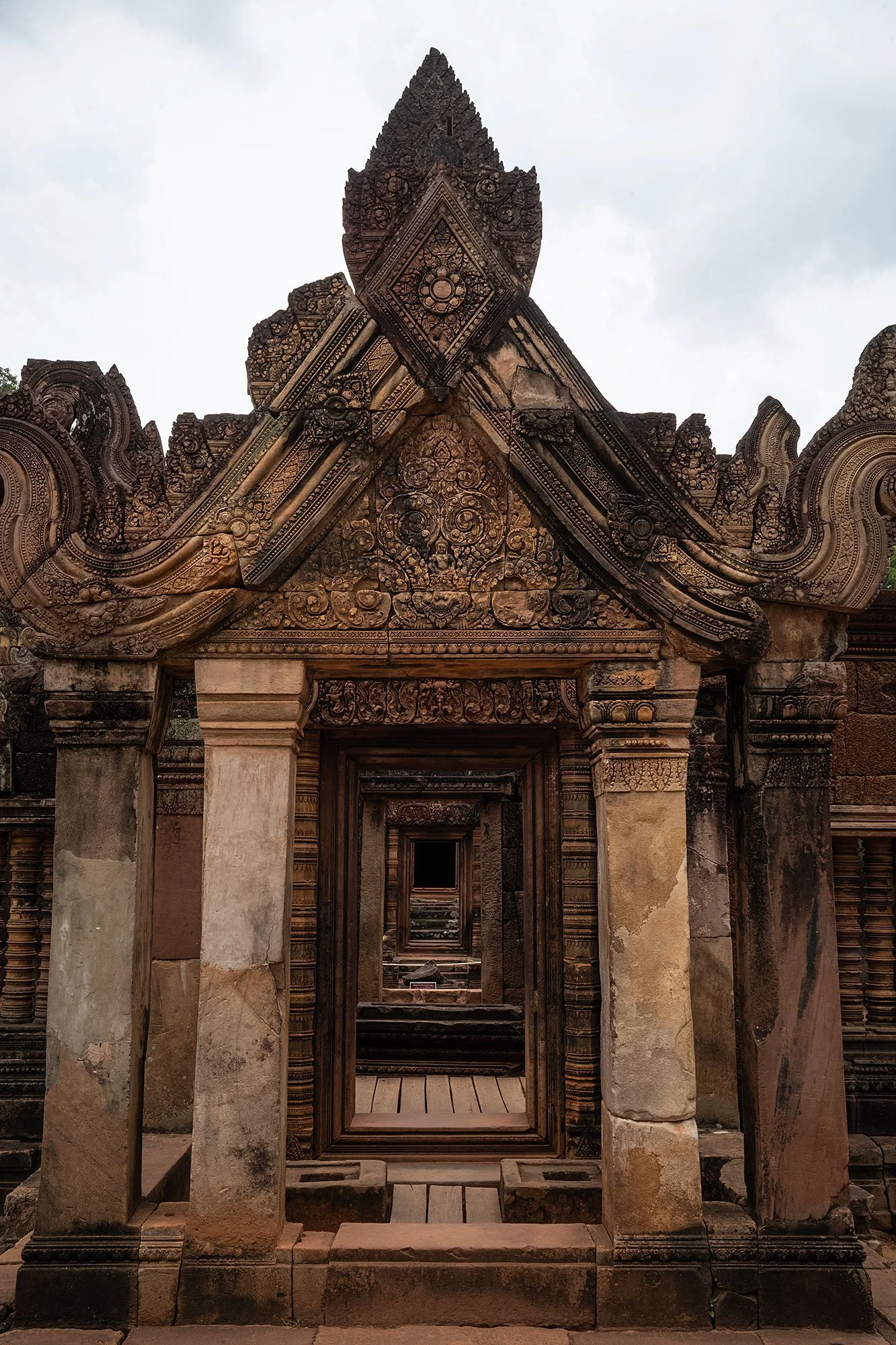
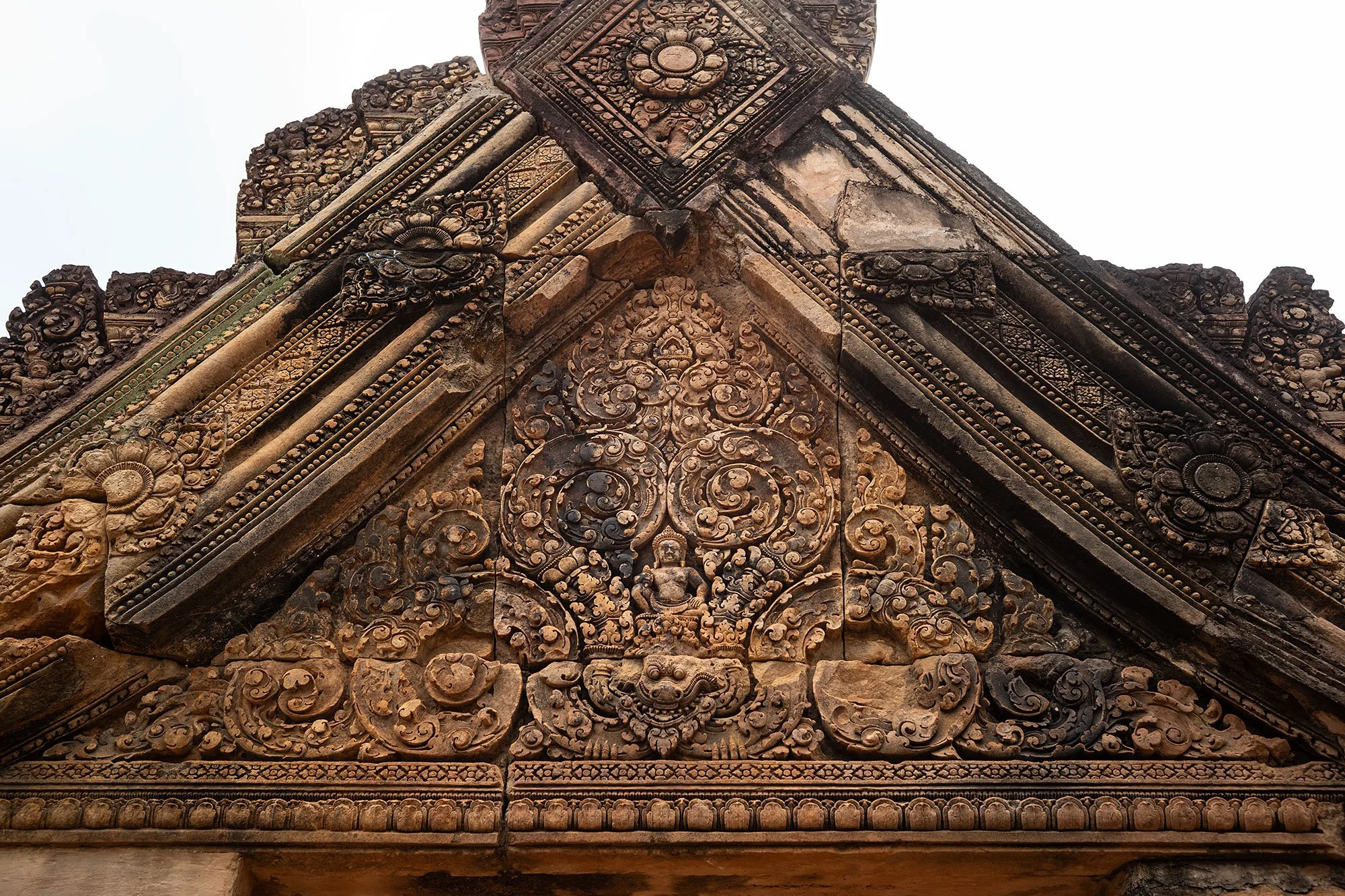
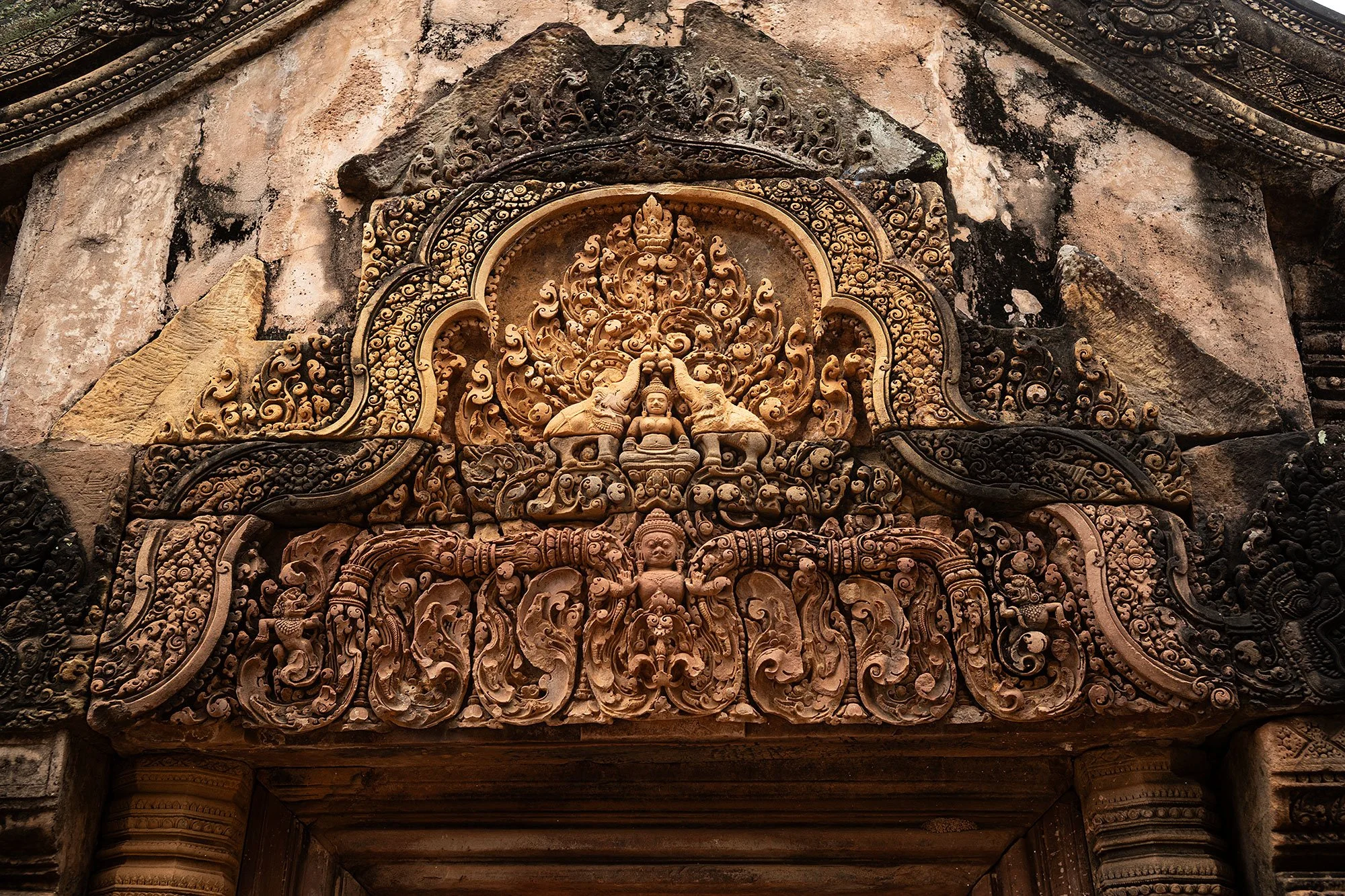
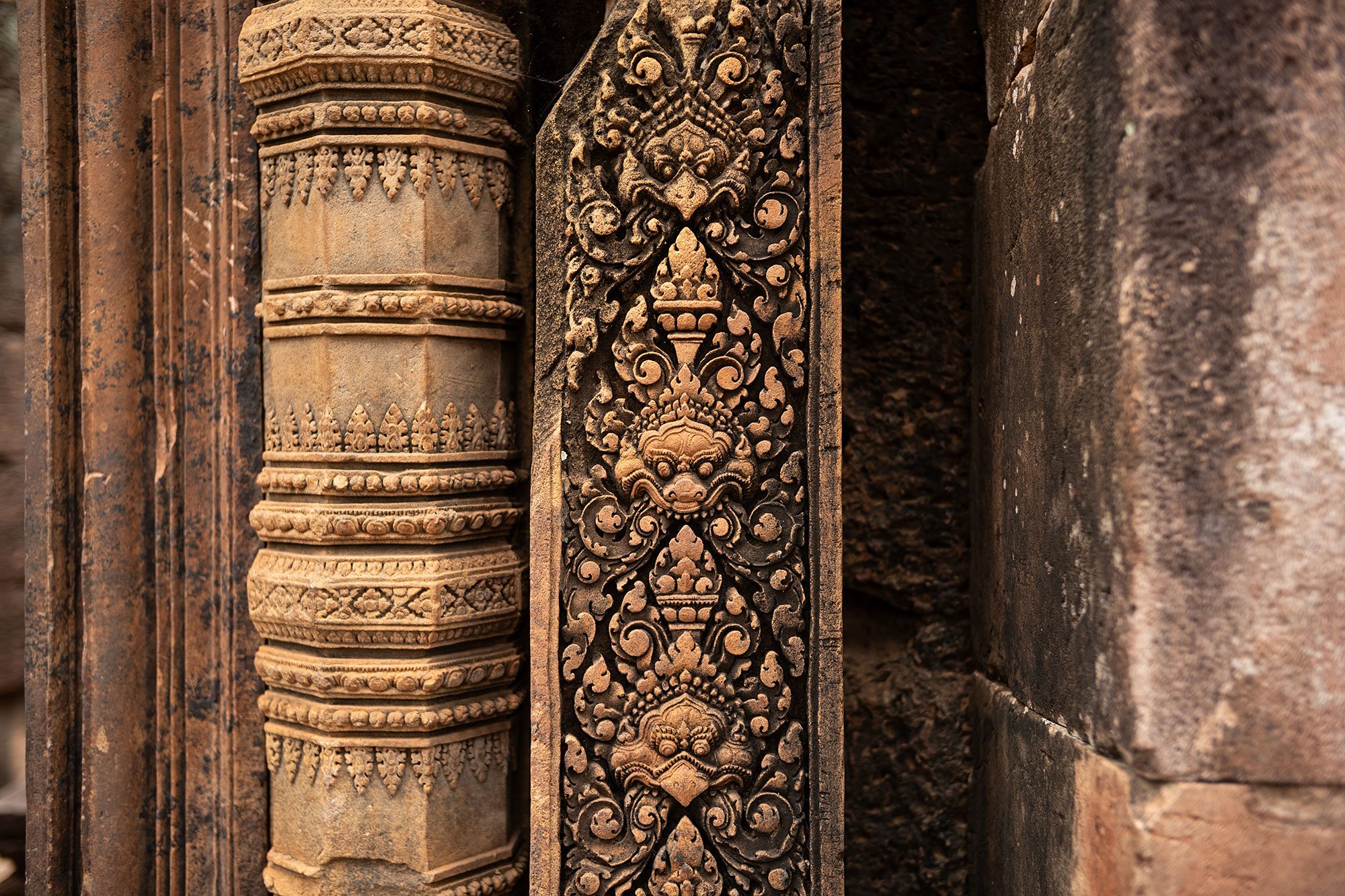
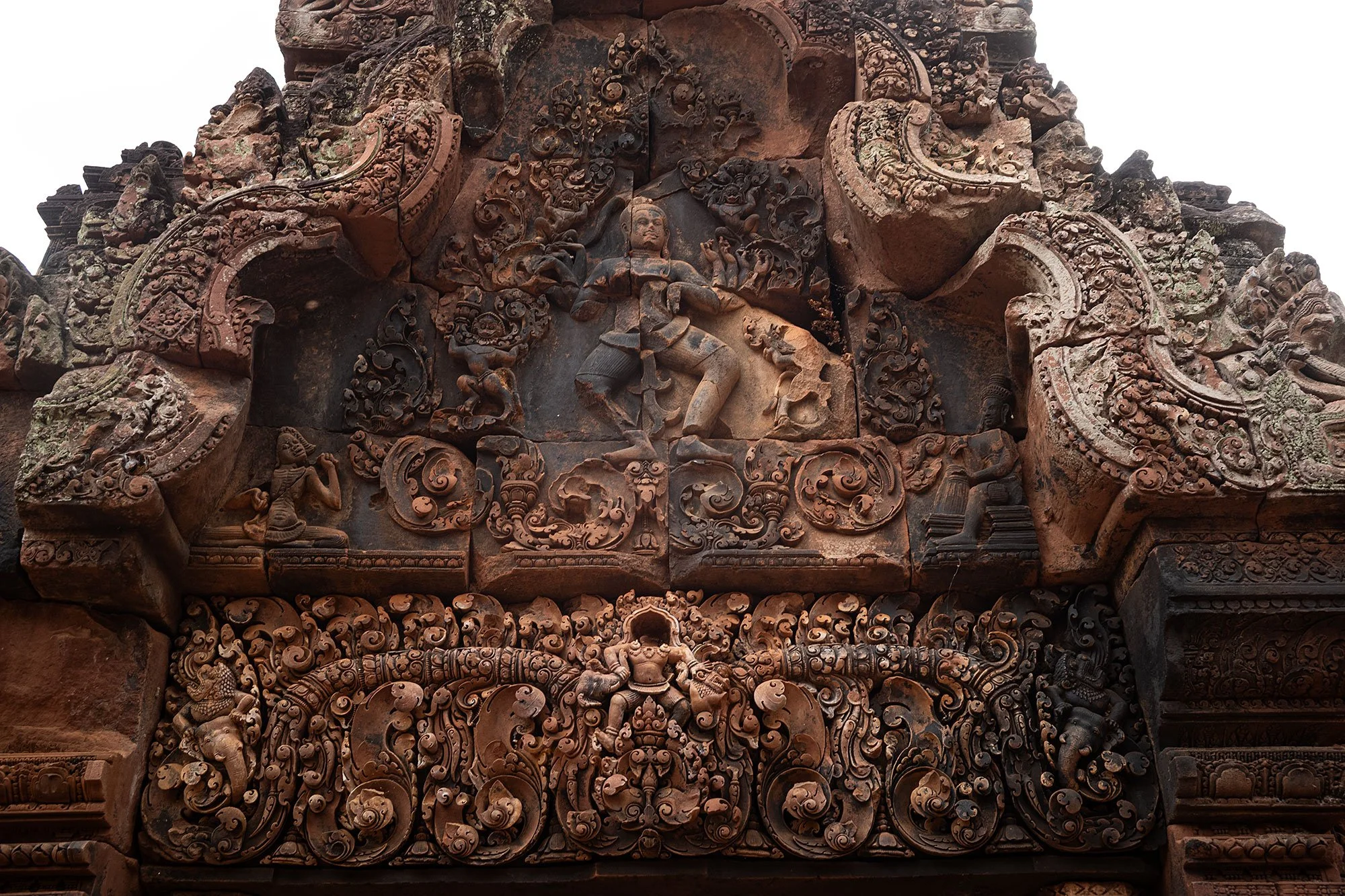
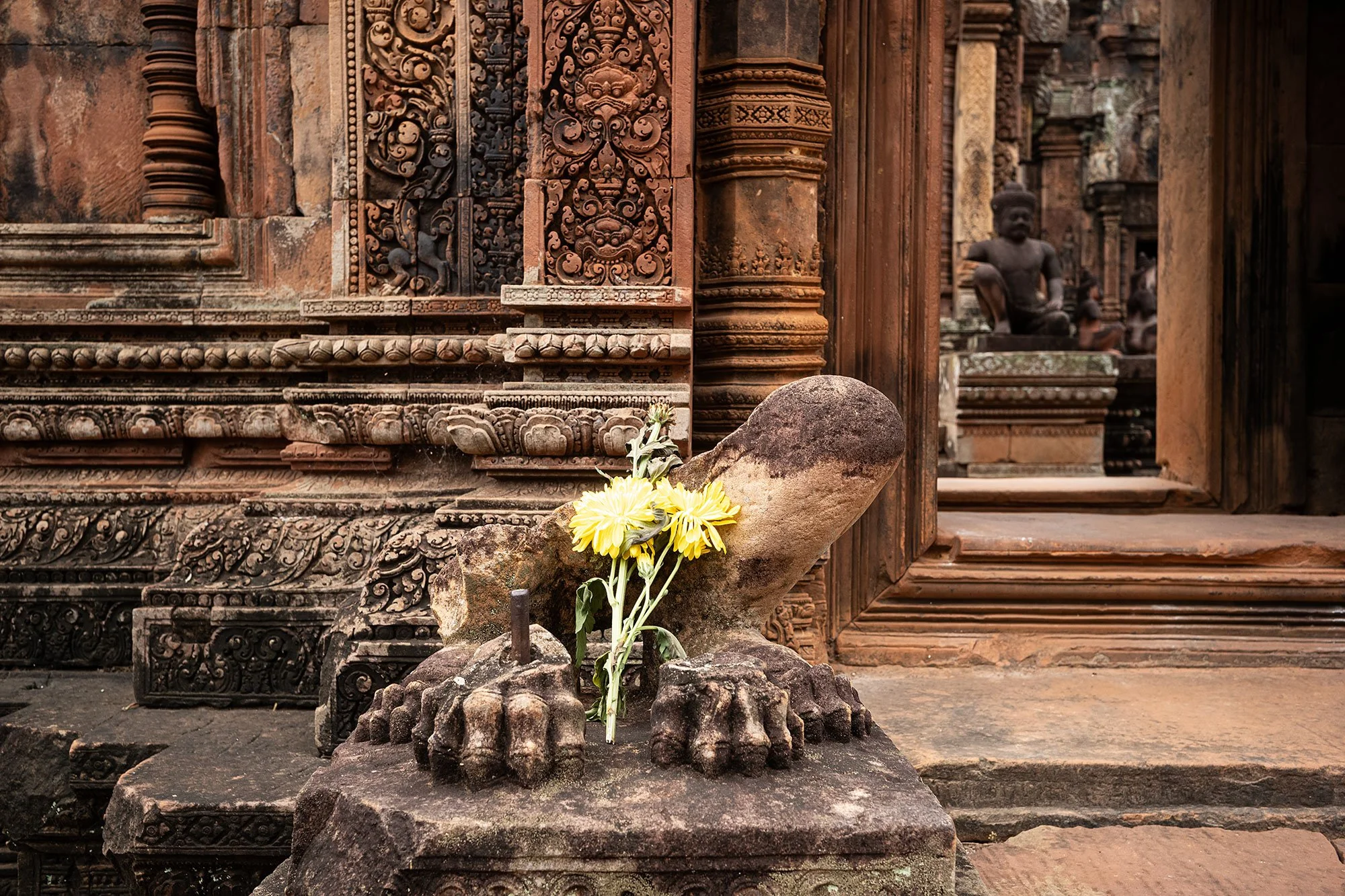
Replicas of the statues that once sat on various pedestals flanking the stairs leading up to the temple have been installed and I try to remember what it looked like in 2000. I seem to remember some headless statues, but am not sure if they were original or replicas even then. The temple has long been victim to looting and even a statue of Shiva and Pavarti that had been removed to the National Museum of Cambodia for safekeeping suffered an attempted theft.
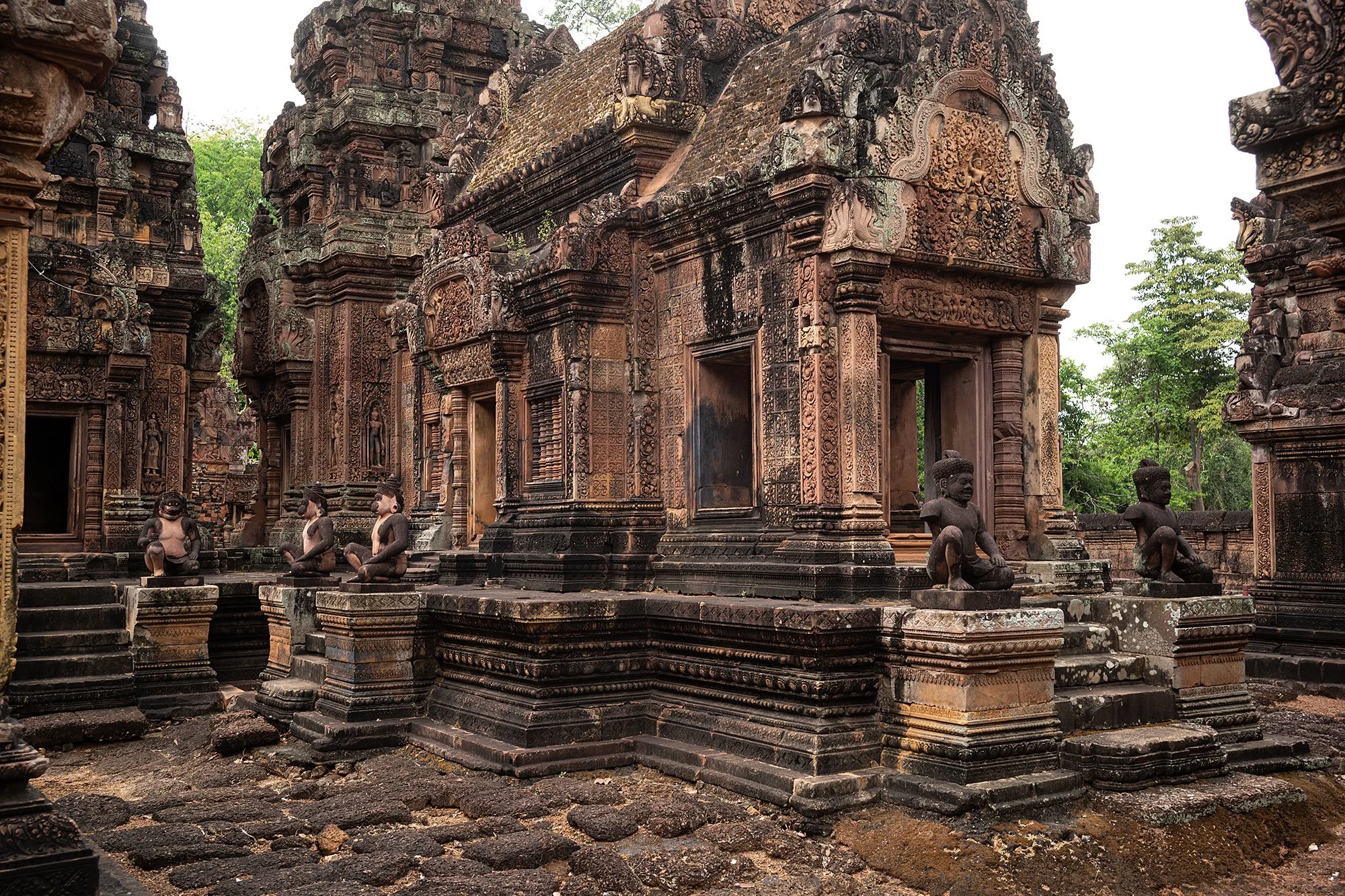
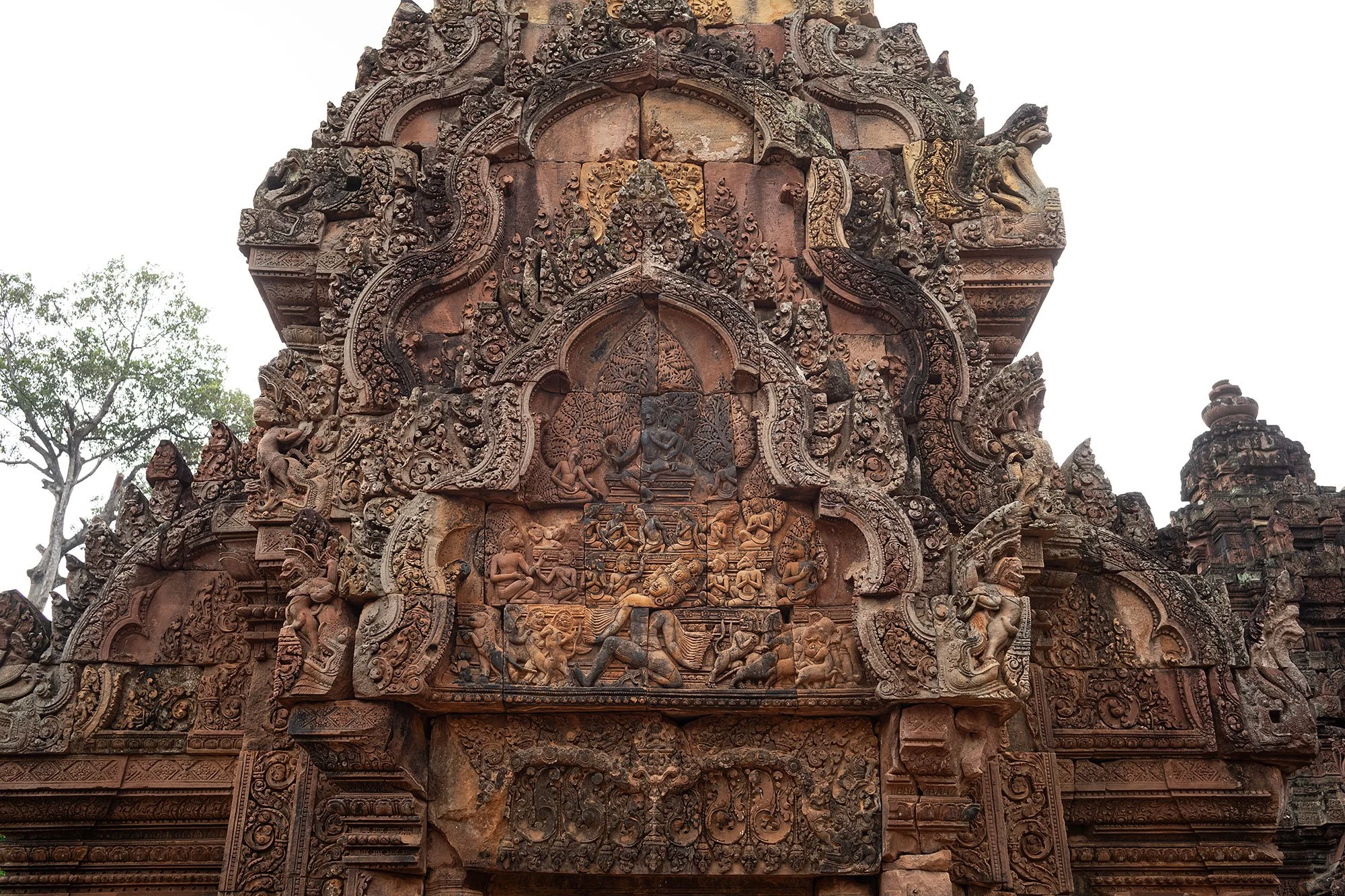
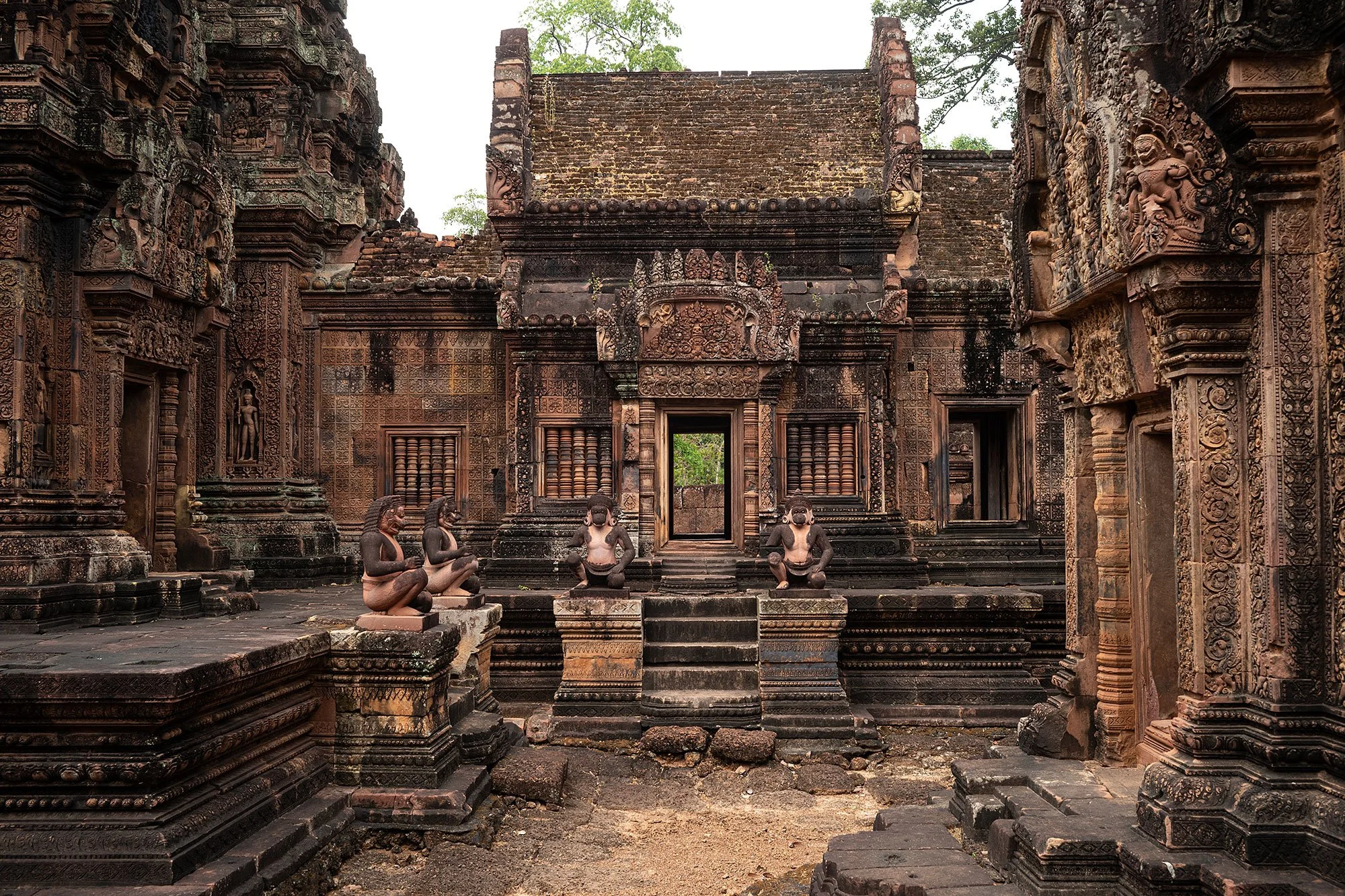
We follow the path around the temple and I’m thankful that I had the opportunity to study the temple at close range. It’s slightly frustrating now not to have the access I once had, but I am even more thankful that efforts are being made to make sure the temple is preserved for future generations to admire.
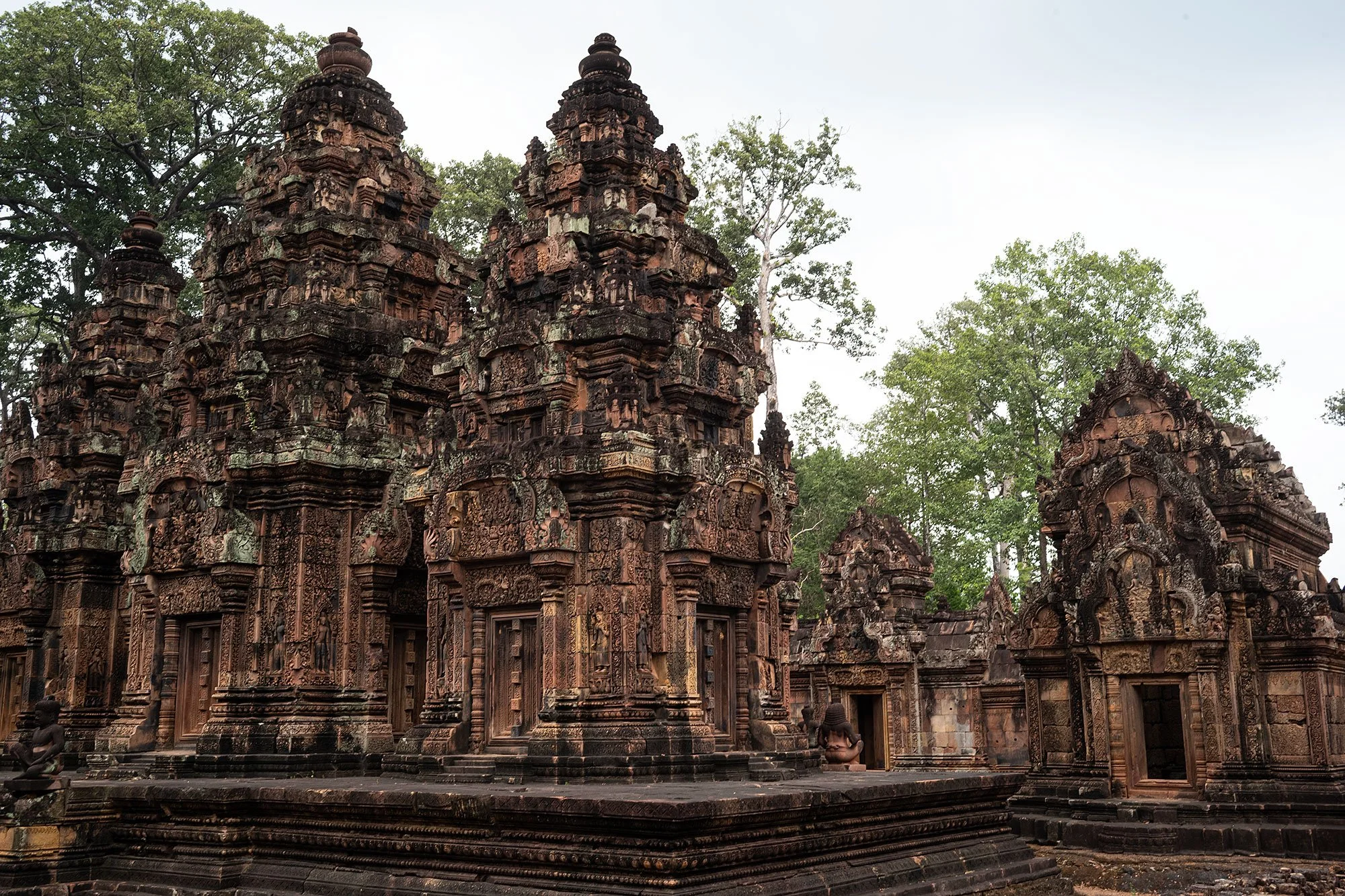
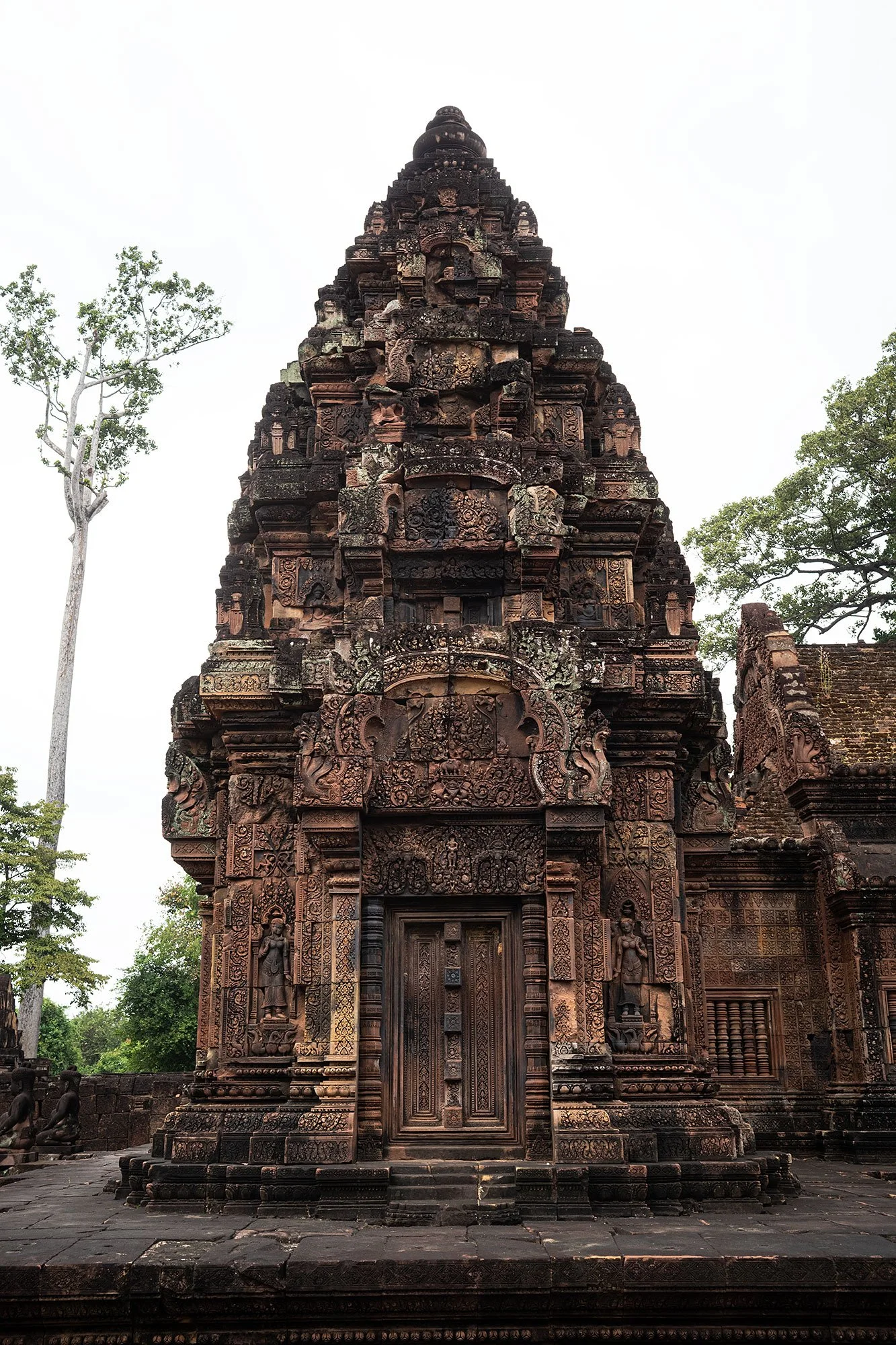
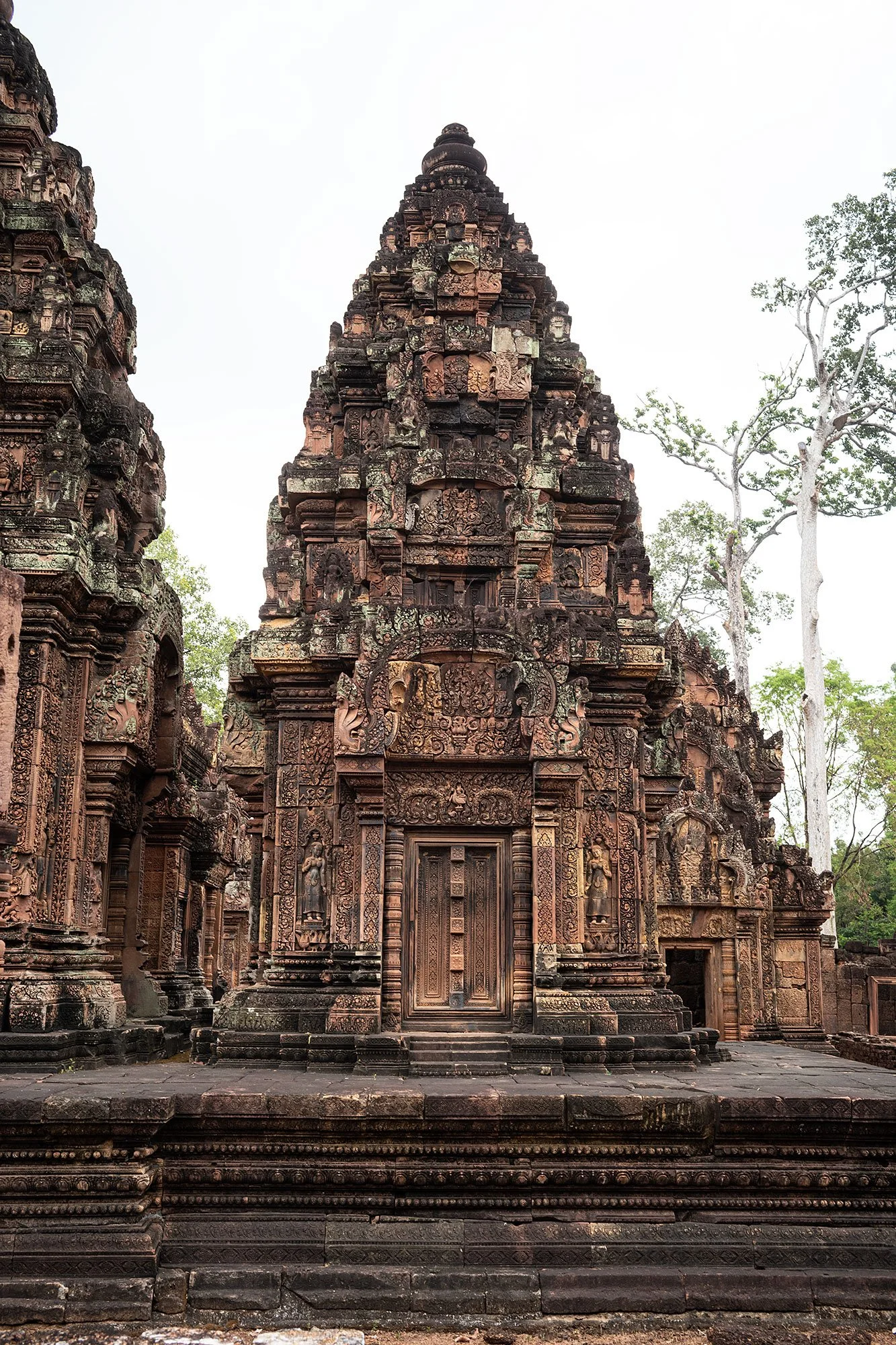
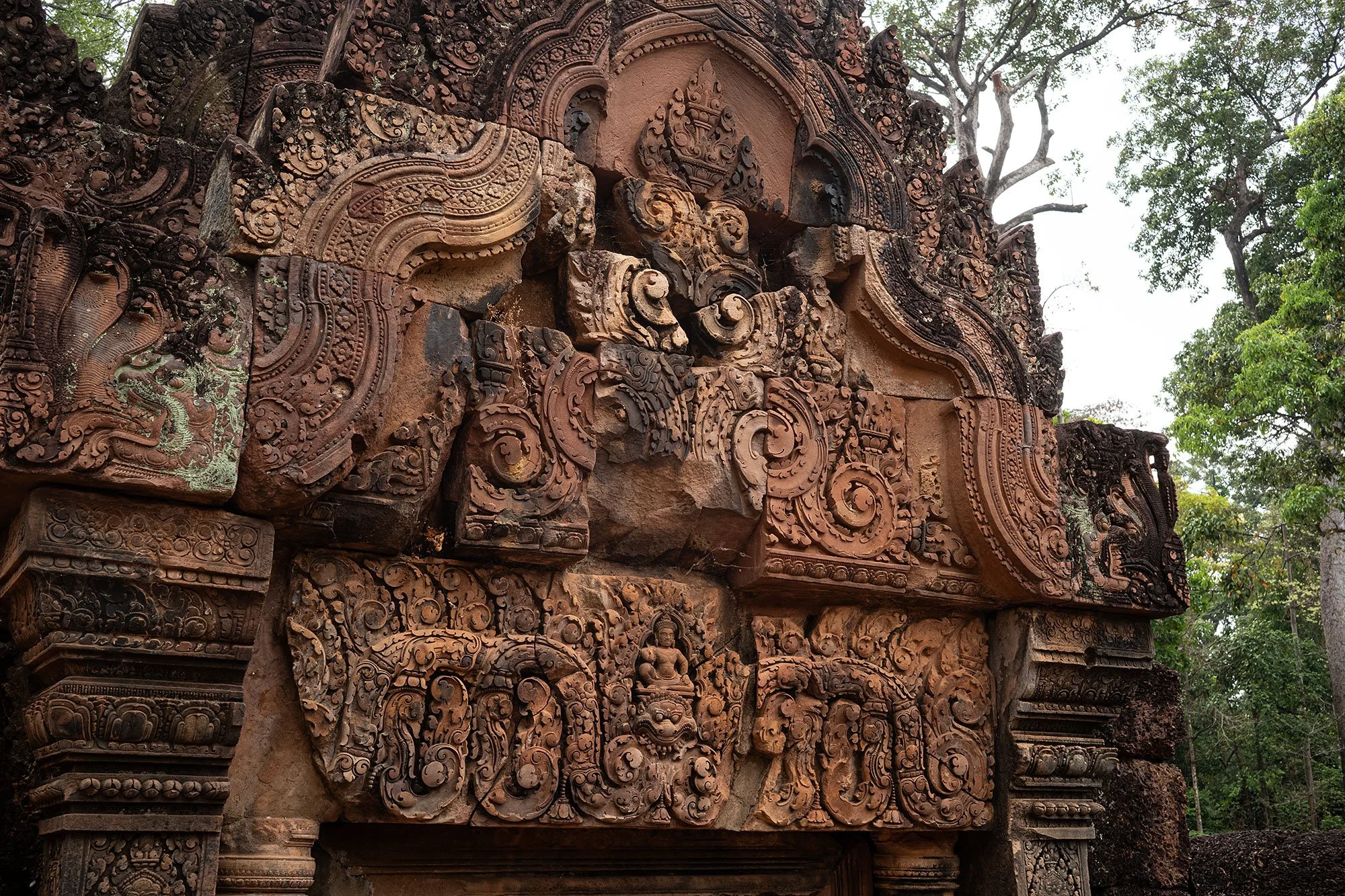
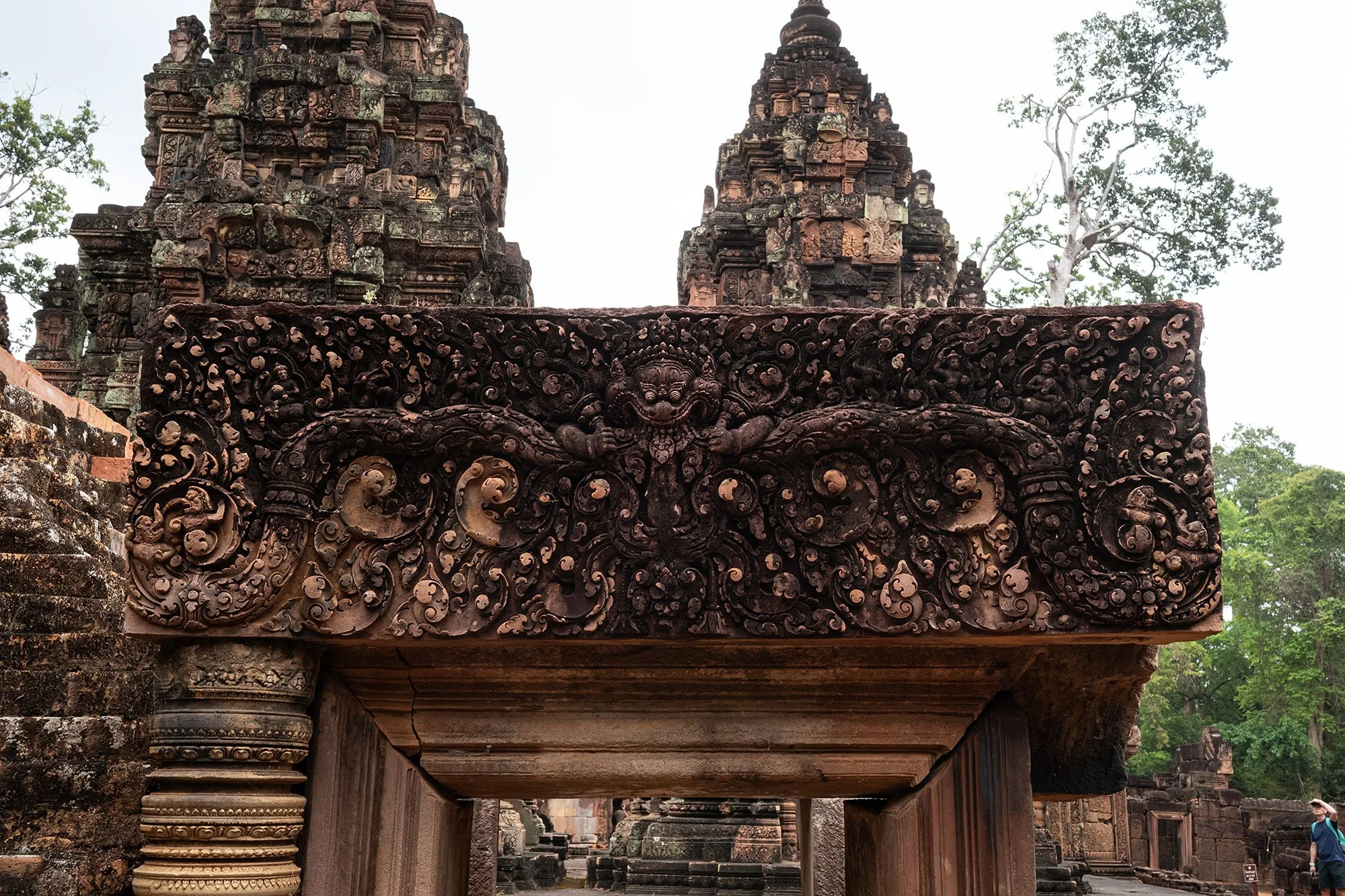
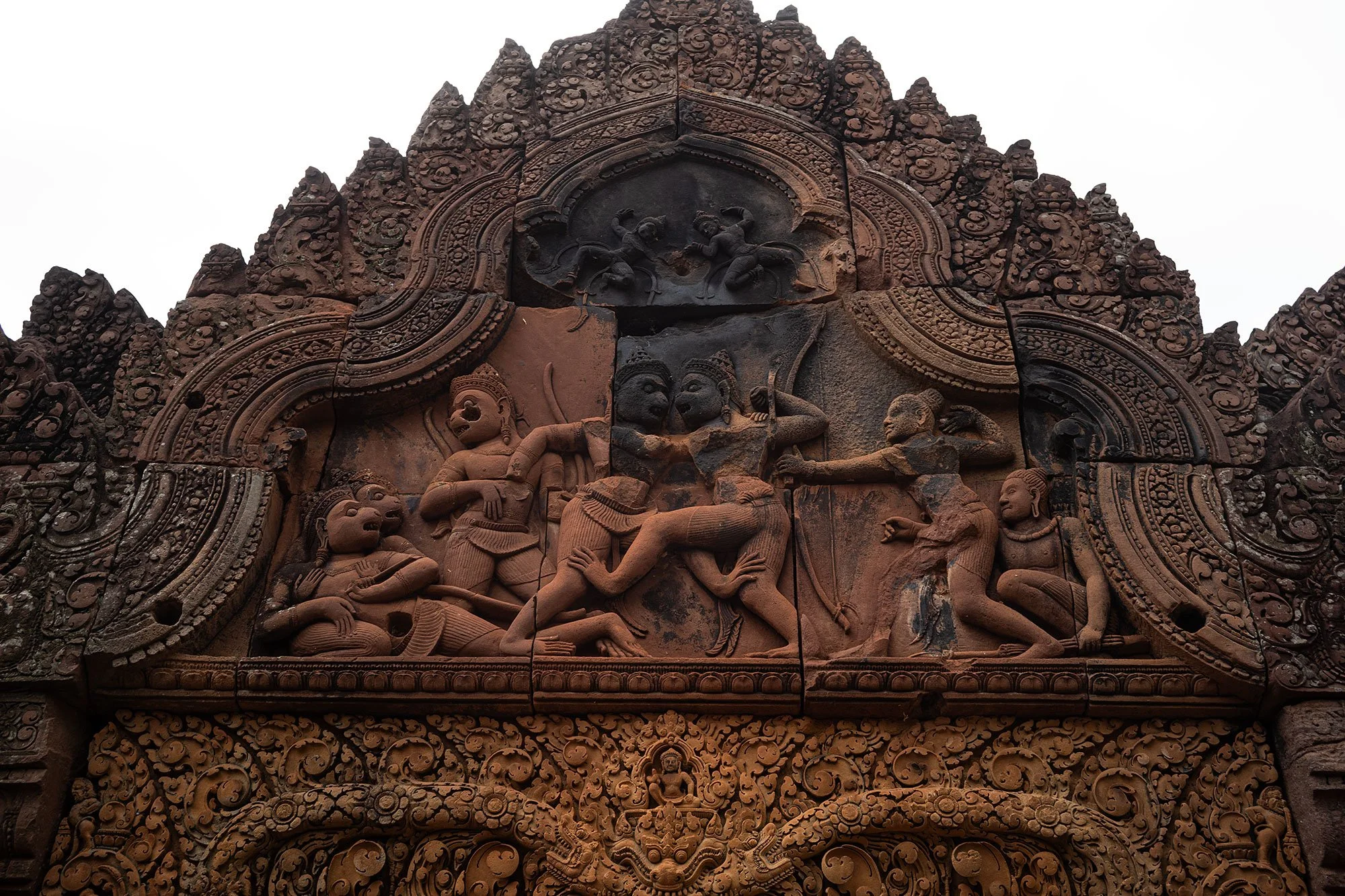
All too soon we are making our way towards the rear exit. I could spend an entire day at the temple, and in 2000 over the course of the week I probably a day and a half all told on site. It’s almost impossible to take it all in, especially now. You’d need to bring binoculars or a zoom lens to appreciate the details carved into the niches in buildings themselves and see the devatas and dvarapalas that you once used to be able to stand almost next to.
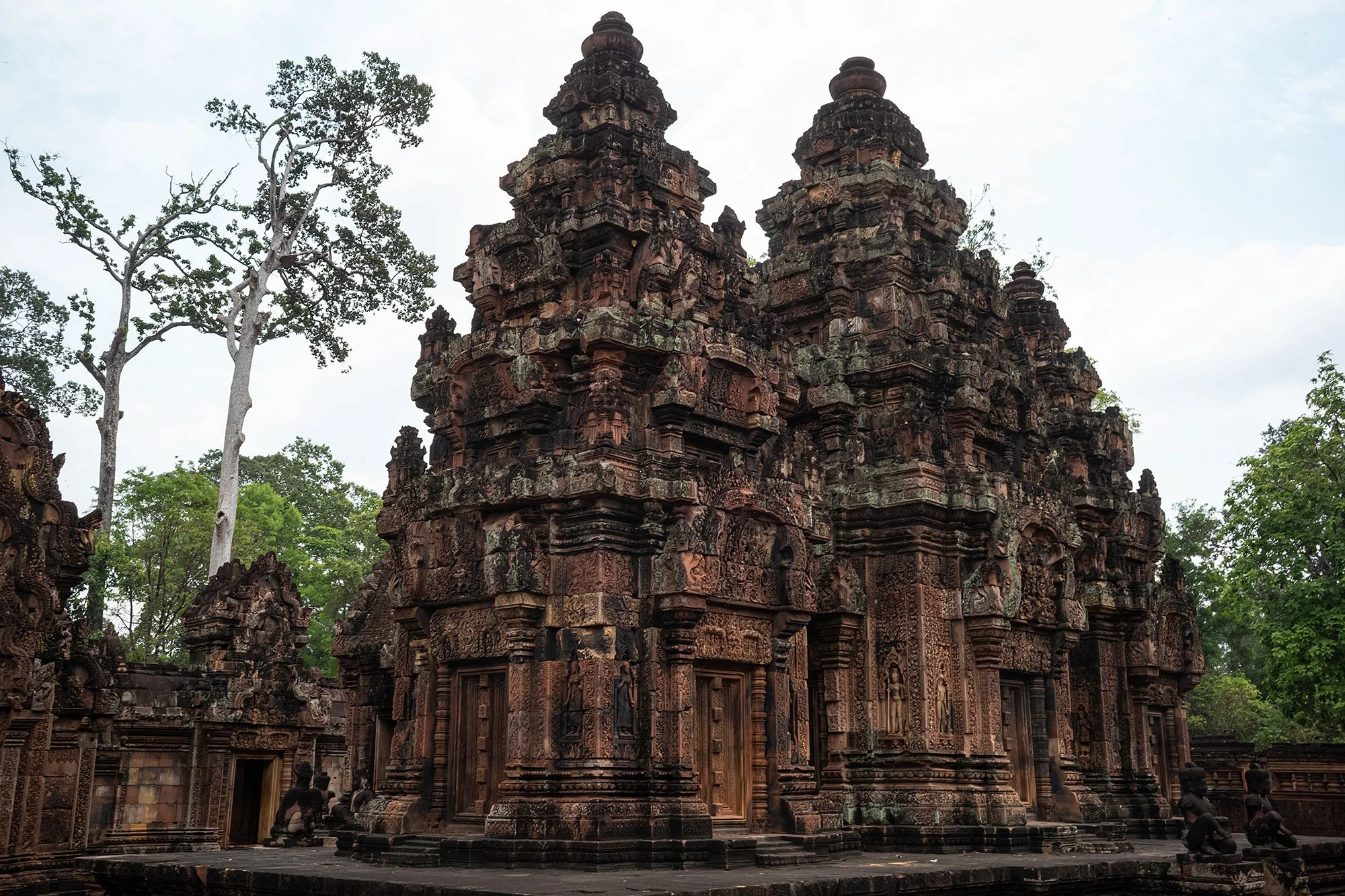
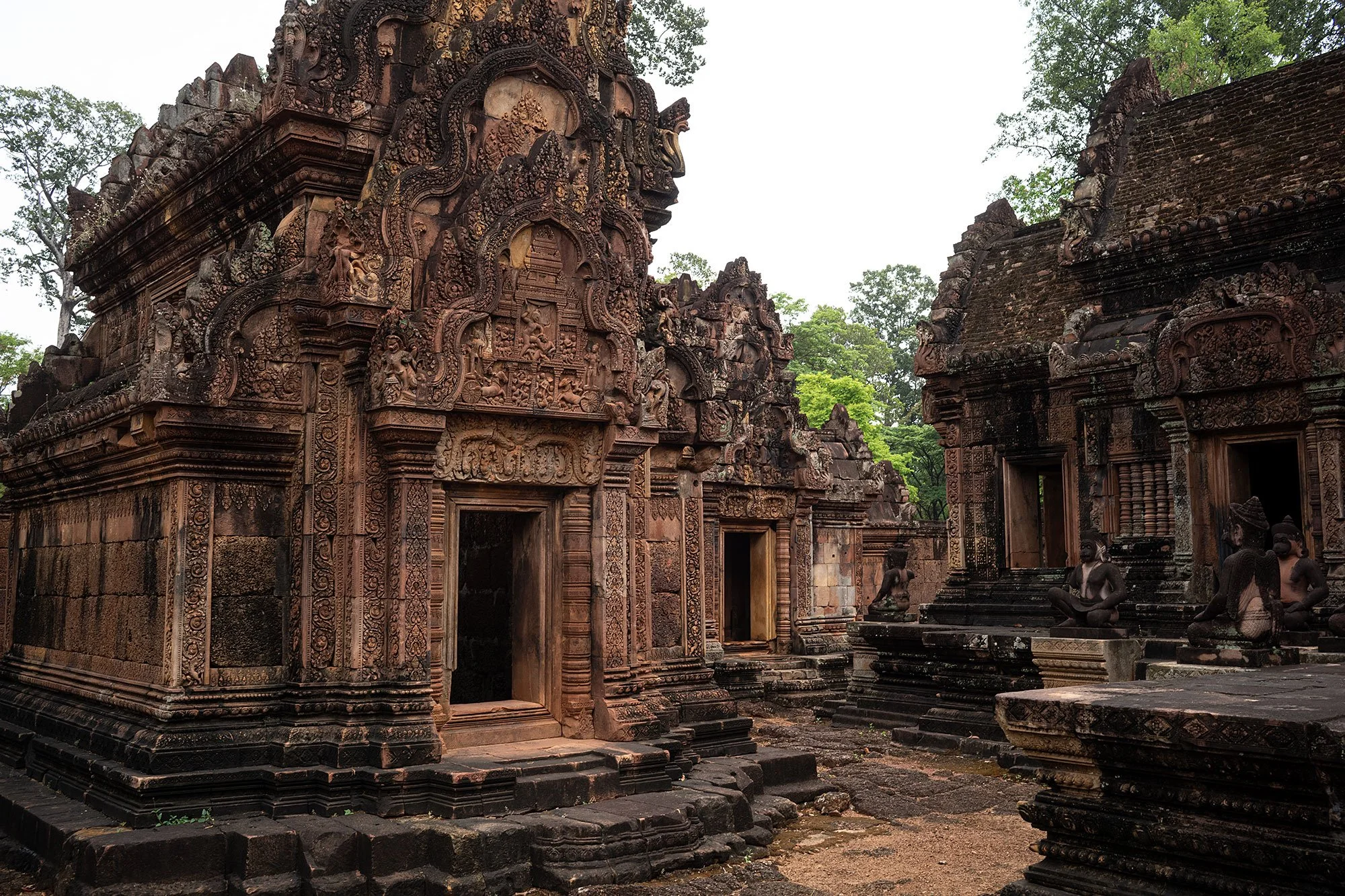
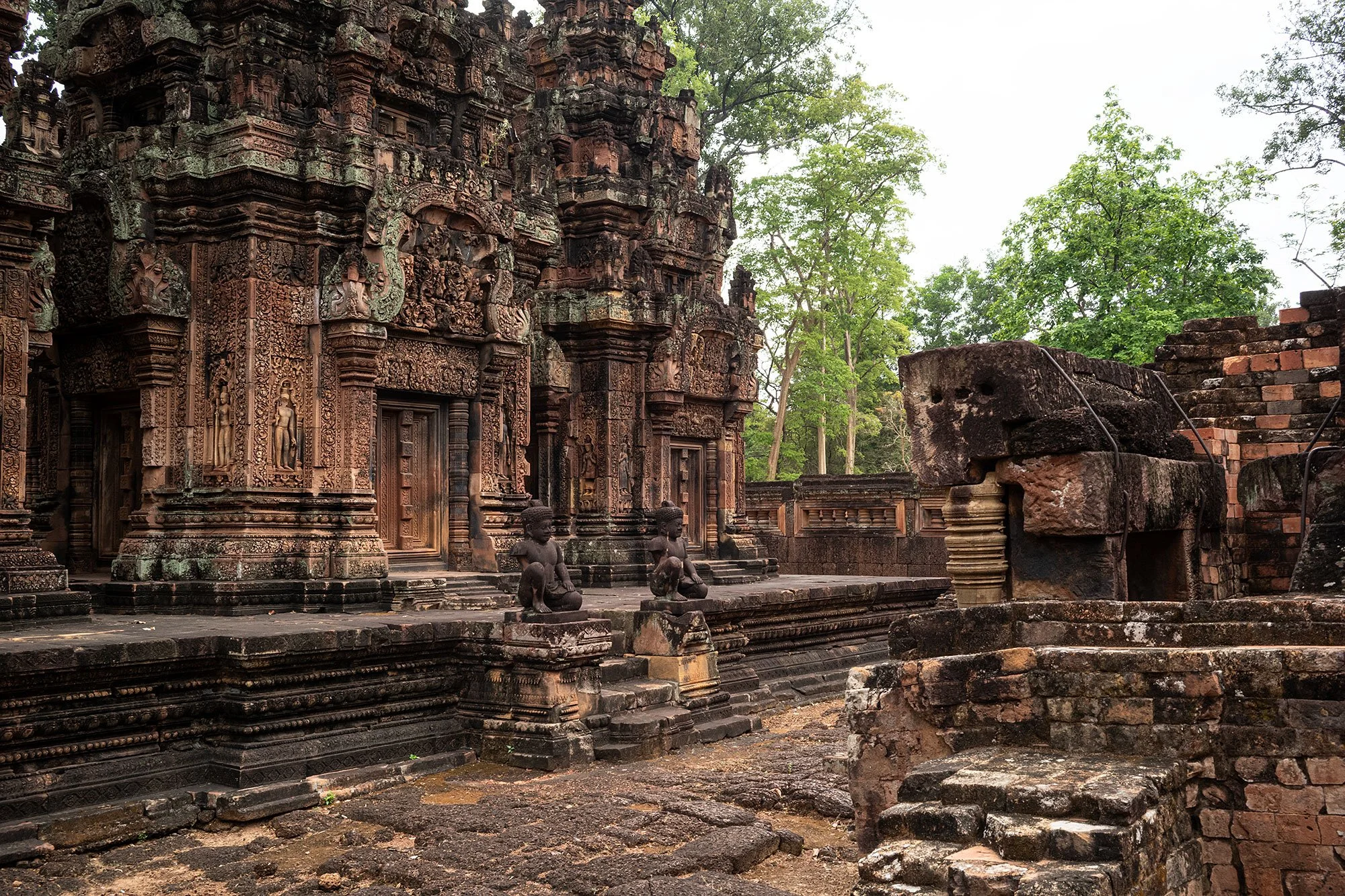
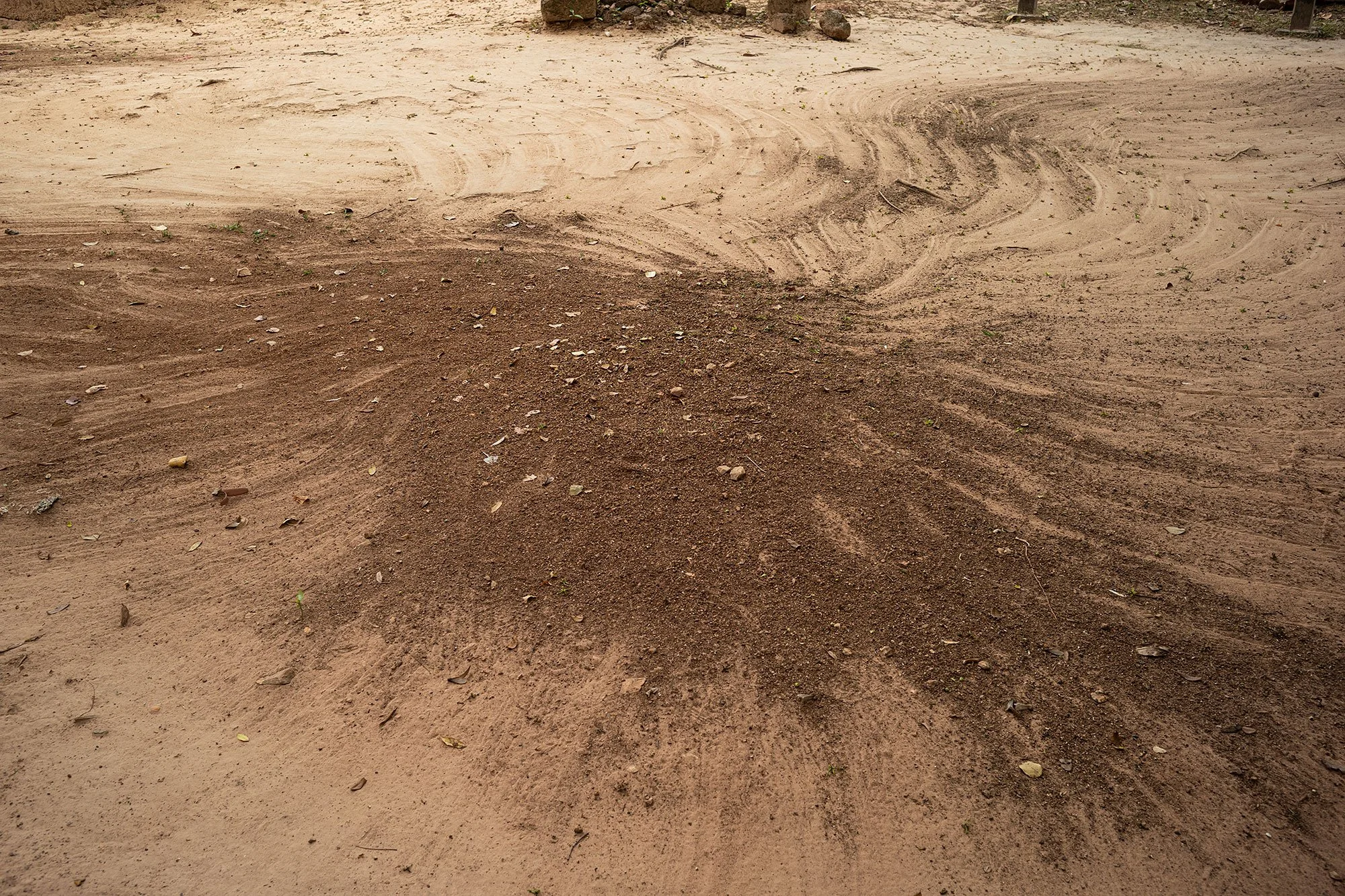
I join the group towards the rear of the temple where they’re resting by the trunk of a tree. The ground has been swept recently, and I love the patterns that have been made either intentionally or inadvertently.
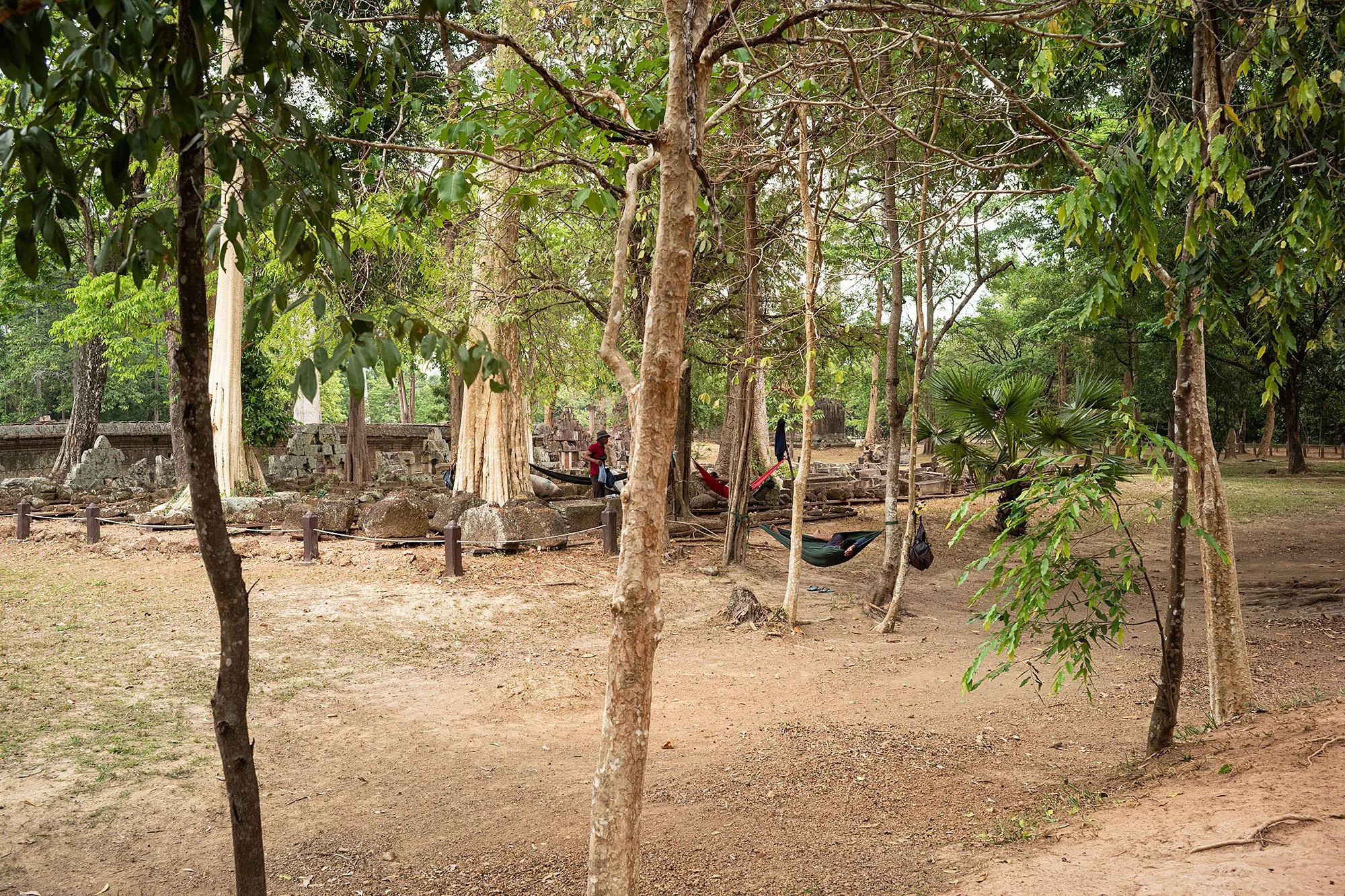
As we round the temple and walk back towards the entrance we pass a number of workers resting in hammocks slung up between the trees. It’s about half past noon, and the next stop on our tour is a nearby restaurant for lunch..
Lunch is a little disappointing, but only in comparison to the past two meals we’ve had, which have both been fantastic and have set a high bar. When Jimmy reappears he tells us that we have two temples left on our tour: Pre Rup and Banteay Kdei.
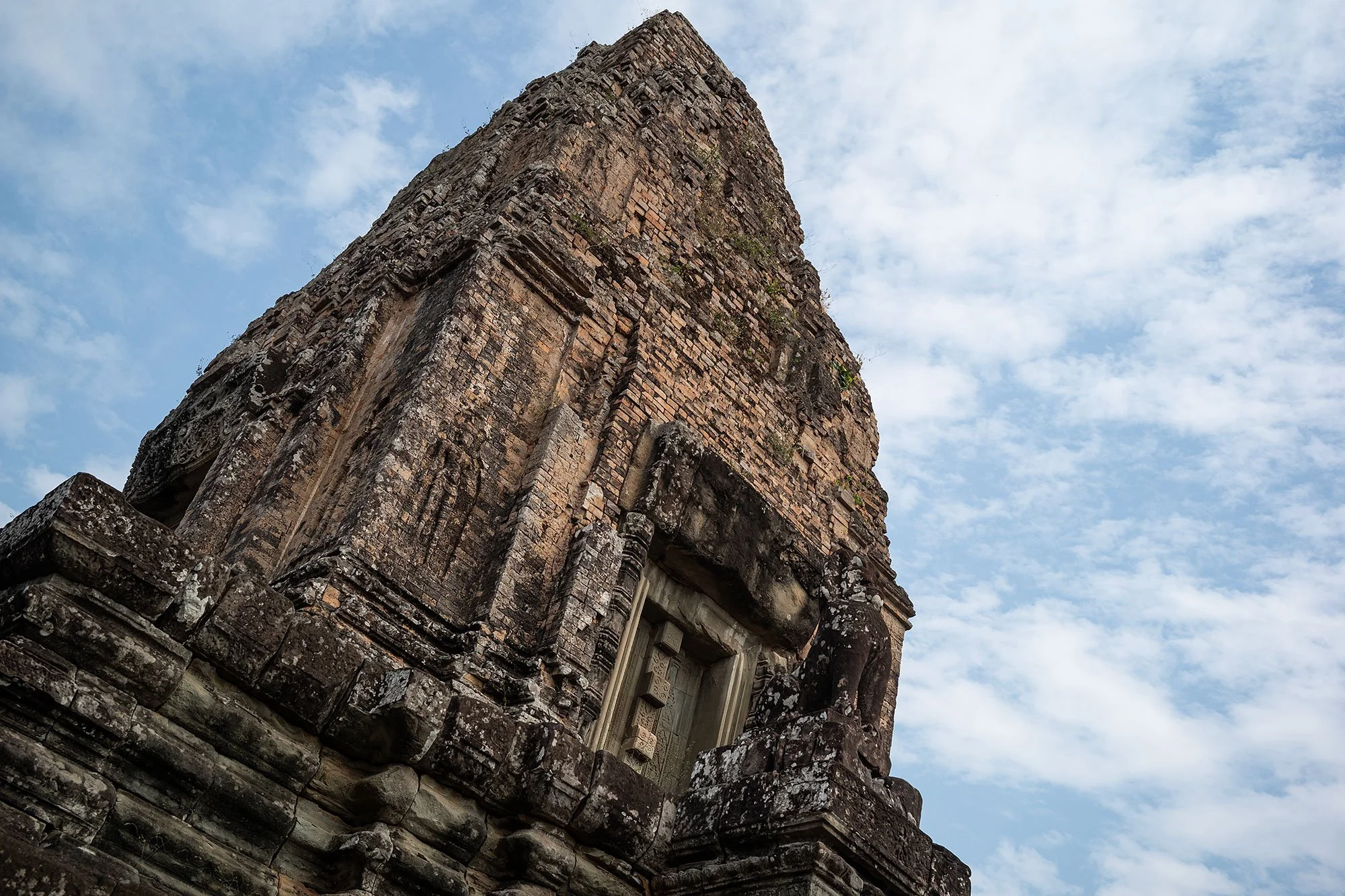
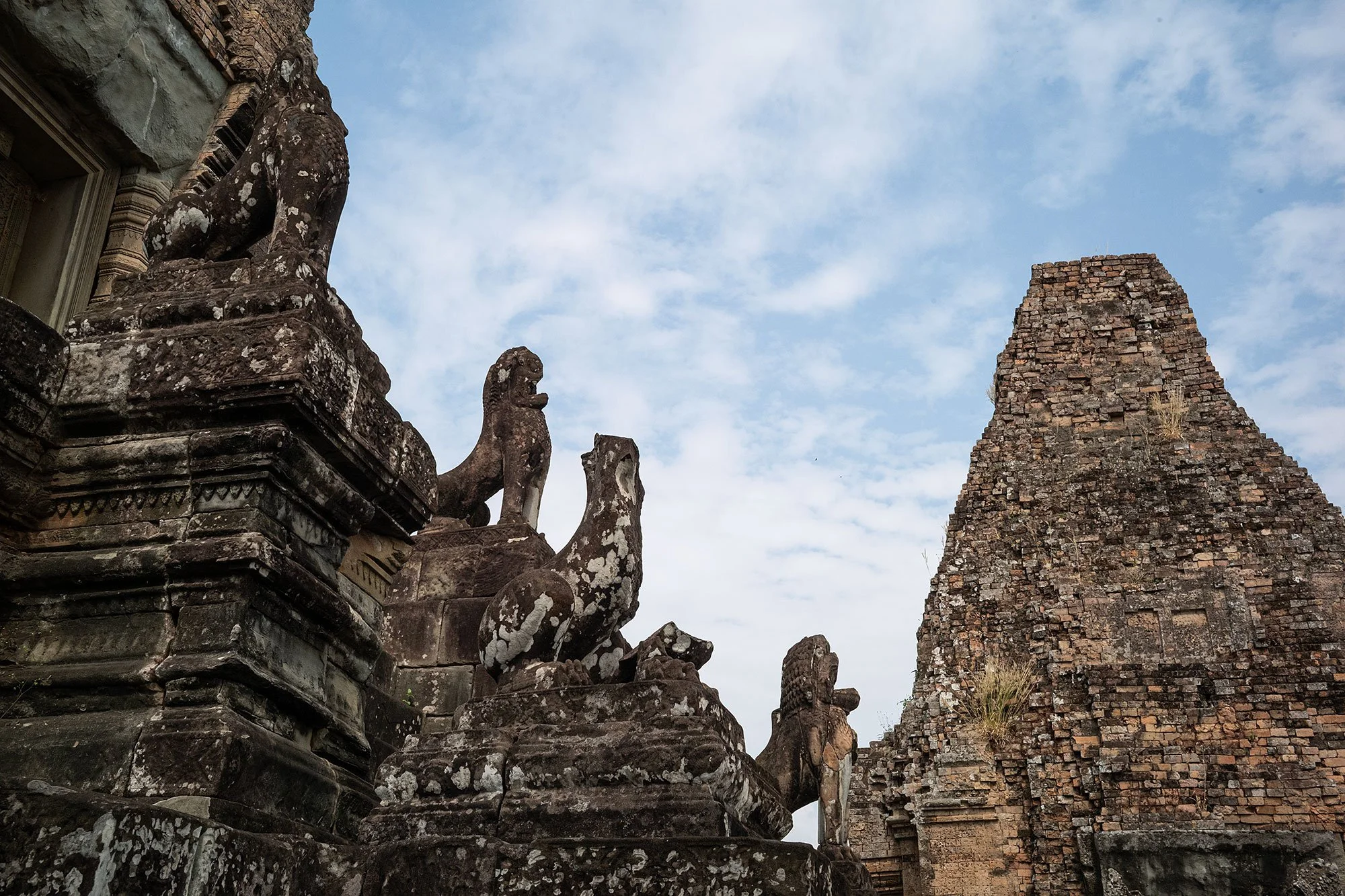
The former is a Hindu temple built as the state temple of King Rajendravarman dedicated in the early 960s. The relatively modern name means “turn the body,” referring to the common belief that funerals were conducted at the temple with the ashes of the body being rituatlly rotated in different directions as the service progressed.
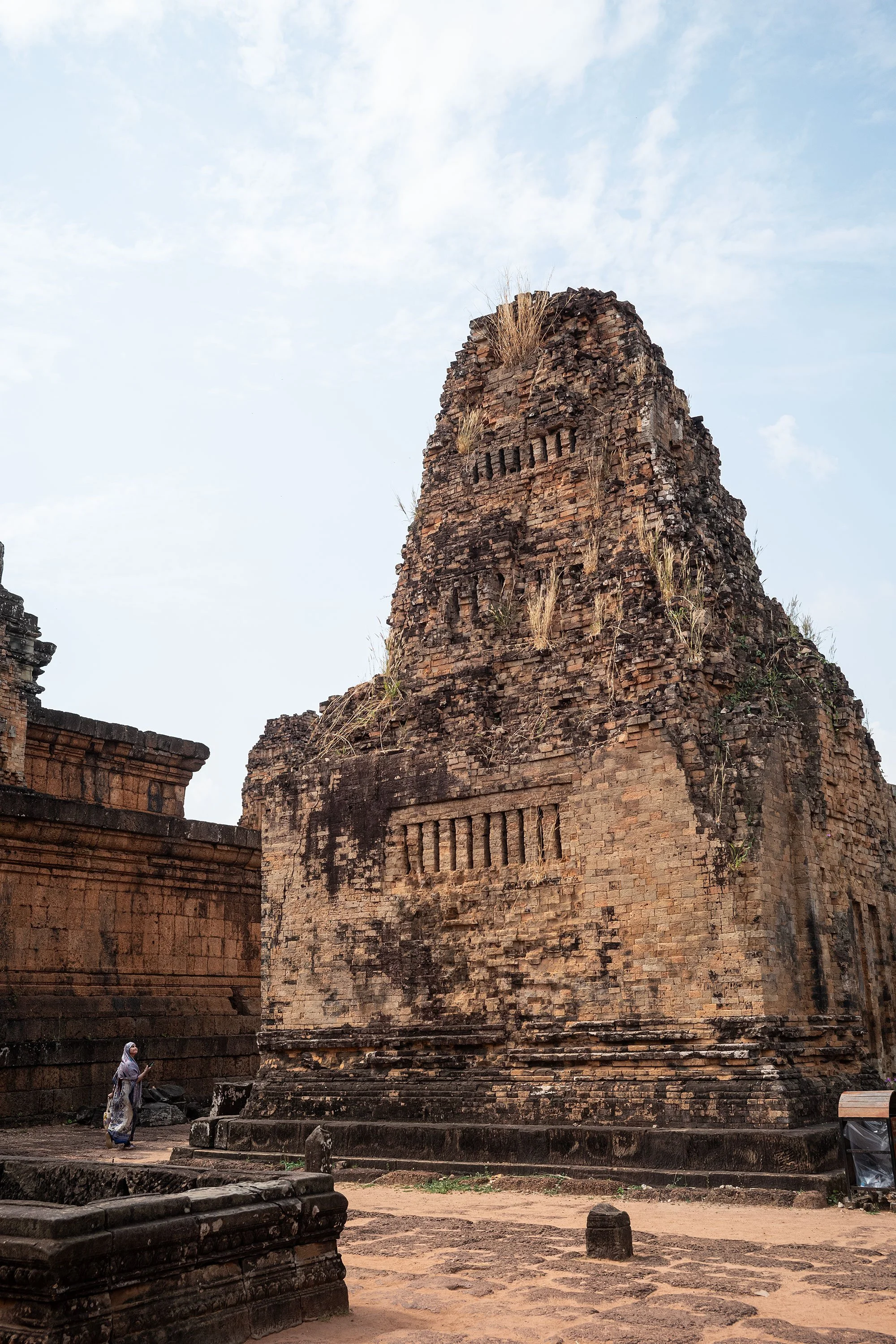
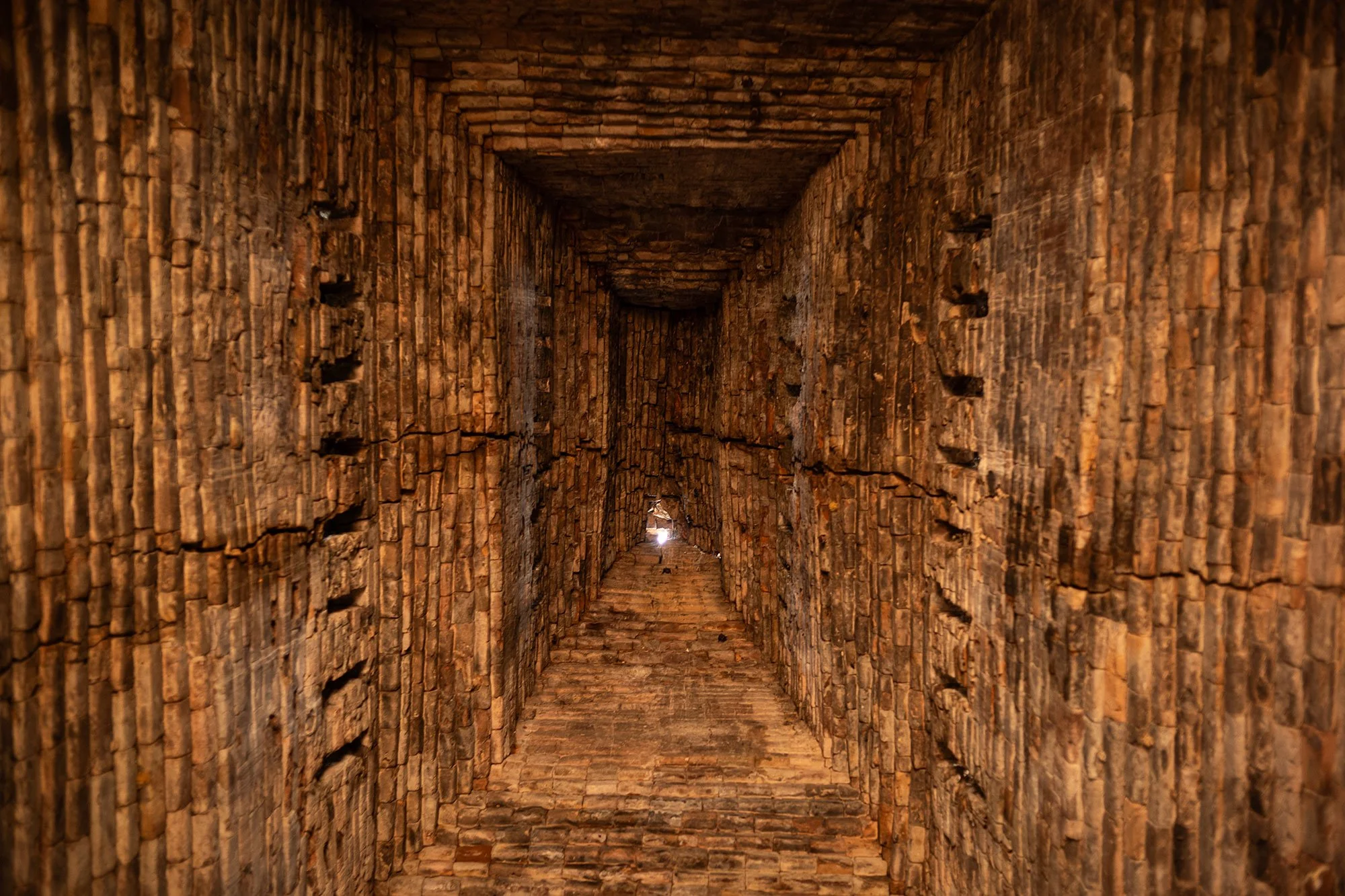
Indeed, Jimmy brings us first to one of the chimney-like towers and has us look up to the opening that lets in the sky and lets out smoke before leading us to the side of the temple where wooden stairs have been set up to facilitate access to the upper platforms. On arriving we’d seen people climbing straight up the original stone steps.
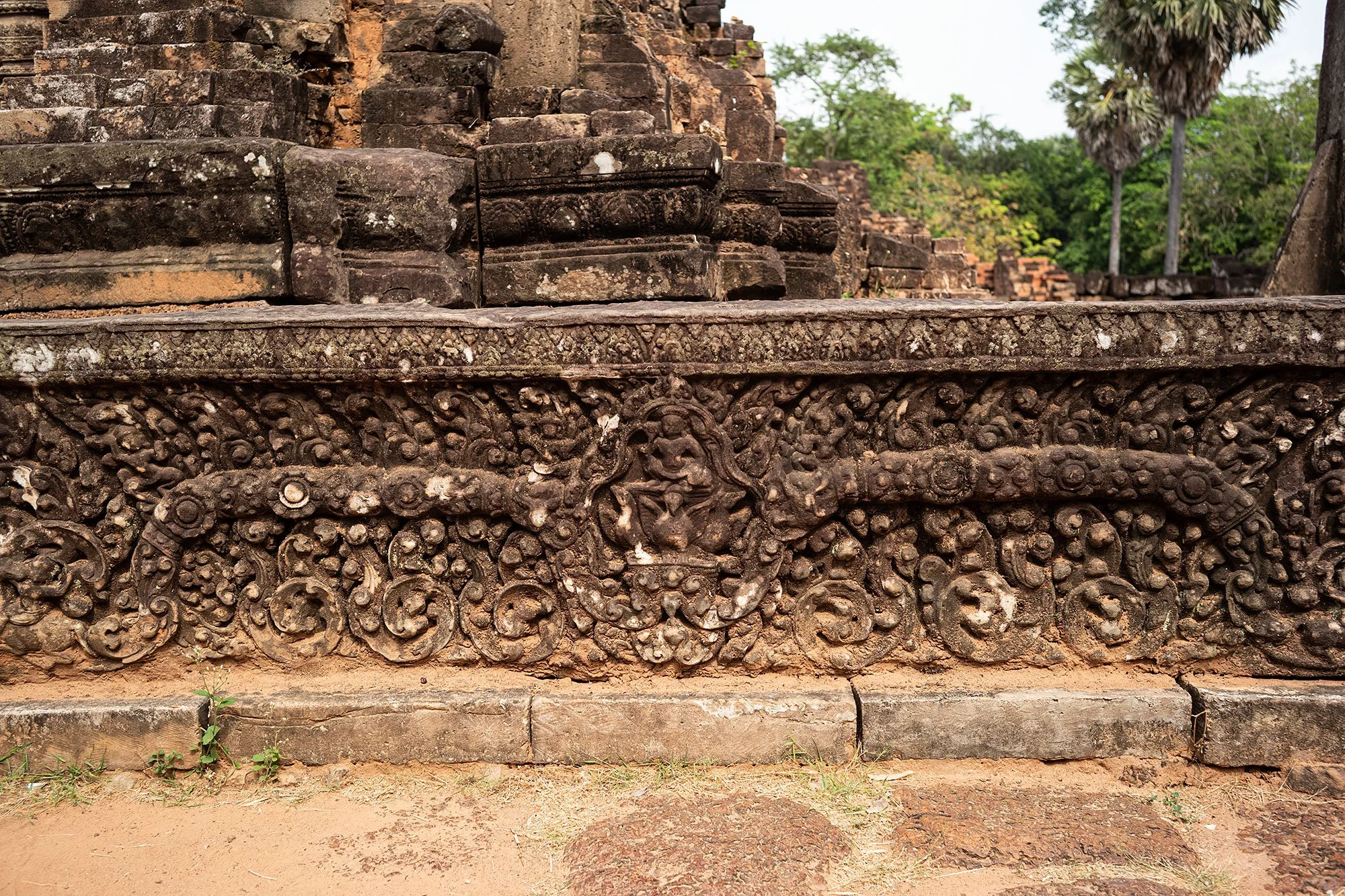
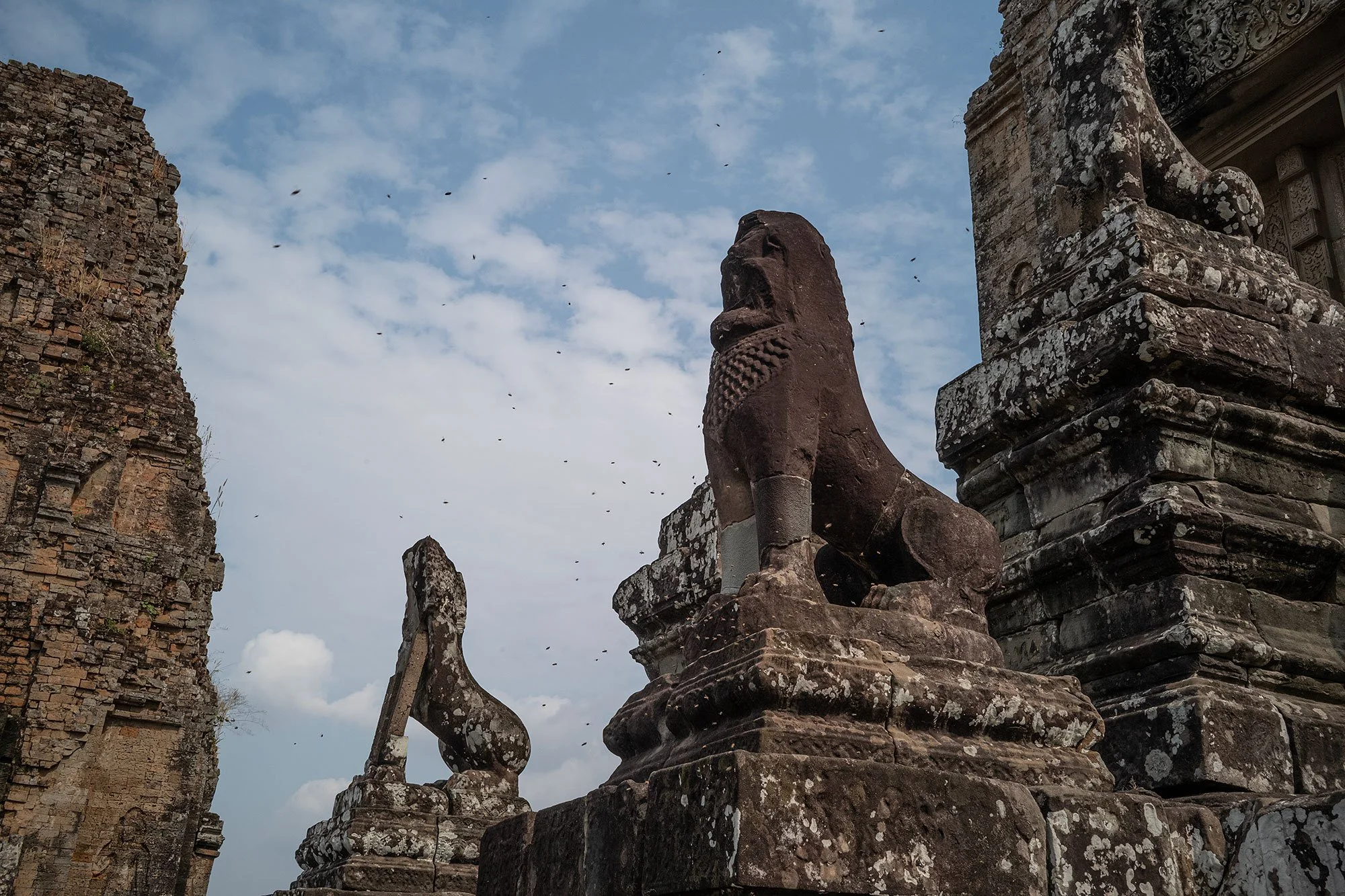
Passing one of the defaced lions I spot a swarm of insects. They’re bees, I’m told. It’s an impresive number, and once they’ve been identified to me I keep a wide berth.
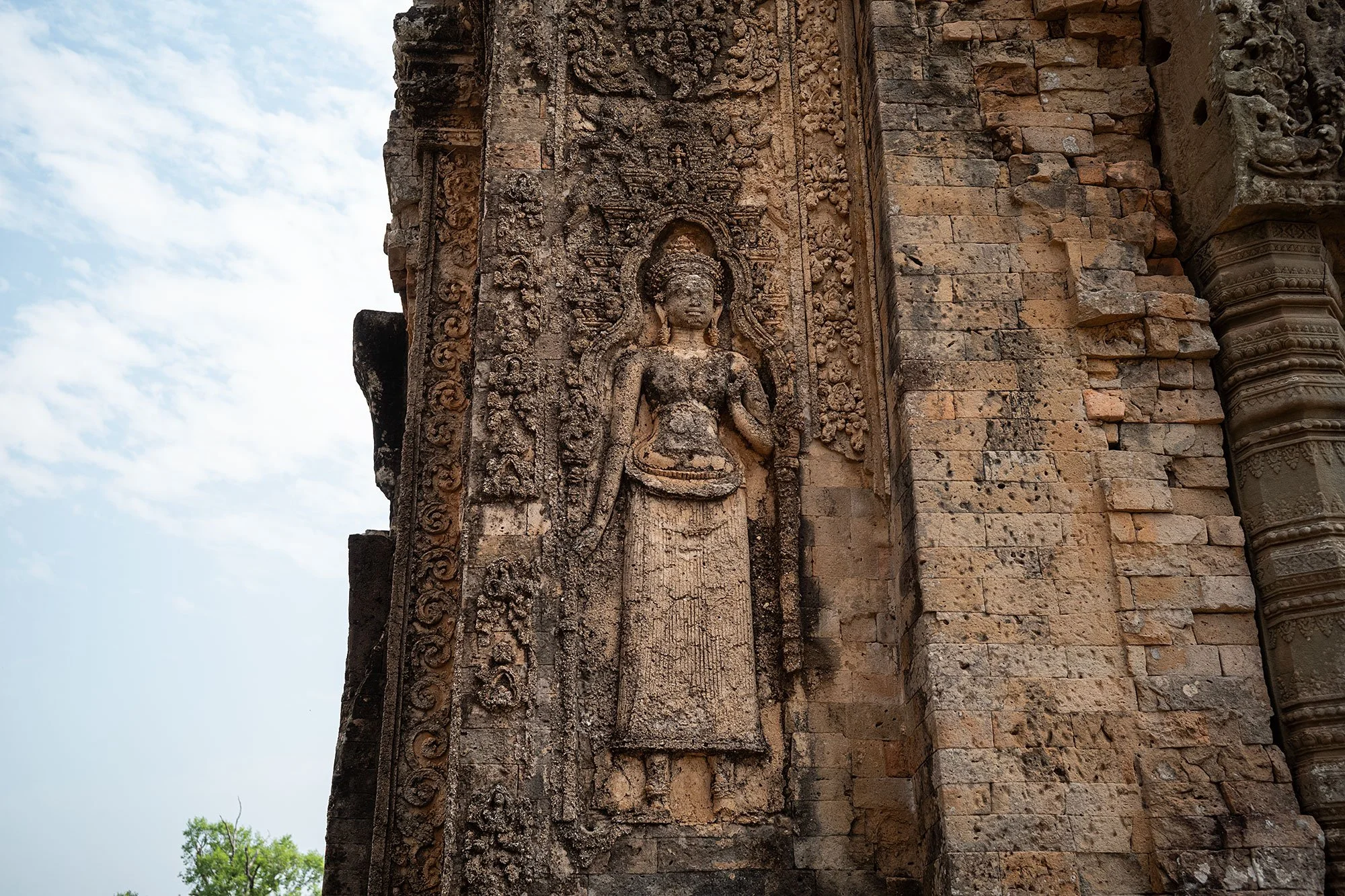
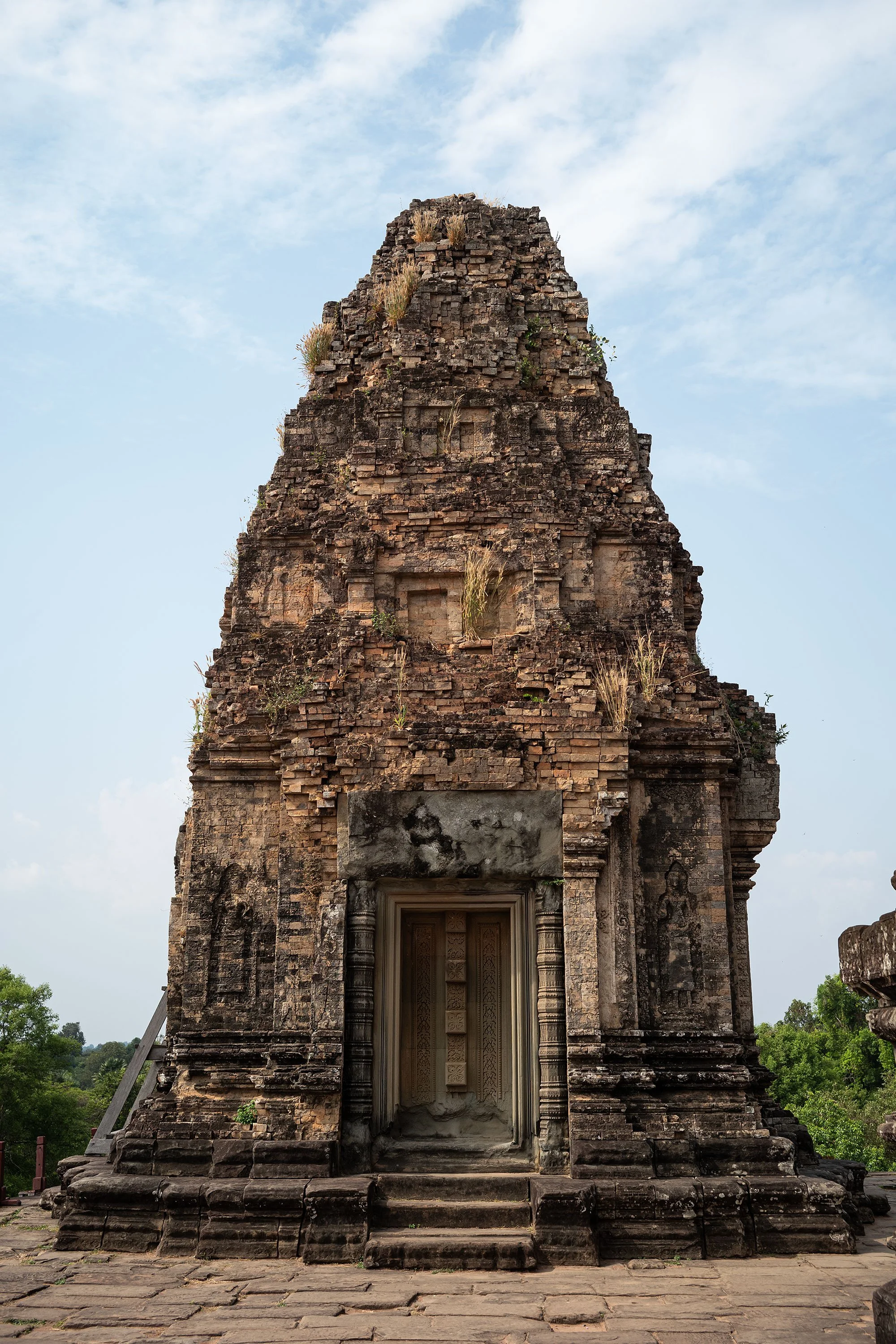
As we walk around the temple I remember once watching the sunset from its upper platform, though in 2000 I also remember all of the sunsets ending up with the sun disappearing behind a layer of clouds.
Jimmy asks us if we’d like to climb down using the original stone steps and we take him up on the offer. They’re steep, though wide, and while we take our time it’s not too difficult or scary.
Sreang once again hands us cold towels and cold bottles of water before he climbs into the driver’s seat to take us to our last temple.
Known as a ‘Citadel of Monks’ cells,’ Banteay Kdei was built in the mid-12th to early 13th centuries AD during the reign of Jayavarman VII. It has a similar plan to Preah Khan, though it’s smaller and less complex. Two successive enclosure walls contain concentric galleries from which the towers emerge. And while it’s undergoing renovtion, it had been occupied by monks at various times until the 1960s.
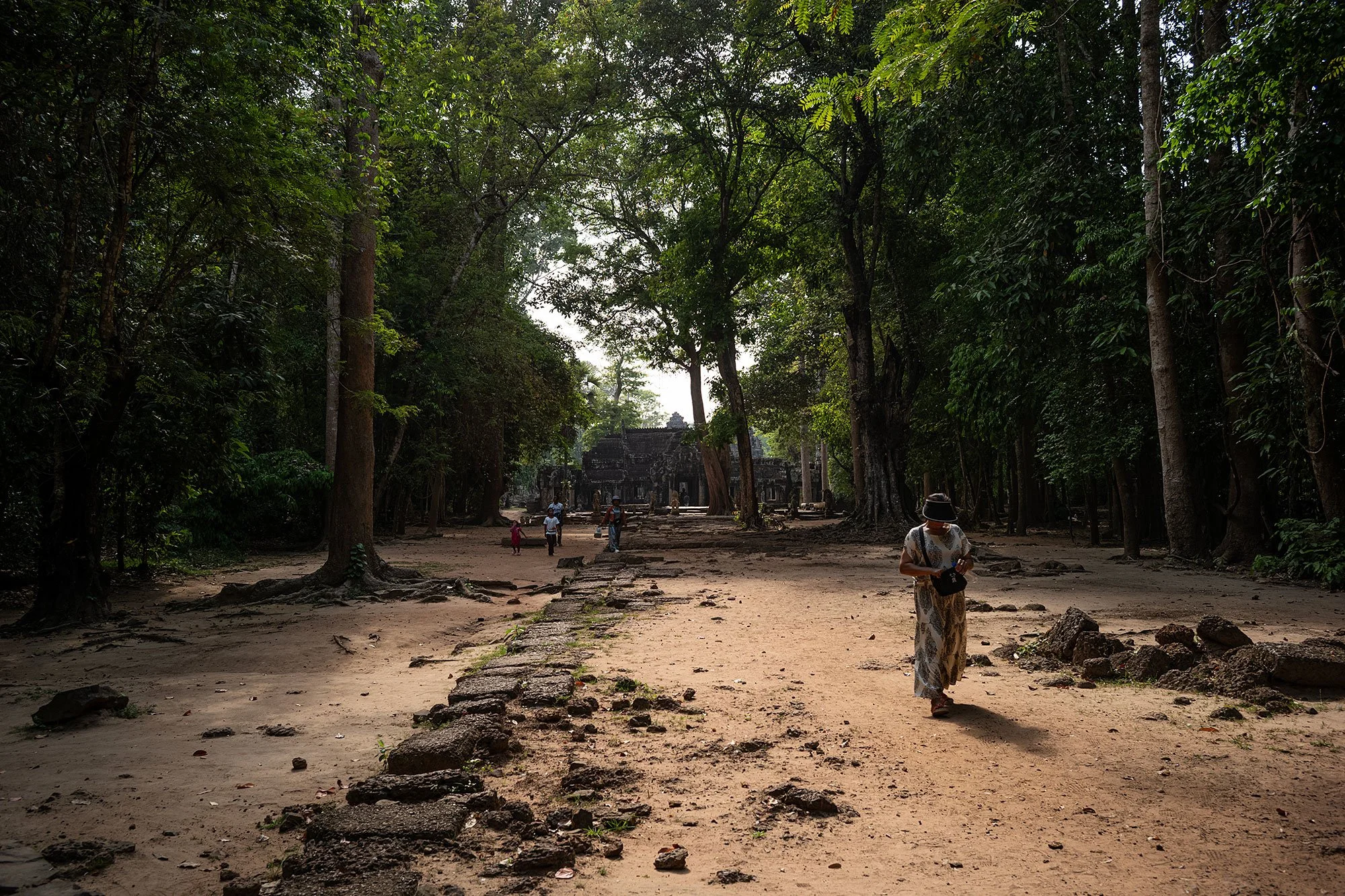
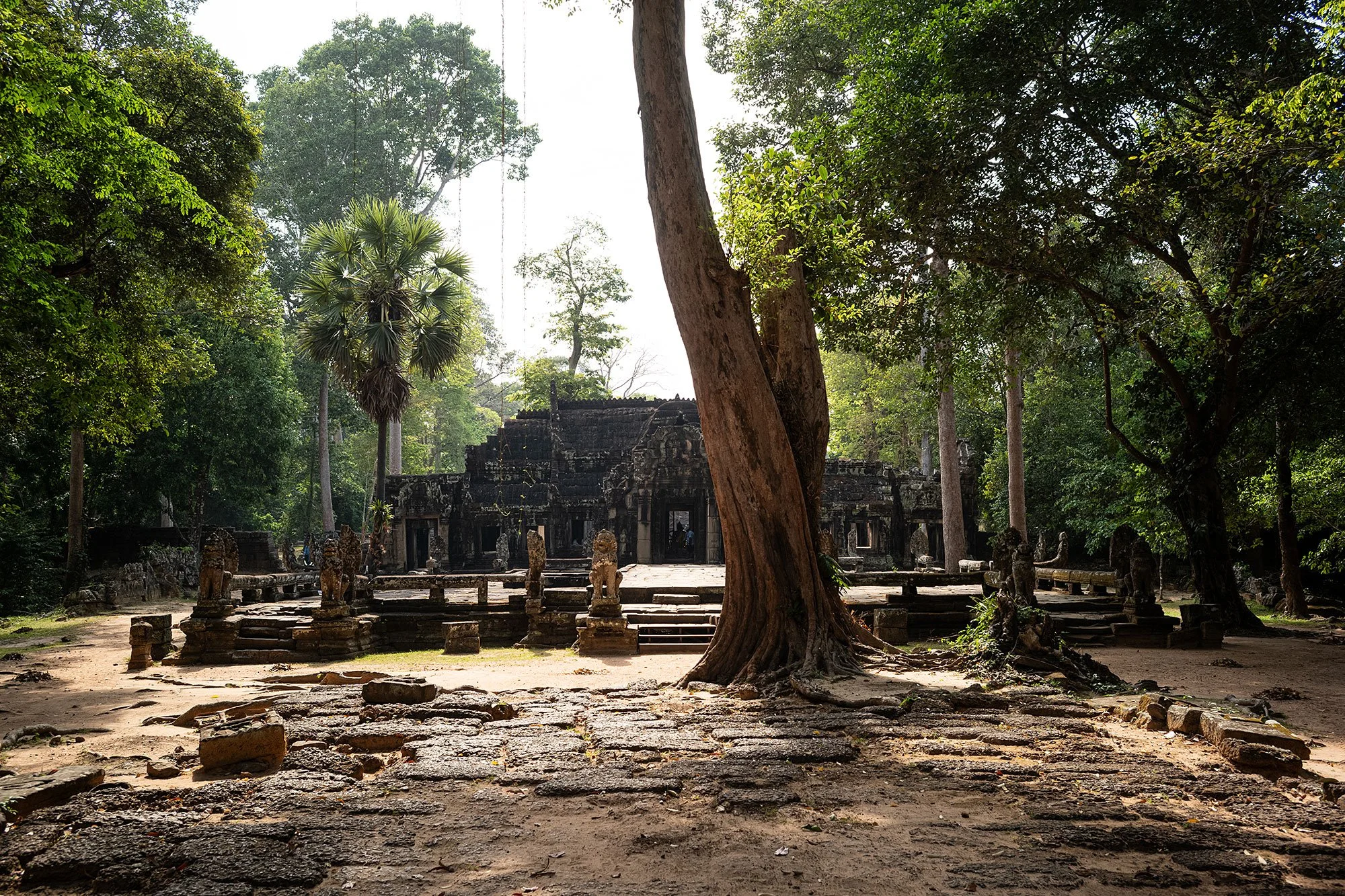
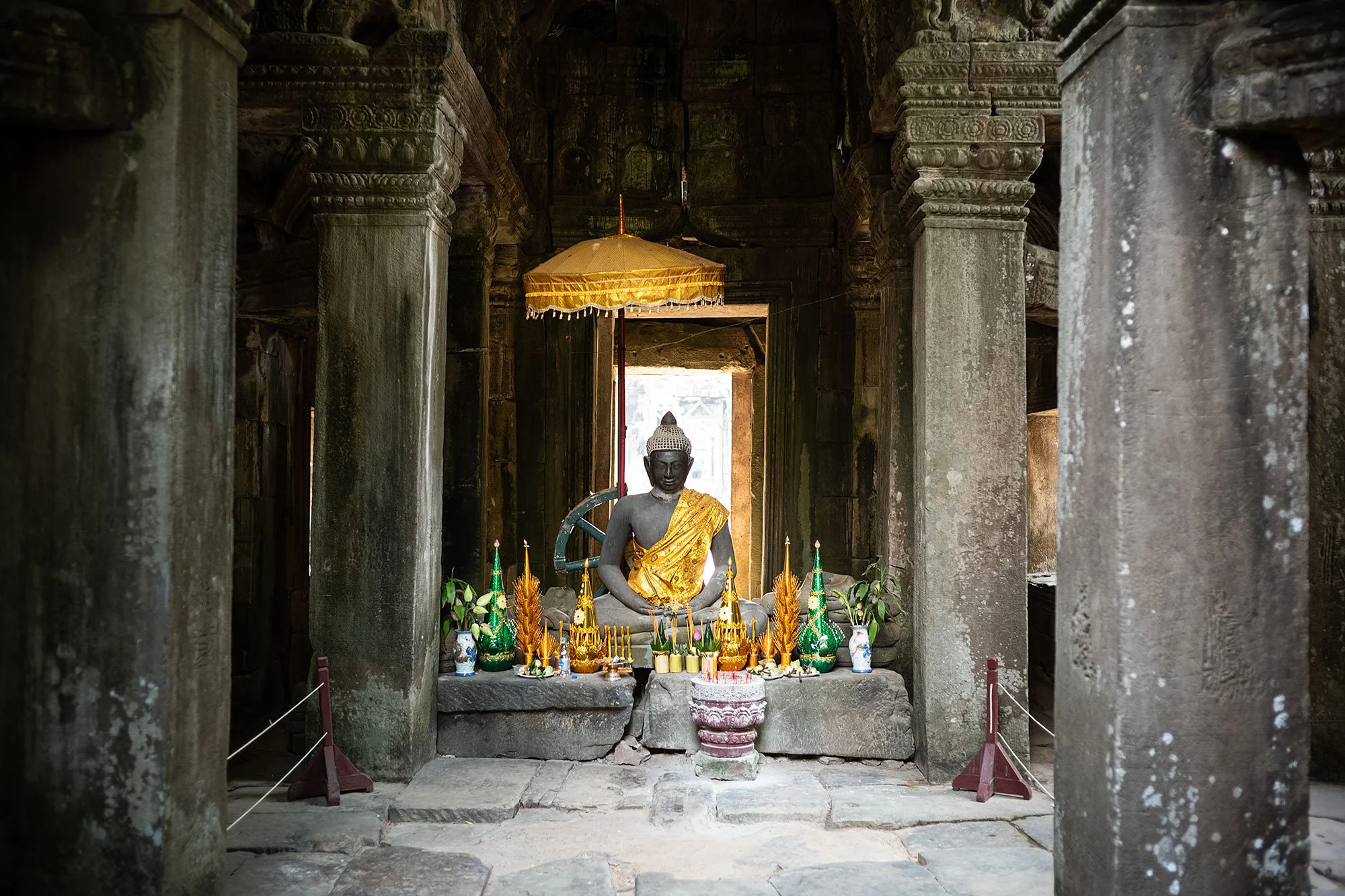
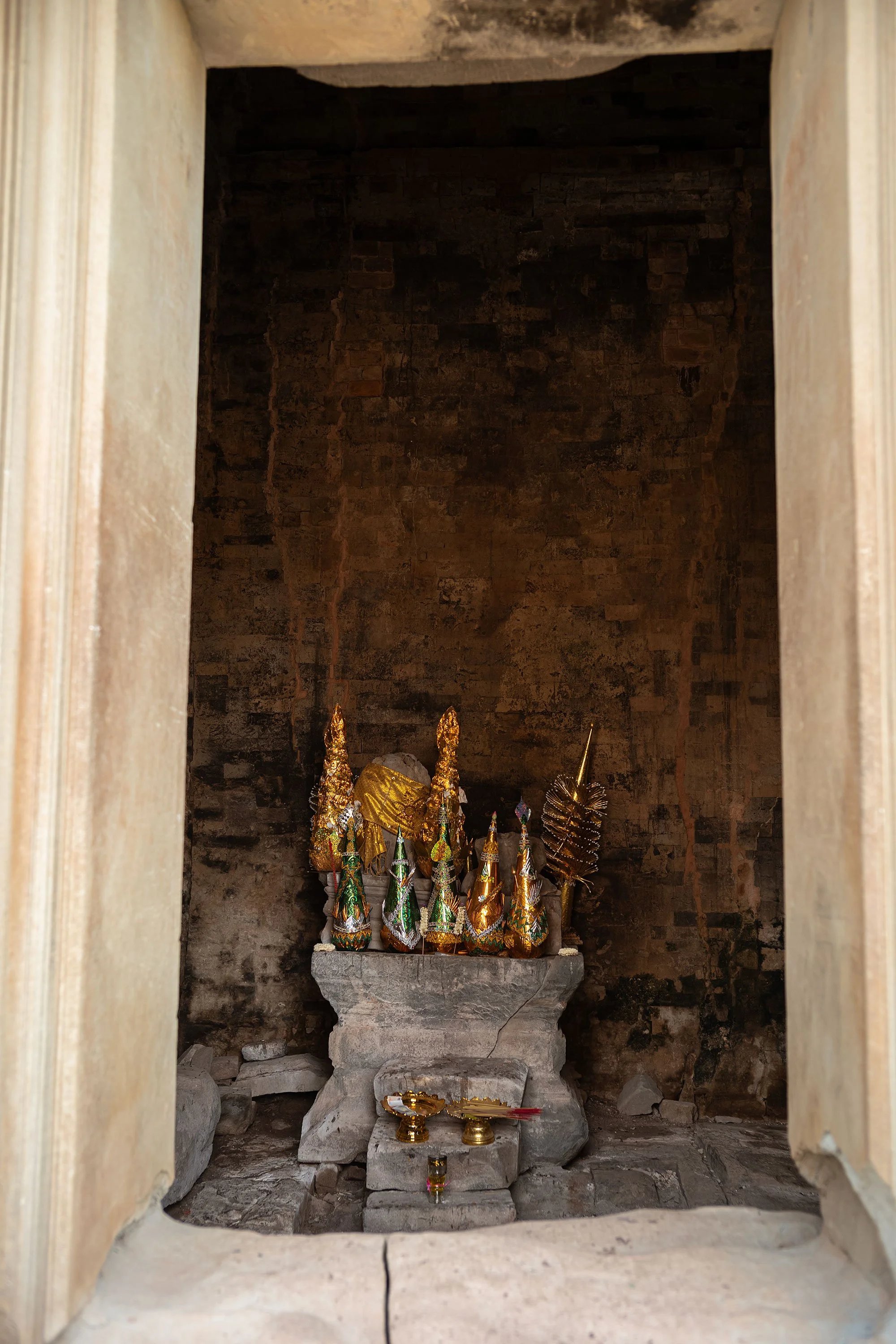
We approach the temple following a broken laterite causeway. A Buddha statue sits in one of the chambers, a testament to its continued use as a place of worship.
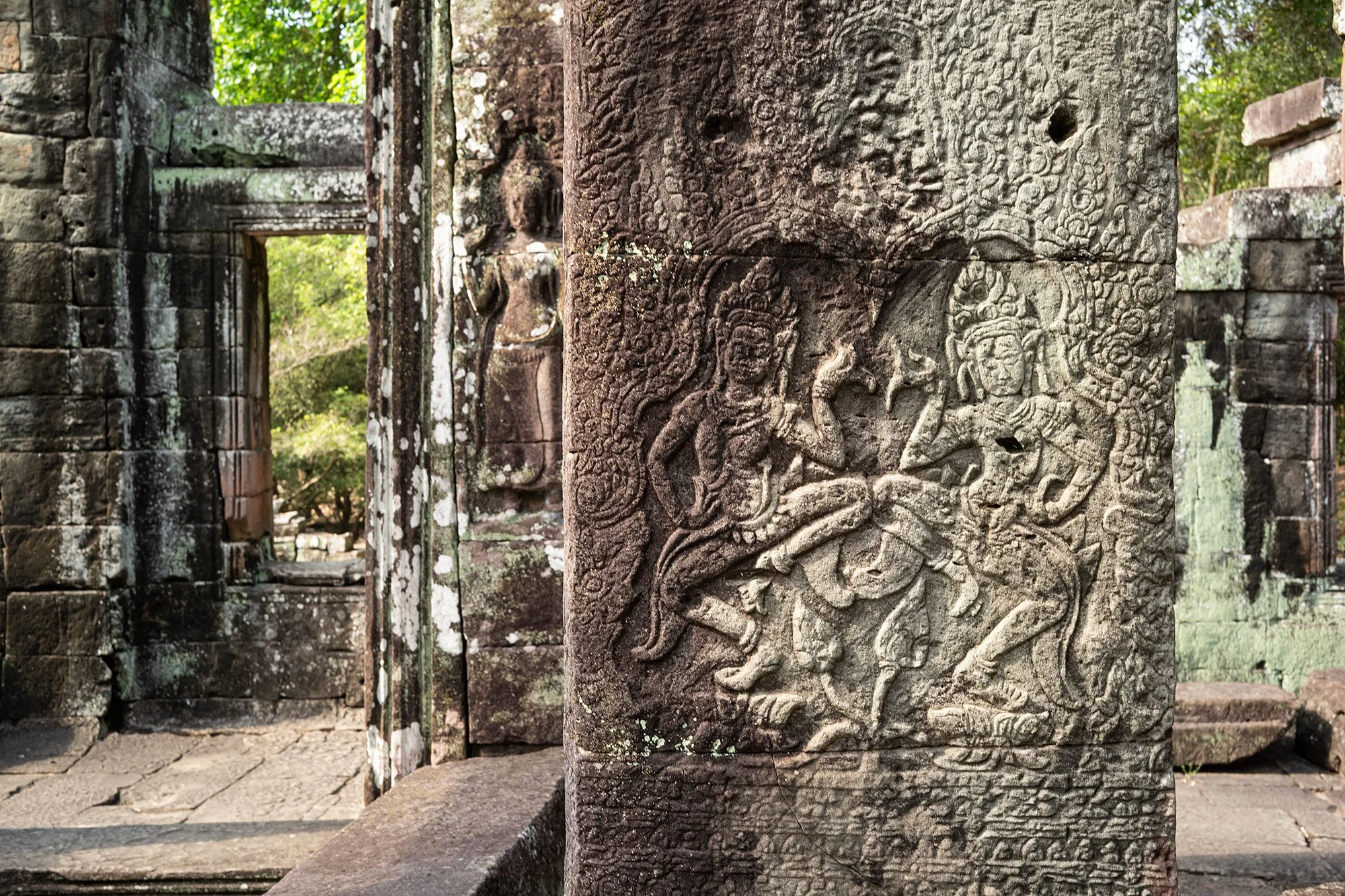
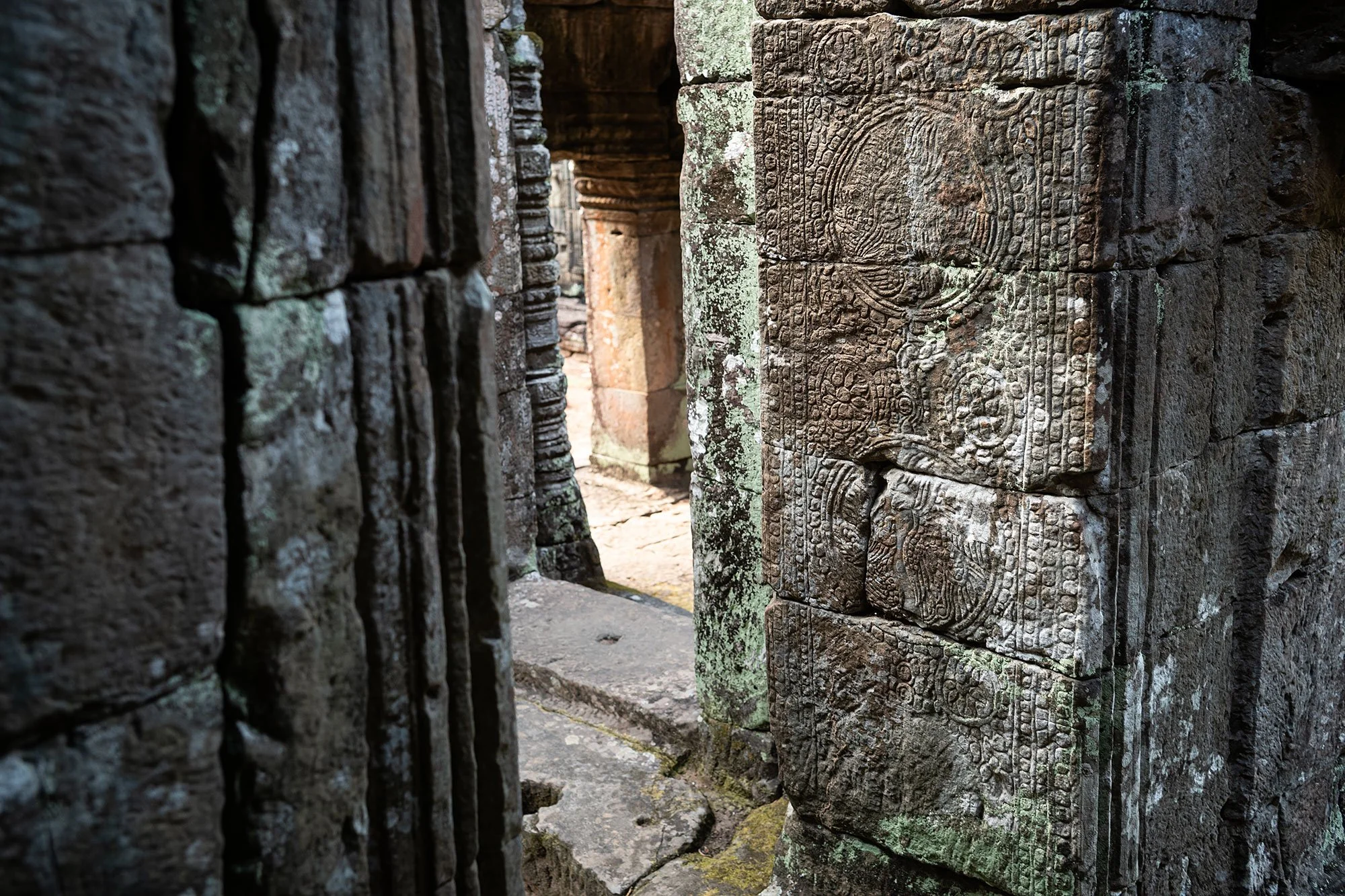
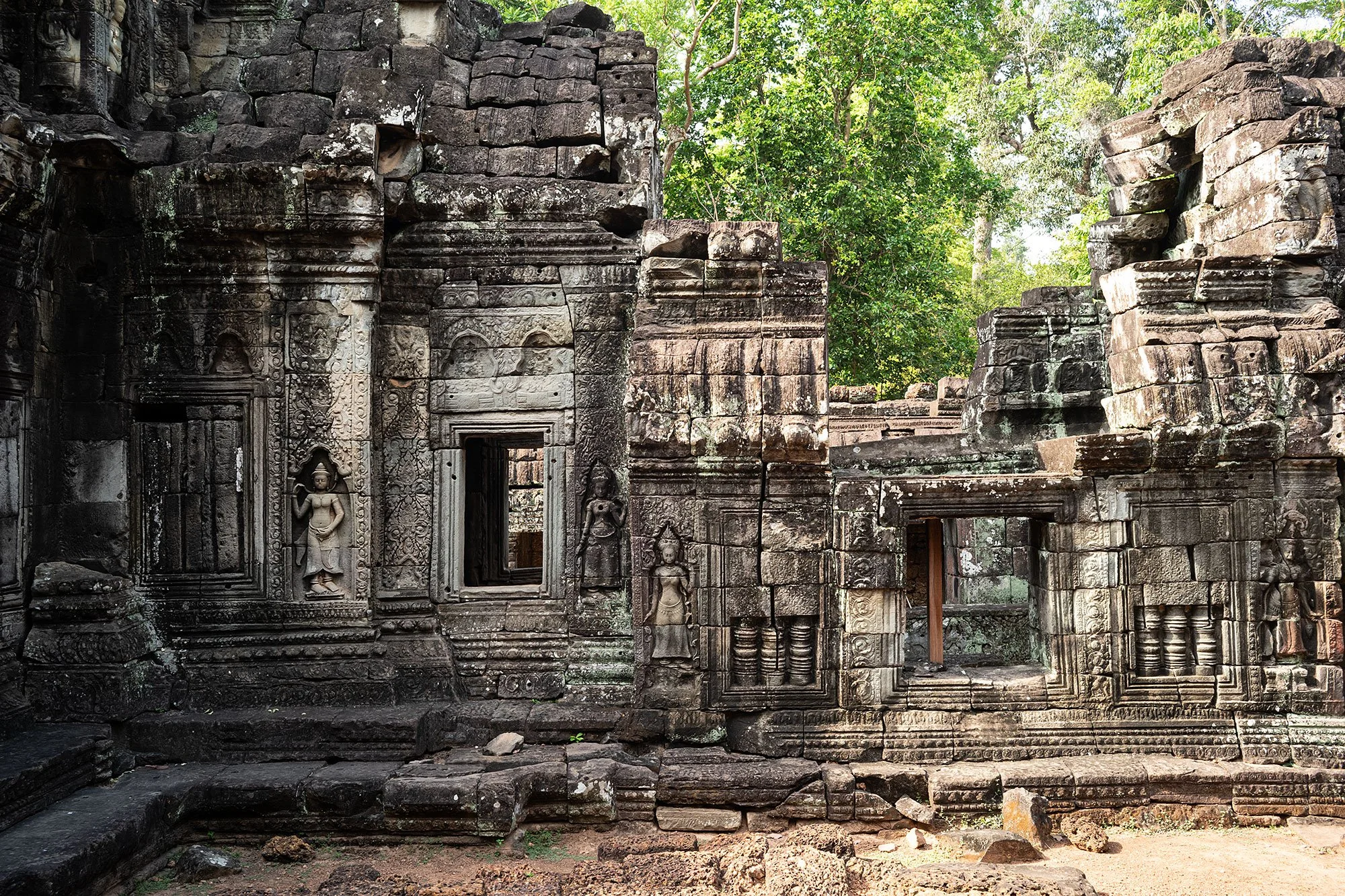
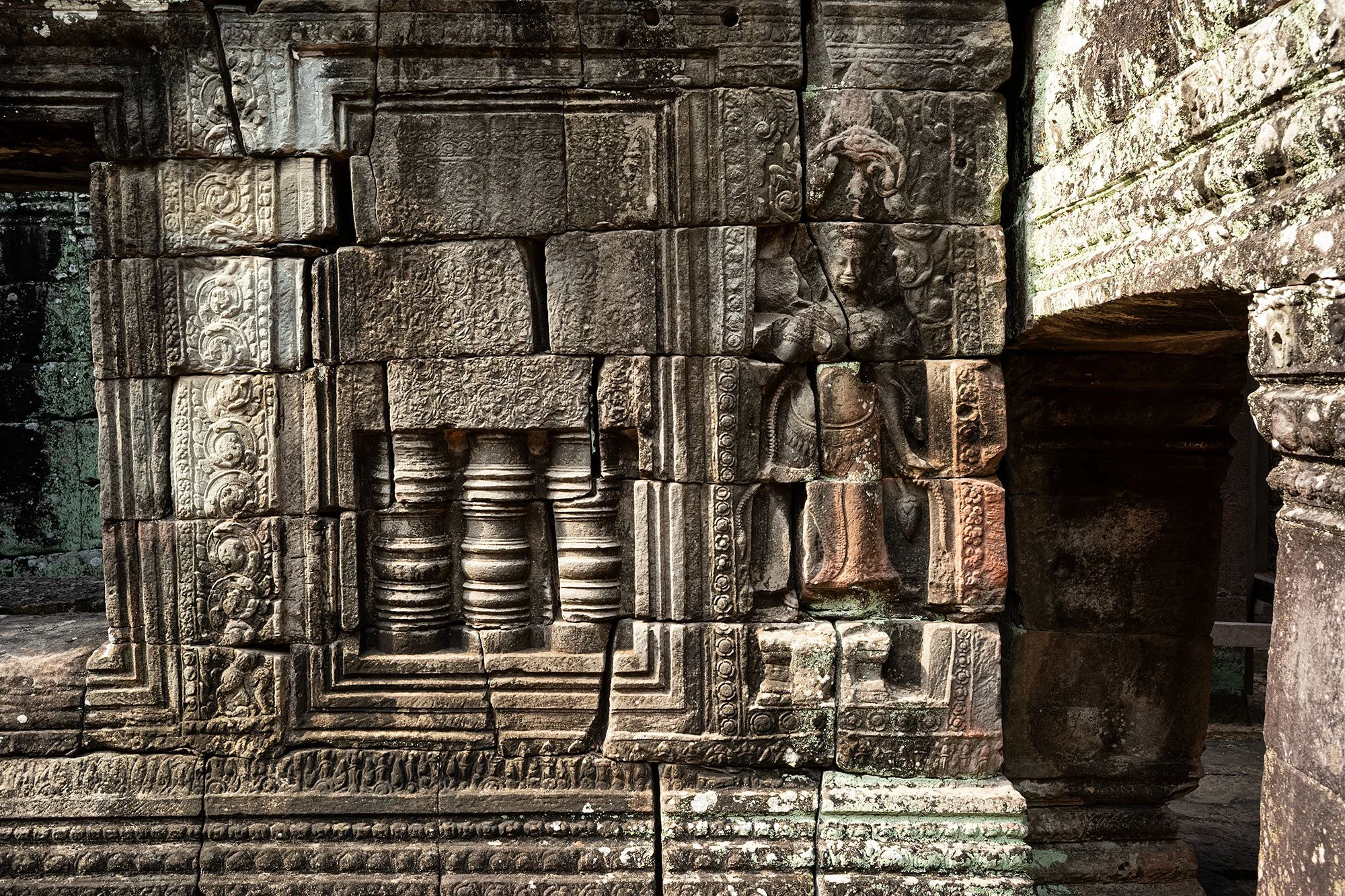
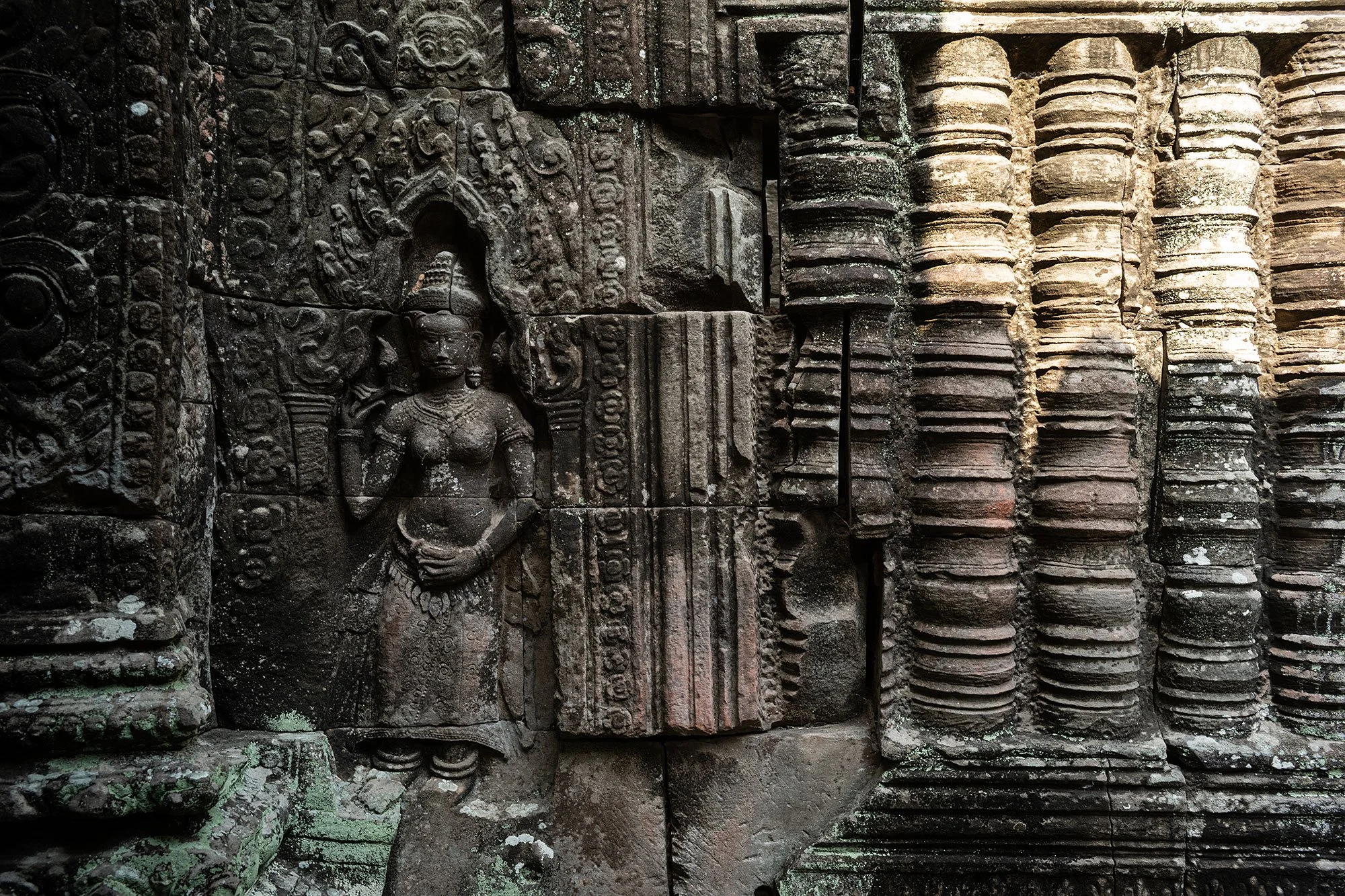
As Jimmy leads my cousins through the temple I wander off on my own to capture its details, climbing through doors and over fallen bricks in order to get closer to the apsaras and false windows. It’s been great revisiting the temples and rephotographing them and I wonder how many of the shots I am taking now are the same as I took twenty-six years ago.
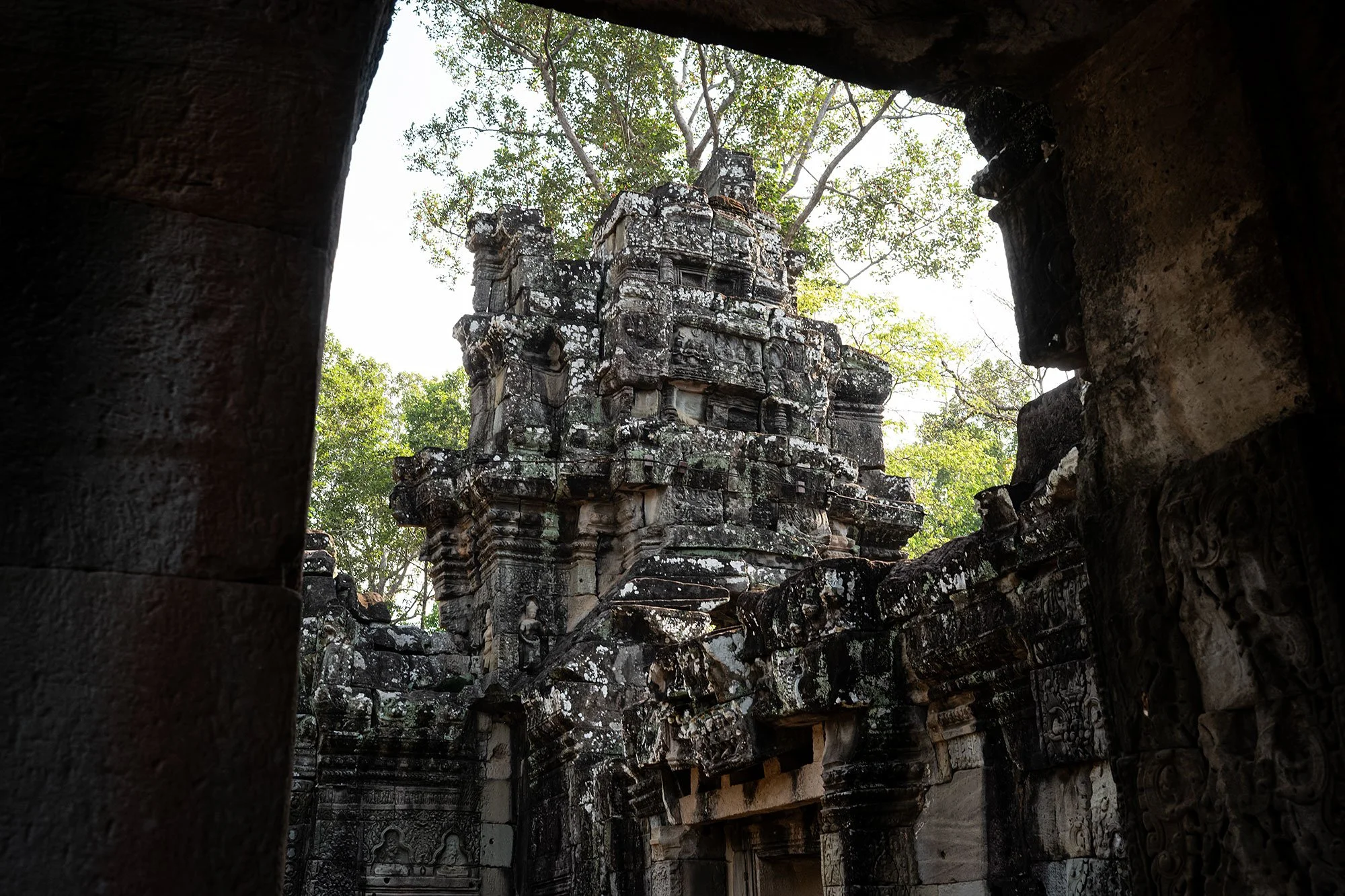
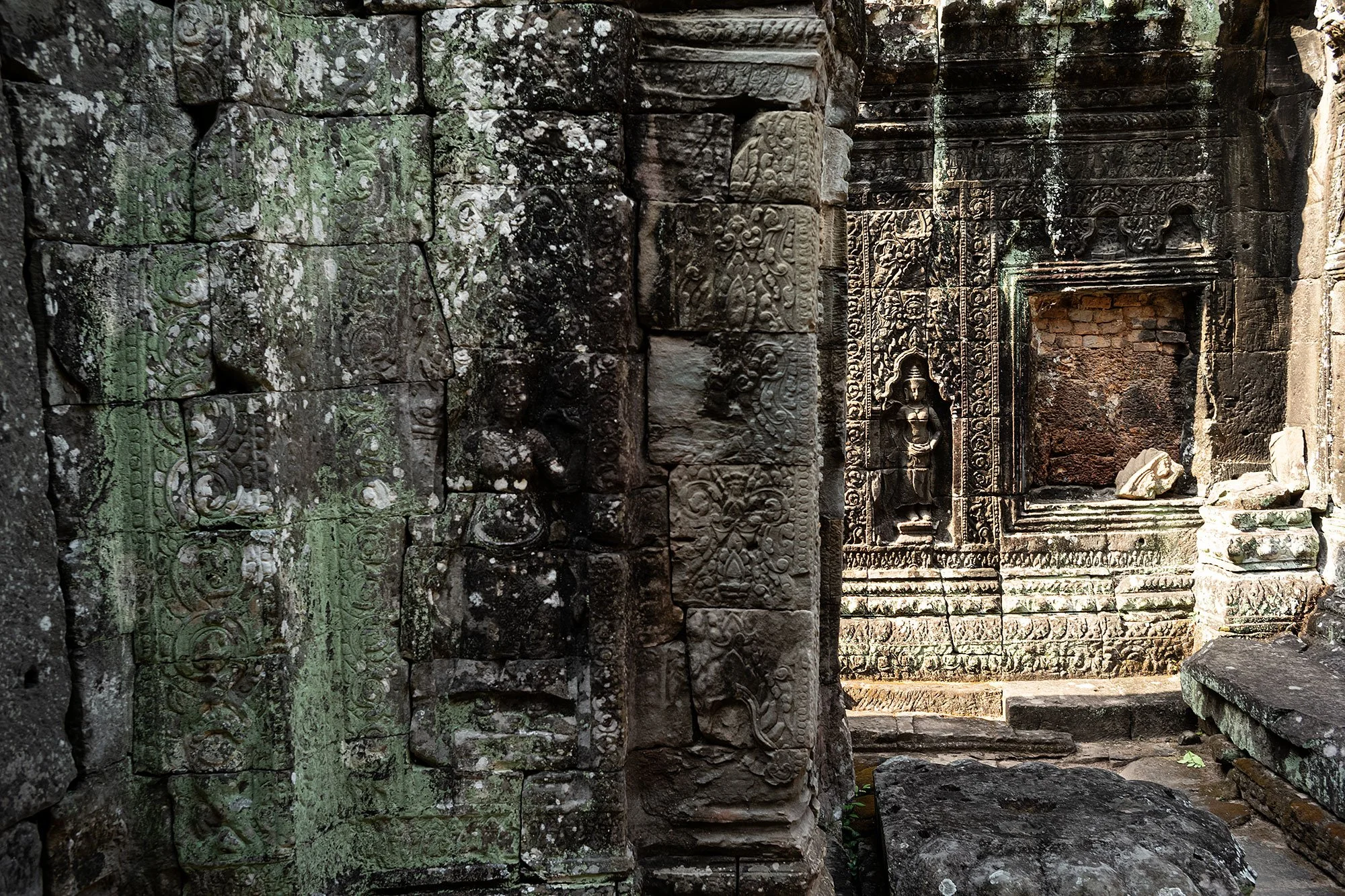
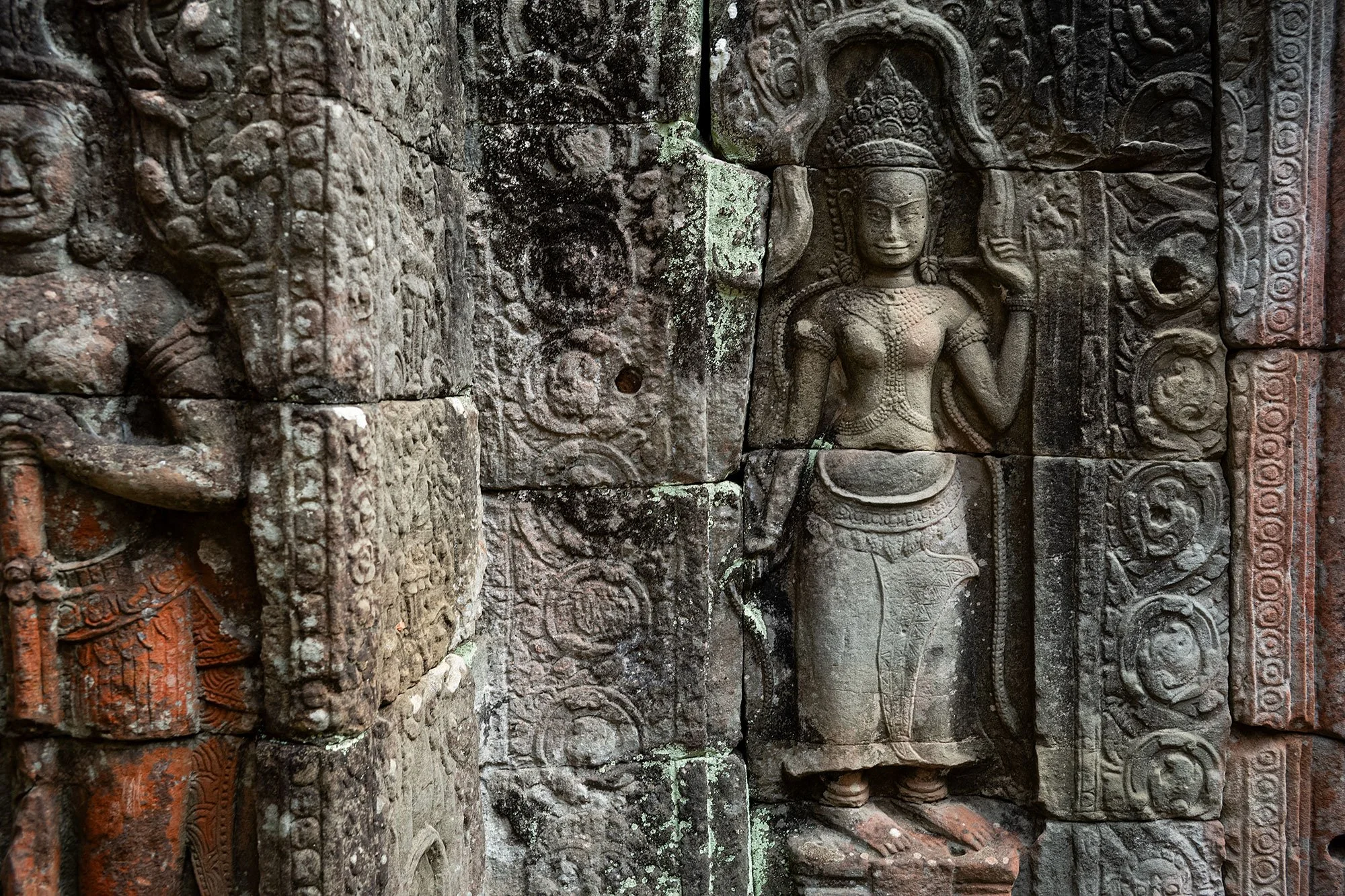
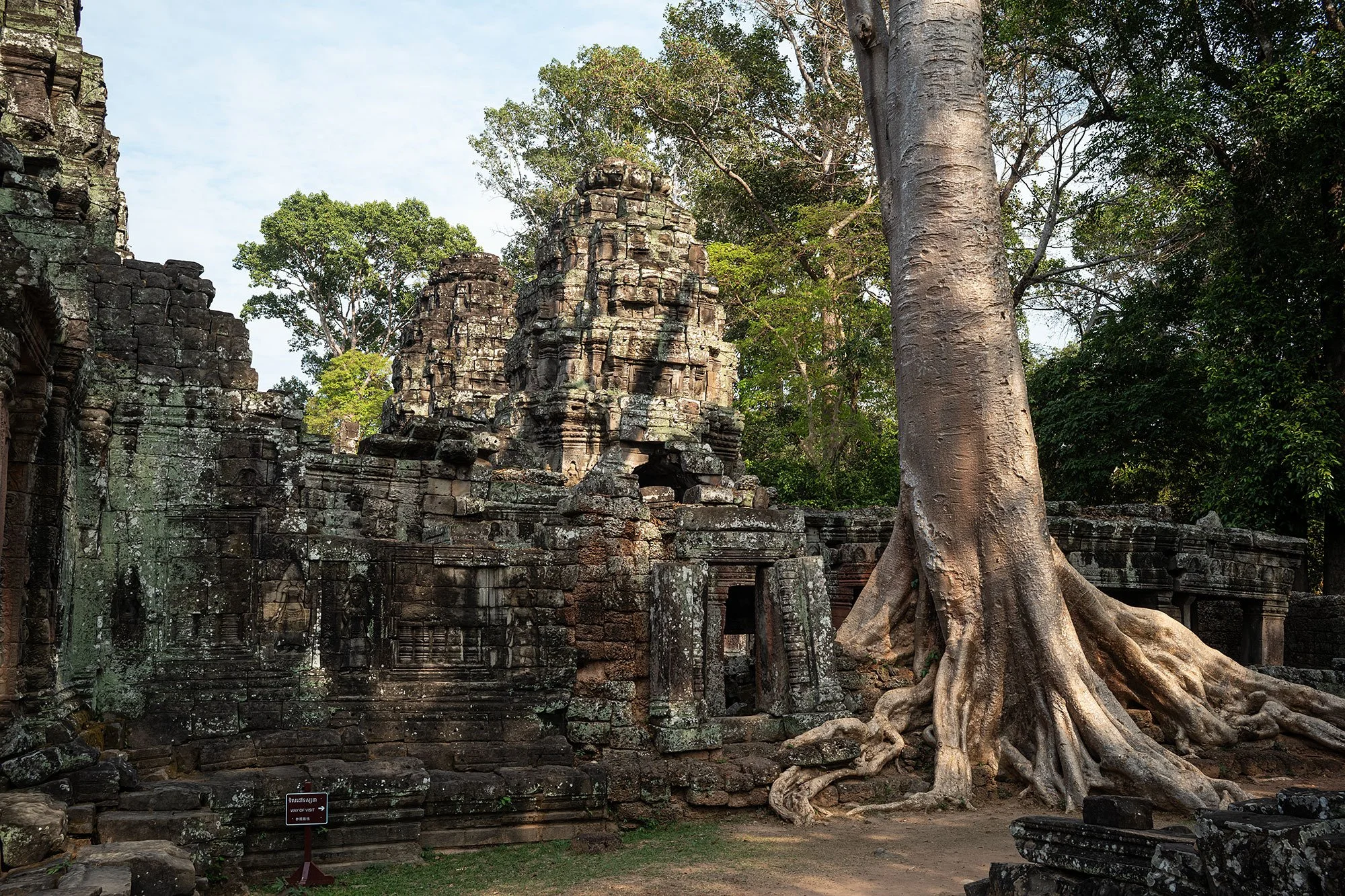
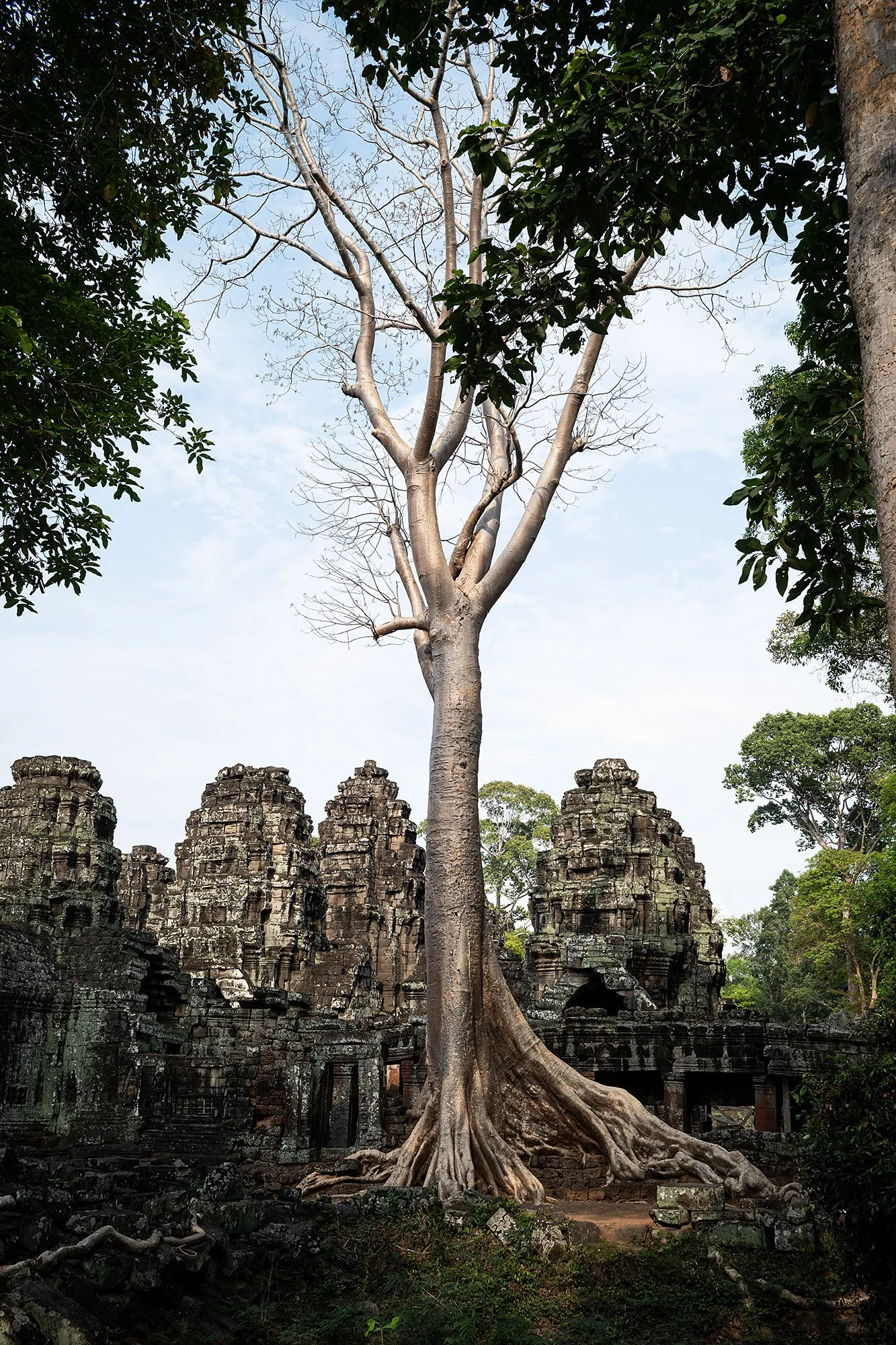
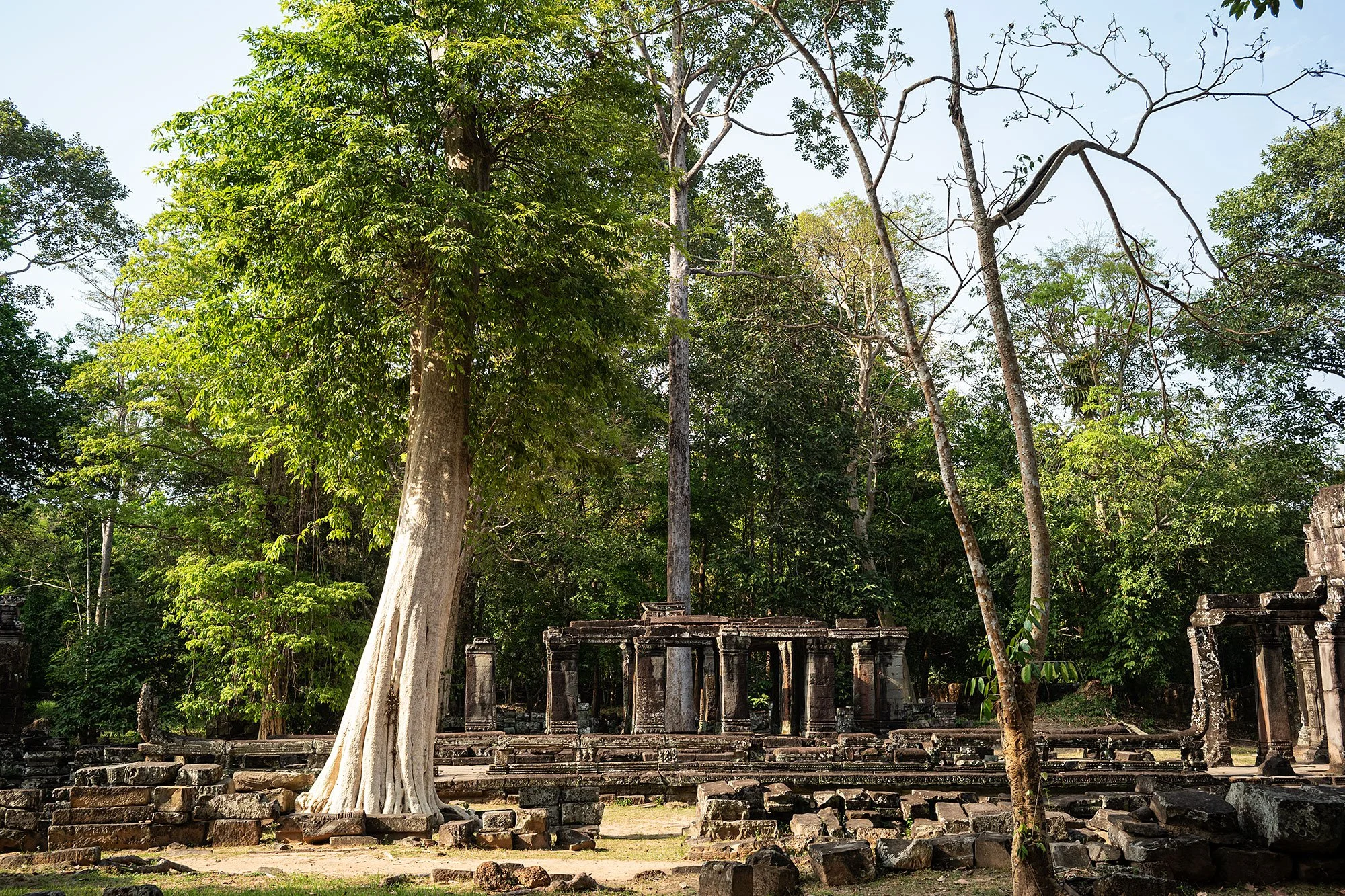
We exit out the back of the temple and looking towards the front we can see the towers and a beautiful tree lit by the late afternoon light.
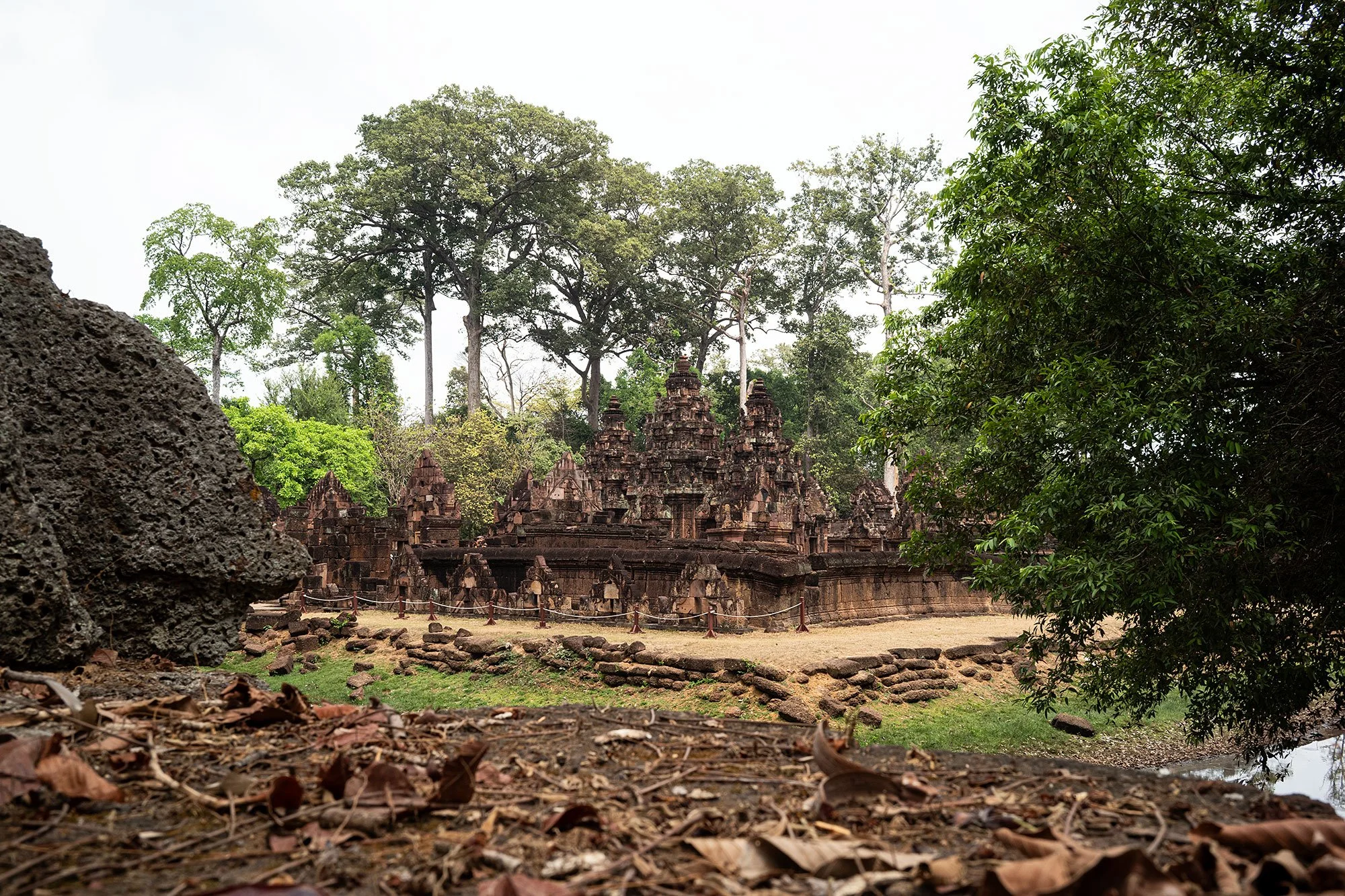
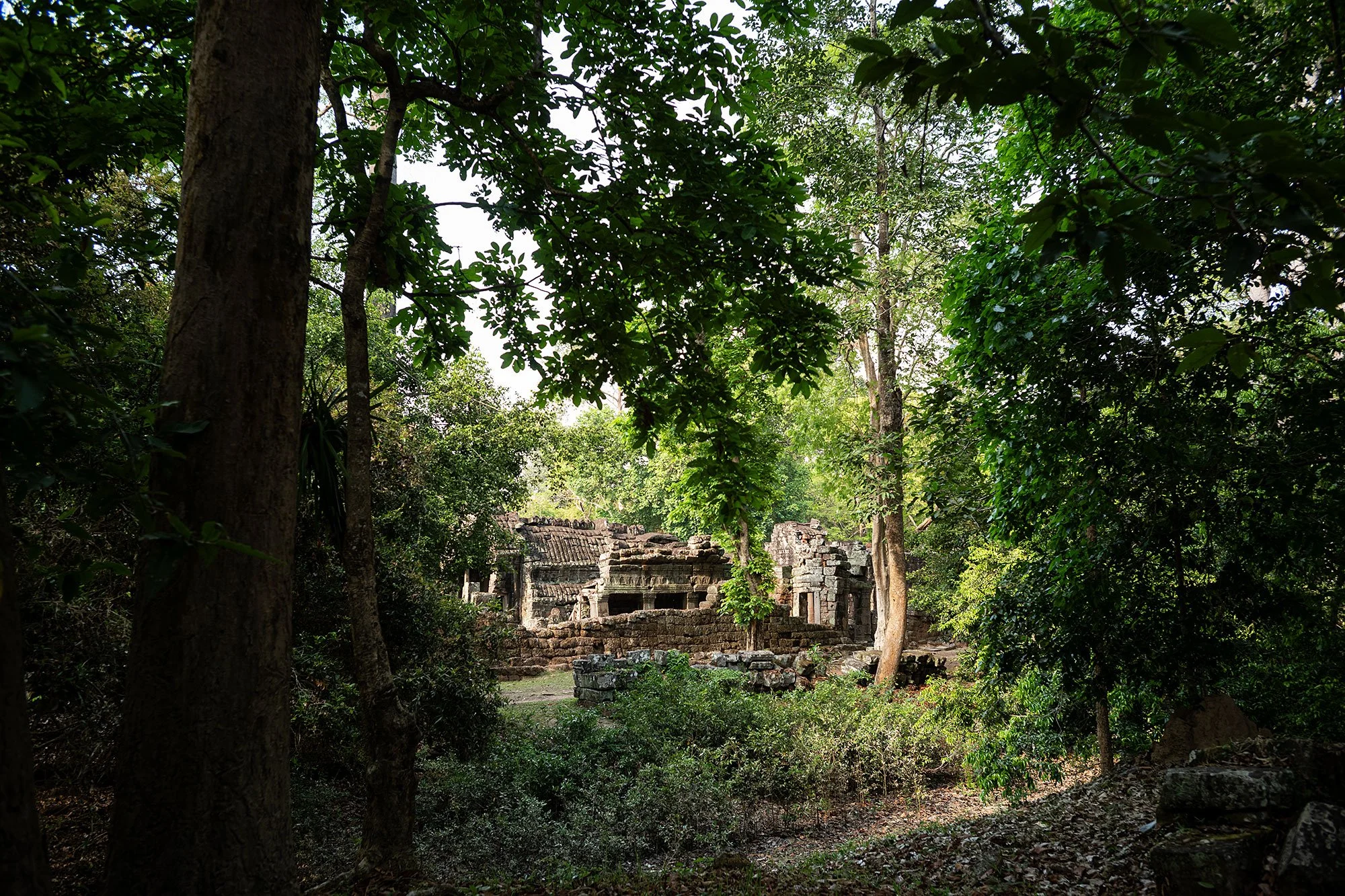
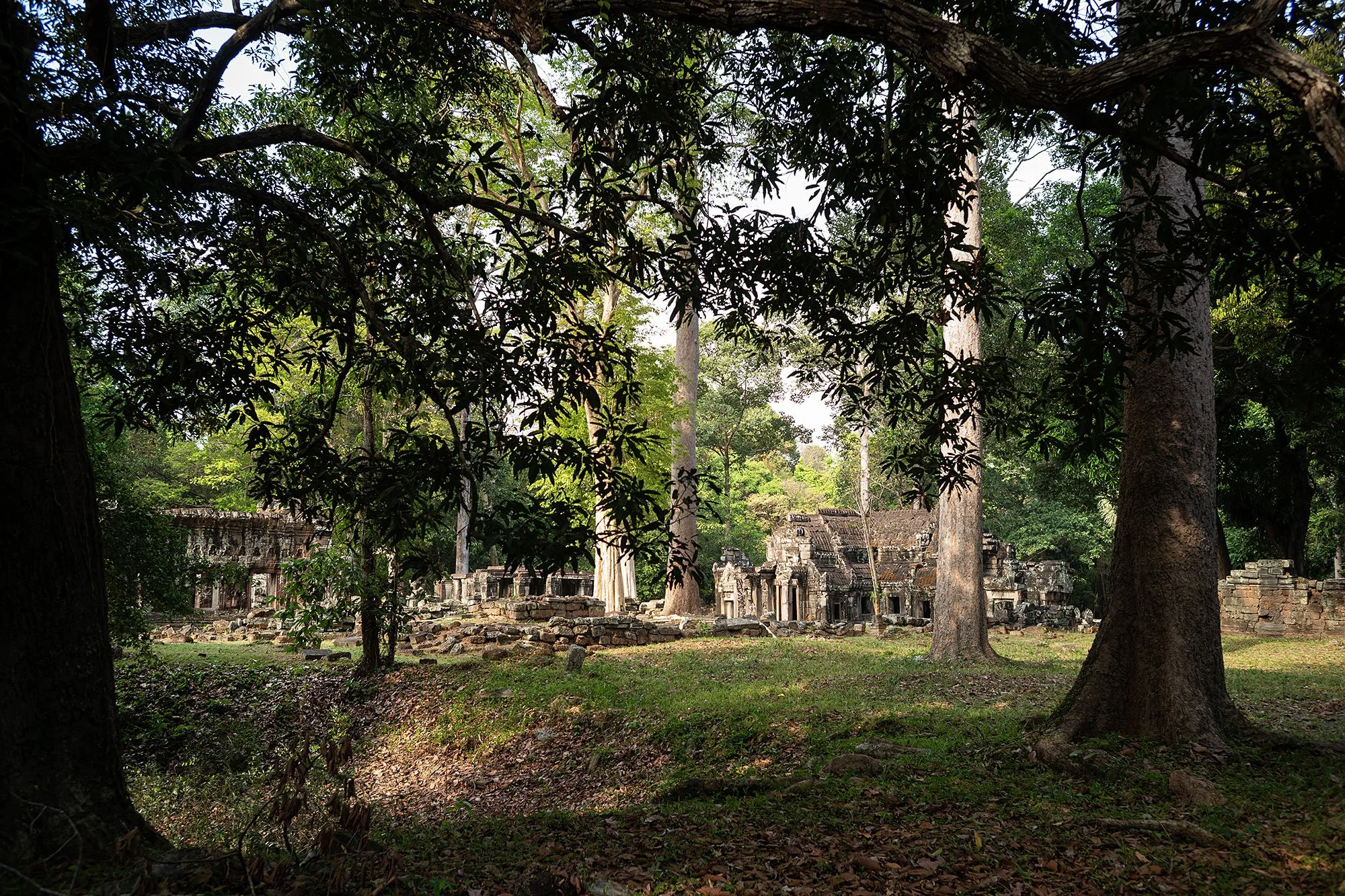
As we make our way back towards the entrance we can see the temple through the forest and I imagine what it must have been like to rediscover them when they had all but been reclaimed by the jungle.
Back at the car (our last cold towels and cold bottles of water) we thank Jimmy for a fantastic tour. He hopes we have enjoyed the tour and we assure him we have. It’s been informative and fairly comprehensive given the short amount of time we have had.
Once we’re all settled in he turns to the driver. Home, James, he says. And don’t spare the horses. 🇰🇭