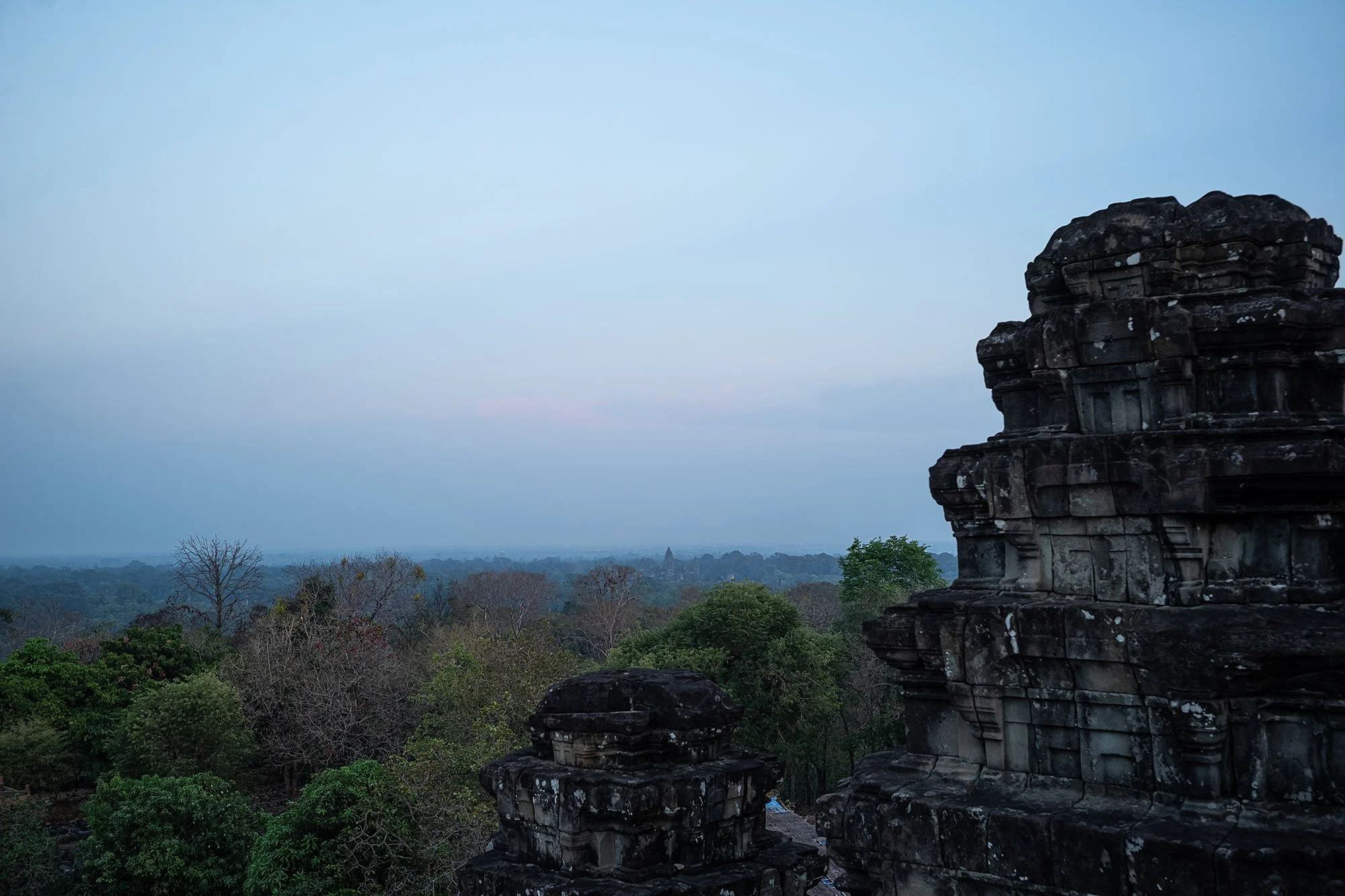
Angkor II: Ta Prohm, Angkor Thom, Bayon, and sunset at Phnom Bakheng.
Jimmy leads us back to the car, walking along the moat to the north. Sreang offers us cold towels and cold bottles of water when we reach the car.
The towels are a welcome amenity. We wipe our faces, arms. Jimmy suggests we place them on our necks. Bloody hot, mate, he says. He tells us his Australian guests like to say this.
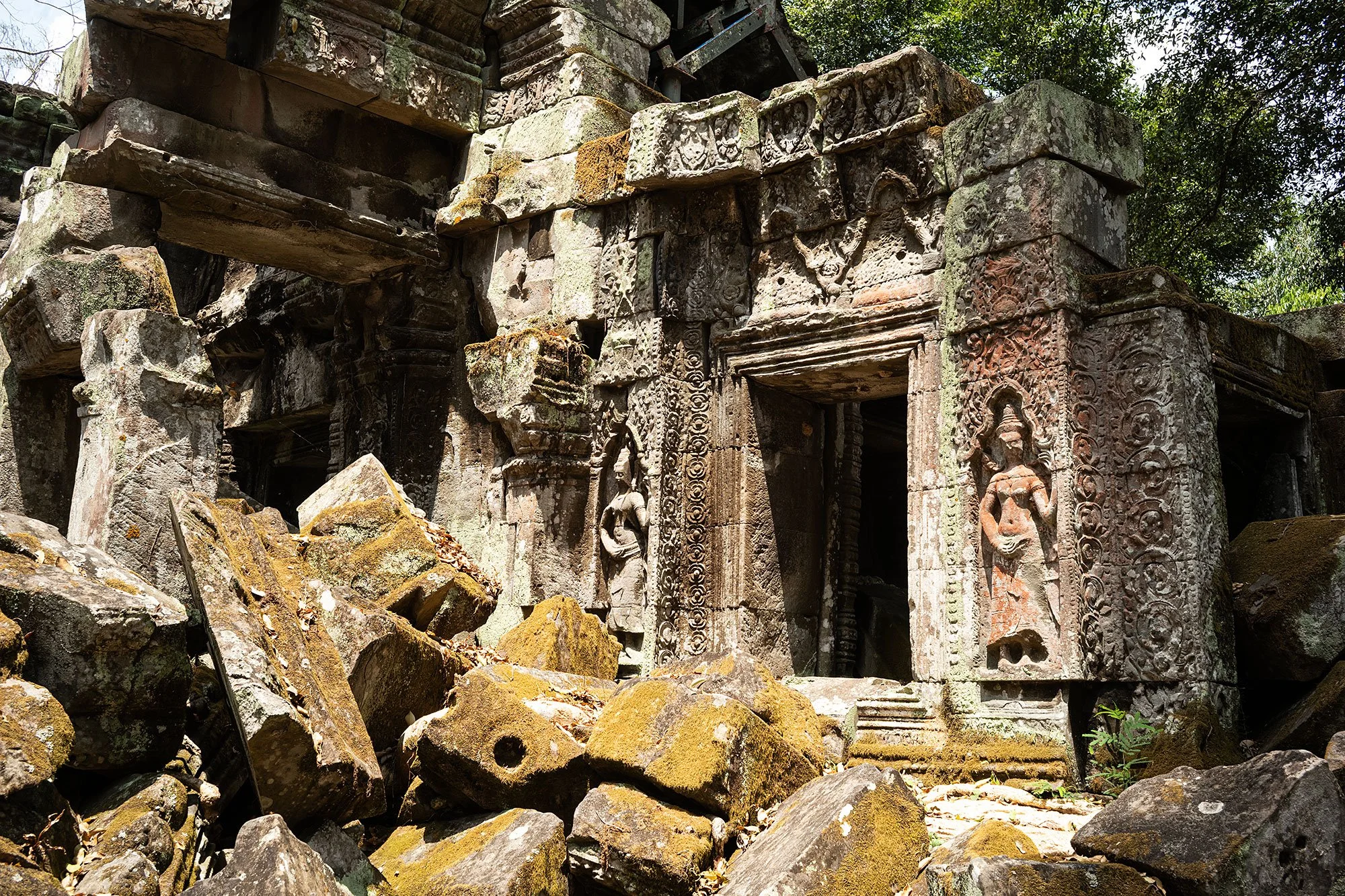
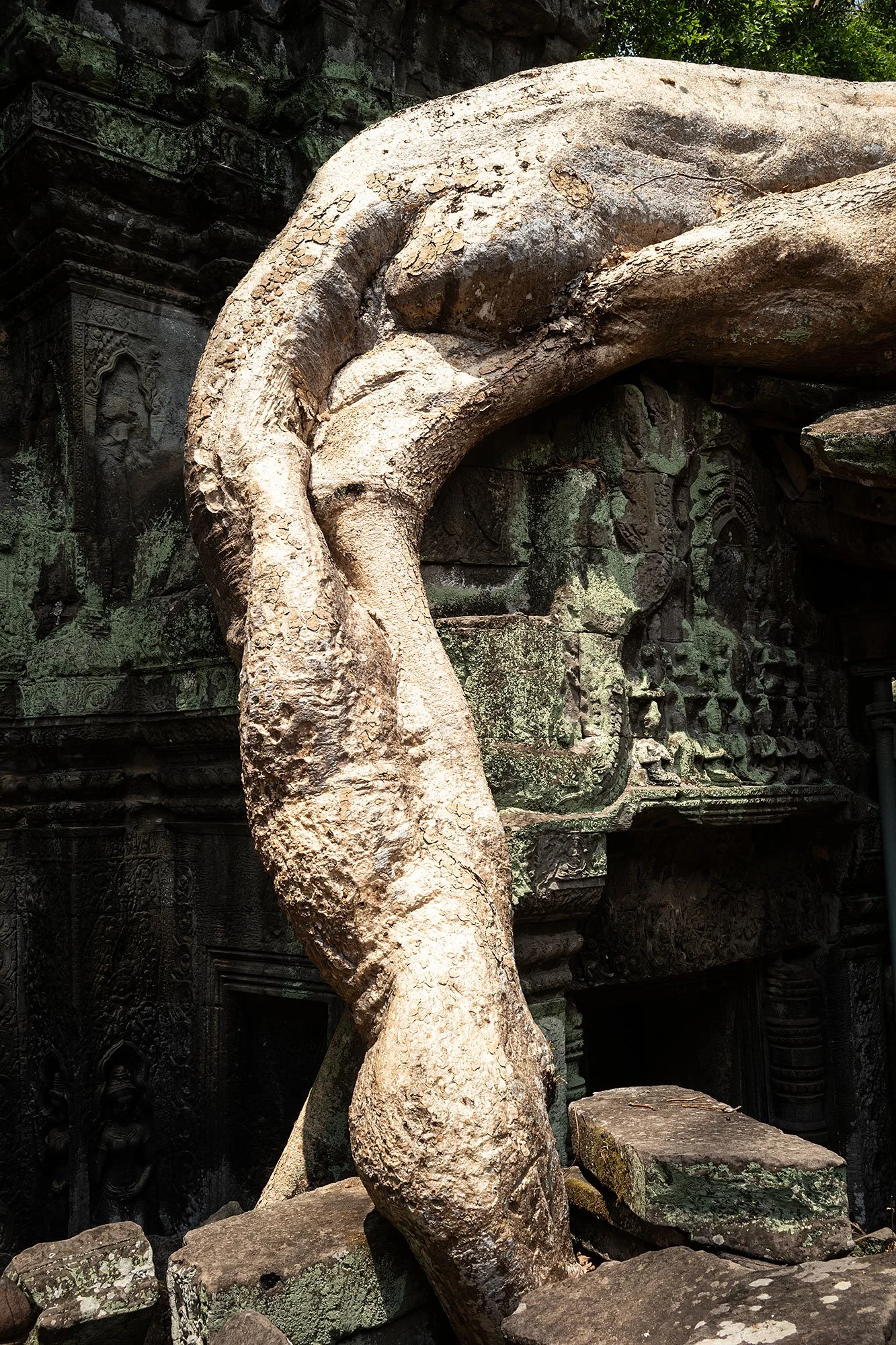
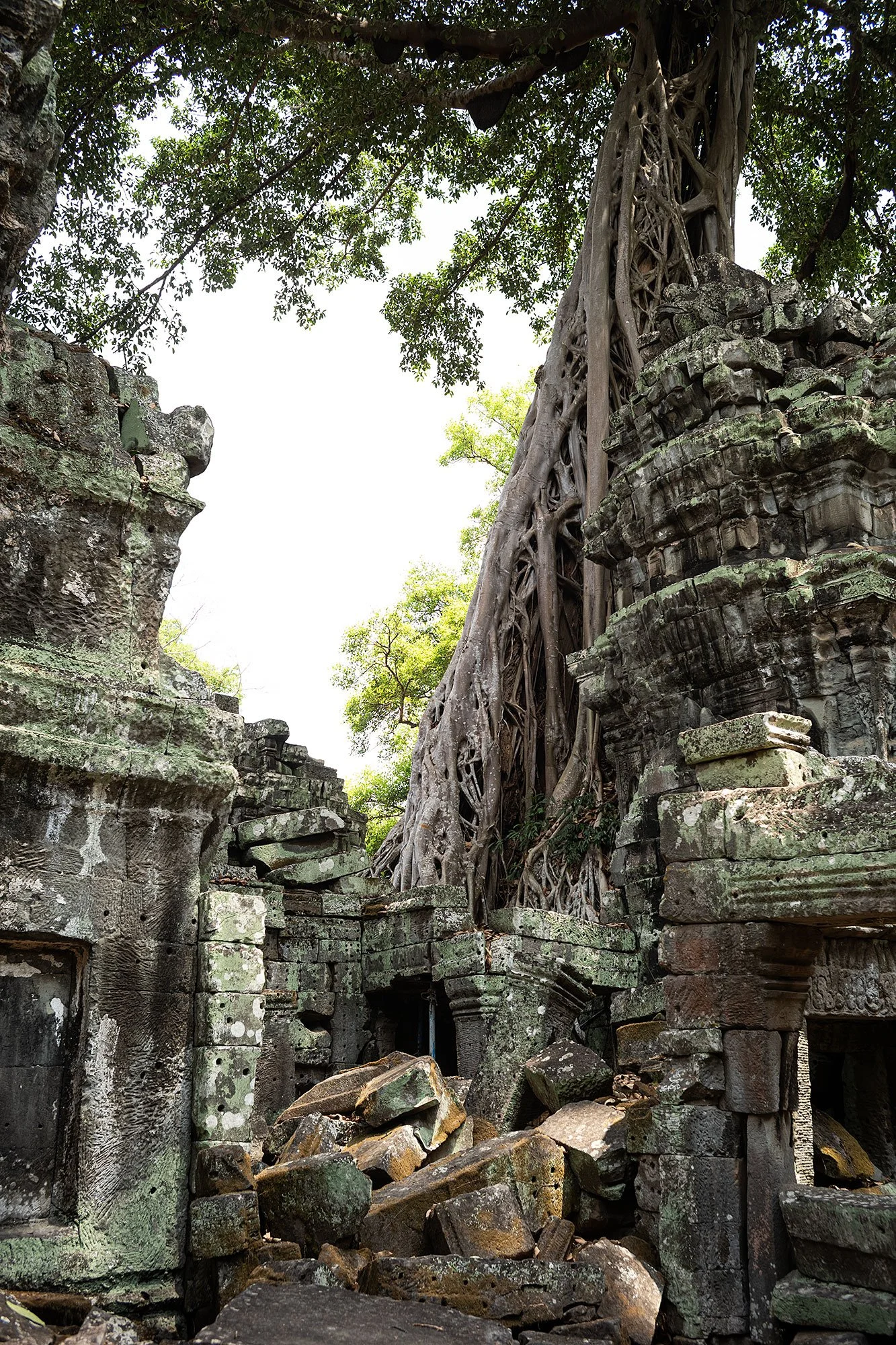
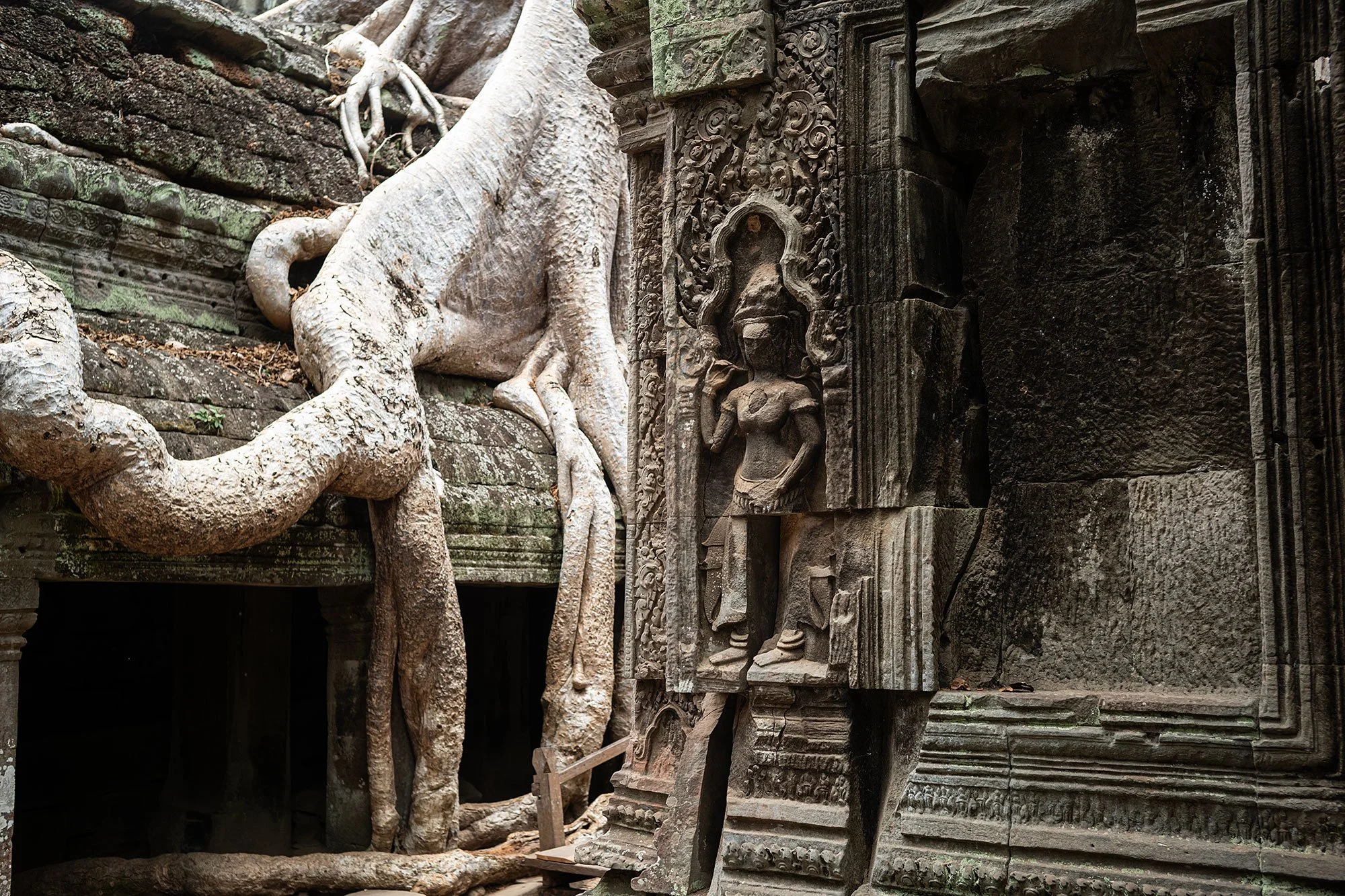
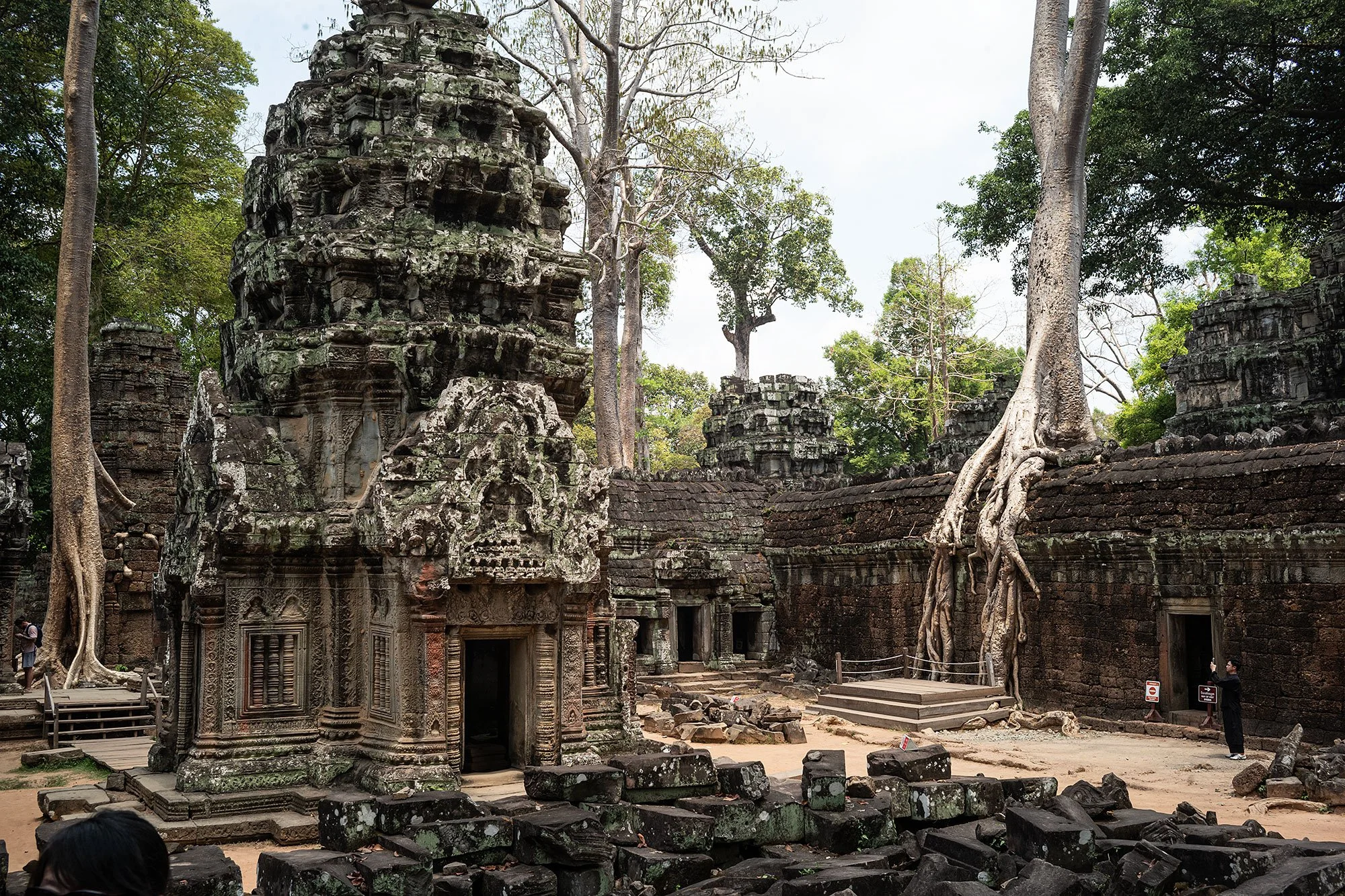
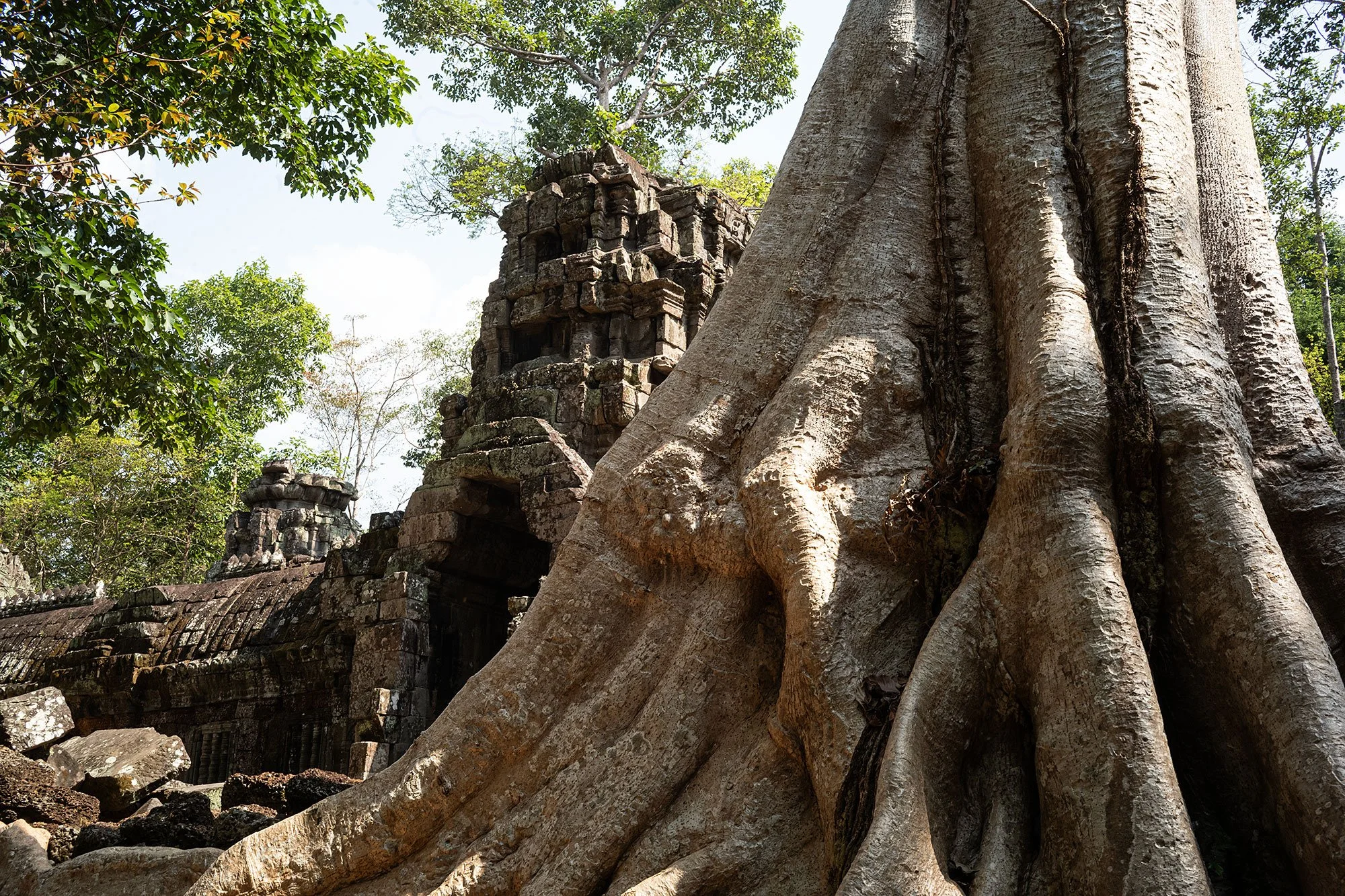
Our next stop is Ta Prohm, known for the trees that have grown over it, their roots reaching over the walls like tentacles towards the earth. It’s been made famous again as a featured location in the Lara Croft: Tomb Raider movie and I overhear various guides refer to it as the Tomb Raider Temple.
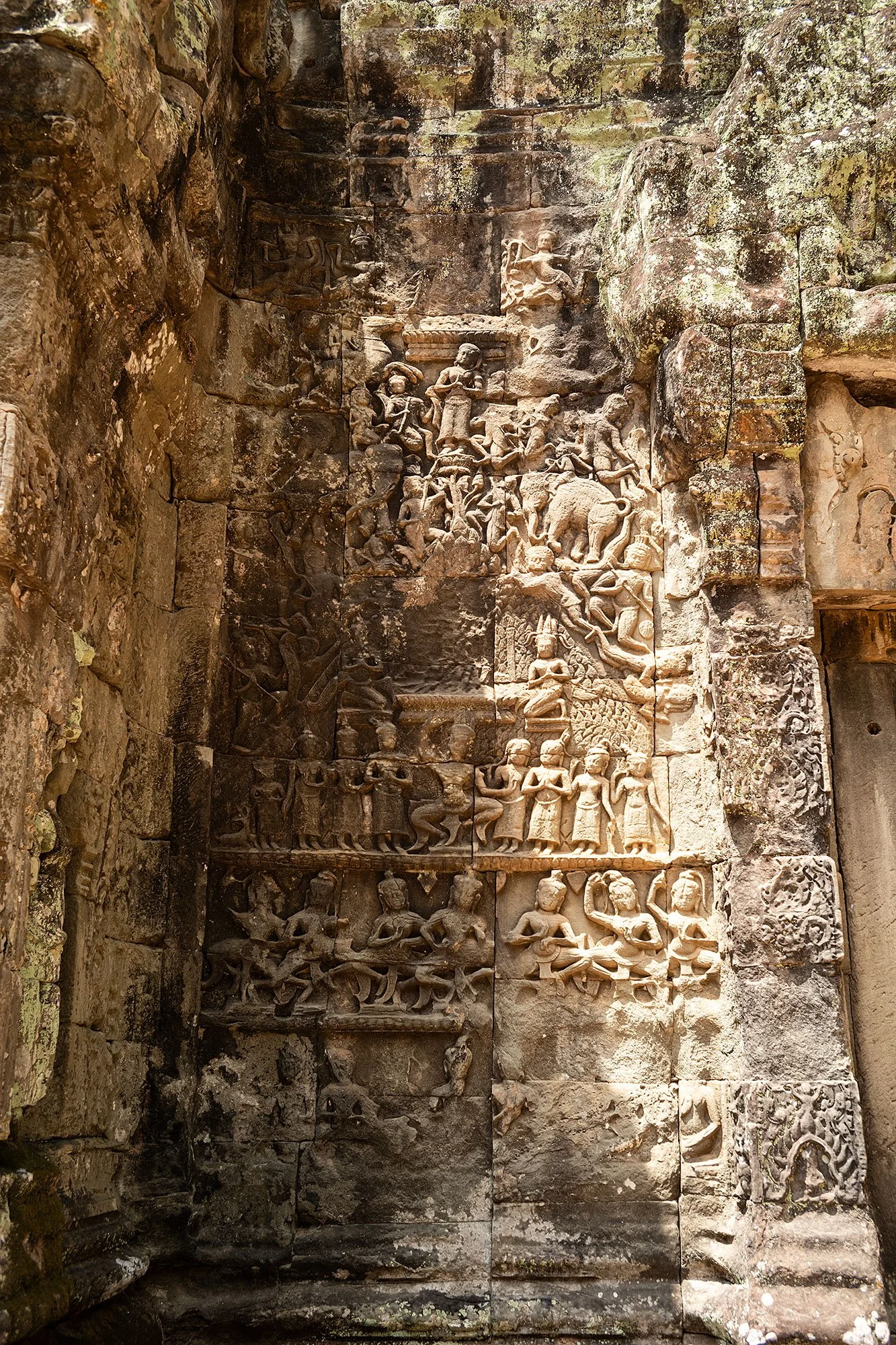
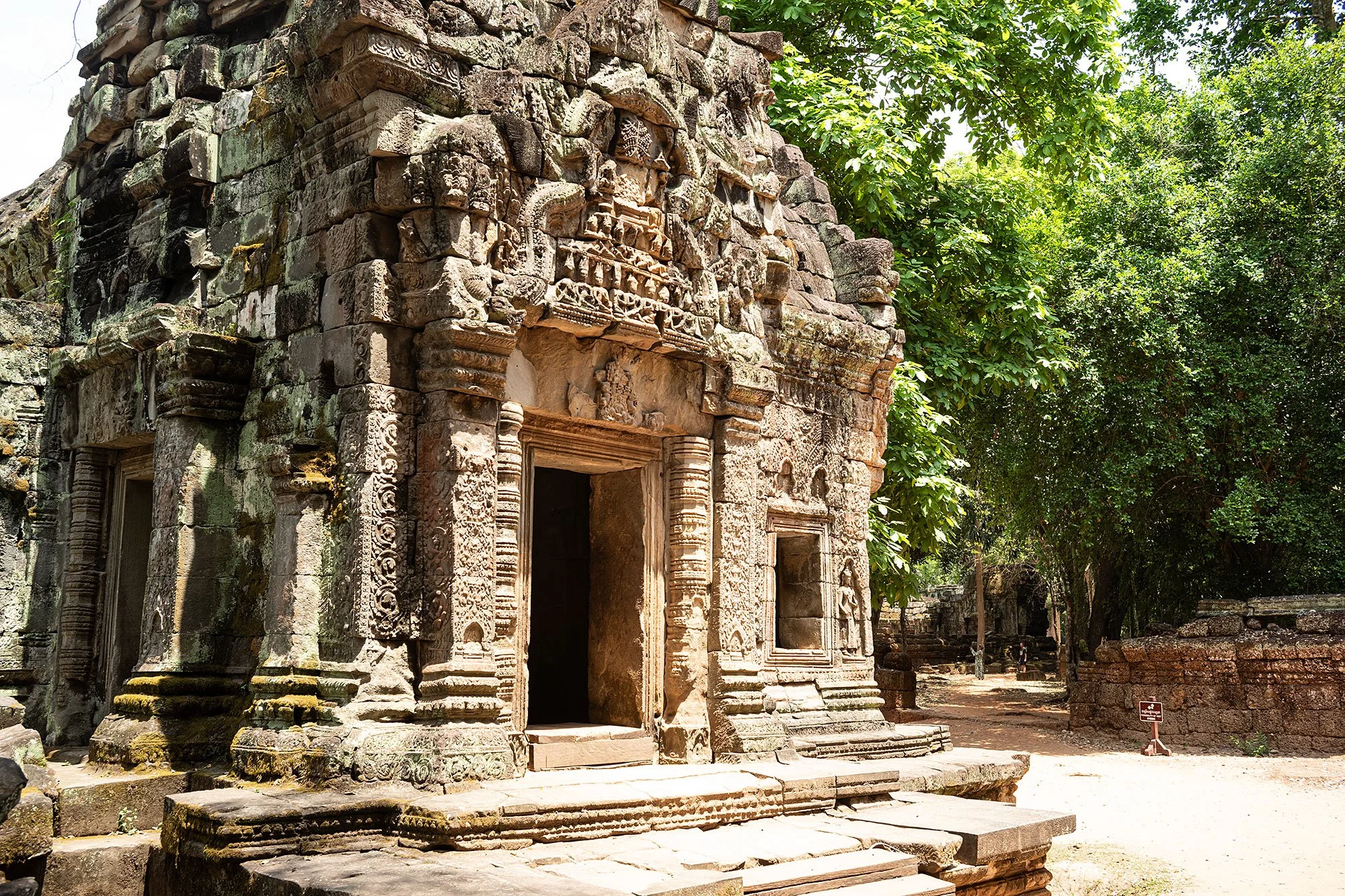
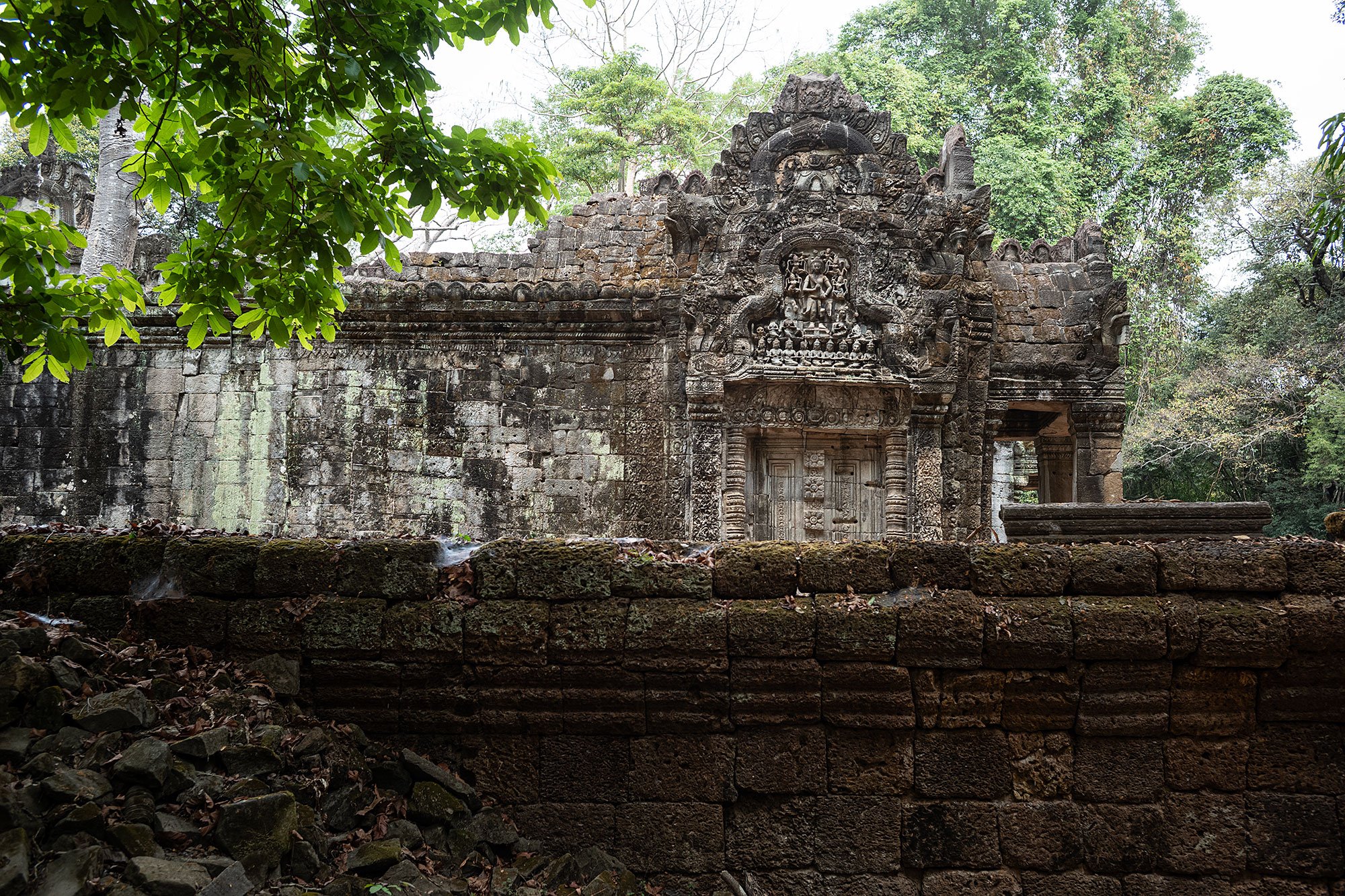
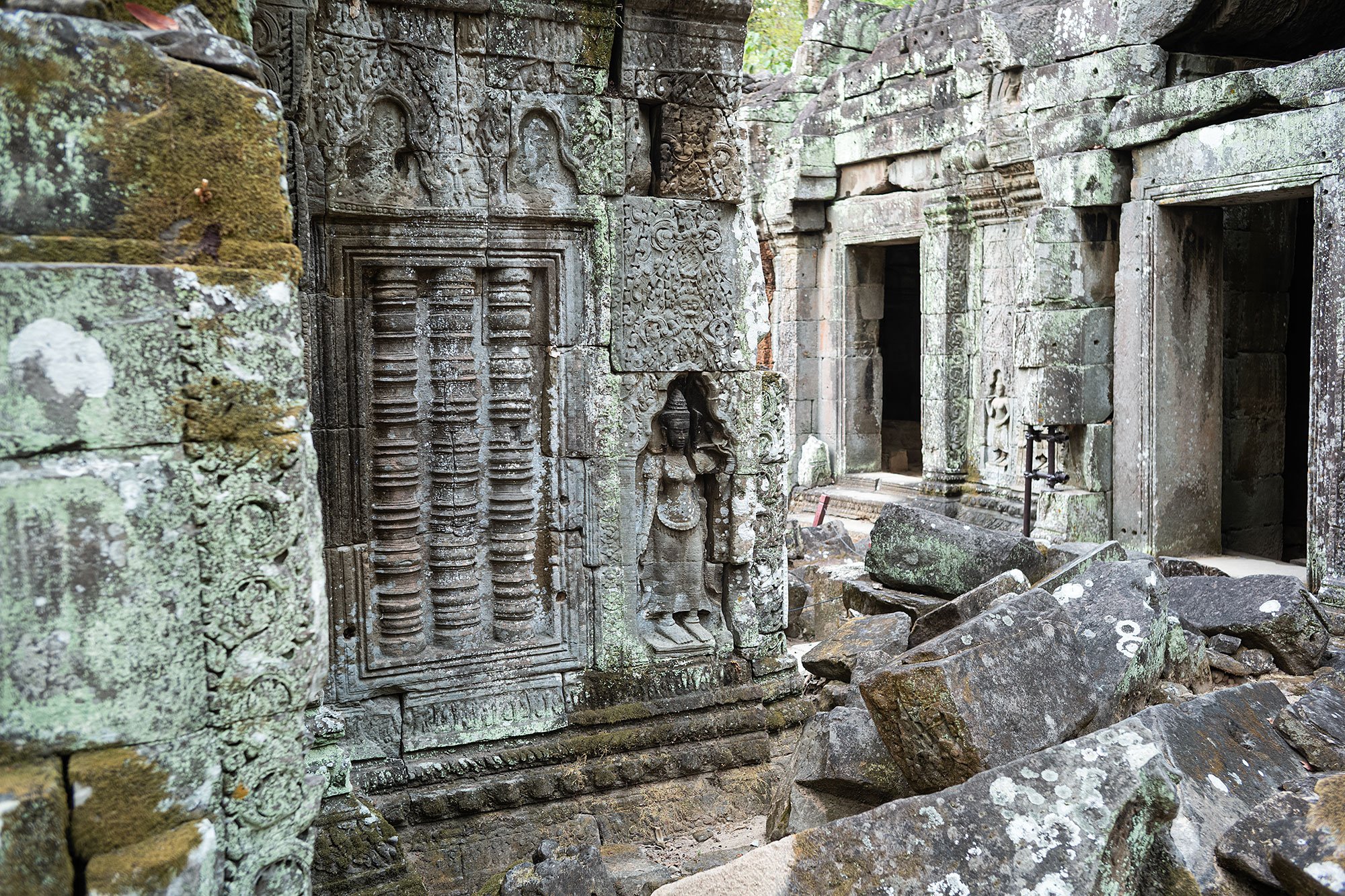
As we approach the temple, I’m drawn towards a small ruined structure just off to the side. Sunlight filters through the canopy, dapples the moss-covered stone. The apsaras are lit beautifully and I can’t resist a closer look.
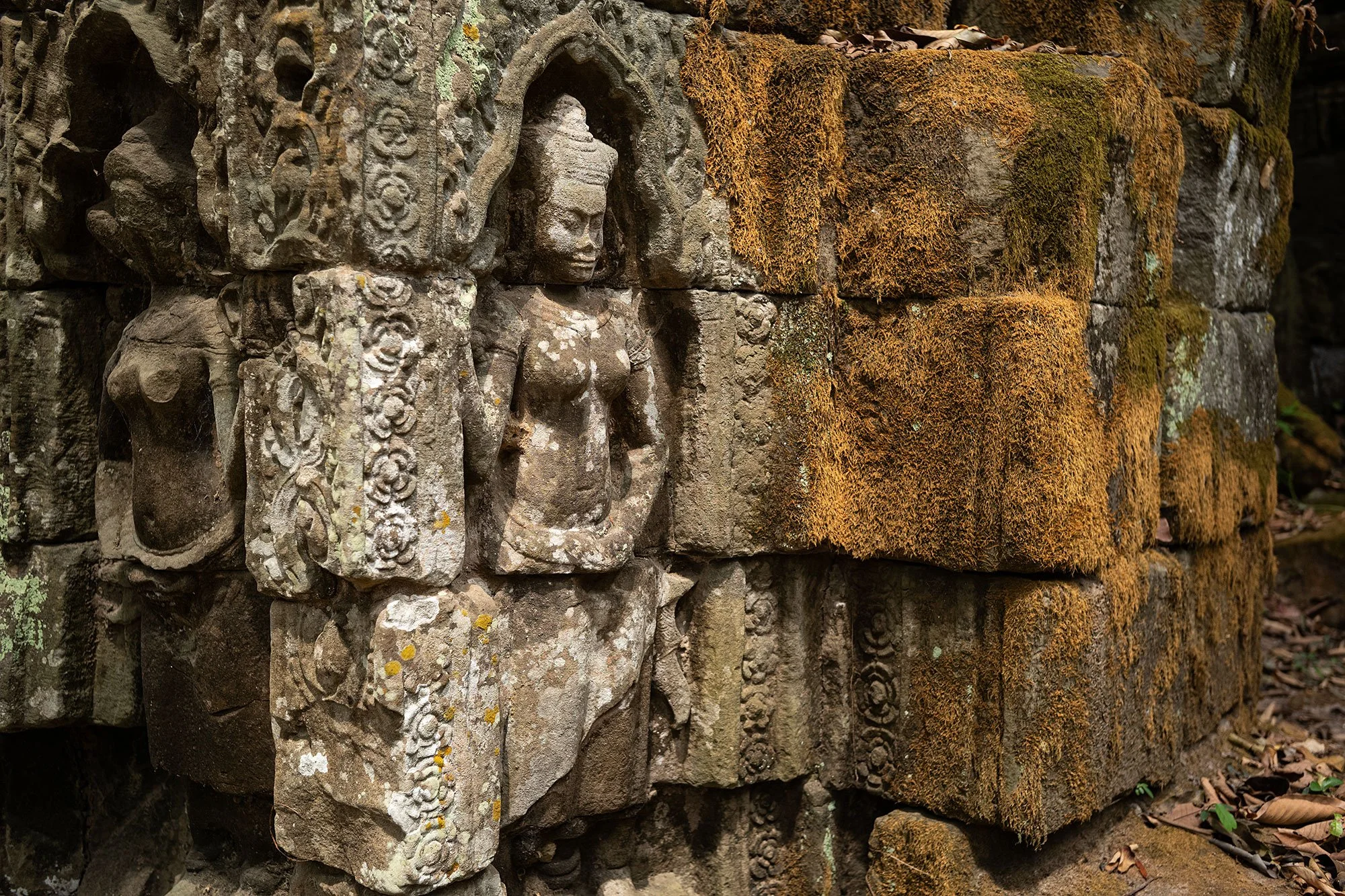
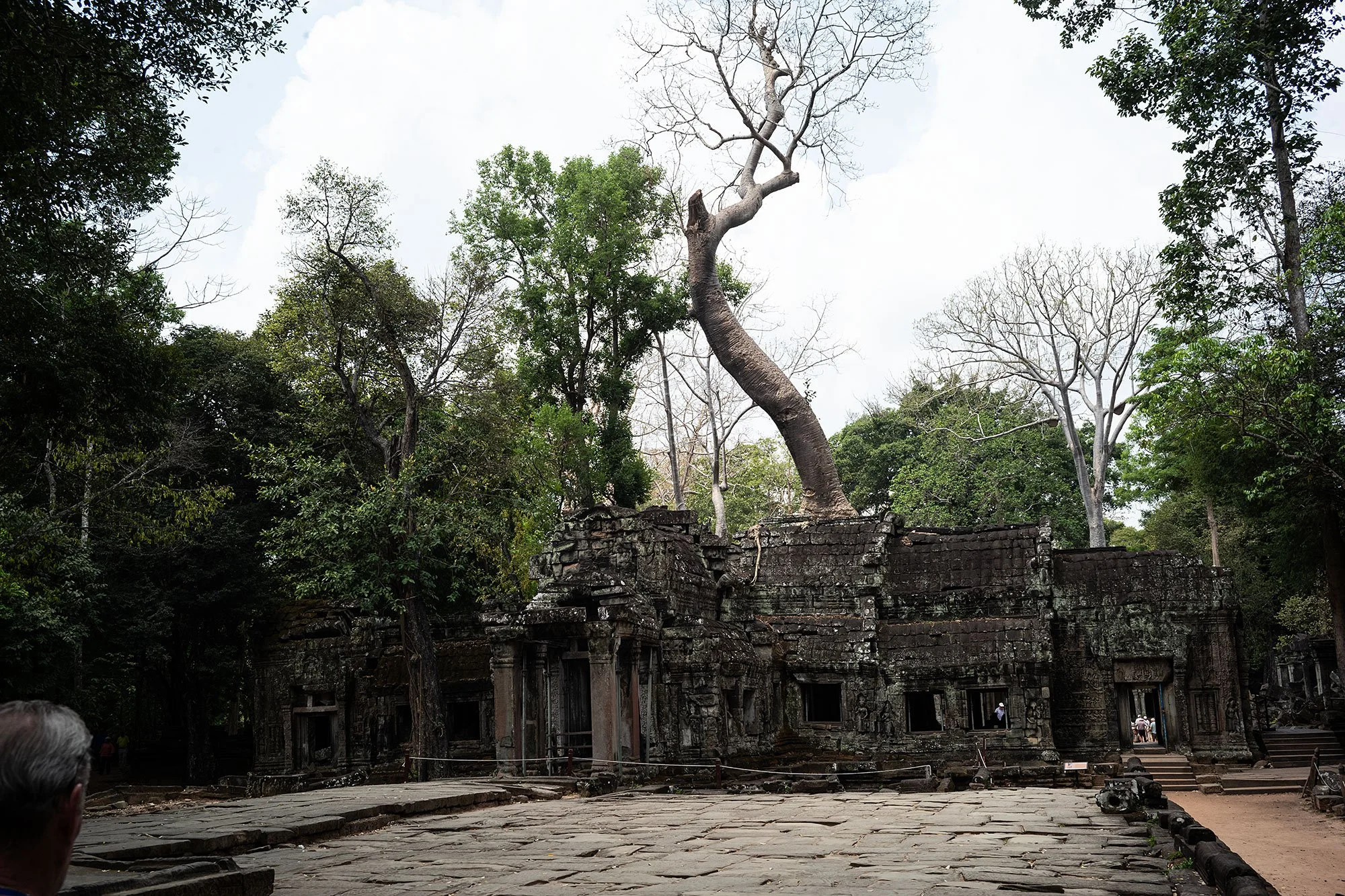
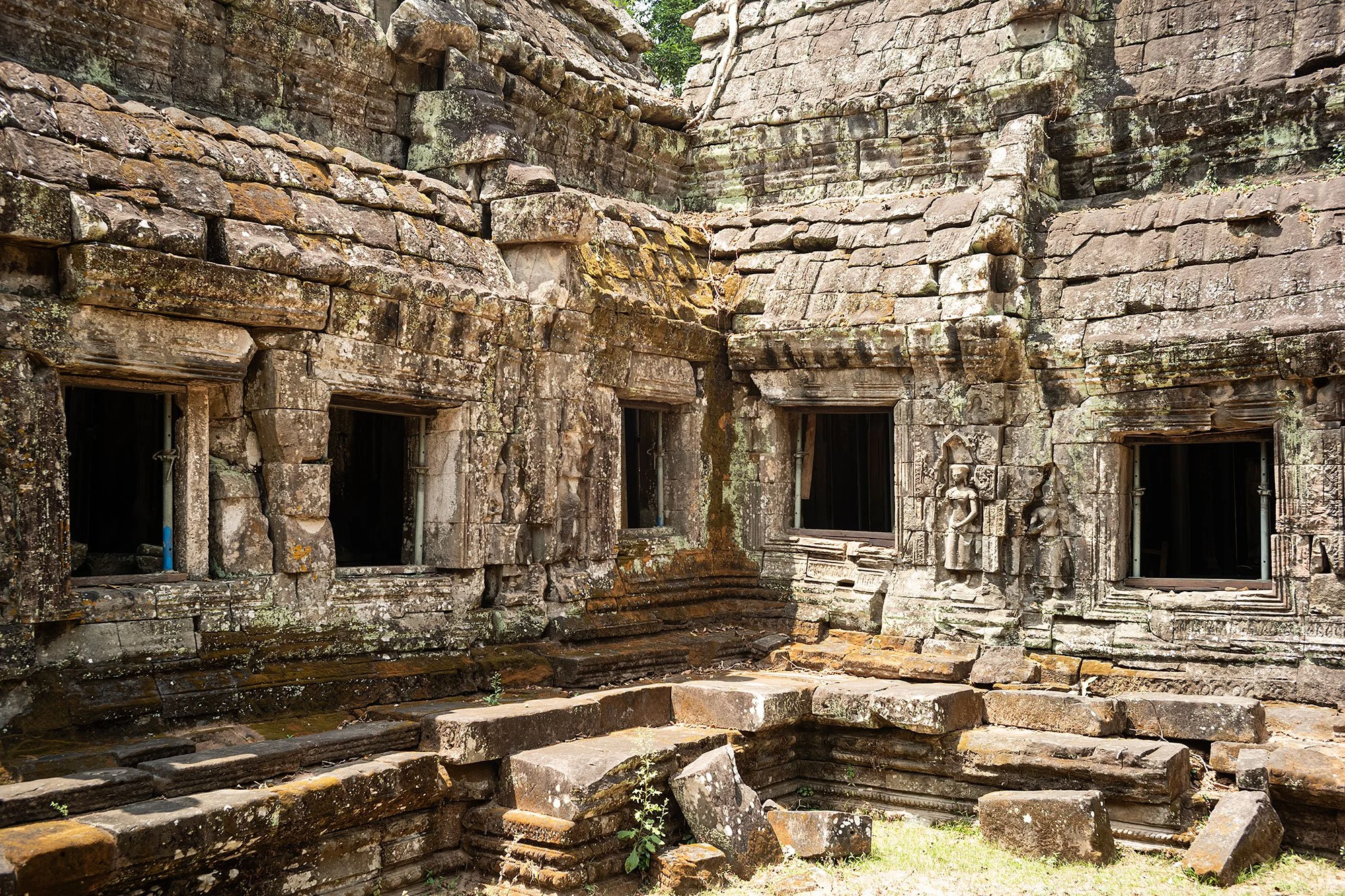
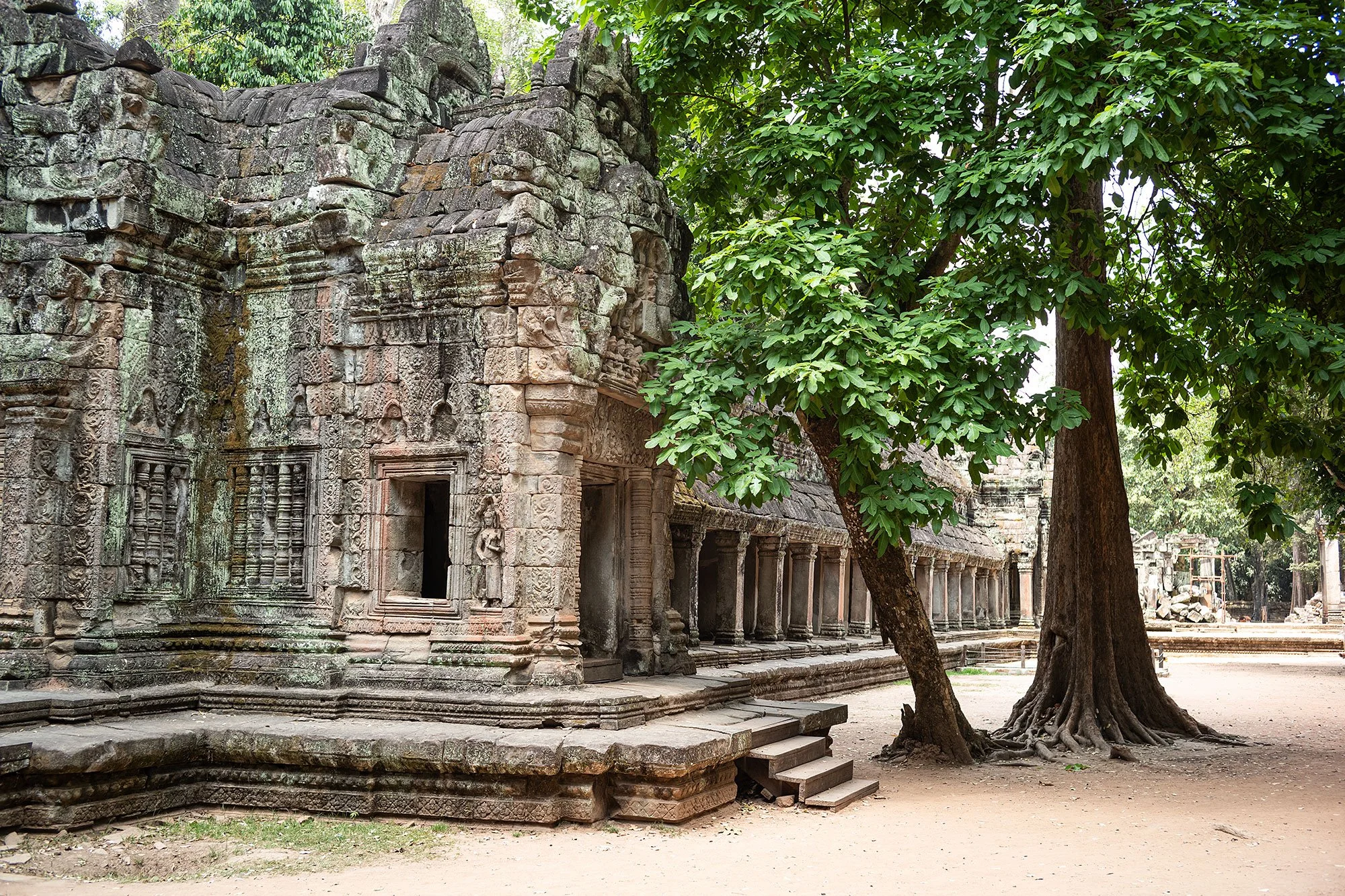
Founded by King Jayavarman VII as a Mahayana Buddhist monastery and center of learning dedicated to his mother, Ta Prohm once required almost 80,000 people to maintain the temple, including 615 dancers and over 2,500 officials. The temple was built in the late 12th and early 13th centuries without mortar and trees took root in the loose stone after it was abandoned, giving it its now characteristic look.
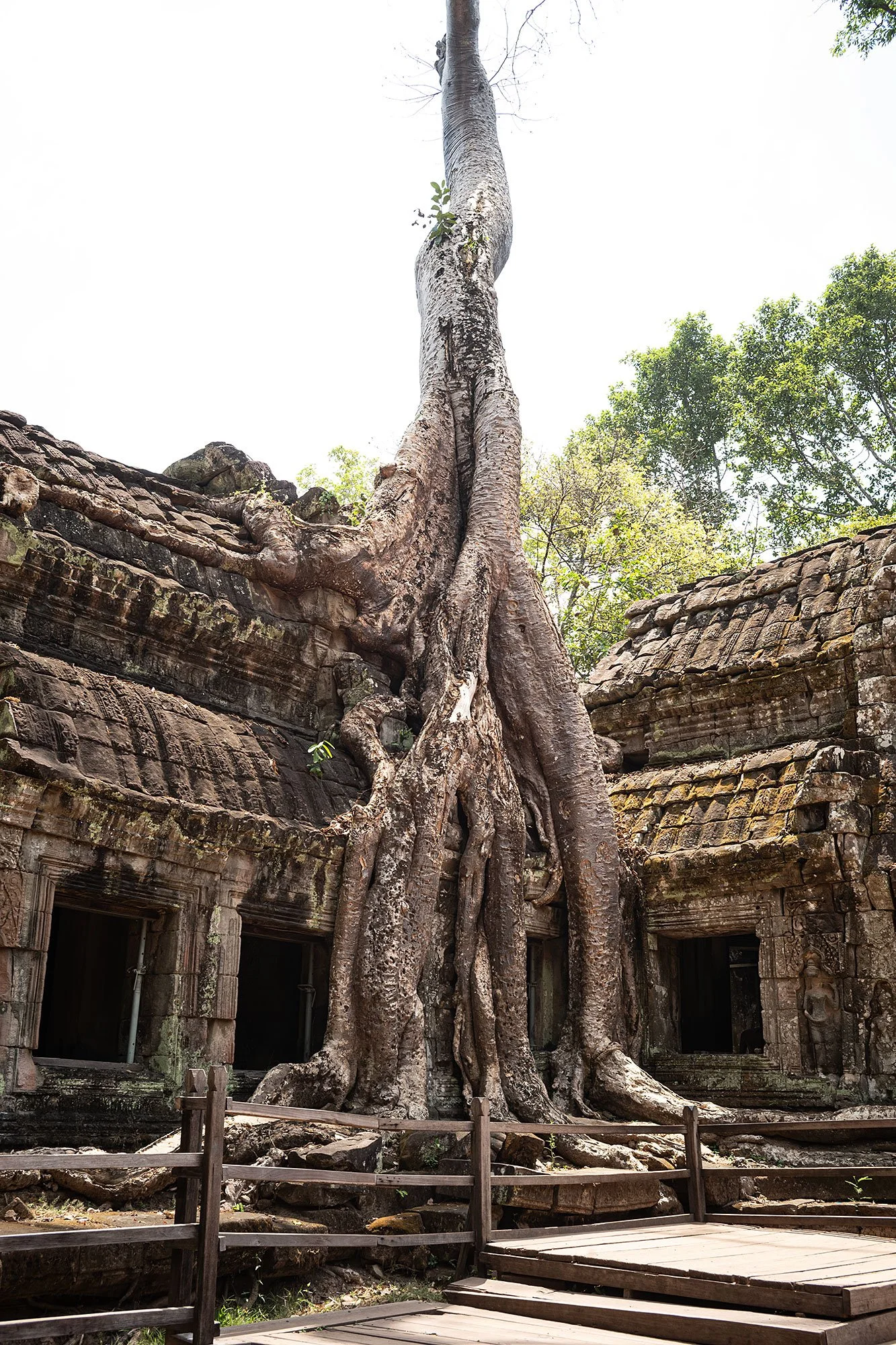
Wooden platforms and fences have been placed at key locations—the most popular photo spots—to help mitigate damage to the temples and trees and control the flow of tourists. I applaud the preservation efforts, but the sense of exploration and discovery I felt in 2000 is somewhat lost.
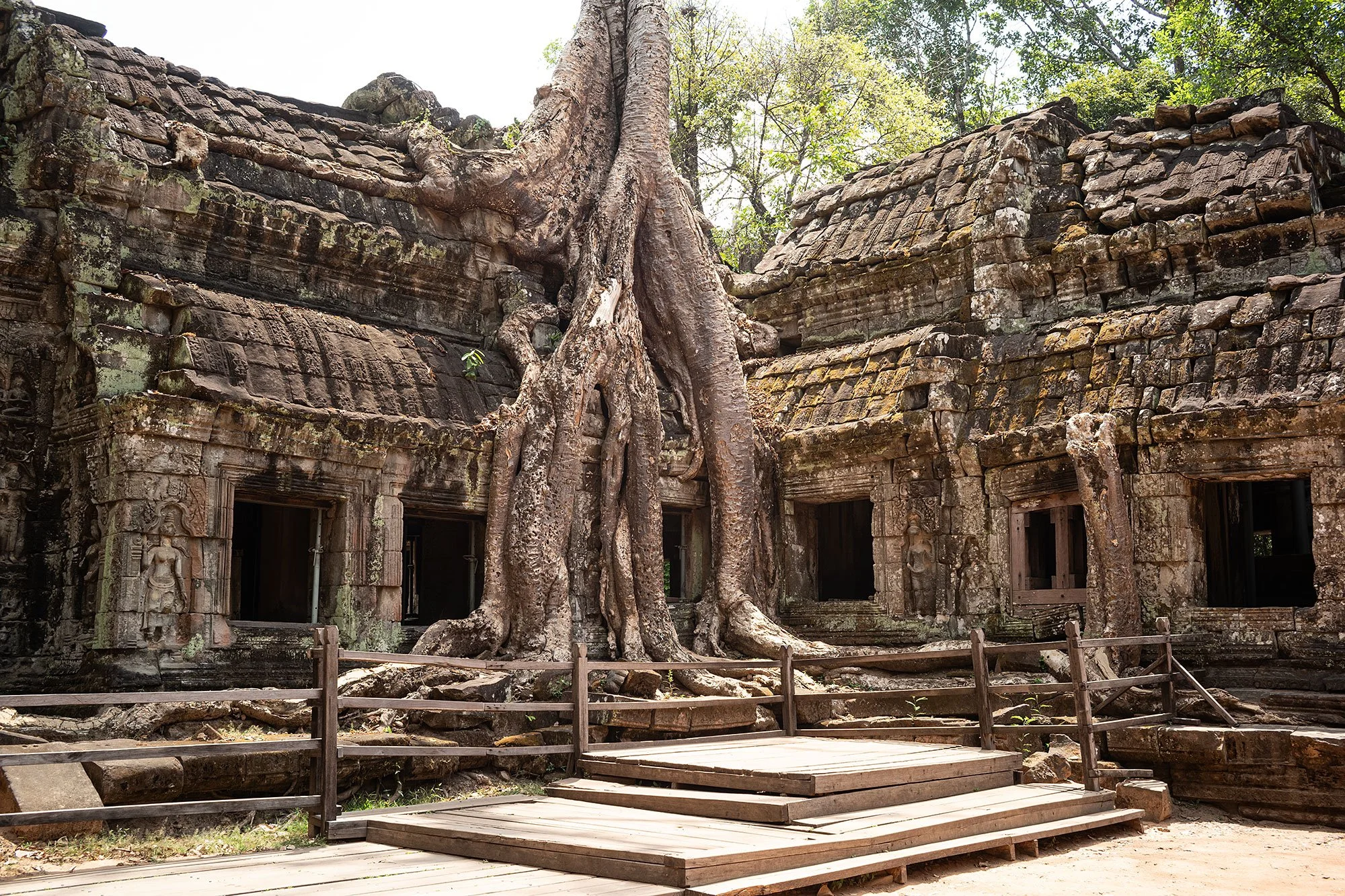
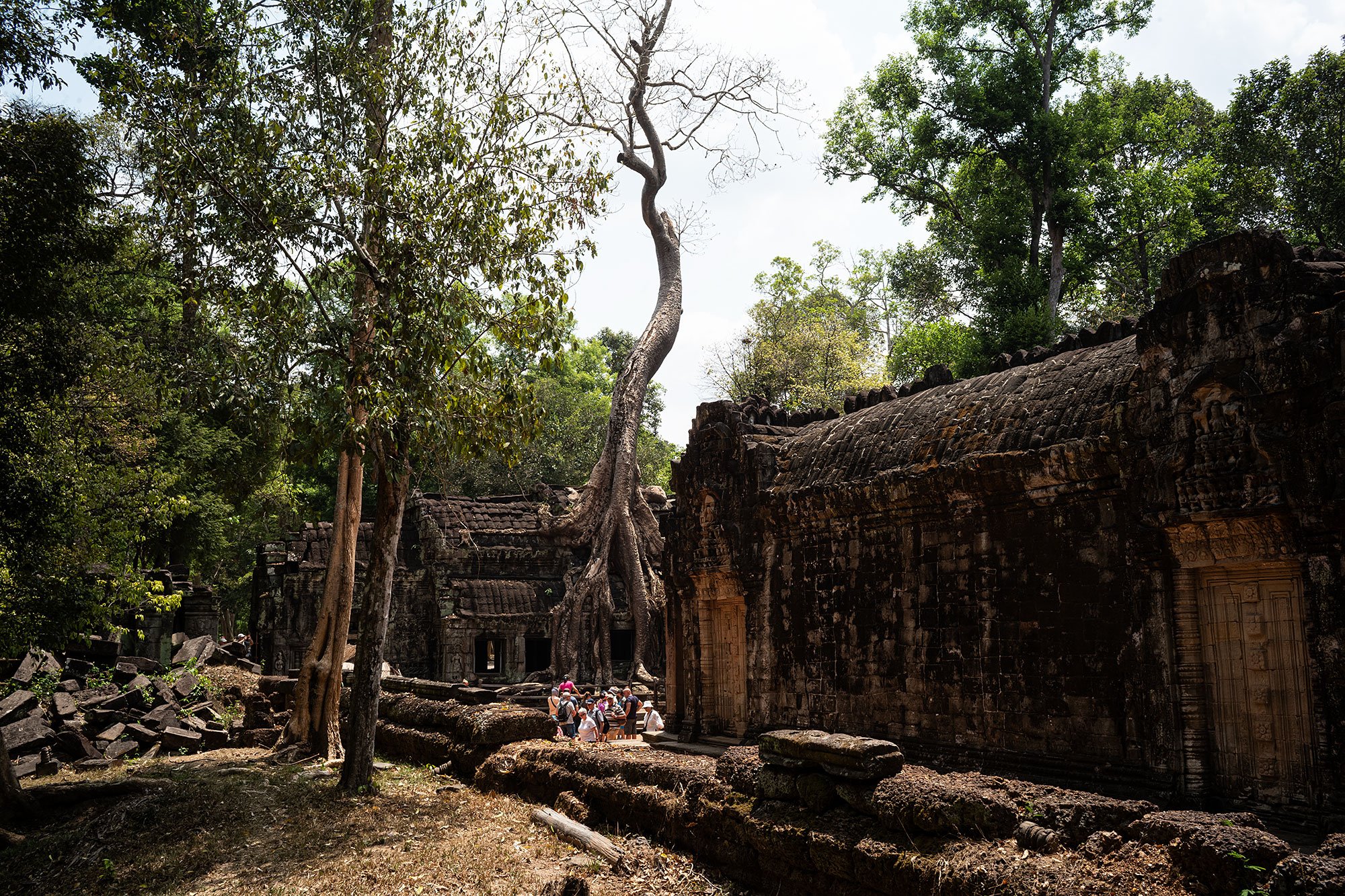
A few large groups are in the temple when I arrive, crowding one of prime photo locations used in the film. A large group of tourists from the States laughs and jokes while they assemble for a group photo, and I realize that some of the serenity I felt when tourism was more nascent has also been lost as mass tourism has come to the ancient city.
Still, the numbers are down from the pre-Covid times. The number of international visitors to the temples had reached 2.6 million in 2018 and 2.2 million in 2019. In 2020 the number had fallen to 398,000 from the beginning of the year to October. By 2024, Angkor saw 1,023,688 foreign tourists.
Looking back to 2000 (when I first visited), only 466,365 international tourists came to Cambodia, jumping to 604,919 in 2001, numbers I found in a report published by the Ministry of Tourism.
According to the New York Times, in the first third of 2000 (near when I had first visited) Angkor saw close to 125,000 visitors, climbing to 600,000 for the year in 2001, no doubt due in part to the popularity of Tomb Raider. I couldn’t find visitor numbers to Angkor for 2000, though it looks like the majority of foreigners coming to Cambodia in the early 2000s were coming to see the temples.
In all, there have been around 28 million foreign visitors to Angkor between 2000 and 2025, with a pre-pandemic high of up to 9,000 international visitors a day.
One group that has dropped precipitously and have yet to return are Chinese tourists, Jimmy tells us.
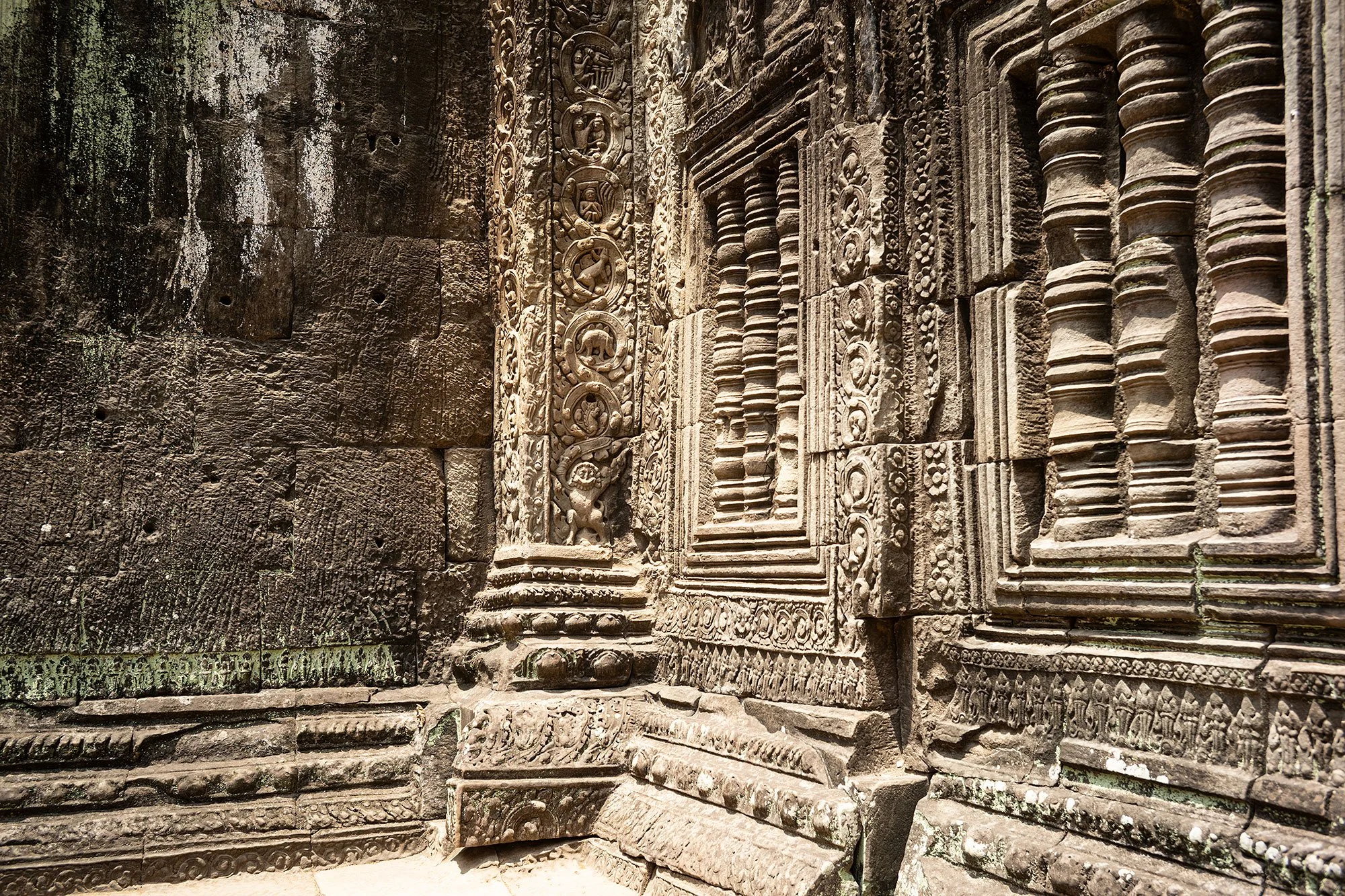
We wind our way through the temple and to the outer coutyards. Away form the main photo areas it’s relatively quiet, and I regain some of the peace I had experienced when first arriving, save for the deafening sound of cicadas, their buzzing fills the air during the first half of our visit. Curiously, they’re gone by the next day.
From Ta Prohm Jimmy takes us to lunch. It’s in a restaurant inside the archeological grounds and I wonder how good it might be given where we are. As it turns out, lunch is fantastic. We order green papaya salad, spring rolls, fish amok, a chicken curry, and a whole fried fish, which is one of the best things I eat on this trip to Cambodia. Over the course of our visit I’m consistently impressed with Khmer food and it looks to upset Vietnamese food in my ranking of favorite world cuisines.
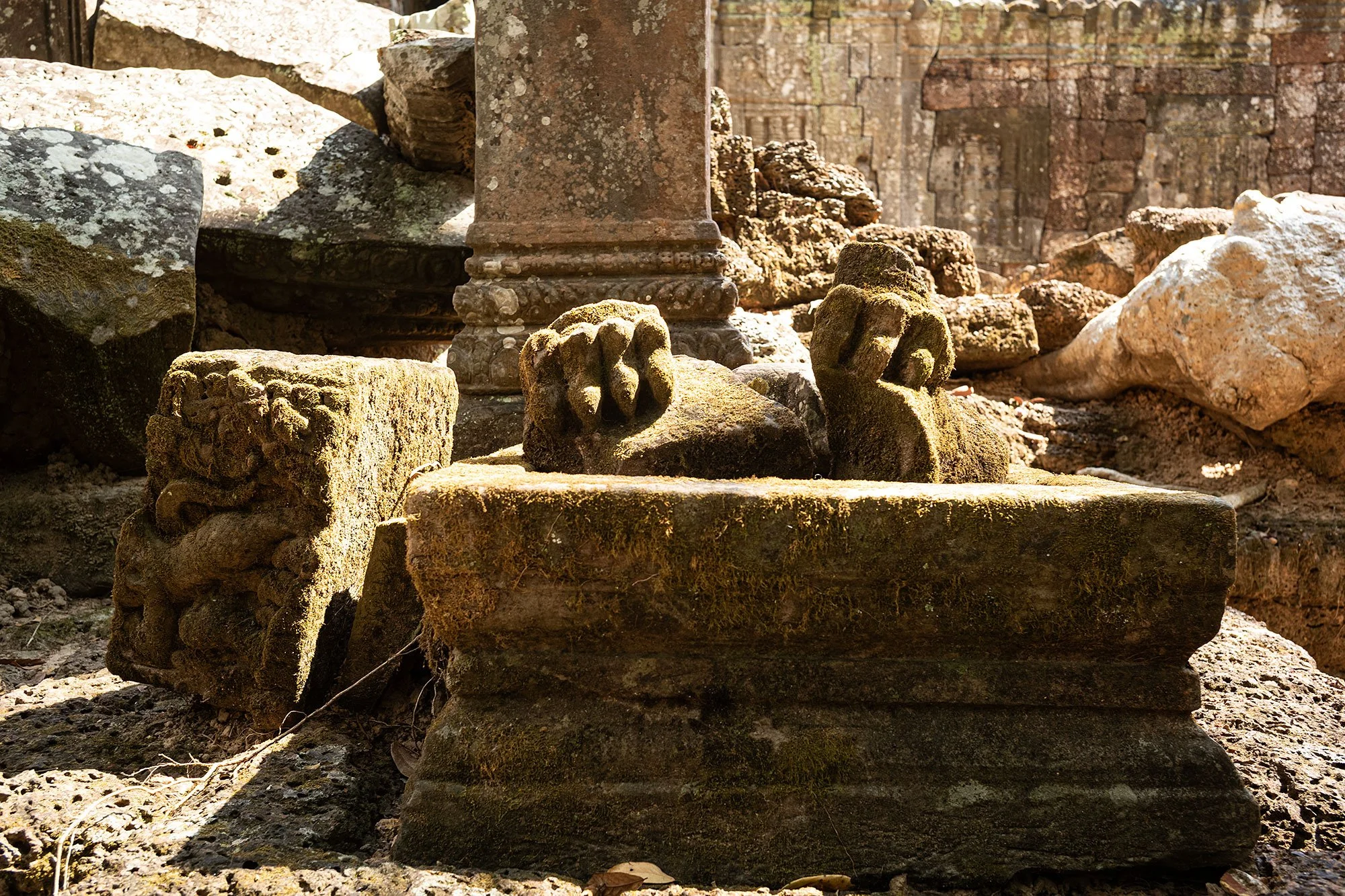
After lunch Jimmy takes us to Ta Nei, a smaller temple and library built in the late 12th century during the reign of King Jayavarman VII. The temple is undergoing conservation efforts led by the Japanese. It’s believed that this area was once densely settled as there are significant traces of foundations and masonry strewn about the forest. Only the temples were made of stone, mortals dwelled in wood.
The current name of the temple means “Old Nei,” and refers to one of the informal caretakers who lived on the site when the French conducted their surveys of the temple in the mid 20th century.
As Jimmy leads us to the temple he turns to me. You probably didn’t visit this in 2000, he says. I wonder if it had been excavated then or if it was deep in the forest. Unfortunately, I can’t recall. I’ll have to check my journals when I next visit my parents.
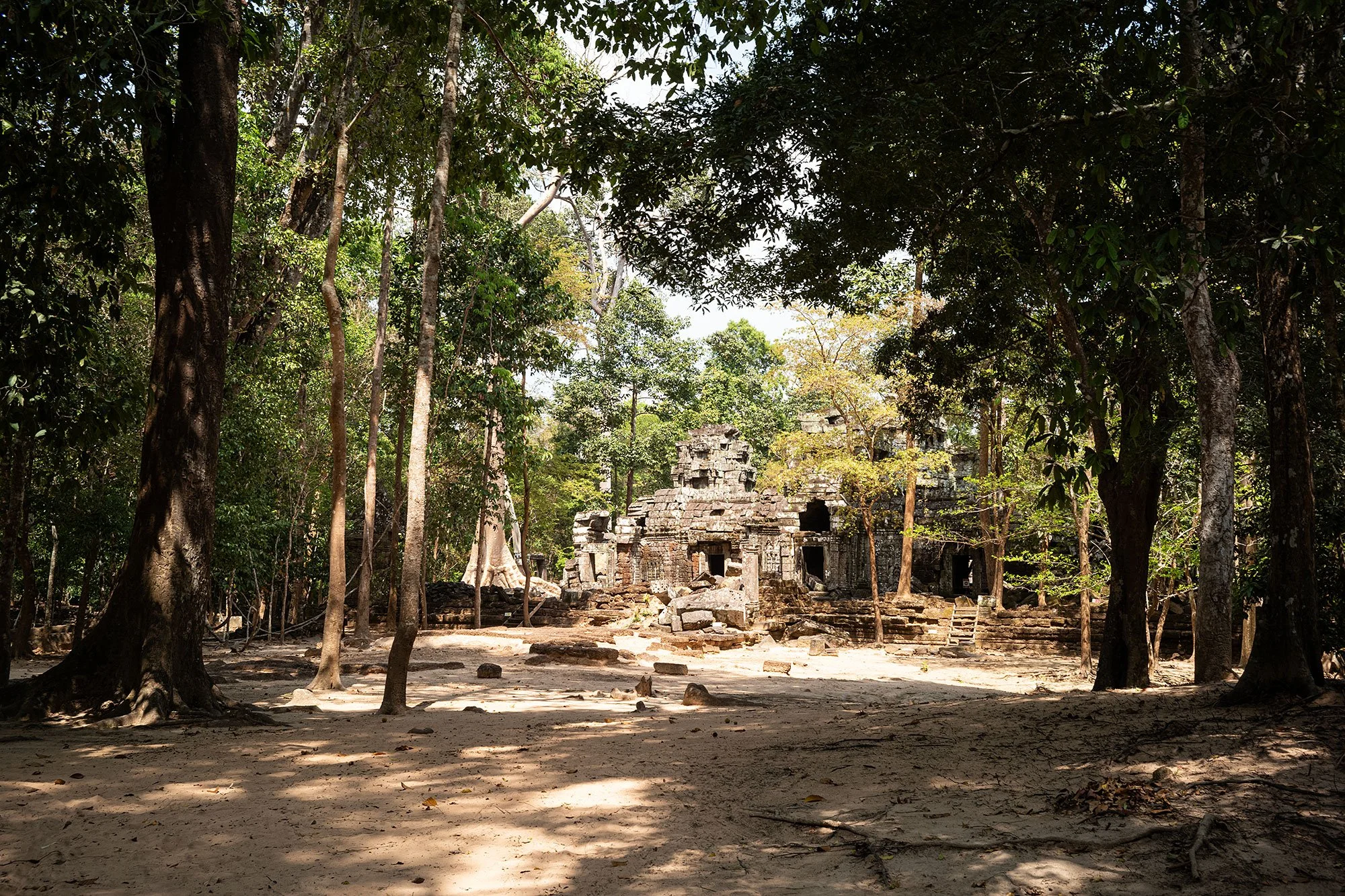
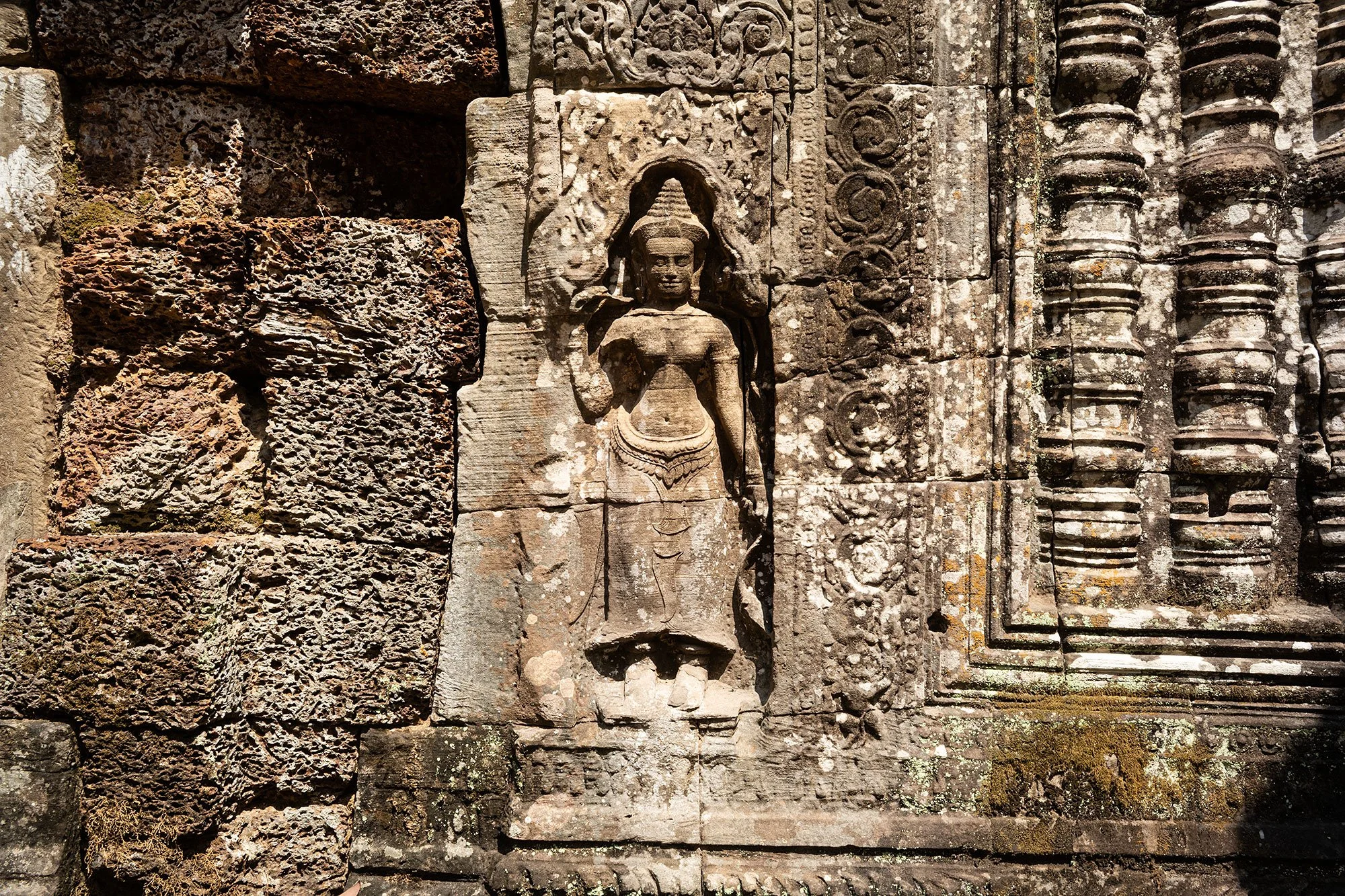
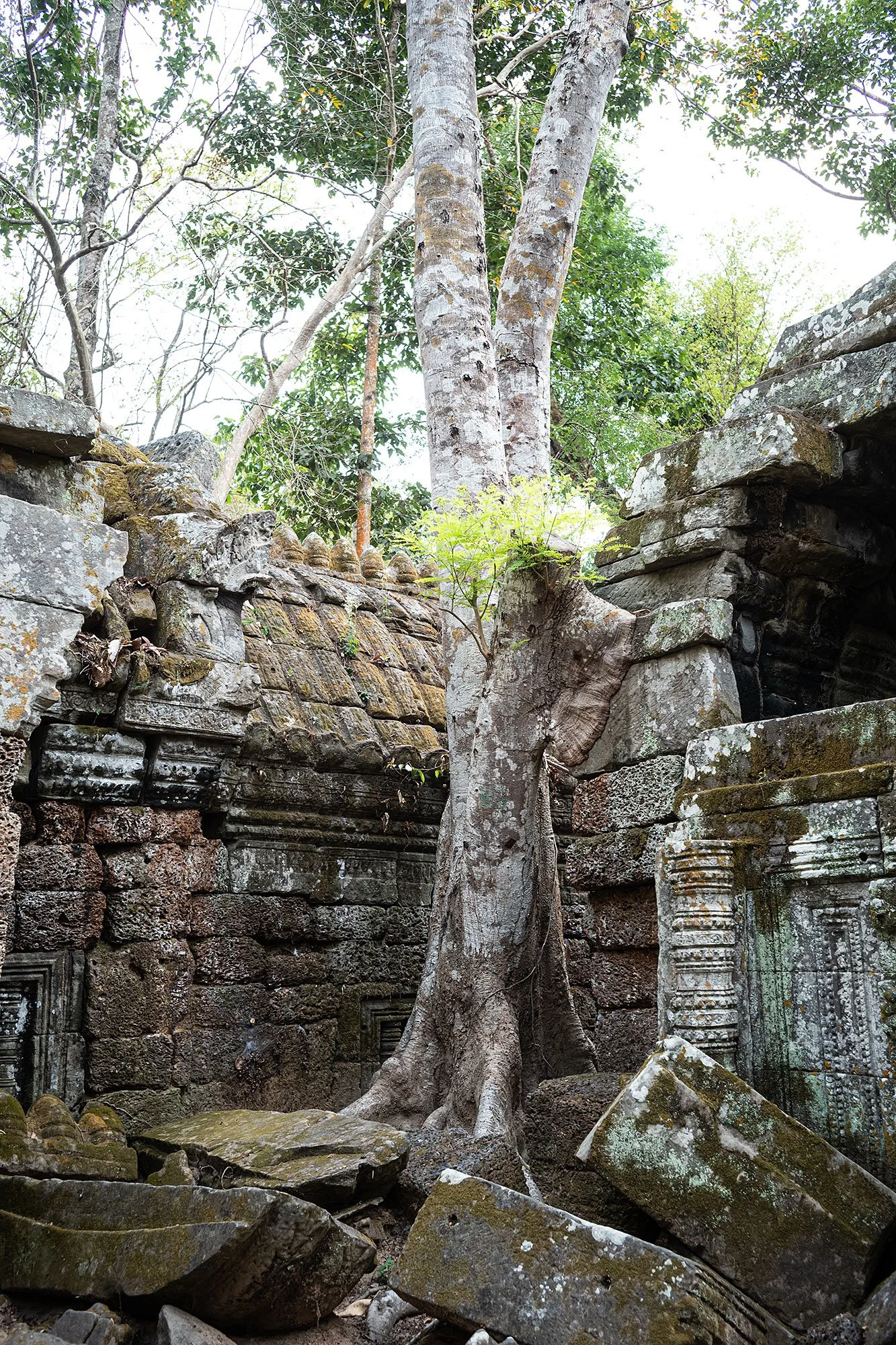
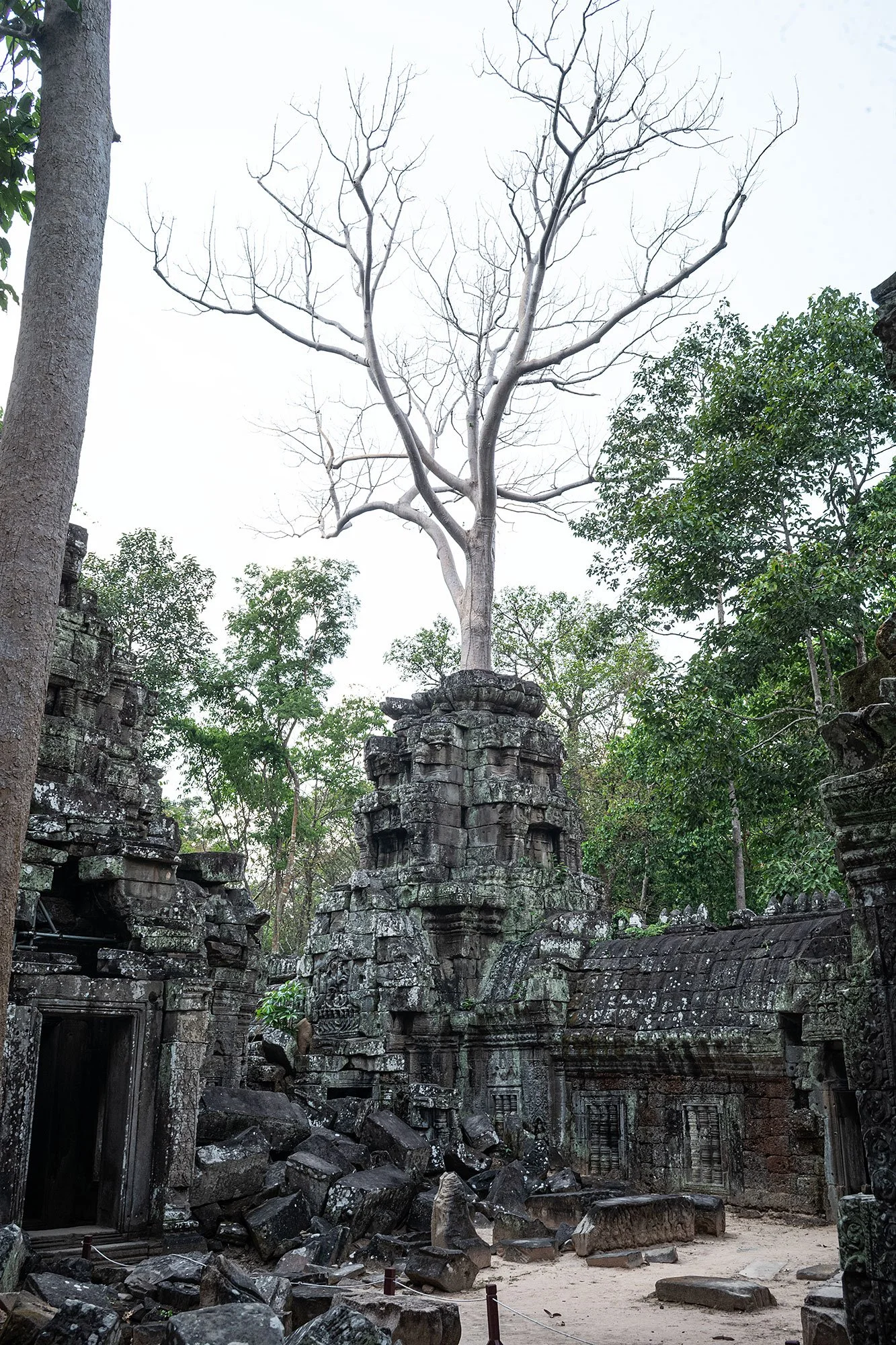
The temple is small but atmospheric and we have it to ourselves. I feel a little of the wonder of discovery that accompanied my first visit, when you could be the only person visiting one of the major temples, clamboring over the fallen stones and climbing the walls of the enclosures for better views.
Back at the car we’re again given cold towels and cold bottles of water. It’s almost enough to convince us to step out of the car more often in order to enjoy this little treat.
We drive towards Angkor Thom, the walled city that served as the final capital of the Khmer empire. Surrounded by a wall and moat, the city encompasses 9 square kilometers and is famous for the faces that adorn its gates and the Bayon temple’s towers.
We drive towards the Victory Gate, stepping out of the car before we pass through. Jimmy leads us up a forested path that gradually makes its way up to the top of the wall for better views of the scupltural towers.
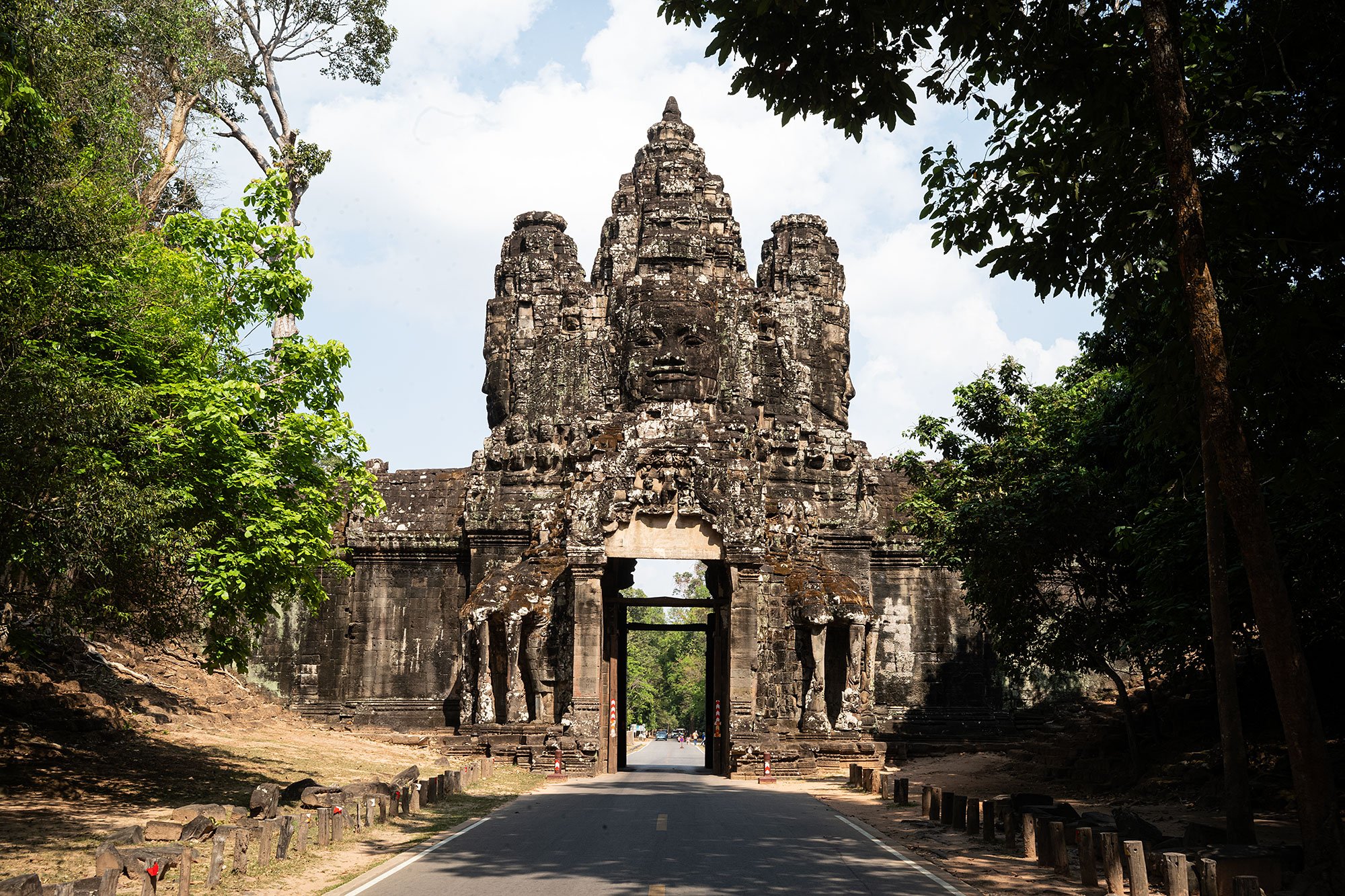
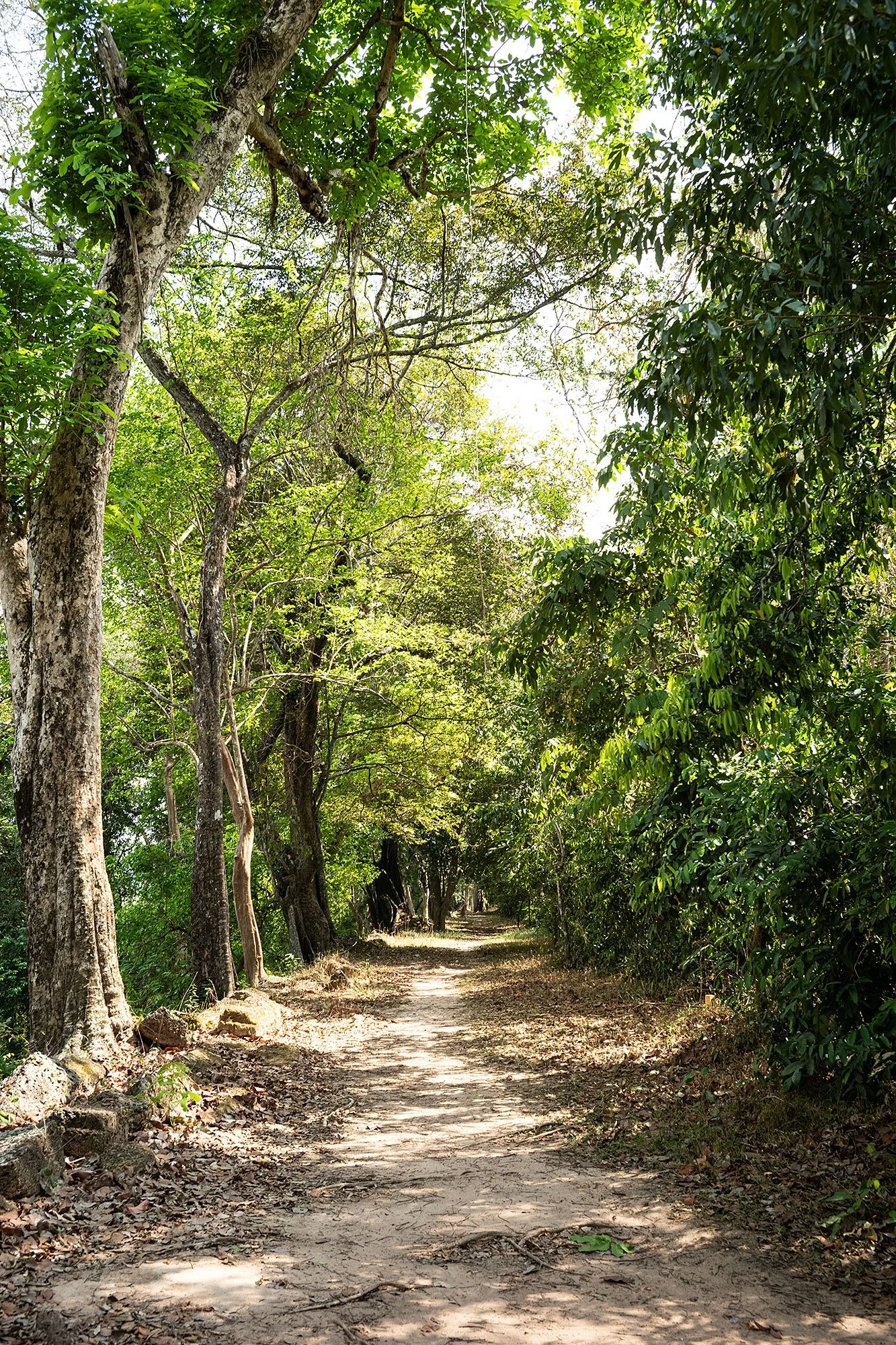
Jimmy takes hold of us and points out some photo points if we want to see the smiling face of Avalokiteshvara through the trees. He’s like guitar George, knowing all the chords and the places to stand for what have become the typical Angkor photos. I turn to take a photo of the road splitting the moat, lined with 54 mostly headless Devas on one side and 54 mostly headless Asuras on the other.
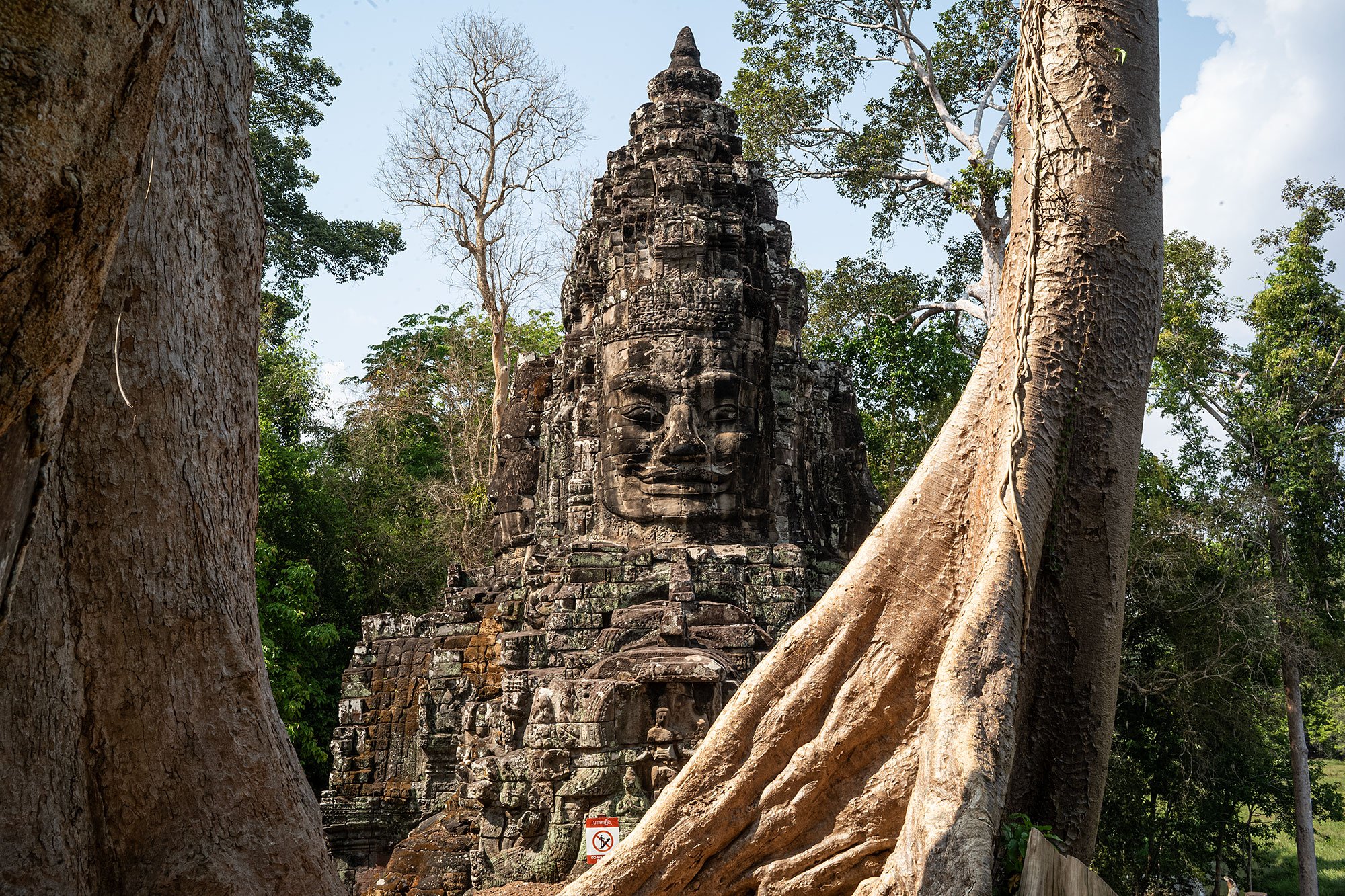
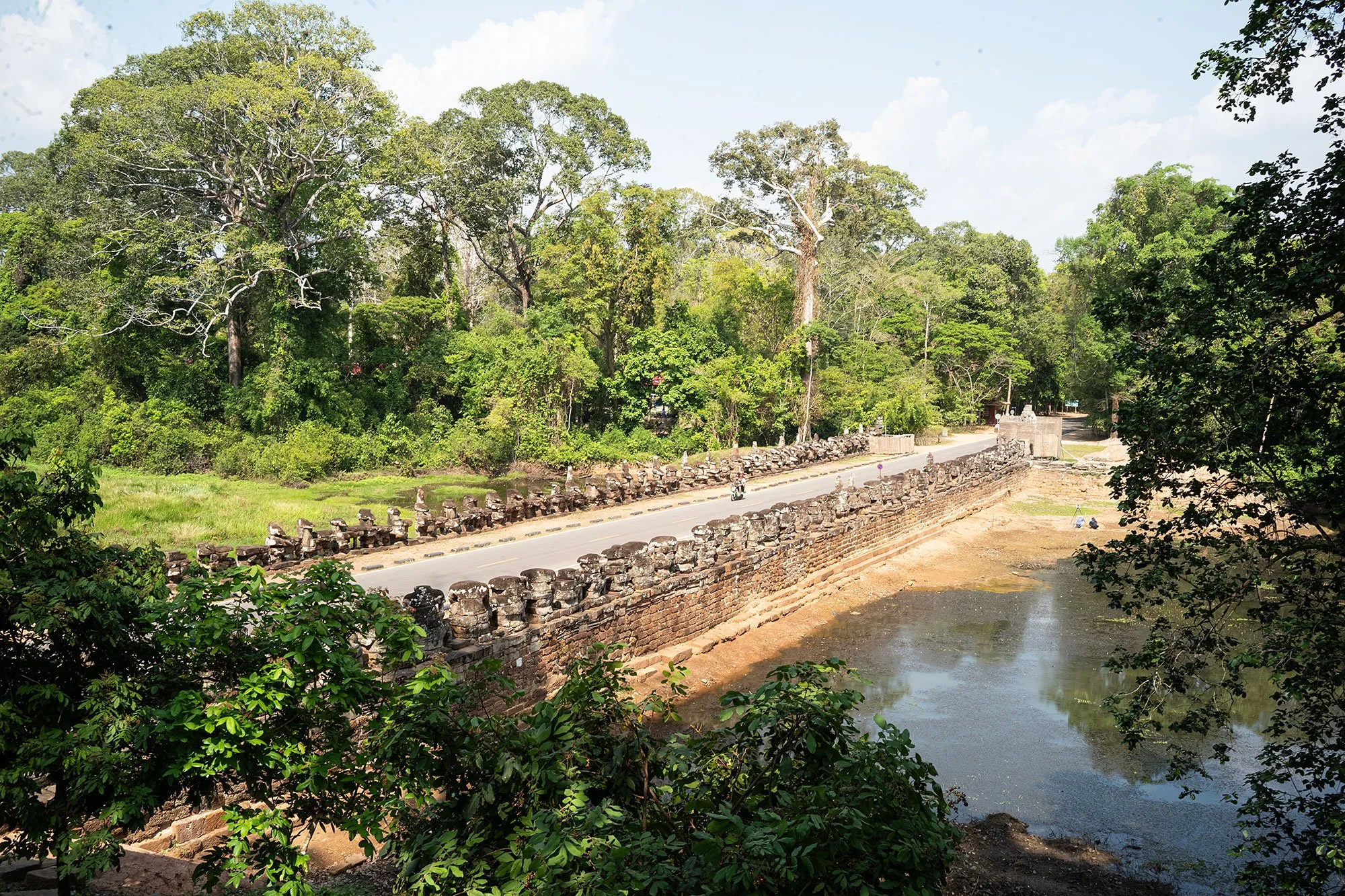
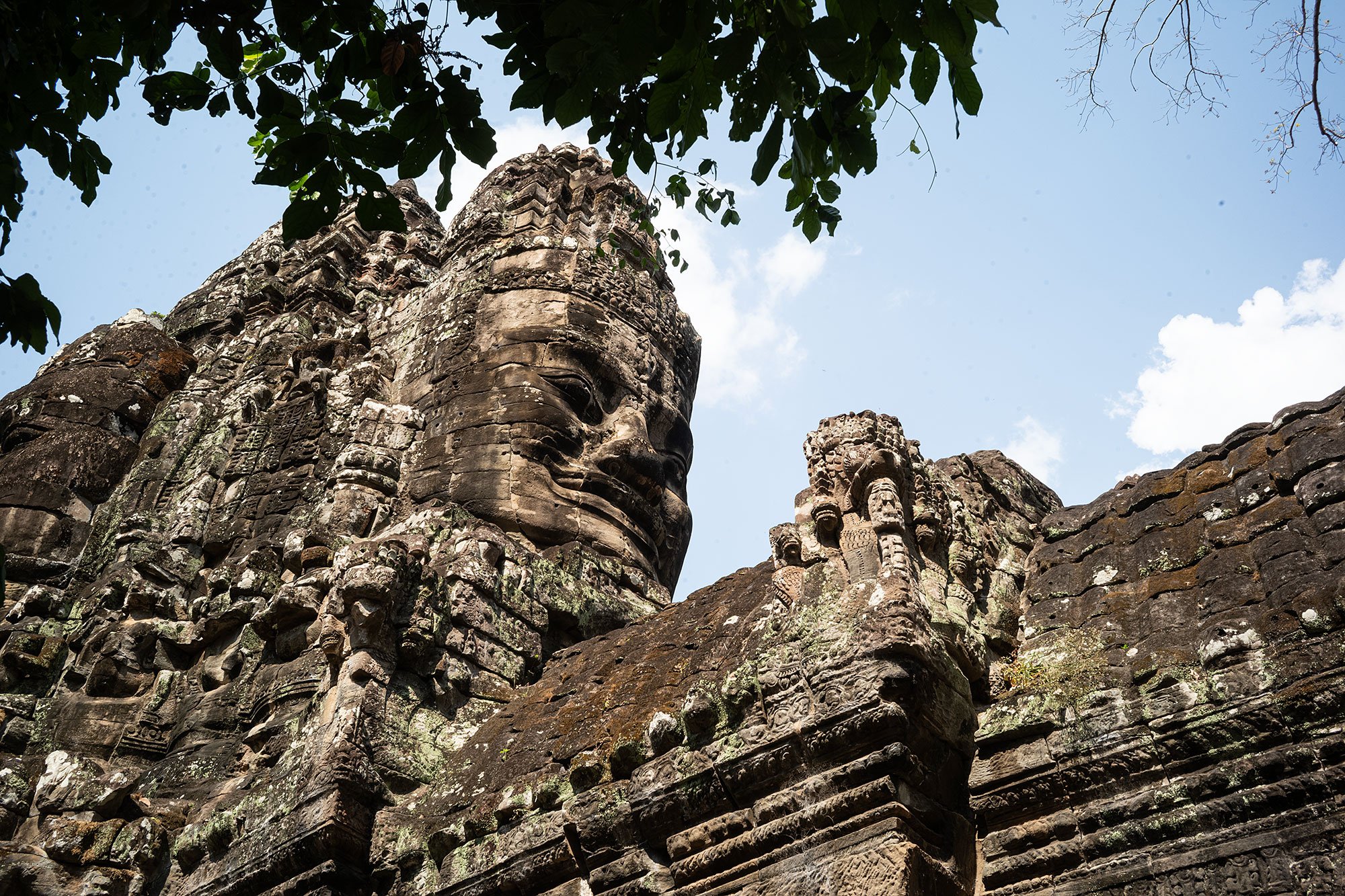
After we’ve taken photos from the top of the wall he begins to lead us back. I ask if we’re headed back to the car. We are. I tell them I’ll meet them there and proceed down a hill right by the gate. I want to take a photo of one of the three-headed elephants that flank the entrance.
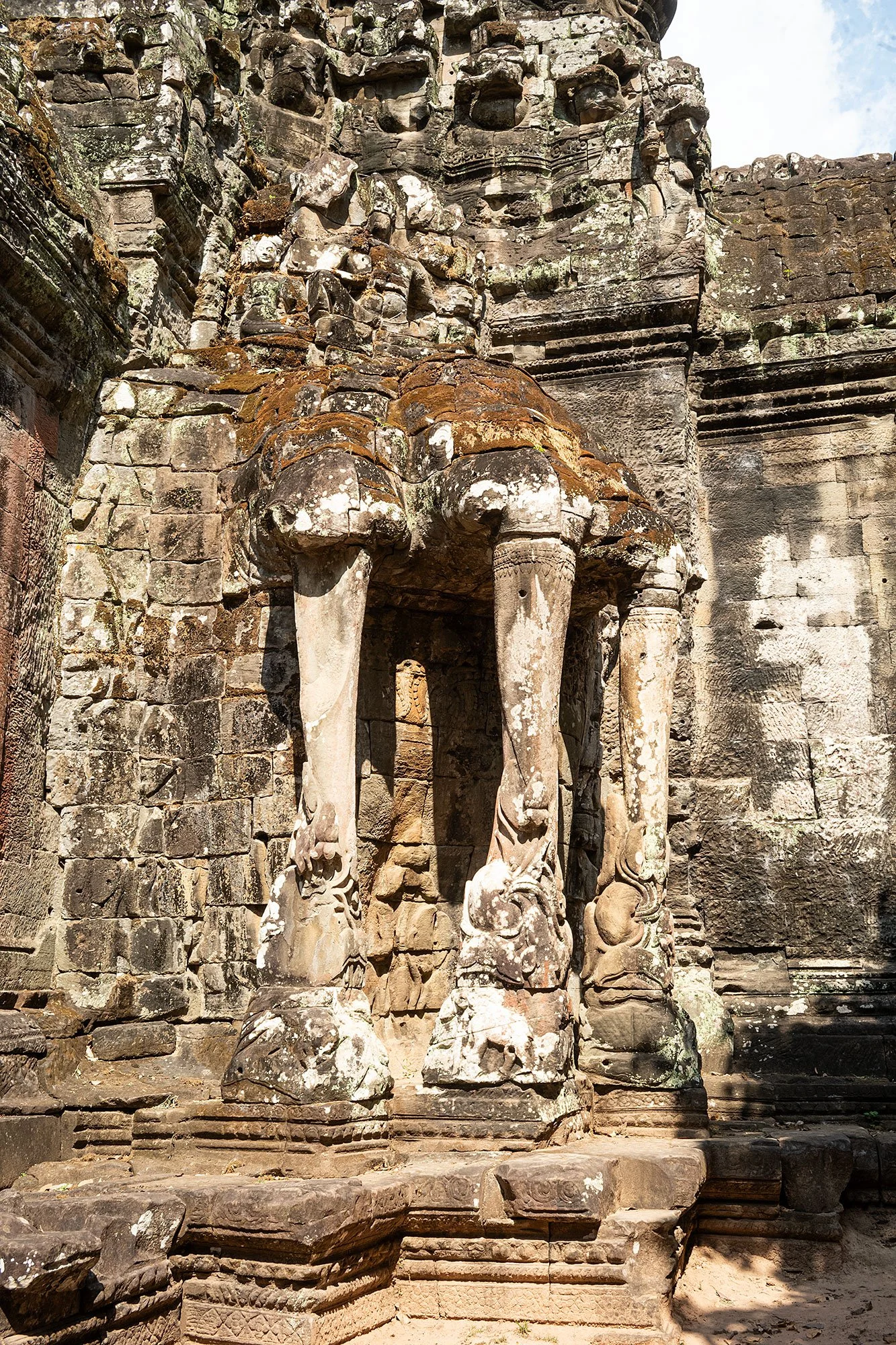
Once again cold towels and cold bottles of water are on offer when we reach the car. Sreang threds us through the tight gate and drives us to the Royal Square where we alight. Sreang offers us extra bottles of water as we’re to walk for a bit through the city to see the temples and terraces.
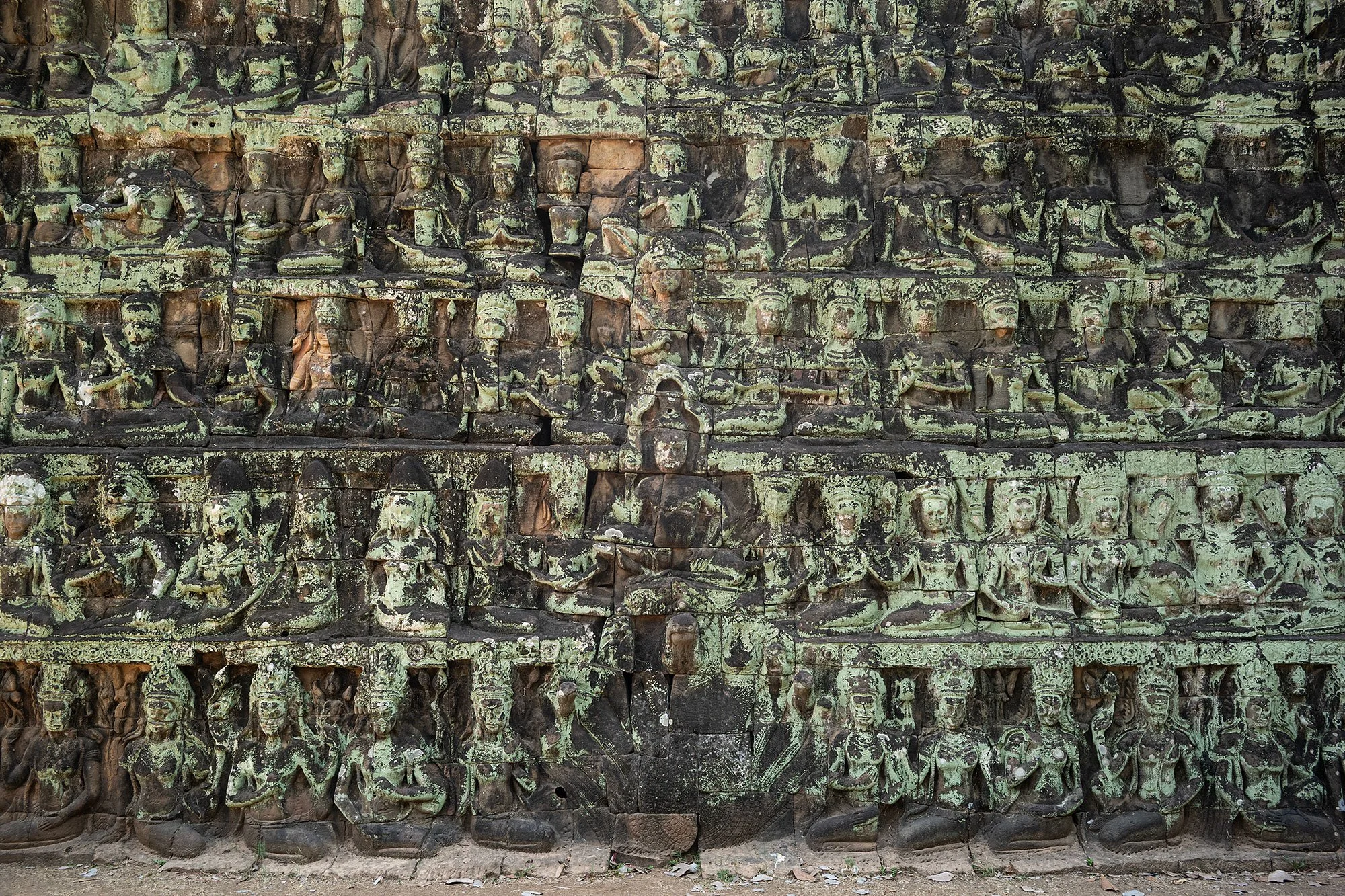
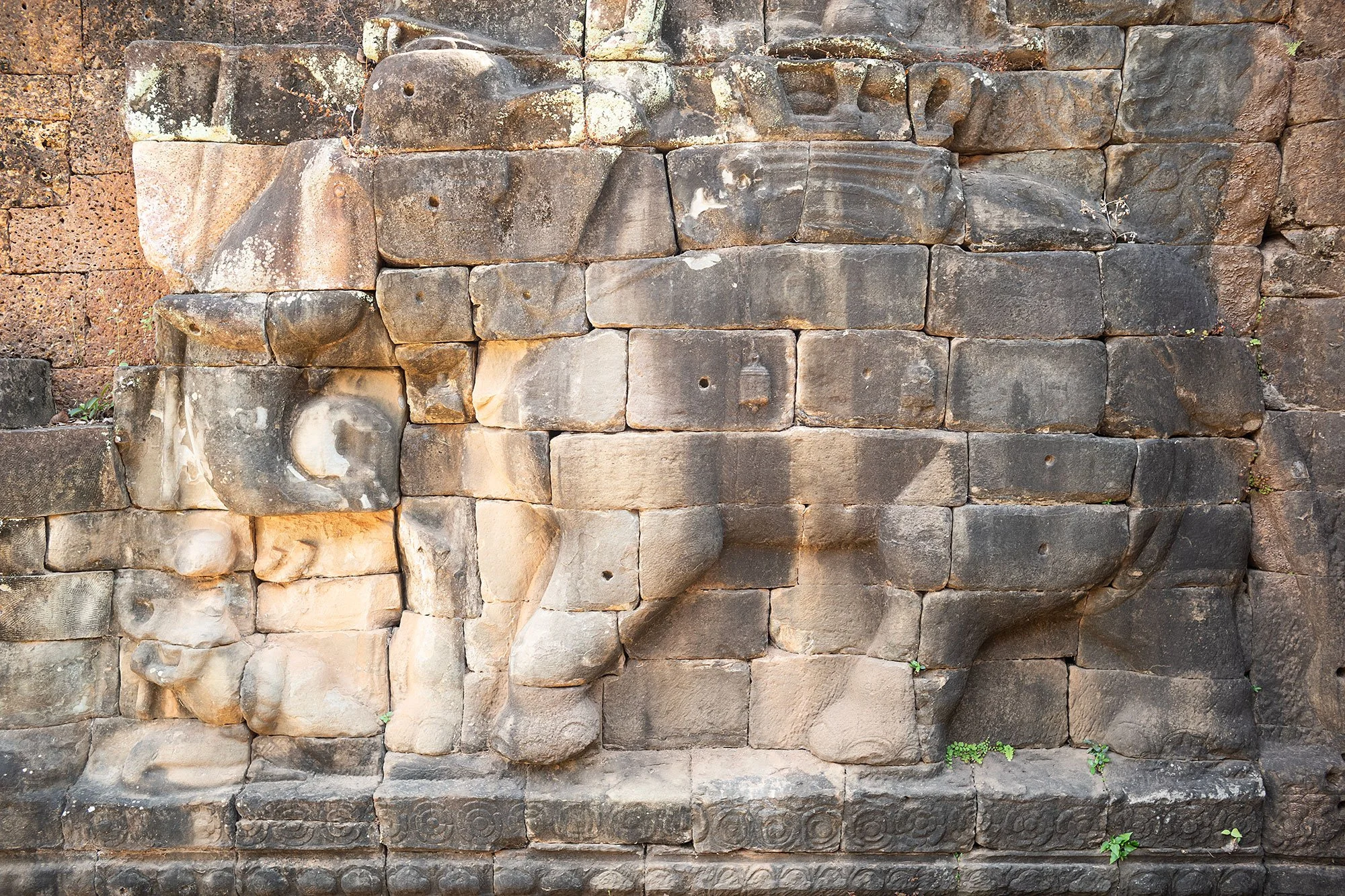
Our first stop is the Terrace of the Leper King. Built under Jayavarman VII in the late 12th century in the Bayon style, the name of the foundation comes from an 8th-century sculpture discovered at the sight. When found, the discoloration and moss growing upon the sculpture looked similar to the symptoms of leporsy, connecting it to the legend of Angkorian king Yasovarman I (who reigned from 899 to 910 CE) having the disease.
We stop to dmire the figures carved into the terrace and I find myself taking some of the same photos as I did in 2000. I especially remember the large elephant carved into one of the corners.
We walk past the terrace to Preah Palilay, a tall chimey-like structure set in a wooded area a bit away from the larger temples in the city. Built from the 12th to 13th century, Trees grow out of the plinth supporting the central structure, giving the temple an undiscovered feel and we’re the only ones visiting. Once again I’m drawn back to my first trip to Southeast Asia and the sense of exploration and discovery being the only one at a temple affords.
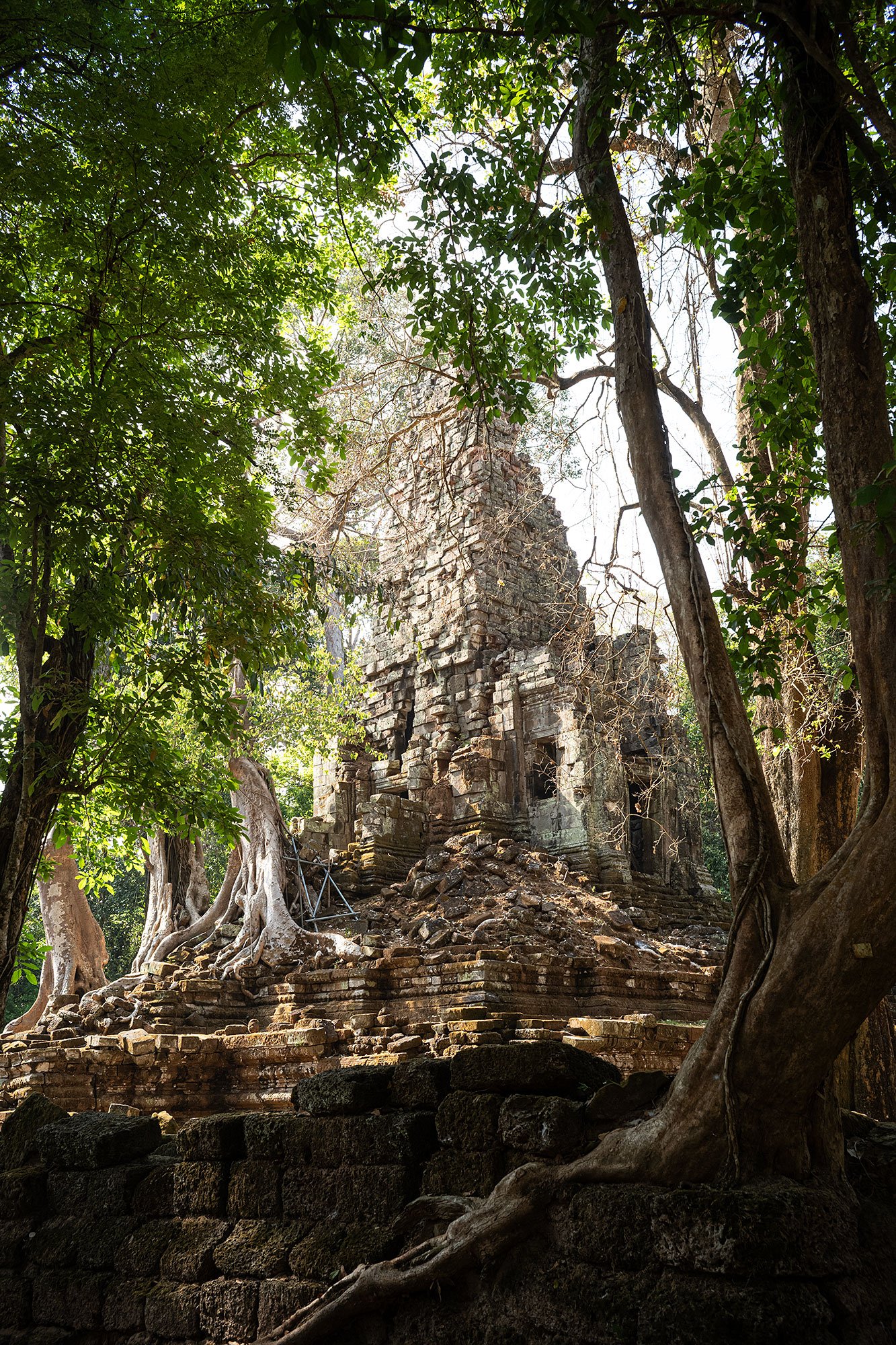
From Preah Palilay we walk past Phimeanakas, a 10th century Hindu temple begun under Rajendravarman II and completed by Suryavarman I, who was king of the Khmer Empire from 1002 to 1050. Originally the centerpiece of his kingdom, the temple is designed in the shape of a three-tiered pyramid. A tower once stood in the center crowed with a golden pinnacle.
Legend has it that kings spent the first watch of every night in the tower with a woman thought to represent a Naga, returning on the second watch to the palace with the queen. If the naga did not appear the king’s days would be numbered; if the king did not visit calamity would strike the land.
The temple is currently under renovation and a fence keeps us from visiting.
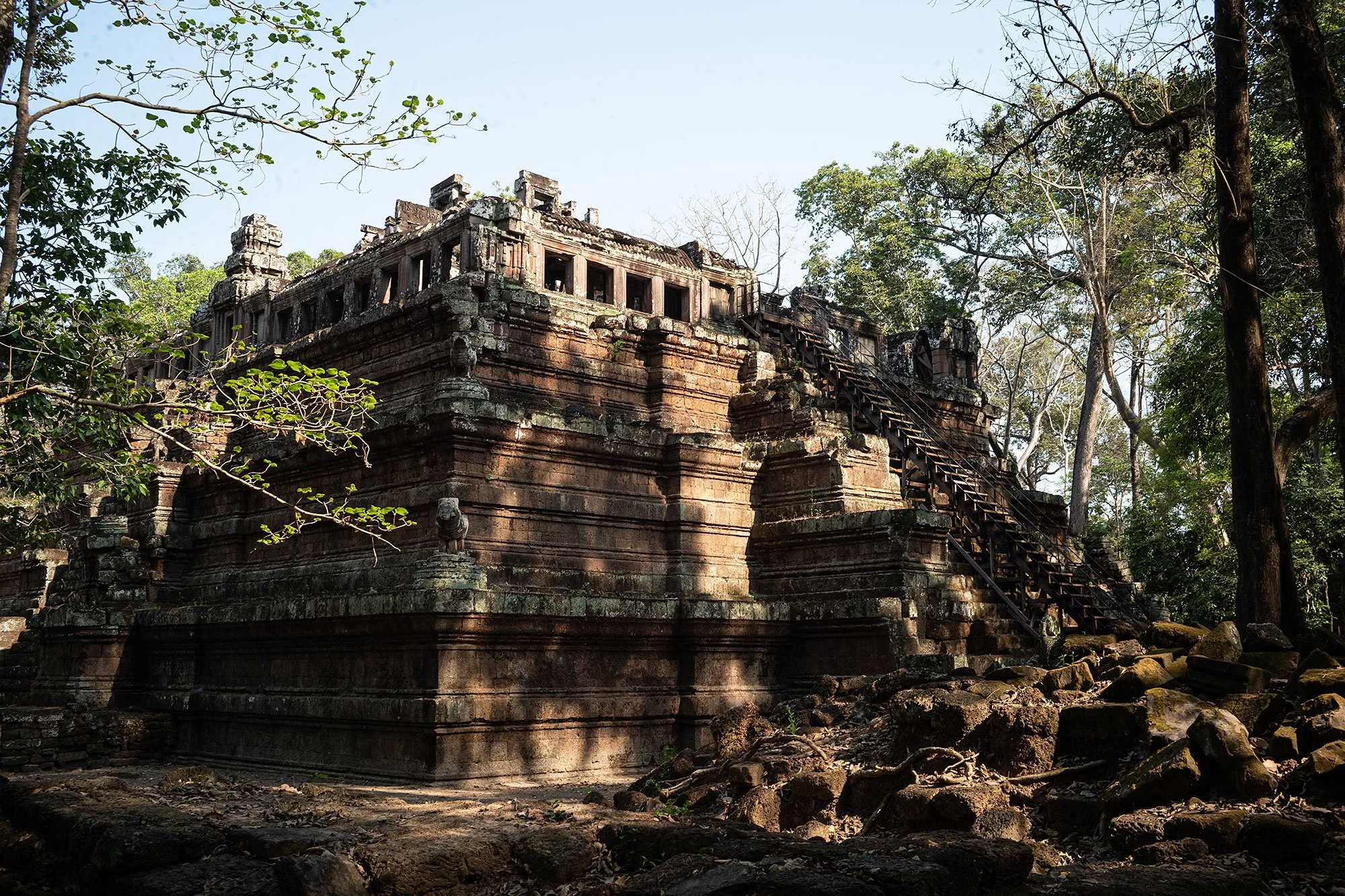
Our next stop is the Baphuon, originally dedicated to Shiva and later converted to a Theravada Buddhist temple. While it was originally considered to have been built during the reign of Udayadityavarman II who ruled from 1050 to 1066, a 2015 French team determined it was constructed under the reign of his predecessor Suryavarman I, a ruler who had no temple previously associated with him.
Jimmy asks us if we want to climb the temple. My cousin isn’t particularly enthusiastic about the activity, but I do. Her husband follows and she reluctantly joins us at the top.
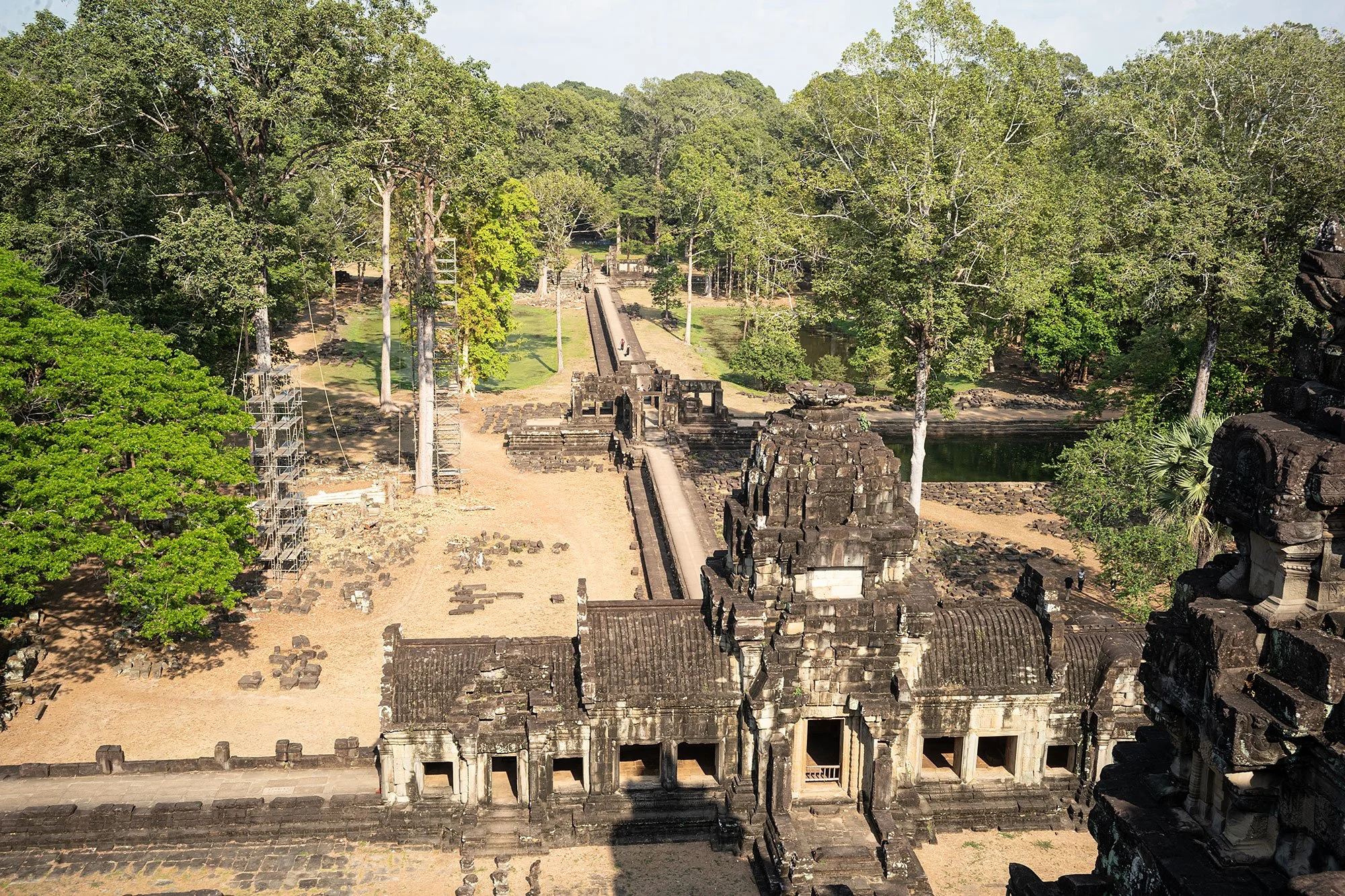
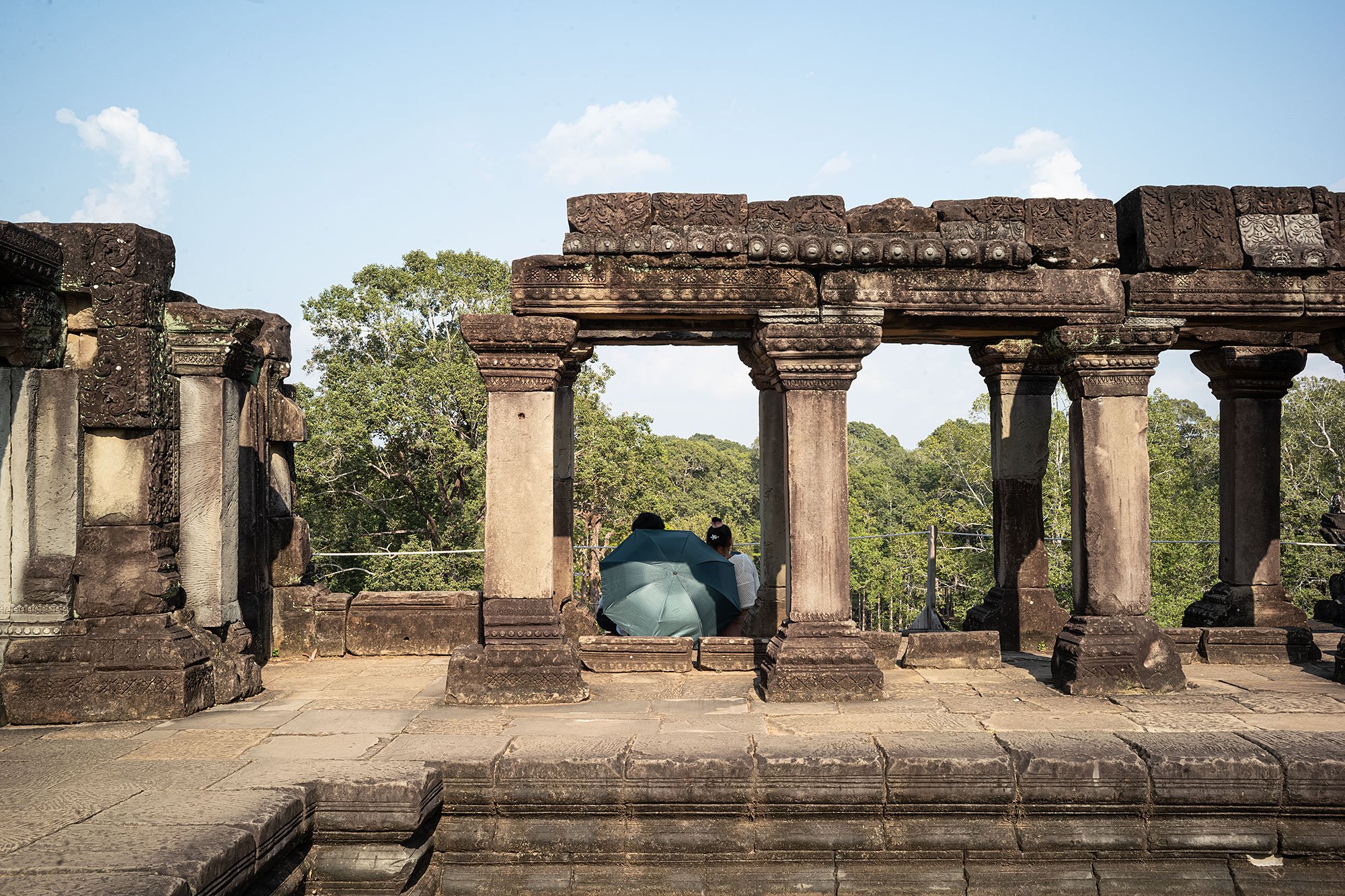
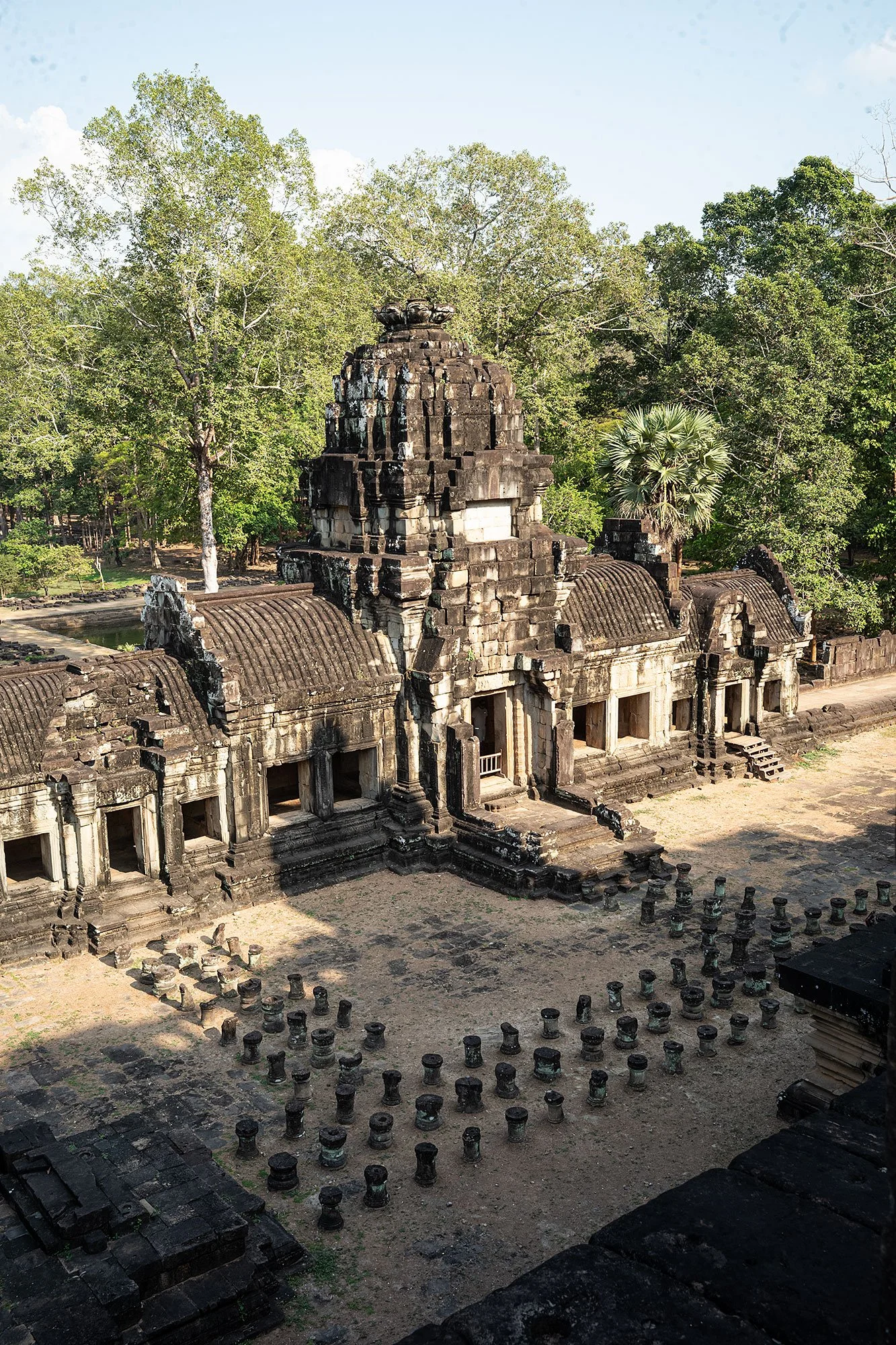
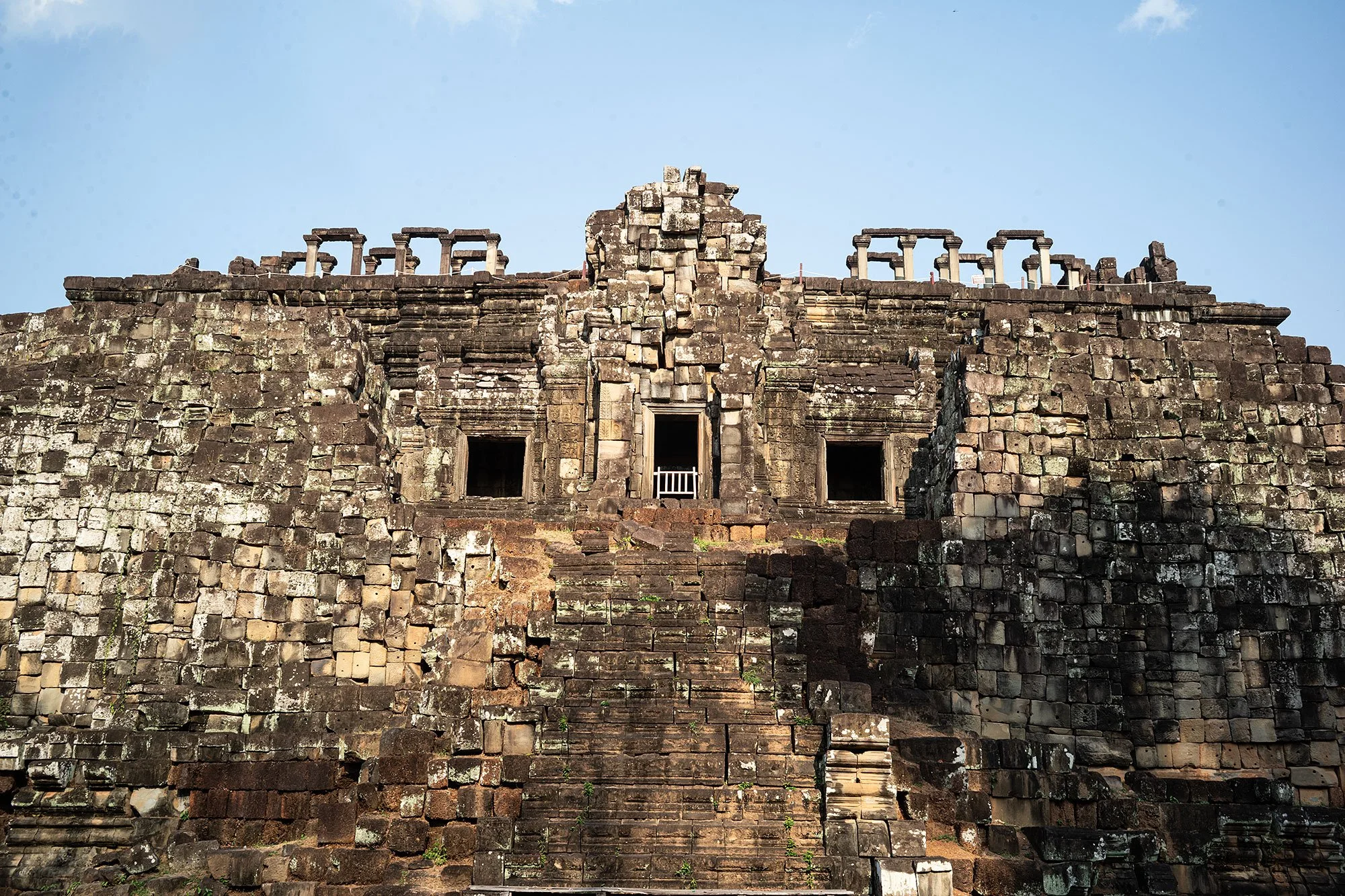
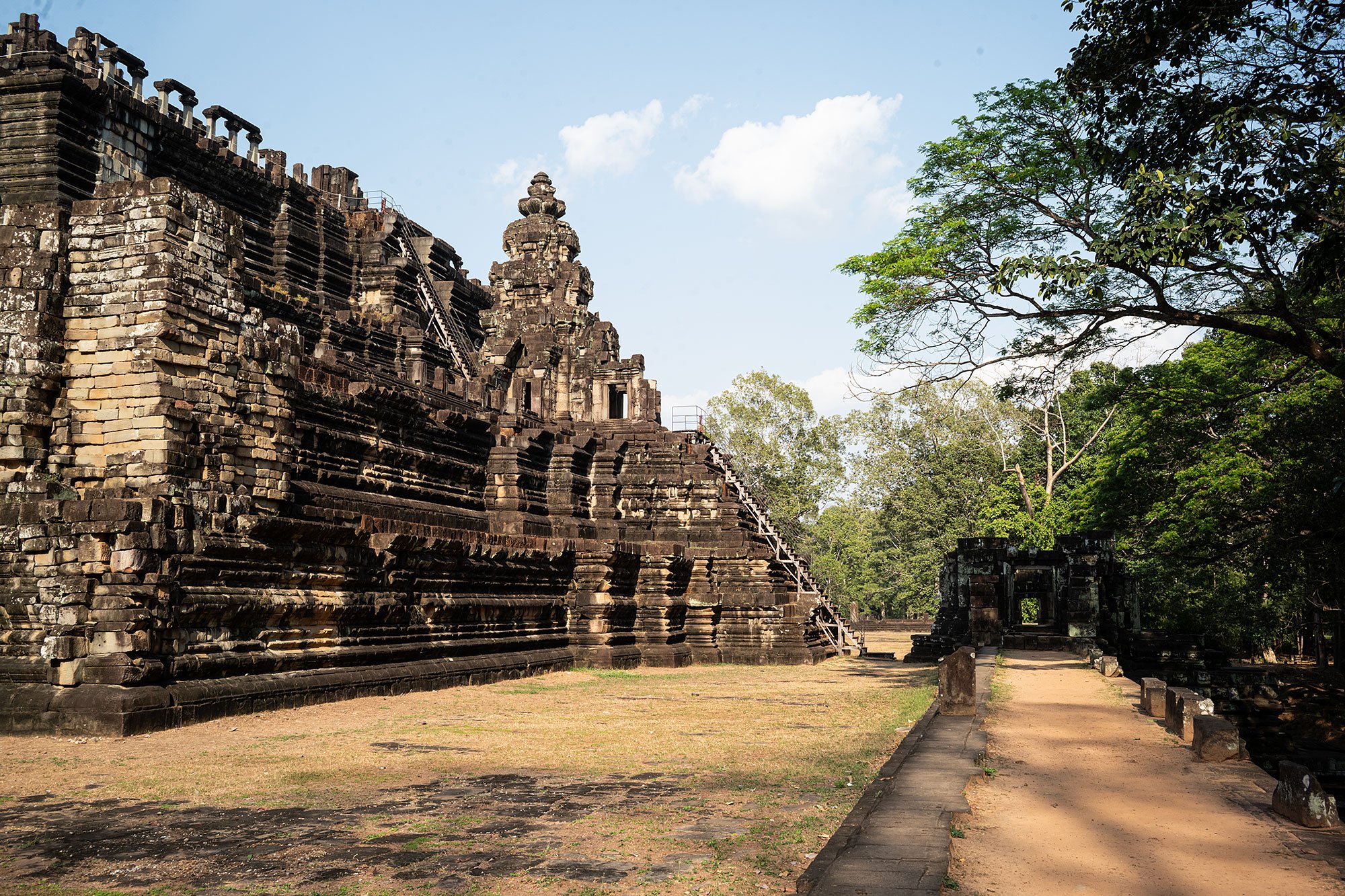
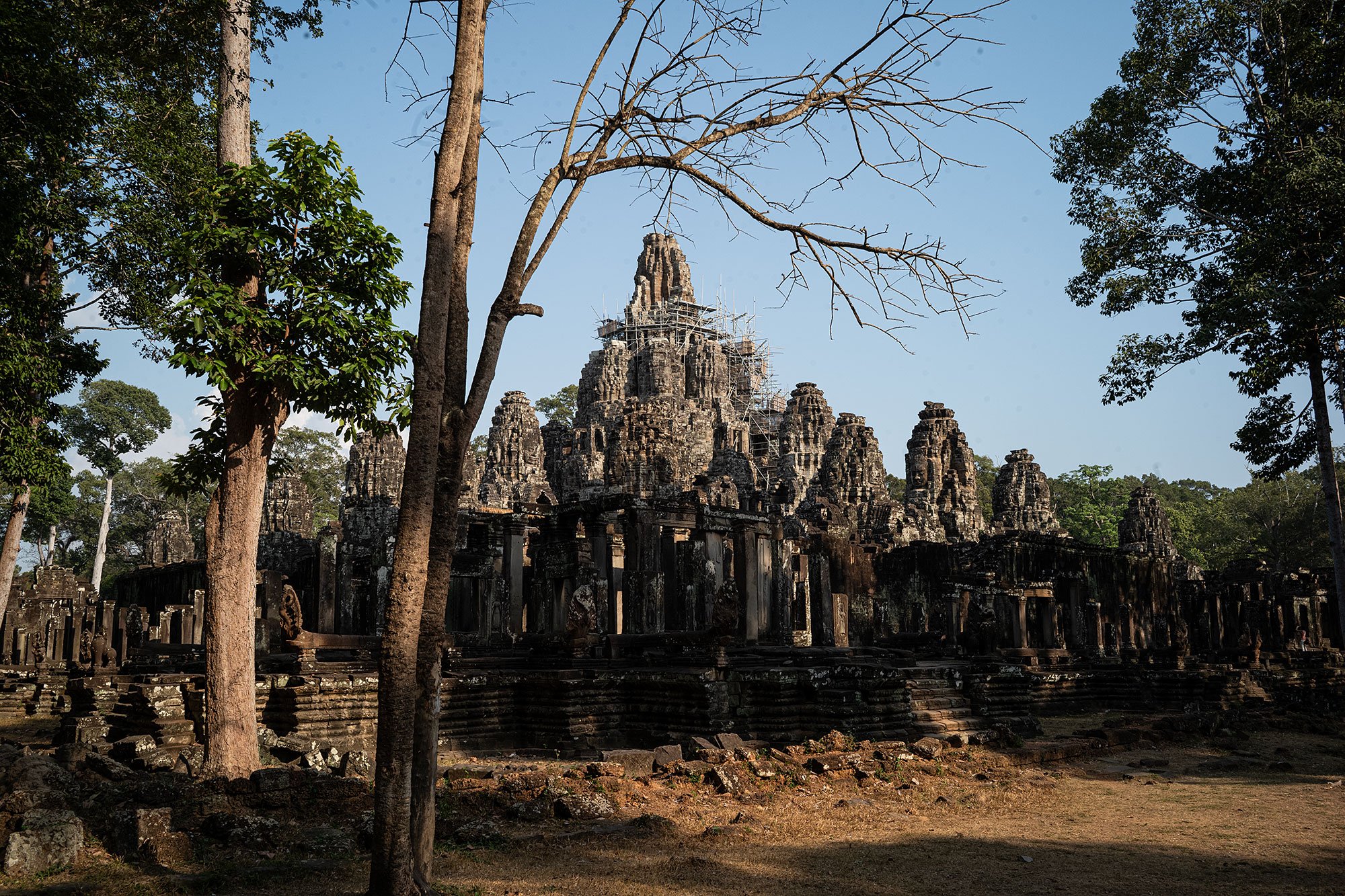
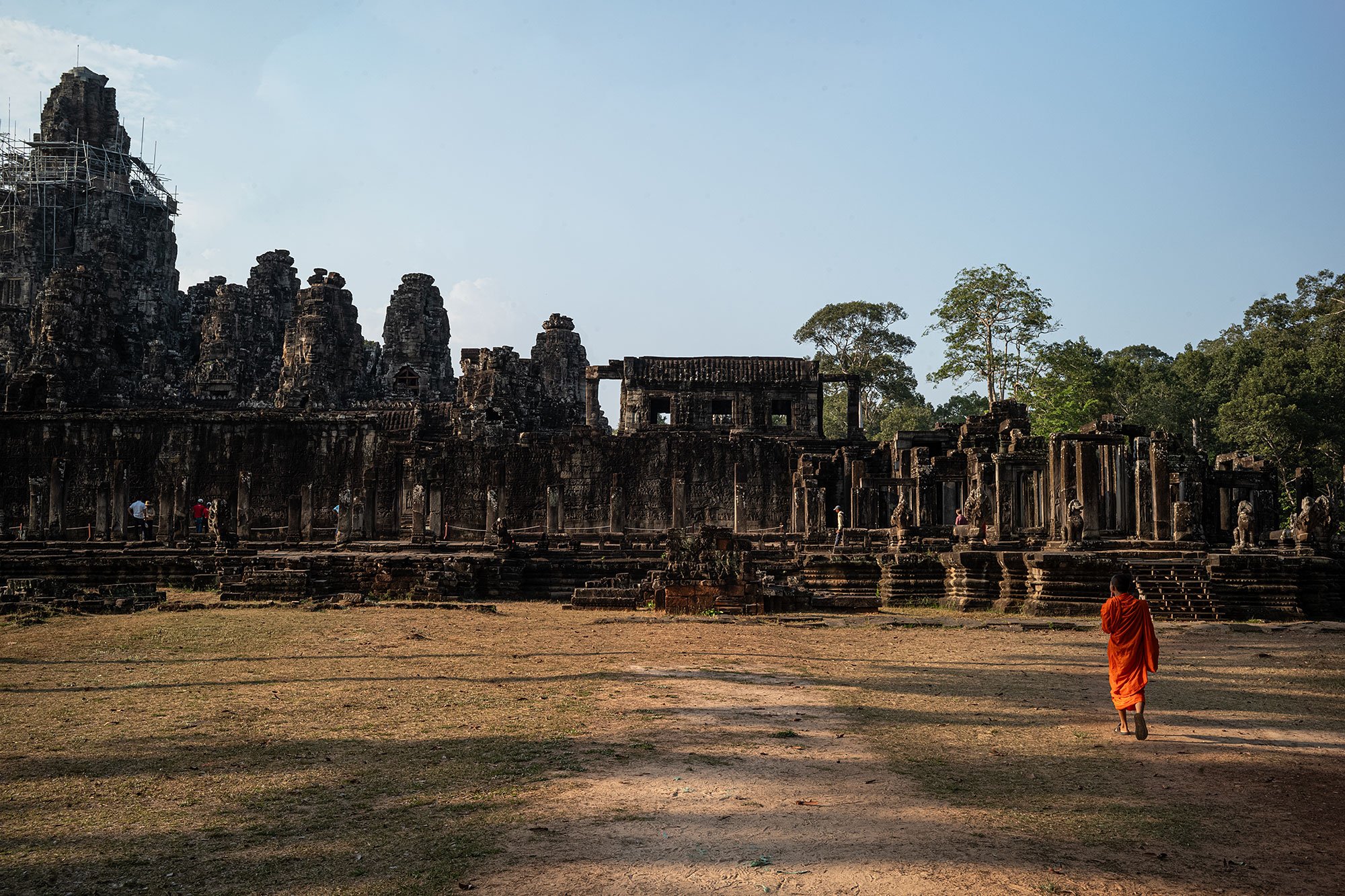
From Baphon we walk to the Bayon, one of the most famous temples for its towers adorned with 216 faces on the towers that remain from the original 54 that had been erected.
Built in the late 12th or early 13th century as the state temple of King Jayavarman VII, it sits in the ecnter of Angkor Thom. From wikipedia, “its iconography, spatial organization, and emphasis on compassion and kingship illustrate the close relationship between Buddhism and royal authority at Angkor, while its continued use as a Buddhist sanctuary demonstrates the enduring influence of Buddhism in the region.”
The smiling faces are believed to represent the king, symbolizing his compassion and royal authority.
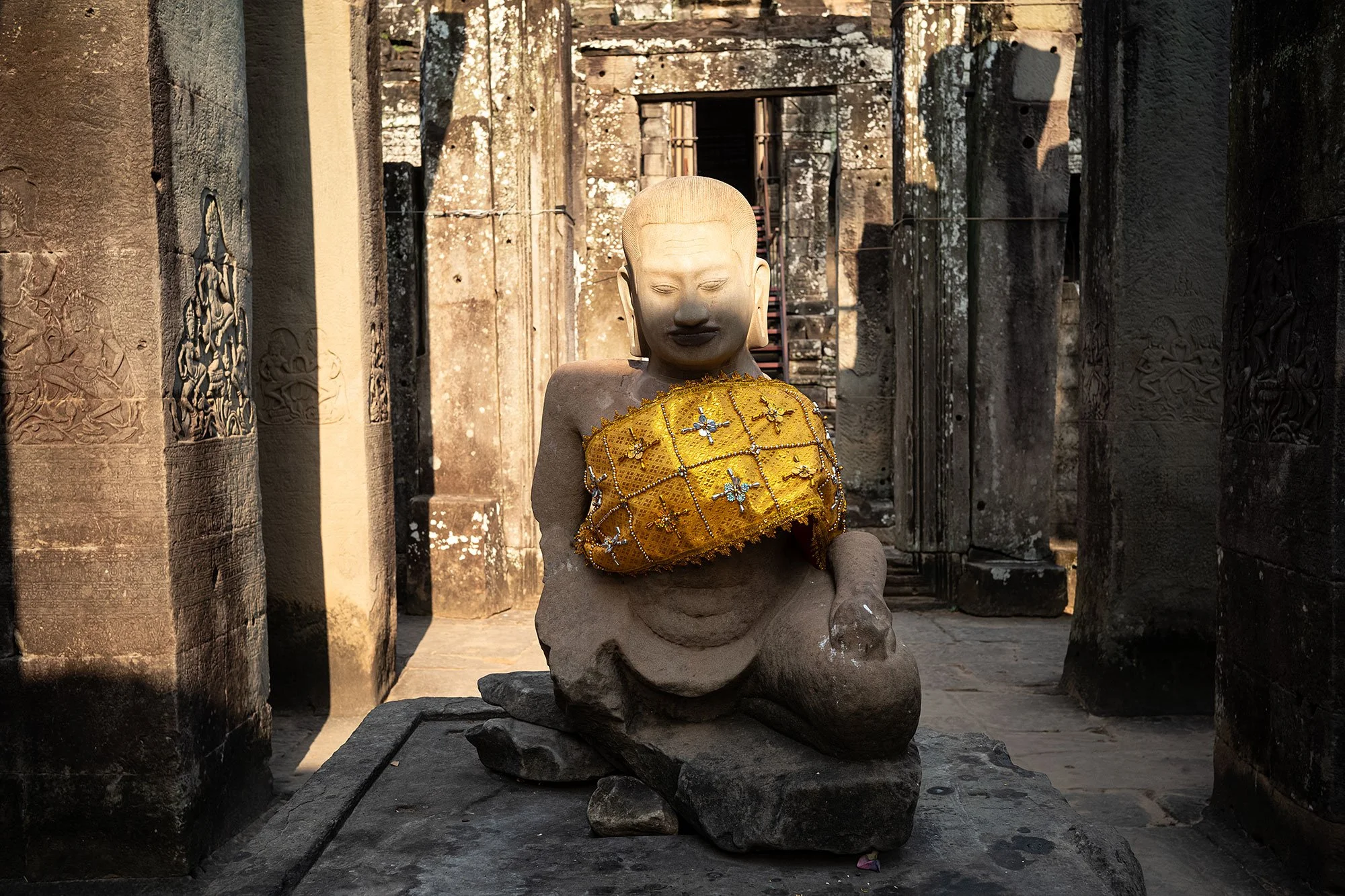
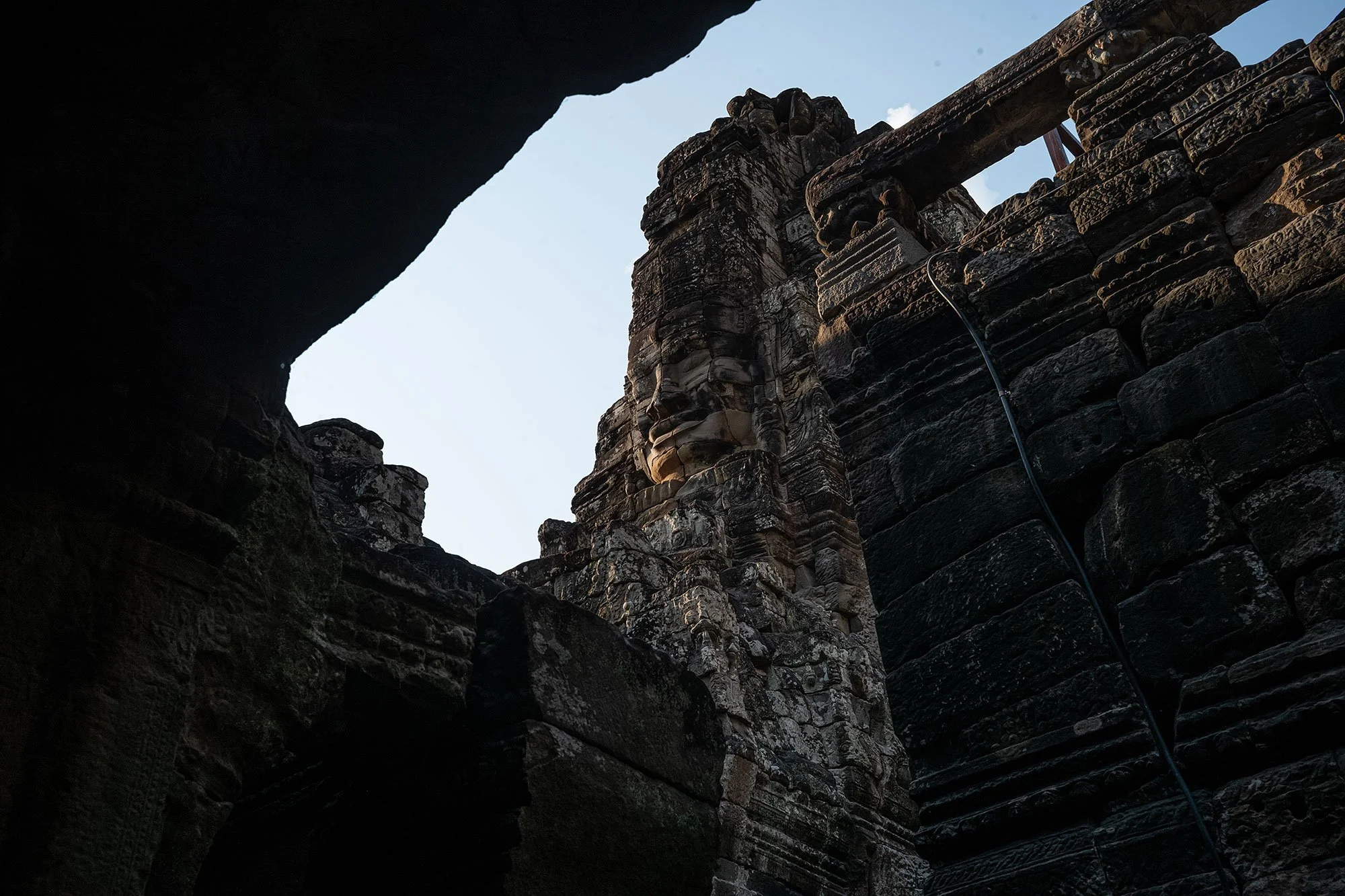
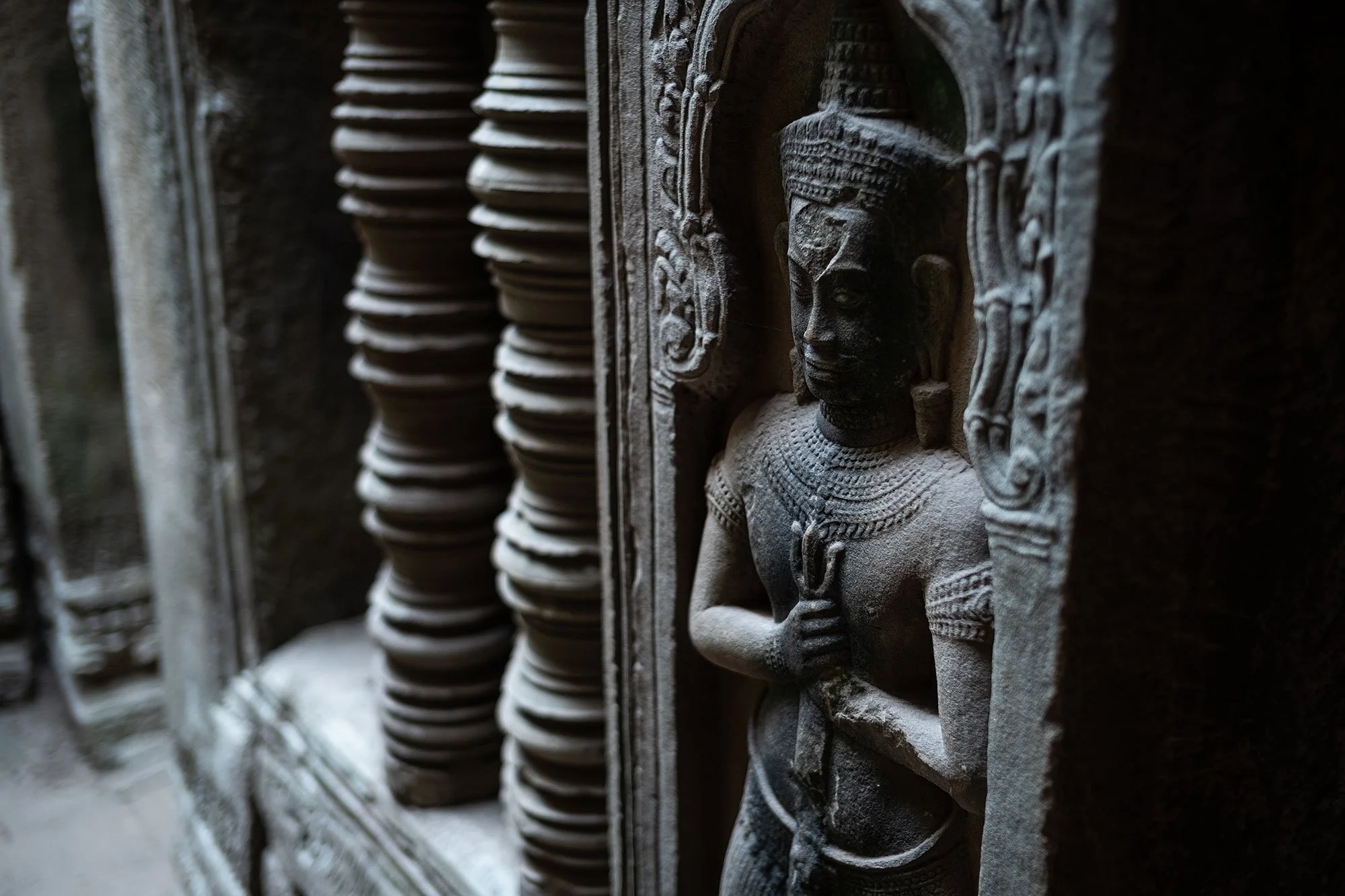
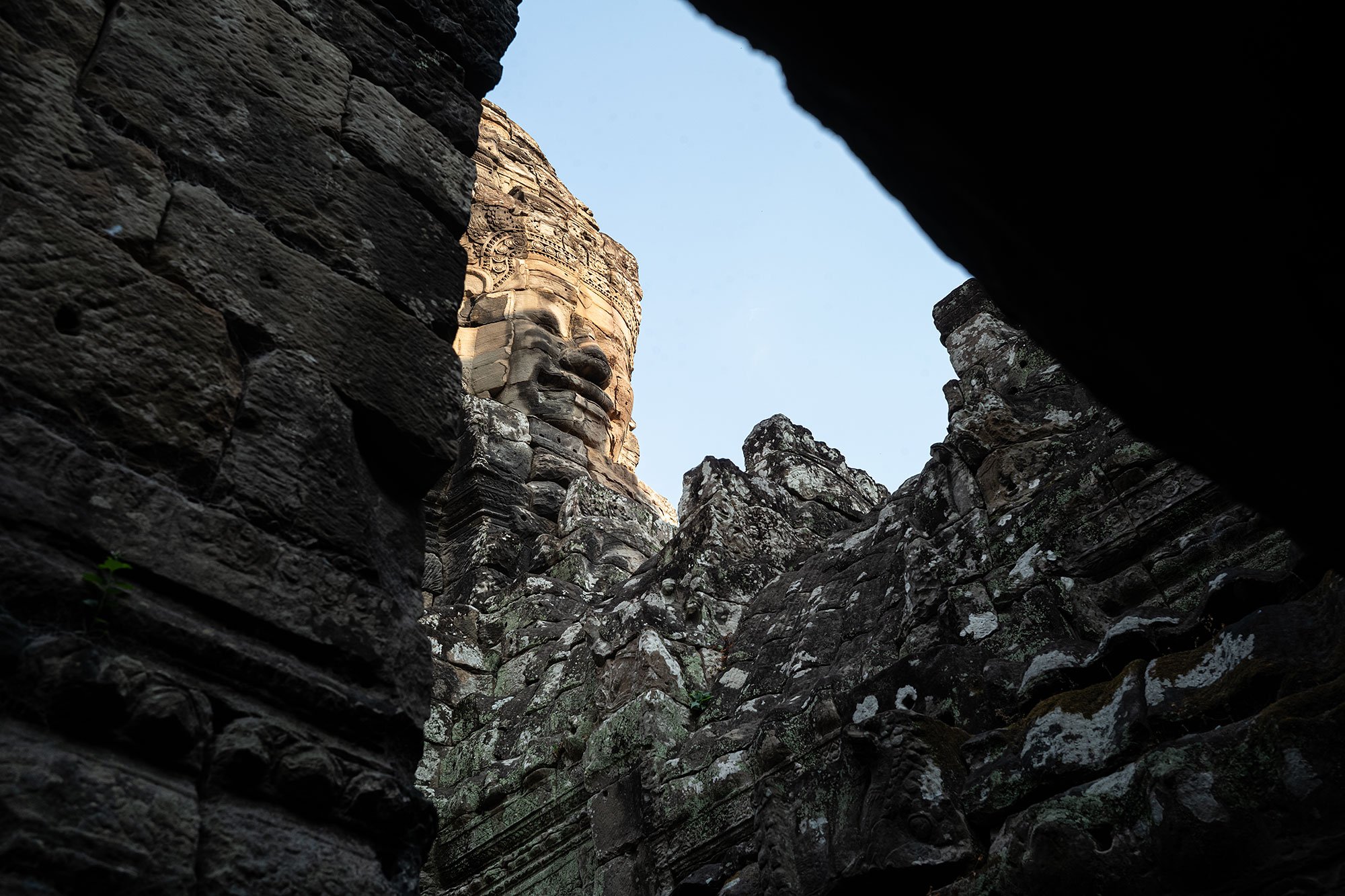
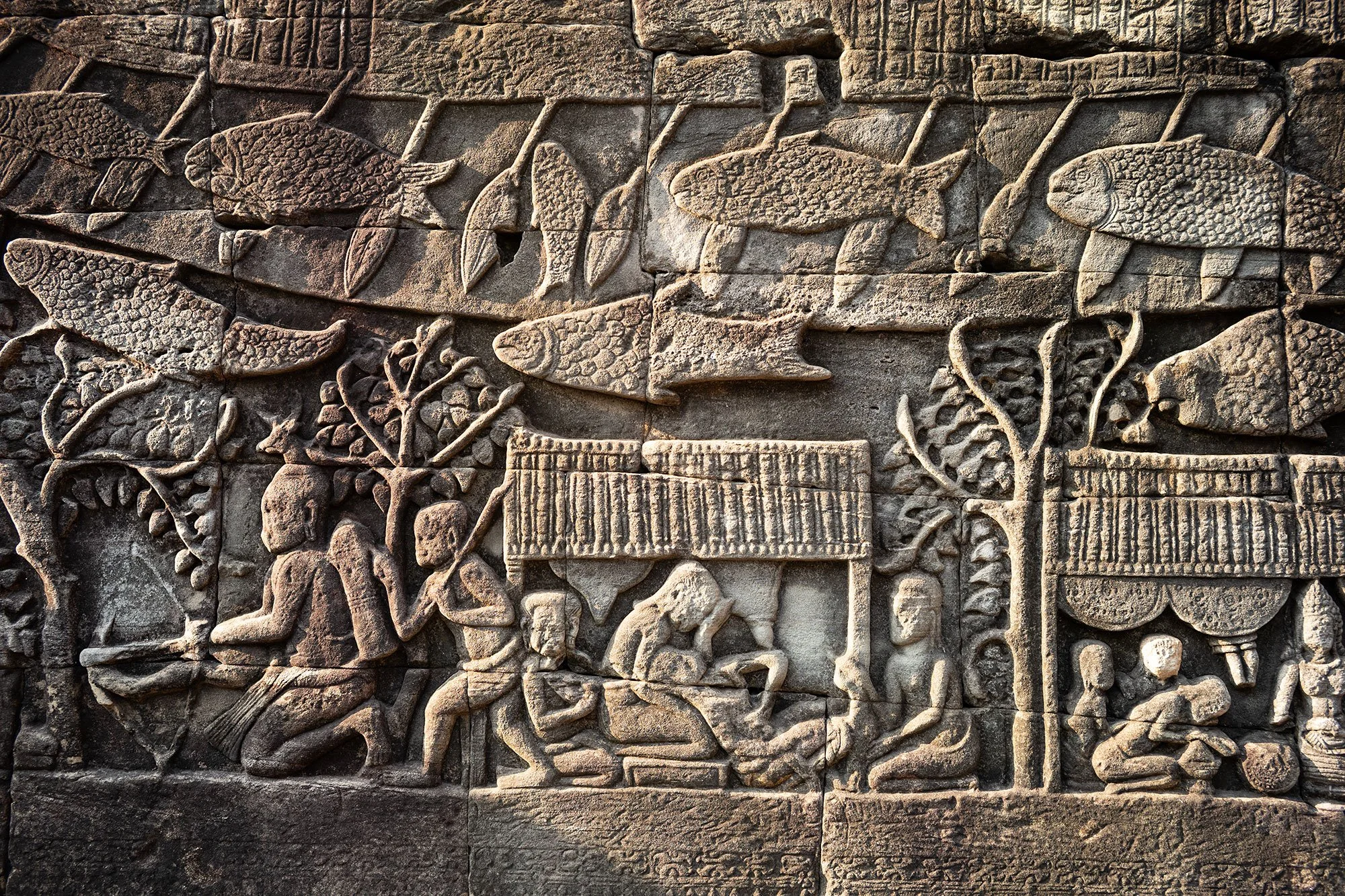
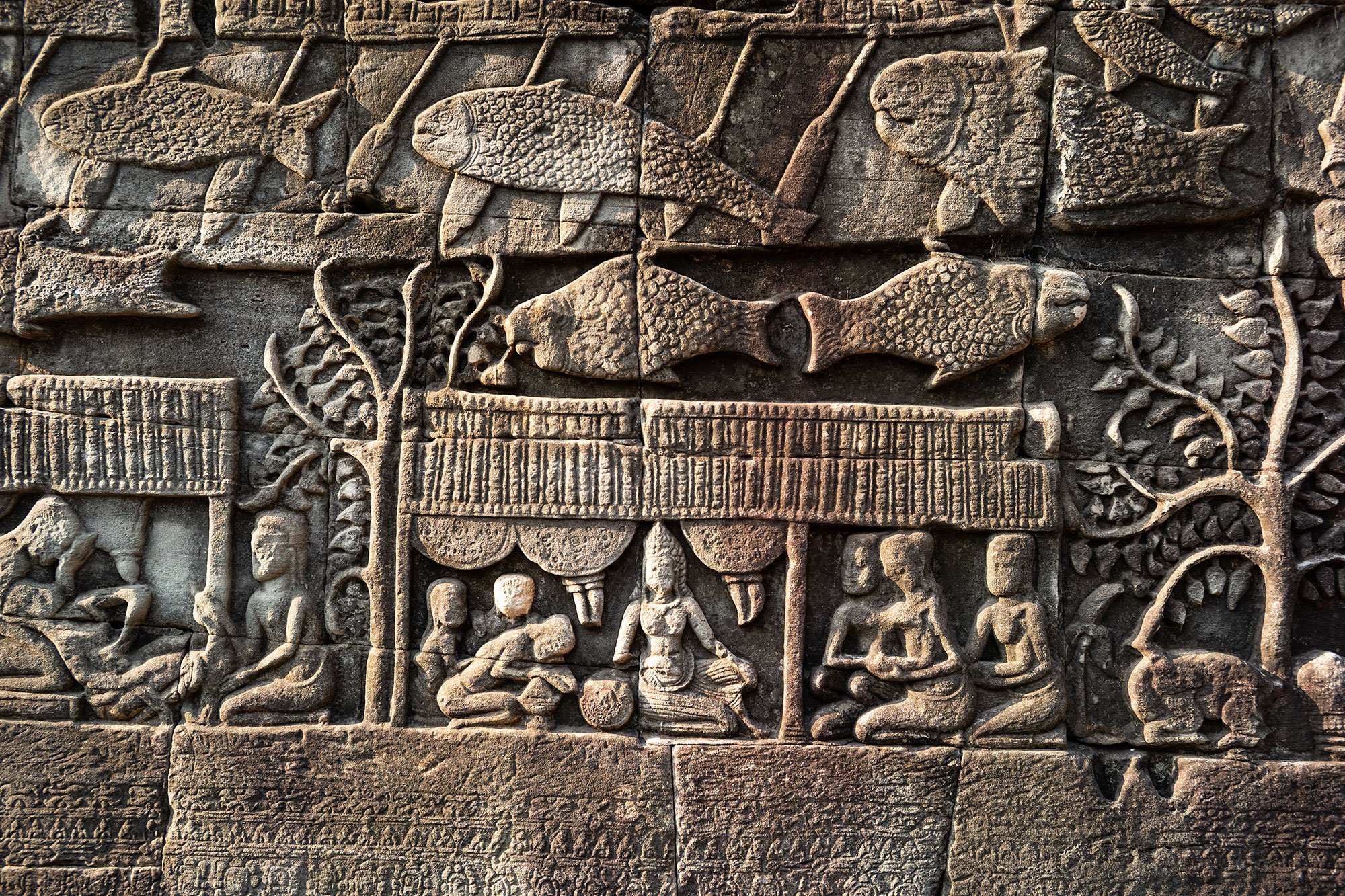
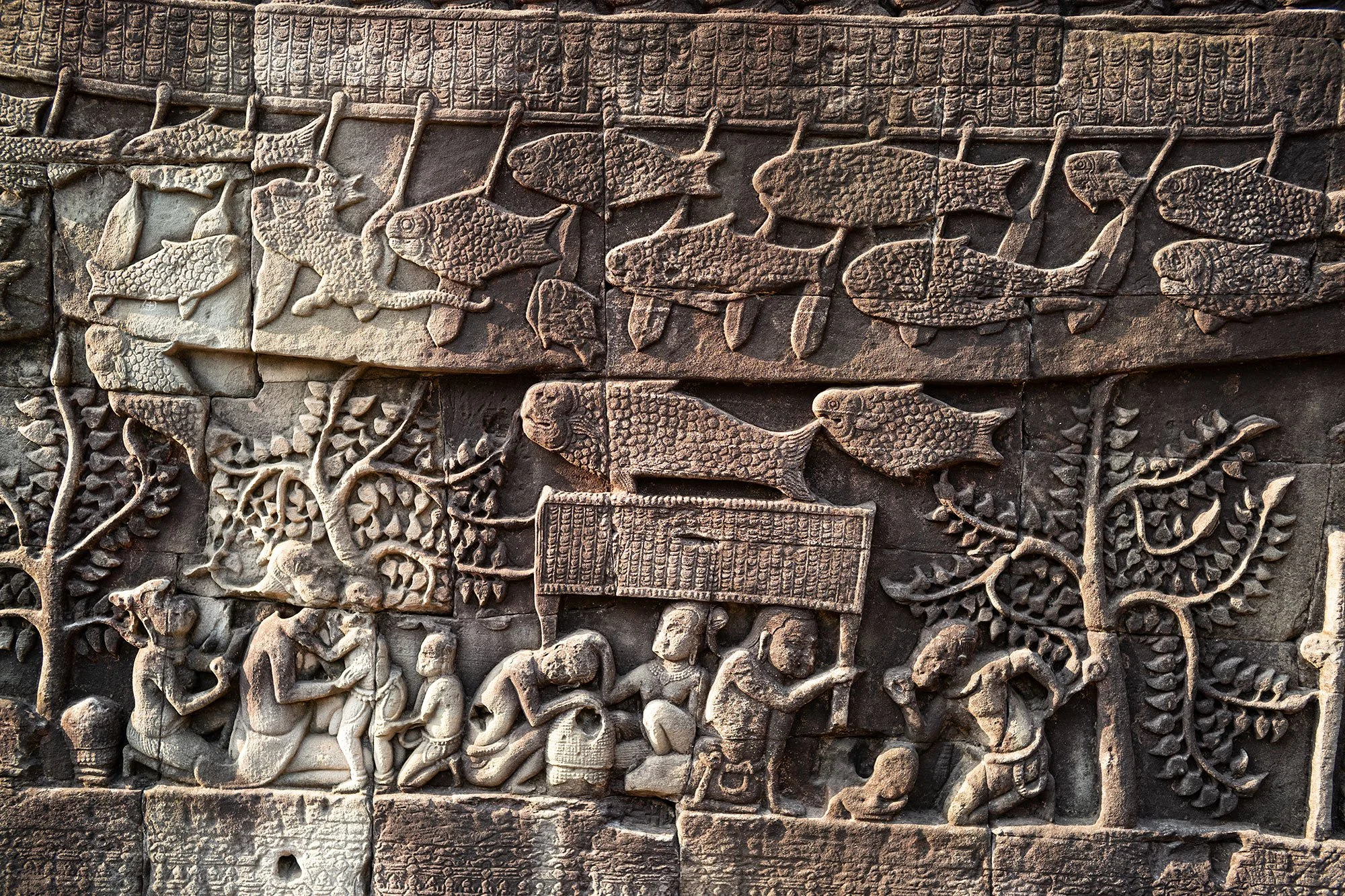
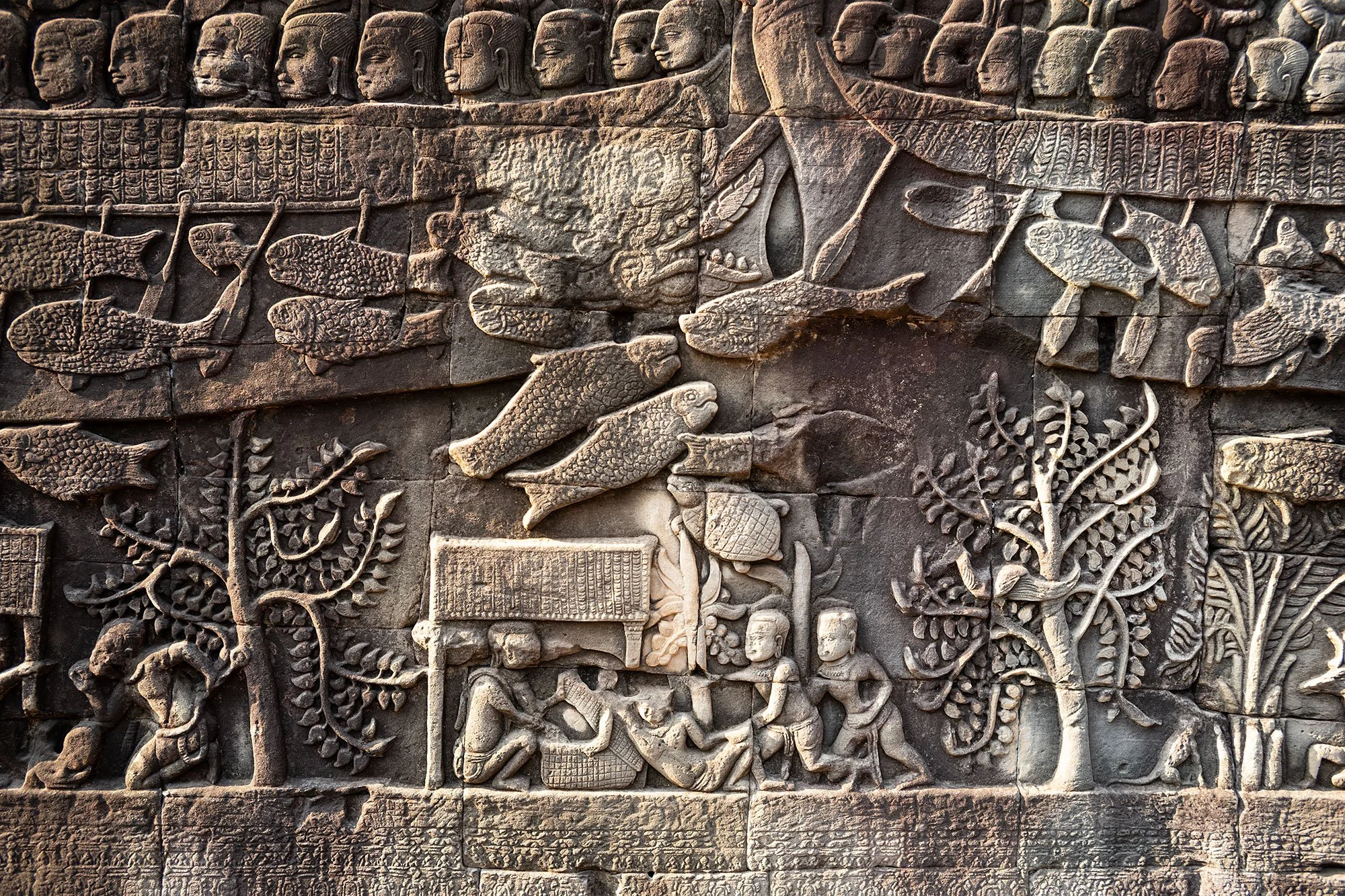
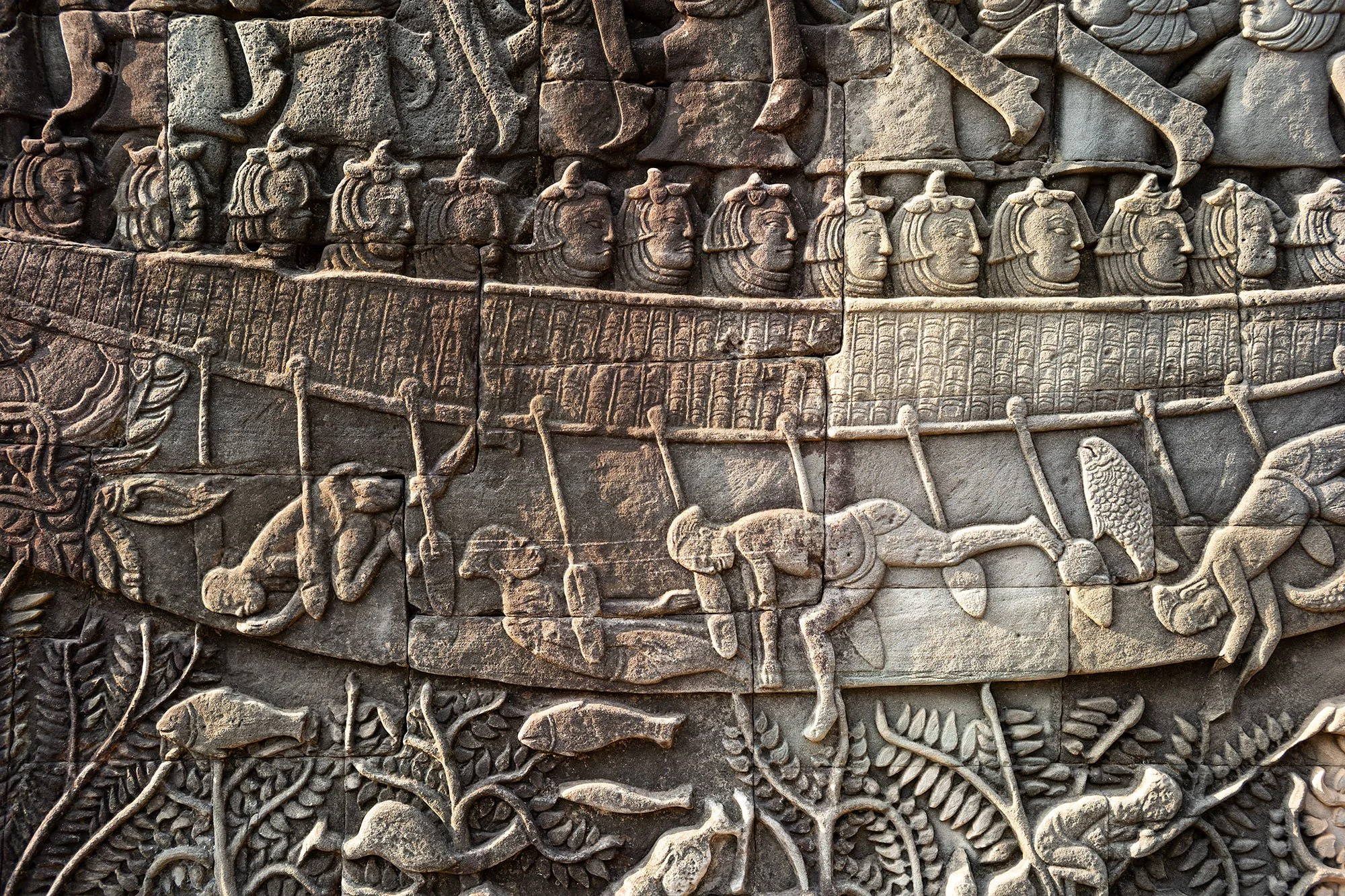
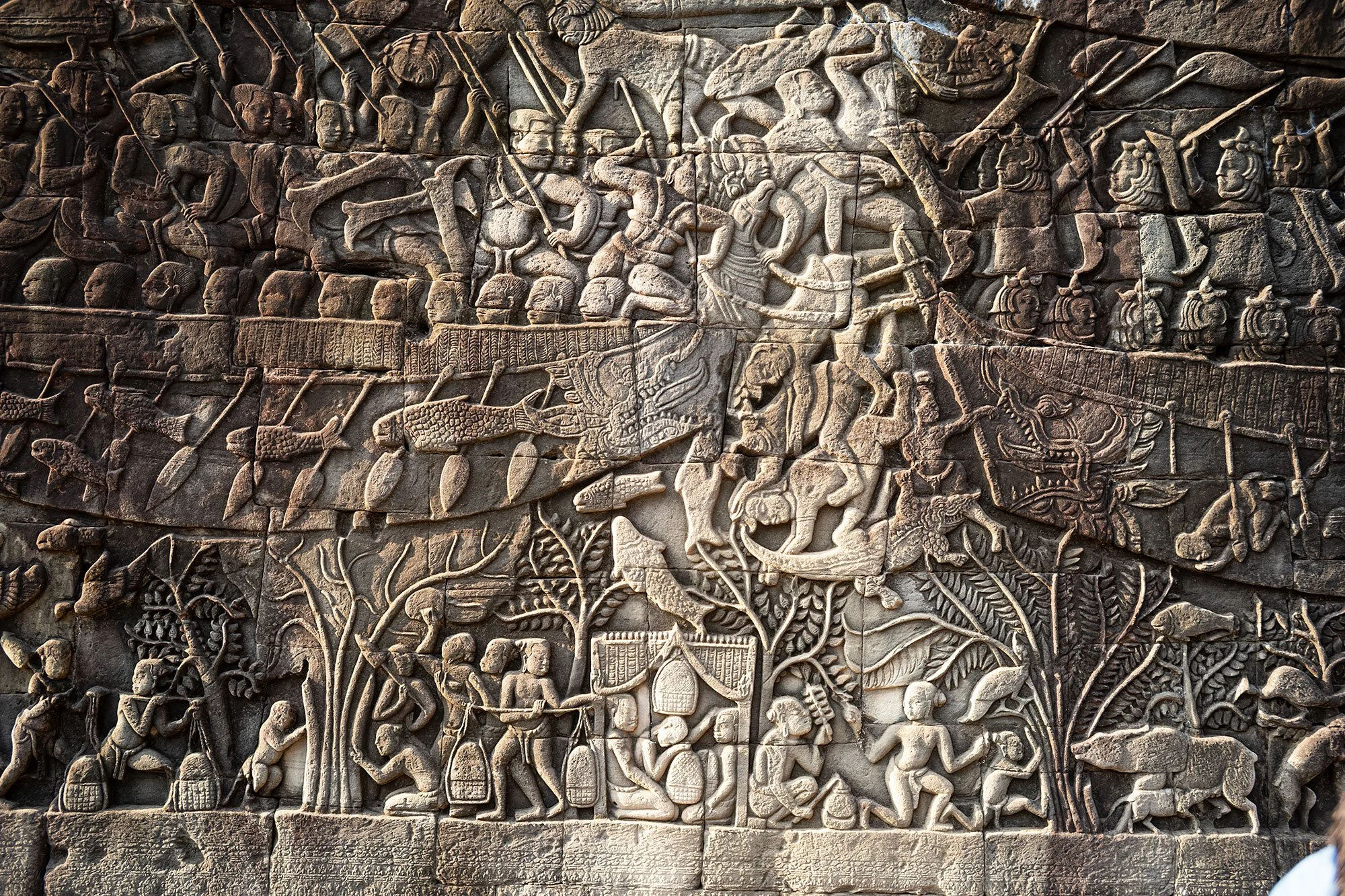
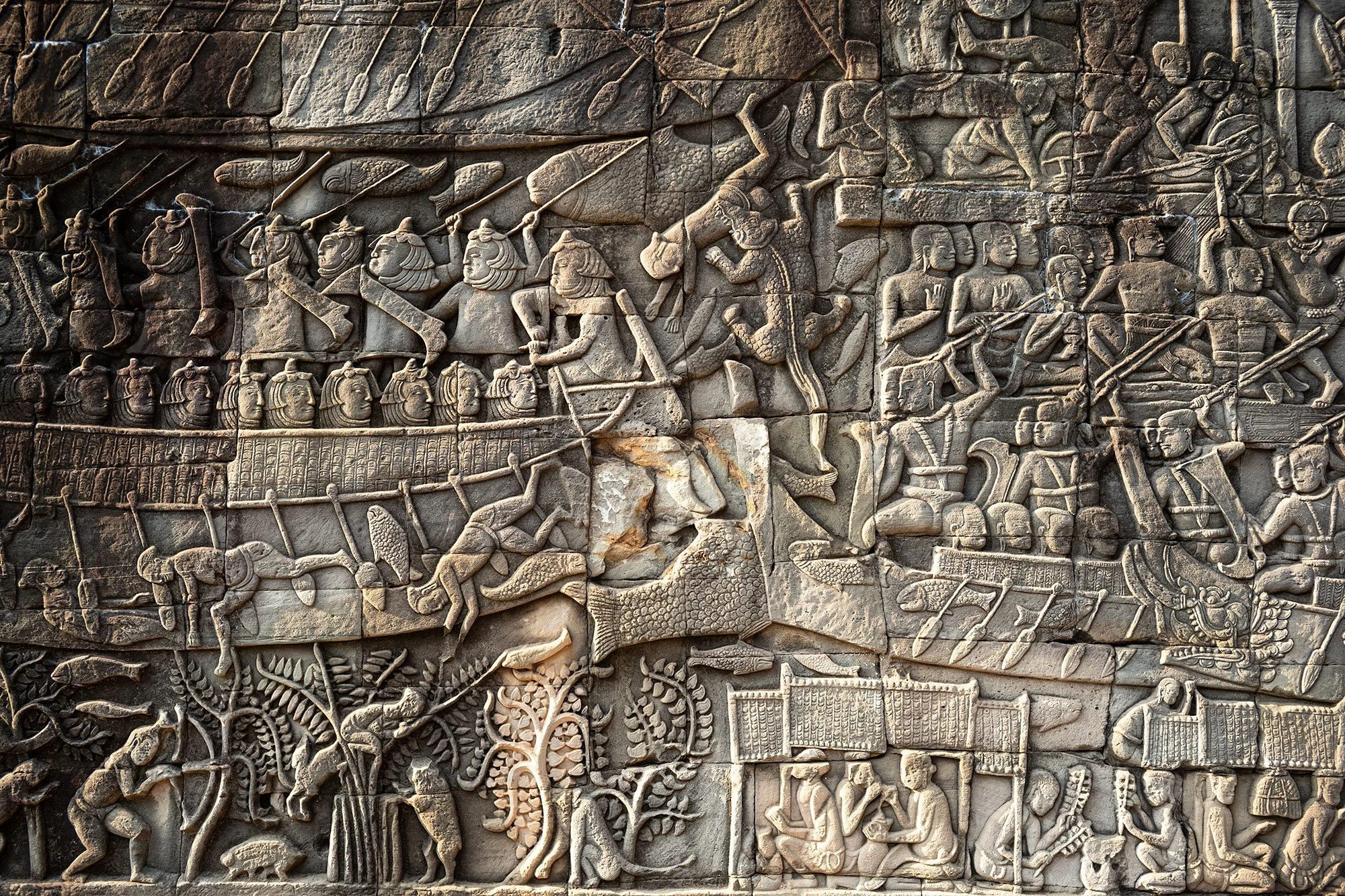
Extensive bas reliefs cover the walls of the outer galleries, depicting historical events, religious themes, and scenes of everyday life in the Khmer Empire.
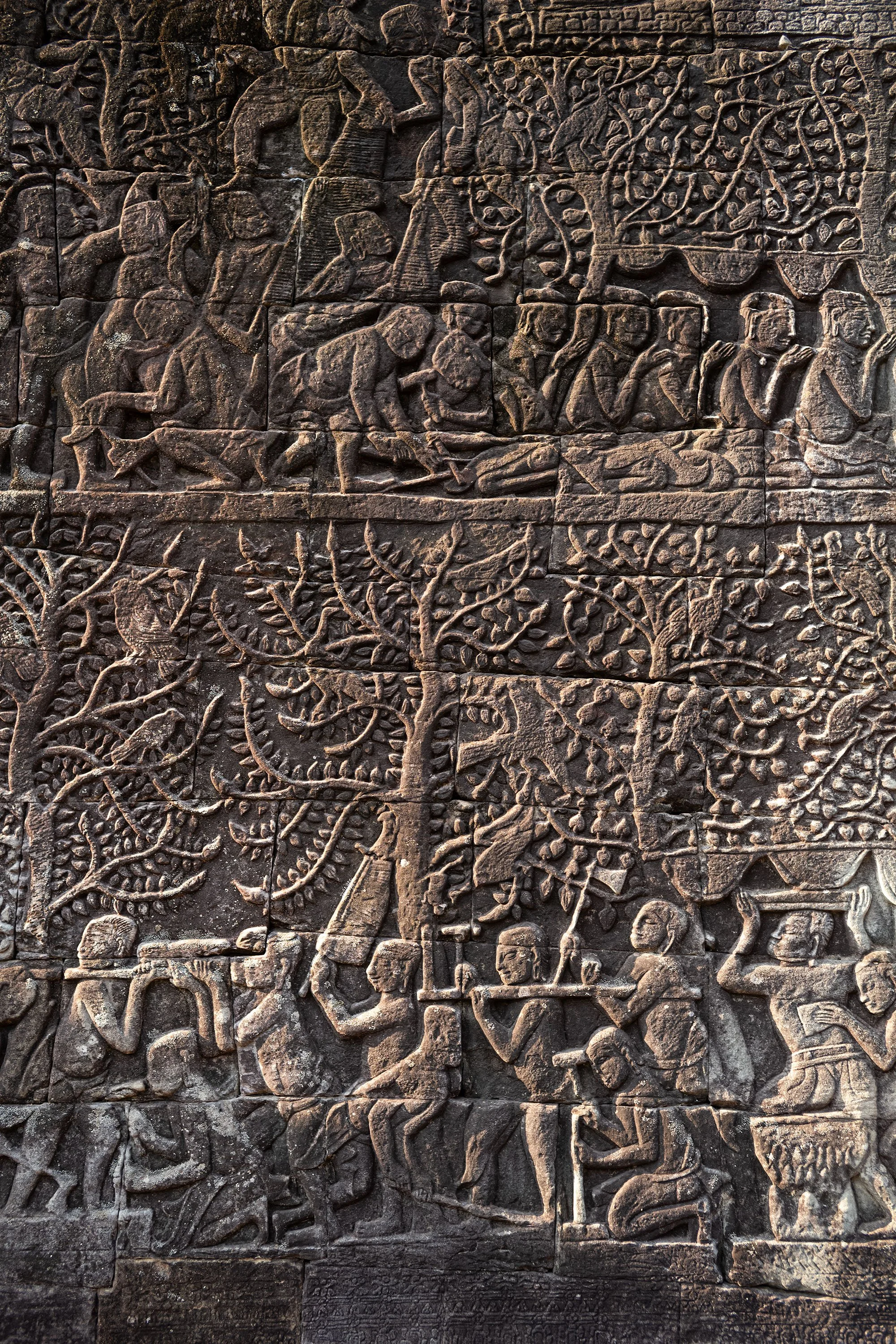
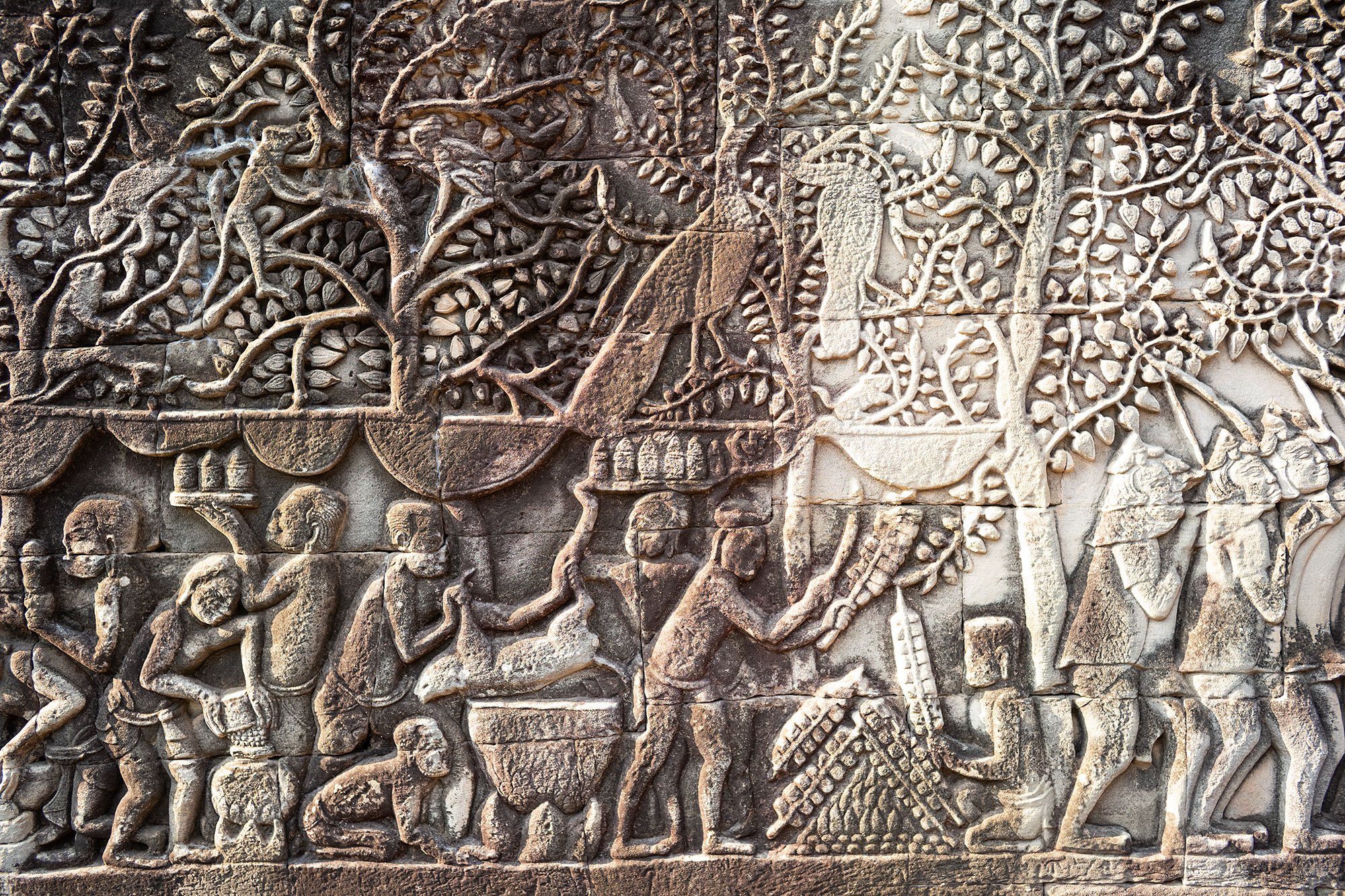
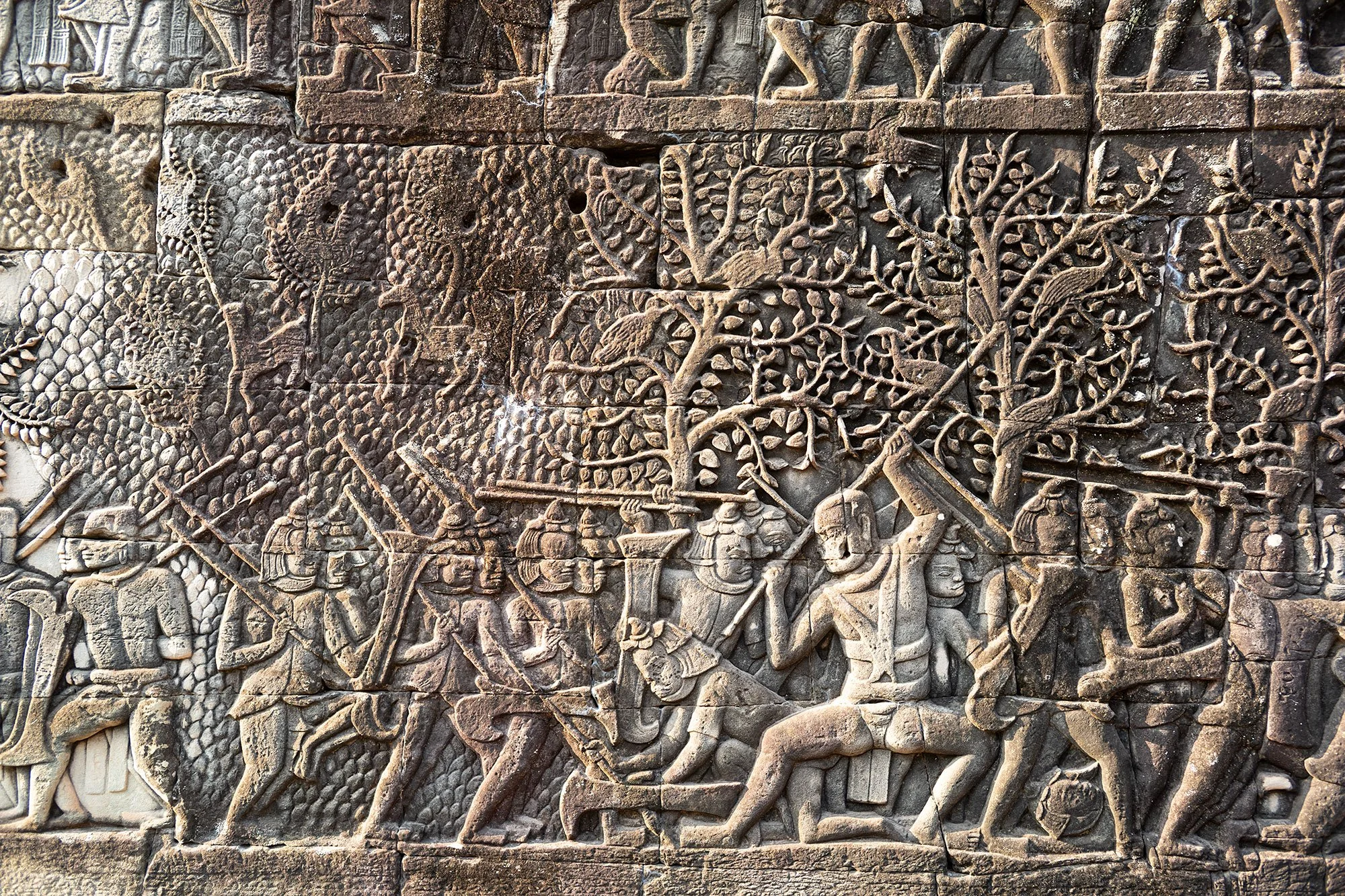
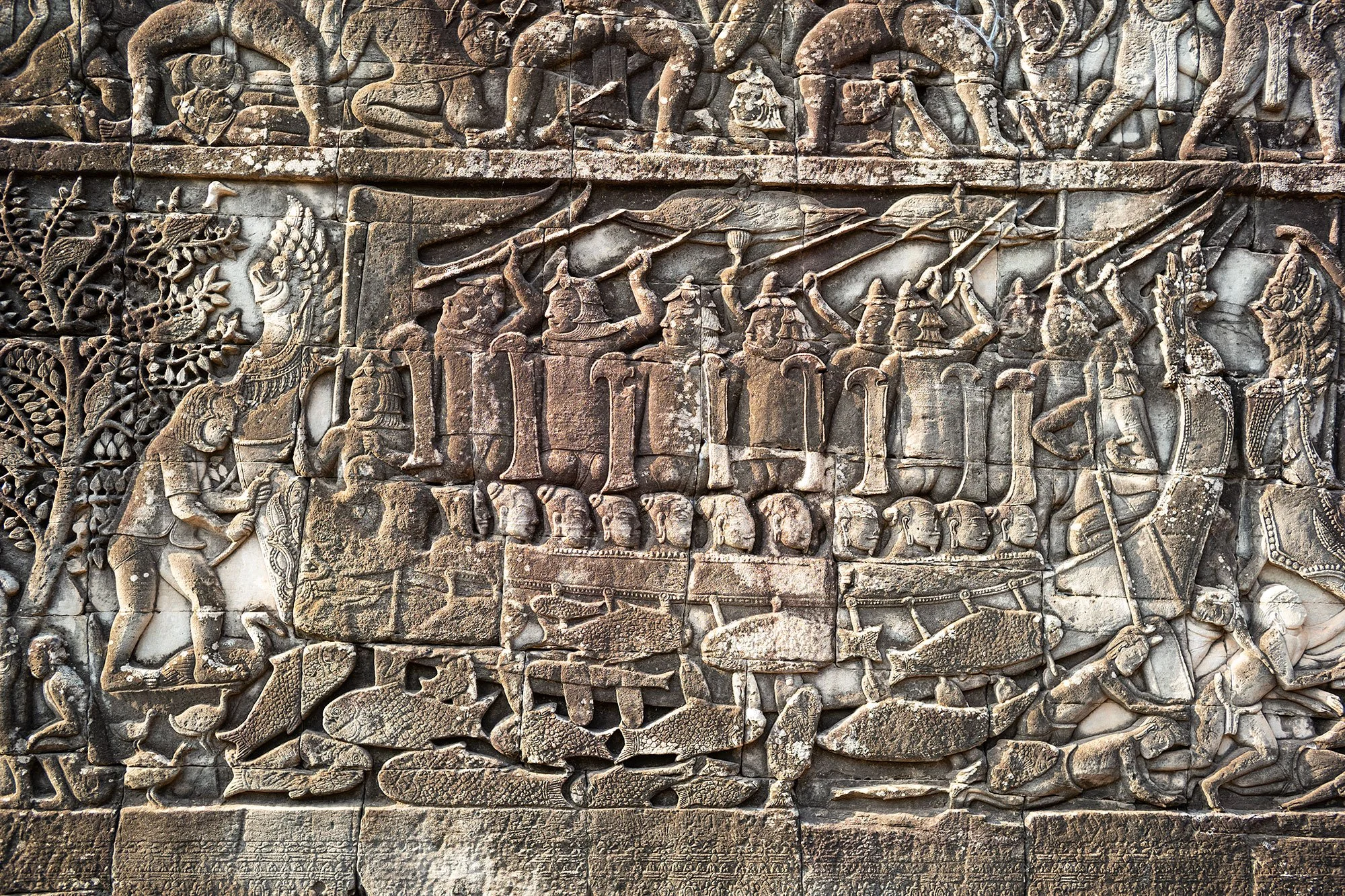
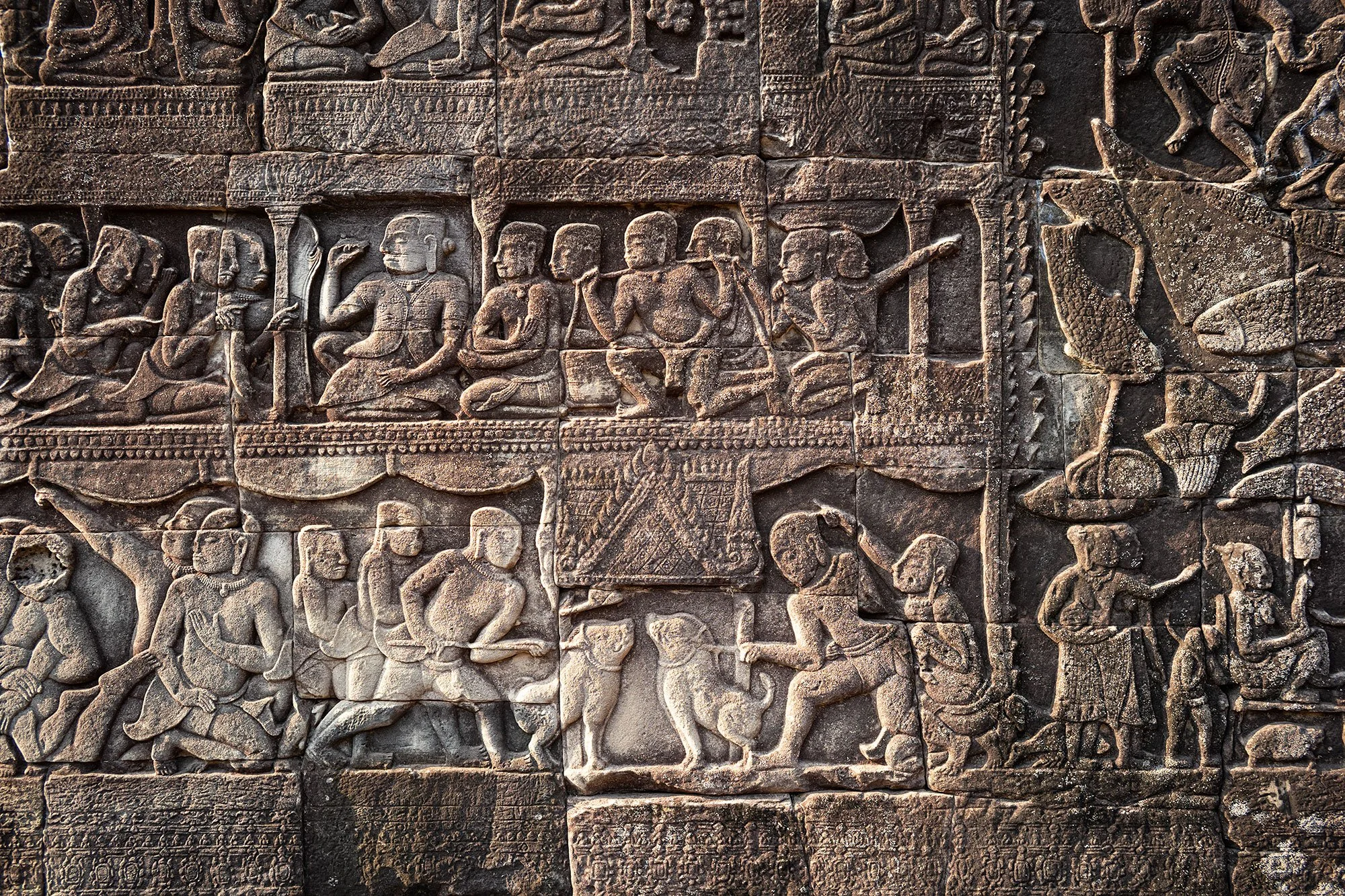
Jimmy highlights one section which shows a hospital with a figure getting treatment. Nearby there are depictions of other aspects of daily life beneath a boat crewed by a large group of oarsmen. Giant fish form a natural decorative motif between the two.
The Japanese Government Team for the Safeguarding of Angkor has described the temple as “the most striking expression of the baroque style” of Khmer architecture in contrast to the classical style of Angkor Wat.
As we’re about to leave Jimmy points out one more section of the bas reliefs, depicting a naval battle between the Khmer army and the Cham forces on the Tonle Sap, the largest freshwater lake in Southeast Asia. In one part Cham warriors fall out of war boats to be attacked and eaten by crocodiles.
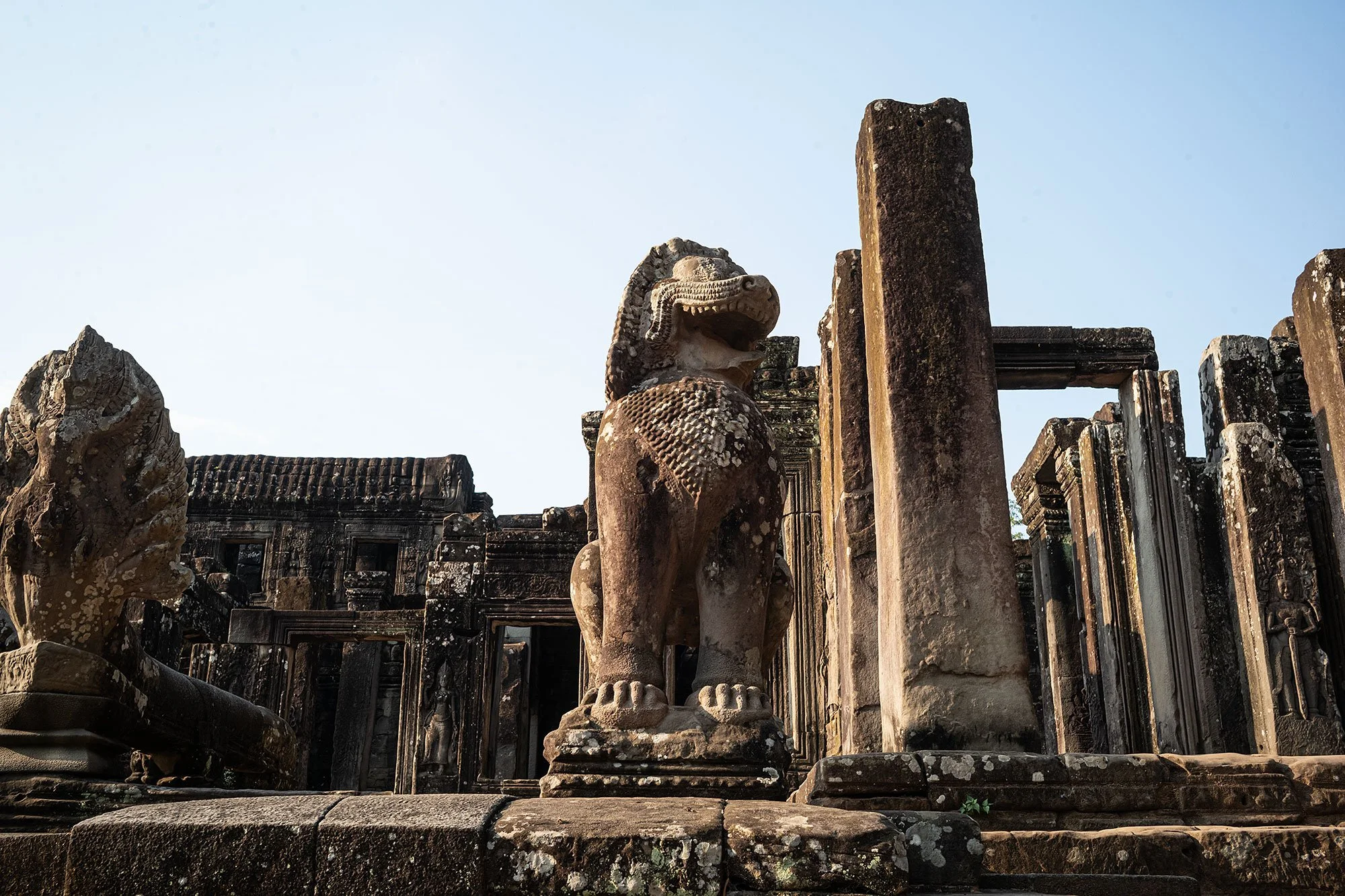
Leaving the temple I look back to see the naga finials on the balustrades and one of the few intact lions guarding the gates. I try to imagine it when it was complete, and wonder about some of the restoration efforts. While it would be interesting to see them all rebuilt, there’s something romantic about seeing the temples in various states of decay, and I wonder how much has changed since I saw them last.
Jimmy asks us if we’re interested in watching the sunset. We are and he takes us to Phnom Bakheng (cold towels, cold water once again offered when we reach the car), a 9th-century Hindu temple once dedicated to Shiva in the form of a temple mountain. Built by King Yasovarman I as the centerpiece of his capital, Yasodharapura, it’s a popular sunset spot and I remember climbing the hill and then the temple for the views 26 years ago.
When we reach the temple Jimmy gives us two options to reach the top. There’s an 800 meter gradual walk to the right and a steeper faster route to the left. I tell him I don’t remember there being a long walk to get to the temple. He points to a straight slope up the mountain criss-crossed with various routes. That’s the way you went, he tells me. The climb has since been closed.
At the top of the hill Jimmy tells us he’ll wait for us on the ground. Been there done that, he says of the climb up the temple.
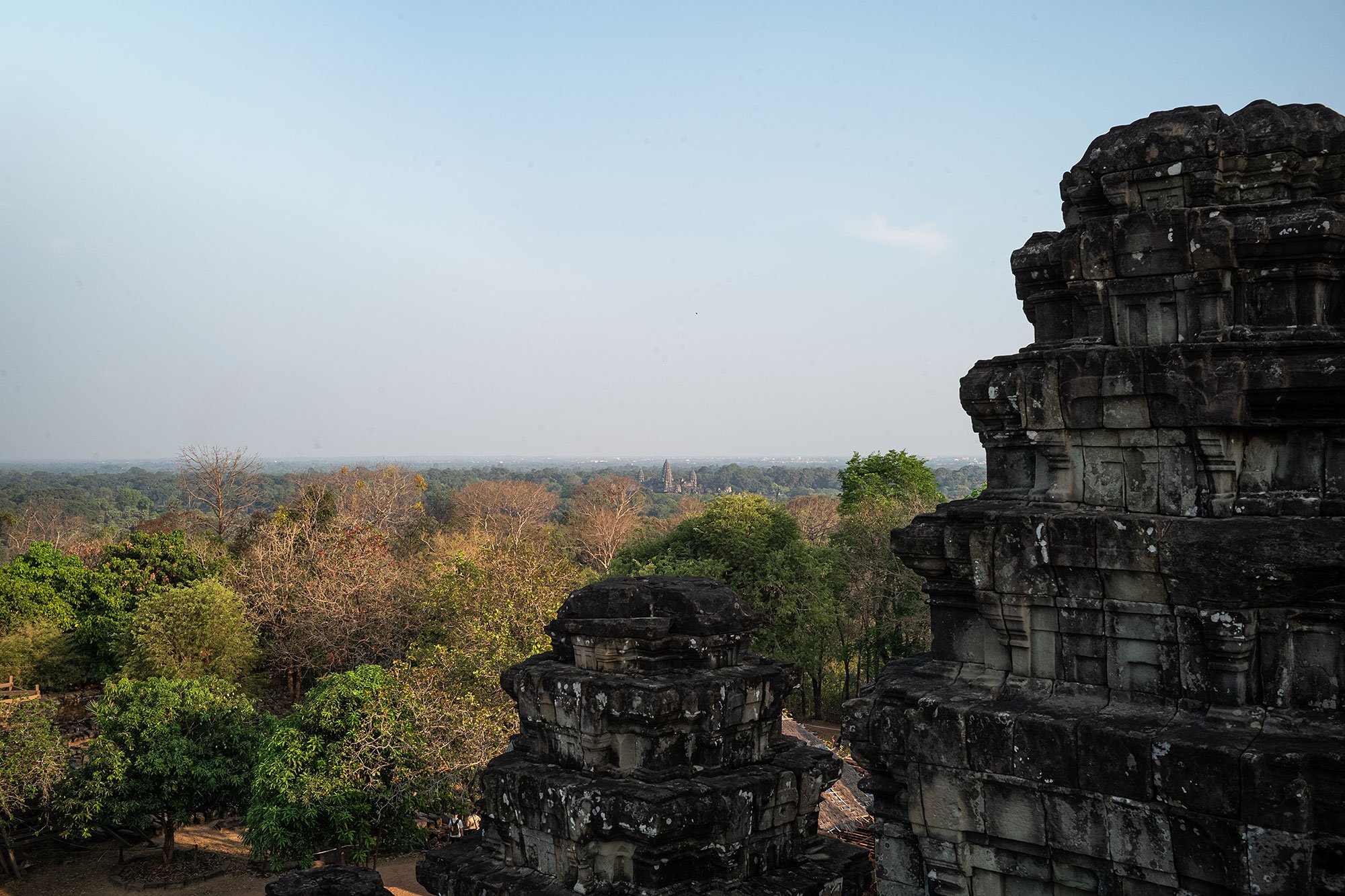
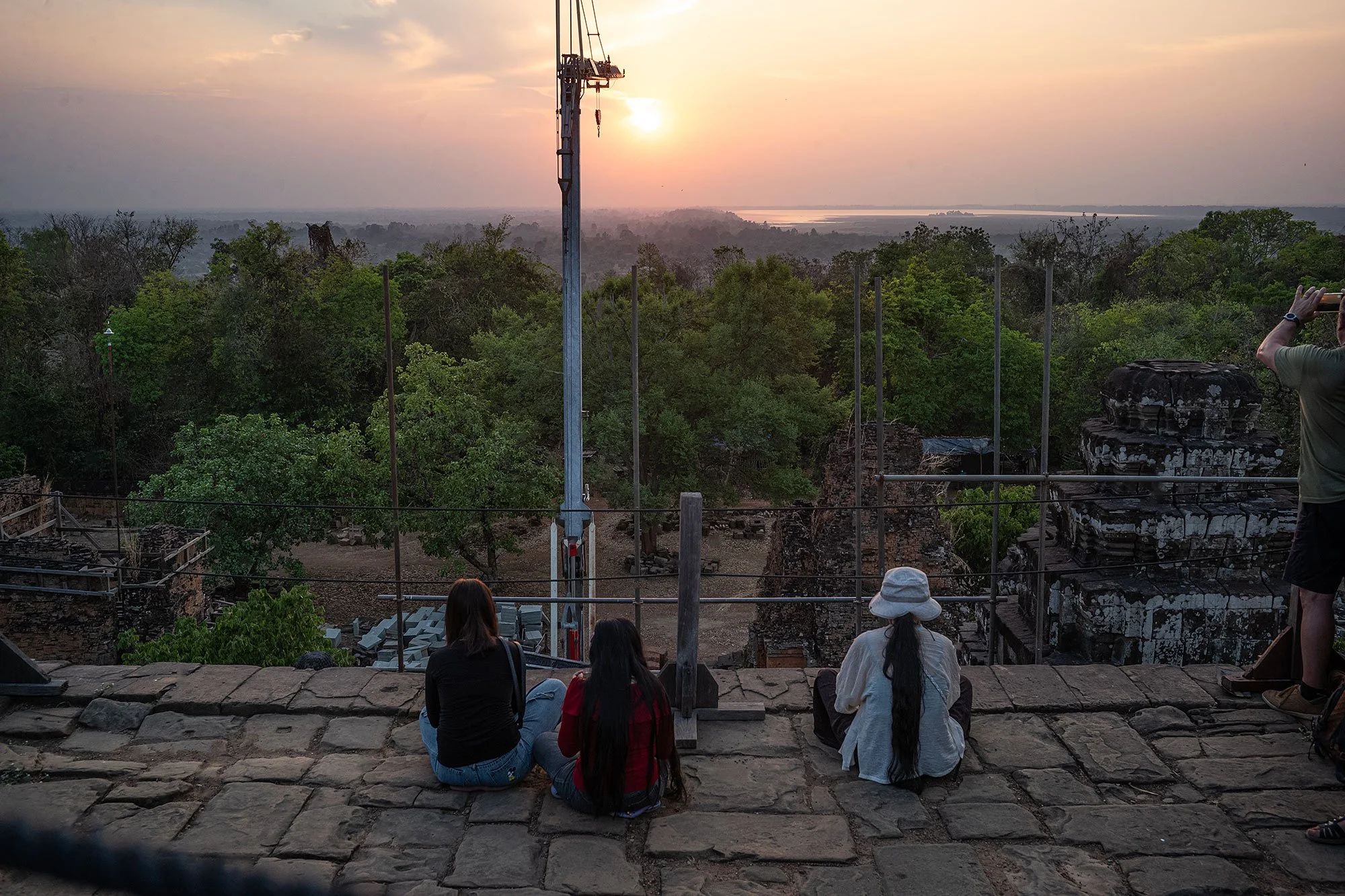
I remember the top of the temple and the view of Angkor Wat, and remembering framing it so that the temple looked like it was sitting atop one of the towers back in the day. I come close to replicating the idea but decide to give the temple more space this time so that it hovers. The raised wooden staircase also gives me a slightly different perspective while climbing it, and we’re not allowed to clambor anywhere for a different angle.
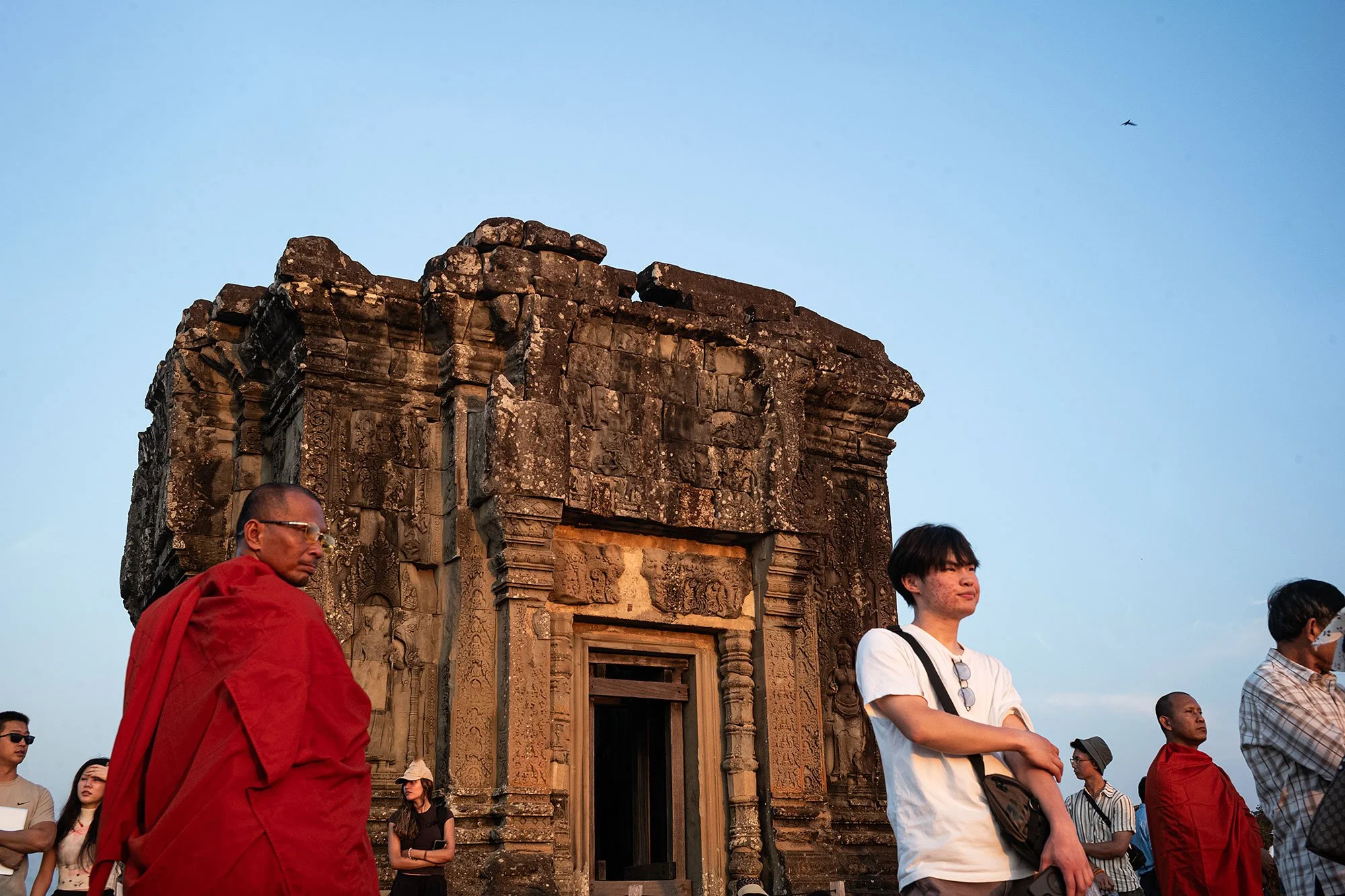
There’s construction around the temple and the view of the sunrise is marred by cranes. I remember a photo I took of the crowds back in 2000 and turn to take a photo of some of those gathered today, though without capturing as many; there are definitely more people up on the platform than there were 26 years ago.
The sun sets behind the clouds and the crowds disperse before the sun actually disappears under the horizon. Jimmy asks us how it was and we’re enthusiastic. He leads us down the path, using the flashlight on his phone to help illuminate the way.
Once in the car he says ‘home, James’ and we are off. Tomorrow we’re to meet at 0430 in the morning to catch the sunrise over Angkor Wat.
We dine at Cafe Indochine, near our hotel, a tofu curry (amazing, another contender for best dish), seafood with mixed vegetables, and a chicken dish. On our way home we stop in a supermarket, which is one of the nicest supermarkets I’ve seen. It’s bright and clean and airy with a central atrium that is open to all three floors. The toothpaste aisle alone is stocked with different brands from around the world. It reminds me again of how far Siem Reap has come and I wonder what the ancient kings of Angkor would make of their kingdom now. 🇰🇭