An overnight trip to the Trans-Ili Alatau I: The Moon & Black Canyons, and the Kolsai Lakes.
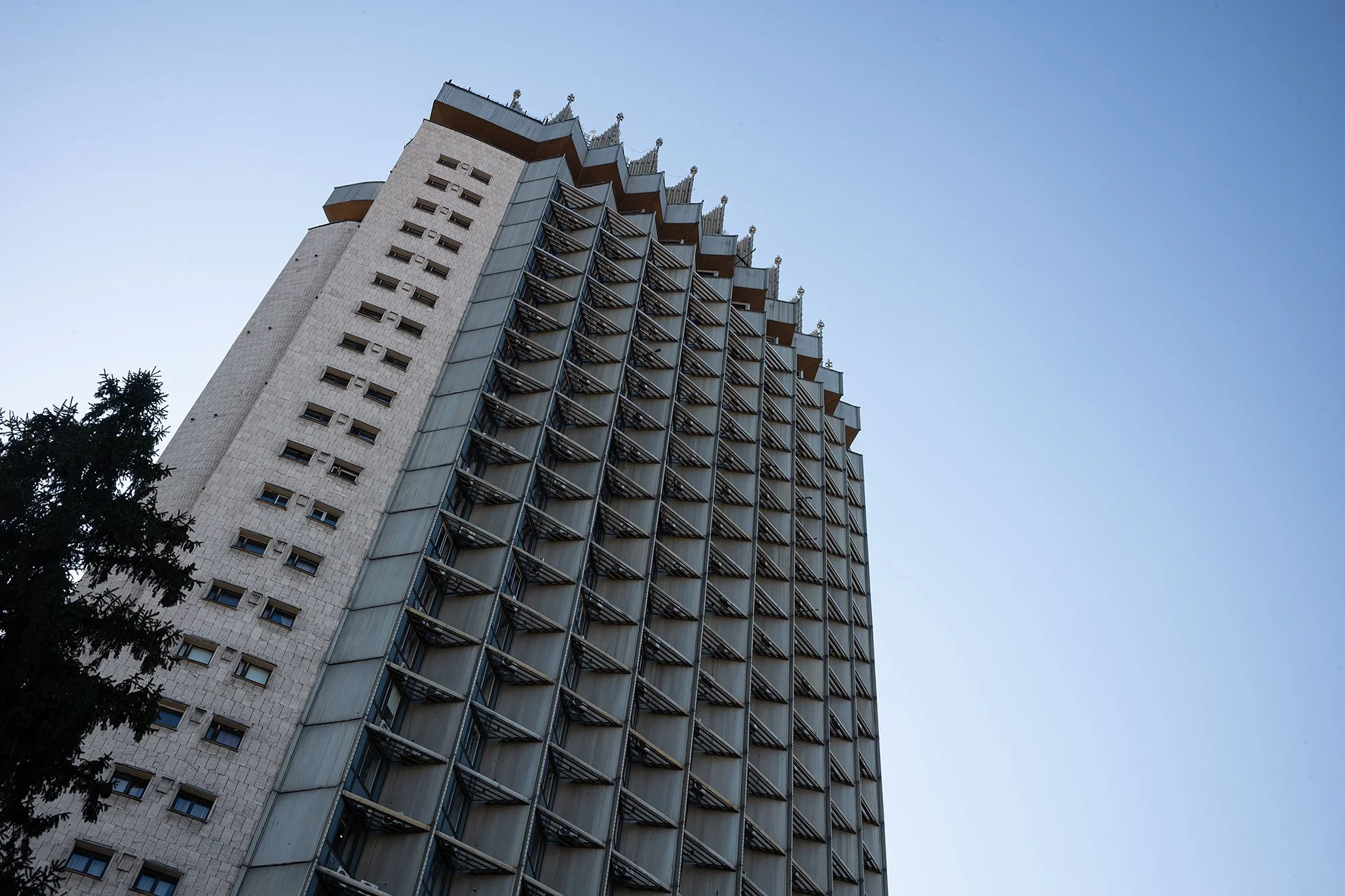
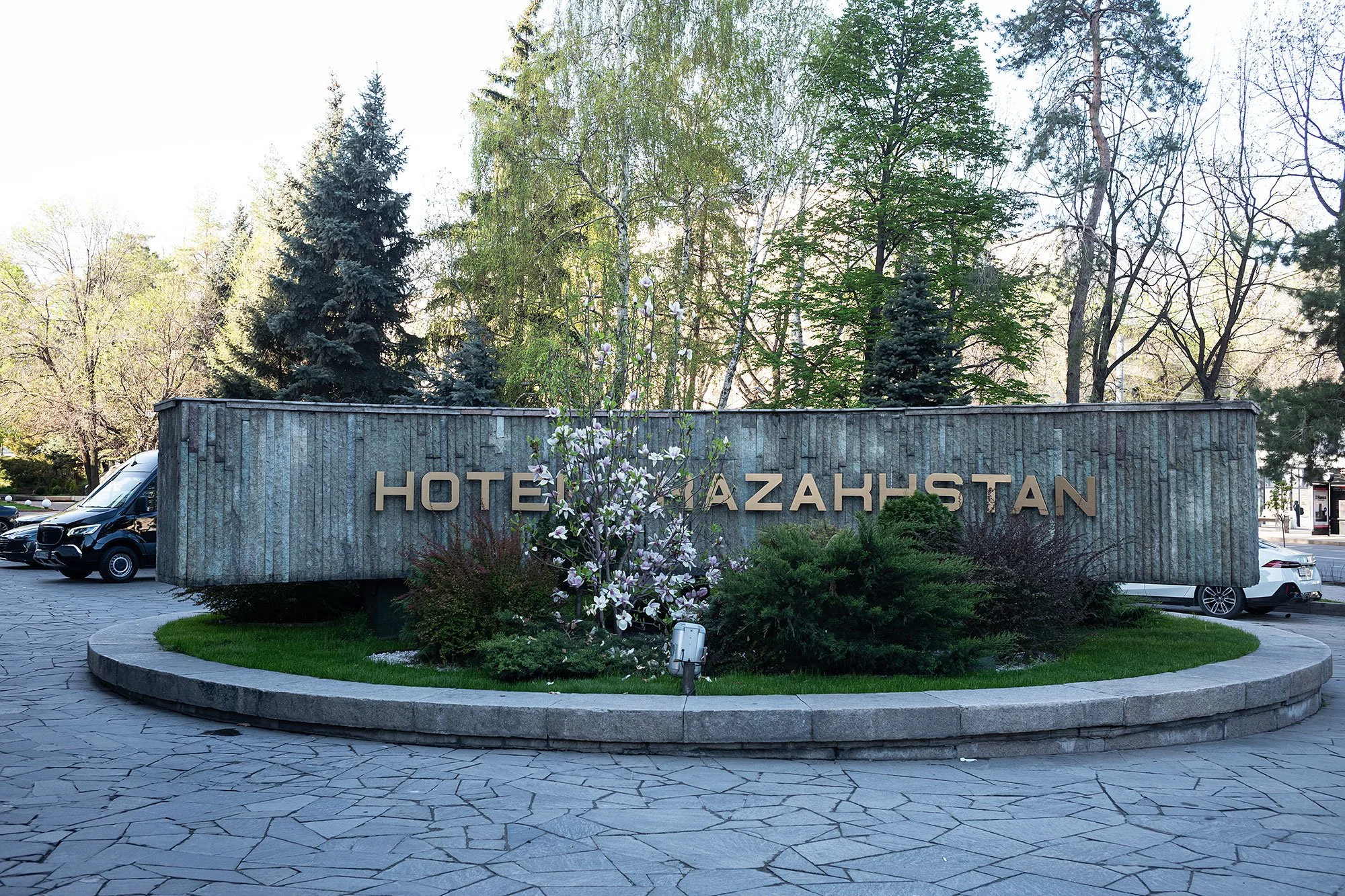
The bus pulling up in front of the Hotel Kazakhstan is larger than I expected. It’s an actual coach. Somehow I had expected a van; I’m not the only one.
A woman had been waiting near me, a large backpack by her side. When the bus stops we approach and I wonder if it’s an intercity bus that she’s taking to reach another city in Kazakhstan. A woman wearing a jacket with “Tour Guide” printed on the back alights. She wears a hat with the Kazakhstan Guided Tours logo. She asks me my name and I point to it on her checklist. The woman waiting with me loads her pack into the bus’s undercarriage and we board.
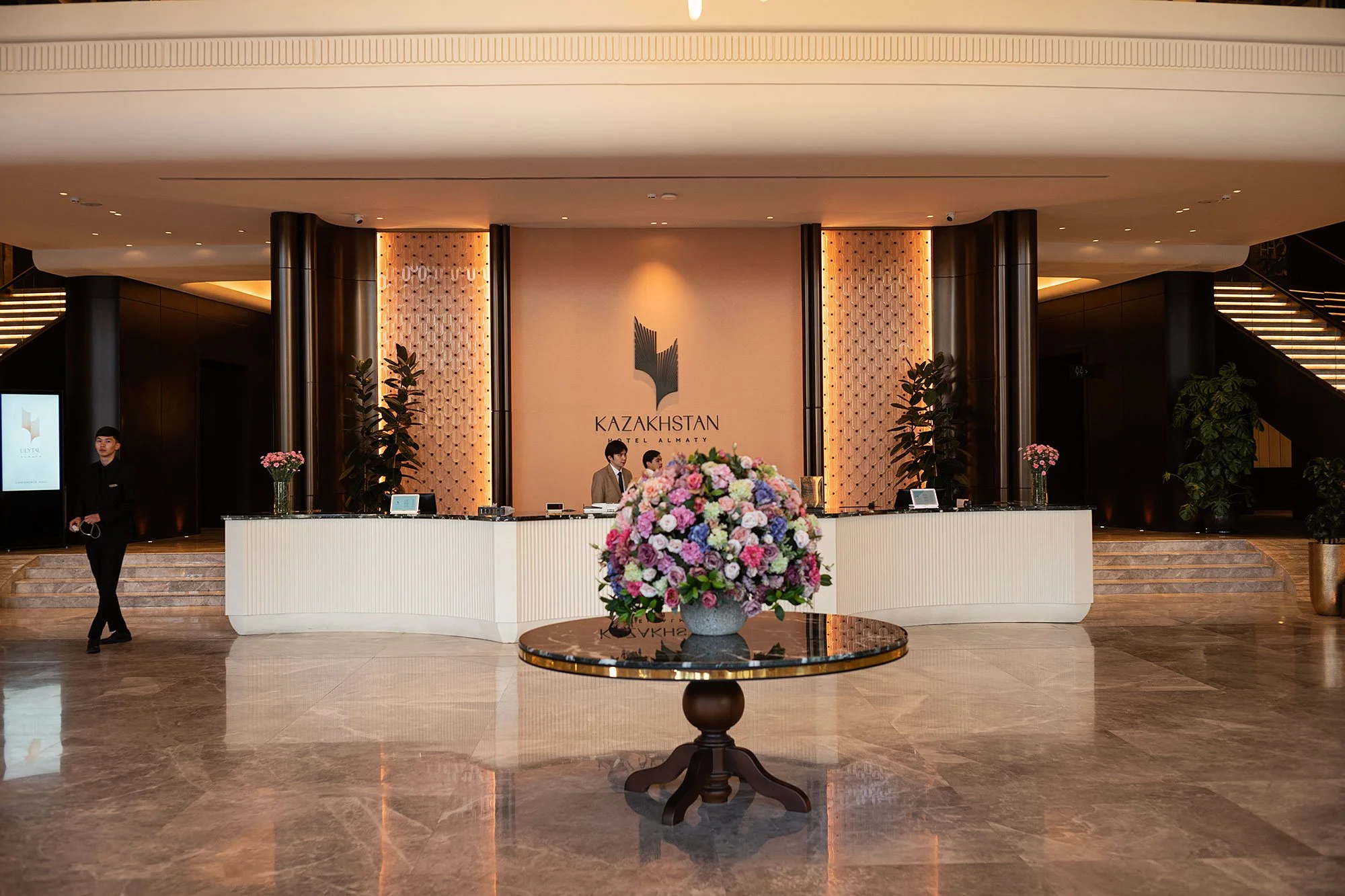
The bus is partially full. We’re the second pickup. Two others board at the hotel but I’m distracted and don’t notice. At our third and last stop a few groups of people board and we are off.
Zhuldyz, our guide introduces herself. You can call me Jules, she tells us. It’ll be easier for us. The driver plays country music as we pull out of Almaty, though the music will bounce between electronic covers of songs that wouldn’t sound out of place if we were sipping Aperol Spritzes at an Ibiza beach bar and Russian pop songs. I’m curious who chooses the playlist.
Zhuldyz tells us we’ll be driving 90 minutes to a petrol station where we’ll stop for 20 minutes. There will be bathrooms and snacks for purchase if we missed breakfast. From there it’s another 90 minutes to Moon Canyon, our first stop.
Along the way she tells facts about about the counry. It’s the ninth largest country by landmass, but densely populated, averaging about eight people per square kilometer. She tells us that Russian and Kazakh are the official languages, due in part to the fact that the country was for 70 years part of the former Soviet Union; and before that it was part of the Russian empire until the invasion of the Jungars, a West Mongolian nomadic empire, in the 18th century.
She tells us that Russian is the bridge language that is used internationally and amongst the Central Asian nations, although English is increasingly being integrated. Within Kazakhstan there are 120 nationalities, mostly Turkic, with about 70% adhering to the Muslim faith. Twenty percent of the population are Orthodox Christians, who celebrate Christmas on January 7th, so there are no end-of-December celebrations to speak of.
There are also a minority group of Koreans (known as Koryo-saram) living in Kazakhstan who arrived due to a forced deportation from the Russian Far East by Stalin’s Soviet regime in 1937. They had settled in Russia to flee Japanese colonization, but were deported as suspected Japanese spies. Around 180,000 Koreans were packed into cattle trains and sent to Central Asia, with around 100,00 settling in Kazakhstan where they were forced to build collective farms.
Now, a lot of the language has been lost, but the food has remained, and we’ll see examples of how Korean food has been adapted and integrated into Kazakh cuisine at dinner.
Zhuldyz has us introduce ourselves, where we’re from and a fun fact. Unfortunately, I’m the third in line for the mic and don’t have a good fun fact prepared. Afterwards, a handful come to mind but the moment has passed.
On the tour there are people from Singapore, Thailand, South Korea, The United States, France, India, Australia, The Netherlands, Brazil, The Philippines, and Turkey. I’ve never been on a tour with so many people from so many Asian countries, and it’s great to see people representing Singapore, Thailand, and The Philippines. Along with me and woman from Australia (who I will learn is of Chinese descent) almost three-quarters of the group are Asian.
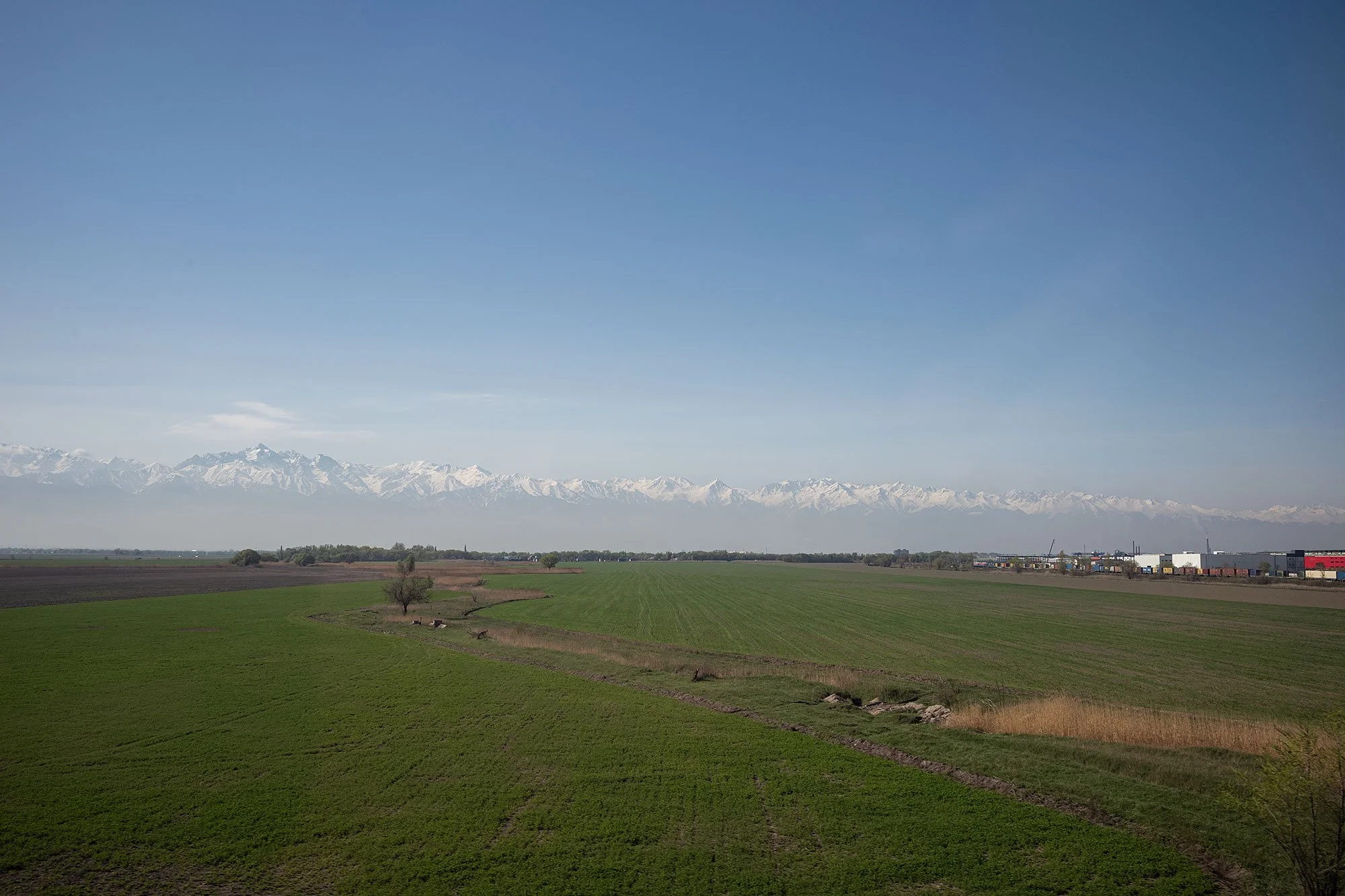
Zhuldyz continues to inform us about Kazakhstan, telling us that Almaty was the capital until it was shifted to Astana due to the earthquakes in Almaty (Astana is safer from nature’s rock and roll) and for Astana’s distance from the borders with other countries. She tells us that Astana means ‘capital’ in Kazakh and so it’s funny to them when they tell us their capital is “Capital.”
She tells us that earthquakes are so frequent in Almaty that there’s generally one a week, though many are so minor you wouldn’t feel it, nothing like the magnitude 8.2 earthquake that destroyed most of the old city in 1911 that killed 450 people and gave rise to Kaindy Lake. The epicenter of that earthquake was in Kyrgystan where it was a magnitude 10.
She tells us Almaty means ‘grandfather of apples,’ derived from the Kazakh word for apple алма, as the region used to be known for its abundant wild apple forests that gave birth to the modern apple. Centuries ago there were lots of apple orchards producing the legendary Aport apple, celebrated for its intense aroma, juiciness, and sweet-sour taste, growing to up to 1kg.
Unfortunately, now only 5% of the original orchards remain and while the Aport apple is still grown, the harvesting season for them is September to October, which gives me another reason to return. After all, the leading impetus for my visit to Uzebekistan in 2009 was because the torpedo melons were in season.
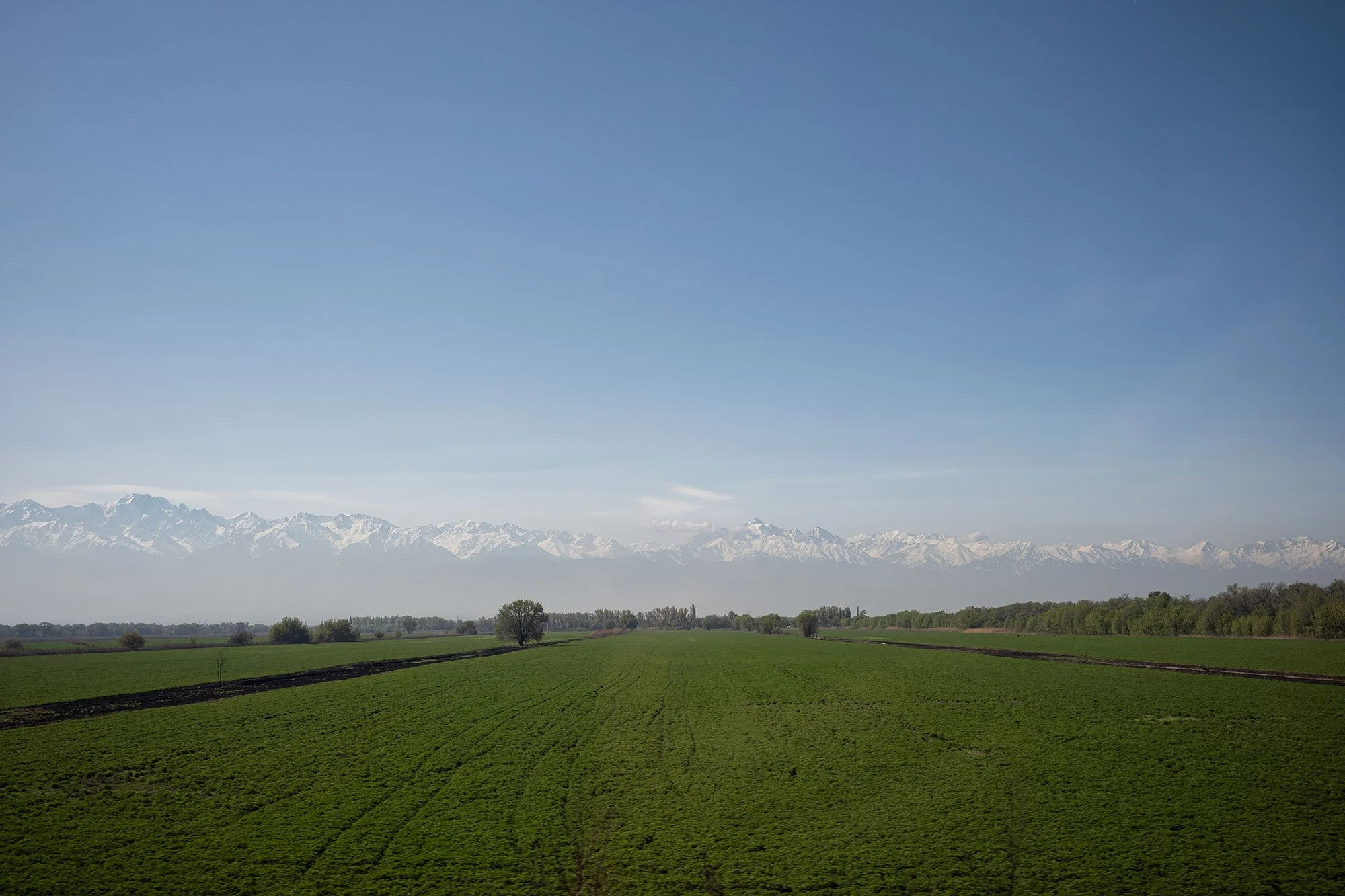
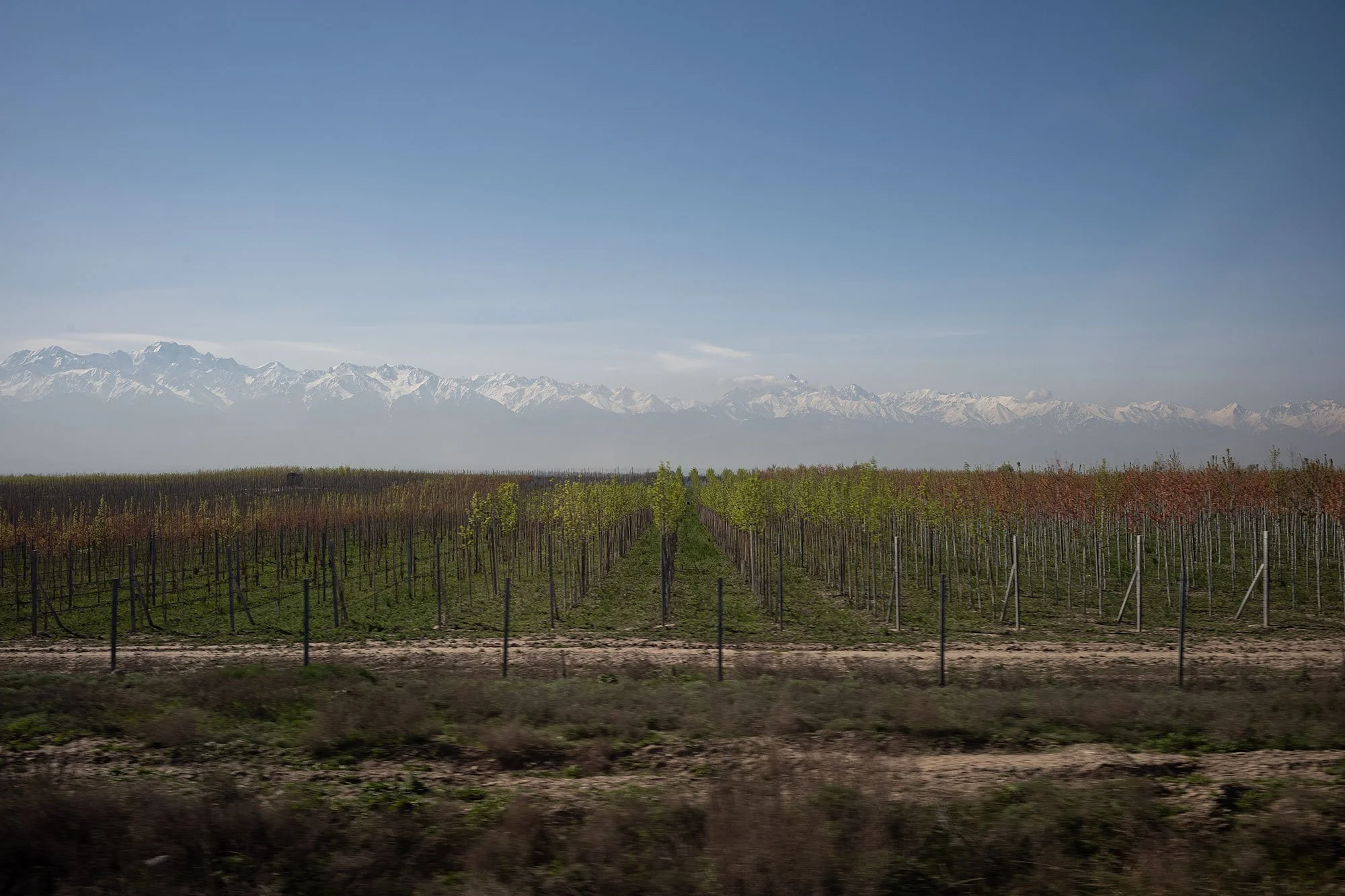
She tells us that today, April 12th, is International Cosmonut Day, commemorating Yuri Gagarin’s 1961 space flight and marking 65 years of humans in space. Launched from Baikonur Cosmodrome in Kazakhstan, Gagarin’s 108-minute, single orbit around Earth made him the first human in space. He wasn’t the earth-bound creature from Earth sent to space, however. That honor goes to Laika, a stray dog from the streets of Moscow sent to space in 1957. Unfortunately, there was no re-entry mechanism and she died of hypothermia on the craft’s fourth orbit.
The first “higher-living organisms”to survive an orbital trip to outer space were Belka and Strelka, who made 17 orbits around the earth on 19 August 1960. They were accompanied by 42 mice, a grey rabbit, two rats, flies, and several plants.
She also tells us about the familiar groups or ру (ru), which are patrilineal clans or tribes that share a common ancestor. When people date one of the first questions they ask each other is what ру they belong to. If it’s the same then they treat each other as brother and sister; people tend not to marry within the same ру due to the traditional Zheti Ata rule, which prohibits marriage between relatives within seven generations.
She tells us about beshbarmak, the national food, a meat, noodles, and onion broth dish traditionally eaten with your hands (hence the name, which means ‘five fingers’) and about kuurdak, a fried potato and meat dish.
She tells us about various sports, all seemingly to involve horseback riding, even a form of wrestling done on horseback, and a form of polo using a goat carcass as the ball. She tells us about a game called Catch the girl which, as its name suggests, involves a boy chasing. girl on horseback. If he catches her he can kiss her; if she gets away she can beat the boy with a whip. It seems a quick way to gauge a woman’s interest.
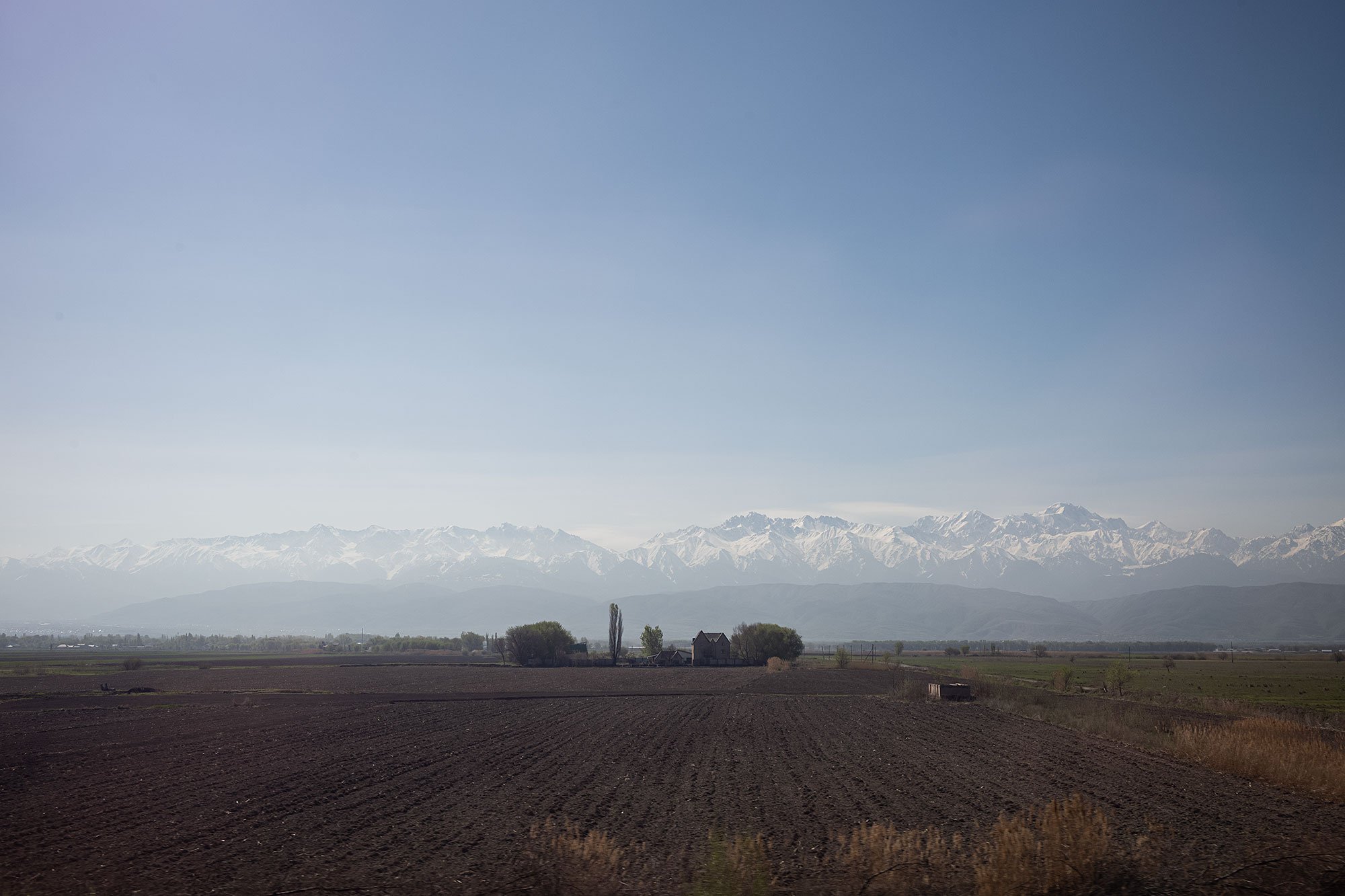
Everybody disembarks at the petrol station and its fun to look at the various groups, see what new friendships might be forming due to proximity on the bus and who may or may not be extroverted. There are a decent number of solo travelers, a Chinese-Austrralian woman, a woman from South Korea who has packed incredibly lightly, the Australian man, a Filipino woman (though there two other Filipinos traveling together), a Brazilian man from Rio, a woman from Turkey, and I think an American woman who may also be from New York.
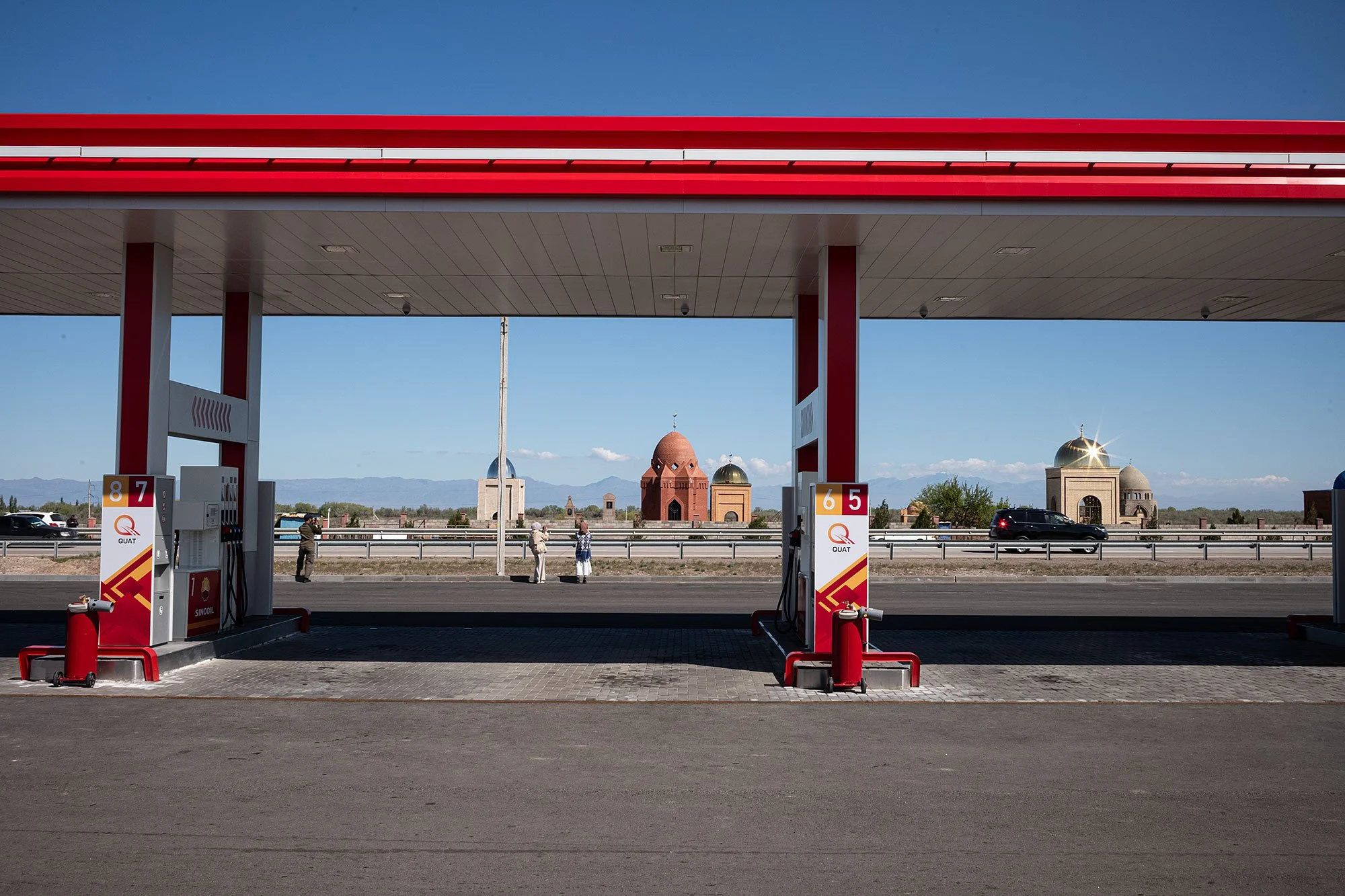
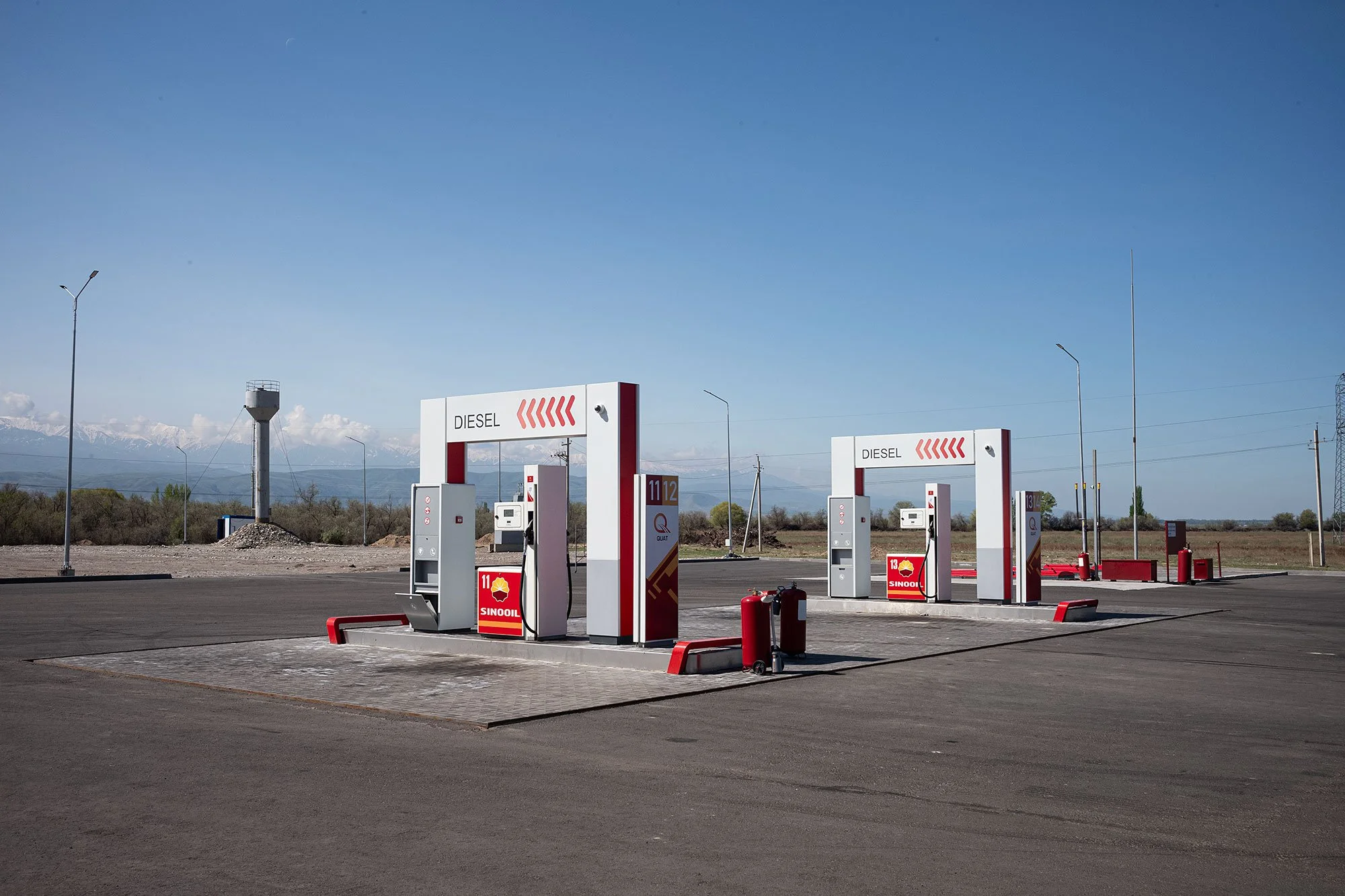
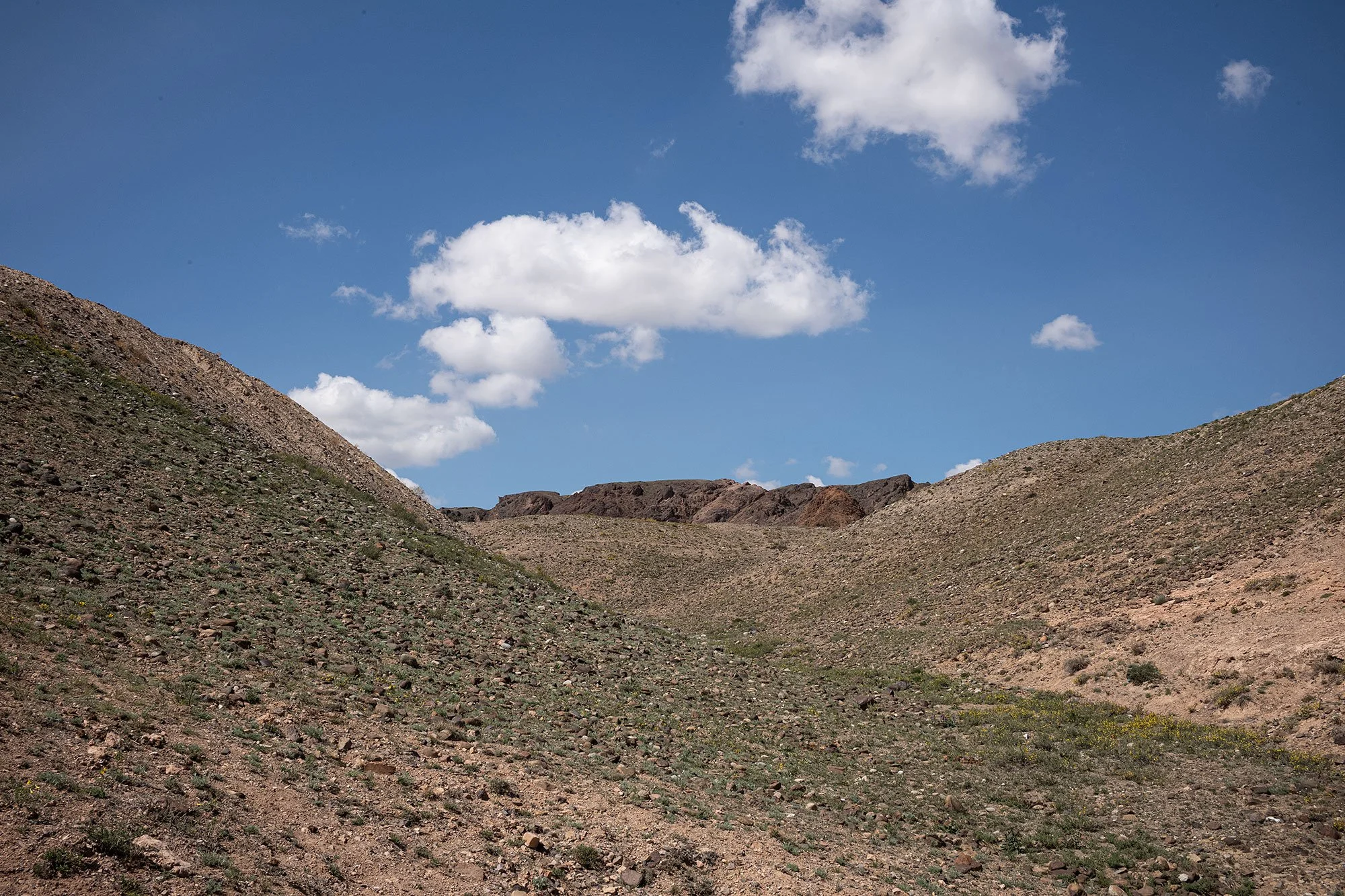
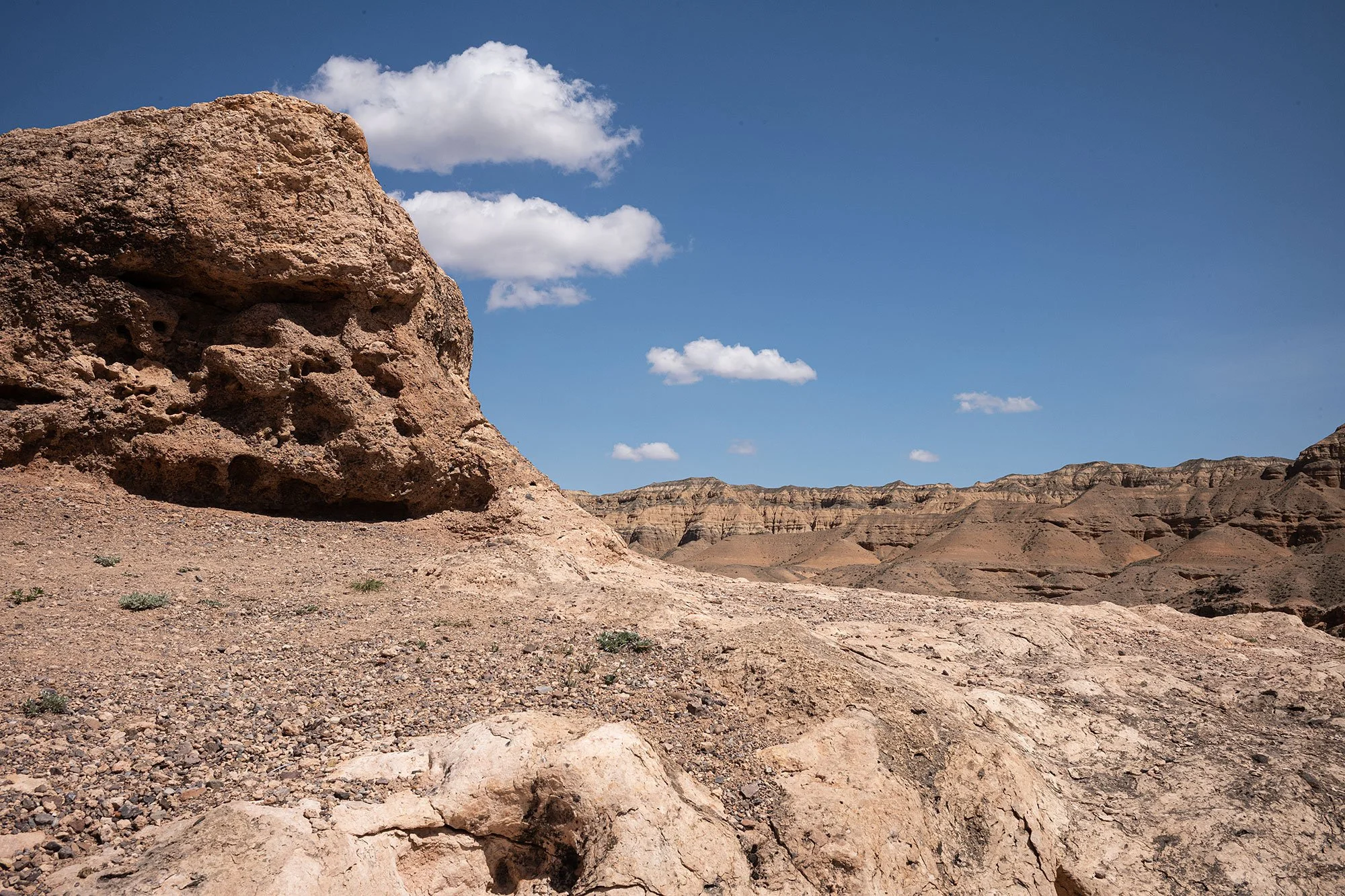
From the petrol station it’s another 90 minutes to the Moon Canyon, our first stop, and part of the greater Charyn Canyon National Park. It’s pale-yellow color gives rise to its name, and sets it apart from the red sandstone Valley of Castles.
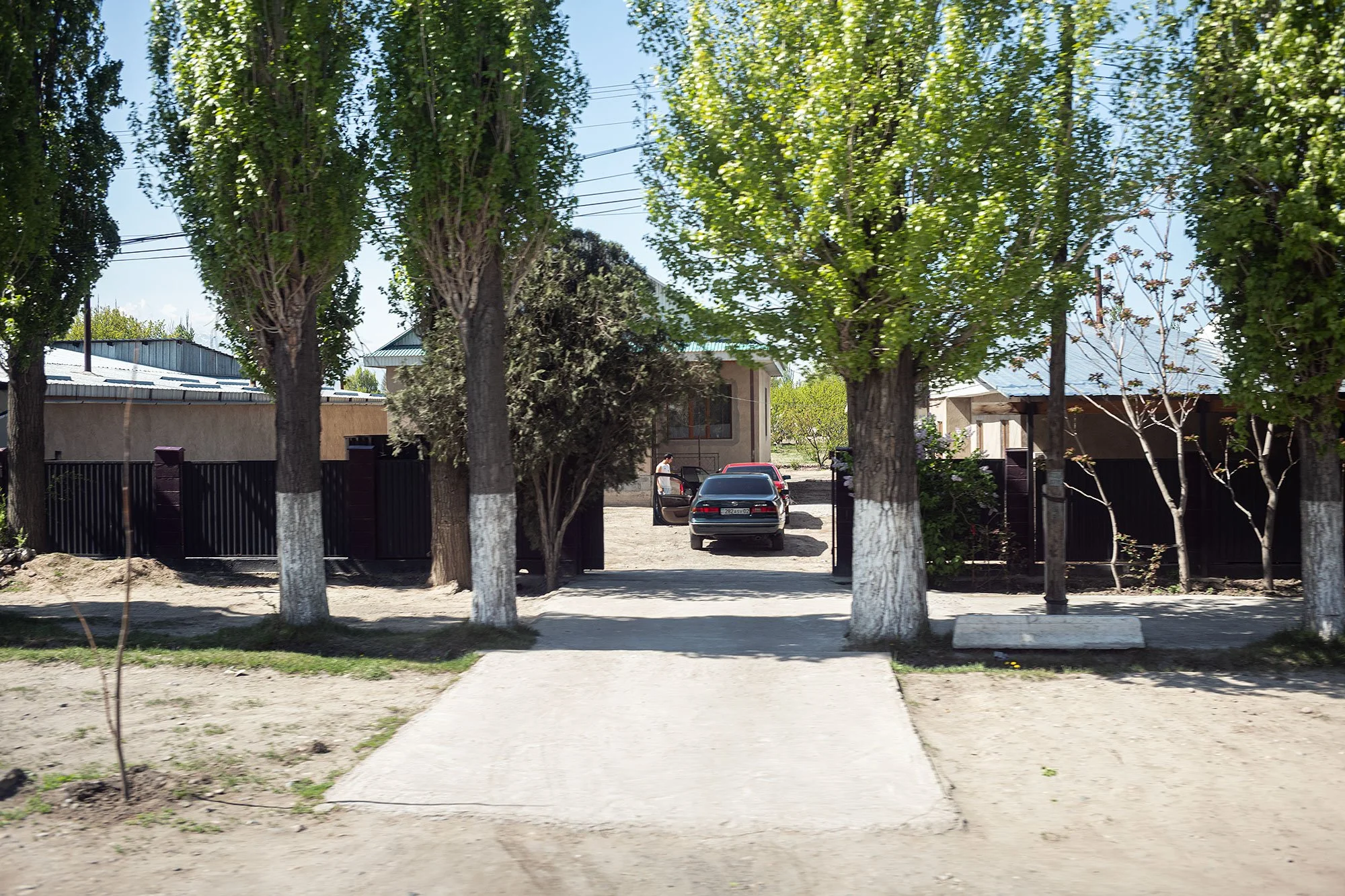
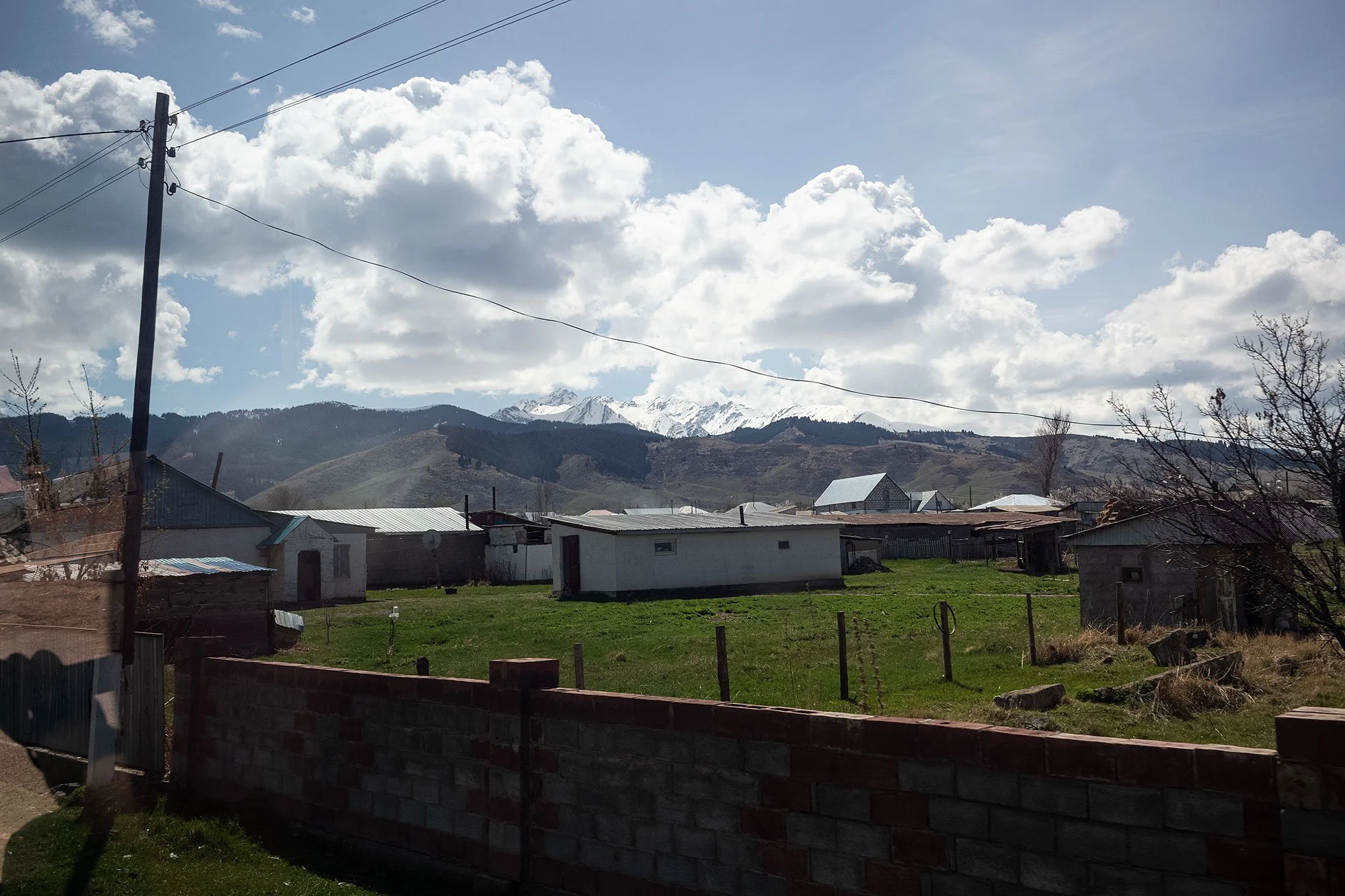
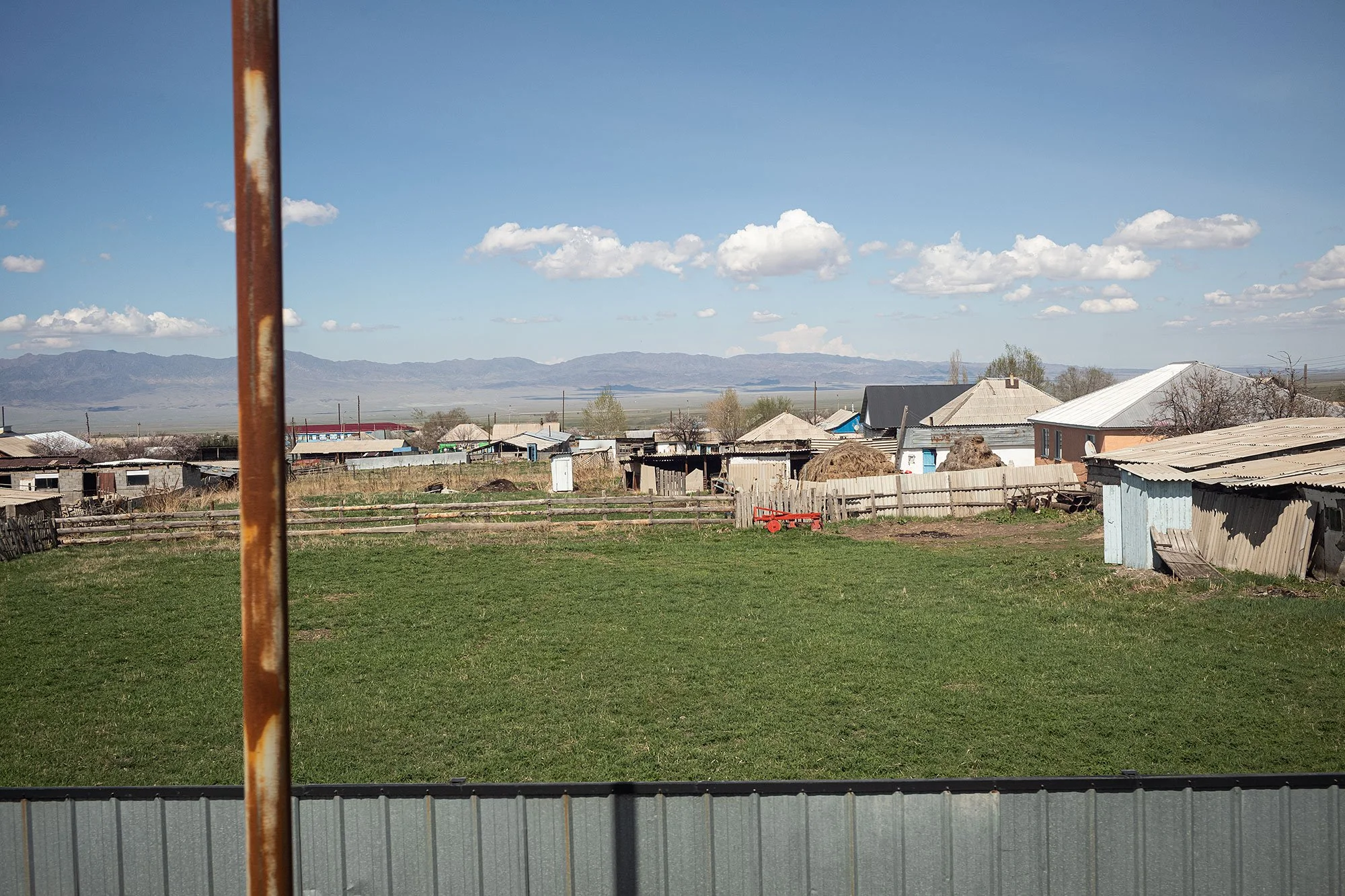
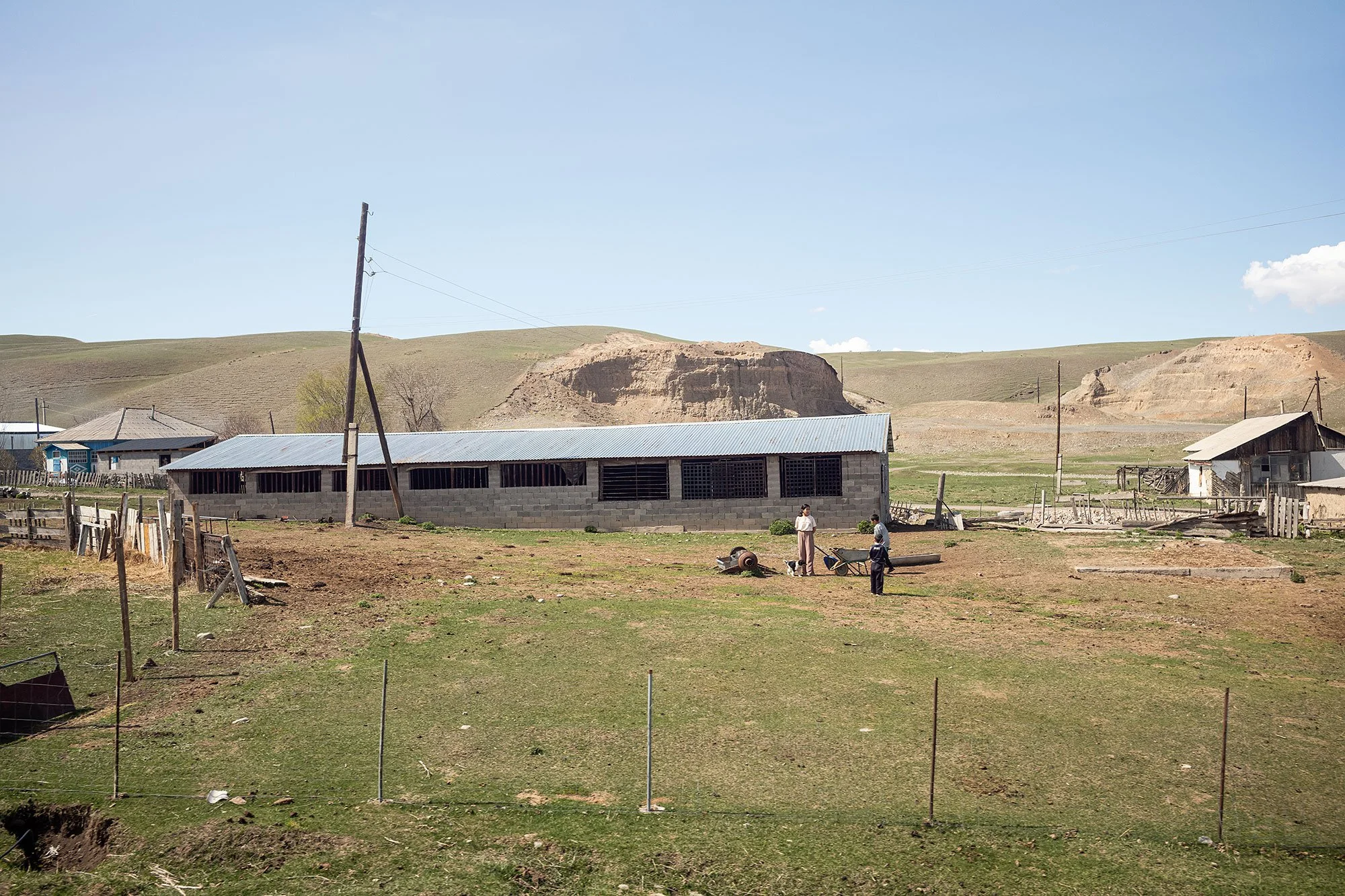
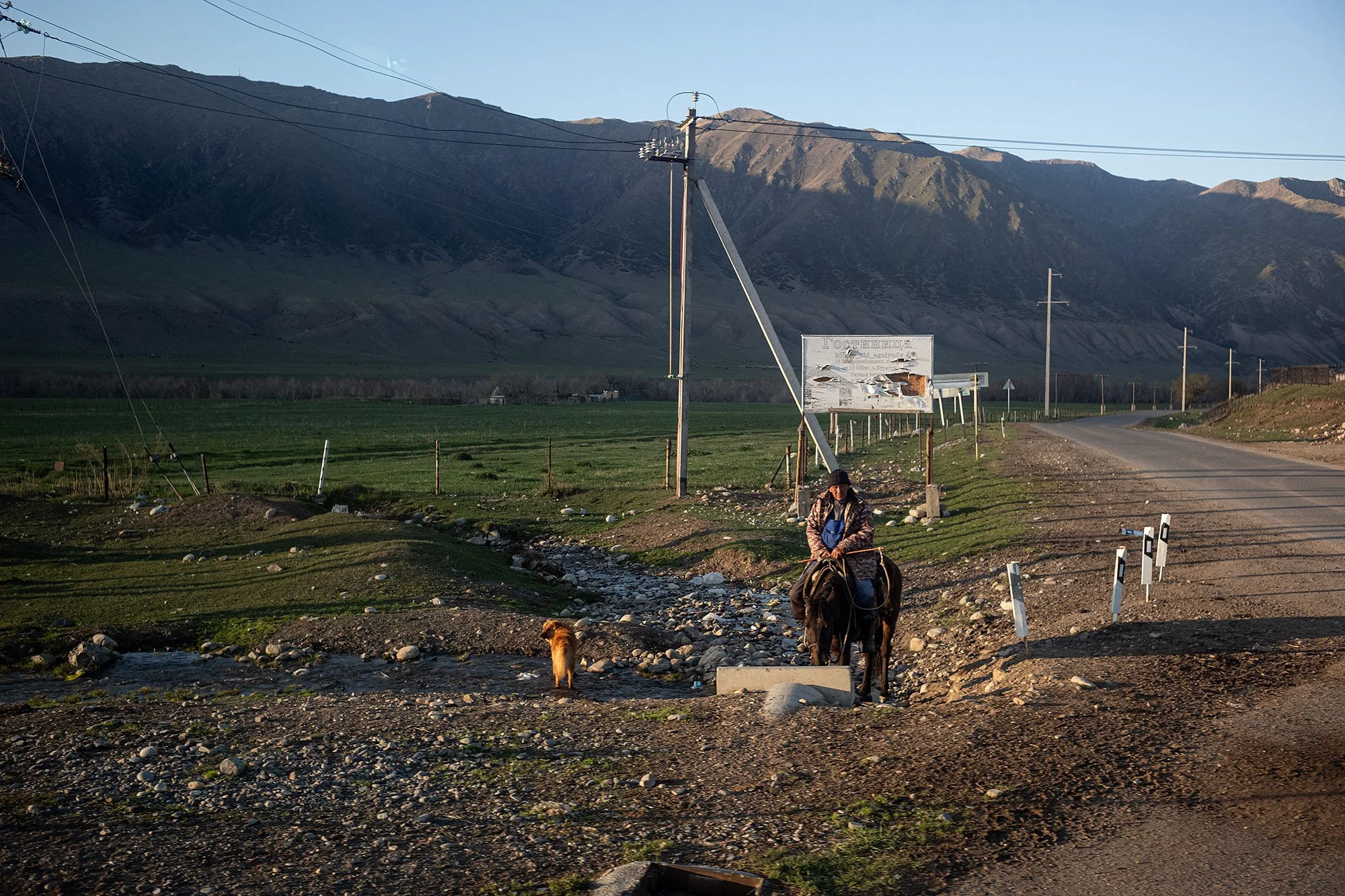
But before we reach it we drive through various towns and landscapes. While driving through one town Zhuldyz tells us that we’ll notice all the gates and doors will be open. The Kazakhs are known to be very hospitable in the region, welcoming weary travelers and making sure they’re provided for.
At the edge of town the intern notices that I’m taking a photo of a house and tells me that it’s for sale. I ask him how much a home like that would go for. He tells me it depends, not offering a range to consider.
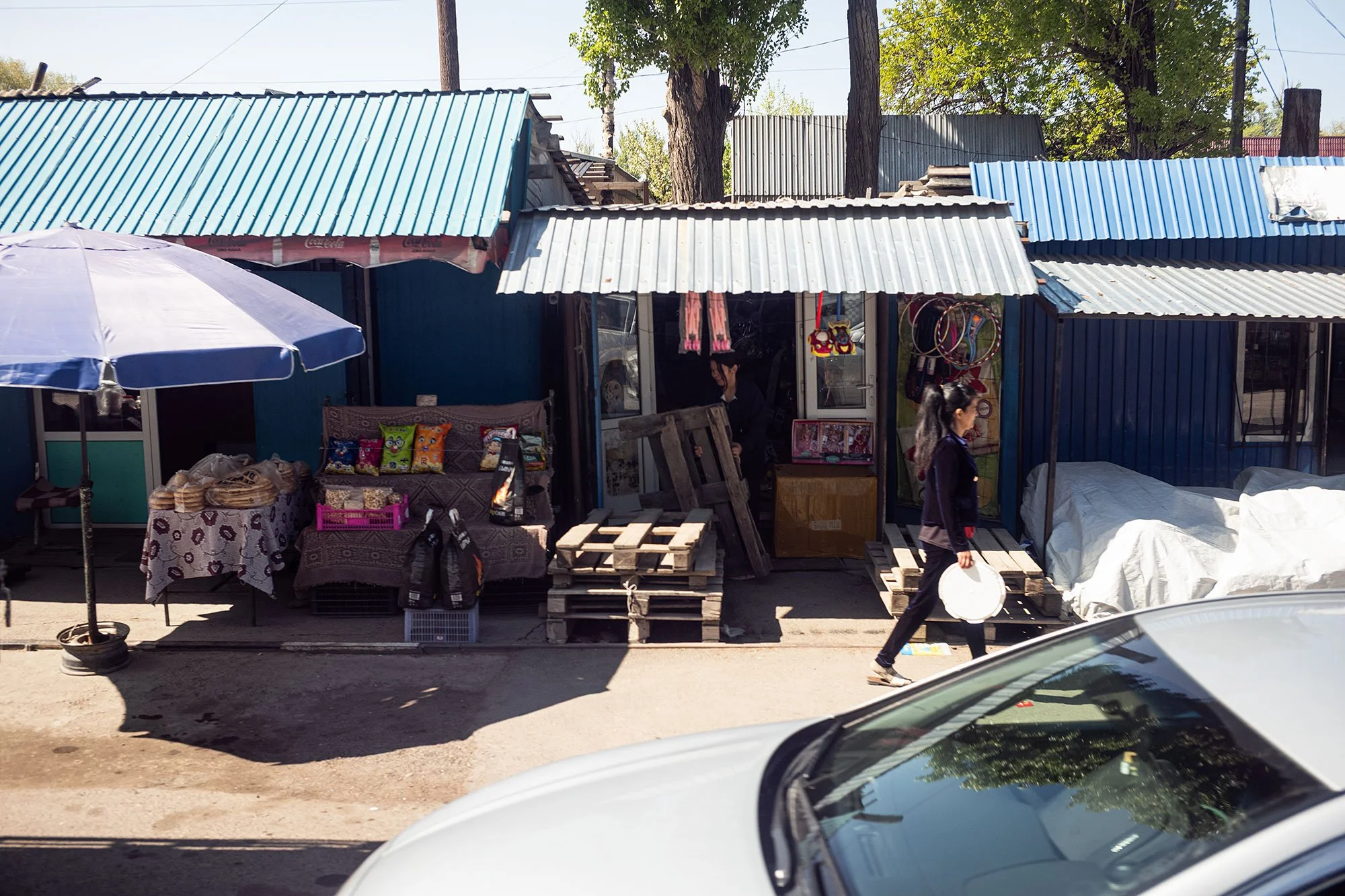
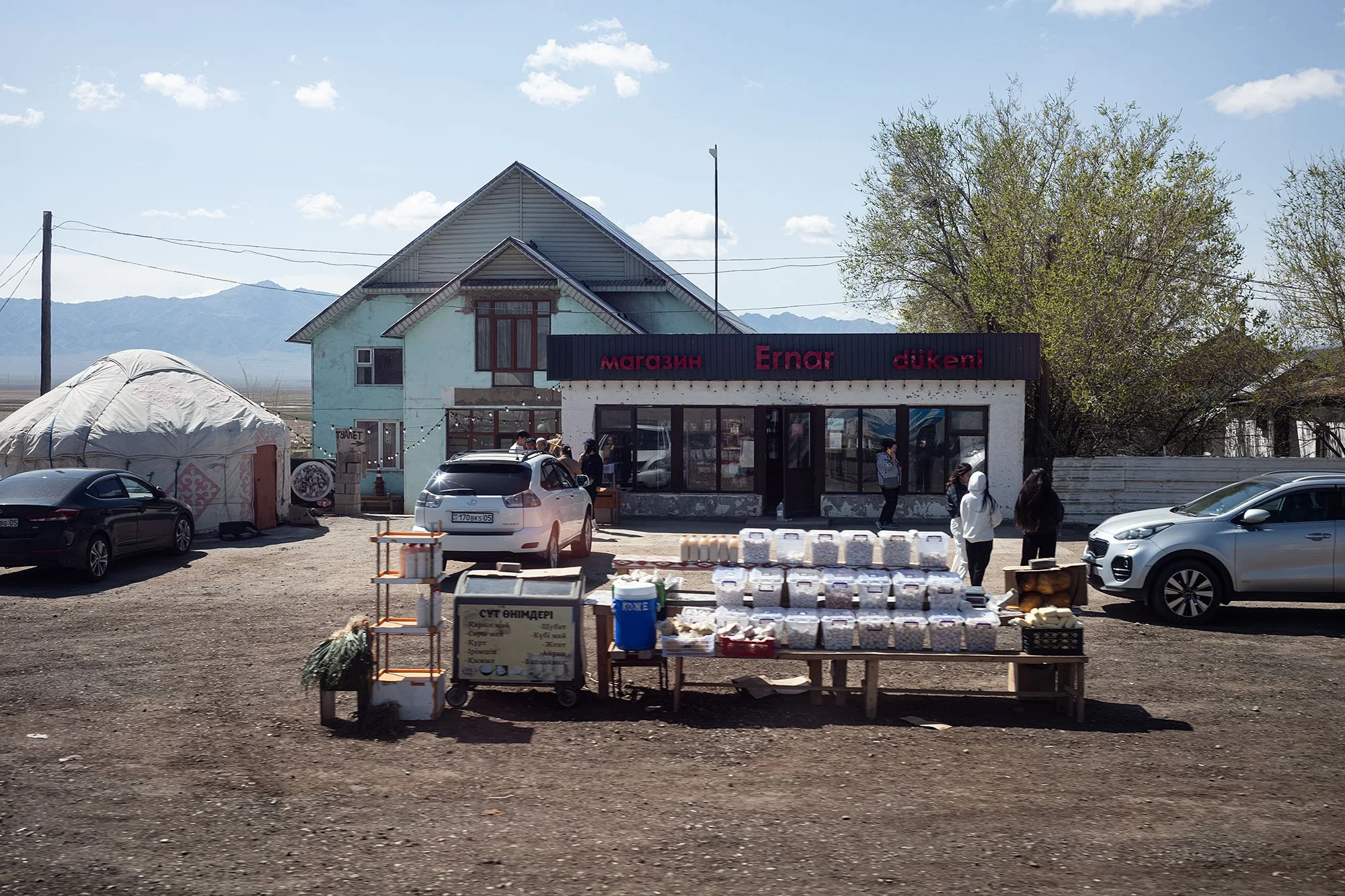
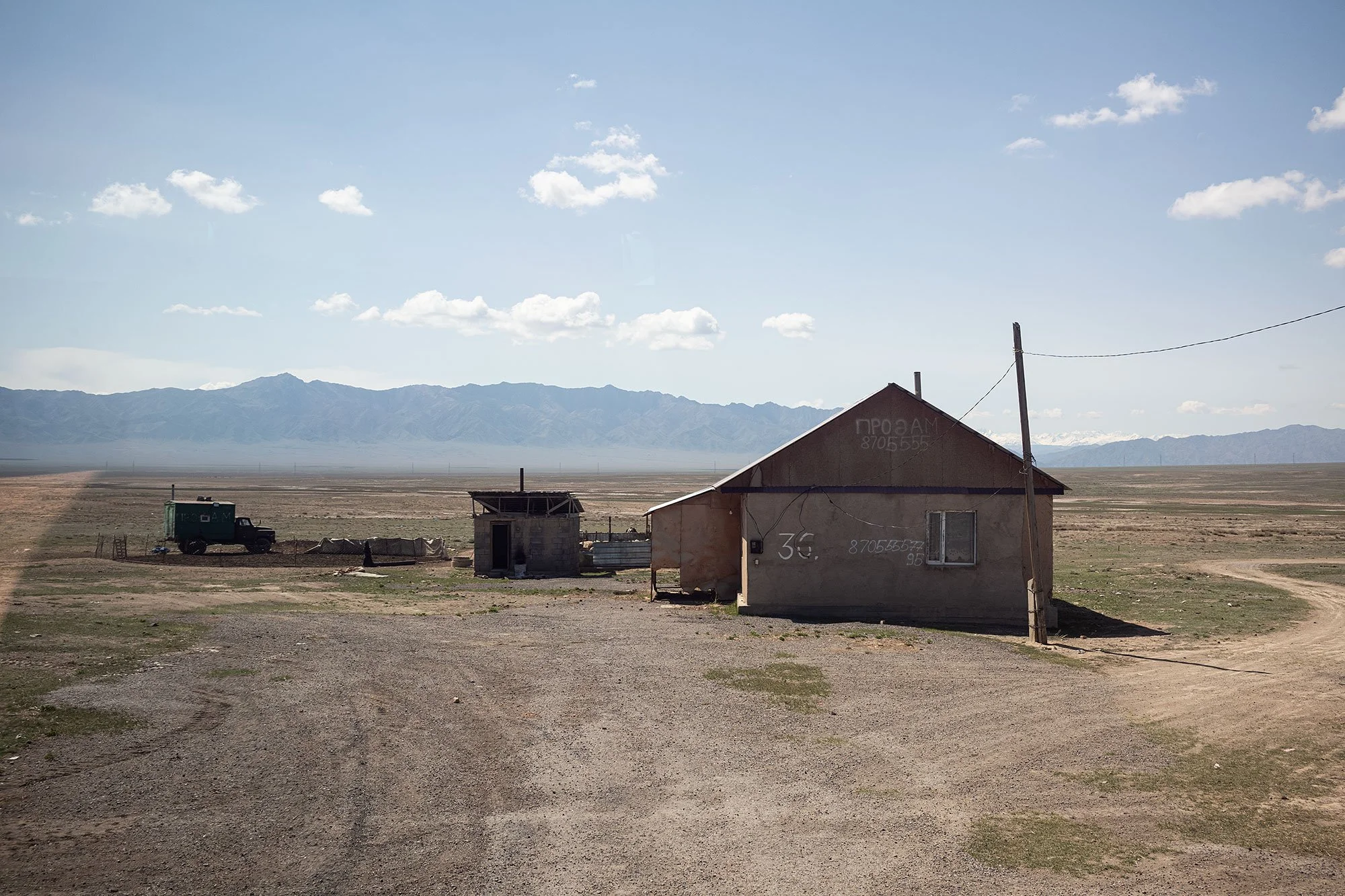
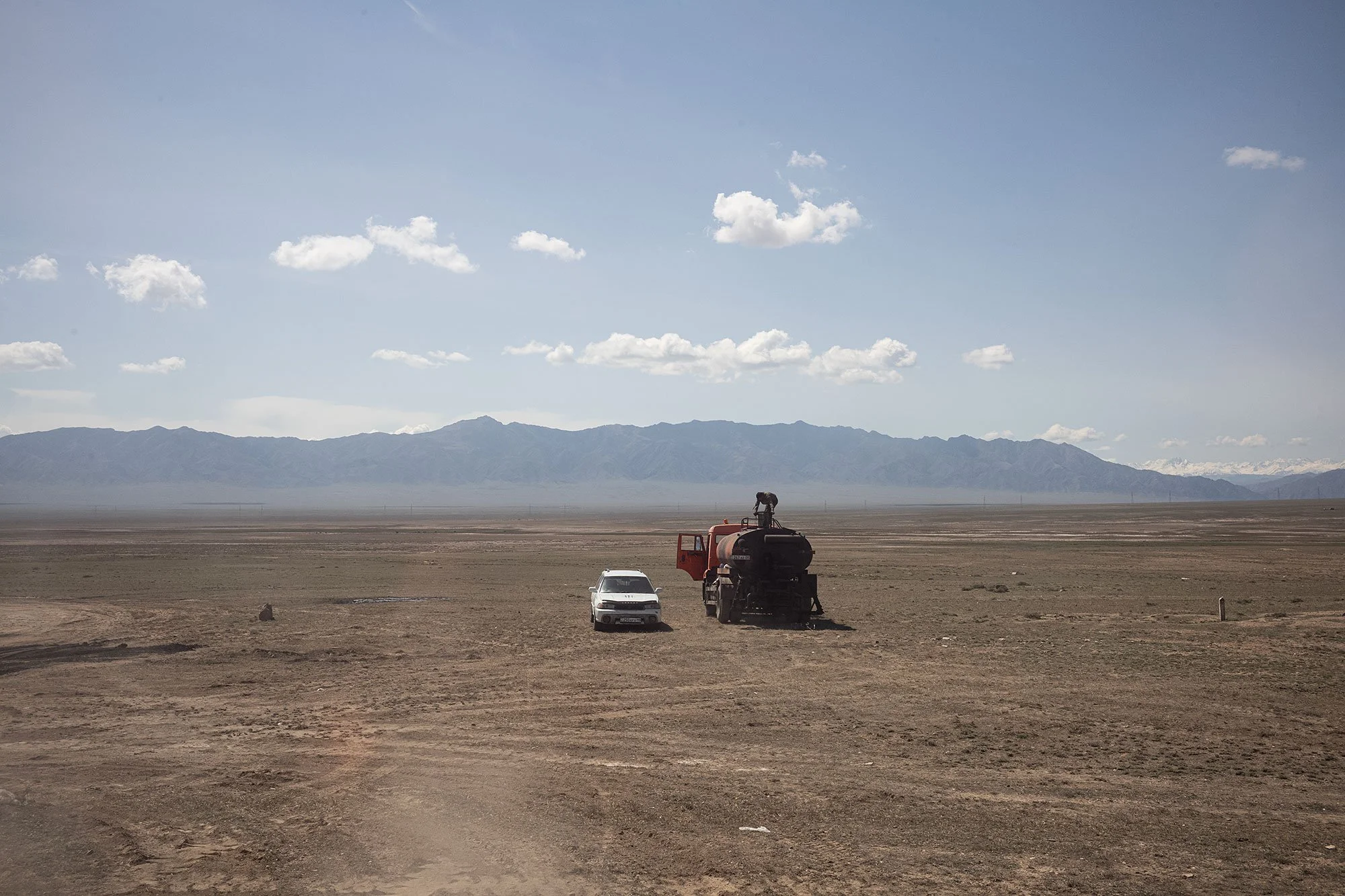
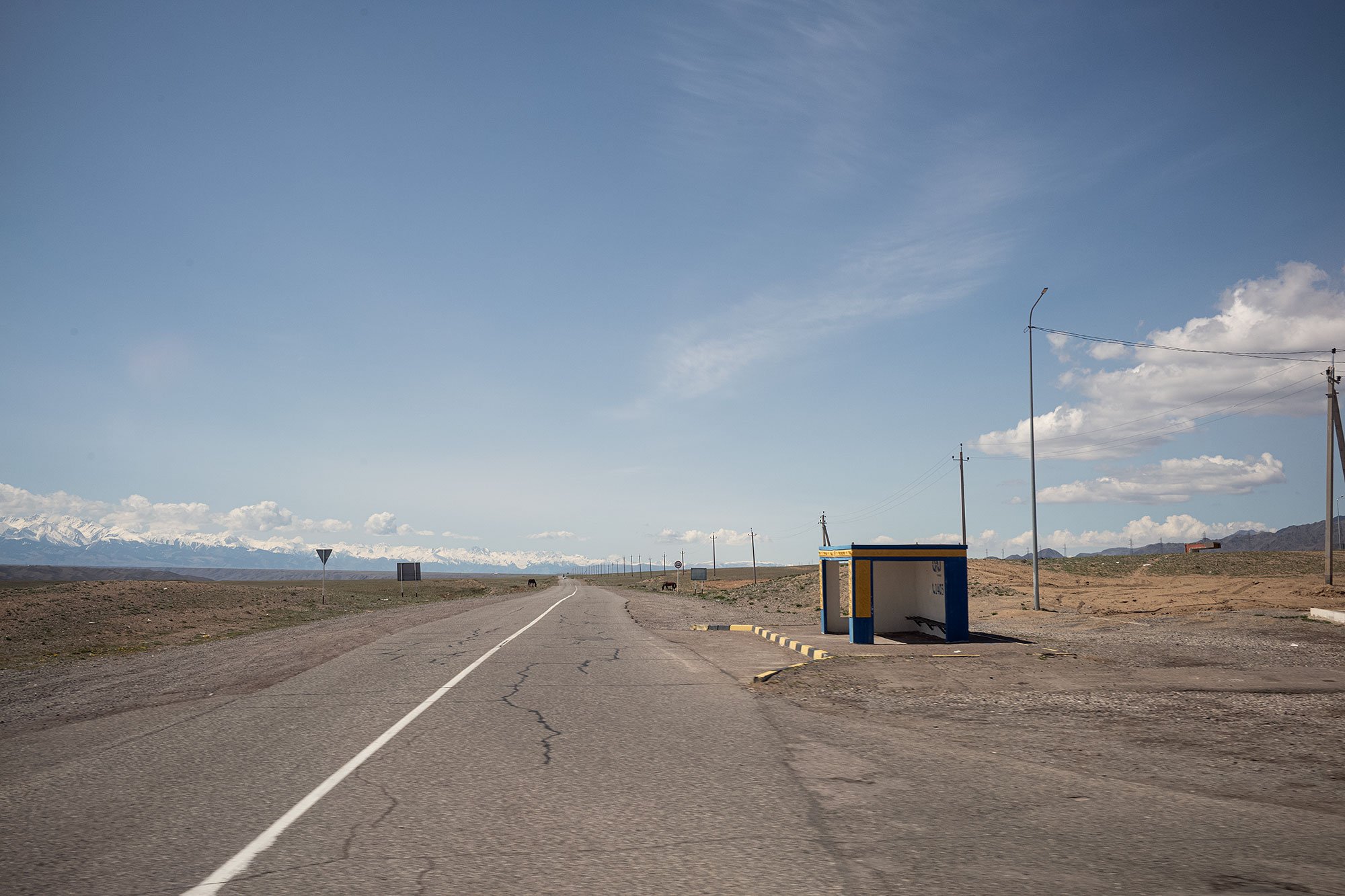
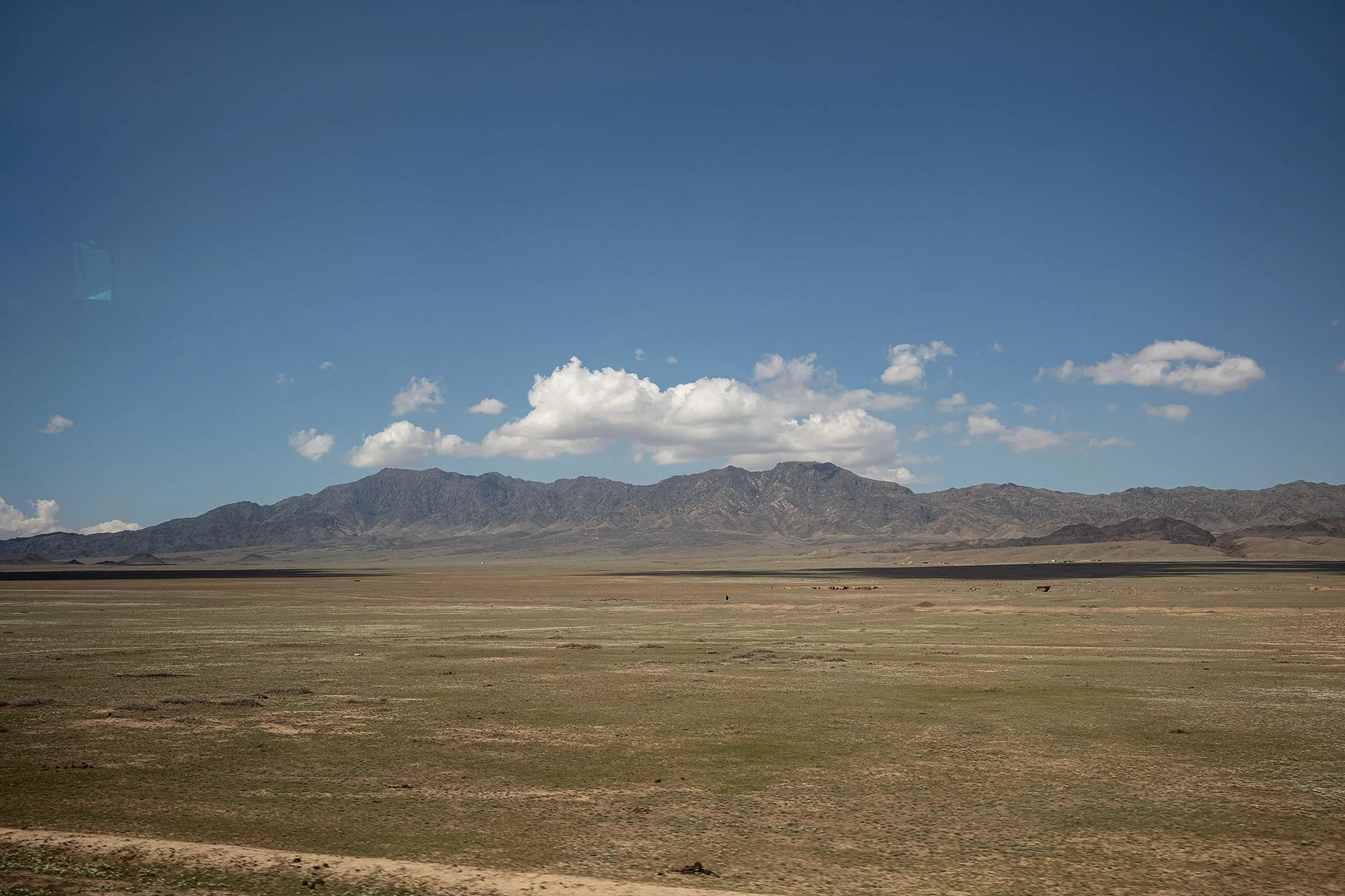
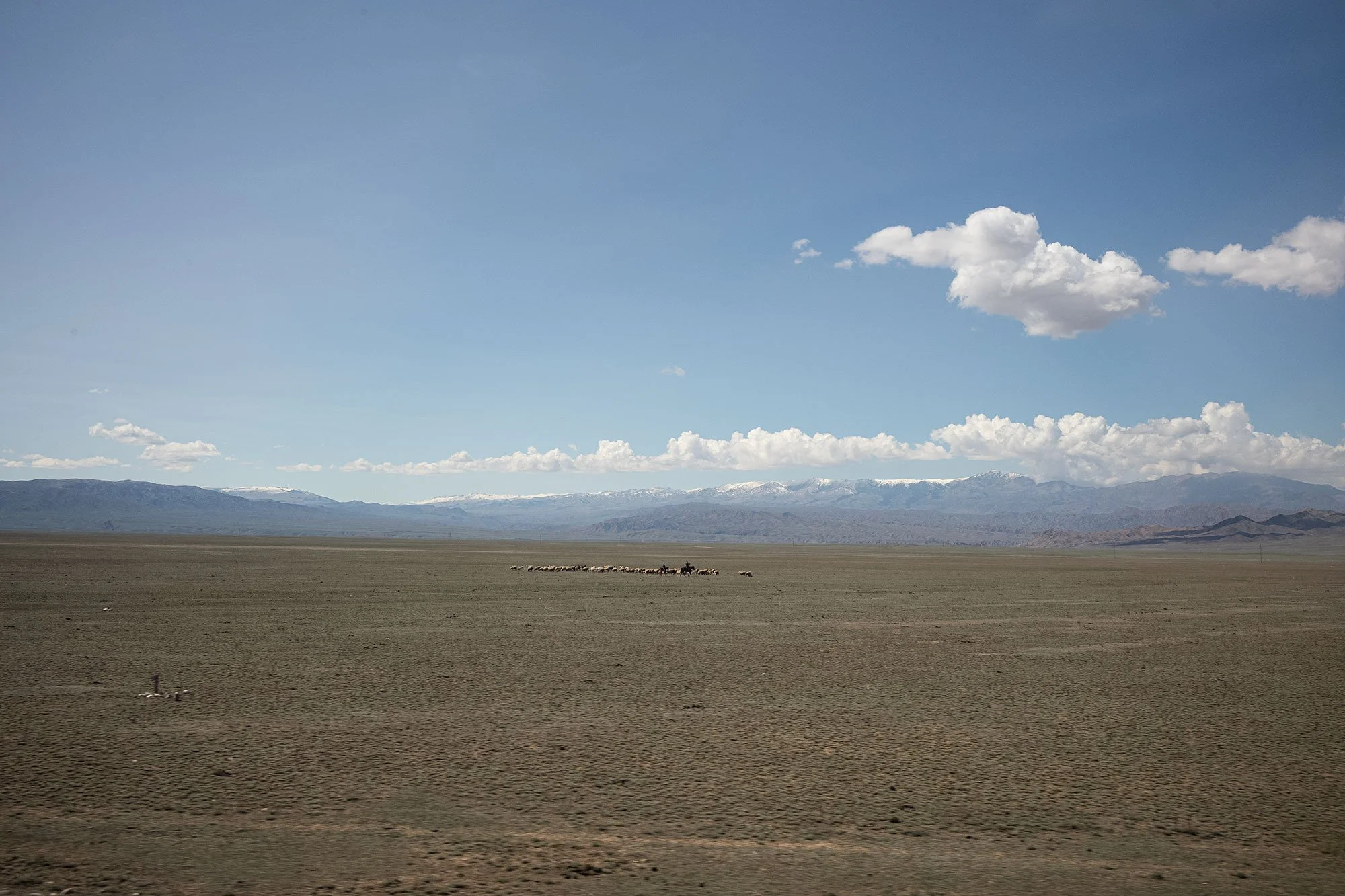
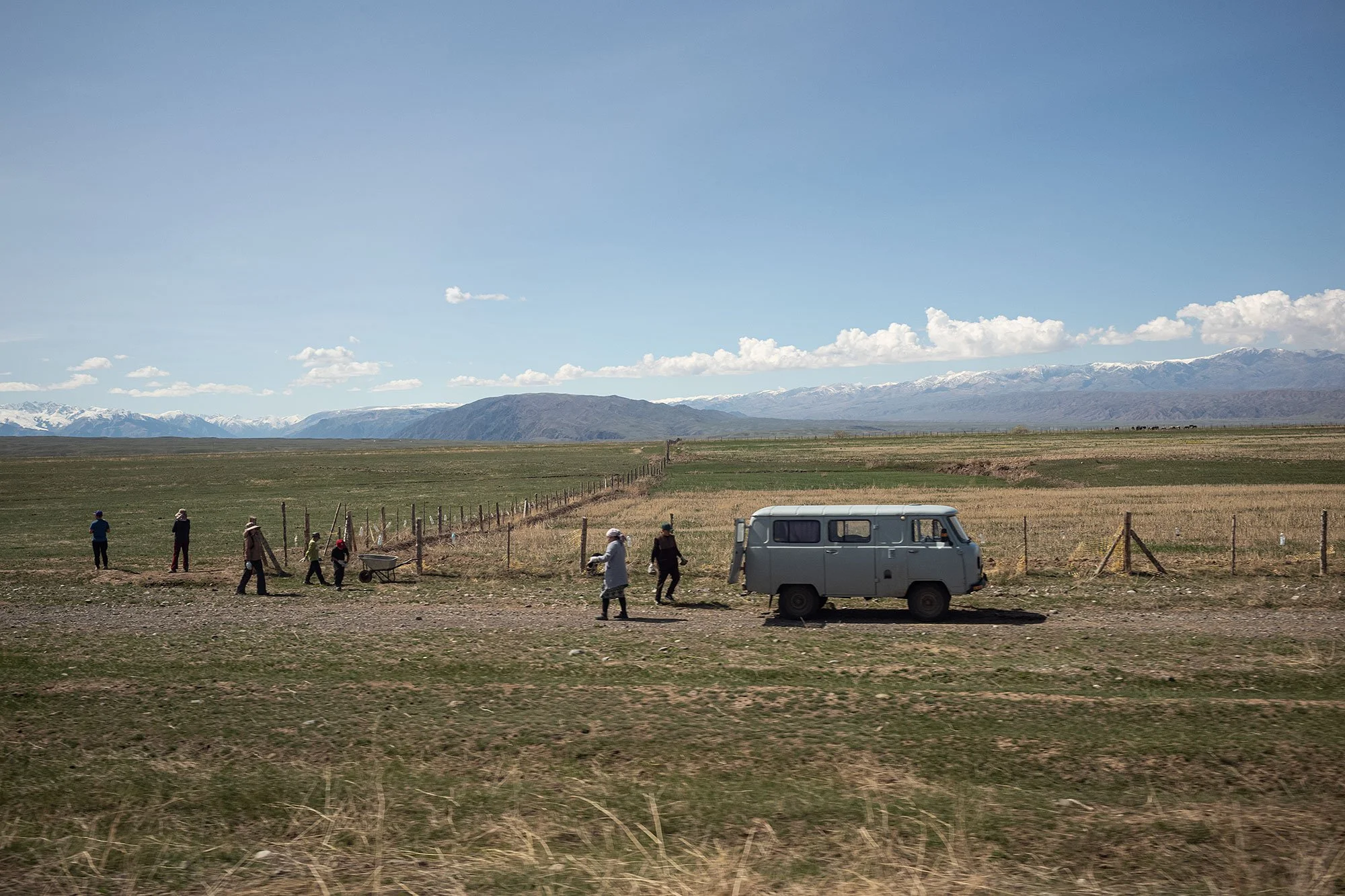
We continue driving past steppe landscapes. At one point Zhuldyz calls out the fields of dandelions we pass. Out the left window there are a few cars parked by the side beside a particularly vibrant patch and the passengers stand or sit in fields to have their photos taken.
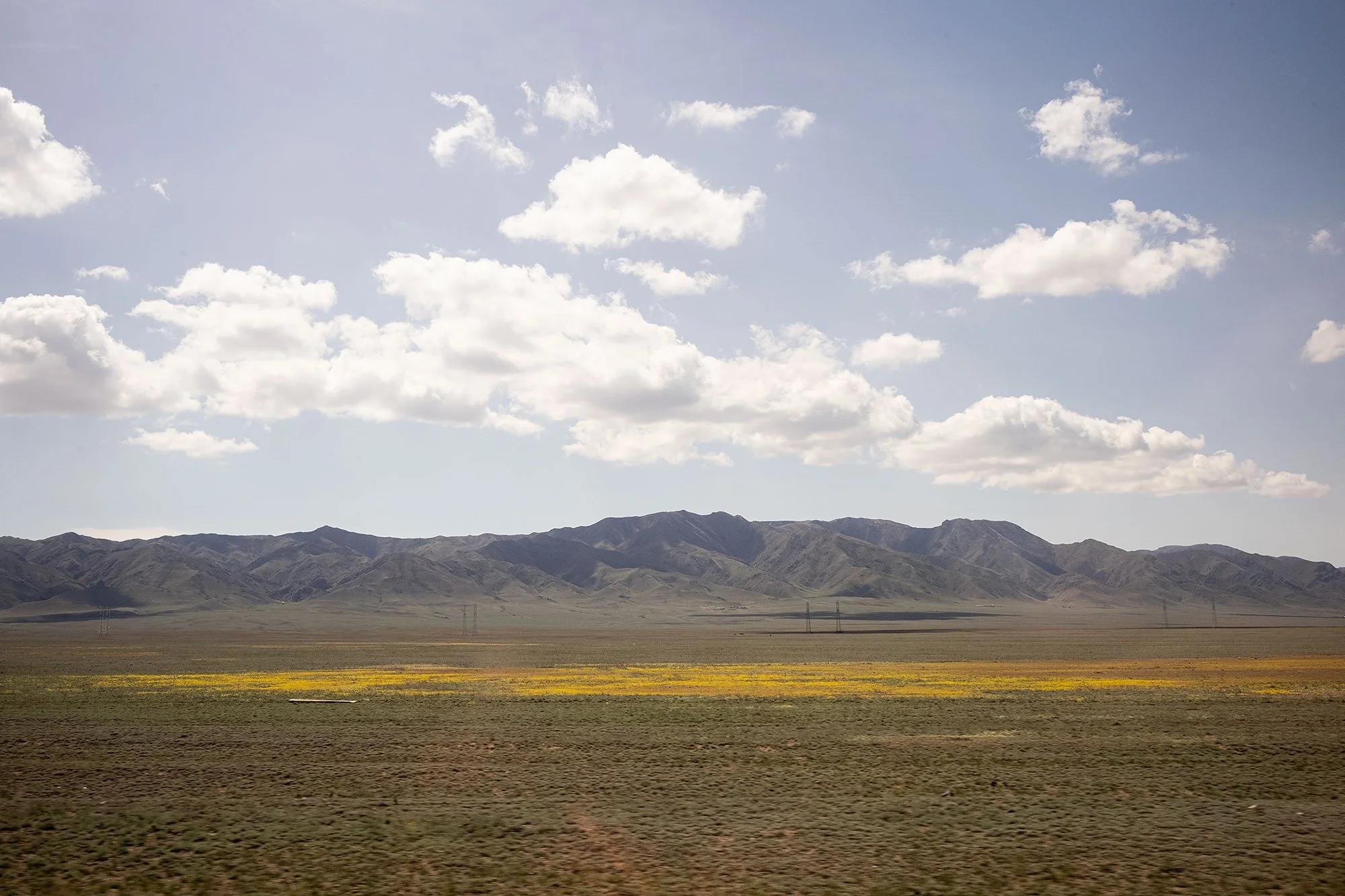
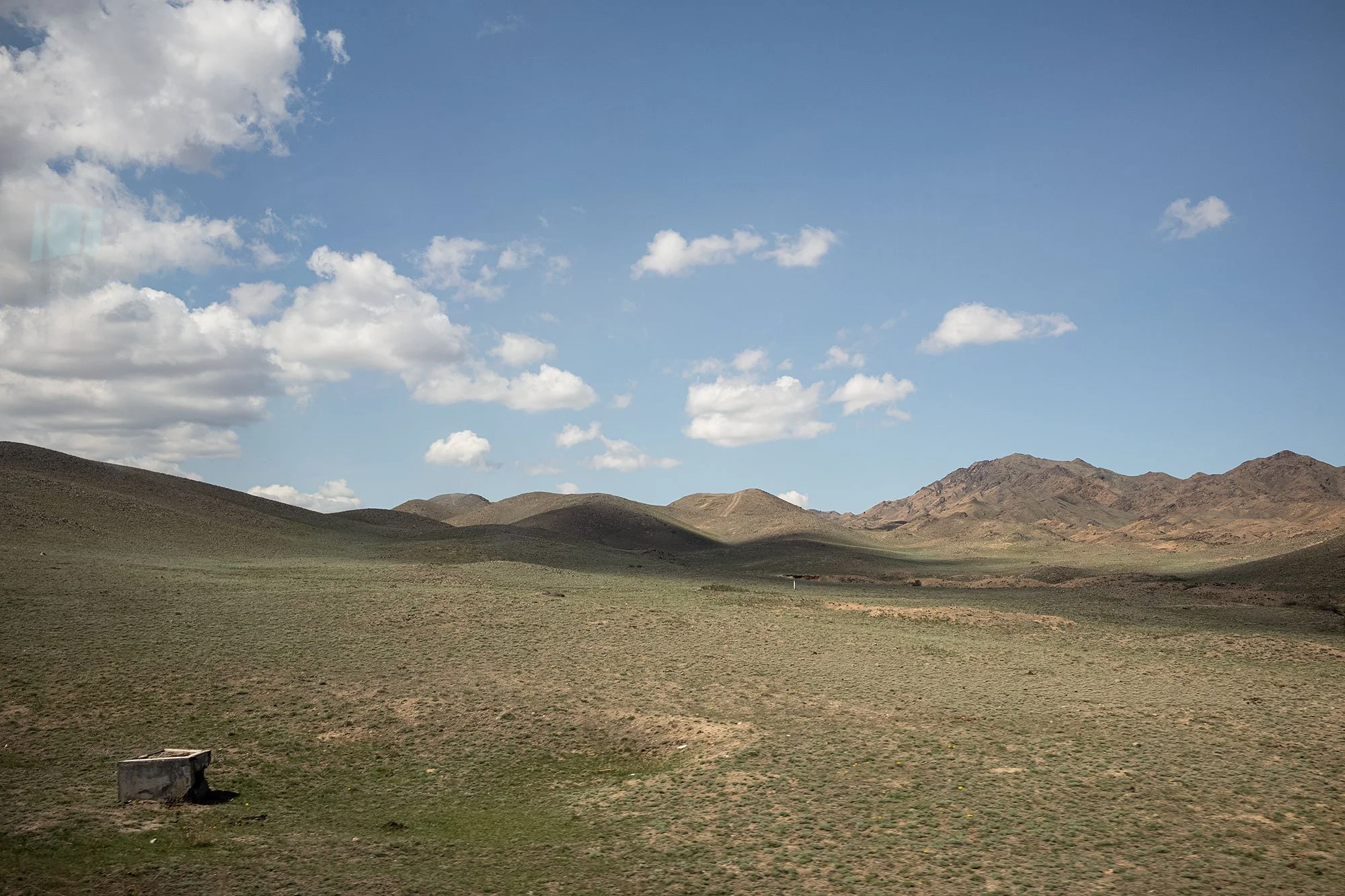
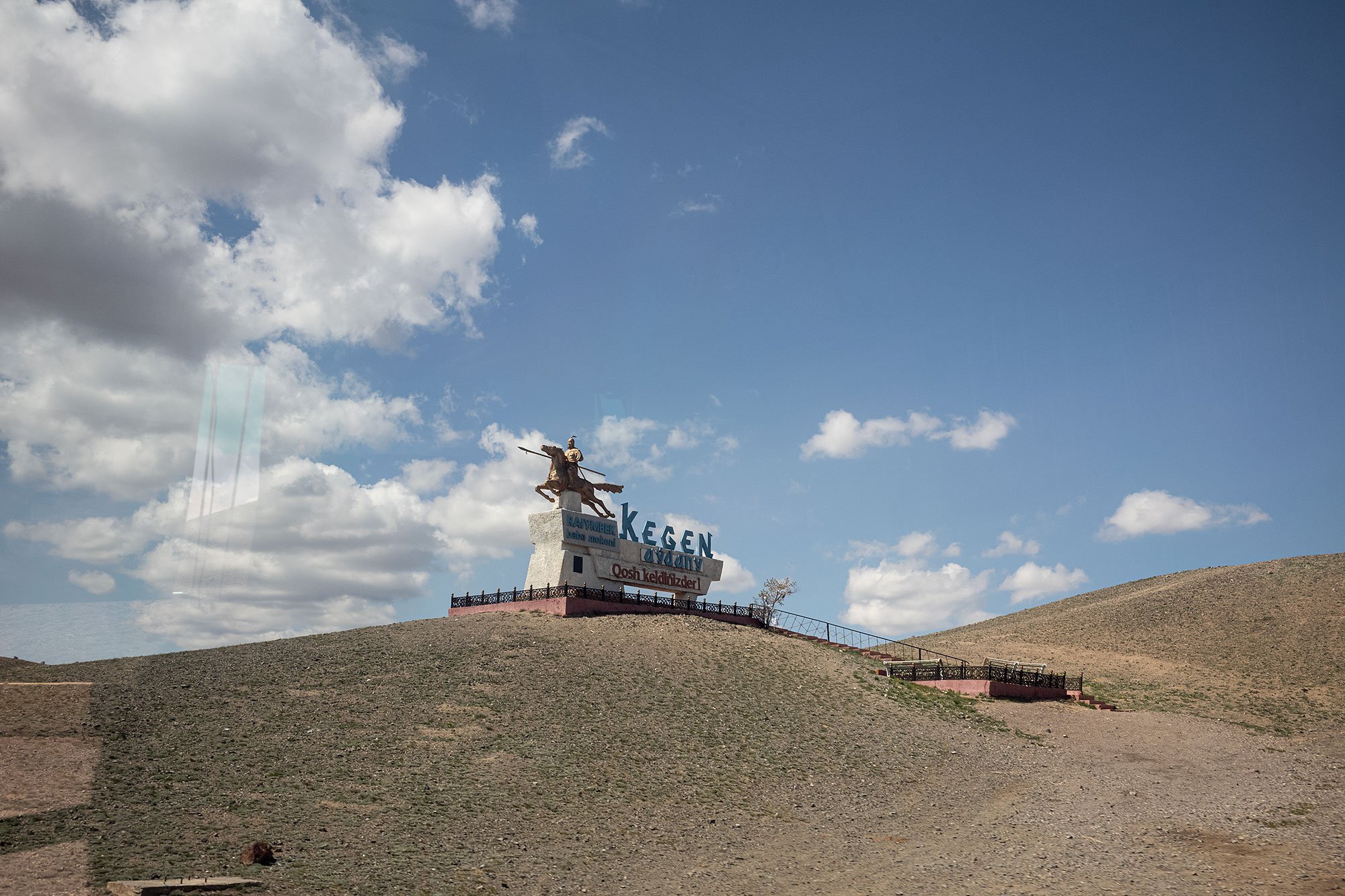
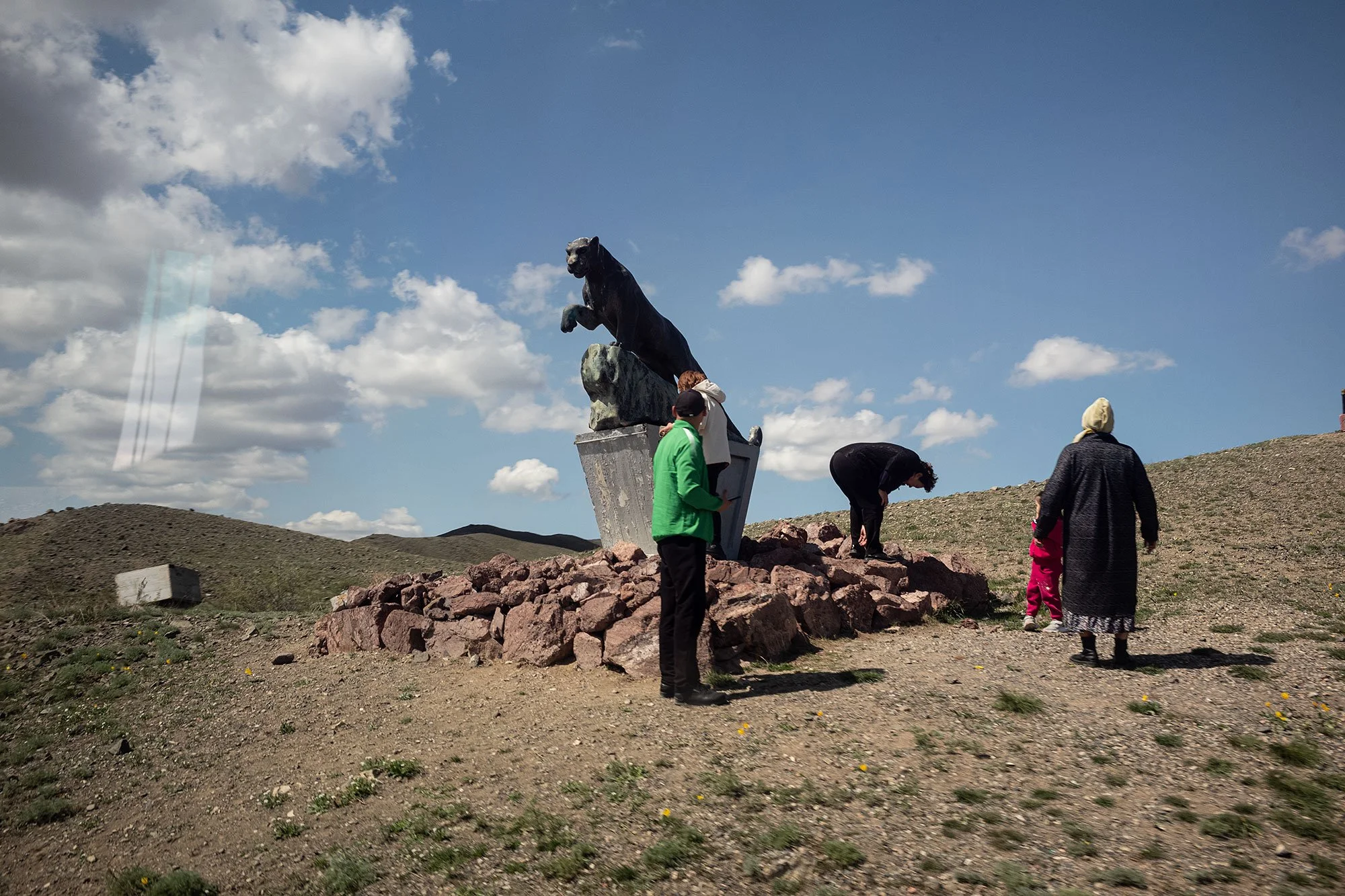
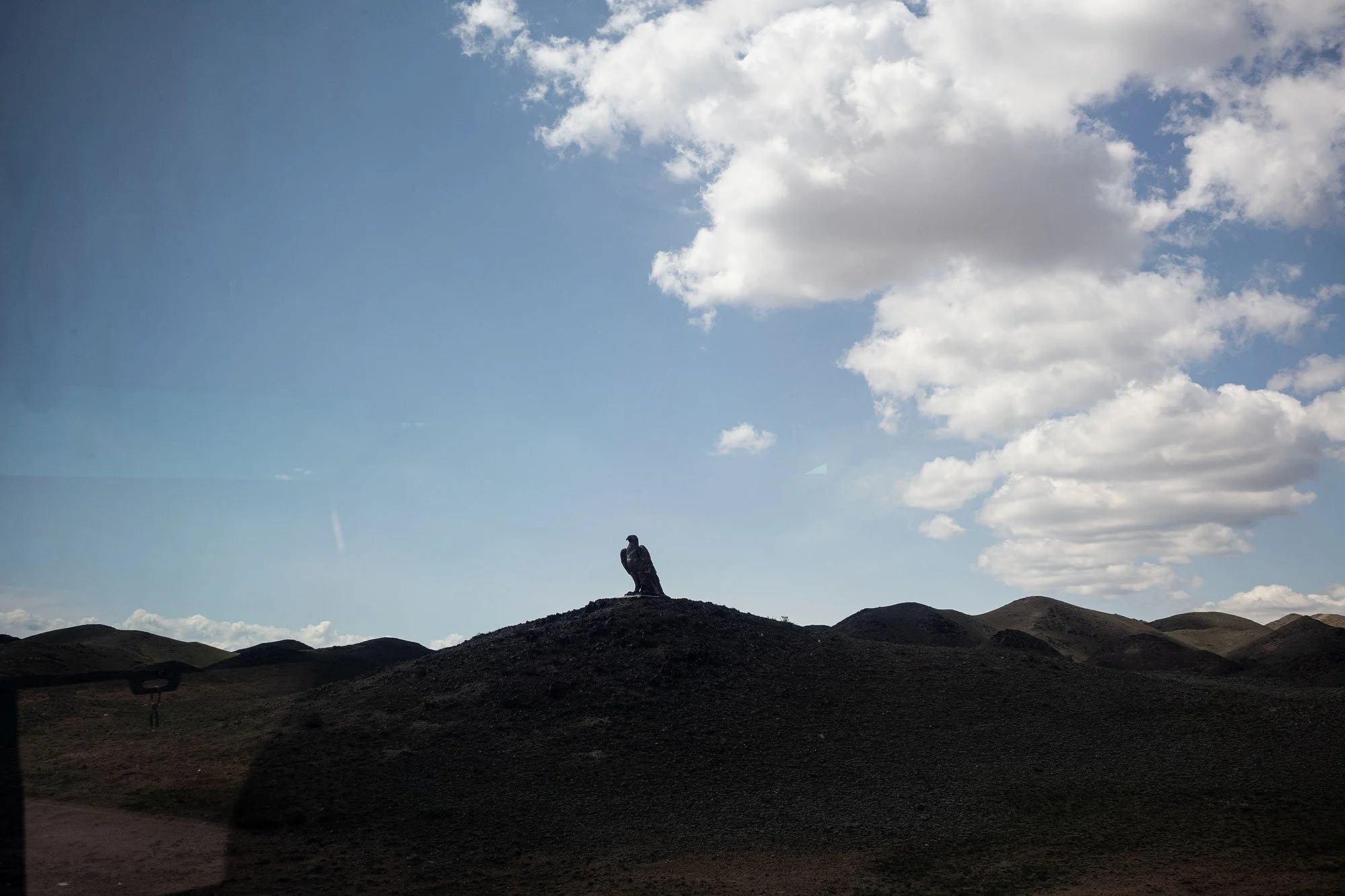
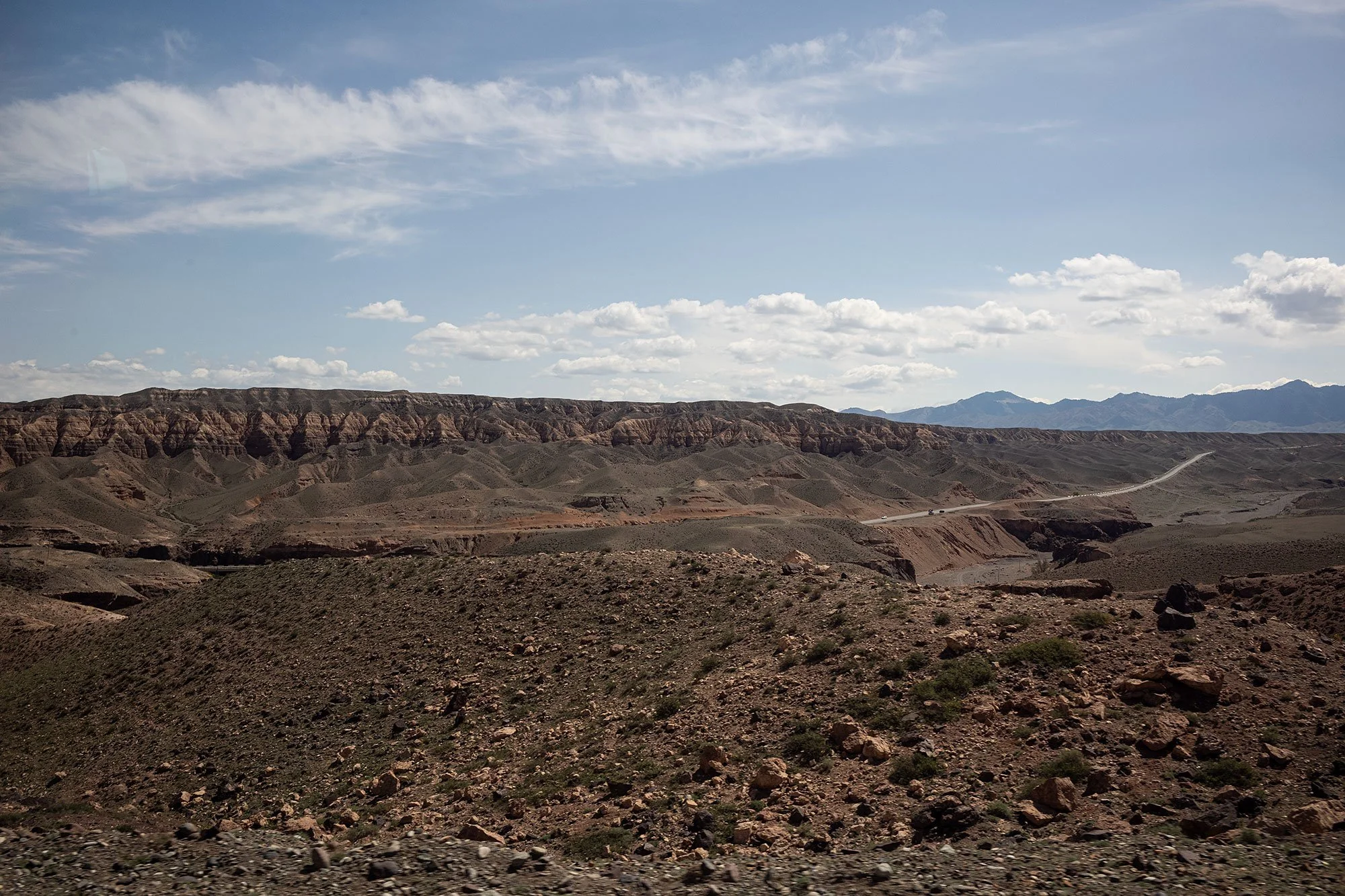
The landscape begins to change and I can sense we’re getting close to the canyons. Looking at the rocky ridges by the side of the road I’m reminded of my trip to Atacama, although it’s a lot easier to breathe at this altitude.
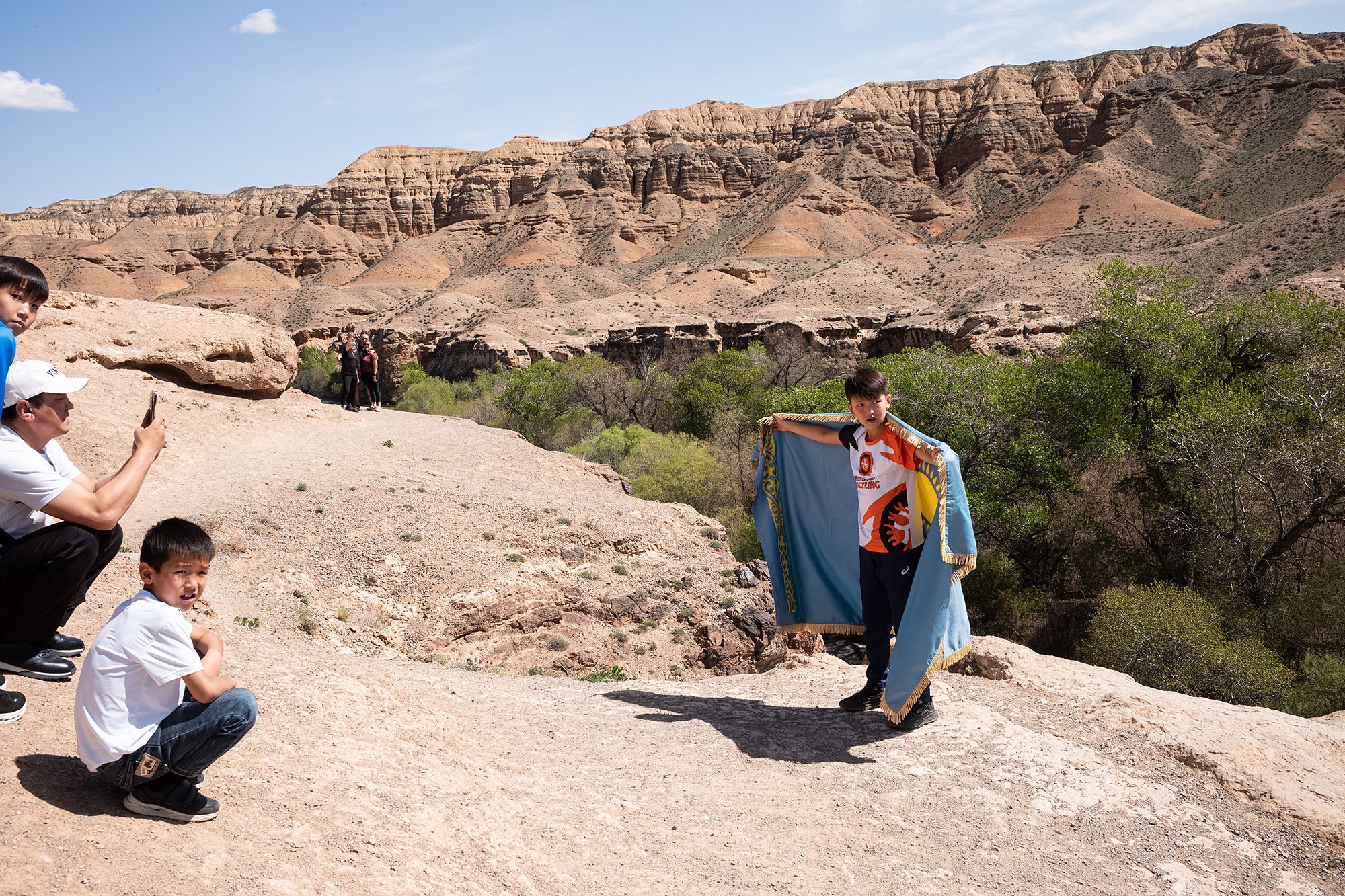
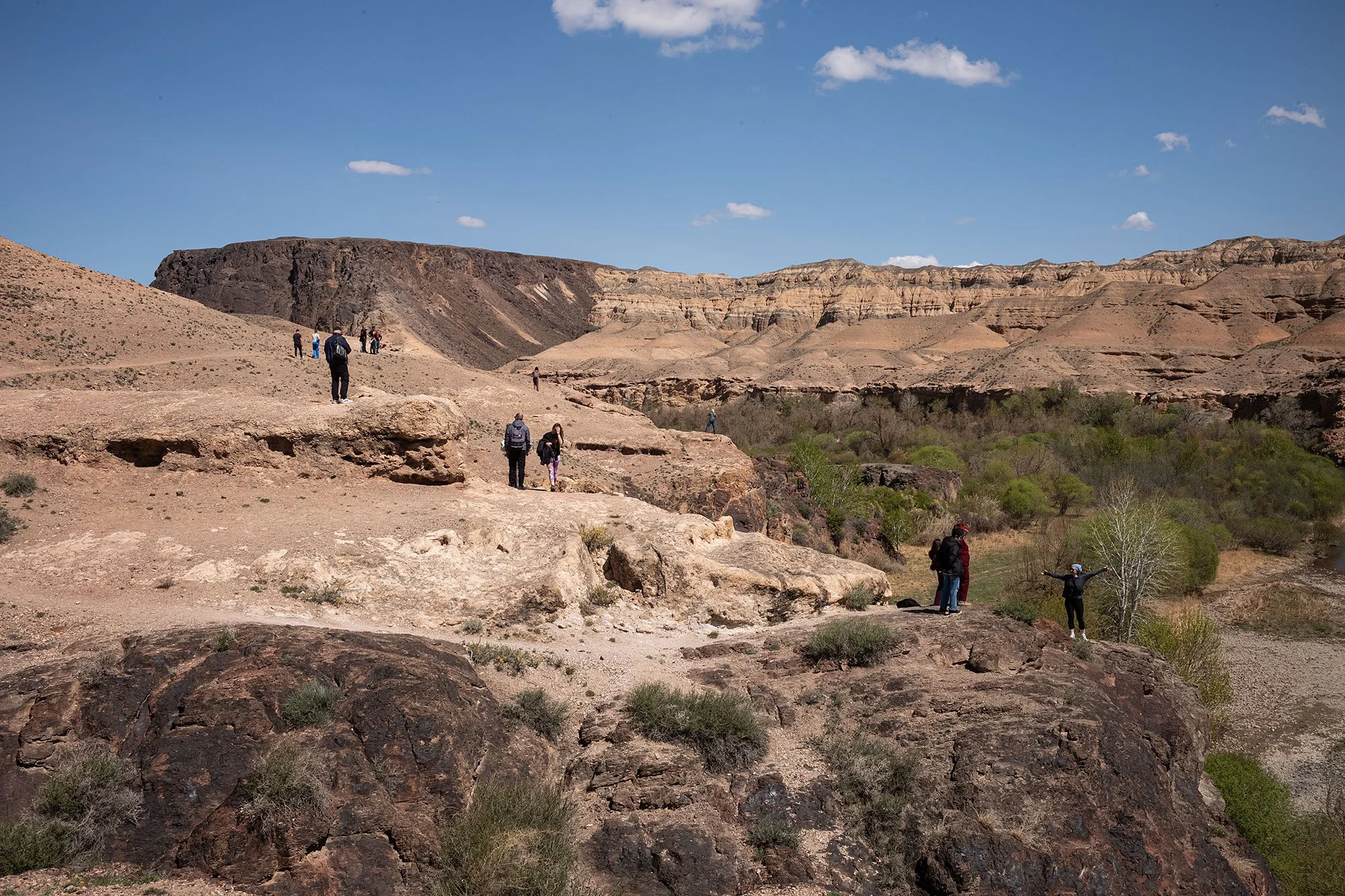
We’re given twenty minutes at Moon Canyon. As we arrive a family is taking photos of each other holding the Kazakh flag. We skirt arond them and walk deeper into the canyon.
Zhuldyz asks us not to wander too far. There are people following a path further down the canyon and there are some who have walked down to the river. A tent looks like it’s been set up and I wonder if people have camped there overnight.
She tells us that some people are here on a shorter tour of just the canyons and have an hour to spend wandering. We’re more limited by time. I think, not for the first time, that it might have been a good idea to rent a car and self-drive this tour. Along the way there were monuments I had seen by the side of the road and I would be interested to stop and learn more about them, photograph them against the clear skies.
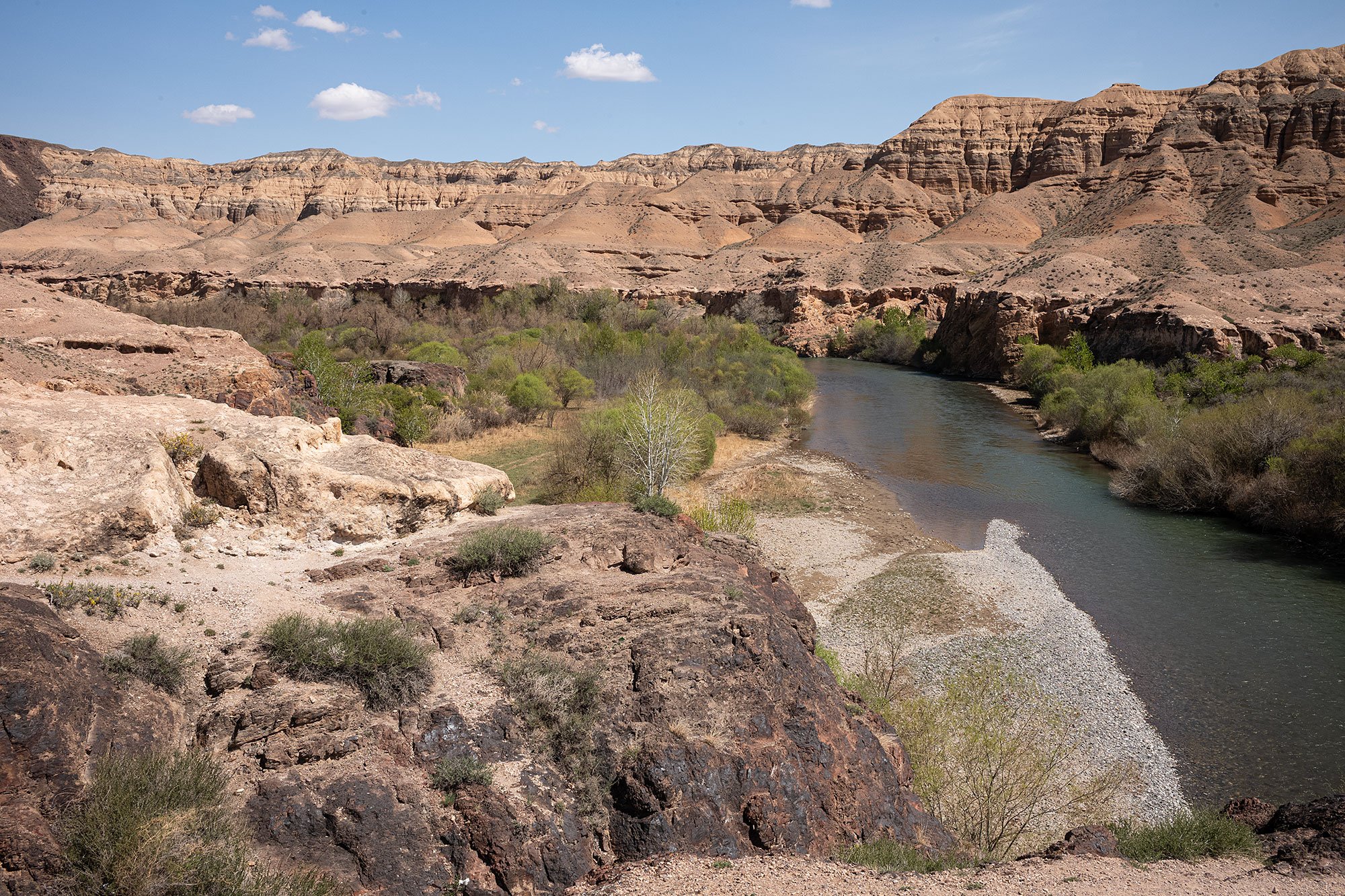
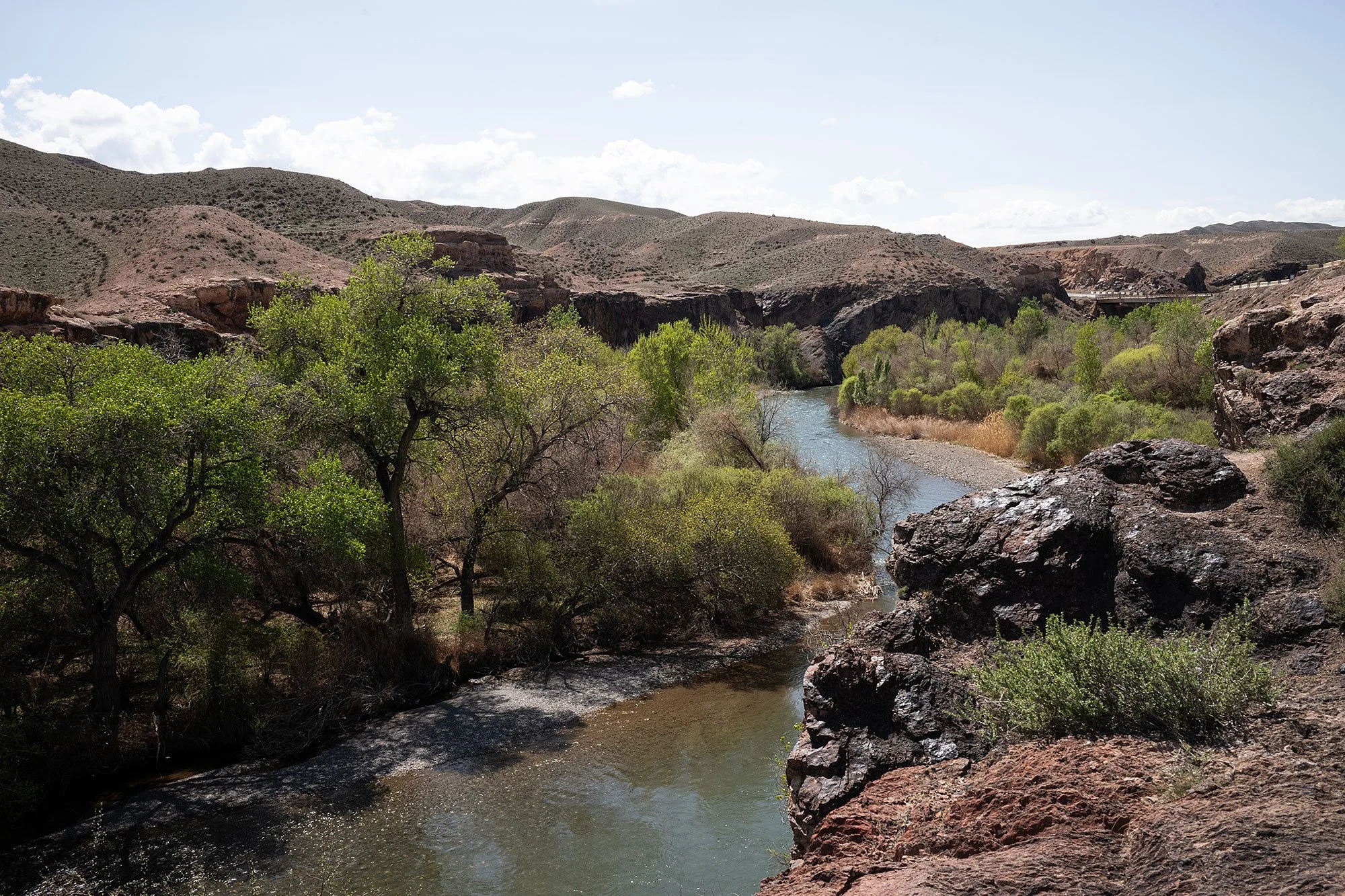
From Moon Canyon it’s not far to reach Black Canyon named for its basalt walls. She tells us there’s a story about witches she’ll share when we arrive.
Legend has it that there are witches who live in the shadows of canyon. At night they transform into animals that lure people to the edge and then over into the canyon to their deaths. I ask her why they do this. She says she doesn’t know. The story ends there.
The stories aren’t mere legends, unfortunately. People have fallen over the cliffs, most recently a 72-year-old tourist from the Netherlands who tumbled to his death a few years ago.
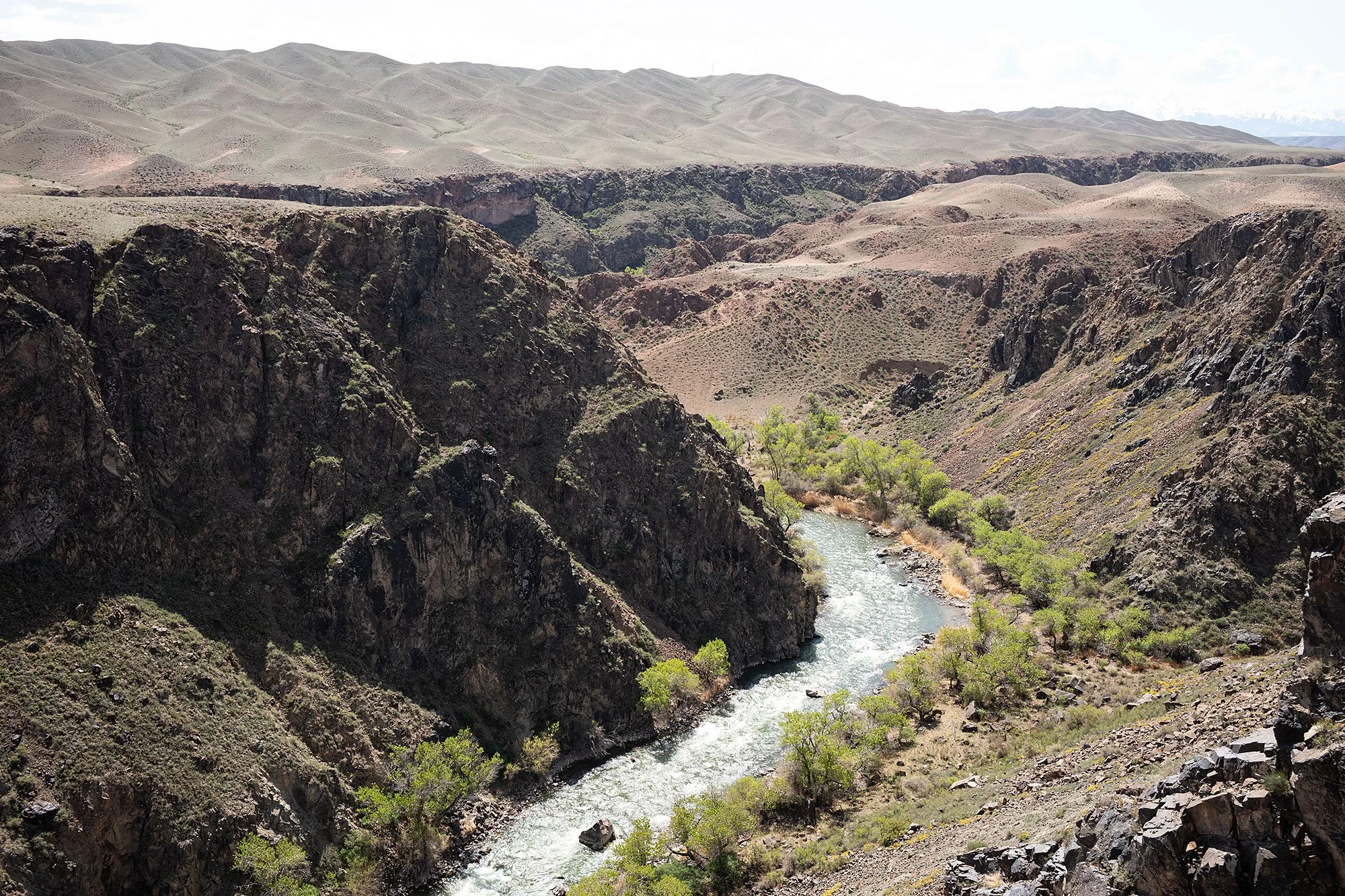
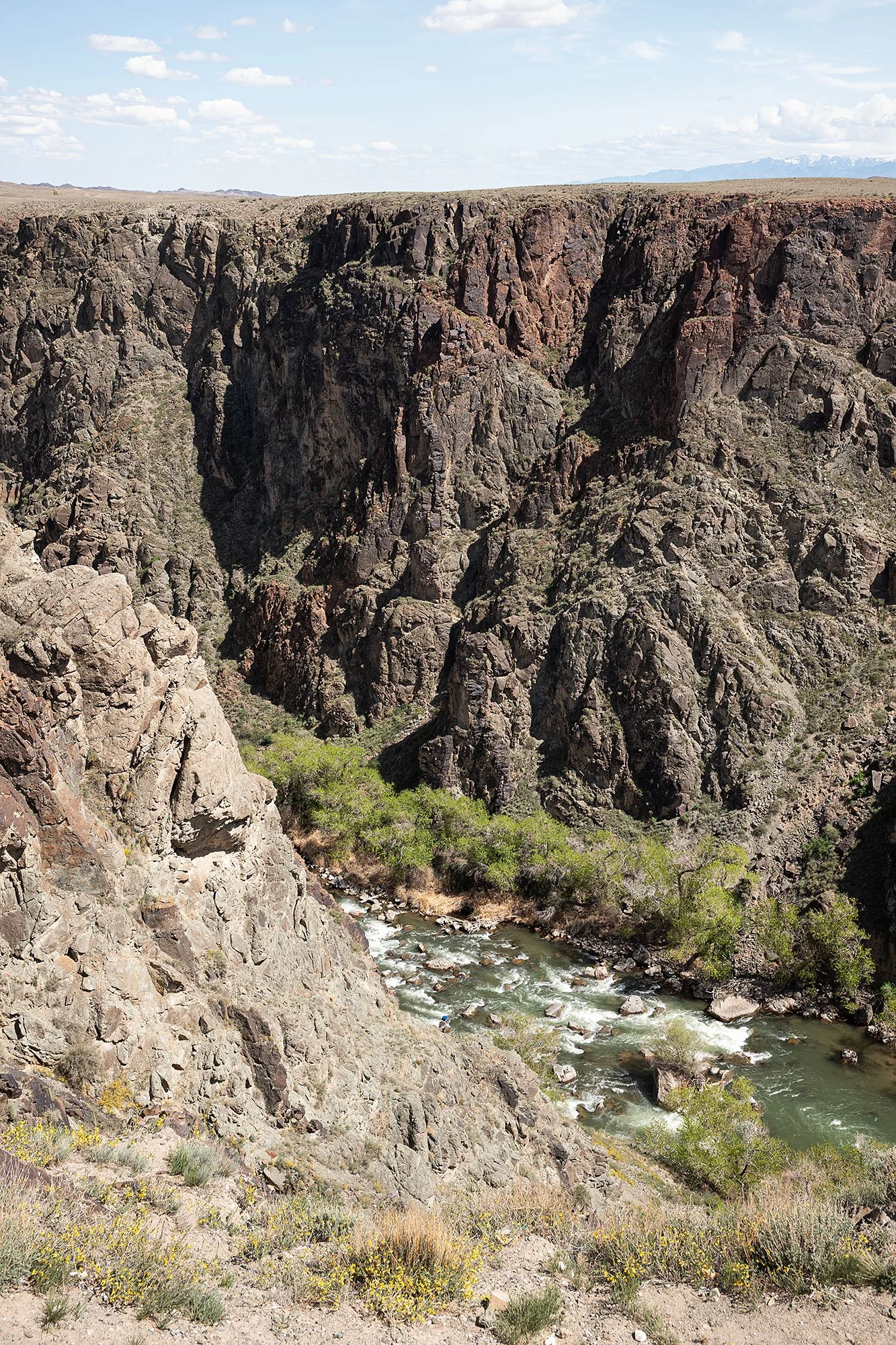
We’re given 20 minutes at the canyon before we have to go. We’re to have lunch at Mrs. Shakira’s and we have a specific time slot. Mrs. Shakira also has three strict rules we must follow. 1. We must take our shoes off; 2. We must wash our hands; 3. We must take off any heavy coats or hats, which isn’t as much of an issue in the Spring.
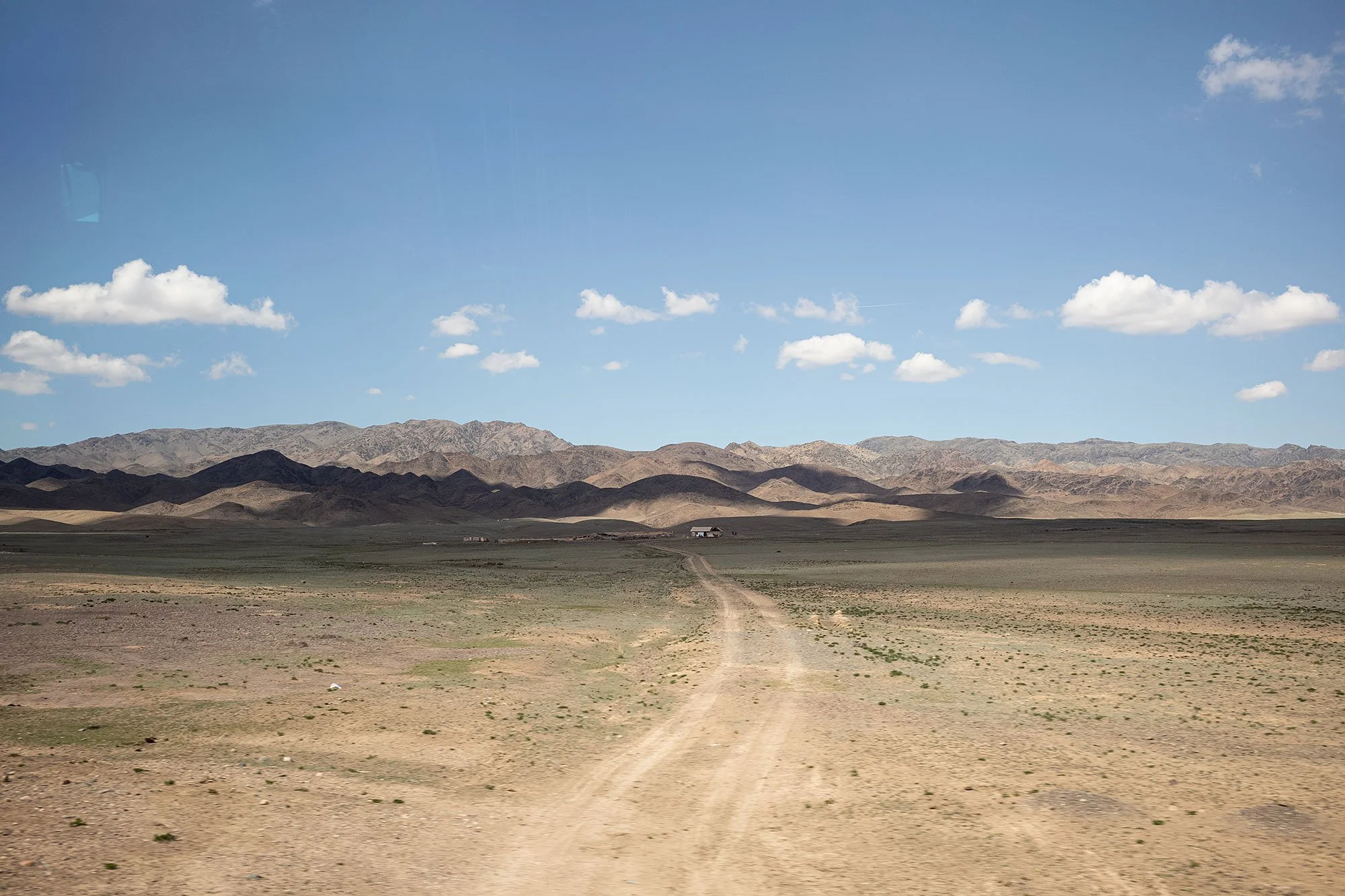
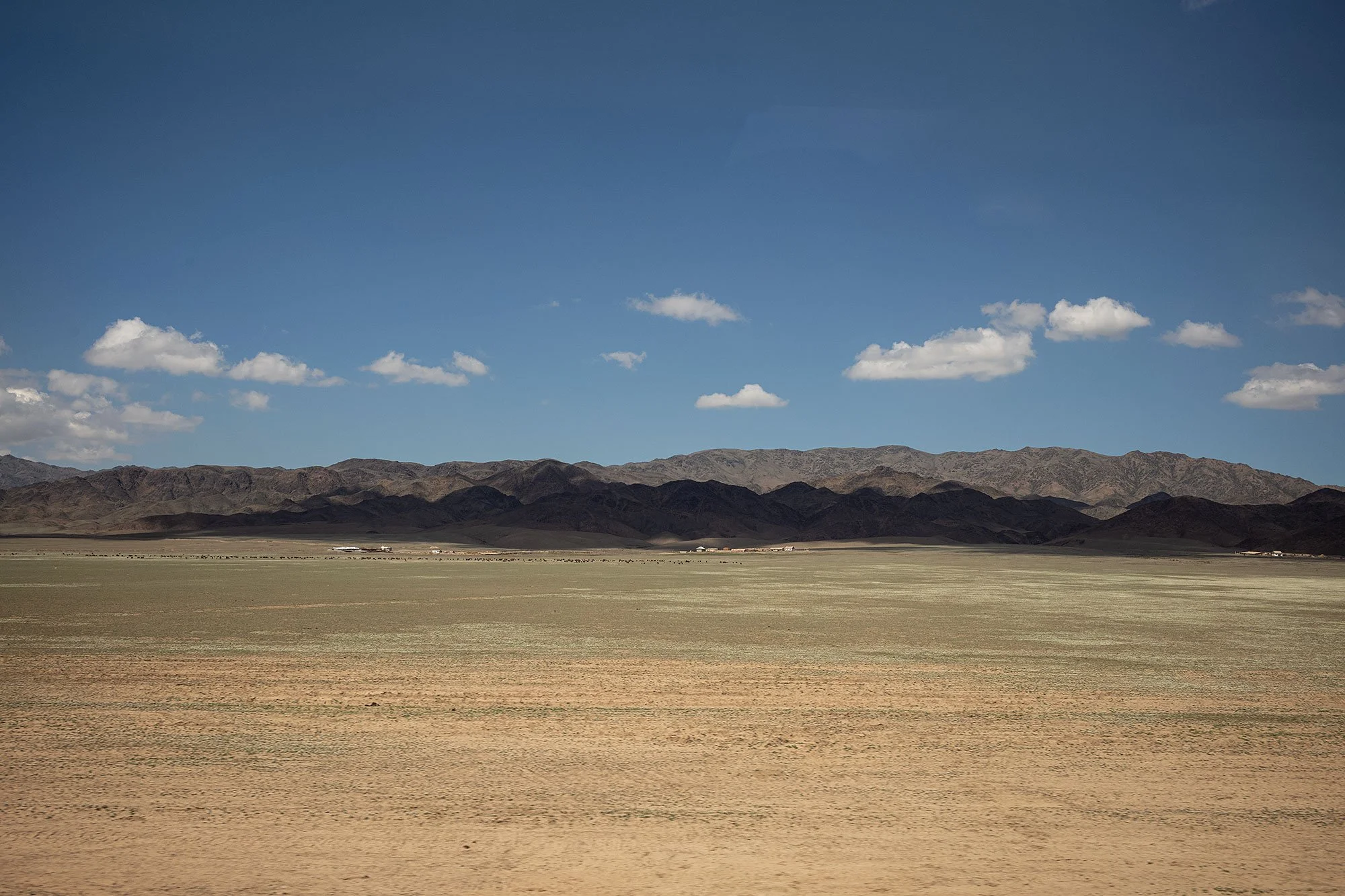
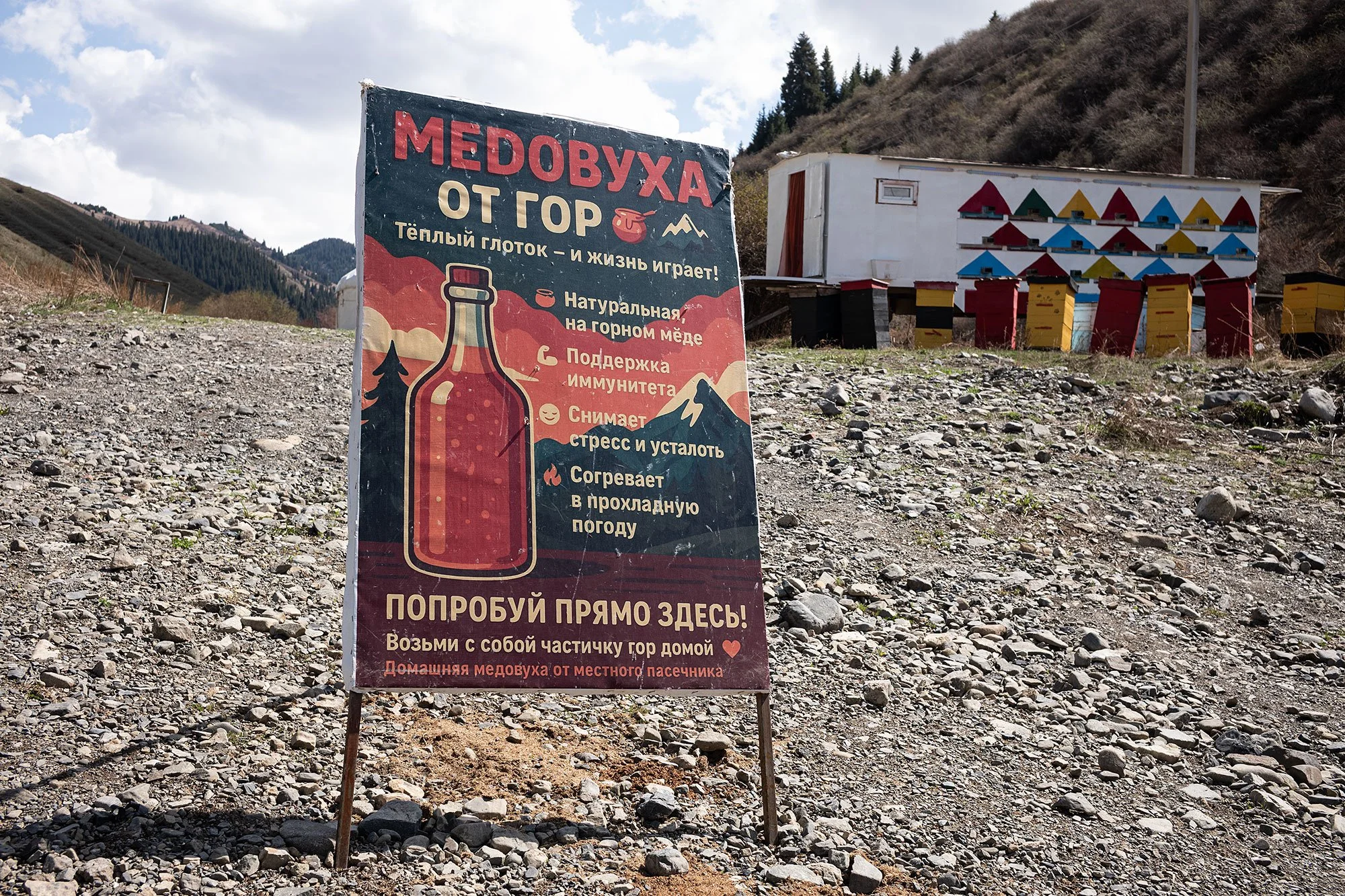
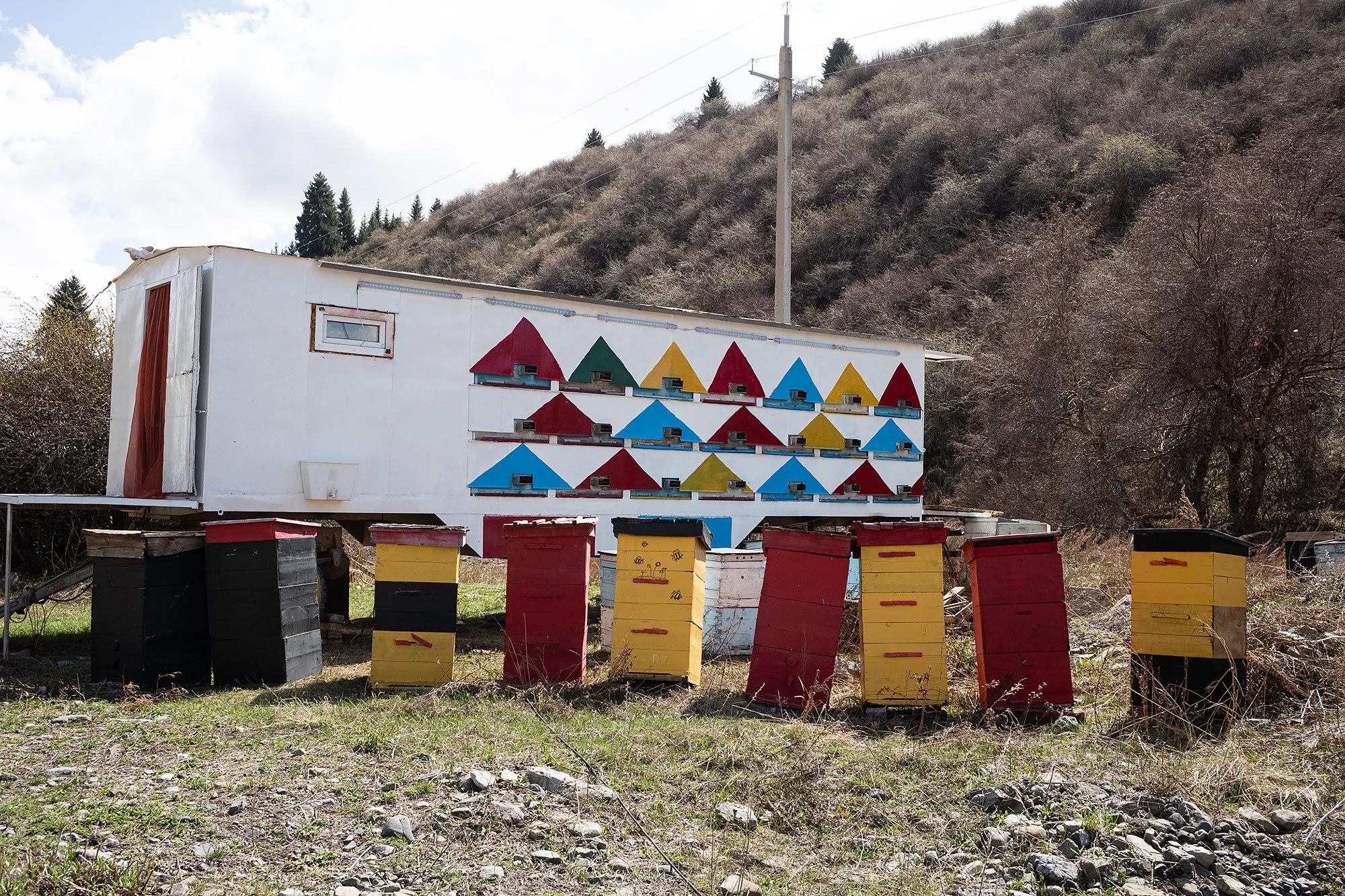
Nearing Mrs. Shakira’s Zhuldyz tells us there’s an optional stop to sample some local organic honey made by the villagers. It’s available for purchase along with l ocal honey wine. She asks if we’re interested and enough people raise their hands that we stop.
The honey is delicious; I only wish that they sold it in smaller continers. A tub costs 3500 Tenge. I ask the driver and Zhuldyz if they like honey, intending to split it, but they don’t seem to be picking up what I’m putting down. In the end I buy a tub. I imagine I can leave what I can’t finish for my host.
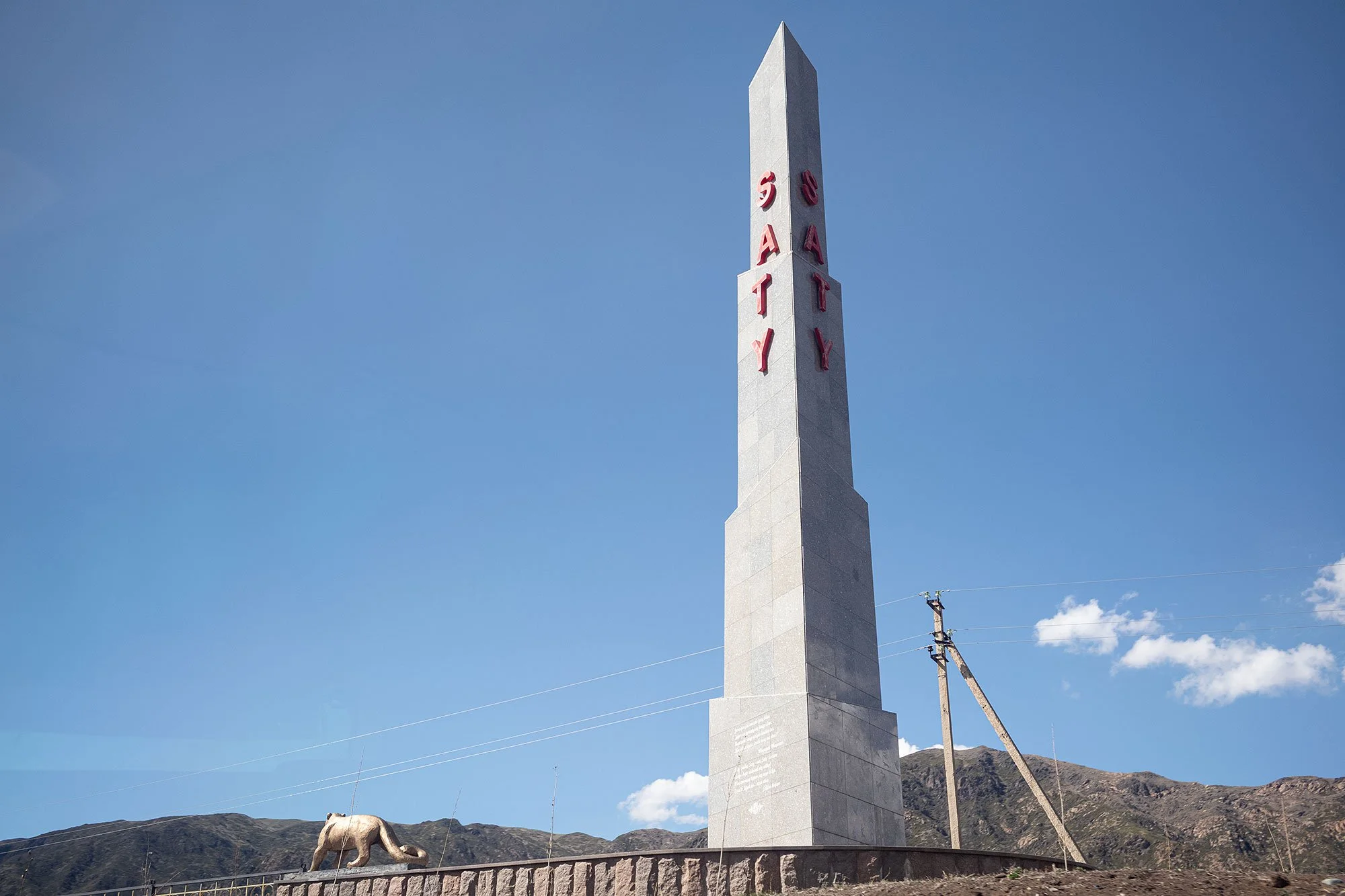
We drive to the village of Saty and Bakuchan backs the bus into the parking lot. Our group is so large that we have to split up; half end up the main house while the other half head to an annex where we actually don’t have to doff our shoes.
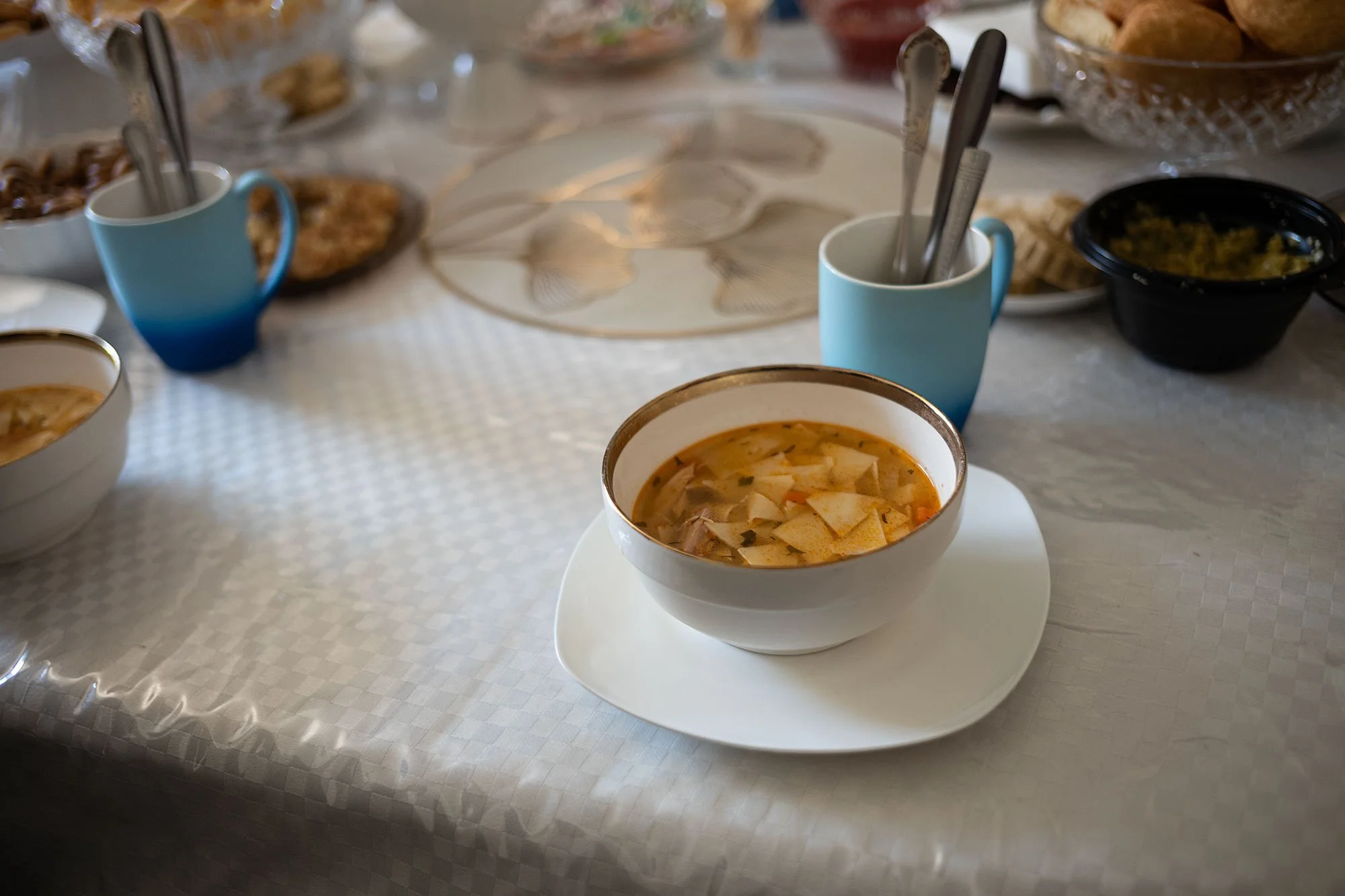
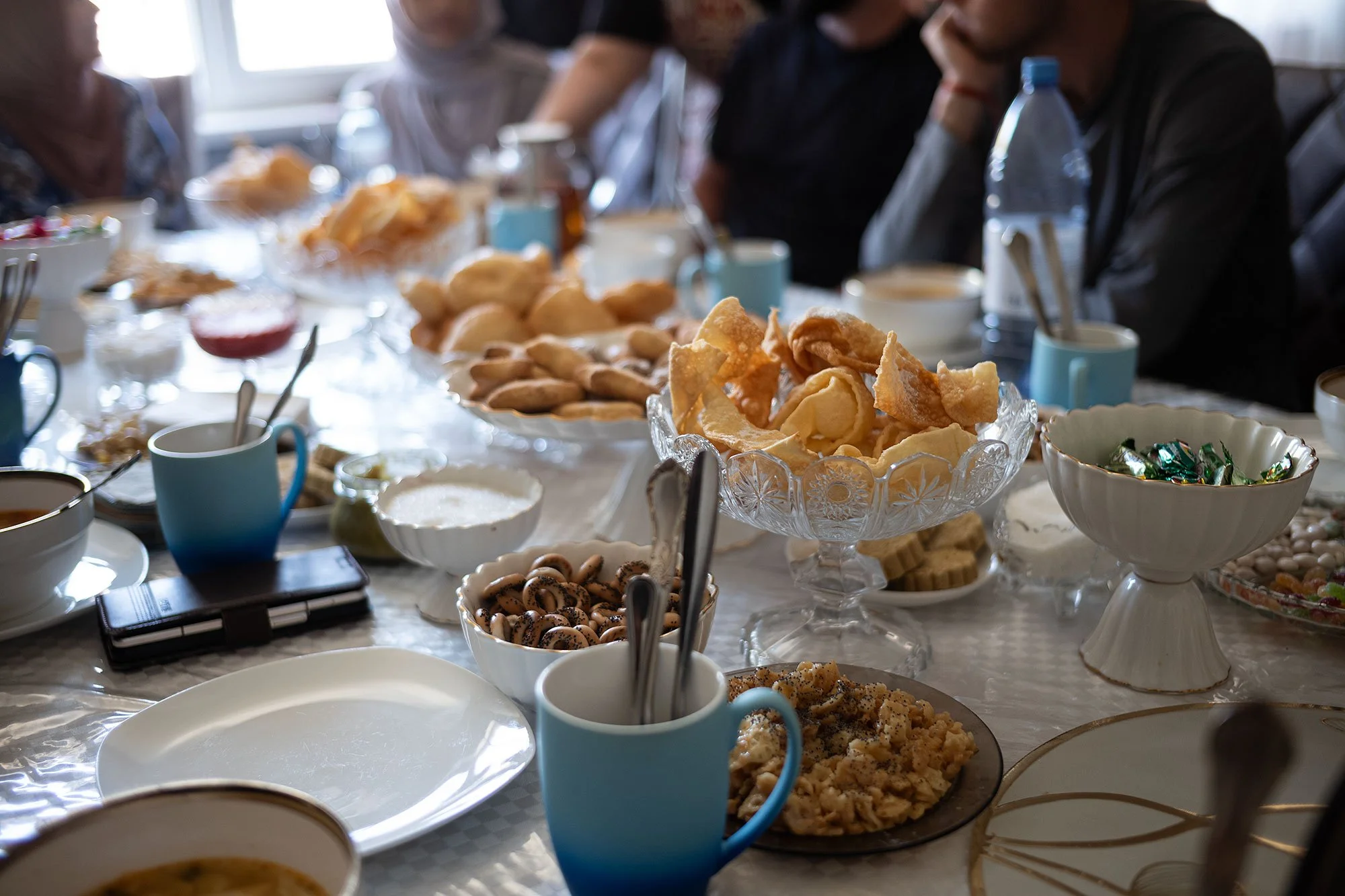
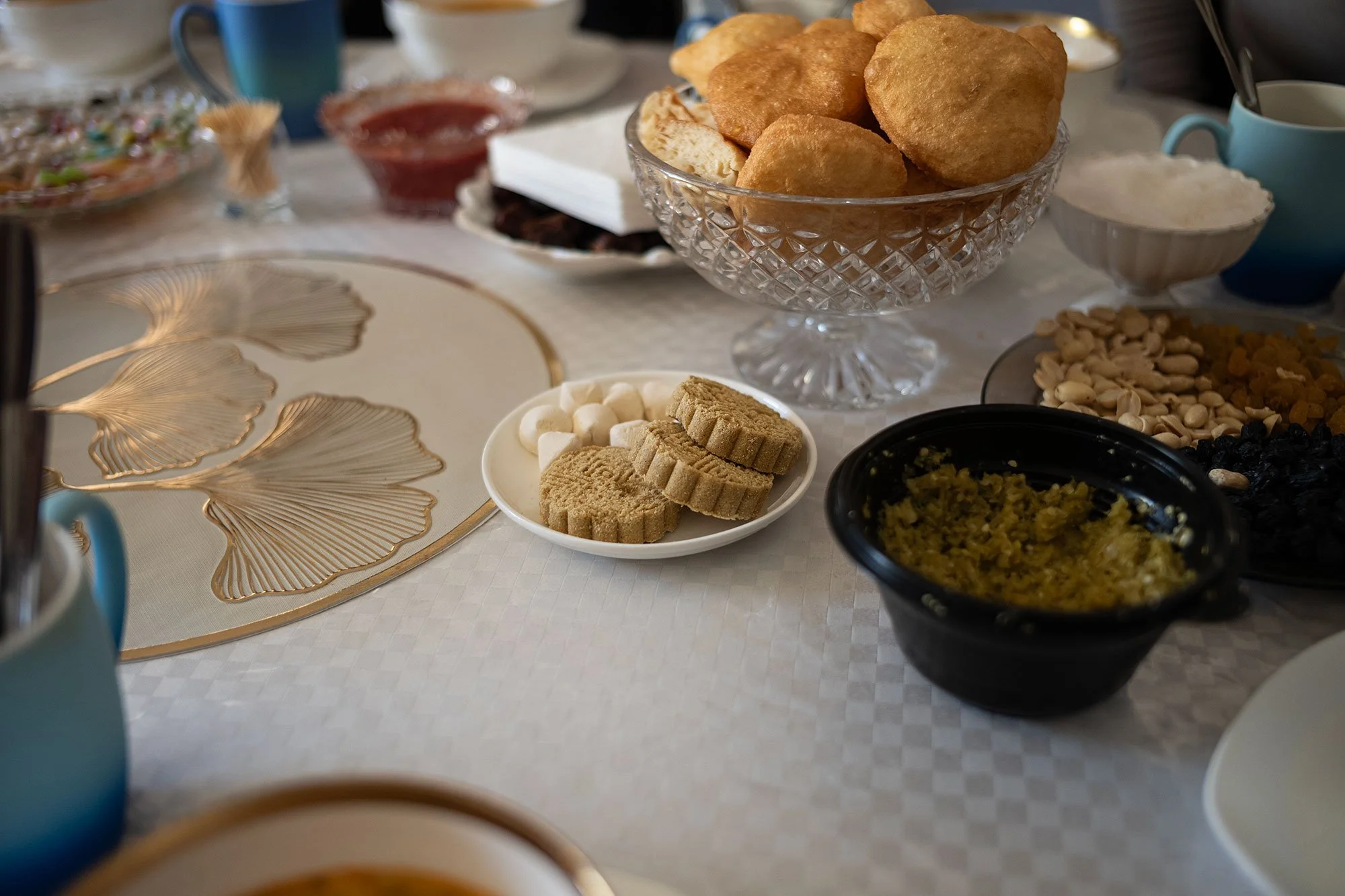
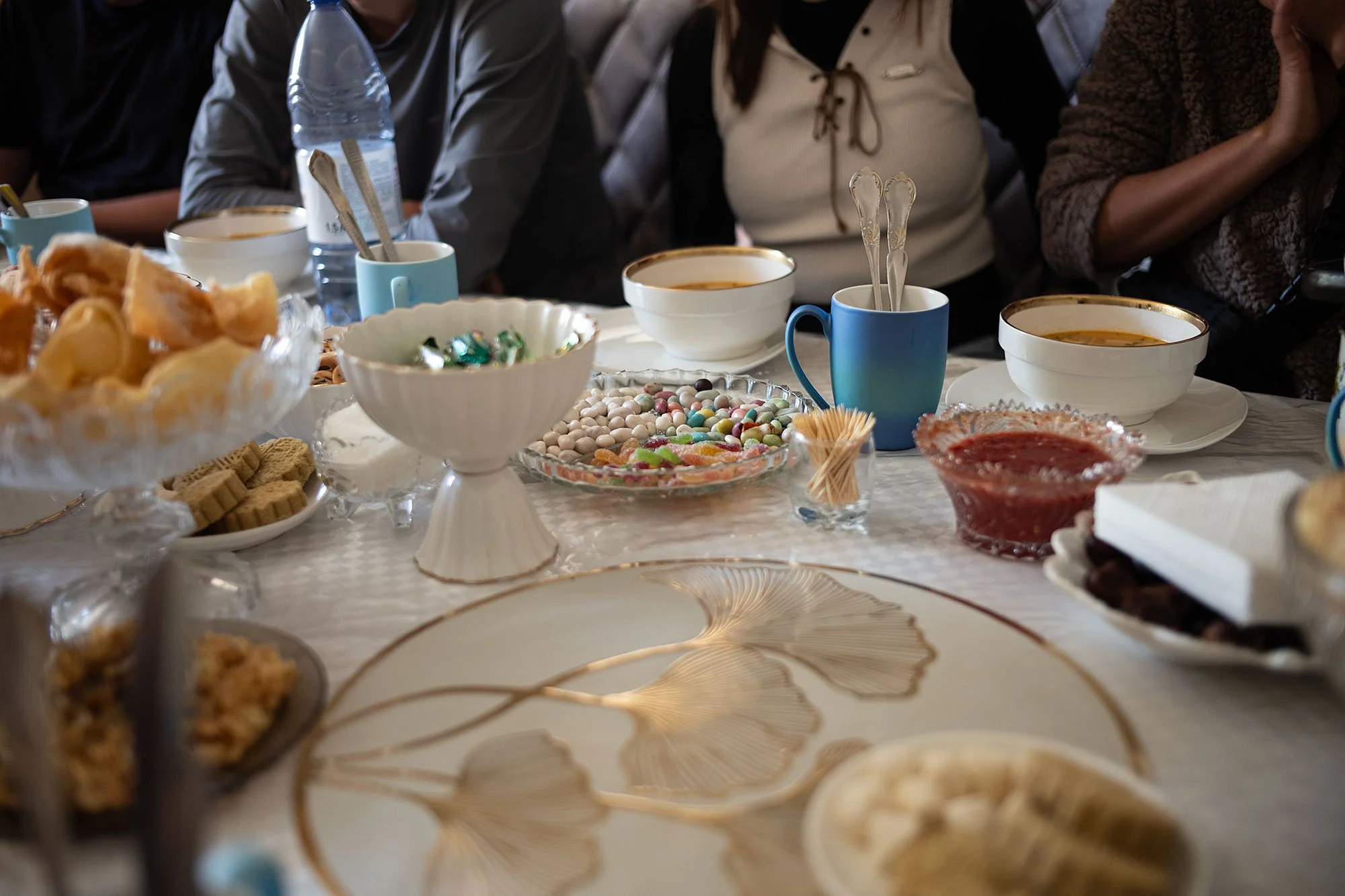
We’re served a delicious noodle soup before a meat and potato main. The table is already set with breads and desserts when we arrive, an impressive spread. I sit next to Lucy, the Chinese-Austrlian and we instantly bond over our extended travel schedule and common ports of call. She’s on a year-long trip having quit her job as a corporate lawyer to see the world.
Unfortunately, there’s no time to linger over lunch. We have one more sight before heading to our yurts and guesthouses for the night.
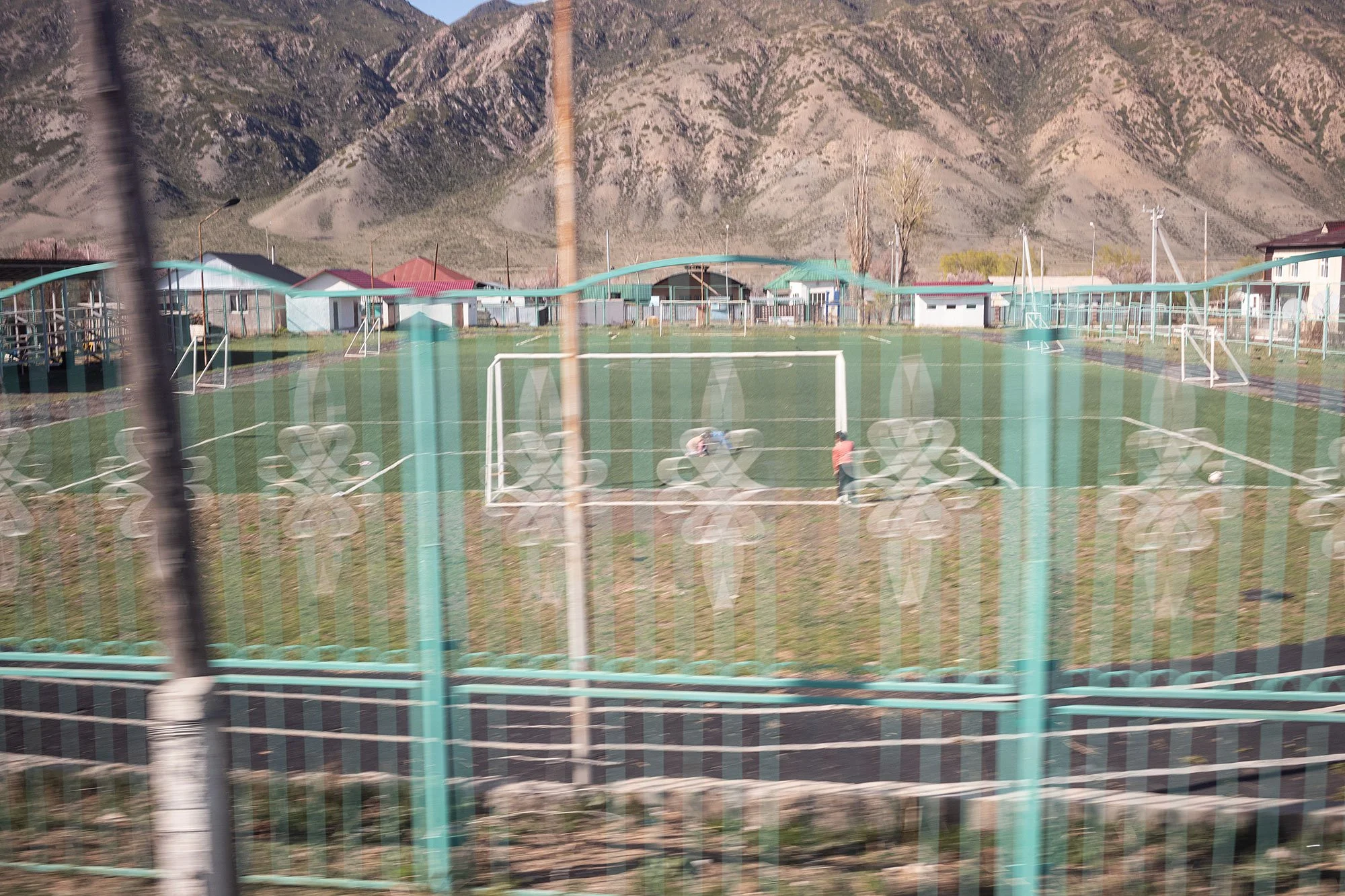
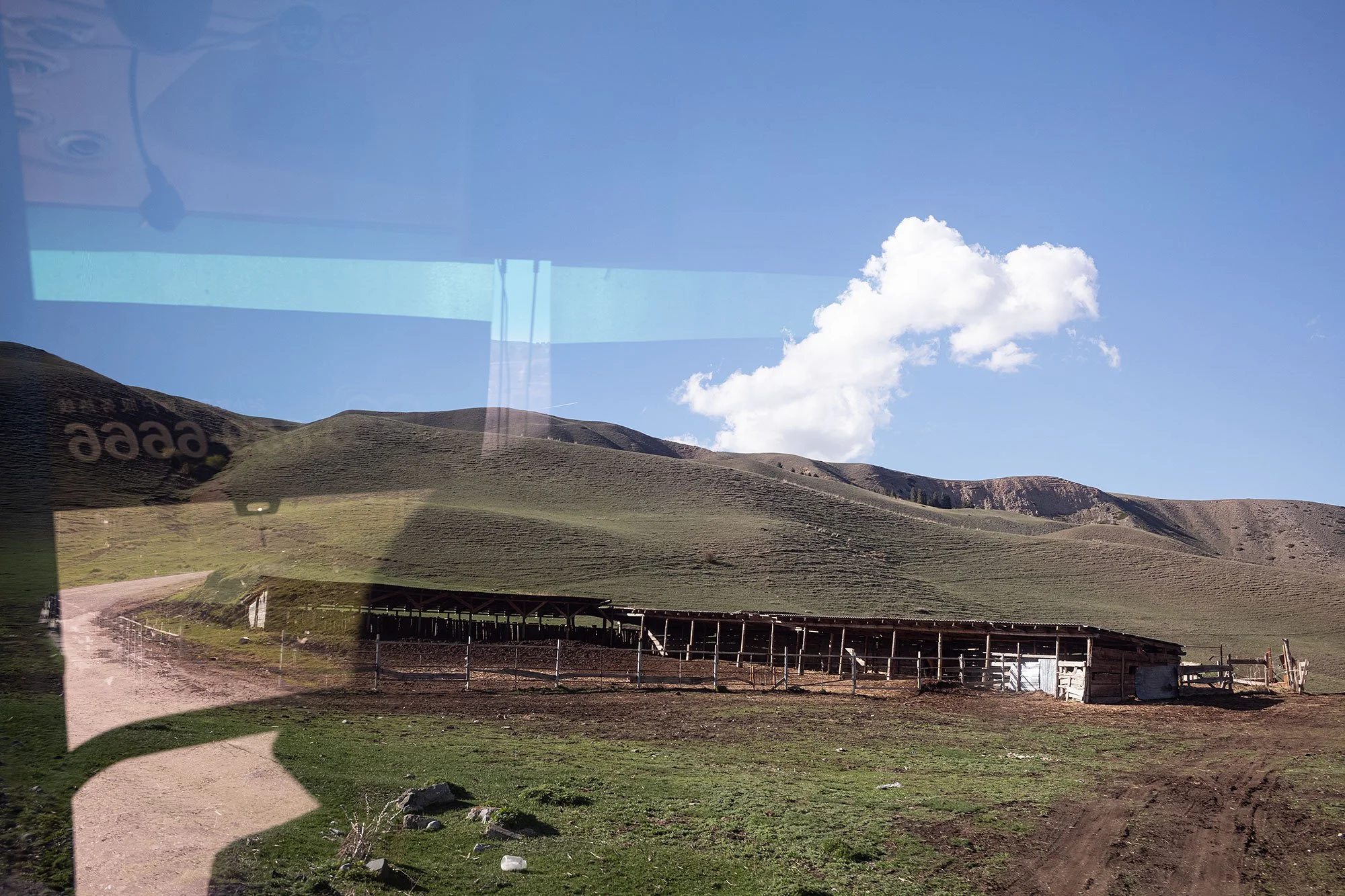
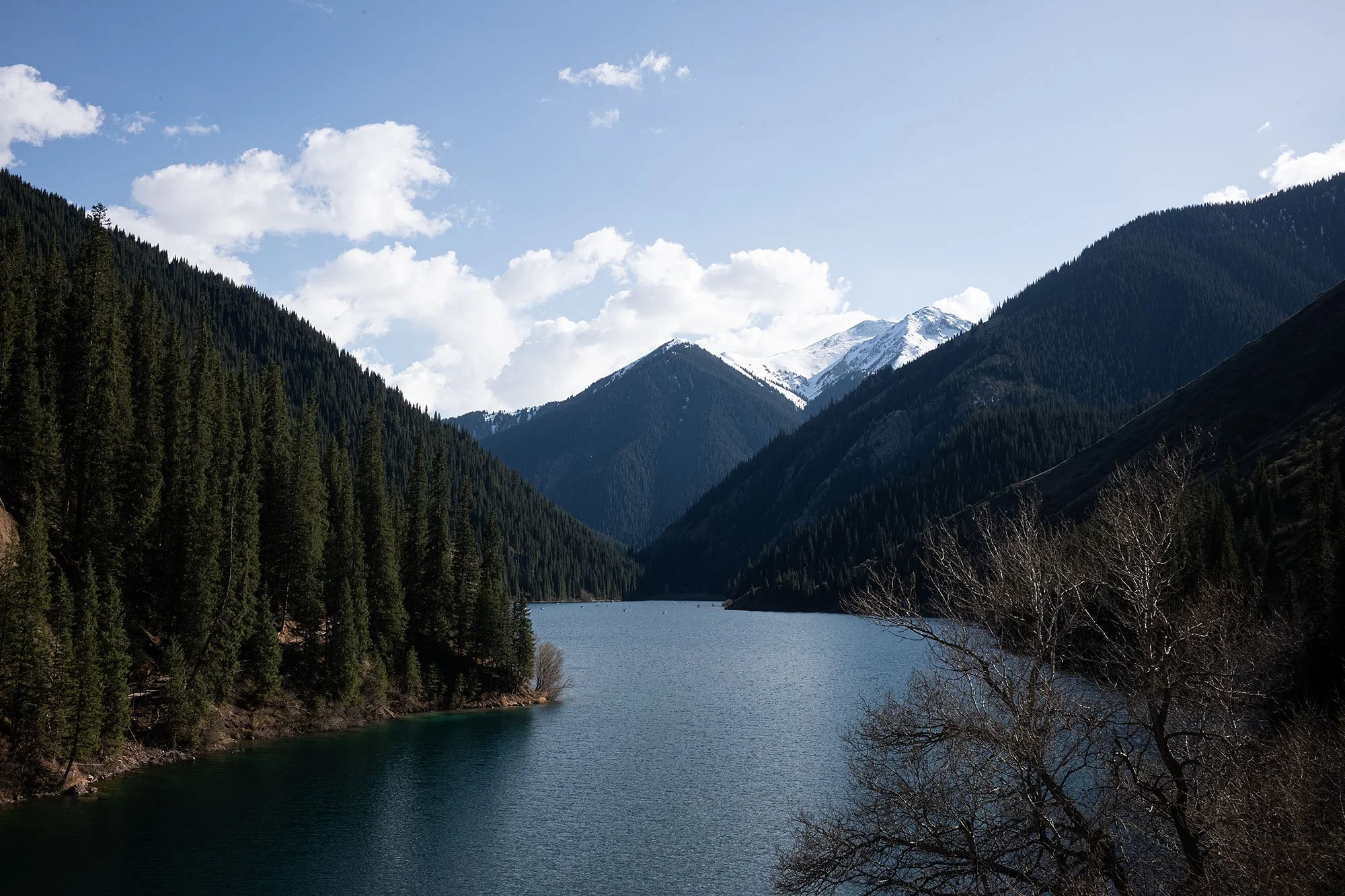
Zhuldyz tells us the story of the Kolsai Lakes, three lakes in the Tien Shan mountains sometimes referred to as the ‘Pearls of Tien Shan.’ We’re only to visit the first lake. It’s a four-hour hike to the next one, and another four-hours to the last.
Back in the day there were three daughters who fell in love with with the same handsome man, who they fought over. The father couldn’t decide which of his daughters would marry the man and so instead transformed them into the three lakes, the man into the river the flows between them.
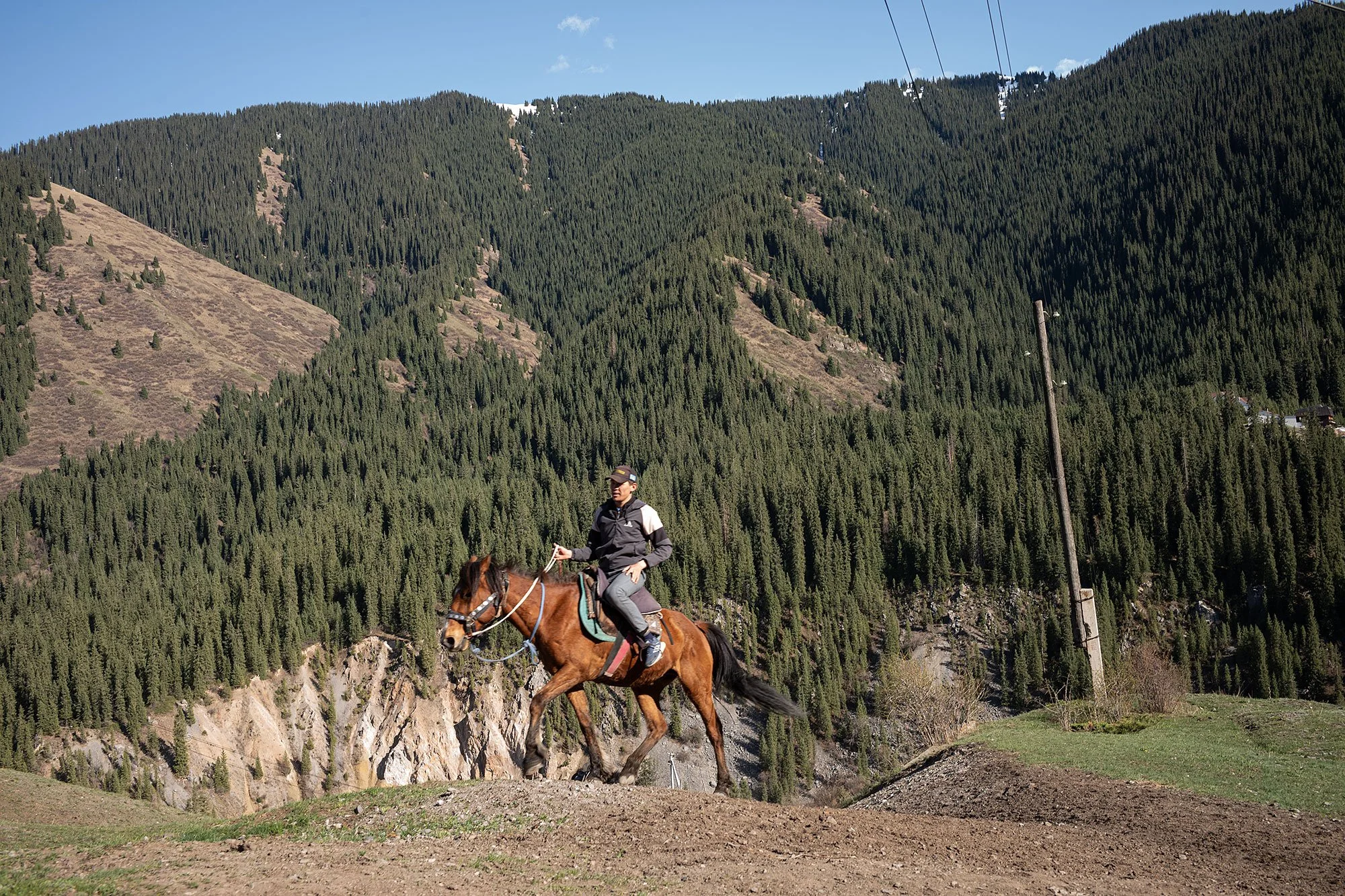
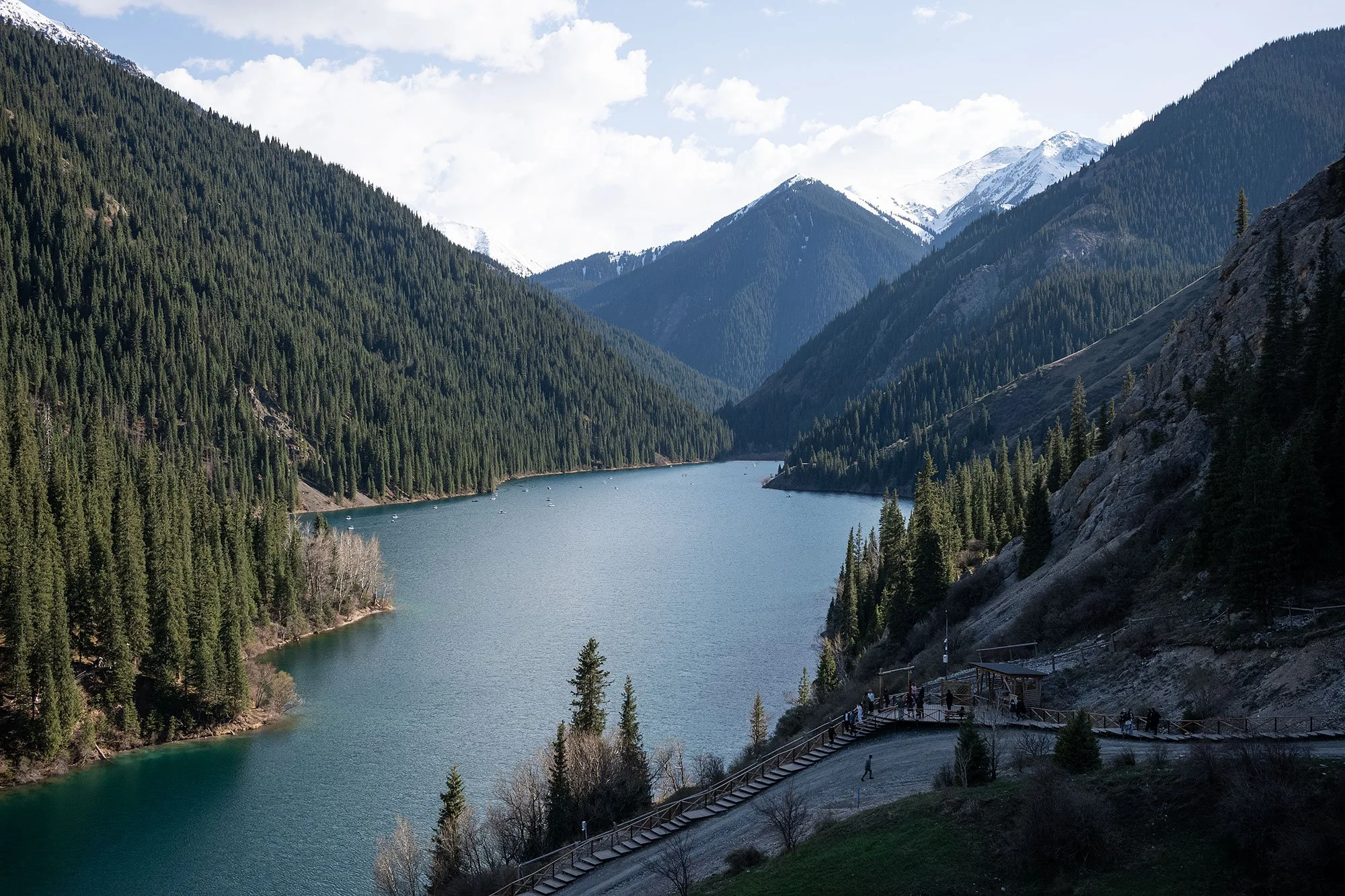
We have two hours at the lake. It’ll take a little time to walk down and back up to the lake’s edge. There we have two options. One is to climb up to a restaurant for its views over the lake to the mountains on the other side and the other is to rent a catamaran and pedal on the surface. If we do the latter, we should book it for 40 minutes in order to allow enough time to climb back up to the parking lot.
I ask Lucy what she’s planning on doing; she’s torn. She wishes there weren’t any options.
On the way down Zhuldyz asks me how many countries I’ve been to. Just under 100. How many? This is 99. Her eyes go wide. How long did it take you to get there? Fifty-four years. Her eyes go wider. I thought you were 40. I smile. I should have had her guess.
I ask her how long she’s been a guide. Four months. I ask if she had to go back to school. No. There’s a course and then another guide from the company assesses your knowledge and professionalism. Before this she was a teacher. She likes teaching and this is similar, but for adults. I joke that corralling us must also be similar to herding kids.
Approaching the water’s edge I look up at the restaurant. The view doesn’t look like it’ll be especially different from where we started and I decide to rent a boat. I’d love to be on the water. I tap Lucy on the shoulder and tell her; she agrees. Yun Jung decides to join us along with Cameron, the man from Perth.
Lucy and Cameron decide to pedal and I’m happy to let them. We set off towards the far shores, Lucy and Cameron working together to figure out how best to pedal us forward. Yun Jung recognizes some fellow Koreans in a passing boat and calls out to them, making fast friends.
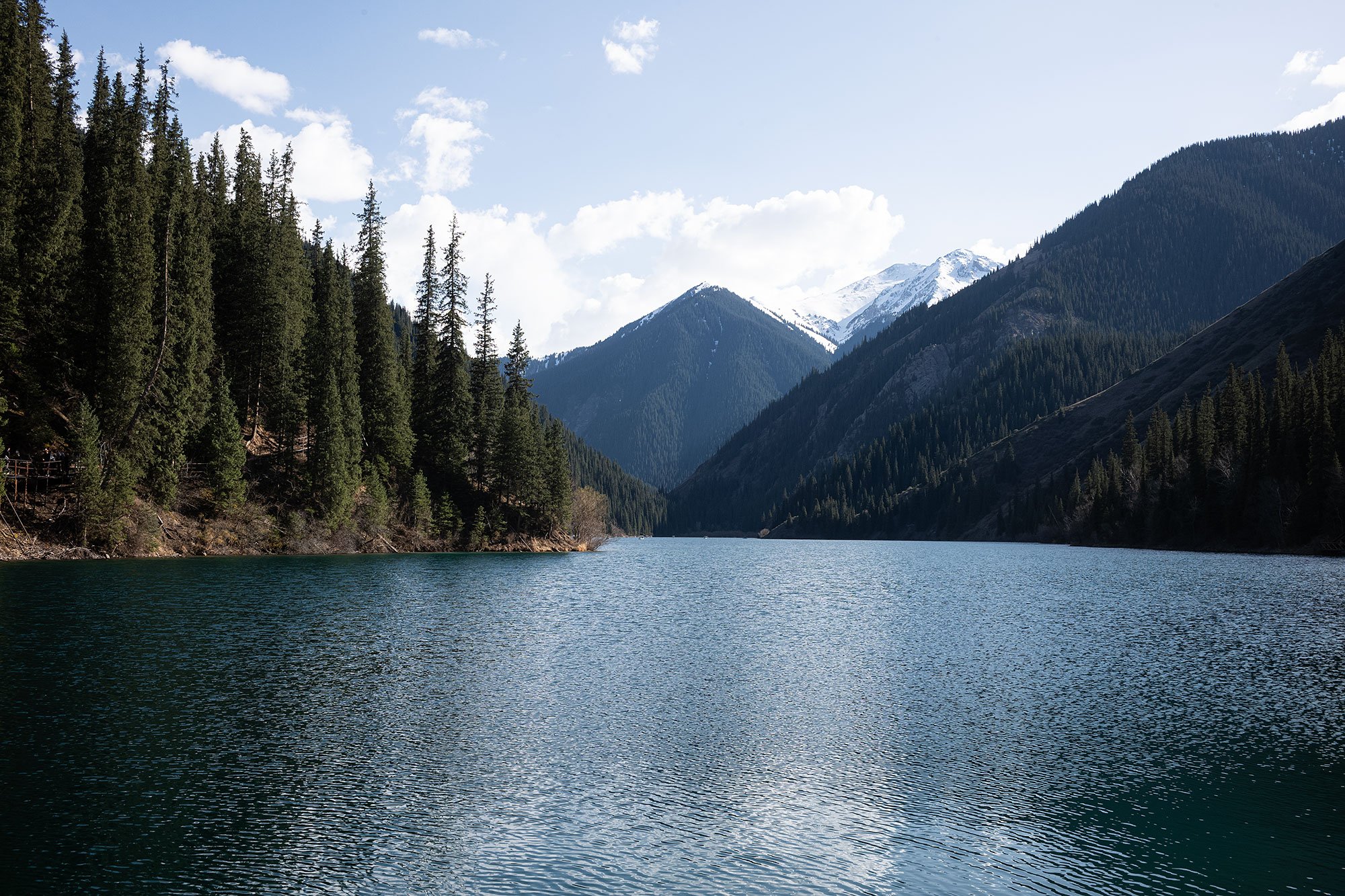
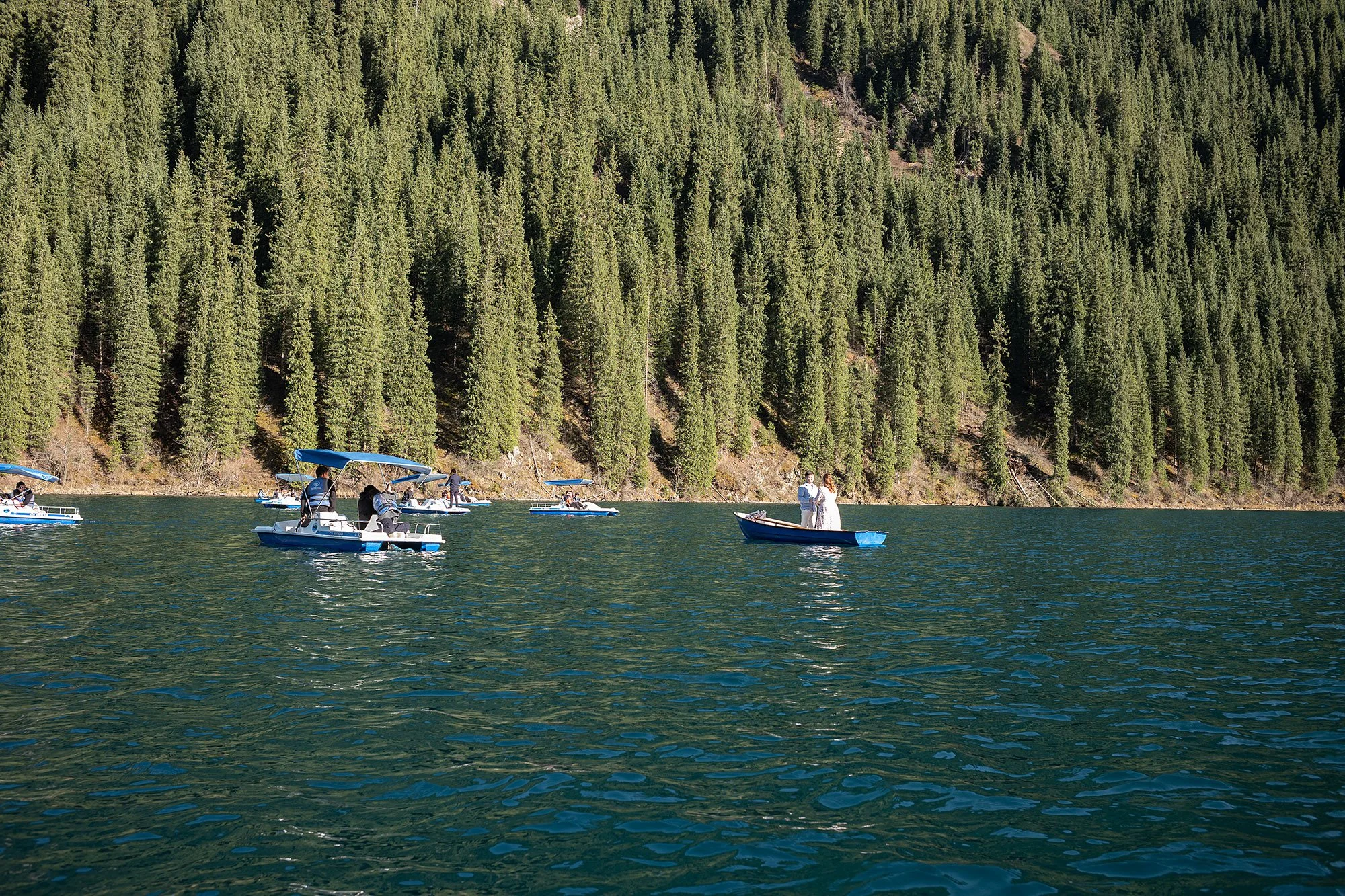
Nearing the center of the lake, Lucy exclaims. A man in a rowboat is about to propose to his partner. A photographer captures the moment from a catamaran, the snow-covered mountains and clear skies in the background. The Koreans in their catamaran paddle circles around the couple to get their own photos, while the main photographer tries to position them out of the frame, calling out to them to ask them to move.
It’s an amazing moment and we’re ecstatic that we decided to go boating.
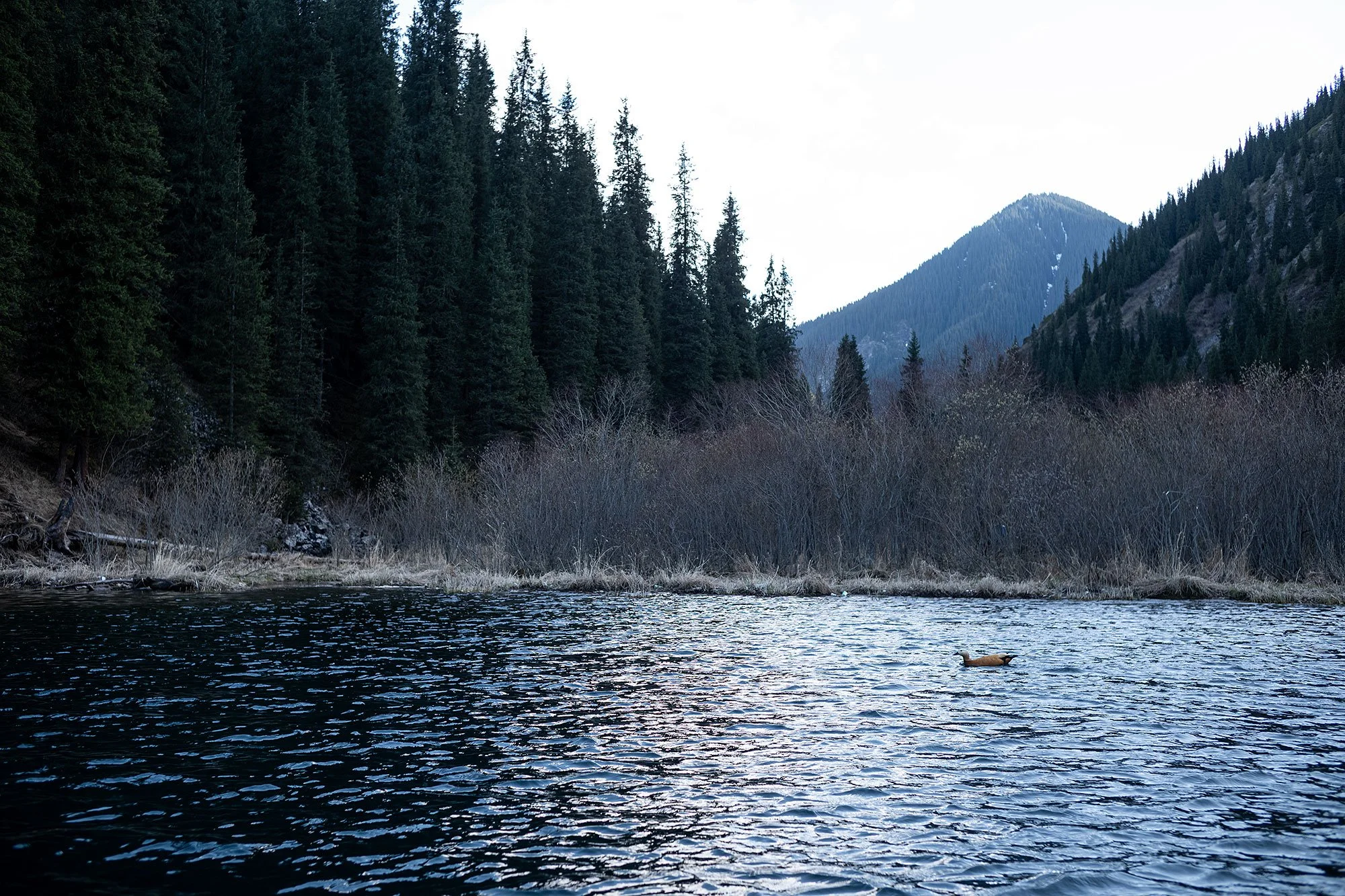
We pedal to the far side of the lake. A lone golden duck swims past us as we turn to head back. We have fifteen minutes left on our rental, but I doubt anyone is keeping track.
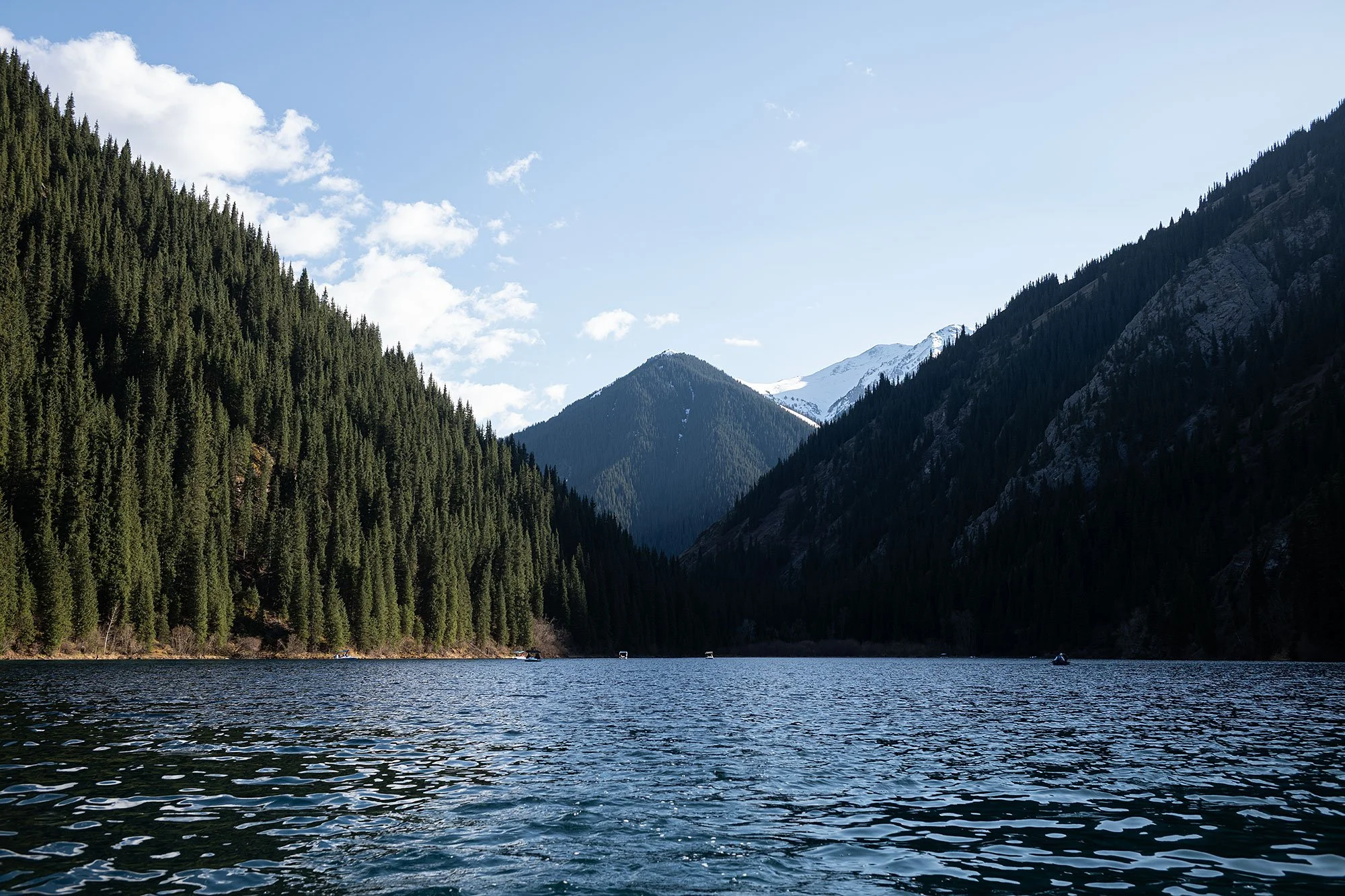
Halfway back to the dock Lucy asks if we want a turn at the pedals. Yun Jung and I switch with Lucy and Cameron and work the pedals. We’re almost instantly in sync and Lucy remarks on how well we seem to be doing compared to her and Cameron. I ask if they can feel the wind in their hair from the speed we’ve reached.
We dock the boat ourselves and disembark. I tie it to the dock and Lucy asks one of the dockhands to take our photo. We walk to the main viewing platform and wait for others to go ahead of us, finally climbing up to the parking lot in the back of the pack.
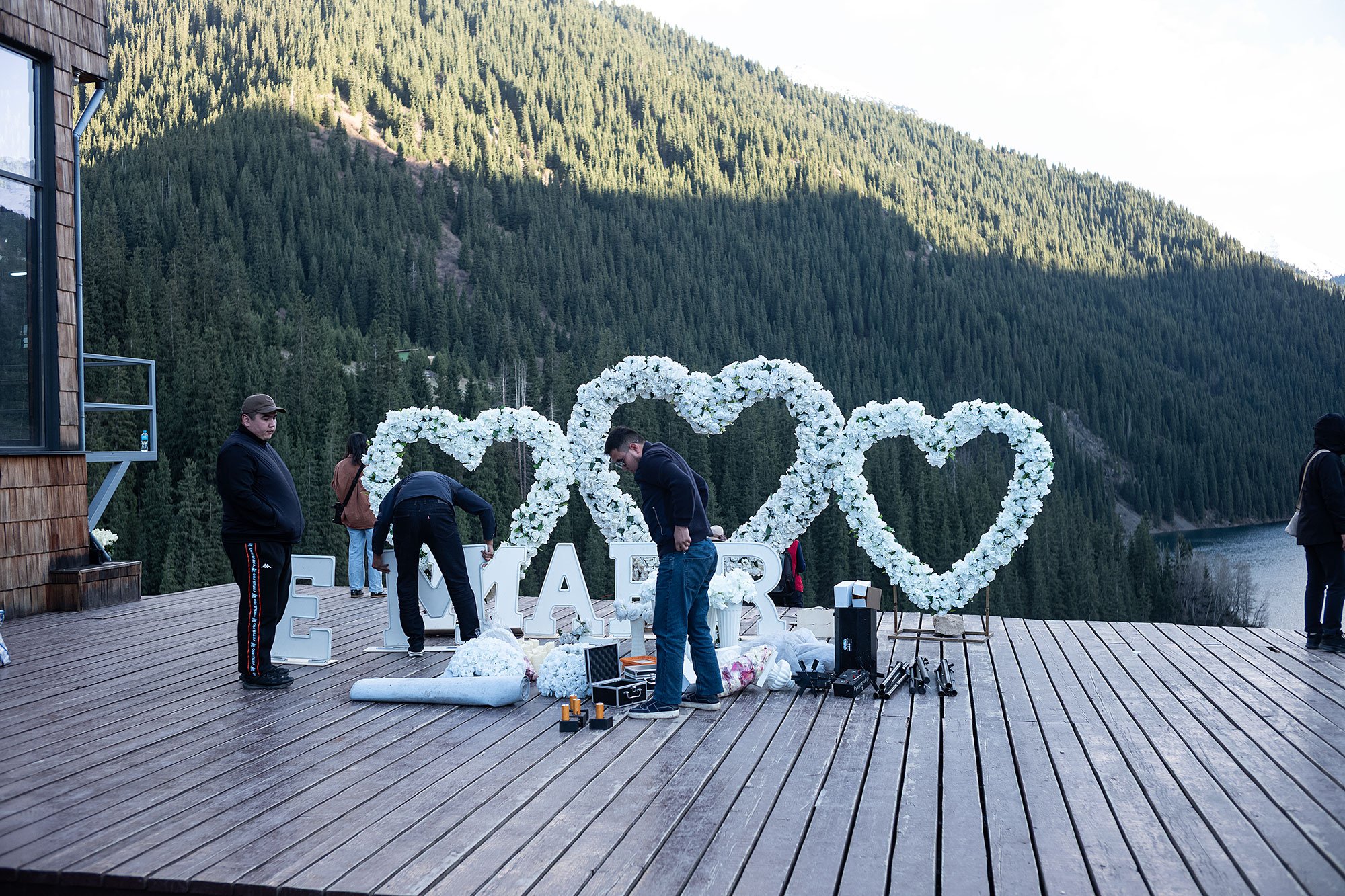
At the top people are setting up a wedding backdrop of flowers in the shape of hearts. I wonder if the couple that just got engaged are planning to getting married on the same day, or if there’s another proposal yet to come. I wonder how popular this is as a proposal spot.
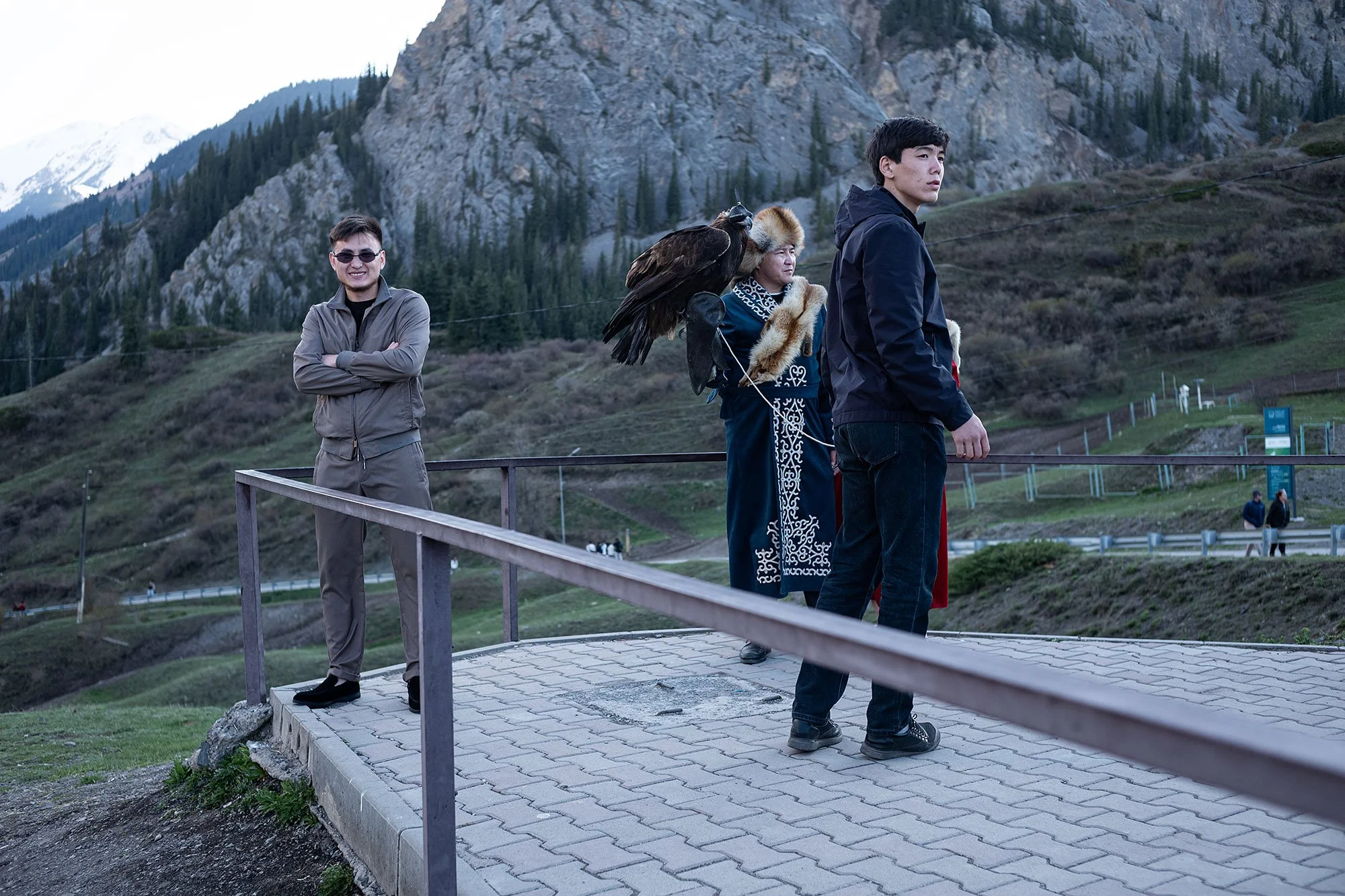
On another stage a phoographer is taking photos of tourists dressed in traditional clothes with a golden eagle. As we visit more places, I’ll come to find this a familiar sight.
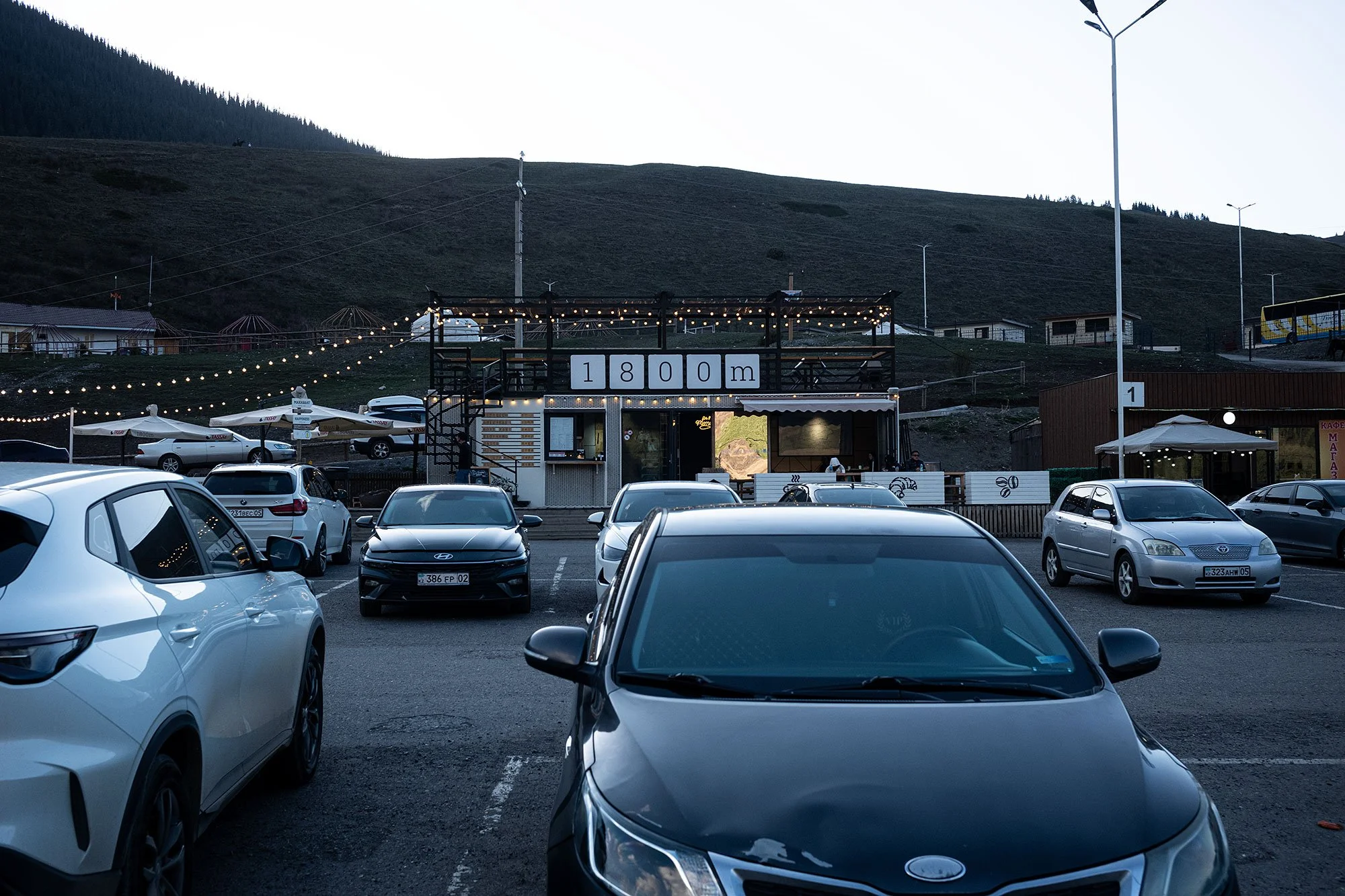
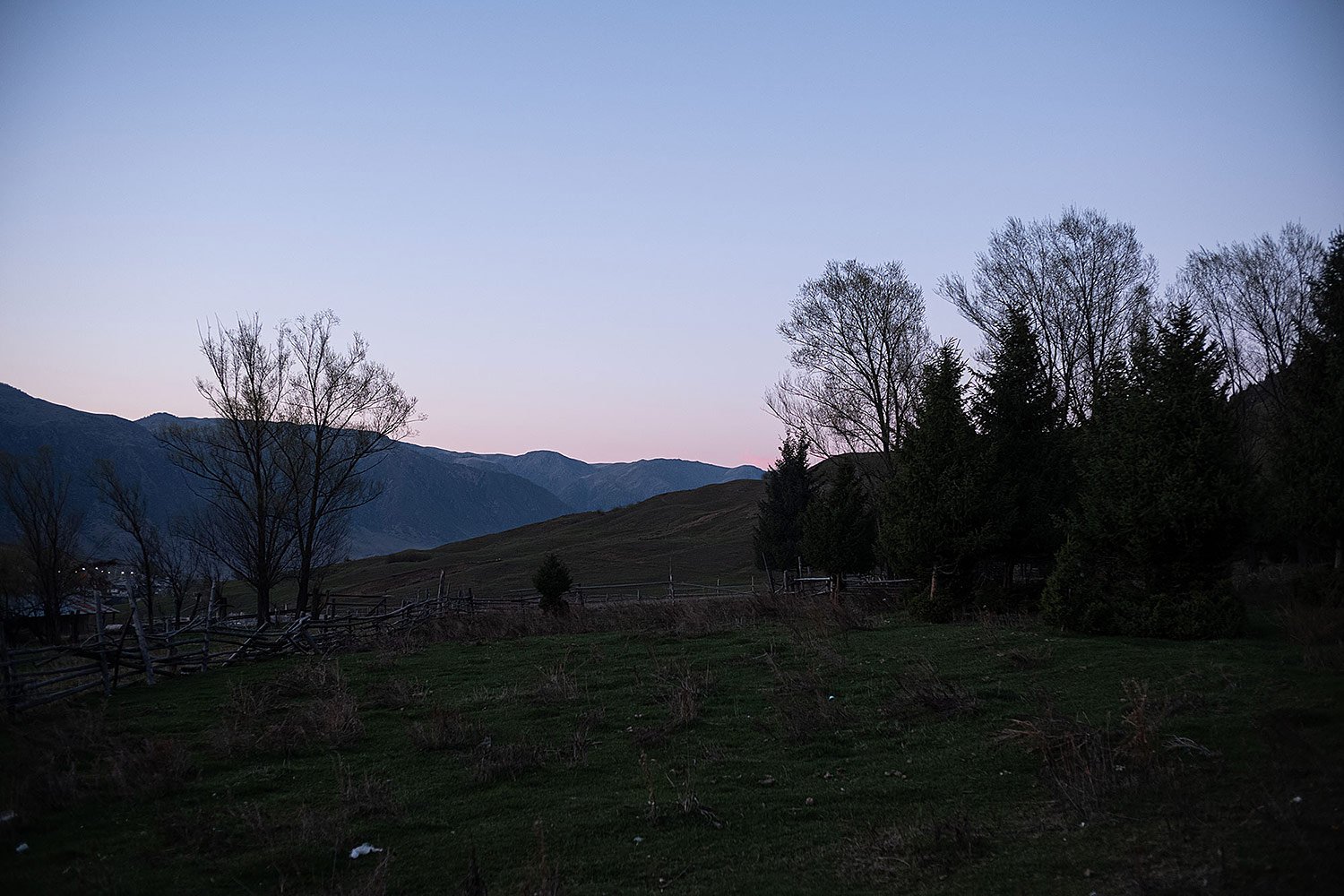
The drive to our accommodations is not a long one. The sun sets slowly behind the mountains and we play hide and seek as we wind our way through the landscape, the mountains alternately in the light and shadow receding in the distance.
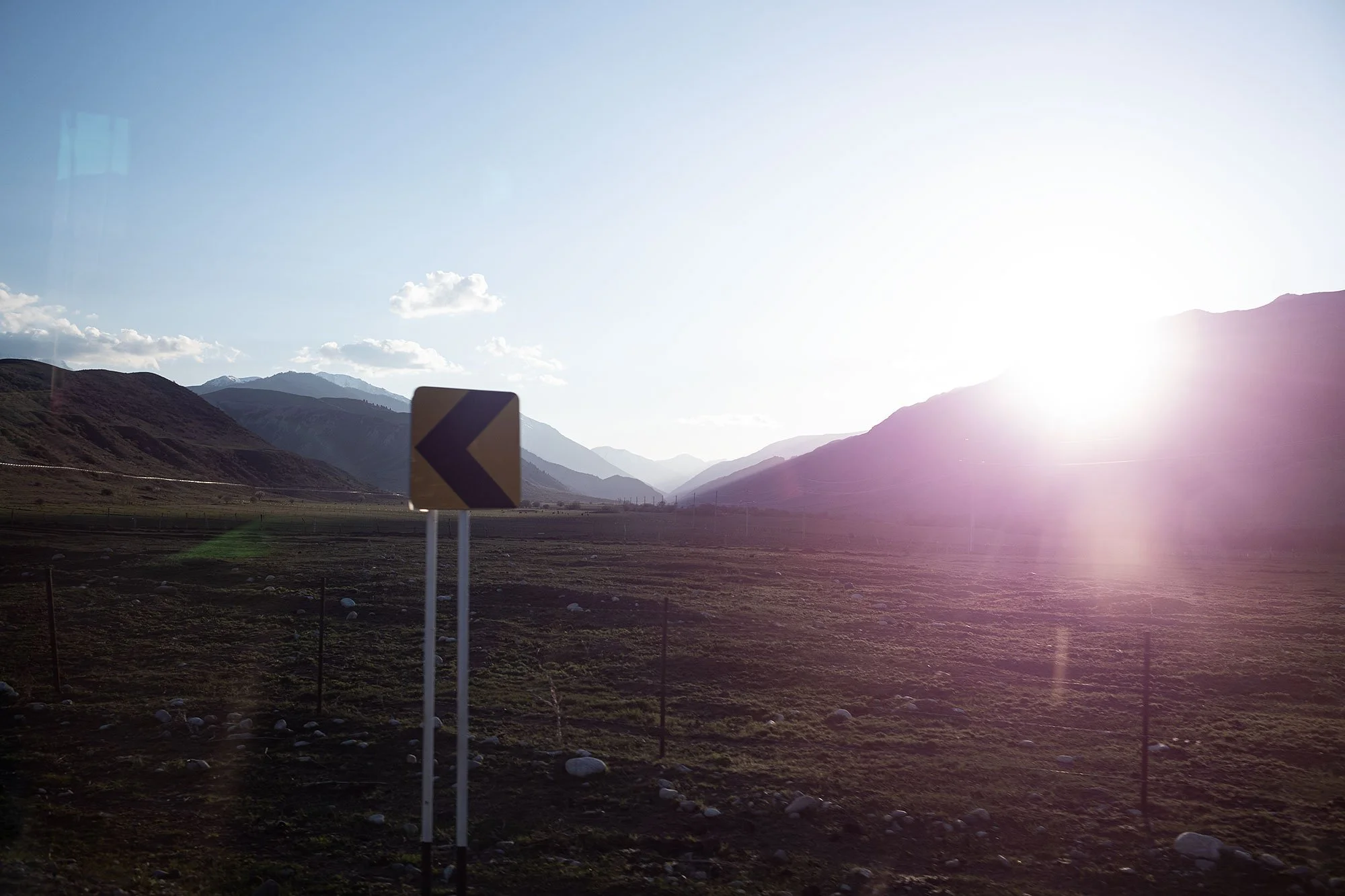
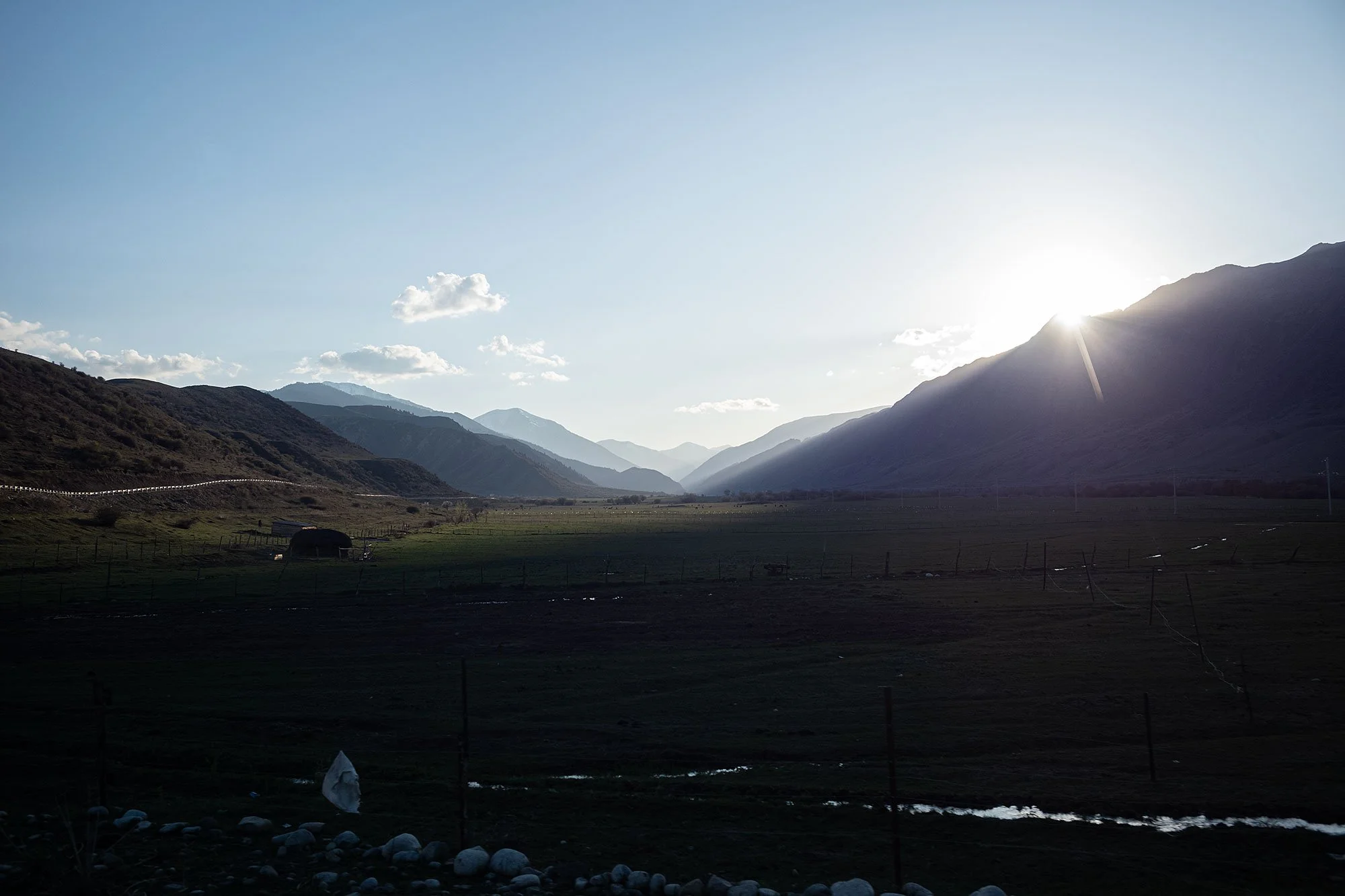
We drive through a small village and then park by the side of the road. We’ll walk the rest of the way, crossing a small river and then walking up to the guesthouse. Zhuldyz tells us we can walk ahead but to wait for her when we reach the entrance. Yurts and guestrooms will be distrubted there.
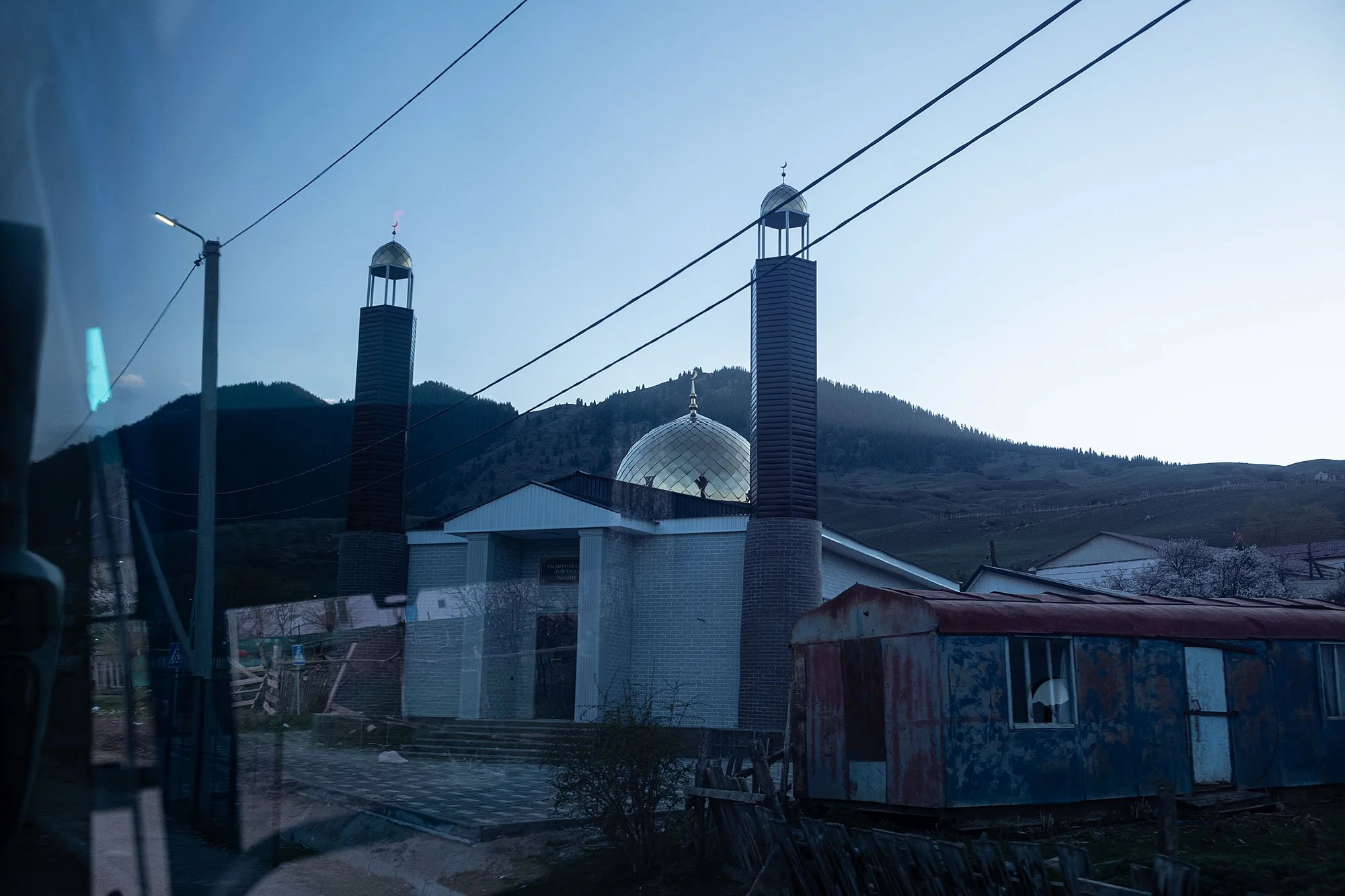
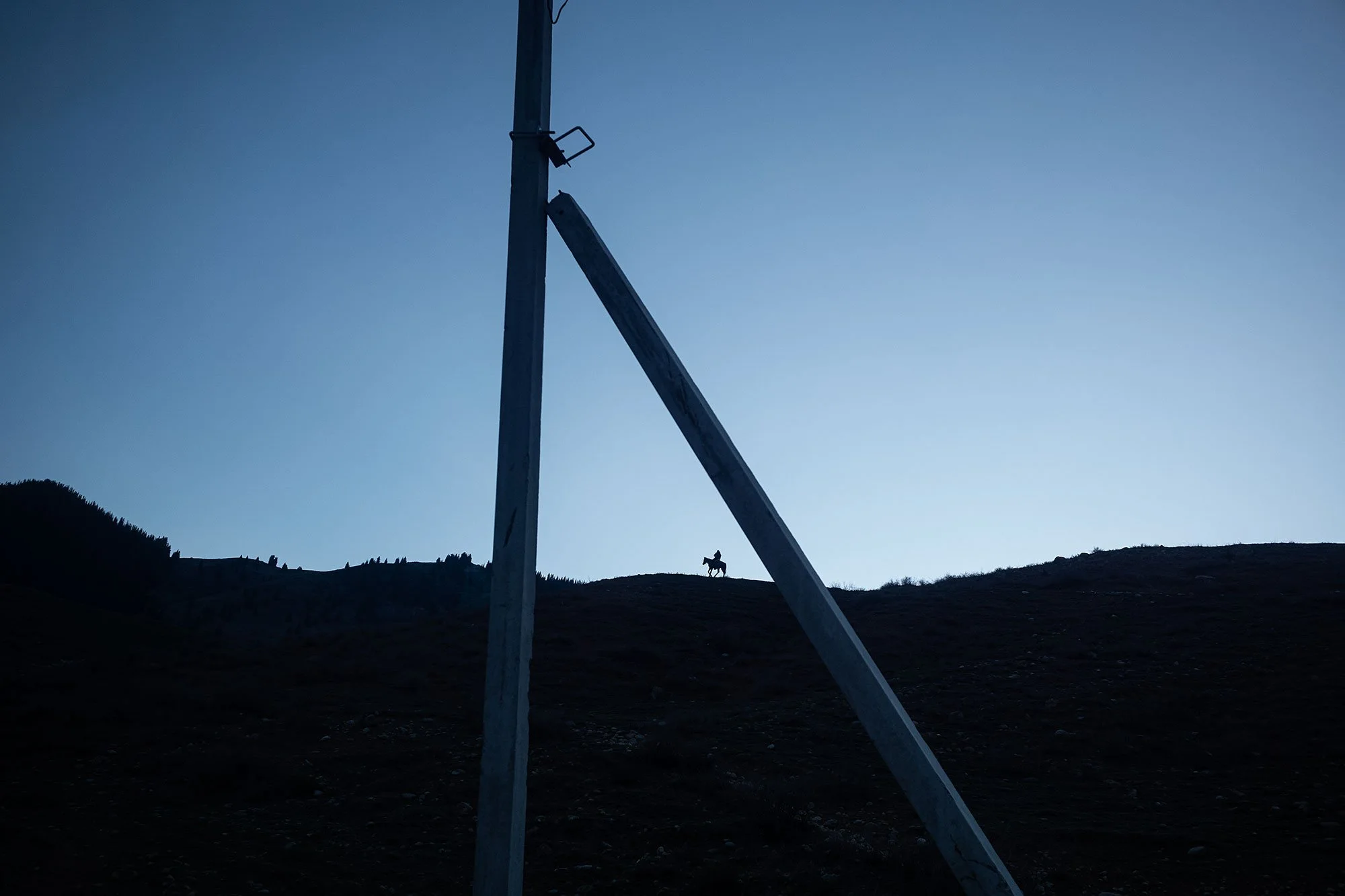
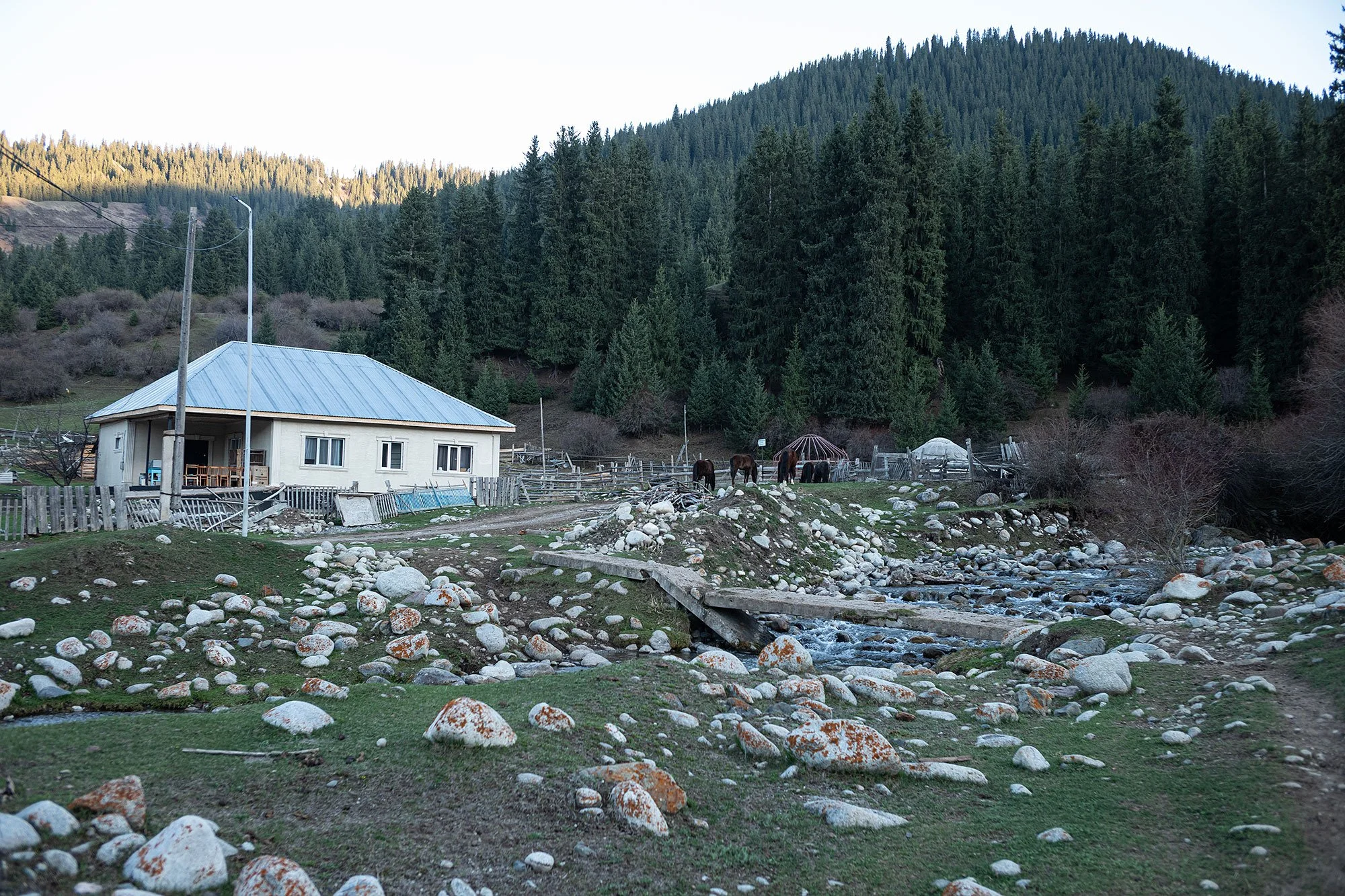
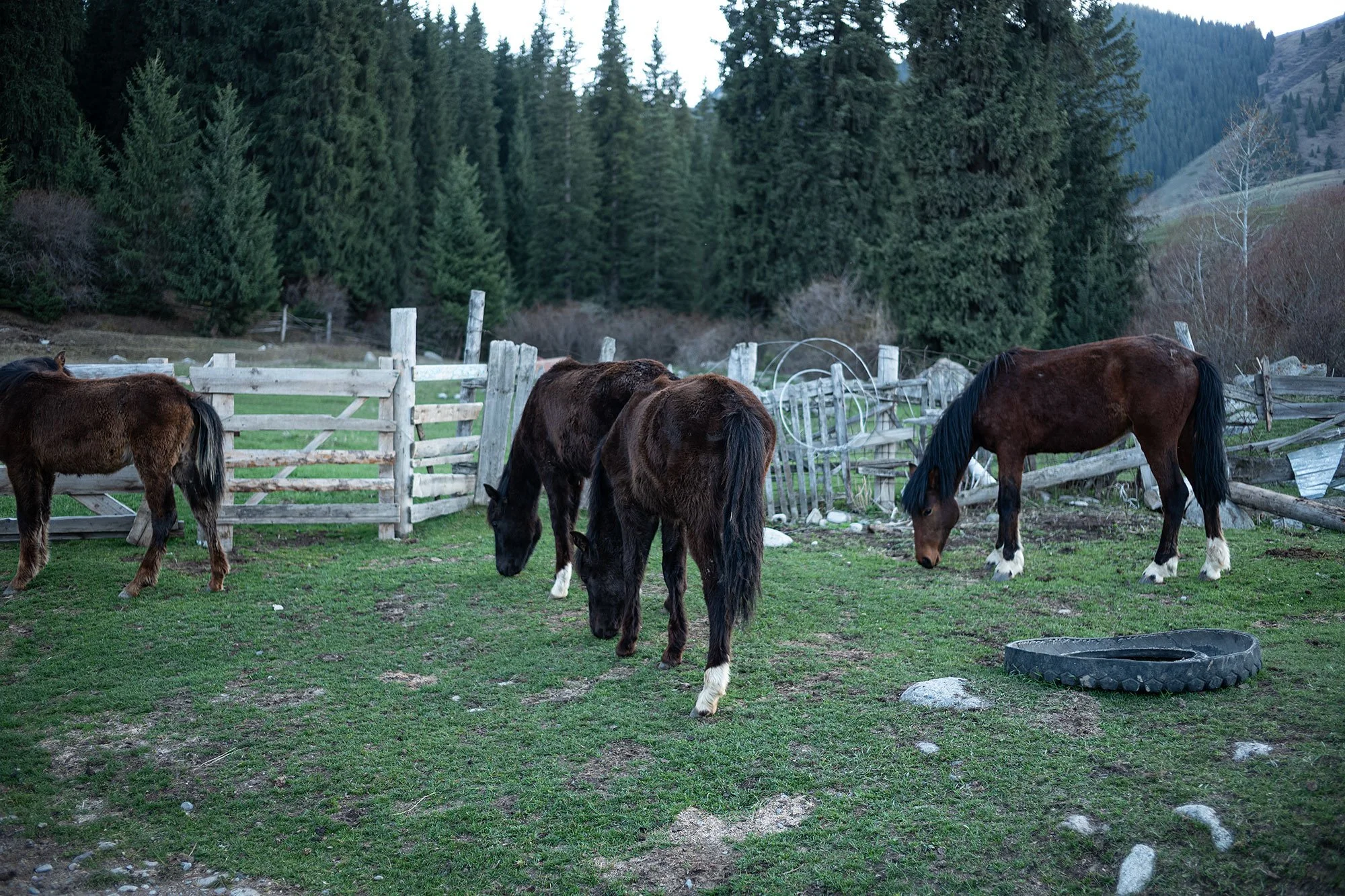
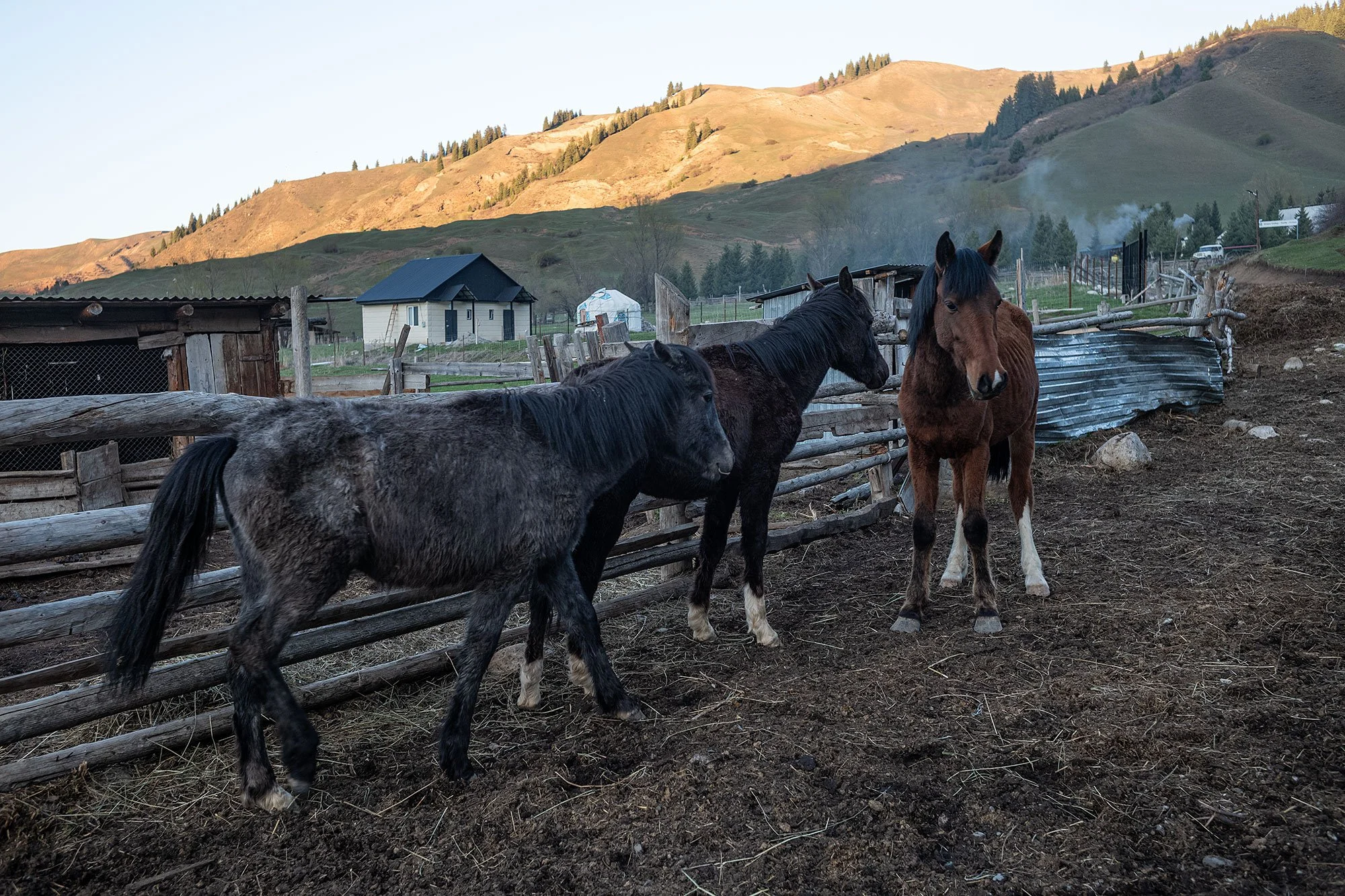
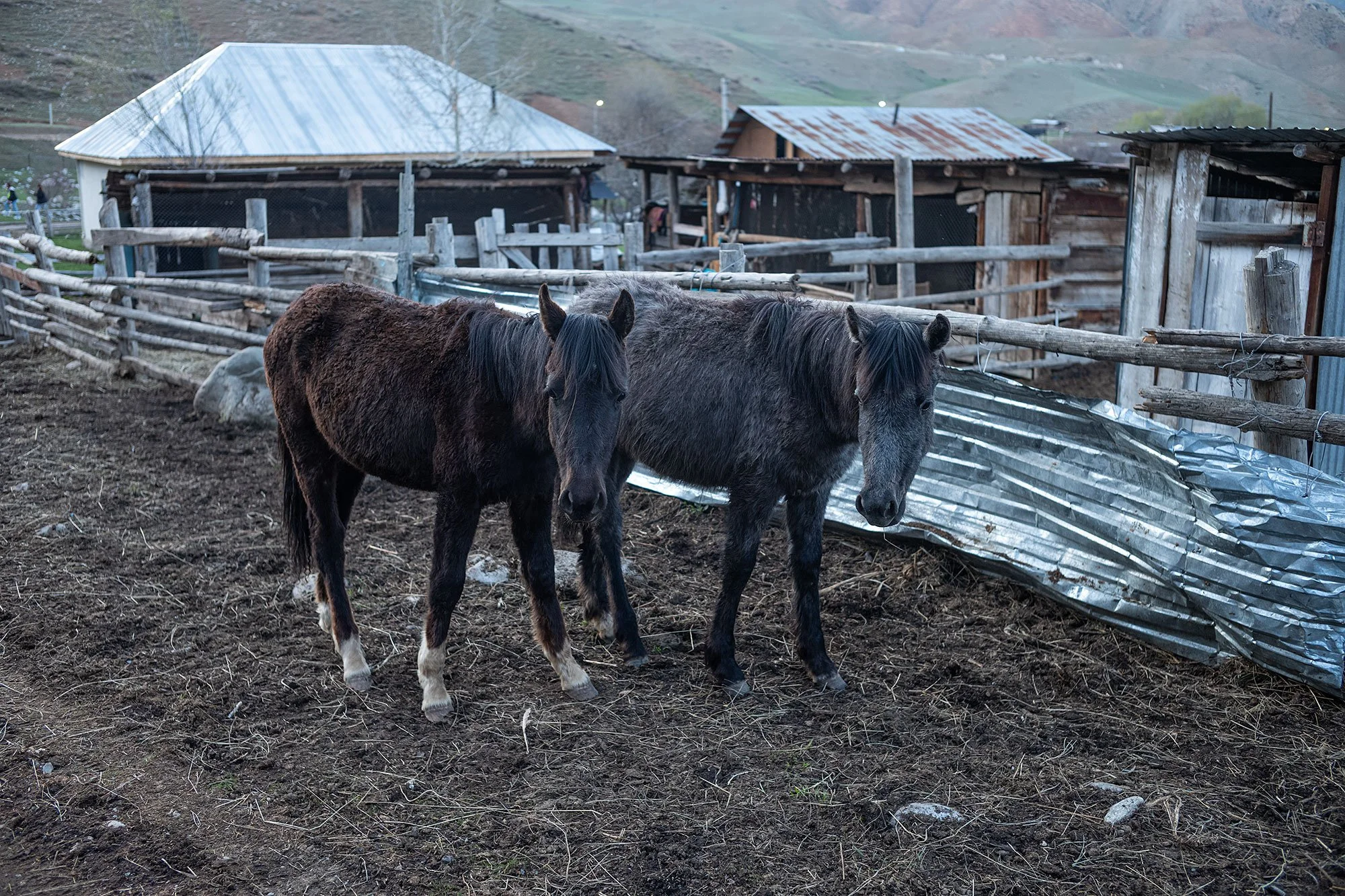
The guesthouse sits next to a farm, a few yurts and a block of guestrooms. Horses seem to outnumber people and they watch us as we make our way up the rocky lane.
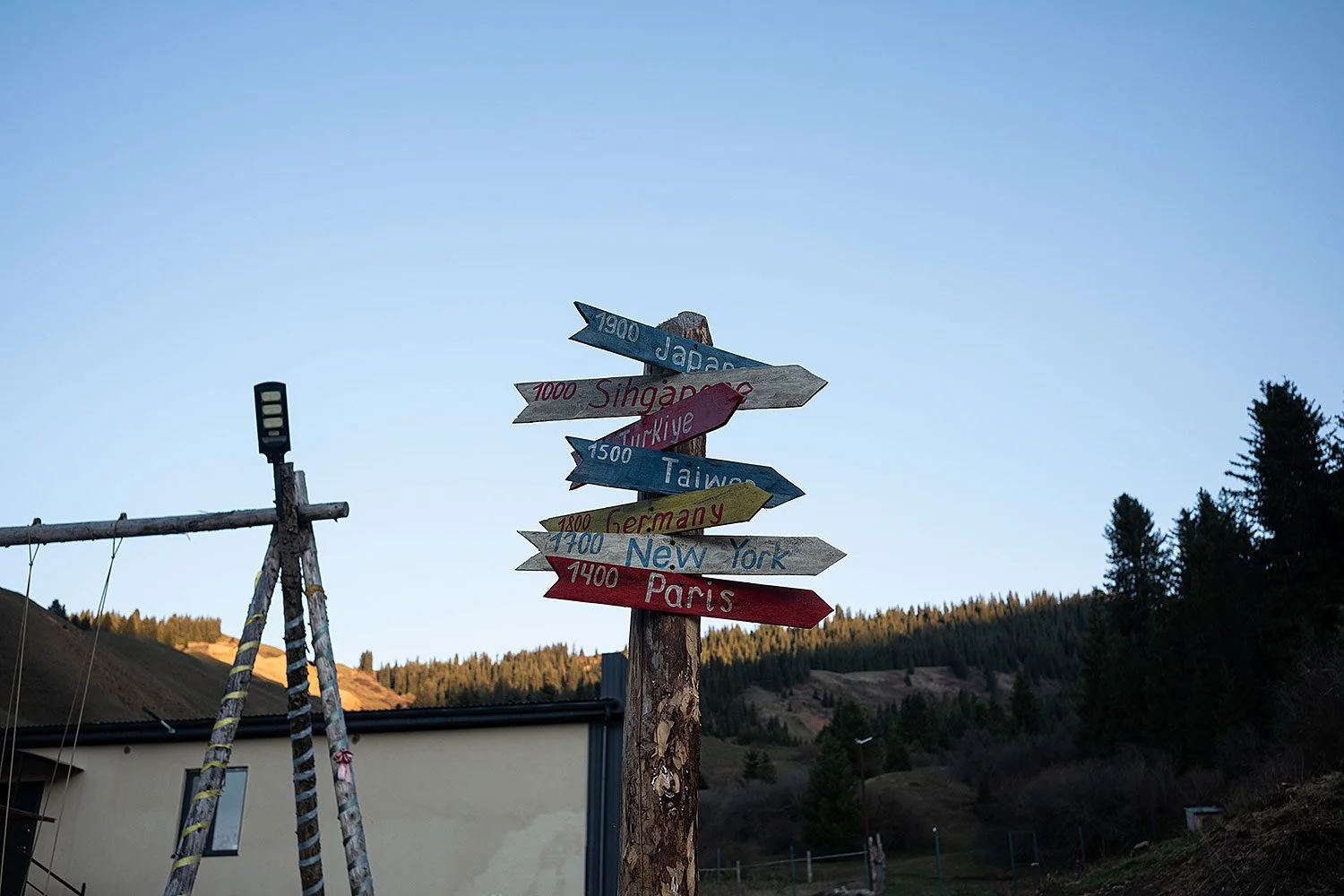
At the guesthouse a signpost points to major world capitals. Thinking of our group, it would be great if Seoul or New Delhi or Amsterdam were added.
The way rooms are assigned is less defined than I had been lead to believe. Zhuldyz asks for four women to come forward and assigns them yurt number 1. She asks for five men and I’m among those assigned to yurt number 2 along with Natan, Cameron, and the man from Singapore.
We have half an hour before we’re to meet for dinner and Natan and I end up chatting about languages in the yurt. He’s studied Russian and has come to Kazakhstan to practice. He tells us about how sentences are constructed and while the words can be in any order, the context is derived from suffixes attached to each word in a sentence. It's like German but seemingly even more complex, and had I a gift for languages I’d consider trying to pick up Russian next. It’d be fun to surprise Yana the next time I see her.
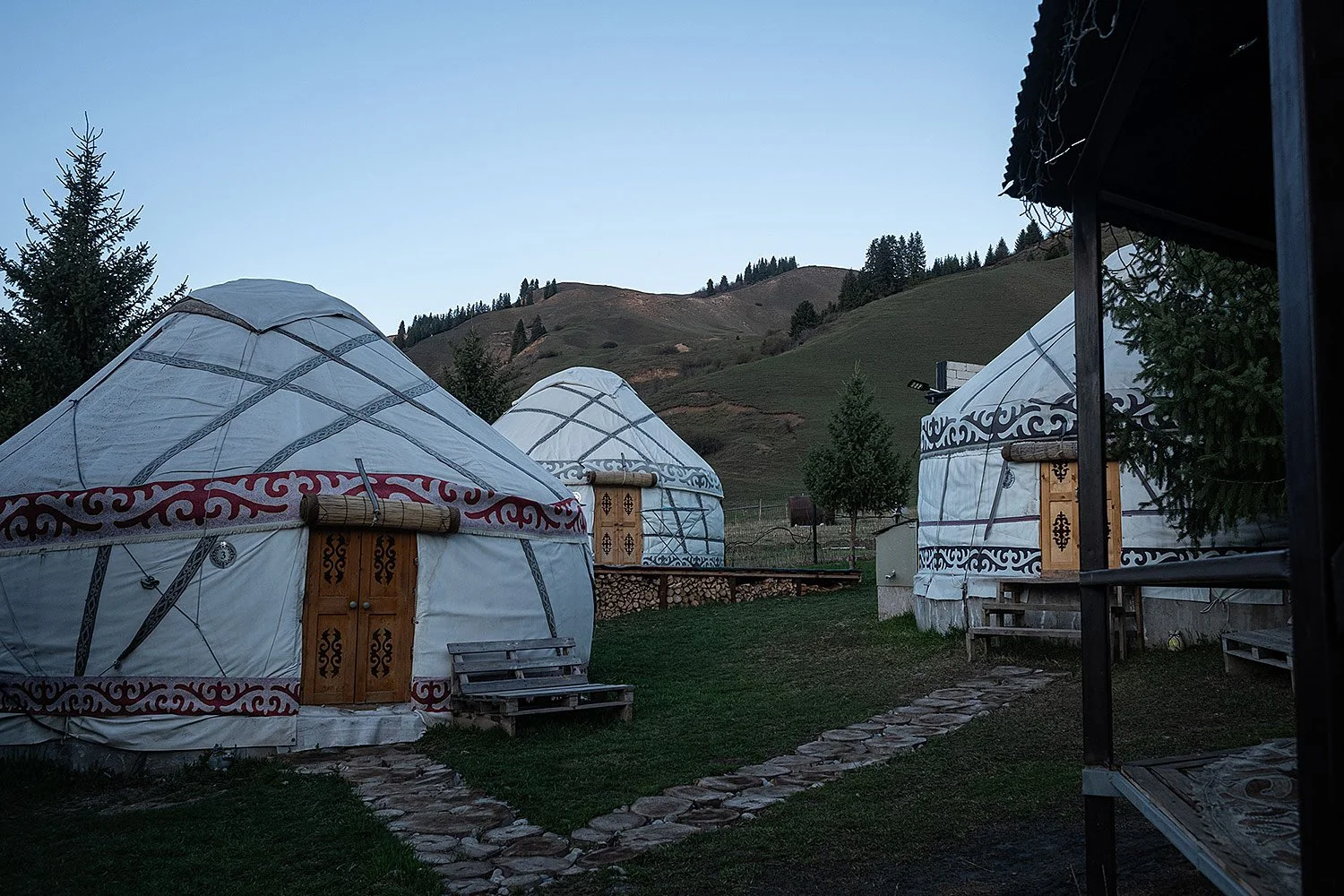
We meet for dinner in the dining yurt. Two curved tables line either side of the hut. A fire lit on one side warms the inside. Dinner is meat and delicious potatos. Amongst the sides is a spicy carrot dish that Yun Jung, Lucy, the Singaporeans, and I love. It turns out it’s a kimchee descended from the displaced Koreans who now call Kazakhstan home. It’s no wonder we take to it so quickly, finishing up all the servings on the shared table.
Alcohol is for sale and beers are purchased. After dinner Zhuldyz tells us not to go anywhere. There’ll be karaoke. The intern begins with a rendition of Frank Sinatra’s ‘Strangers in the night’ and then Zhuldyz follows that up with Lady Gaga’s ‘Bad Romance.’ The mic is then popcorned around and after Natan sings he hands it over to Lucy. She and Yun Jung have formed a pact and they sing together after which they single me out. Of course.
After karaoke we head outside where a bonfire awaits. Zhuldyz introduces a game of telephone using words from each of our respective languages. She starts with a Kazakh phrase that’s passed around until we hear what comes out and what the original word is. Each group is offered a go. It’s surprisingly fun and people erupt in laughter when they hear how their language and words get butchered.
Finally we play a round of mafia before everyone decides to head to bed. In our yurt the Singaporean has befriended one of the camp cats. When I went to pick up my toiletries I had seen him playing with the cat and upon returning find that the cat is curled up next to him. He’s fast asleep. So soon am I. 🇰🇿