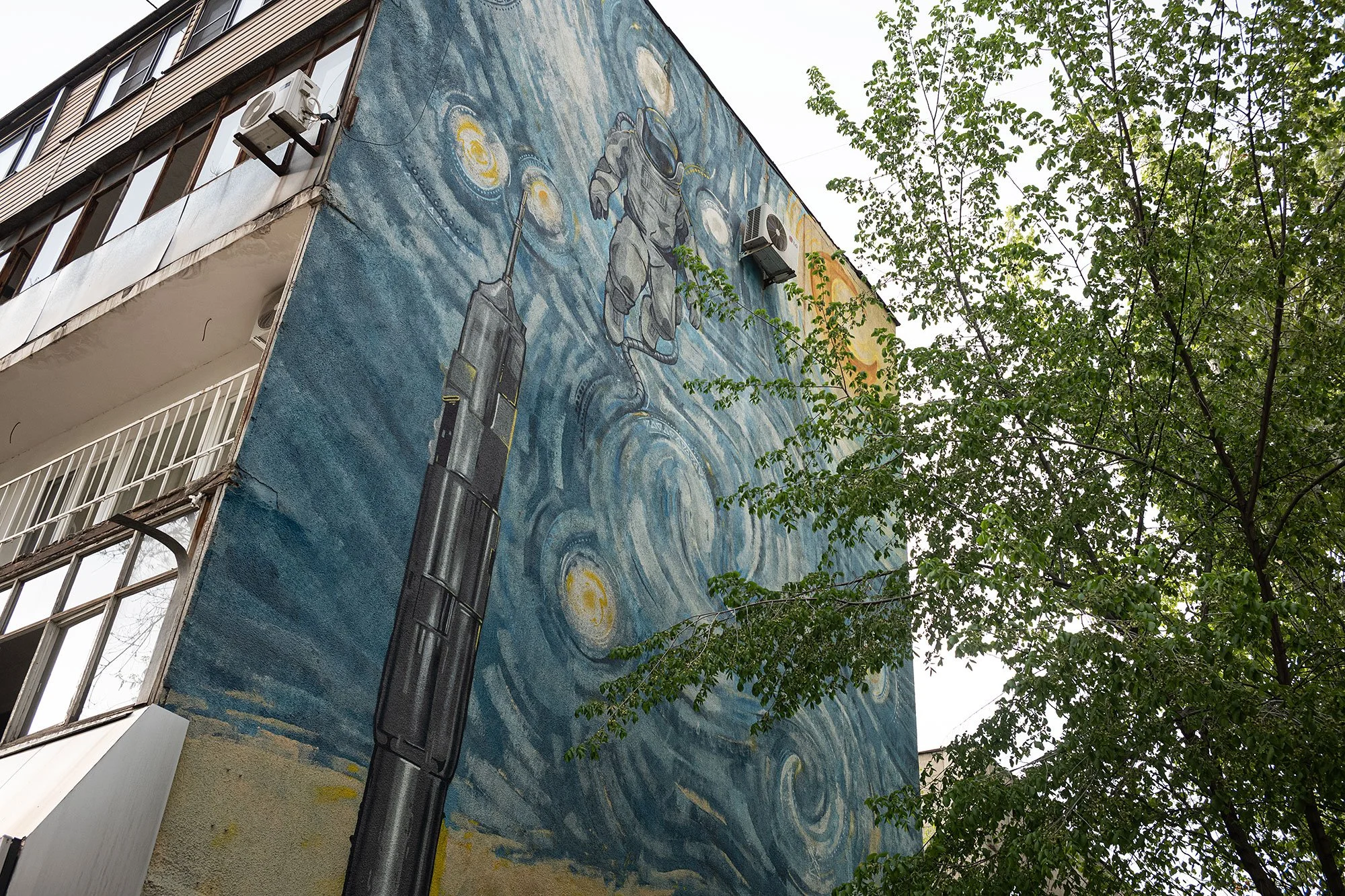
An afternoon at the Almaty Museum of Art.
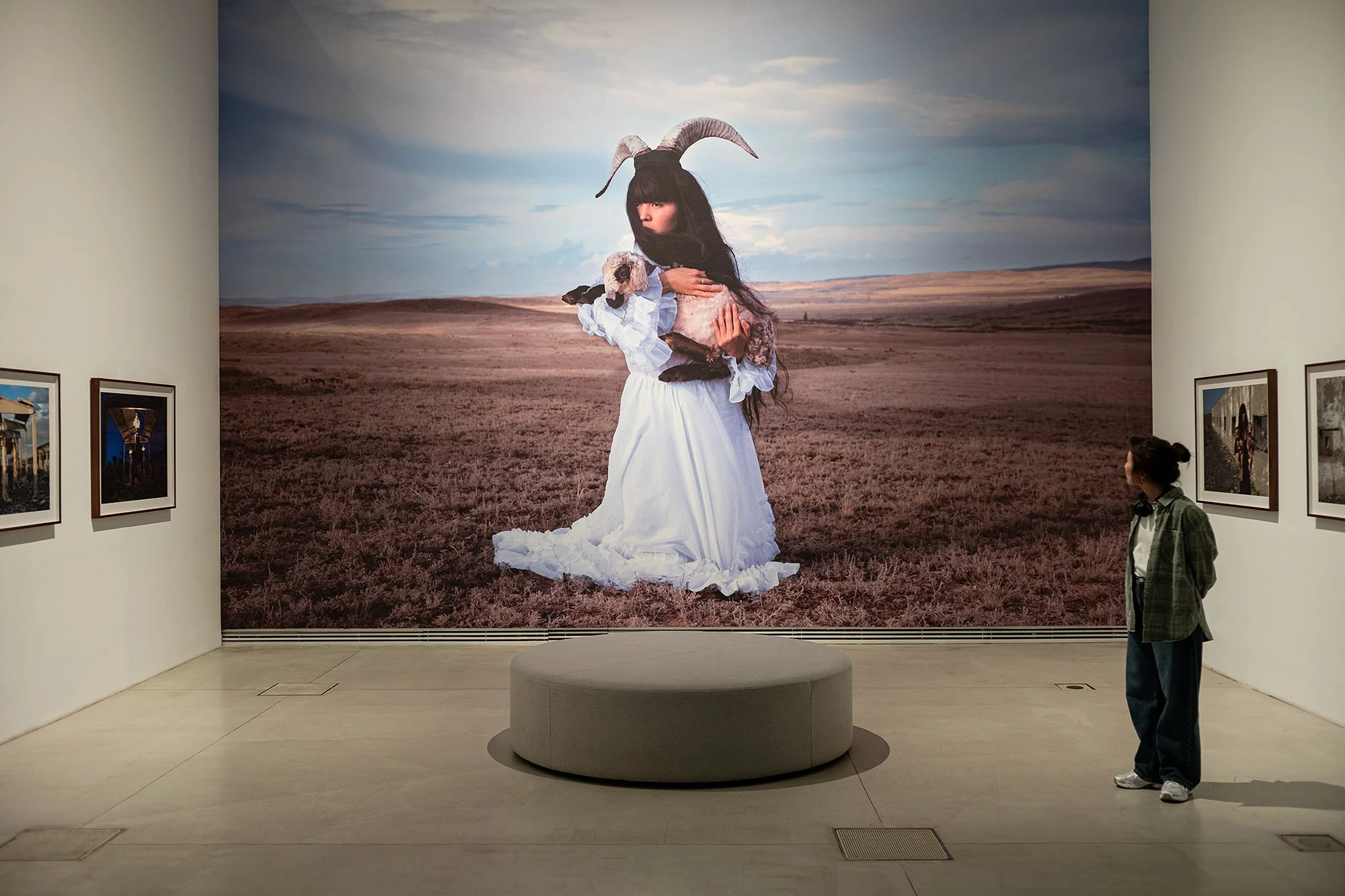
I’ve never felt more underdressed at a museum.
For some reason I’ve decided to wear my haircut t-shirt and hiking pants as if it’s laundry day. I had put on a sweater, thinking I wouldn’t take it off, but had warmed up on the walk up to the museum and it wasn’t as cold inside as I thought it might be.
Meanwhile, around me people are dressed up in at least smart casual or street style clothes. I try to ignore it and focus on the art.
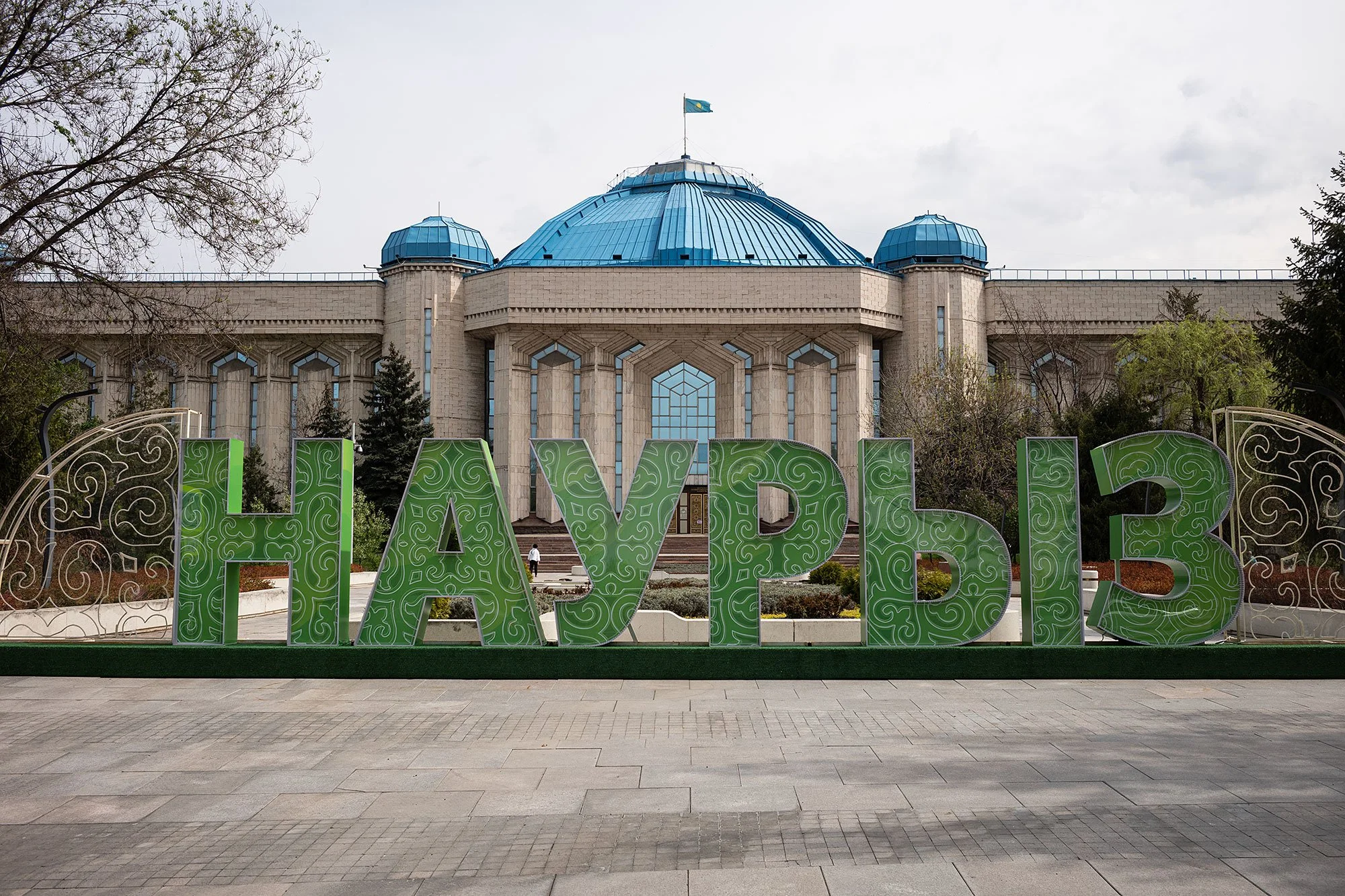
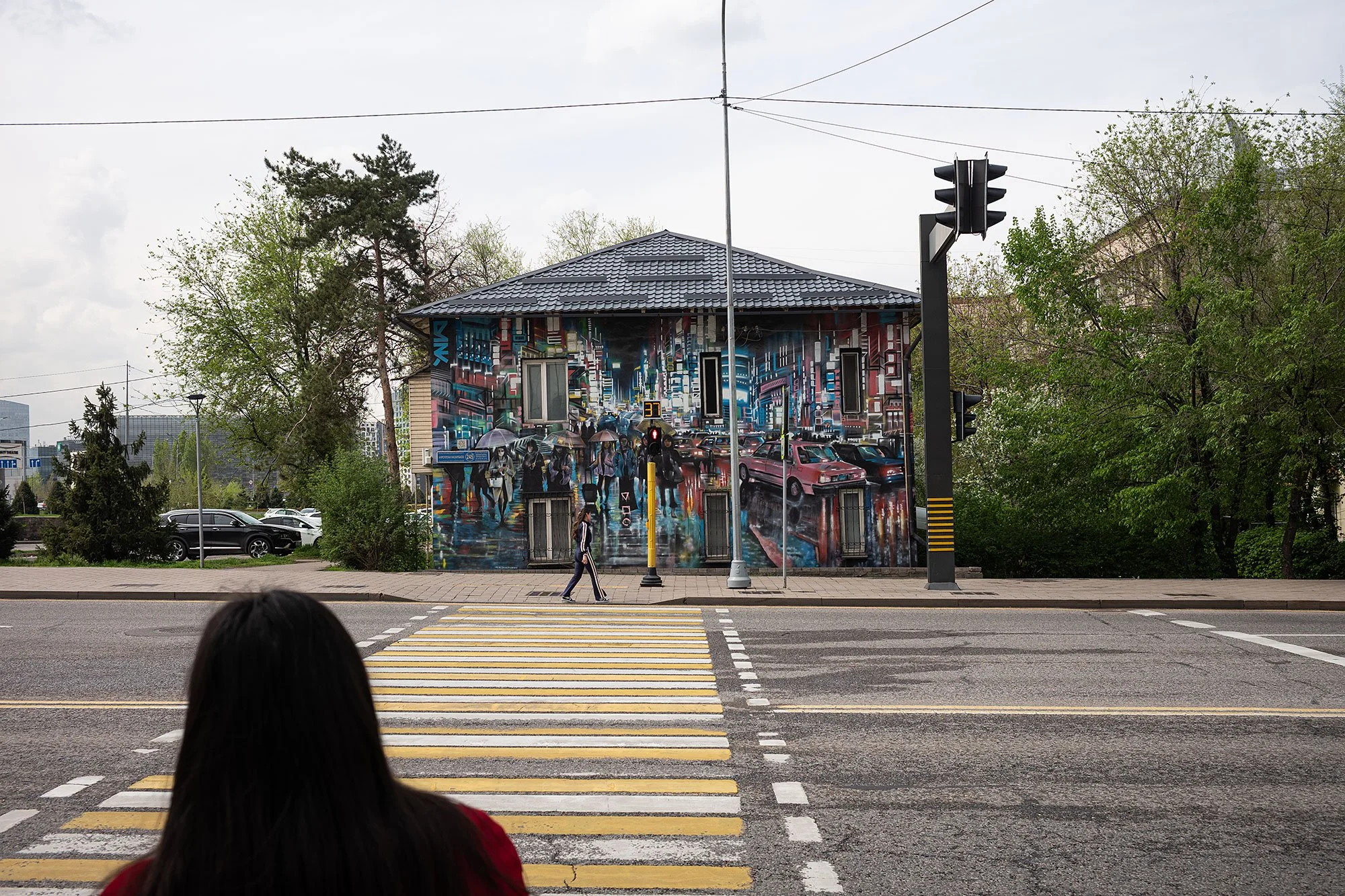
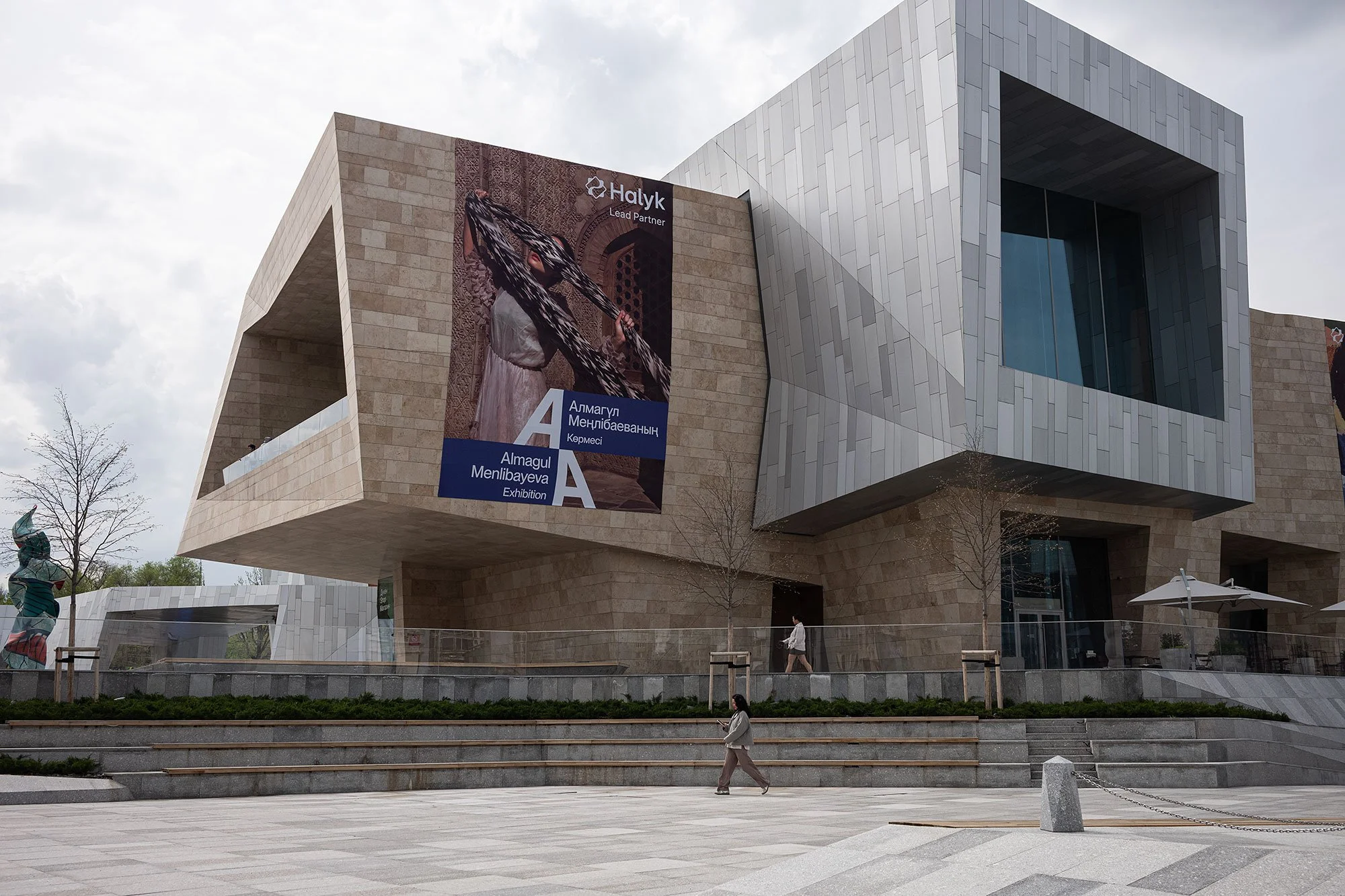
The Almaty Museum of Arts sits almost directly south of the apartment and I walk straight up Furmanov Avenue to get there, past the Central State Museum of the Republic of Kazakhstan and Journalism Park before I reach its angular form
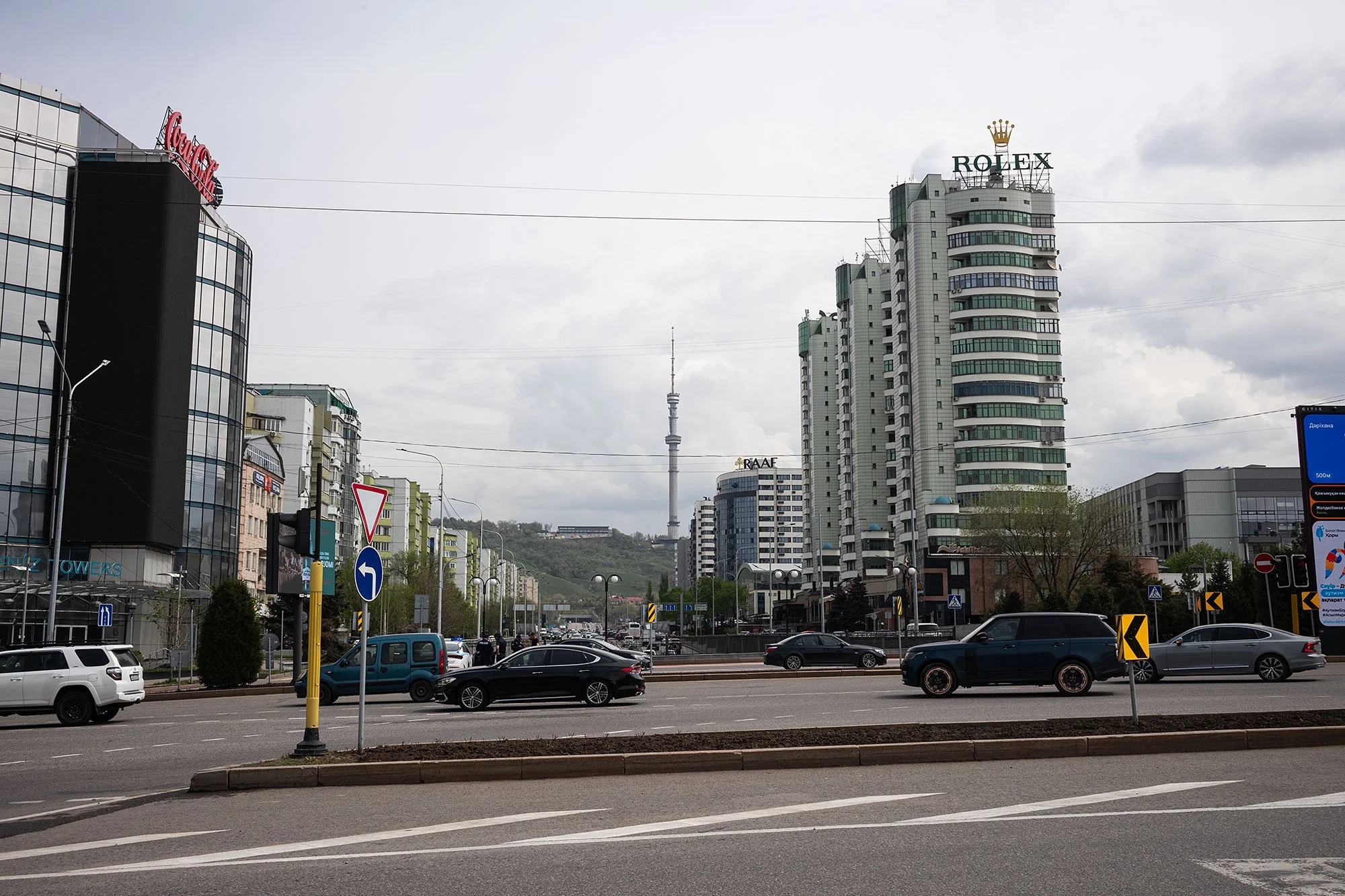
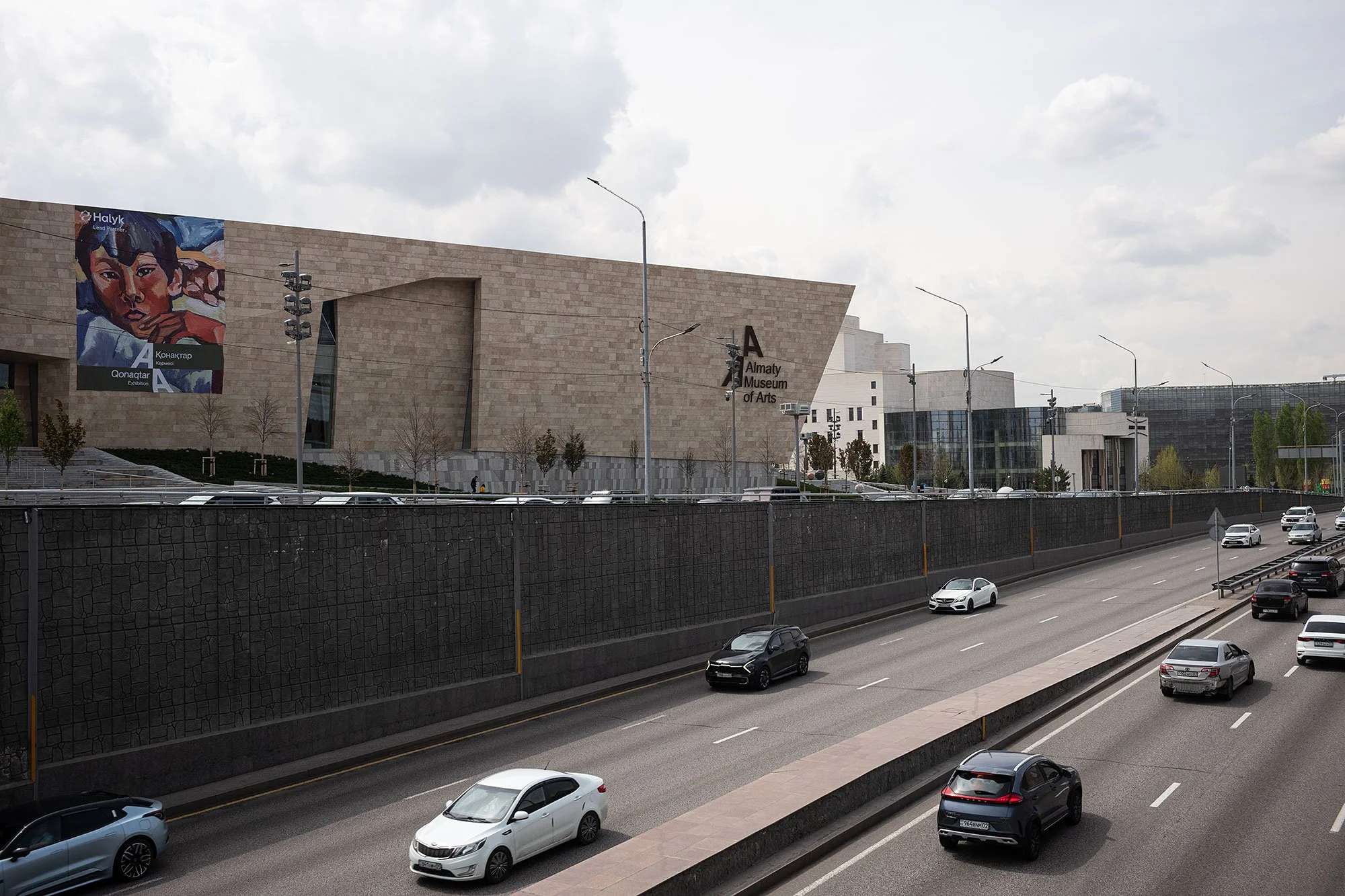
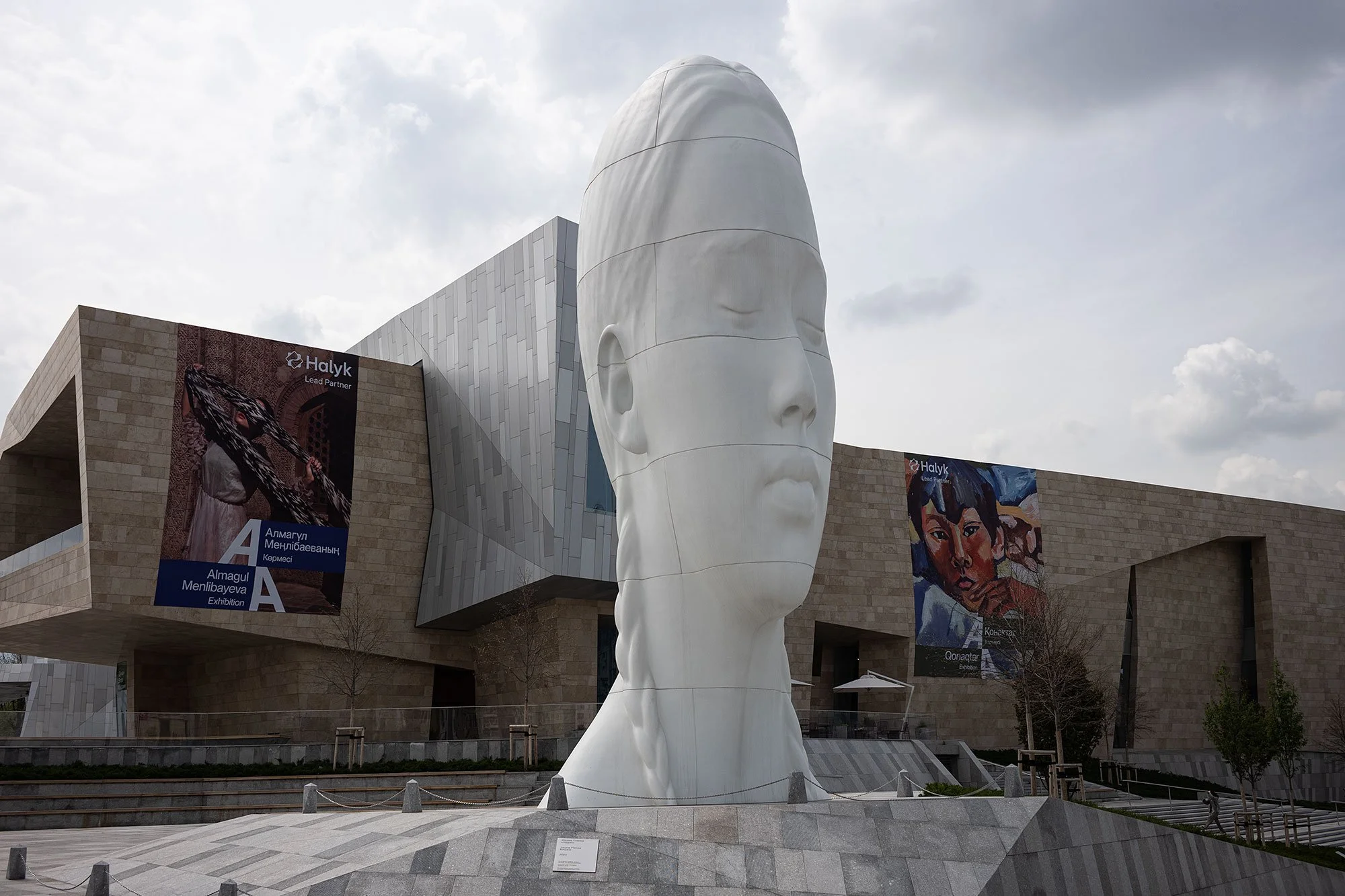
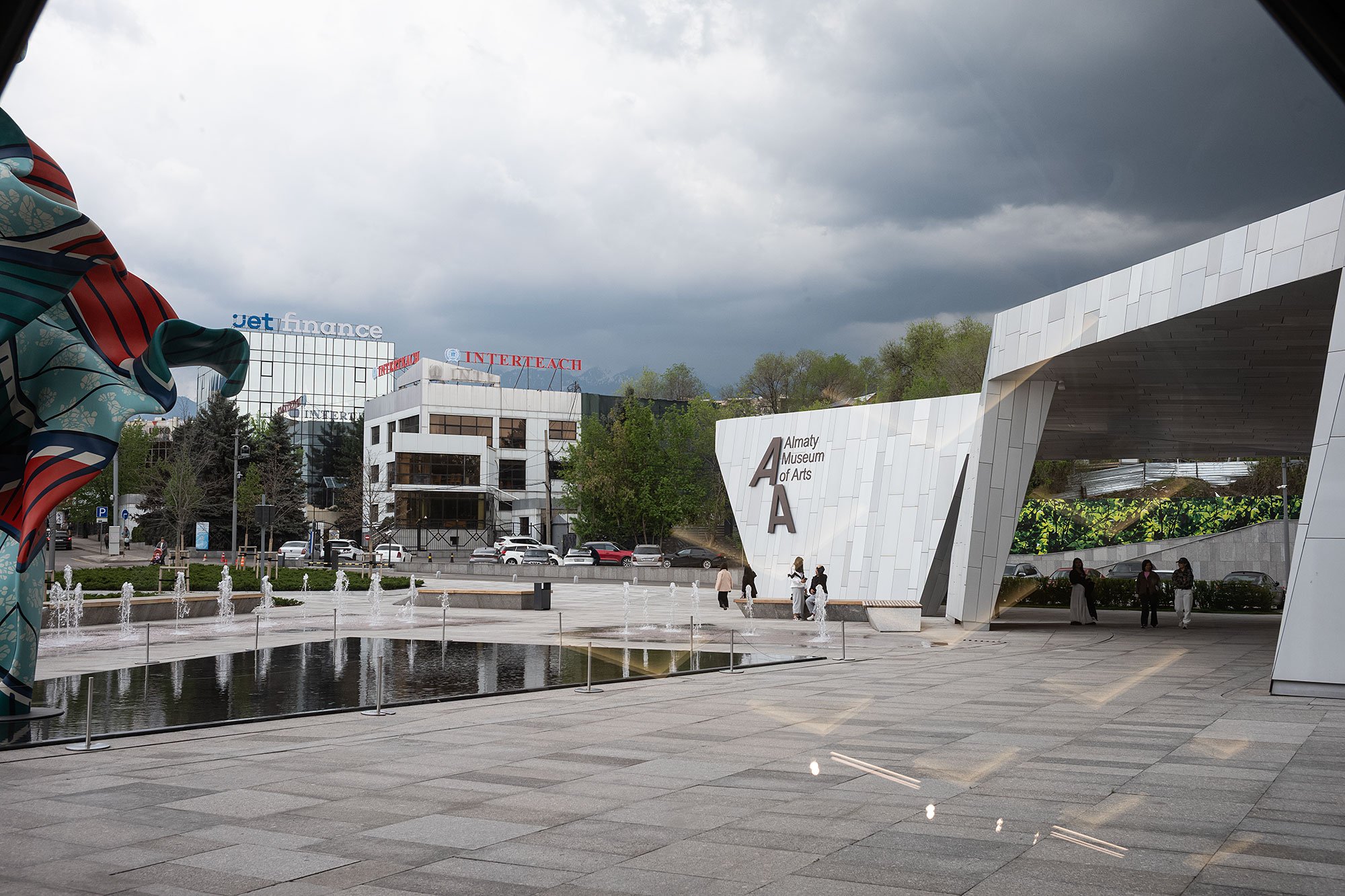
Designed by the architecture firm Chapman Taylor, the interlocking L-shaped structures, clad one in limestone and the other in aluminium, “symbolise the harmony between natural landscapes and urban energy.”
Touted as the first private museum dedicated to modern and contemporary art in Central Asia, it houses the personal collection of Nurlan Smagulov: more than 700 works of modern art Kazakh accumulated over three decades. Works by international artists Bill Viola, Richard Serra, Yayoi Kusuma, and Anselm Kiefer round out the collection.
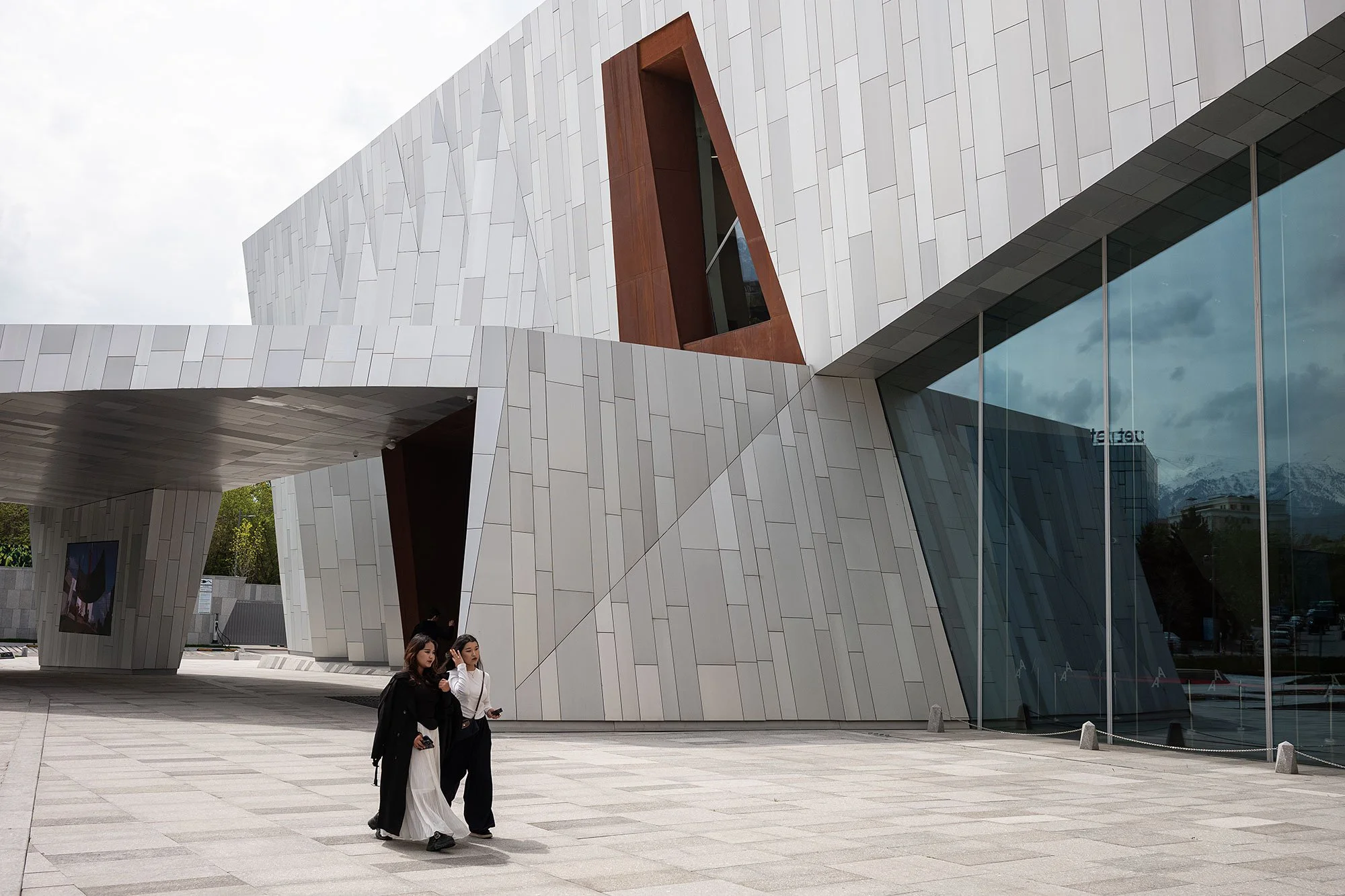
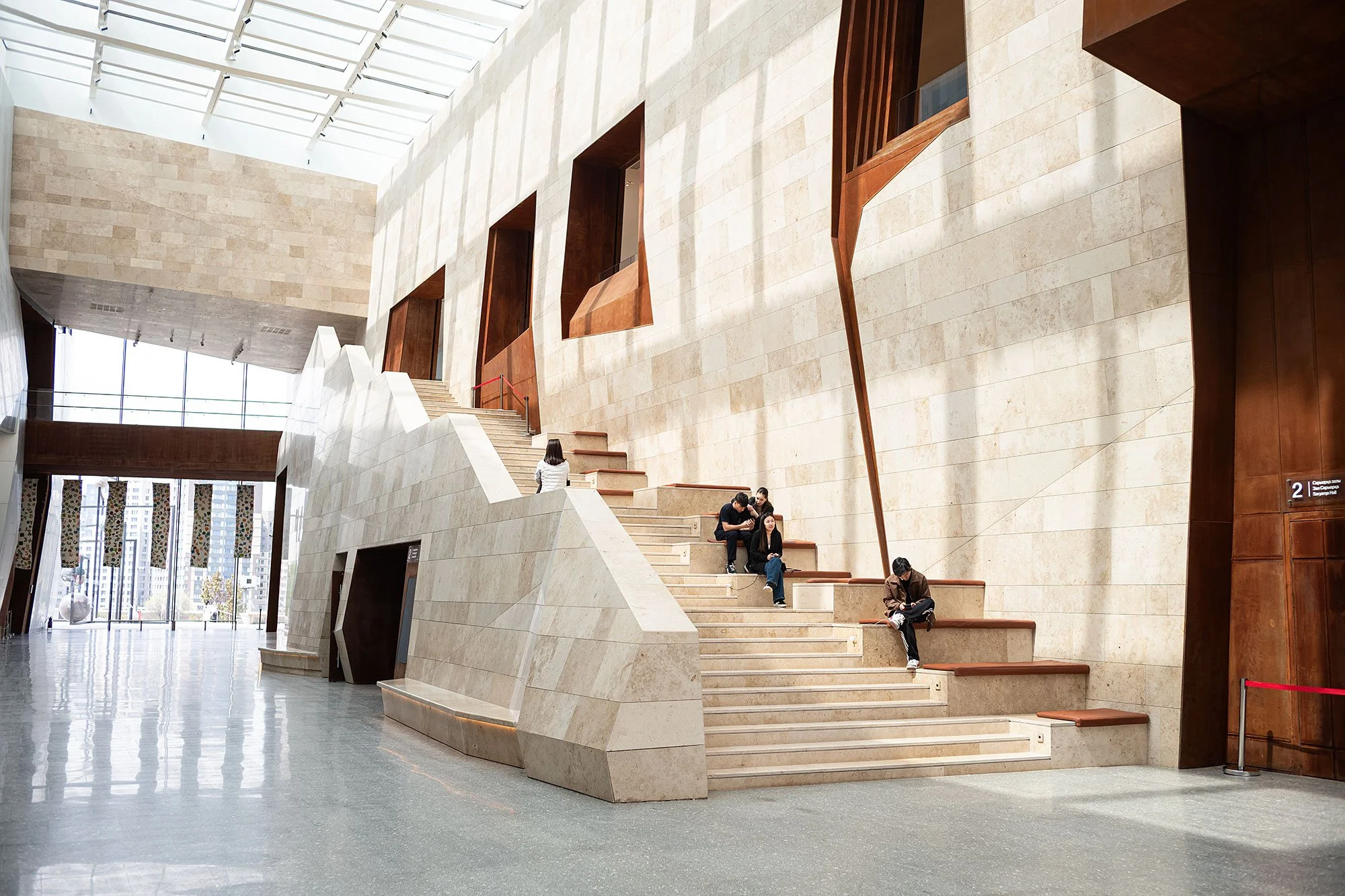
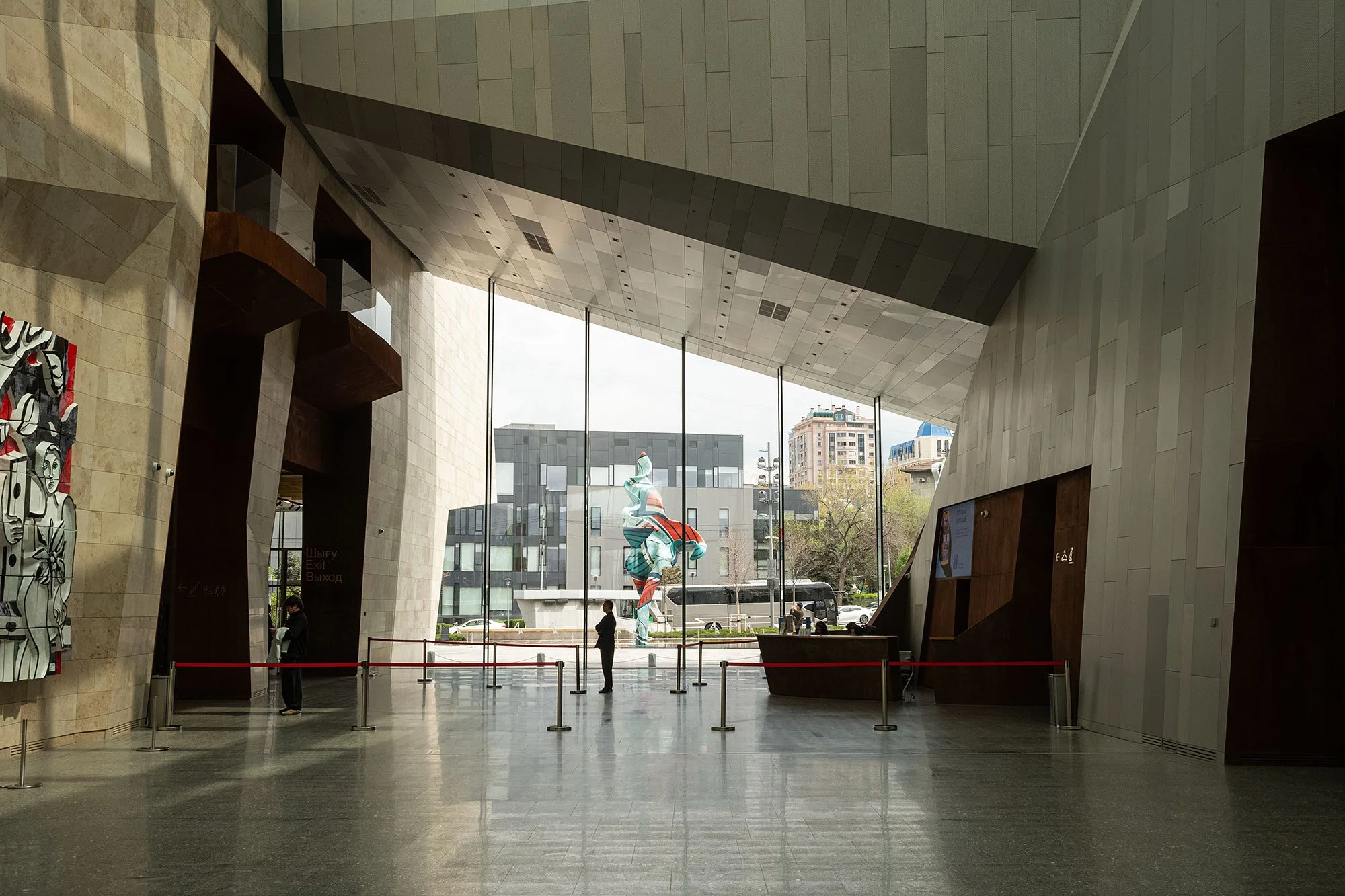
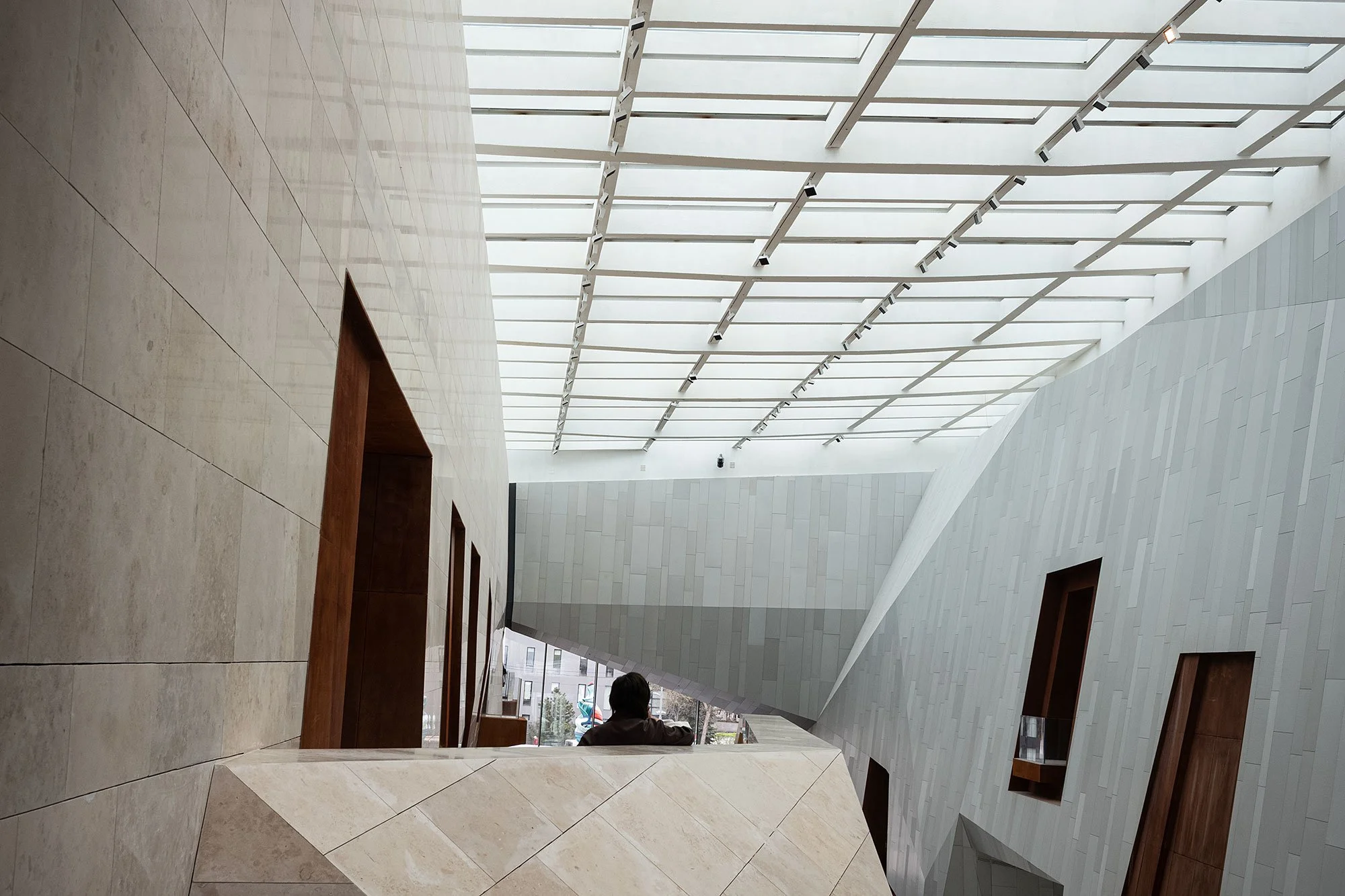
Inside, a bright atrium separates the ground floor featured exhibition space from the cafe and second-floor galleries. Windows let you see from one end of the museum to the other, mountains on one side and the city on the other.
For the inaugural exhibition, the museum has mounted a retrospective of Almagul Menlibayeva, an Almaty-born multidisciplinary artist acclaimed for her “critical and innovative explorations of the cultural, historical and sociopolitical dynamics of Central Asia.”
It’s my introduction to her work and I’m enthralled. I walk through the exhibit twice, pausing to watch Ride the Caspian a multi-channel video collaboration with Iranian-American artist Bahar Behbahani, placing the two cultures in dialogue with one another as they reflect the crossroads of the Middle East and Central Asia straddling the Caspian Sea.
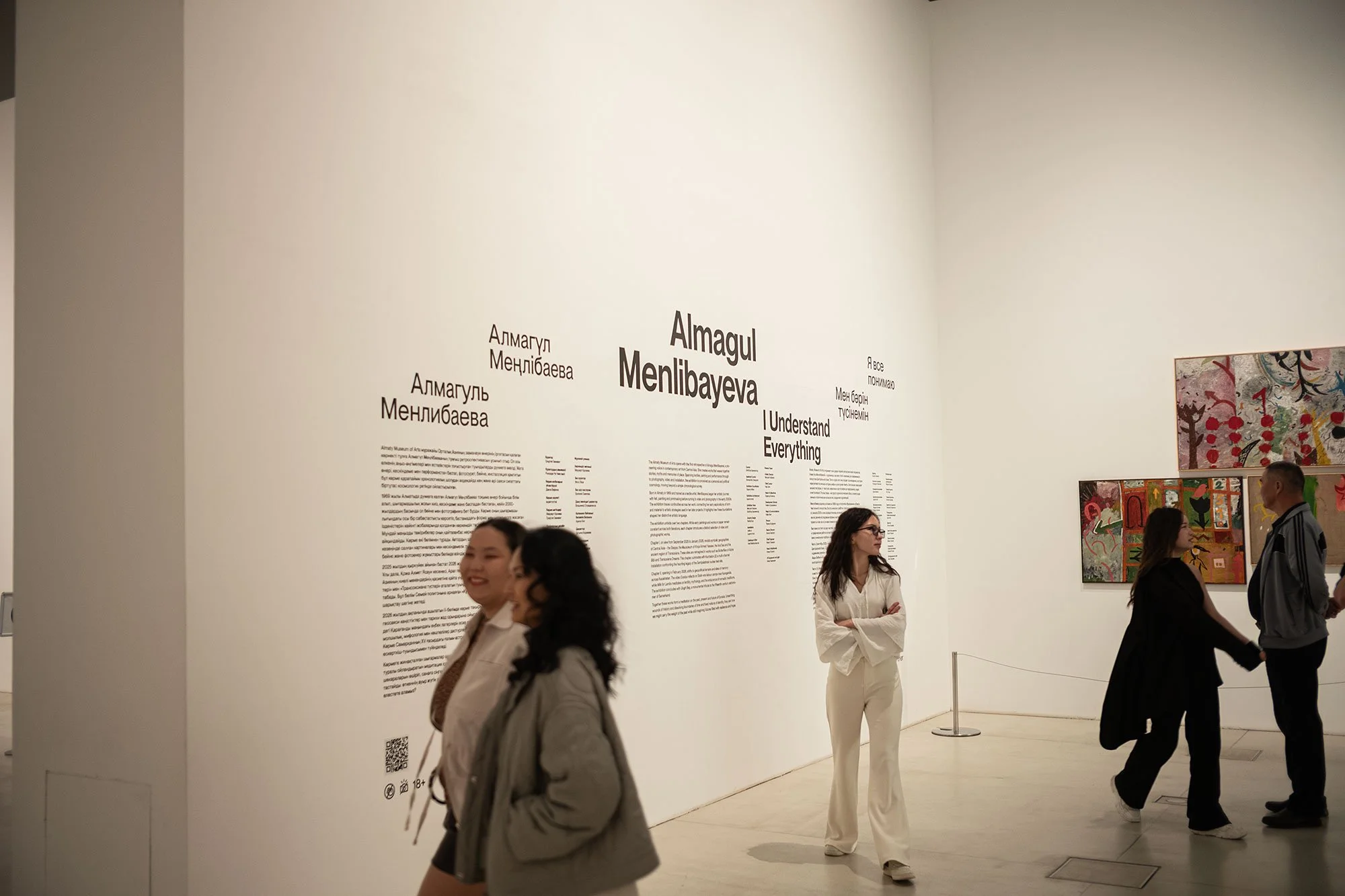
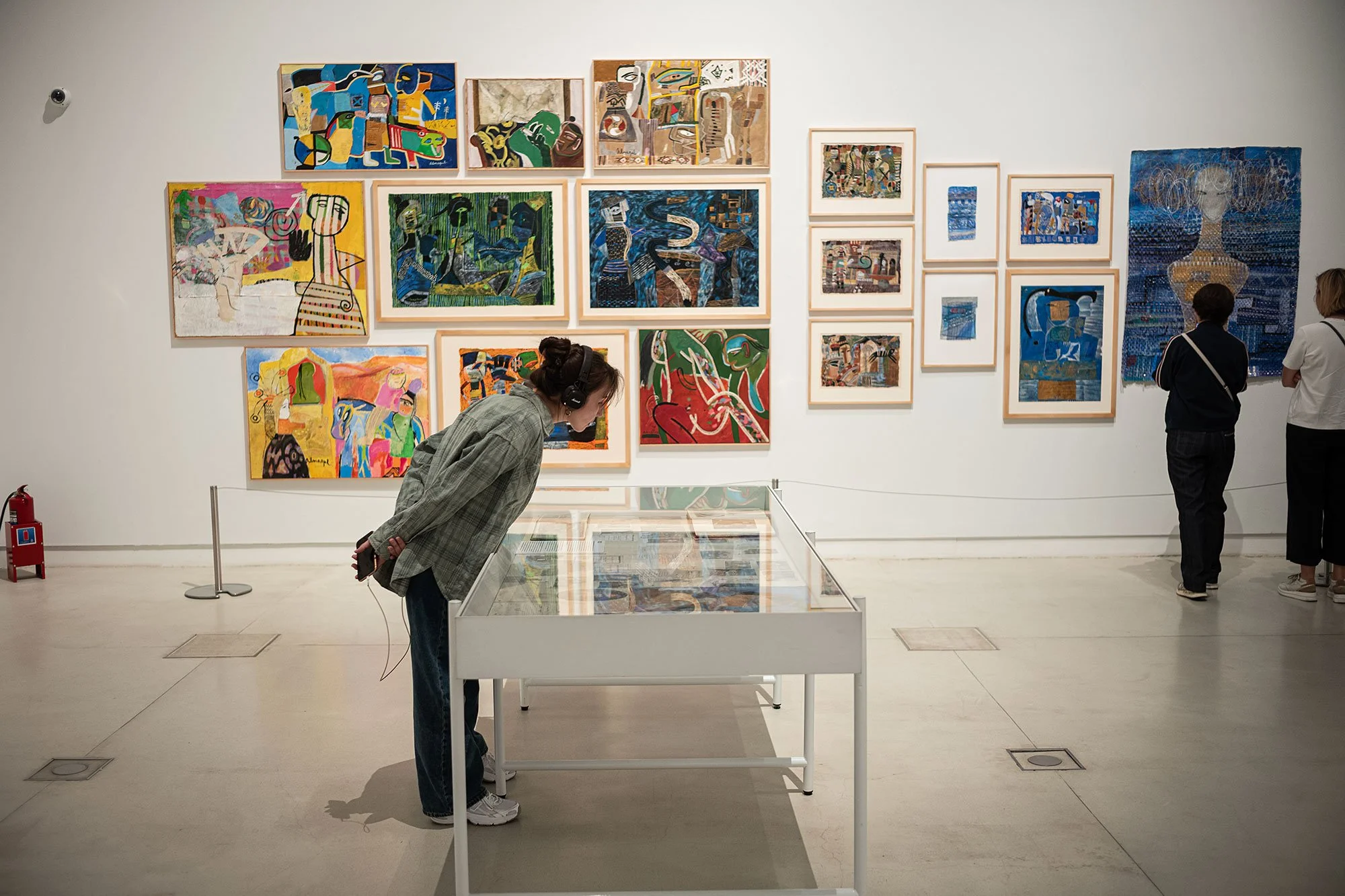
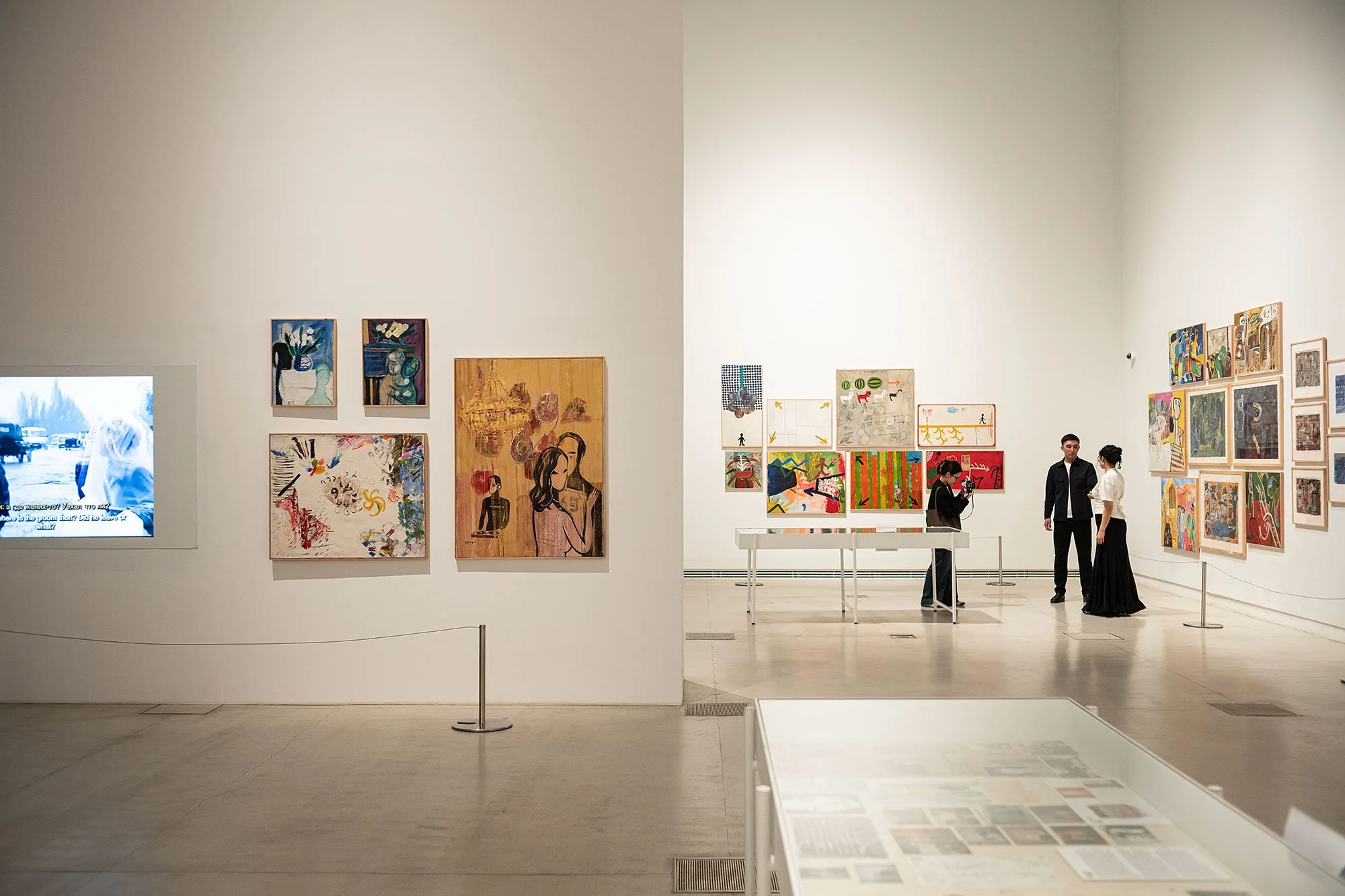
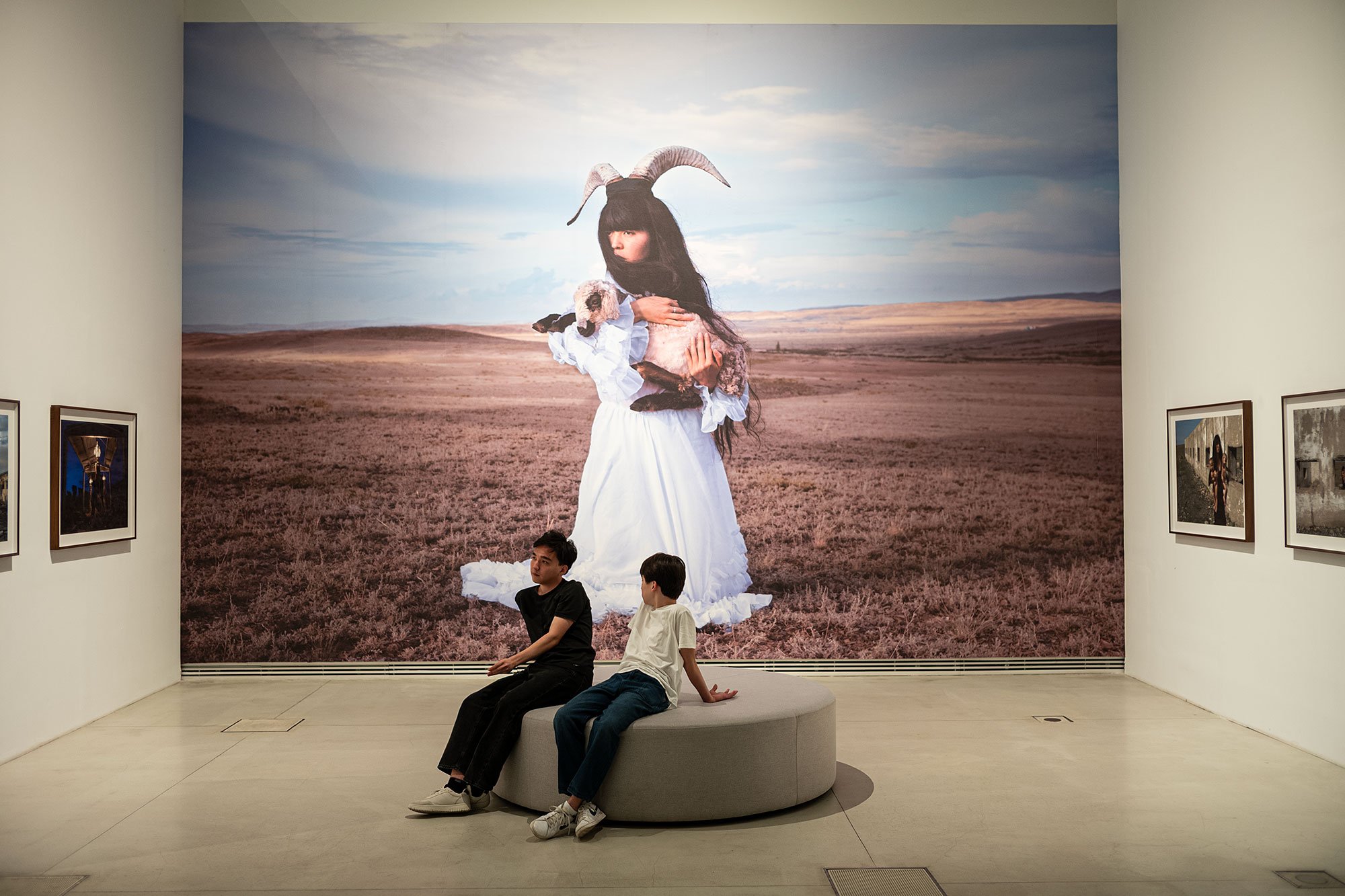
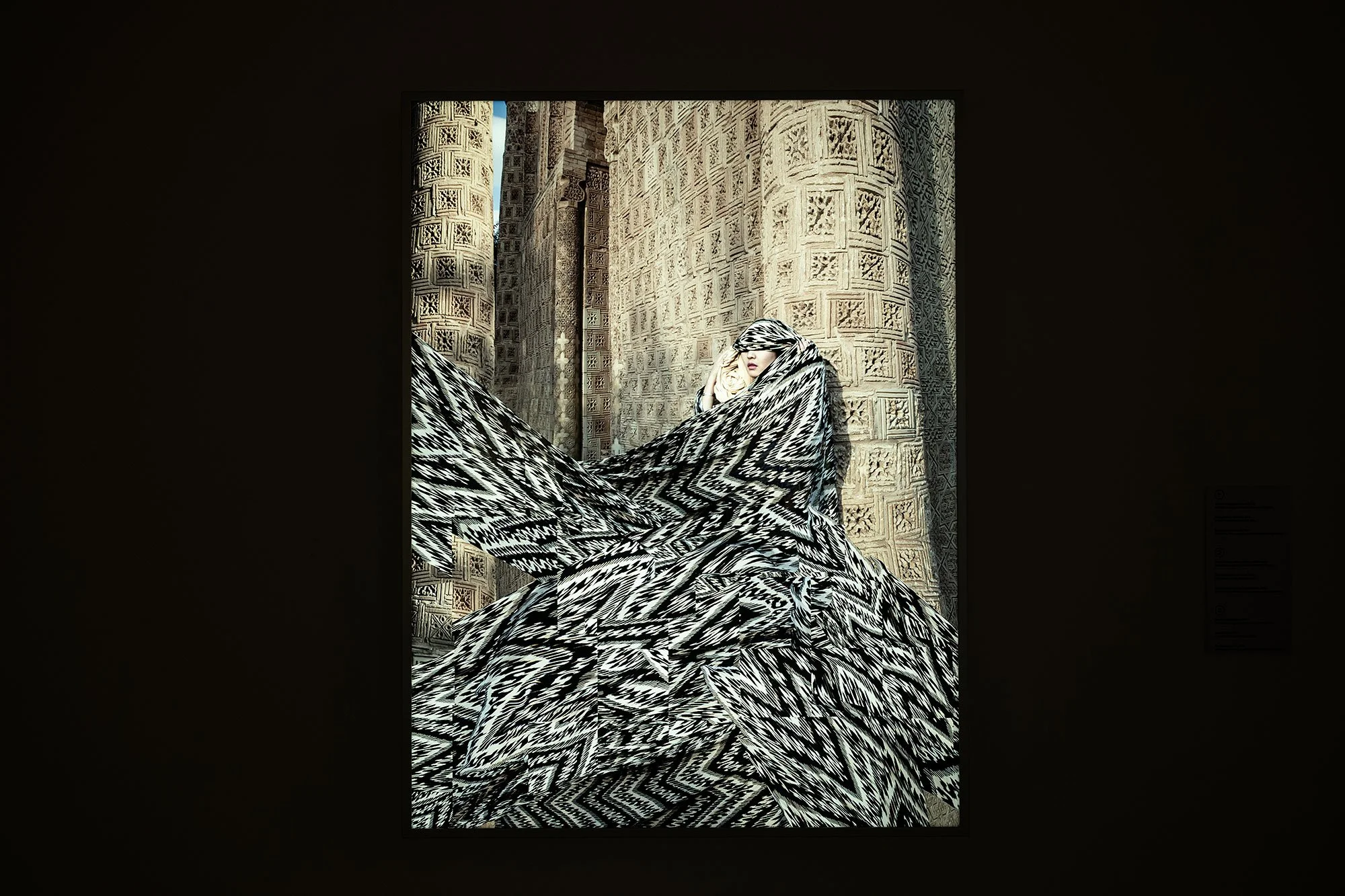
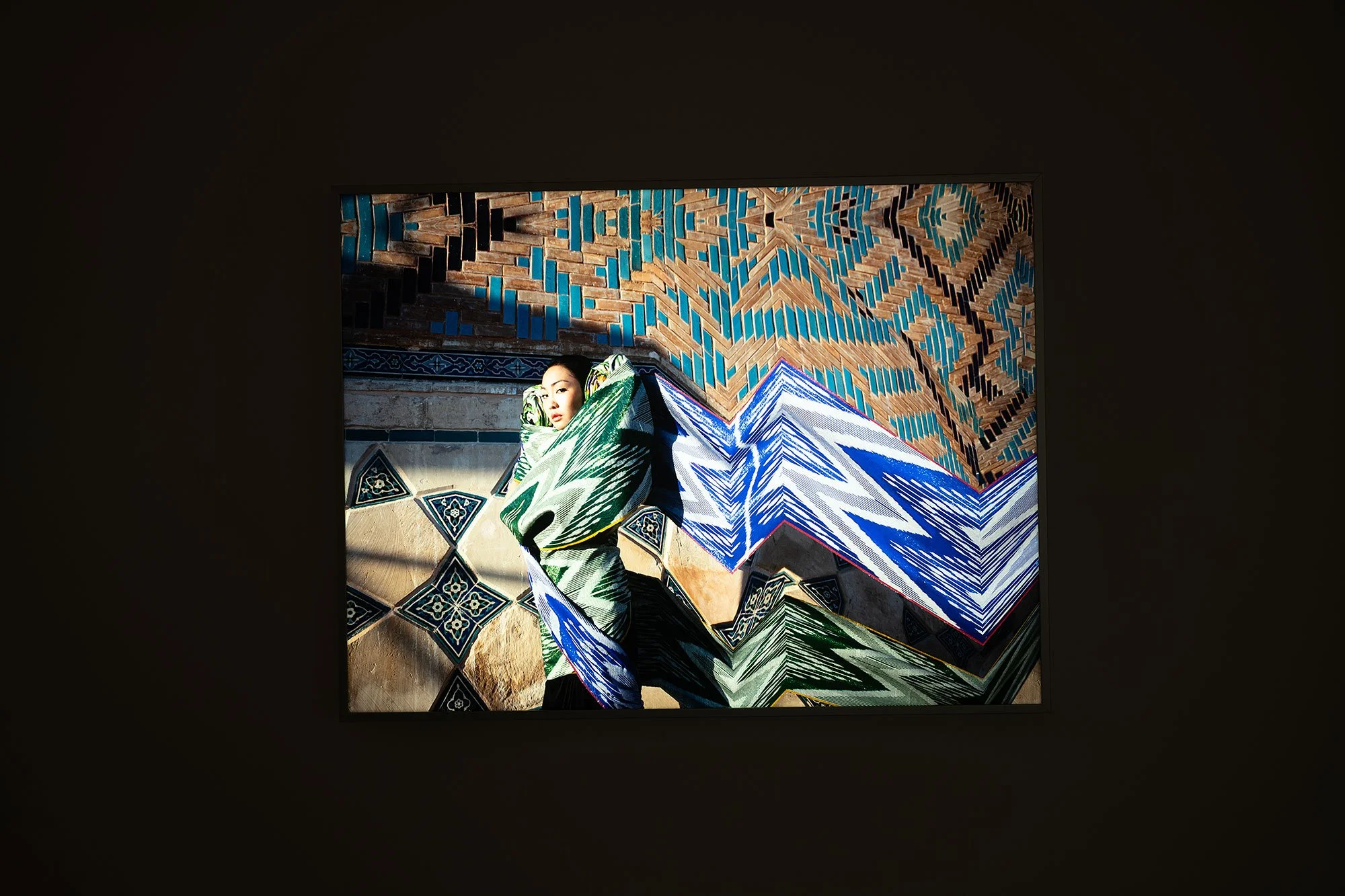
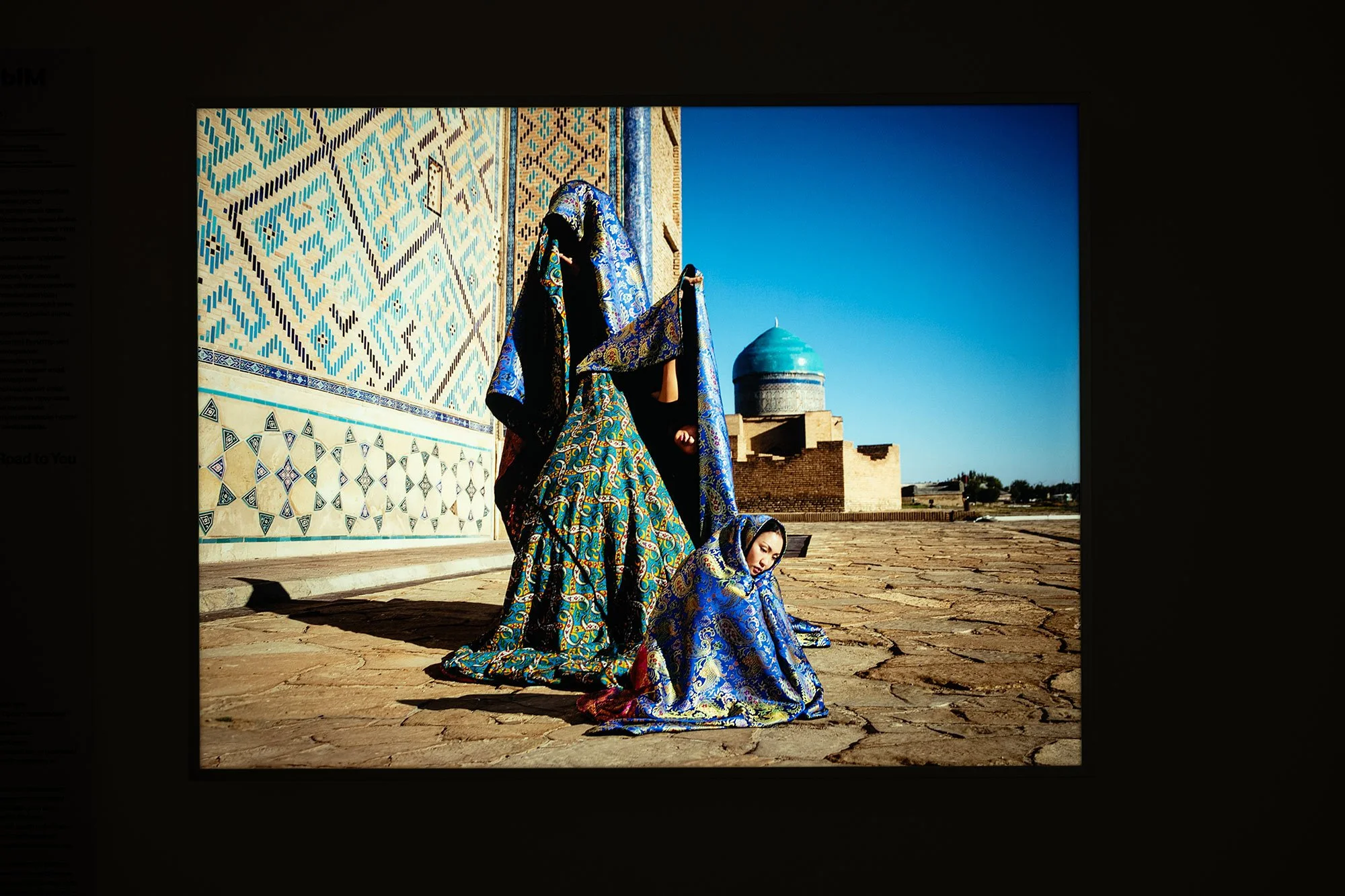
One wall exhibits selections from My Silk Road to You, a series of photographs in which Menlibayeva explores the contemporary impact of the Silk Road on cultures and identities in the region make me long to see the entire series. I hope there’s an exhibition catalog I can purchase where I can read more about her and her work. Unfortunately, there isn’t.
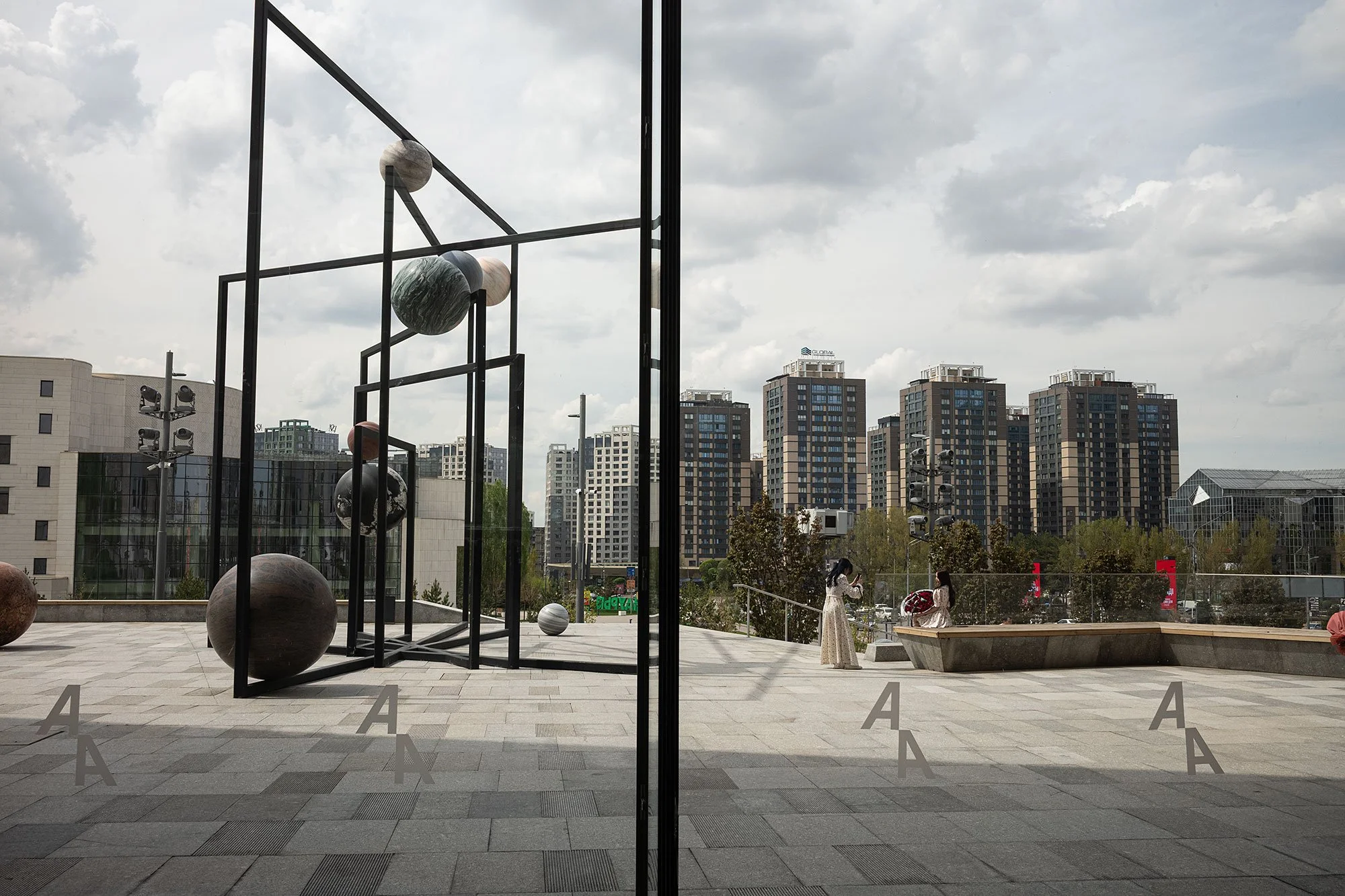
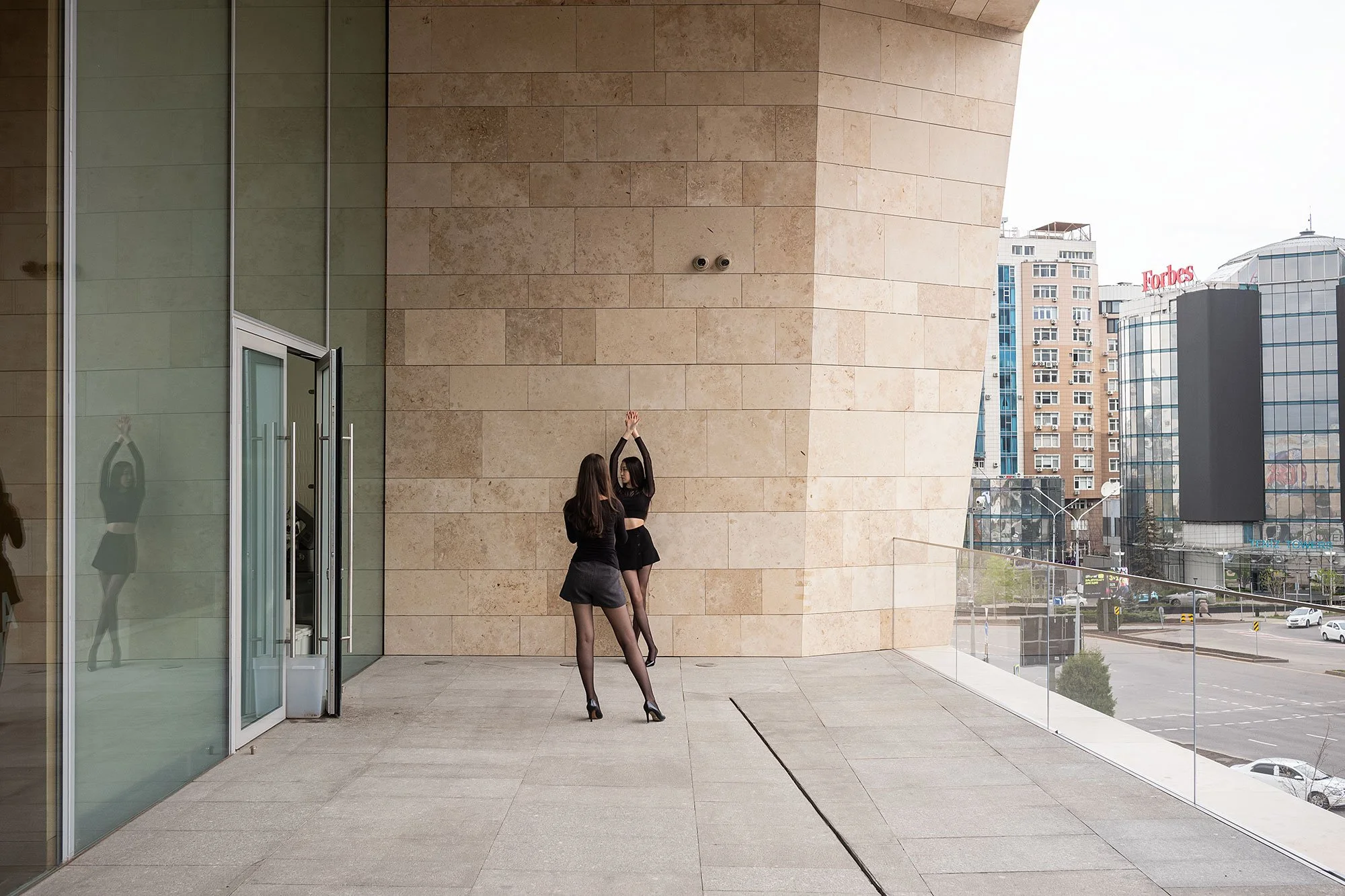
As I exit the gallery I look towards the floor-to-ceiling windows at the back of the building. A photo shoot is taking place and I walk towards the plaza for a better look. They’re not the only ones to be using the museum as a backdrop for their photos, as I’ll discover as I continue exploring the galleries.
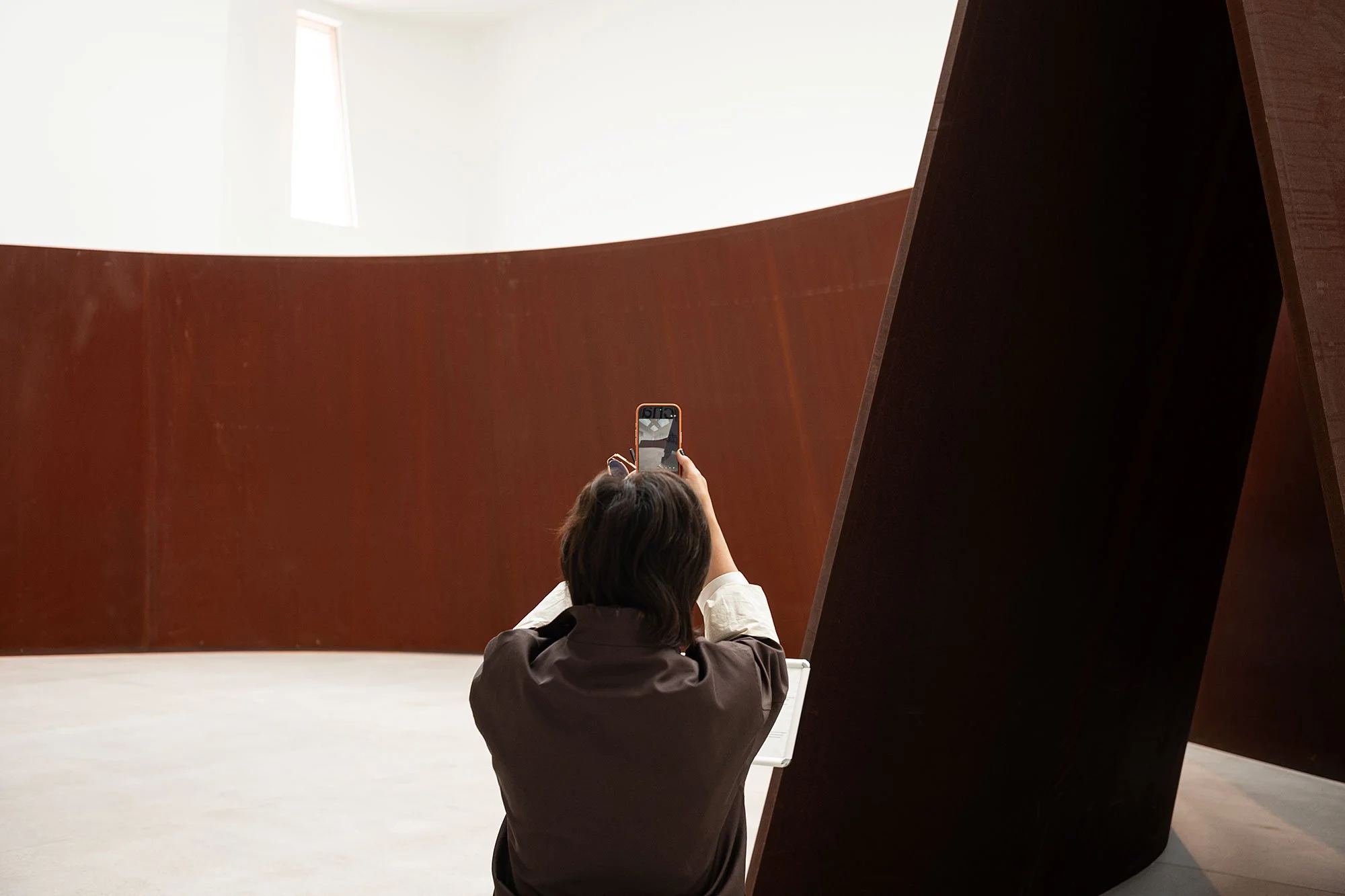
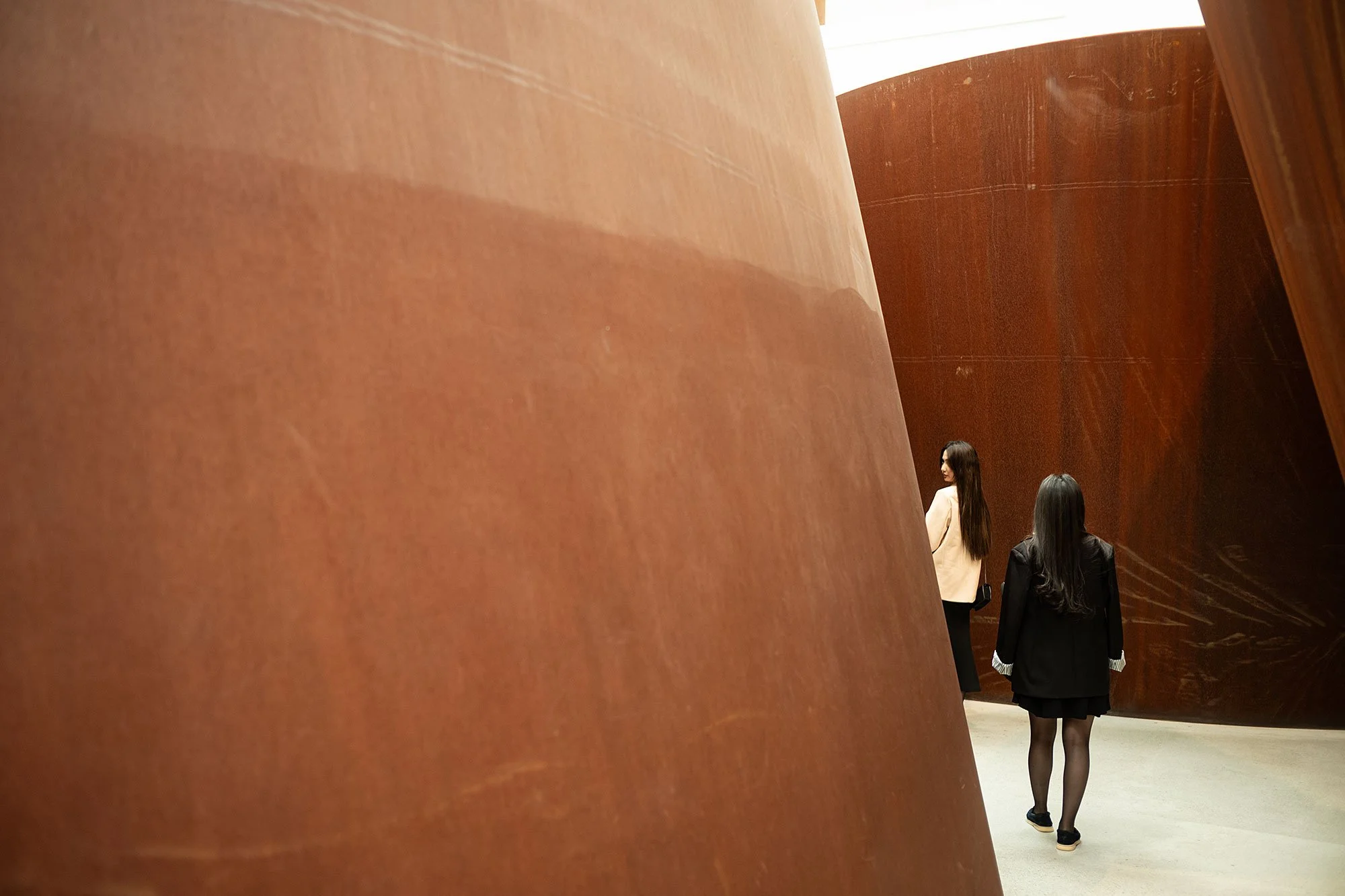
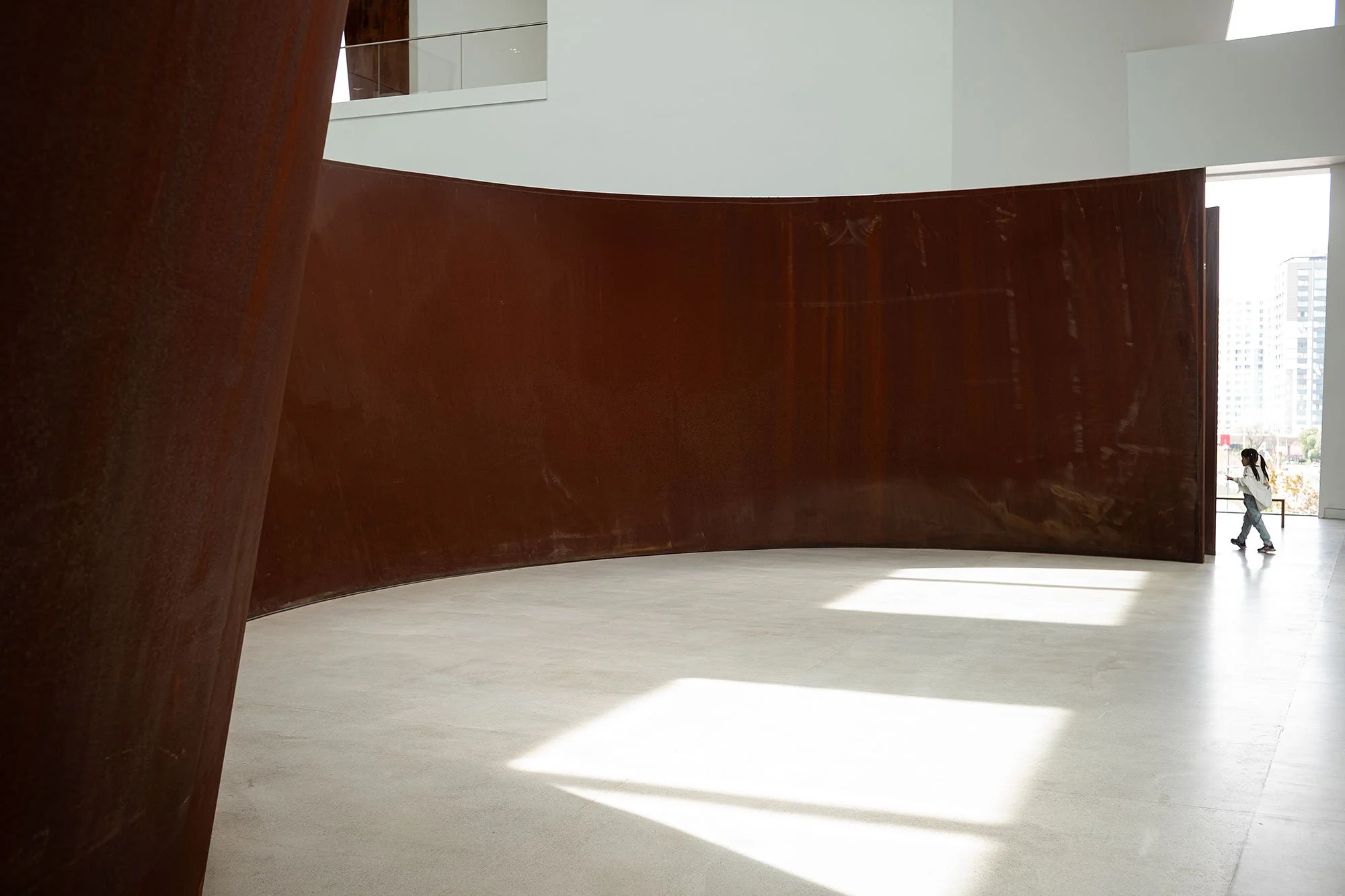
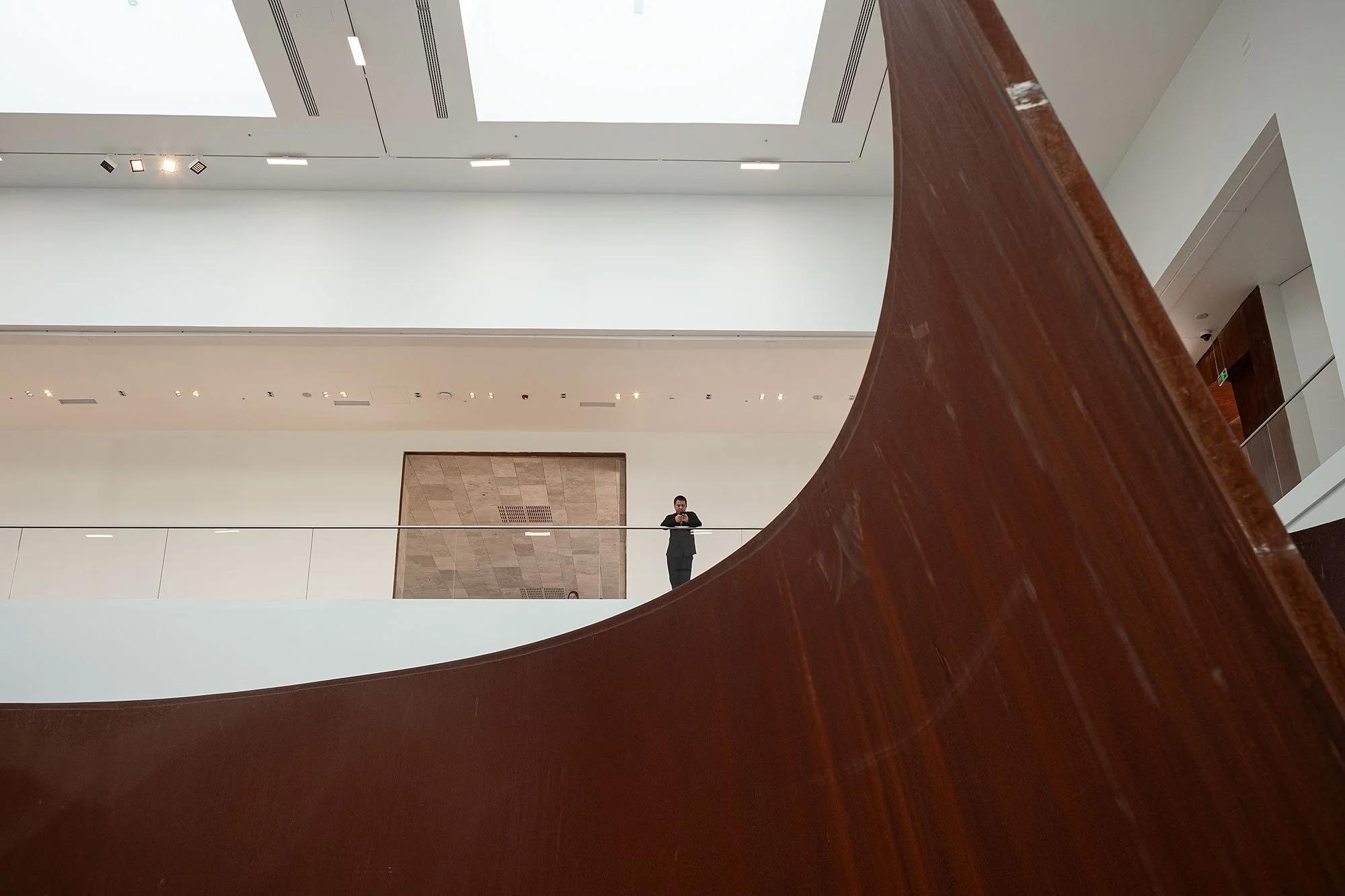
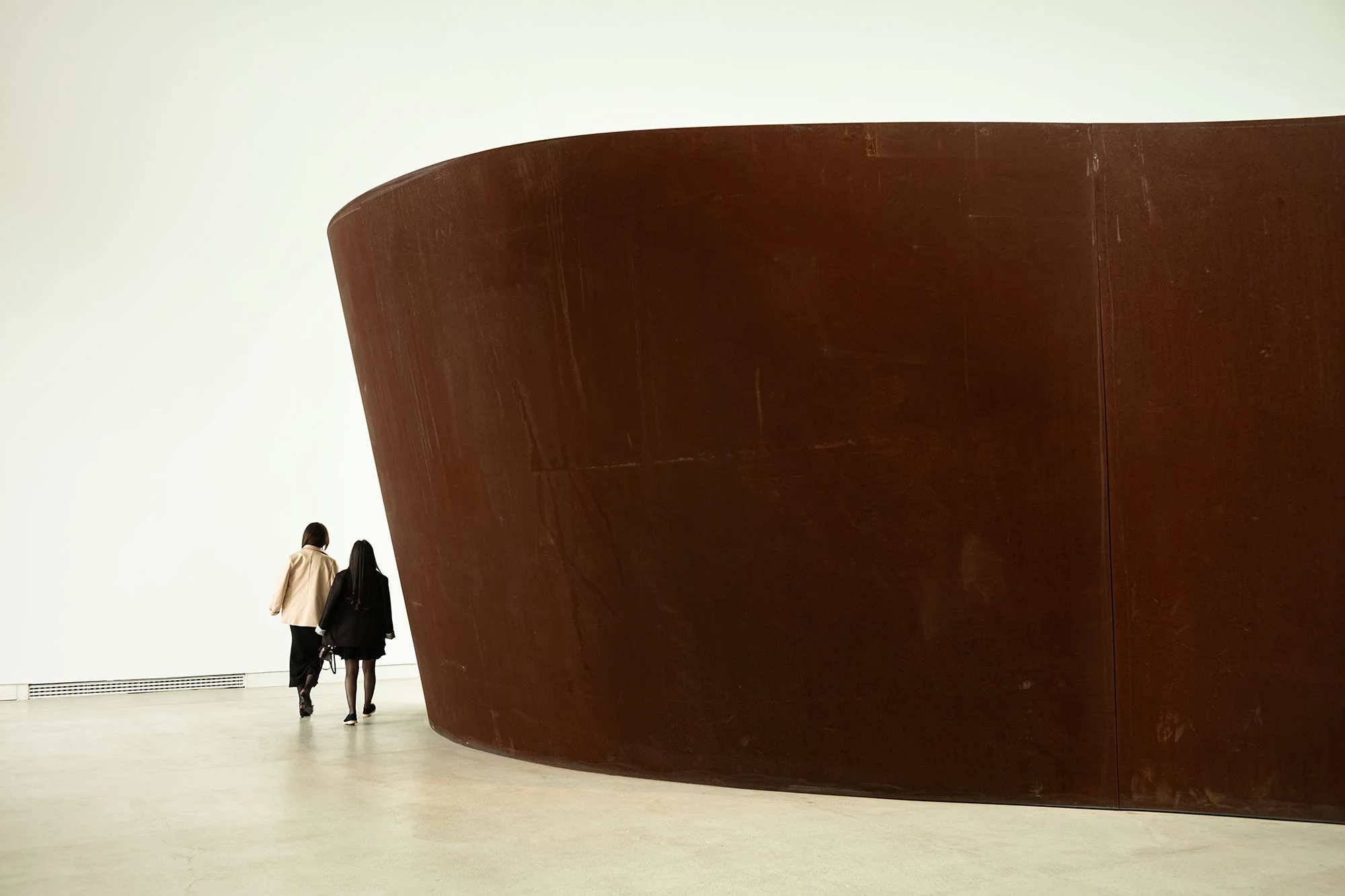
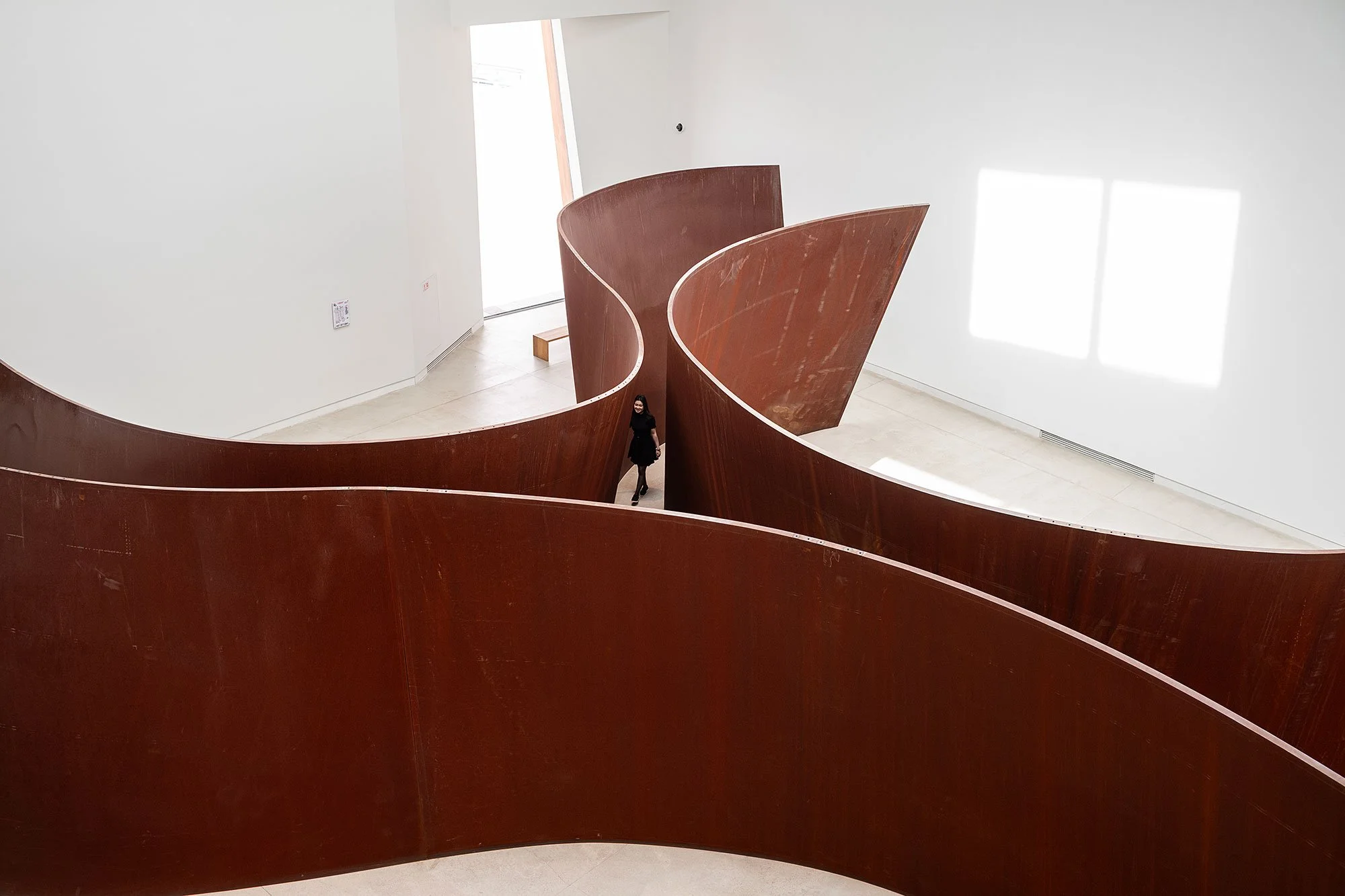
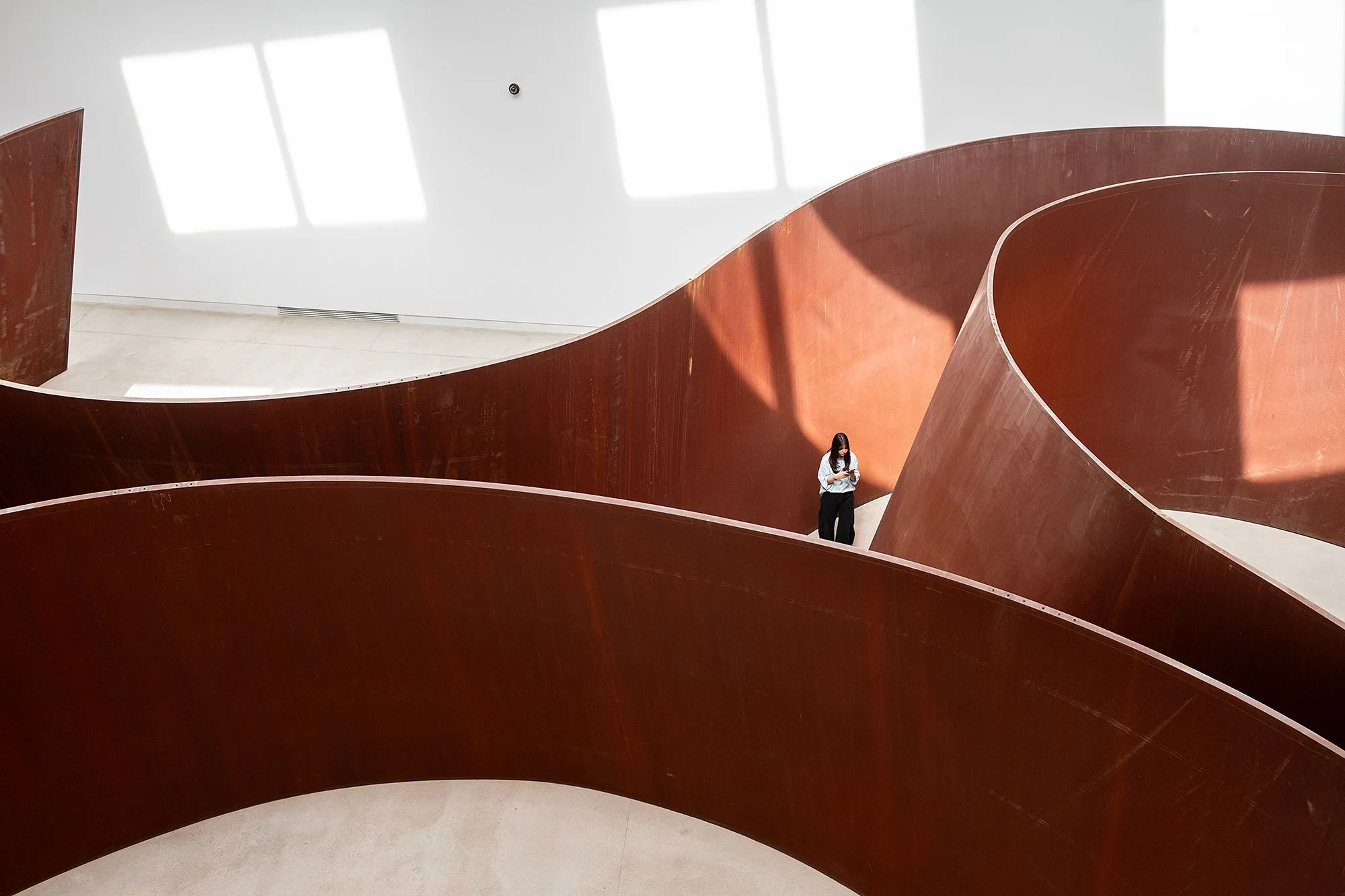
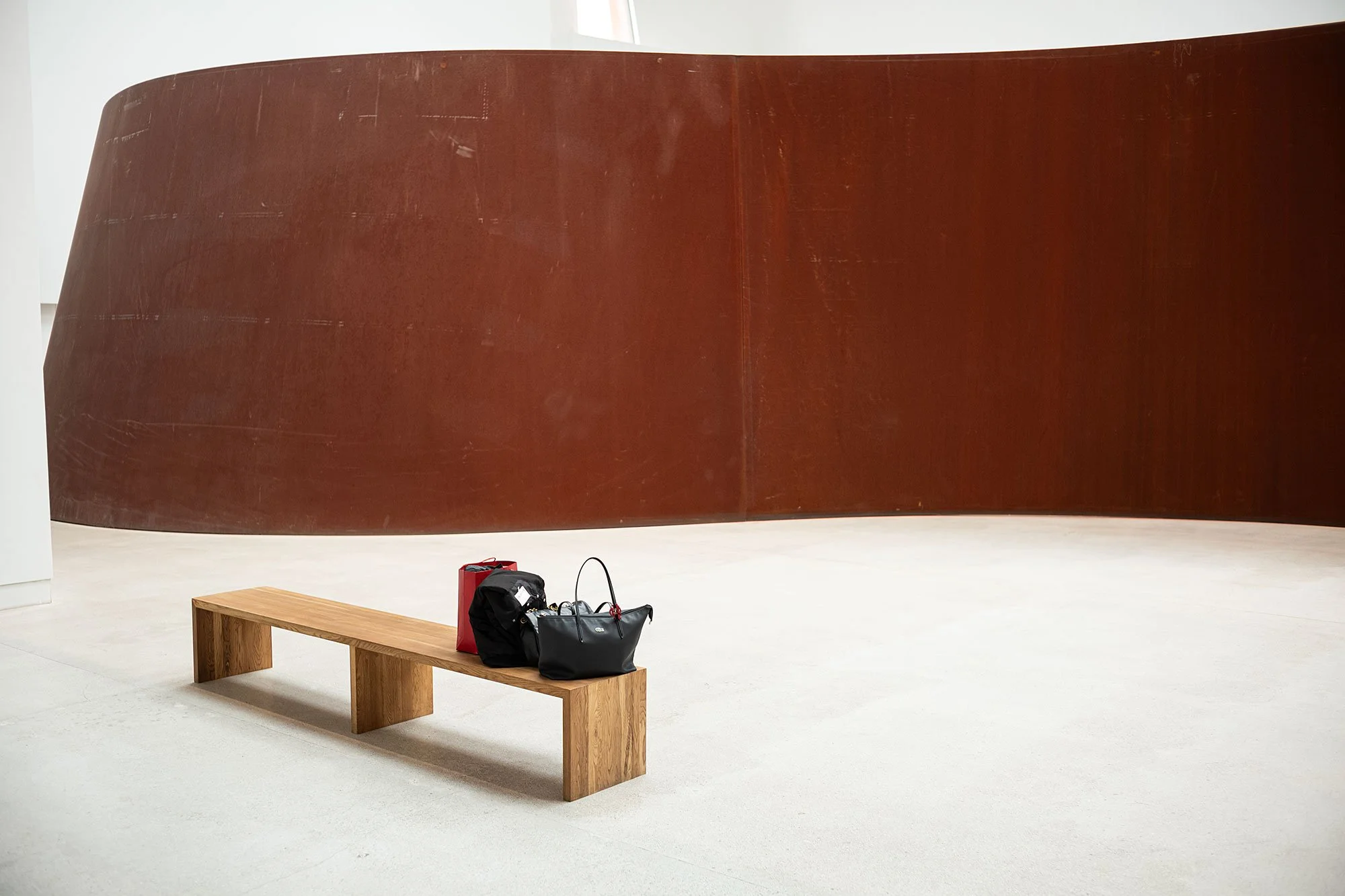
Stepping across the atrium I’m surprised to find Junction by Richard Serra, one of my favorite artists. I hadn’t expected to see any international artists represented, and yet here is one of his massive steel pieces.
It’s a popular spot for people taking photos of each other, the deep orange hues and angled surfaces abstract backdrops for their portraits.
Leaving the ground floor I climb up to the first, following a family up after a man helps another woman take a photo of herself posing on the stairs. It’s a relatively quiet late morning and it’s easy for her to get a professional-looking portrait that wouldn’t look out of place in a corporate annual report or on the back of a book jacket. Unfortunately, I don’t have a chance to look at the results.
From the first floor there’s views down to the Richard Serra sculpture below. It’s fun watching various people navigate the spaces between the shapes, and fun to watch impromptu photoshoots staged between friends and games of hide and seek play out between kids. There’s something inherently interactive about Serra’s work, and it’s interesting to see how people experience the art gives it life.
Three galleries run along the length of the first floor, opening up to the left of the hallway. The other side of the museum’s first floor is closed off.
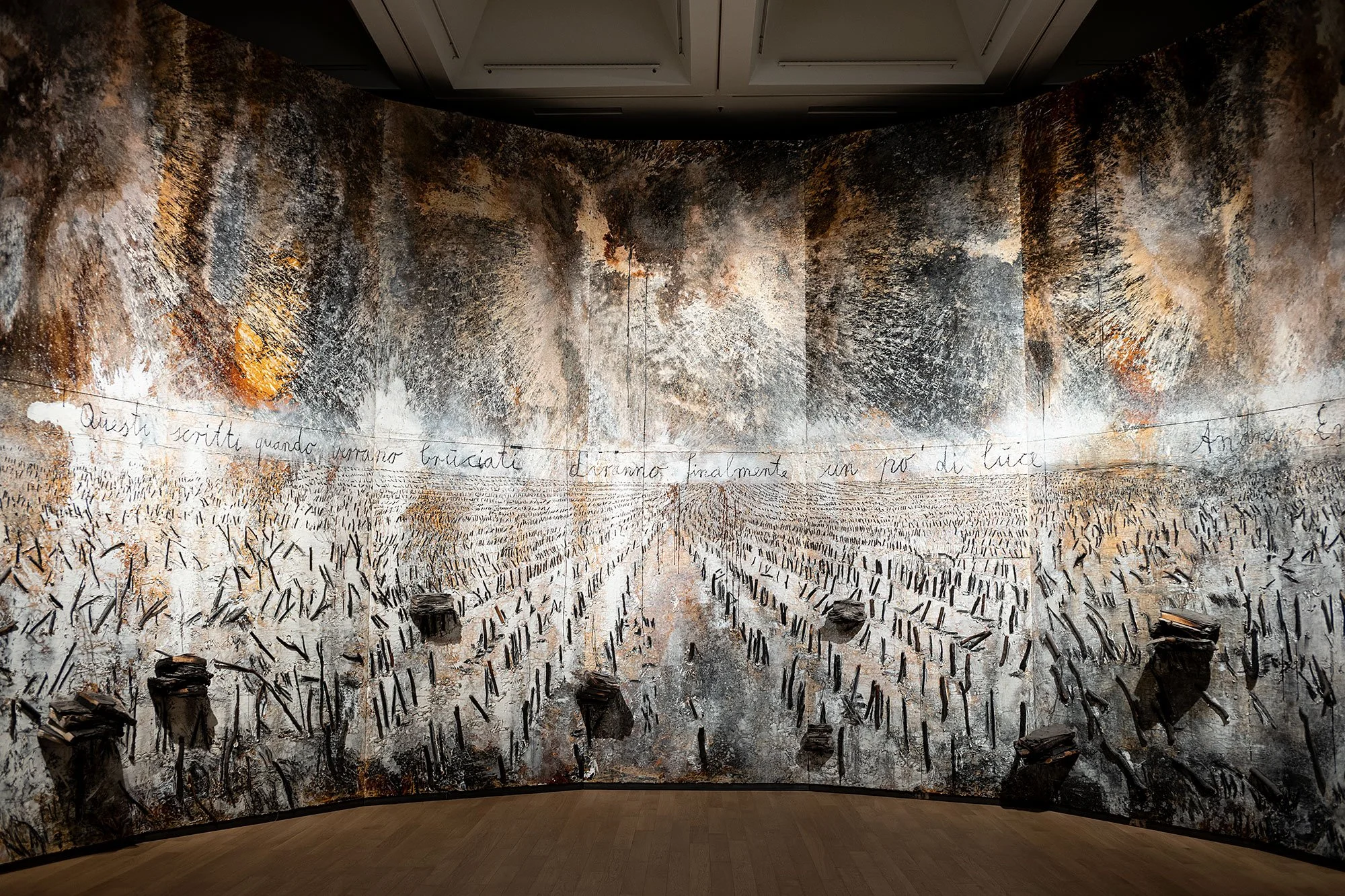
The first gallery houses Anselm Kiefer’s “Questi scritti, quando verranno bruciati, daranno Finalmente un po' di luce (These writings, once burned, will finally cast a little light),” a large curved installation that feels like it’s barely contained in the space that it’s been given.
The next gallery is a surprise as I find Bill Viola’s “Stations,” comprised of five figures submerged playing on video screens reflected in granite slabs on the floor. Viola is one of my favorite artists and I’m excited to see this piece again; I think the last time I had encountered it was at a retrospective of his work at the Whitney Museum of American art decades ago, when I was first introduced to his work. Finding his work here gives me a special thrill.
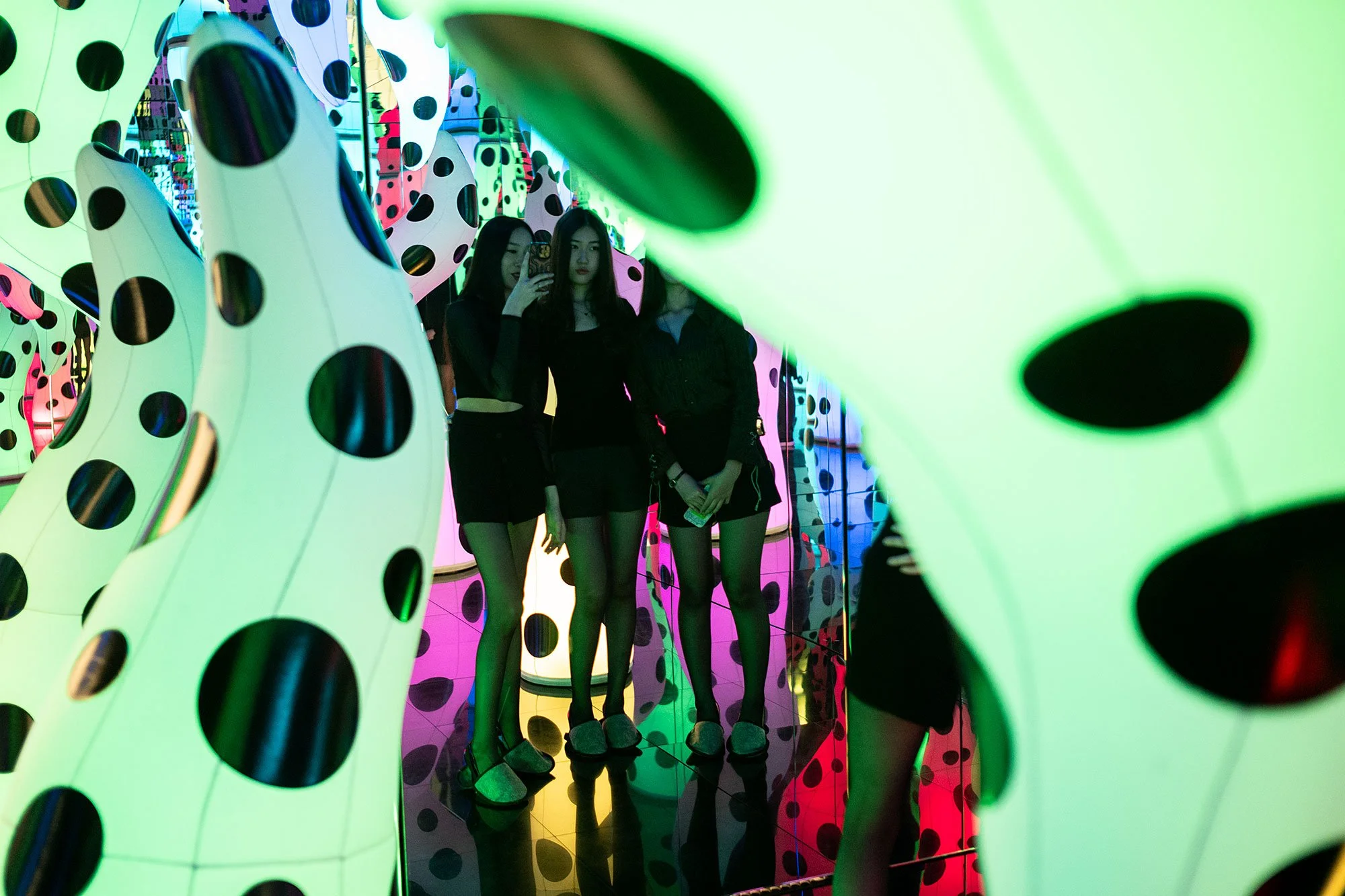
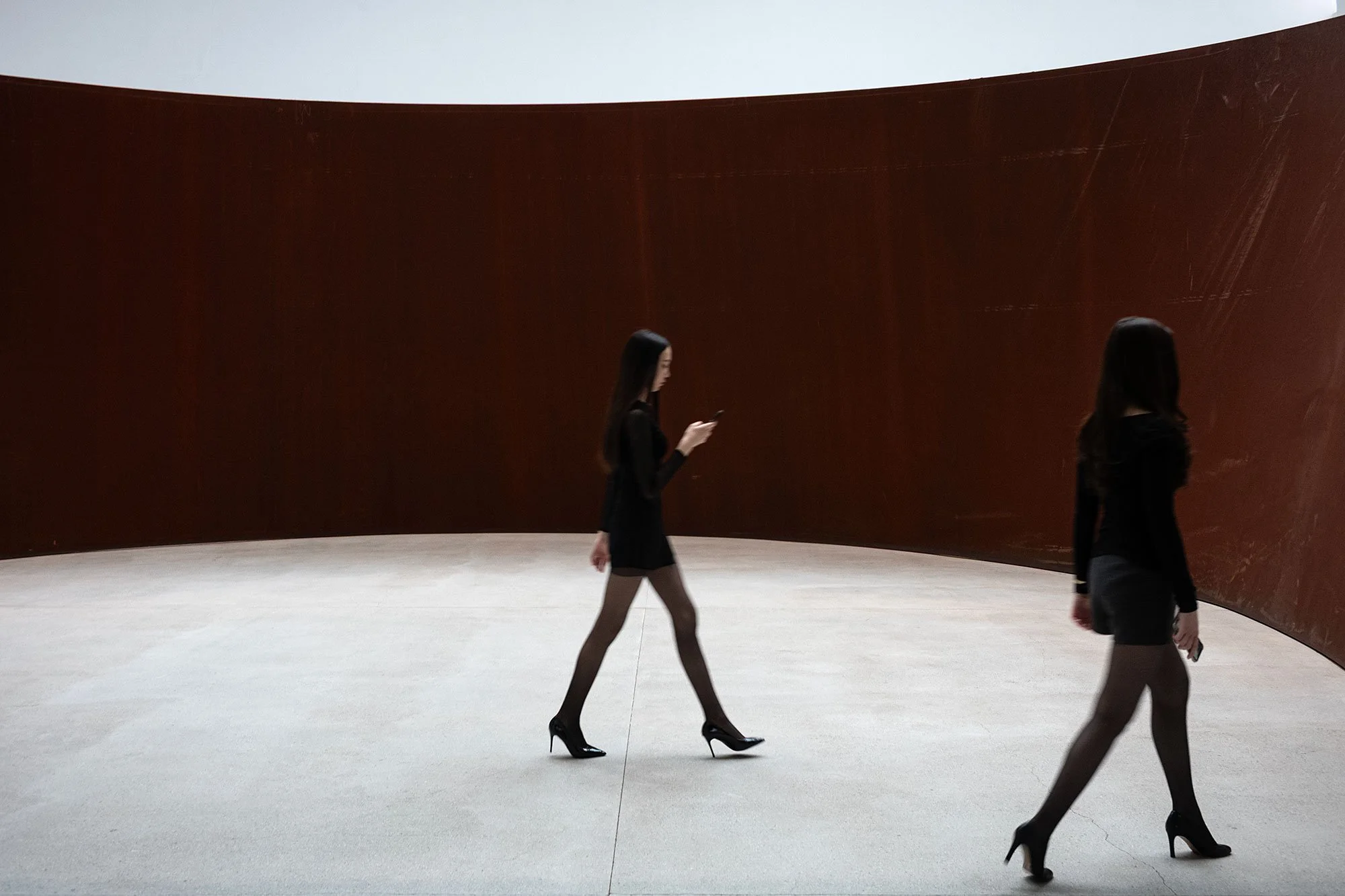
Yayoi Kusama’s “LOVE IS CALLING” takes up the third gallery. Slippers are given to people who are wearing heels. There’s a trio of women dressed in tight black dresses and stilettos who have been using the museum as their photo studio, and I find them slipping into said slippers before walking into the reflective room. They’ve been turning heads throughout the museum, and it’s fun to see their affect on the other patrons.
I had actually been inside the installation a little over a year ago when I was in Melbourne. The National Gallery of Victoria was hosting a retrospective of her work and I managed to get tickets the day I was visiting. It was great seeing her work presented in the museum, the lines far shorter than when she exhibits her work in New York.
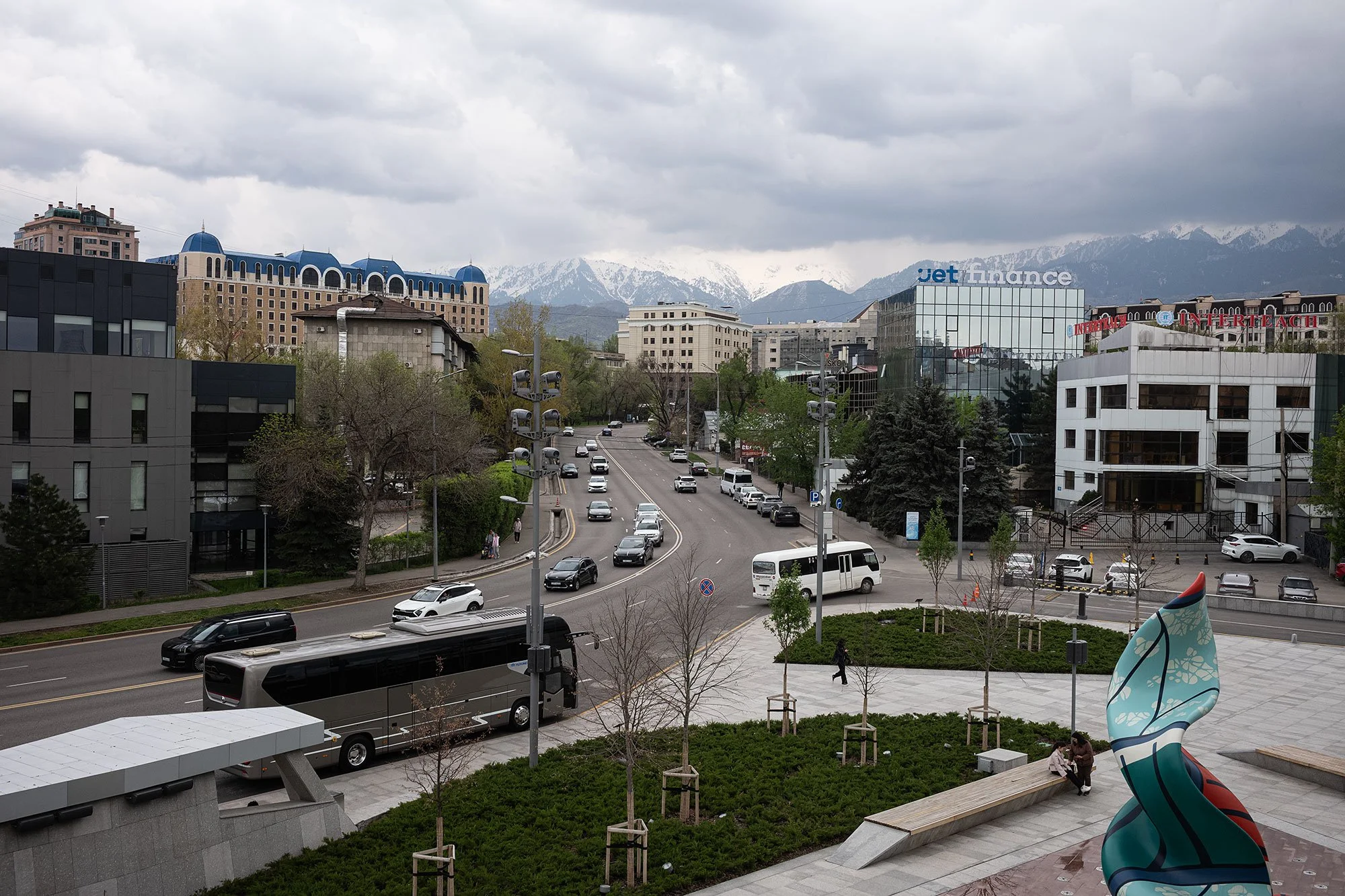
At the far end of the hall a terrace overlooks the entrance and courtyard in front of the museum. The mountains press up against the clouds in the distance. The women are shooting each other against the limestone wall.
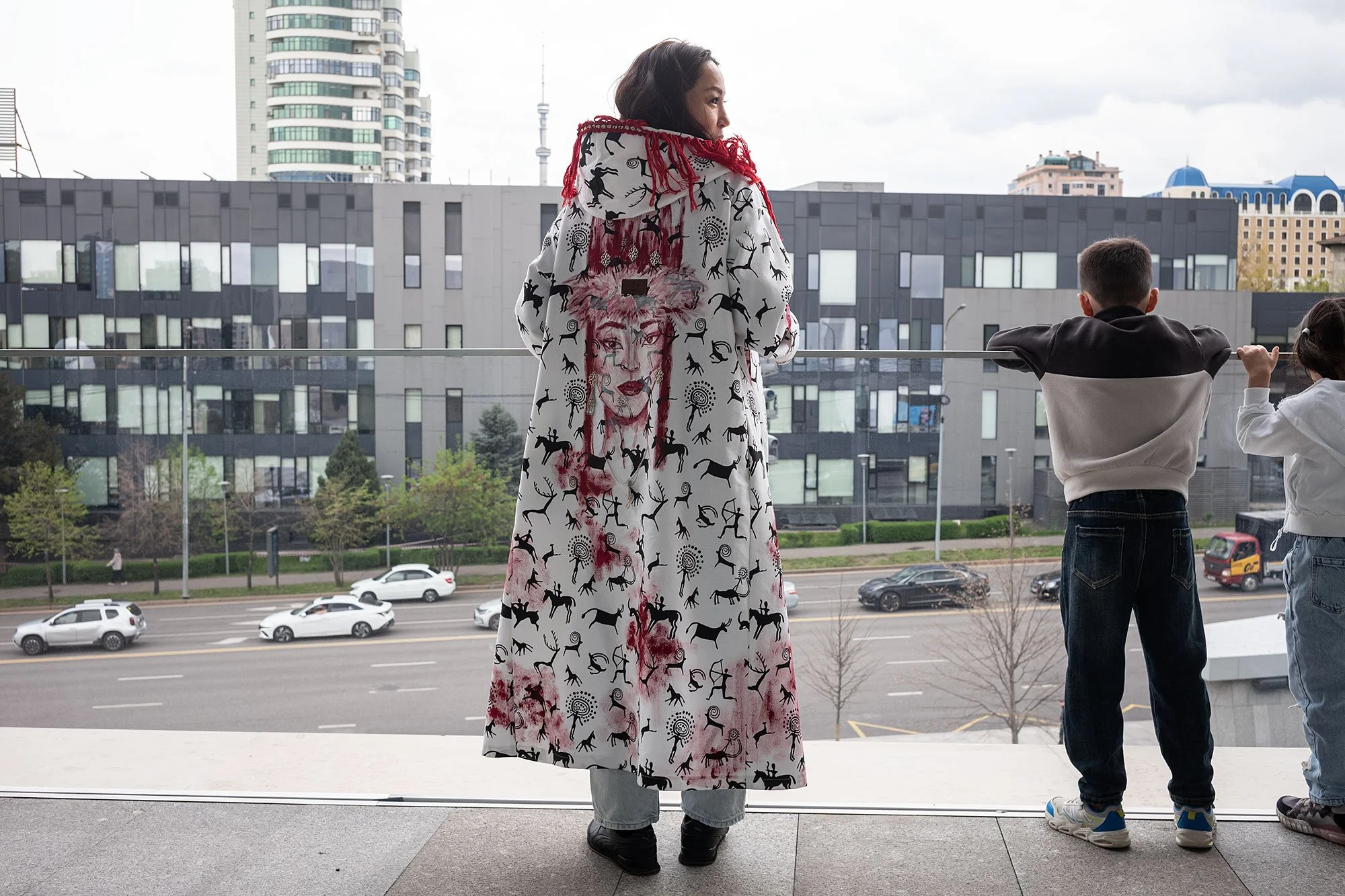
I spot a woman in a beautiful jacket and ask if I can take a photo of it. She agrees, her friend translating my request. Her friend asks me where I’m from and tells me she had visited New York last year for three days before heading to Miami to board a cruise to Mexico. She’d love to go back.
She lives near the museum but it’s her first time visiting. She says that Kazakhstan is very concerned and interested in preserving old traditions but she loves that this museum looks to the future. She holds my hand the entire time we converse.
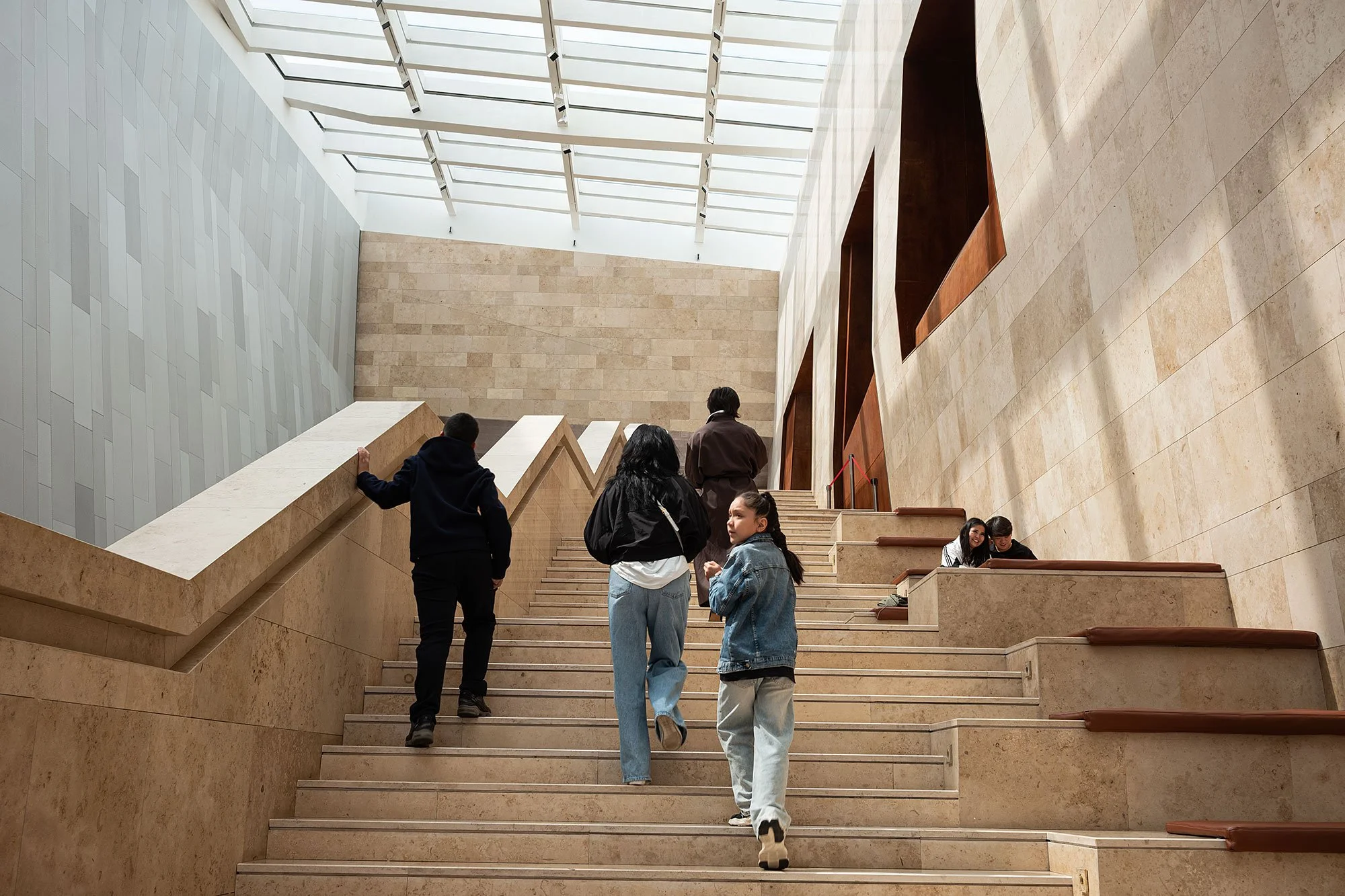
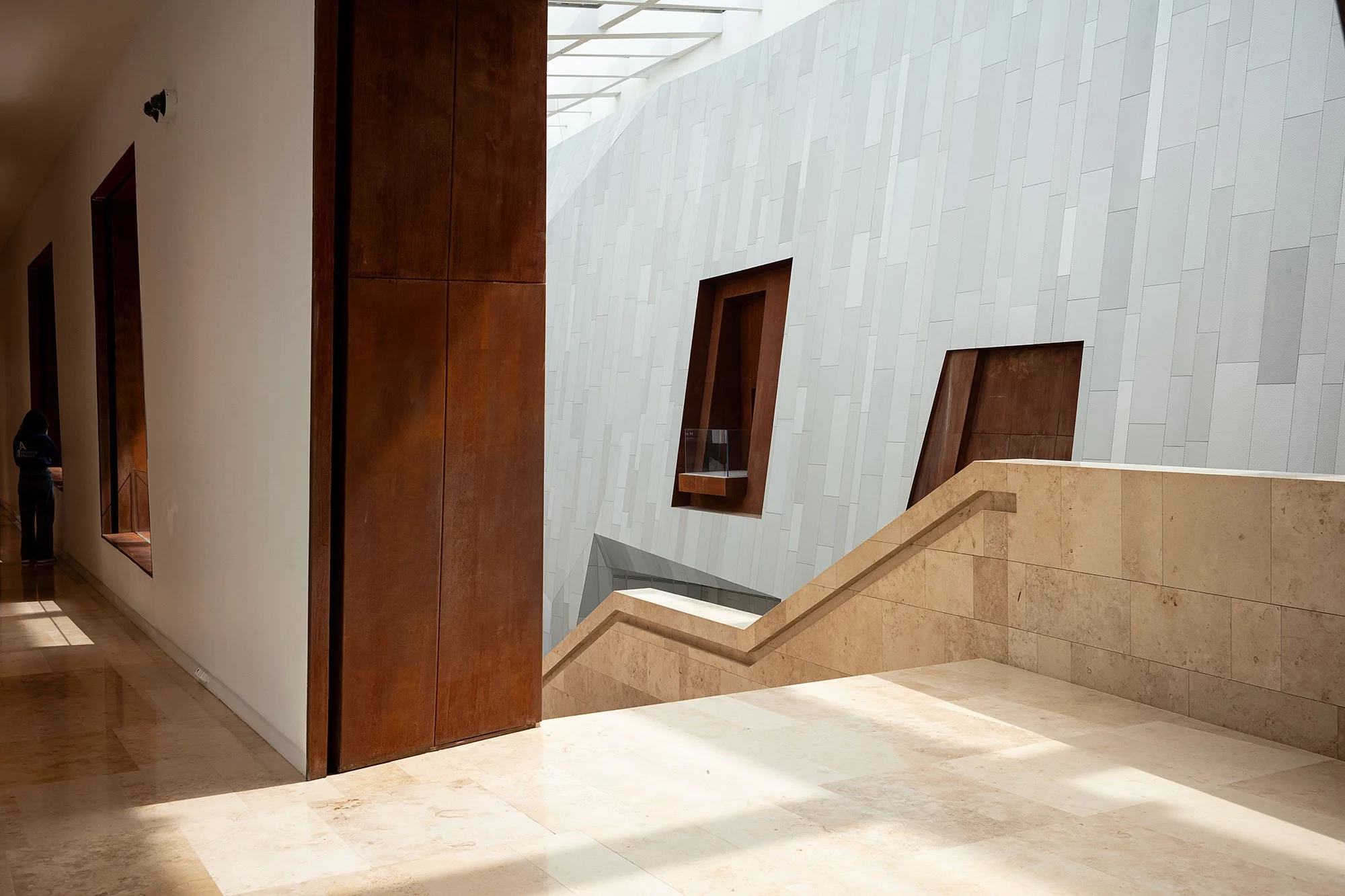
Walking back to the main staircase I take time to admire the architecture, the space, and the materials. It’s a warm, welcoming space, and I like the fact that there are seats built into the stairs for people to sit and linger on the sides.
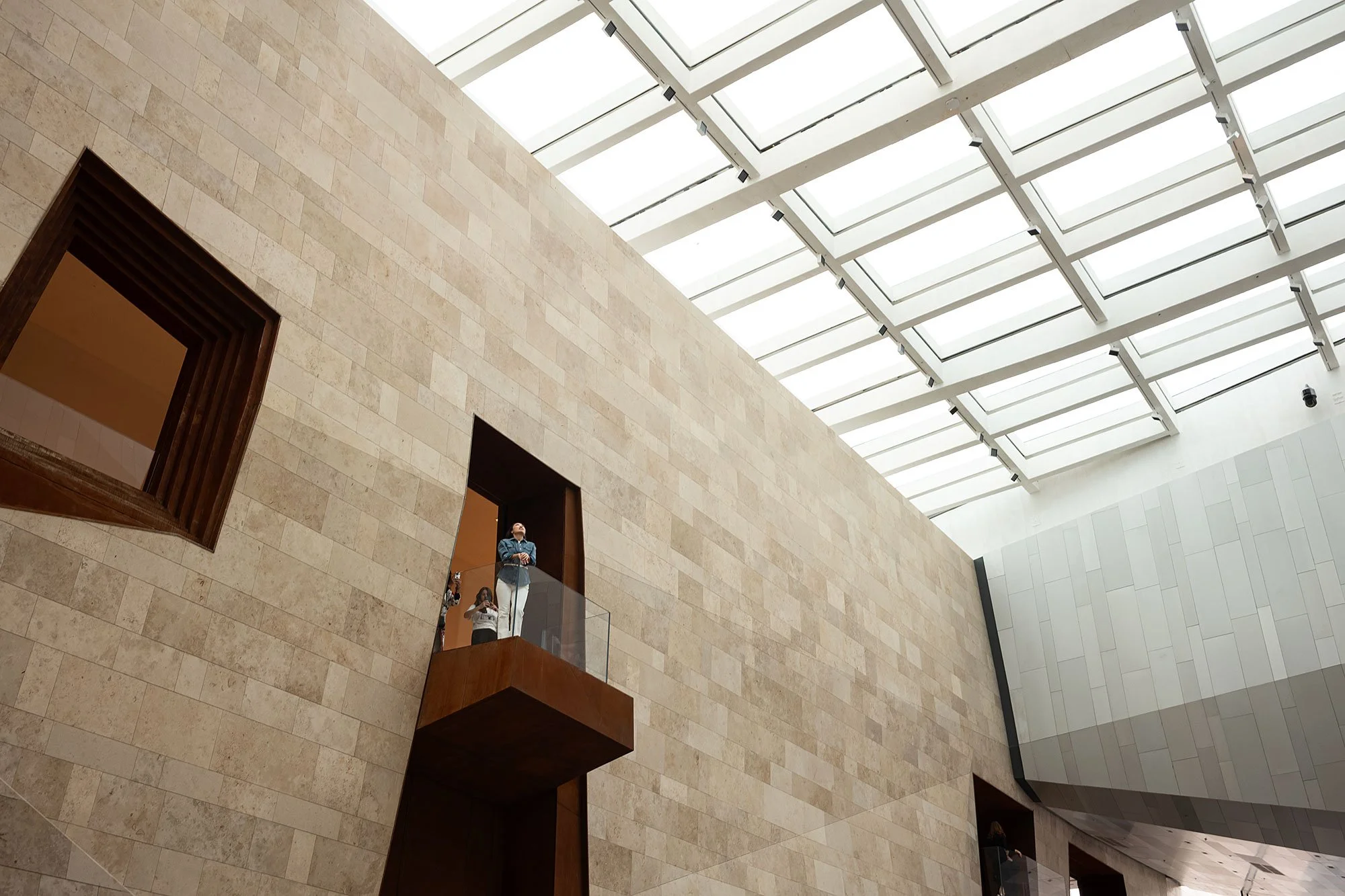
I walk down the stairs and wander once more through the Almagul Menlibayeva retrospective and then realize that I haven’t spent as much time with the permanent collection. Crossing the atrium I look up to see people engaged in photoshoots on the small balcony above me.
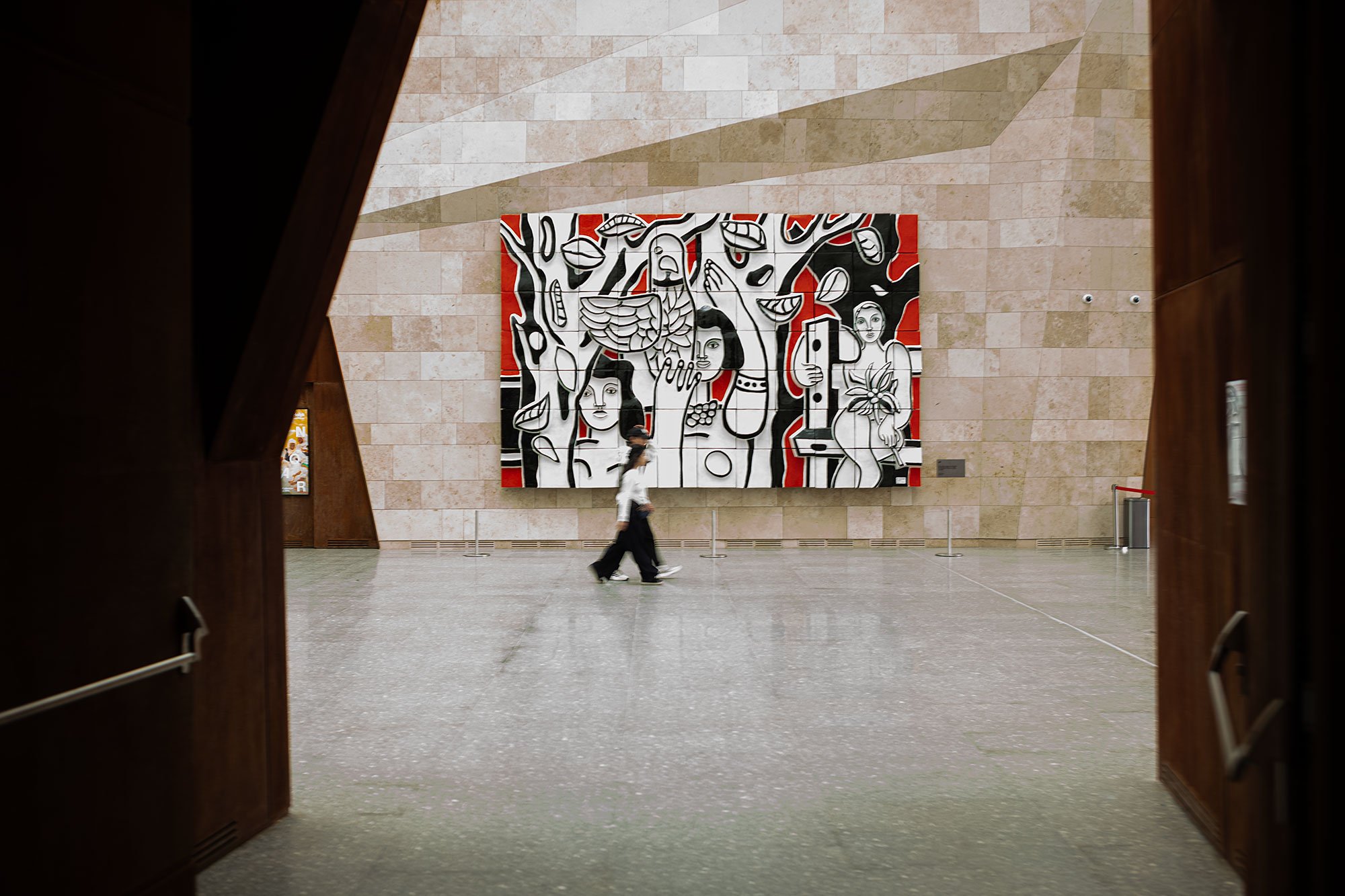
The permanent collection is an education as I’m introduced to a slew of new artists. The ceramic sculptures of Serenjab Baldano adorn one wall. The assemblage sculpture by Kazakh artist Georgy Tryakin-Bukharov hangs in the middle of the room, a figure balancing objects with the body of a cello. Uzbek artist Dilyara Kaipova’s "Paxta Yogi - Cottonseed Oil" looks down from its perch high on a wall and paintings by Kazakh artist Aisha Galimbaeva hang on suspended walls anchored to the floor and ceiling.
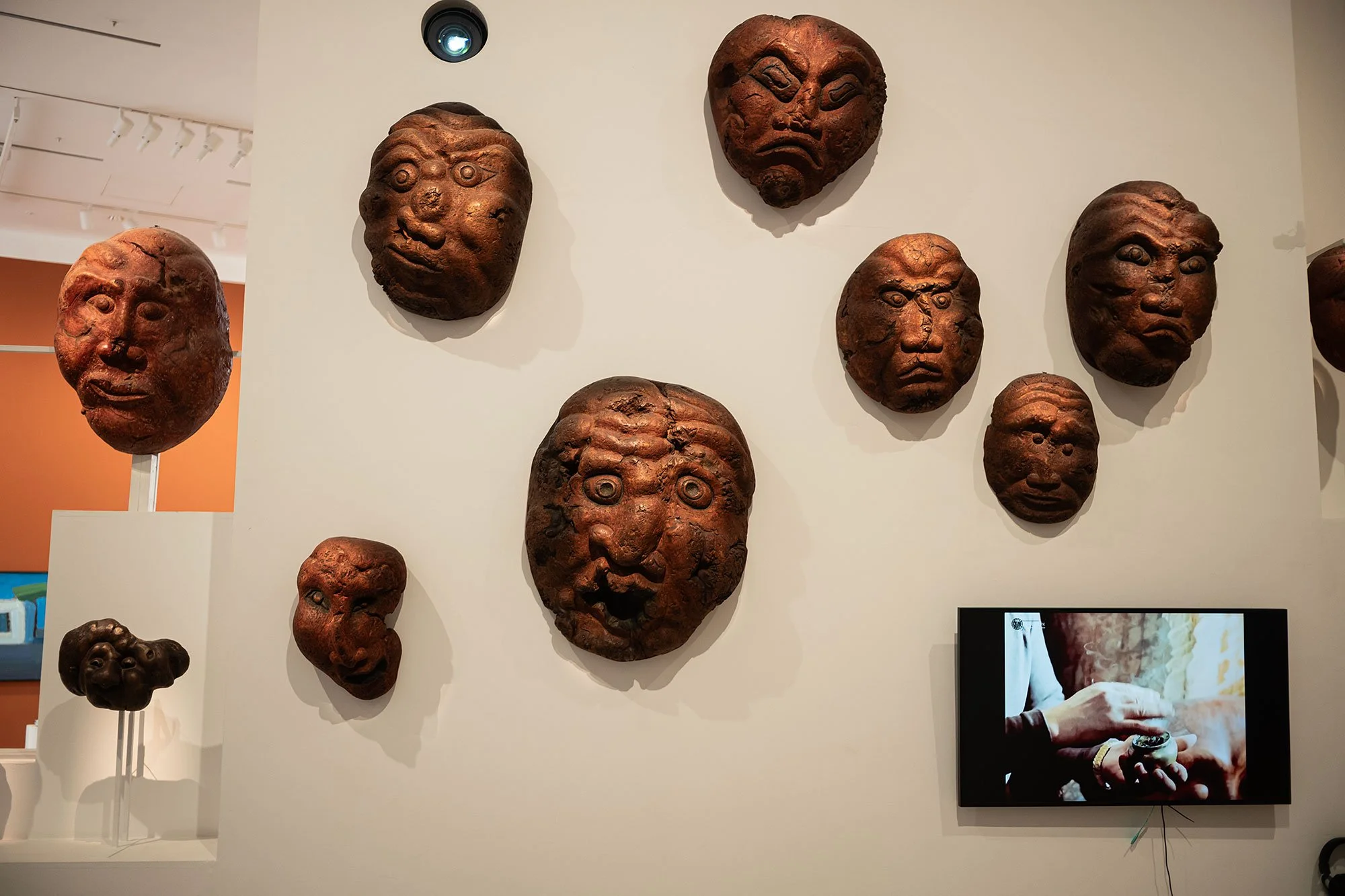
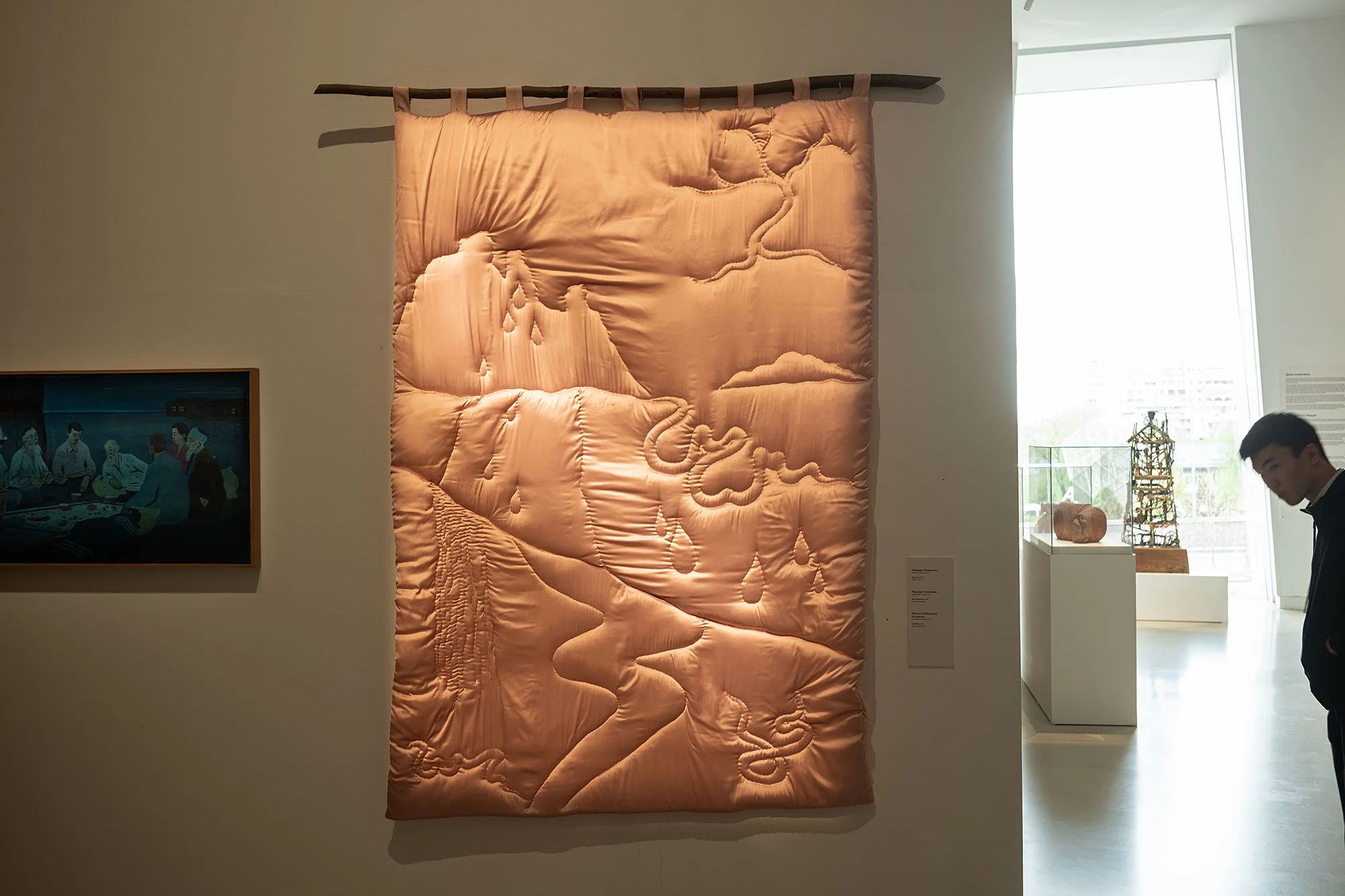
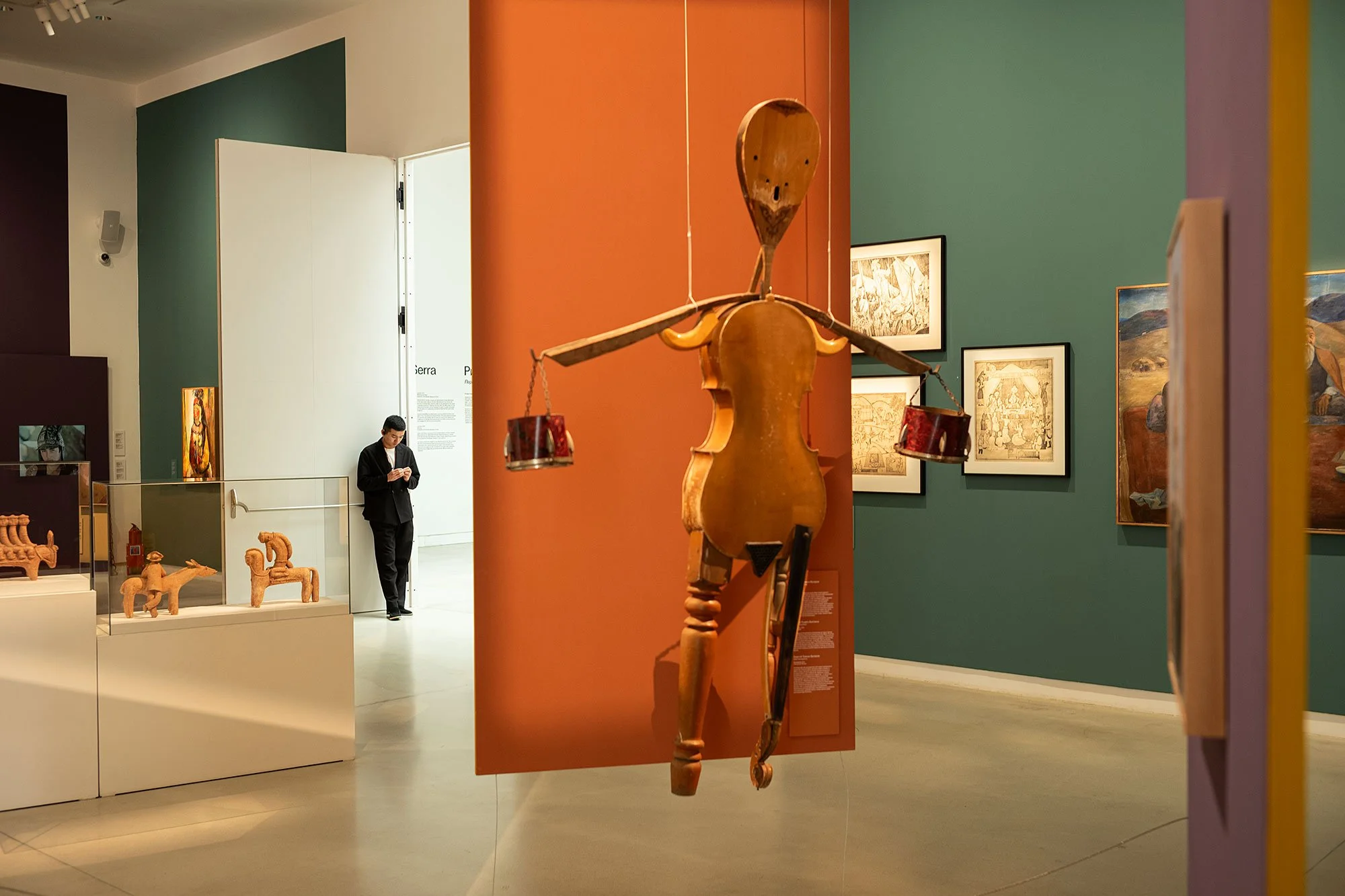
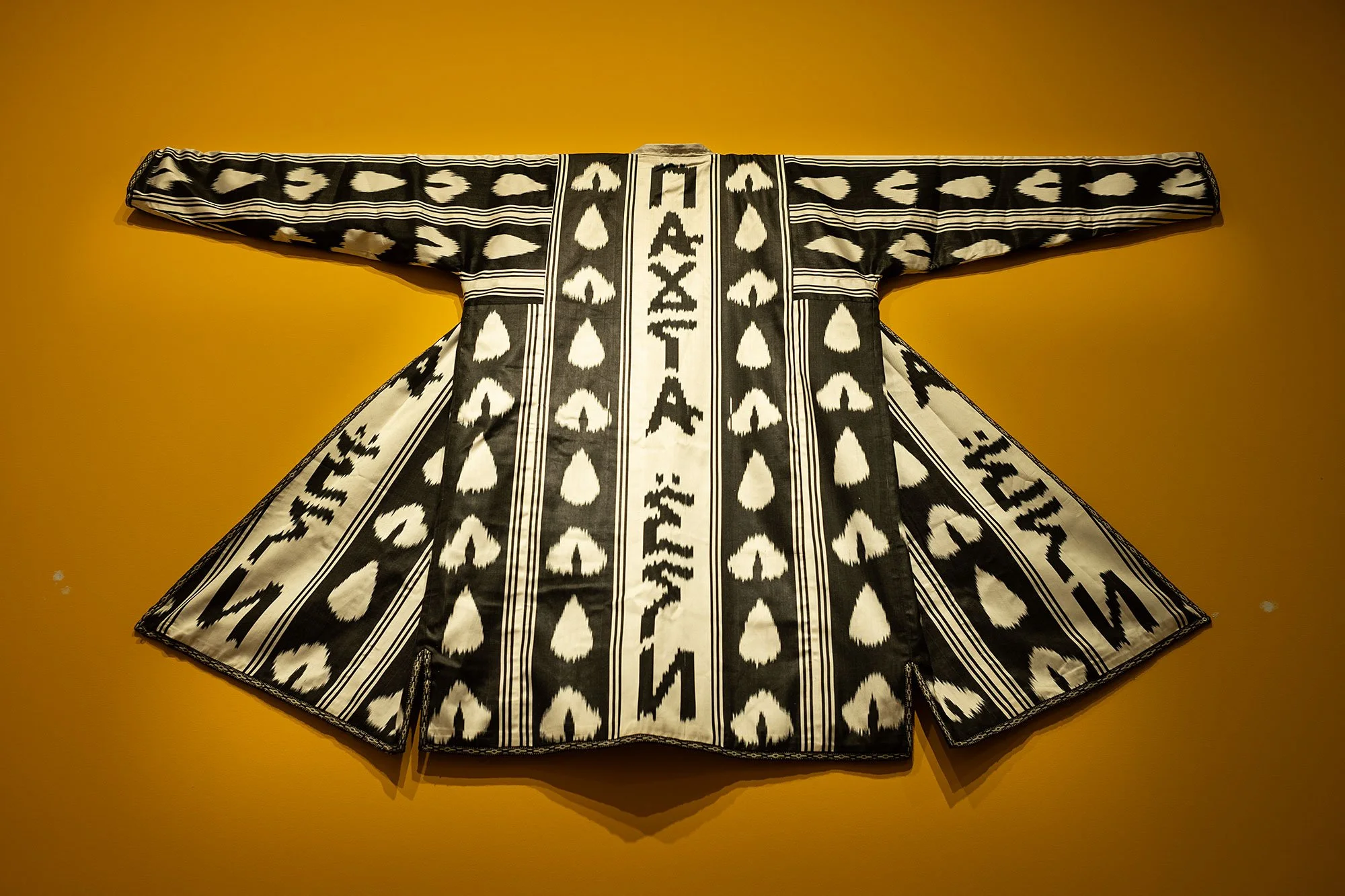
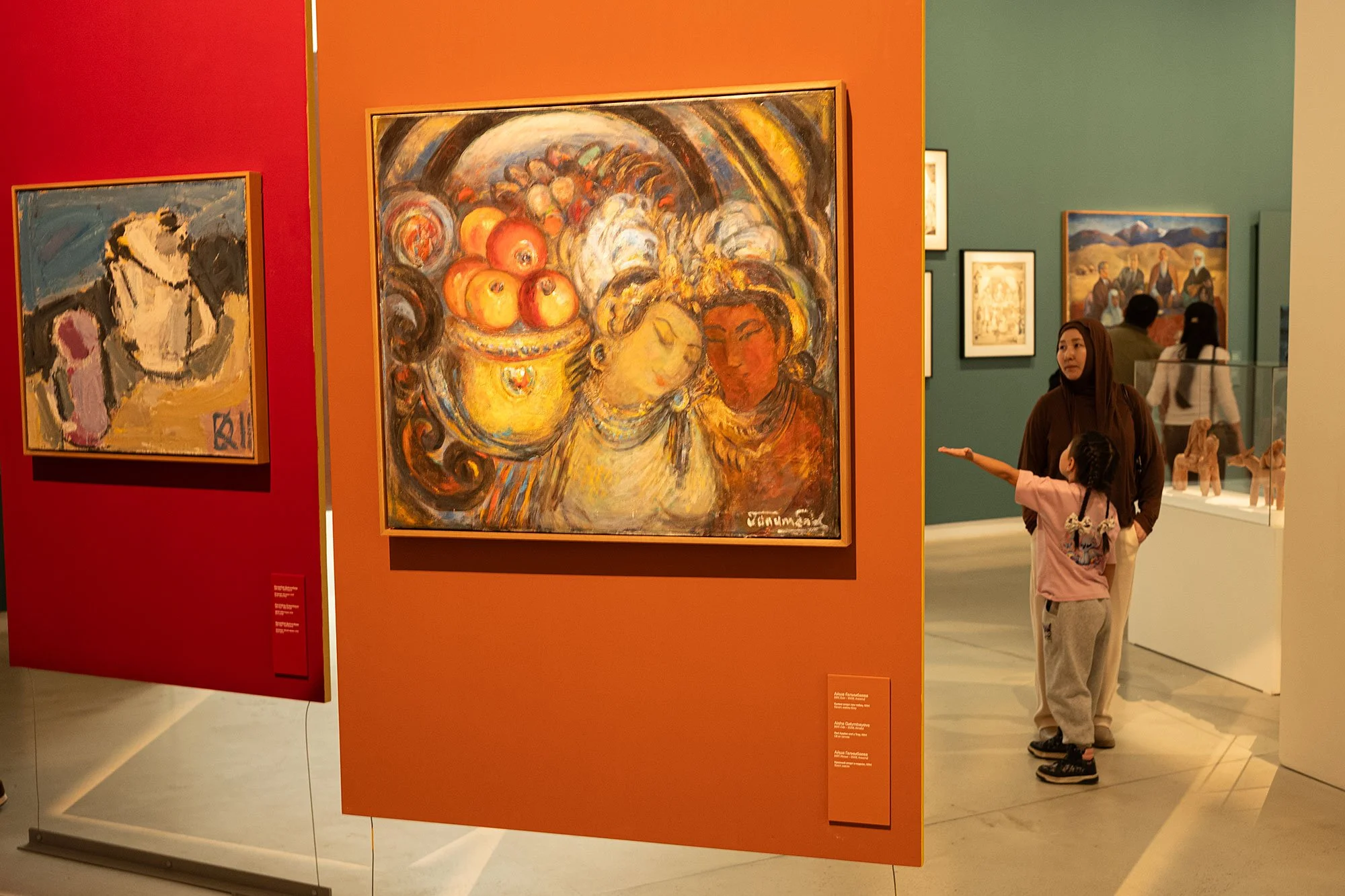
On my way out I decide to spend a few more moments with the Serra piece to find the three statuesque women preparing for their photoshoots. They walk past me like Alberto Giacometti sculptures freed from their confines to explore the galleries in which they’re usually held.
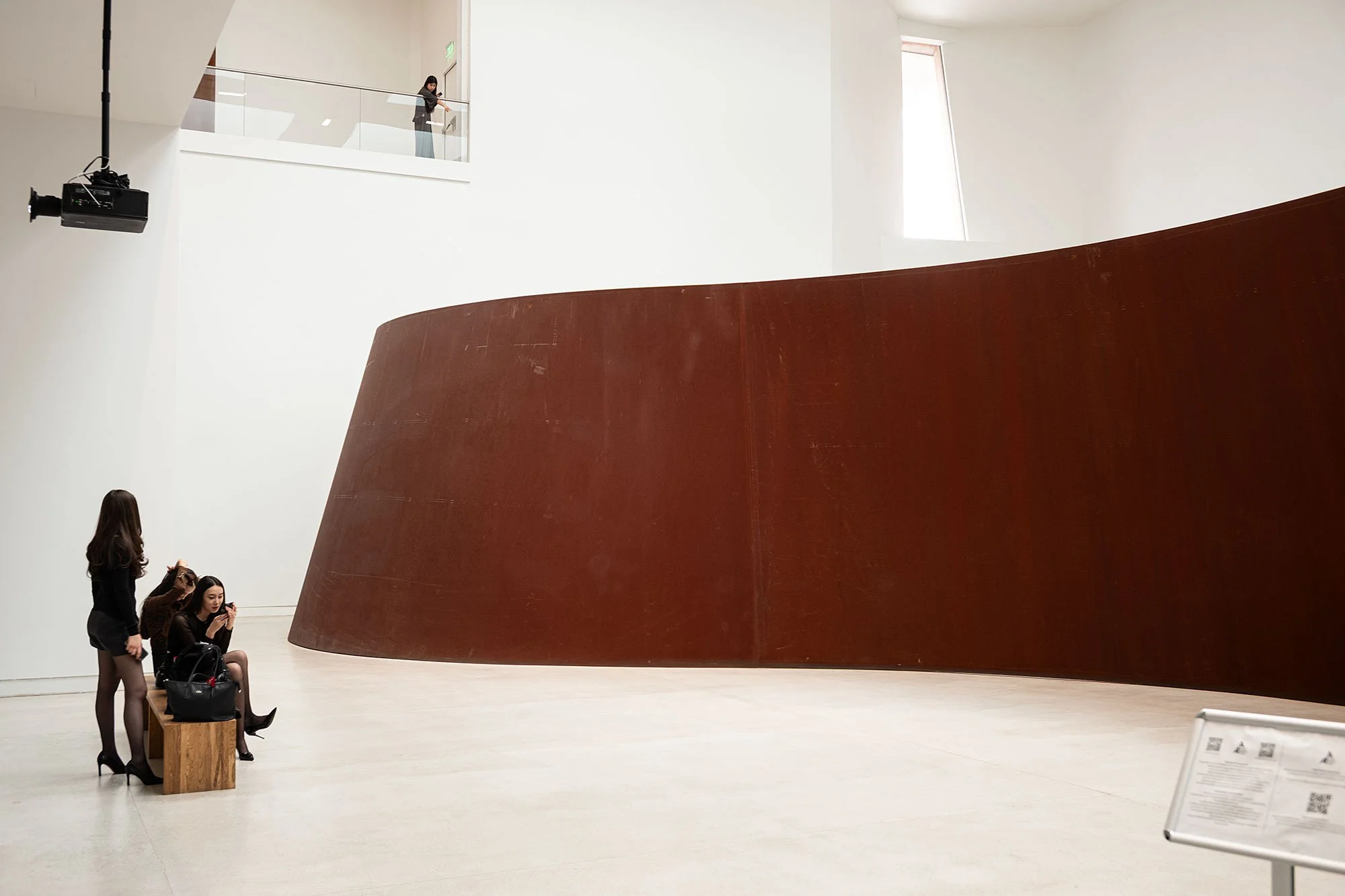
I wander to the gift shop in hopes of finding a book of Almagul Menlibayeva’s work, without luck. There are a few postcards and I buy one from her silk road series. Outside, the day has become overcast. I’m a little hungry and decide to stop into the cafe for a snack.
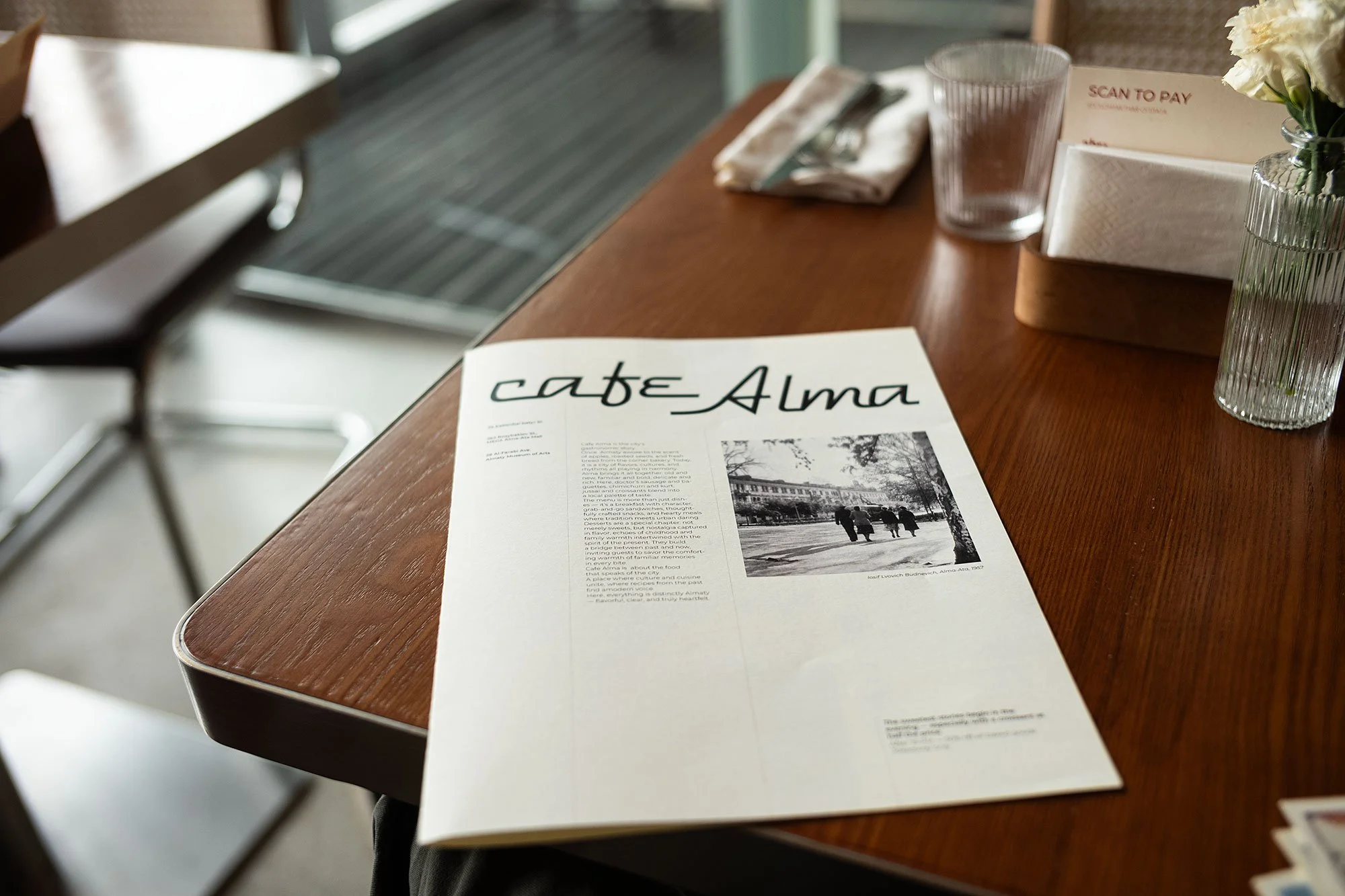
The food in the cafe is delicious. It reminds me of the Café Sabarsky inside the Neue Gallerie in New York City for how the menu represents the culture and for how good it is. I order a crisp salad with a poached egg and love how dill flavors the dish and grounds it in a part of the world that instantly springs to mind when I taste it.
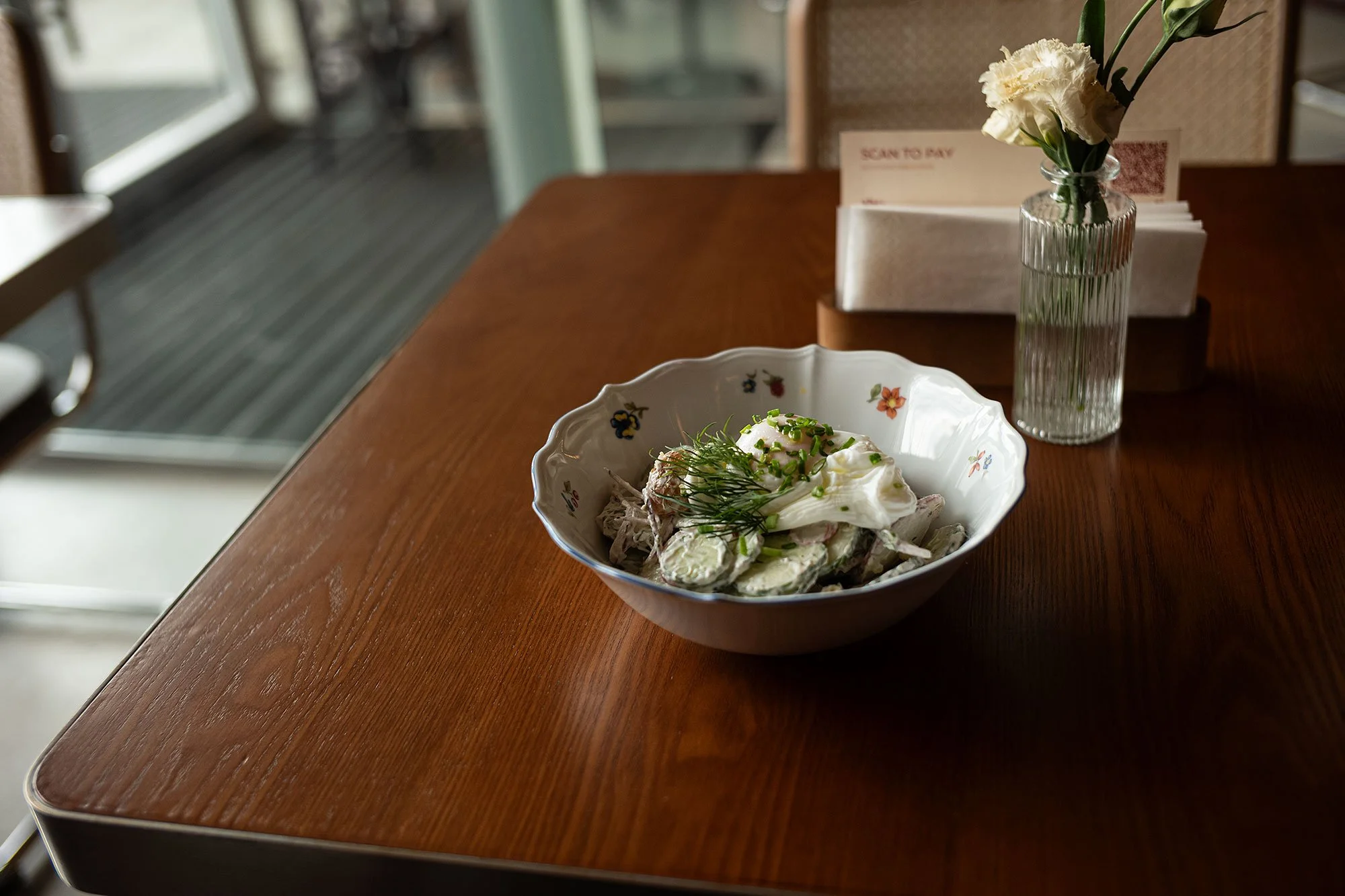
I already feel like I don’t have enough time in the city. I want to come back to linger and explore more of the menu. I also want to come back and revisit the museum, immersing myself once again amongst artists with whom I’ve only just become acquainted.
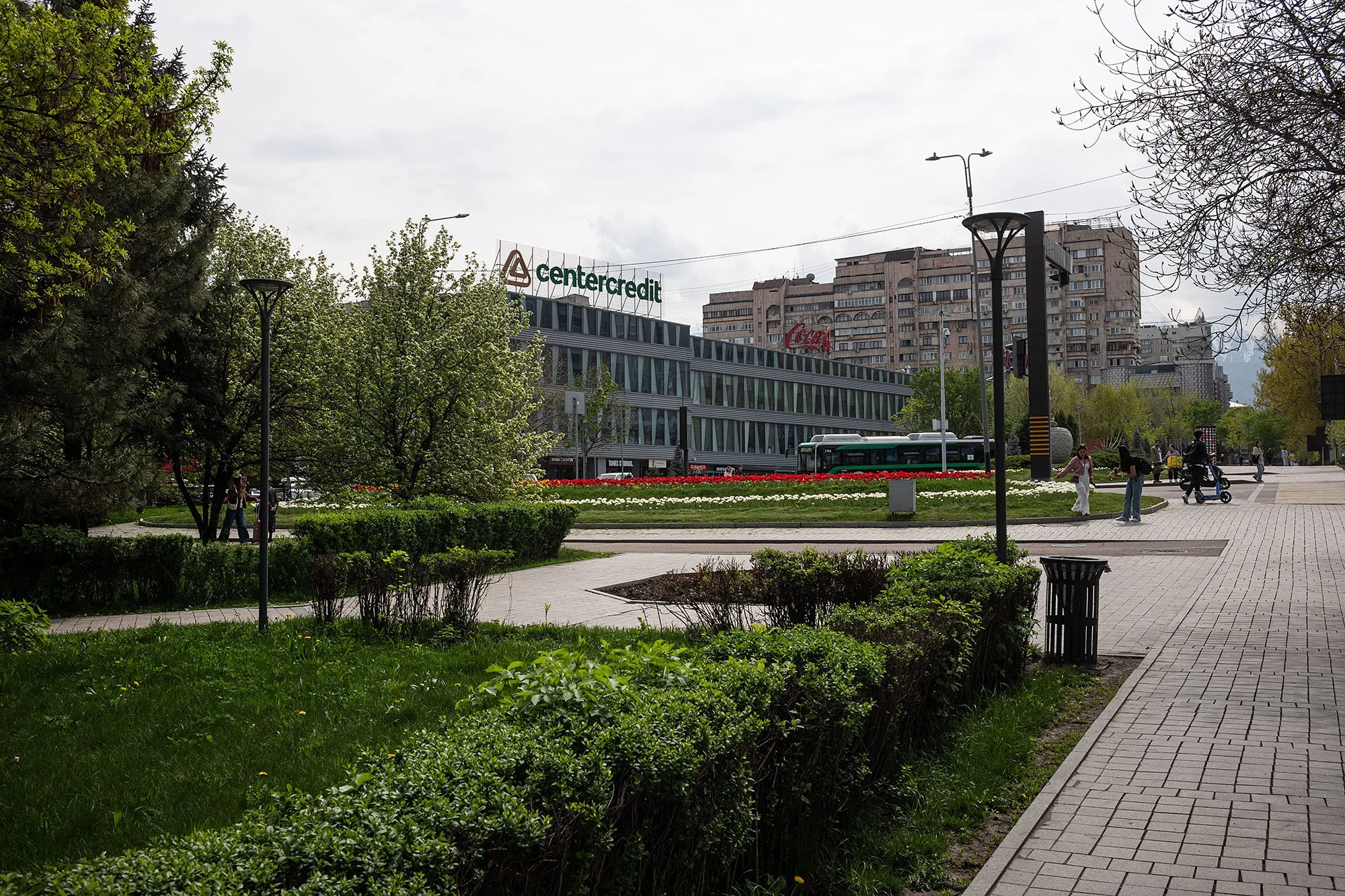
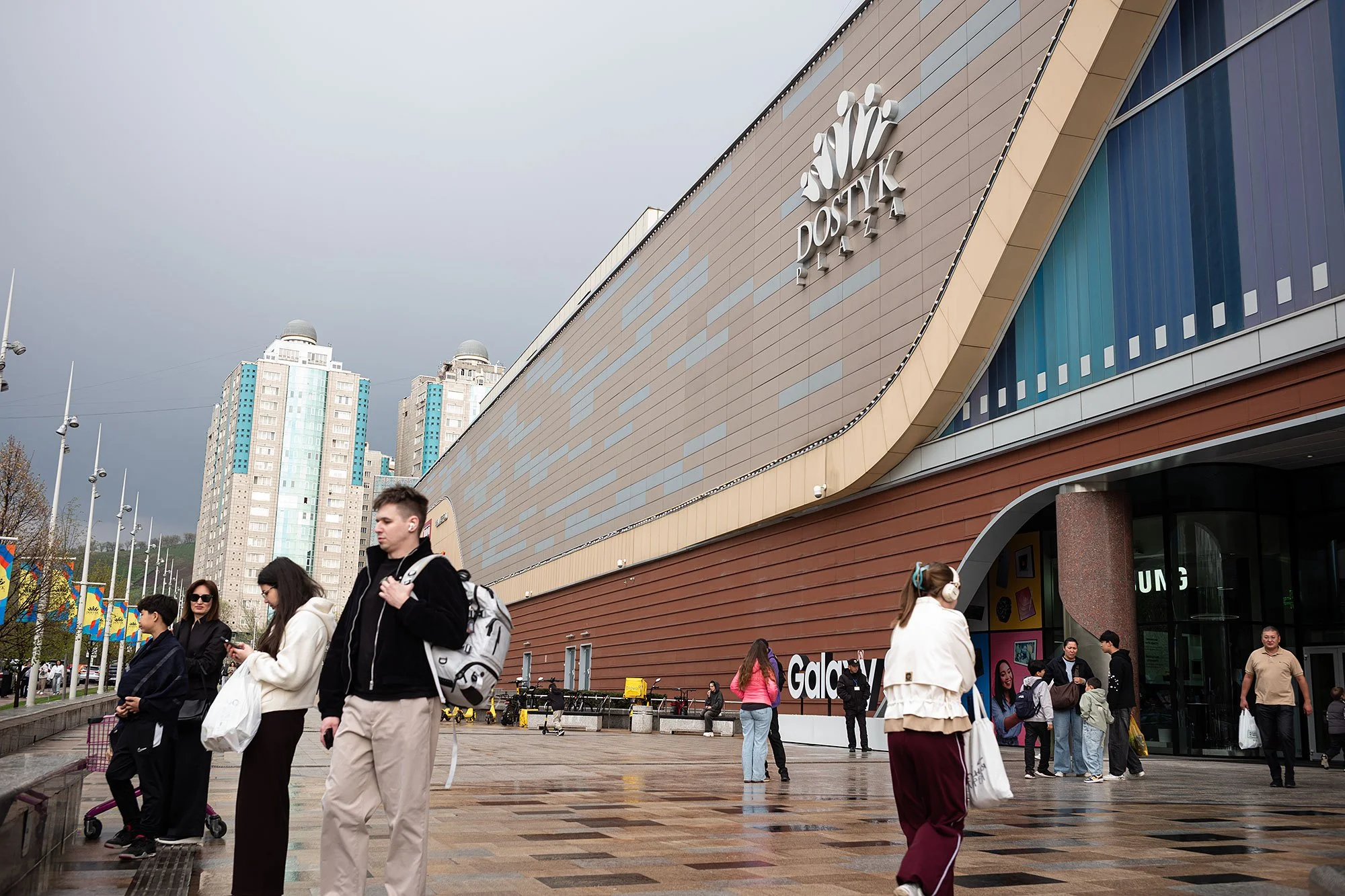
I walk to Dostyk Plaza to check out a shopping mall. It’s modern and the usual mall brands are well-represented. I’m looking for new insoles for my shoes as I’ve somehow managed to cause one to slip awkwardly, but I can’t seem to find any. I need a CVS.
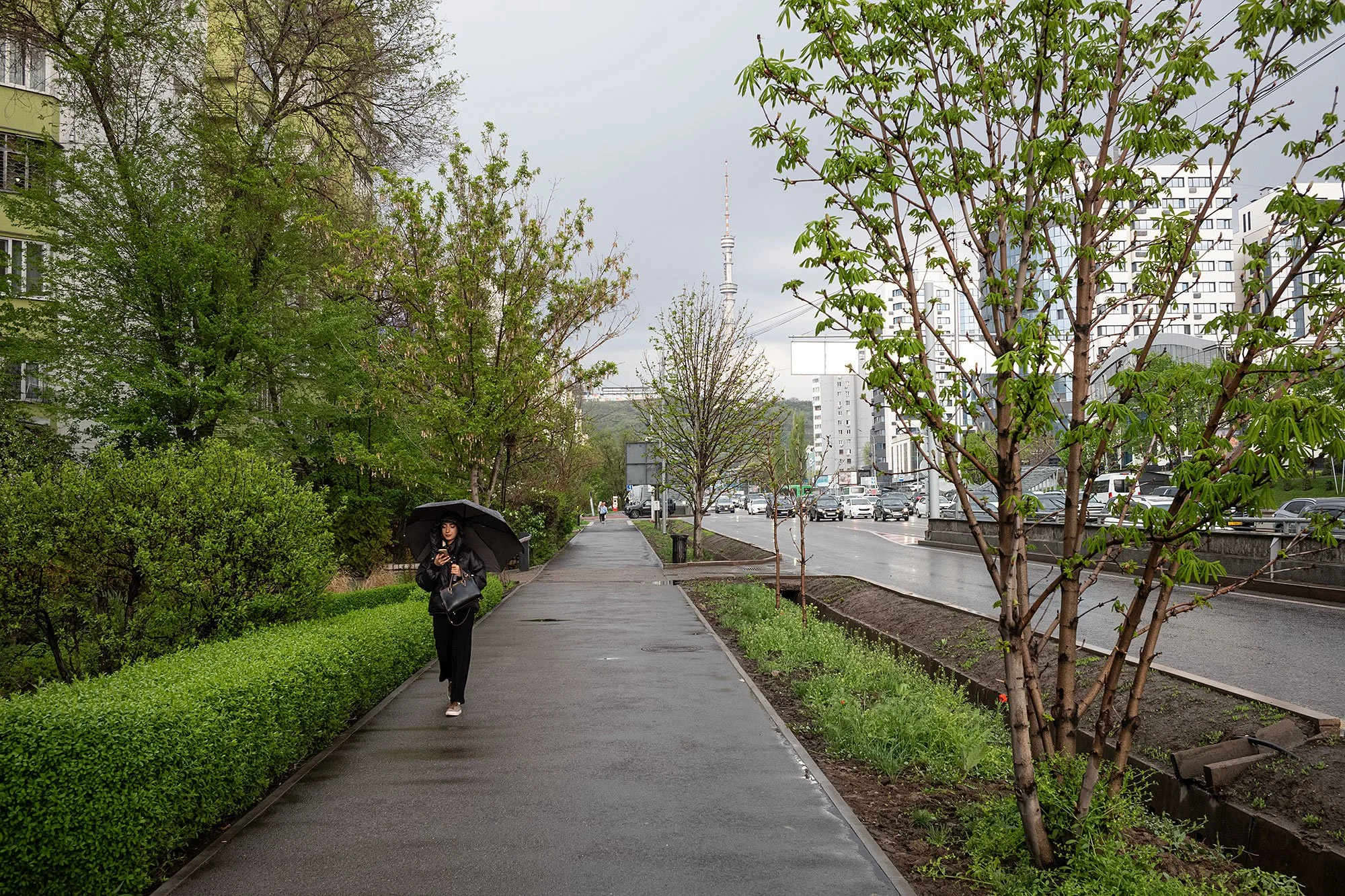
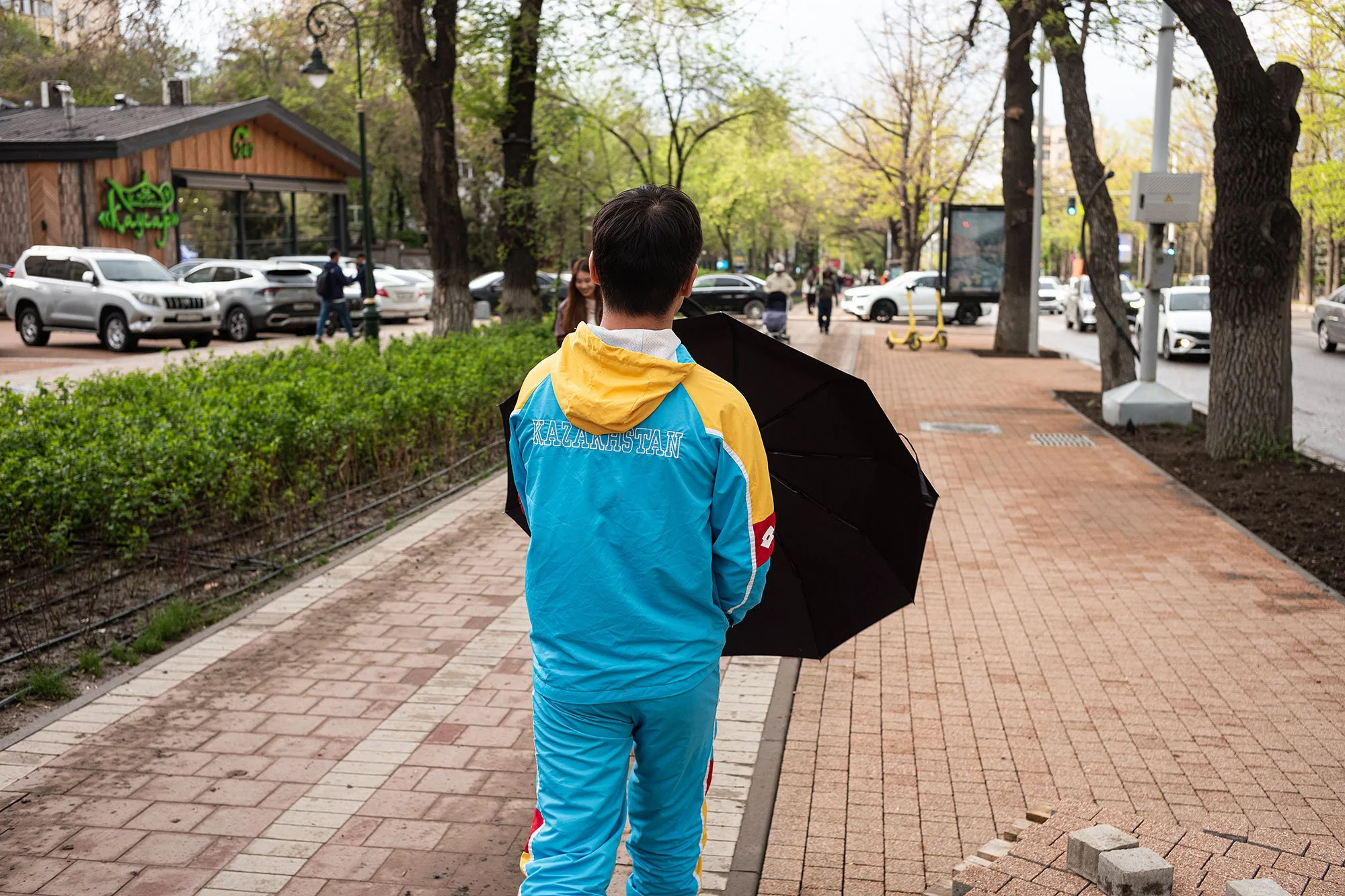
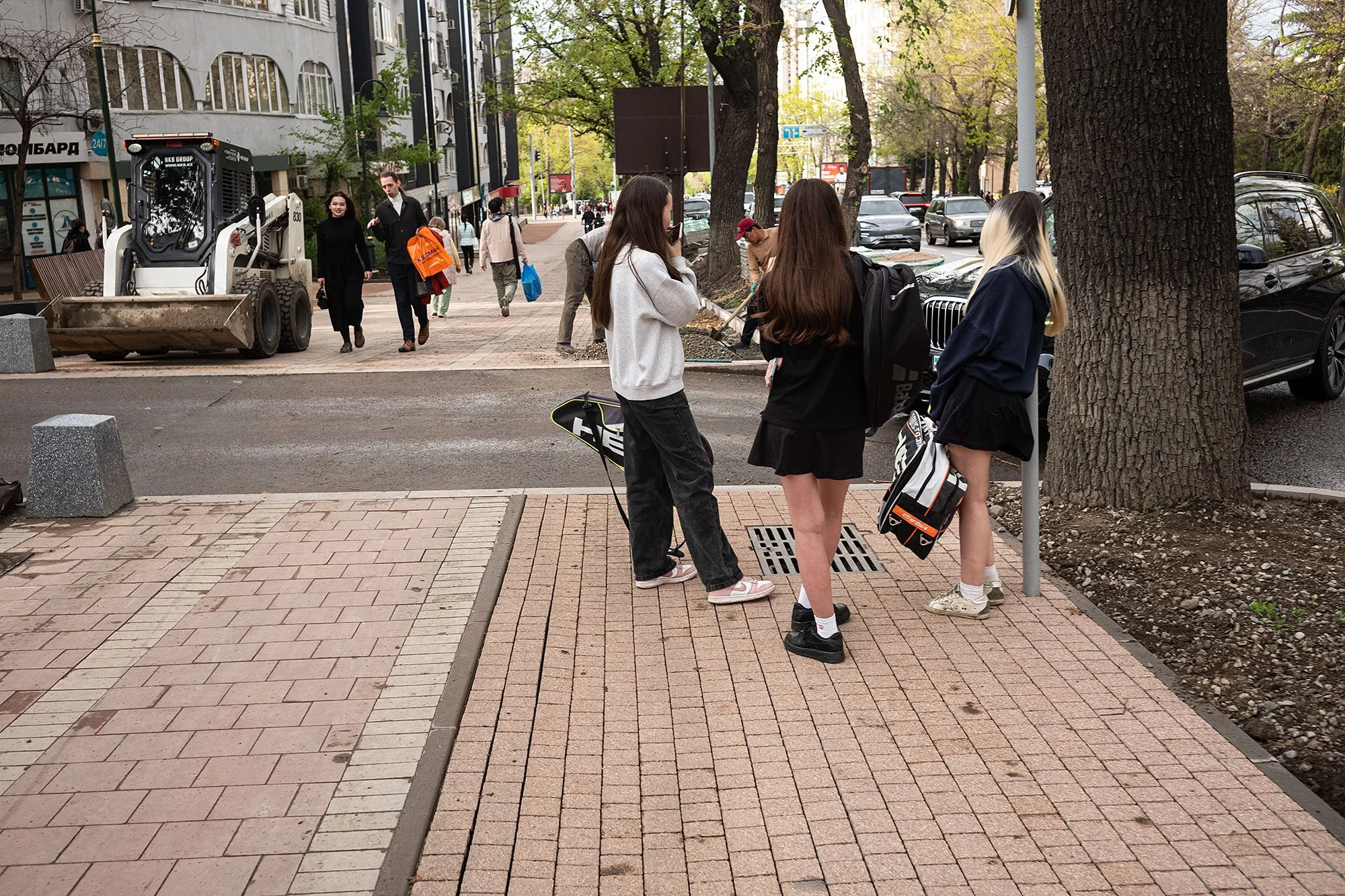
Walking home down Dostyk Avenue I pass the Children's Republican Palace, an institution from the Soviet Union to provide after-school education for children, on my way to Abai Square.
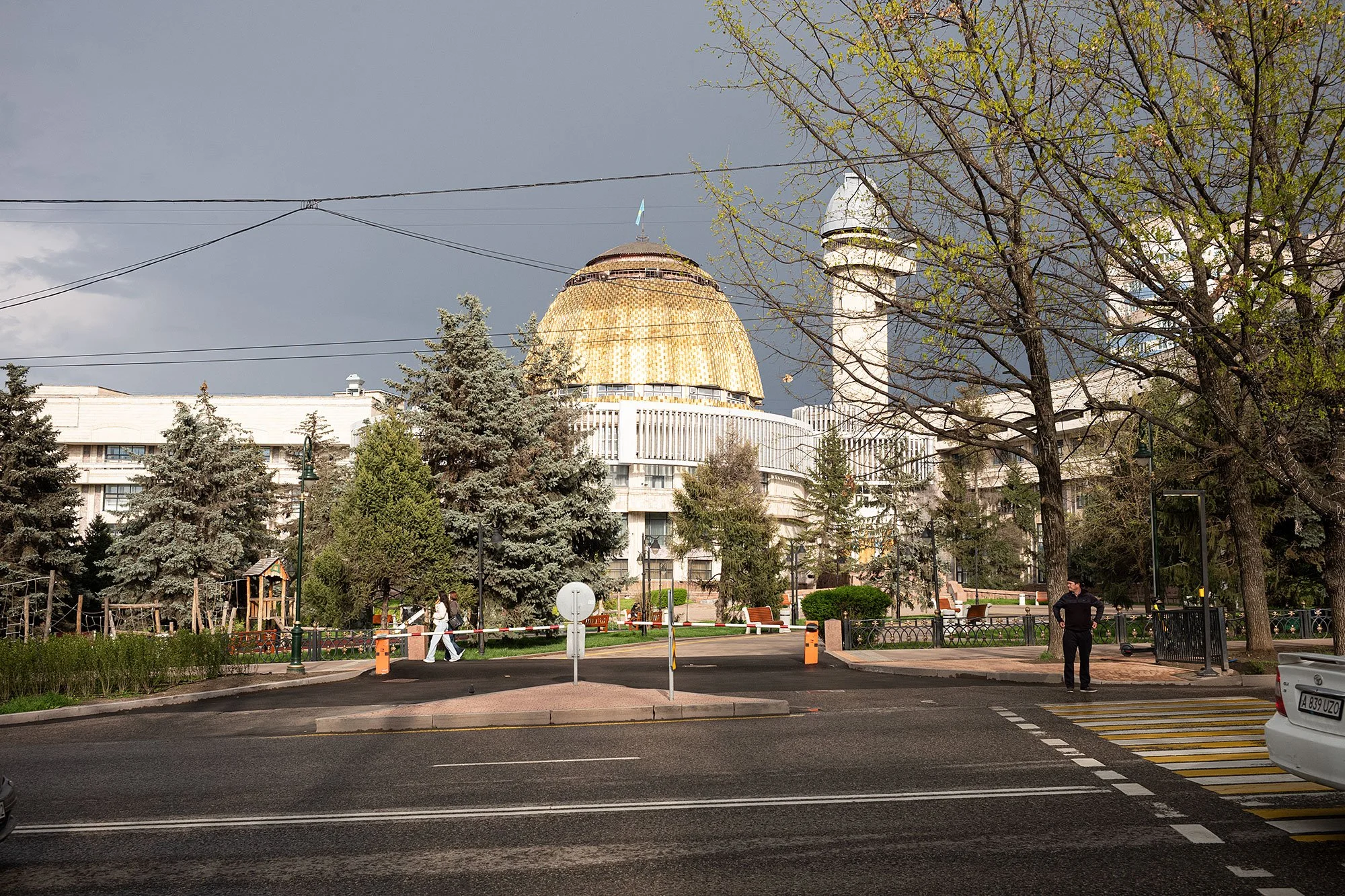
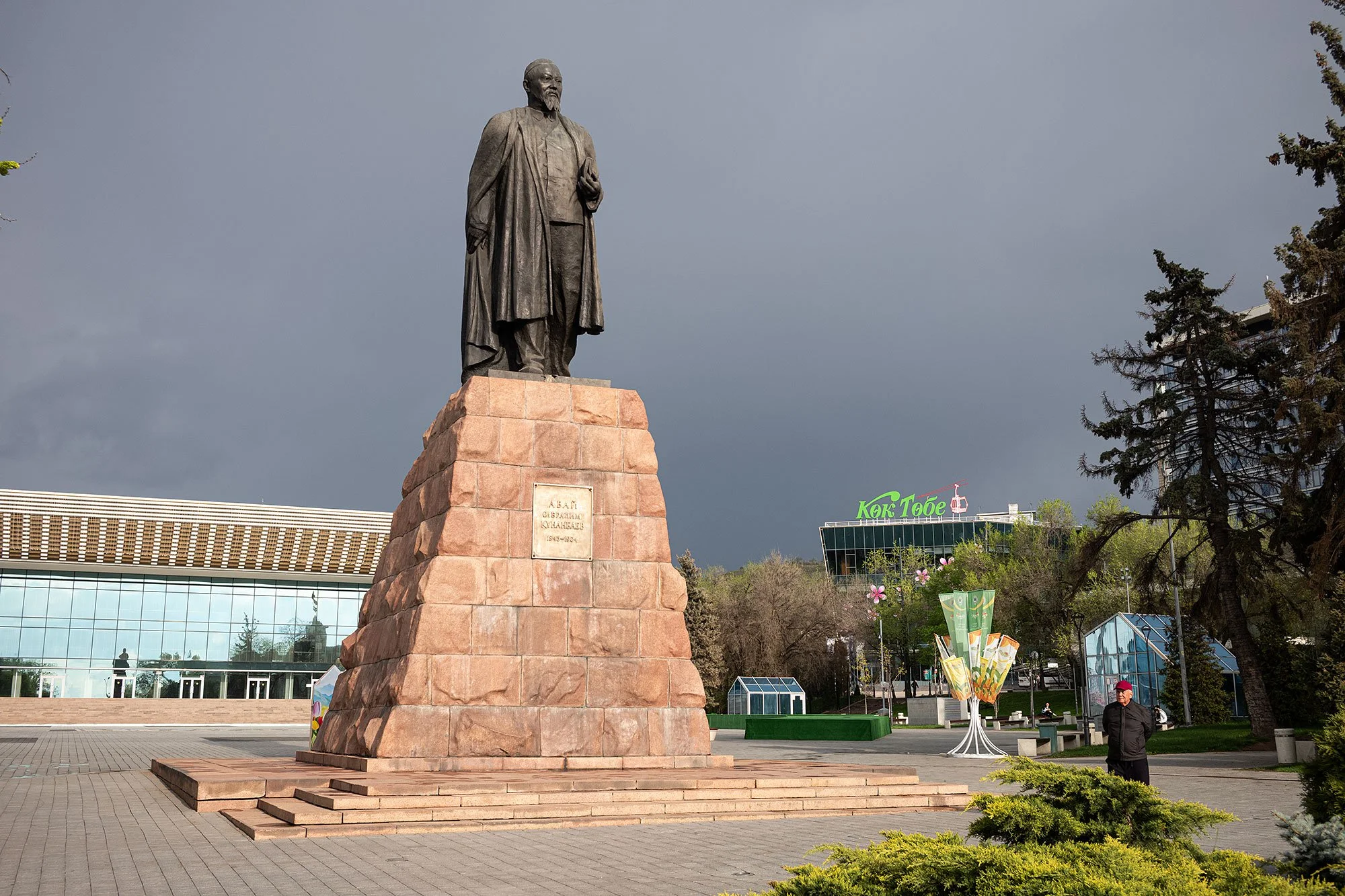
A monument to Abai Kunanbaiuly presides over the square that bares his name. A Kazakh poet, composer, philosopher, and the founder of modern written Kazakh literature, his presence towers over Kazakhstan.
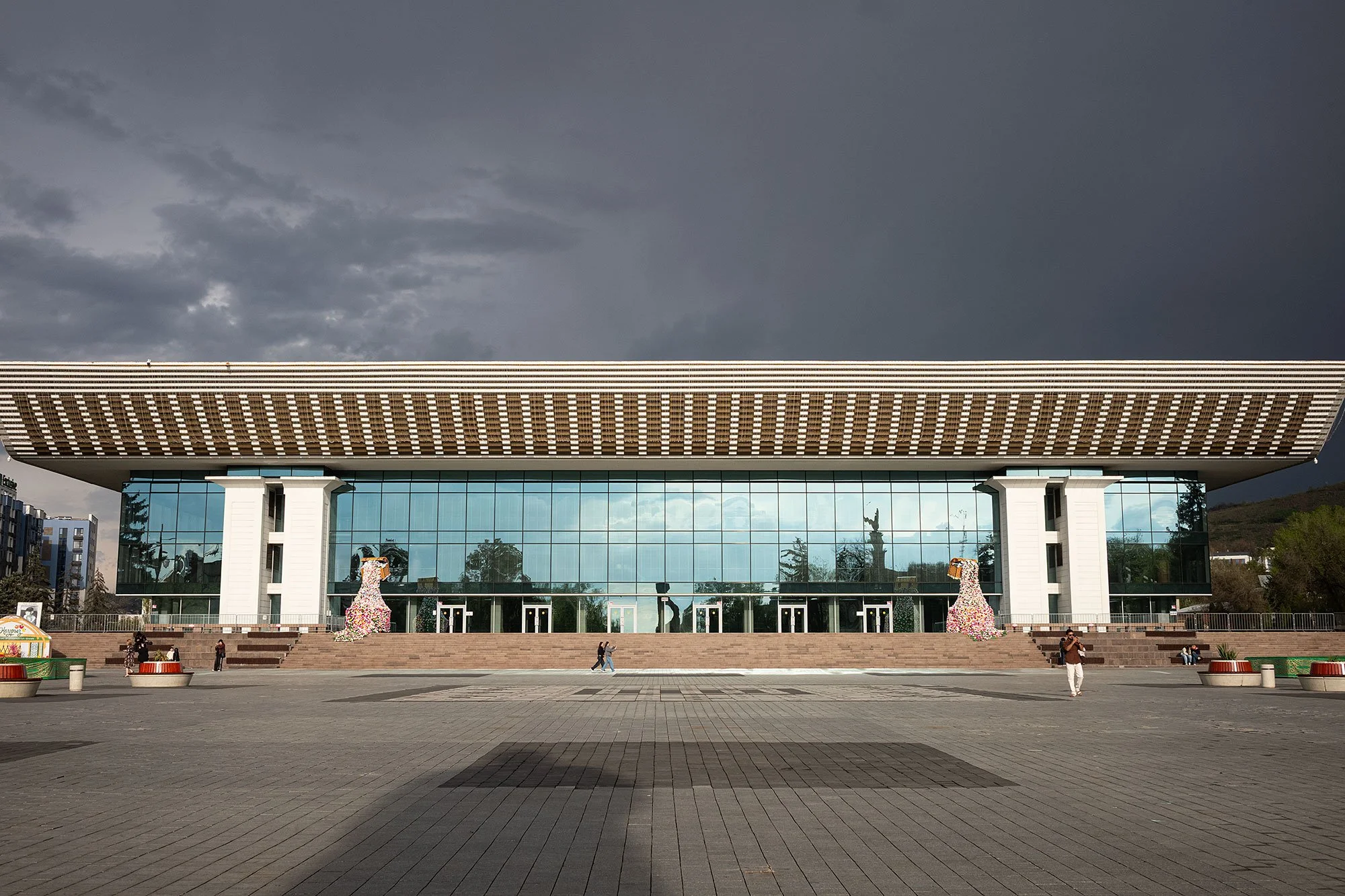
The Palace of the Republic anchors the eastern edge of the square behind the monument. I had first seen an illustration of it on a postcard and asked the cashier where it is, not realizing it’s only a few blocks from my apartment.
Built in 1970, the Palace of the Republic was was opened during the celebration of the 100th anniversary of the birth of Vladimir Lenin, after whom the building was originally named. One of the largest concert halls in the country, the auditorium seats 2567 people and as soon as I can I look up what concerts are being held in the time I’m here. Unfortunately, the performances I’m most interested are in May.
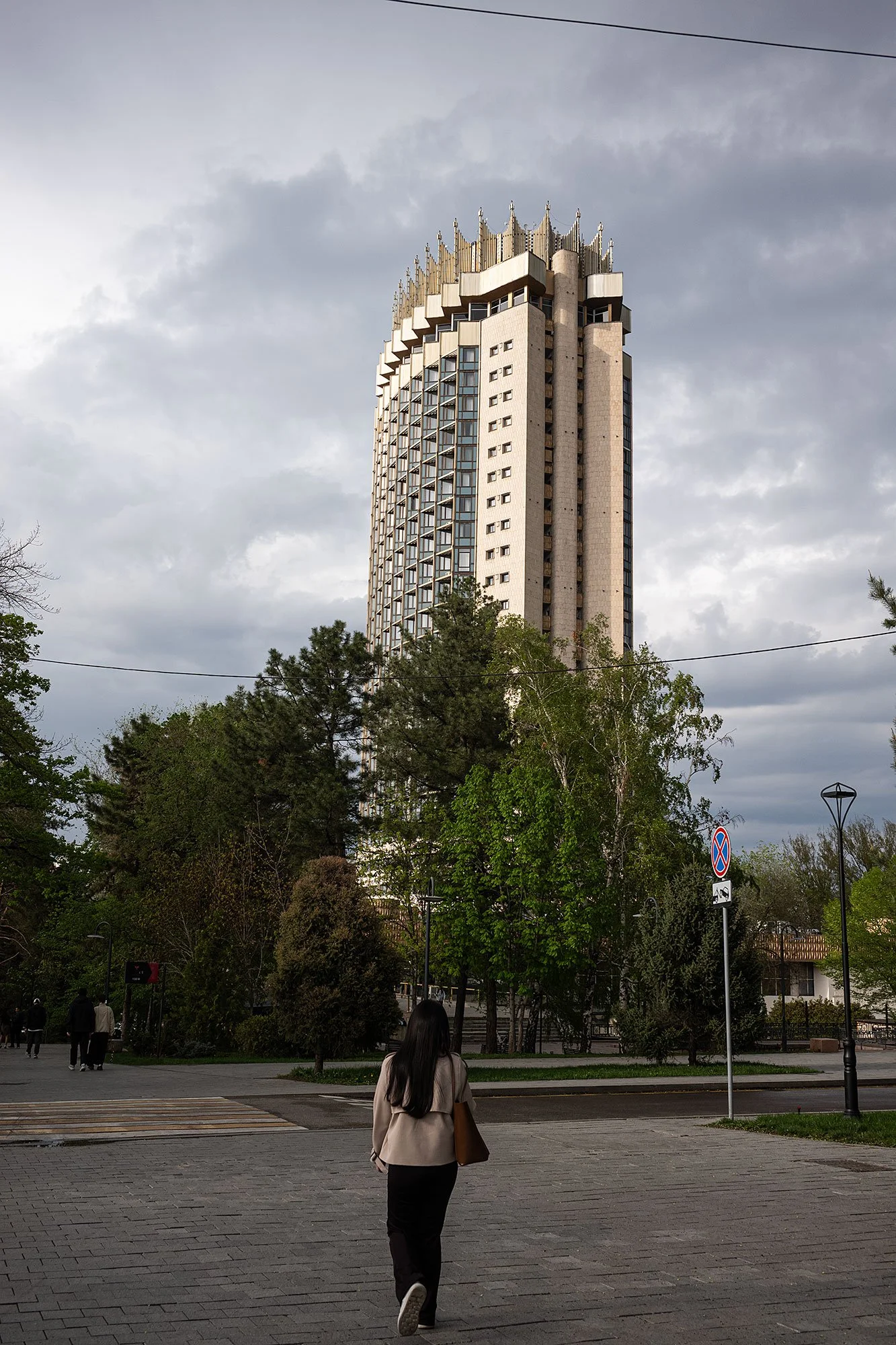
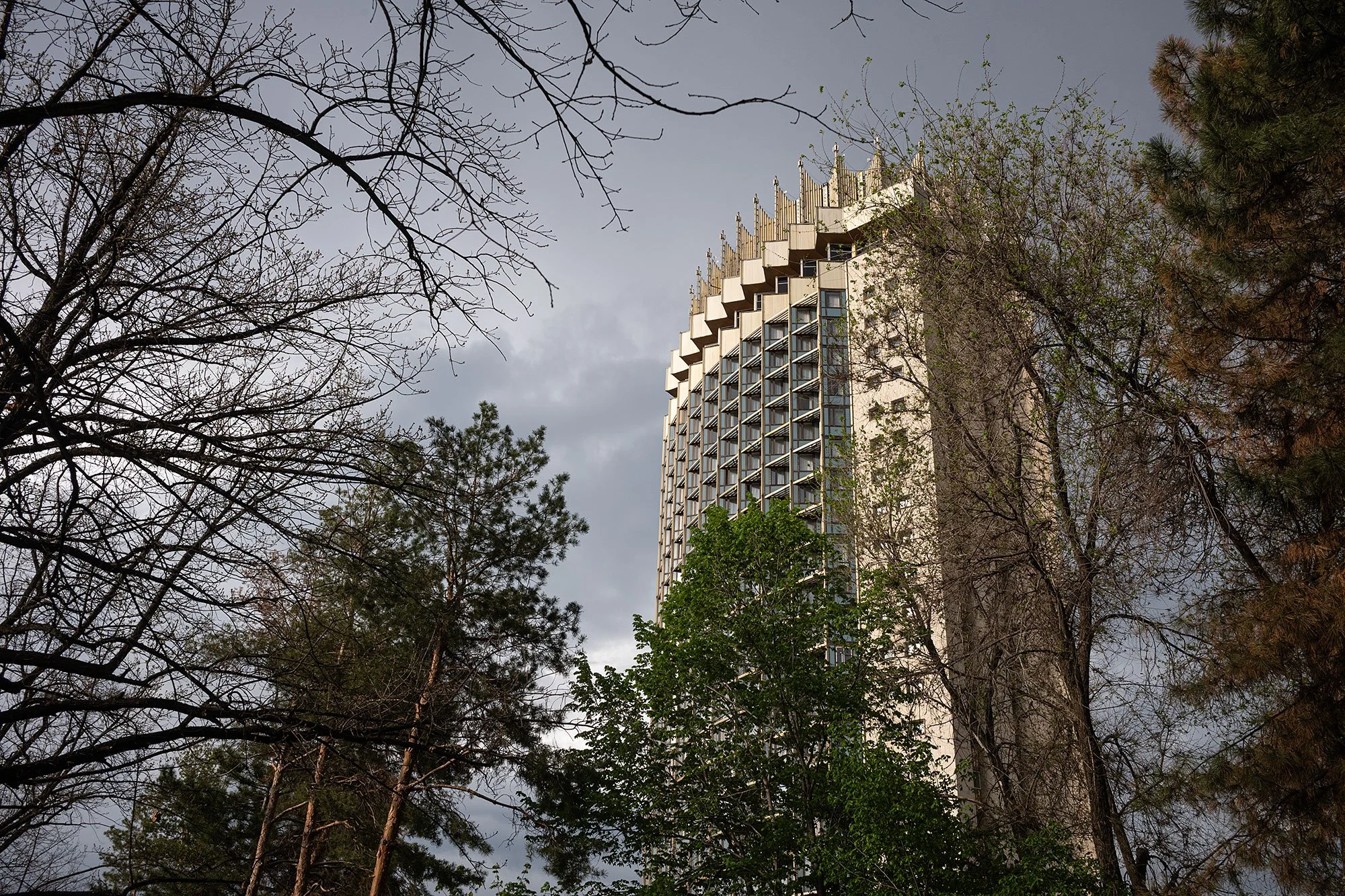
Next door, the Hotel Kazakhstan rises over the neighborhood. Another Almaty landmark, the hotel was built in 1977 and is the third-tallest building in Almaty. Built to withstand an earthquake of 9.0 on the Richter scale, it also holds the title of eighth-tallest building in Kazakhstan (the tallest is the Abu Dhabi Plaza in Astana, a mixed-use complex which is also the tallest building in Central Asia).
Having been in Kazakhstan for a few days, and having fallen in love with Almaty, I’m eager to learn more about the history of this country and about the culture. I find a book recommendation on Reddit, but it’s 85 USD. Reading more about it it looks like it’s a very academic collection of papers.
I’ve also developed more curiosity around the language, surprised to discover there’s no link between Russian and Kazakh, that the language is more similar to Turkish. I check Pimsleur to see if they offer a Kazahk course, with no luck; it seems none of the major language-teaching courses teach Kazakh. Only around 15 million people speak it, and everyone here speaks Russian. I wish now I had asked Yana to give me lessons when we were roommates. 🇰🇿