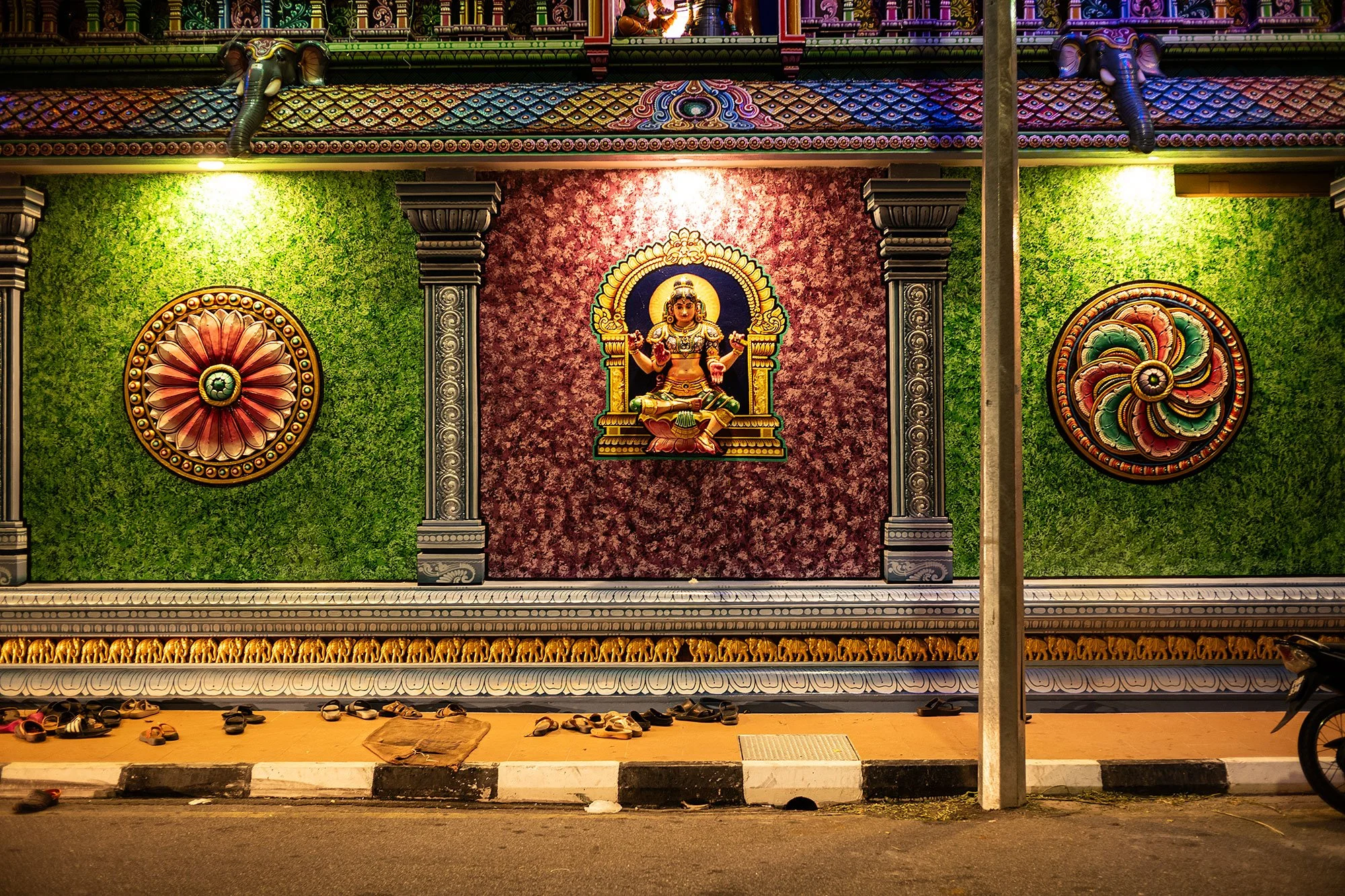
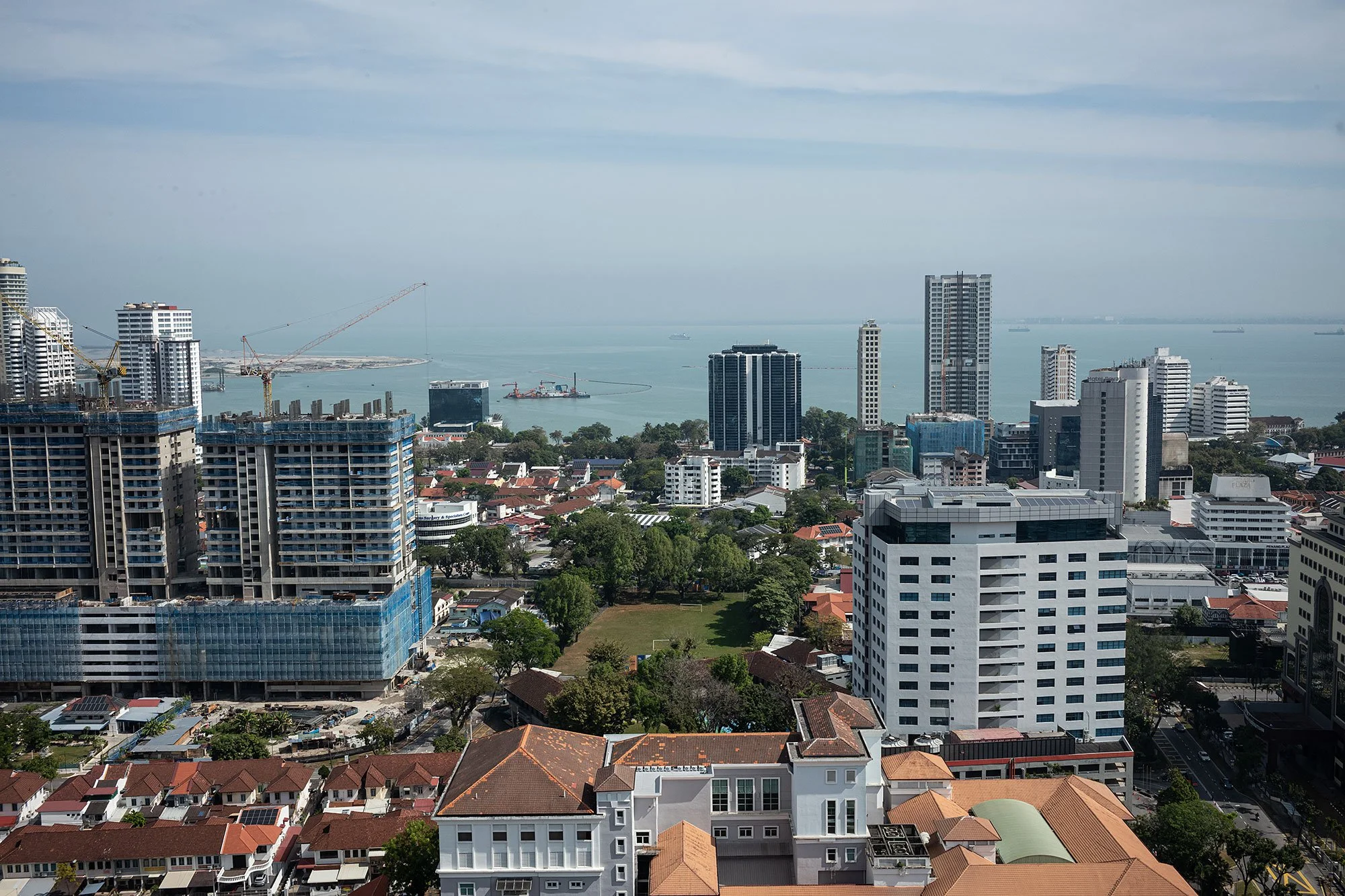
The UNESCO World Heritage city of George Town.
I spend the morning working; it’s slow going.
I finally decide to give work a rest so I can go outside to play. I feel like I’m trying to parent myself.
I heat up leftovers from last night’s dinner for a snack. I have dinner reservations at Au Jardin, awarded the “Best restaurant in Malaysia 2026” by The World’s 50 Best. and don’t want to eat too much before dinner.
I’m caught between two itineraries. One would take me to the west and Penang Hill, the other to the east for a walking tour of Georgetown. I’m texting my host about a few things and mention my thoughts. She tells me that the funicular that leads up to the top of Penang Hill is closed for bi-annual scheduled maintenance, necessitating a jeep ride to the top. The week-long shutdown ends the next day, however, which makes the decision for me.
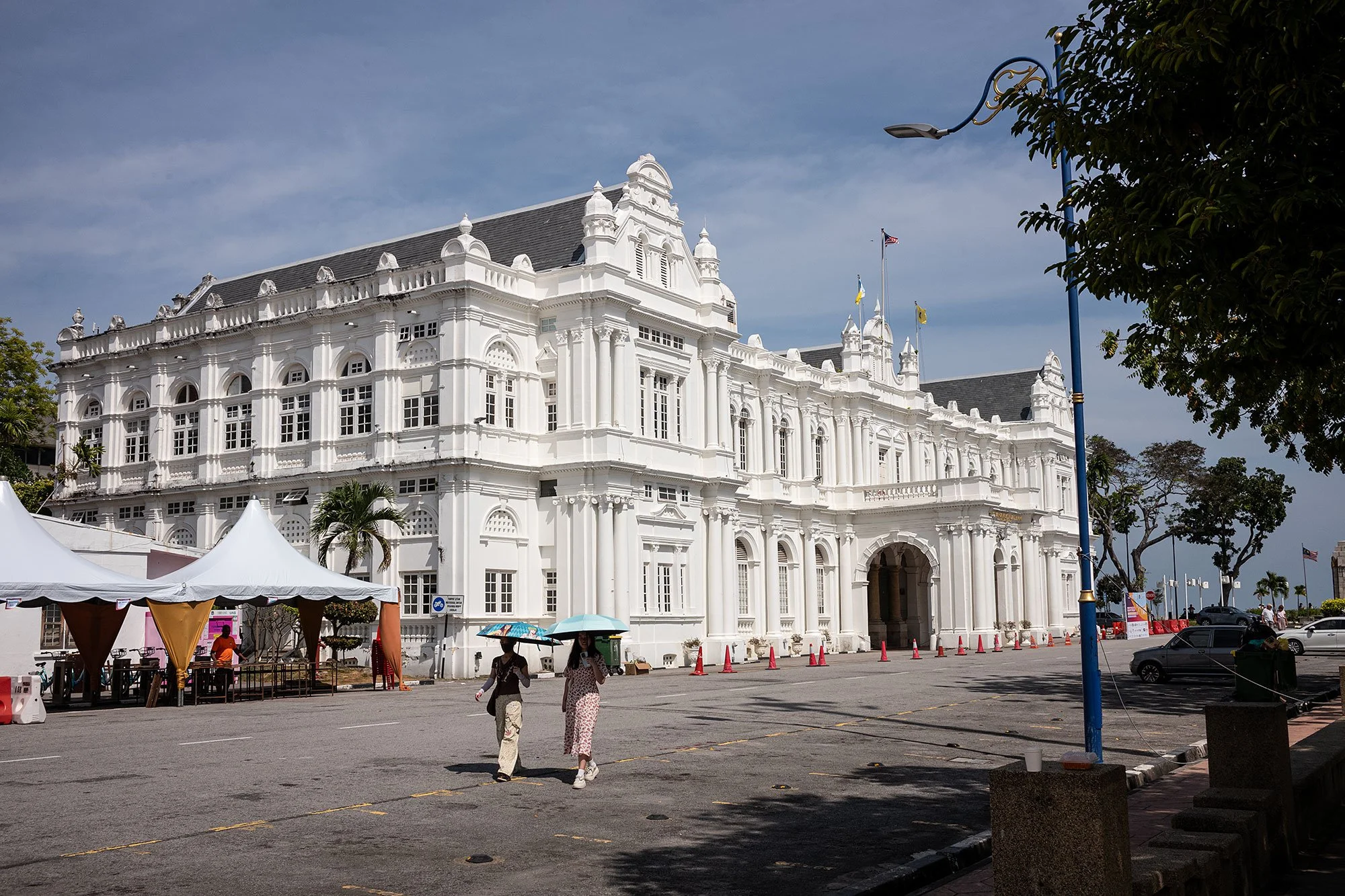
I take a Grab (the local rideshare app) to the Town Hall and begin my tour there, walking past the yellow town hall and the white city hall buildings on my way to the Esplanade to walk along the banks of the Penang Strait.
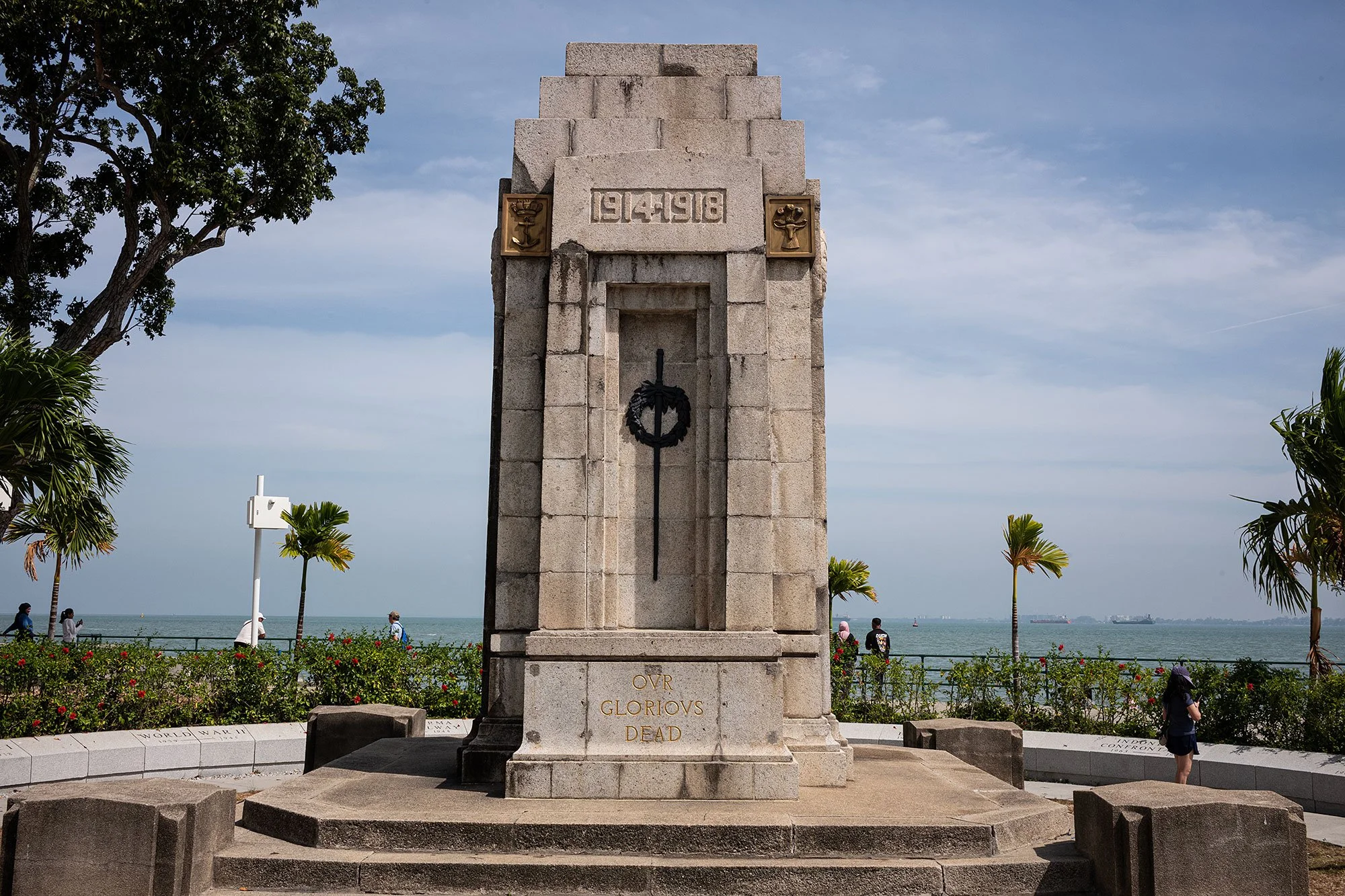
I pause before The Cenotaph, a World War I memorial commemorating the Allied servicemen who lost their lives during the war. Constructed in 1929, it was severly damaged in 1945 by Allied aerial bombardment during the Japanese occupation of Malaya.
The Japanese conducted a block-by-block demolition, dismantling the granite structure and the bronze decorations and storing them for future reconstruction. The current Cenotaph was reconstructed from the remaining granite blocks in 1948. A redesign was necessary to accommodate the lost granite blocks, a task that fell to Charle Geoffrey Boutcher, a London-born architect who was a partner at Stark & McNeill in Malaysia.
The Esplanade itself underwent redevelopment in 2023, to transform it into a linear garden, which helps explain why the area looks so fresh. It was here where Captain Francis Light (the founder of George Town) first landed in 1786.
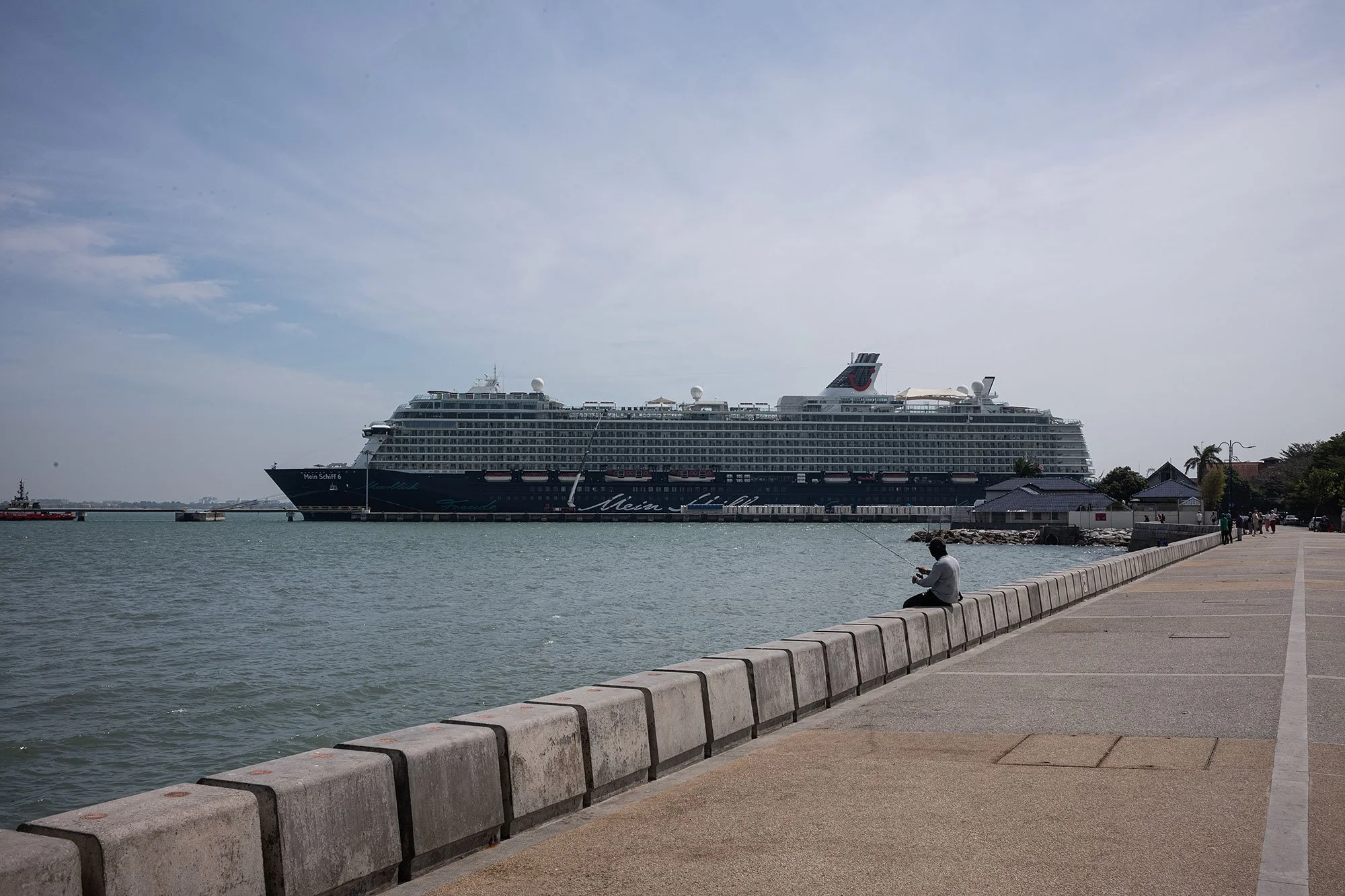
A cruise ship is docked at the harbor and as I walk my way towards it I wonder what effect its population of tourists may have on the town.
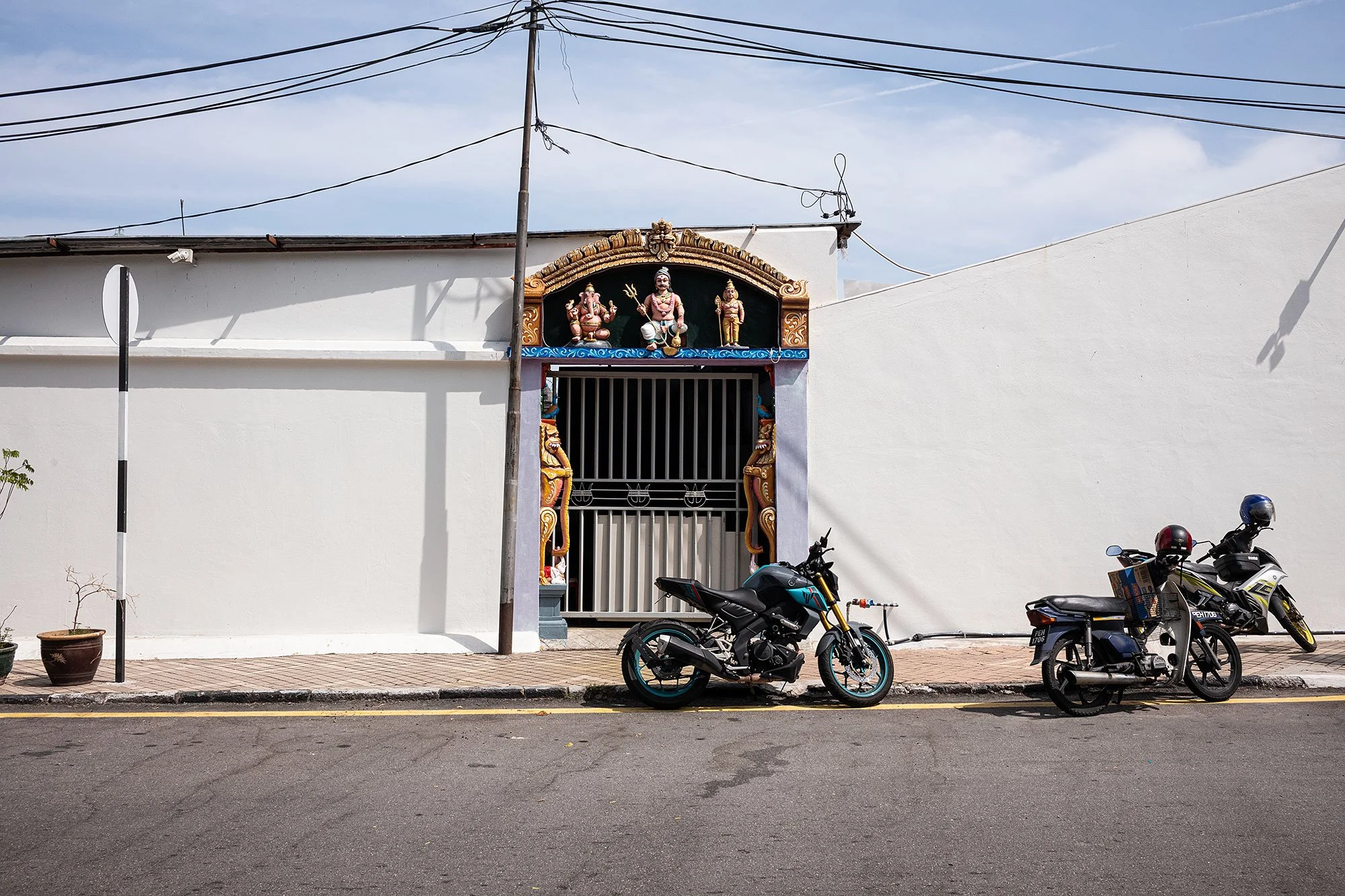
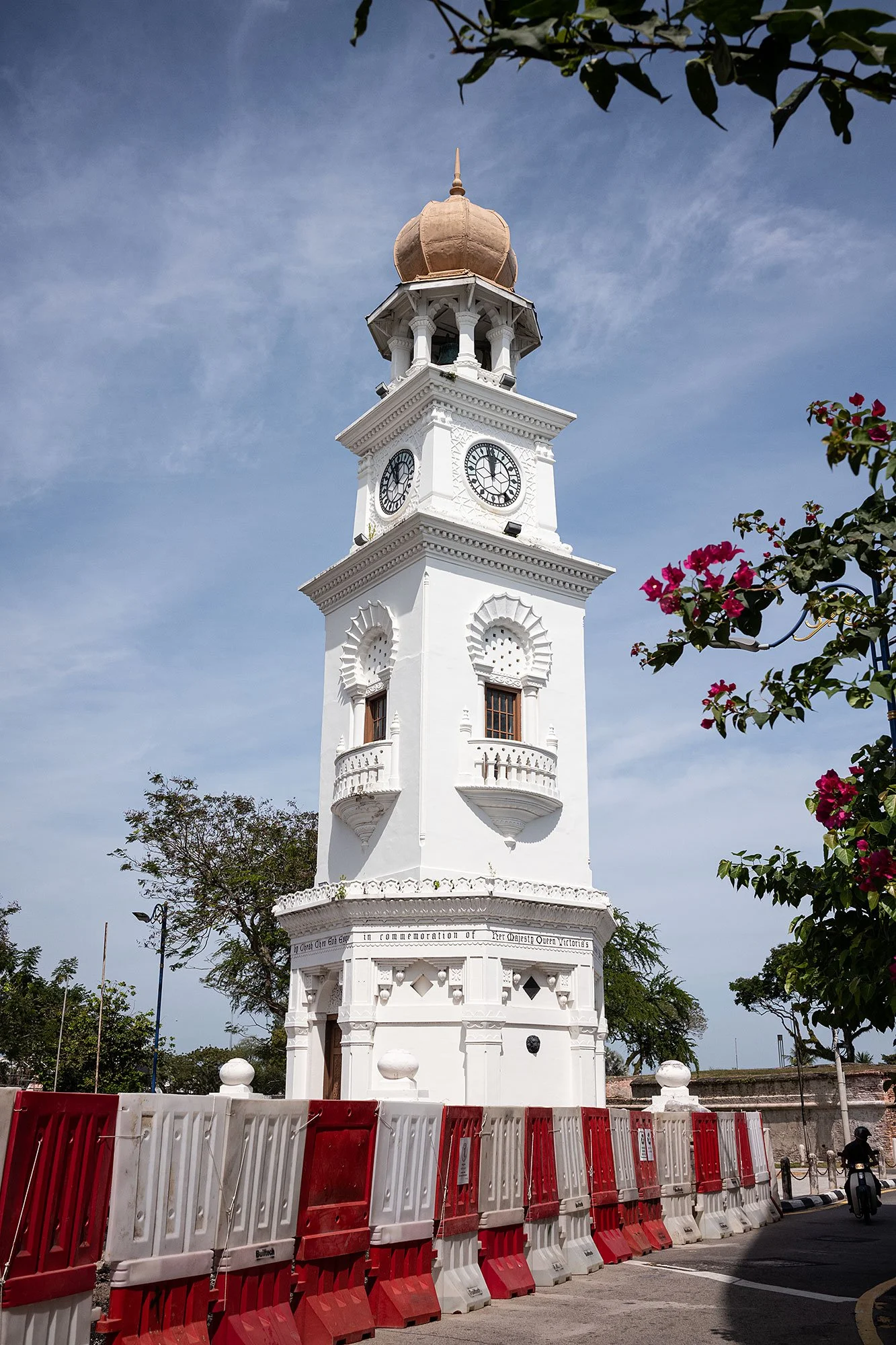
I walk past the naval base and the small Fort Point Hindu Temple before rounding my way to the Queen Victoria Memorial Clock Tower. Completed in 1902, the idea for the tower came about towards the end of the Diamond Jubilee of Queen Victoria as a way to memorialize the monarch. Funded entirely by Chinese business magnate Cheah Chen Eok, the design is by Robert Peirce, who won the design competition for the tower twice.
From around the corner I can see passengers on shore. They’re almost all attired in the same way and mark themselves as tourists immediately.
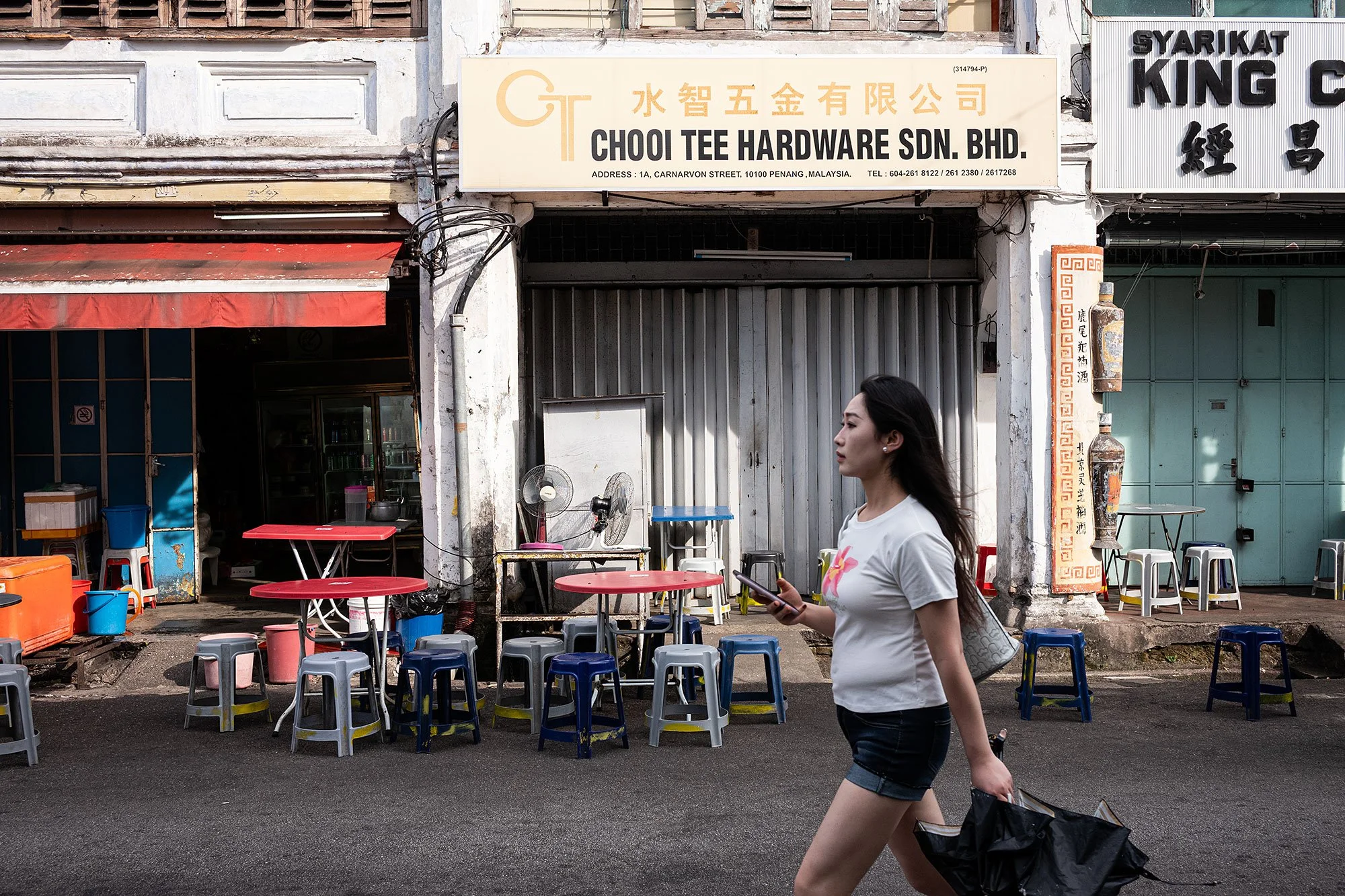
I pass the clock tower and walk down Beach Street towards the touristic center of George Town. The street is notable as being one of the oldest roads in town, featuring colonial-era architecture that reflects its history as the financial and central business district hub.
I take a right on Church Street. There’s a crowd in and around the Pinang Peranakan Mansion. I buy a ticket to enter and join them.
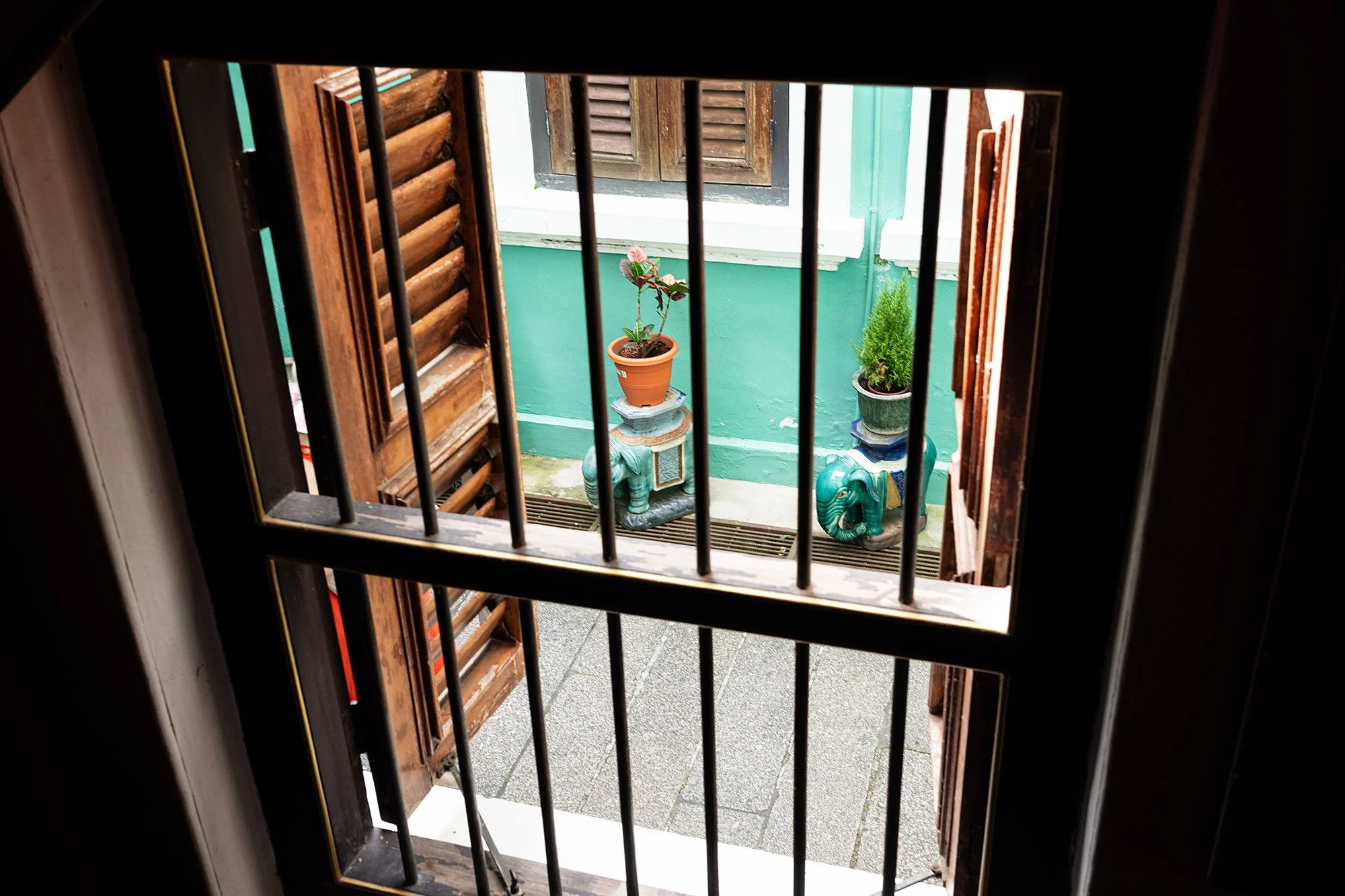
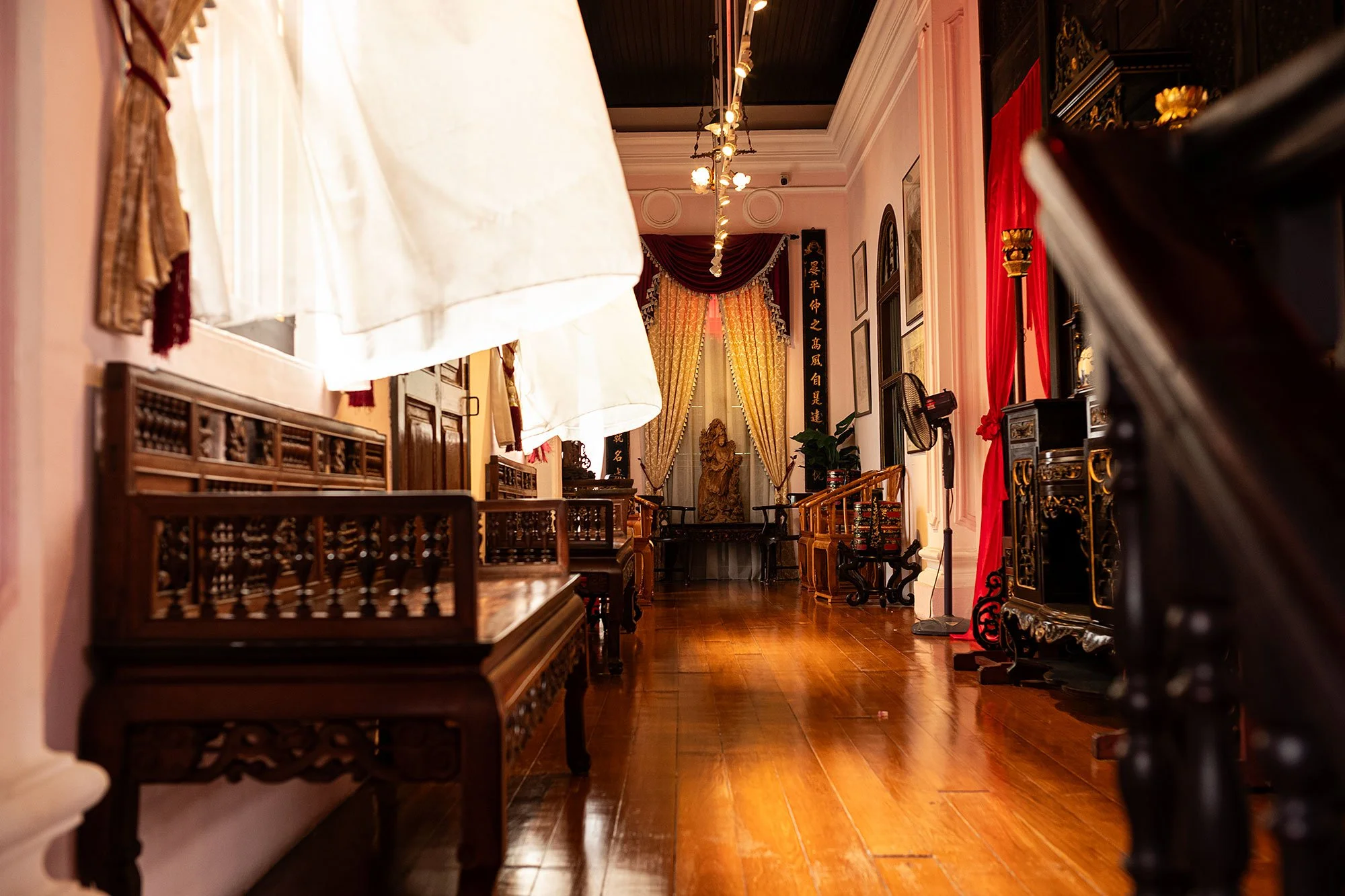
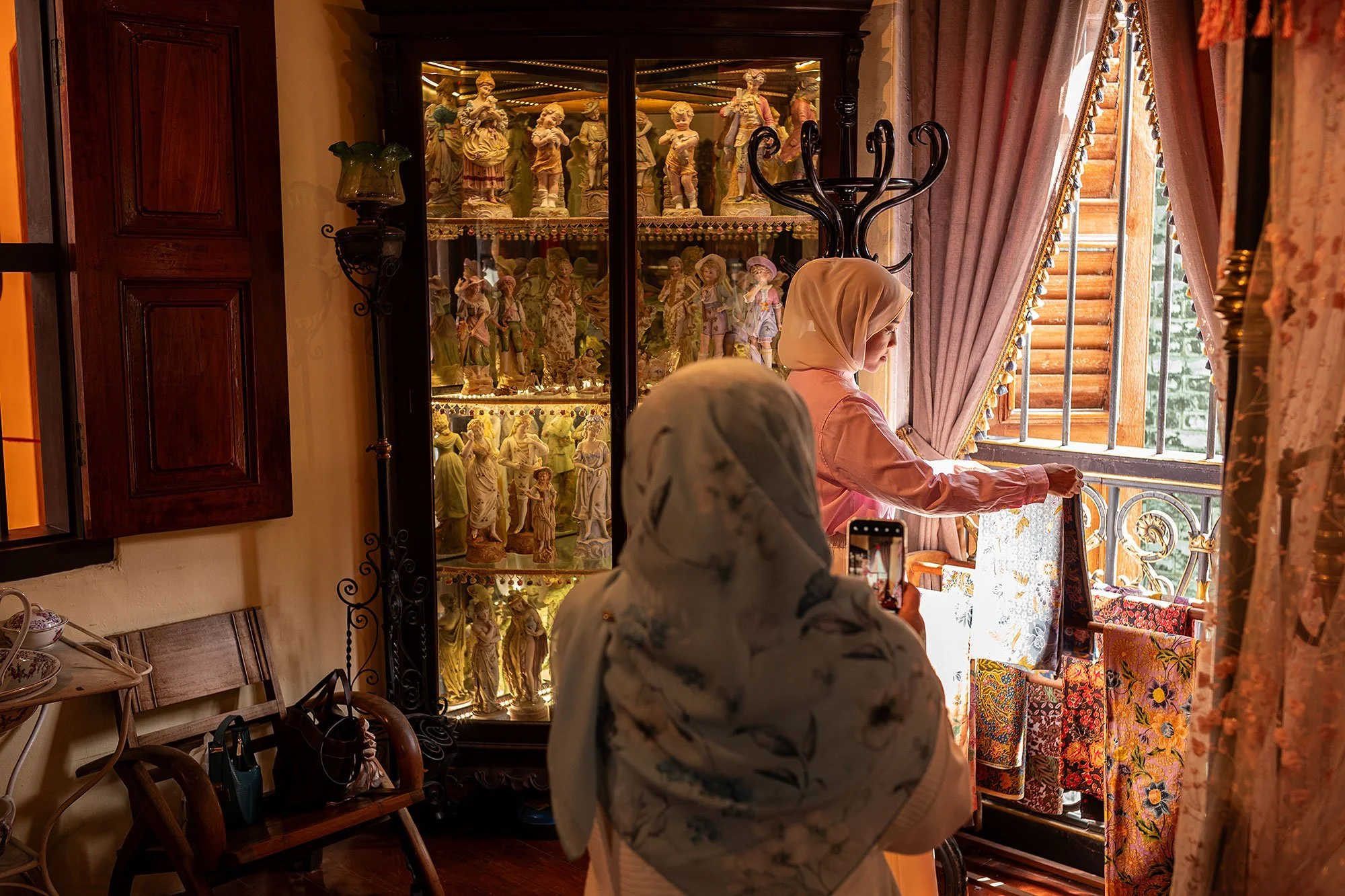
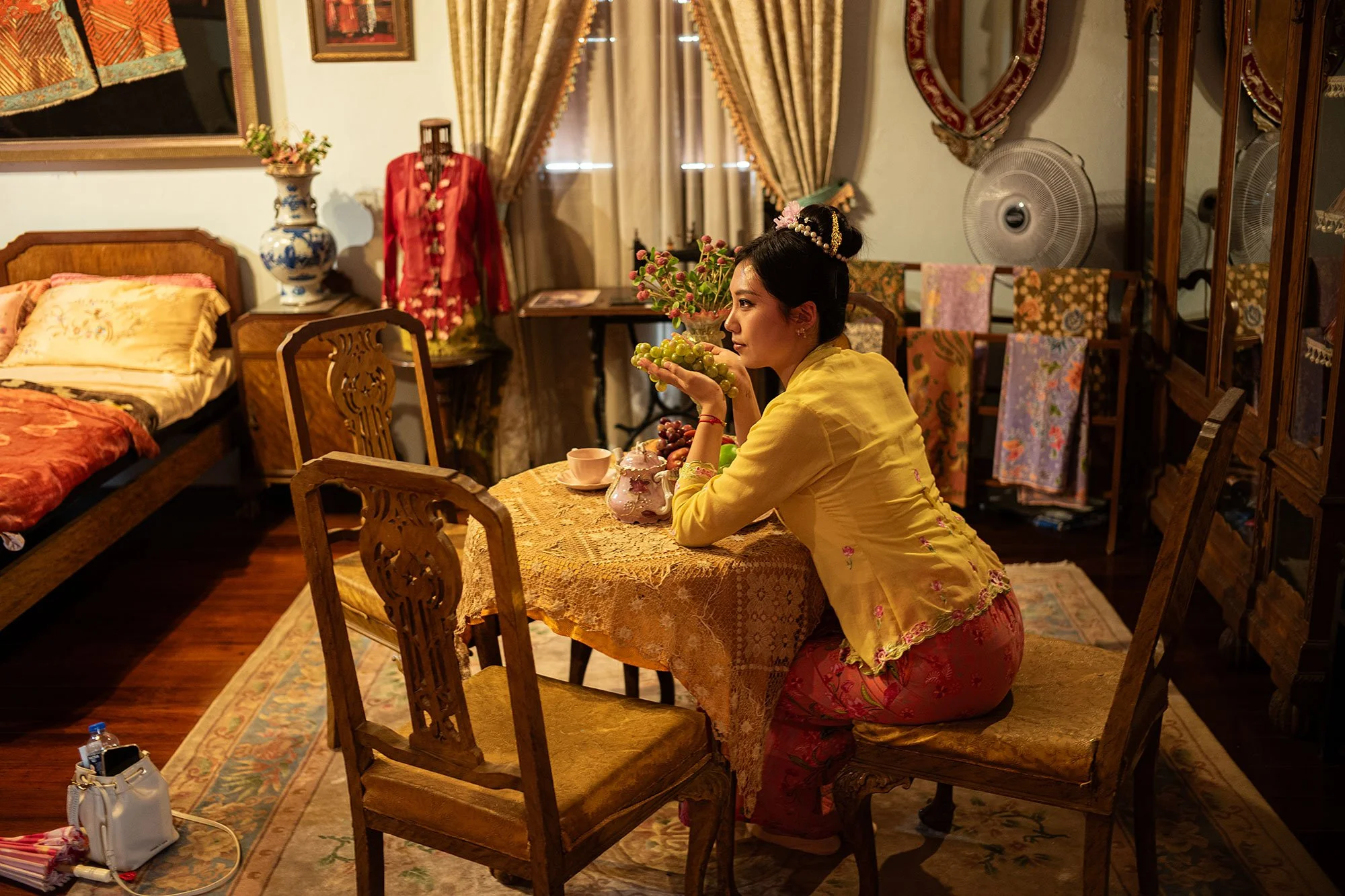
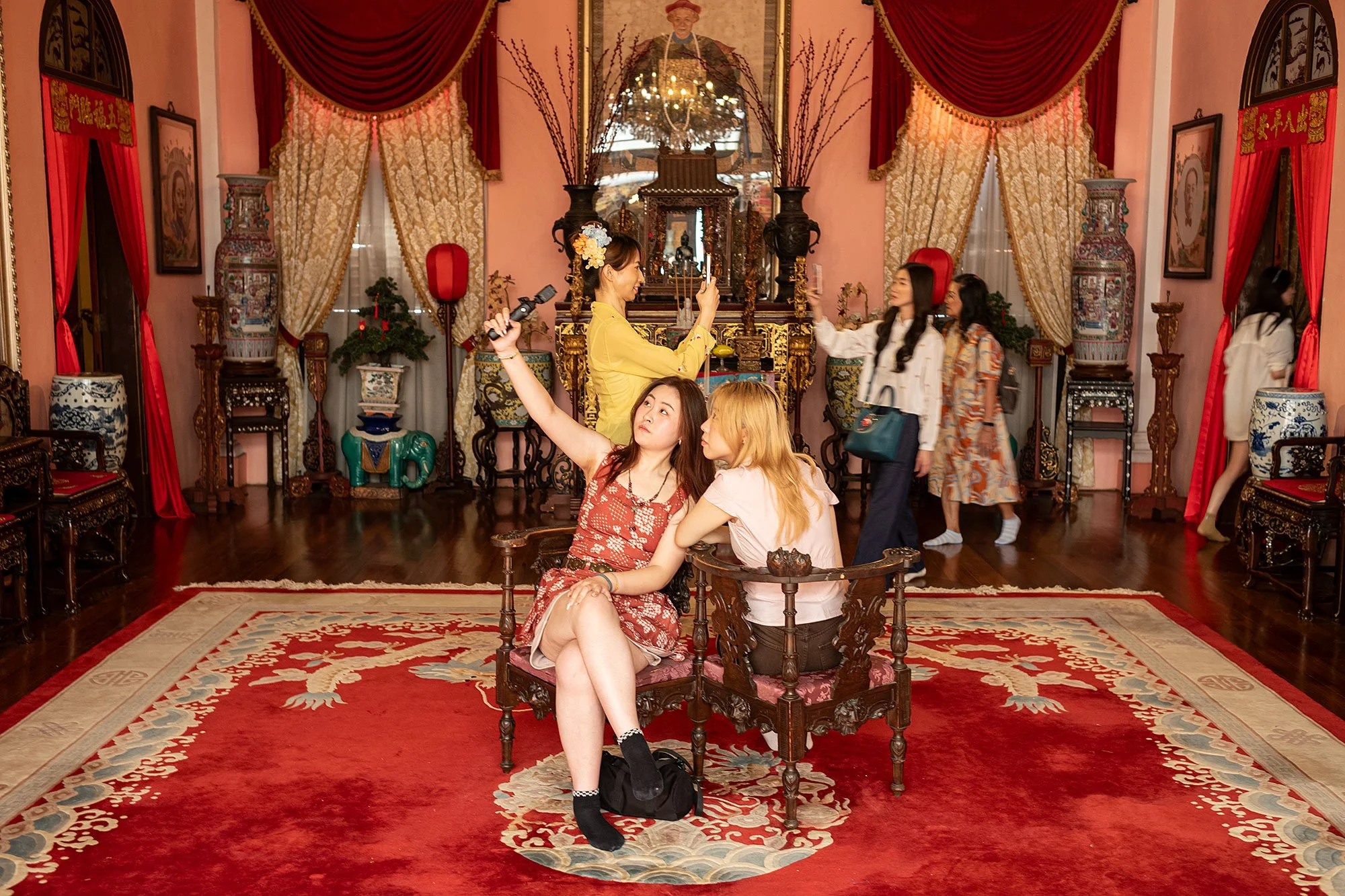
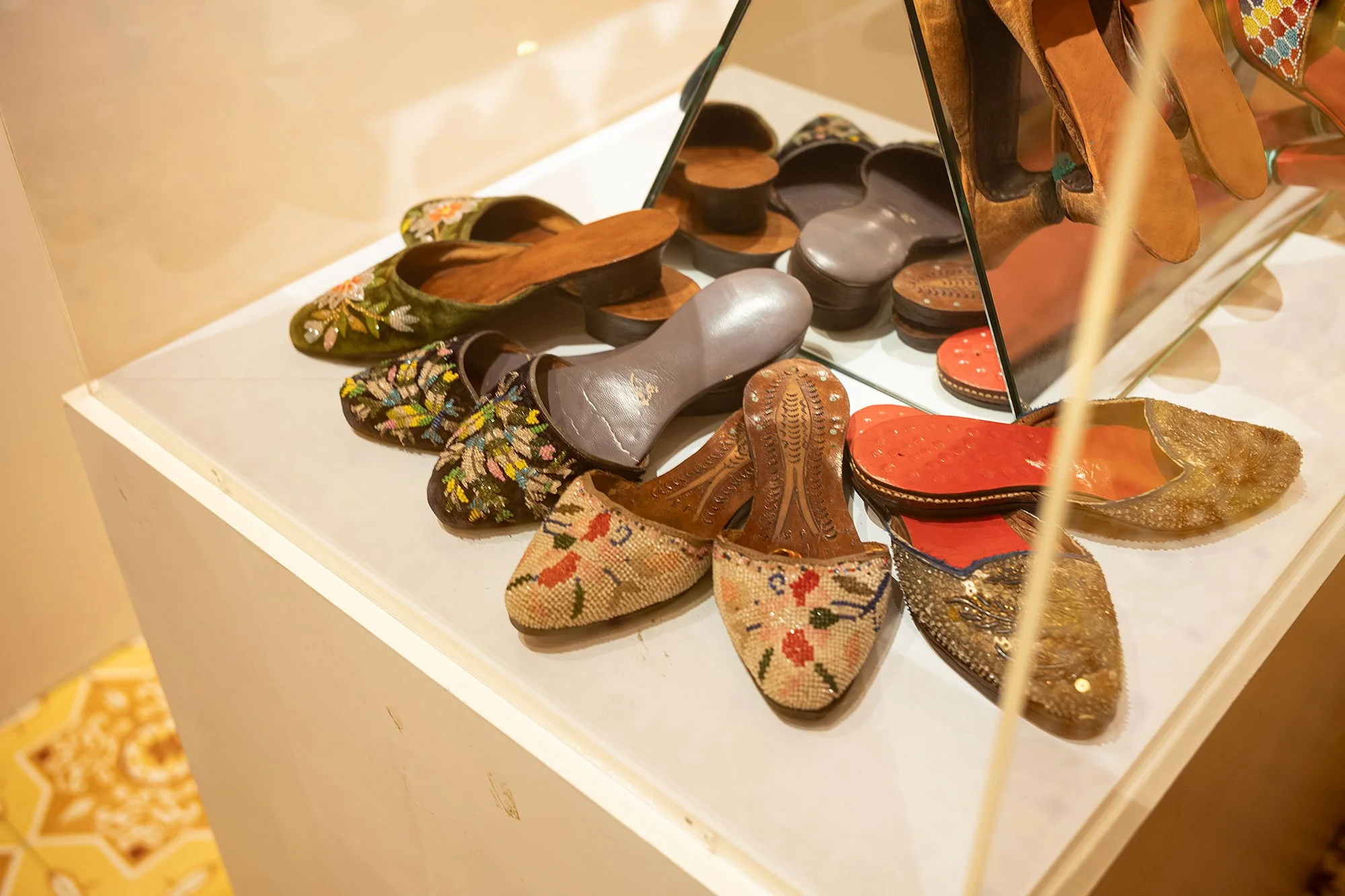
The mansion has been converted into a museum dedicated to Penang's Peranakan heritage. An ethnic group descended from the first waves of Southern Chinese settlers (who arrived between the 14th and 17th centuries), Peranakan Chinese culture is characterized by its hy the hybridisation of ancient Chinese culture with the local cultures of the region.
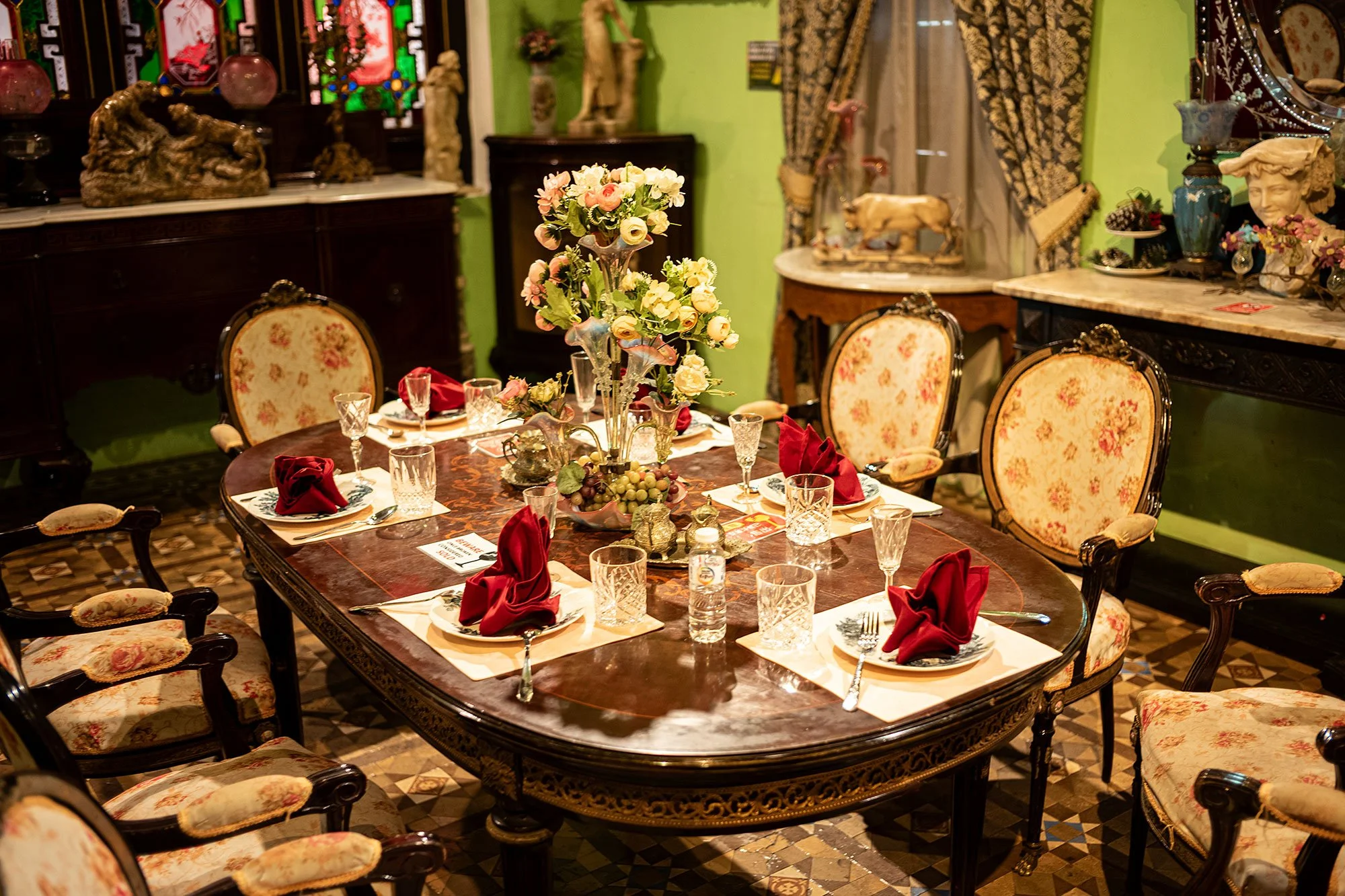
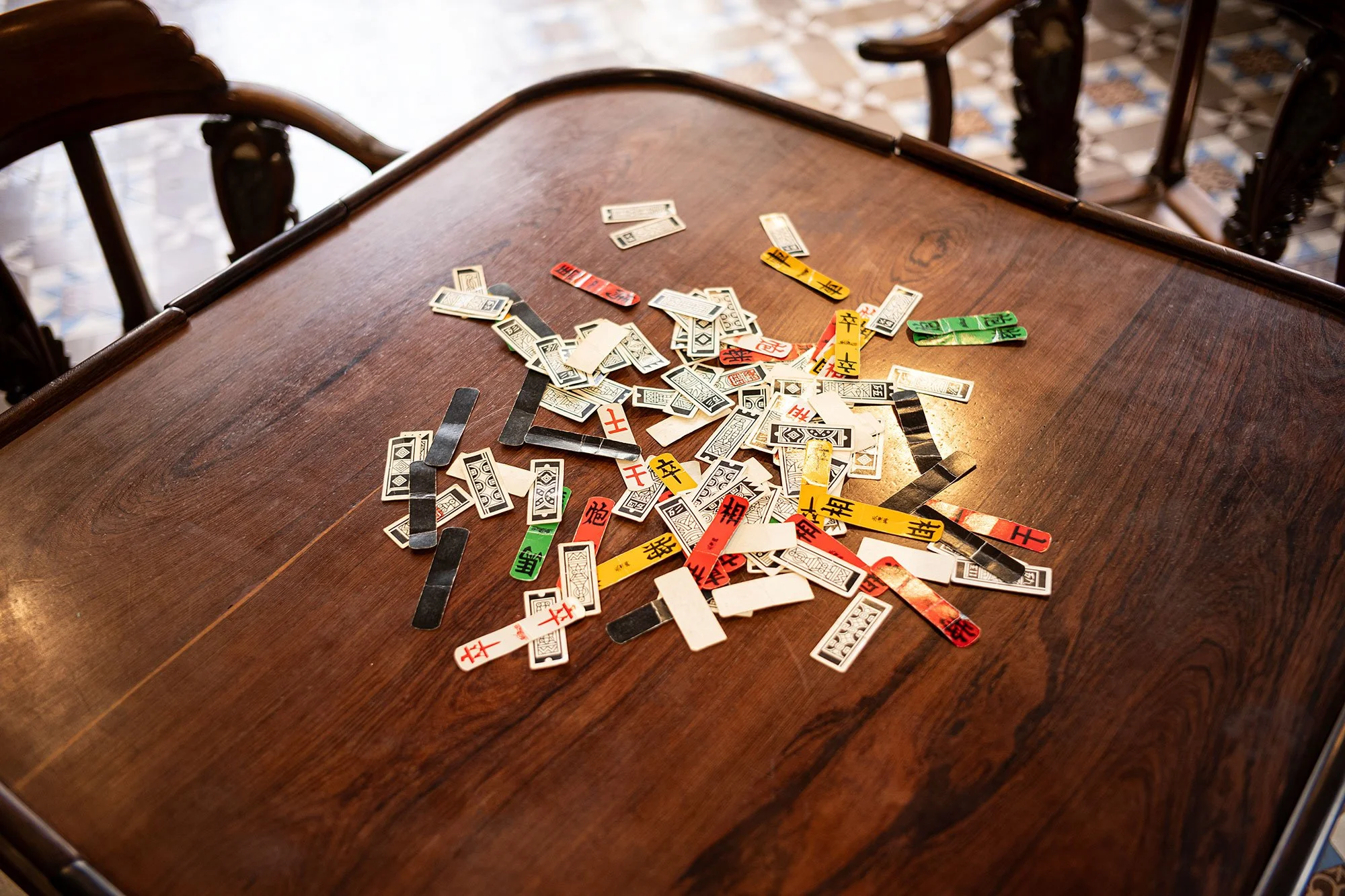
The mansion itself contains thousands of Peranaken items, while showasing Peranakan interior design ad customs. Its unique architecture and interior design has been featured in a number of television series and reality shows.
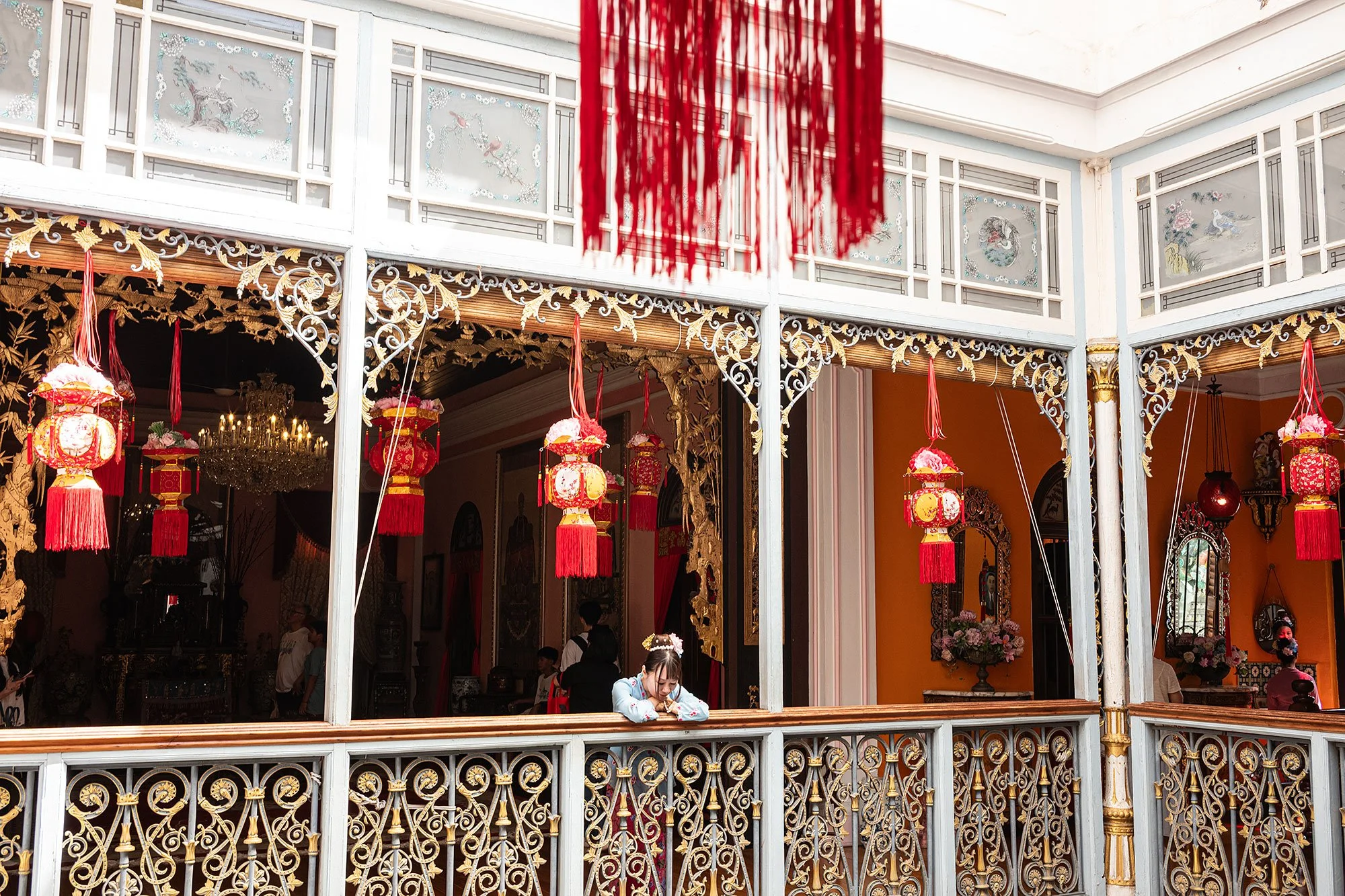
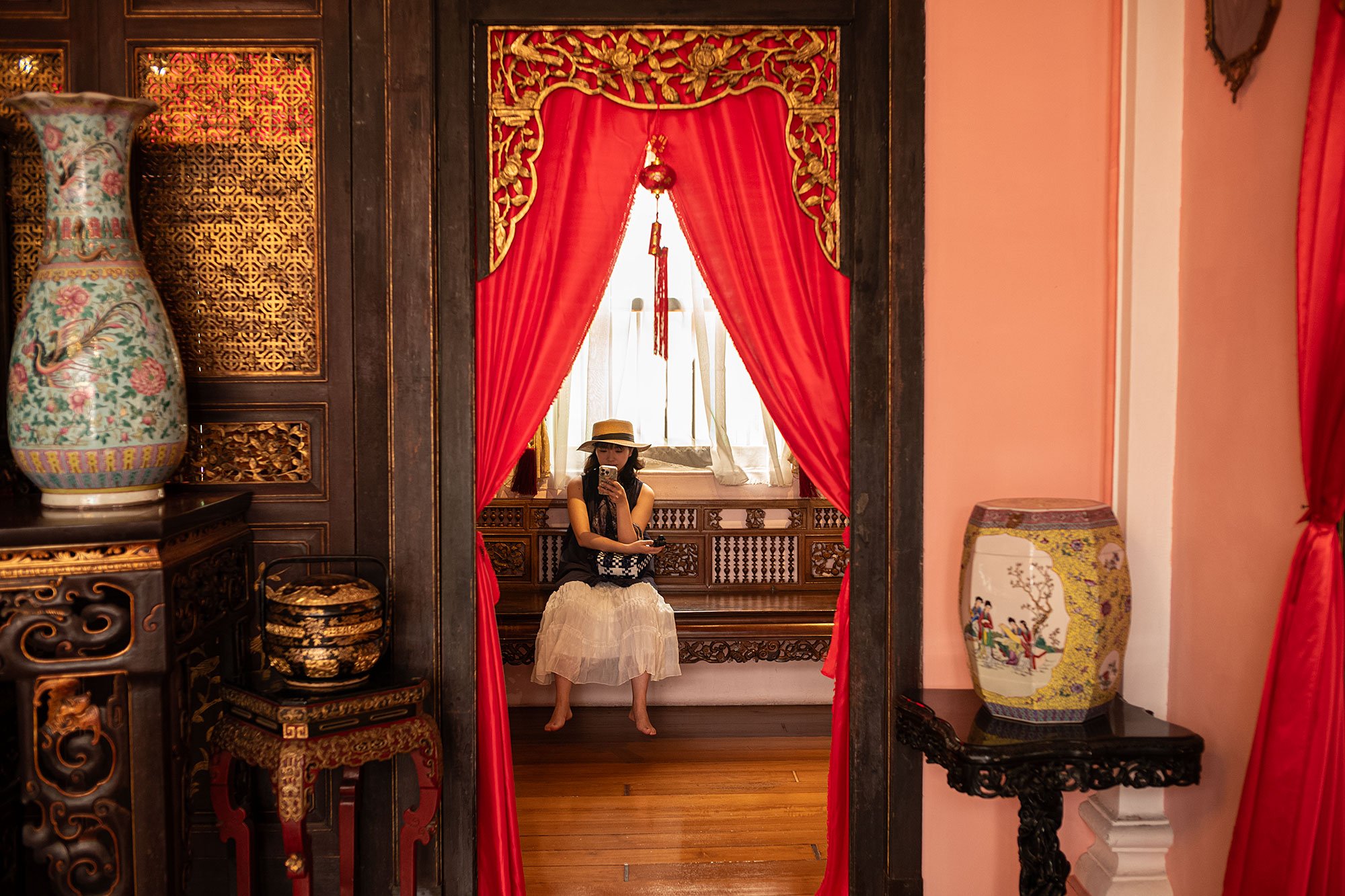
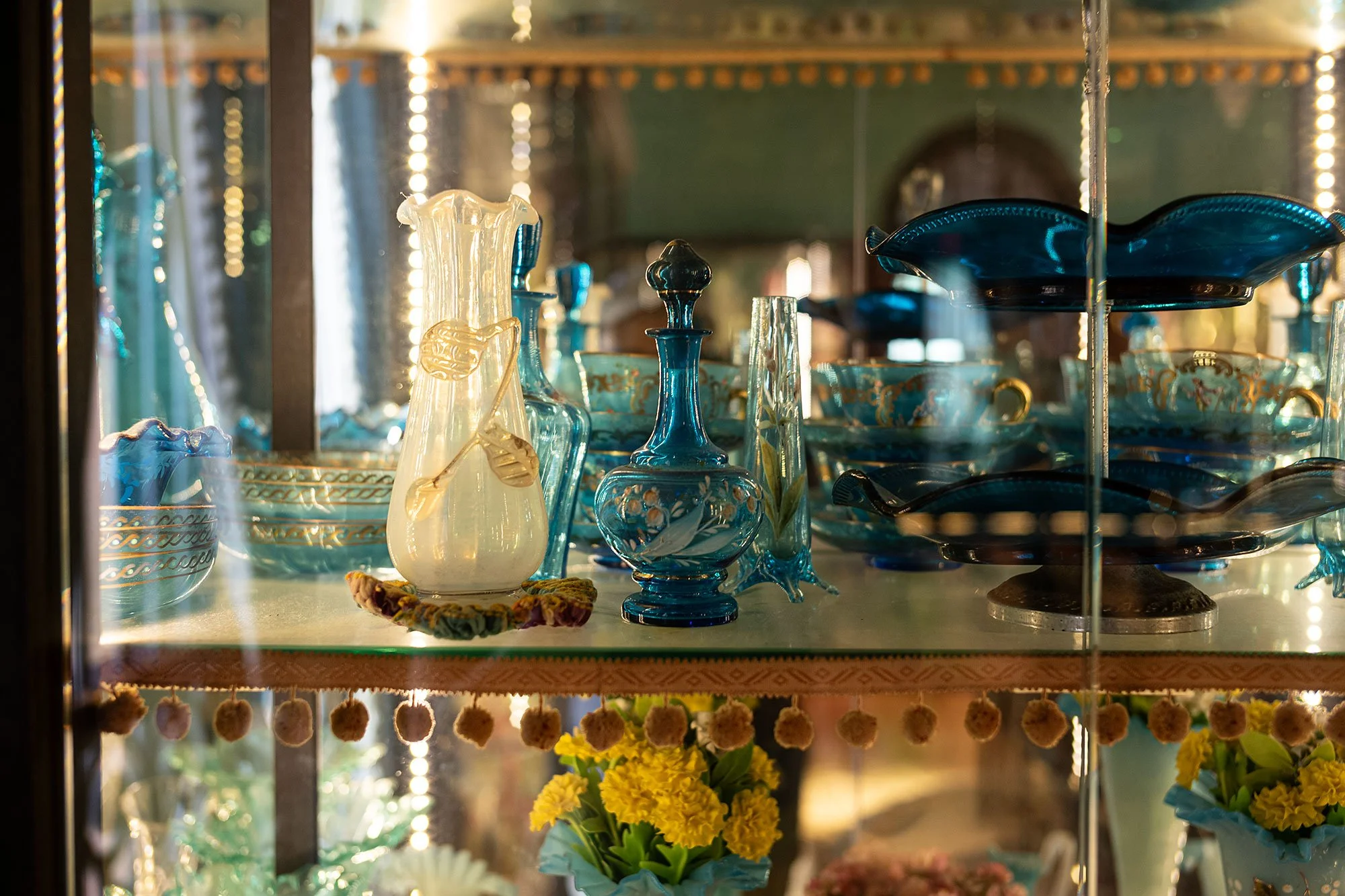
The mansion was originally commissioned by Chung Keng Quee, the Kapitan Cina of Perak and one of the richest men in Penang in the late 19th century. Next door, a temple honoring Chung himself was built.
The mansion was passed down to his descendants after his death in 1901, eventually becoming derelict. Acquired by a property developer who painted it green in the 1990s, they then turned it into the museum it is today.
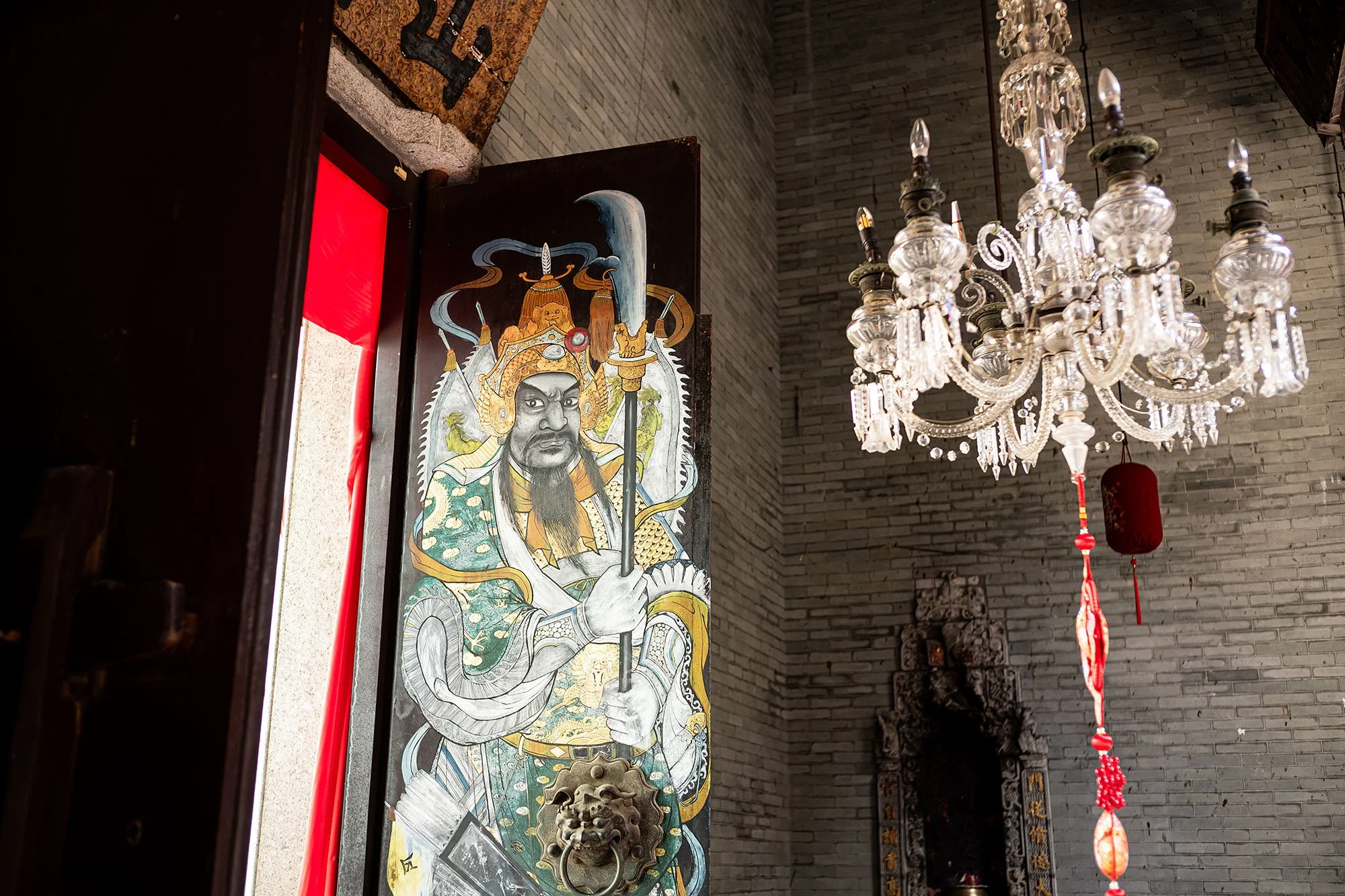
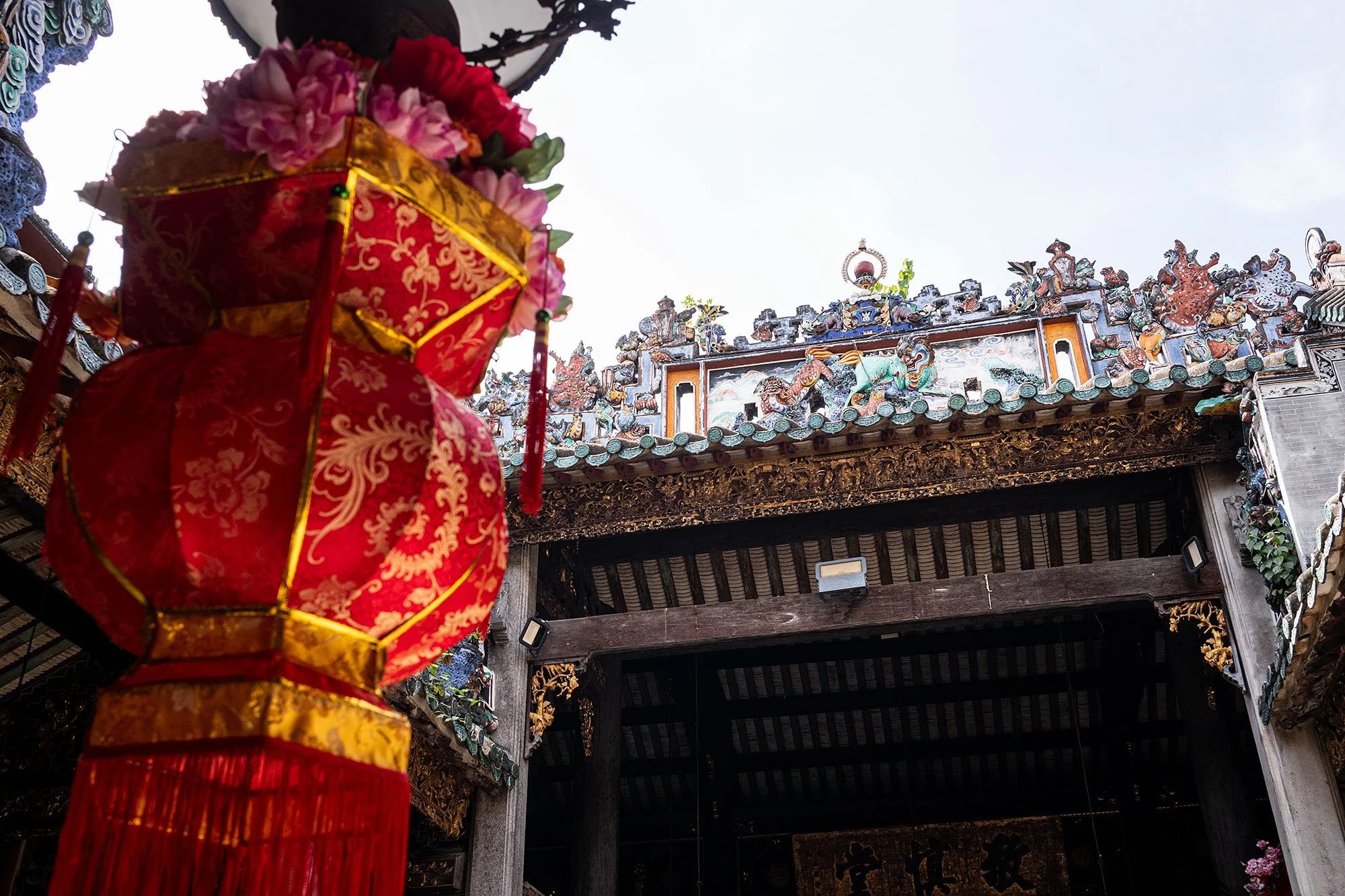
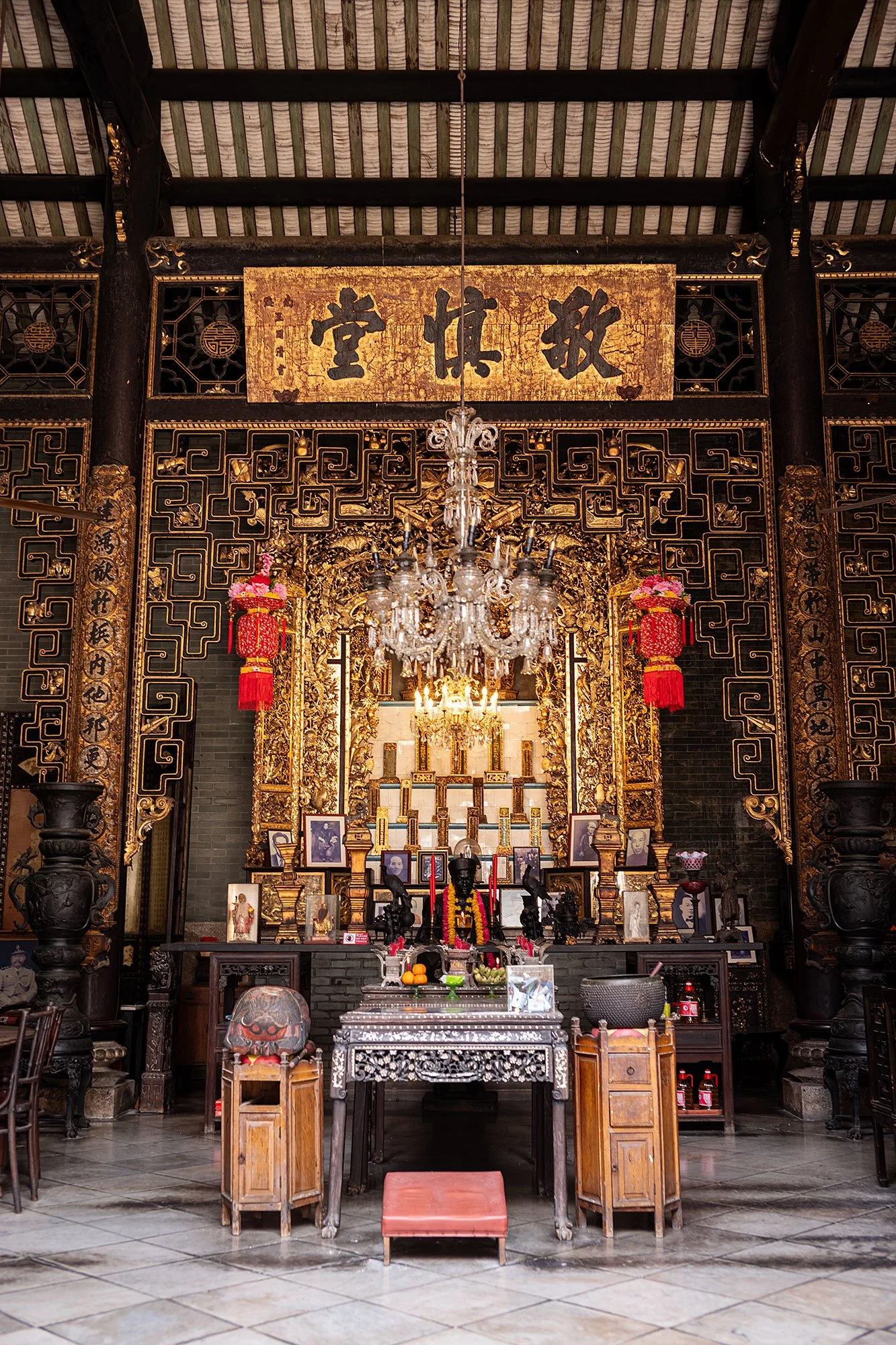
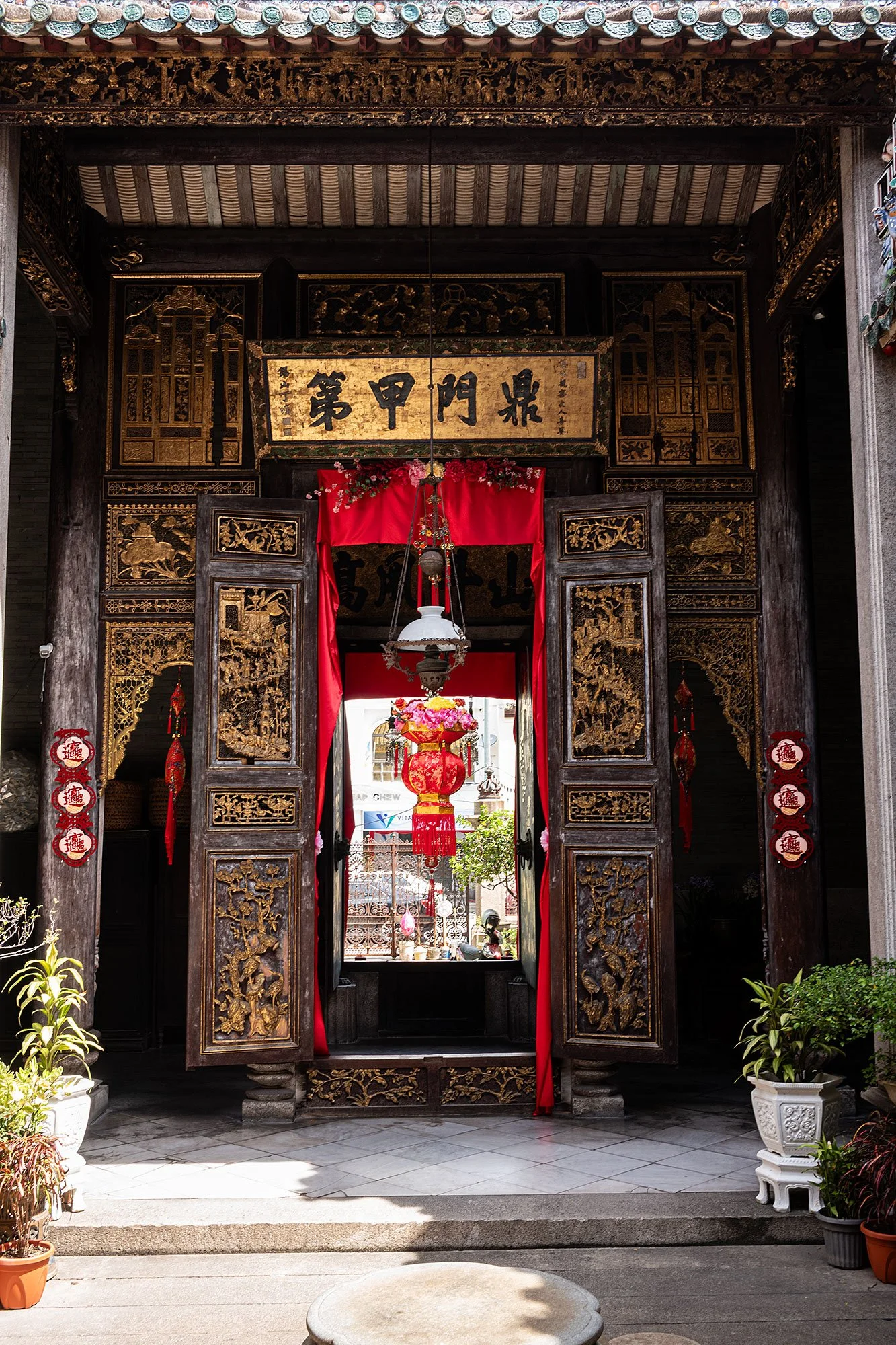
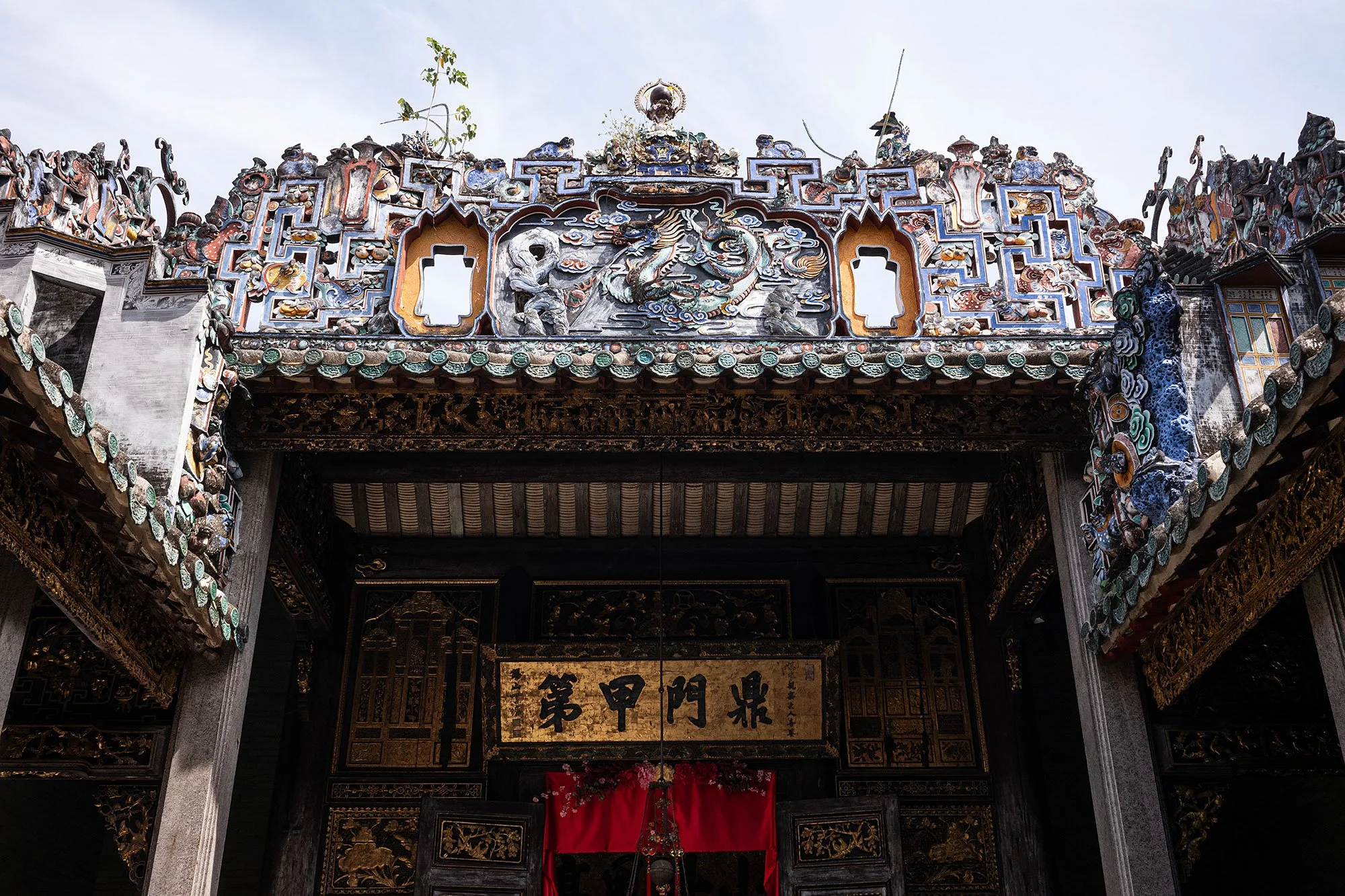
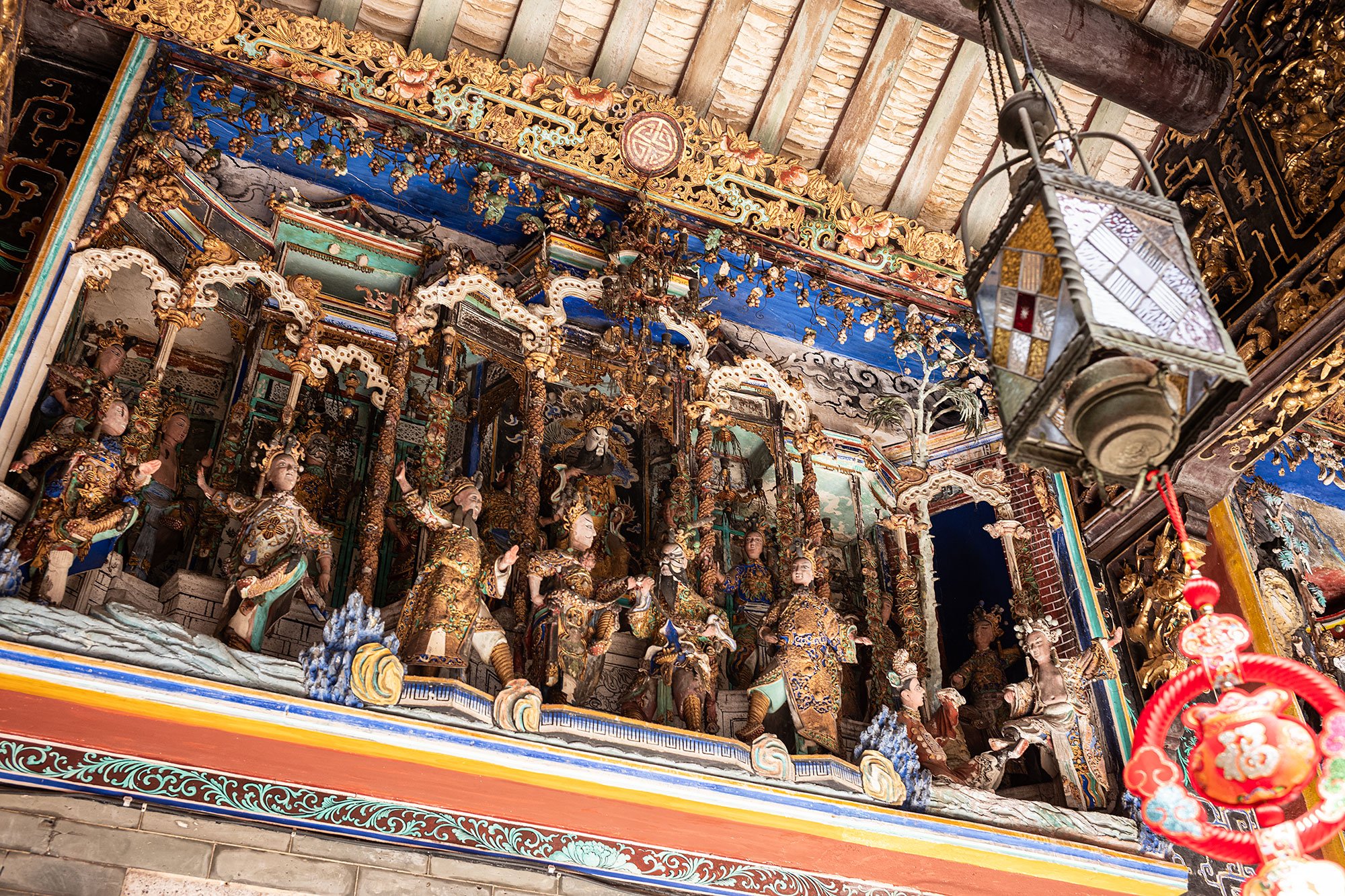
It’s a busy day for the mansion and I wind my way through the crowds of people who are visiting. Once in a while a tour group will traipse through, causing a bottle neck, but for the most part it’s a managable crowd. It’s not so easy for the people who are dressed up to take photos, posing in chairs and with props.
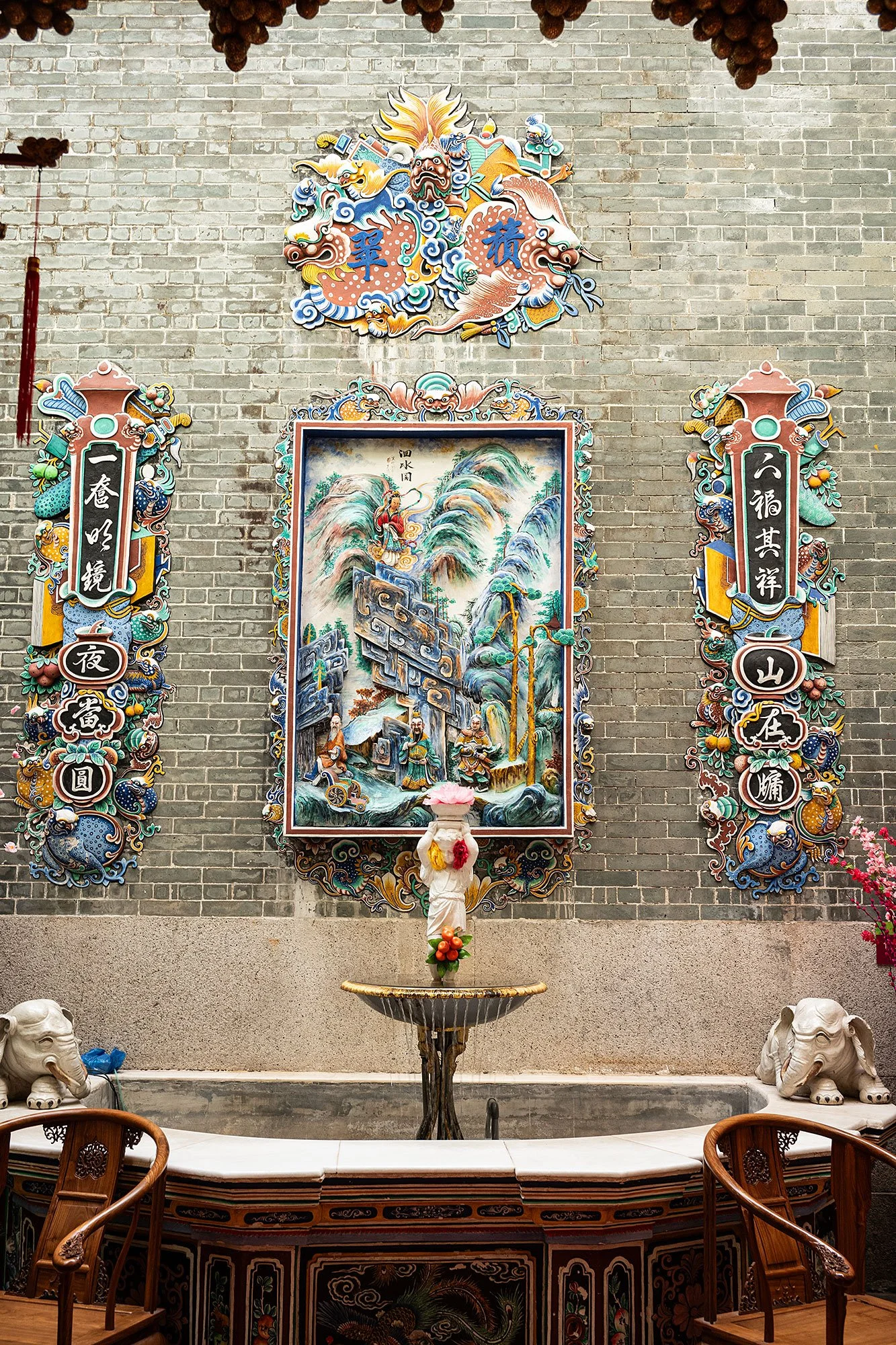
The temple next door is much quieter. Fewer people seem to make they way out of the house and through the corridor that leads to it, and I spend a few moments in relative quiet before heading back to the house.
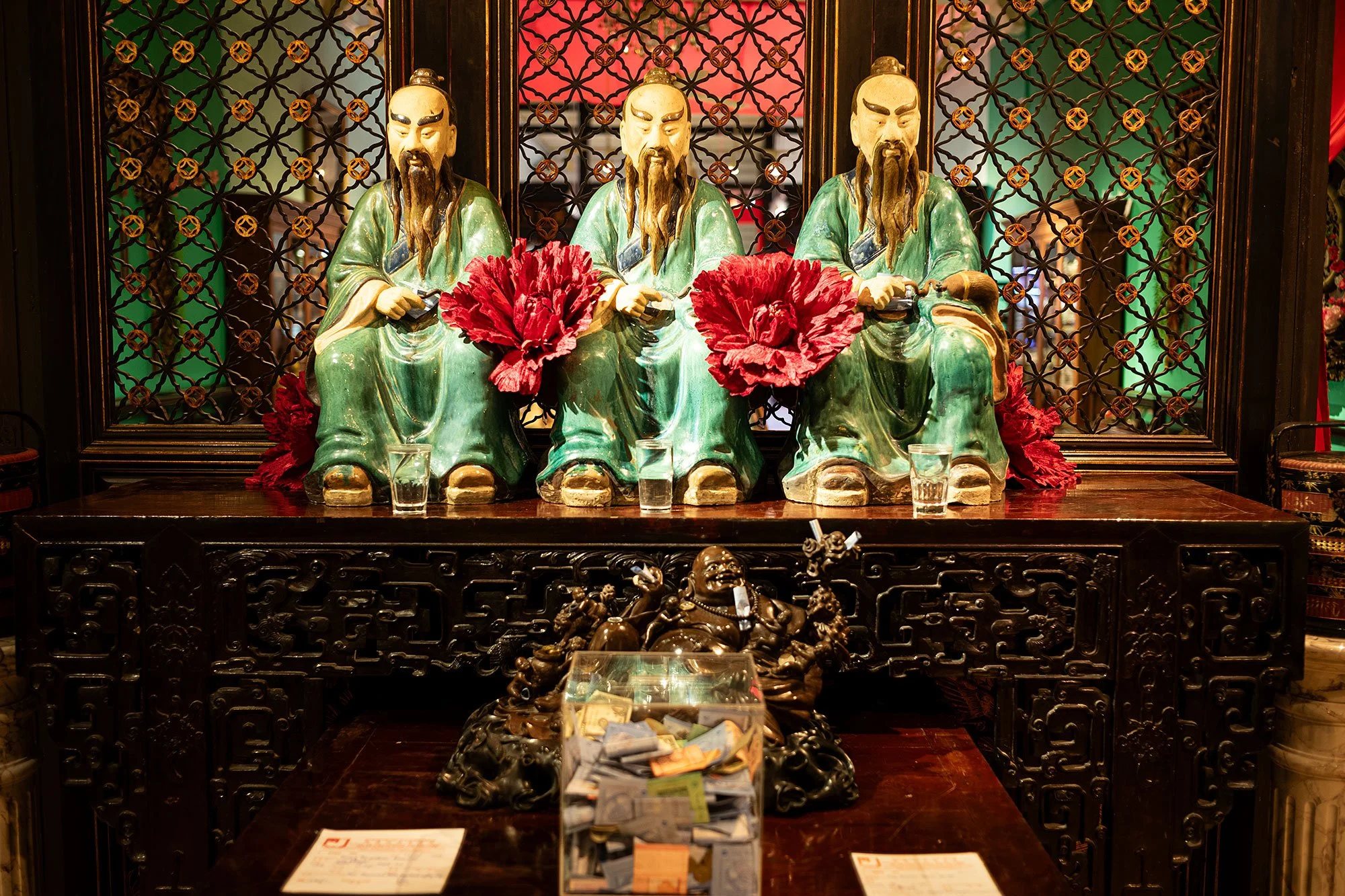
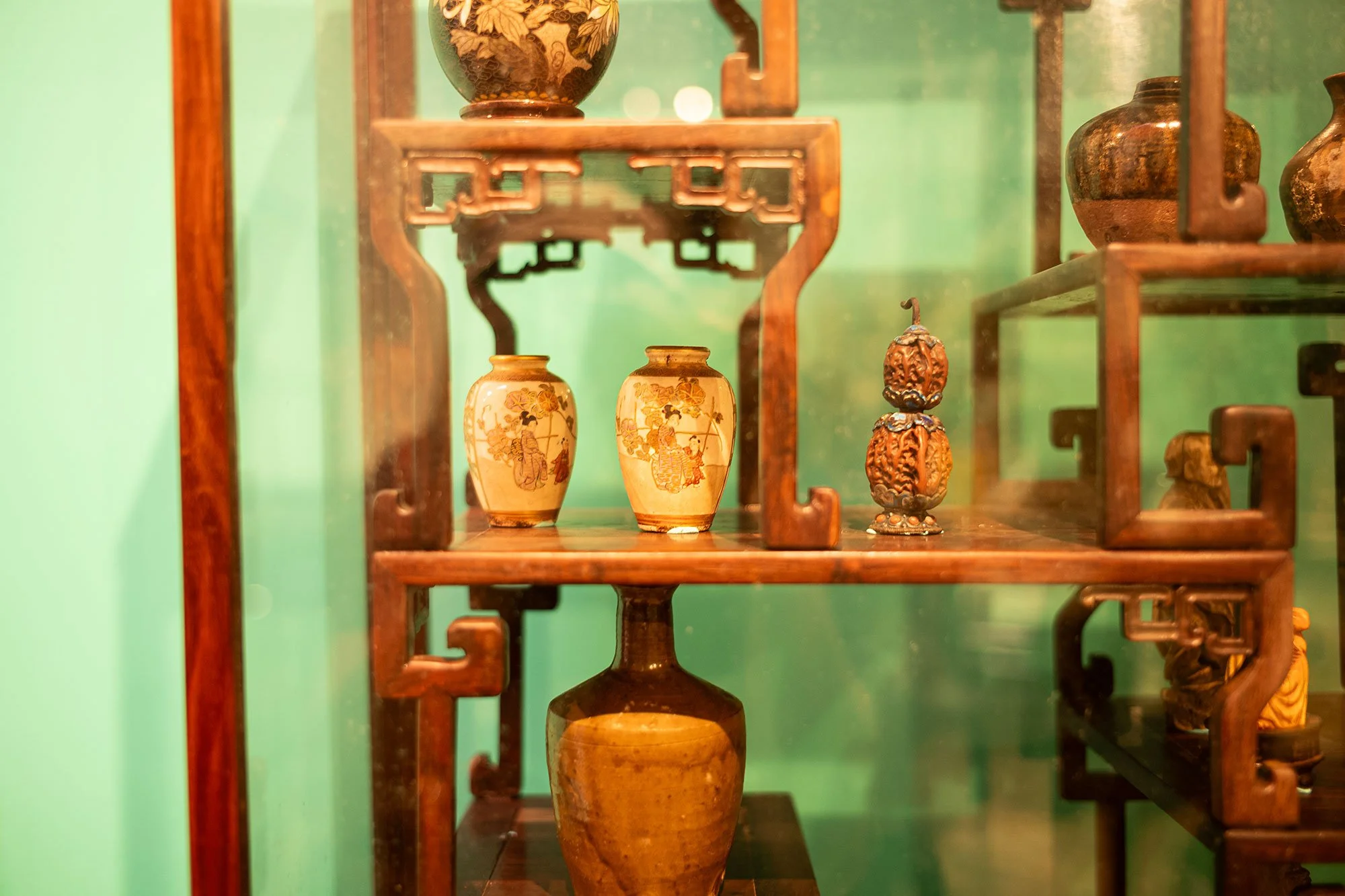
When I return to the main courtyard a film crew has commandeered some space in one of the adjacent rooms. I decide to take a seat to wait and see what they’re filming. It’s a promo for Malaysian Airways. An woman dressed in their livery is shot from behind as she walks into the courtyard and turns to admire her surroundings.
I’m surprised that they haven’t closed down the museum for the shot, but I’m told they wanted the atmosphere of the crowds. I don’t have any scheduled flights on Malaysian, but having seen the promo I’m tempted to to see if I can spot it in their on-board preroll.
Leaving the museum I wander west somewhat aimlessly, ducking into the Thai Pak Koong temple (the second-oldest Chinese temple in the city) before continuing on to the Goddess of Mercy Temple.
Built in 1800, the temple is the oldest Chinese temple in Penang. Dedicated Guan Yin, the Buddhist Bodhisattva of Mercy, it was originally established for the worship of Mazu, a sea diety worshipped by the Hokkiens as a patron for seafarers. At the time, the island was sparsely populated.
In 1824 it was renovated and the main deity was changed to Guan Yin, influenced by the droves of Chinese immigrants who had been flocking to the island. By then the temple had also begun to function as a neutral mediator between the Cantonese and Hokkien communities.
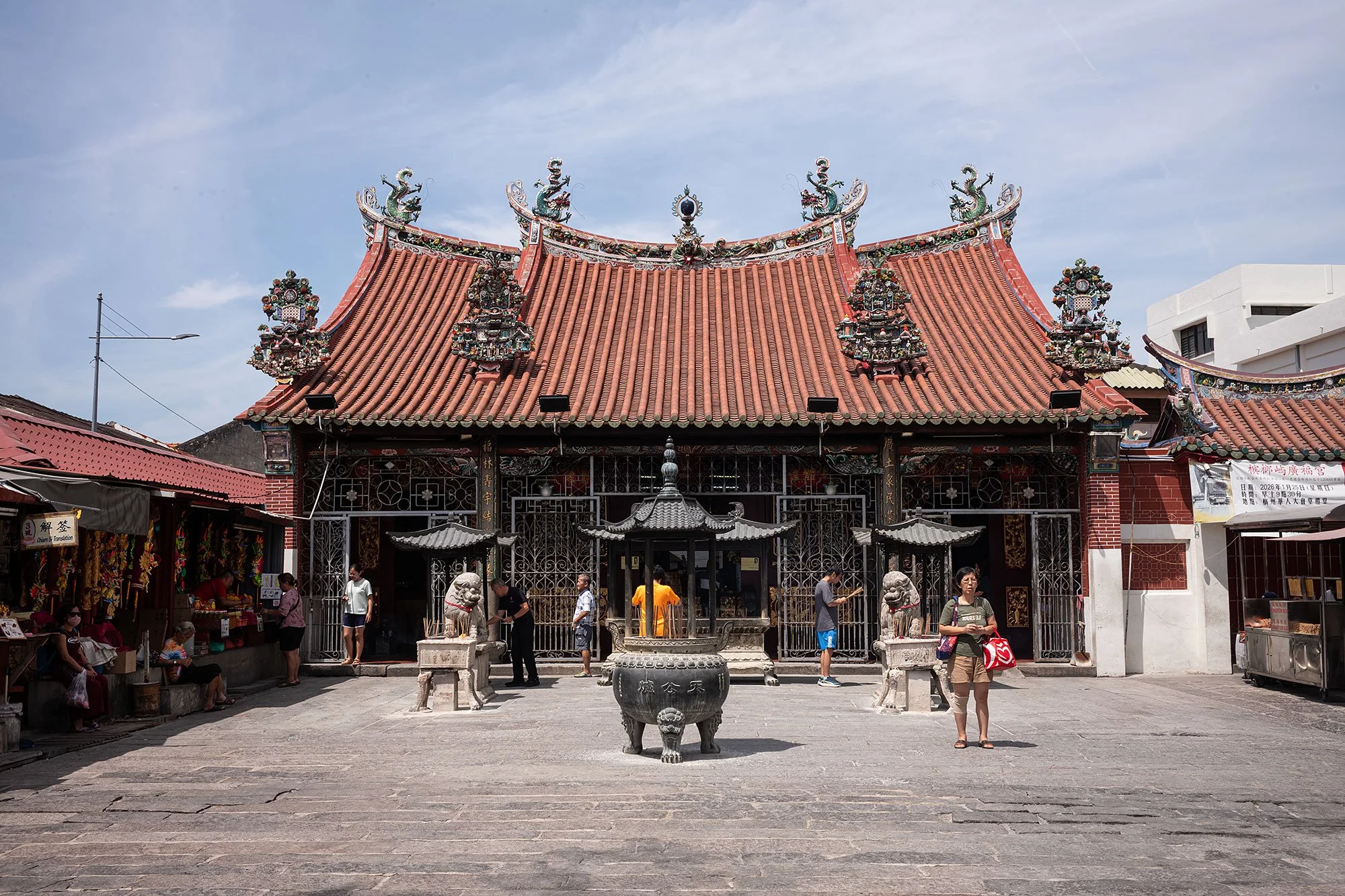
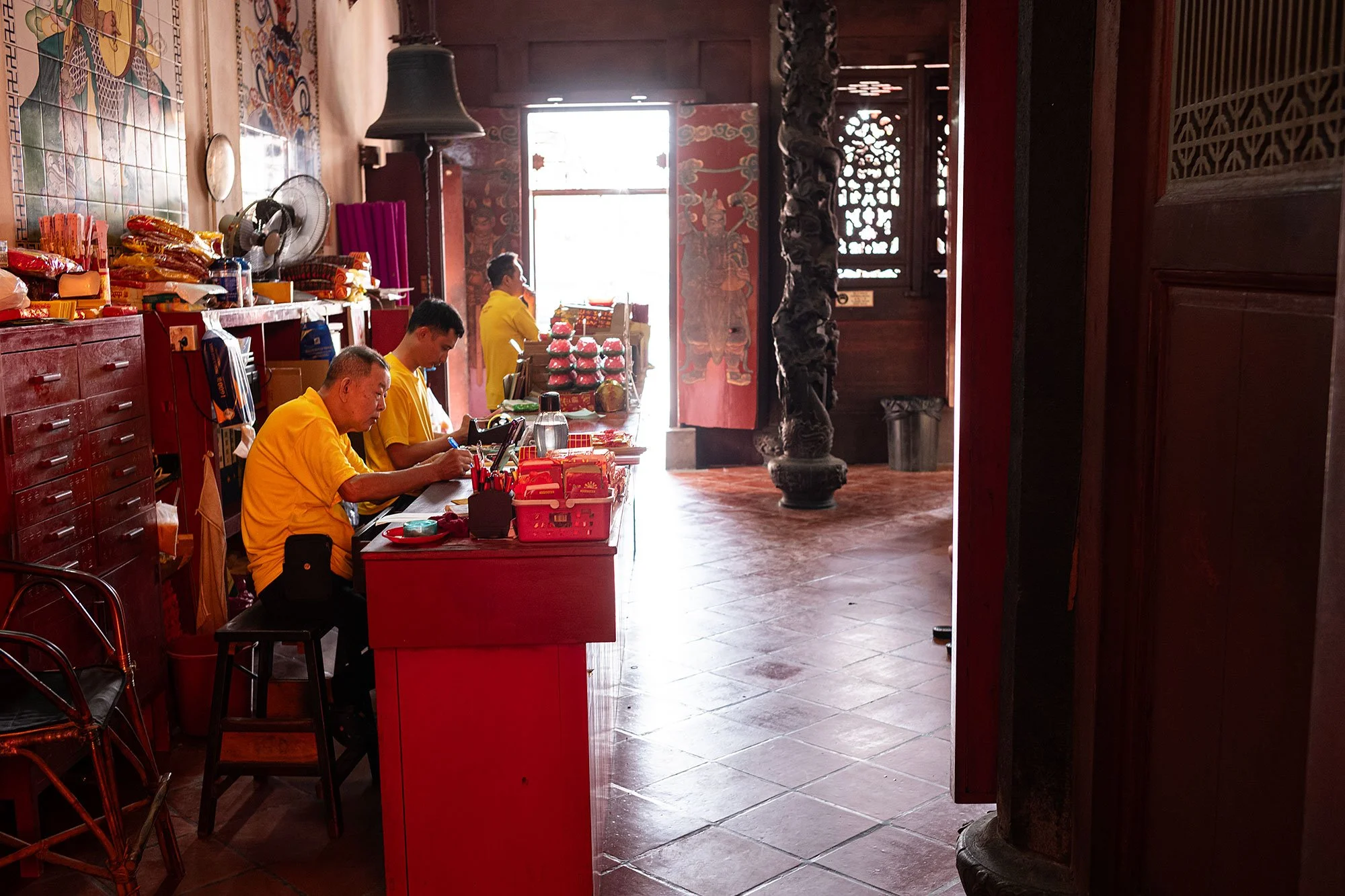
It’s become a very warm and humid day and I’m happy to spend a few moments cooling off in the shaded halls of the temple. It’s quiet inside and I take my time visiting.
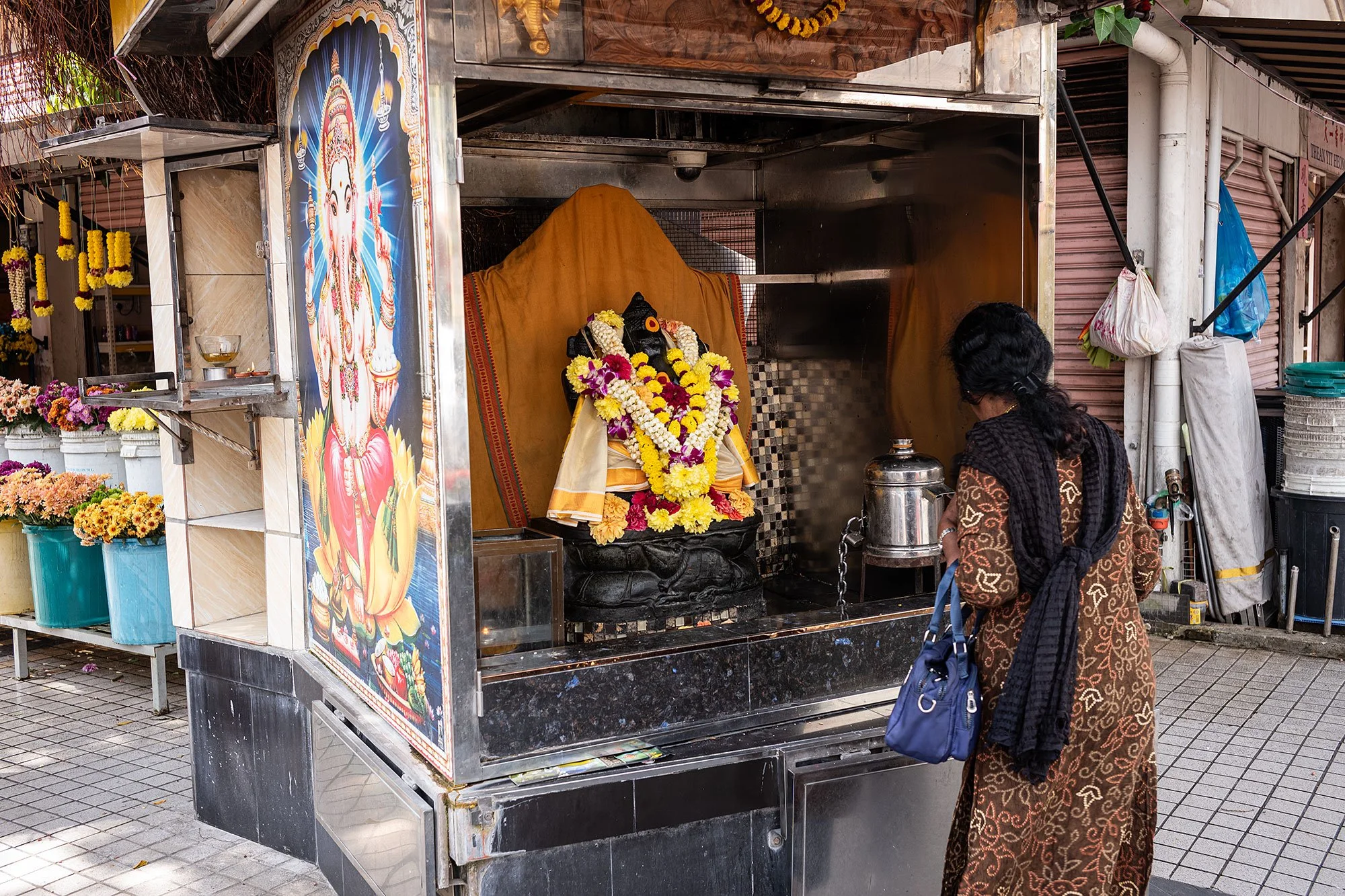
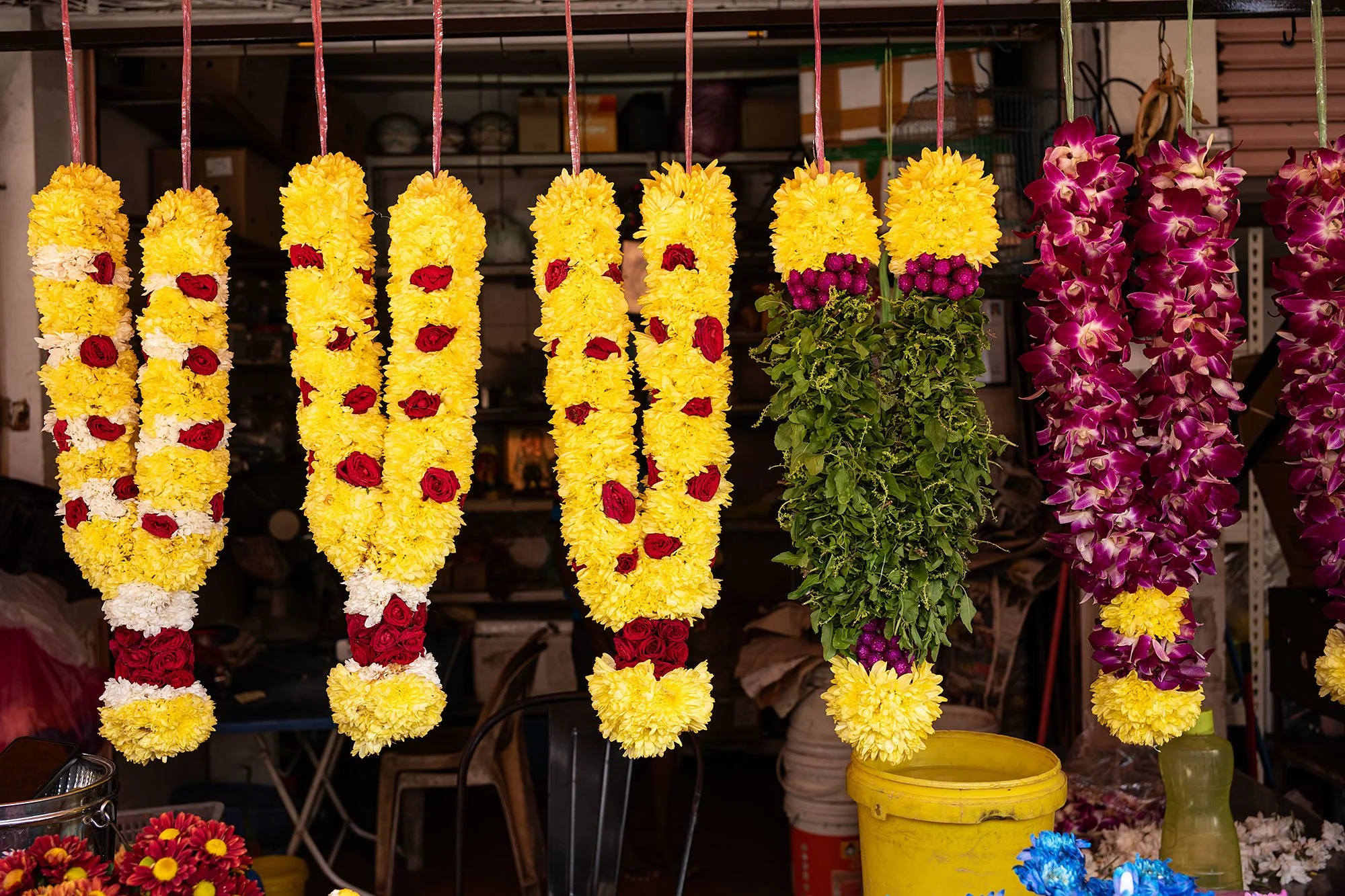
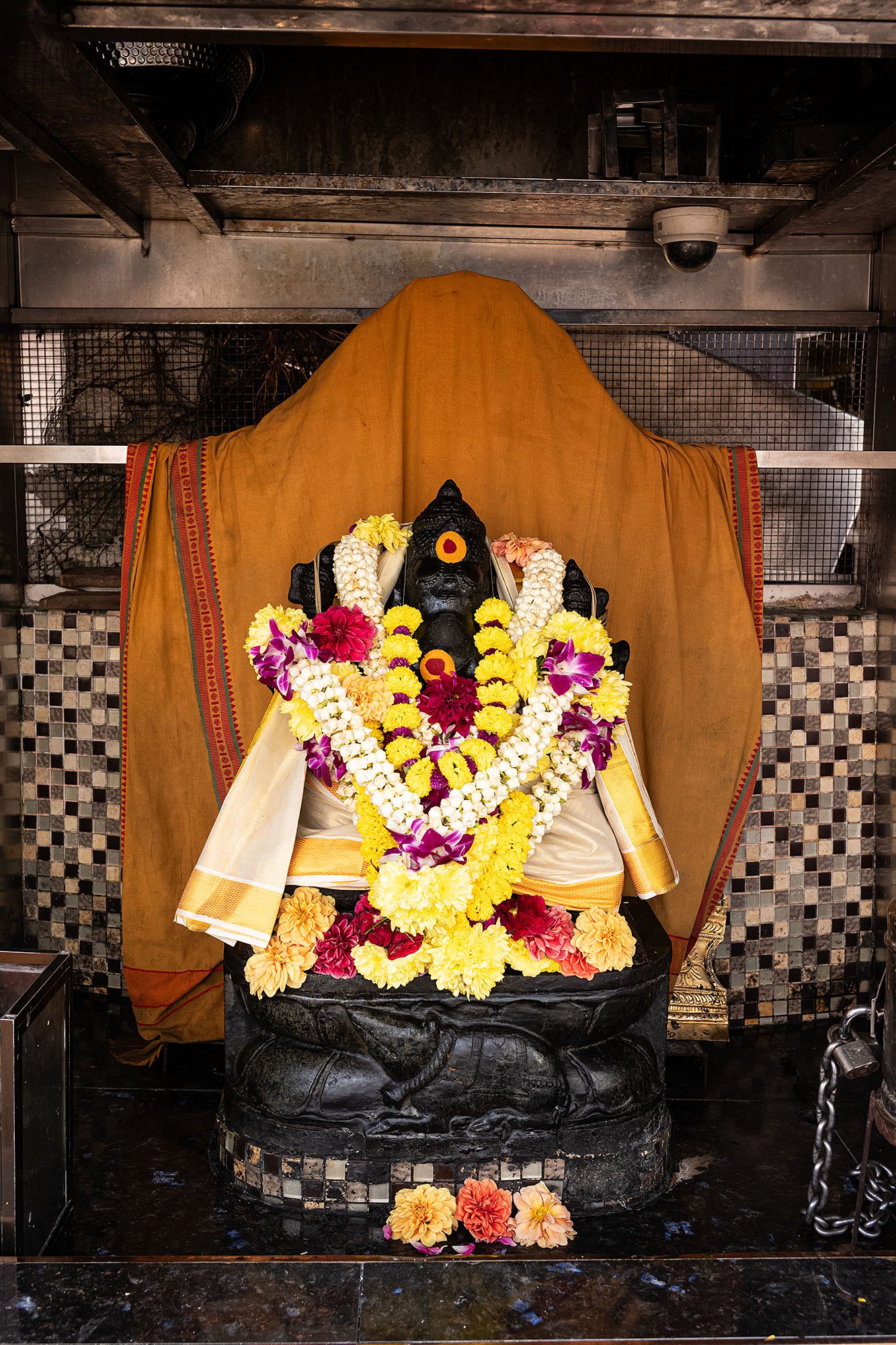
Outside I pass a Hindu shrine. A series of stalls selling flowers and garlands. It’s incredible how many temples there are in Penang, and I love how different religions coexist, their shrines and temples standing alongside each other.
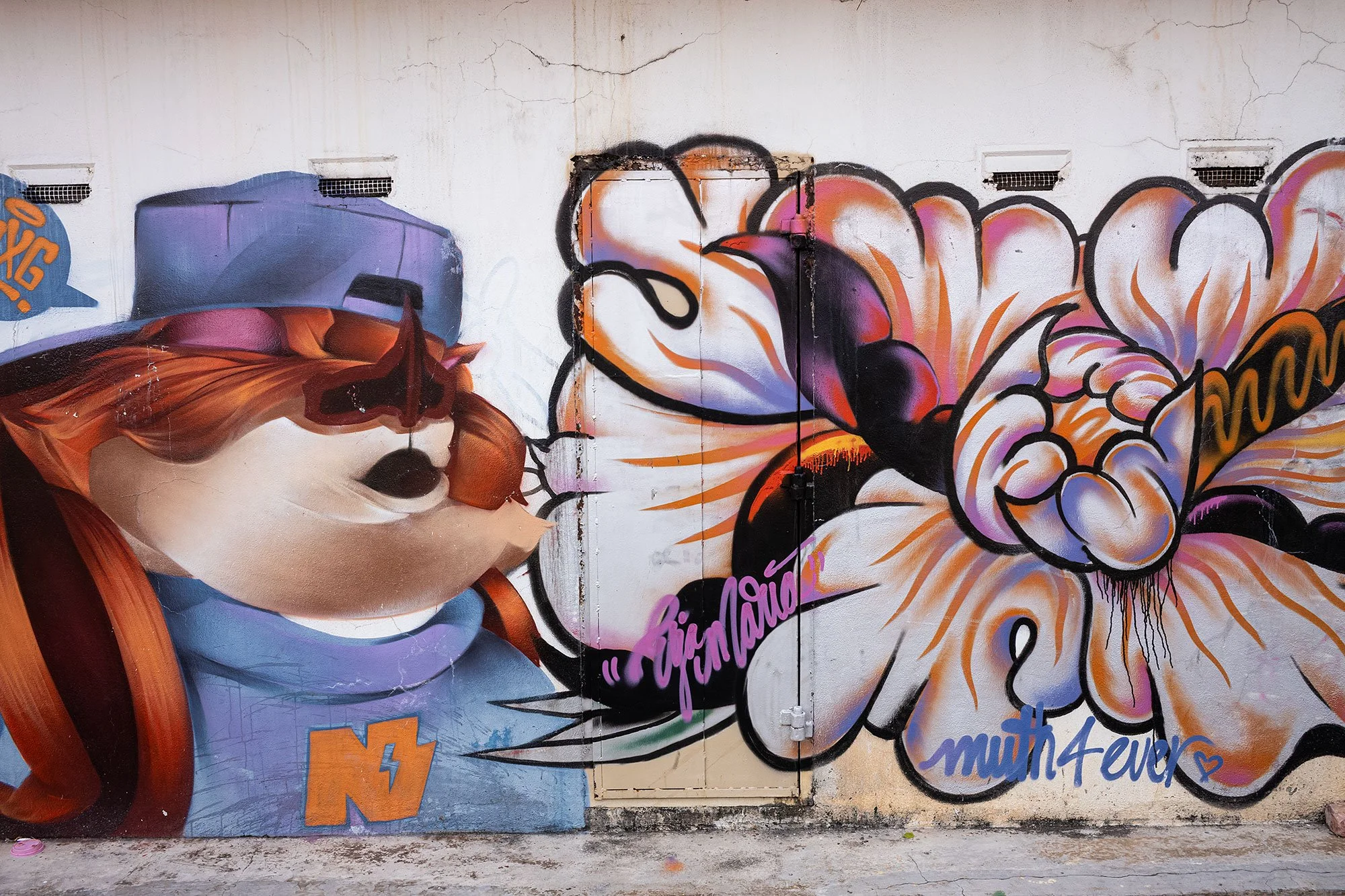
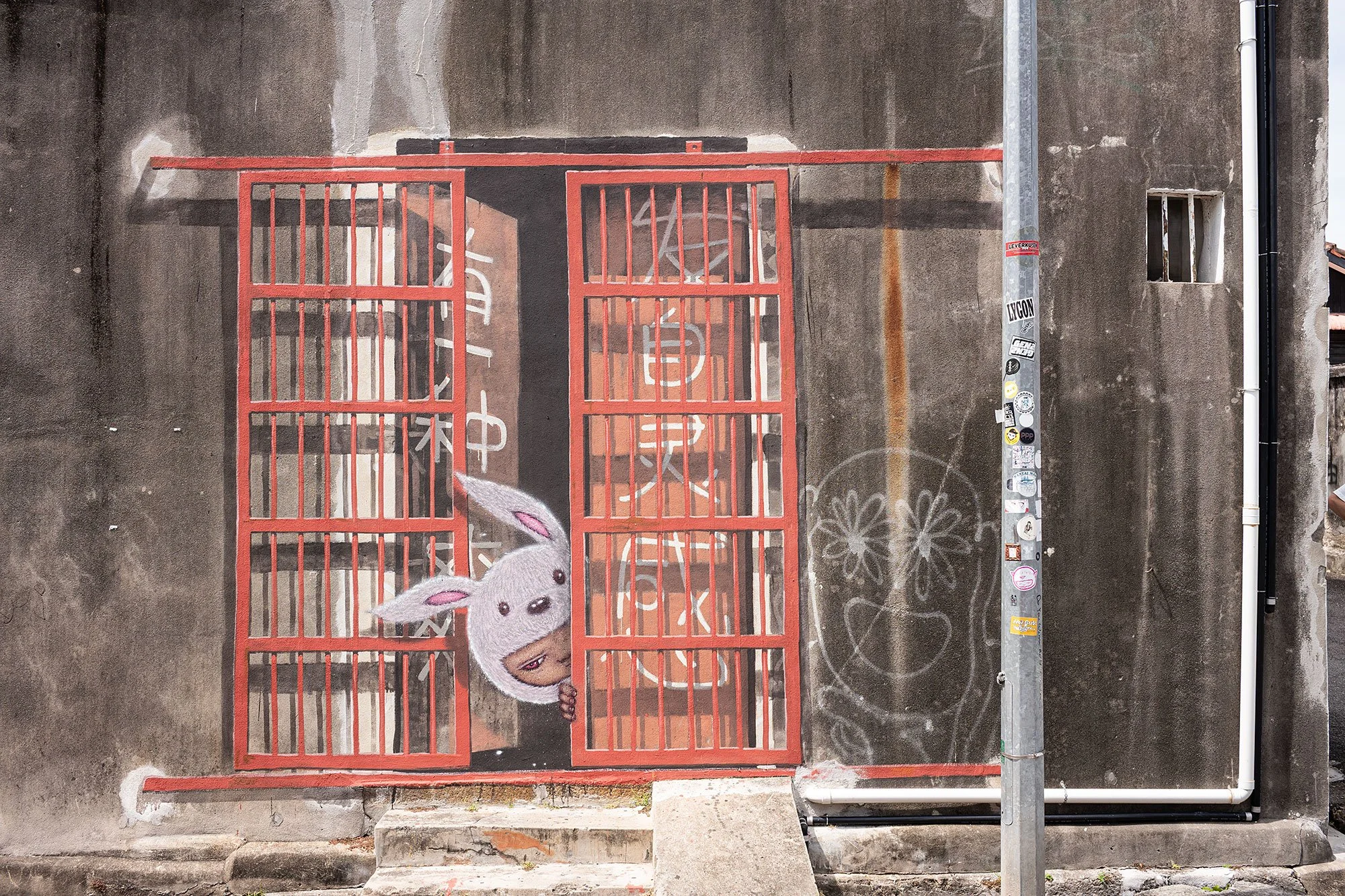
Another thing that excites me about Penang is the amount of street art that’s on display. There’s maps available that point guide you to a lot of the more prominent ones.
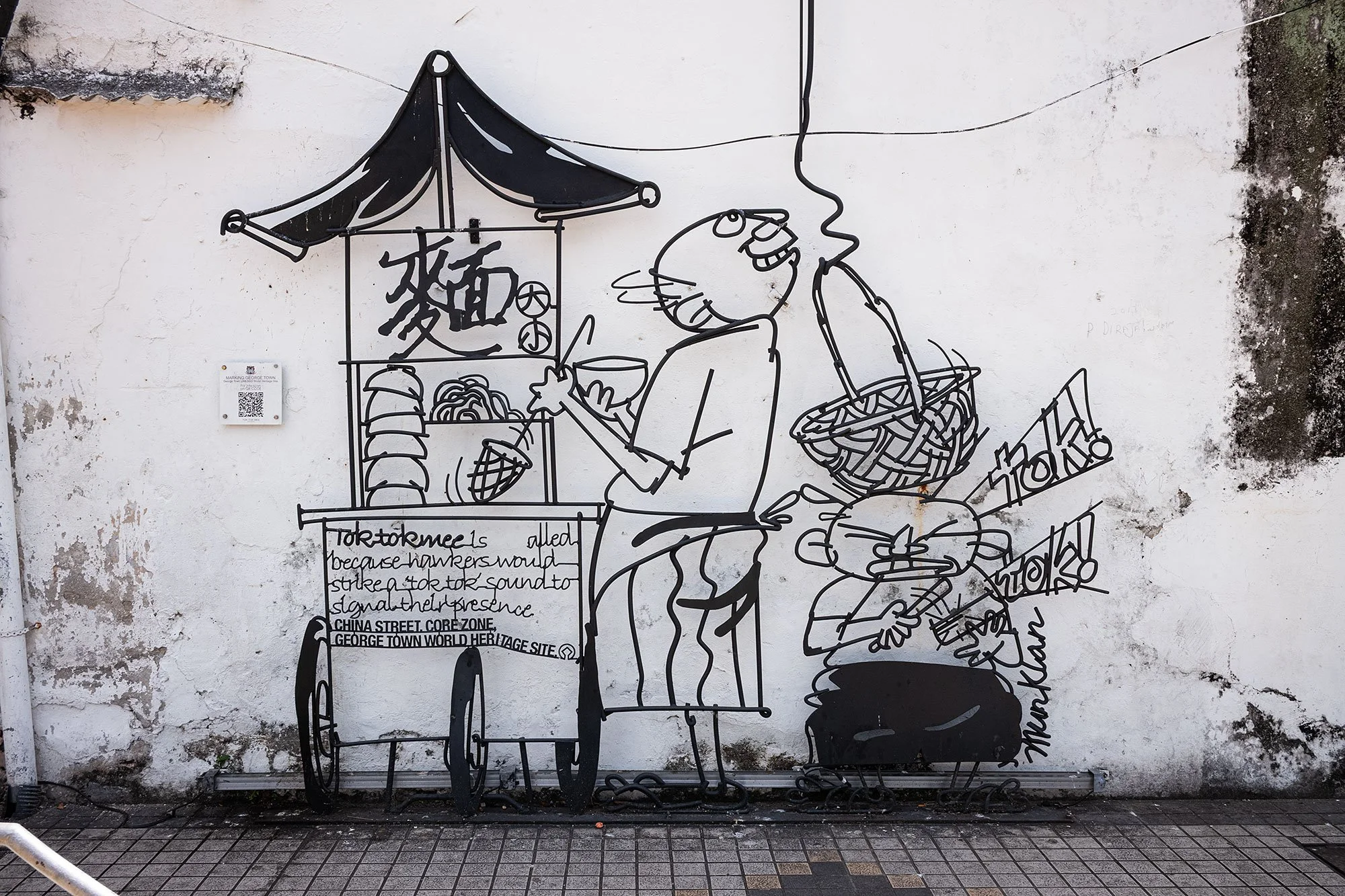
A series of wire scupltures also dot the streets of George Town depicting historical scenes and caricatures that highlight the cultural history of Penang. Designed by the Kuala-Lumpur-based design studio Sculptureatwork, they featuring contributions from Tang Mun Kian, Reggie Lee, Julian “Lefty” Kam, and Baba Chuah.
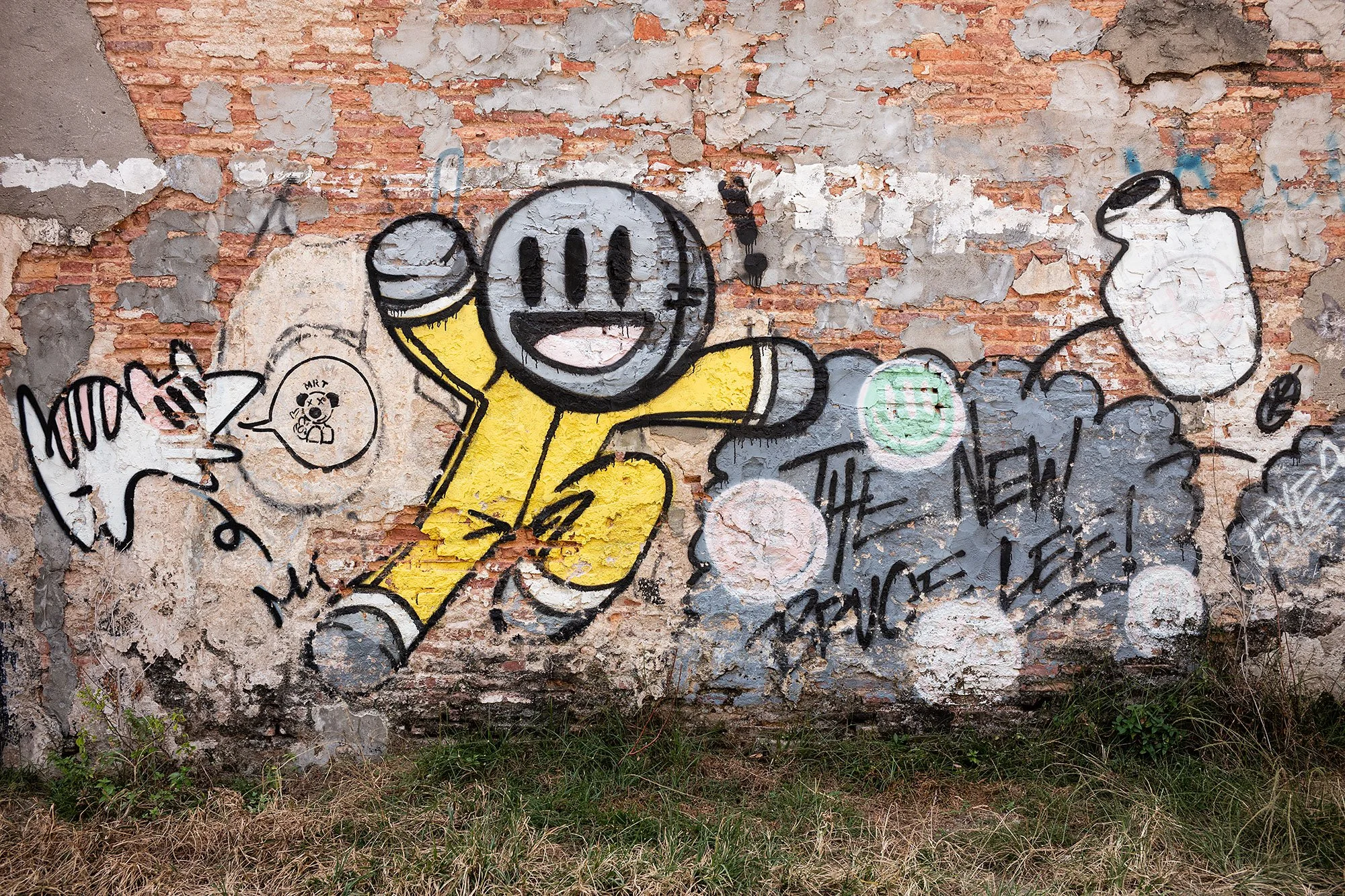
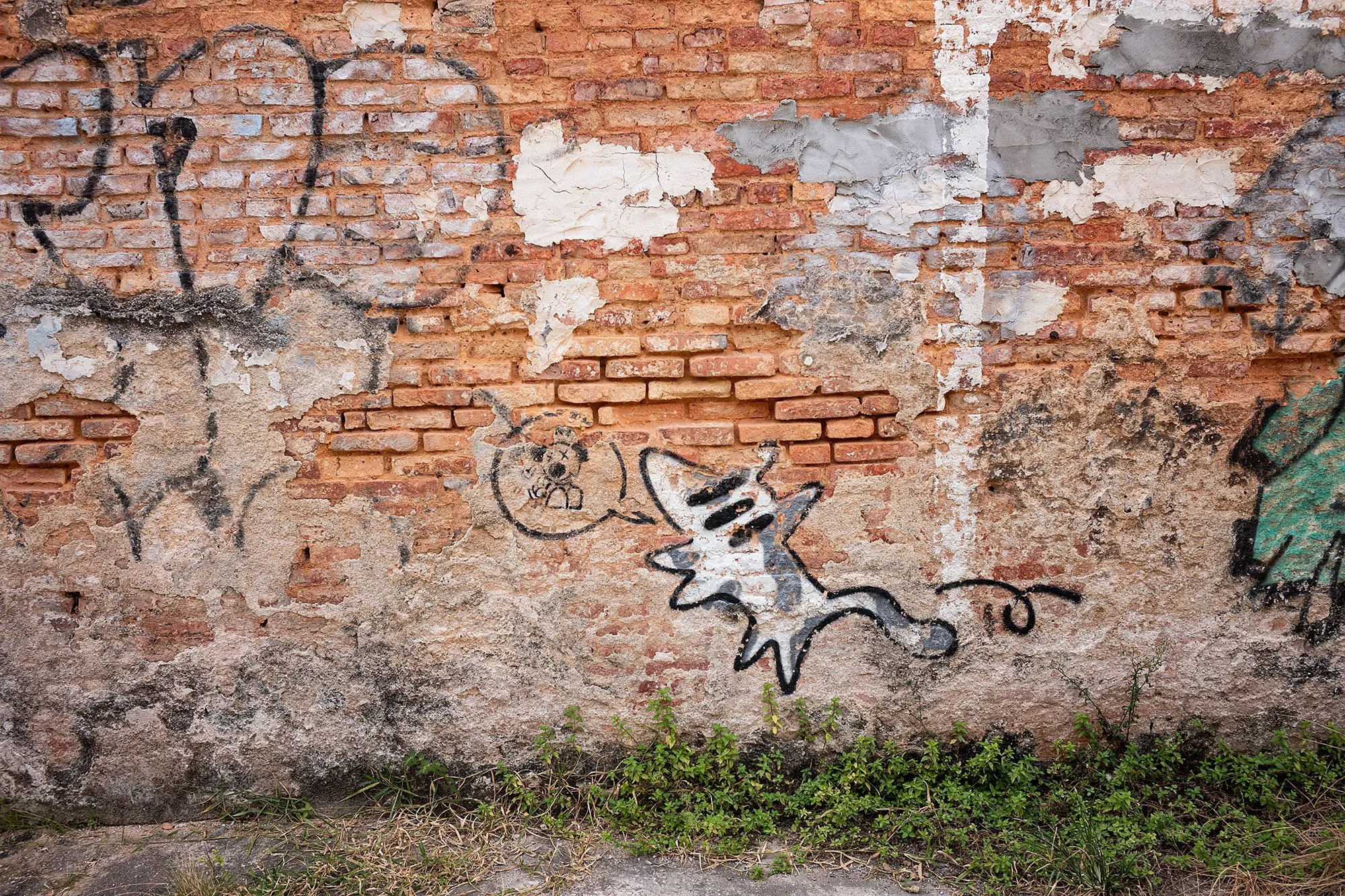
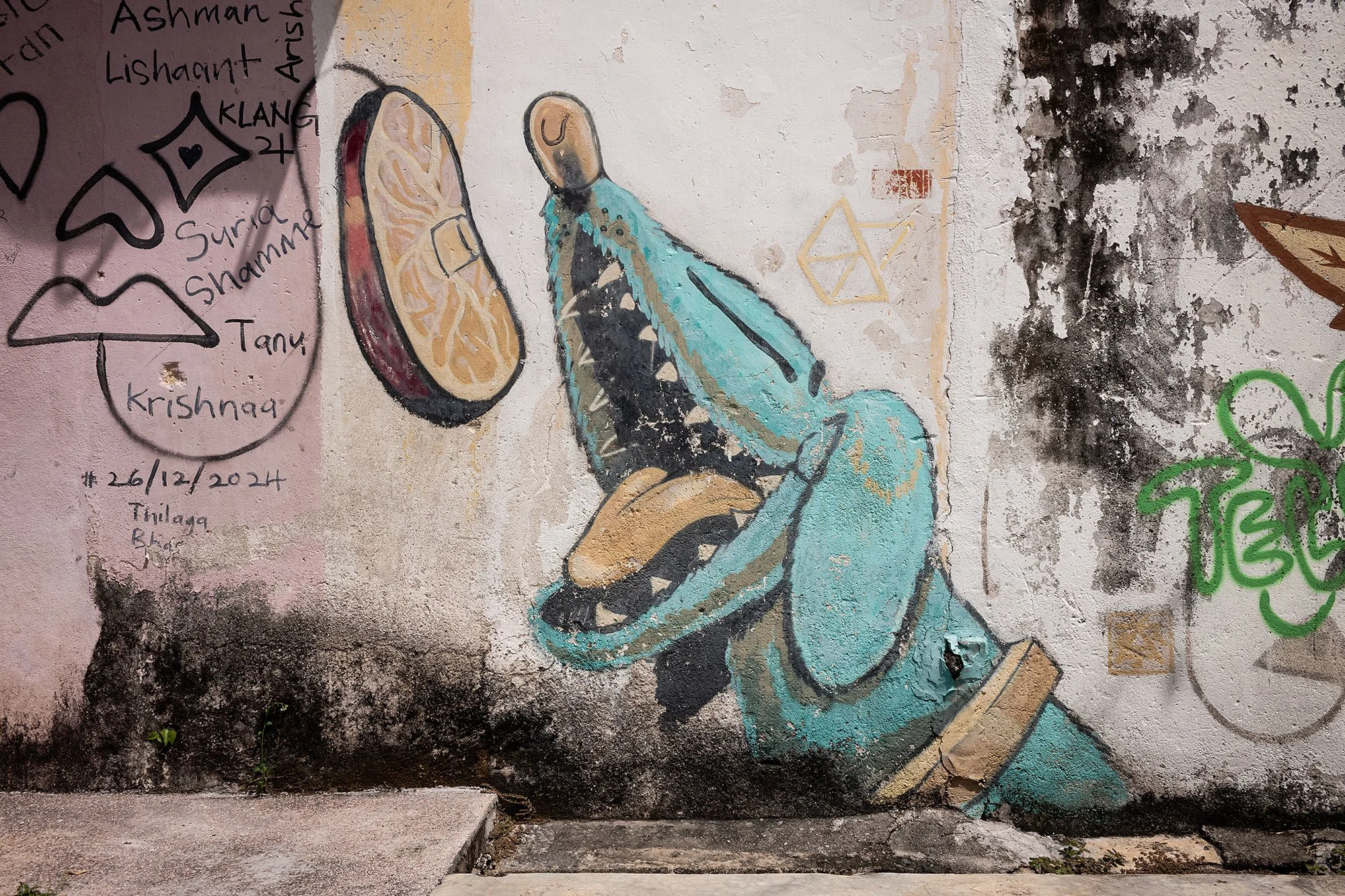
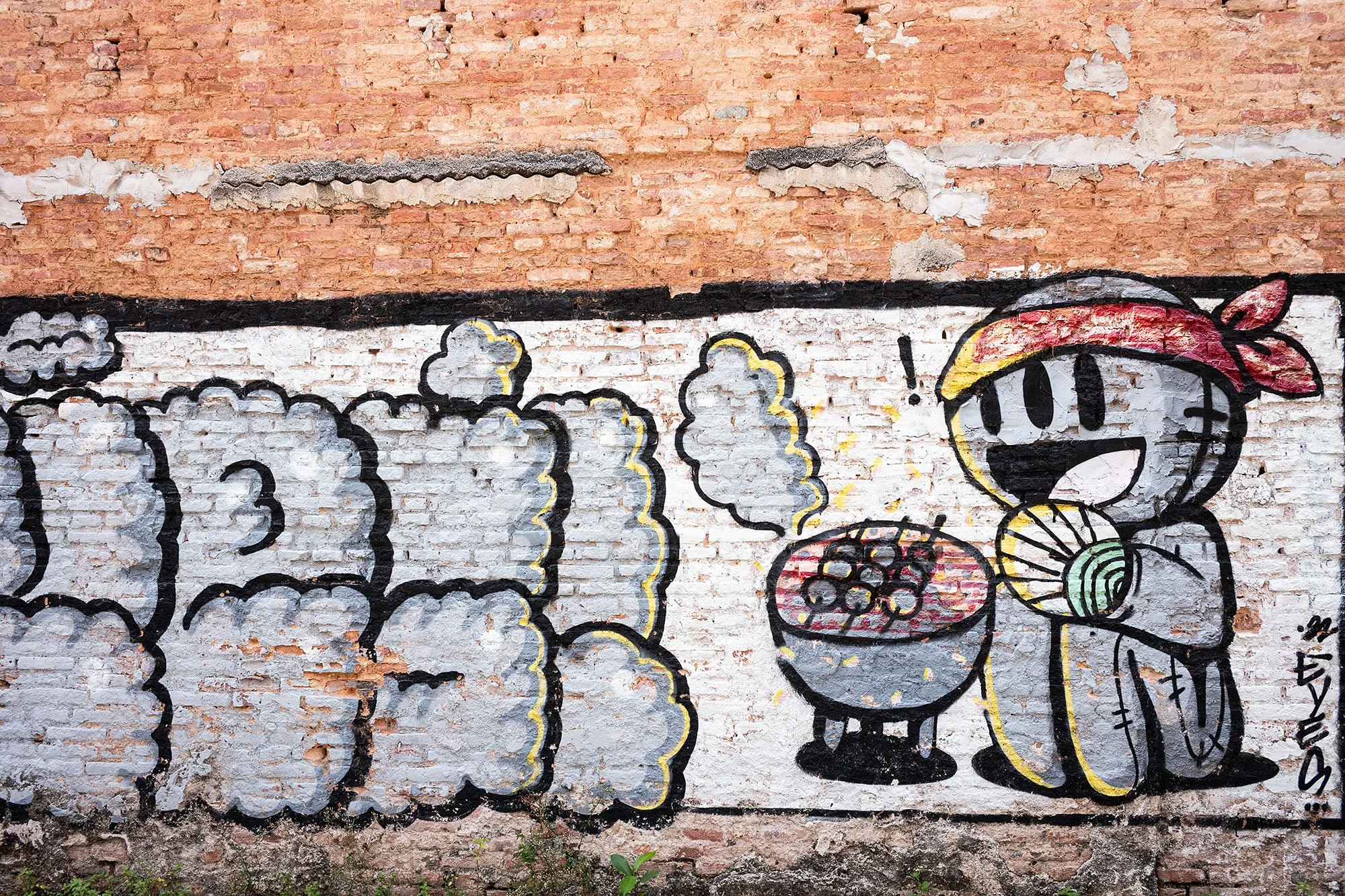
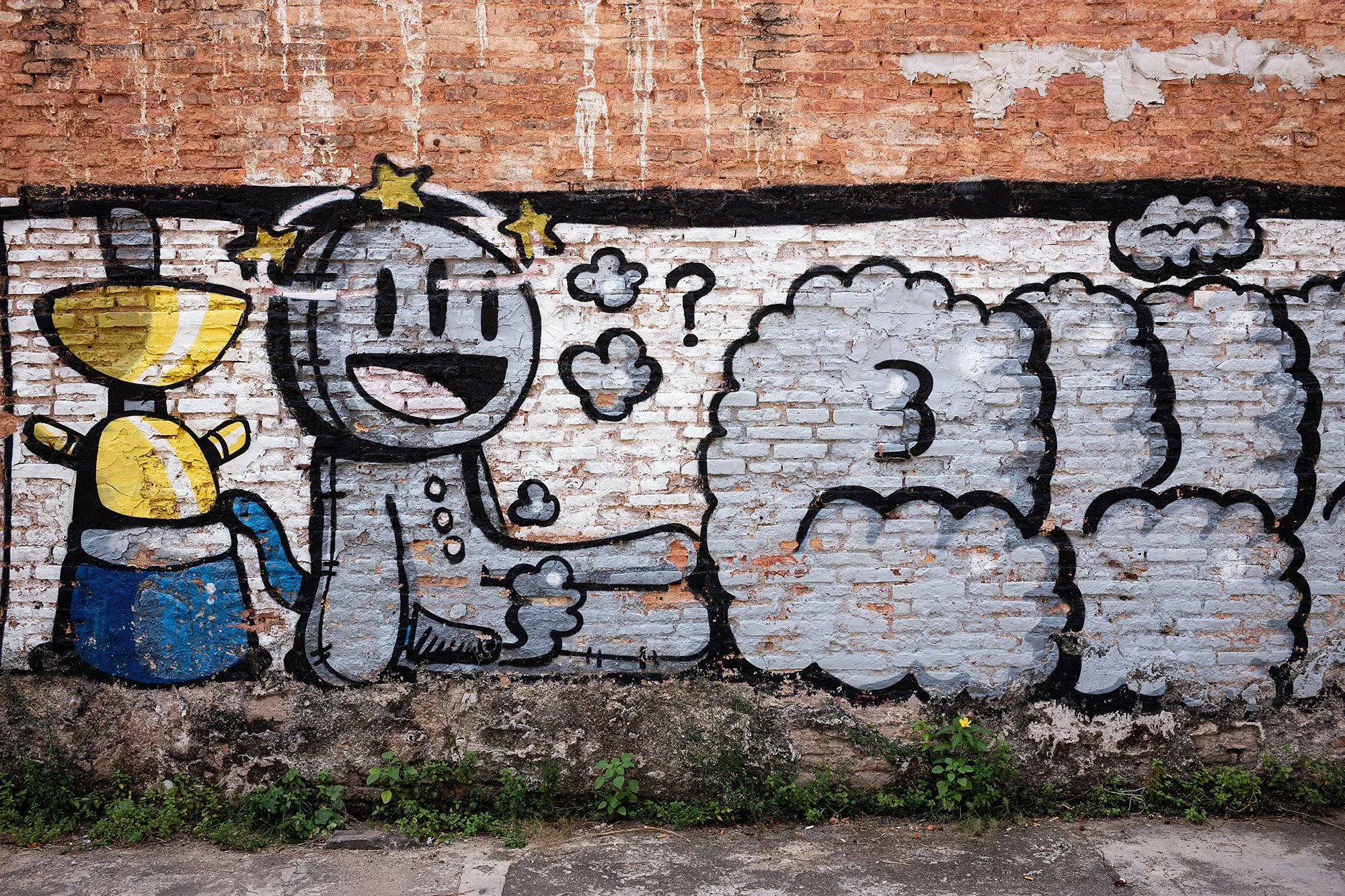
Following a map I wind my way to a couple of alleys and streets known for their art. On the map they’ve been given names like The Real Bruce Lee Would Never Do This and Happy Dog with Steak. I’m not sure who coined the titles, but I particularly love the second one (and the art itself).
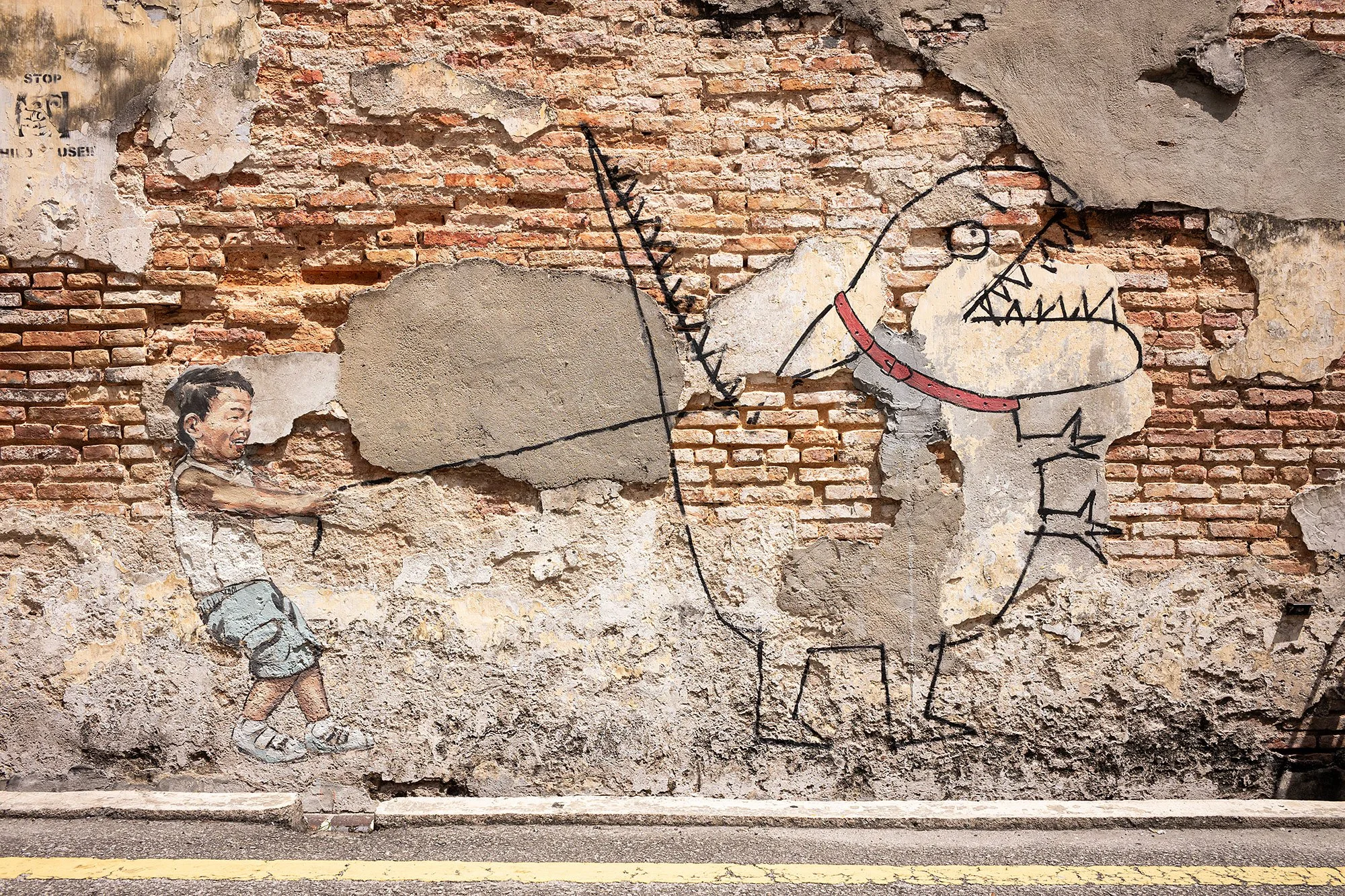
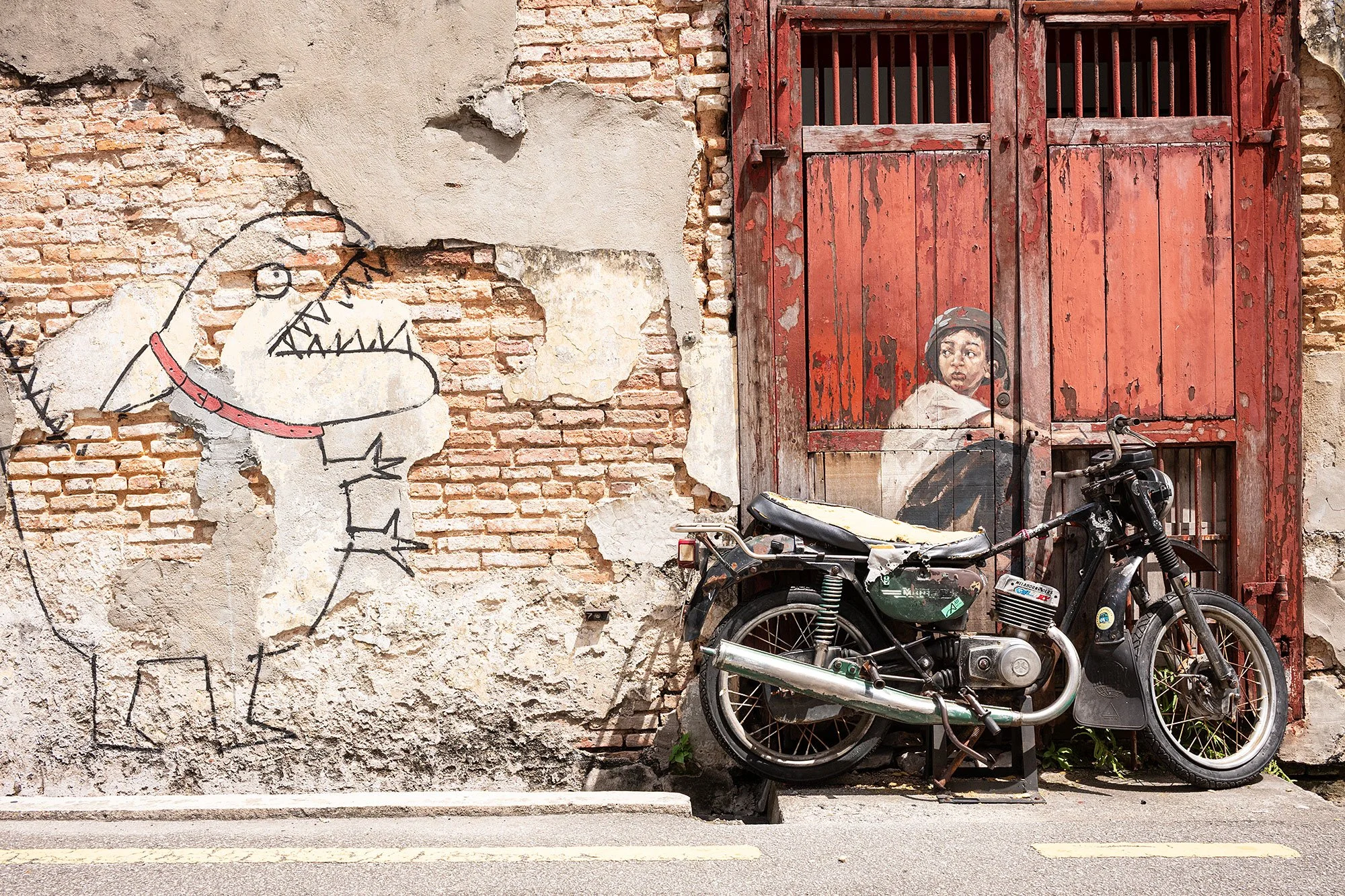
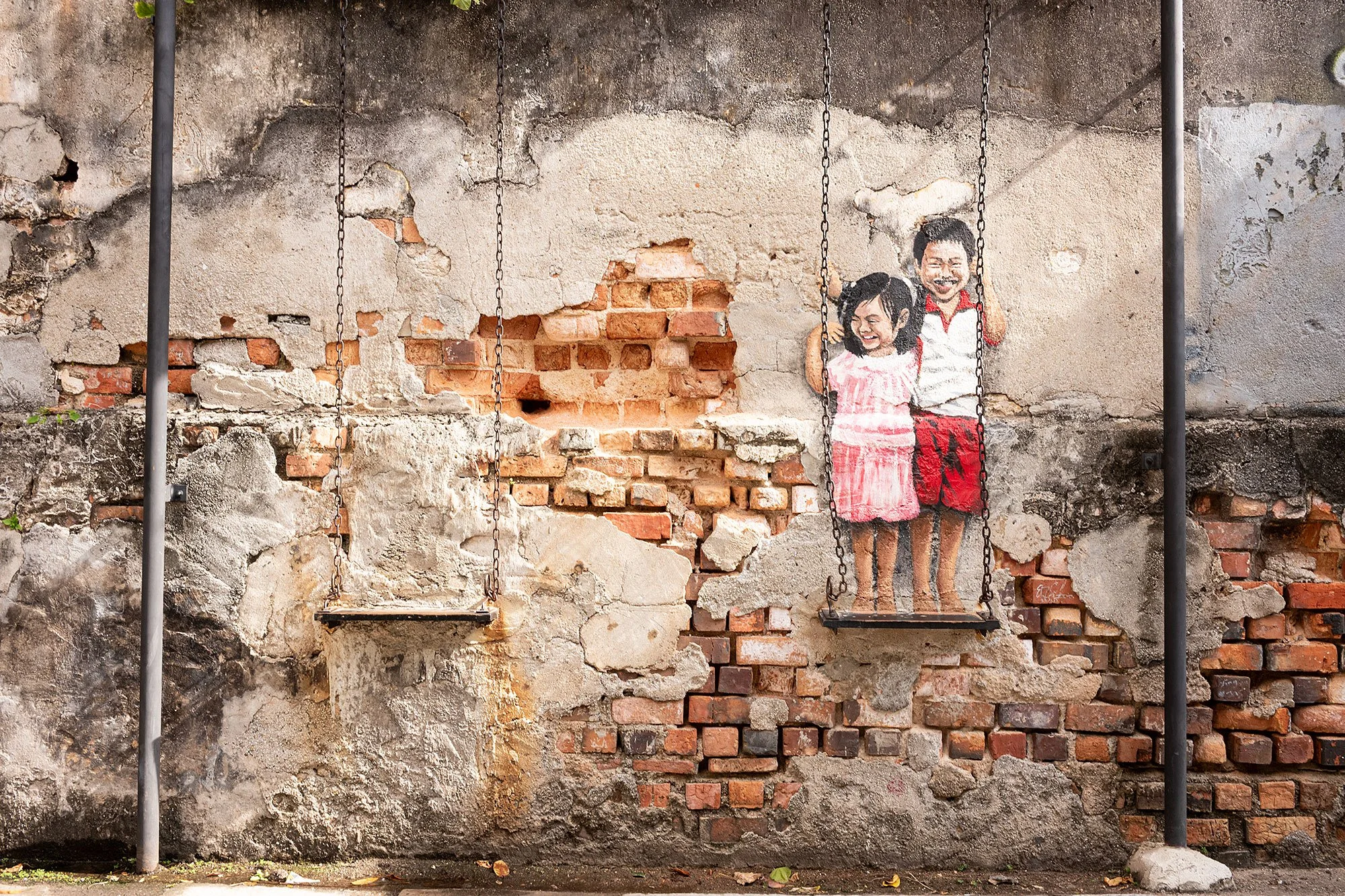
Nearby I spot the Little Boy with Pet Dinosaur and Boy on Motorbike, both by Lithuanian artist Ernest Zacharevic. Commissioned for the 2012 George Town Festival they’ve become iconic pieces of art in the city, for good reason. I love them both, the former especially for how it reflects a child’s imagination in the way in which the dinosaur is rendered. It’s a charming piece of work.
Continuing down the street I stop to admire more pieces before rounding a corner and heading down Lebuh Armenian to spot another famous commission by Zacharevic’s of children riding a bicycle.
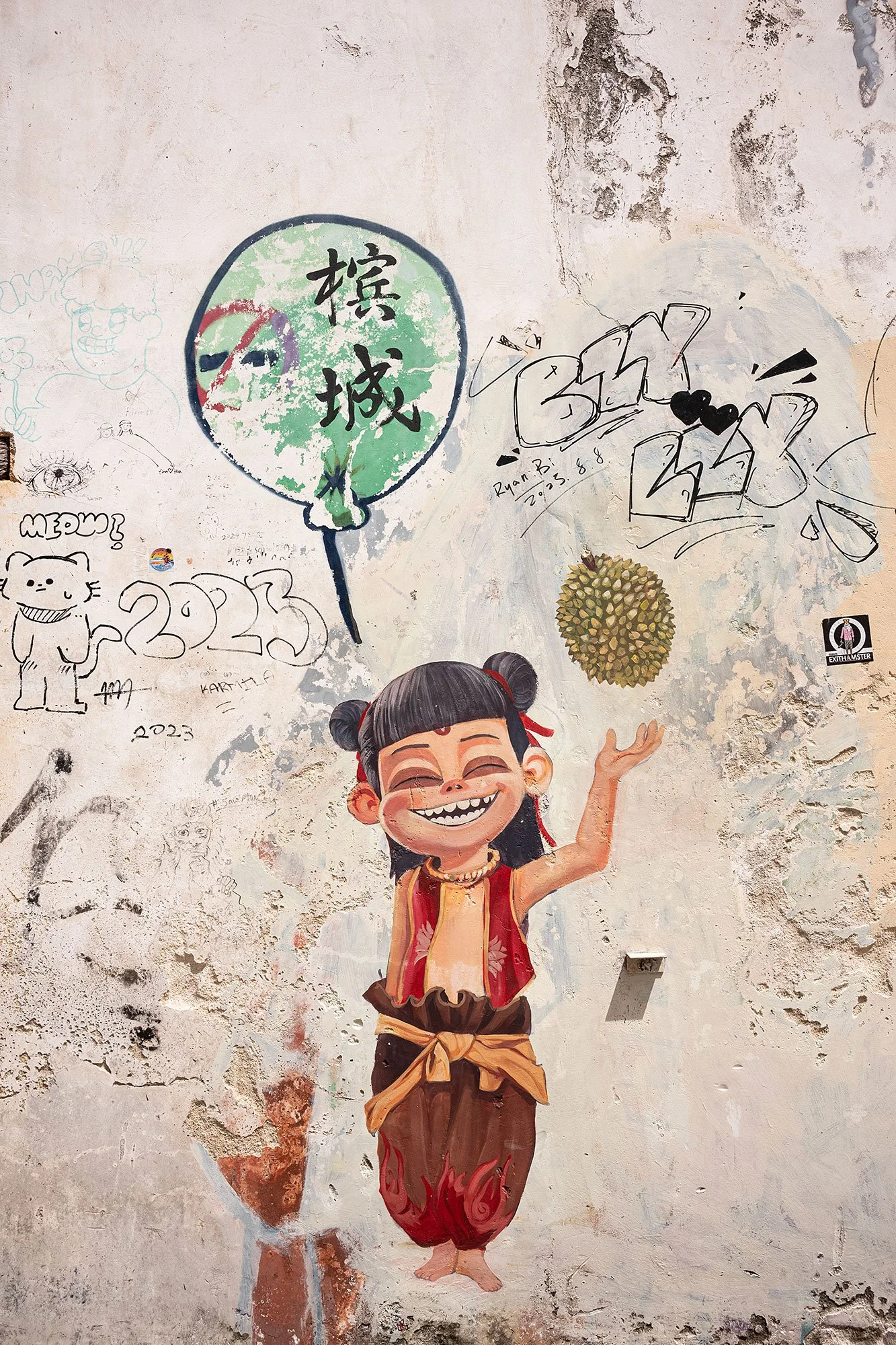
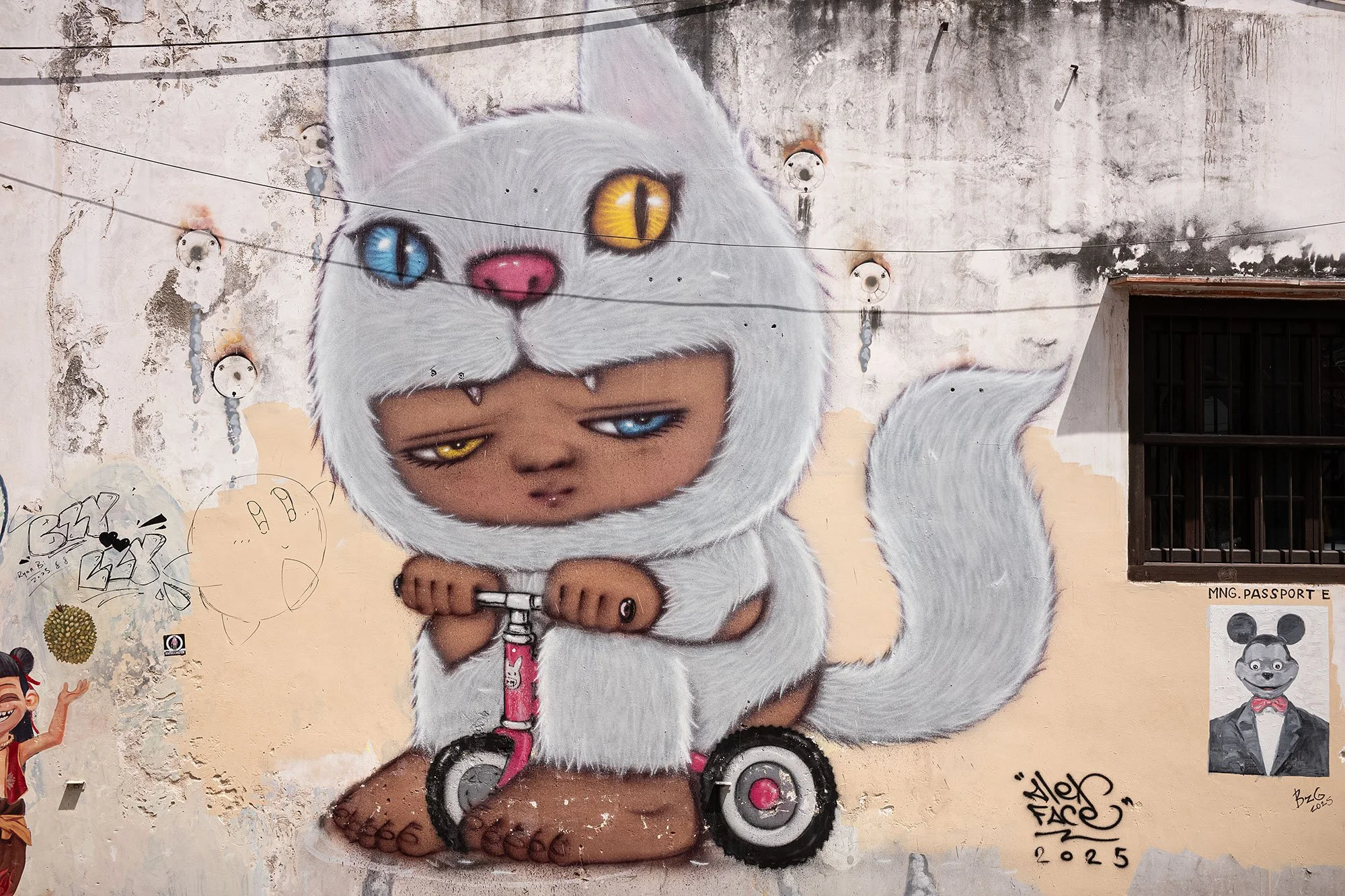
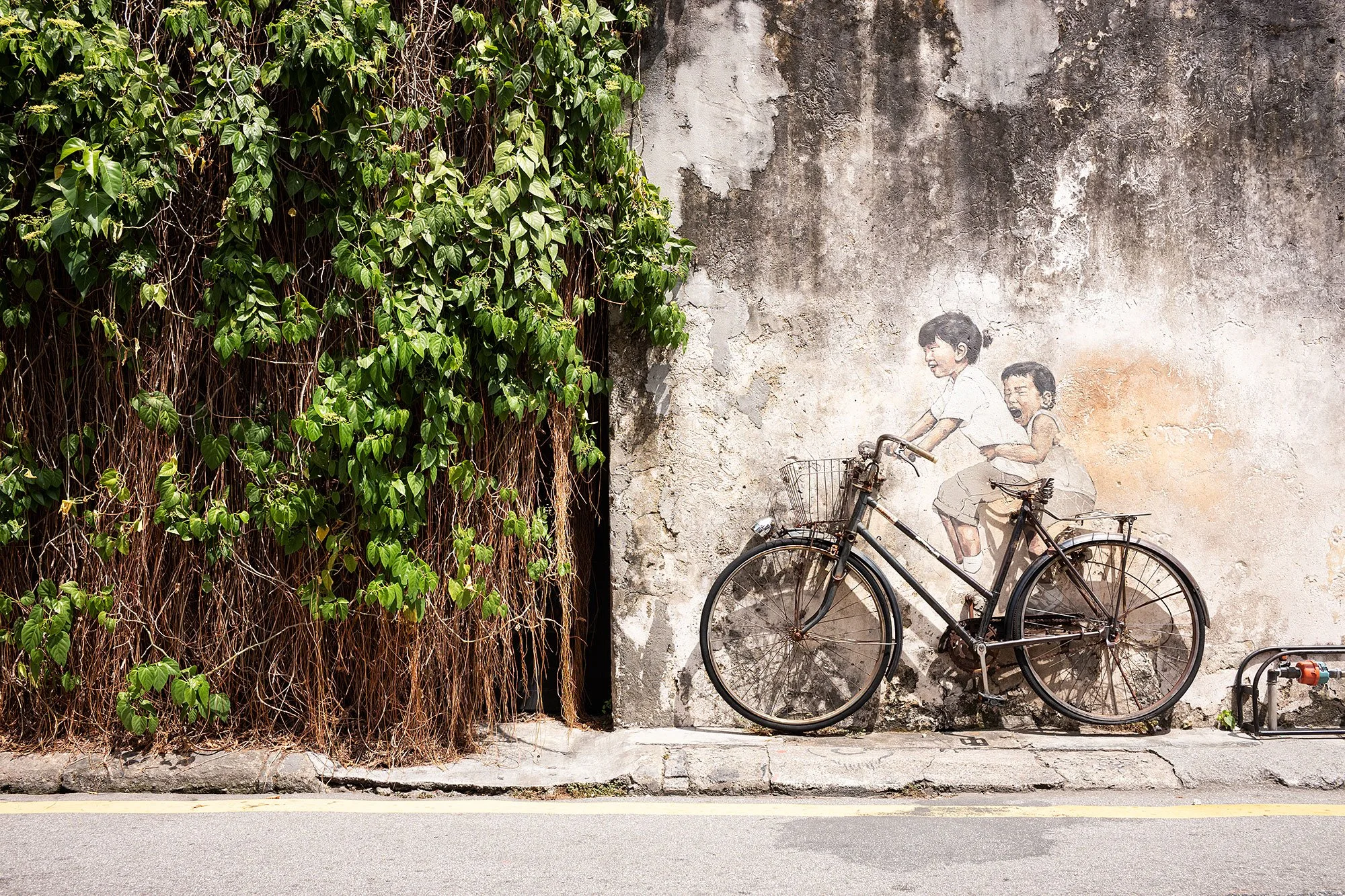
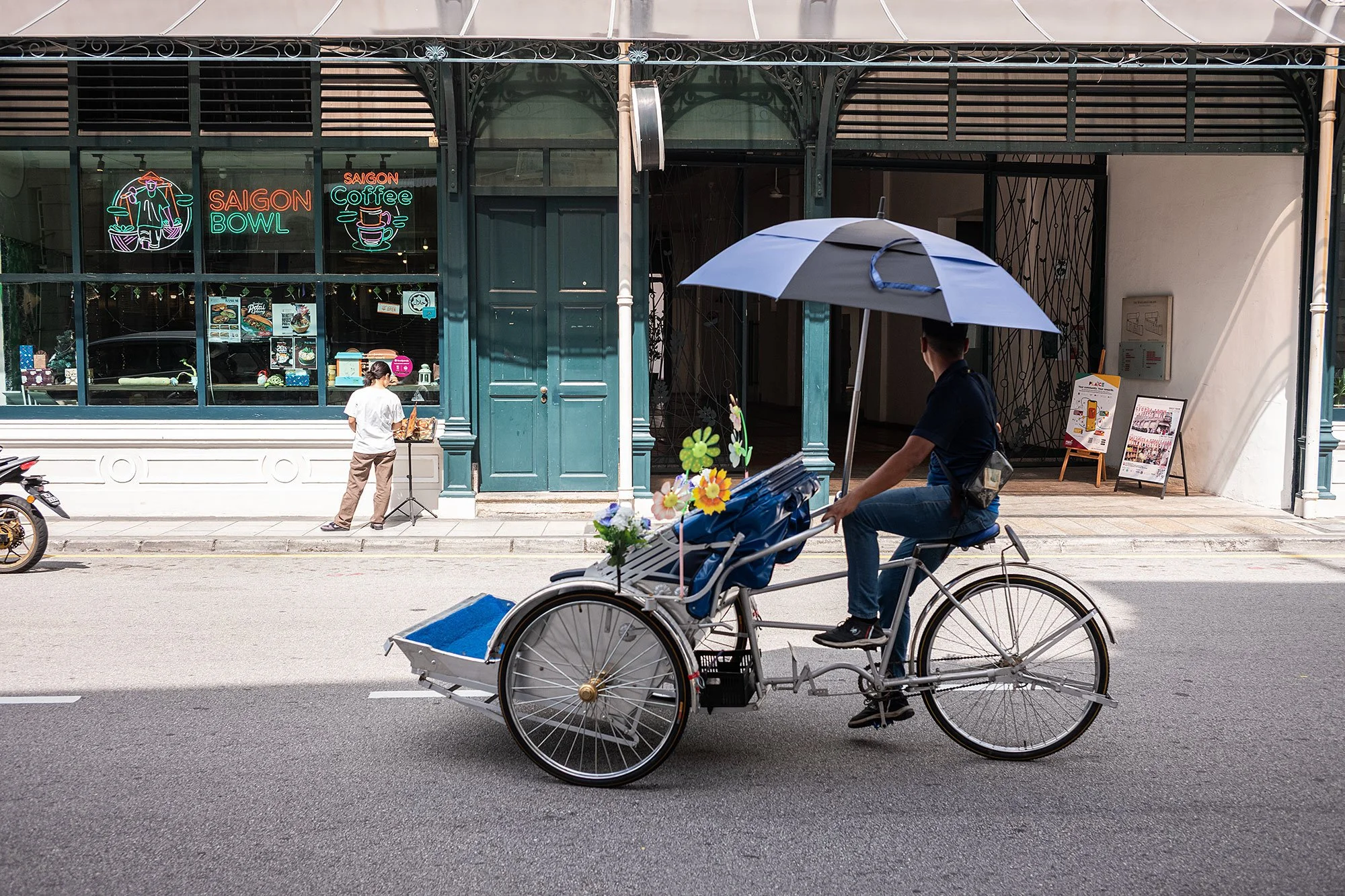
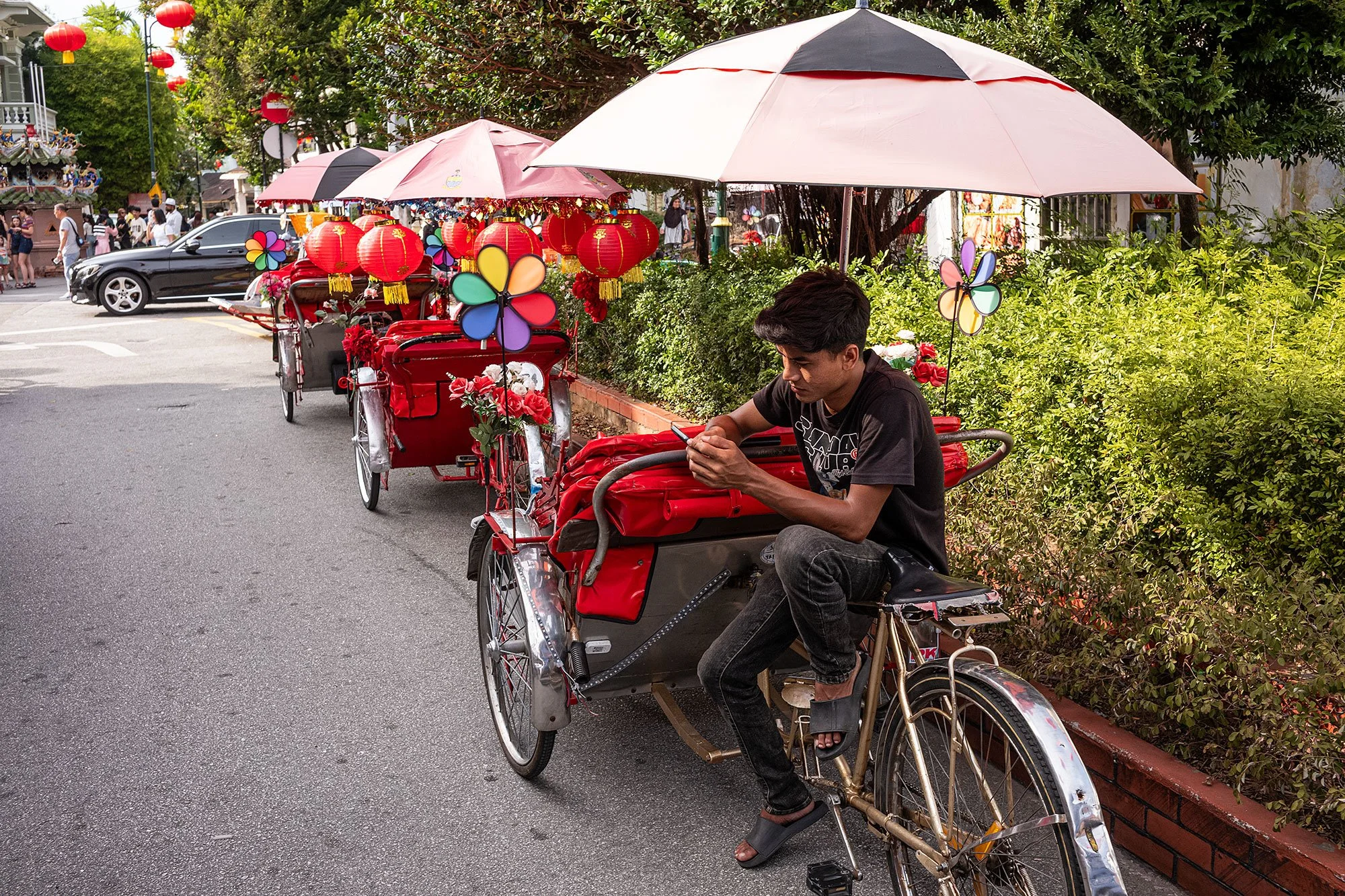
Lebuh Armenian proves to be one of the main tourist drags and it’s crammed full of people and rickshaws. The street is lined with stores and cafes and a small entrance to the Cheah Kongsi Temple. And while there are a lot of people taking photos of each other at the entrance it looks like there are very few people who are paying the entrance fee to step onto the temple grounds.
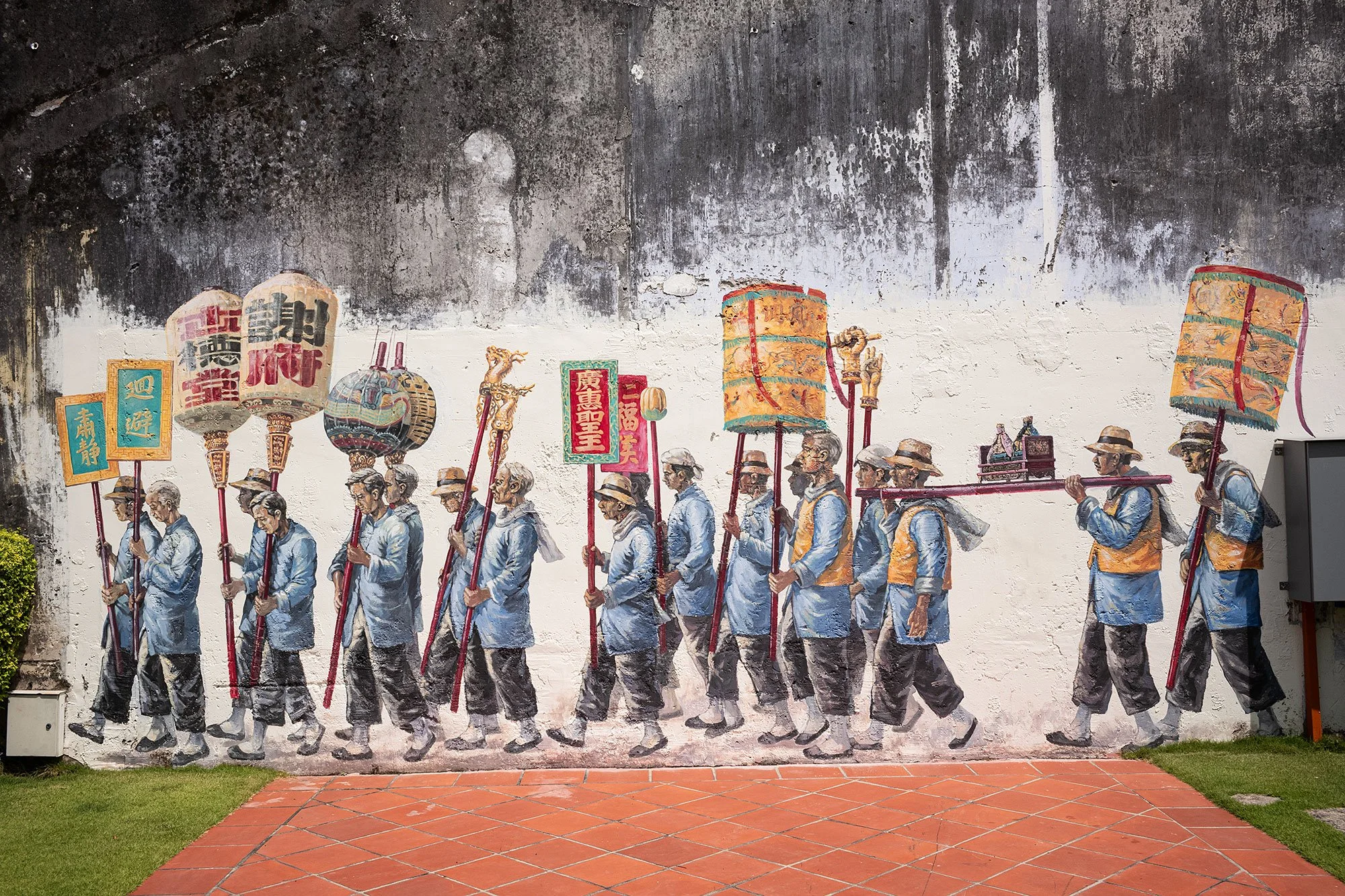
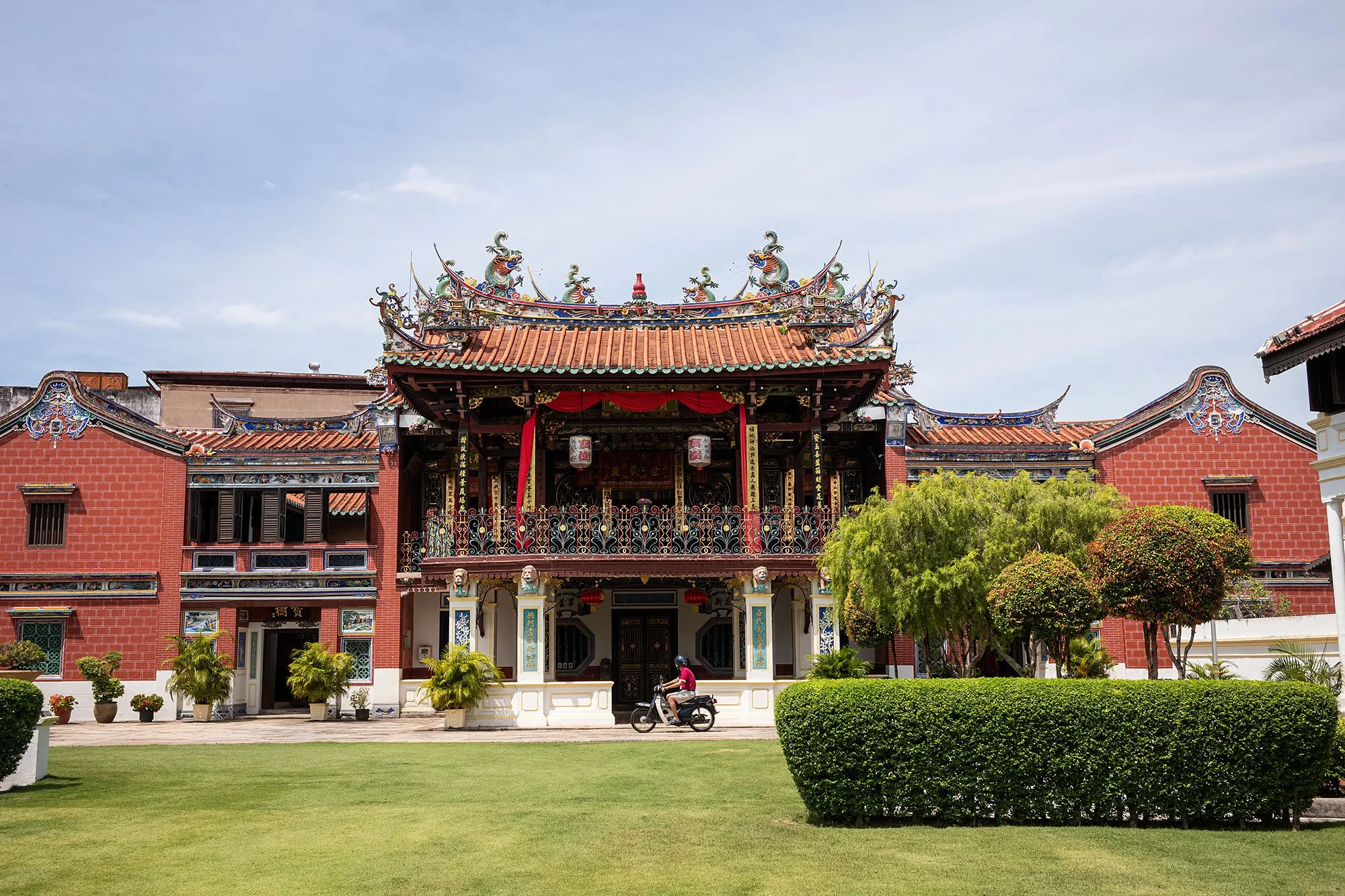
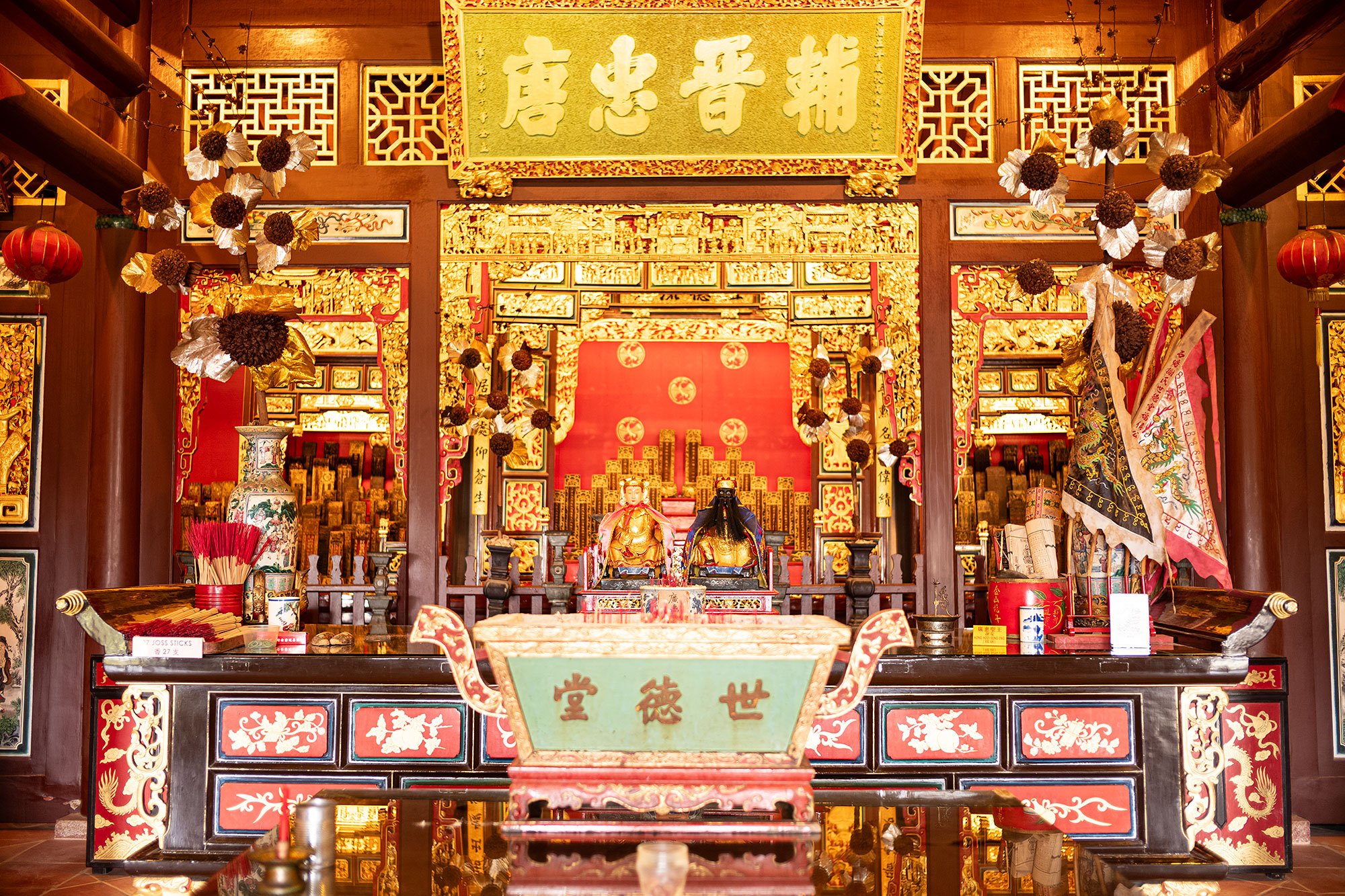
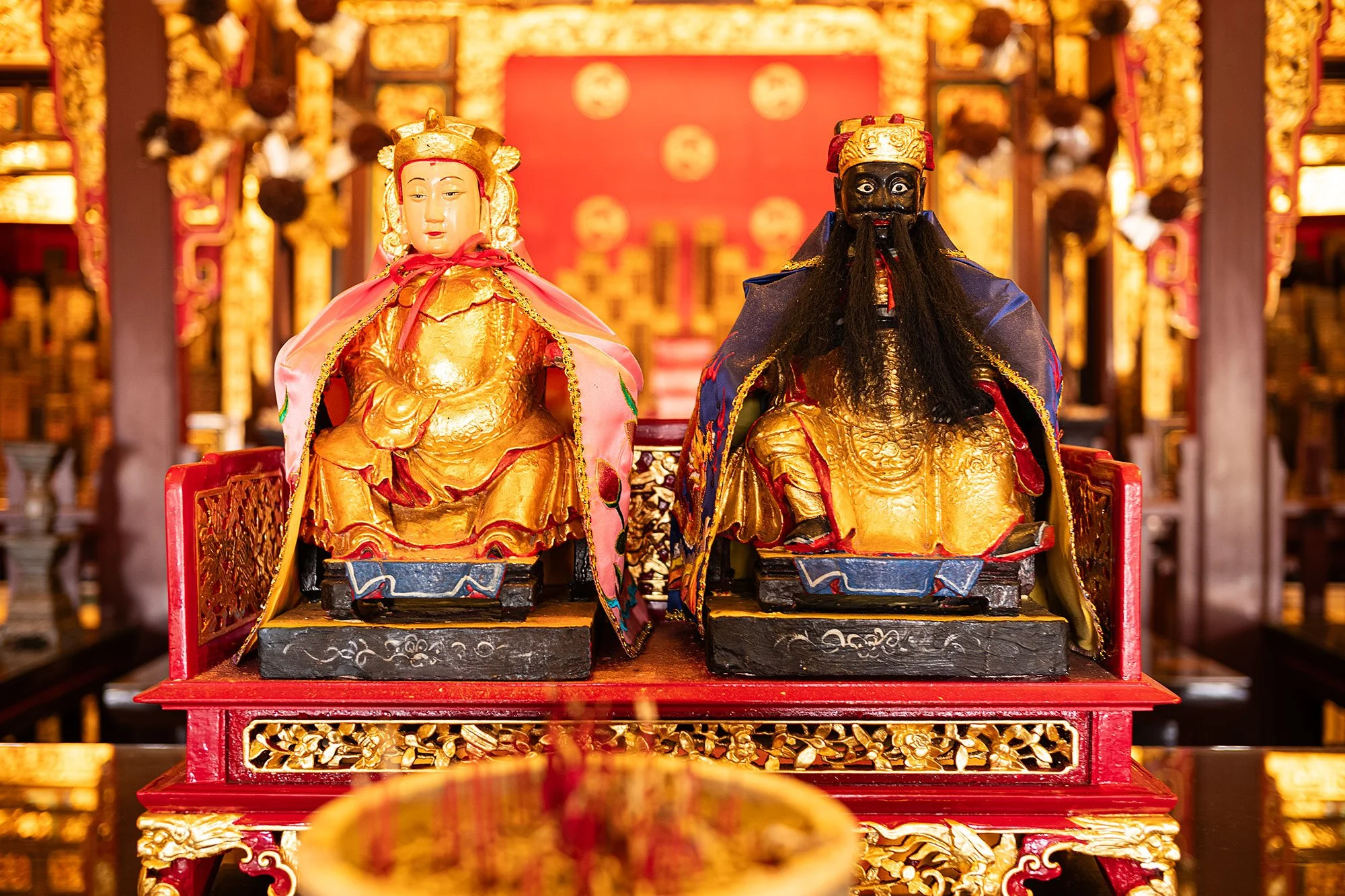
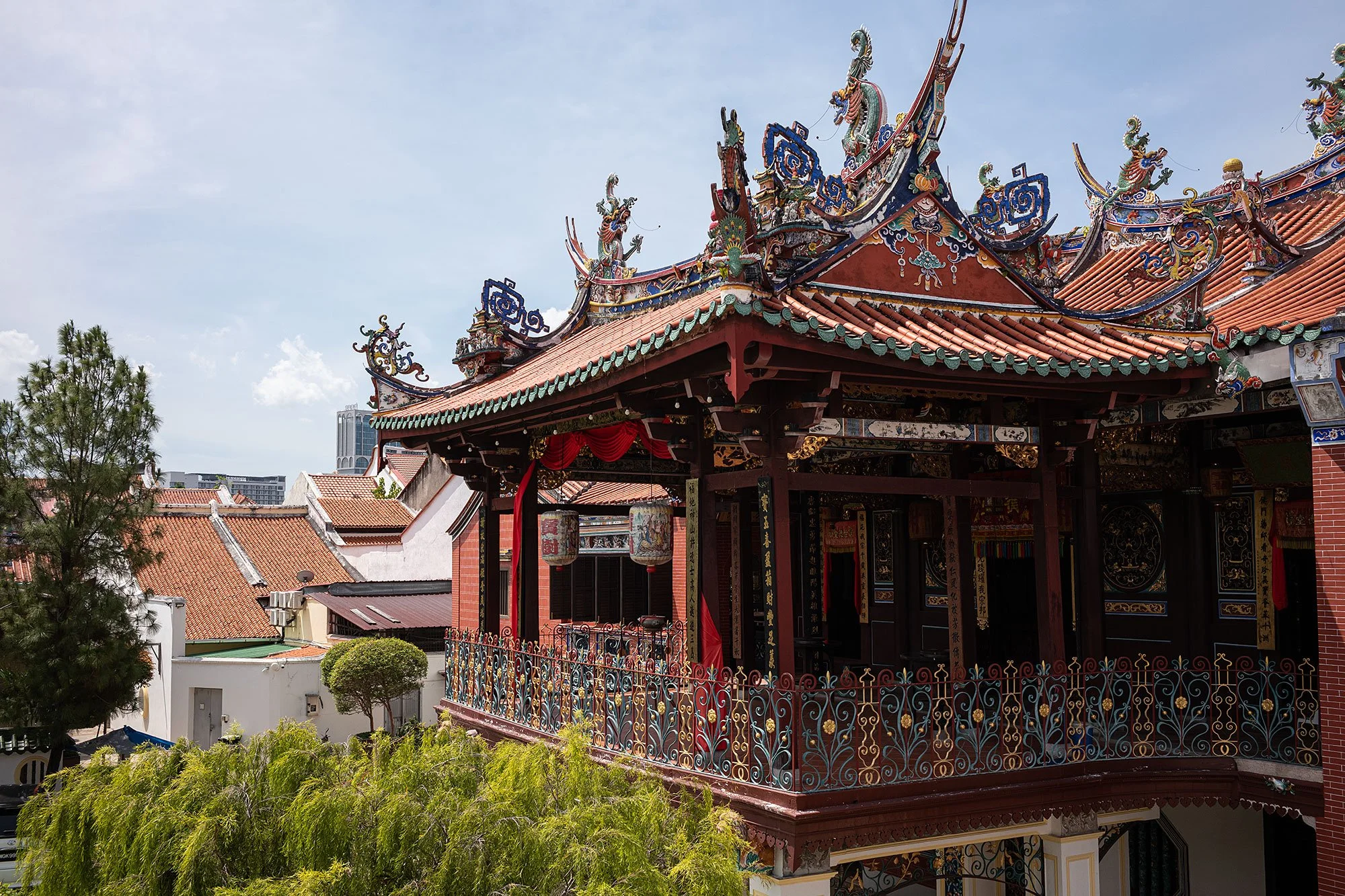
Belonging to one of Penang’s oldest Hokkien clan associations, the temple was built in 1810 by Cheah clansmen from the Sek Tong village in China. The clan formed to offer communal support and protection, as well as to help send money back to home villages in southern China, which were subject to political unrest at the time.
It’s a fascinating look back in time, the rooms set up to display utensils and crafts. There’s also a mural in the main courtyard that I’ve been wanting to take a look at and I cross the field from the temple to have a look before furthering my exploration indoors.
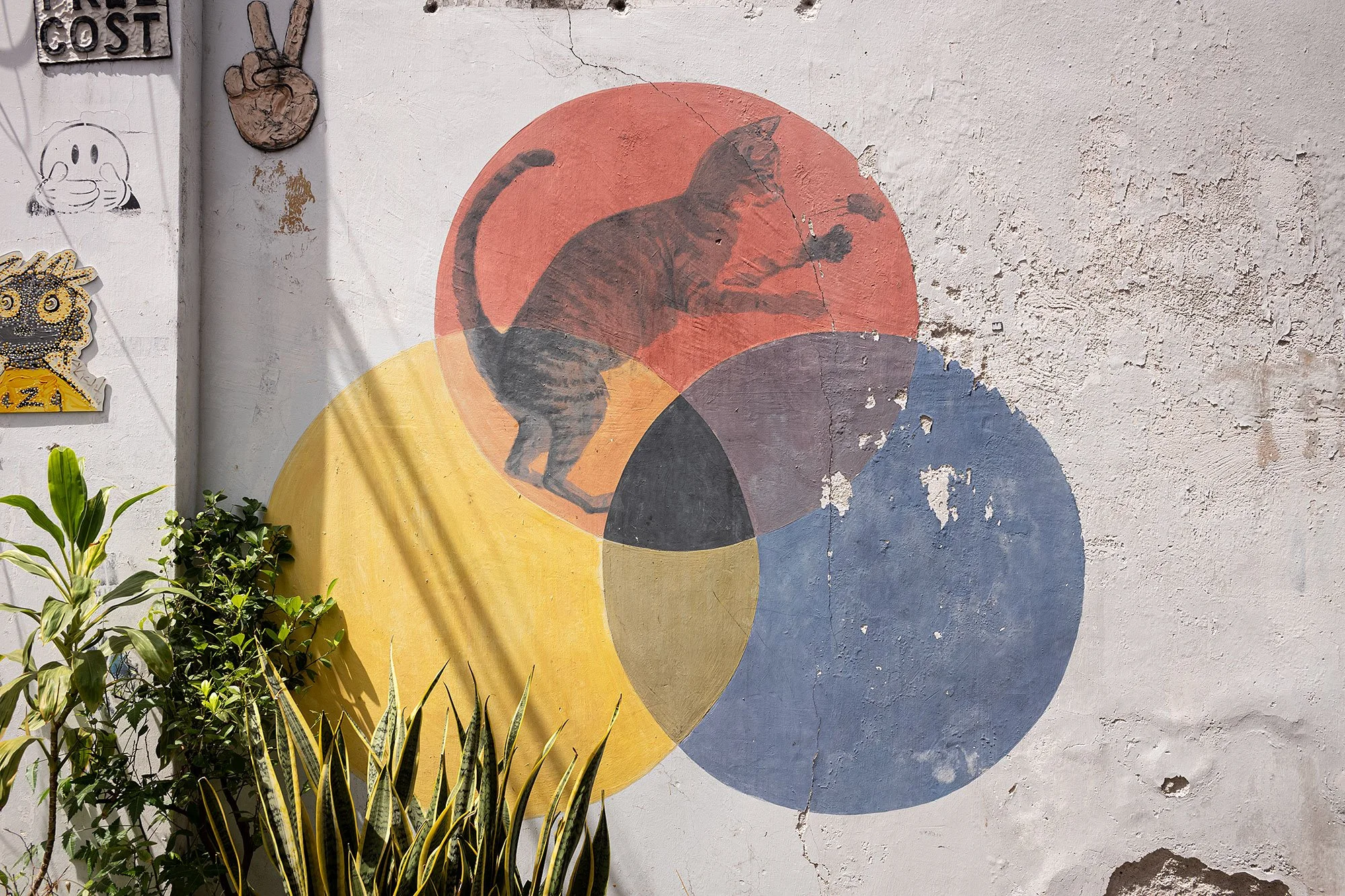
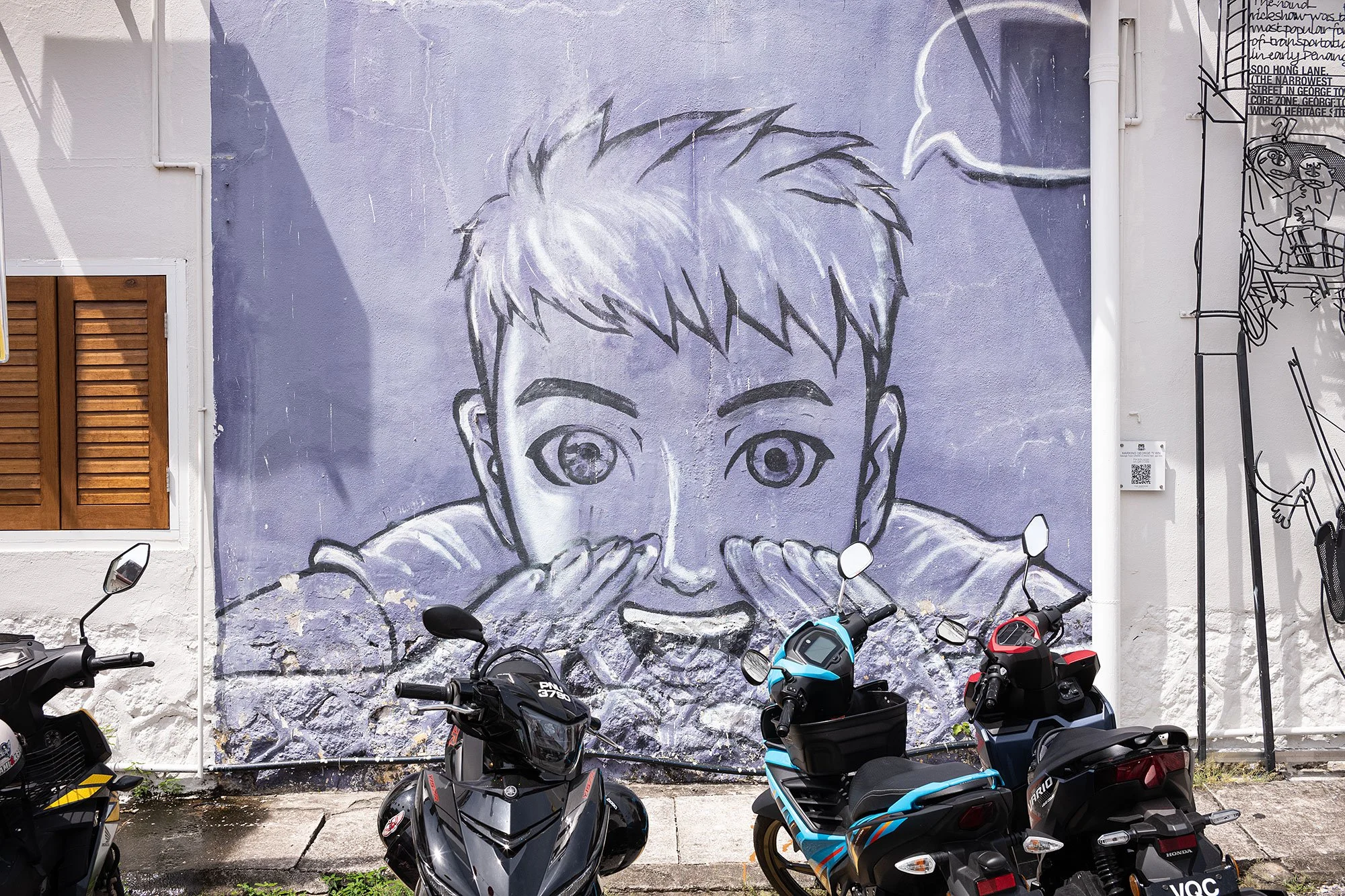
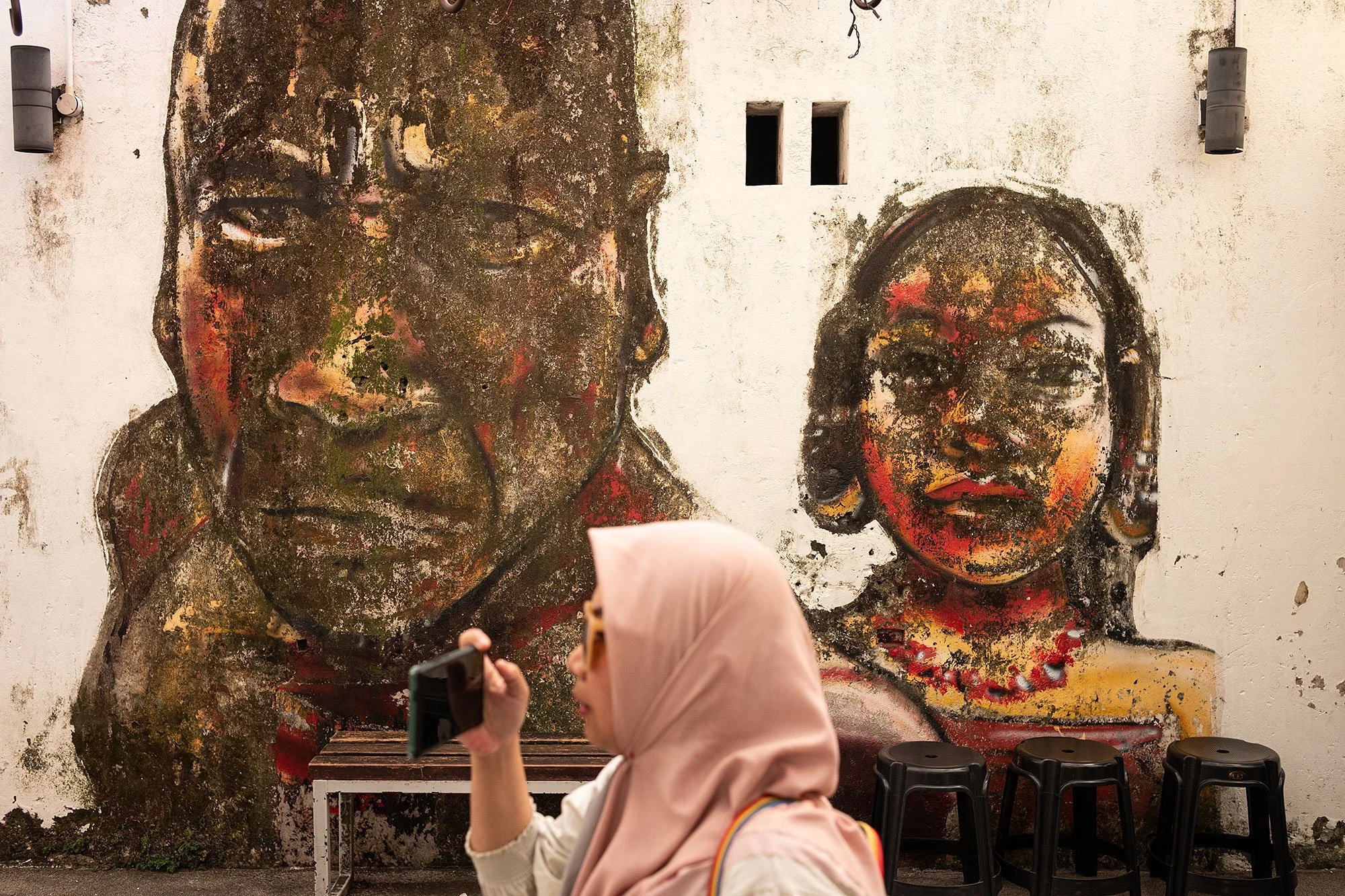
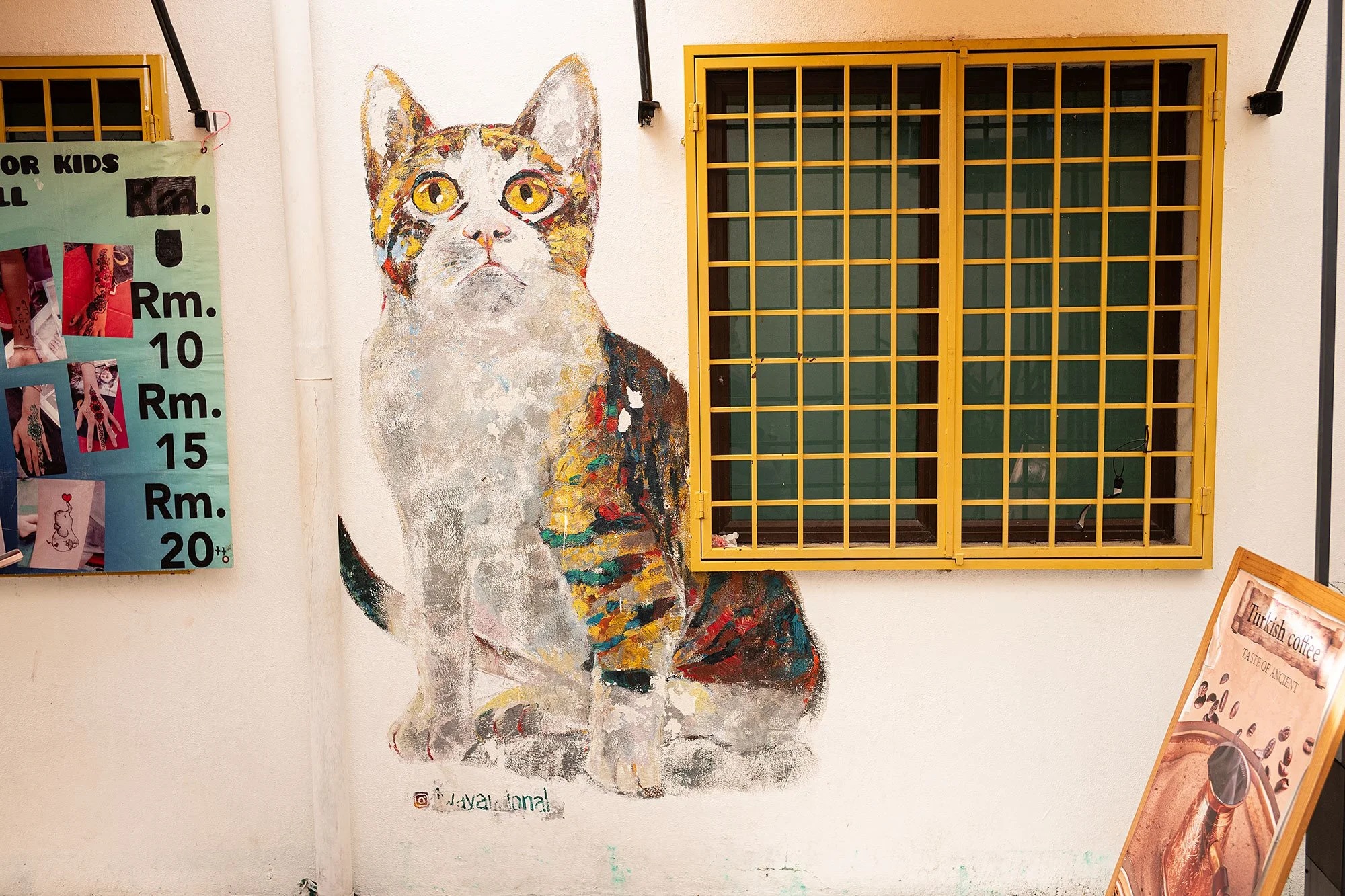
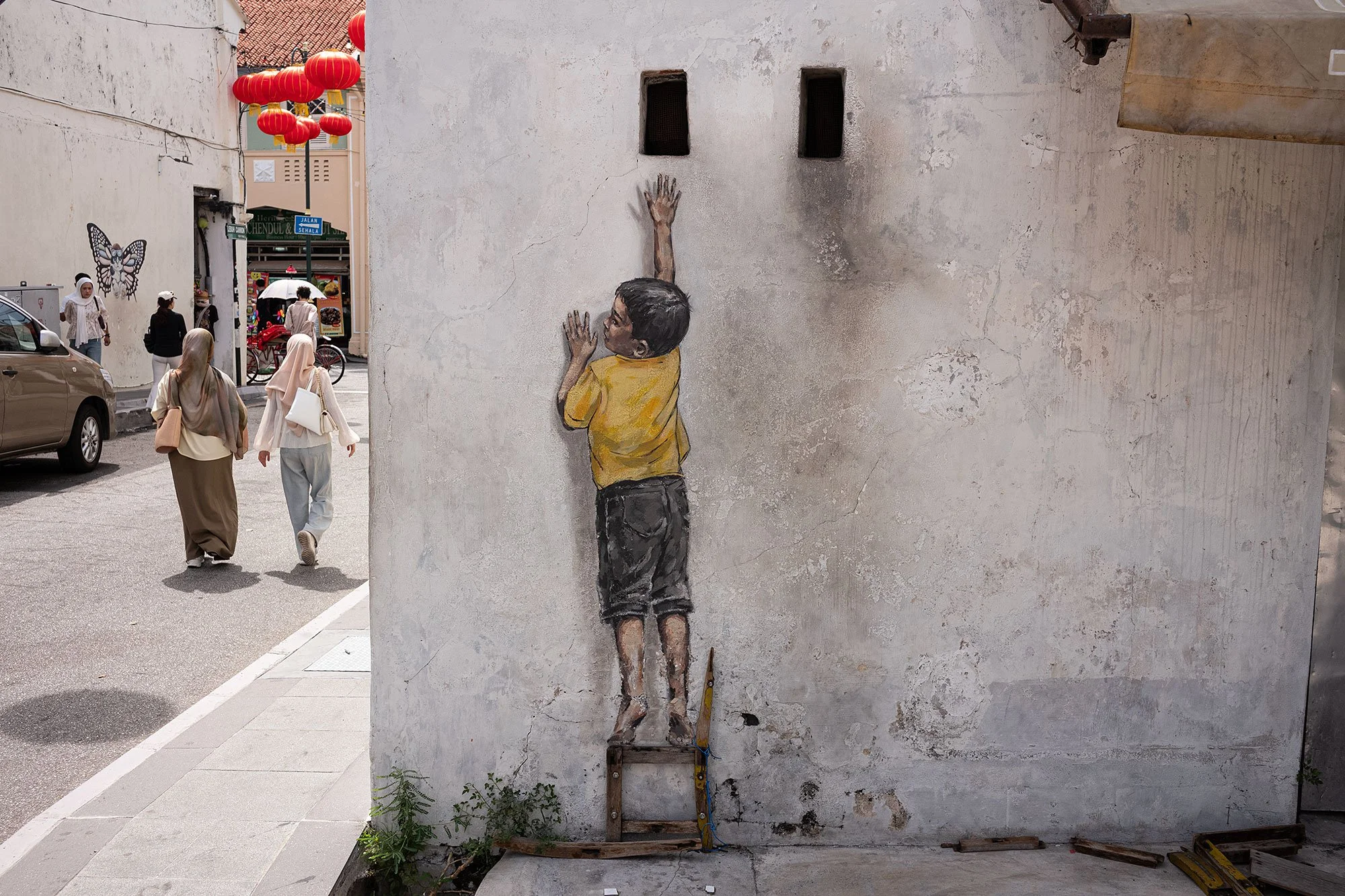
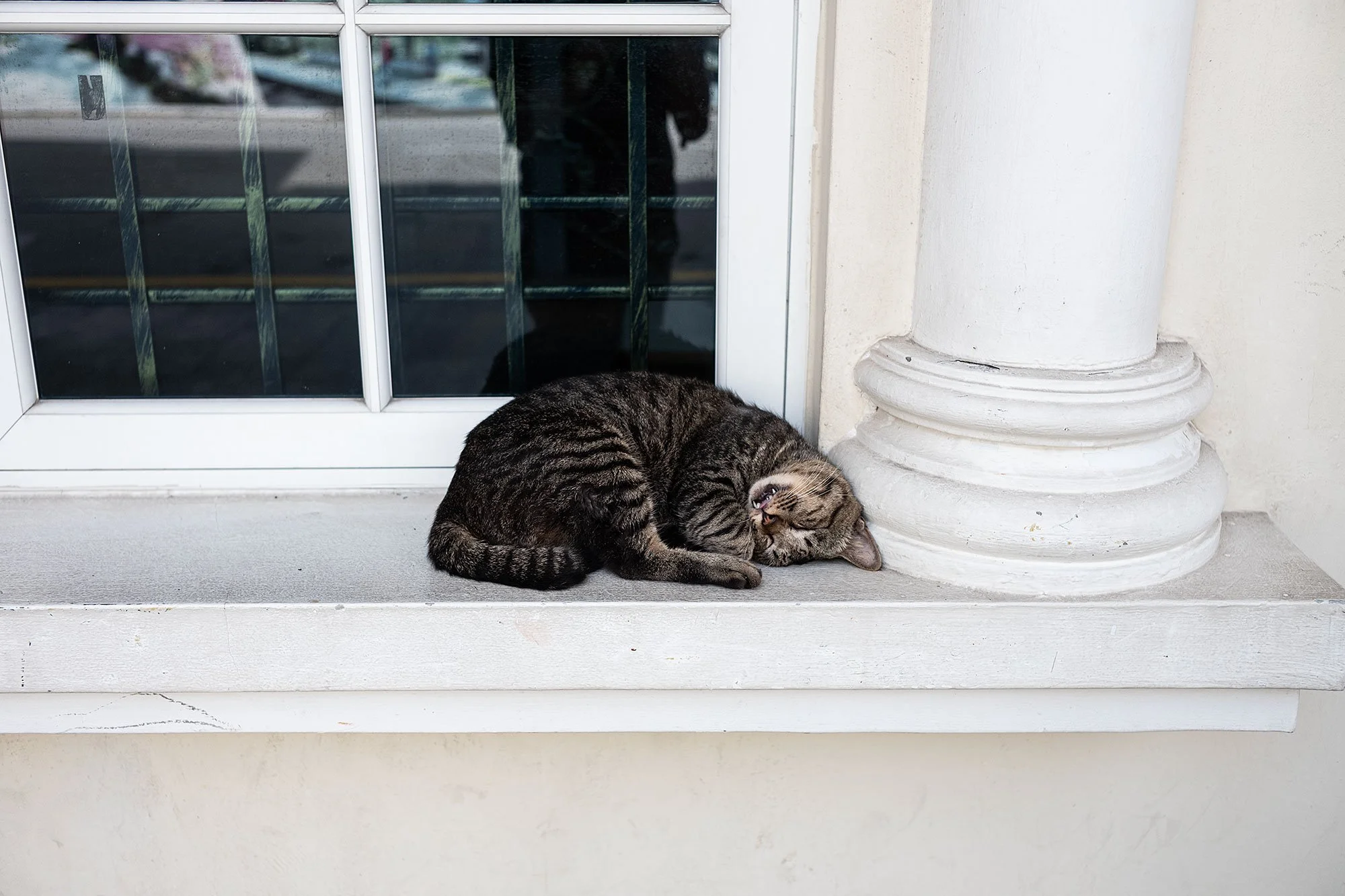
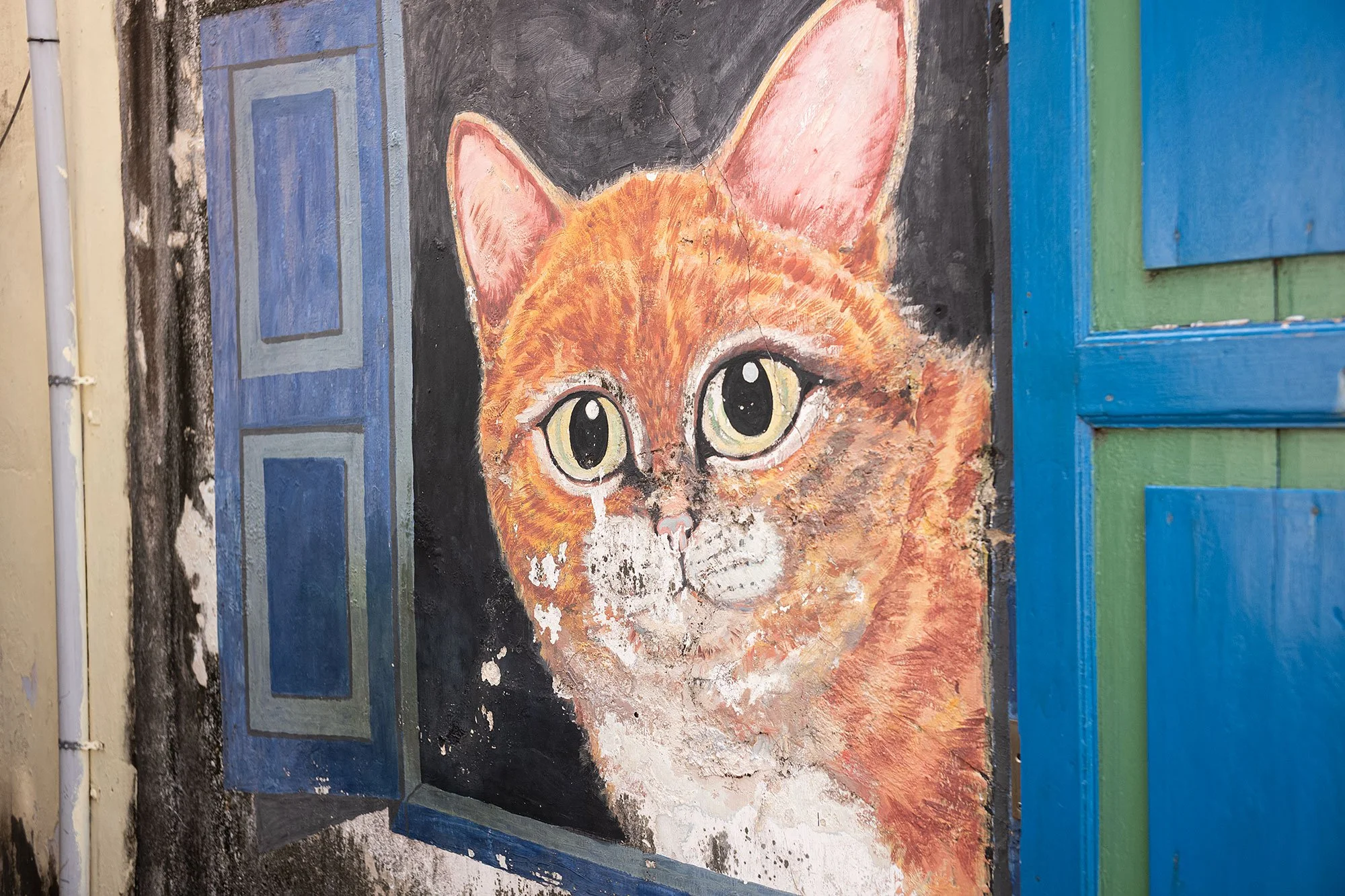
After visiting the temple I decide to track down more of the street art scattered about the city. Checking the map I continue to walk up Armenia Street towards the Asia Camera Museum. Turning left on Cannon Street I head in the direction of the Lebuh Aceh Mosque to catch sight of the window cat.
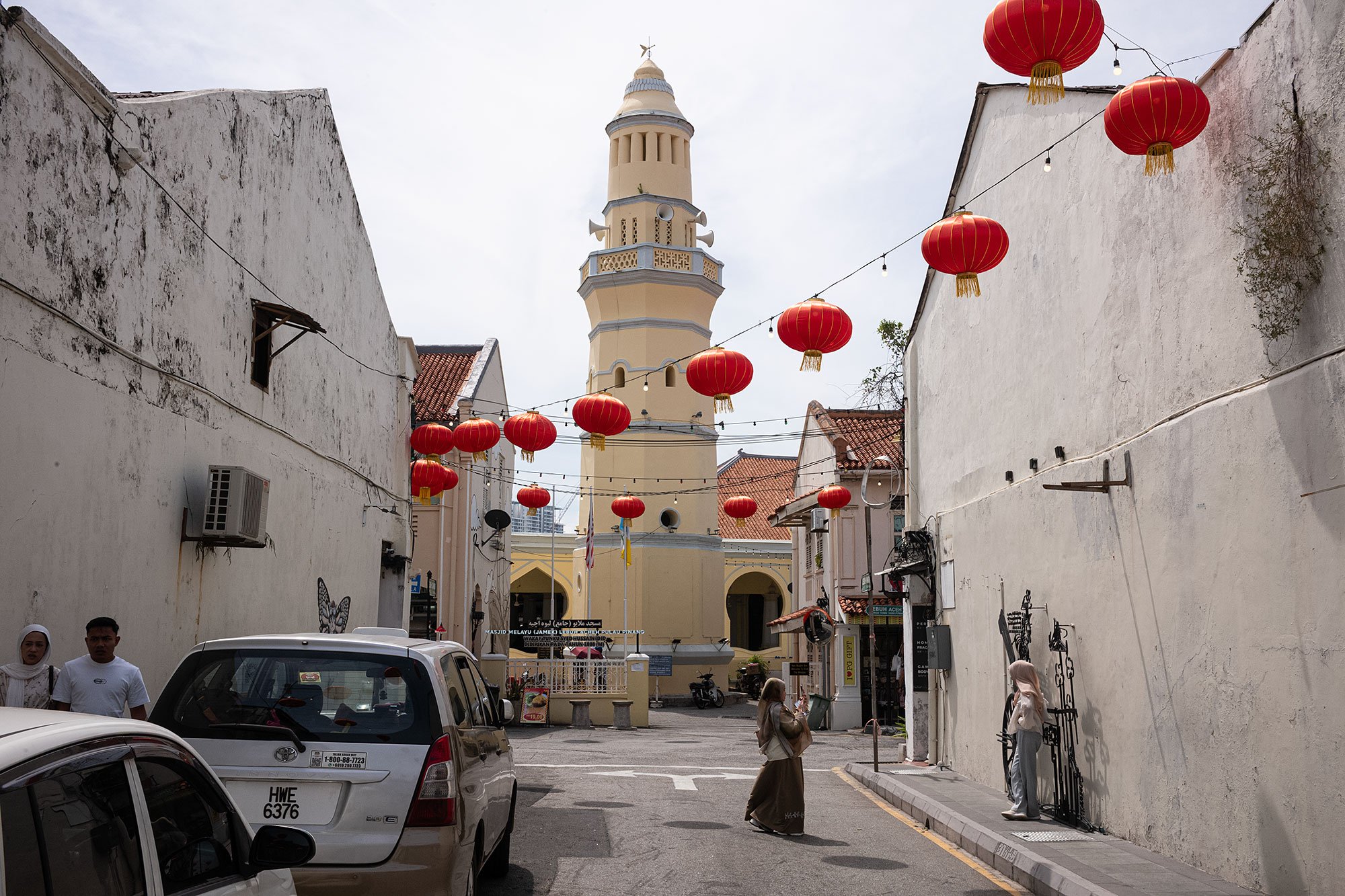
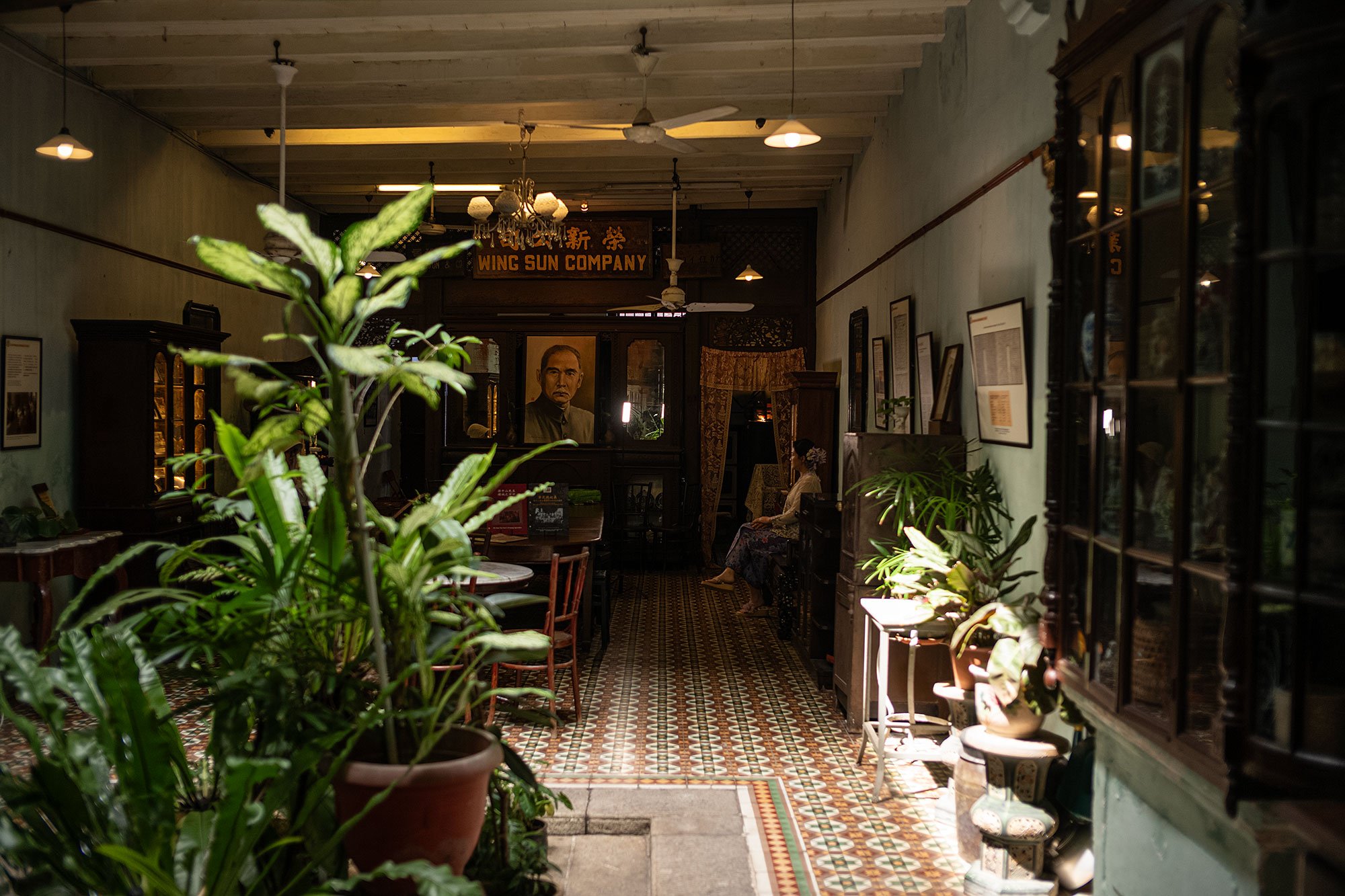
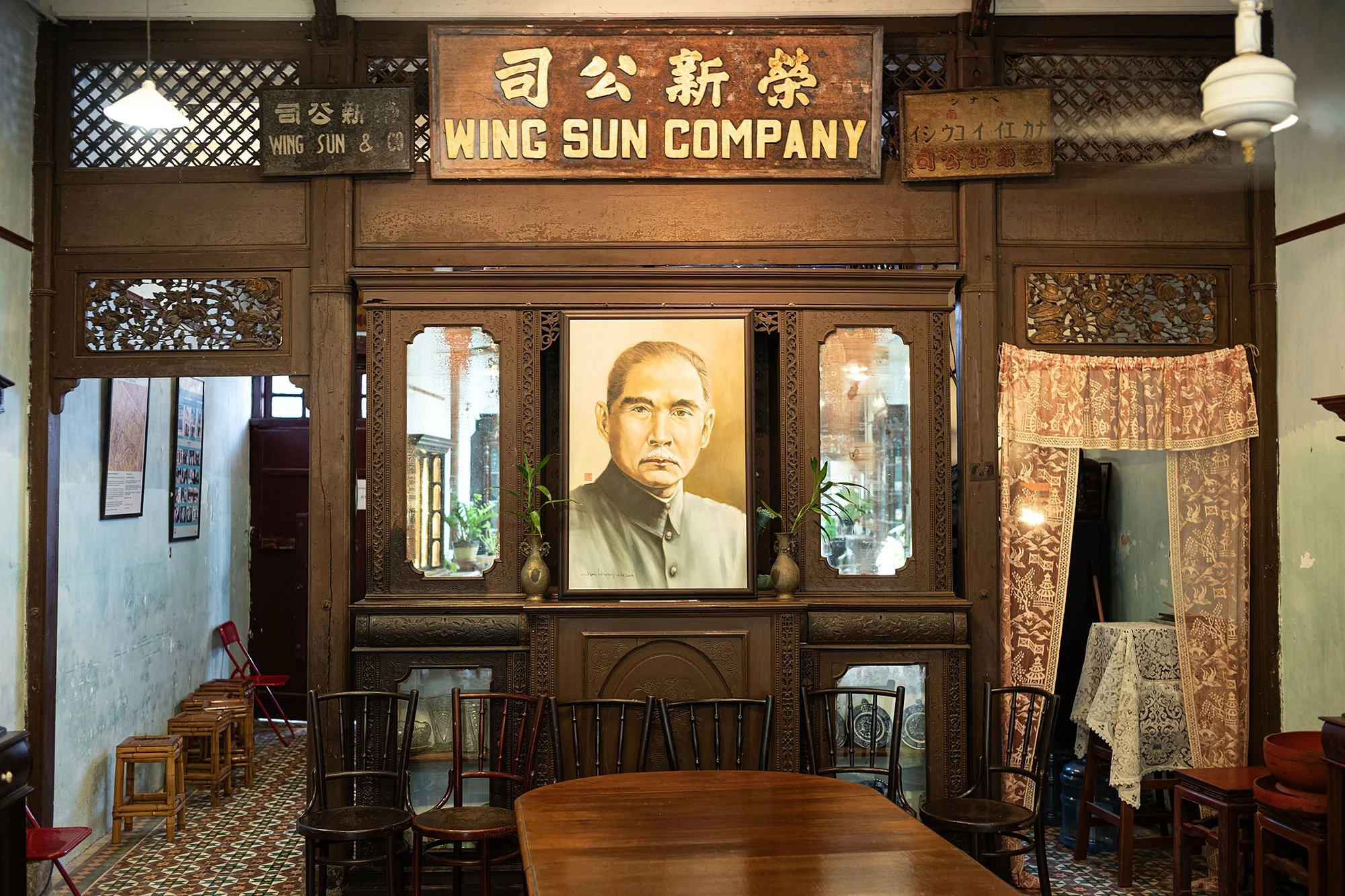
Looping back around I decide to stop into the Sun Yat Sen Museum, since I’m in the area. I know I won’t make a special trip to come back and decide to take advantage of my current proximity to take a look.
Situated in the house where Sun devised many of his plans to overthrow the Qing Dynasty, the house originally housed the Penang Philomatic Union reading club, a cover for Sun’s political party. Sun himself brought his family to Penang in 1910 cting on his support amongst the overseas Chinese Chinese population in Southeast Asia.
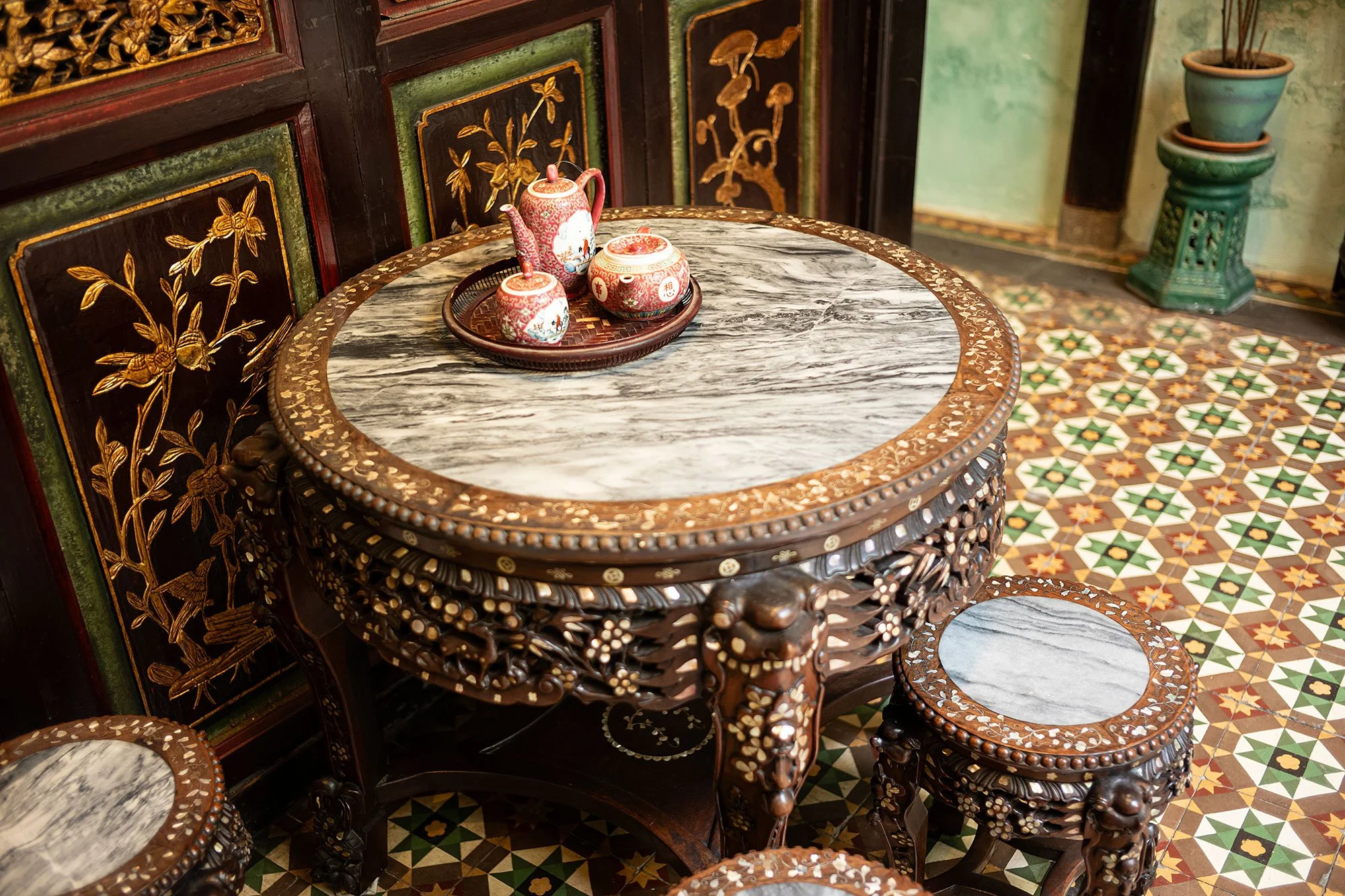
Constructed in the 1880s, the house was built as a residential townhouse and is considered a subperb exxample of a Straits Settlements merchant's home. The building retains many of its original features and part of the joy in visiting is to be able to step back and feel what it must have been like to live here as one of the merchant class. It boasts a serene courtyard, and the shaded open area offers a cool respite from hot exposed streets and squares outside.
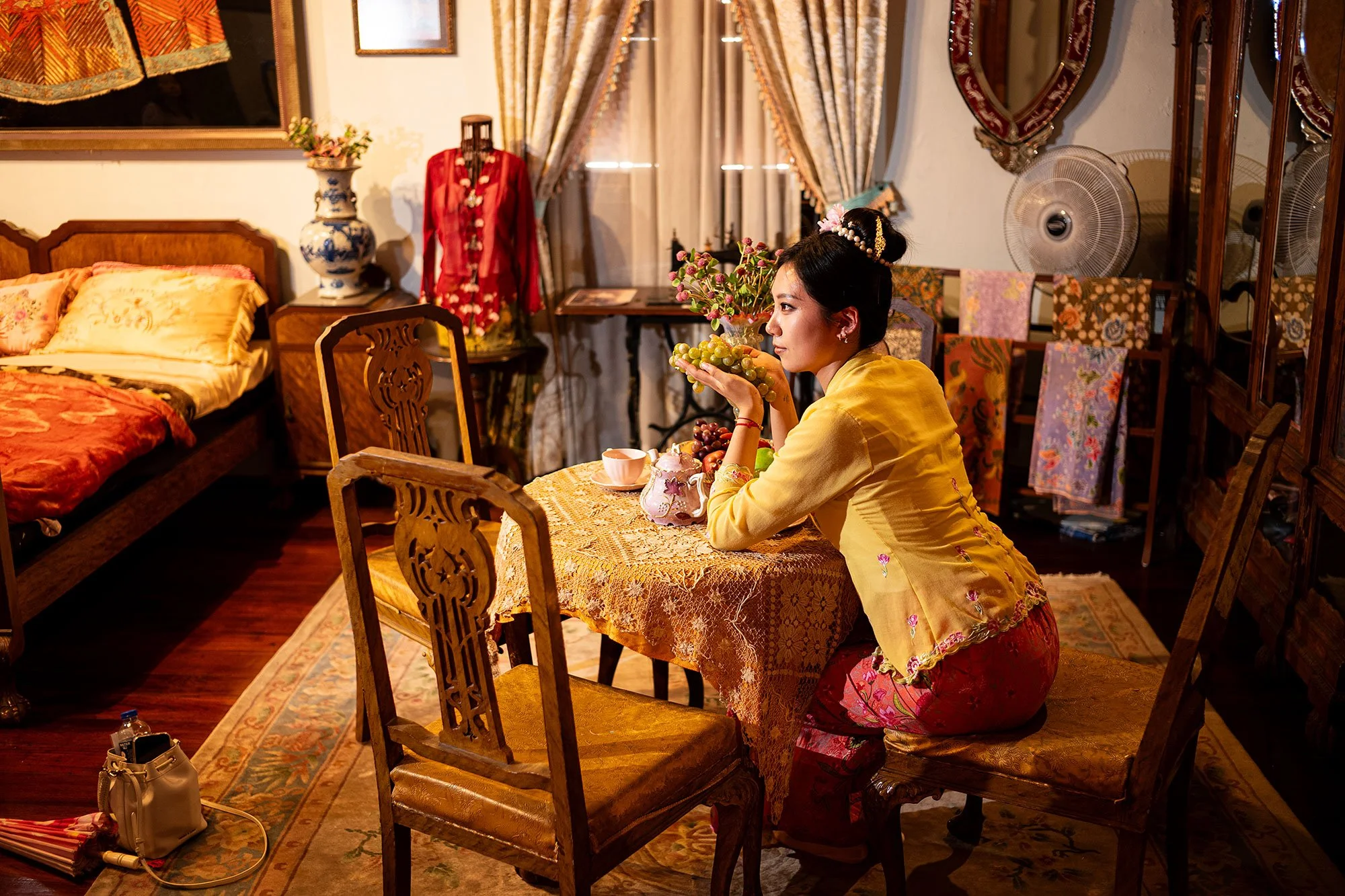
A woman dressed in period costume posts amongst the housewares and plants. A man follows her with a camera and light. I do my best to stay out of their way.
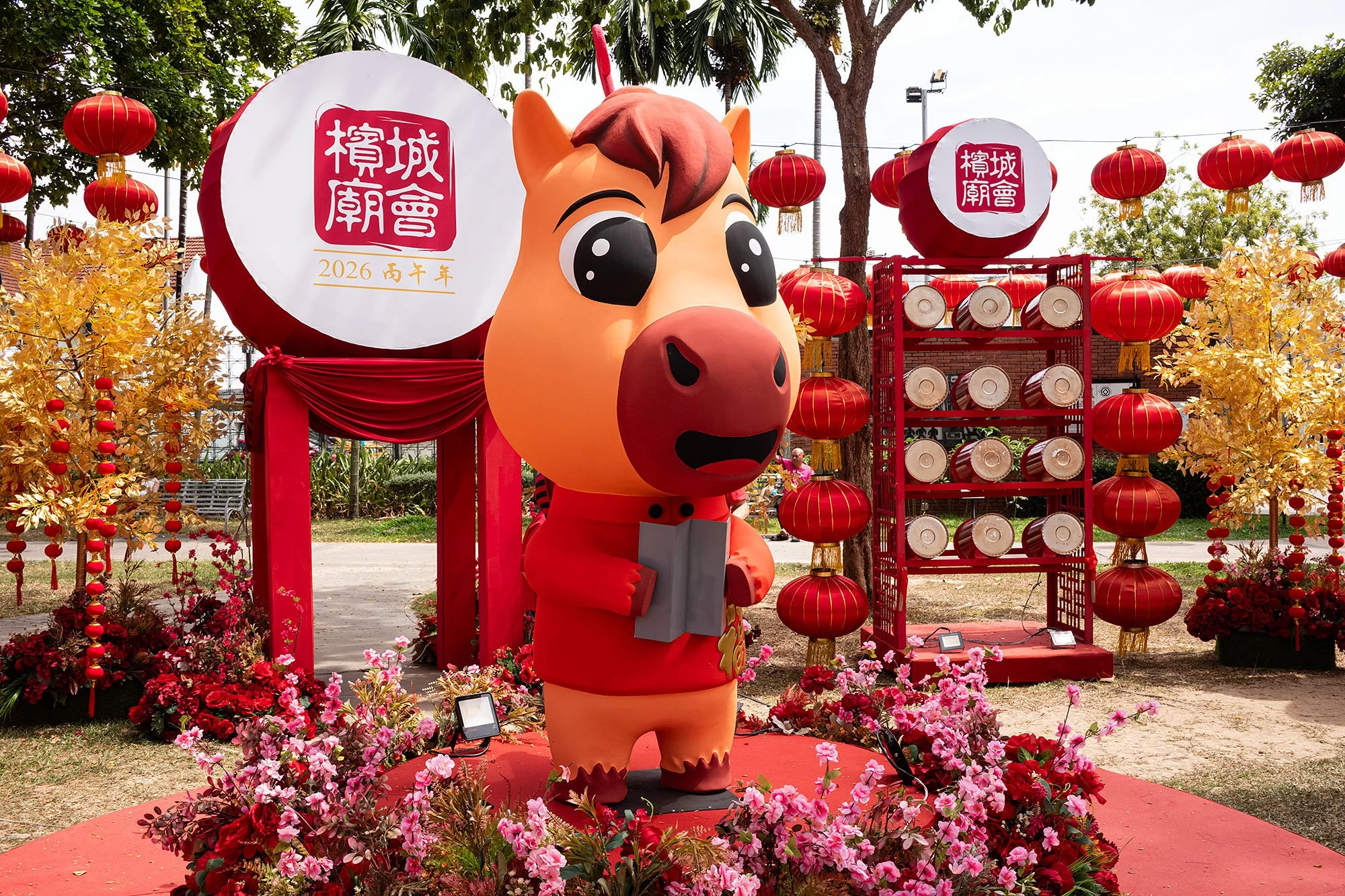
Outside I complete my roundabout walk and end up back on the corner of Armenia and Cannon. A small square is decorated to commemorate the new year. A somewhat bewildered-looking fire horse stands in the center of the square. They hold a folder in their front hooves as if ready to go a-caroling.
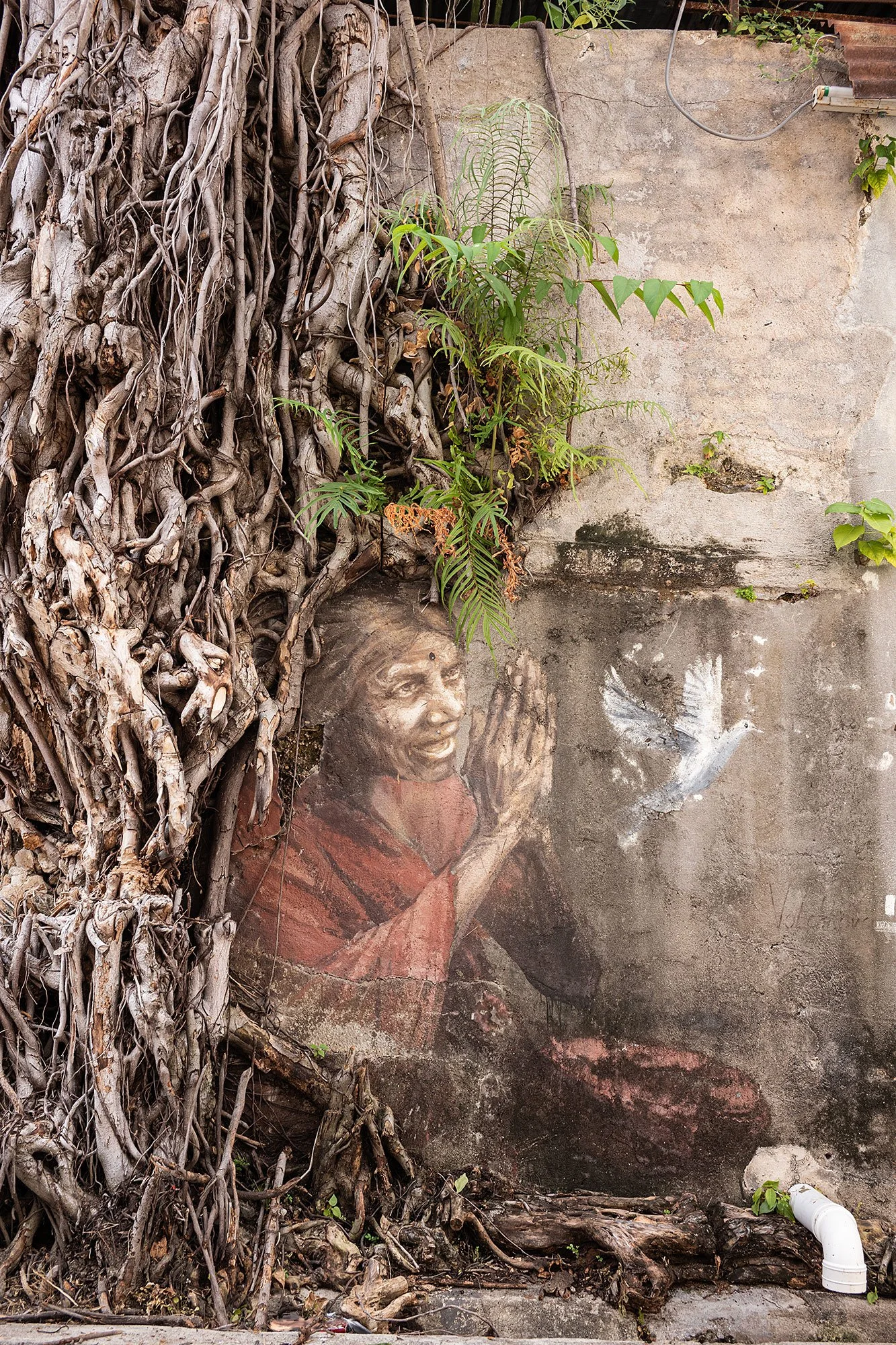
I head south nd then east towards the water, photographing fantastic pieces of street art as I find them. I’m ostensibly walking to Ome by Spacebar Coffee to have a cup of coffee, but it’s as much an excuse to get me to walk in the direction of the piers as for the coffee itself.
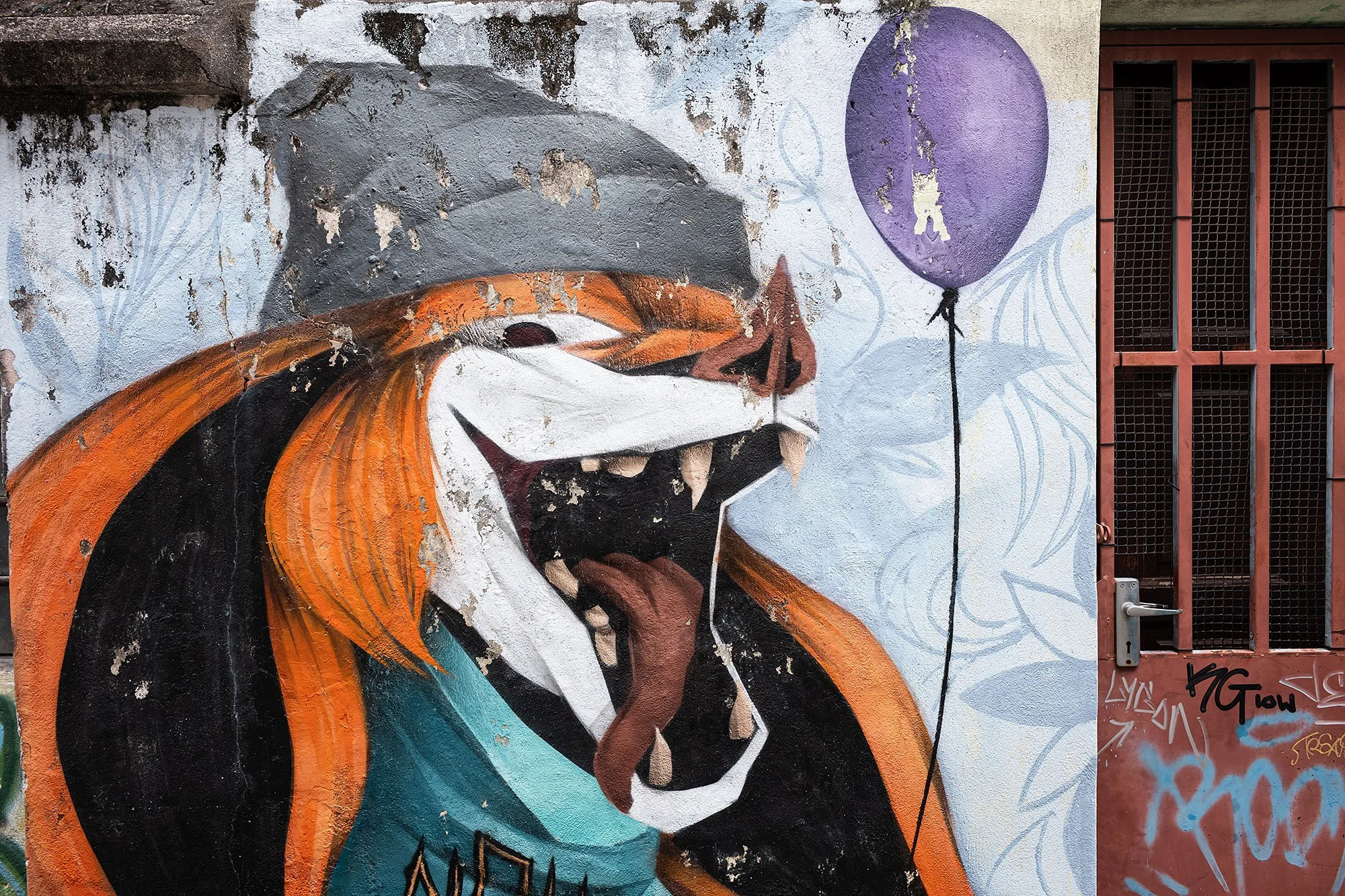
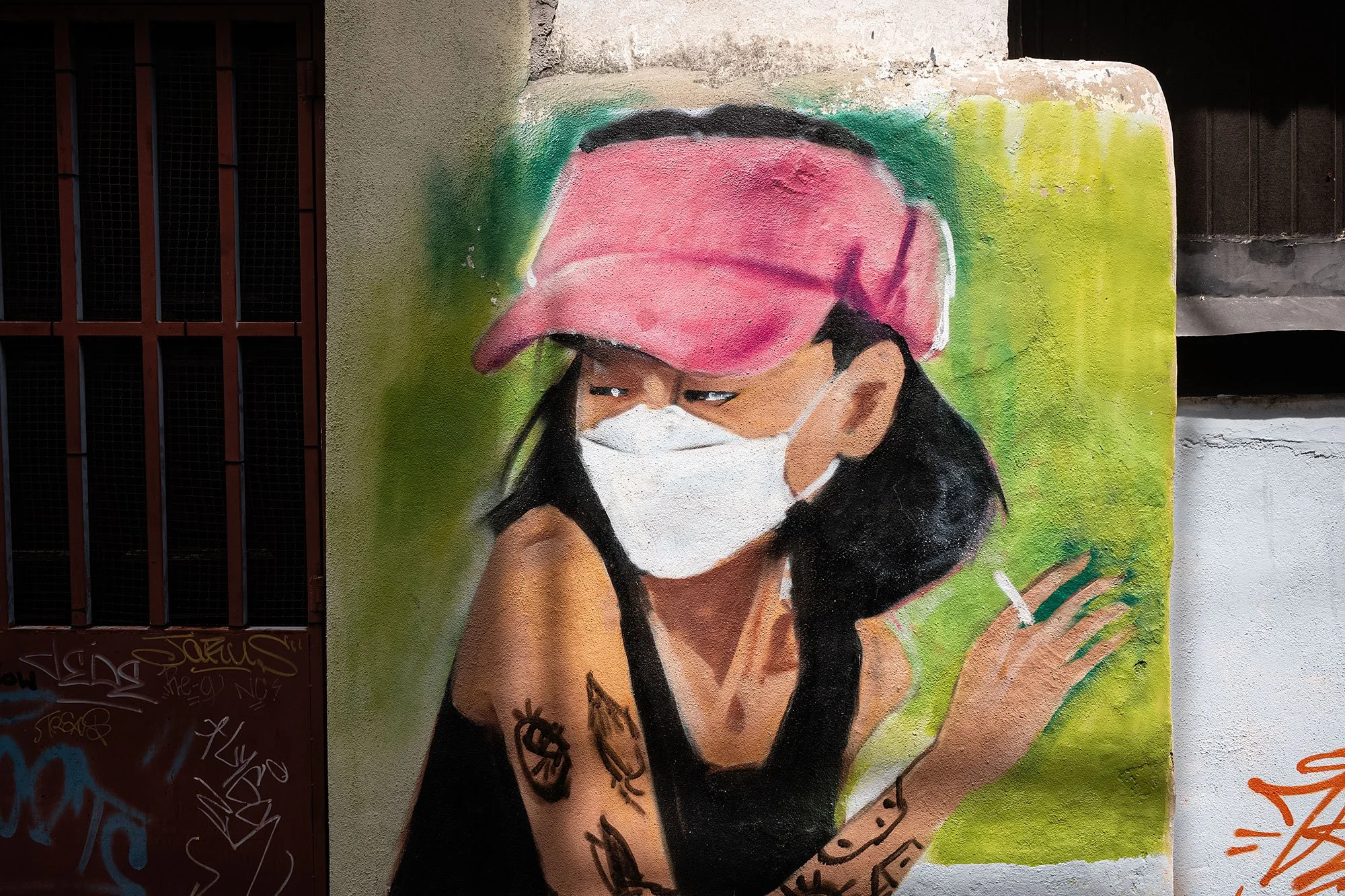
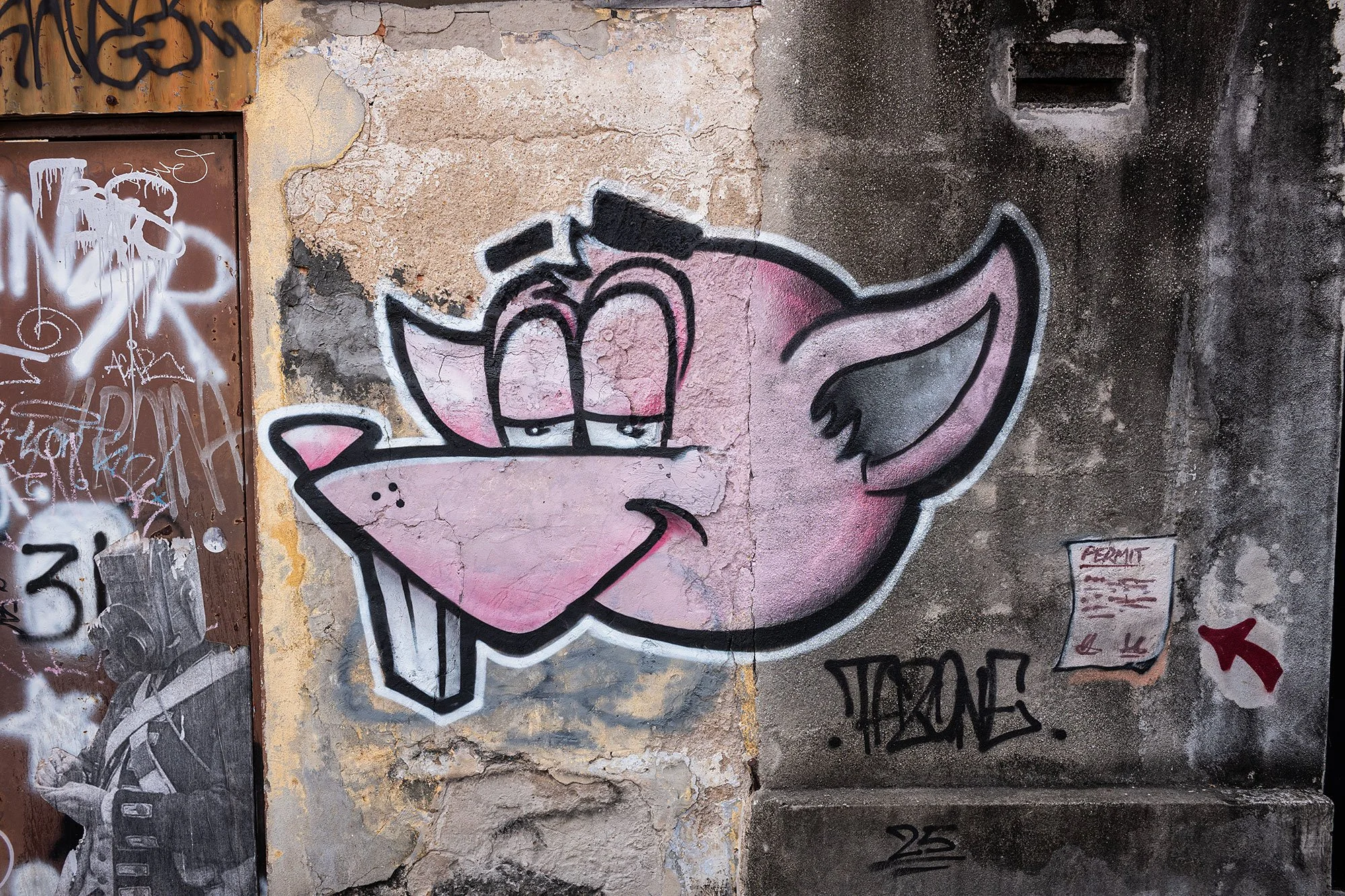
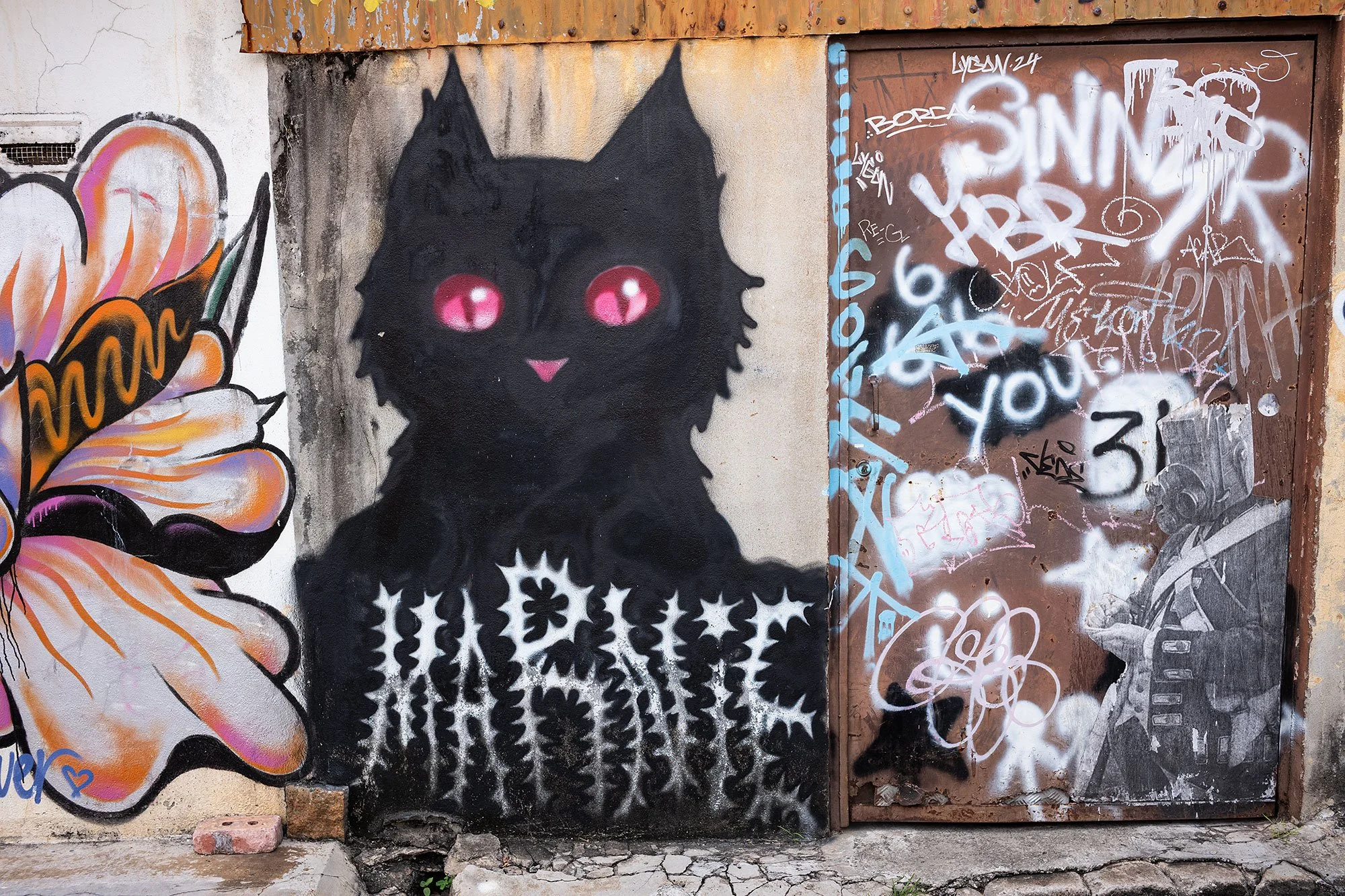
Unfortunately, Ome is experiencing an electrical issue. Two workers are standing outside, one on a ladder to inspect the circuit breaker. I’m welcome to come inside and sit. Perhaps the electricity will come back, but it’s not certain. For now, they can offer only black coffee.
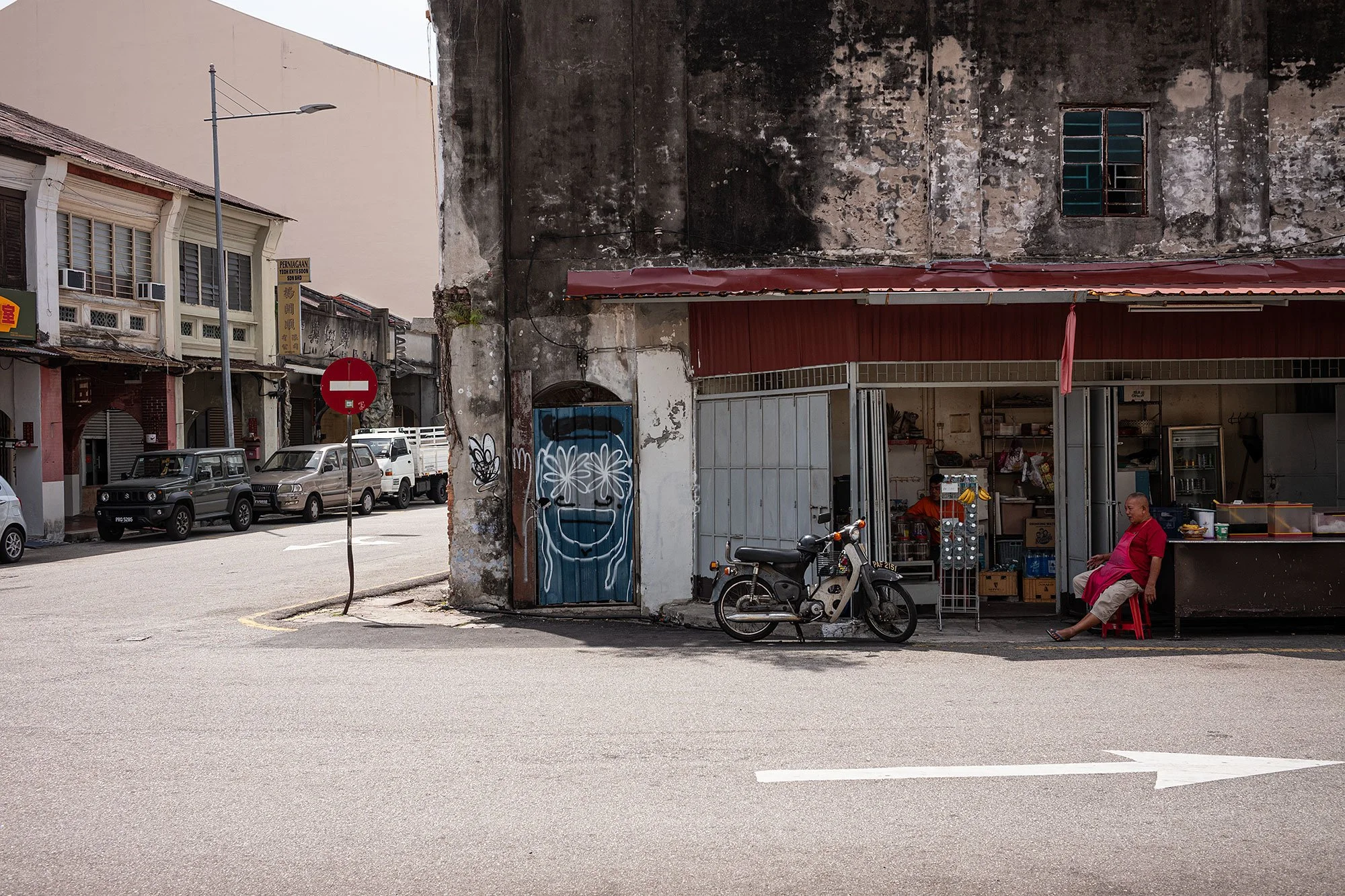
I pass. I really want a flat white. I walk to the end of the street and take a left on Beach Street, describing a large loop I hadn’t realized I would complete, and end up at Le Petit Four Pâtisserie.
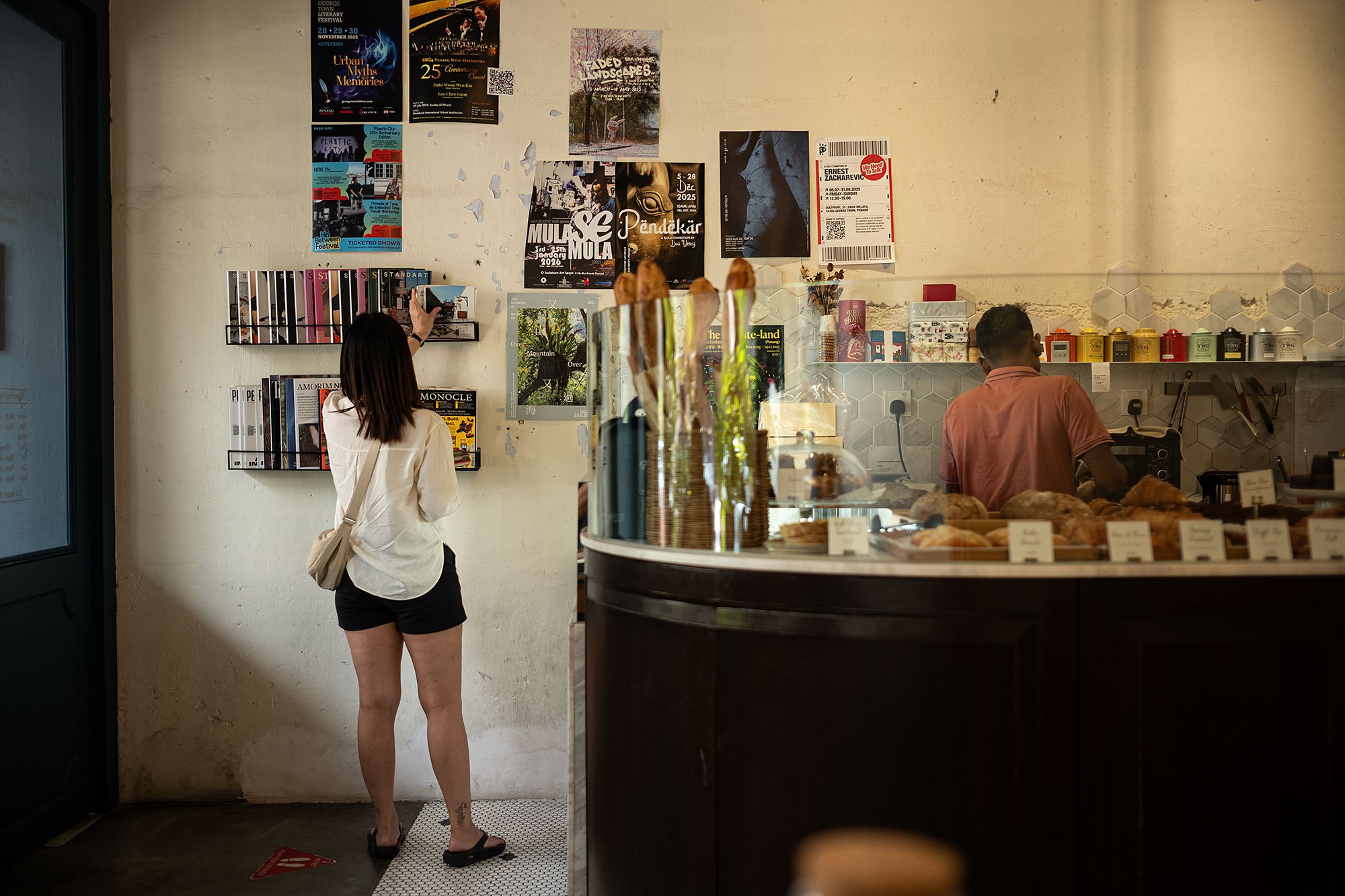
It’s great to be in an air-conditioned space nd I order a flat white and a croissant and sit down to write post cards and cool off from my walk.
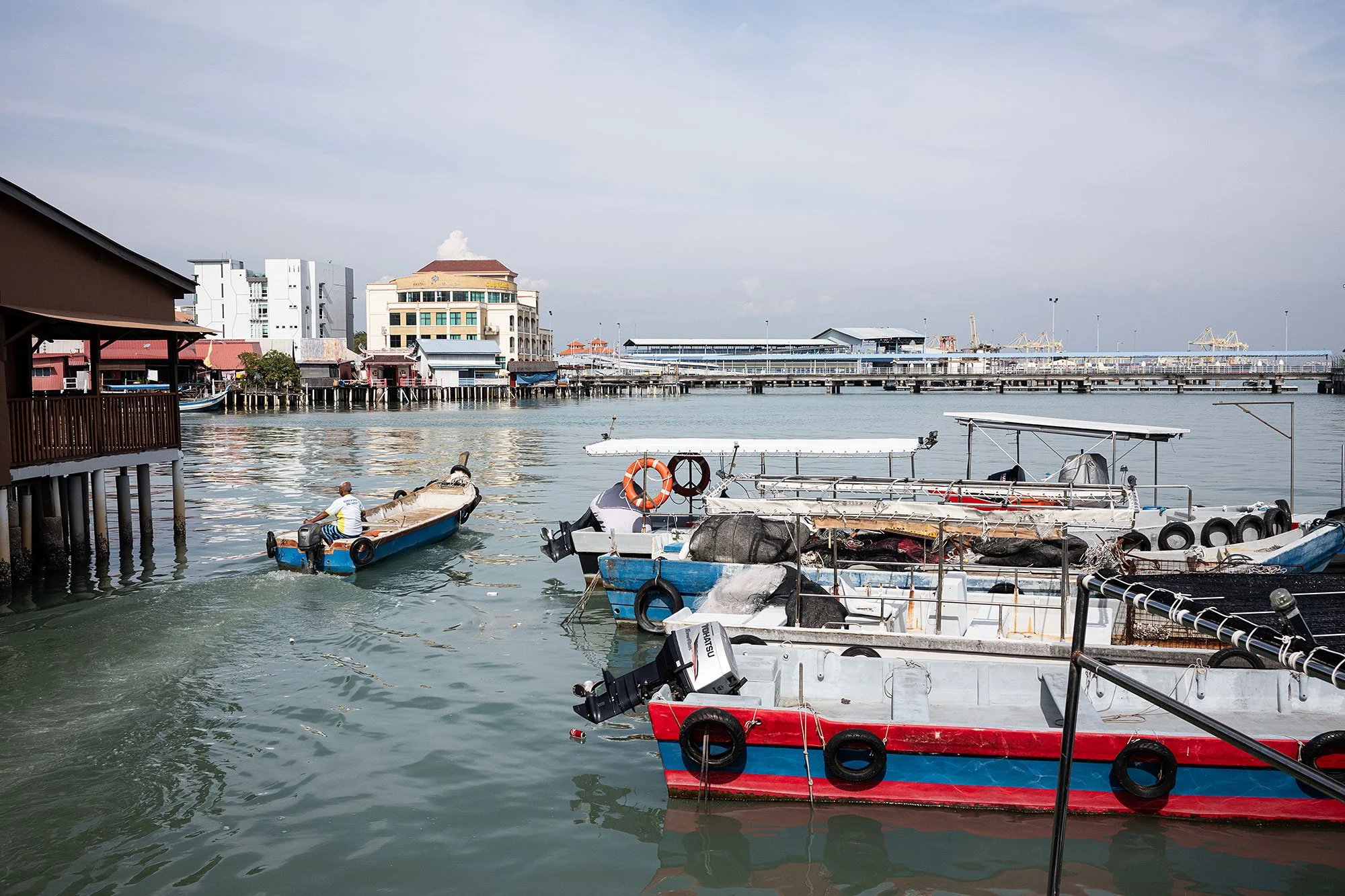
Duly refreshed, I head back outside. I step into the heat and humidity and cross over onto Chew Jetty, one of the many clan jetties that stick out into the strait.
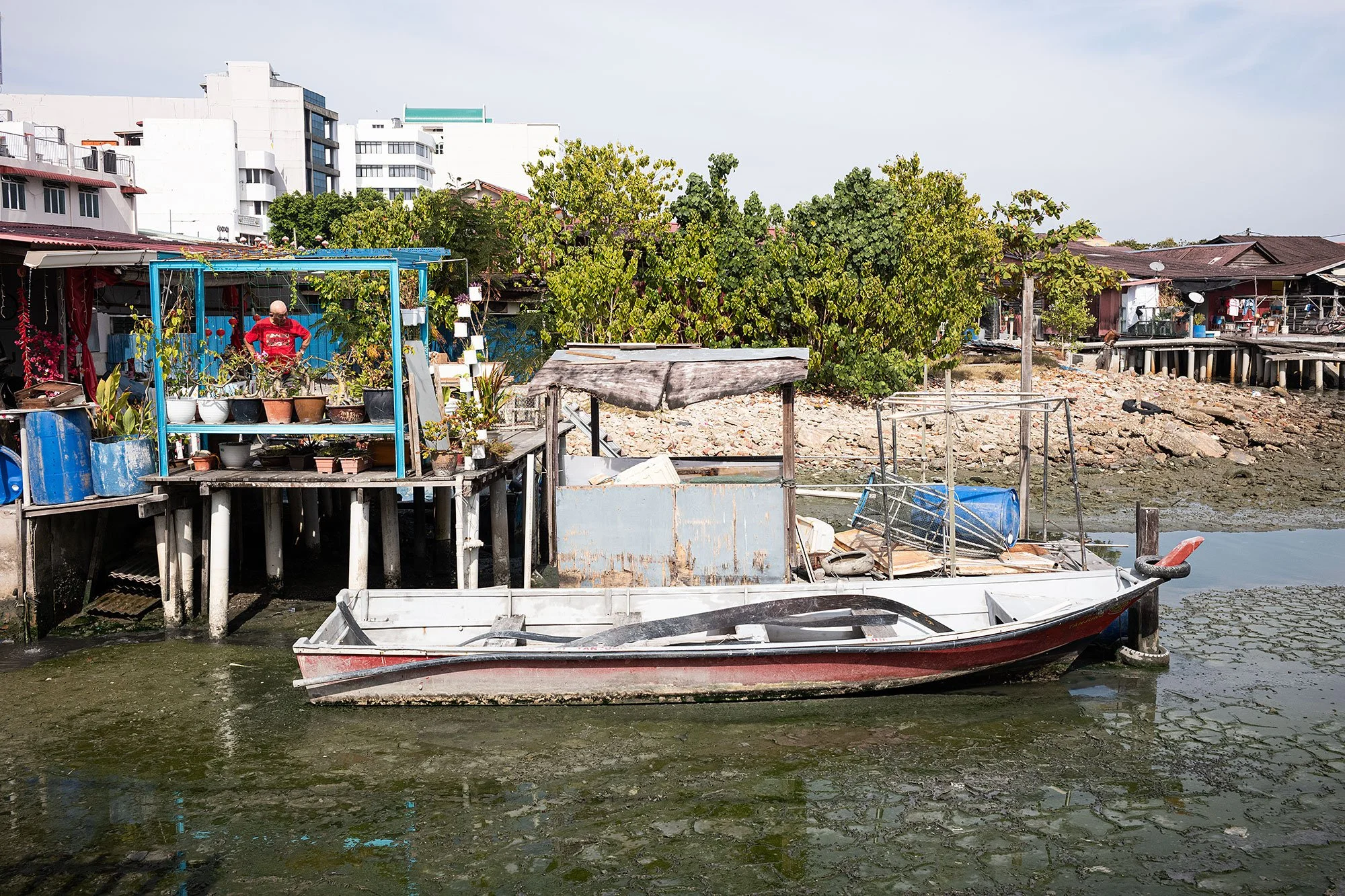
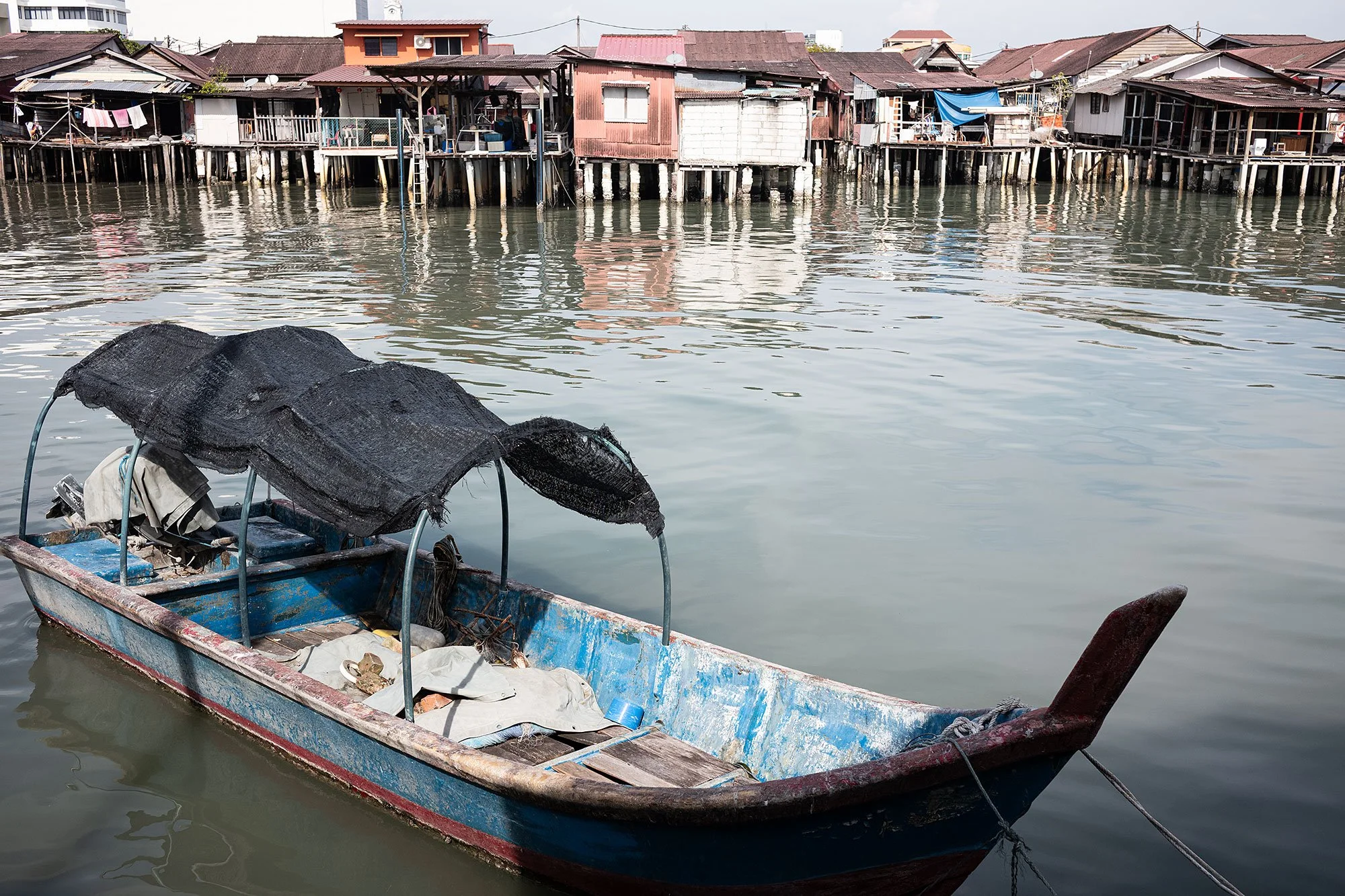
Originating in the mid-19th century, the jetty was established by Chiense immigrants from the Chew clan. Traditional stilt houses crowd the wooden walkway, the lower levels now given way to shops. Members of the clan still live above and behind the storefronts.
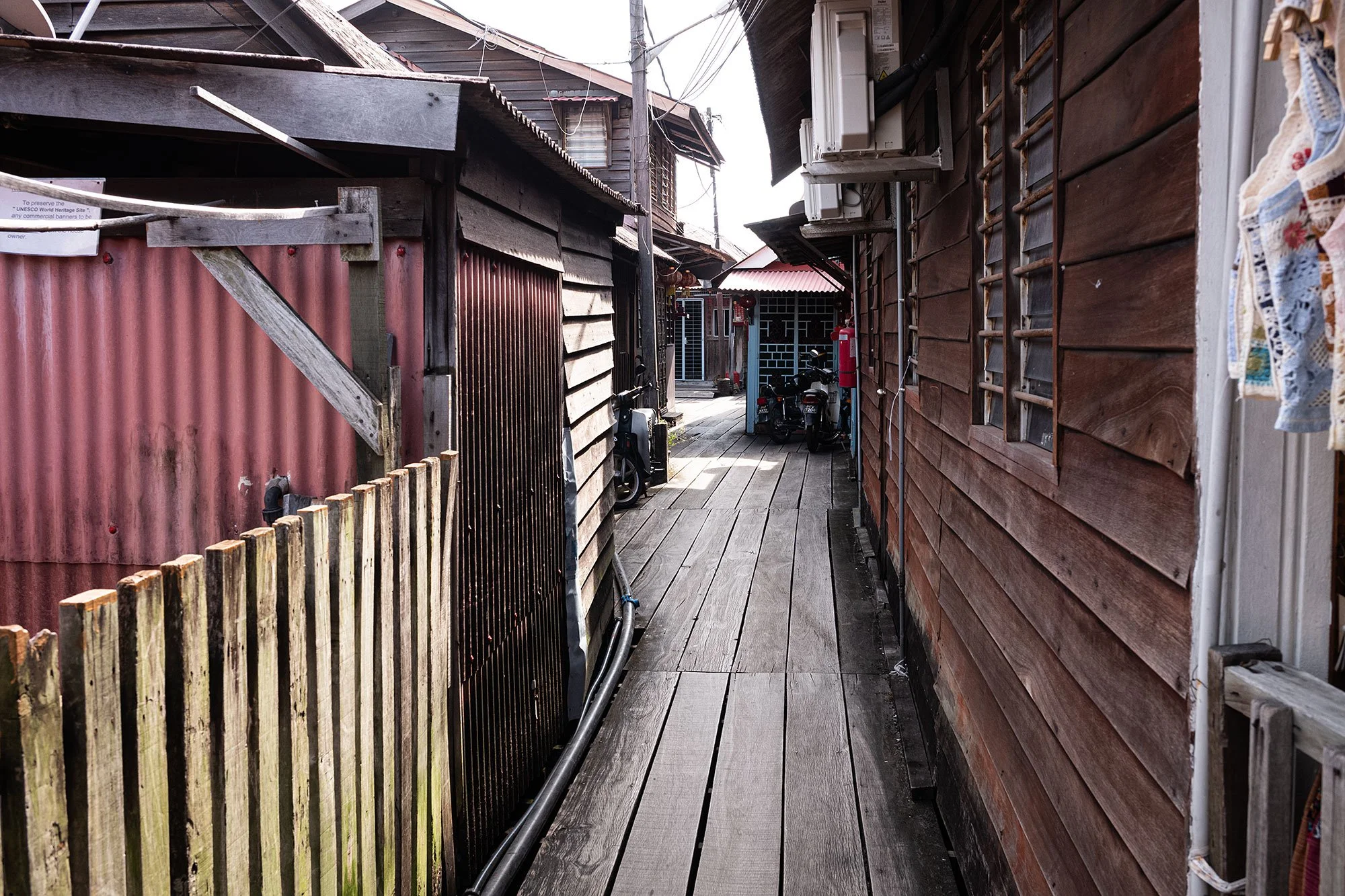
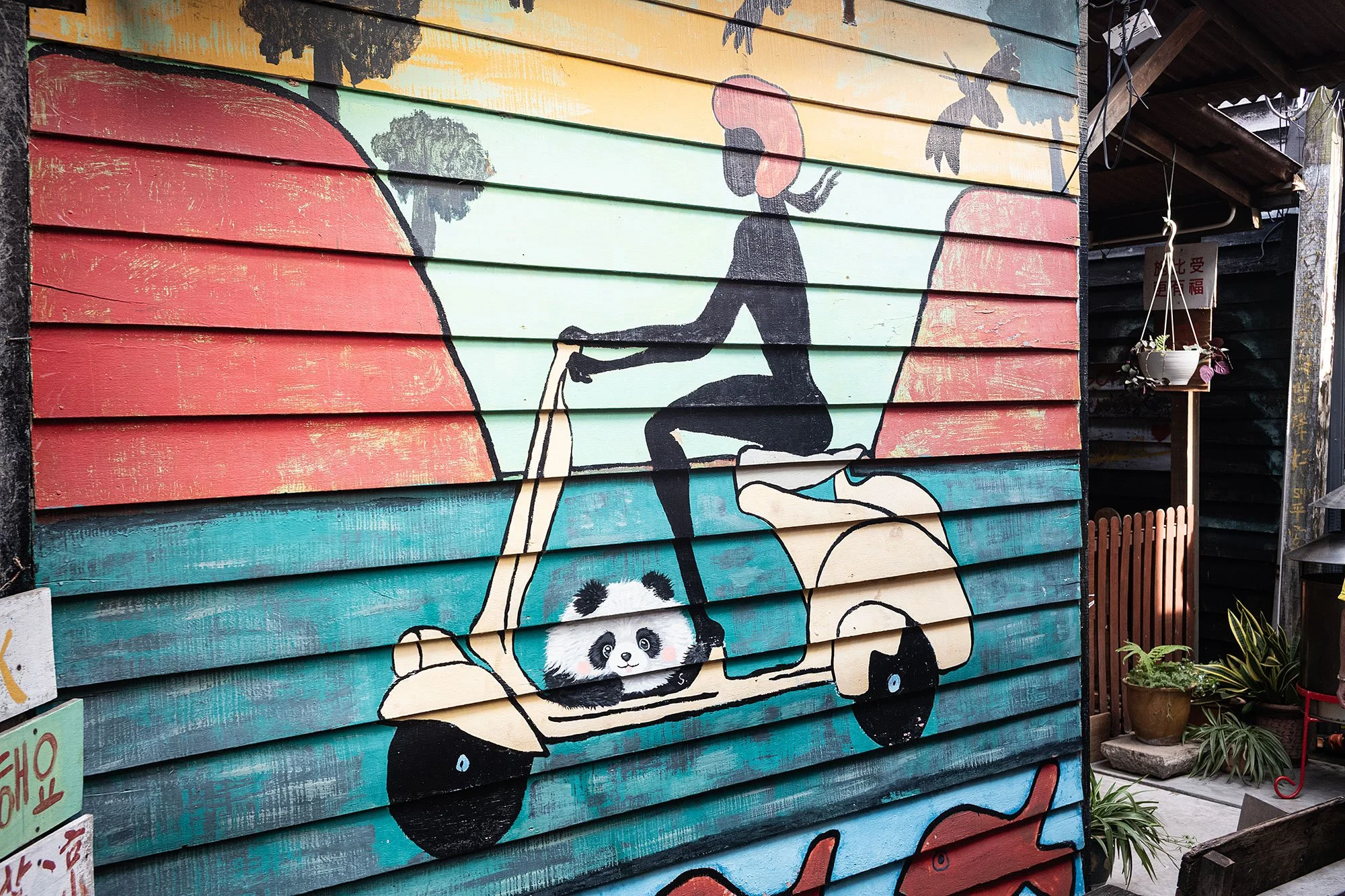
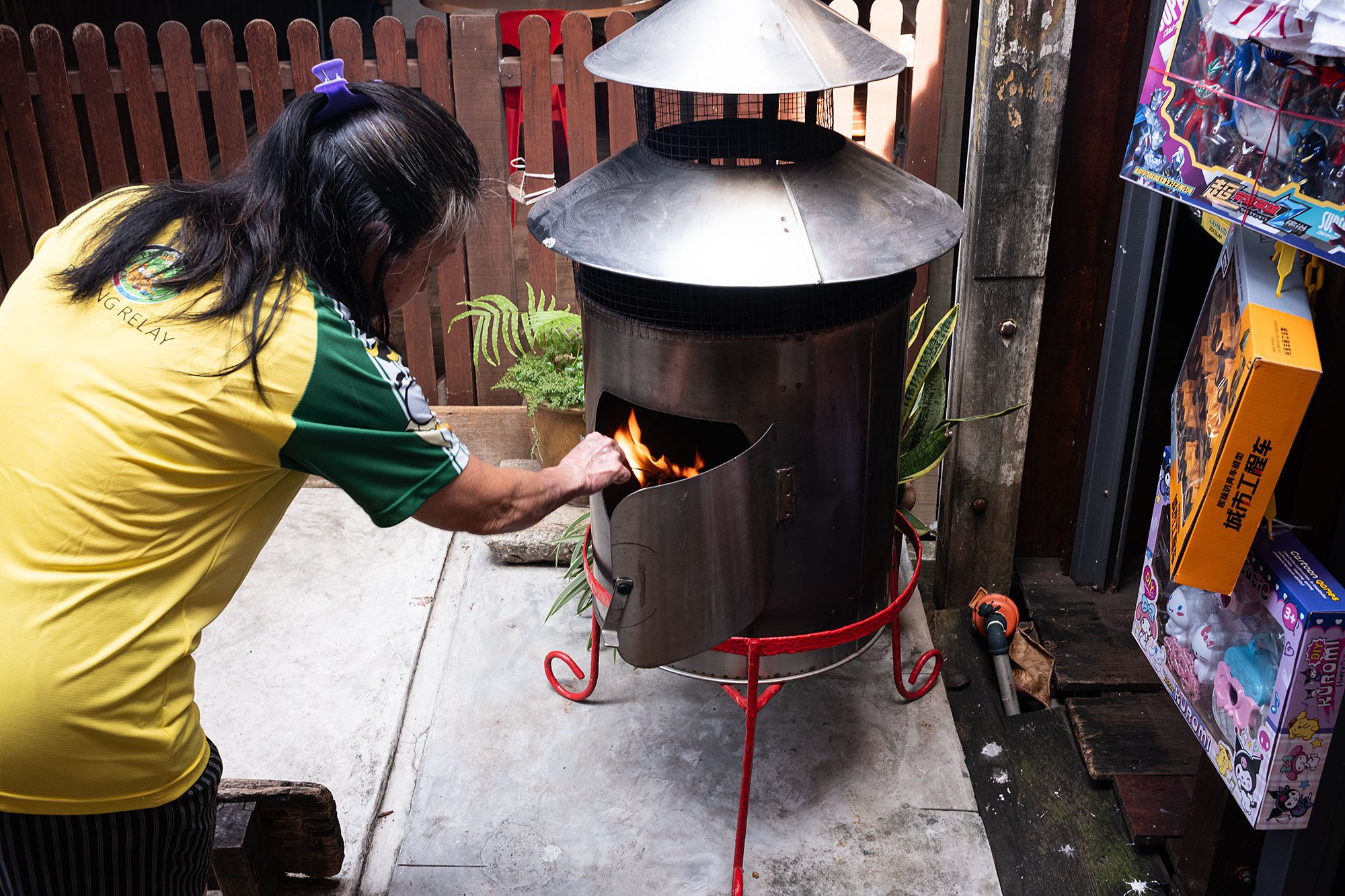
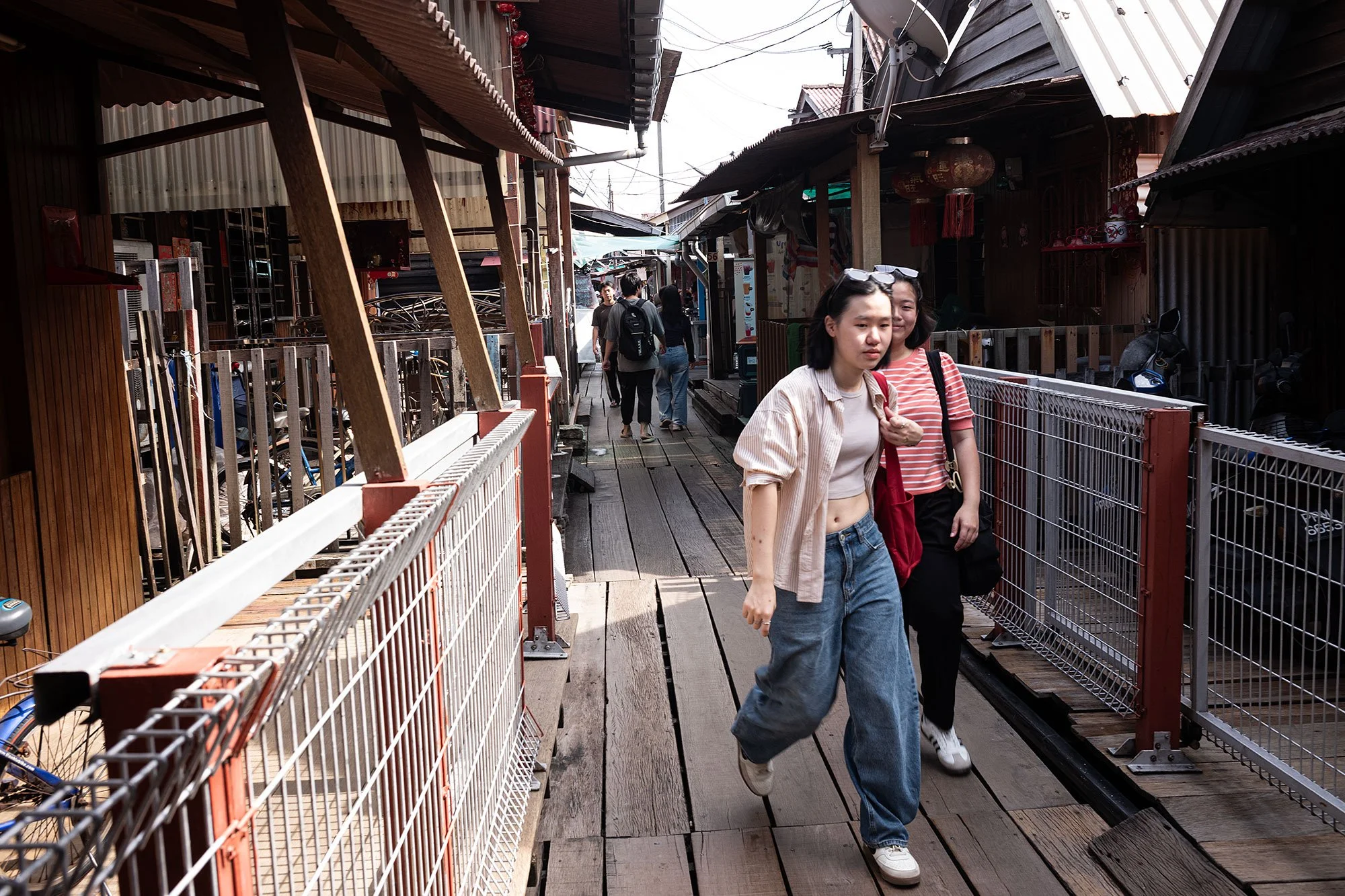
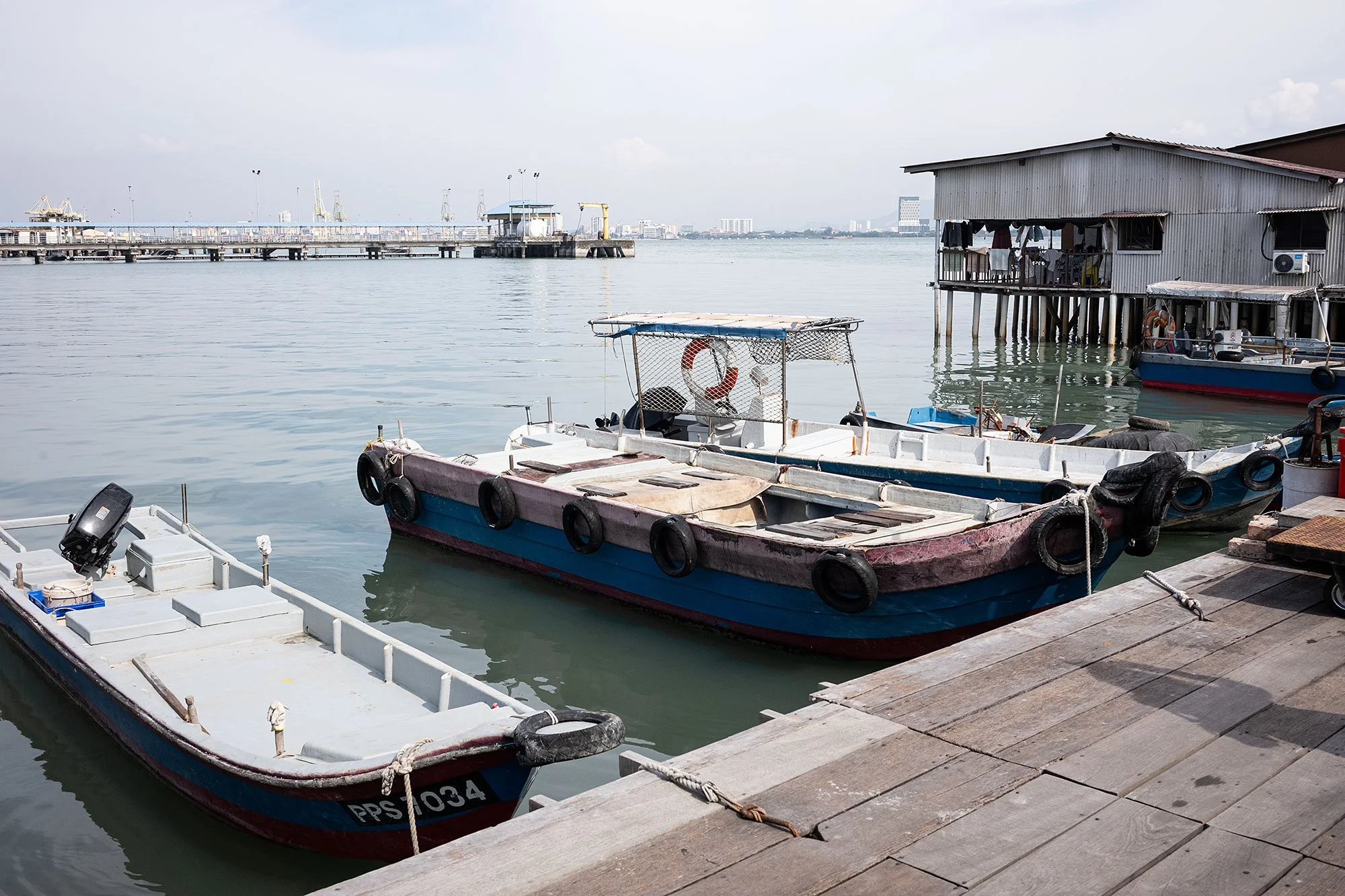
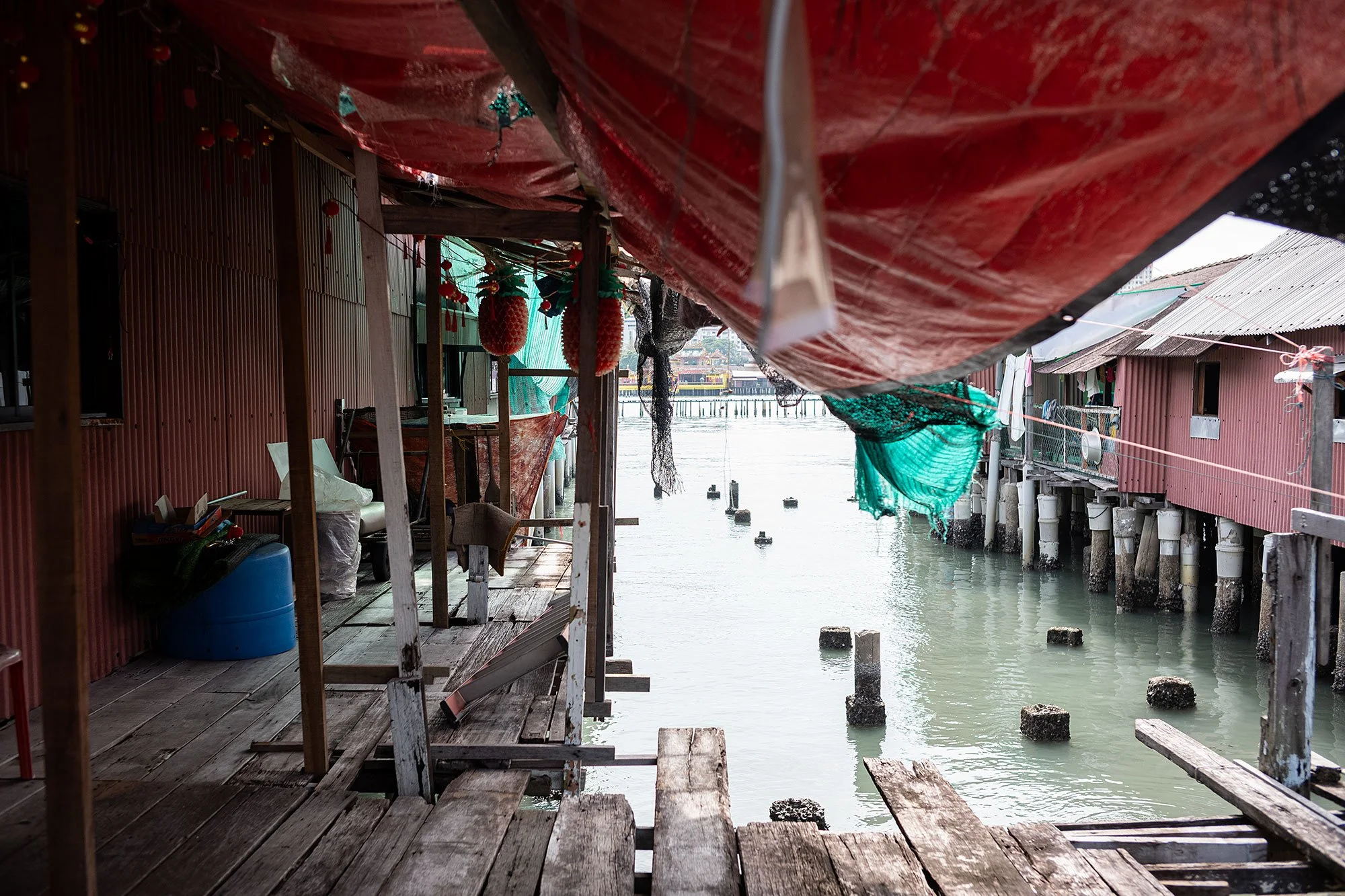
I walk to the end of the jetty past the docks where fishing boats are moored before turning back. It’s moderately crowded and I’m surprised to cross paths with a woman riding her scooter home along the wooden planks. It reminds me of the floating village in Bandar Seri Begawan, though on a much smaller scale.
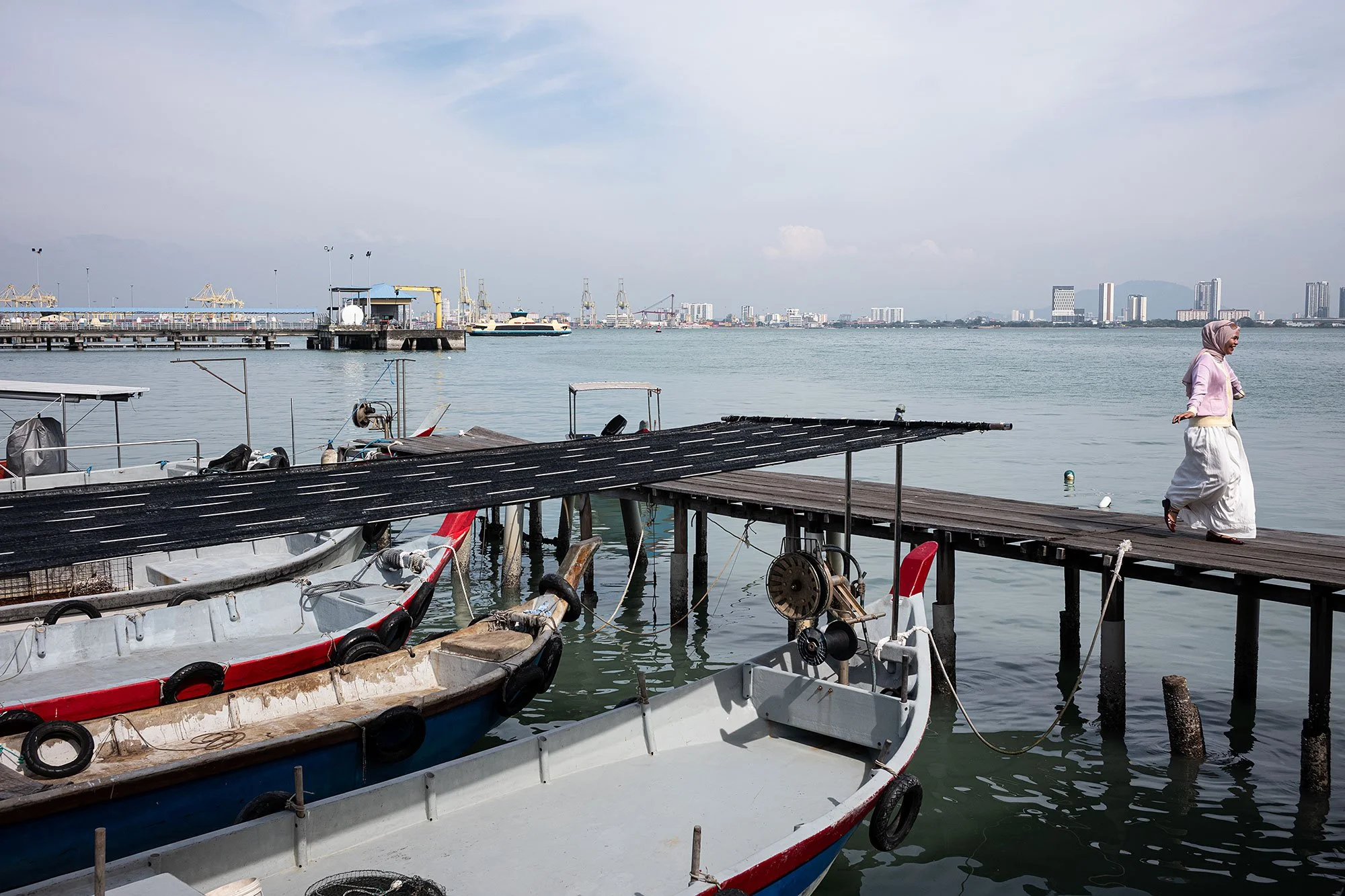
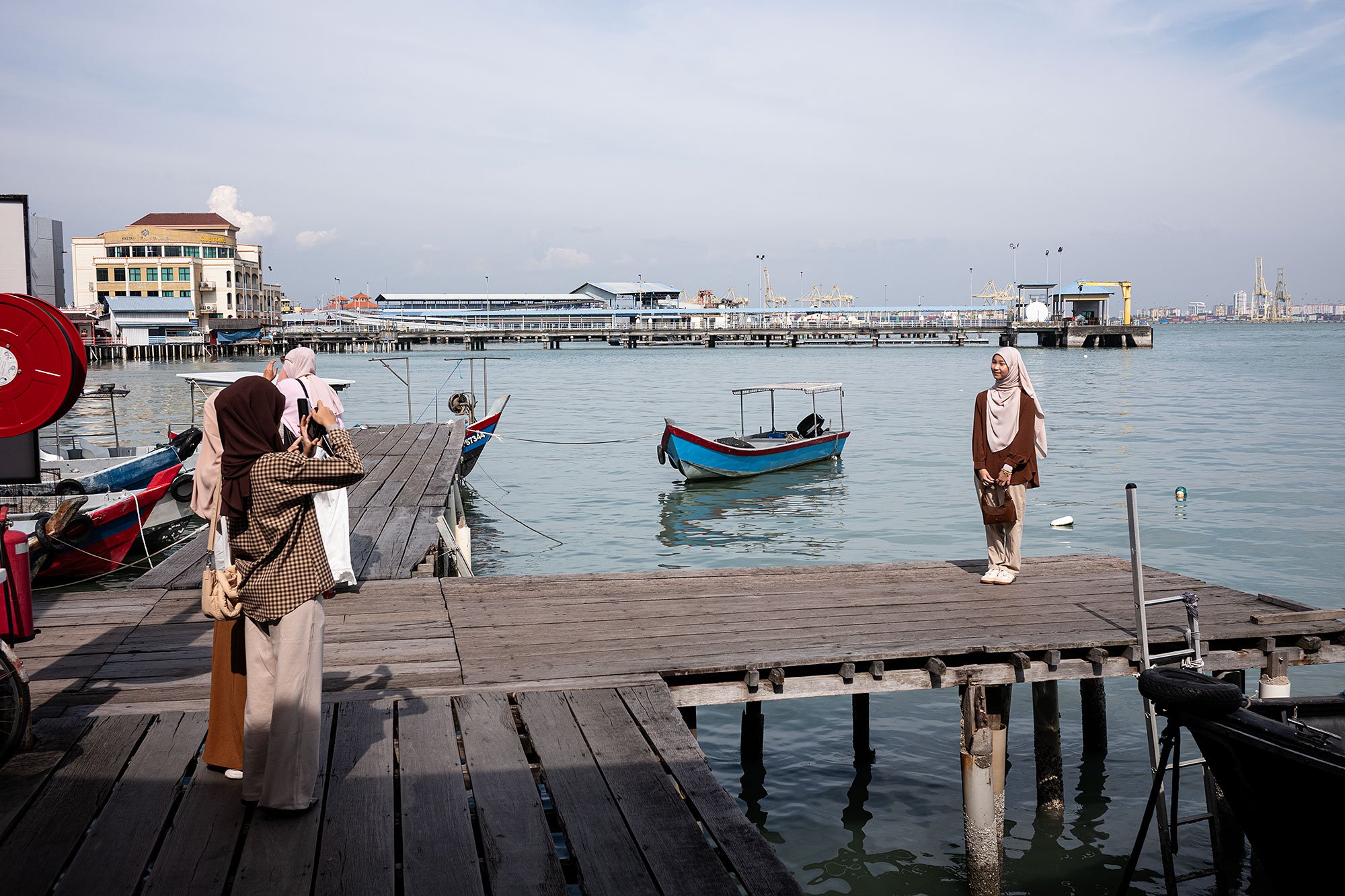
I retrace my steps to the Taoist temple that sits at the start of the jetty. At first I intend to head back into town but then curiosity gets the better of me and I decide to walk the length of the adjacent Tan Jetty.
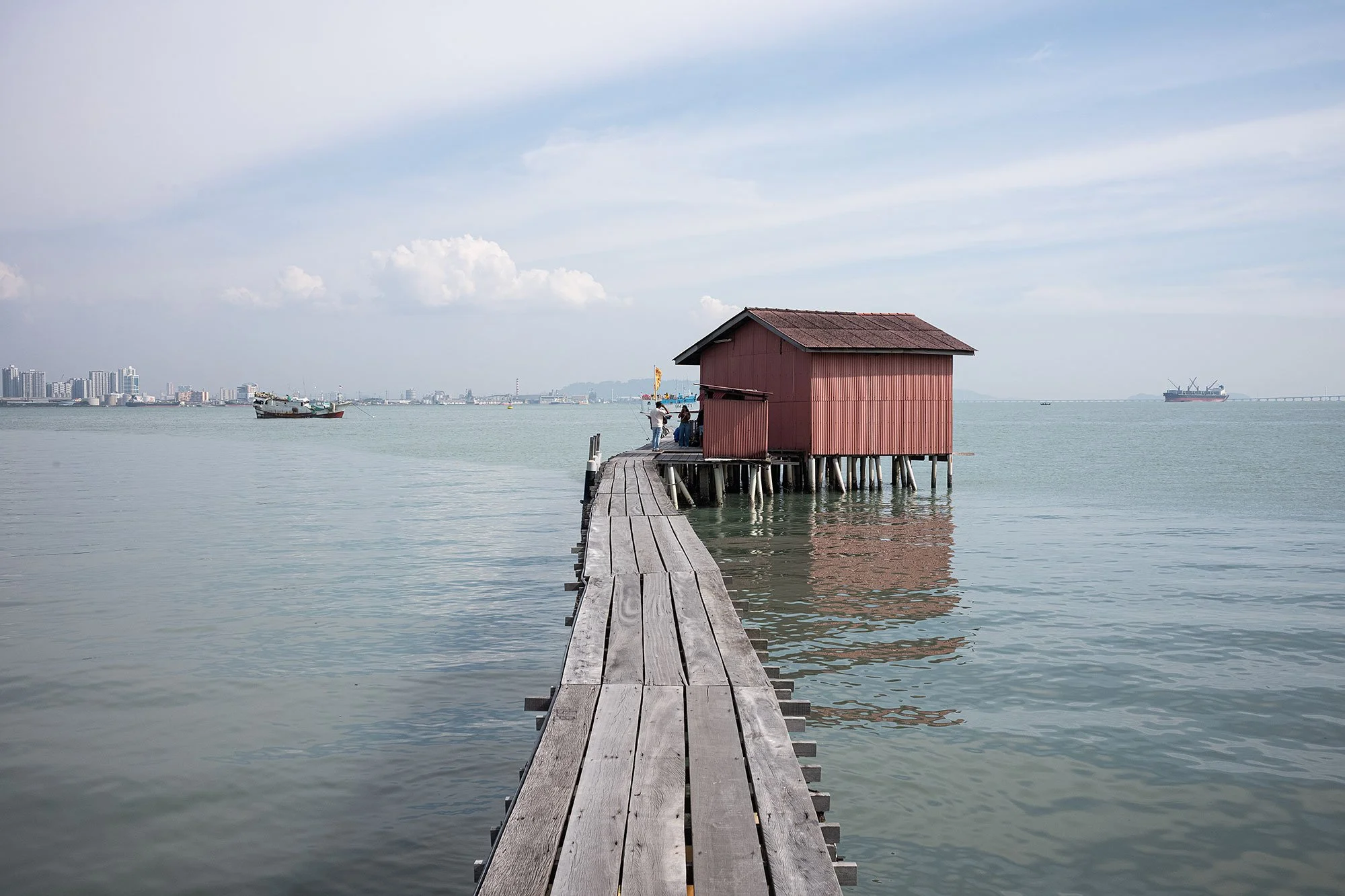
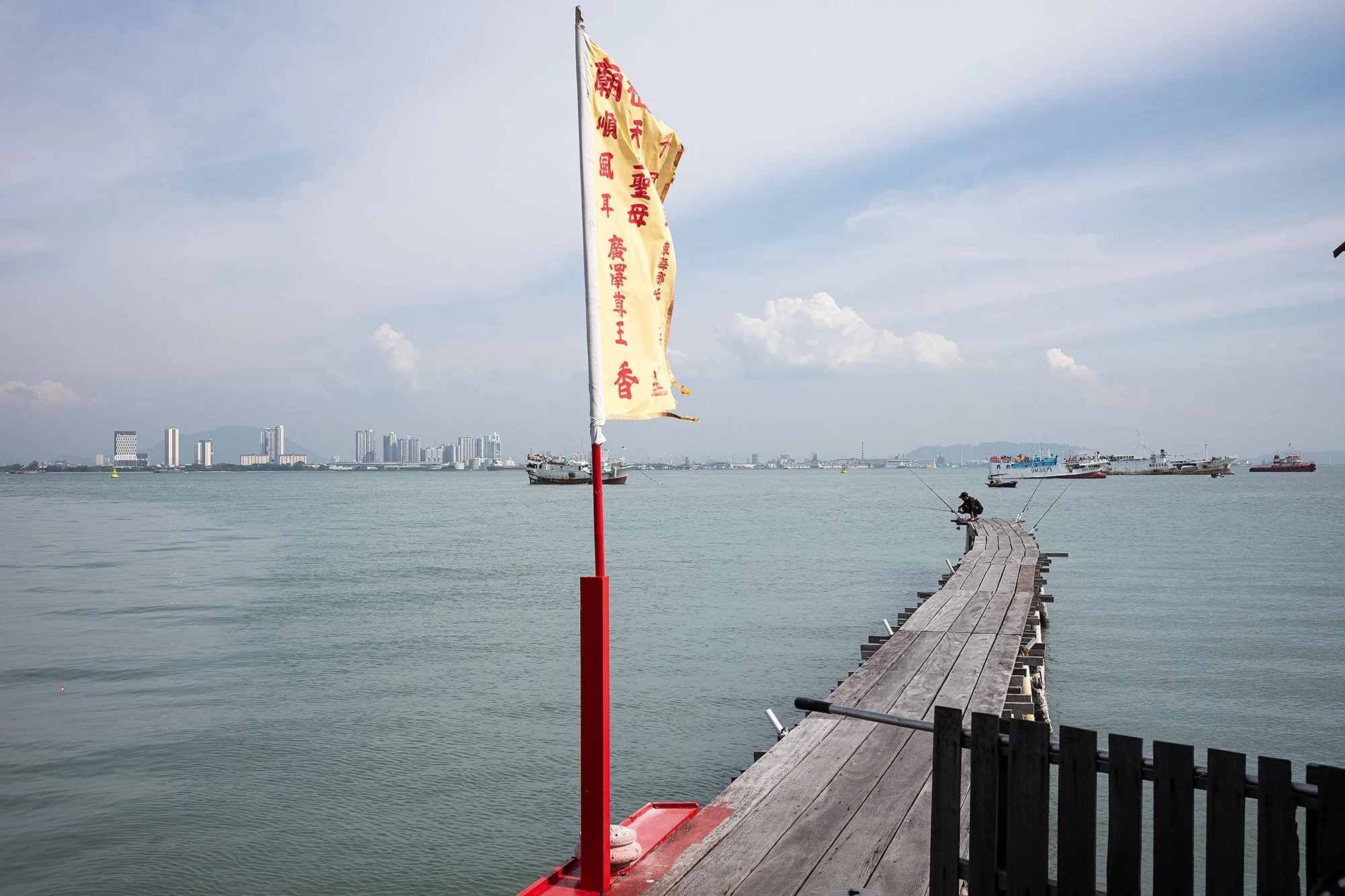
One of the other six remaining jetties, Tan Jetty is much more spare than Chew Jetty. I pass some restaurants at the end of the jetty before stepping onto the wooden planks. The homes soon give way and the sea flanks me on either side.
There’s a group of people taking photos near the end of the jetty and I walk quickly in order to remove myself from their shot. I offer to take a group photo for them before turning my attention to the end. A few fishermen are gathered, some working, some resting in the shade of the lone red structure, a temple to Mazu, that sits towards the end. I don’t blame them for wanting to get out of the sun.
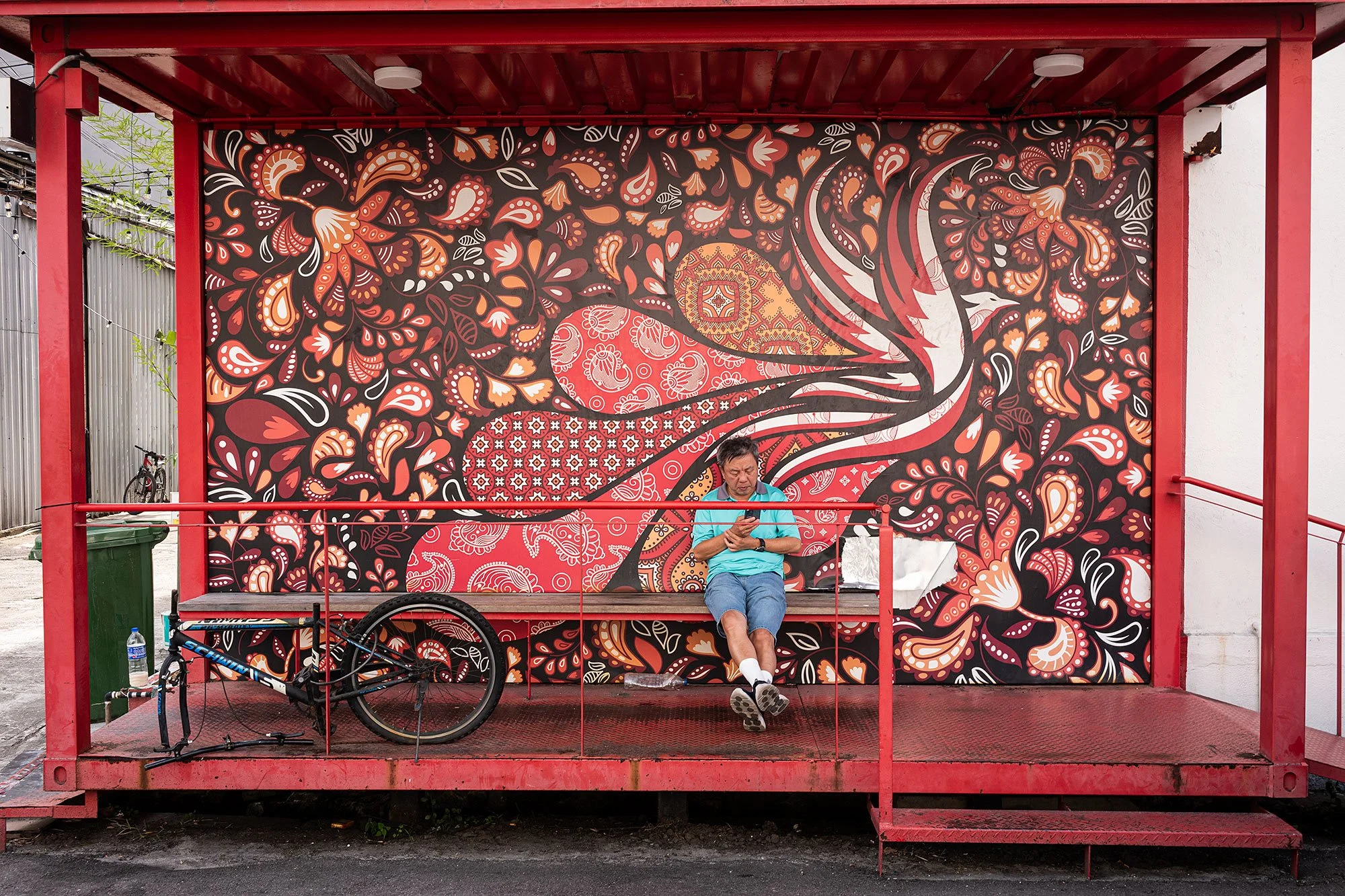
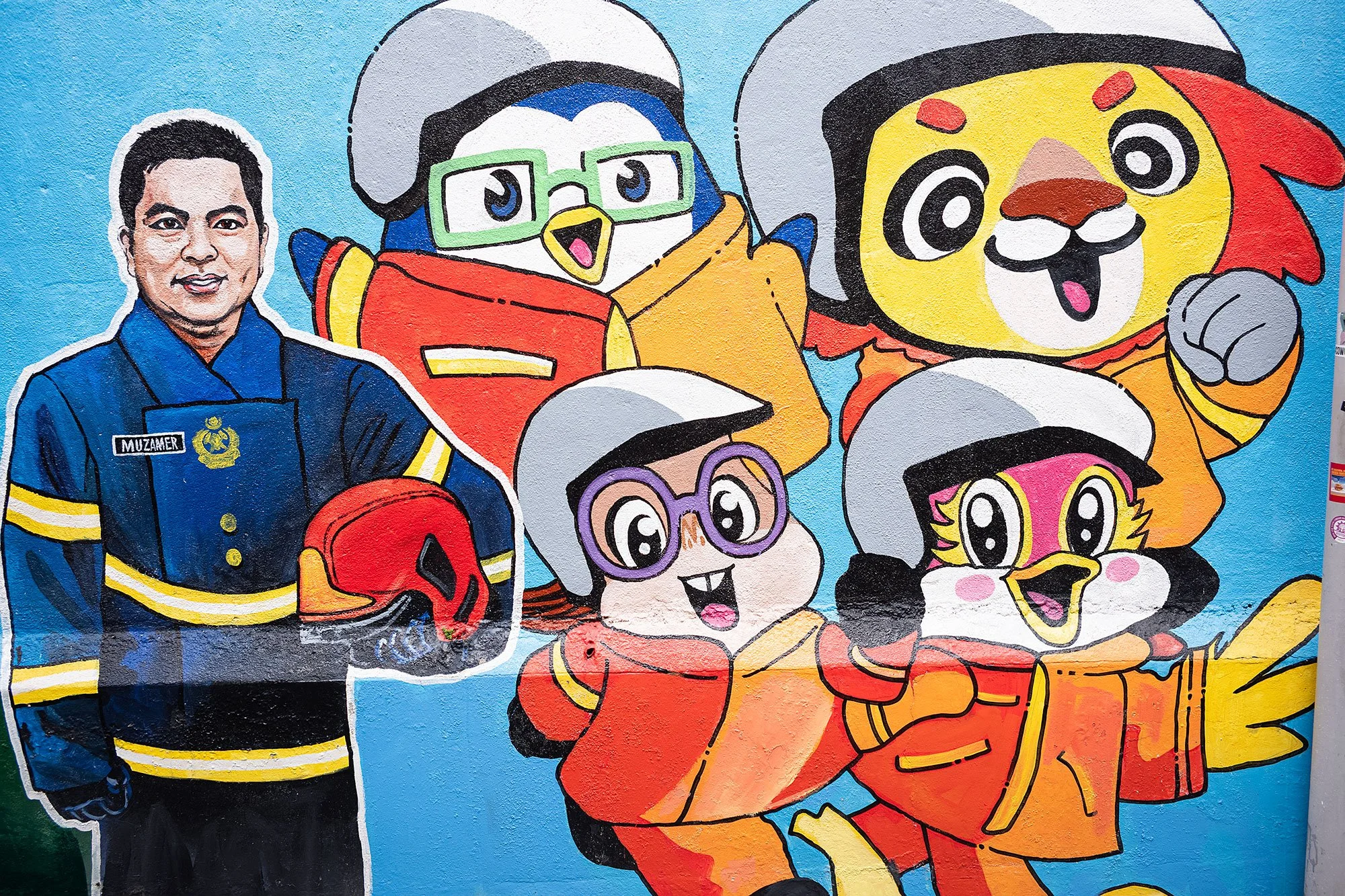
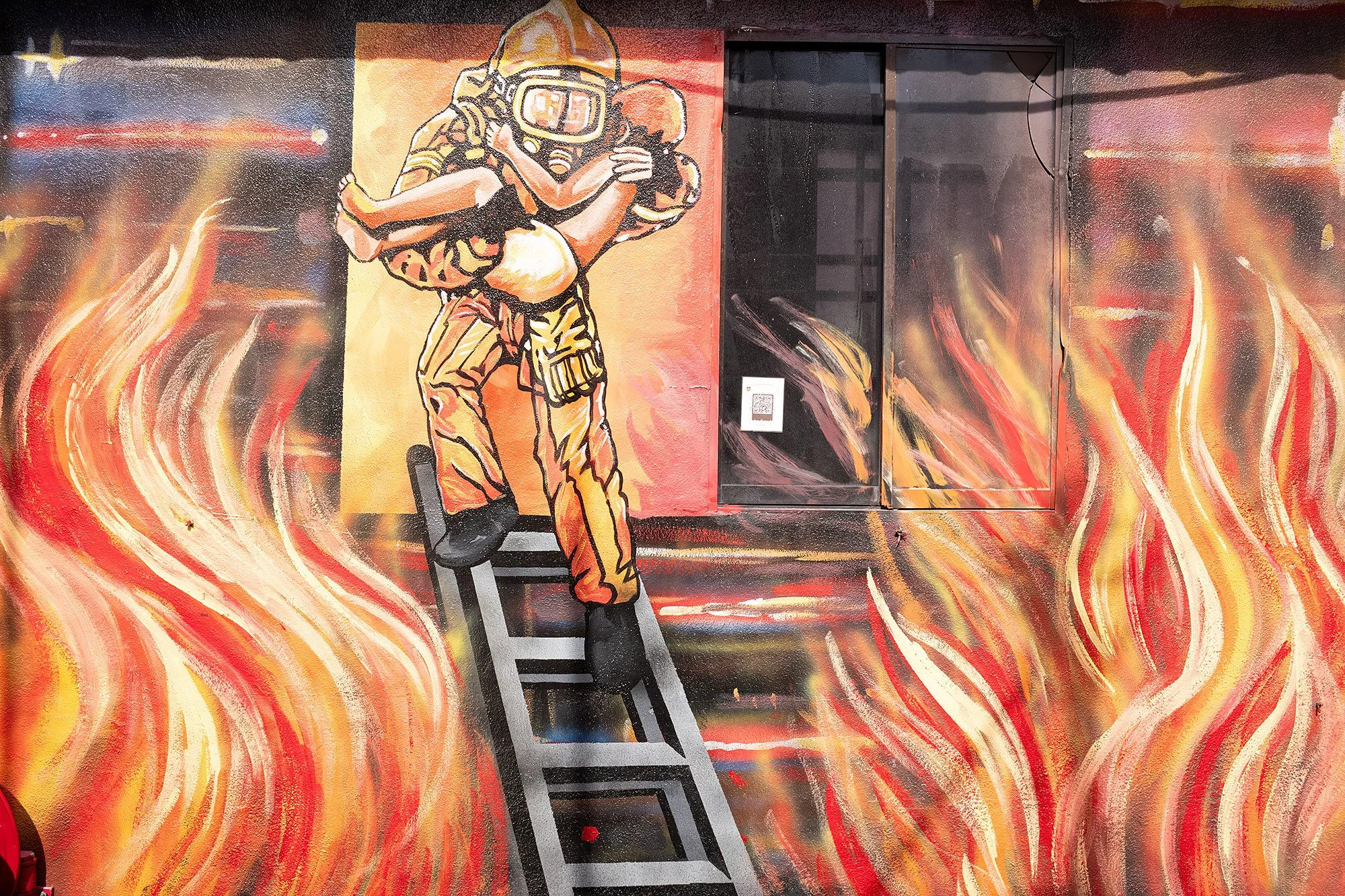
From the jetty I walk back to the city and continue to search for street art. Passing the central fire station I walk down the alley beside it. One wall is covered with murals and other artwork depicting firefighters posing amongst mascots and engaged in heroic acts.
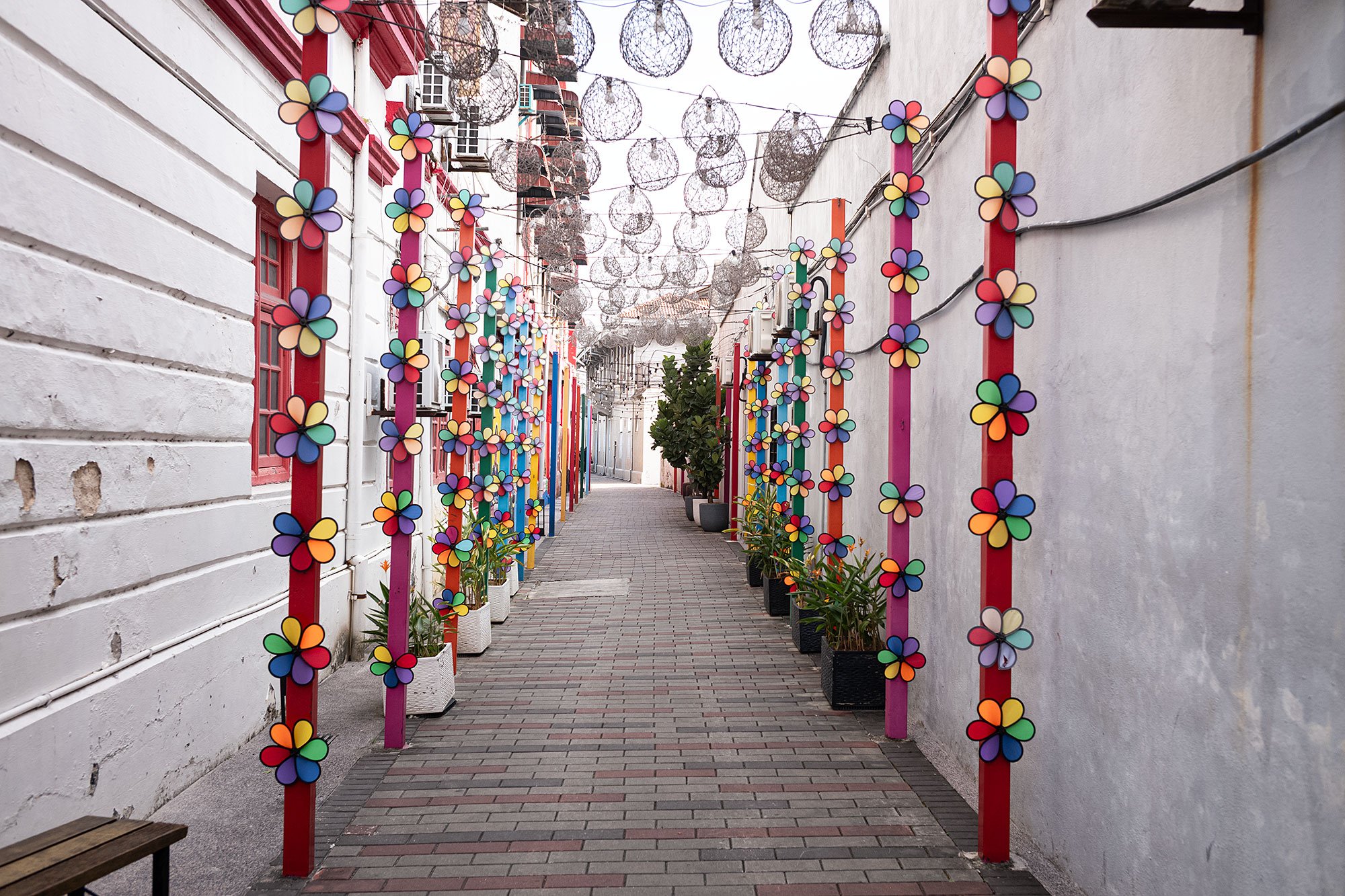
I end up back on Armenia Street, wandering past its tourist sohps and cafes. Checking the map, I see there’s one more piece of street art I really want to see and map a course to it. It lies to the northwest and I wind my way through the streets and alleys in search of it.
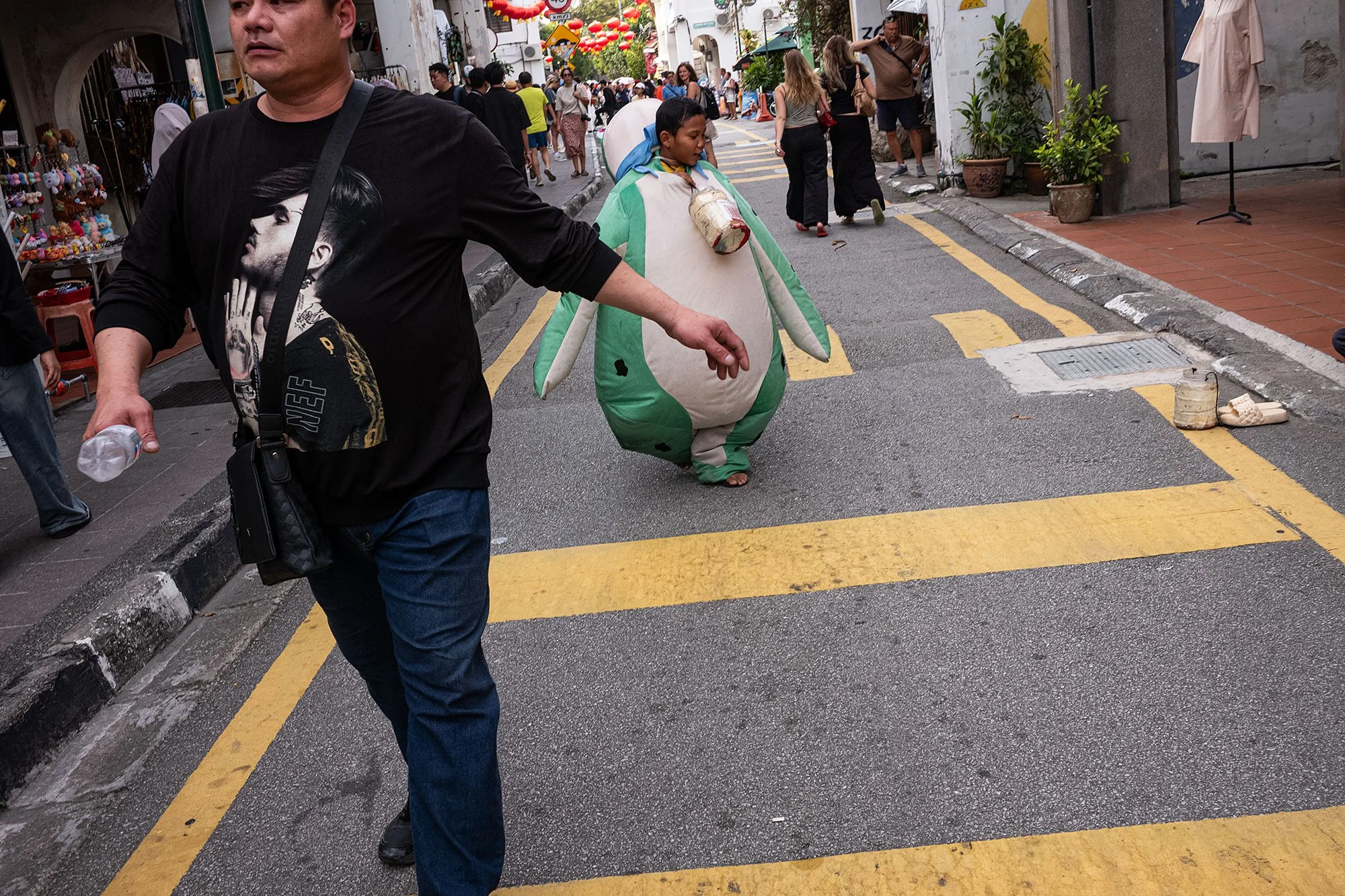
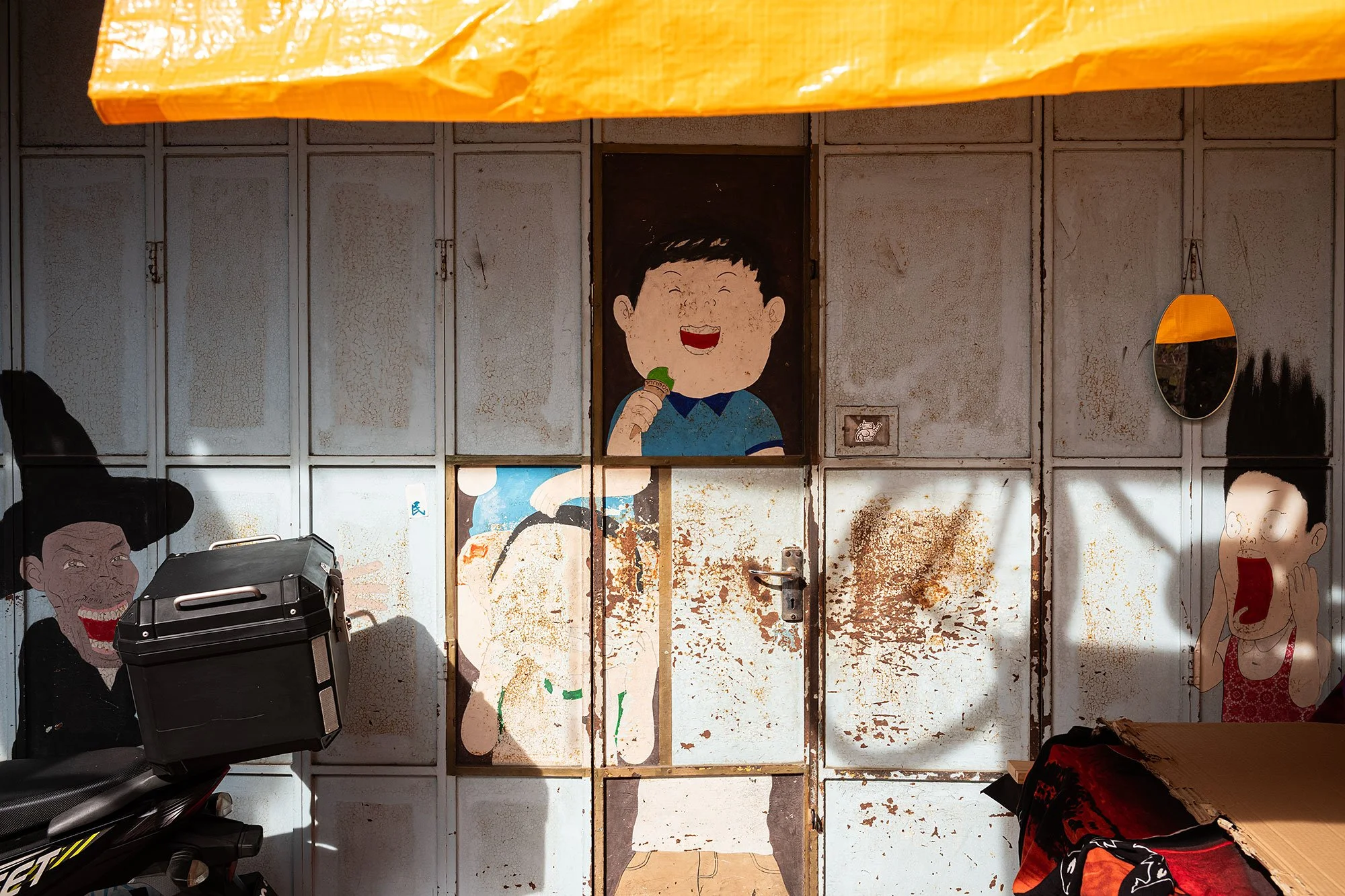
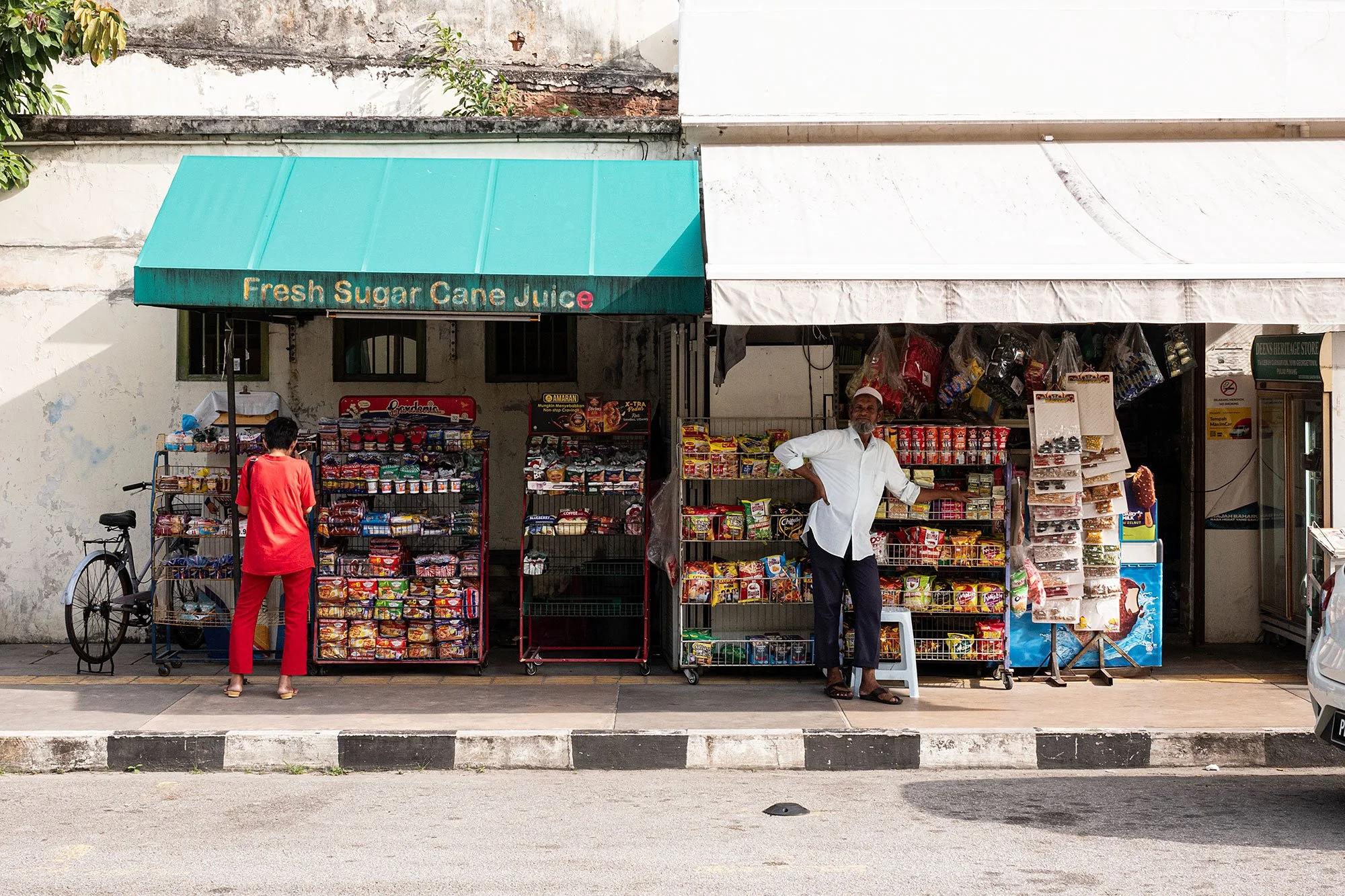
Near the Little Girl in Blue I pass a street lined with street stalls. If I hadn’t already had dinner plans I’d consider a snack. But I don’t want to spoil my meal and so I continue on.
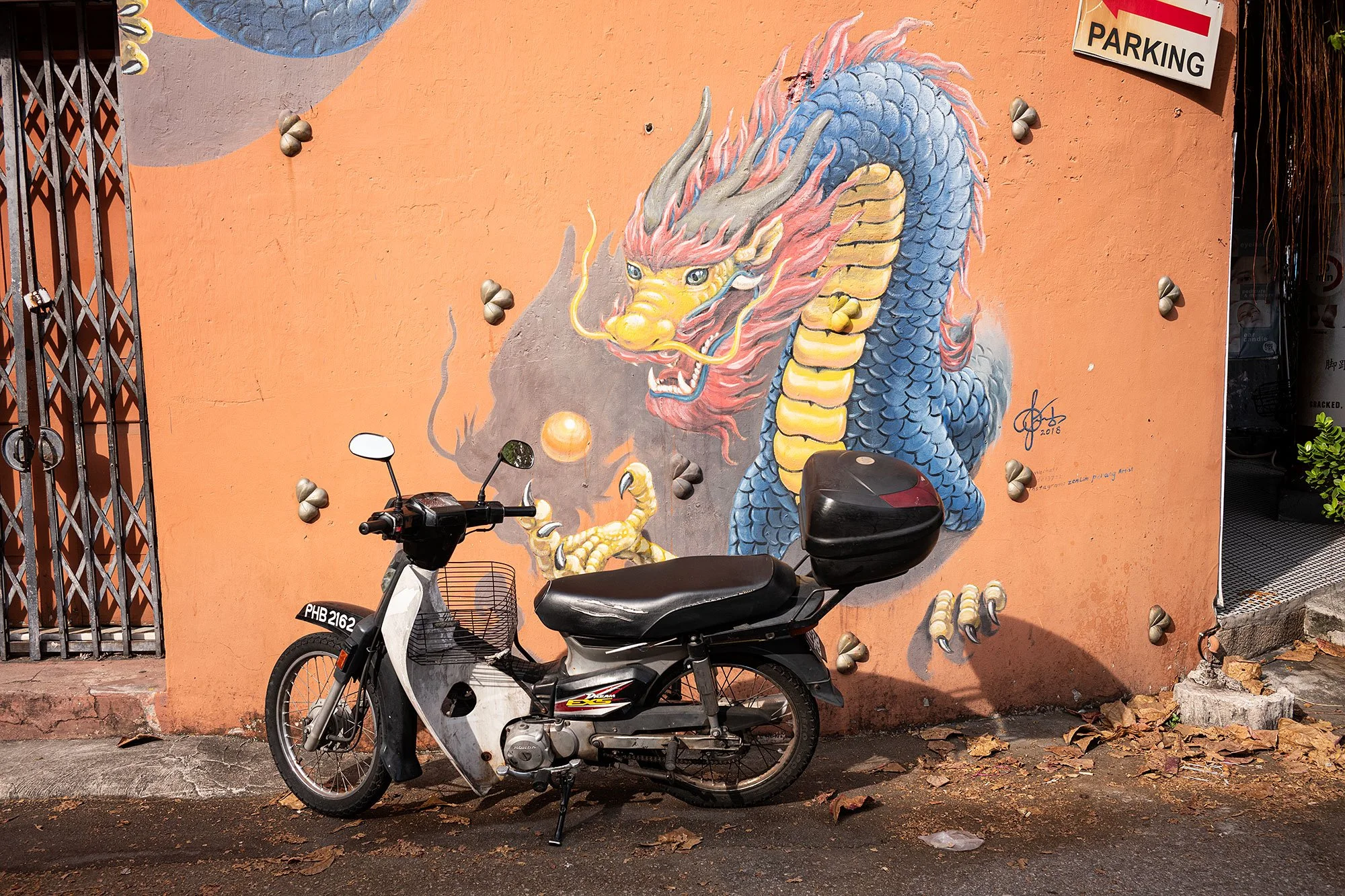
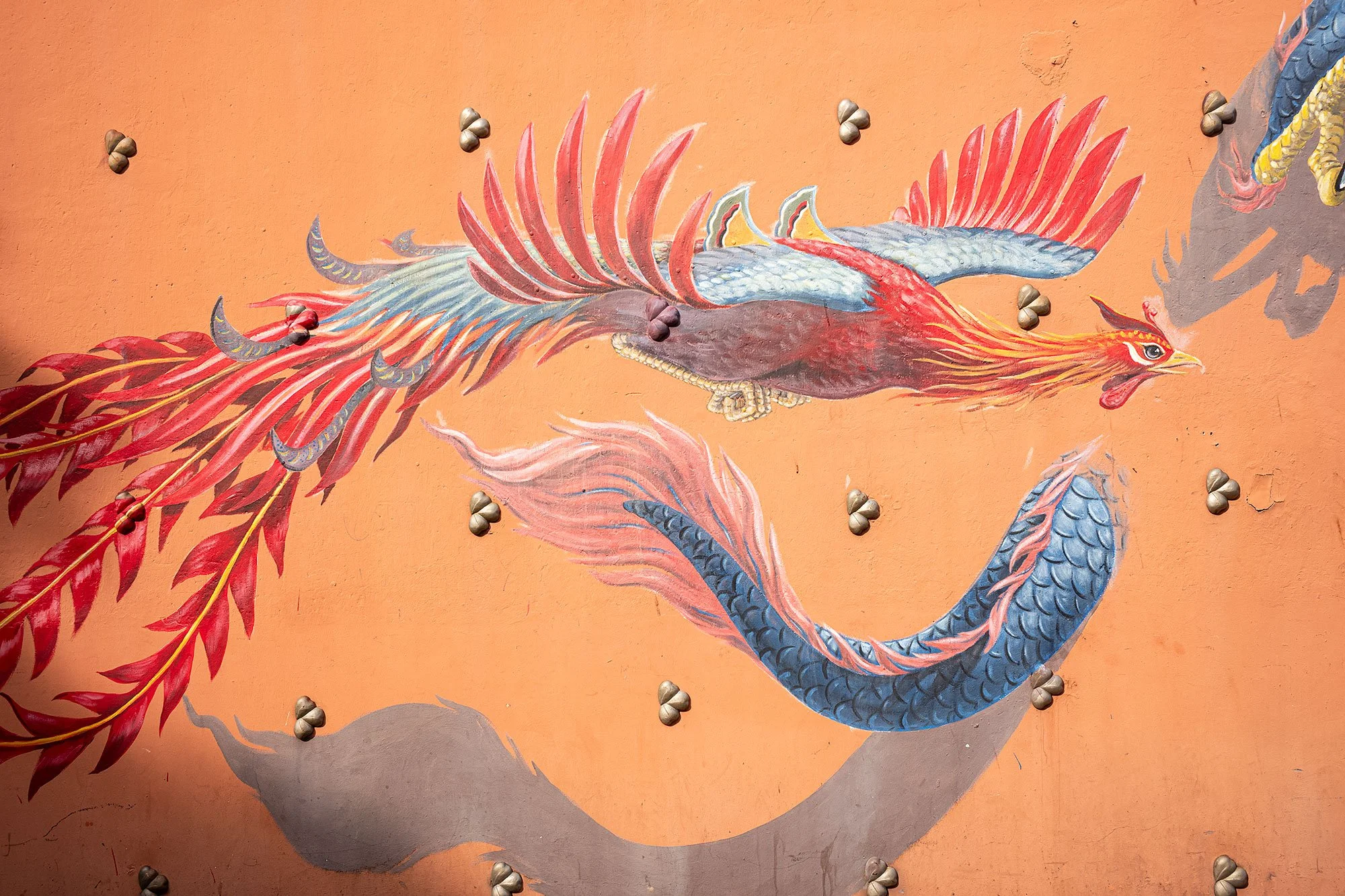
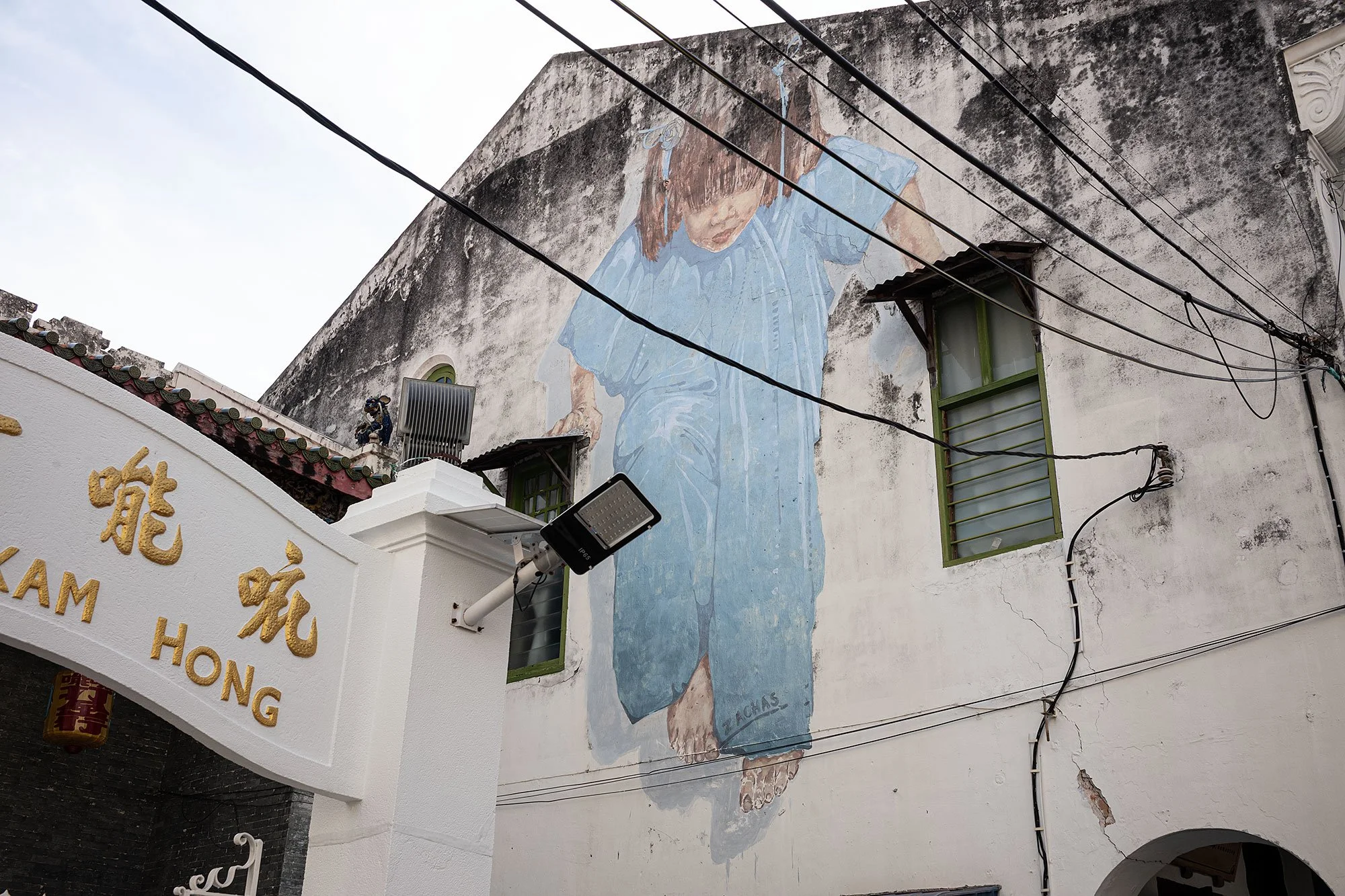
The girl in the mural is anything but. She towers over the courtyard over which she floats. It’s difficult to get a good photo; the courtyard is closed and there’s a gate blocking the view. I play with the angles in order to crop the gate out. Unfortunately, there’s nothing I can do about the electric wires.
Checking the time I decide to take a cab home. I want to shower and dress up a little bit for dinner. I also want to rest up a bit. I could walk home but I’d be pushing it and take the easy way out.
From the apartment I cab to the restaurant as well. I’m early and take a moment to walk around the complex in which it sits. A former bus depot, it looks like it’s now given way to a lot of public space. A group looks like they’ve just finished doing yoga and another space is preparing to host a lecture or performance. I can’t quite tell which.
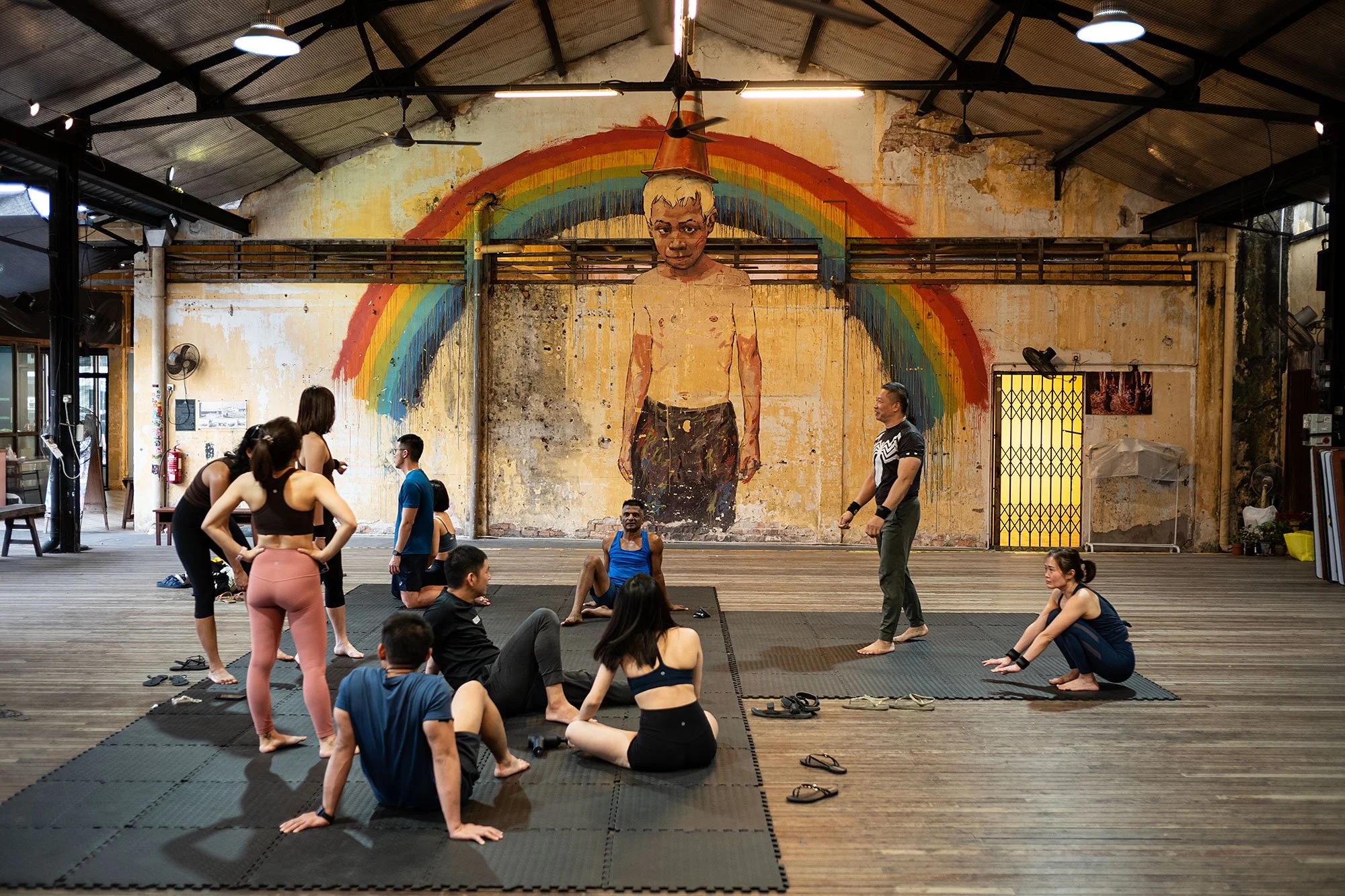
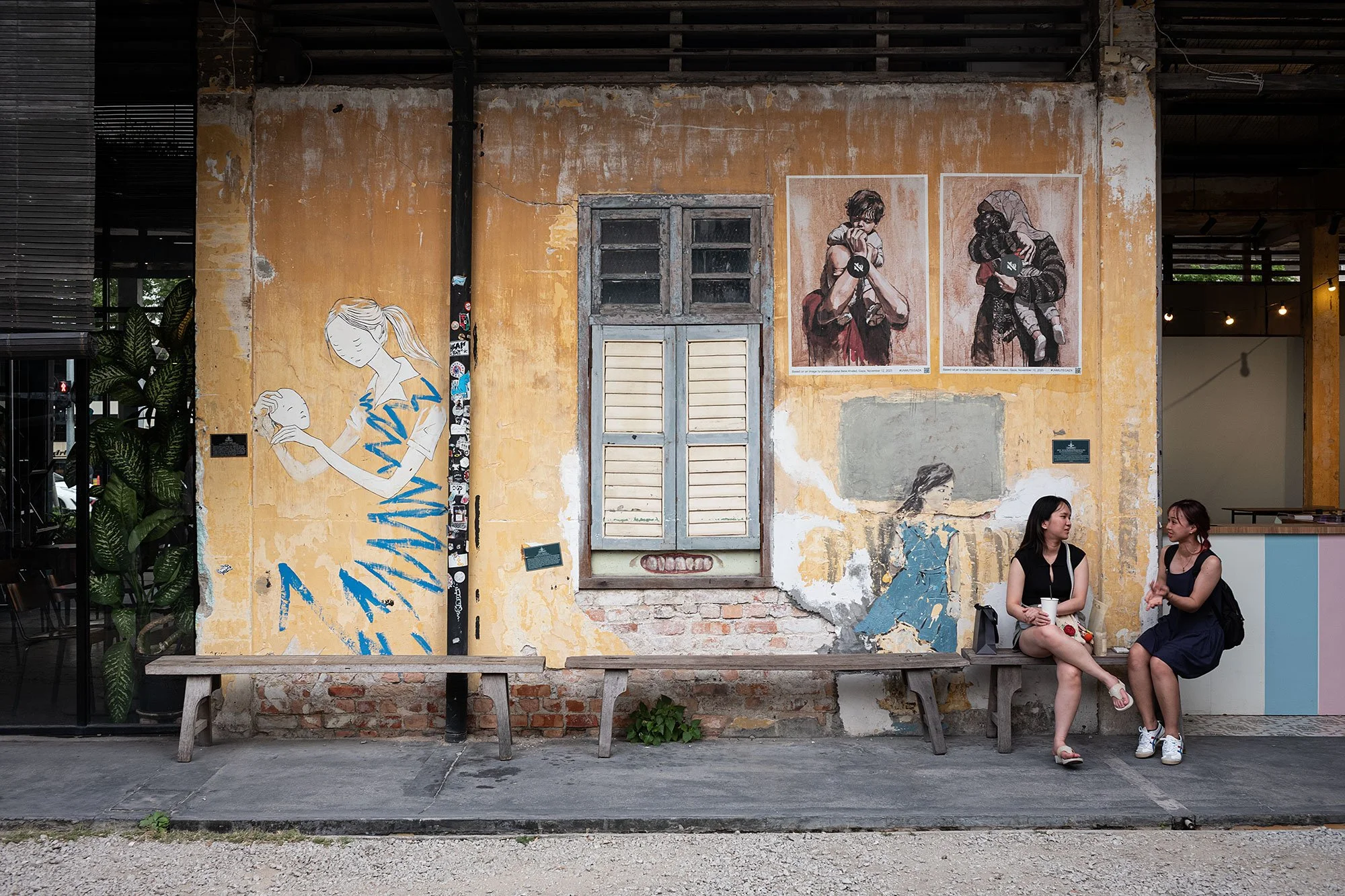
For dinner I’ve made a reservation at Au Jardin, a French-inspired local fine dining restaurant located in an old warehouse. It’s beautiful inside, with a small dining room that caters to at most 50 covers a night over two seatings.
I’m lead to the chef’s counter and seated at the bar. Francine introduces herself. She’ll be waiting on me this evening. She tells me she’s been in Penang for two months after stints in Jeddah and Shanghai, the latter at a Michelin-starred vegetarian restaurant.
I ask her how she came to Penang and she tells me the chef here was a customer in Shanghai and invited her to come. She had been struggling with the winters there. She likes Penang much more—the climate is more similar to her home country the Philippines—and plans to stay for a while.
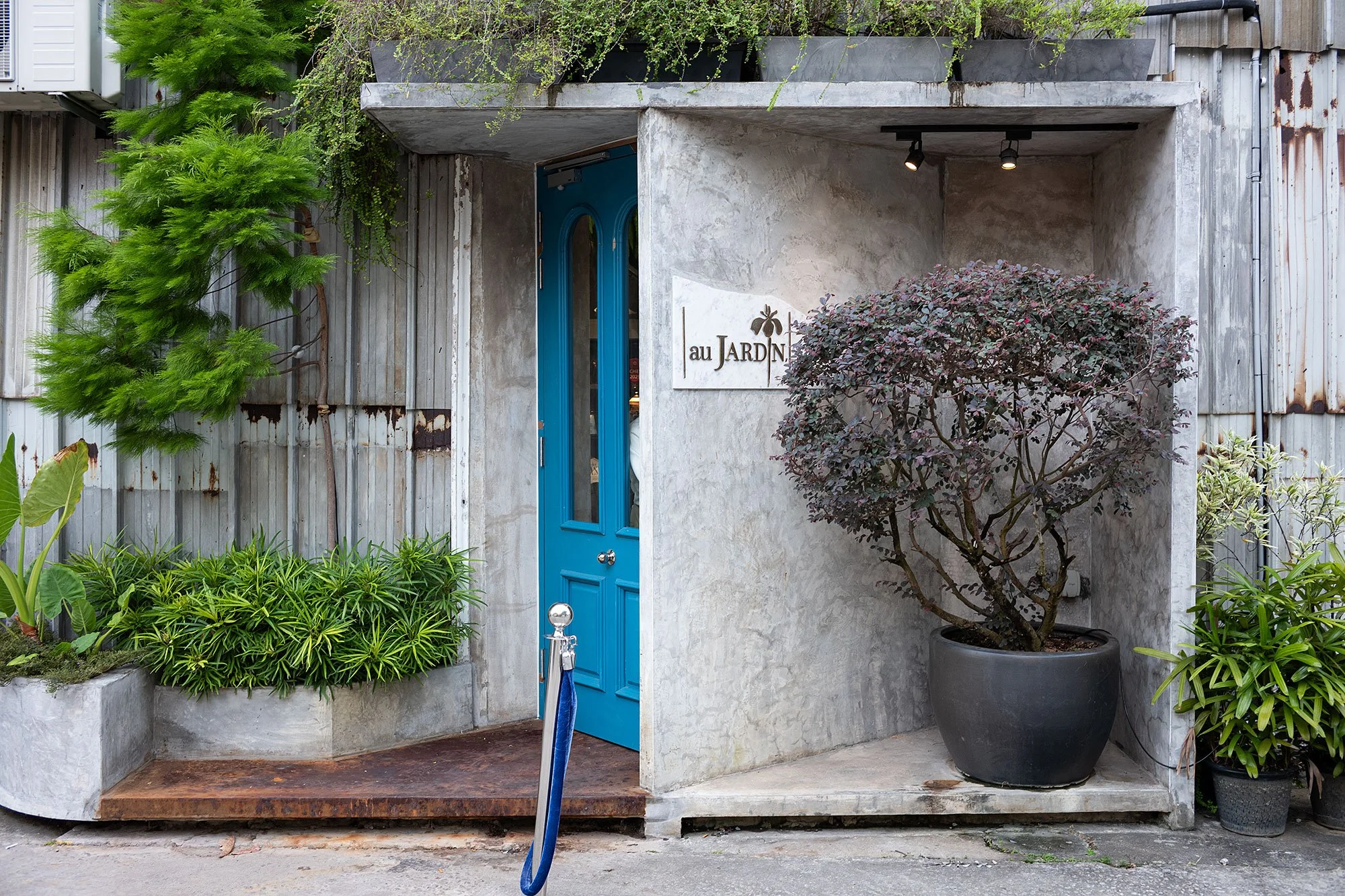
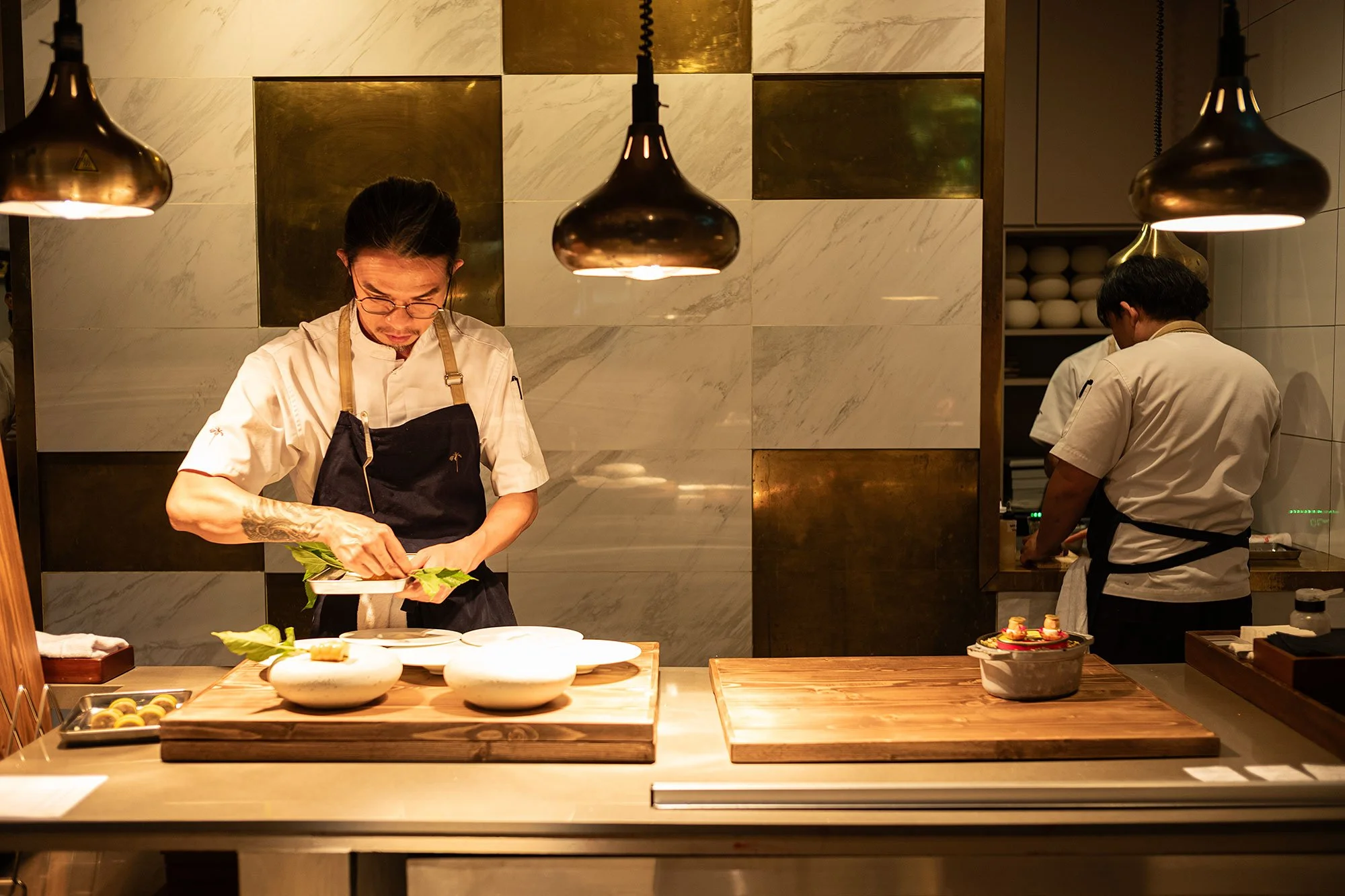
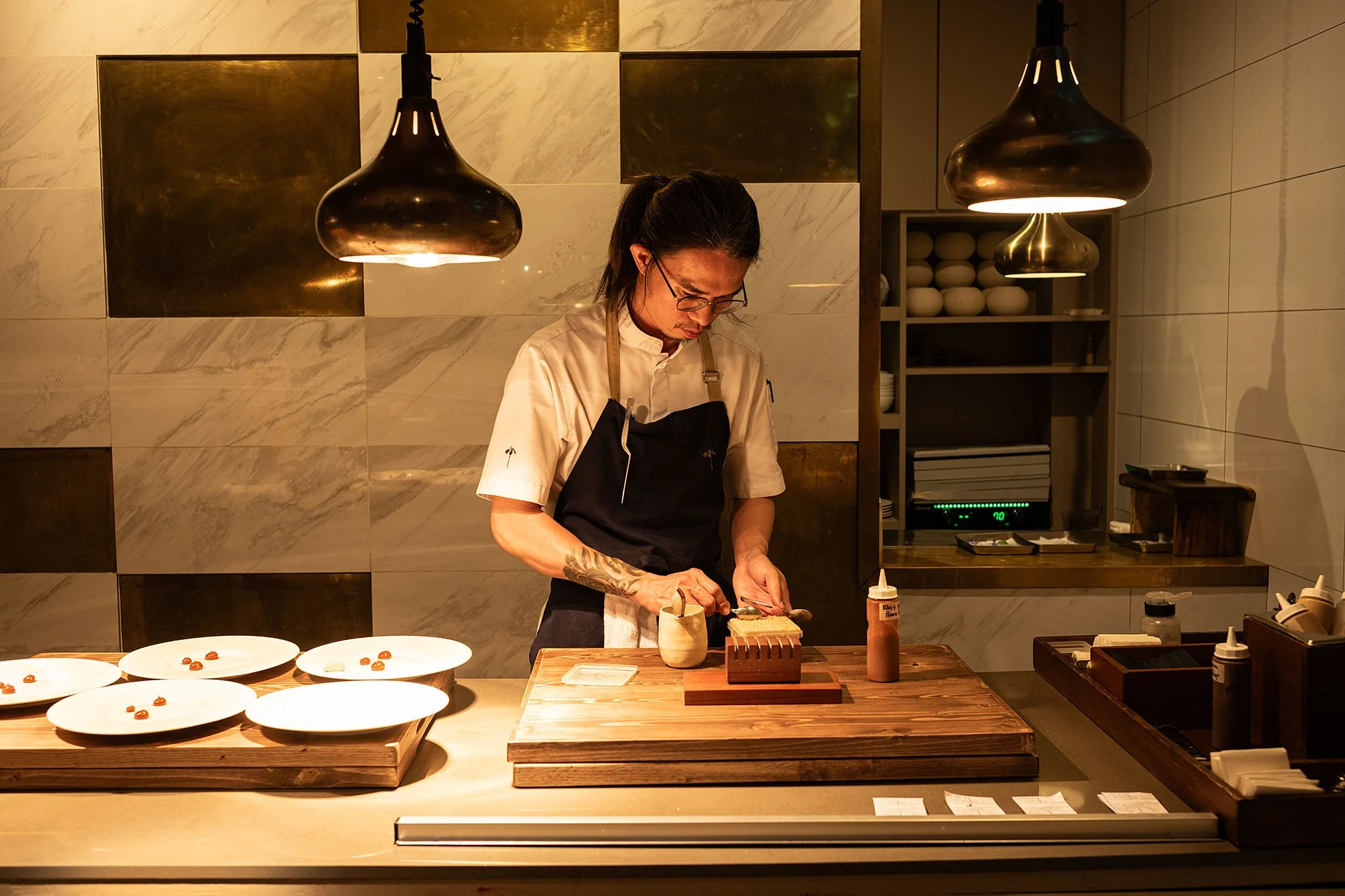
The food is very good, the salted celtuce and abolone dishes fantastic standouts. There’s a man from the United States seated next to me and I avoid making conversation until the end, uncertain of whether politics might enter the discussion and where his allegiances may lie.
It turns out he’s from the State Department, based in D.C. He did six months in Somalia recently and is in Kuala Lumpur for six weeks. He prefers so-called hardship posts because he feels like he can have more of an impact. He has no interest in European posts; generally they’re on autopilot, though he feels for the people posted in Copenhagen who are being yelled at for ridiculous demands they have no control over.
It’s a pleasant conversation and I’m happy to have introduced myself. I wish him good luck and leave him to finish his drink.
I walk home. It’s only twenty or so minutes away and I could use the constitutional.
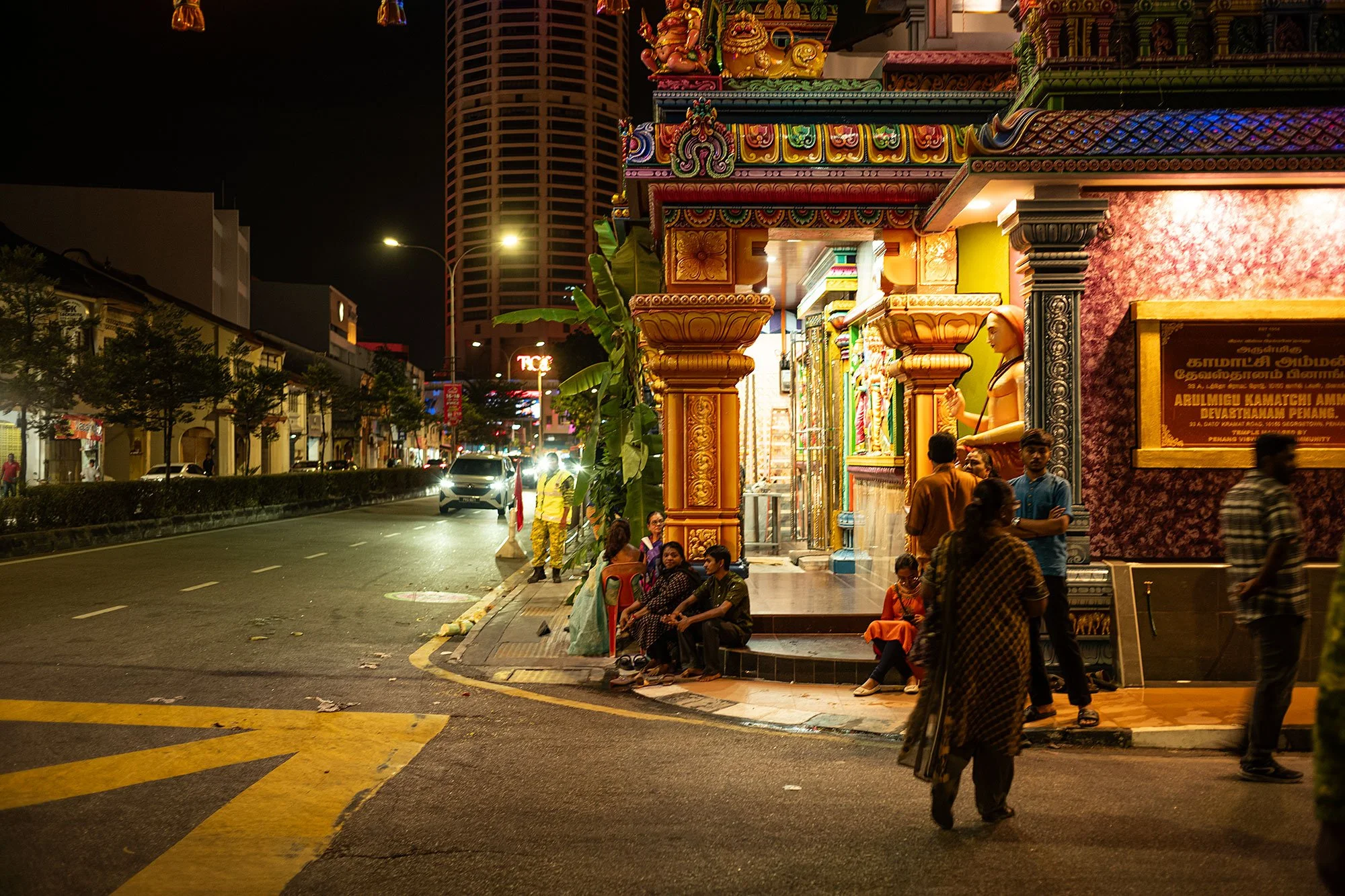
On the way I pass a Hindu temple, lit up beautifully from the outside. It’s alive with people, lingering outside, about to go in. Once again I am struck by how many temples there are, how they are an integral part of the culture and people’s every day lives.
Leaving the temple behind I continue on my walk home, down streets lit from above, the odd pedestrian here and there making their own way to or from their own homes. It’s a quiet night and I appreciate the emptiness. It allows my thoughts to overflow and fill the night with remembrances of the day. 🇲🇾