Revisiting old haunts and discovering new ones in Lima.
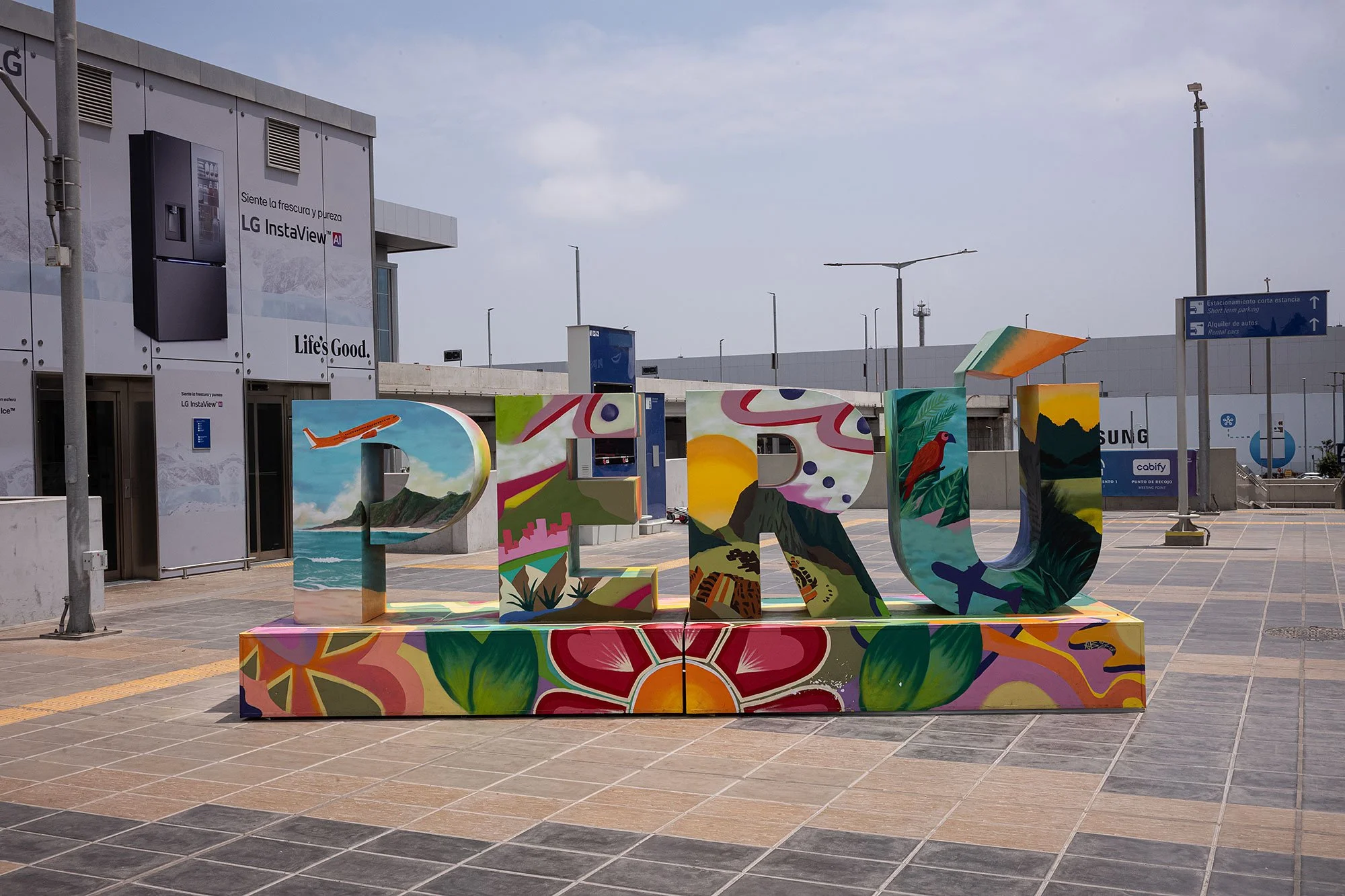
I’m on another morning flight, this time back to Lima. I’m excited to go back; it’ll be my fifth time, though I miscount when the immigration officer asks me if it’s my first time in Peru.
On the flight over I watch Sinners on my phone. It’s definitely not the best way to see the film as it’s beautifully shot and I make a mental note to watch it again on a big screen TV at least. I’ve missed the theatrical run.
We land at the new airport and while I don’t remember the old one, the new one must be an improvement. It’s squeaky clean and has the feeling of a brand new space. It still has its new airport smell. A Peruvian friend will tell me later in the week she feels like Lima now has a real airport. The old airport was a building pretending to be an airport.
After passing through immigration and picking up my bags I’m surprised again when I exit. I do remember the old airport feeling a little more chaotic once you pass through the doors. The new airport feels more organized even if the signage for the Uber pickup spot is confused.
Carlos checks me into the apartment, giving me the keys and the card that grants me access to my floor. I thank him and swipe my card in the elevator, which automatically presses the button for my floor for me.
I unpack and walk to La Mar Cebicheria. It’s always my first stop lunch stop whenever I come back to Lima. It’s become a habit or a tradition, one that I have no intention to break.
Amazingly, I walk right in. I ask for a table for one and the hostess asks if I’m ok at the bar. Truth be told, I prefer the bar and she seats me right away. Heidi appears shortly after, handing me an English menu and speaking English right away, which no doubt speaks volumes about how poor my Spanish is (it is ).
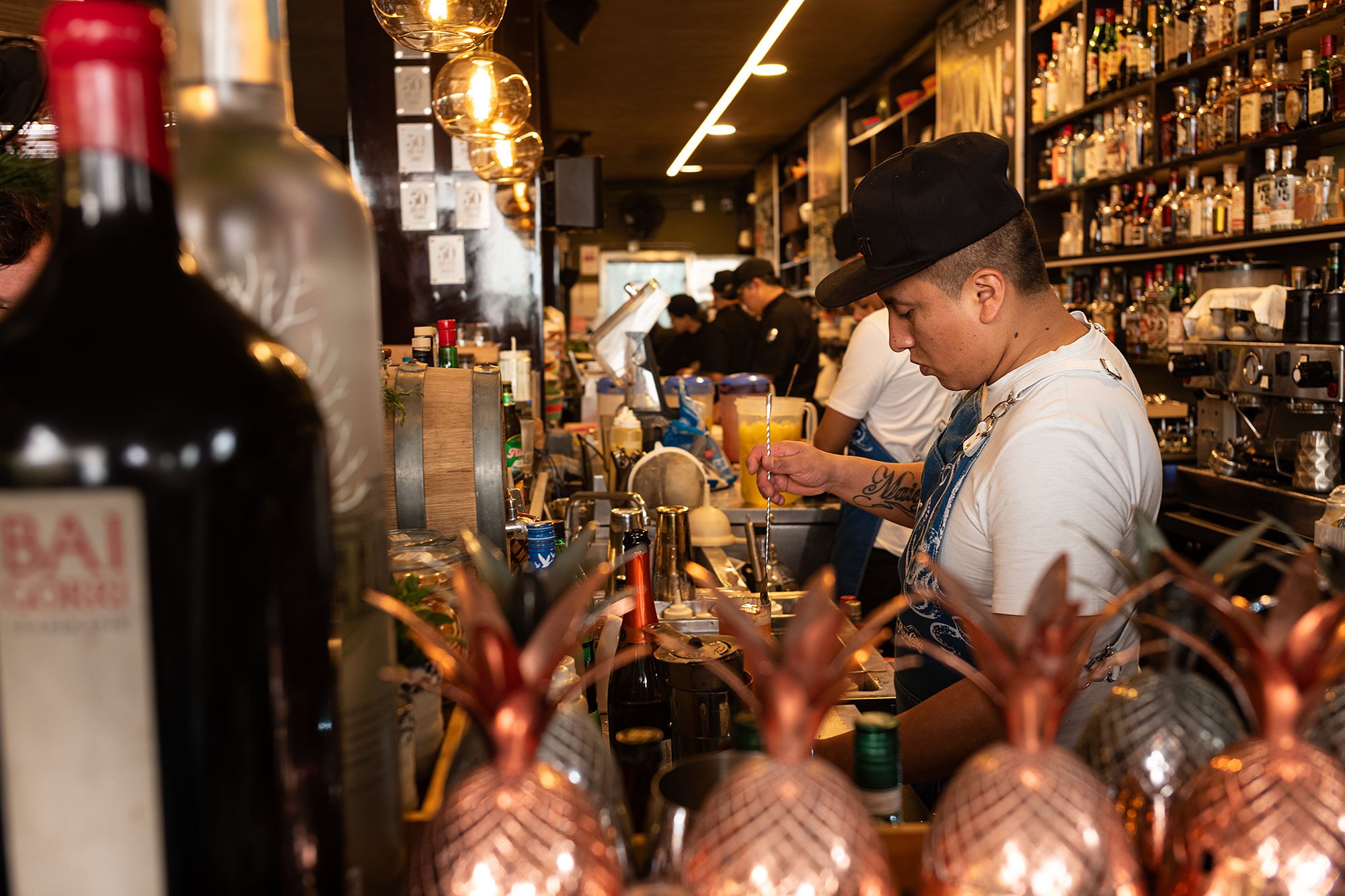
I order a half portion of a ceviche, a couple of oysters with sea urchin, and gyoza. I’m eyeing a squid ink crab ravioli and ask Heidi if it’d be too much. She tells me I can start with what I have and then see what we think. In the end, I decide to save the crab for another day. I tell Heidi I’ll be back.
From La Mar I walk back to the apartment, zig zagging my way through Miraflores to stop at Cultivo for a croissant, Ochaya for a delicious chocolate dessert that I eat at a small bar by the window, and El Buen Gusto to pick up a box of honey alfajorcitas.
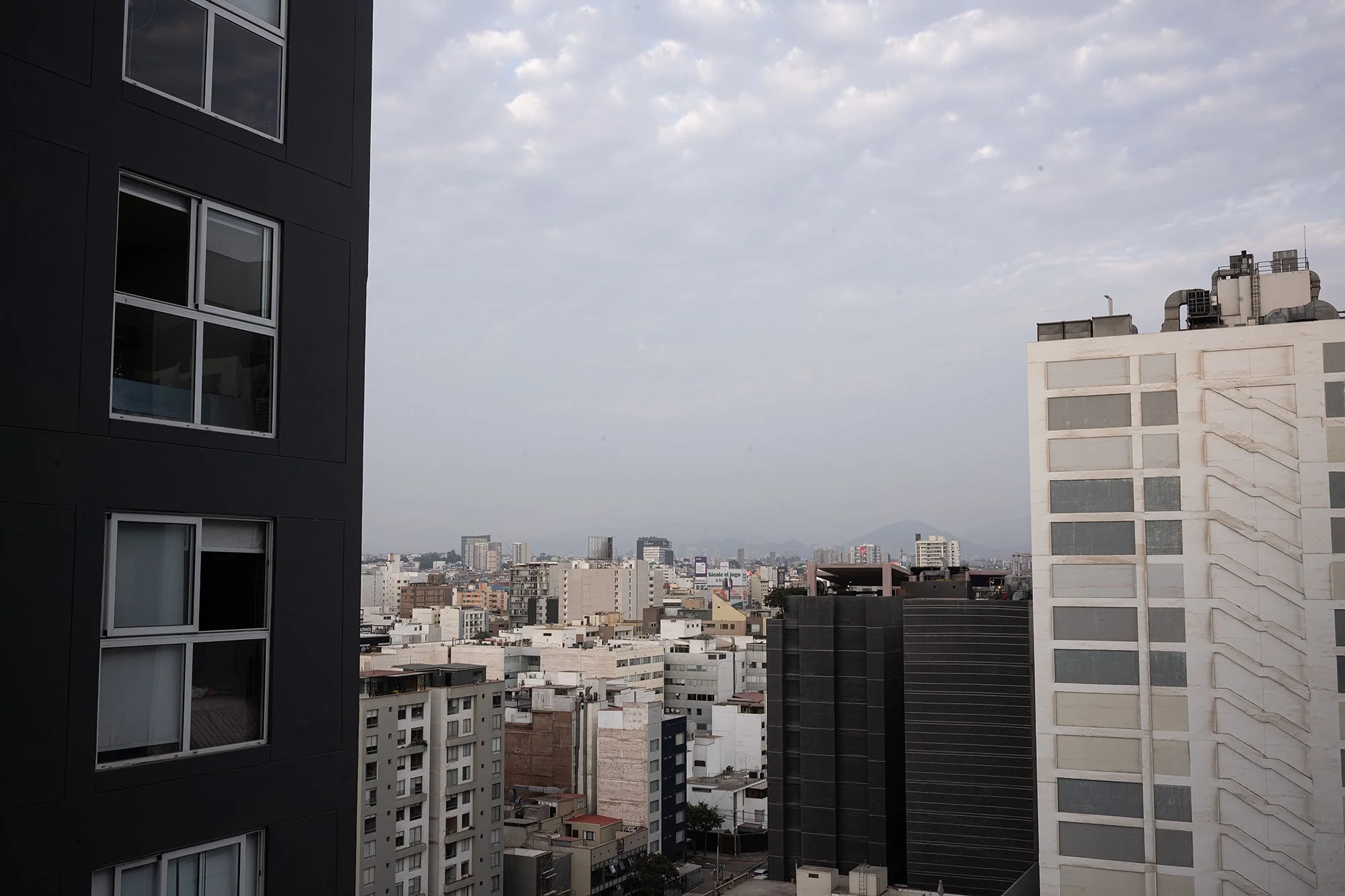
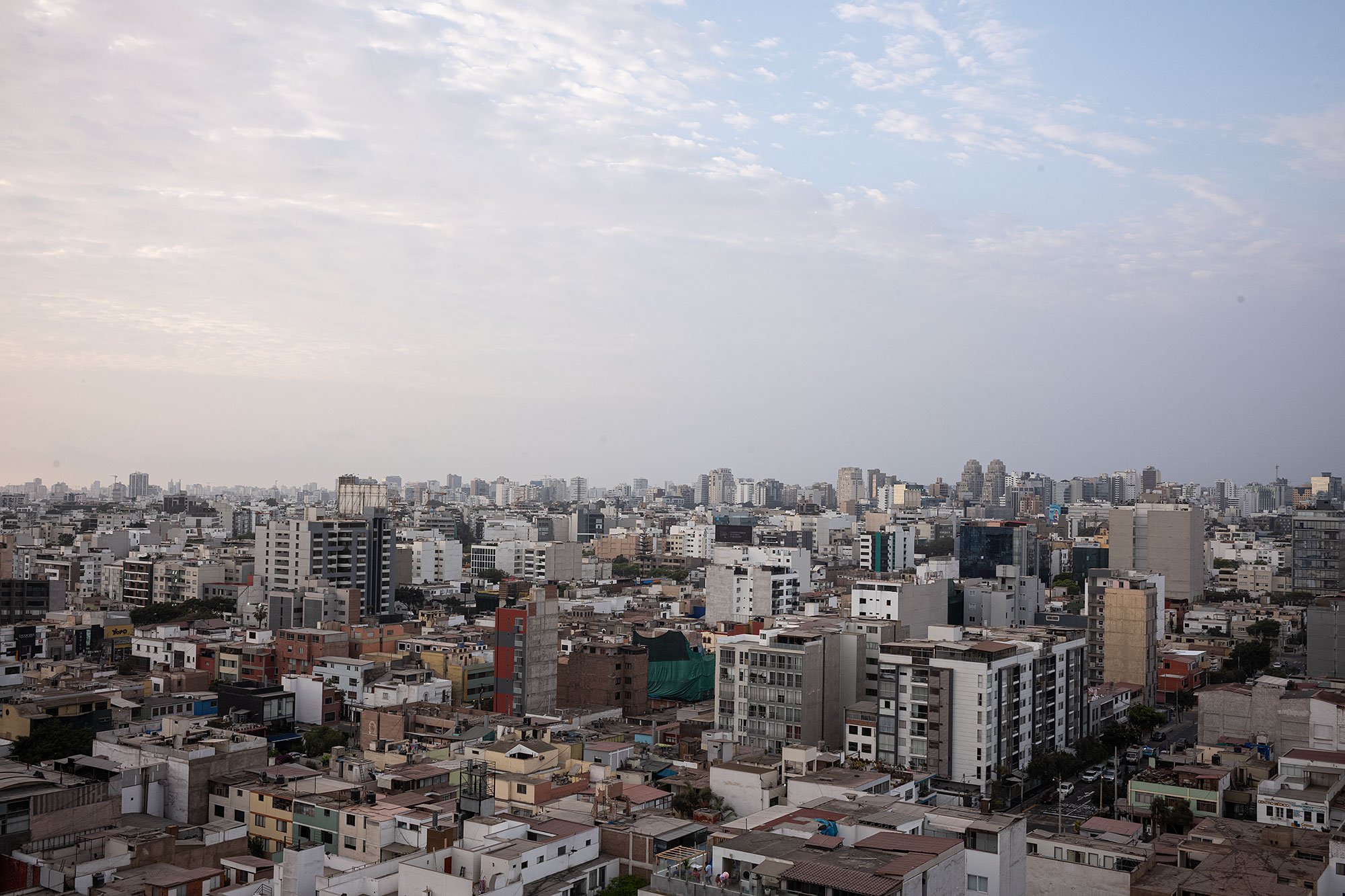
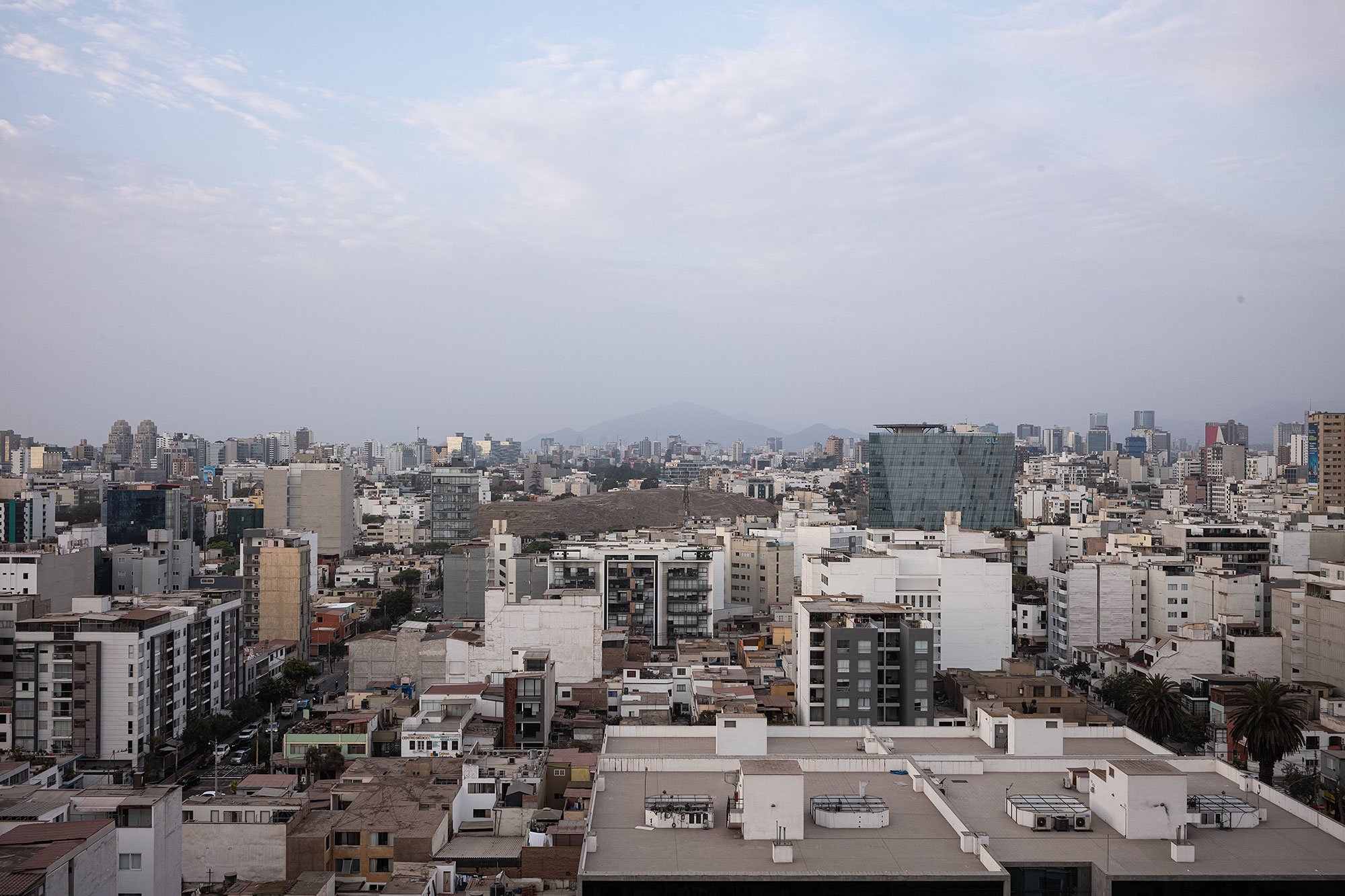
Back at home I take a few photos from the terrace of my apartment and then out the back of the building looking north over Miraflores and the surrounding neighborhoods.
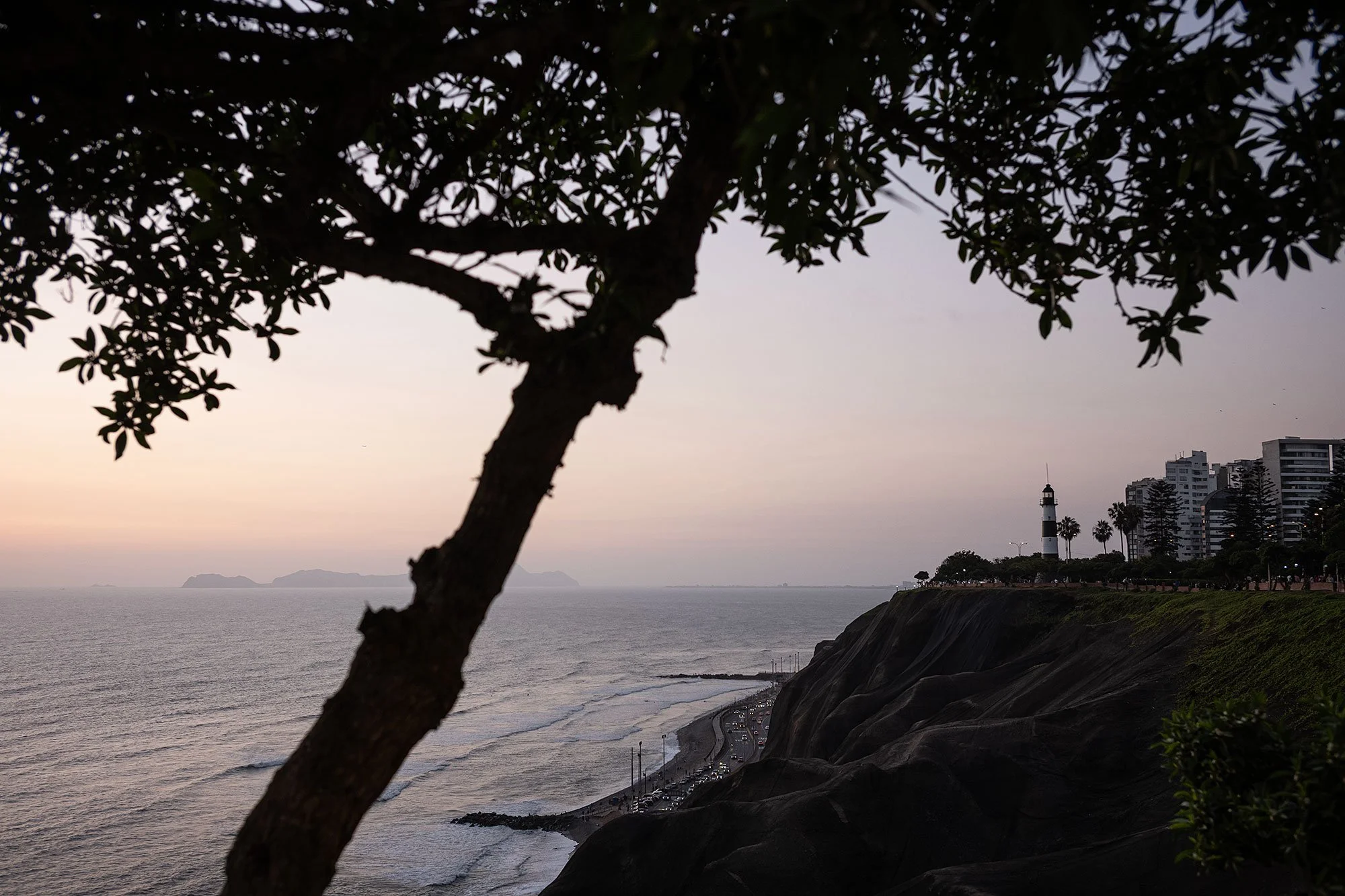
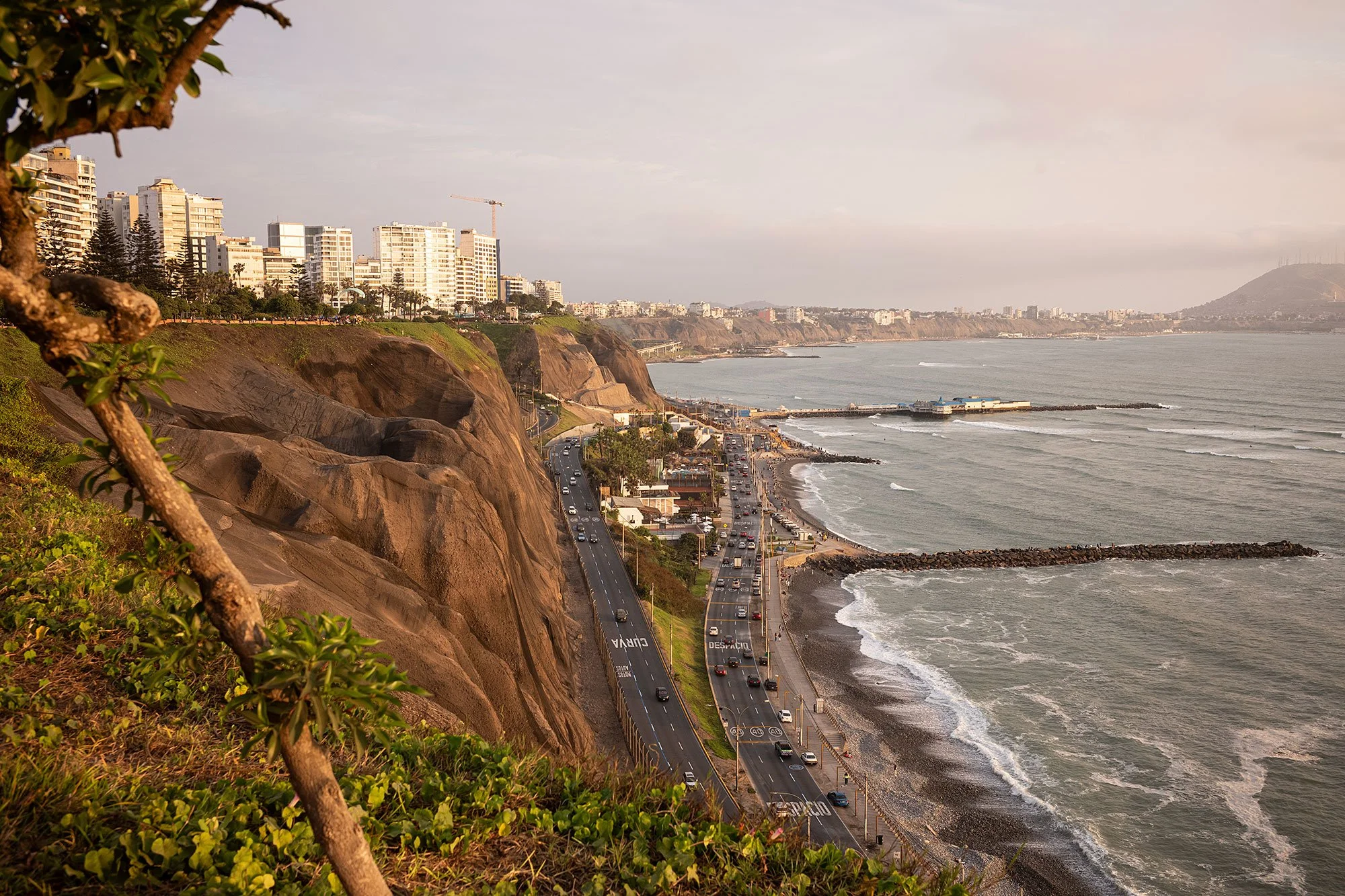
Nearing sunset I decide to walk to the Malecón de Miraflores for the sunset. There are few places I’ve been in the world where the sunsets are as consistently beautiful as in Lima, and my favorite place to watch them is from one of the many parks that skirt the cliffs on the edge of Miraflores.
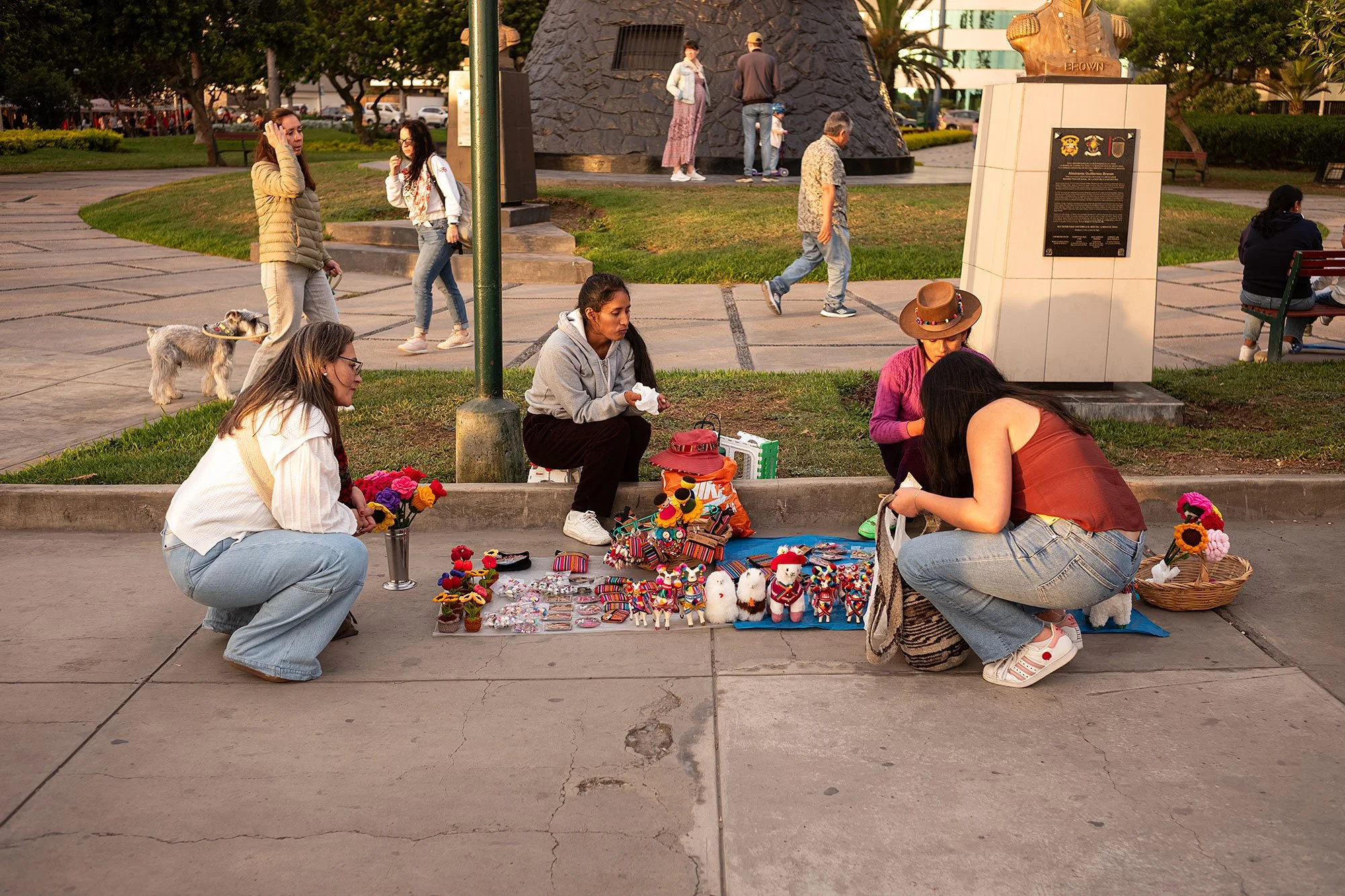
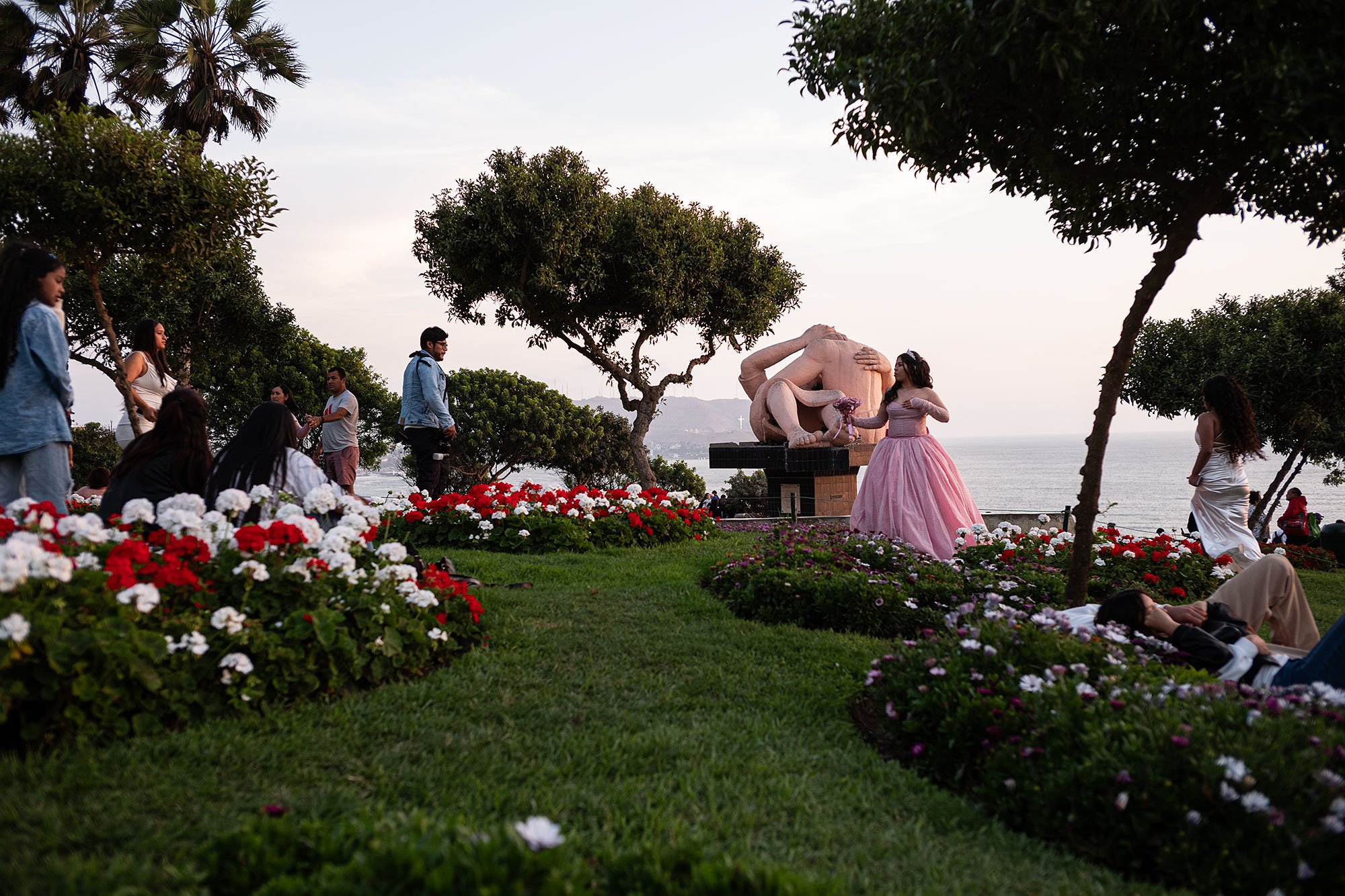
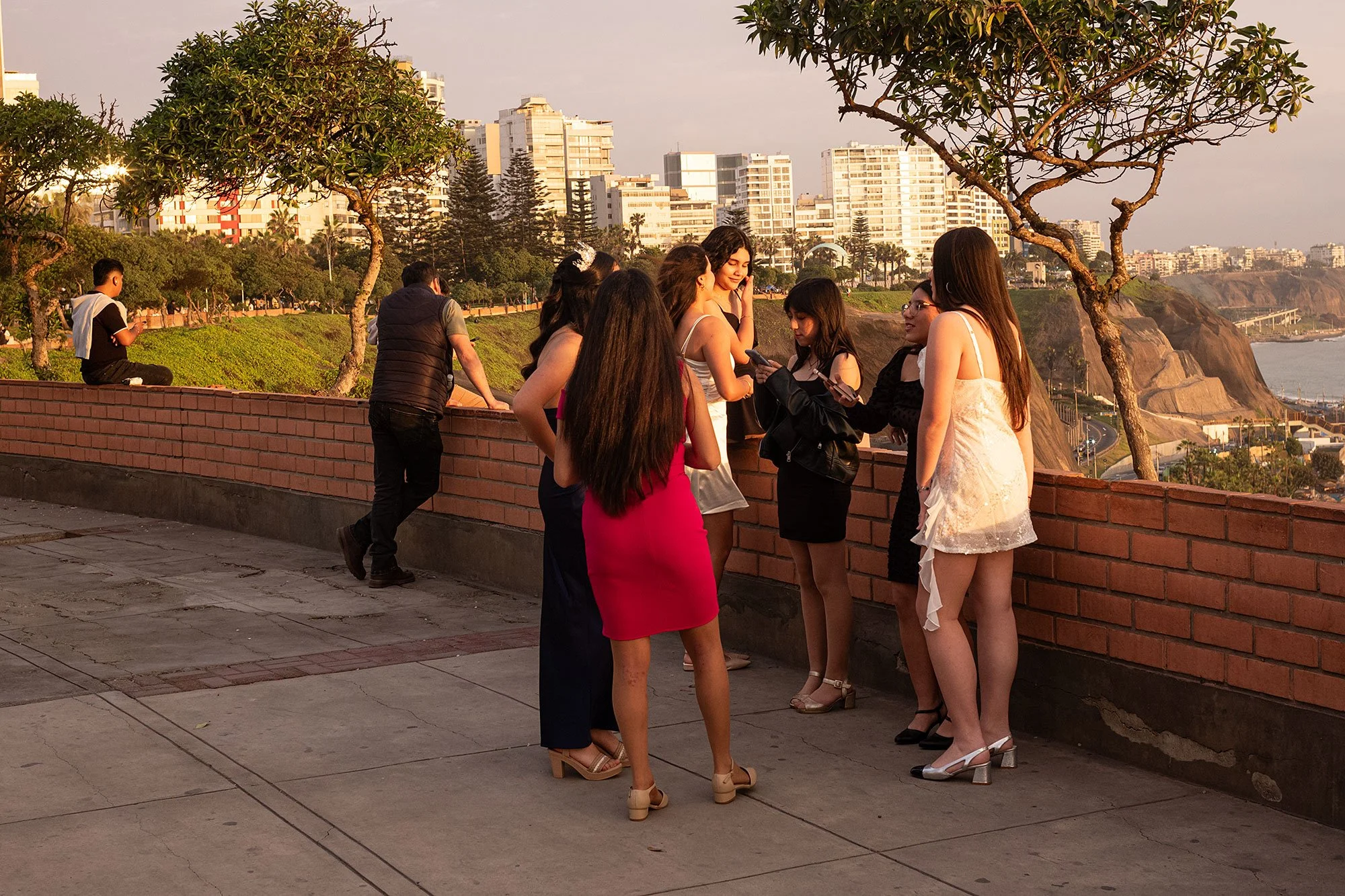
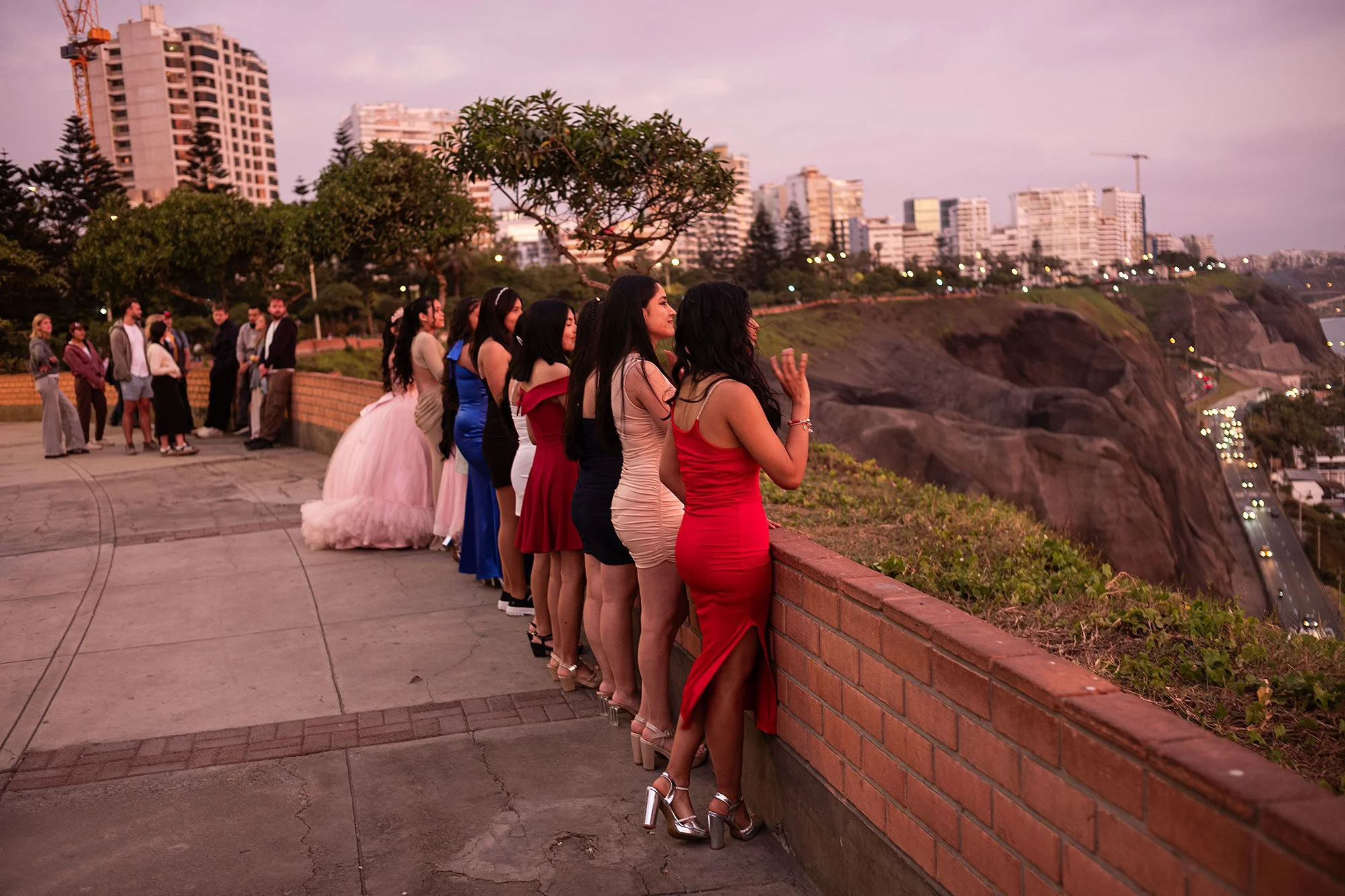
There’s a bunch of girls waiting for one of their friends who shows up in a quinceañera dress. A photographer follows them around, posing them this way and that, photographing them in the beautiful late-afternoon light.
The park is packed with people. It’s a beautiful night, warm but not yet hot, the clouds floating high above the horizon to allow for a perfect sunset.
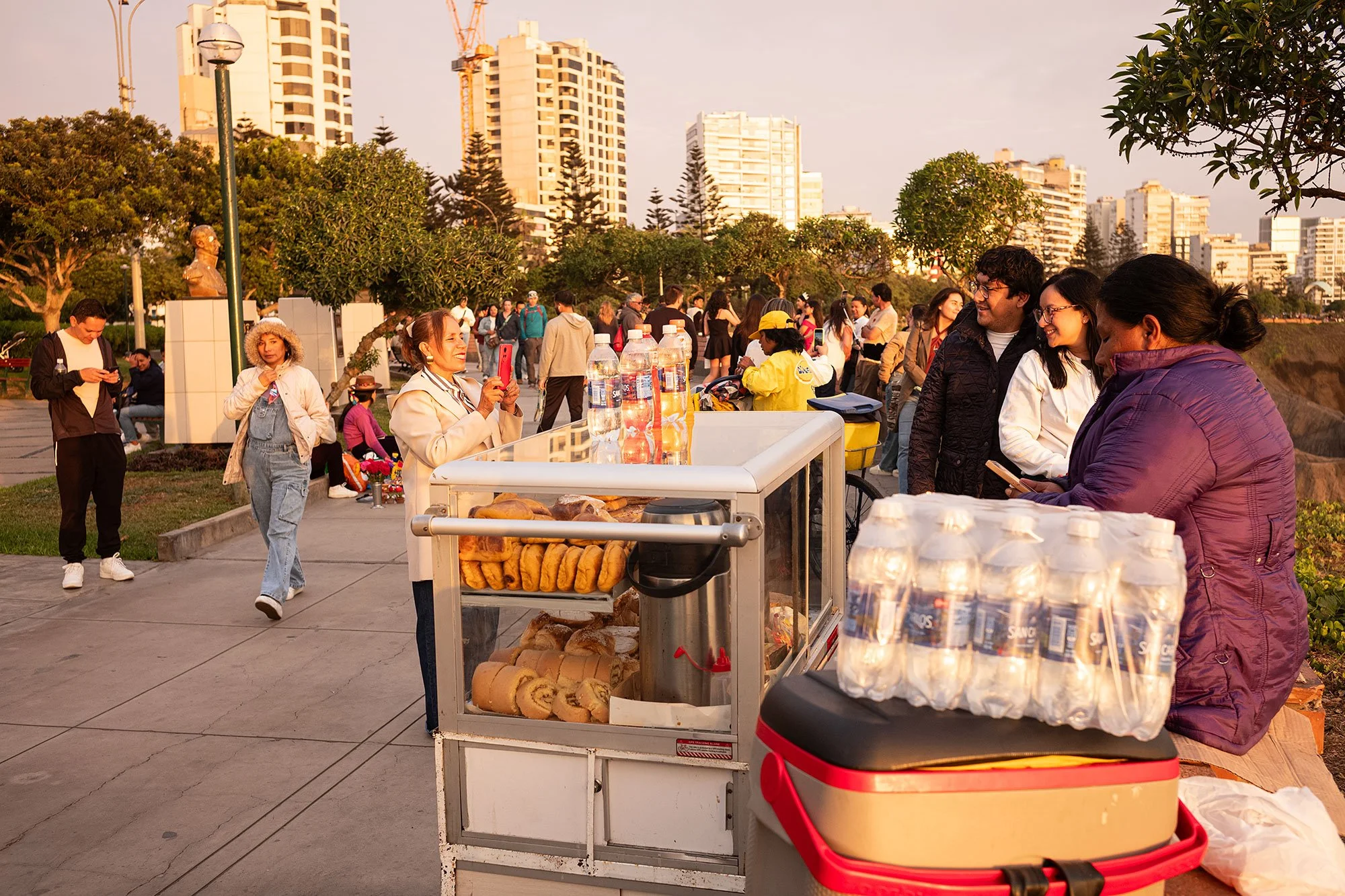
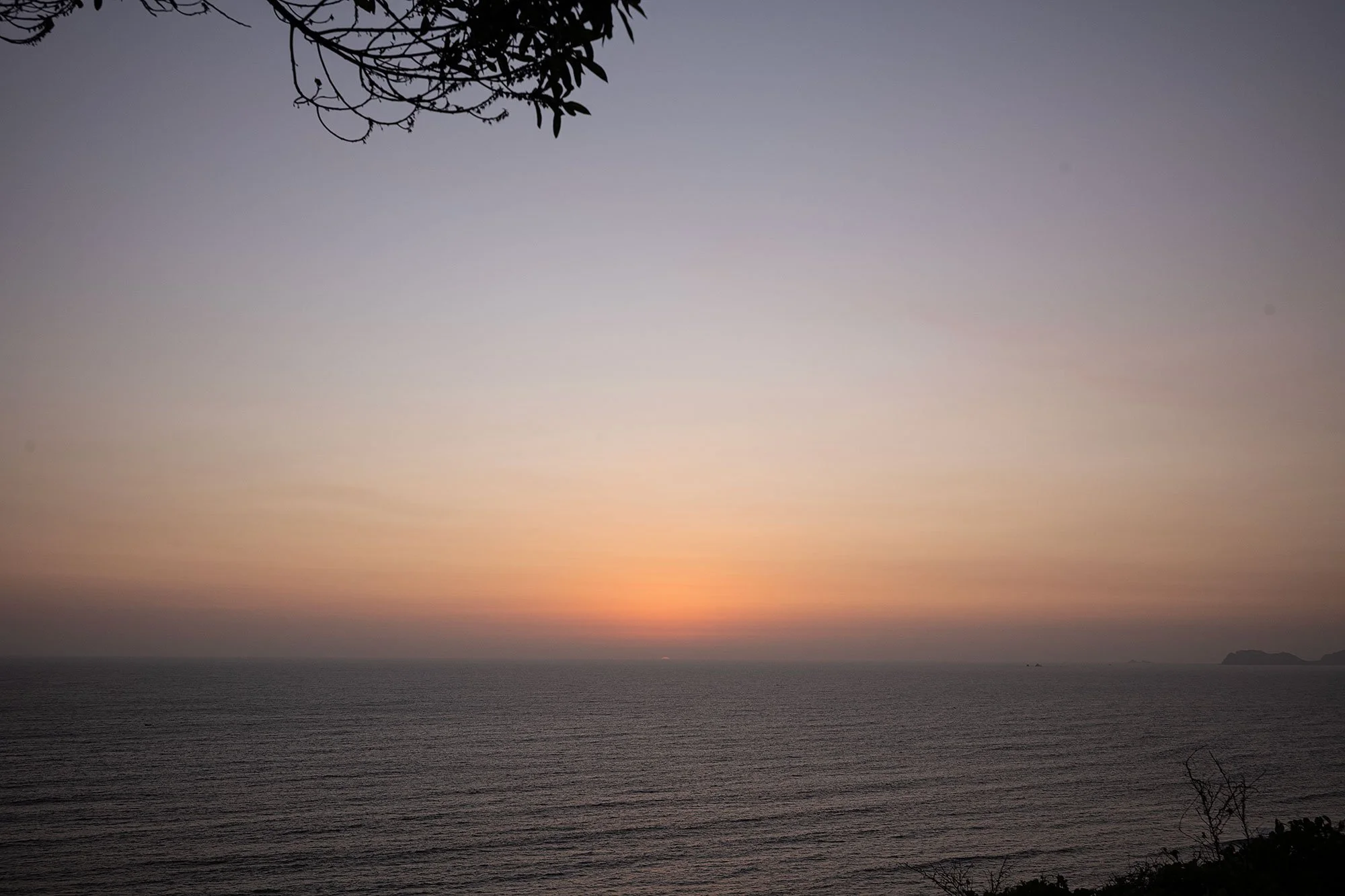
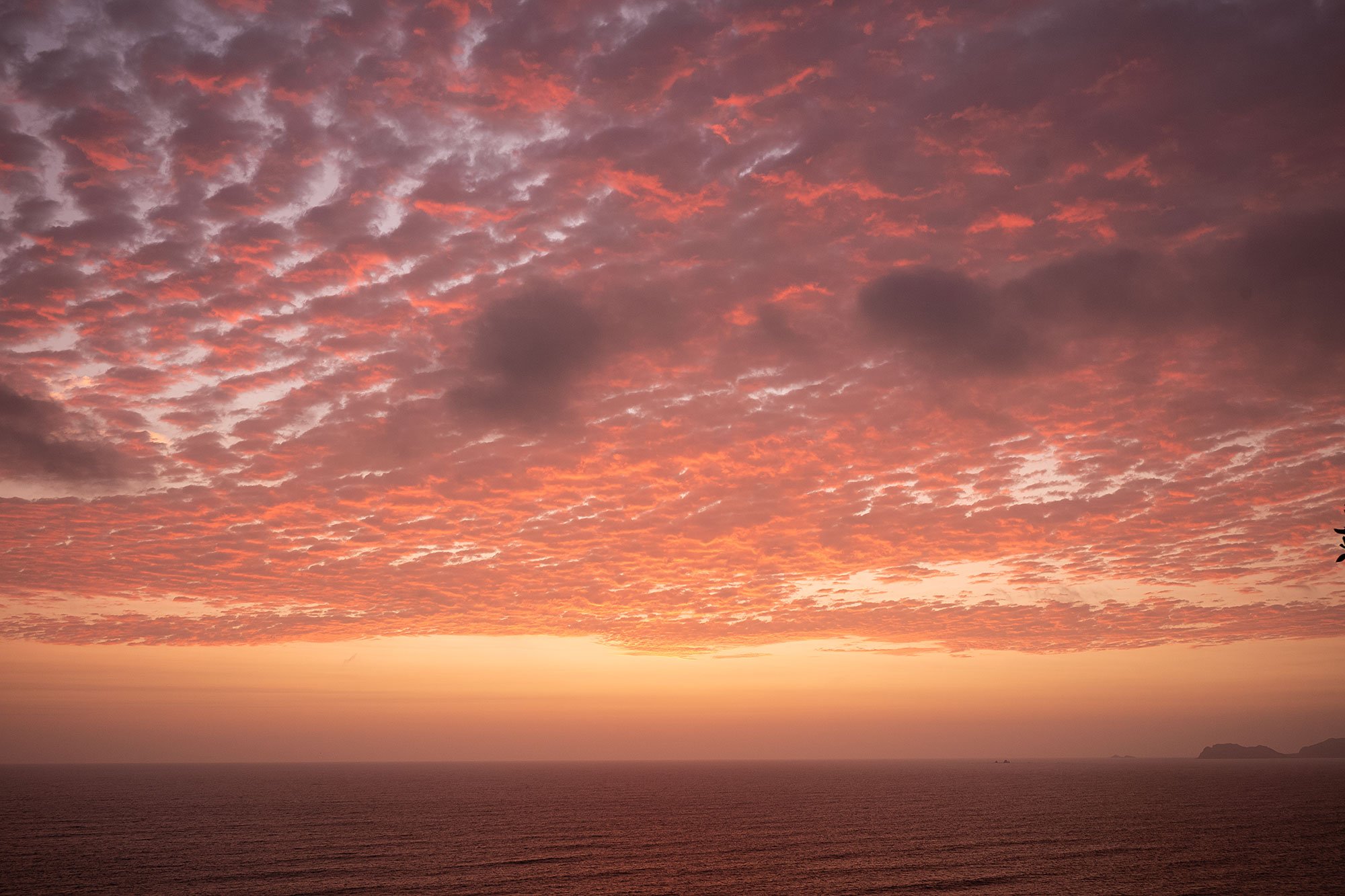
There’s really nothing like a sunset over the Pacific from the Malecón de Miraflores. Each time I return to Lima, and as many times as I head to the park for a sunset, I’m enthralled. I could watch a month of sunsets and never tire of them.
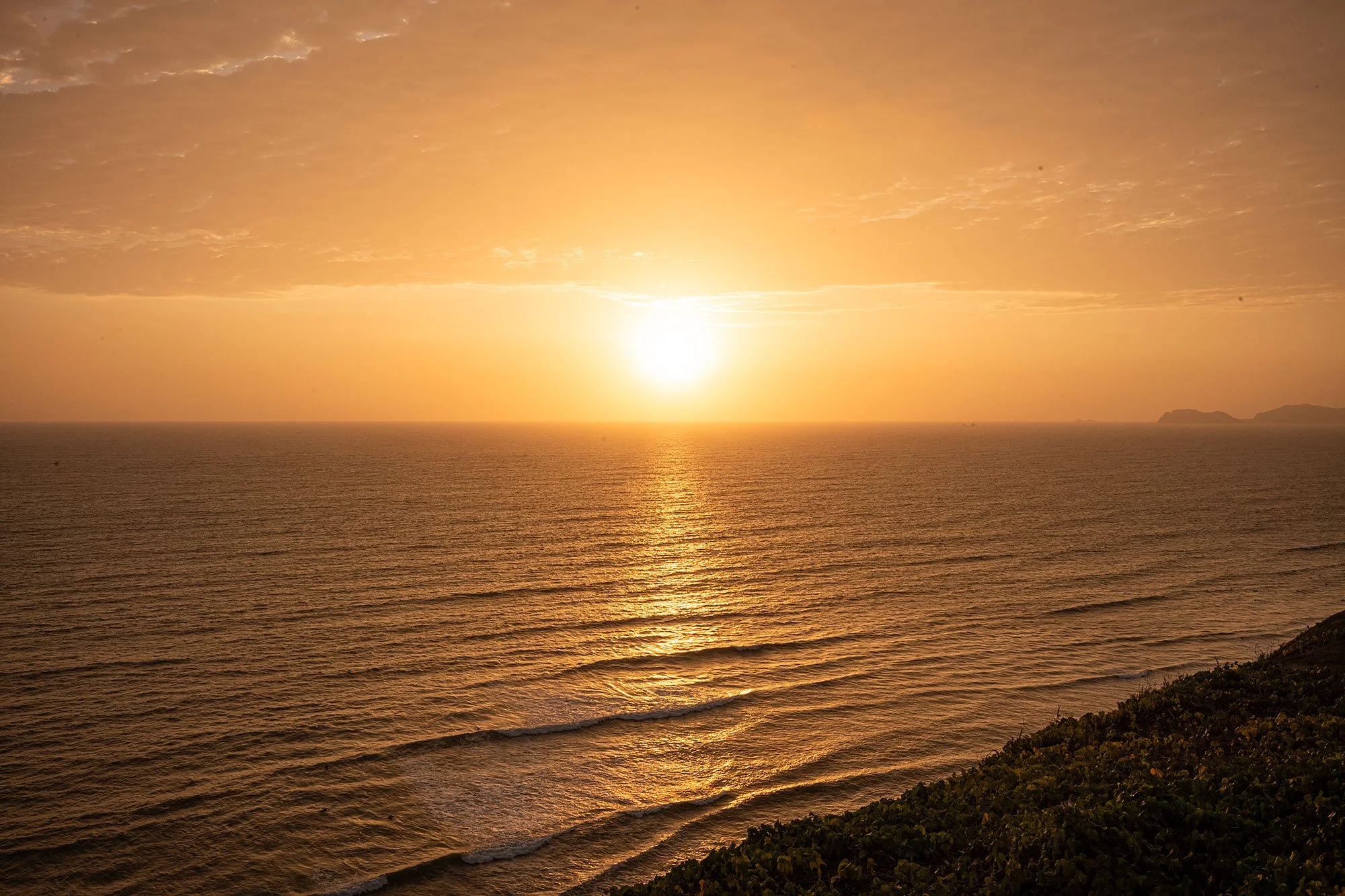
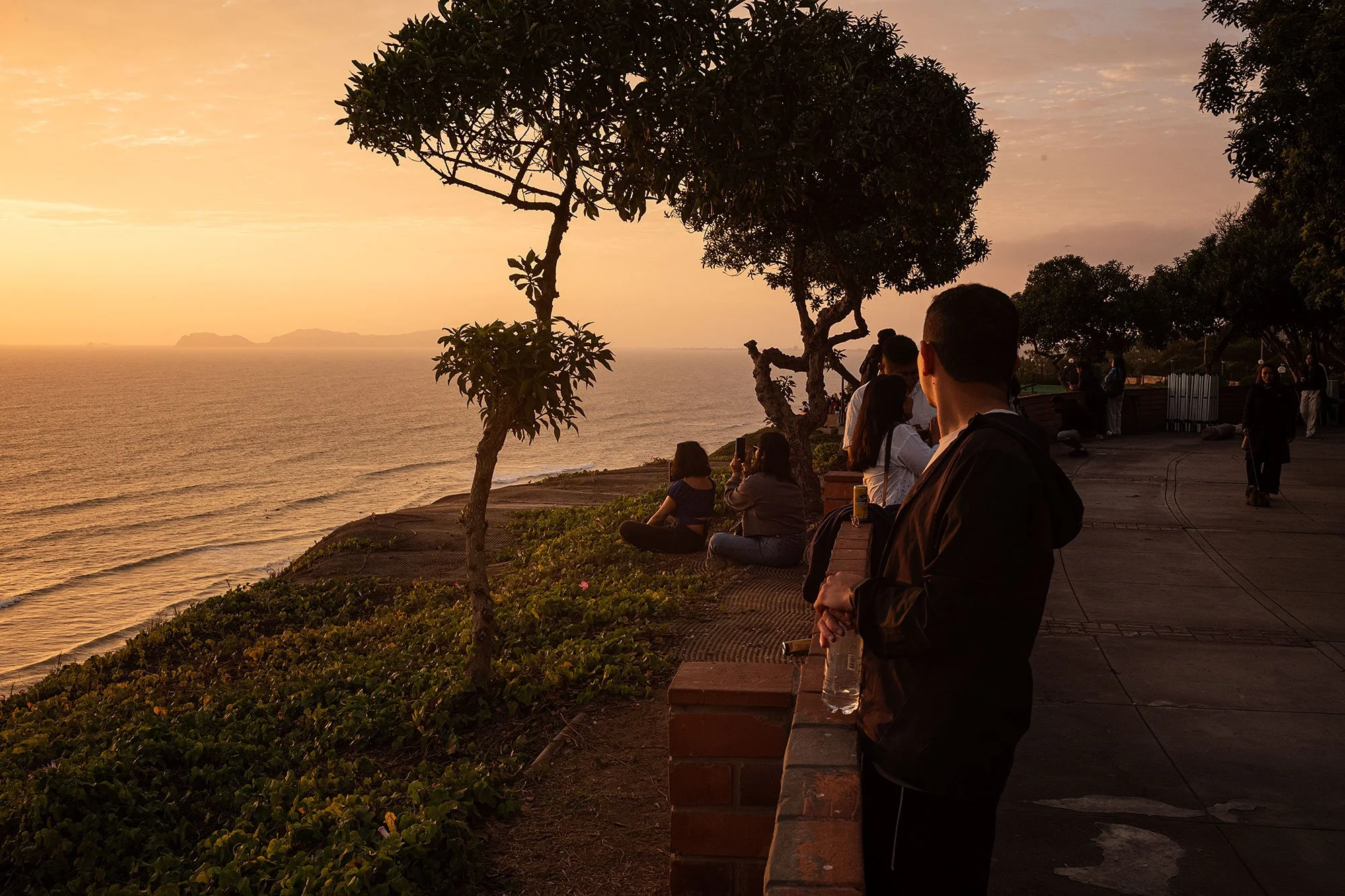
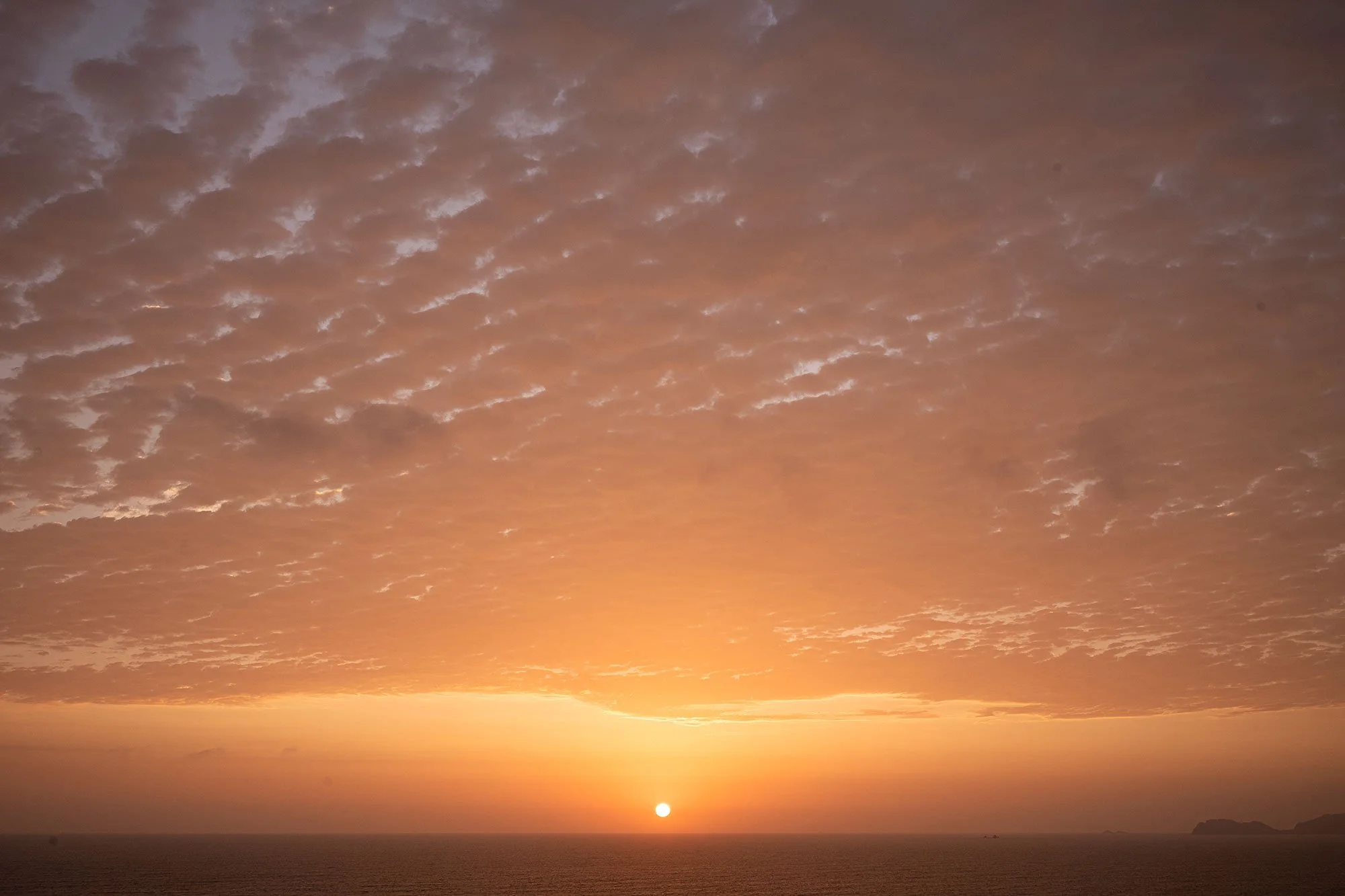
Once the sun drops, the clouds light up as if on fire, the people who line the malecon cast as shadows.
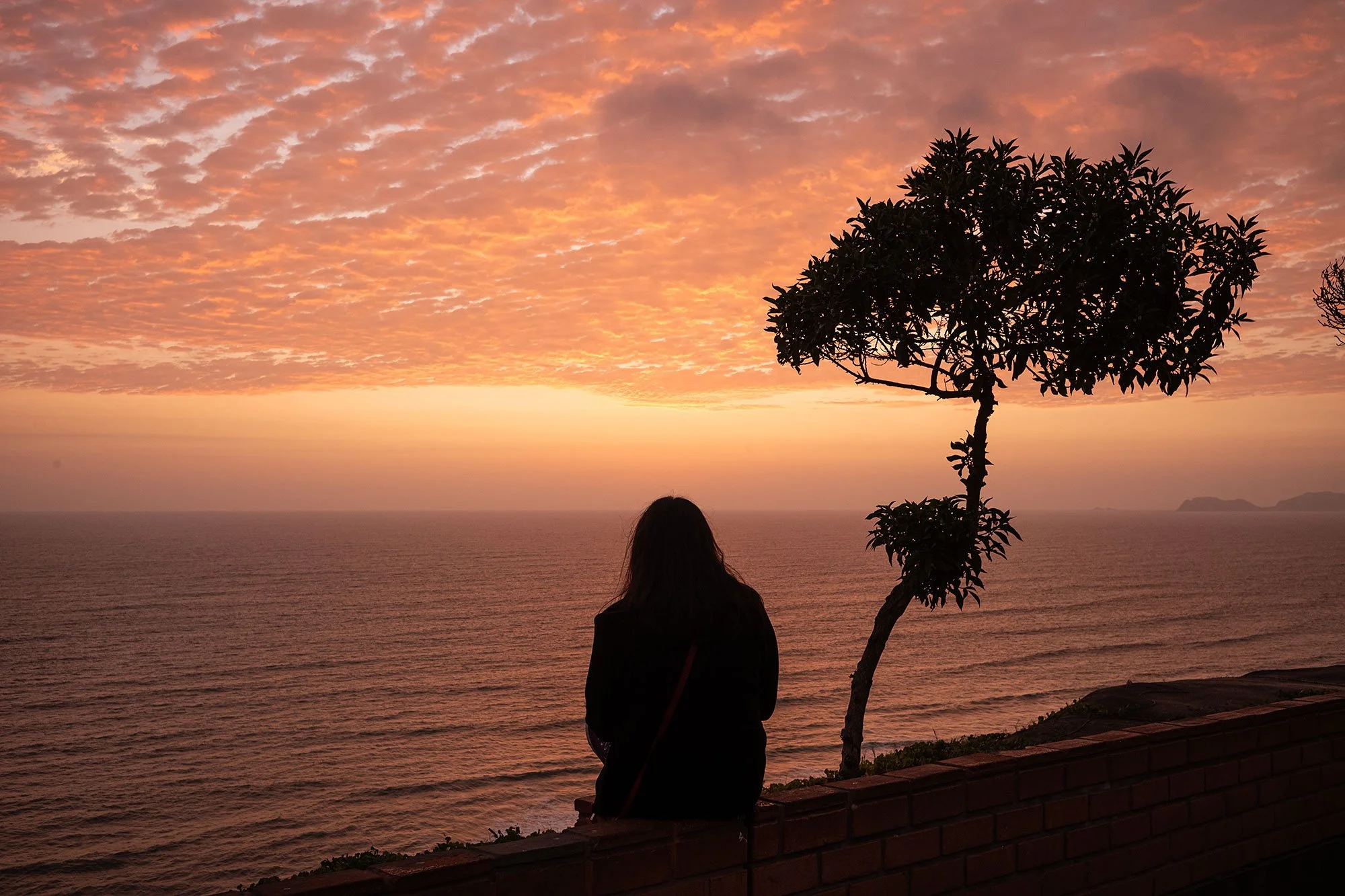
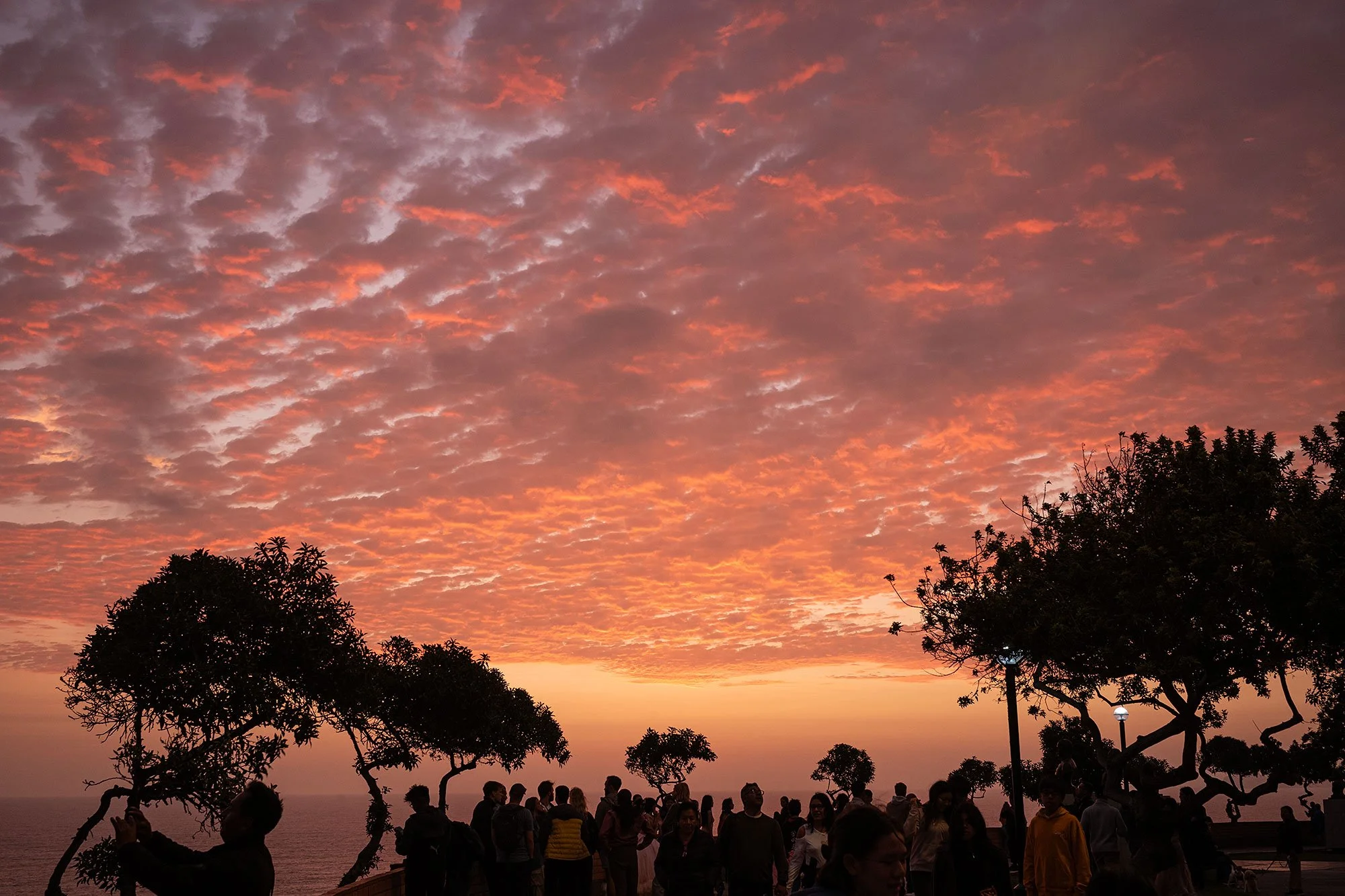
The photographer flies a drone out over the ocean to capture the quinceañera party in the last light of the day. He has them wave towards the drone as it flies, and I wonder what scene he will cut to next.
There’s something about the way in which the apartment is furnished that makes me forget where I am.
It’s the browns and greens of the furnishings and rug, the mid-century style that remind me of Cental Europe. In the next morning and most mornings after I wake up uncertain.
One of the things that was under construction on my last visit and which has since opened is the Puente de la Paz, a pedestrian bridge that connects the Miraflores and Barranco neighborhoods over a gorge that once divided them. It’s been the subject of much controversy, but it’s a boon for tourists. From my first visit I lamented that such a bridge didn’t exist and now that it does I’m eager to make use of it.
I eat a modest breakfast at home, intending to visit a coffee shop recommended by a friend once I reach Barranco. I take a Citybike from my apartment to the Larcomar shopping mall and walk the rest of the way to the bridge.
There’s a bunch of attendants making sure people stick to their respective corridors, bikers on one side, pedestrians on the other. The center of the bridge is glass-bottomed, and I challenge myself to walk only in the center. The crowds make it slightly less than 100% possible, and I step now and again onto the solid bridge to avoid other pedestrians.
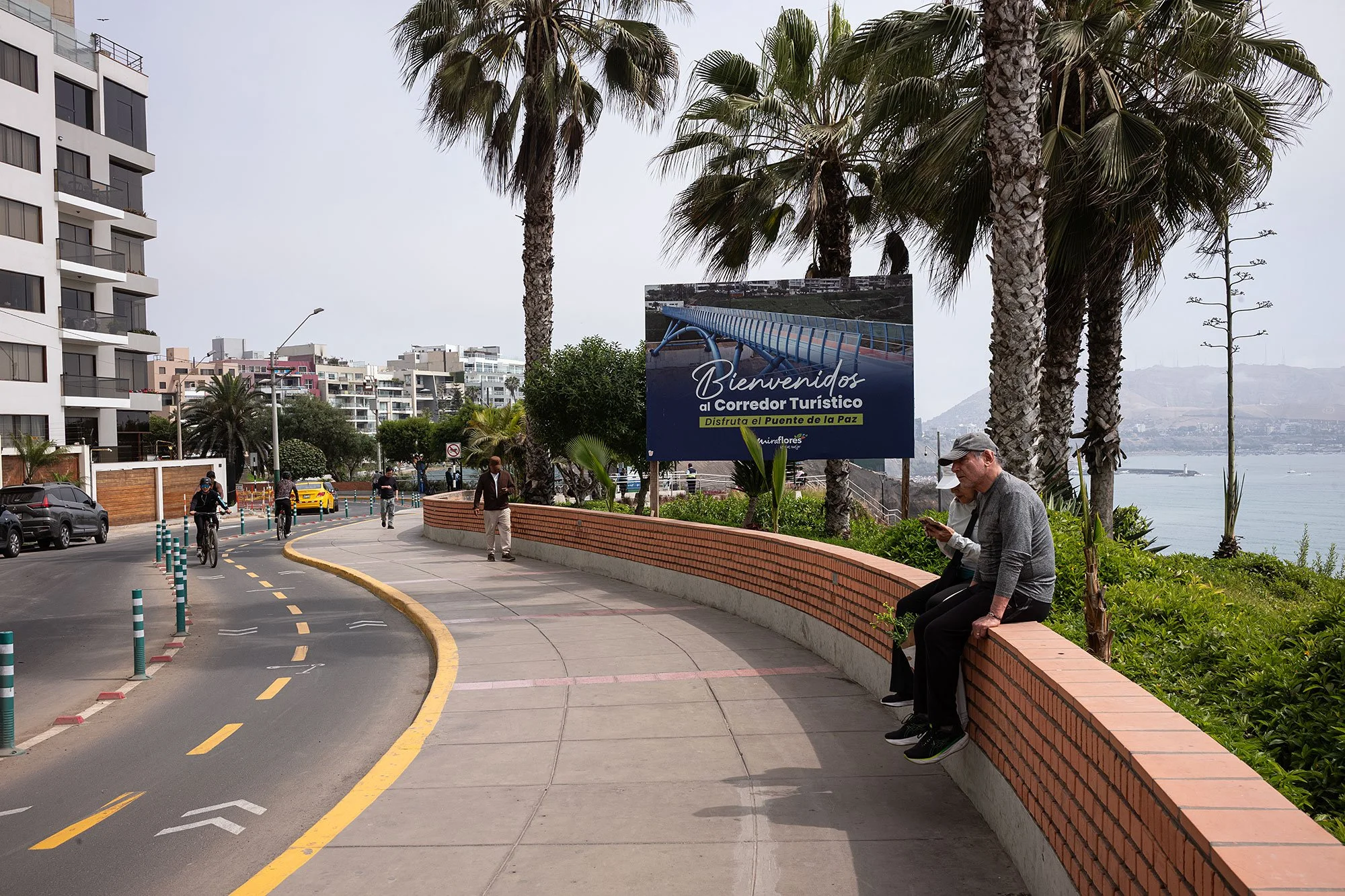
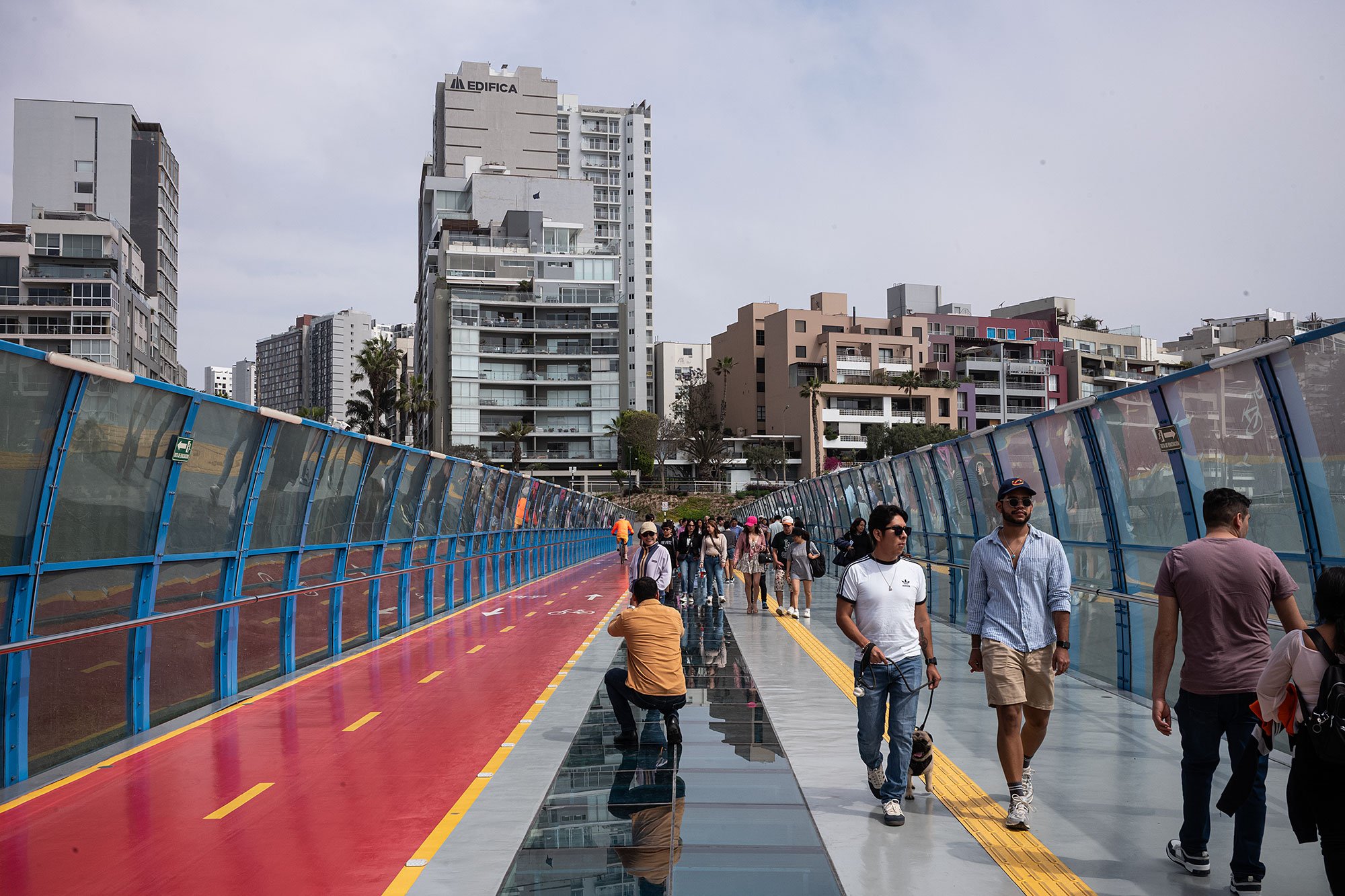
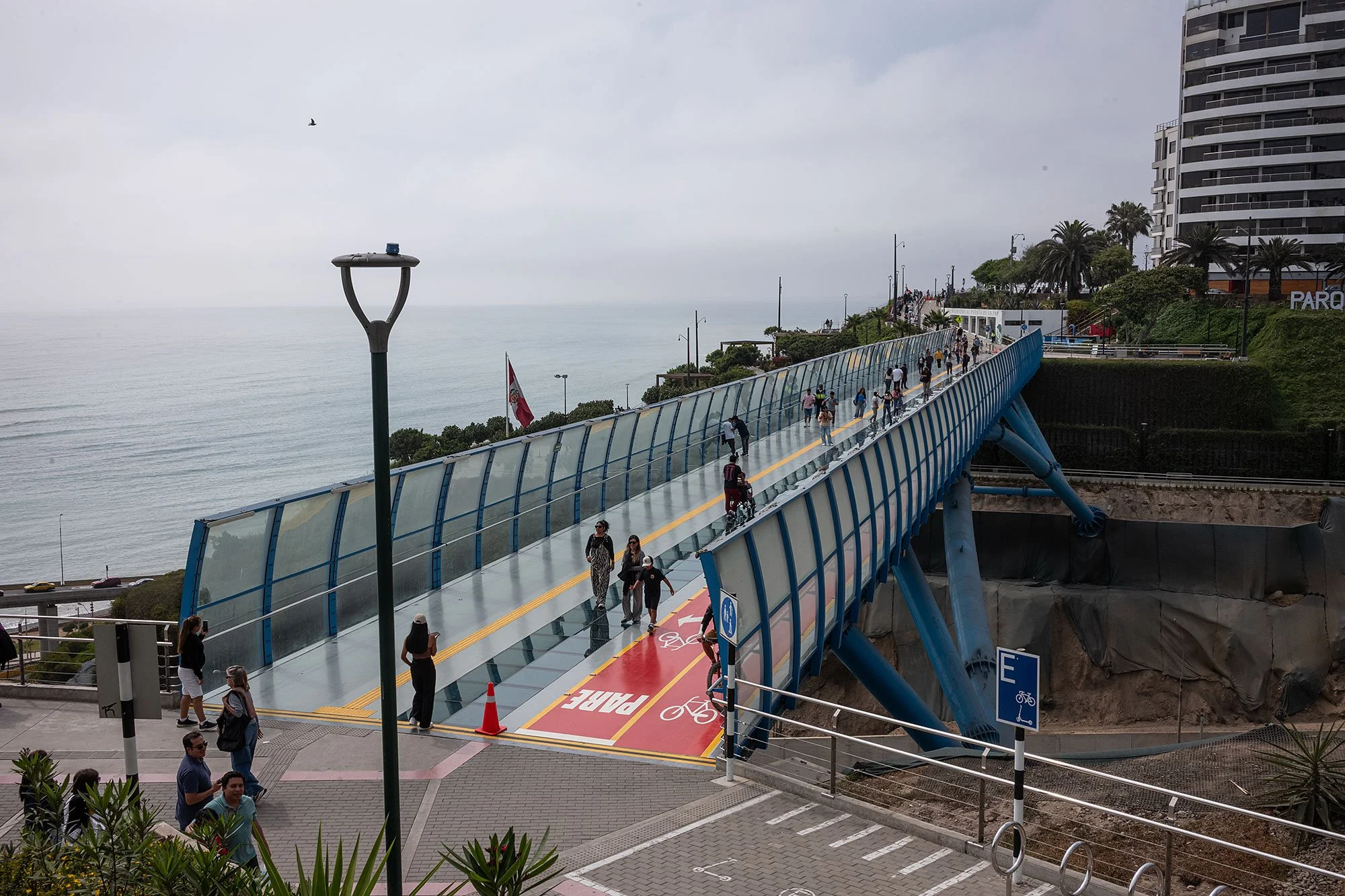
It’s amazing how much the bridge changes my perception of how far Barranco is. It shortens the walk and the time it takes to get there, and provides a more attractive path than walking around the gorge next to the traffic. The choice of painting it blue, however, is a mystery, and I imagine one of the many complaints lodged against it.
On the other side I have planned to visit Dédalo, a gallery and set of stores that I have somehow missed in all my trips to the capital. With Christmas around the corner, it’s the perfect time to see what local wares I may be able to take home.
It’s a great space and I love the different stores. A cafe is set up in a courtyard towards the rear of the building and I wonder if the building were once an old home. I pick out a few scarves that I consider buying for my mom and send some pictures of selections to a cousin for a second opinion.
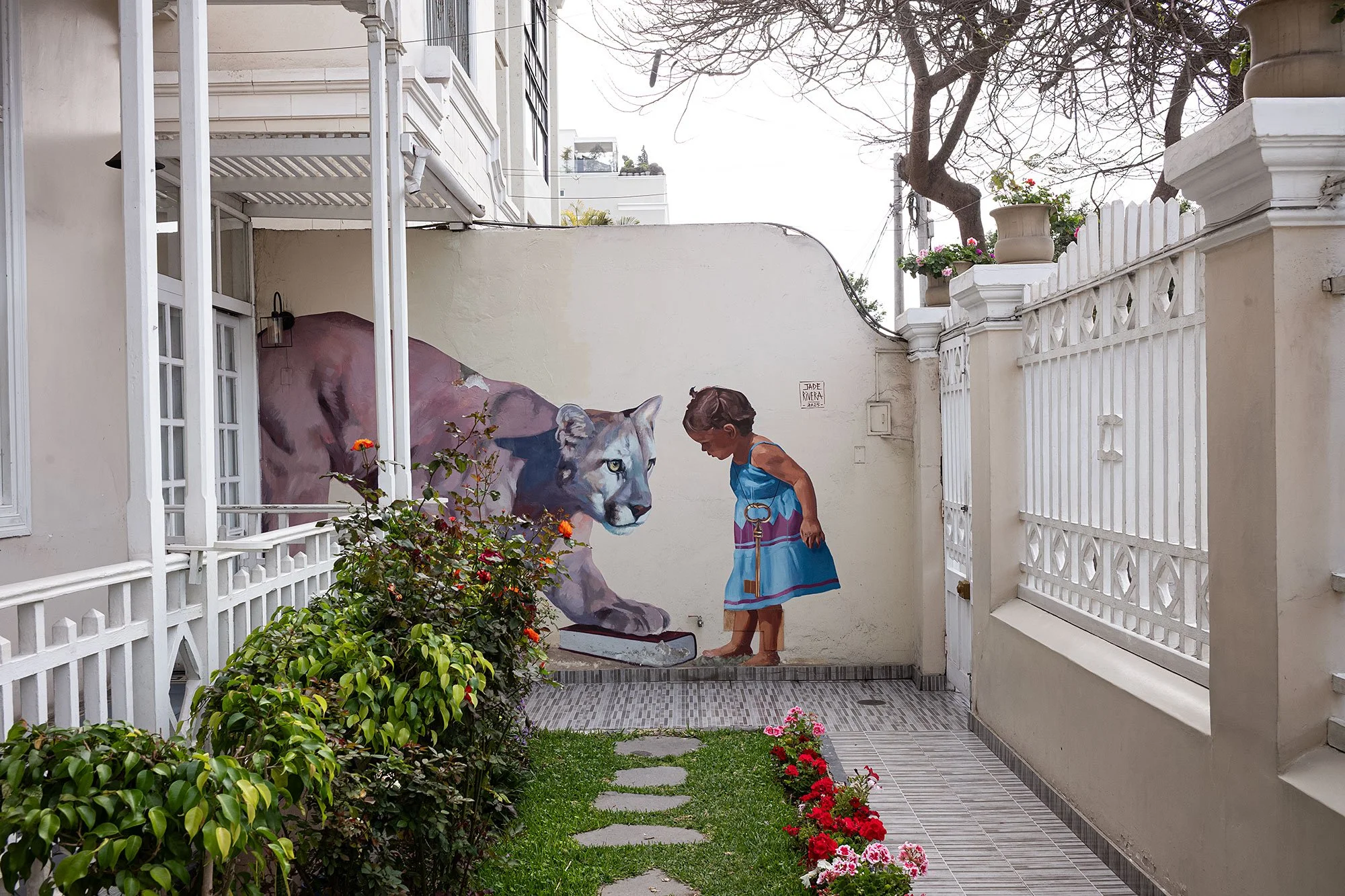
Leaving Dédalo, I continue towards Ciclos, a cafe and chocolate shop I’ve had on my list of places to try for a while. En route I walk past the Museo Jade River, dedicated to the street artist and muralist. I’ve walked past the museum countless times in the past and never ventured in. Something about today is different, however, and I stop into the store on the ground floor before I realize taht the actual entrance is on the second floor through a door a little further down the street.
Lia sells me a ticket. Just as I’m about to begin walking the galleries my cousin texts me. She’s offered her opinion and I ask Lia if I can come back in a moment. I have an errand to run.
Back at the museum Balleria has taken Lia’s place. She lets me in and speaks a paragraph to me in Spanish before she realizes and offers an abbreviated English explanation.
It’s a fantastic museum and I love learning about the artist and seeing how he matured from tagging walls to creating street art to painting murals. My period of his is the 2010s, something I share with Balleria. After finishing with the second floor she tells me the rest of the exhibition is on the ground floor, downstairs and to the left.
I go back to the gallery and store. I ask if there are any prints of the 2010 work, but there are non. Looking around I see a series photographing work from his Despierta project, carried out in his home town of Huancayo. A cultural project that seeks to bring art and culture closer to rural towns in Peru (in hopes of inspiring the next generation of artists), it’s something he’s also extended into a clothing brand, where part of the proceeds go towards serving underprivileged communities.
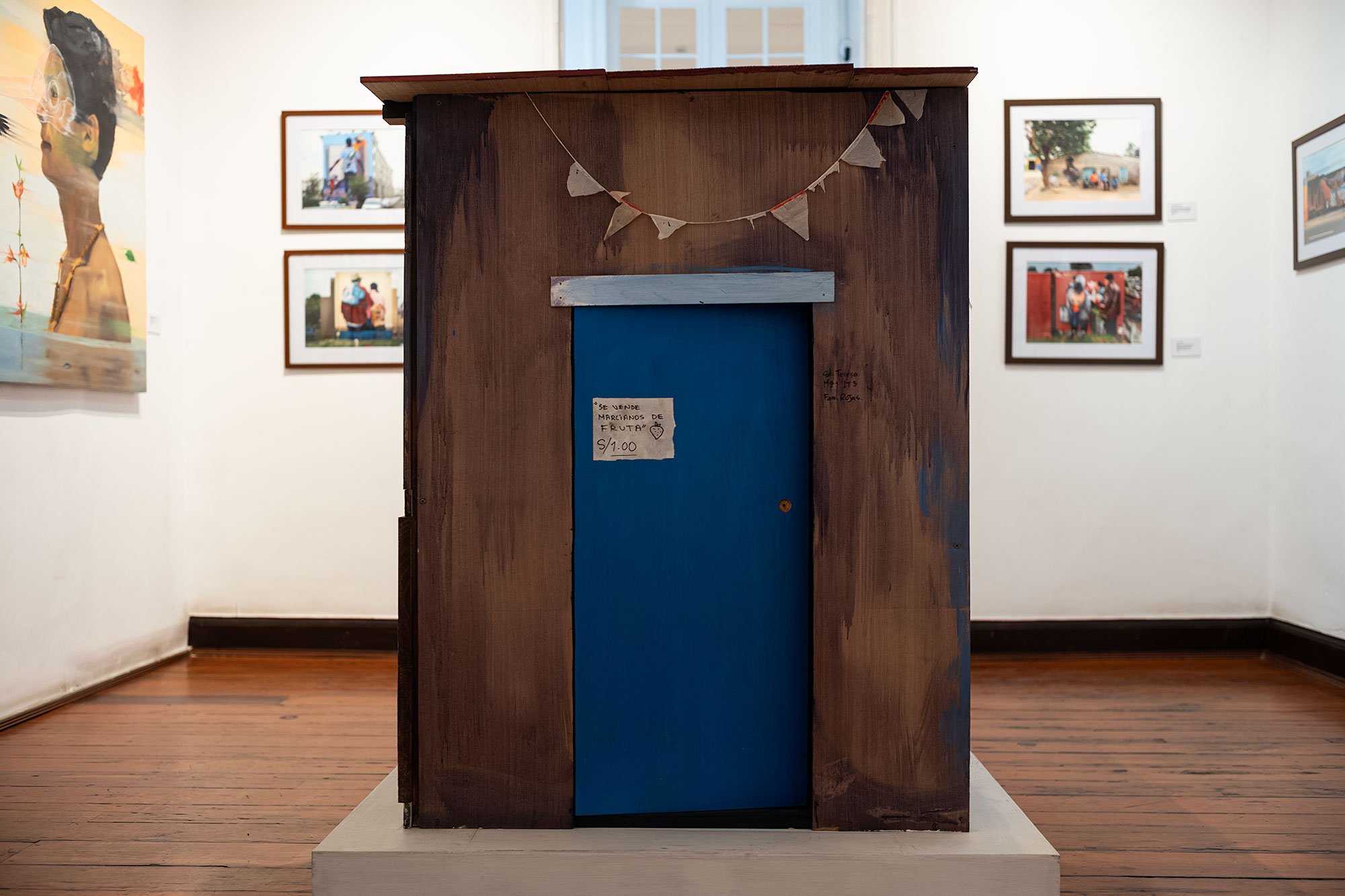
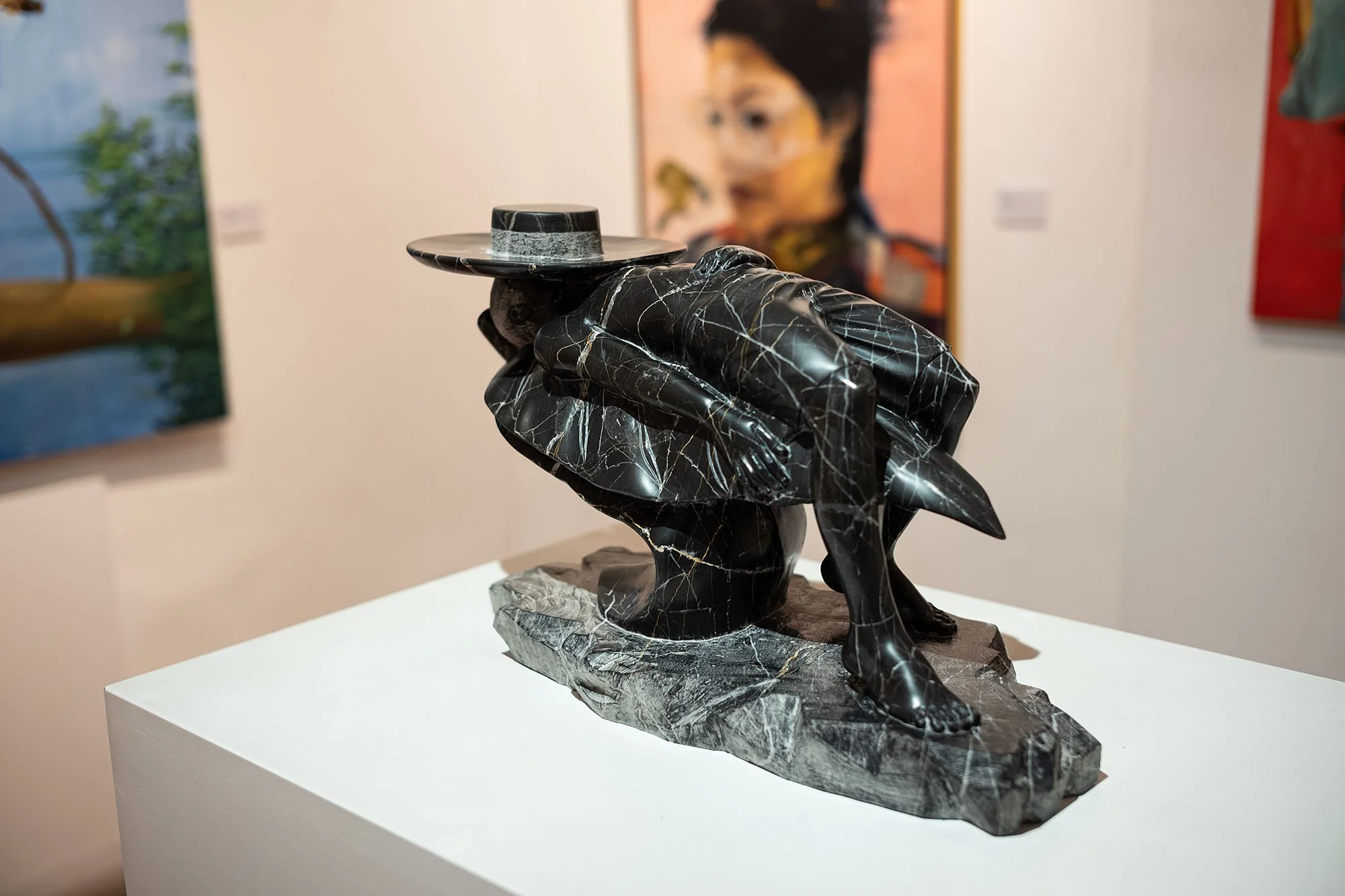
Mariana explains this all to me before I decide on a print. I ask how often they release new prints and she tells me as the runs run out. There are some photographs of his work I’d love to collect. She tells me to keep my eyes peeled.
As I’m about to leave she tells me there’s an art space devoted to his projects, Javier Rivera’s Lab which is about four blocks down the street. Although it’s in the direction I’m heading, it’s a little past Ciclos and I decided to save it for another day.
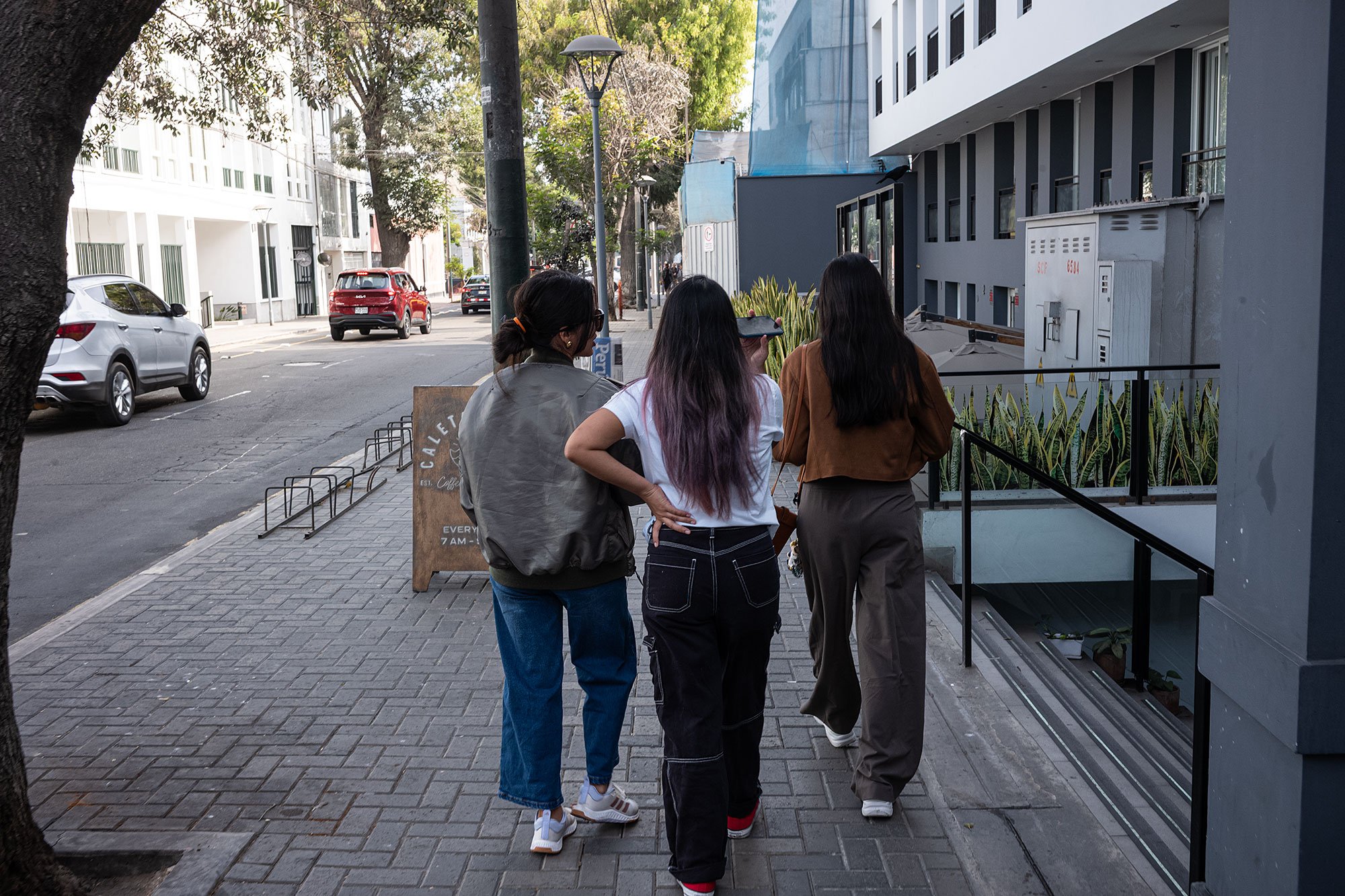
I text Abby a photo of the cafe from where I’m sitting and she asks me to say hello to David if he’s there. She sends me his Instagram handle so I can see what he looks like. It turns out I had just seen him.
When he comes back around the front I stop him and ask if his name is David. He looks at me askance. I ask if he remembers an Asian girl about this height named Abby. I hold my hand a little above shoulder height. From Canada? Yes! You’re a friend fo hers? Yes! I remember her because she was very interested in the coffee and chocolate. She was on a gastronomic tour and wanted some recommendations. I tell him she says hi.
Abby tells me that I need to check out the chocolate store upstairs, El Cacaotal. It’s run by a woman from New Jersey in the States who came to Peru and became certified in chooclates.
David follows. I ask him what the most interesting chocolates are. He points out an 85% dark chocolate but he tells me it’s not bitter. He tells me the reason a lot of high percentage dark chocolates are bitter is because a lot of the mass produced chocolates use cheap beans. They over-roast them to hide the low quality.
He also tells me that this chocolate is from a producer that uses ‘white’ cocoa pods (not to be confused with white chocolate), so-called because there is less tannin in them. He said that I’d get fruit notes. And I do. Along with smoke and leather and cranberries and other small red berries. It’s called Magia Piura.
I buy another bar that is 72% bitter chocolate, Keshet, also on his recommendation. It’s sweeter but another complex flavor profile: tobacco and peach and nuts.
They’re both single origin chocolates and he shows me a map of where chocolate is produced. It’s mostly in the Amazon and along the lower elevations along the Andes. He points out a single spot near the ocean where it’s produced due to trade. The chocolate was brought there and adapted to the climate.
On leaving he asks me if I’m Canadian. I tell him I’m from New York and I’m not sure how we get on the subject but we start talking about Iquitos and the Amazon. It’s a place I’ve wanted to visit for a few years but haven’t quite made the time. A few Christmases ago I thought of spending the week in the Amazon but ended up in Senegal instead. He highly recommends I go.
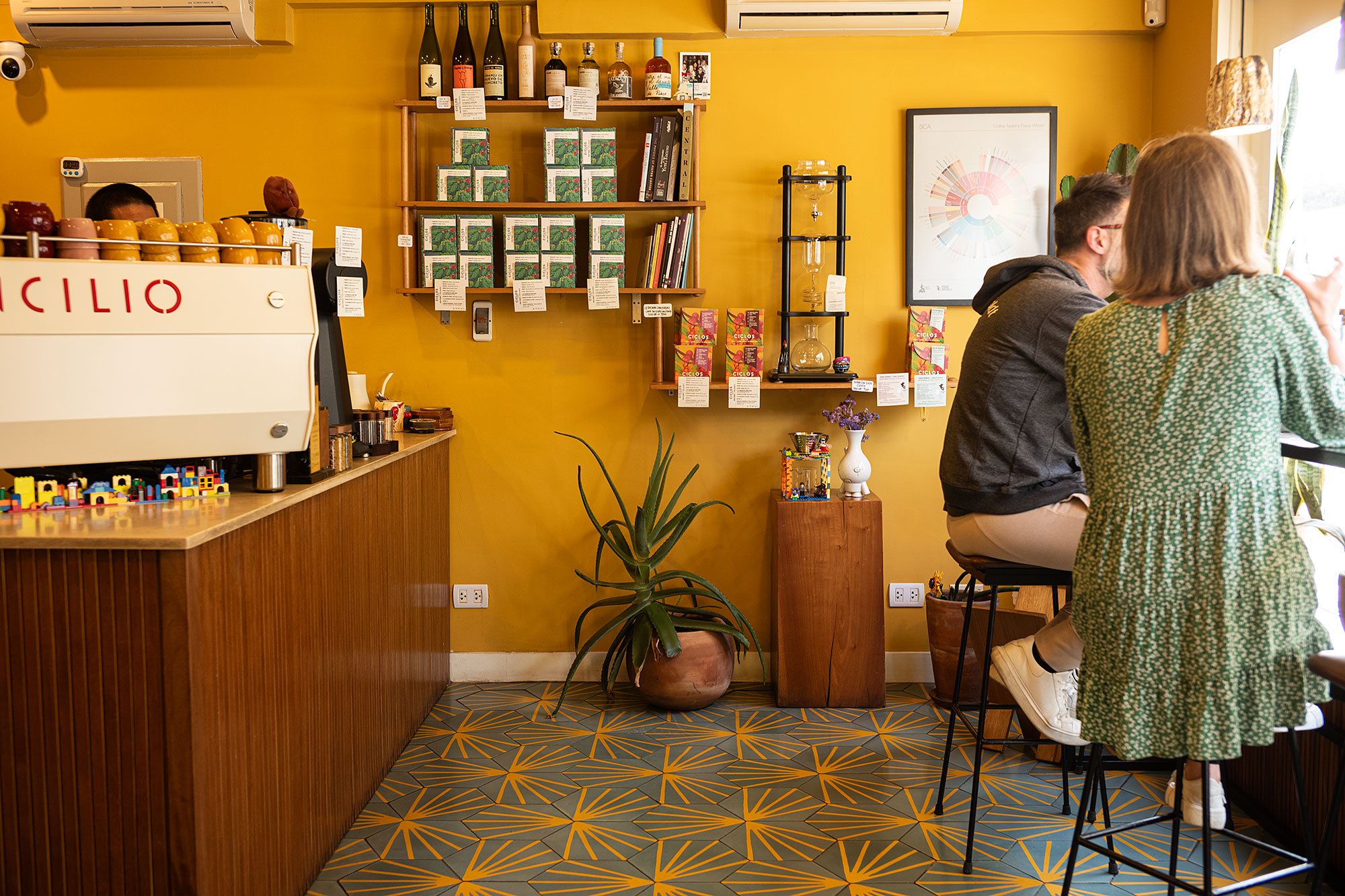
I think about taking a cab home but decide to walk. Passing UNØ I stop in to look at their hats, having bought one there the year before. I can’t decide between. grey and orange. I text my cousin to get her opinion but she doesn’t respond immediately and I leave without buying one.
Just down the street I get her text and go back. She likes them both. I ask the salesperson her opinion. She tells me the grey is more versatile and goes with my outfit. Maria also surmises that my wardrobe tends towards greys and blacks. She’s not wrong.
She asks me where I’m from and I return the question. She’s generally from Lima she tells me.
She tells me she likes to ask people what their favorite foods are in Peru. Restaurants or dishes? She says the latter. I tell her I like ceviche. She tells me I may find it weird but she doesn’t like ceviche at all. I don’t hold it against her. I also tell her I love chifa and her eyes light up. It’s her favorite.
I ask her what her favorite chifa place is; she says it’s not in Lima. It’s in the Amazon where she lived for a while and where she still has family. Iquitos? She lights up. Yes! She asks if I’ve been and I tell her I haven’t had the opportunity. Maybe next year; if not I’ll have to make a point of planning it for the year after. Now that it’s come up twice I feel like the universe is sending me a message.
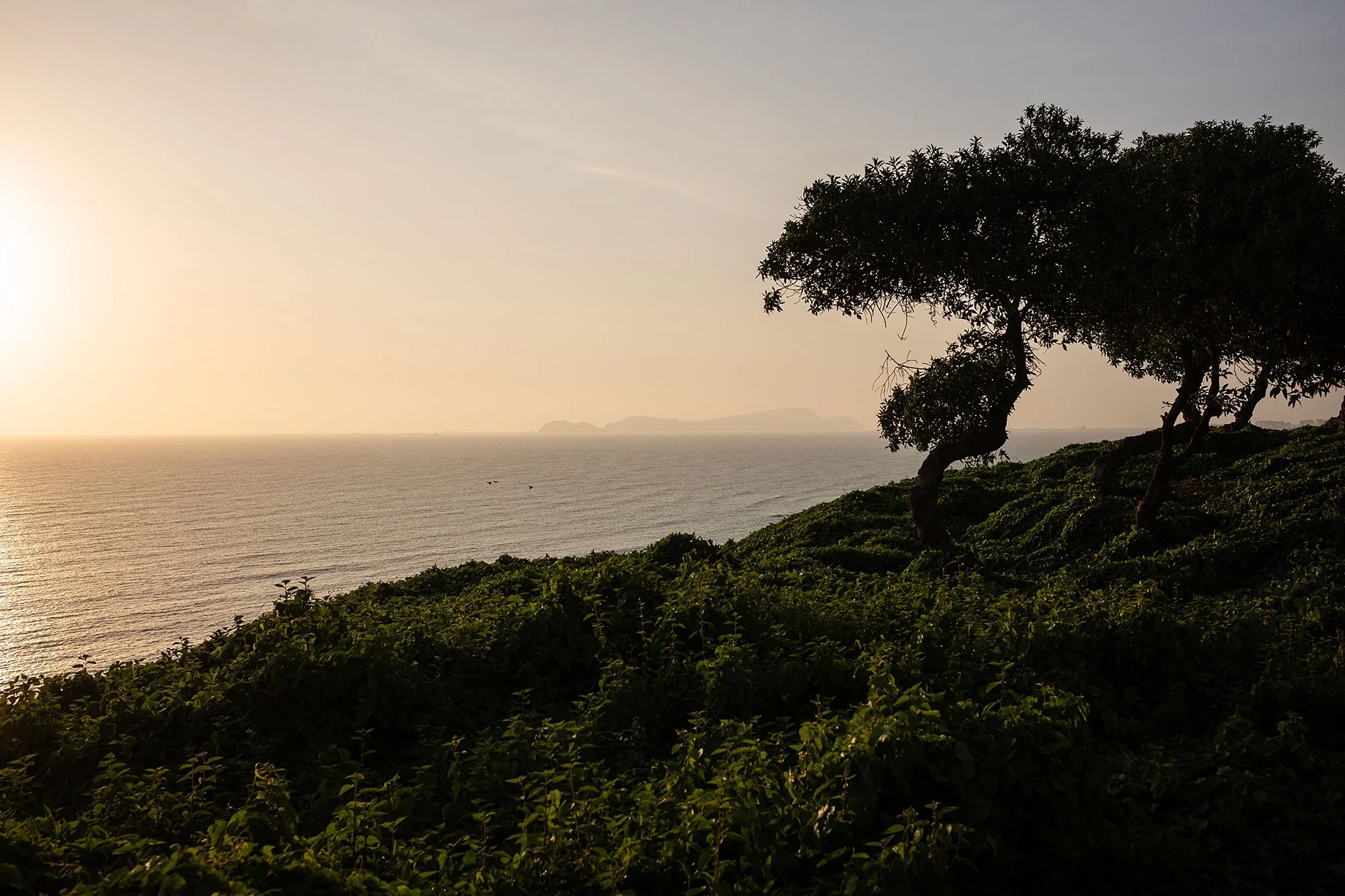
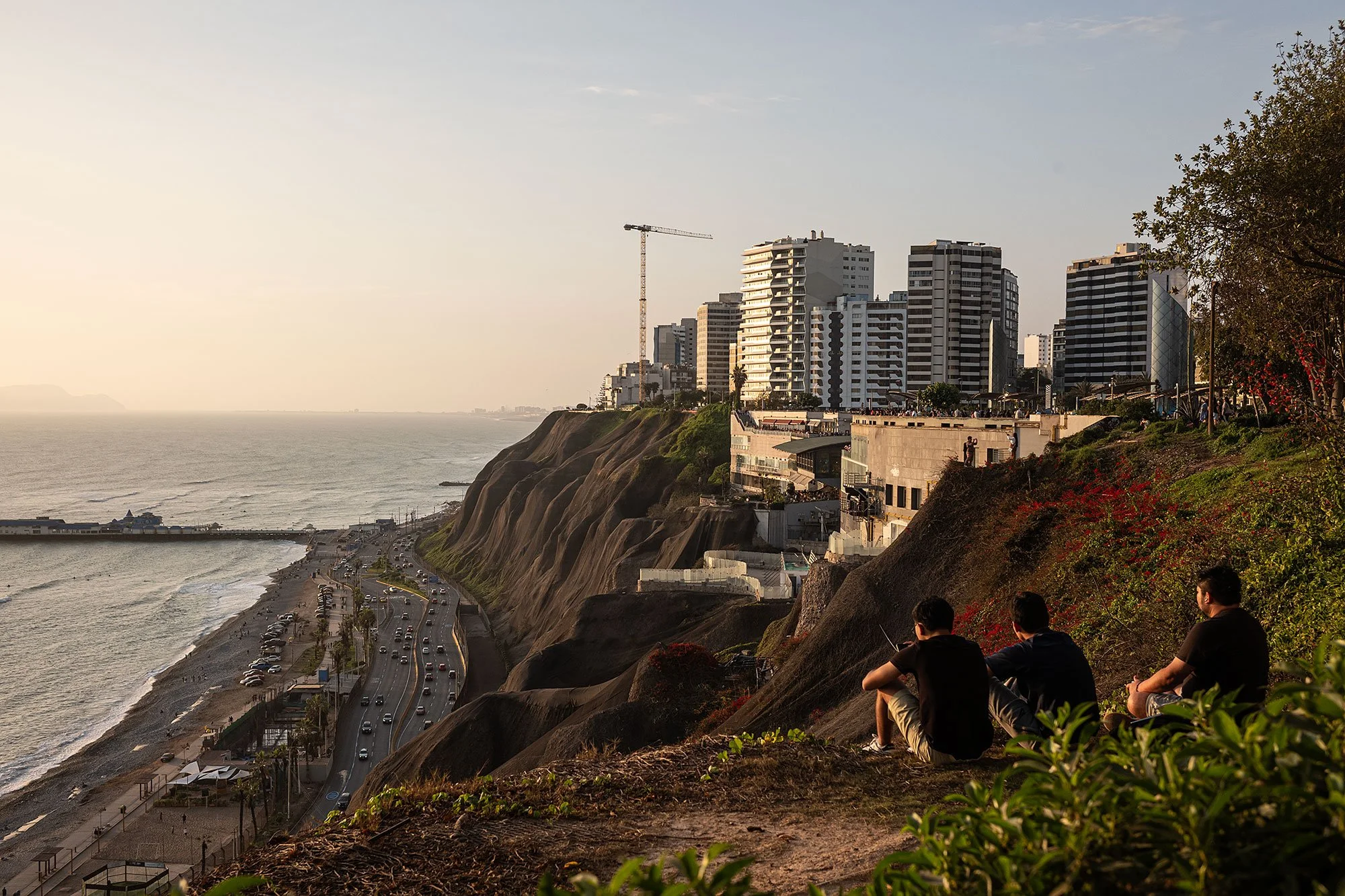
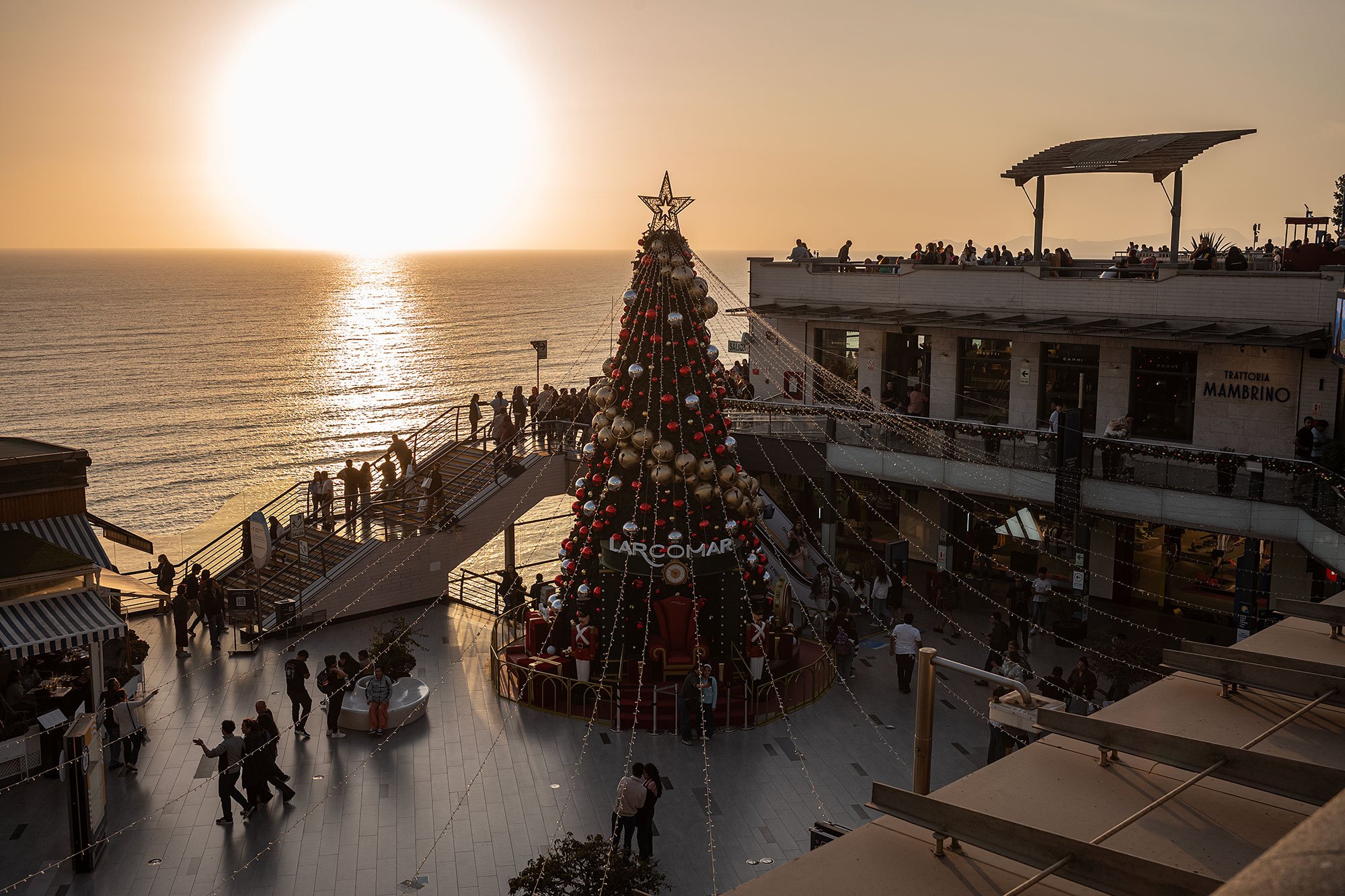
I walk the rest of the way home, back over the bridge, past Larcomar to the Love Park. The sun is setting and the light on the tiles is beautiful.
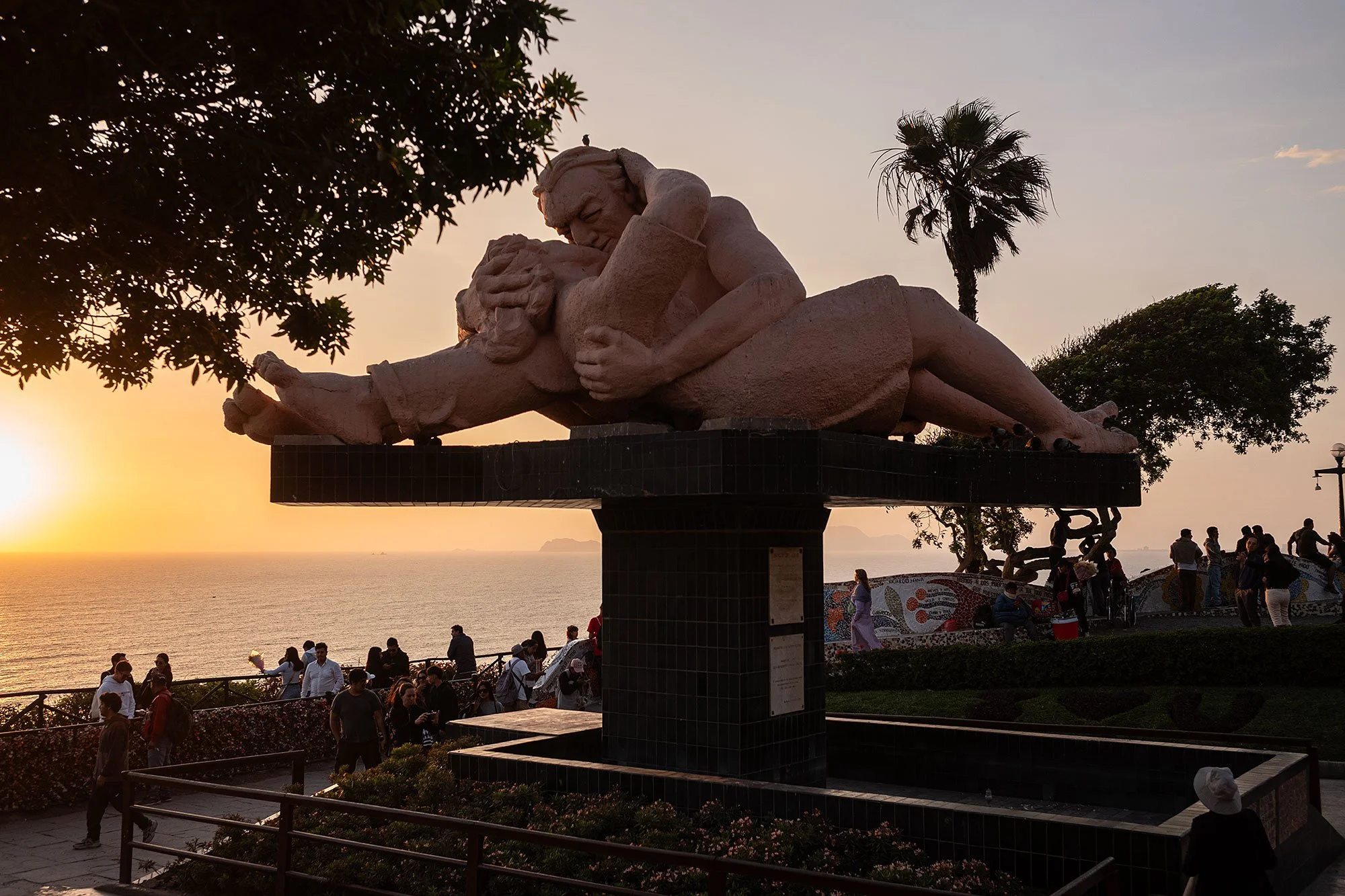
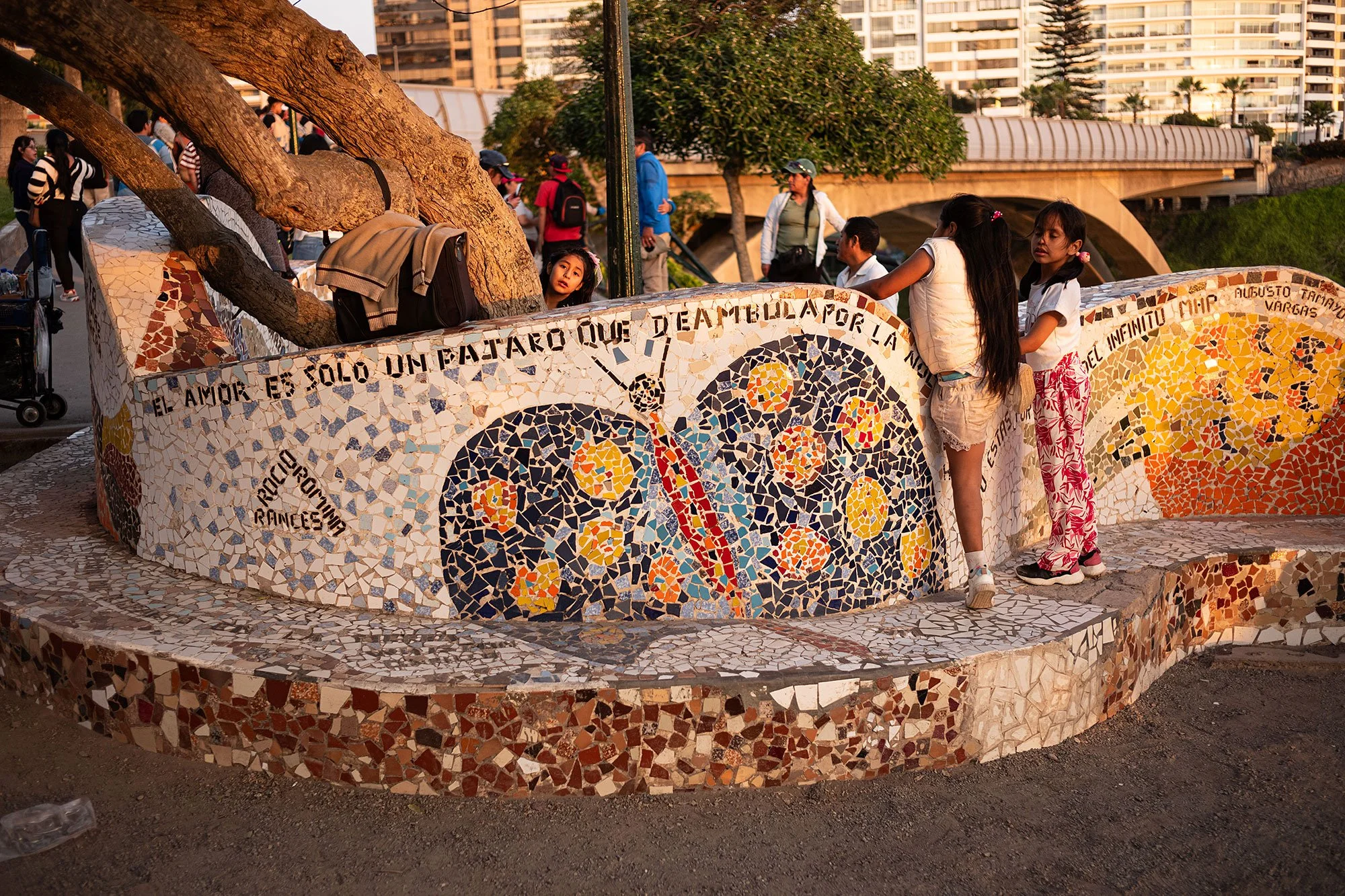
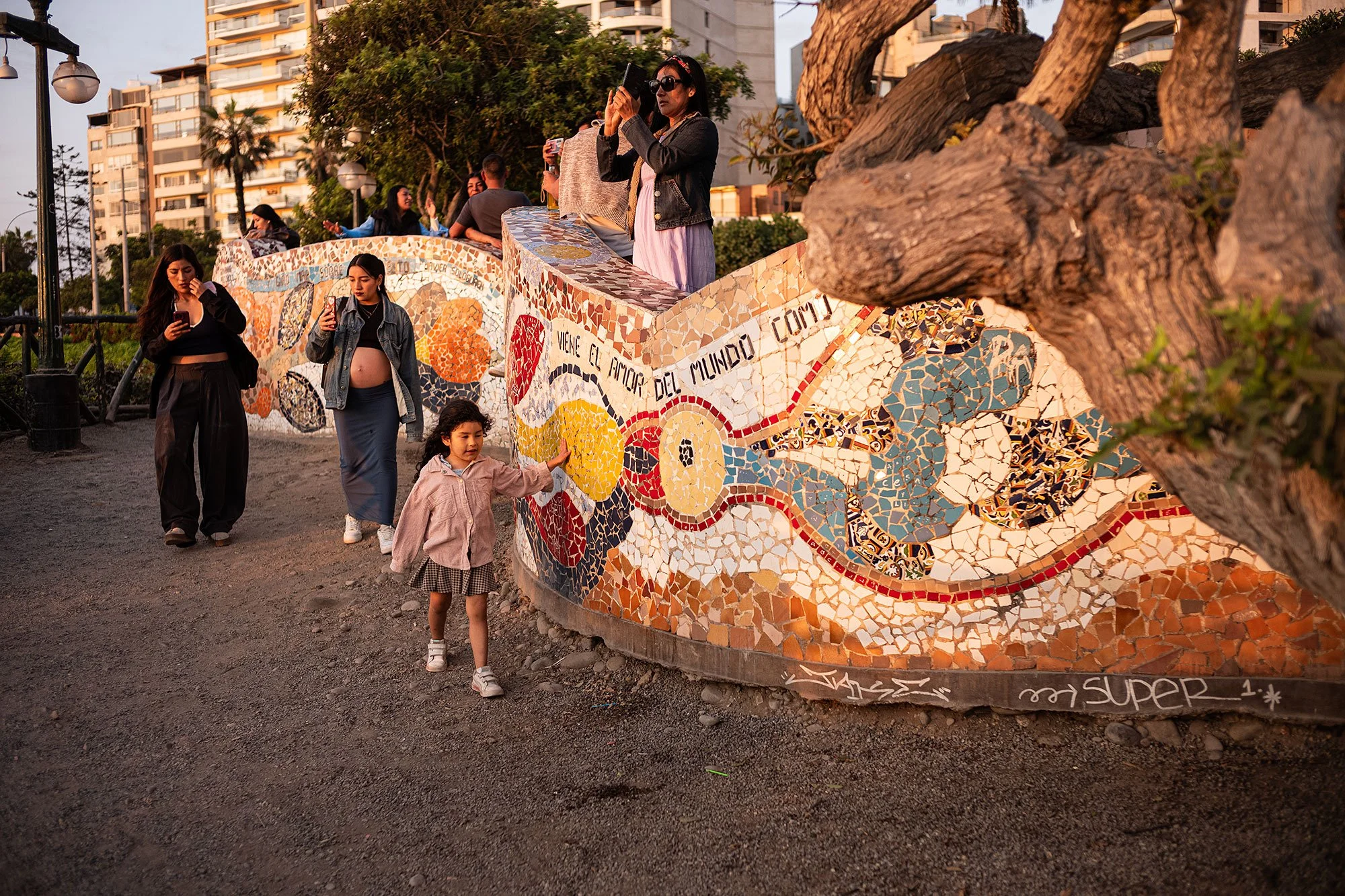
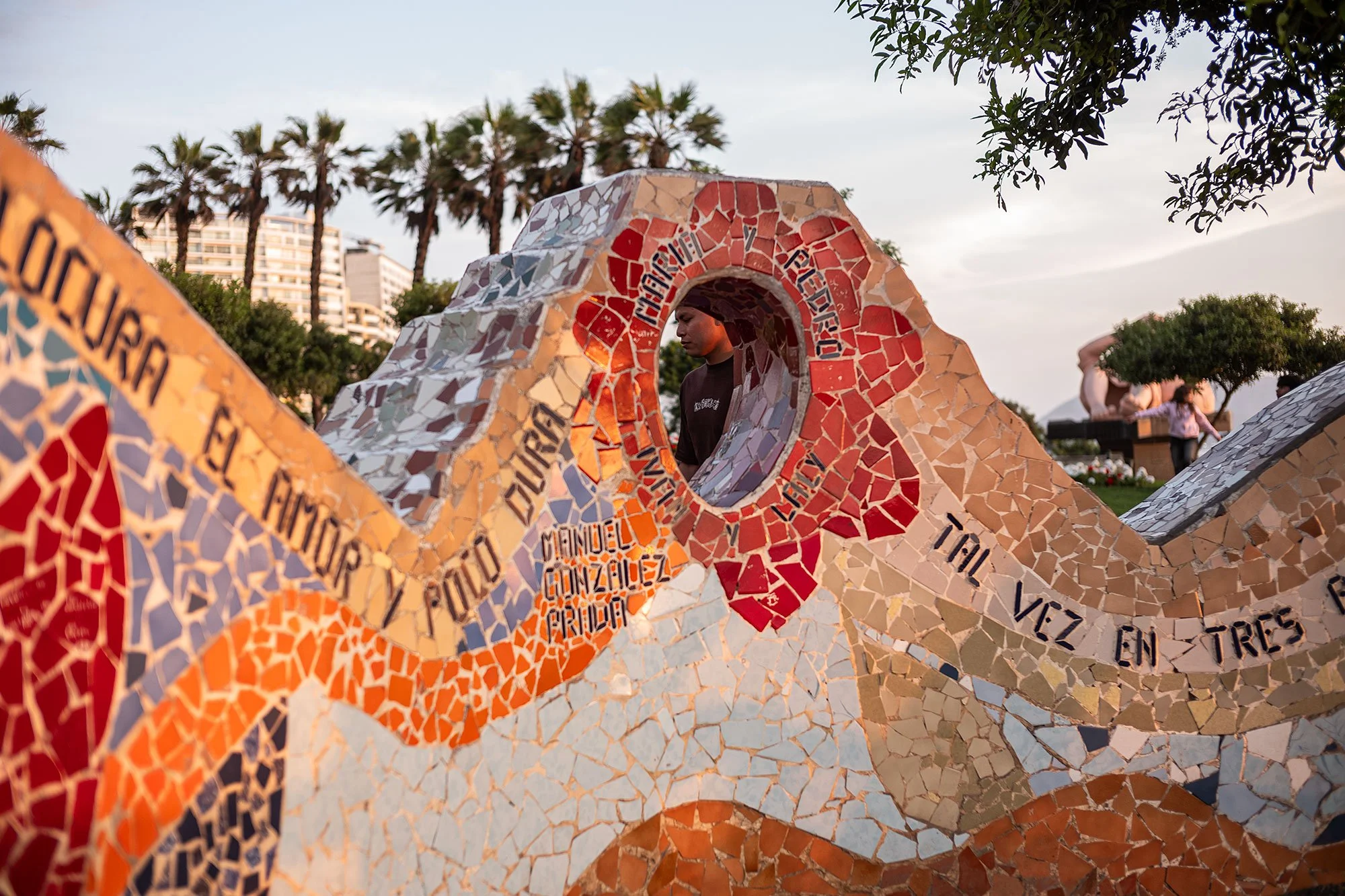
A girl in a quinceañera dress is being photographed, her friends scattered around her helping with the dress and her bouquet. I find a spot by the edge of the cliff to watch the sun sink below the horizon. The light filters through the haze, the sky seems to brighten just as the sun disappears before night rushes in to take its rightful place. 🇵🇪