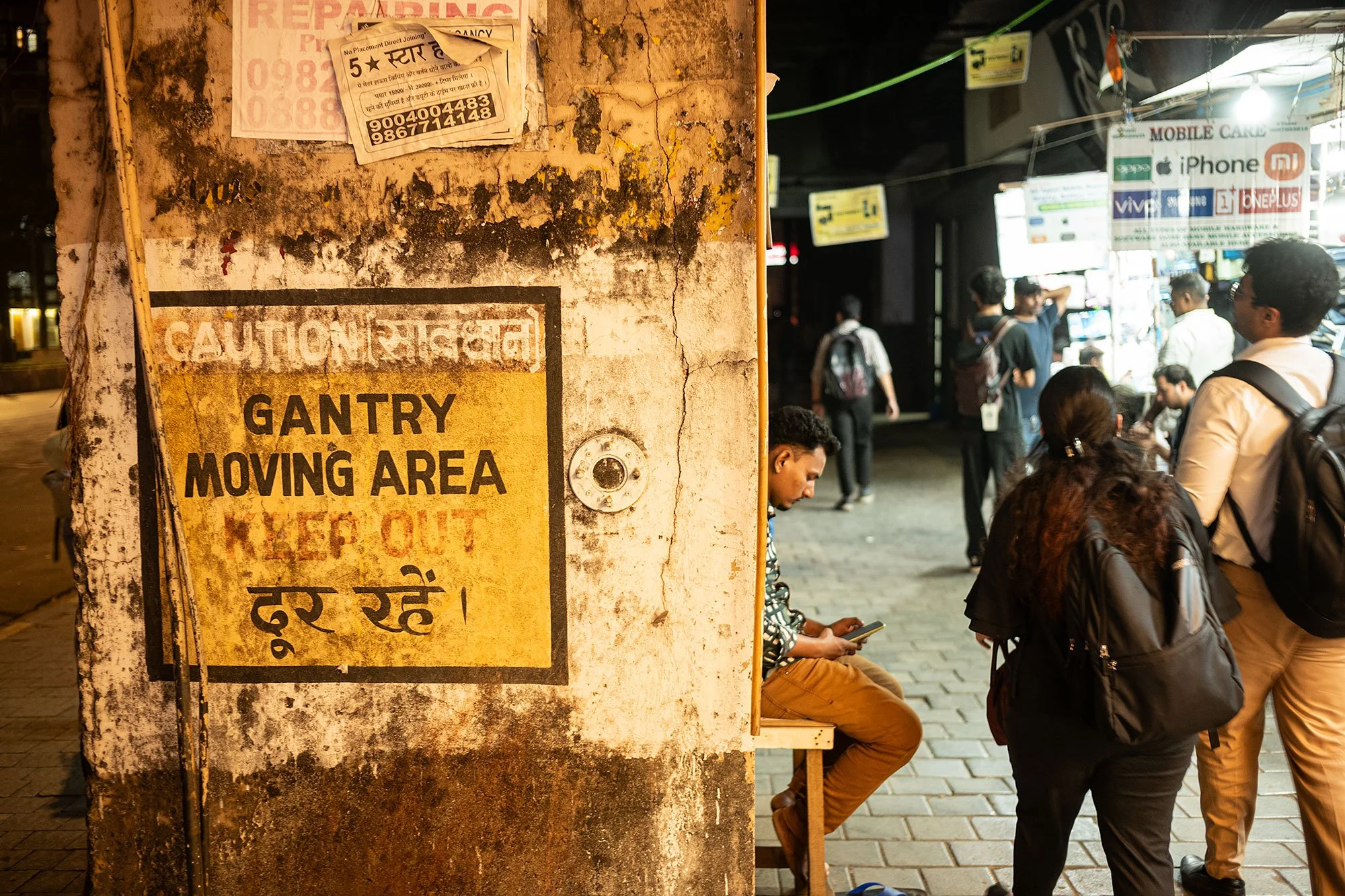
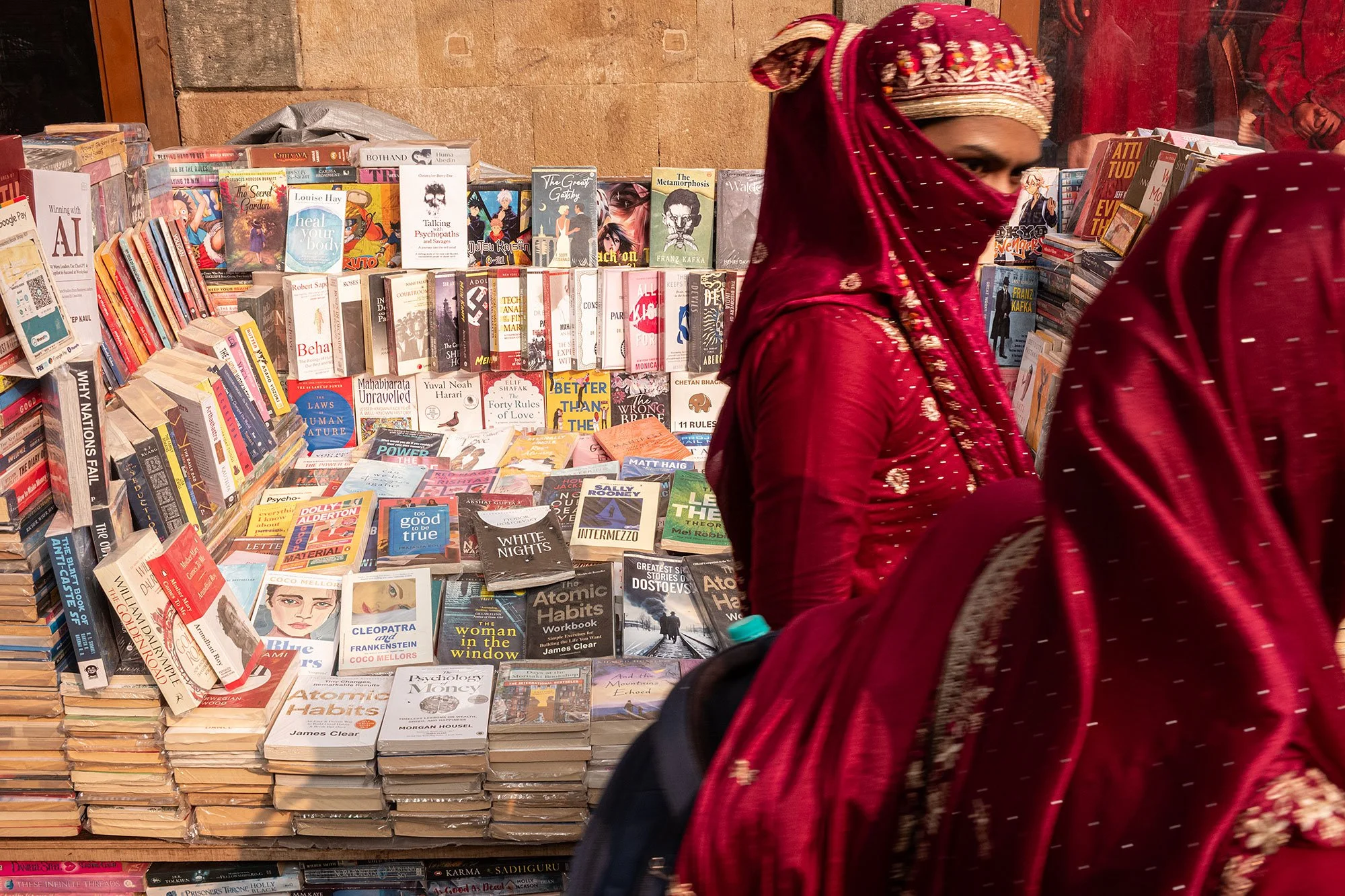
Arrivals and a Fort Mumbai gallery crawl.
India chapter oneI’ve flown around the world to reach Mumbai, having flown to California for a funeral from Penang, Malaysia (by way of Singapore and San Francisco) and then flying to Atlanta and London before finally arriving in Mumbai.
On the flight to London I had two seats to myself, which felt like a luxrious upgrade. I watched movies—Big Bold Beautiful Journey, which didn’t quite live up to its potential (loved Phoebe Waller-Bridge’s small part) and Bugonia, which ended with some beautifully haunting shots—and did my best to sleep as much as I could.
From London the flight is delayed and then delayed again. At first it’s because the jet bridge is broken and so they move the plane to another gate, which requires a bus. Unfortunately, this means a lot of the older passengers need additional time to board. And then engineering has a few things they want to look at. They don’t specify exactly what.
Once those issues are resolved there’s a backup on the tarmac and so we wait for a pushoff time and then a departure time. All in all the delay stretches from one hour to two, but the pilot says we’ll be able to make up the time in the air.
I sit next to a woman and her two-year-old, who is cute but a bit of a handful. They’re headed back to India to visit friends and family; she has a wedding to attend in a week. After arriving in Mumbai she has another five hour drive to make it to where they are staying. Her father was going to pick them up but he is in hospital.; an uncle had been dispatched. I wish them all well.
During the flight I watch The Assessment, a film set in a dystopian future where couples have to apply and be assessed to see if they would make good parents. Over the course of the film Alicia Vikander (the assesor) acts like a spoiled child to assess how the protagonists would deal with different situations. It eeriely echoes what’s going on in the seat next to me.
Immigration itself is slow (partially because it seems that people are unprepared). I had stopped to have my photo and fingerprints taken at a kiosk before arriving at immigration but am asked to do it again. I thought I had done this already, I tell the officer, and he stops me after having taken photos of my right hand. Or maybe they only need the right hand. It’s unclear.
A man meets me outside with my name on a sheet of paper. It’s somehting like four in the morning and thank myself for booking an airport transfer with the hotel before I left the States. He leads me to the driver and gets into the vehicle with me. We drop him off before heading back past the airport on our way south to the hotel. Along the way the driver stopps for a chai. He asks if I want one. I tell him I’m ok and settle into living on island time for the forseeable future.
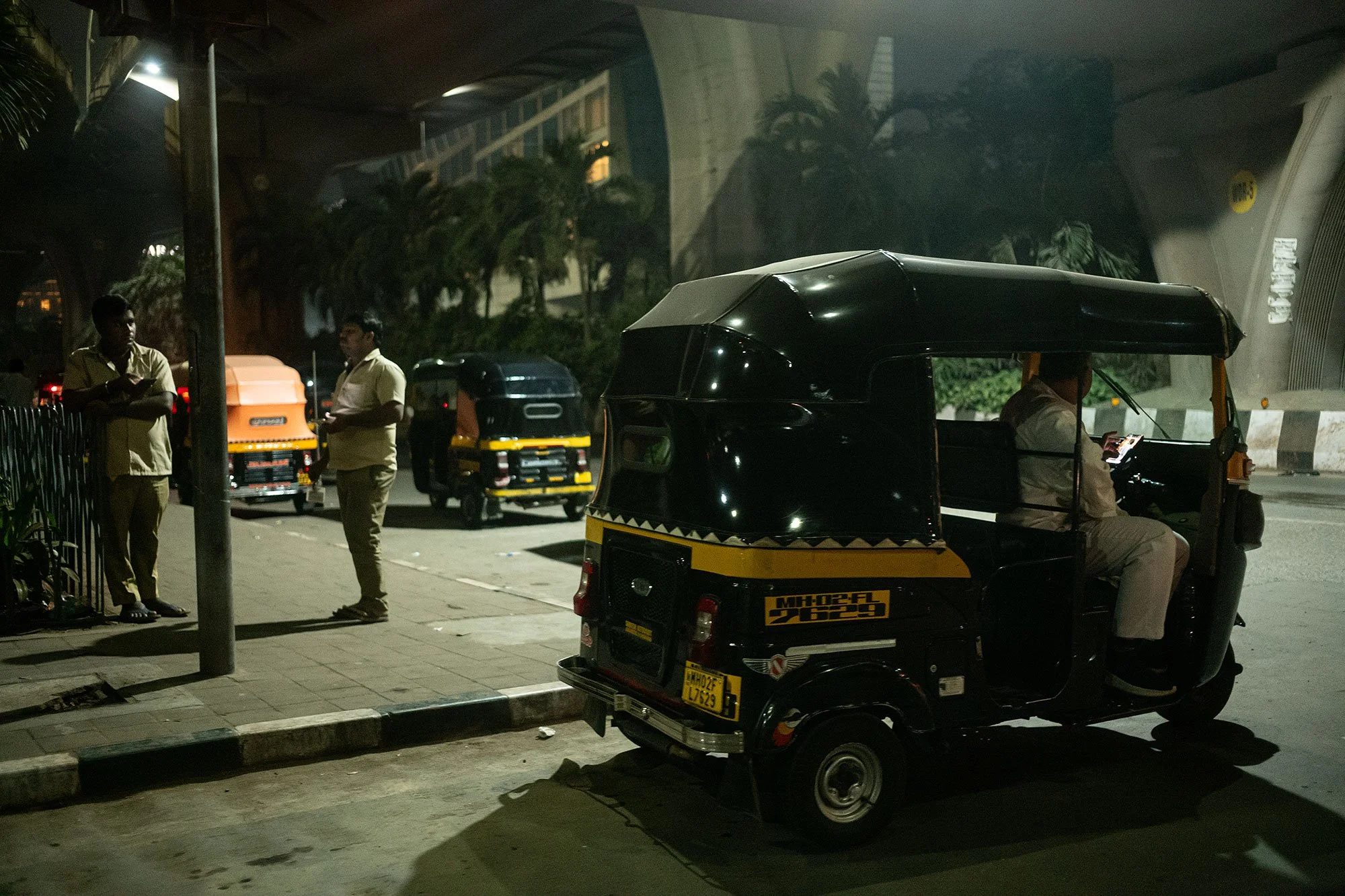
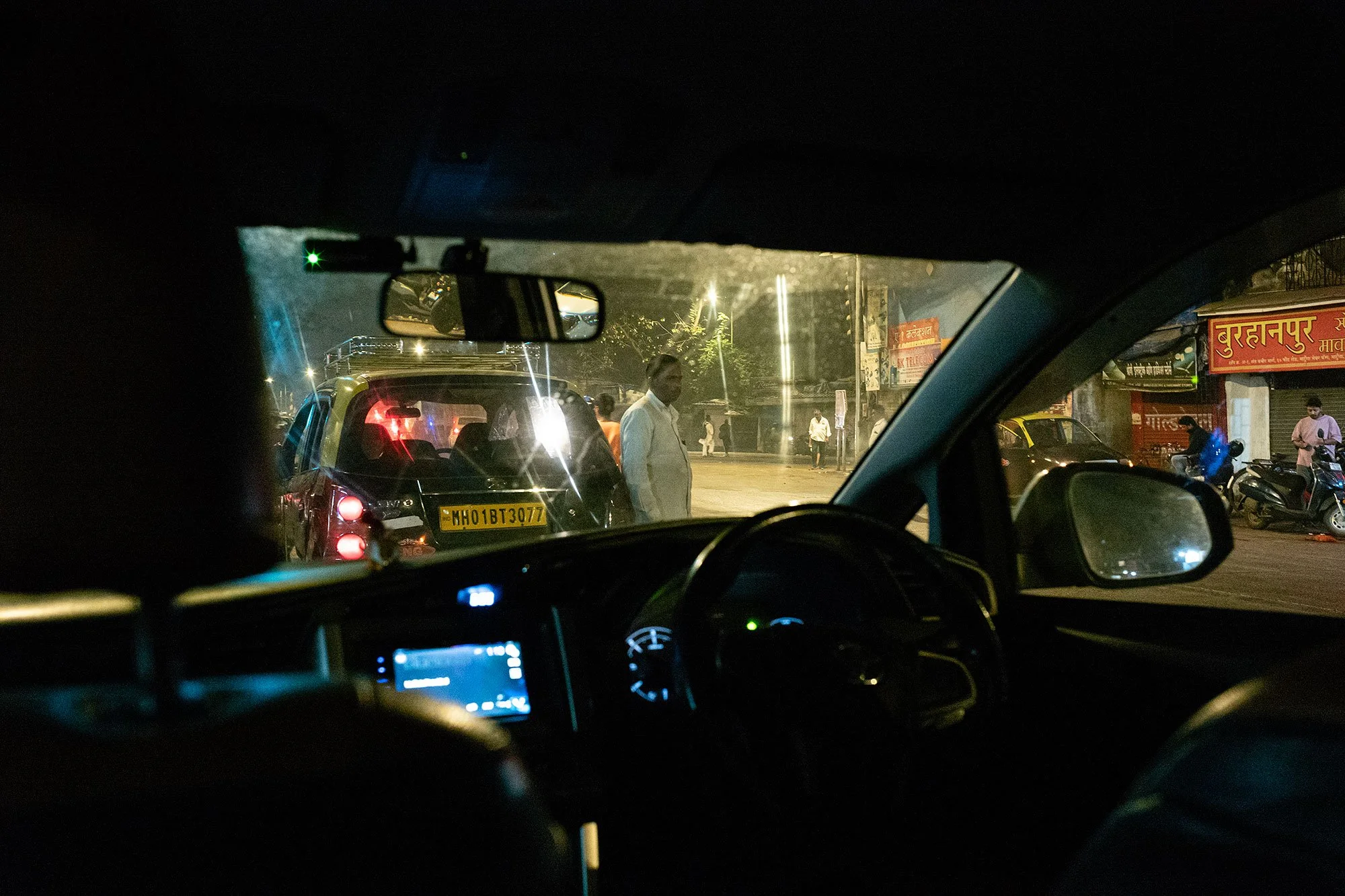
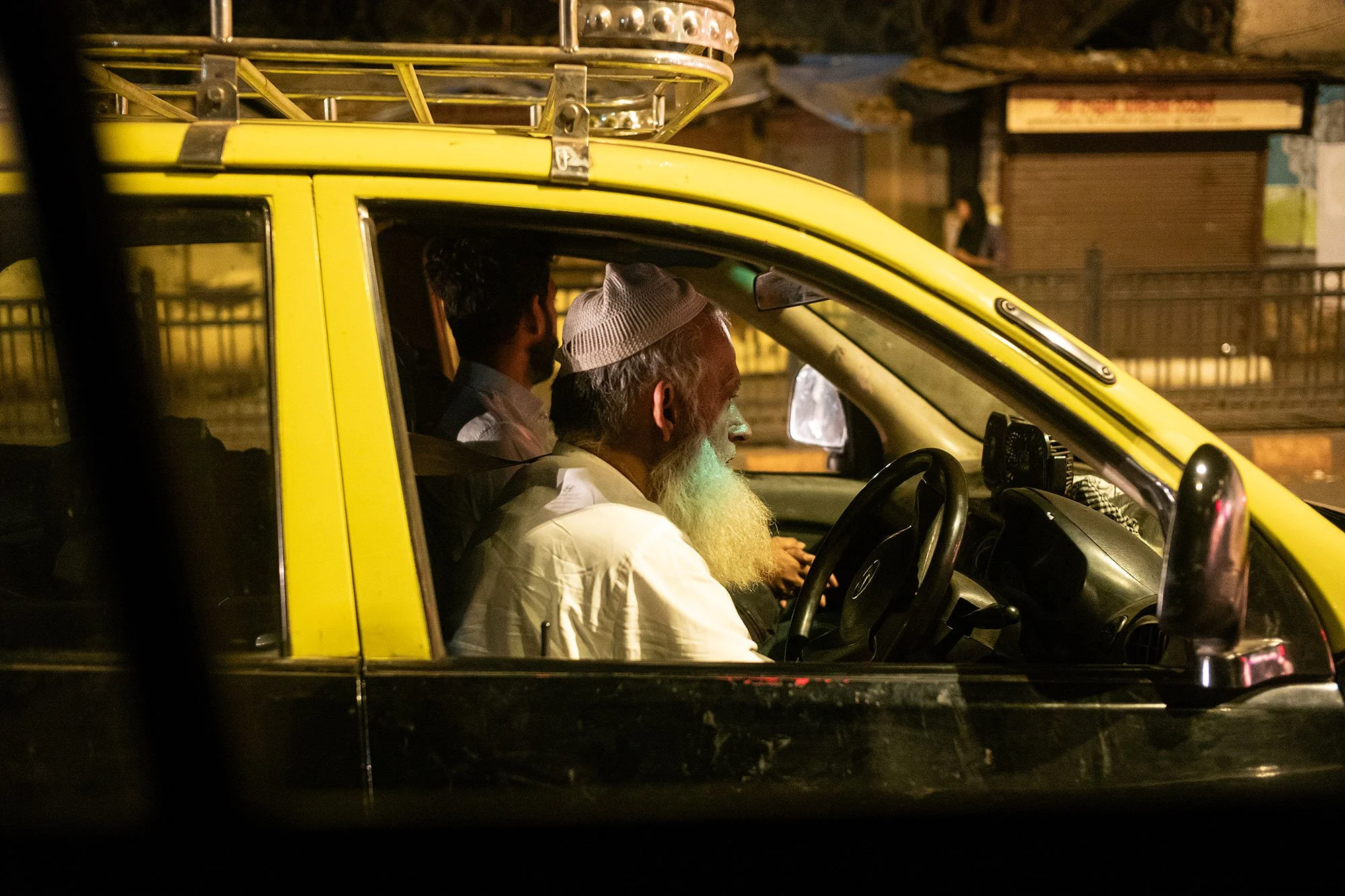
Mumbai passes like a dream, the yellow lights and traffic blurring in my vision. Spectral fish swim in a backlit tank. The roads are mostly empty, but life swarms around me.
Eventually we get to the hotel, but I can’t check in. I hadn’t expected to. It’s still early and I’ve only booked for the night. The hotel is fully booked and they tell me that they’re waiting on people to check out to clean their rooms. I’m invited to sit in the guest lounge and offered a cup of chai.
I’m given a piece of paper with a list of possible tours that can be arranged. I book a city tour for 0900 the next morning. I’m told tehre’s also a market tour, to see the newspaper market, two flower markets, a vegetable market, a fish market. I book that for 0600 the day after.
One person checks out early. The room is cleaned quickly and I’m invited to move in by 0900. I take a shower, eager to wash the last 30 or so hours of travel off of me. I’m too excited to go to sleep just yet and organize one last train ticket and some intercity taxis before letting myself take a nap from 1000 to 1130.
I text Natasha to let her know I’m in Mumbai. She’s not, and asks if I want recommendations on galleries to visit. She sends a bunch and I decide that I’ll spend my first day in the city using those as a walking guide.
But first, an ATM. It’s difficult to find one that will give me money before I realize I’m asking to take too much out at a time. There’s a 10,000 ₹ limit that’s not quite obvious to me.
I drop the money off at the hotel and head out to find lunch. Natasha had recommended Britannia & Company, a Parsi and Iranian restaurant that was founded in 1923. It’s empty but for two tables when I arrive but it fills up quickly thereafter.
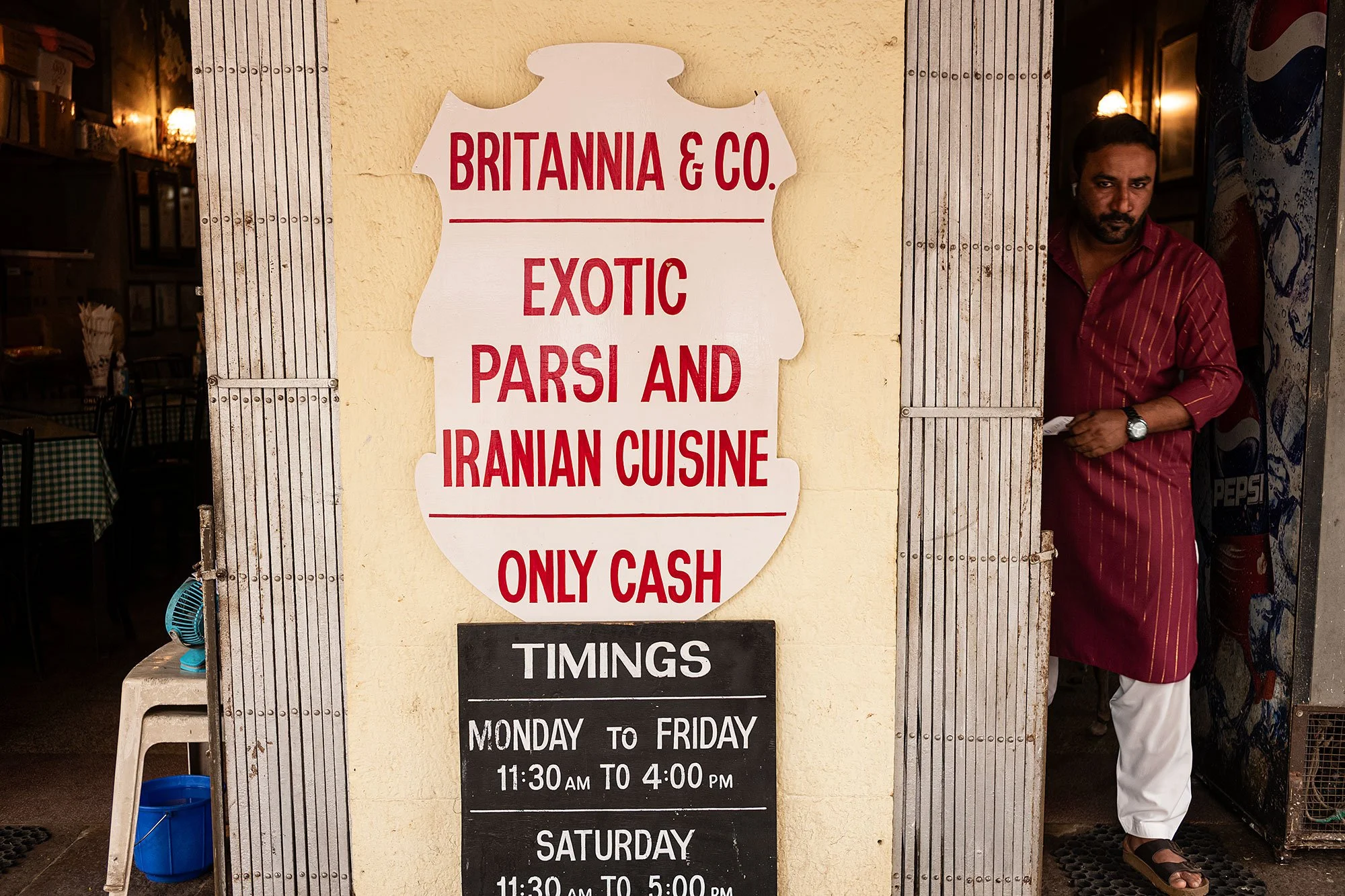
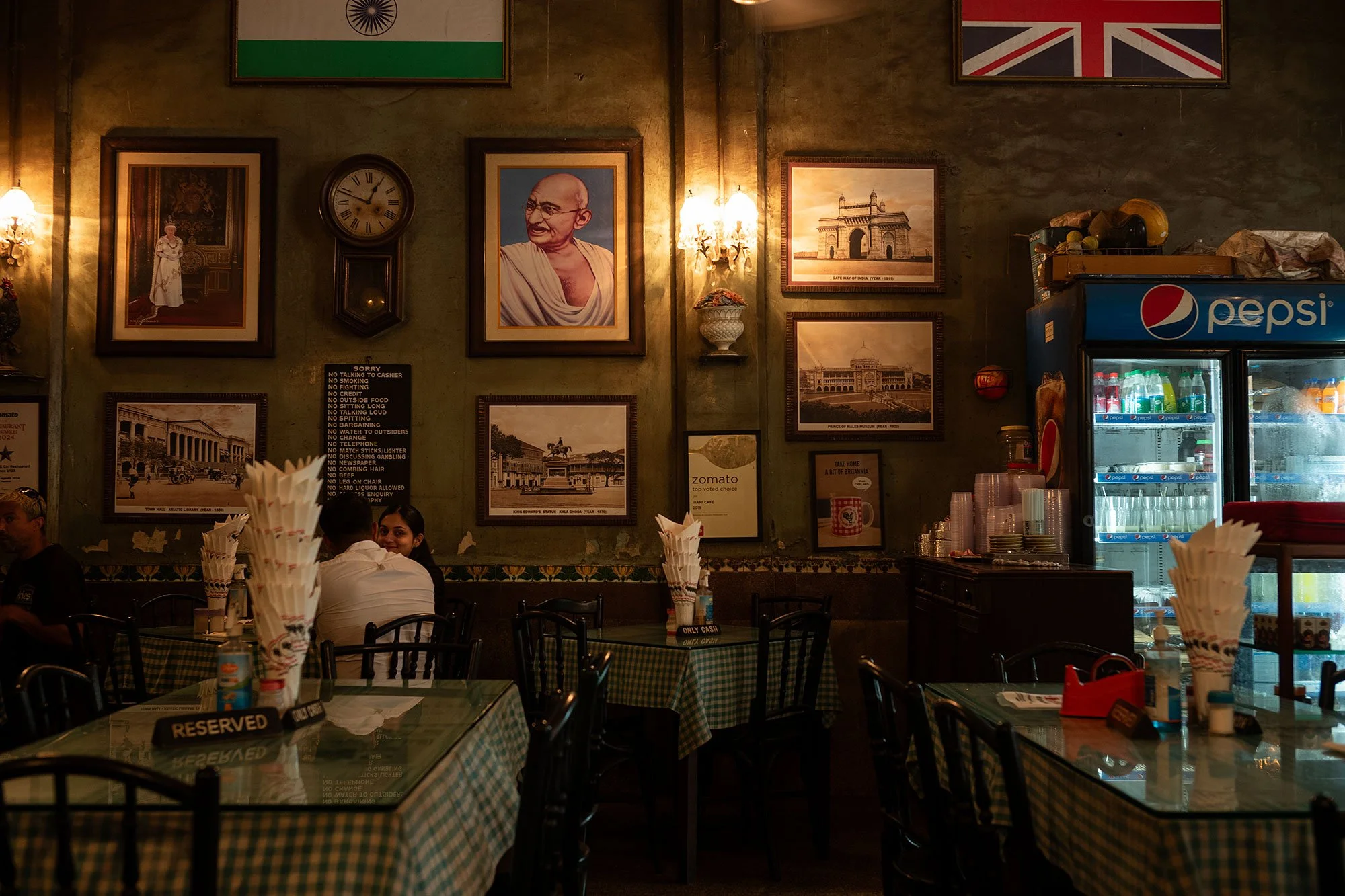
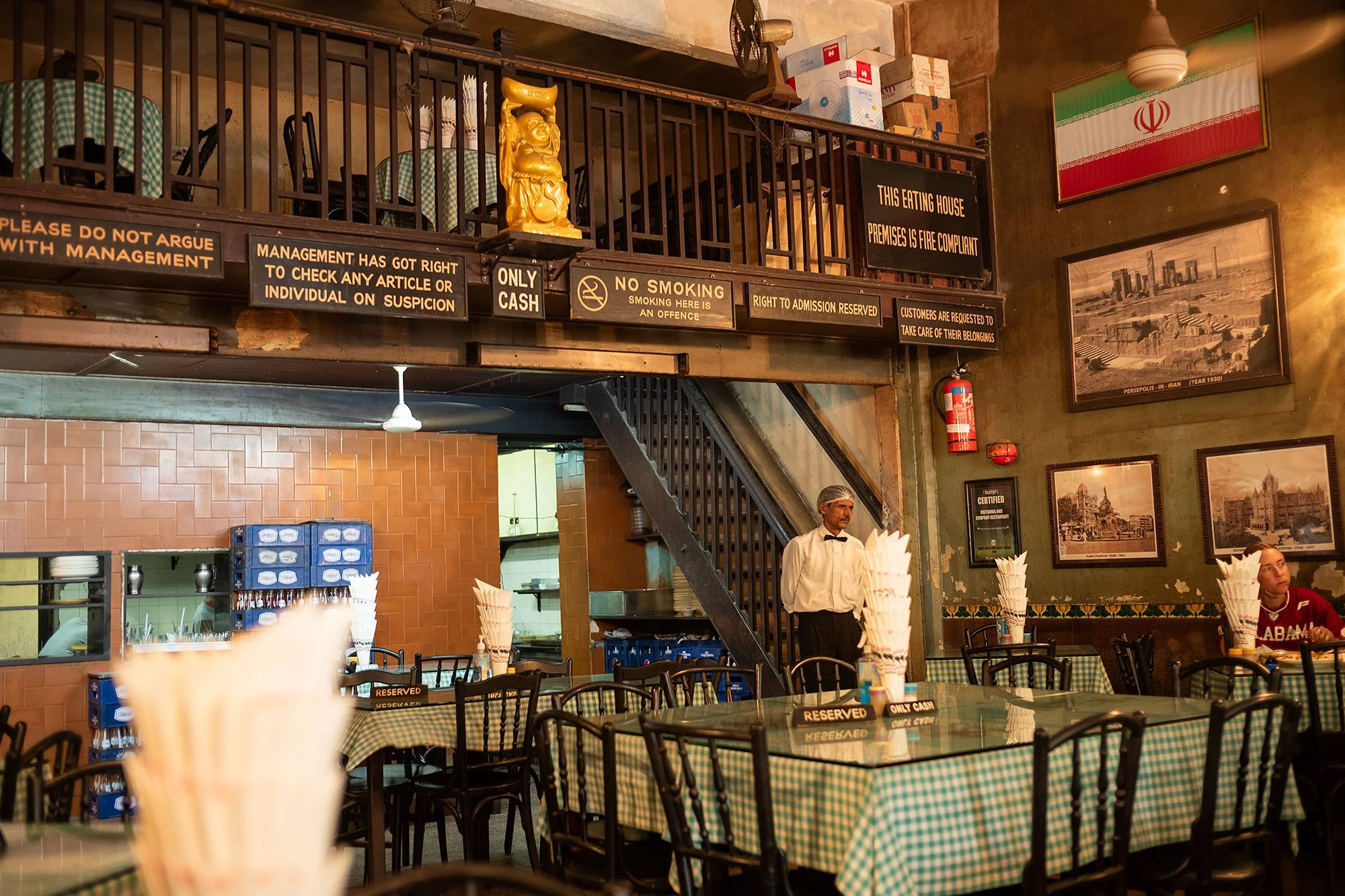
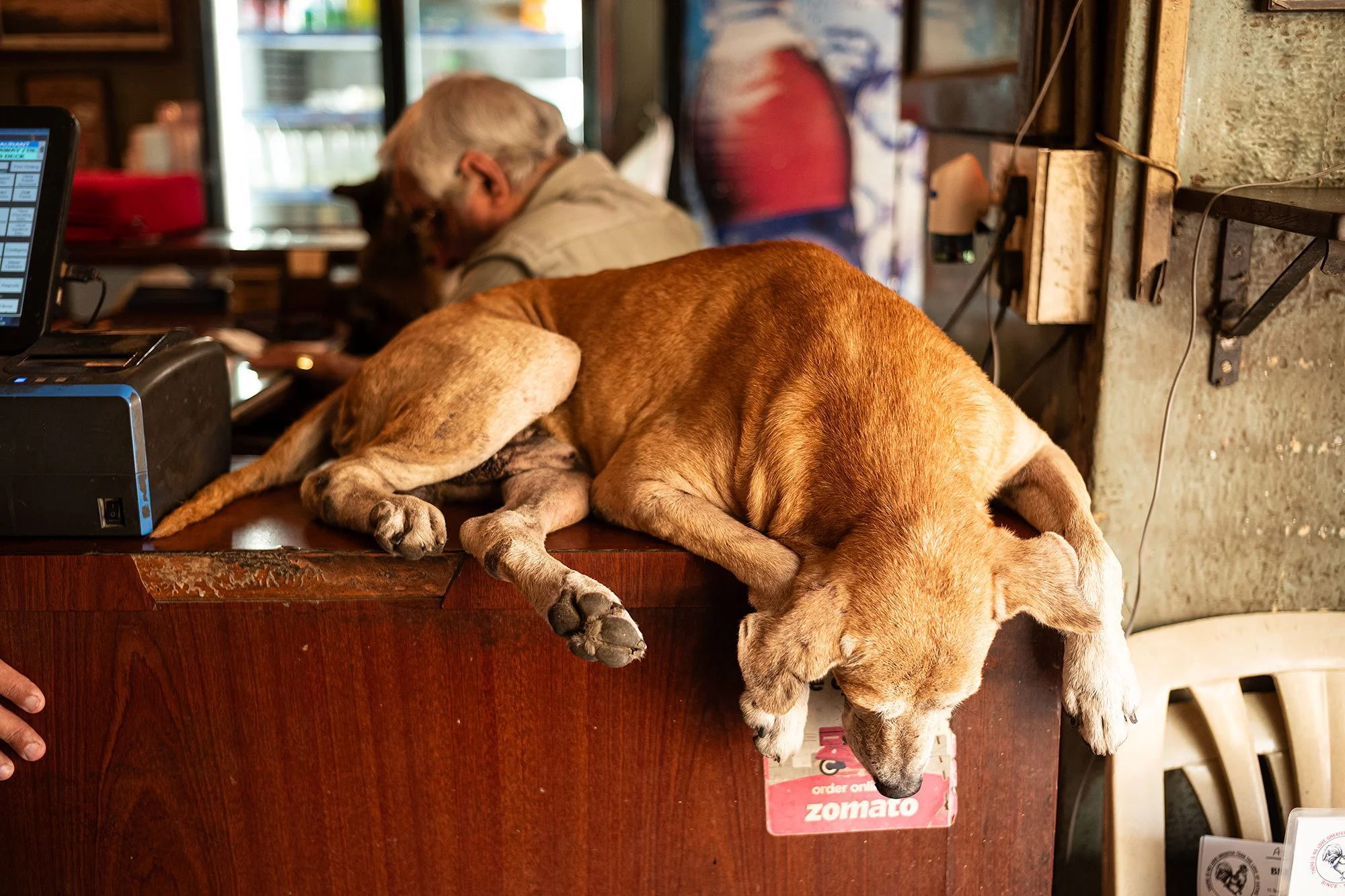
I order a delicious vegetarian berry pulov. It’s a plate piled high with rice dotted with pomegranate seeds. It’s too much for me to eat in one sitting and I take half home for later. A dog wanders into the restaurant and climbs up on the cashier’s counter where it falls asleep, paws and head hanging over the edge.
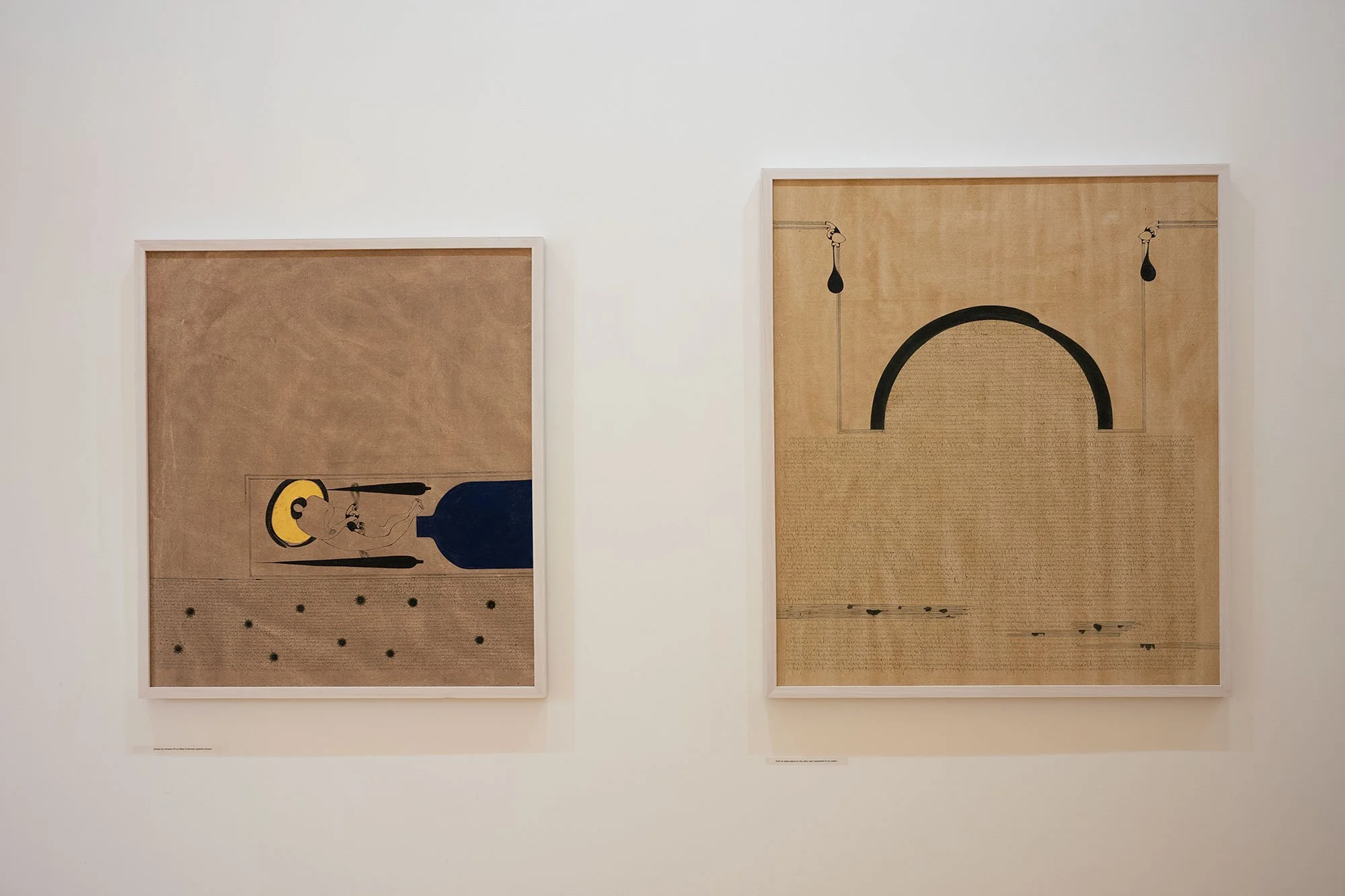
I walk to Chatterjee & Lal, which houses an exhibit by Azal Se Abad Tak. The gallery is on the second floor of a building that houses the Christian Louboutin store, Hermes next door, and I almost miss it as I’m looking solely at the ground level. The work balances two figures, one representing eternity without end and the other eternity without beginning, and I stop to read the text as I make my way around the gallery.
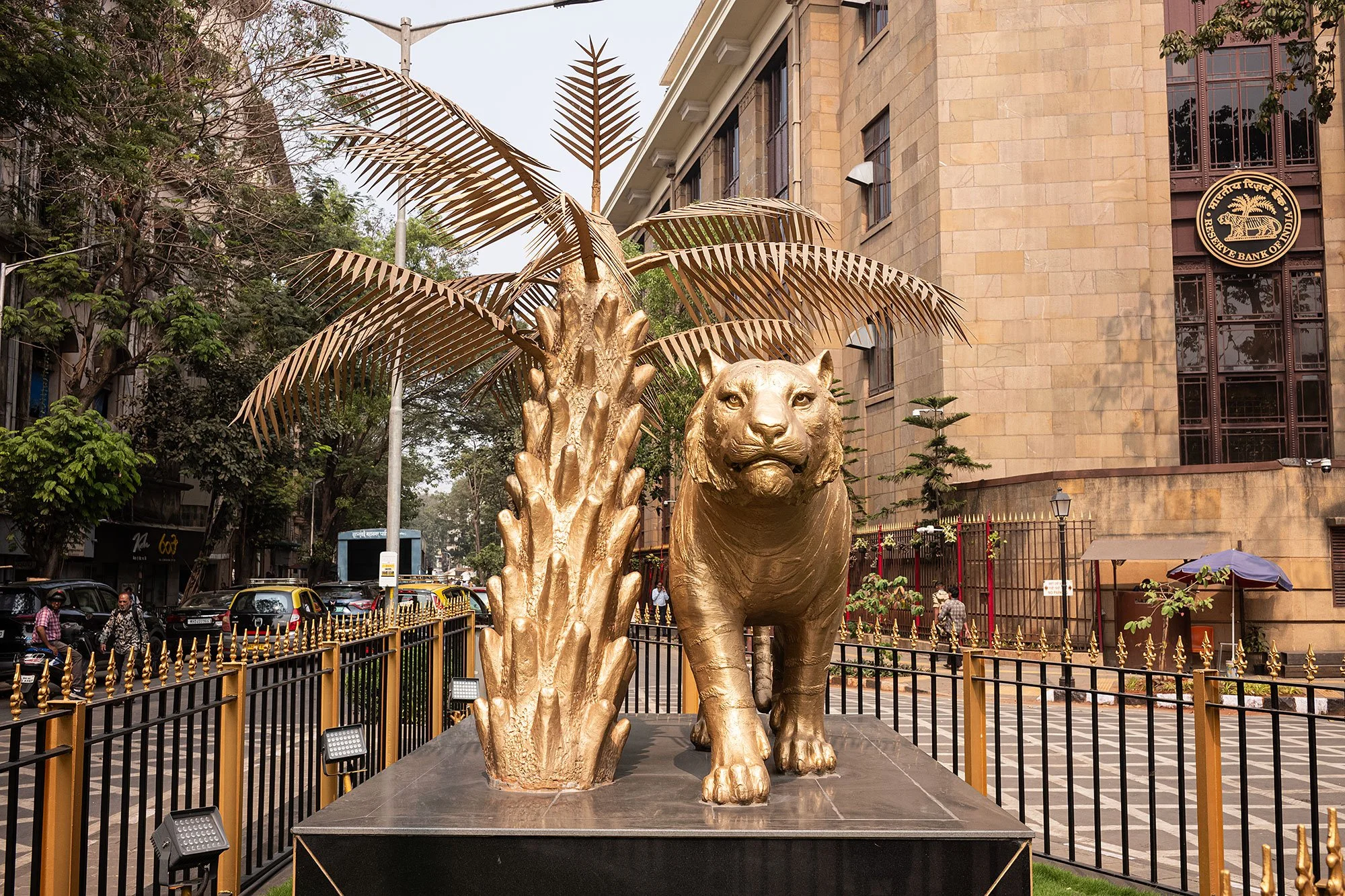
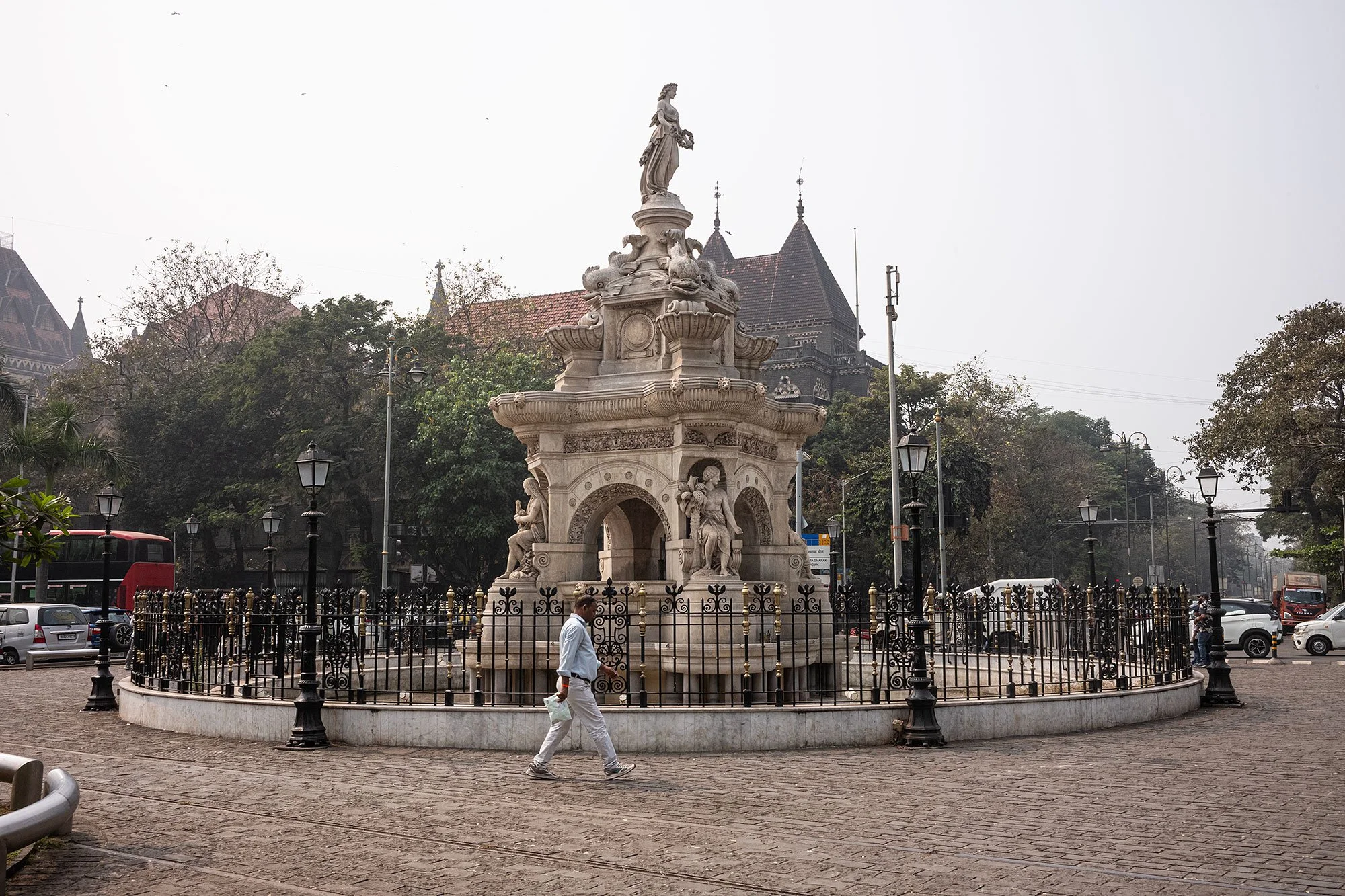
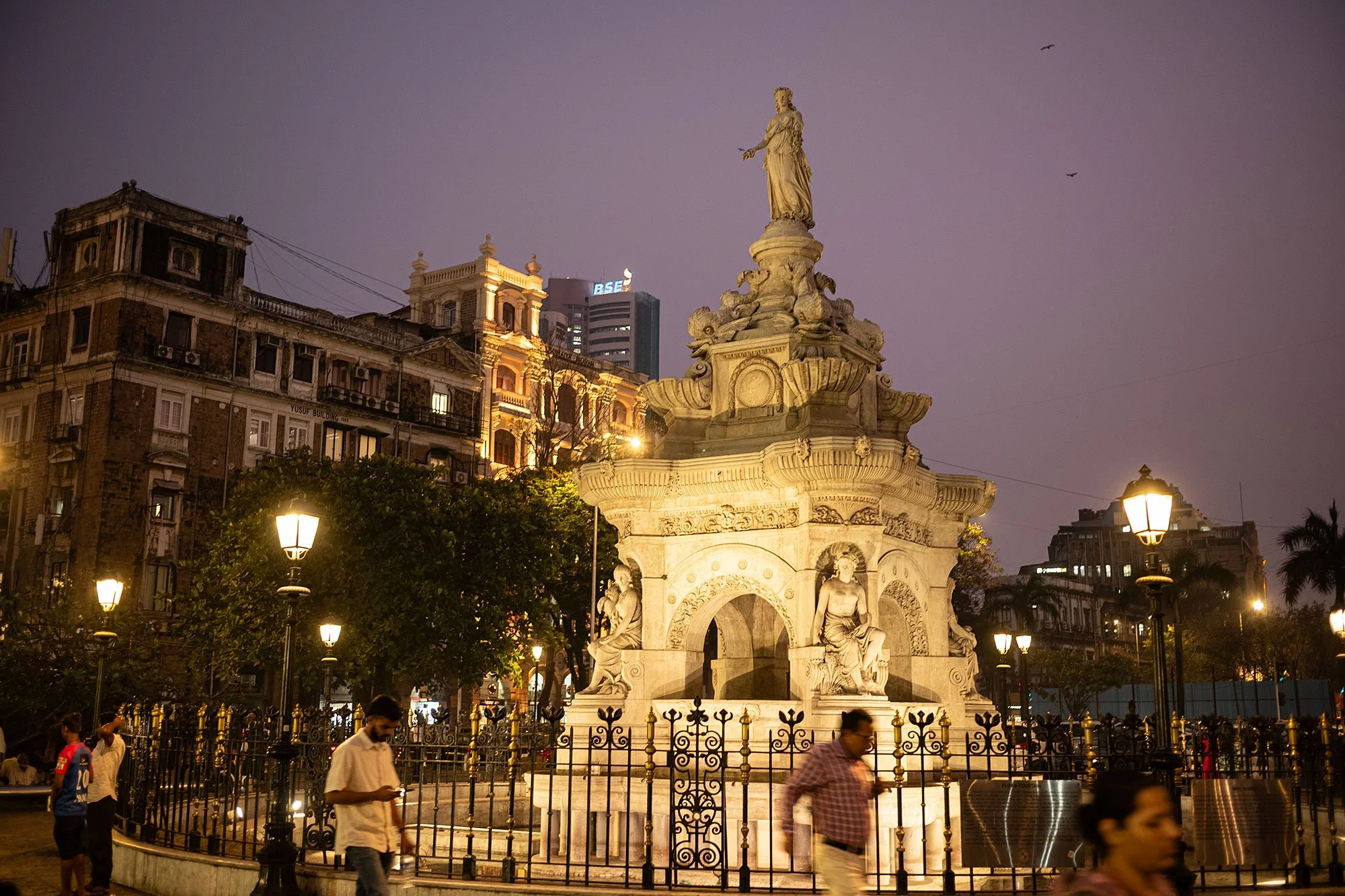
I continue to wander around the Kala Ghoda neighborhood, known for its galleries and designer boutiques and cafes. I head to the Flora Fountain for the photo and walk to where Kala Ghoda is pinned on my map only to realize it’s just to mark the neighborhood not really a place of its own.
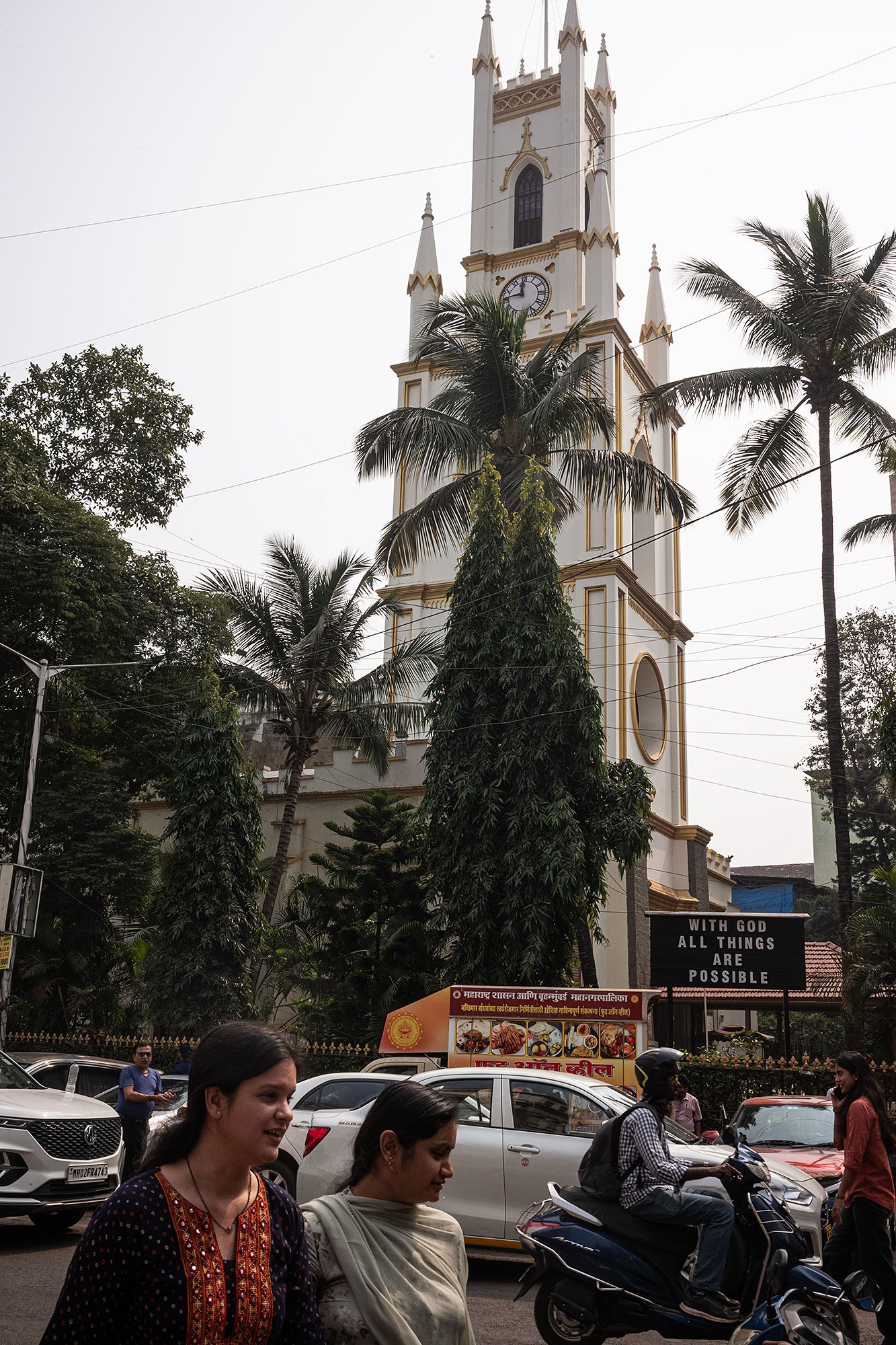
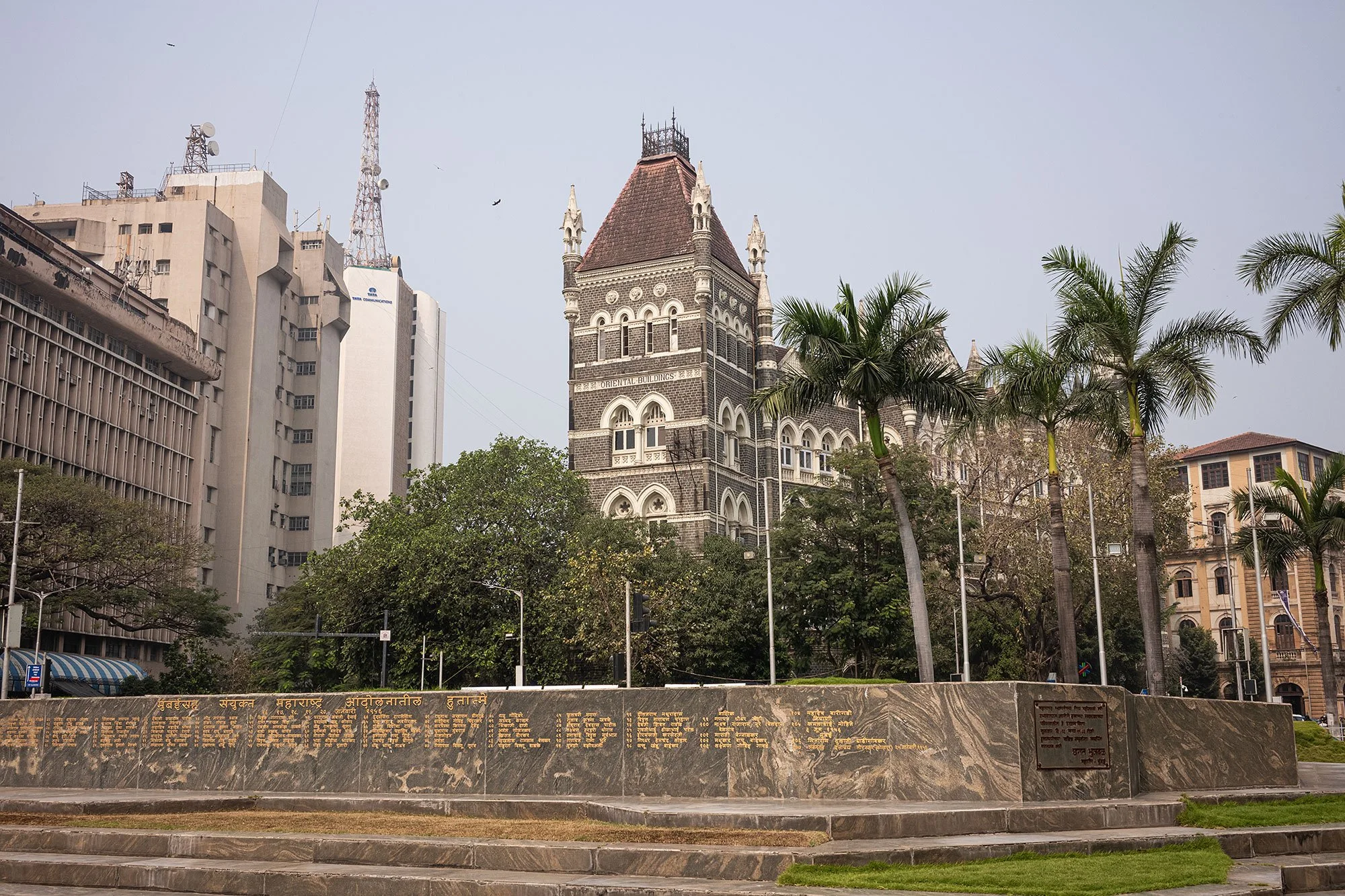
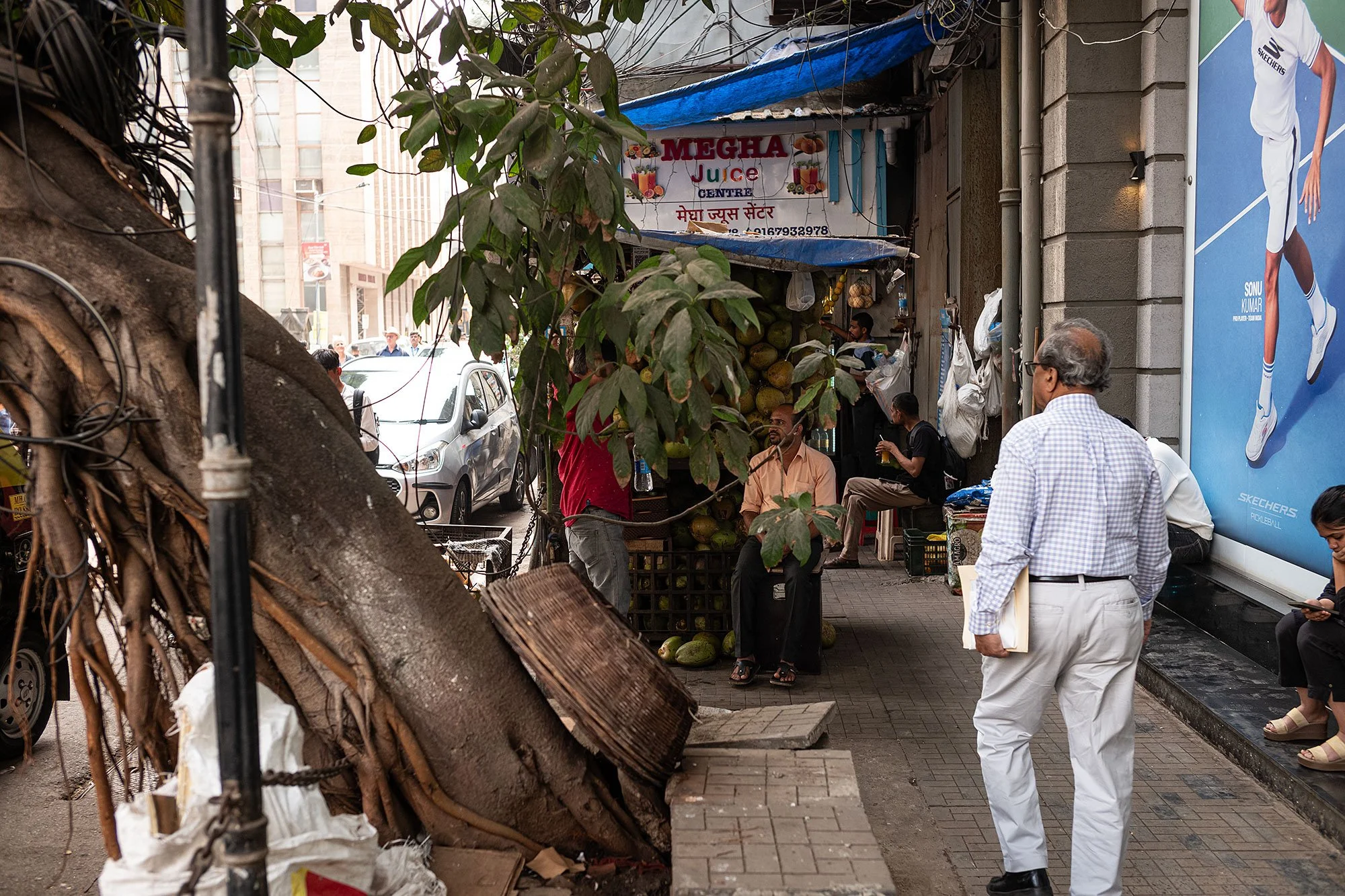
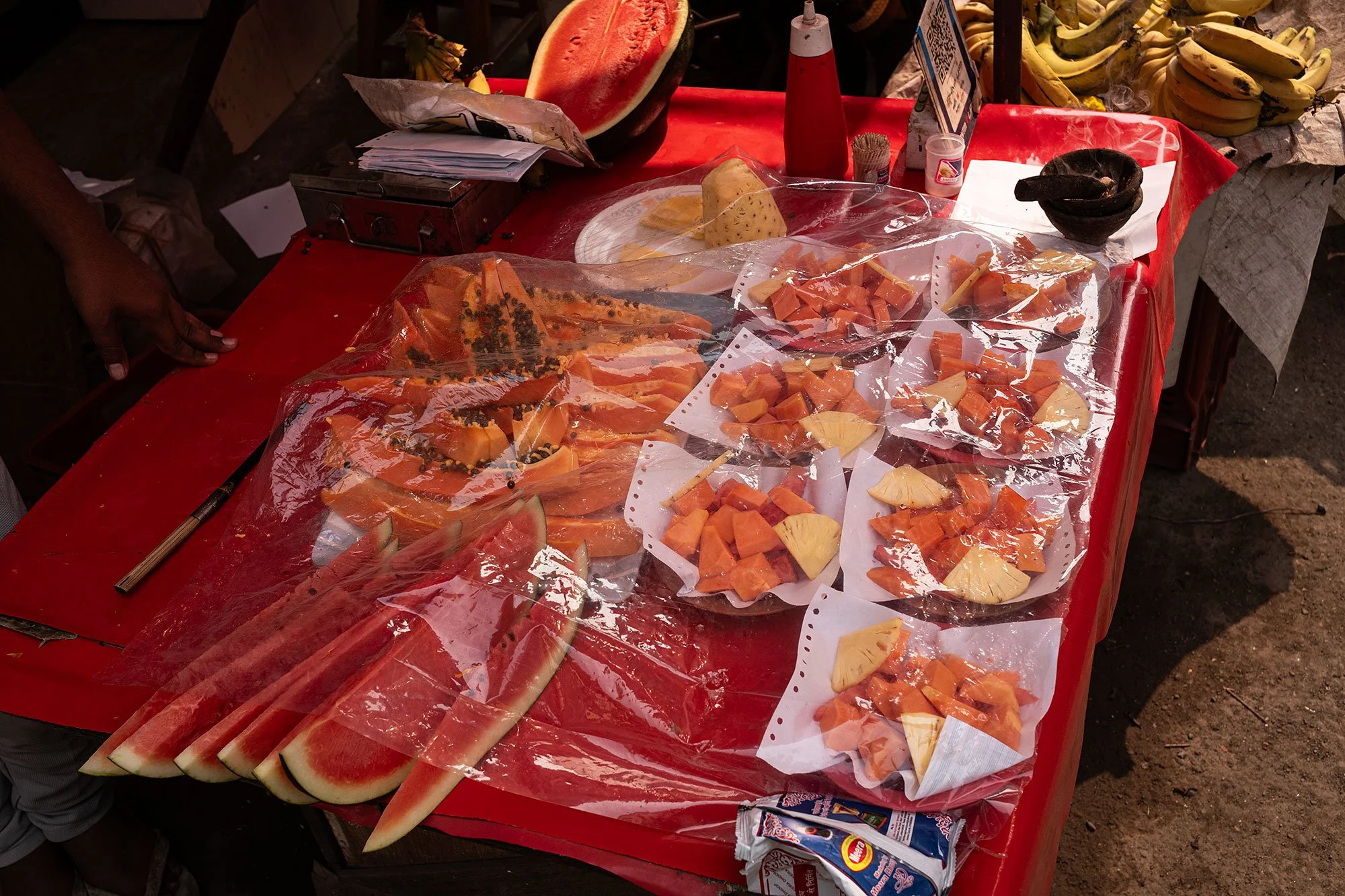
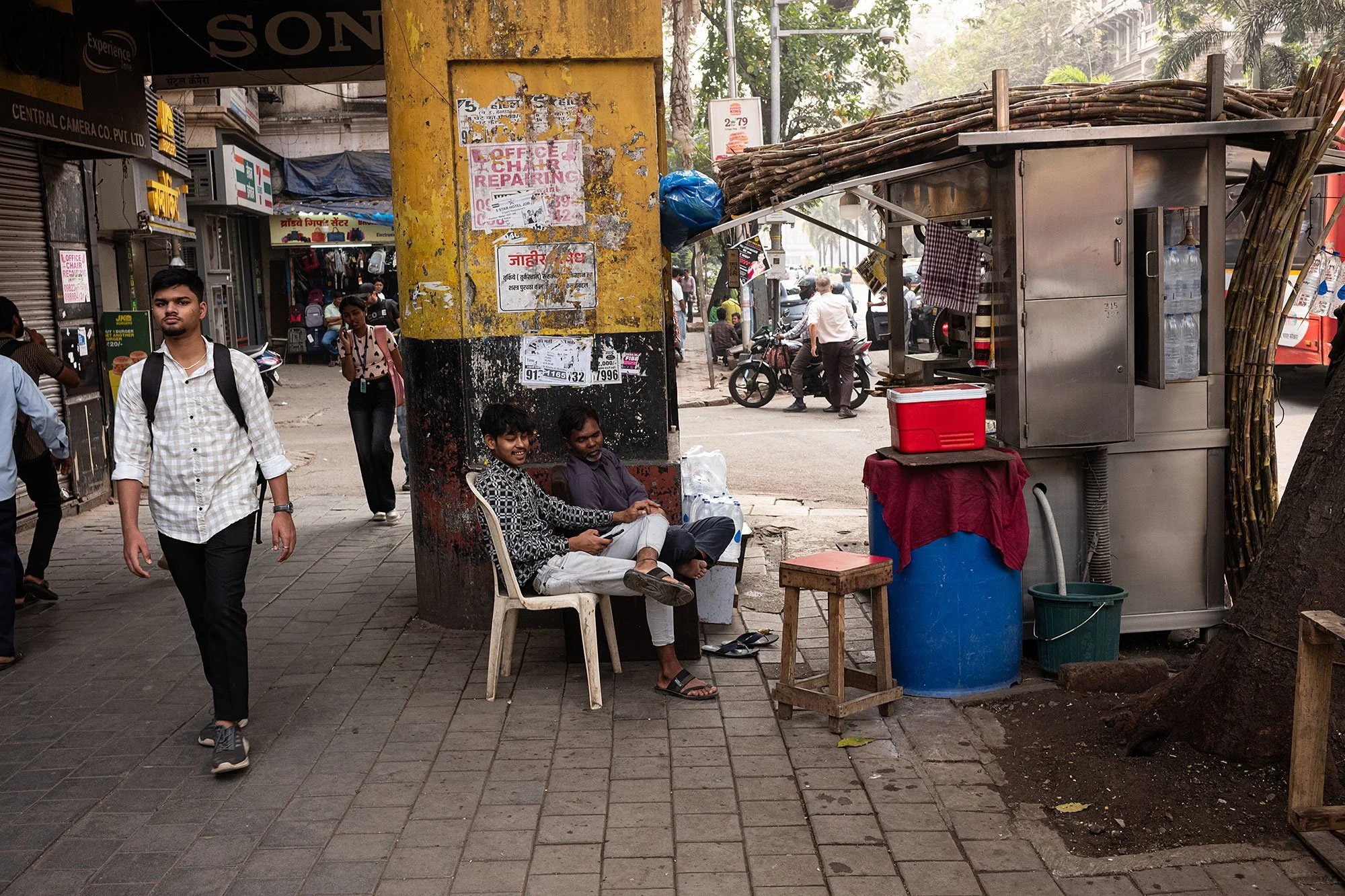
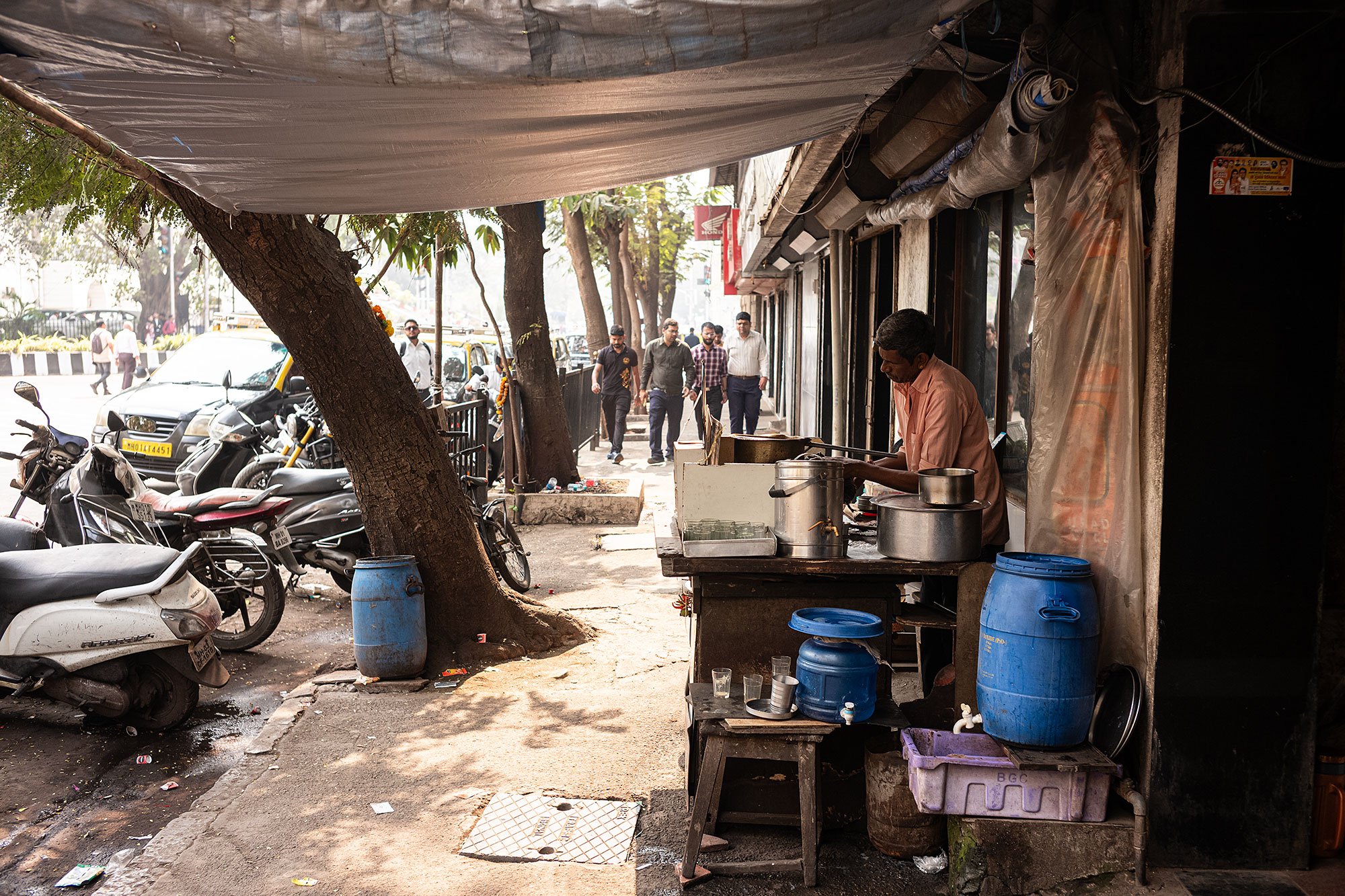
On my way to the Rajabi Clock Tower I spot a man on the side of the road selling fruit. It’s warm out and I’m parched. A man stands before him eating from a plate of mixed fruits: pineapple, papaya, and I point to one for myself. I take the plastic plate and find a place in the shade behind the fruit seller to enjoy my treat, handing him the plate when I’m done.

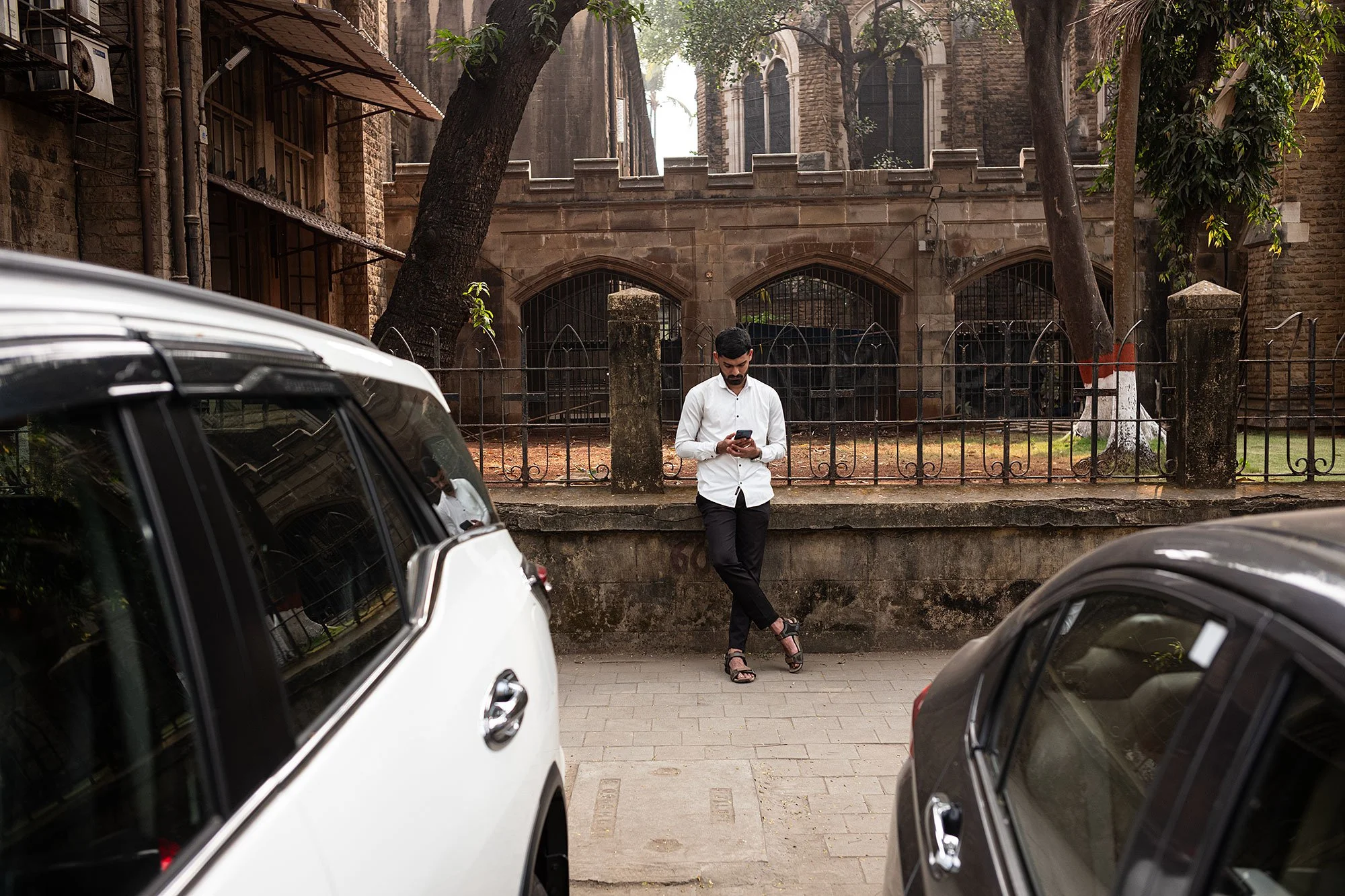
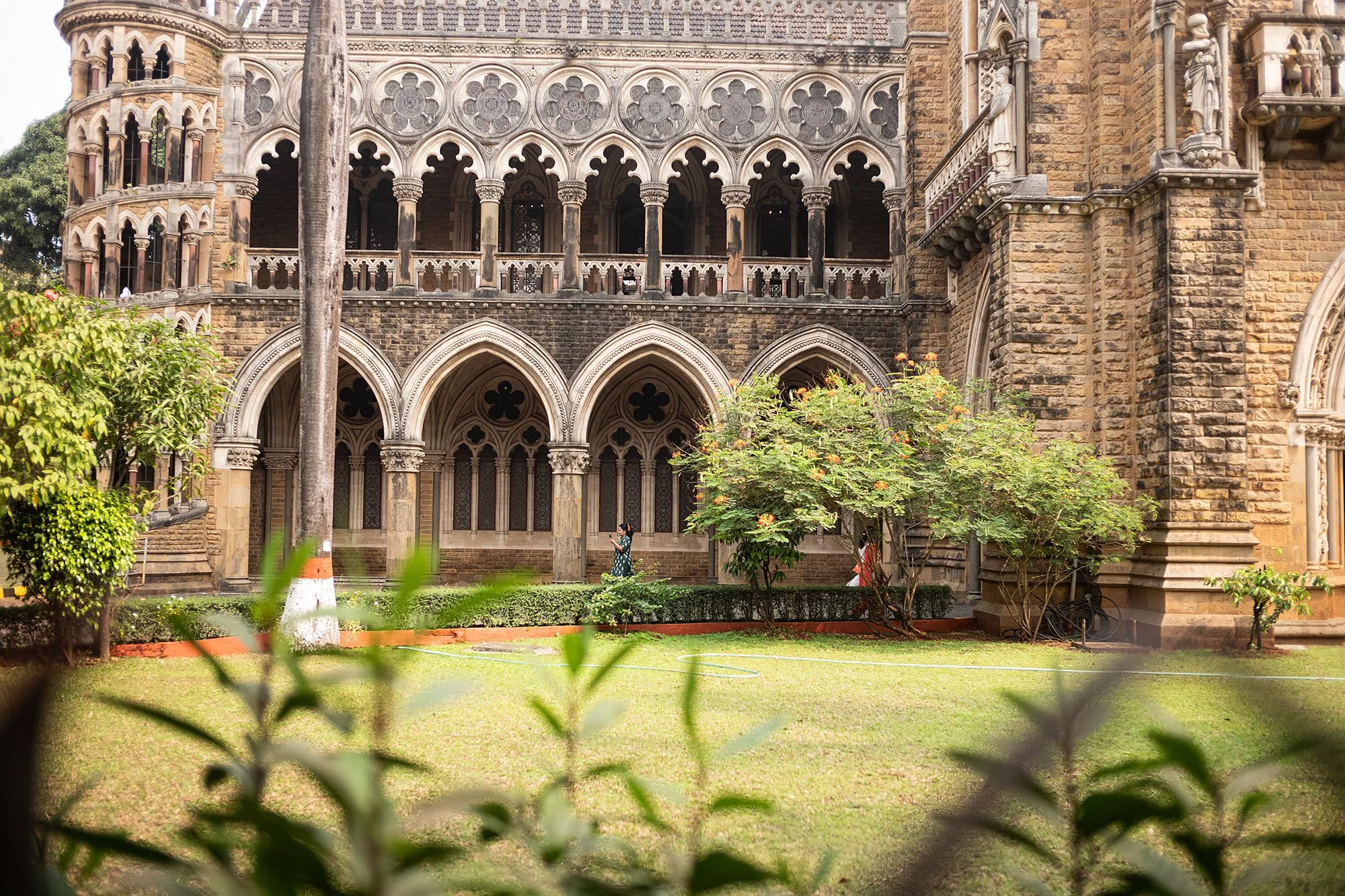

I walk to the gate of the Rajabai Clock tower intending to go in and check out the church. A guard stops me. It’s not open to the public. Never? No. I thank him and continue on my way.
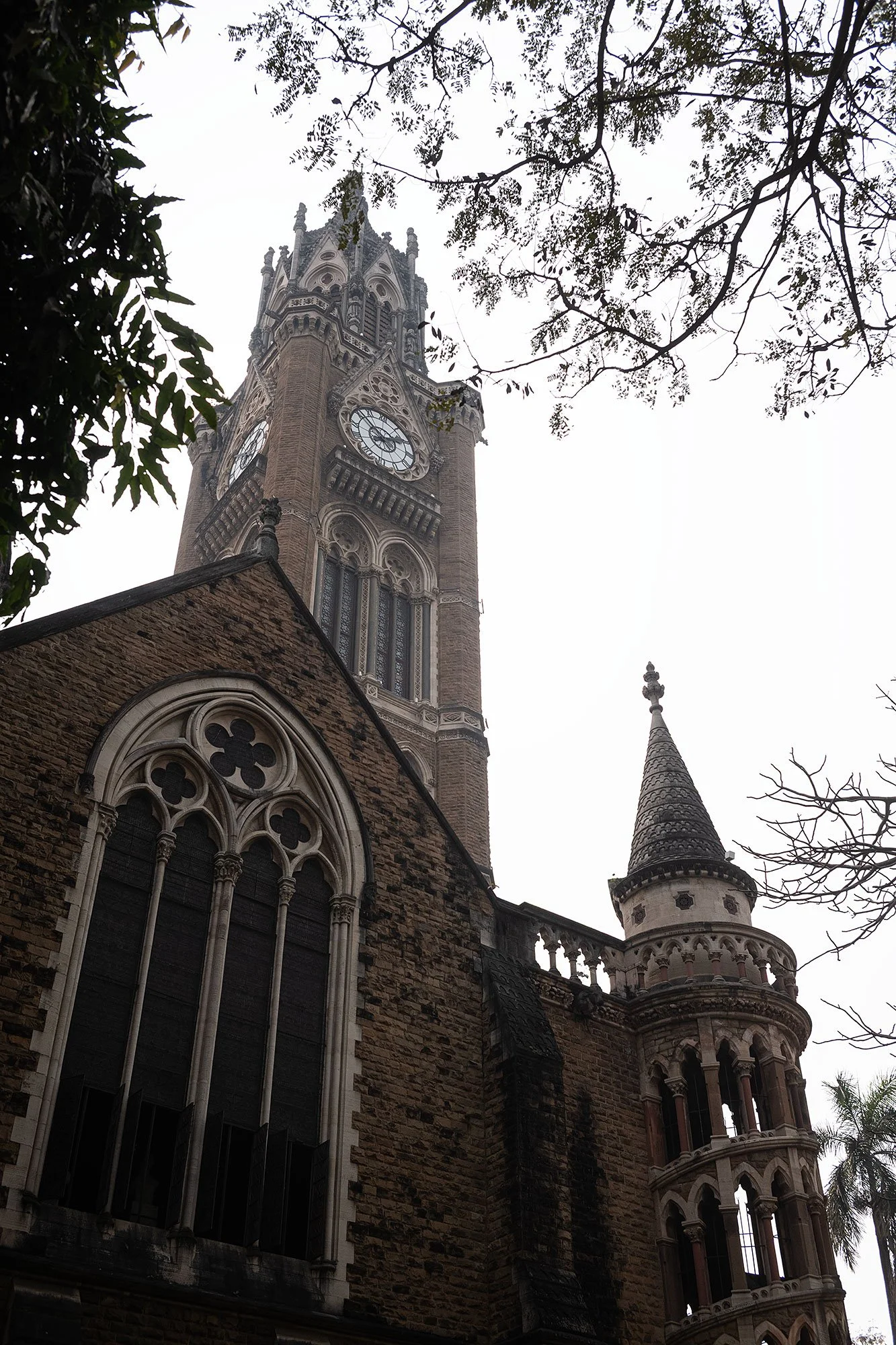
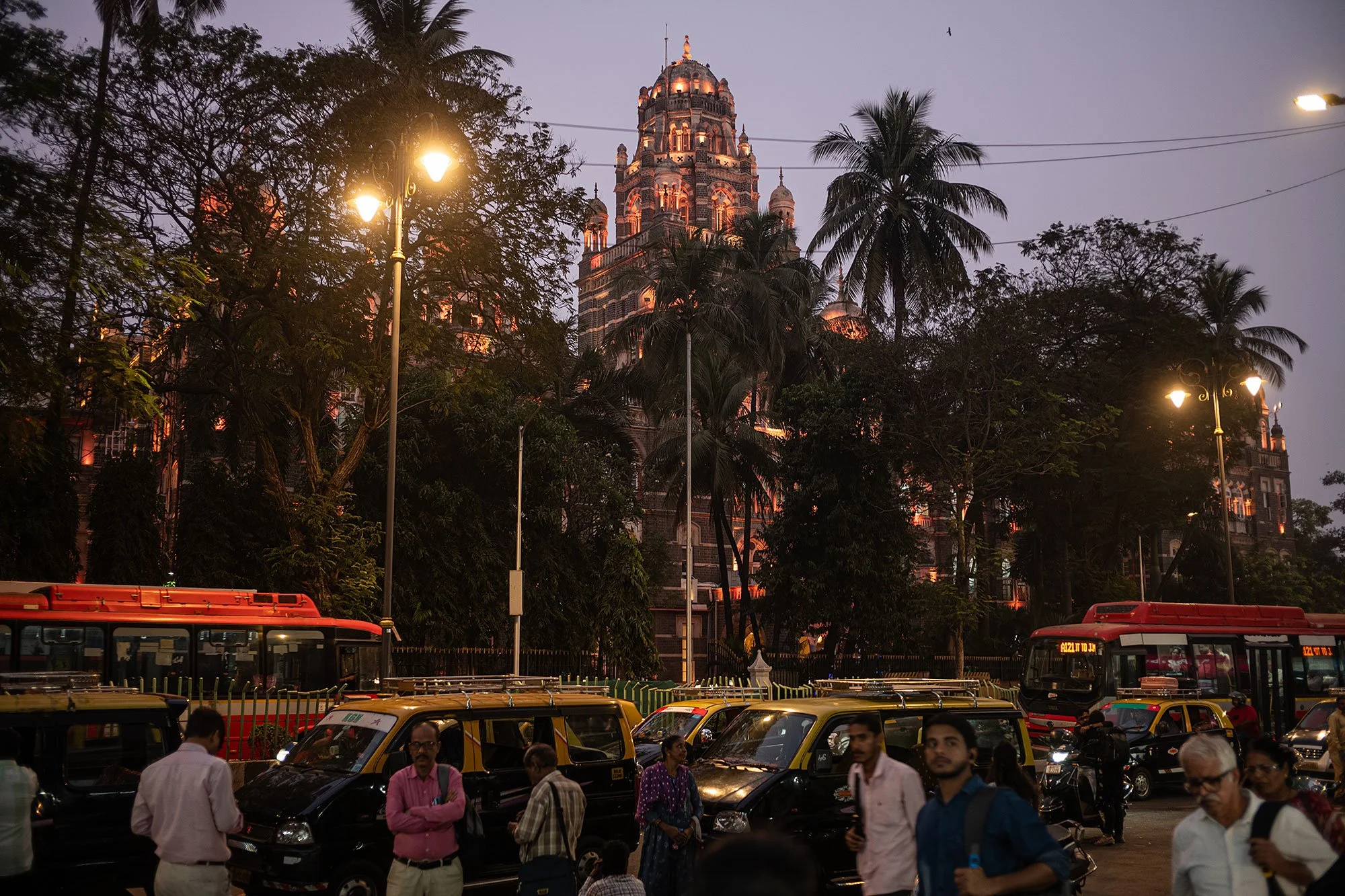
I walk past the Chhatrapati Shivaji Maharaj Vastu Sangrahalaya, a beautiful history museum set in a park alongside a traffic circle. I stand outside to take a picture, but I don’t feel like going in today. I don’t want to be indoors. I note it in my mind with a vague plan to visit tomorrow or the day after. In the end, I never do. Other activities and sights get in the way, and it’s something I’ll have to include on my next visit to Mumbai.
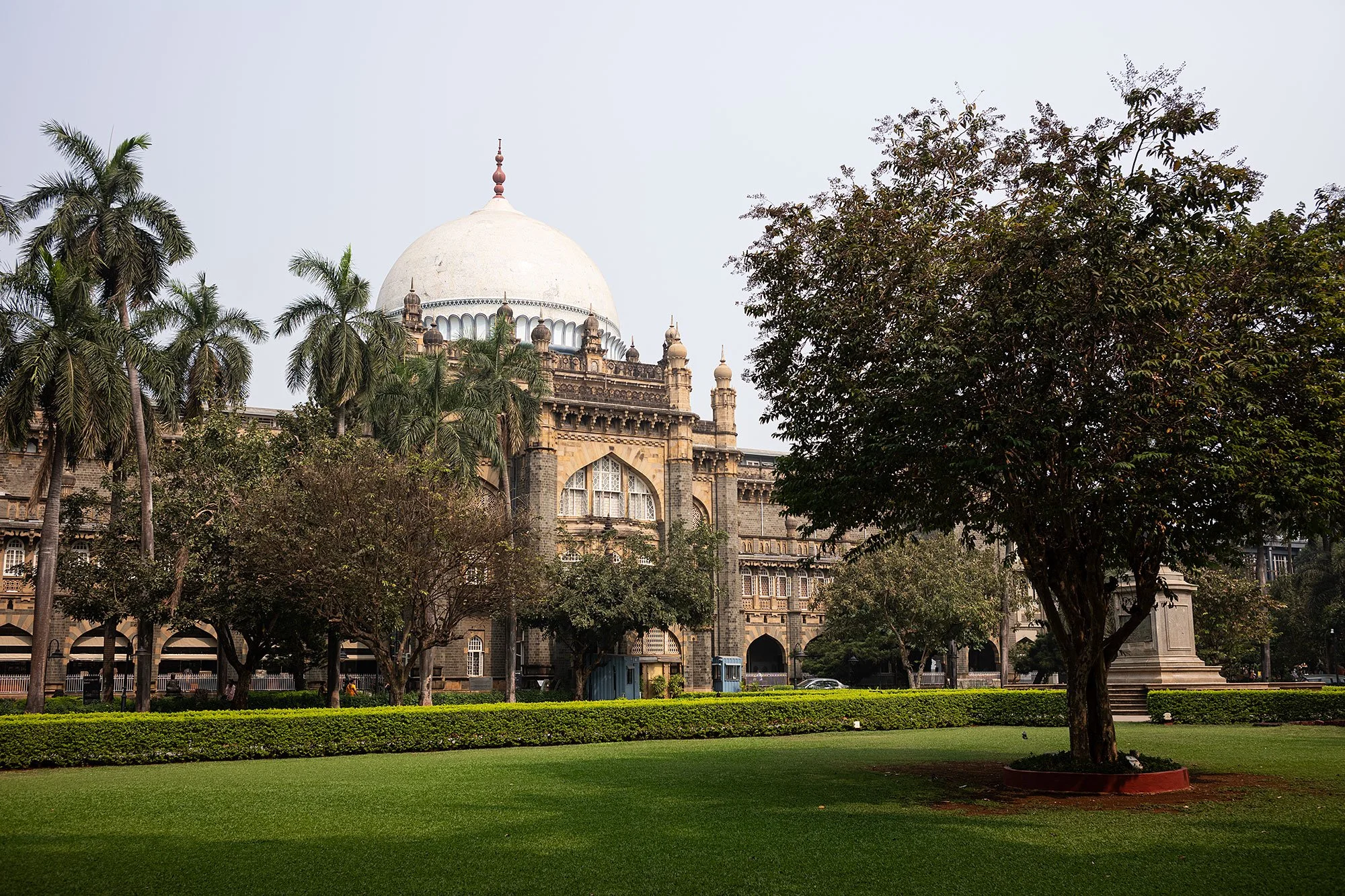
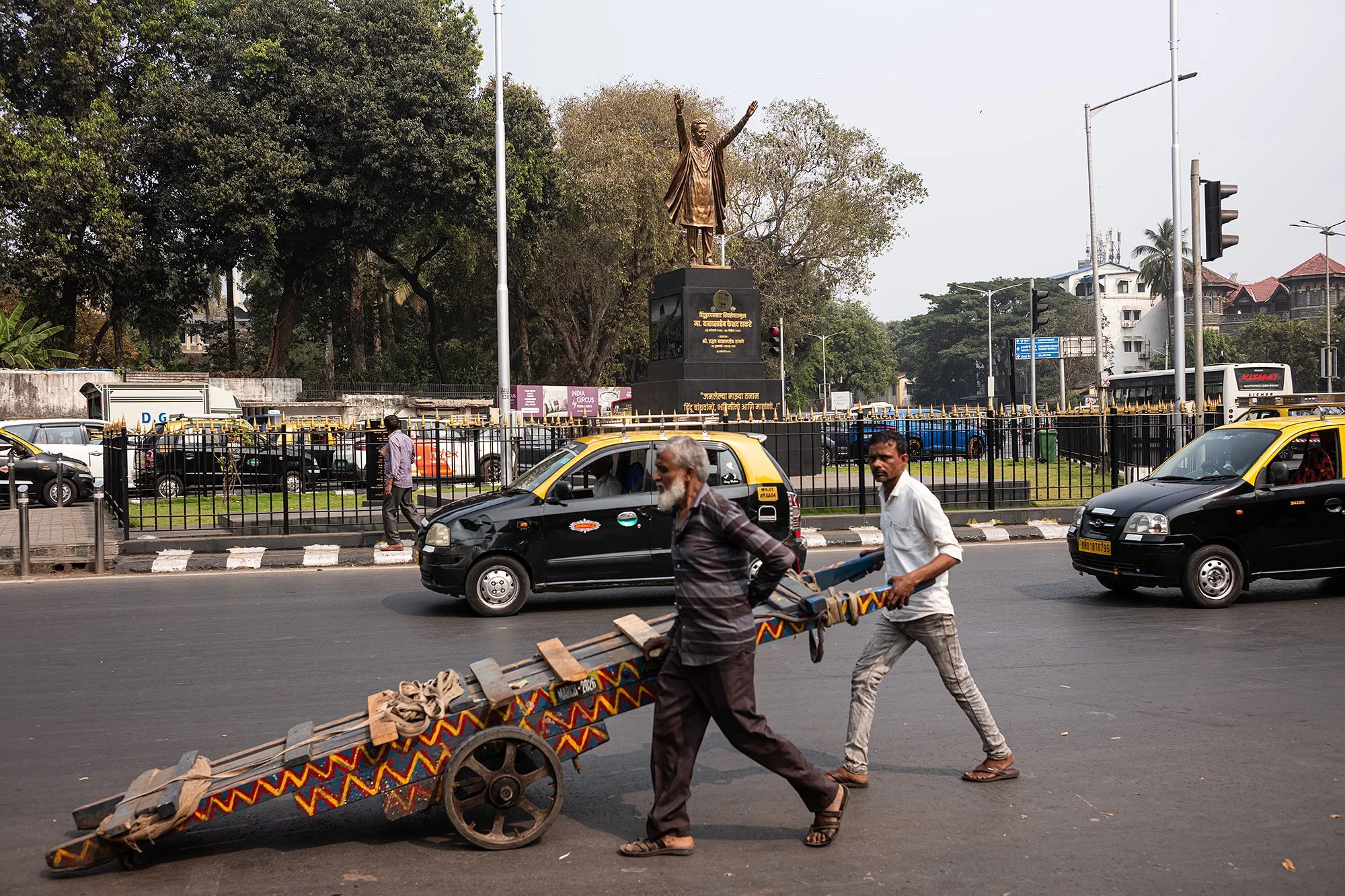
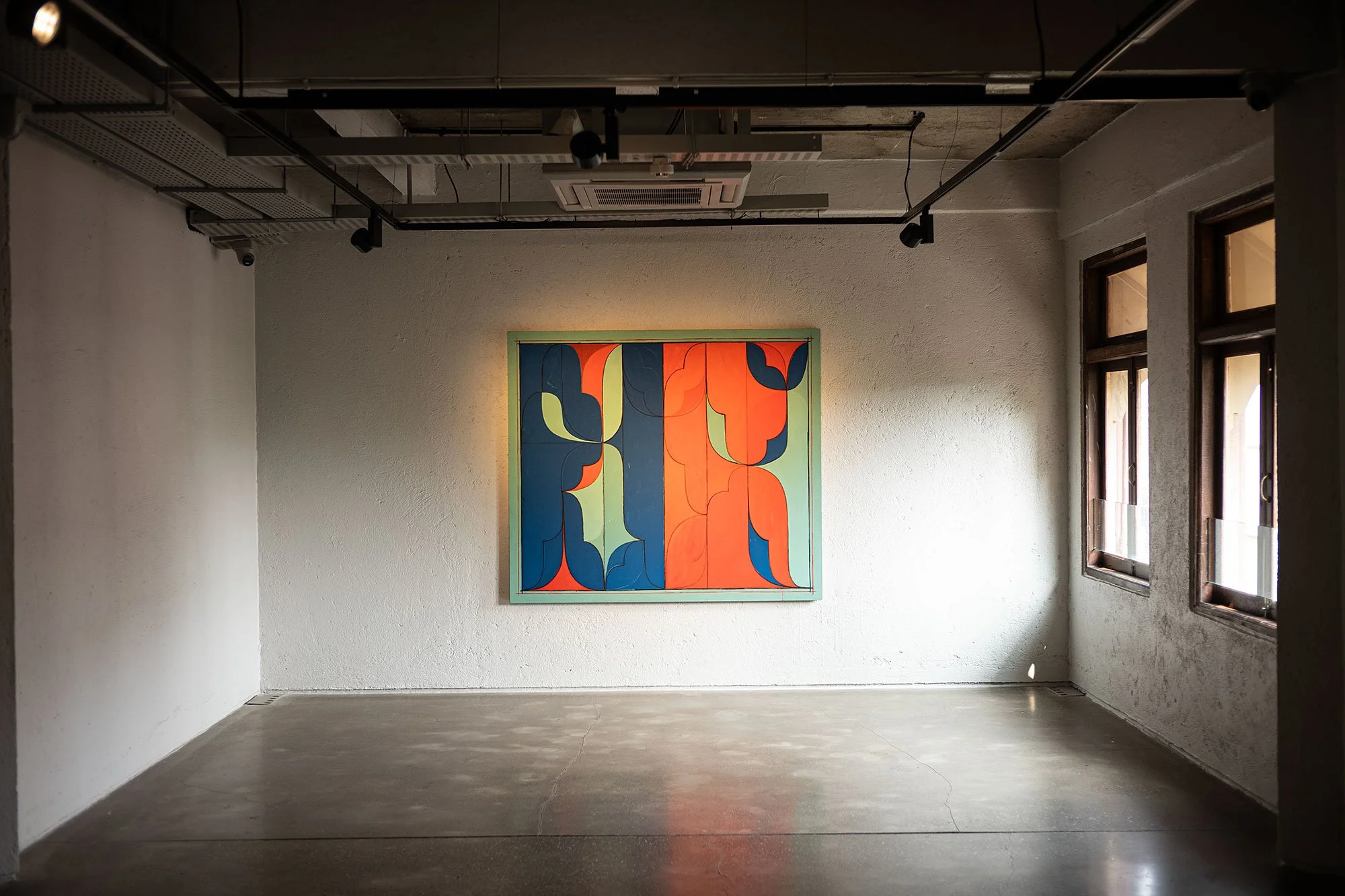
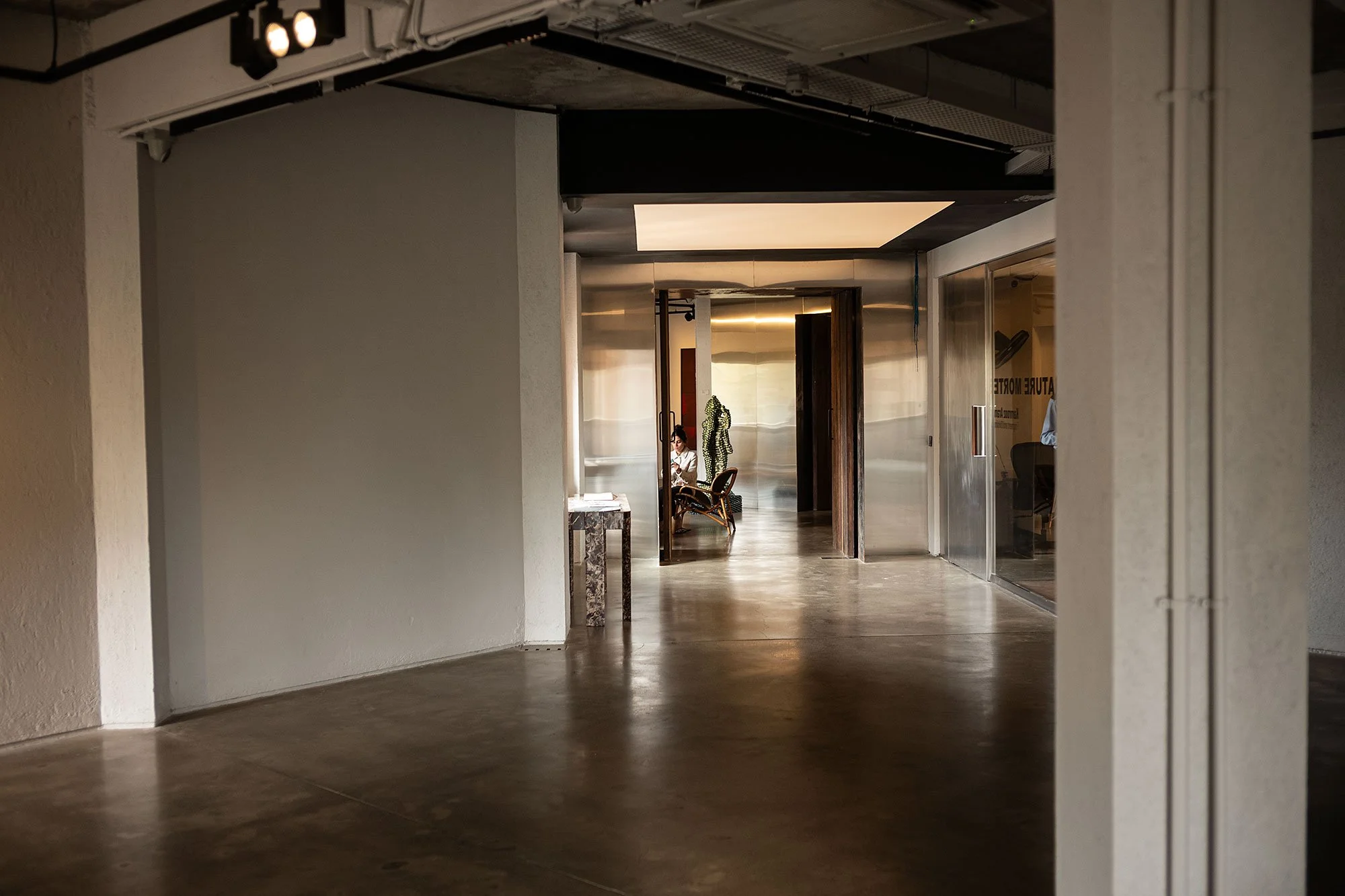
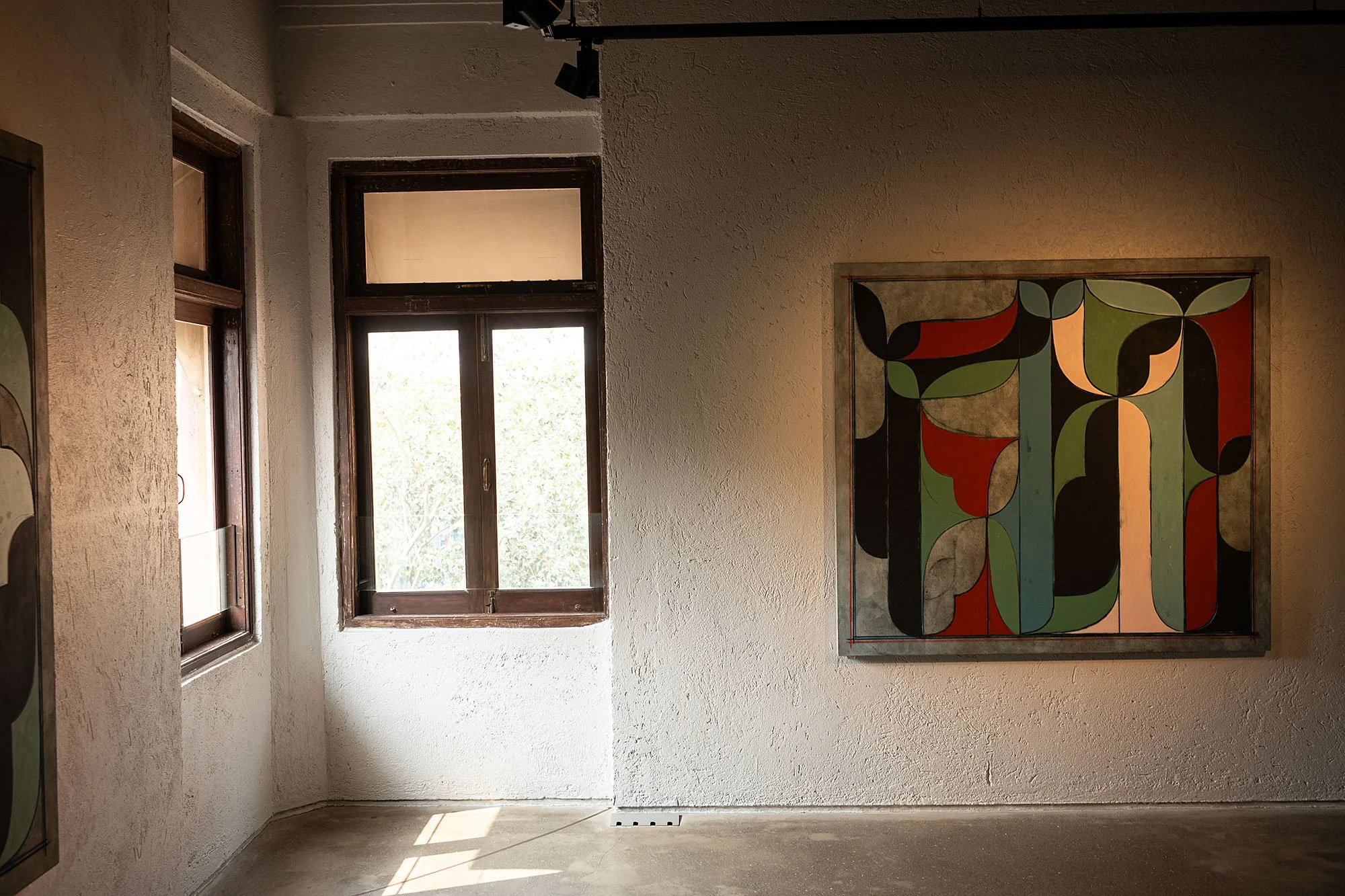
Checking the list of galleries Natasha sent I walk to Nature Morte. Checking the location against the map I see I am standing right outside of it but I can’t find it. I ask a man who looks like he knows the area and he motions to a small door hidden next to a restaurant. It’s on the third floor.
Zai introduces herself and offers to show me around the gallery. She asks me where I’m from and tells me that Kamrooz Aram, the featured artist, emigrated to the States and now lives and works out of Brooklyn. As an Arab of Persian descent living abroad, he feels Arab and not, hence the double meaning of the Arabesques he paints, which refer to the motifs and himself. Also, in painting the arabesques, he tries to elevate them beyond craft.
Zai asks me when I arrived in Mumbai. Just this morning. She asks if I like food. I do. She asks if I have internet and types the name of a restaurant into Google Maps, Aram Vada Pav. She tells me it’s local food from Maharashtra. I ask her where that is. She kindly tells me it’s the state in which Mumbai resides. Duh.
Leaving Nature Morte I walk past the Gateway of India and decide to stop in to have a look. There’s a wide plaza in front that you have to pass through security to enter. There’s a line, but it moves quickly, more so when people realize they don’t have to wait if they don’t have a bag in their possession.
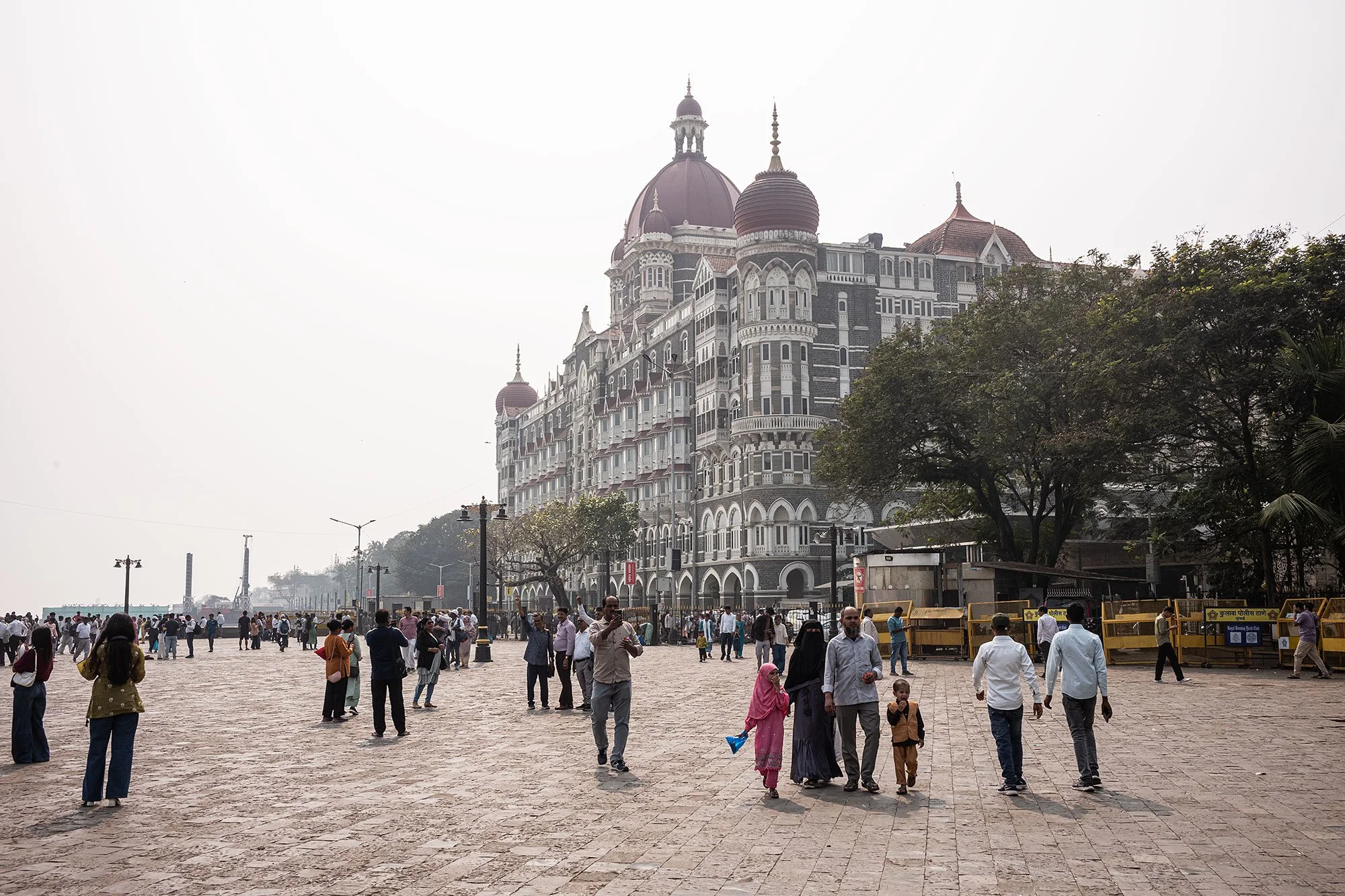
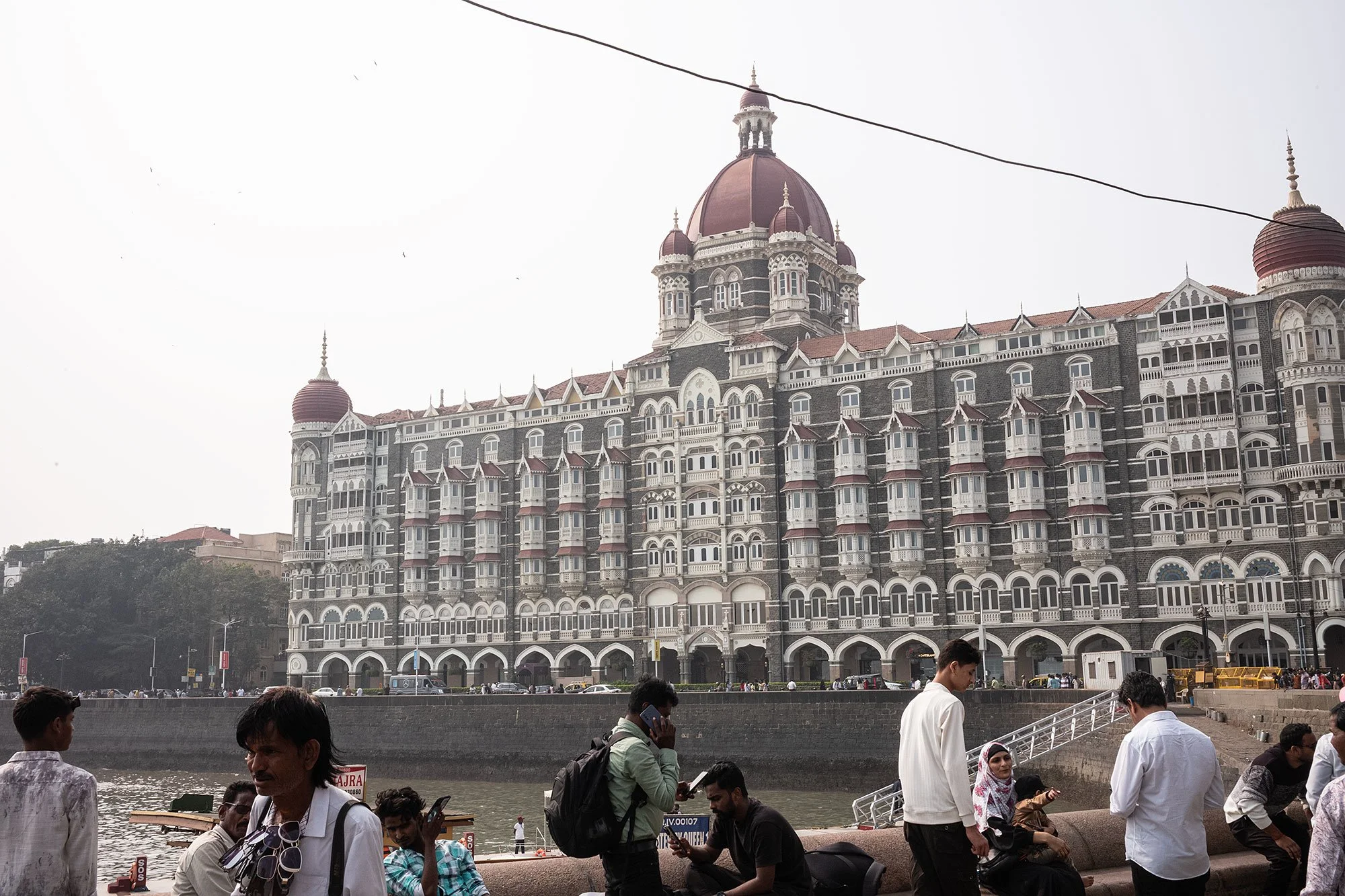
To the right of the plaza sits the Taj Mahal Palace Hotel. Opened in 1903, it’s considered one of the finest hotels in the East since the time of the British Raj; sadly it was also one of the main targets of the 2008 Mumbai terrorist attacks.
I walk across the plaza to the arched monument, built to commemorte the landing of King George V for his coronation as the Emperor of India in 1911, the first British monarch to visit the country. It’s since become a major tourist attraction in the city.
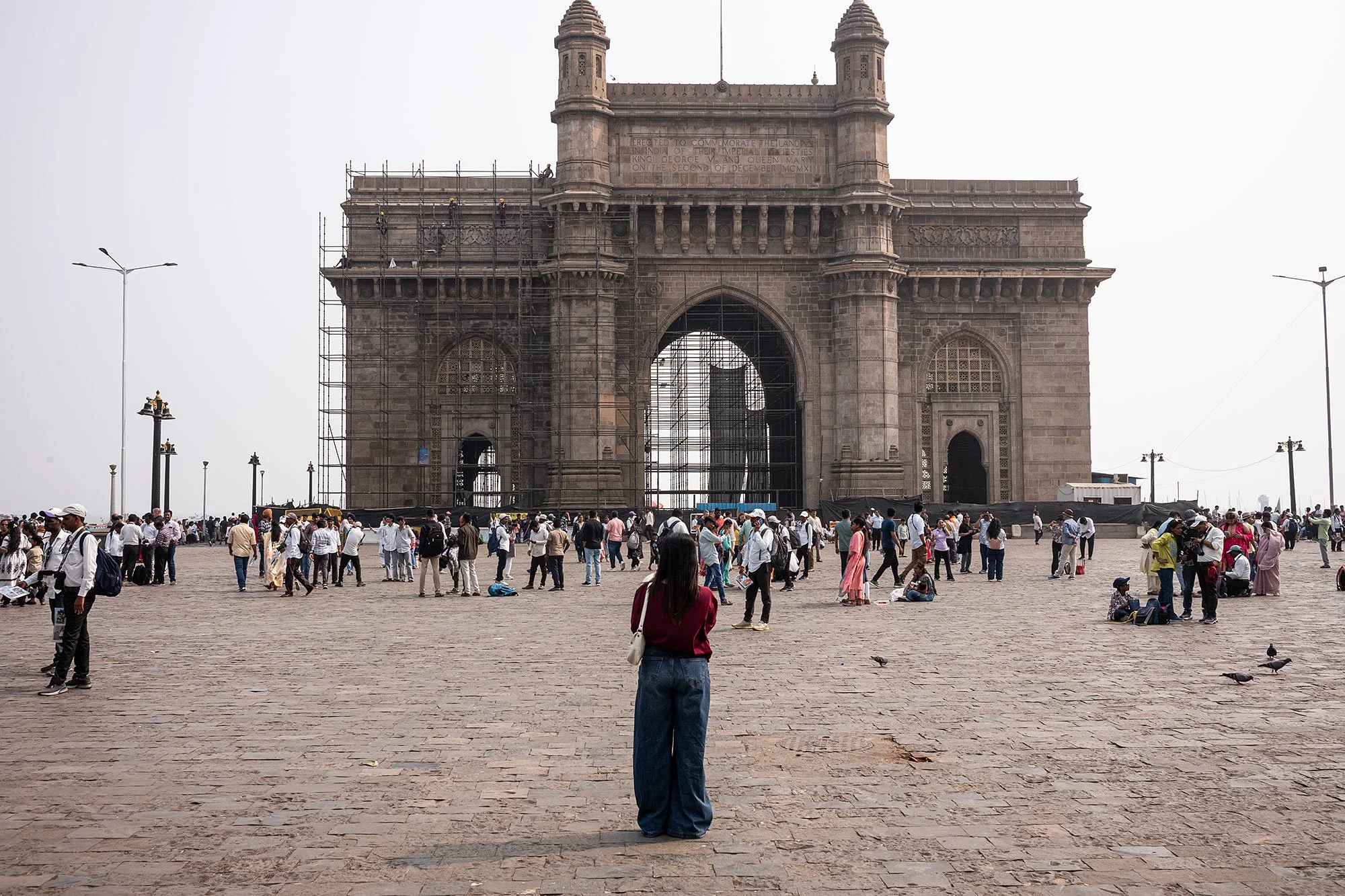
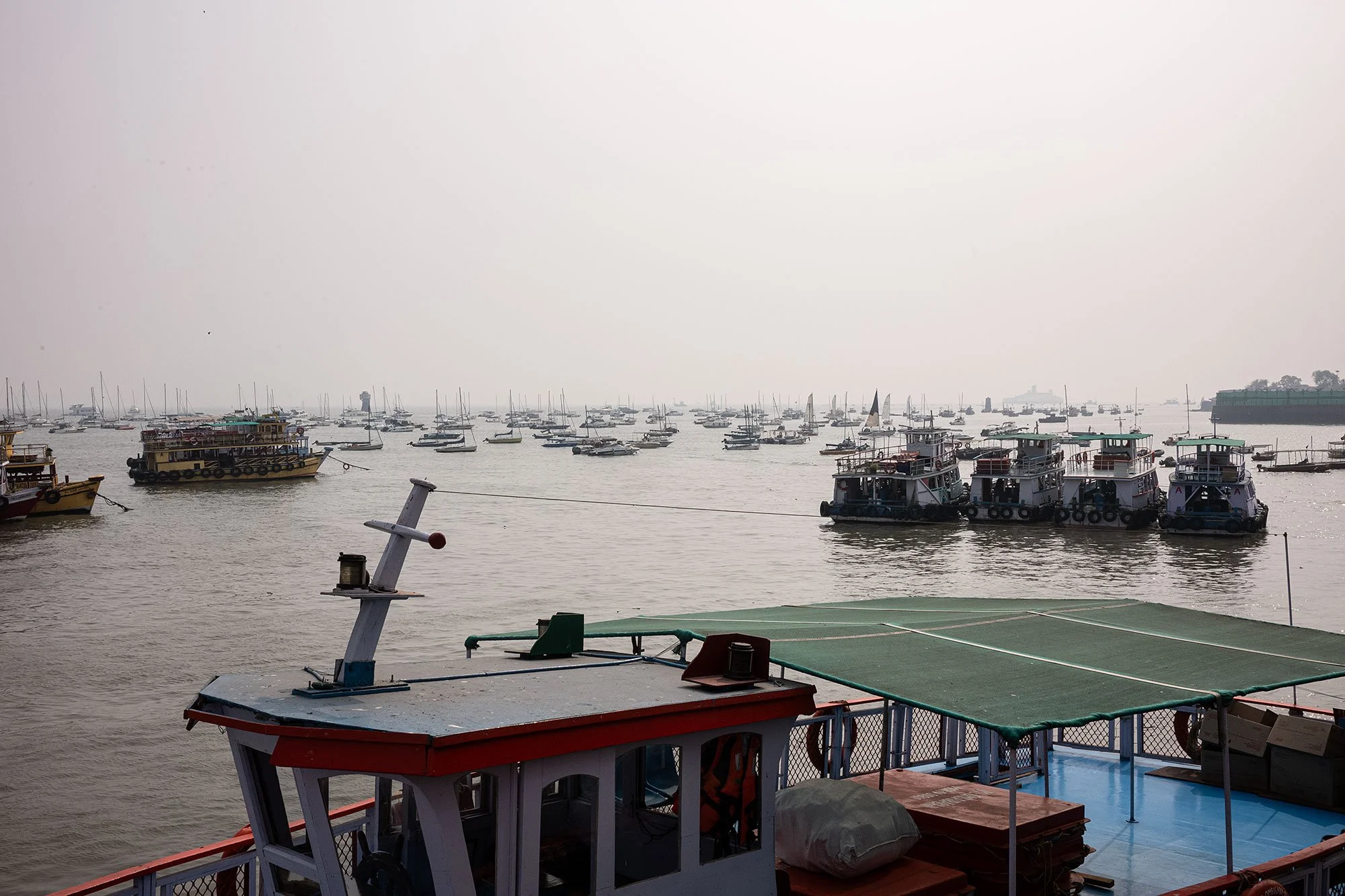
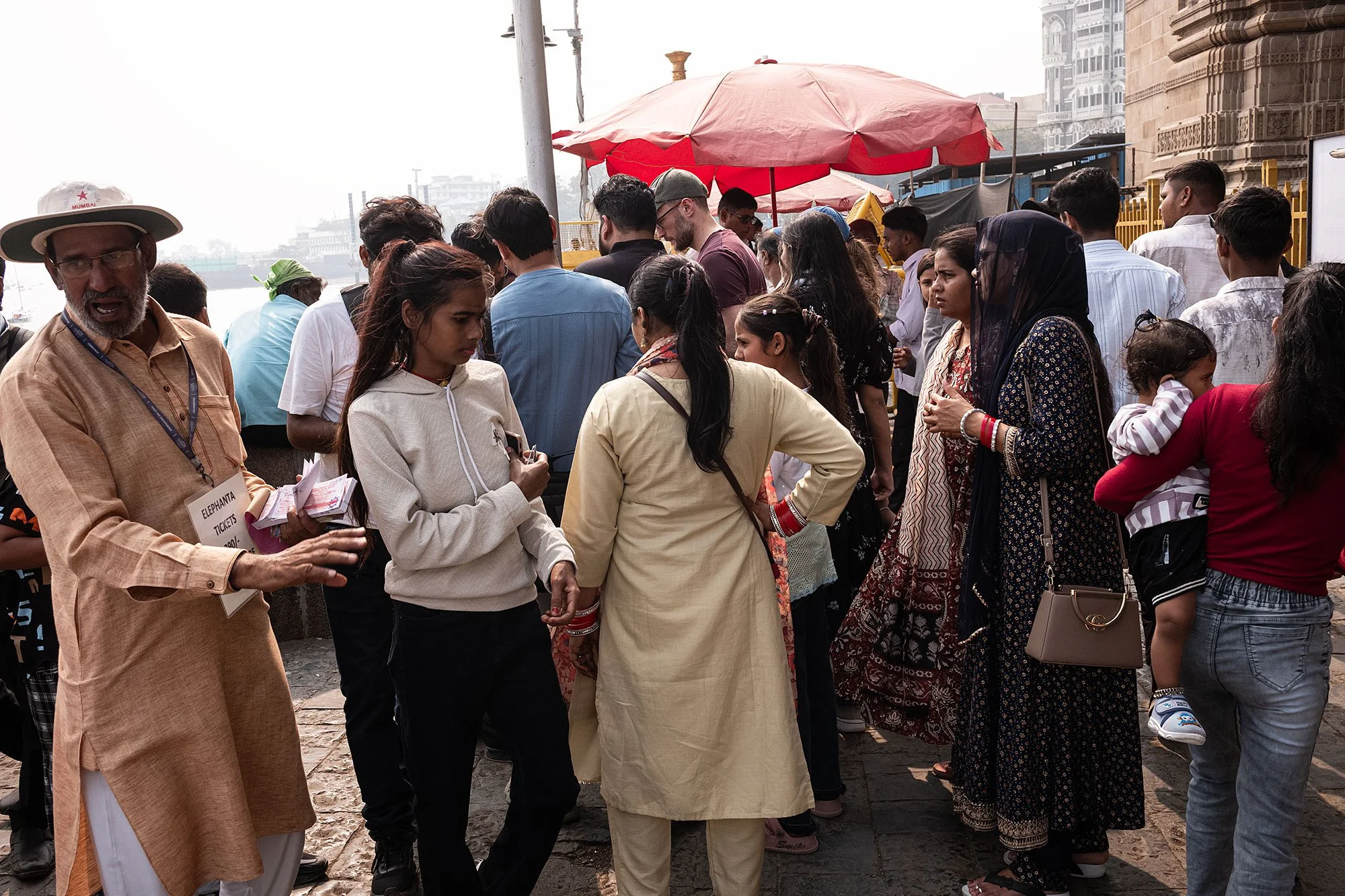
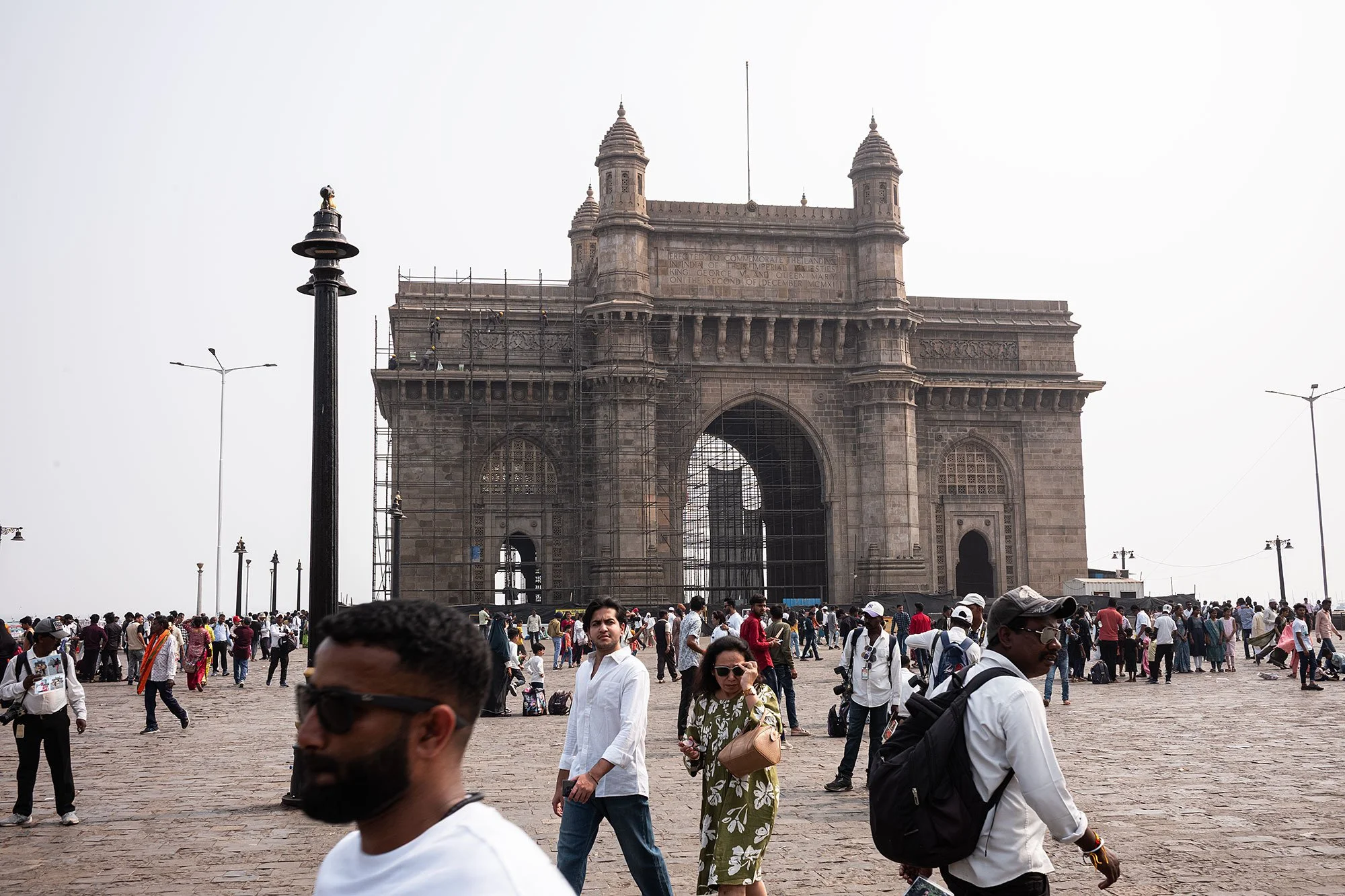
On the other side of the arch, by the water, a number of jetties support both commercial and tourist boats, the latter headed towards Elephanta Island, famous for rock-cut caves and temples devoted to Shiva. I don’t really have a firm grasp of this at the time and feel like continuing my gallery crawl and so eschew the offers for a ride and circumambulate the monument until I’m back in the plaza facing it before taking my leave.
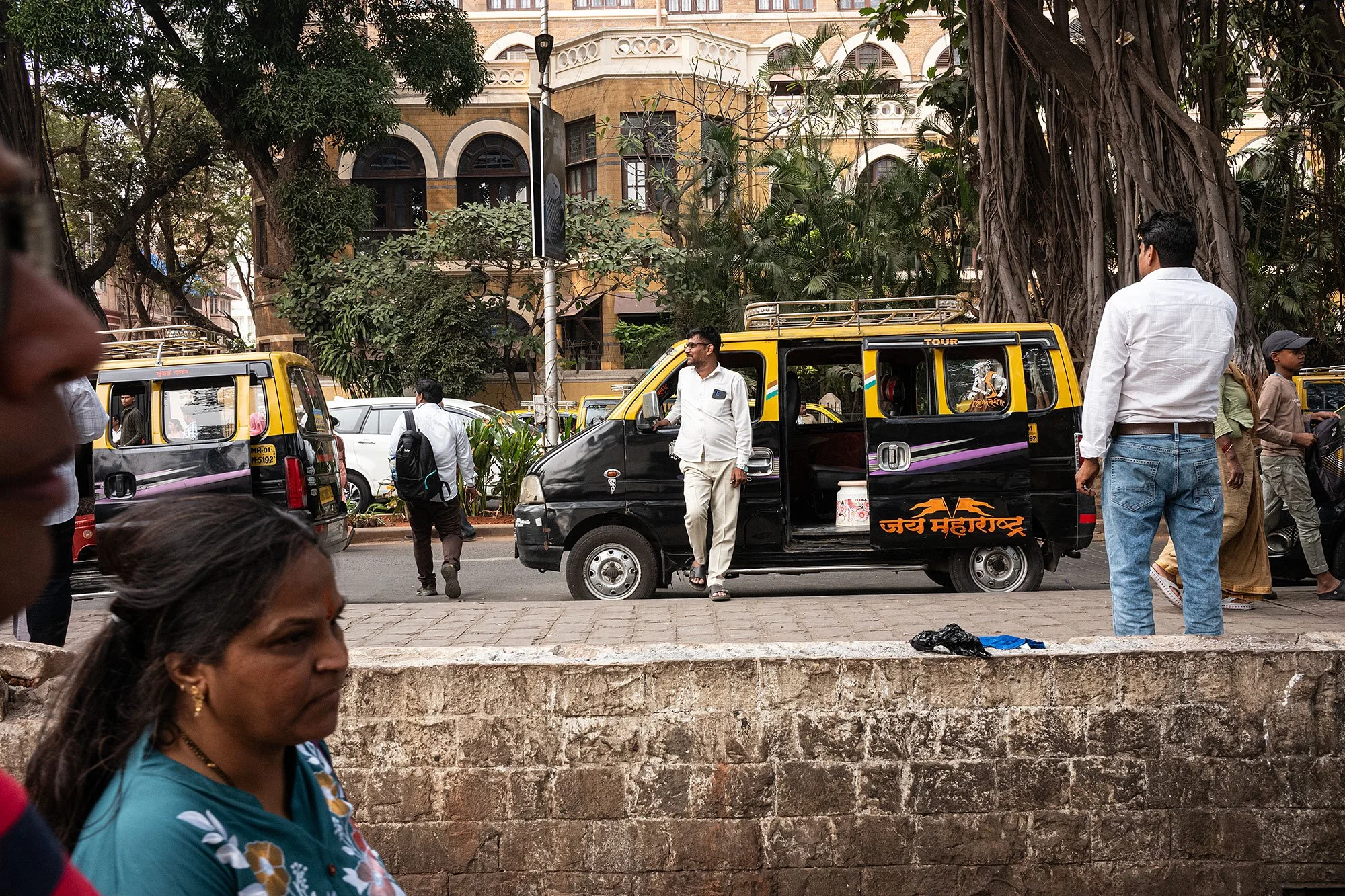
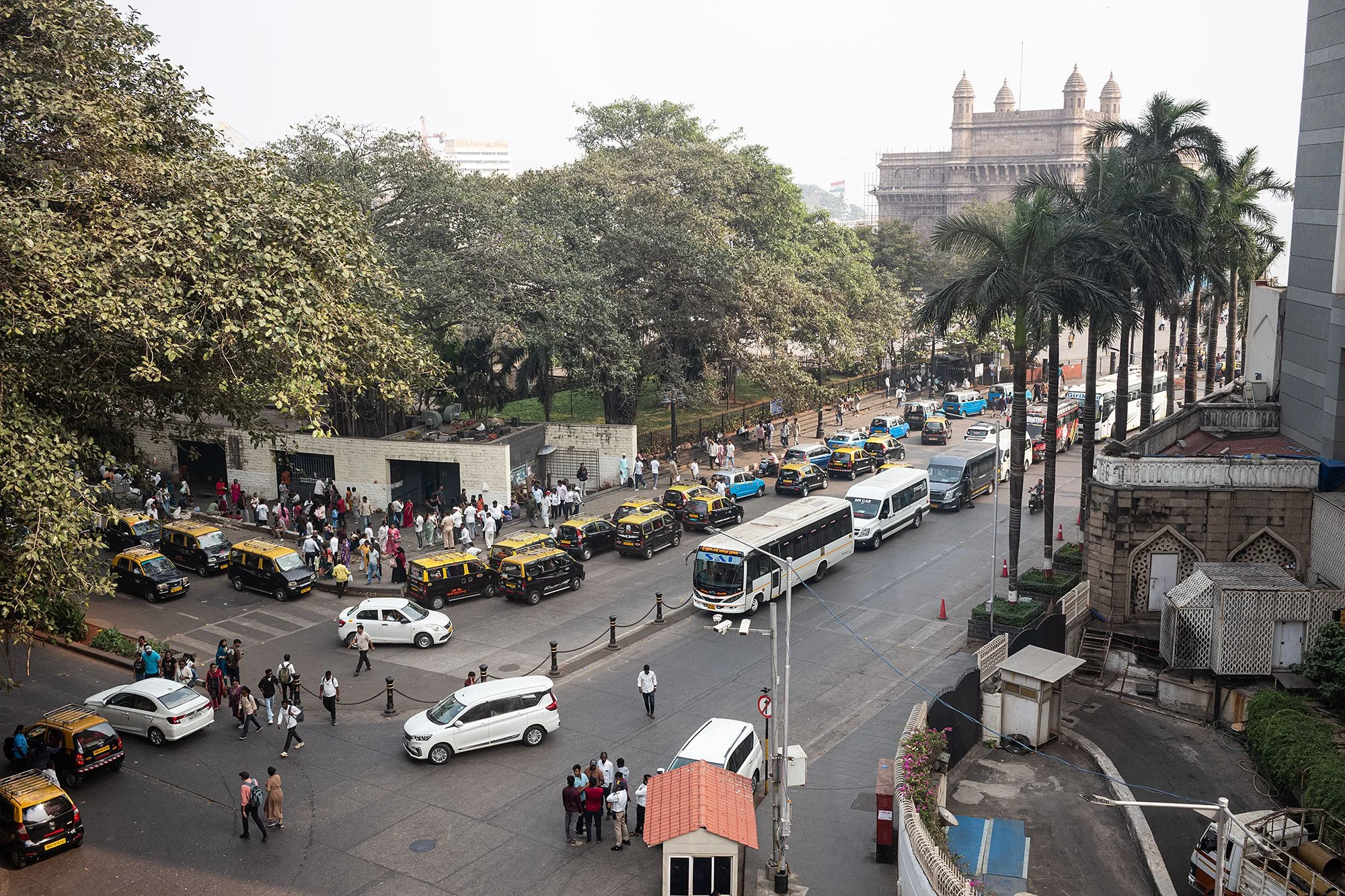
I walk to the nearby Jhaveli Contemporary. People lingering outside immediately ask me if that’s what I’m looking for and direct me to the upper floors occupied by the gallery. From its windows there are views down the avenue towards the Gateway to India and I pause for a bit to watch the traffic below.
The gallery itself showcases Double Counsciousness, a solo show of Lubna Chowdhary’s work, created to provoke a feeling of doubleness in the viewer.
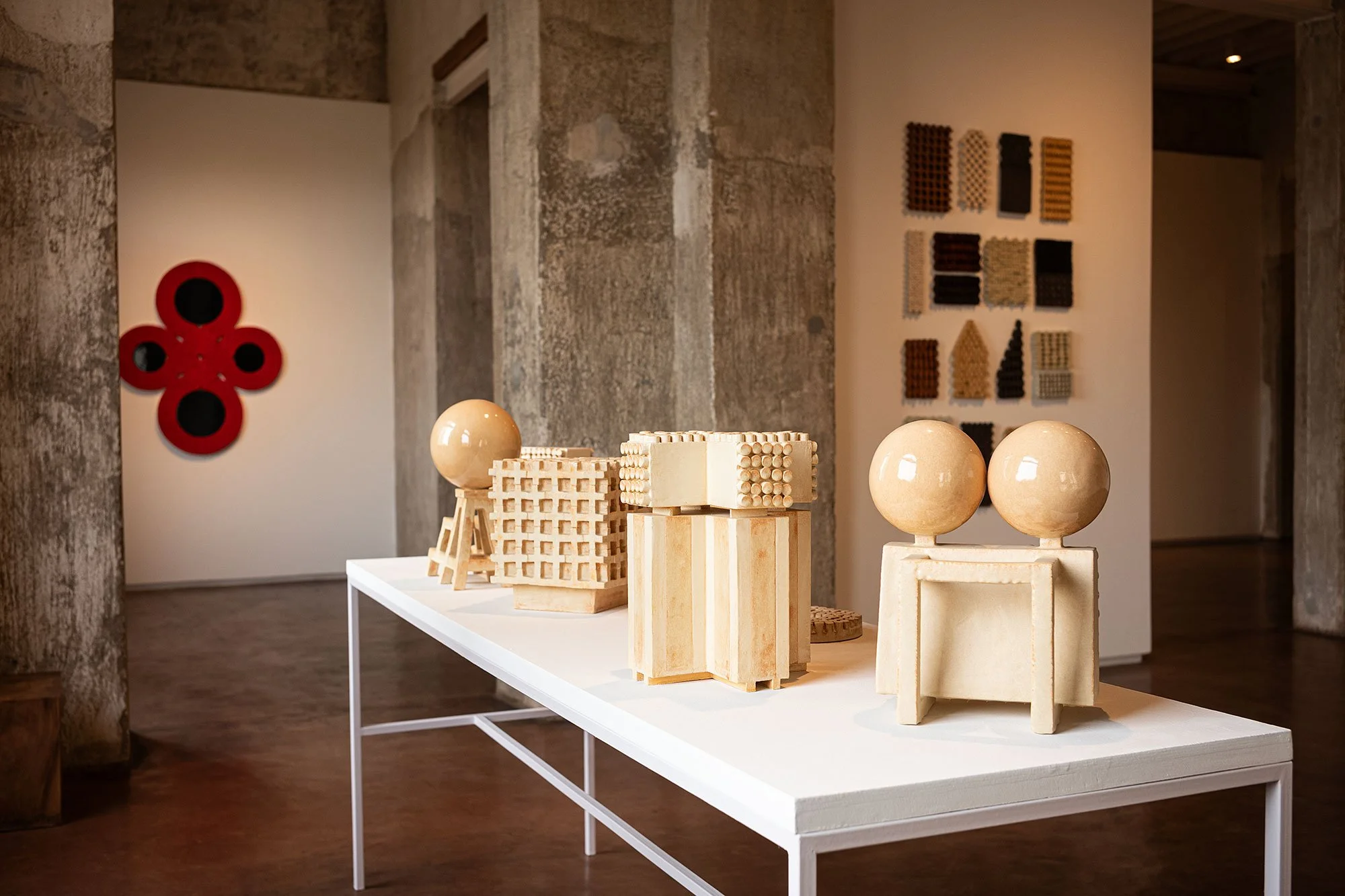
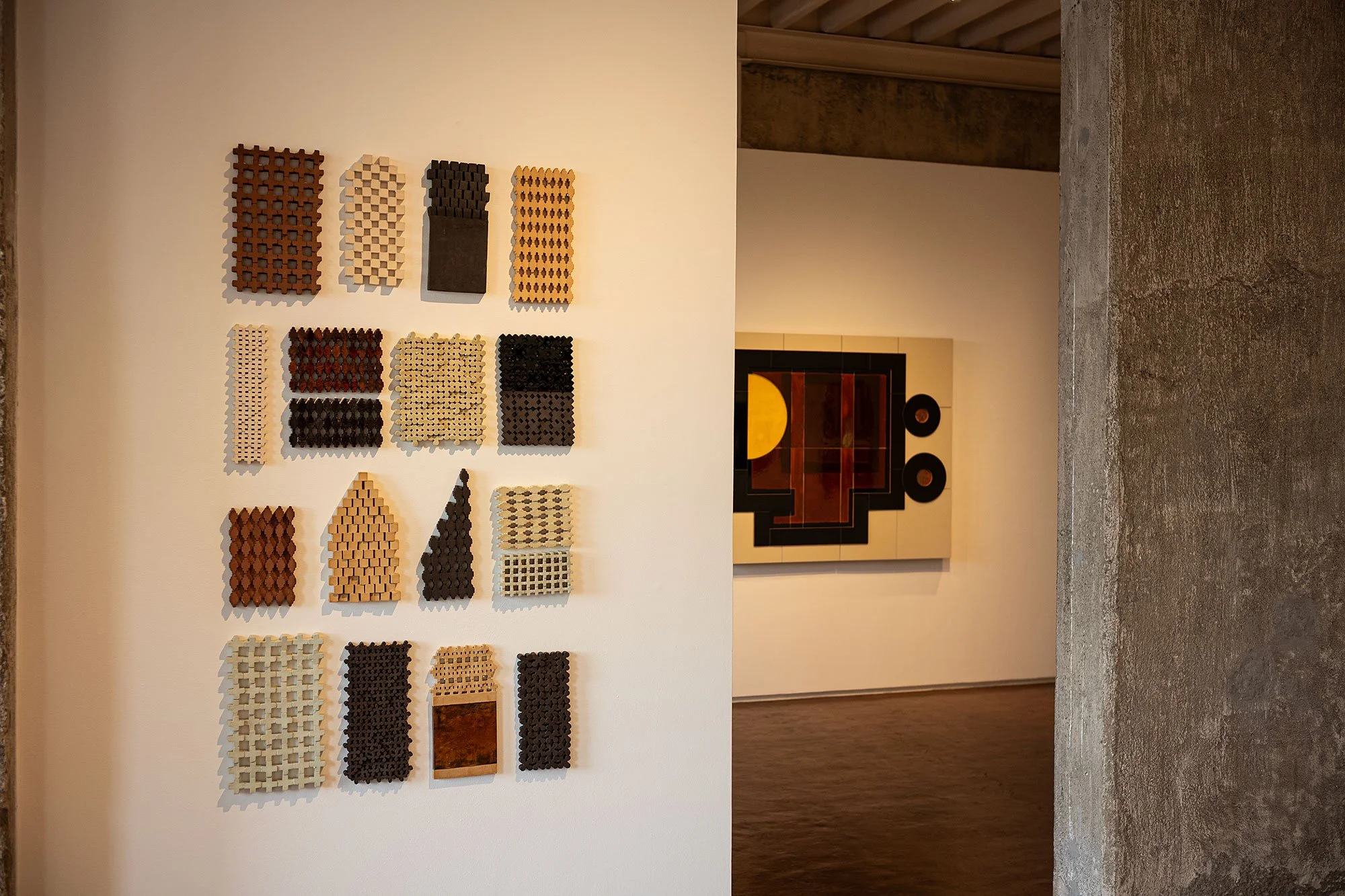
For most of the visits I’m the only person in the gallery, but now a couple appear and another, arriving just as I’m about to take my leave.
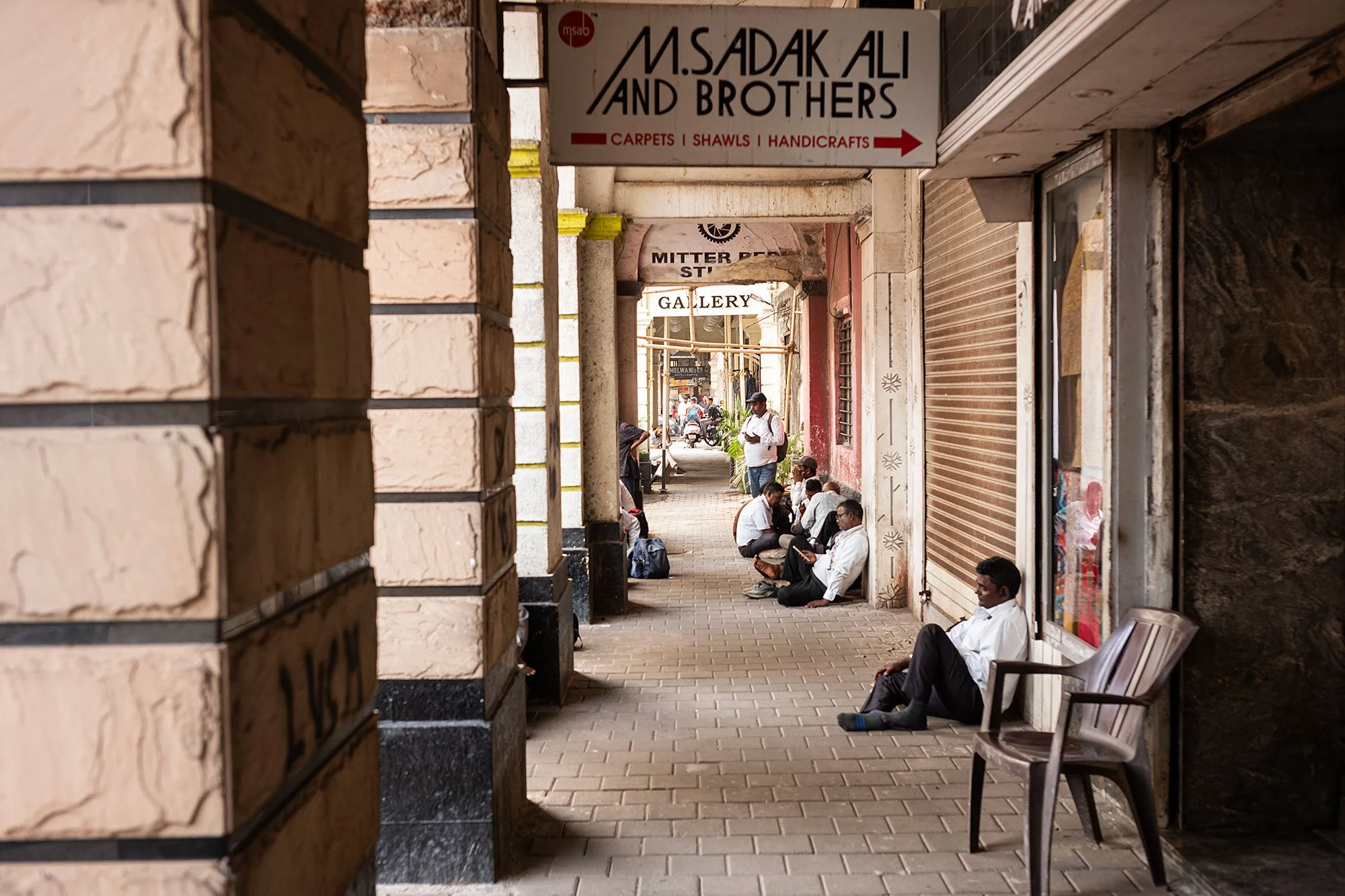
Down the street I pop into Experimenter, another gallery I have some difficulty finding. I walk into a leather shop and they direct me to the corner of the building, where I walk through a small courtyard to a doorway with stairs leading up to the space.
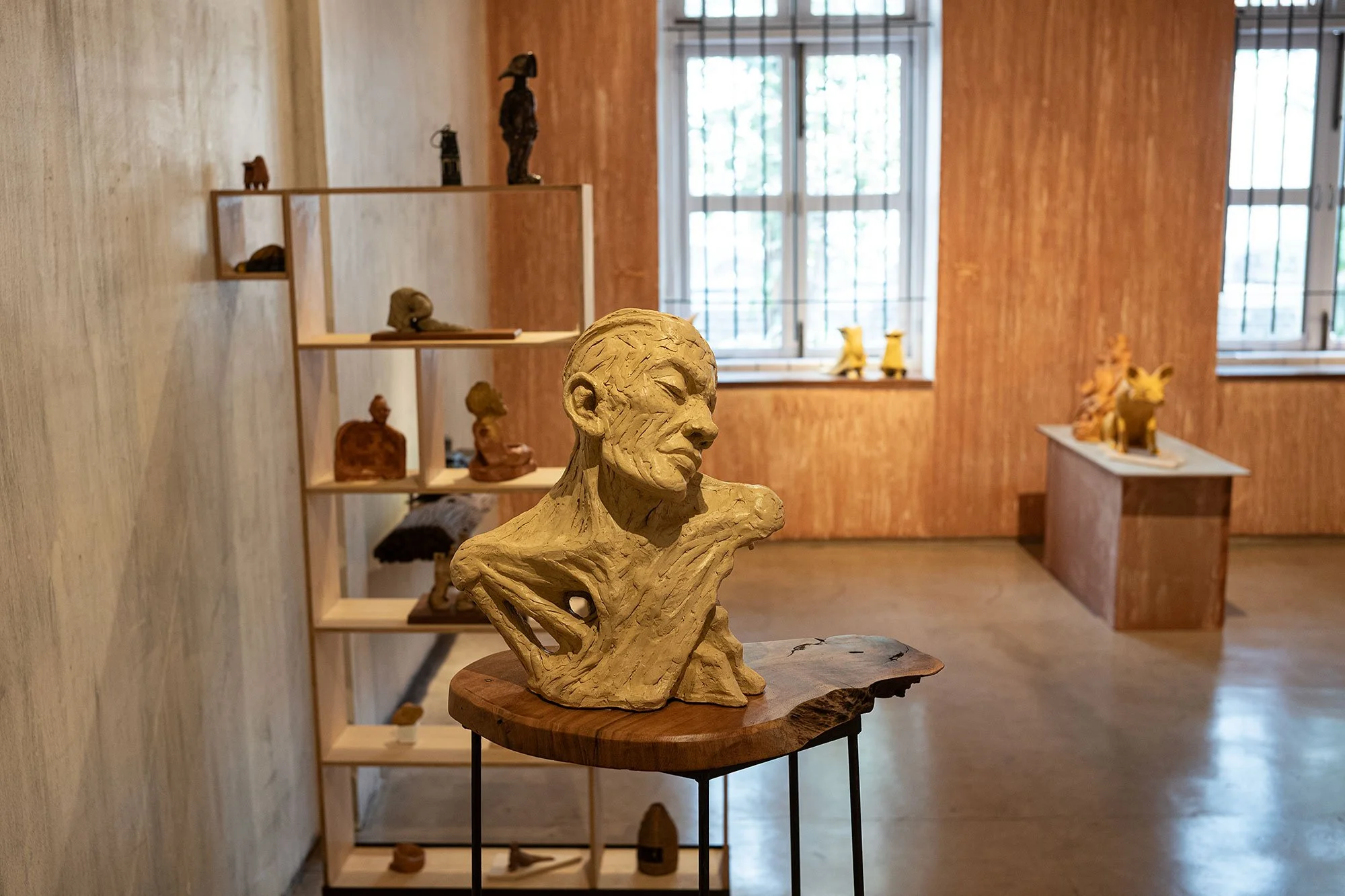
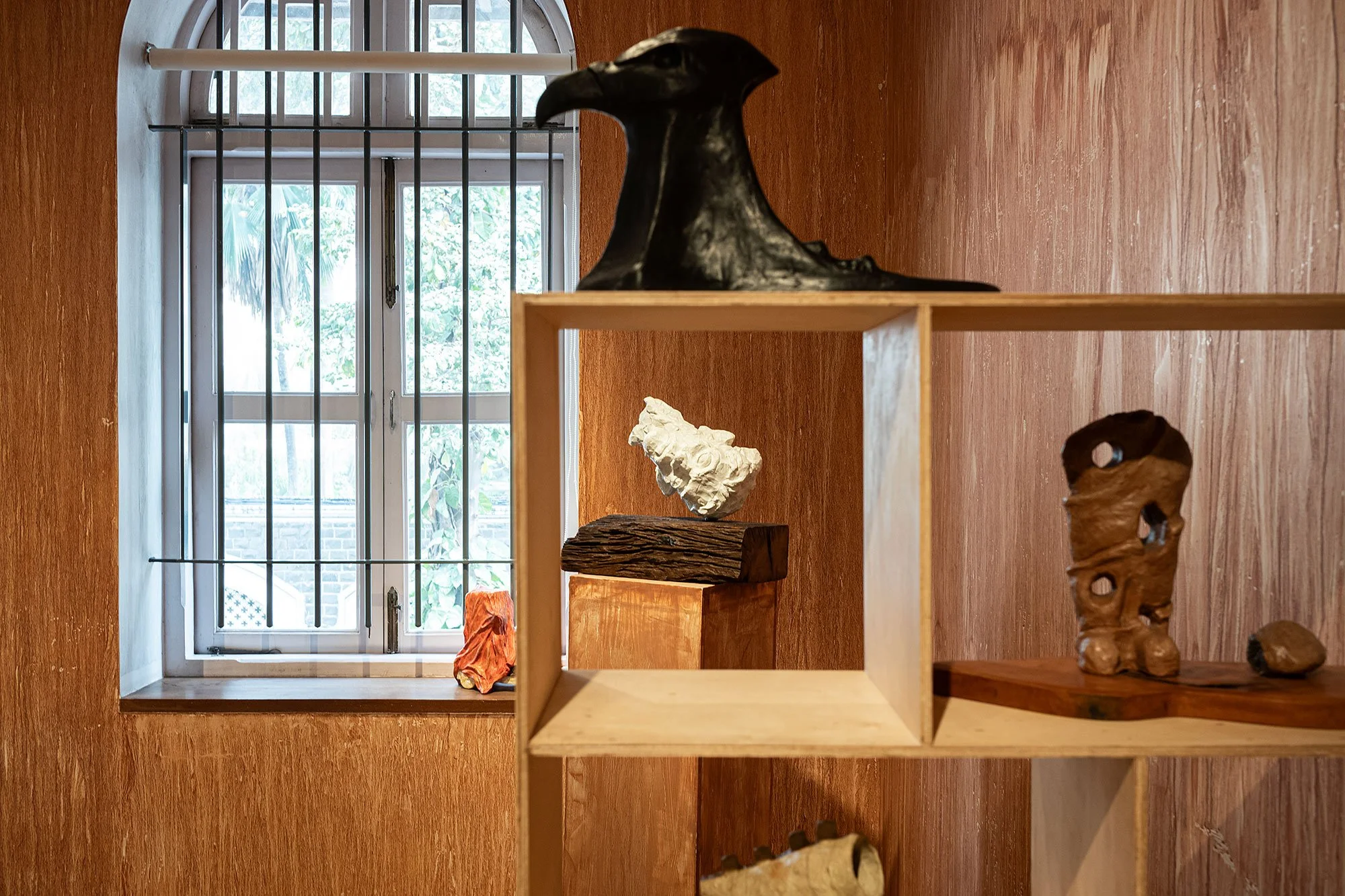
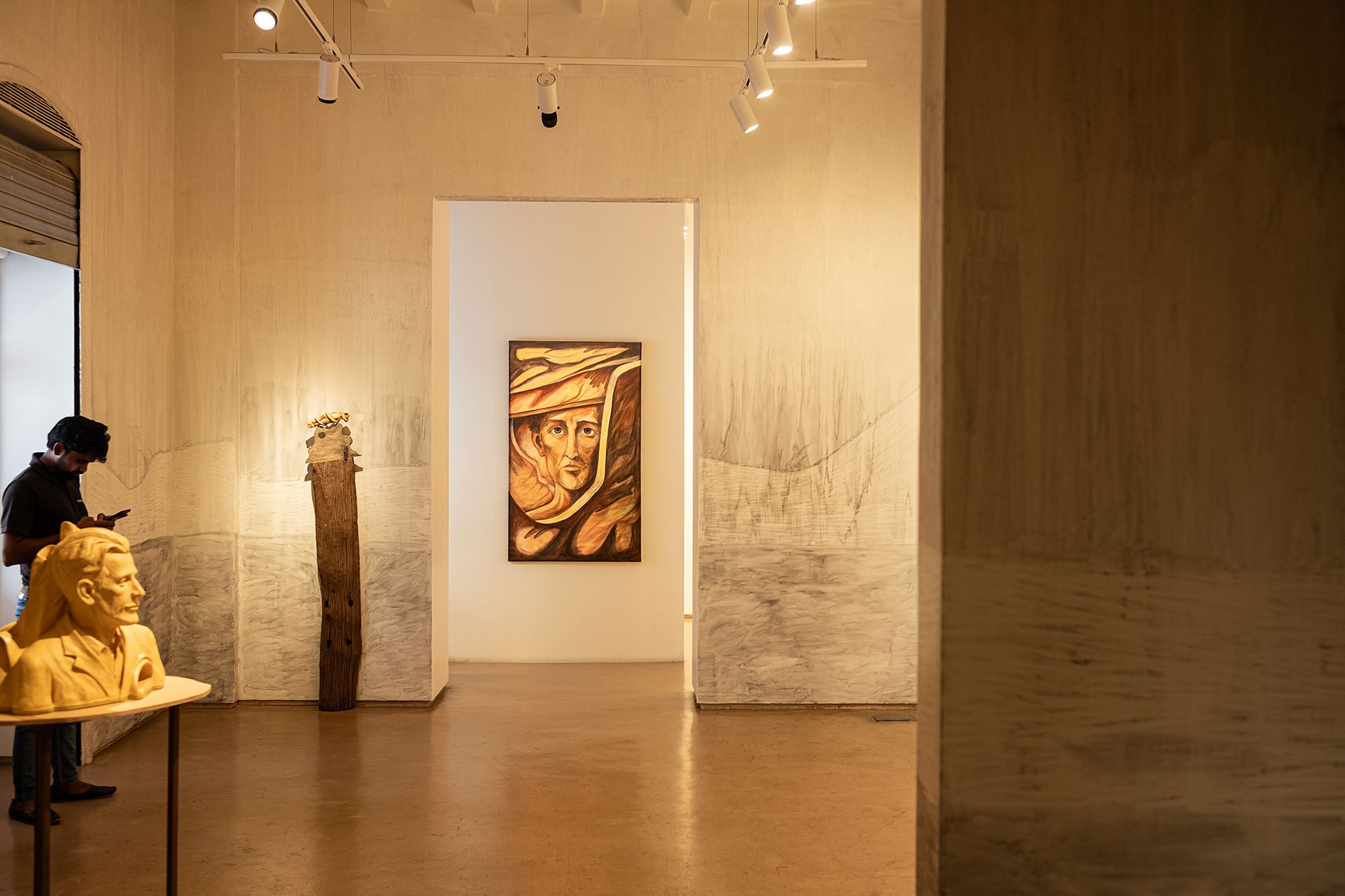
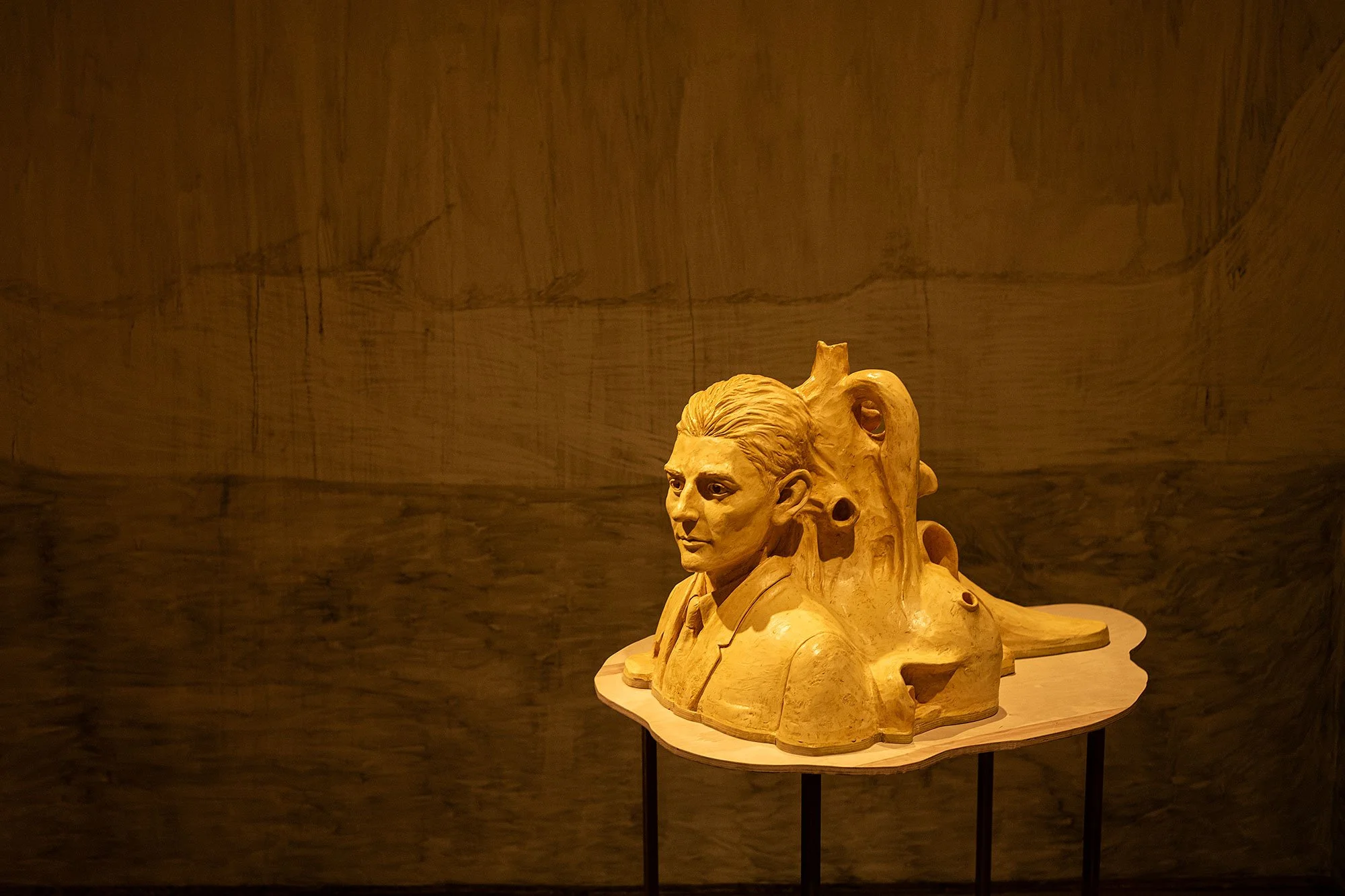
Inside, the gallery presents Prabhakar Pachpute’s first solo show, Lone Runner’s Laboratory. His sculptures explore the politics of exploitation and the relationships between people, places, objects, and animals.
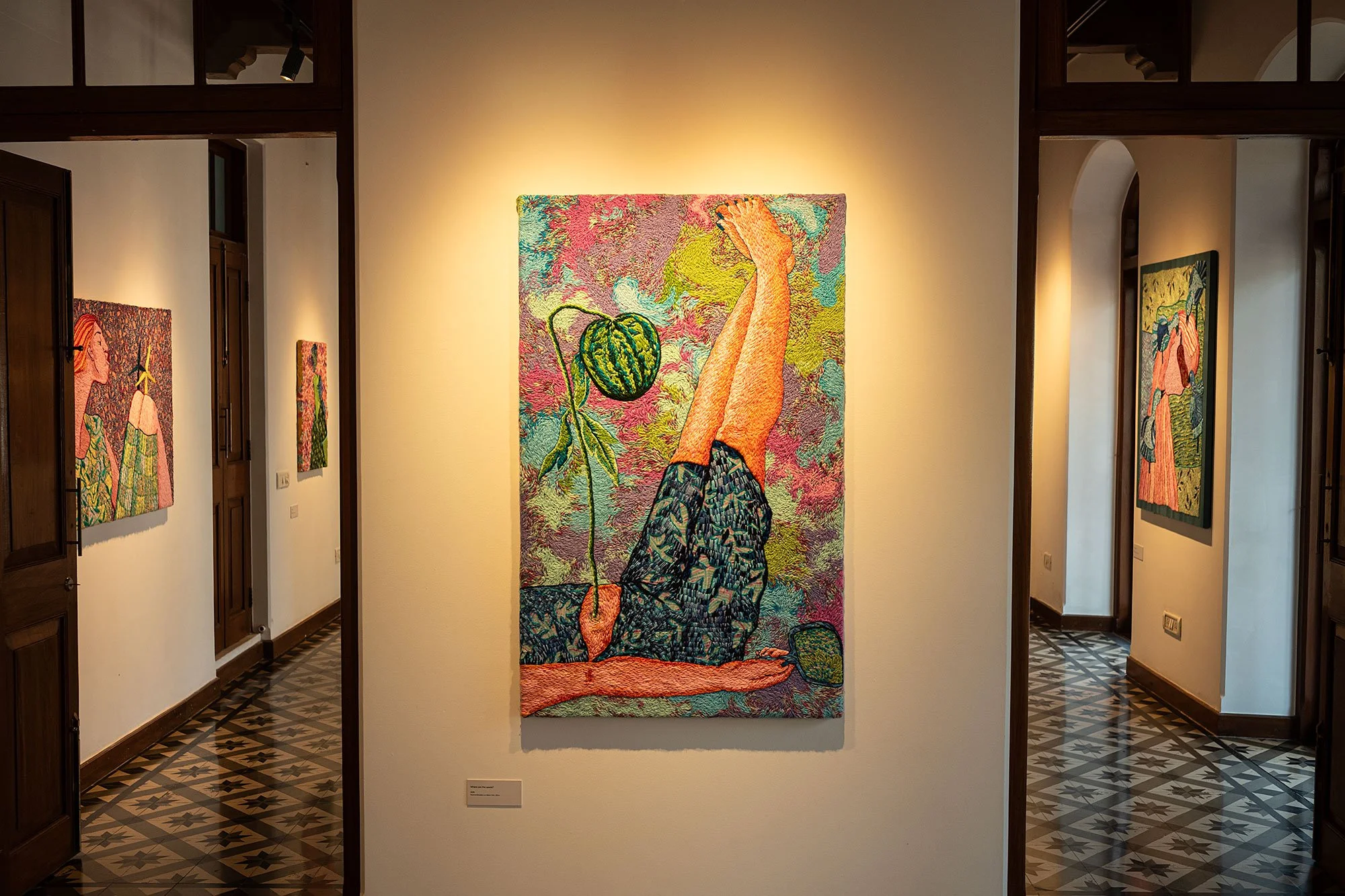
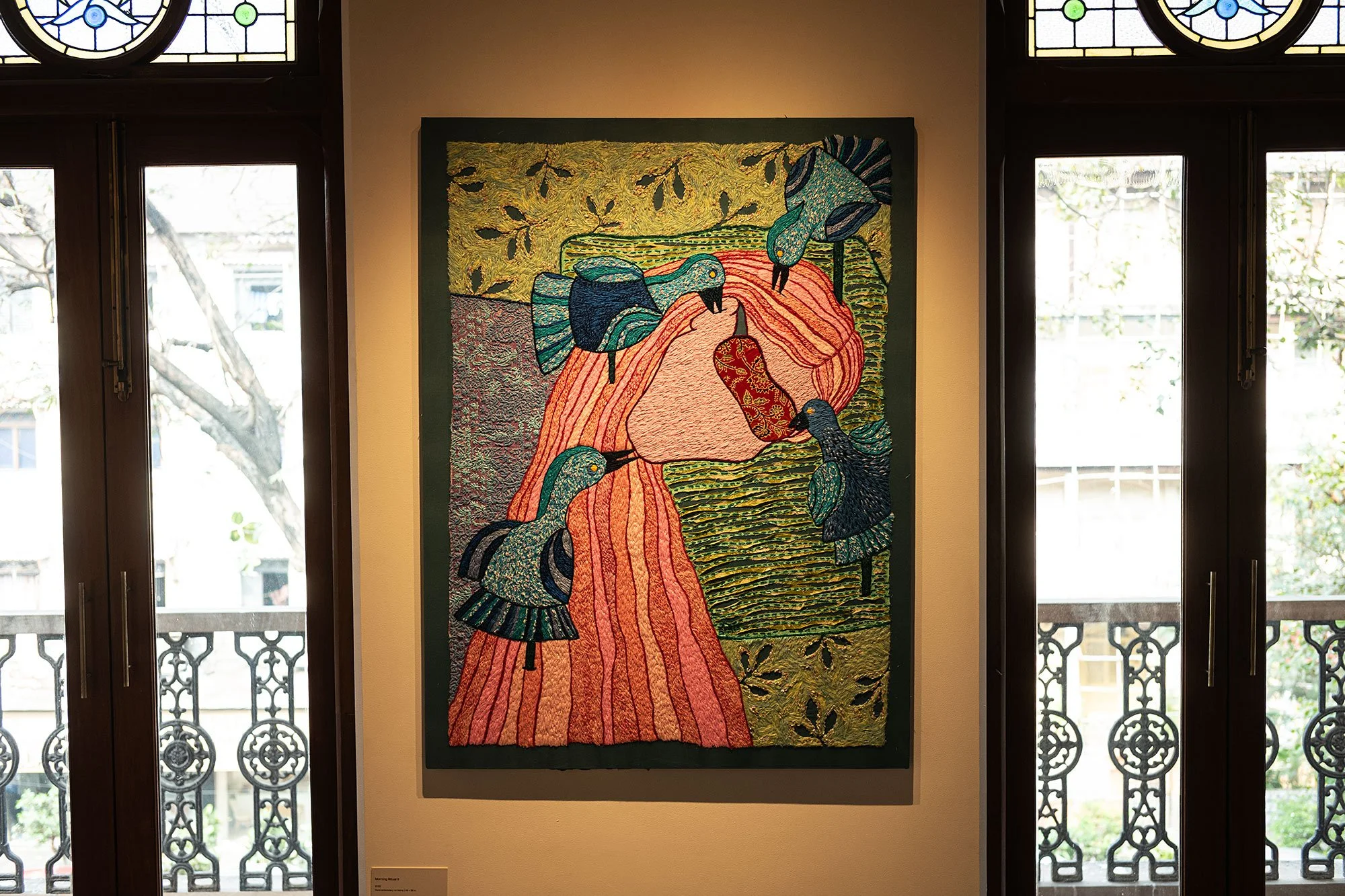
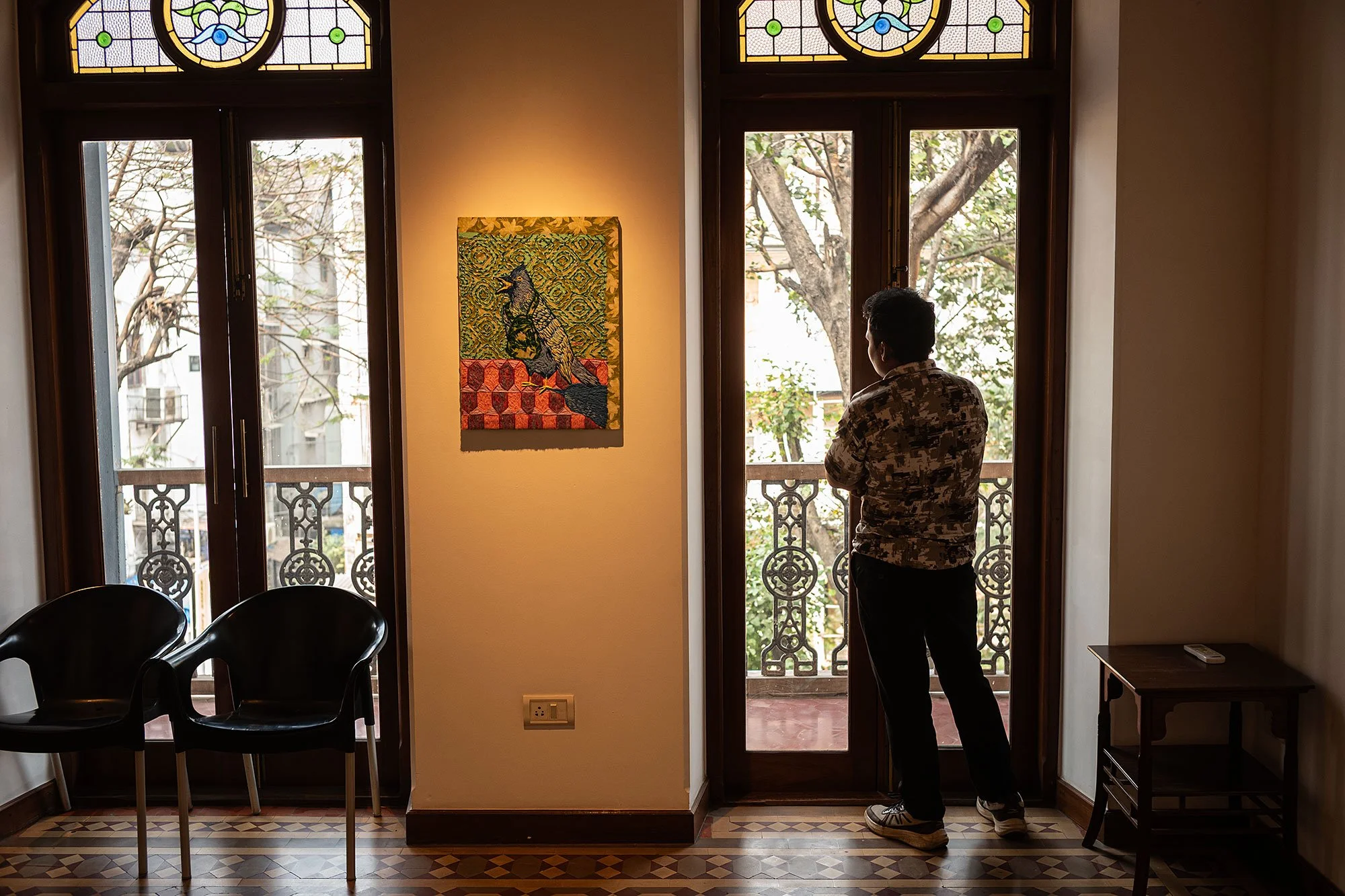
The next gallery I visit is Chemould Colab, which hosts a survey of. Rachita Dutta’s work. Titled Have we forgotten how to feel? the embroidered and stitched works call back to the deeply-rooted craft traditions of her native Jammu and Kashmir. The works themselves are vibrant, digging into “the identities we perform and the emotions we suppress.”
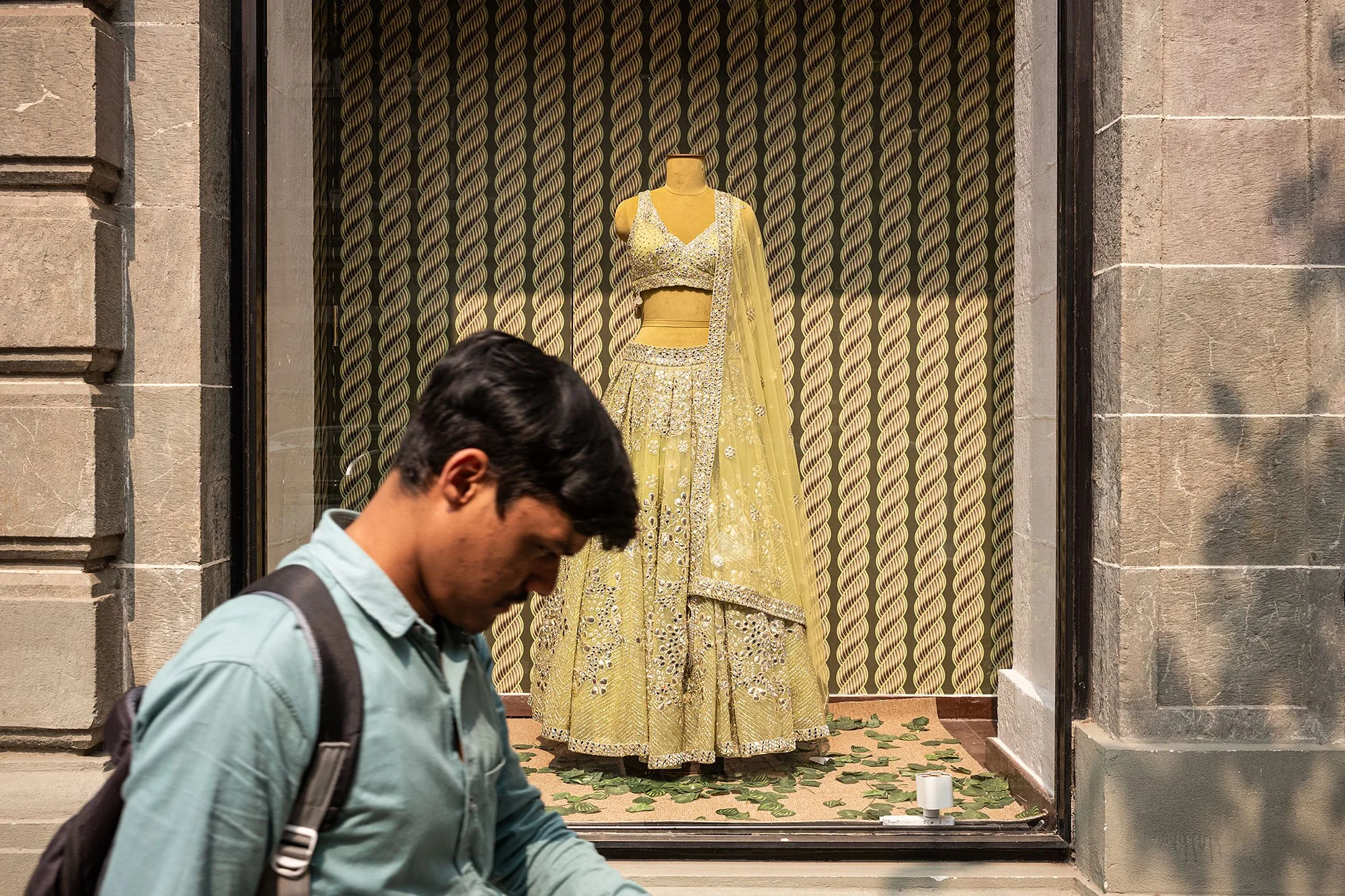
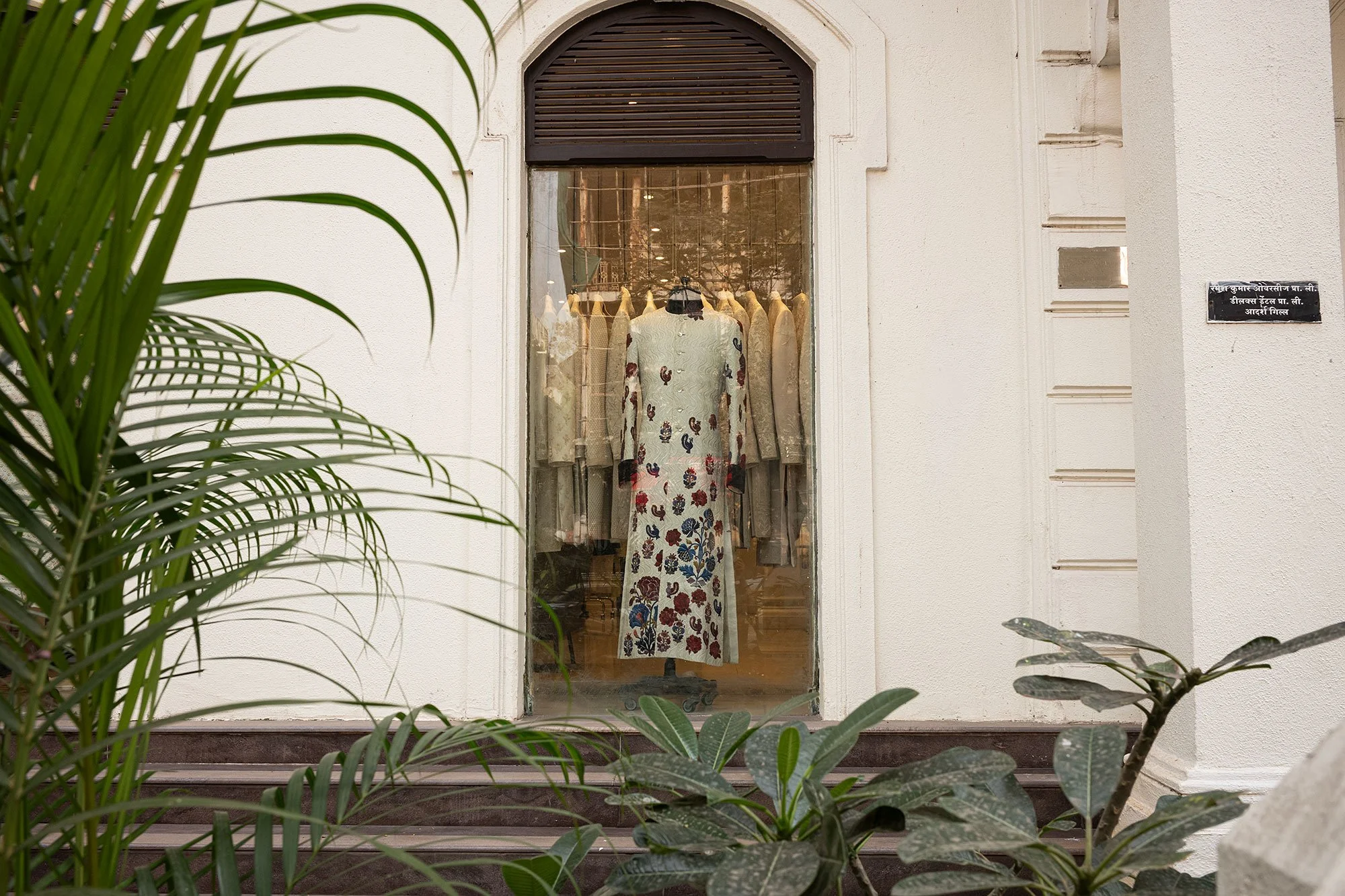
The next set of galleries are a few blocks away and I take a break from viewing art to windowshopping at some of the clothing boutiques in the area. There are intricate dresses and carefully-crafted suits and I wonder if I’d ever have the occasion to buy something as ornate and as beautiful as some of the pieces I see on display.
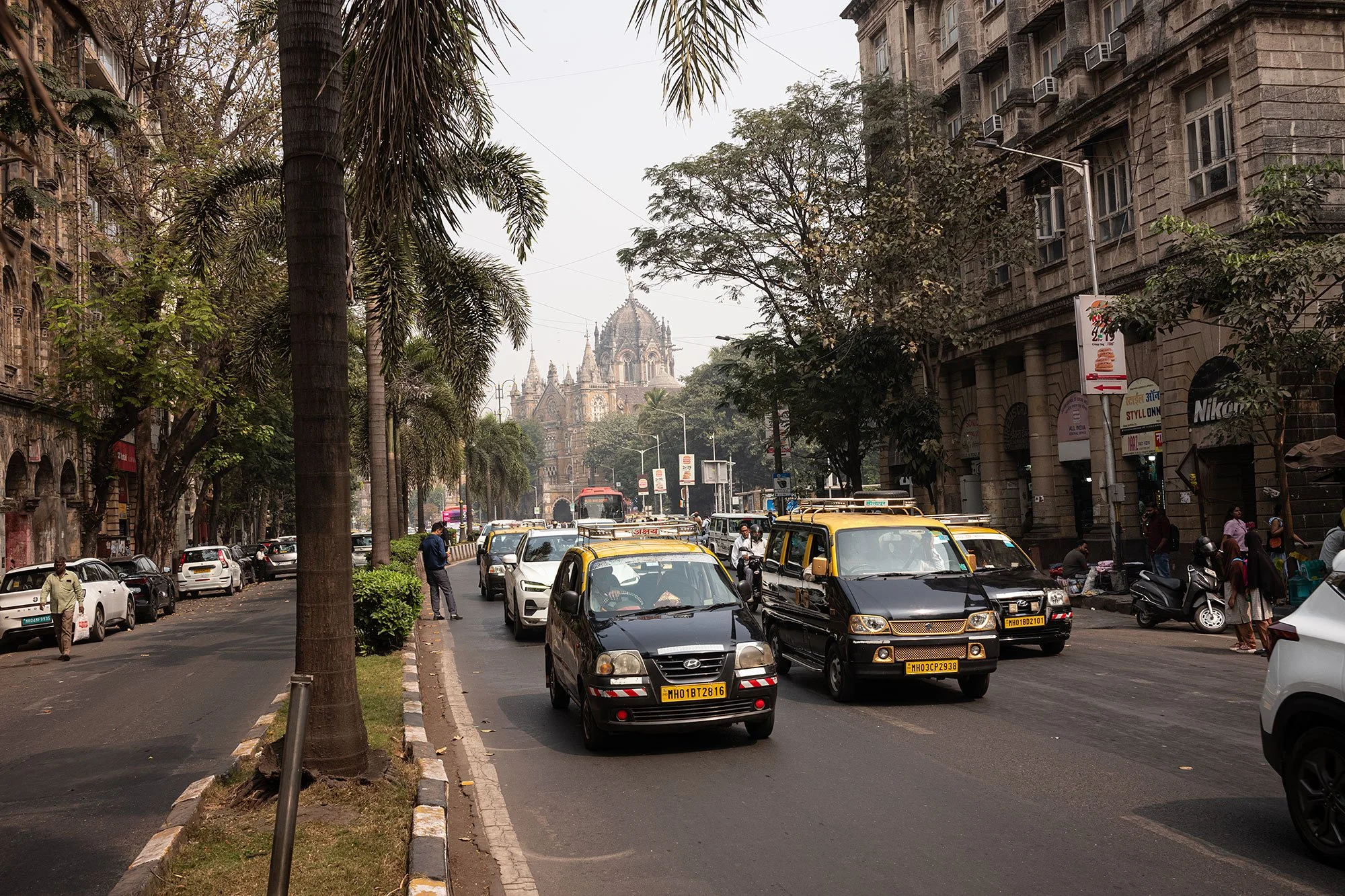
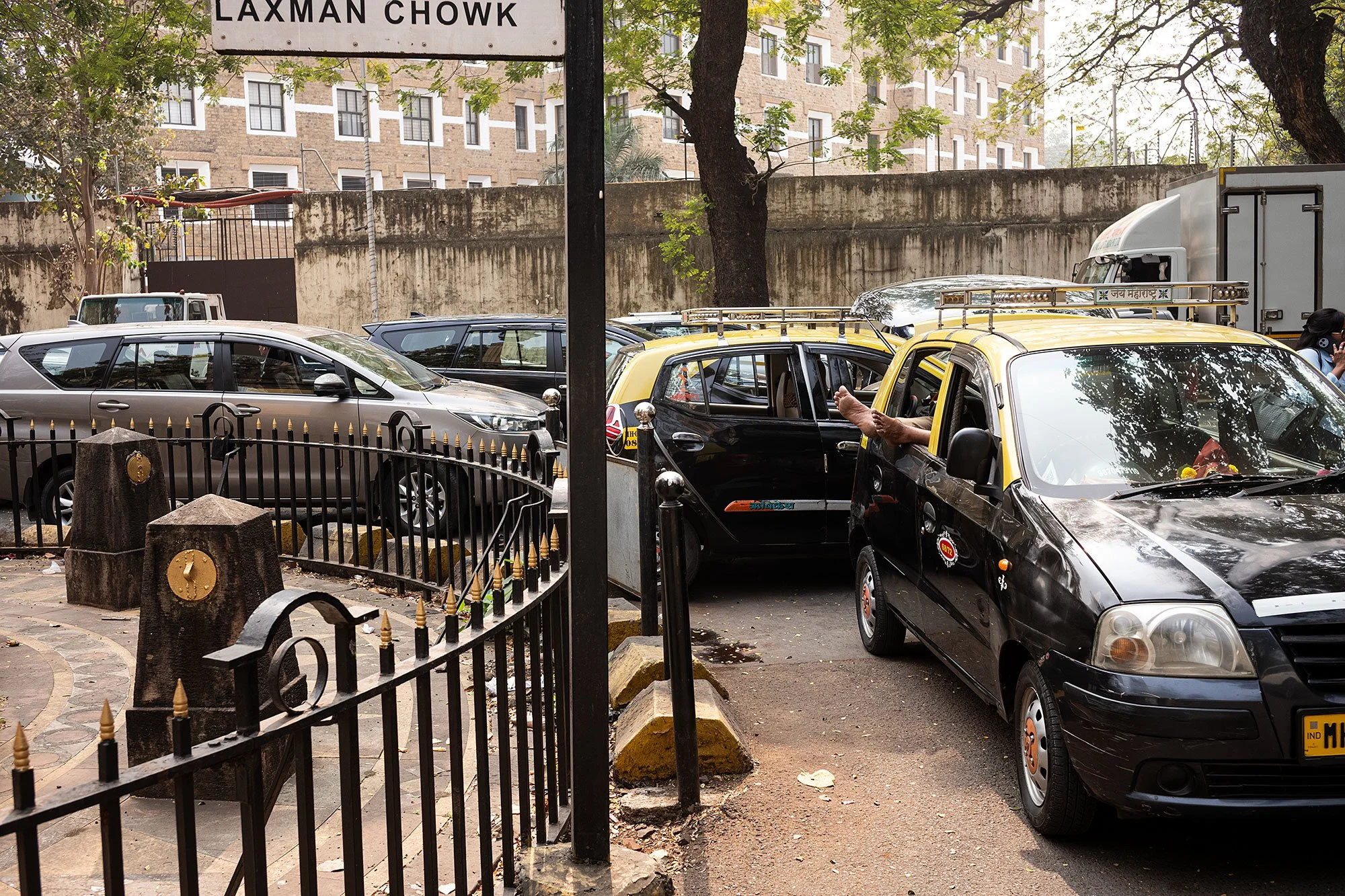
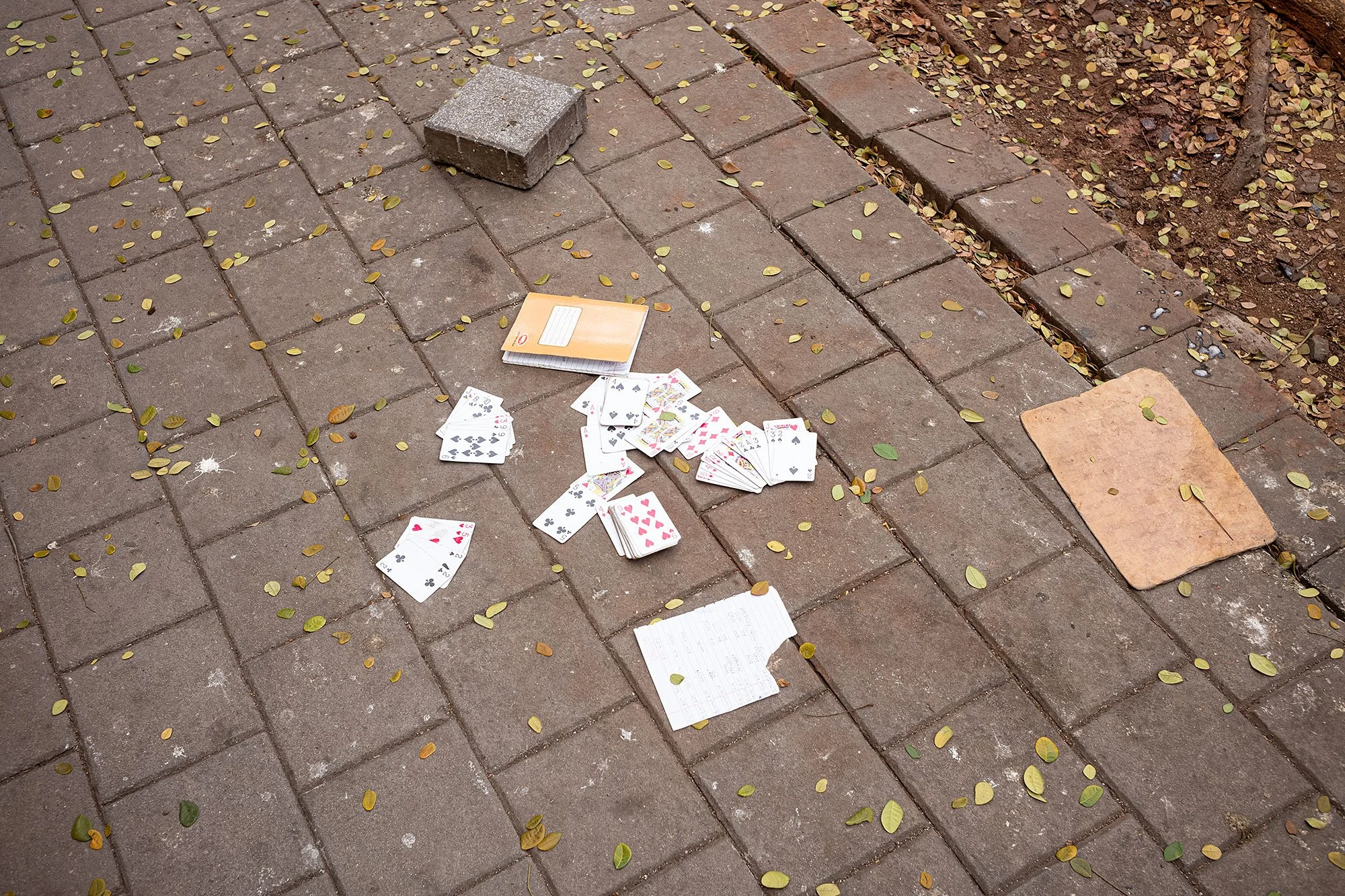
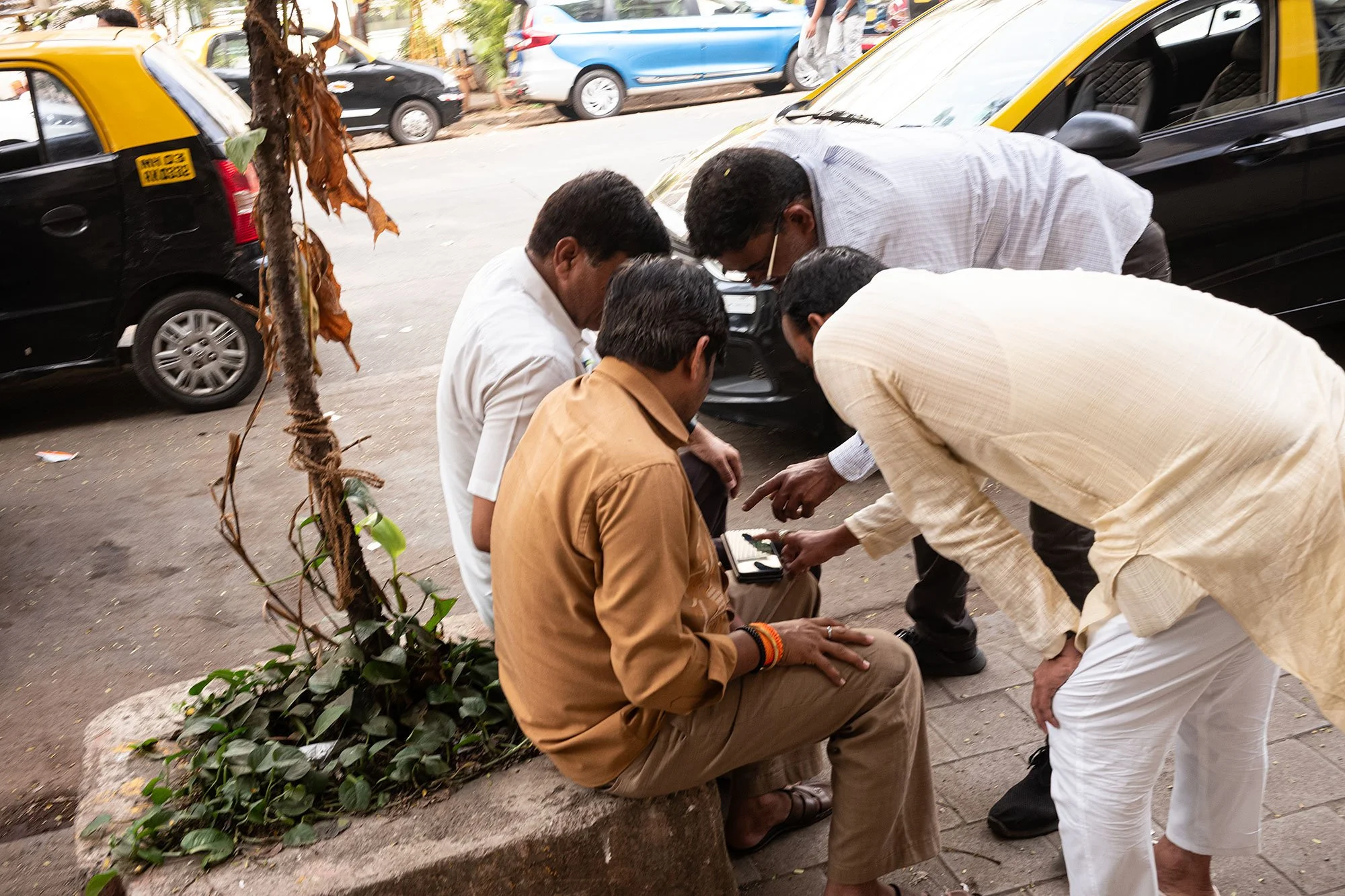
I’ve also noticed groups of men gambling, taxi drivers waiting on fares or taking breaks (autorickshaws are banned in the southern part of Mumbai). Most of the time I see them on the sidewalk in front of cards, but there’s one group playing a game on a phone. I’m curious what it is, but I don’t linger to find out.
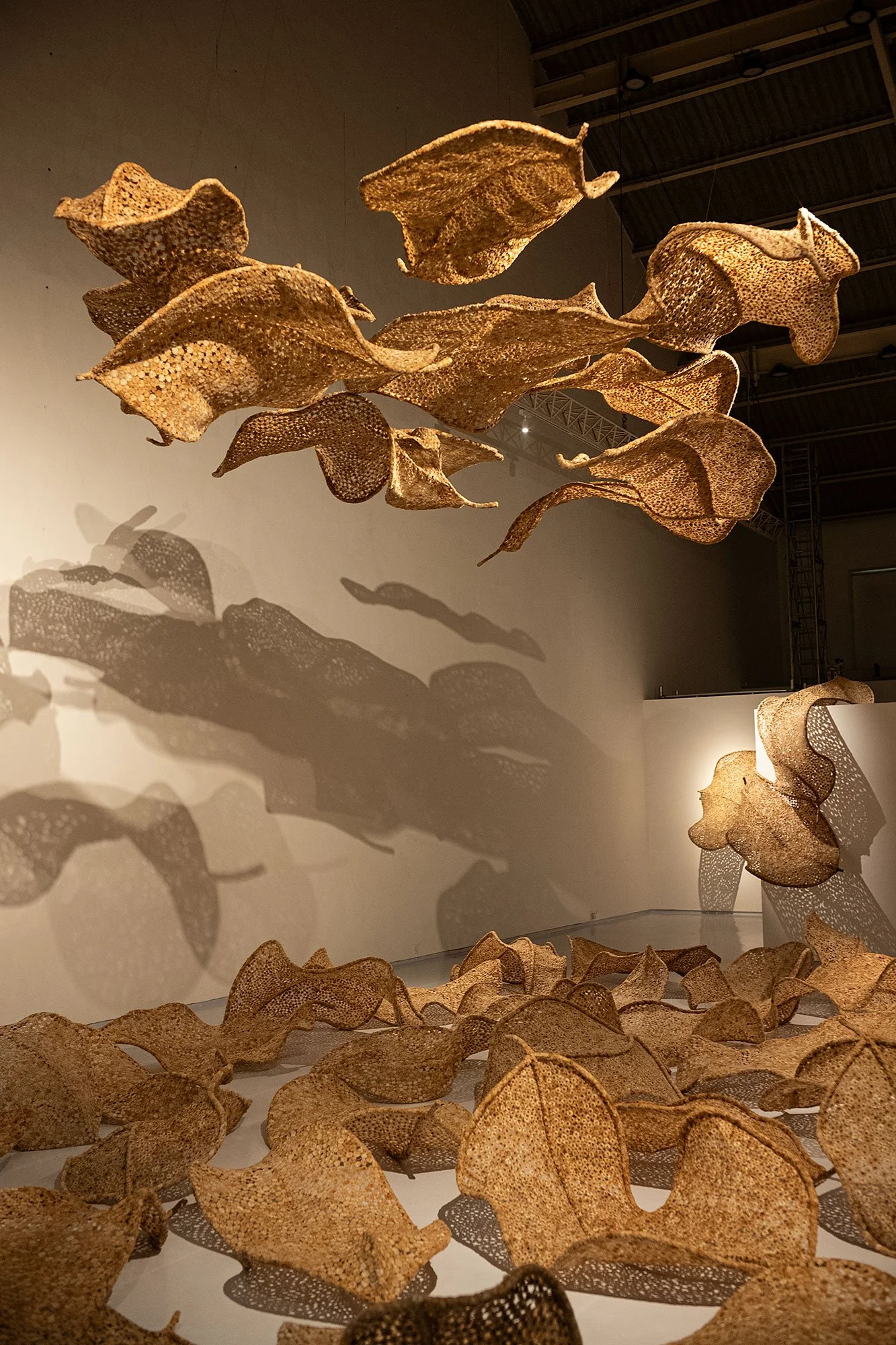
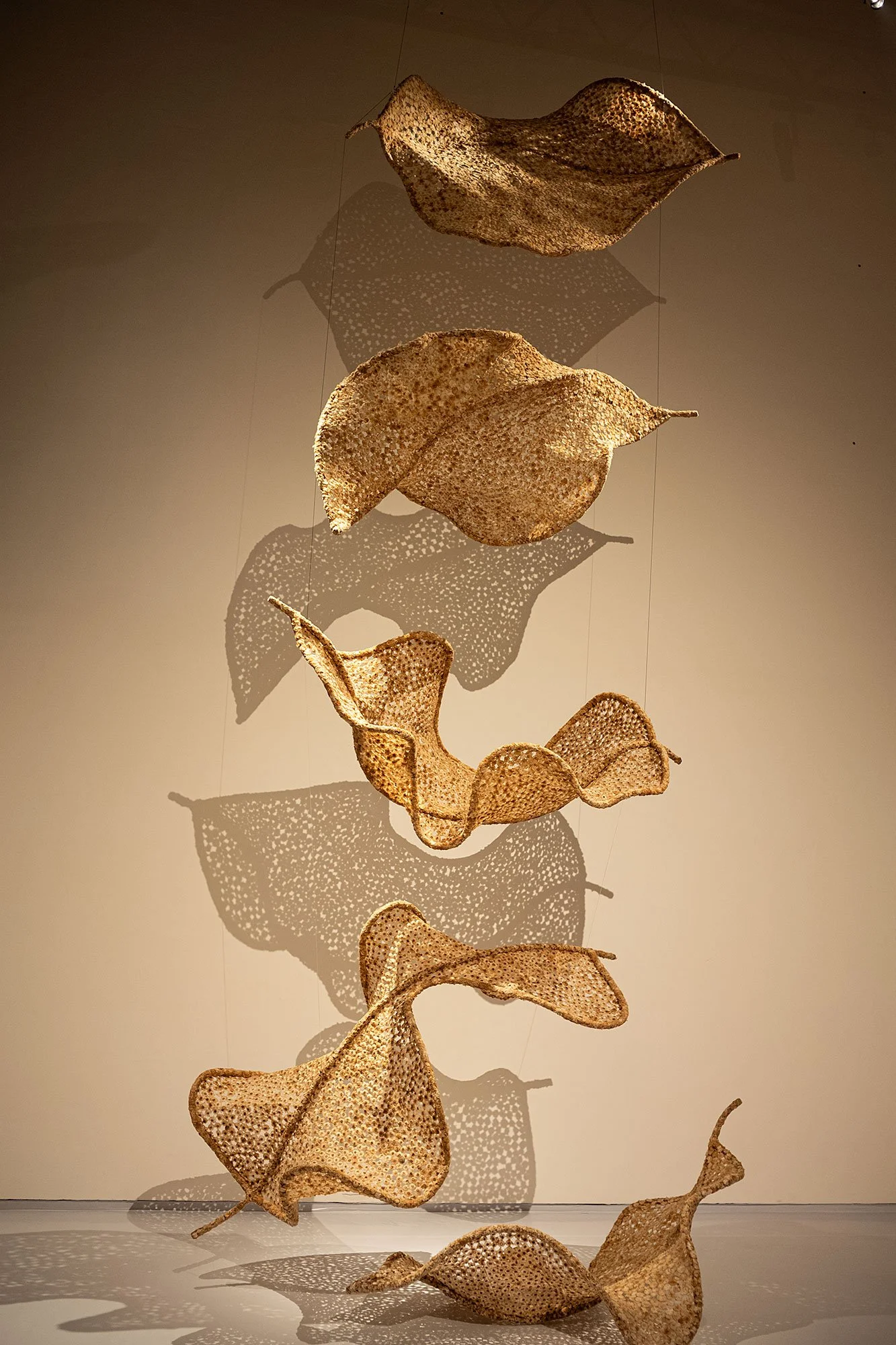
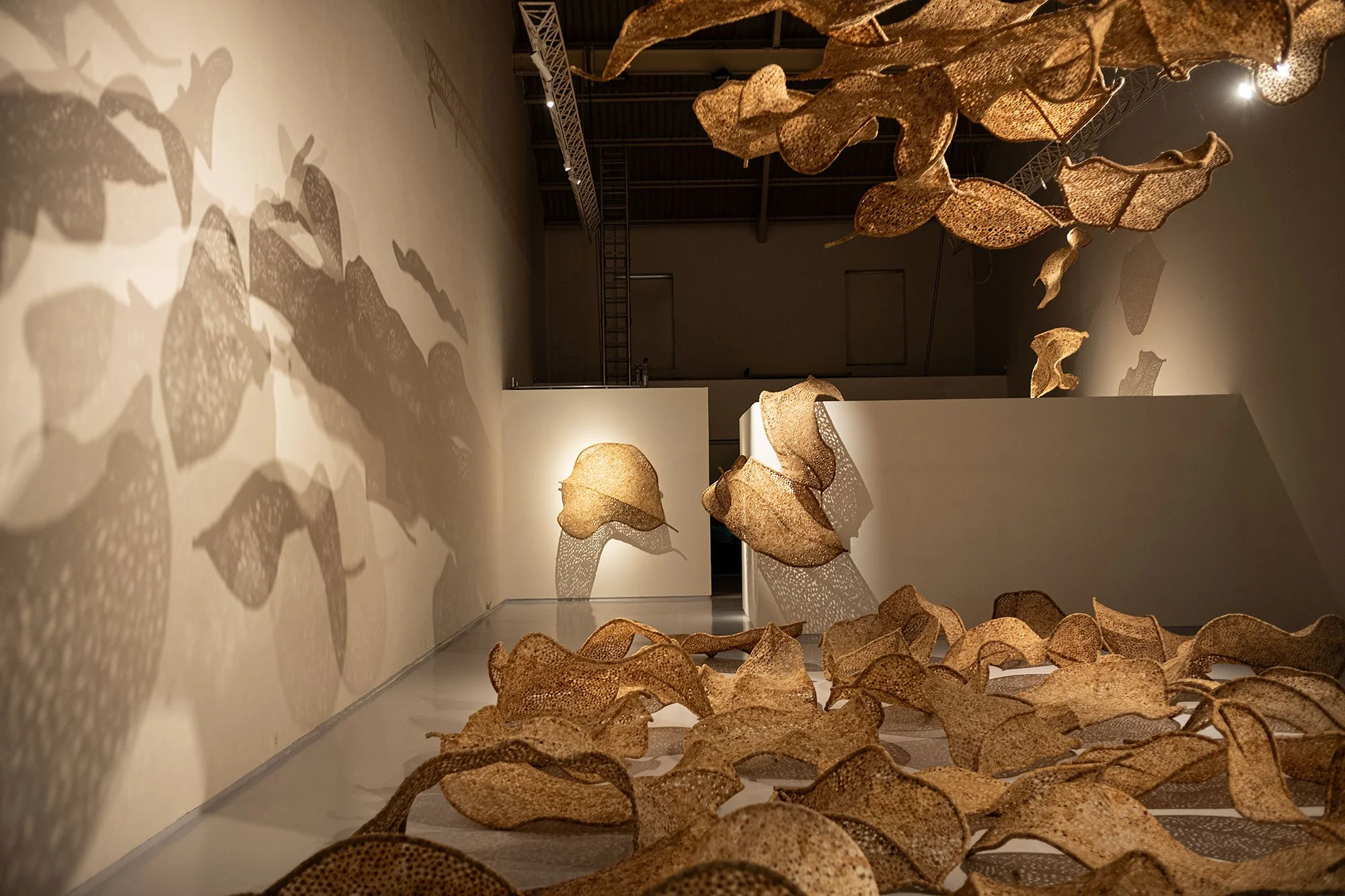
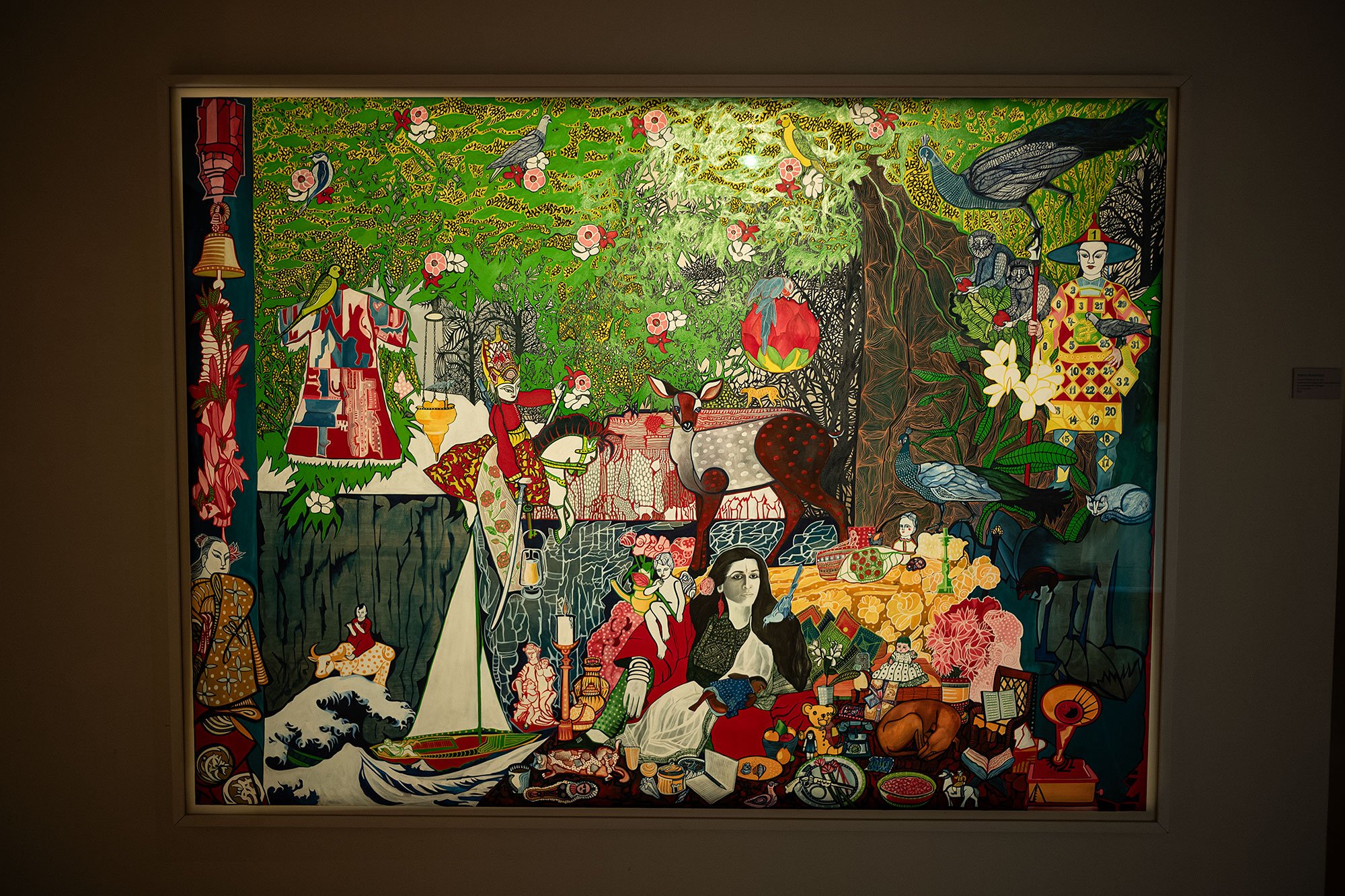
At the Gallery Maskara I’m introduced to Prashant Pandey’s Biography. It’s my favorite piece that I’ve seen; I’m instantly caught by the delicate, organic forms that reveal themselves to me as leaves or lungs floating on air. It turns out the work is made from over 350,000 discarded cigarette butts “collected and shaped over five years, these remnants of daily life [having become] suspended, breathing forms — a collective biography not of names or events, but of traces, gestures, and what endures.”
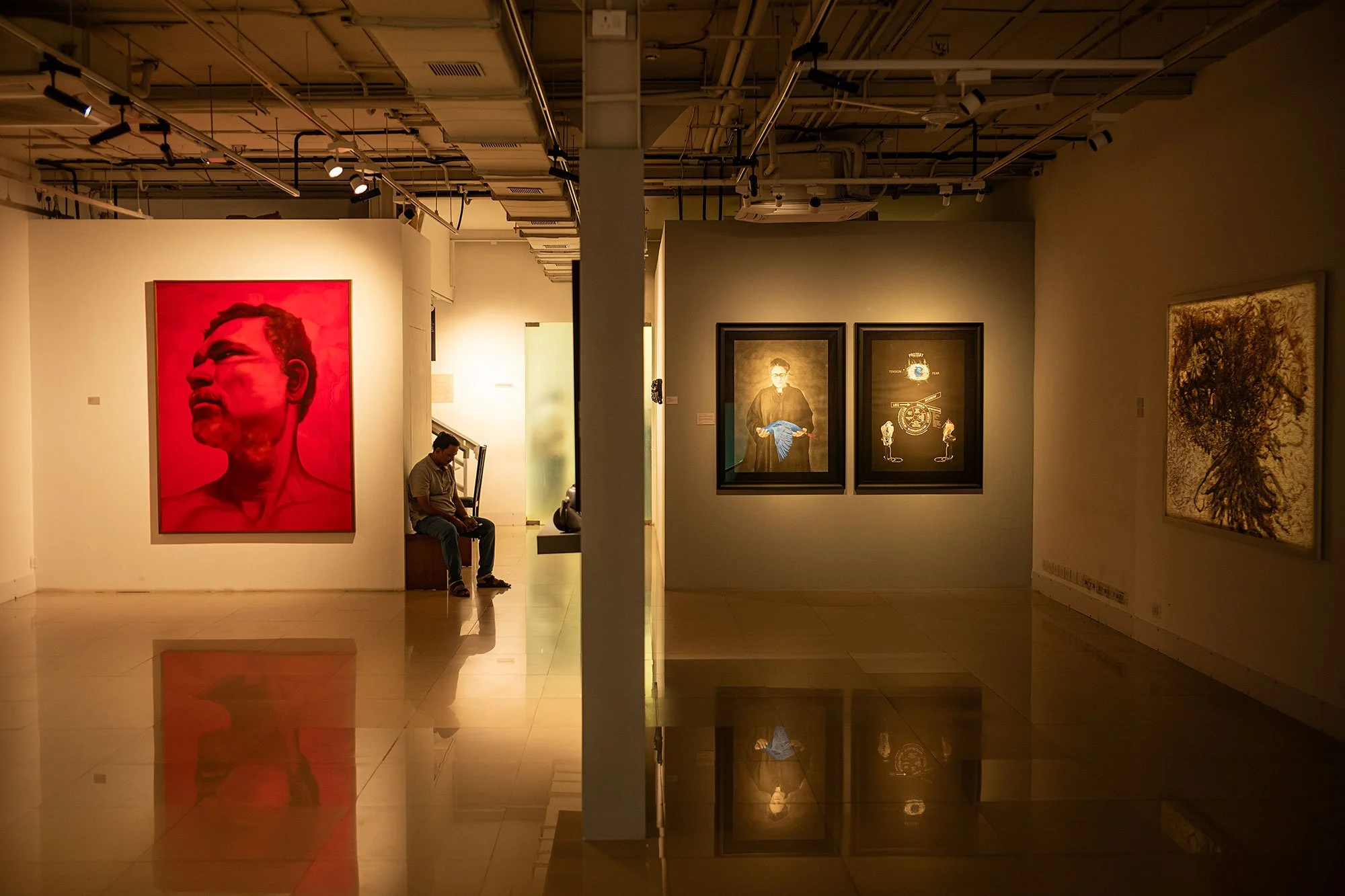
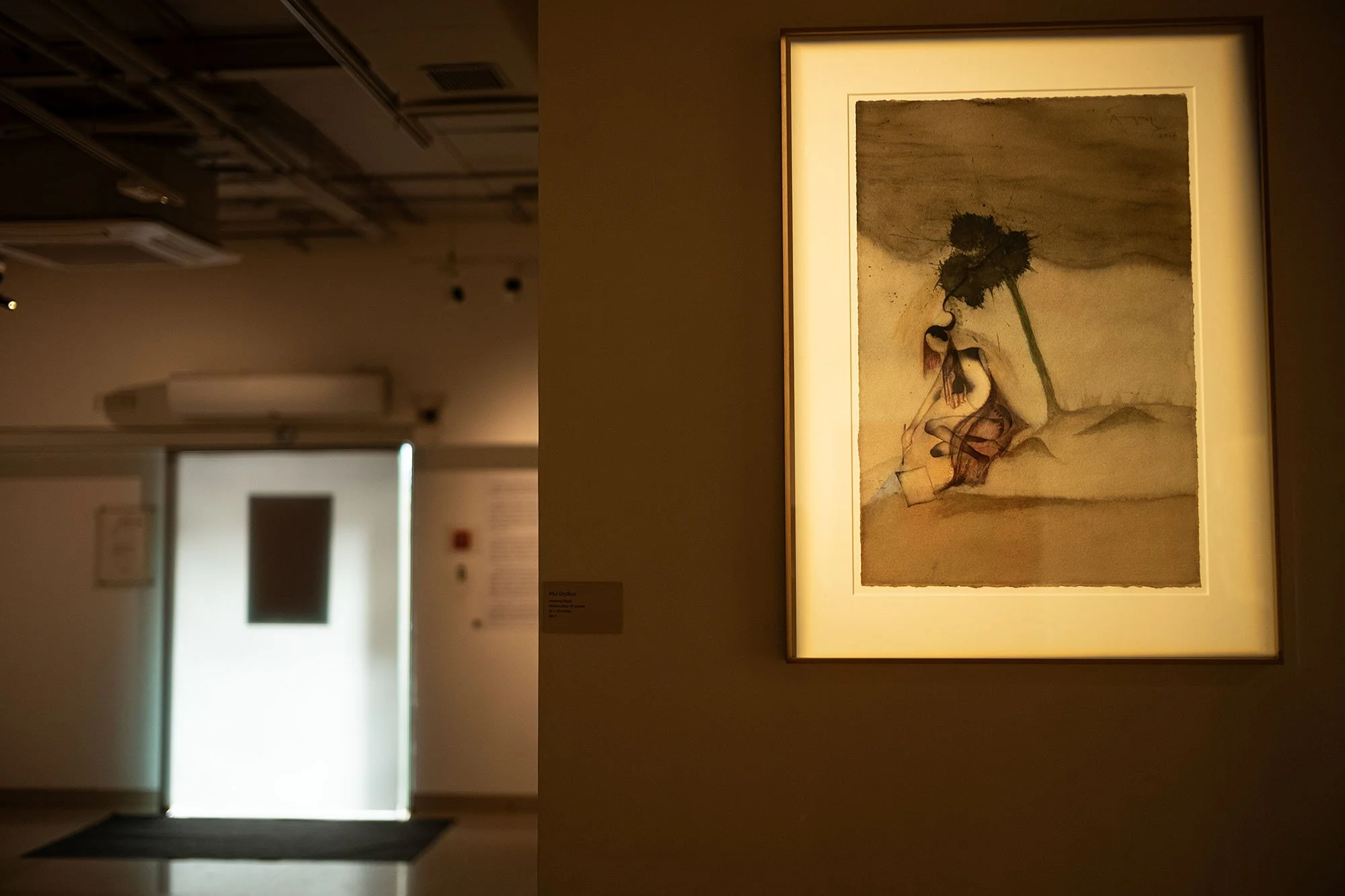
My final stop of the day is the Sakshi Gallery, just next door, offering. group show that marks its 40th year, returning to the early years of the gallery where its identity (and those of its artists) were being shaped.
I walk back home and text Natasha, thanking her for her suggestions. There are a group of galleries near the hotel that I haven’t had the time for. I plan to see them another day; forgetting the days on which they are closed and don’t end up having the chance.
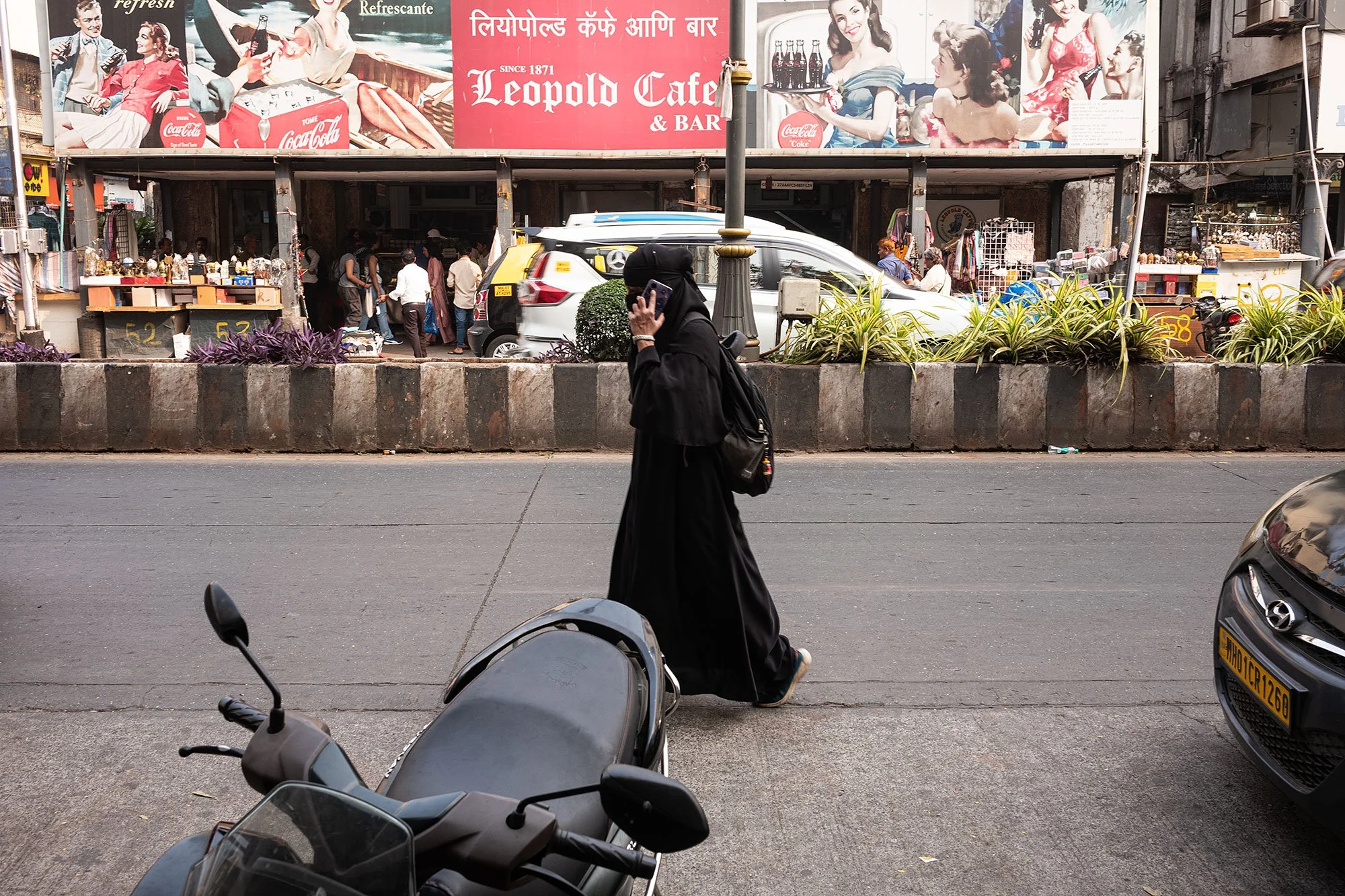
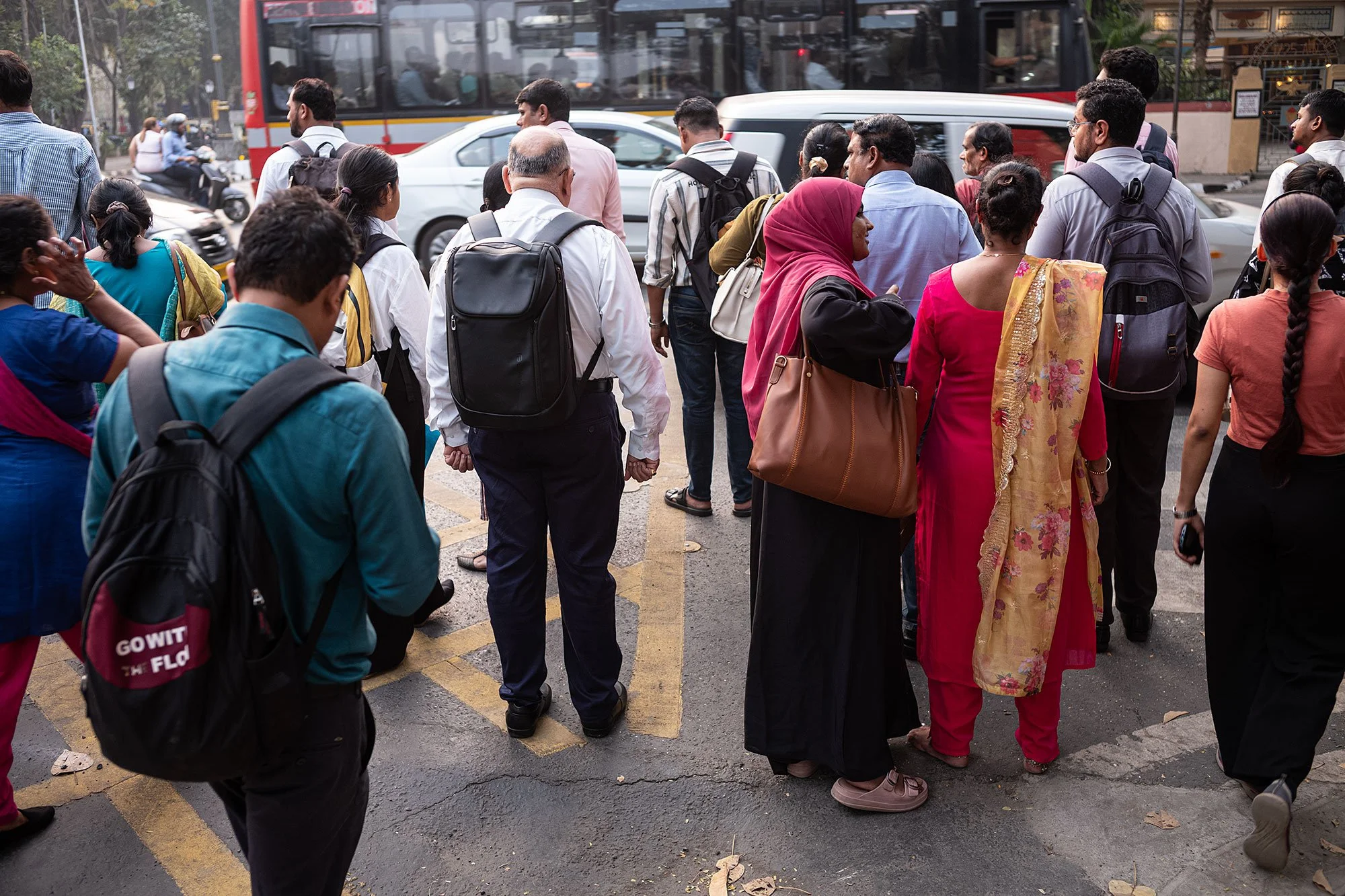
She suggests that I head to Chowpatty for the sunset, but I’m too tired and/or too lazy to call a cab. At least I should walk over to Marine Drive, she cajoles. It’s close. And she’s right.
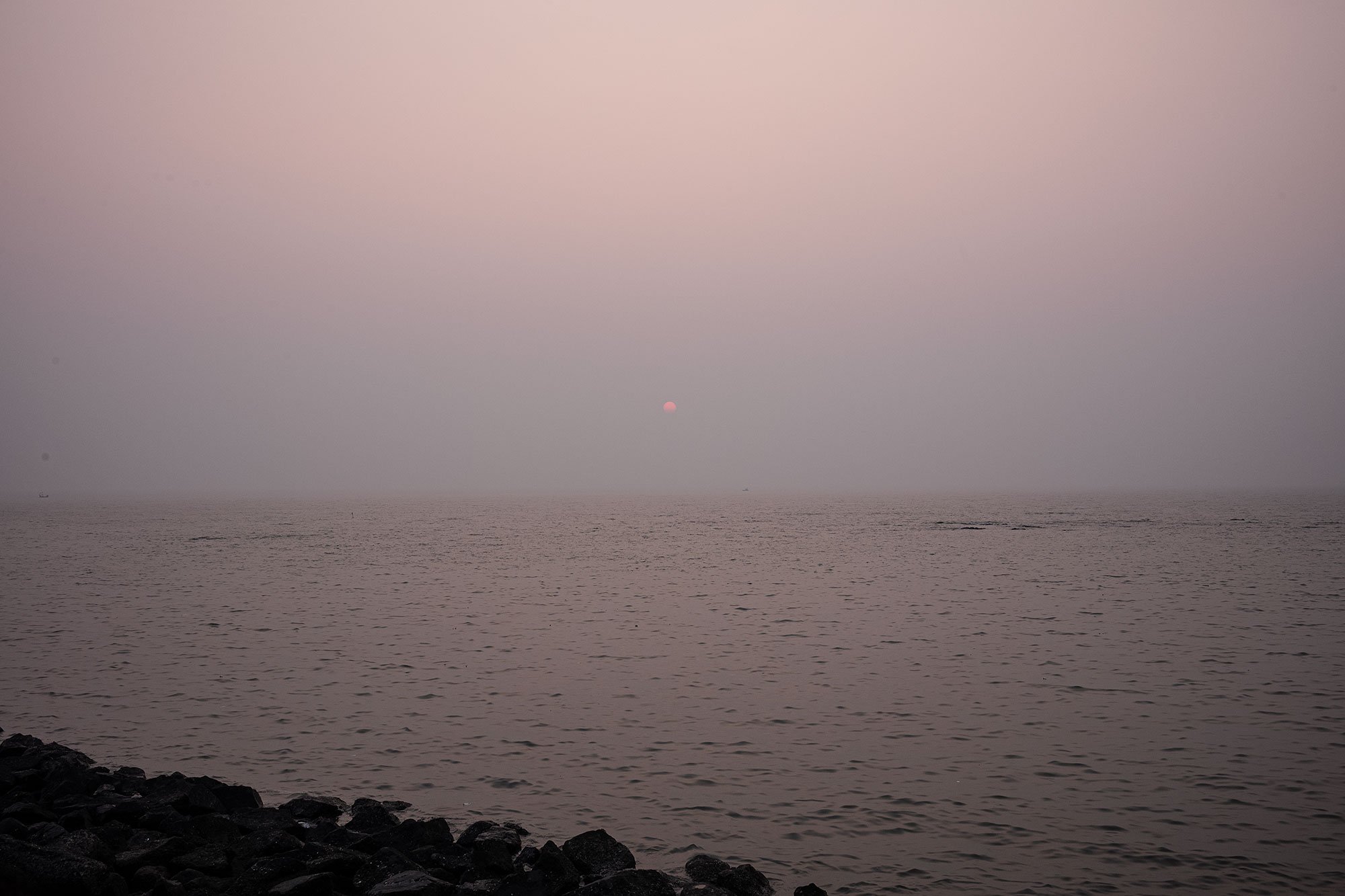
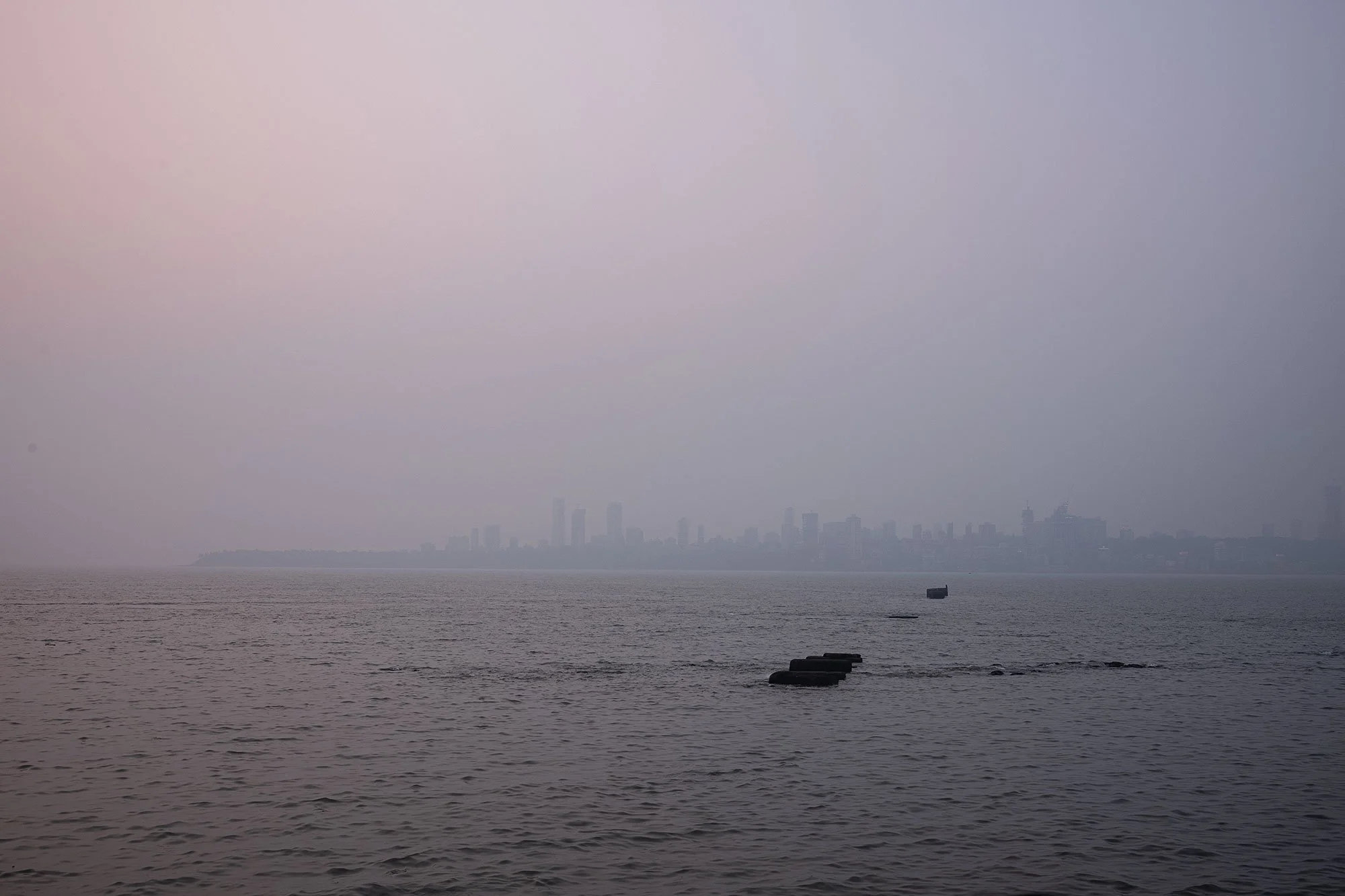
I walk over to the coast. The sun sets behind a the haze. People line the entire pedestrian mall running along the edge of the city sitting on the concrete barrier that separates the city from the sea, the scene reminding me of similar nights spent walking along the Malecón in Havana, Cuba.
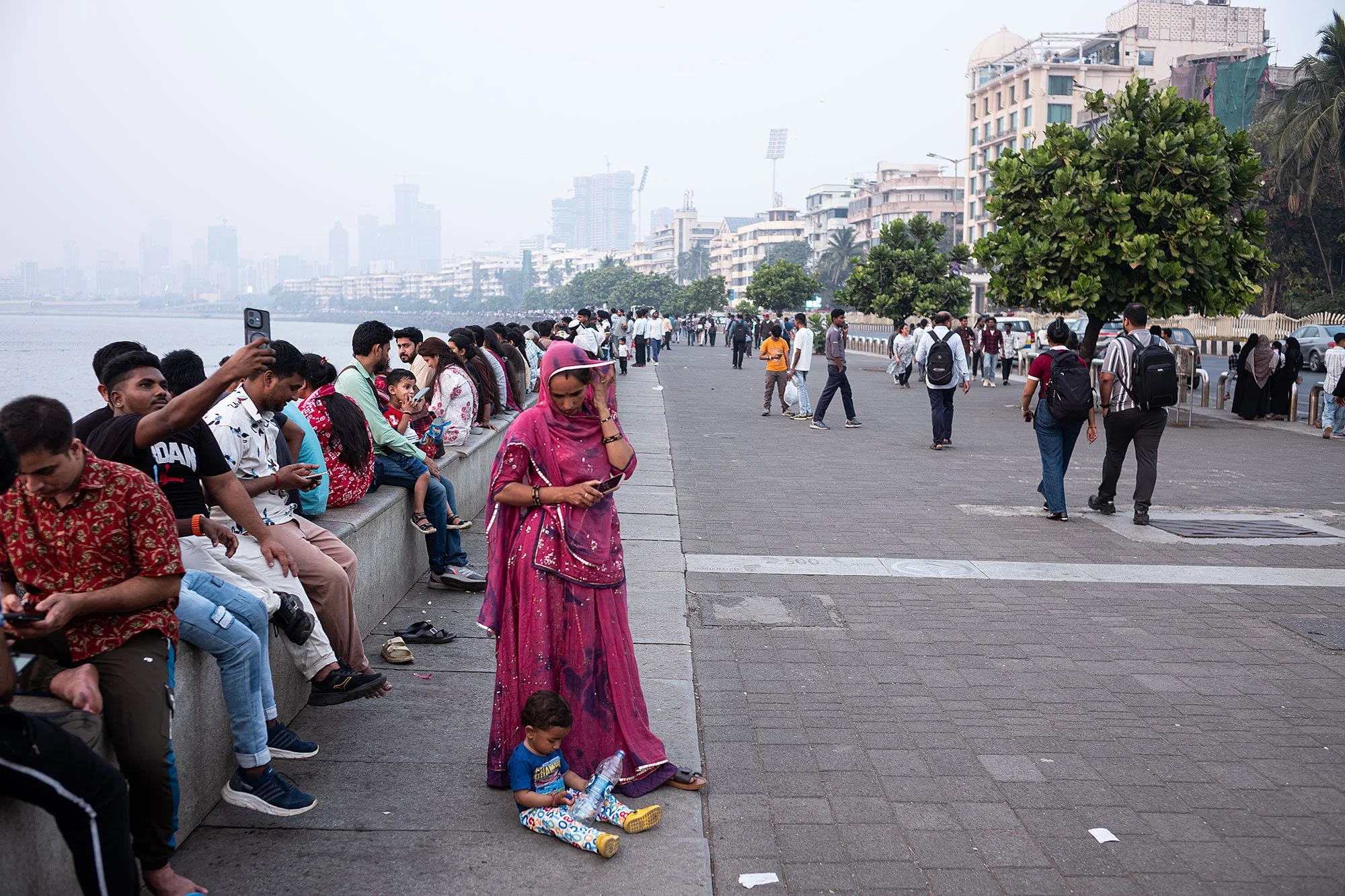
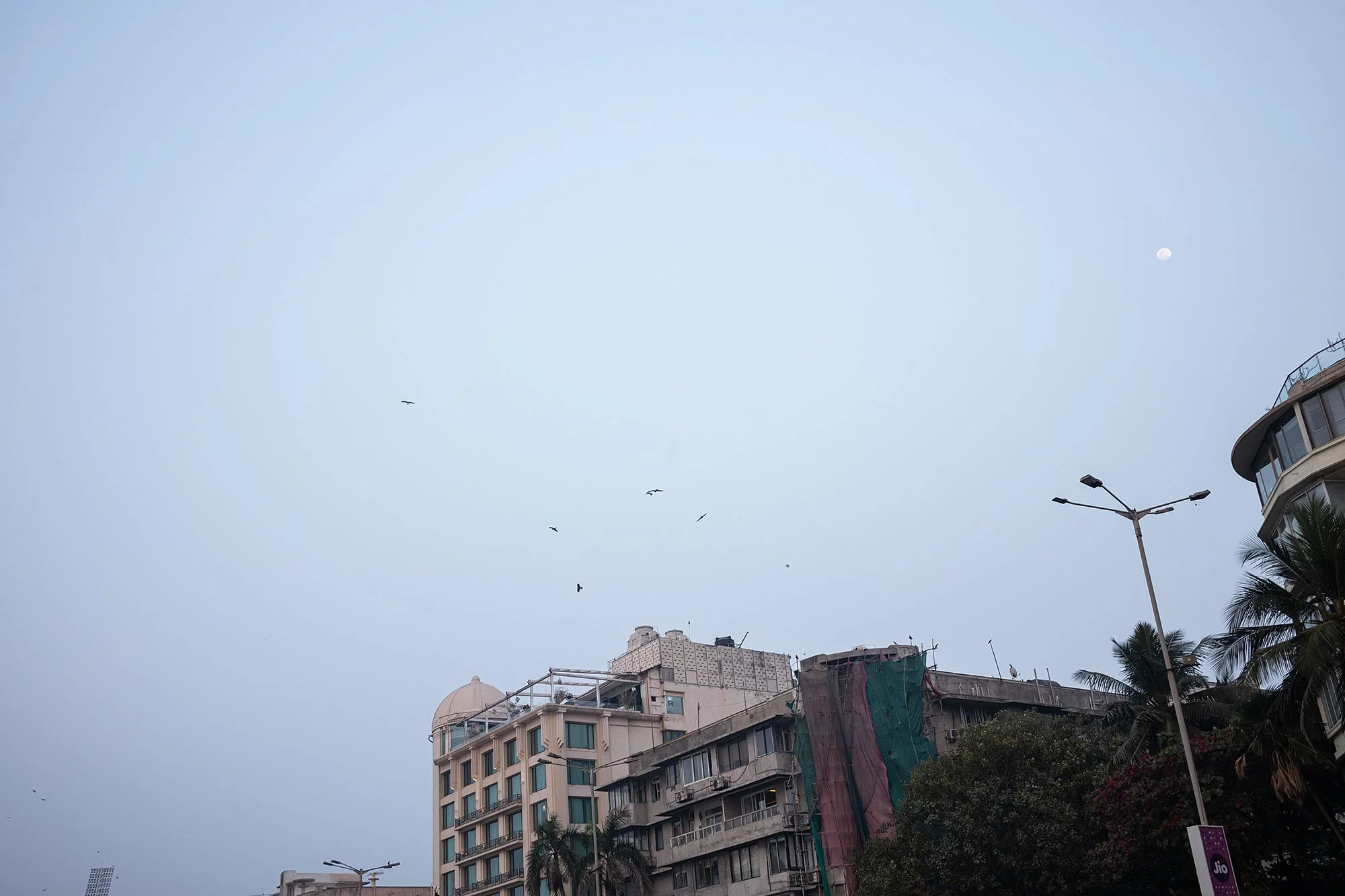
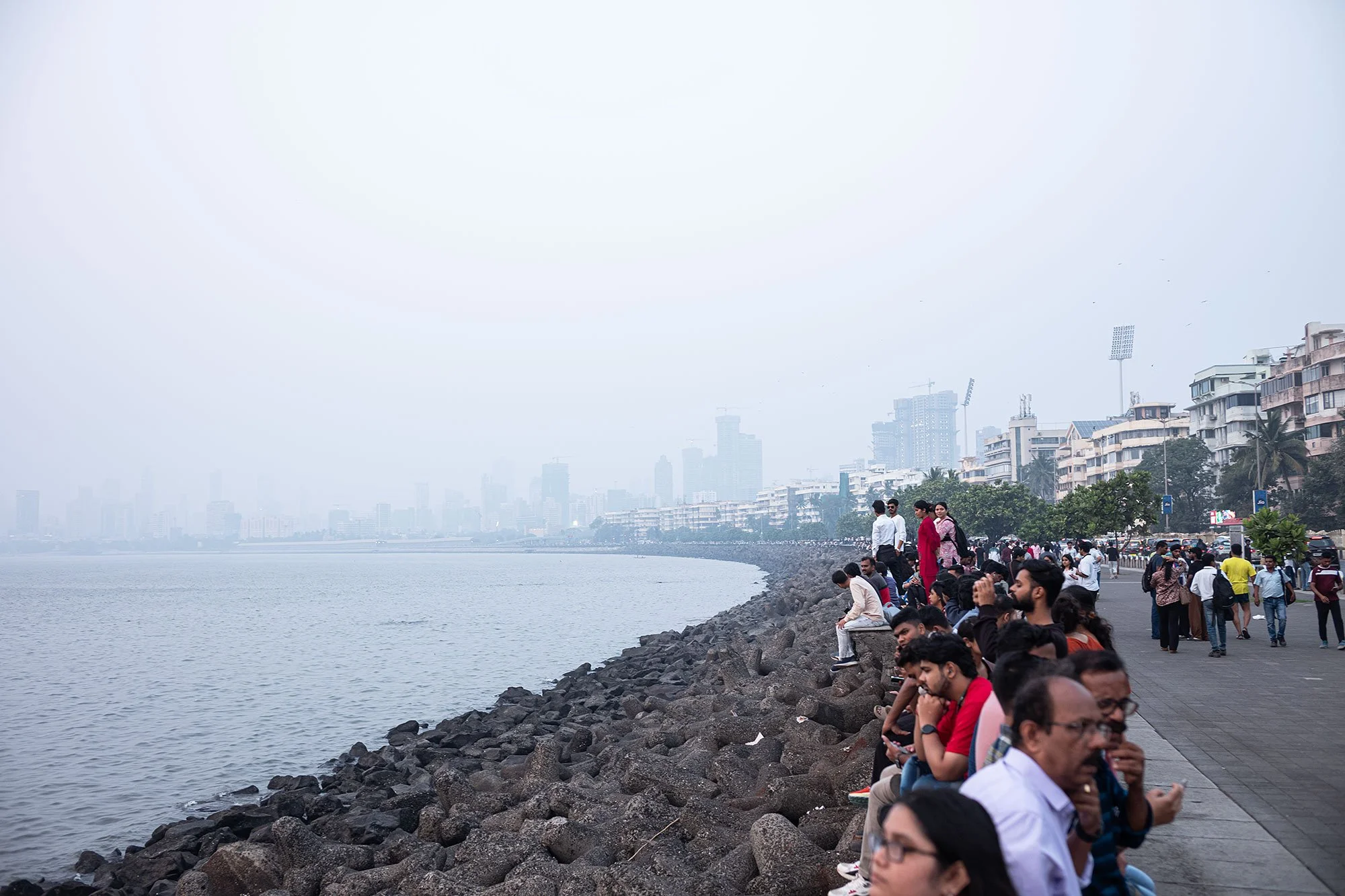
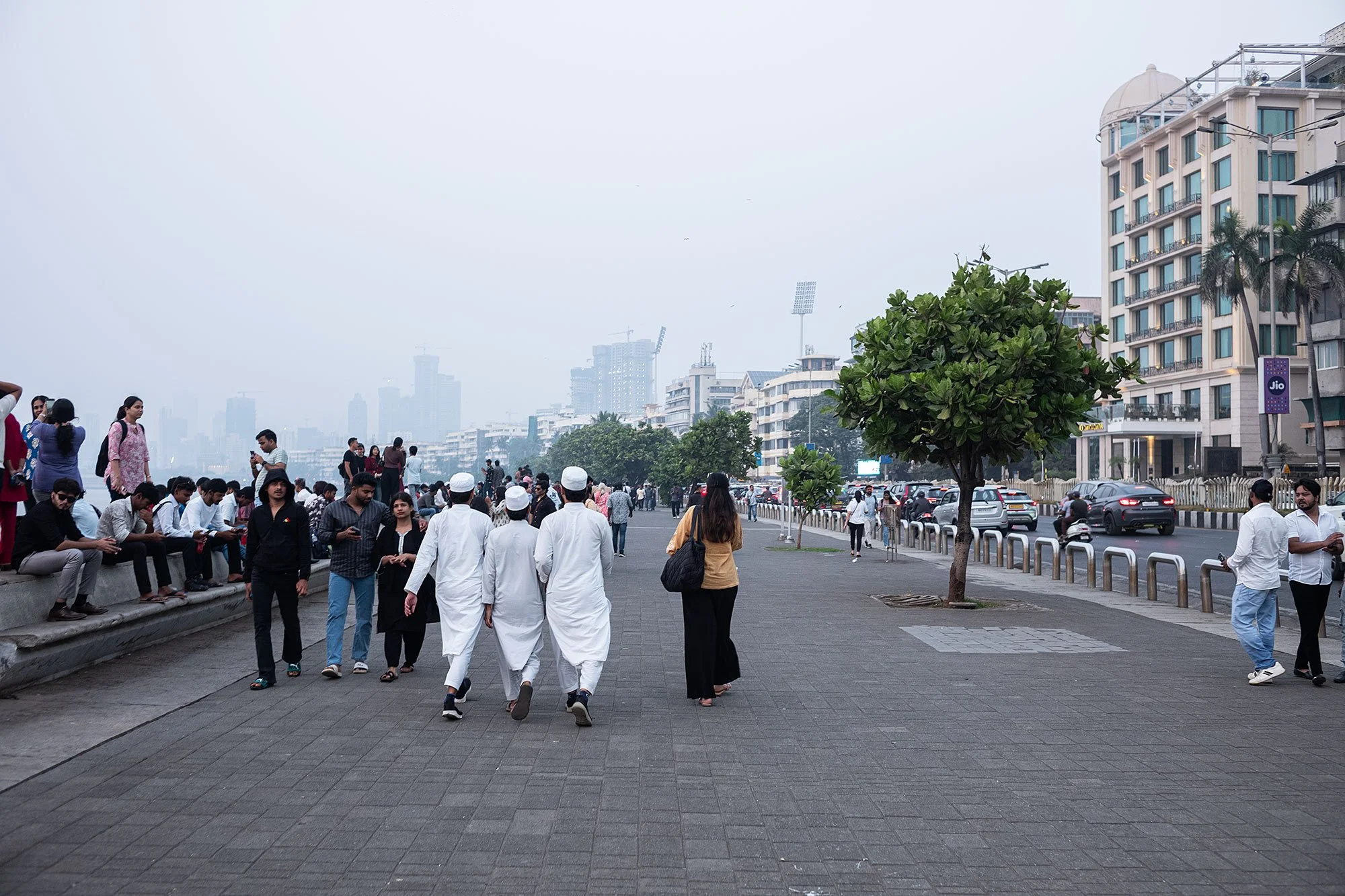
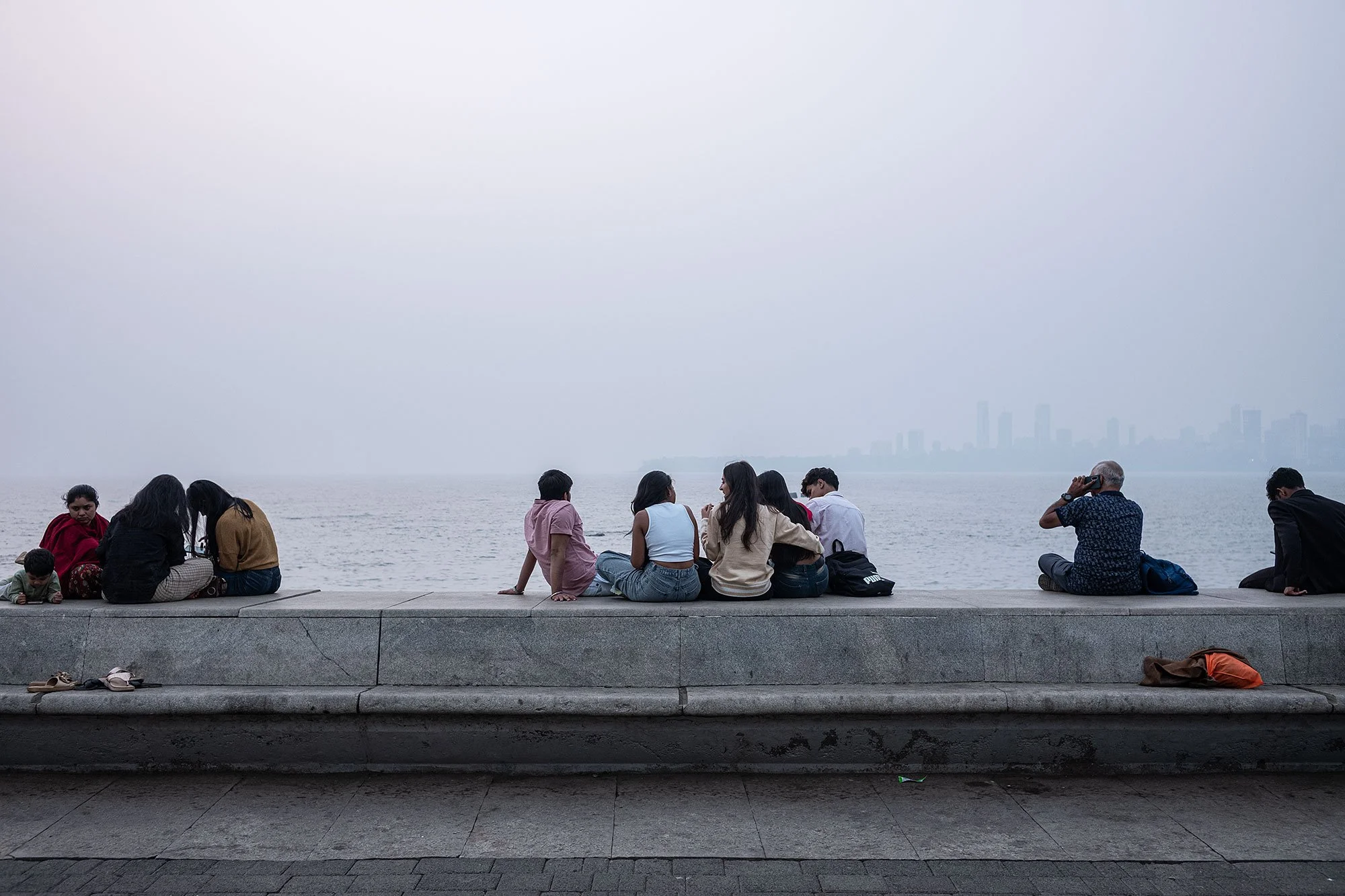
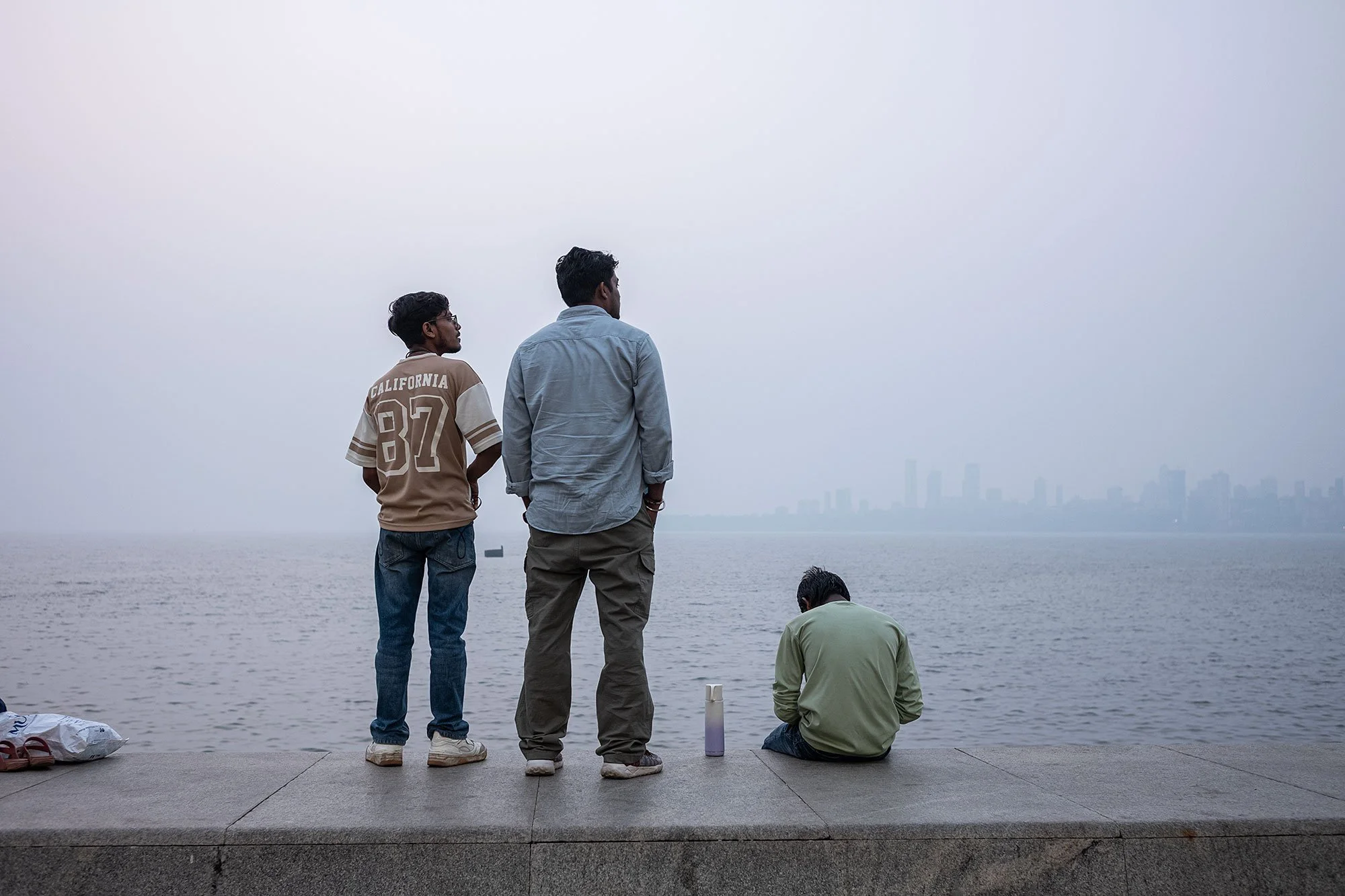
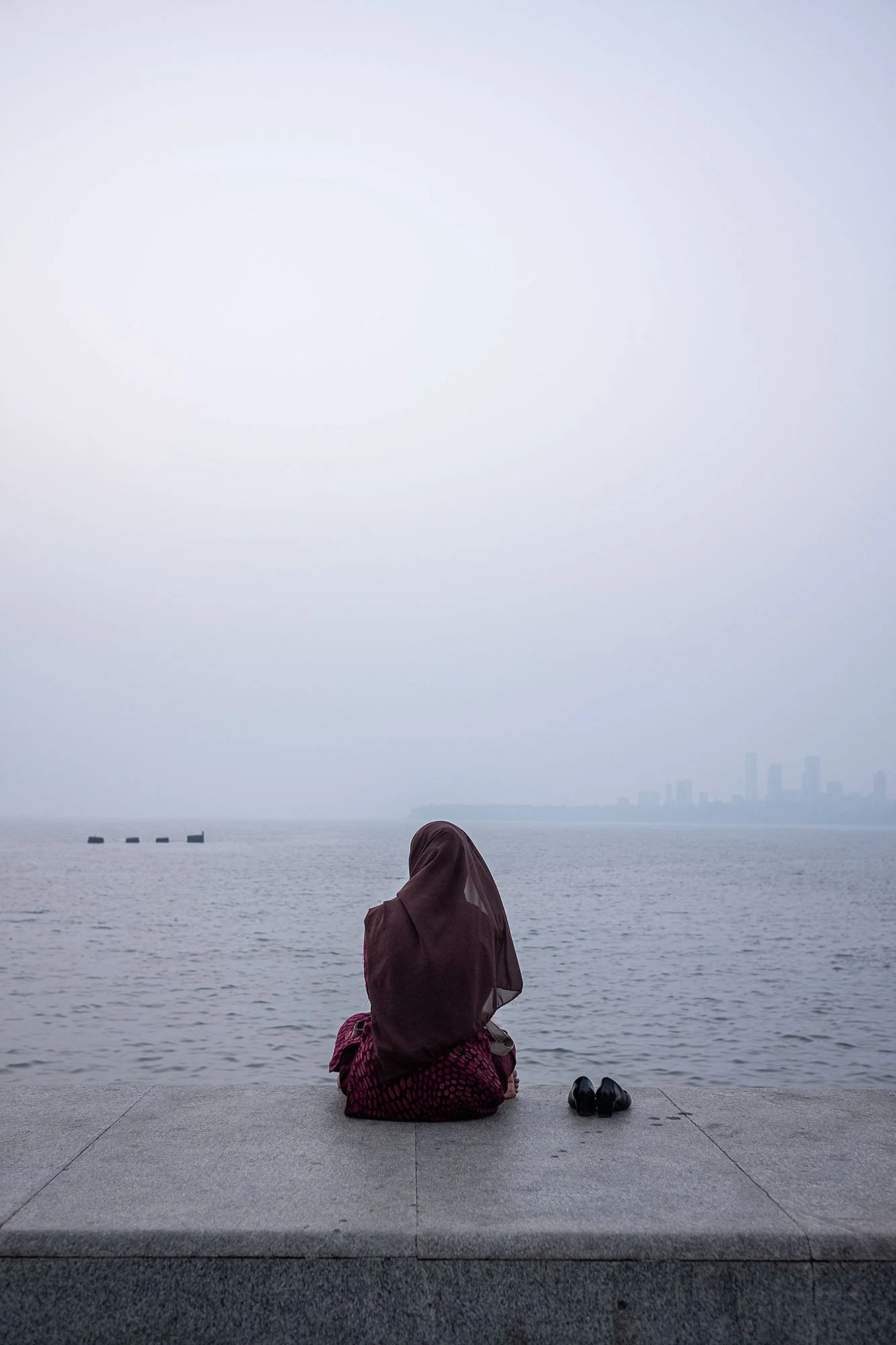
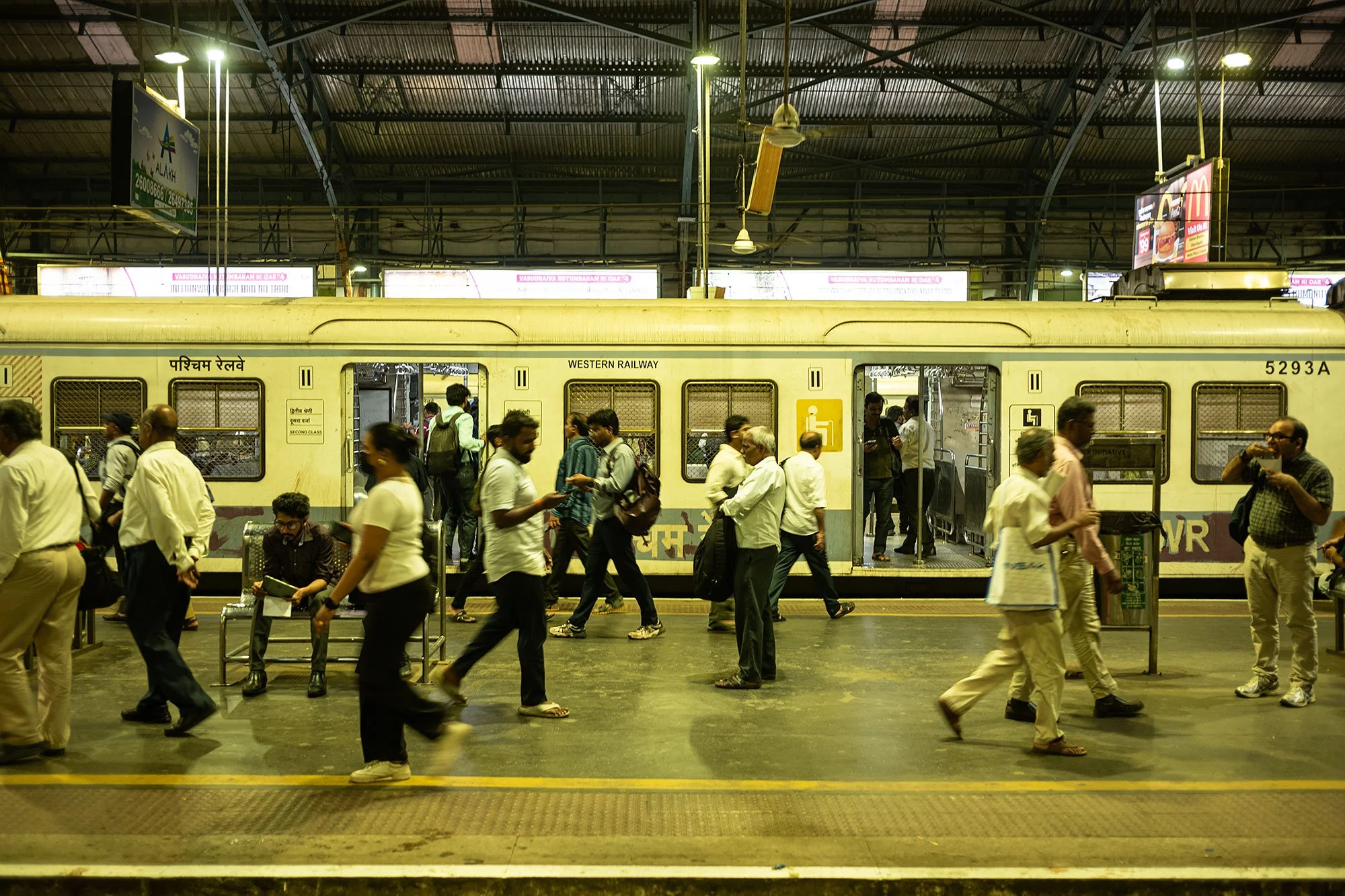
After the sun sets I walk back towards home, passing Christchurch station and I walk through briefly to see what an Indian train station looks like. I never took a train on my last trip to India; on this one I have three scheduled, one an overnight trip. At this hour Christchurch looks to be comprised mostly of commuter trains; I imagine the longer-distance ones leave from Chhatrapati Shivaji Maharaj Terminus, by my hotel.
At home I eat my leftovers, thankful for my pre-planning. I’m tired and don’t feel up to going to another restaurant. I want to get to bed early. In the morning I have a tour of the city scheduled. I’ve gotten off to a decent start. 🇮🇳
— 30 Jan 2026