A tour of Higashi Hongan-ji Temple.
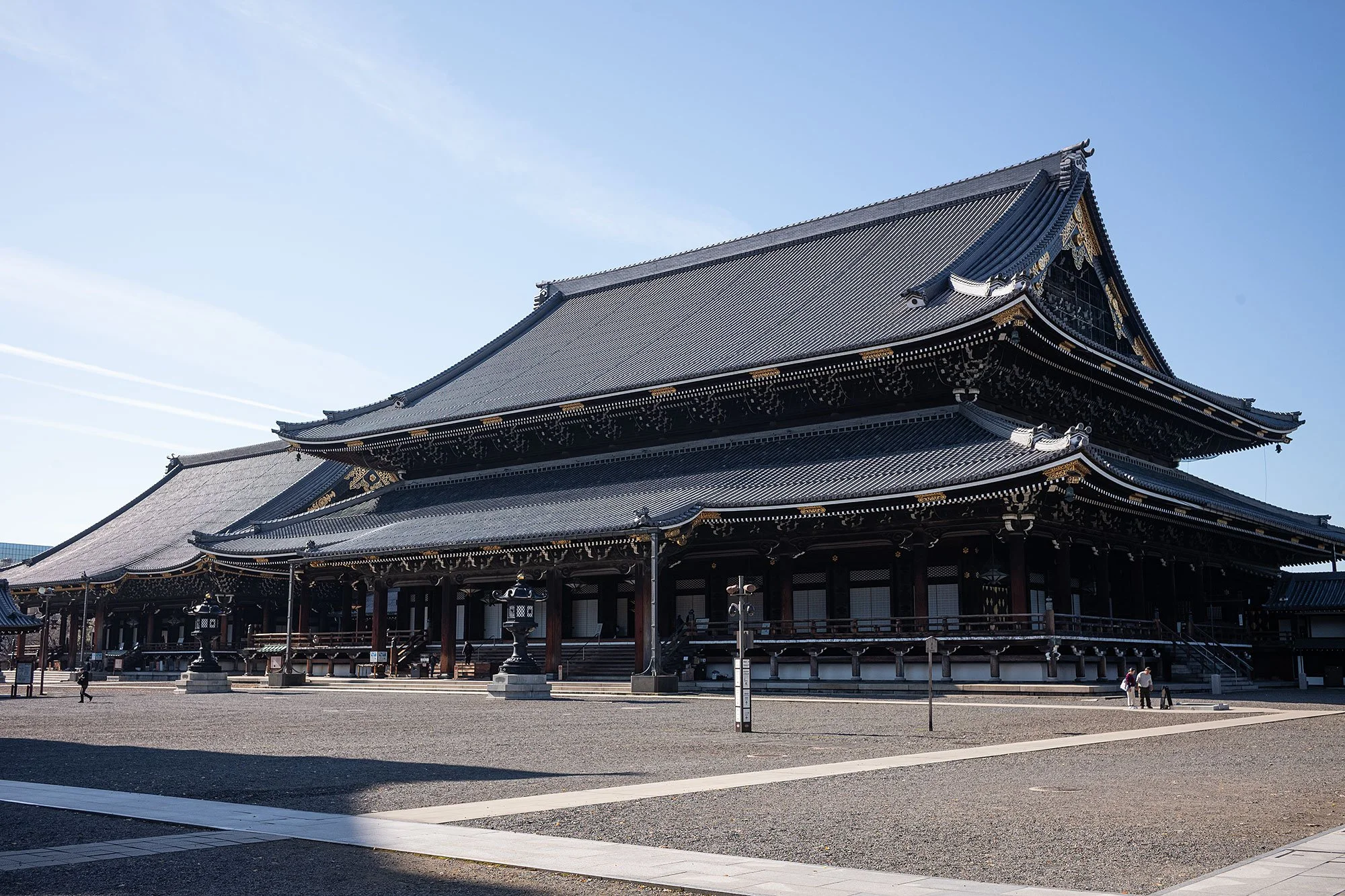
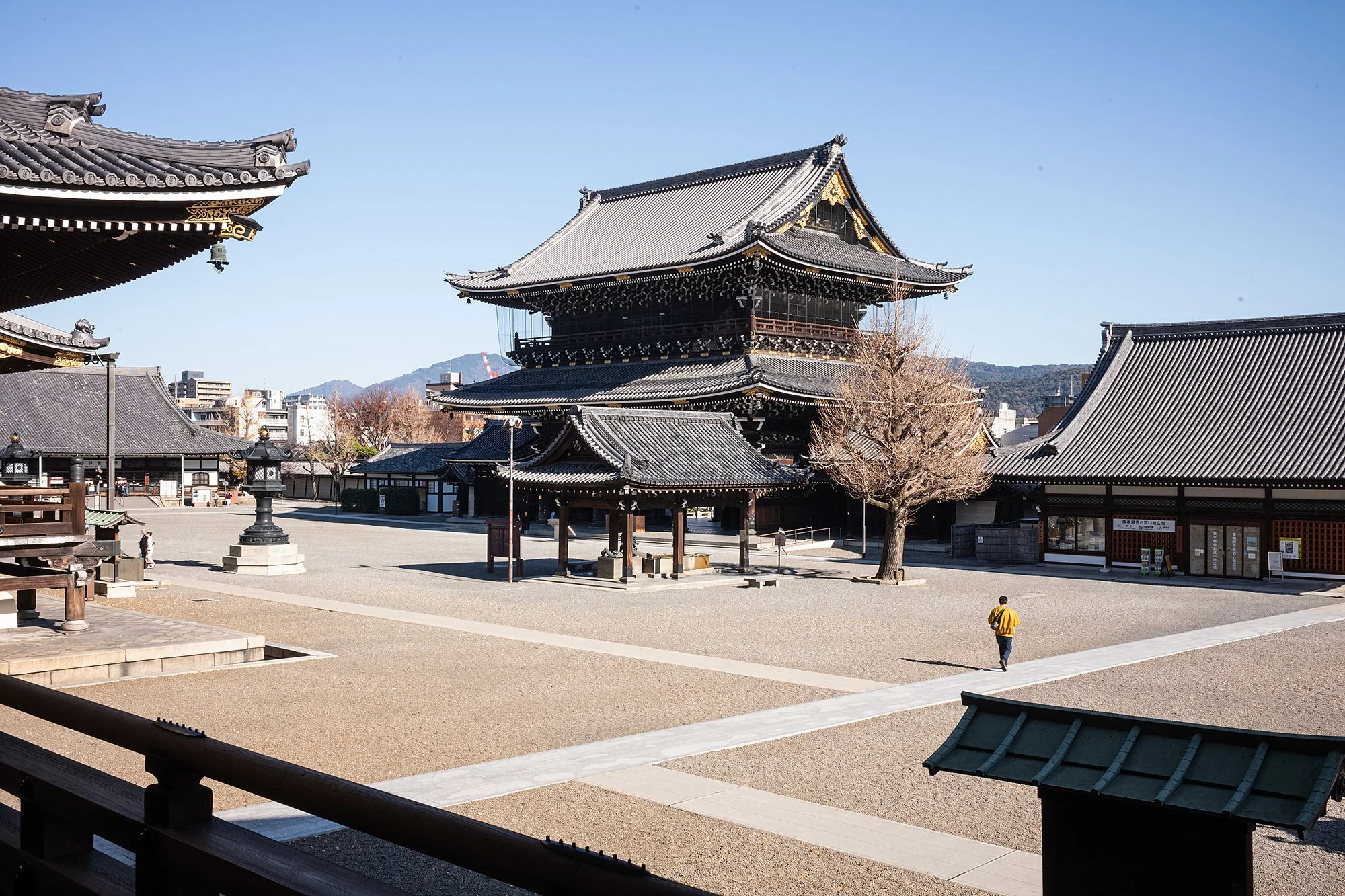
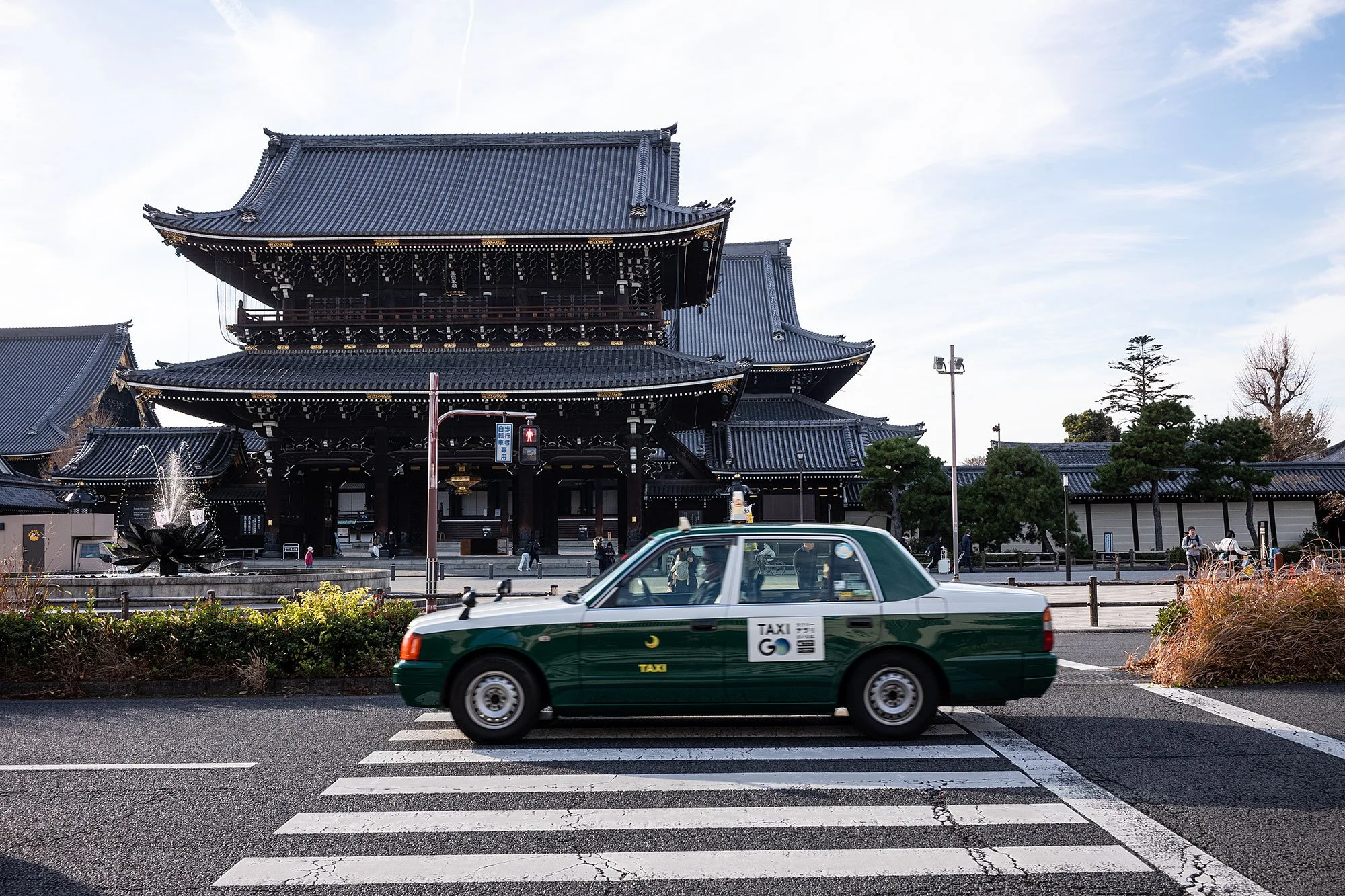
Yukari invites me to visit the temple at which she’s been working, Higashi Hongan-ji, the head temple of the Ōtani-ha branch of Jōdo Shinshū.
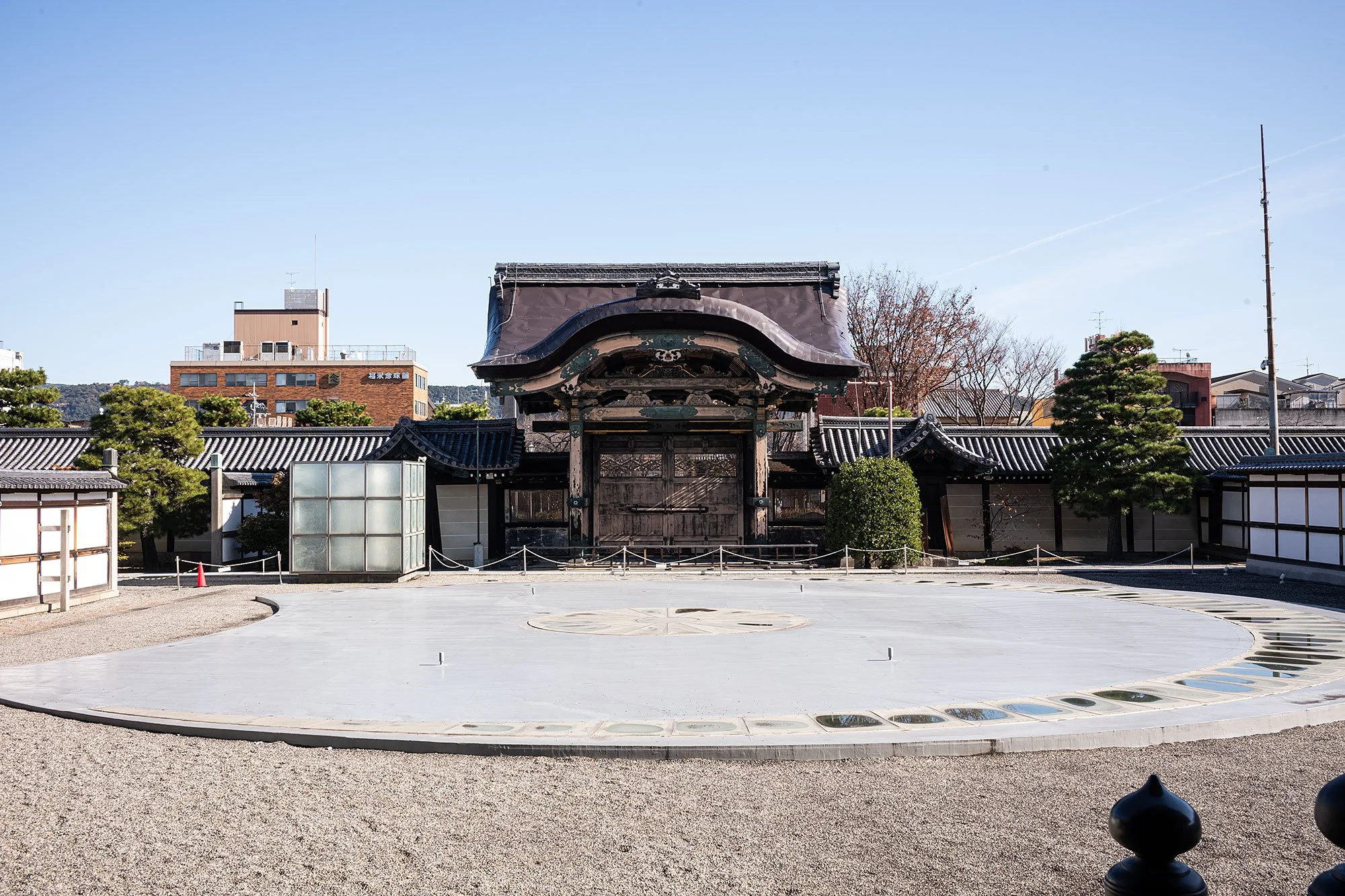
Built in 1601, its main hall is the largest wooden structure in Kyoto and is dedicated to Shinran, the sect’s founder. The Amidado Hall next to it is almost as large, and is dedicated to the Amida Buddha.
We arrive at the office and Yukari excuses herself to check in and get her badge. She returns with a sheaf of papers. We take off our shoes and leave them in lockers and she leads us outside to the wrap-around verandah which leads to the main building and hall.
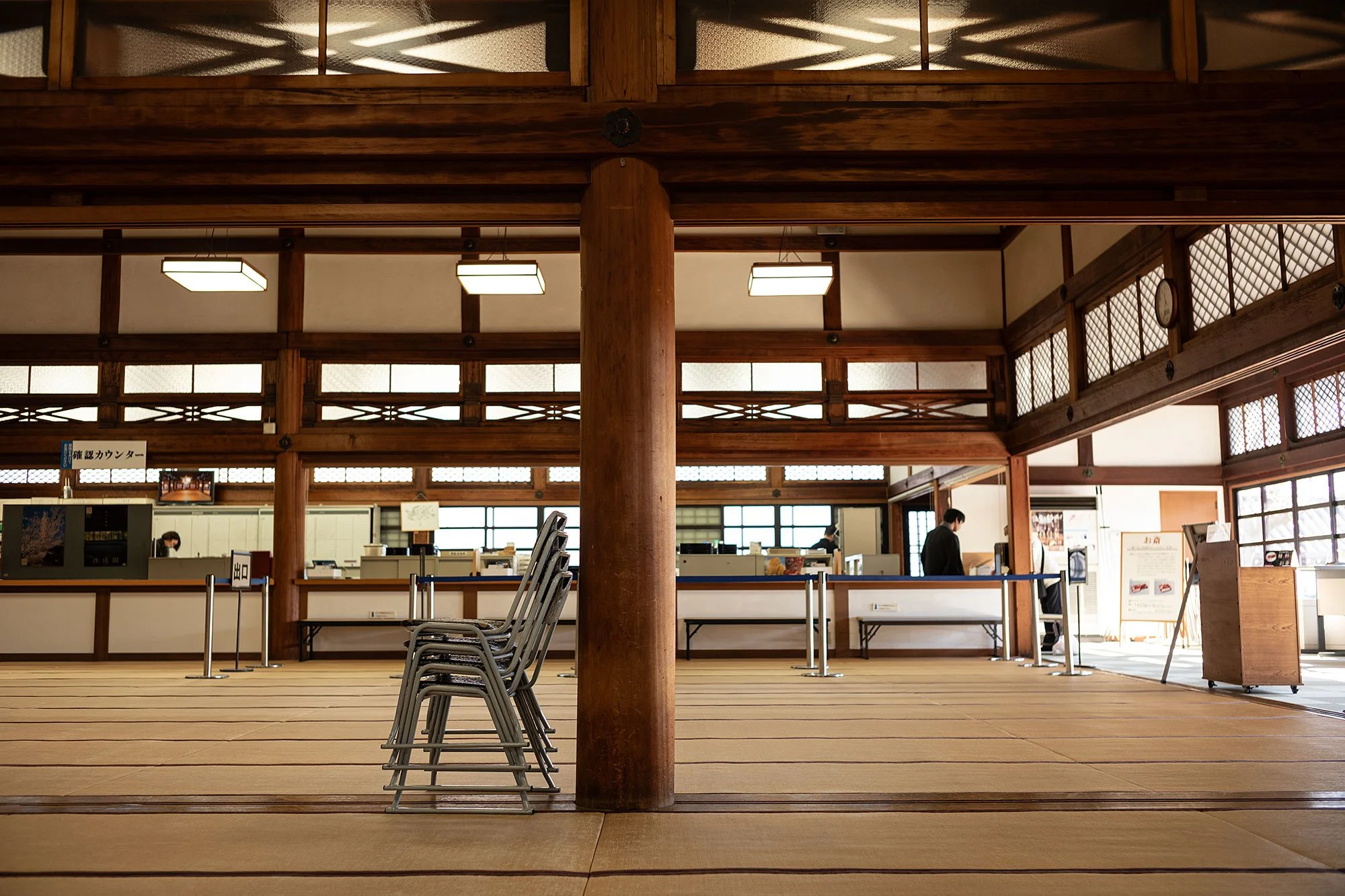
The cold from the wood seeps through our feet as we walk along the smooth planks to the main hall. Inside, Yukari bids us sit and gives us the history of the temple and facts about the construction of the hall .She has us guess the number of tatami mats that fill the hall. We both fall short; the answer is 927.
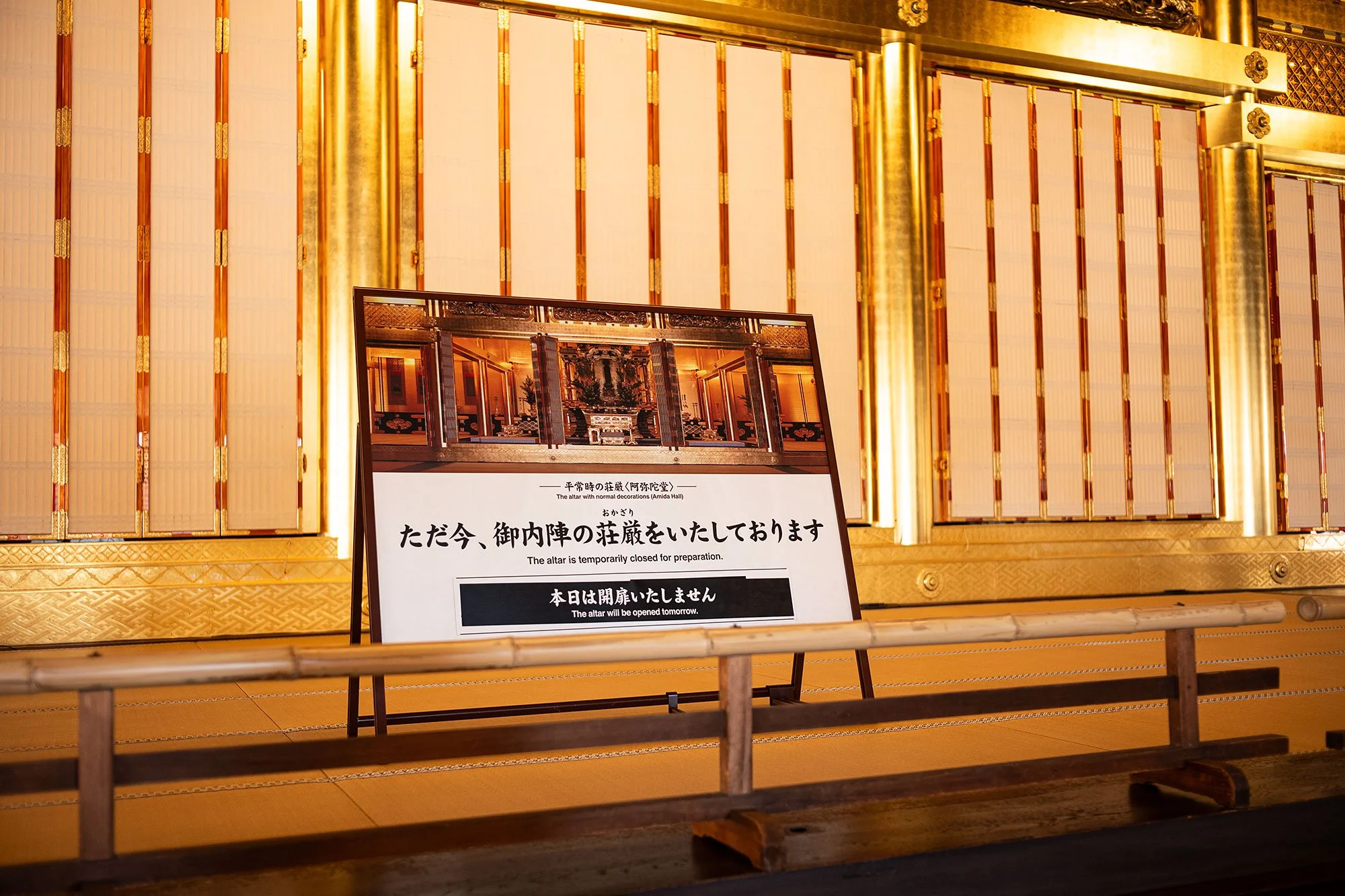
She apologizes that the altar is currently hidden from view. It’s being prepared for the solistice.
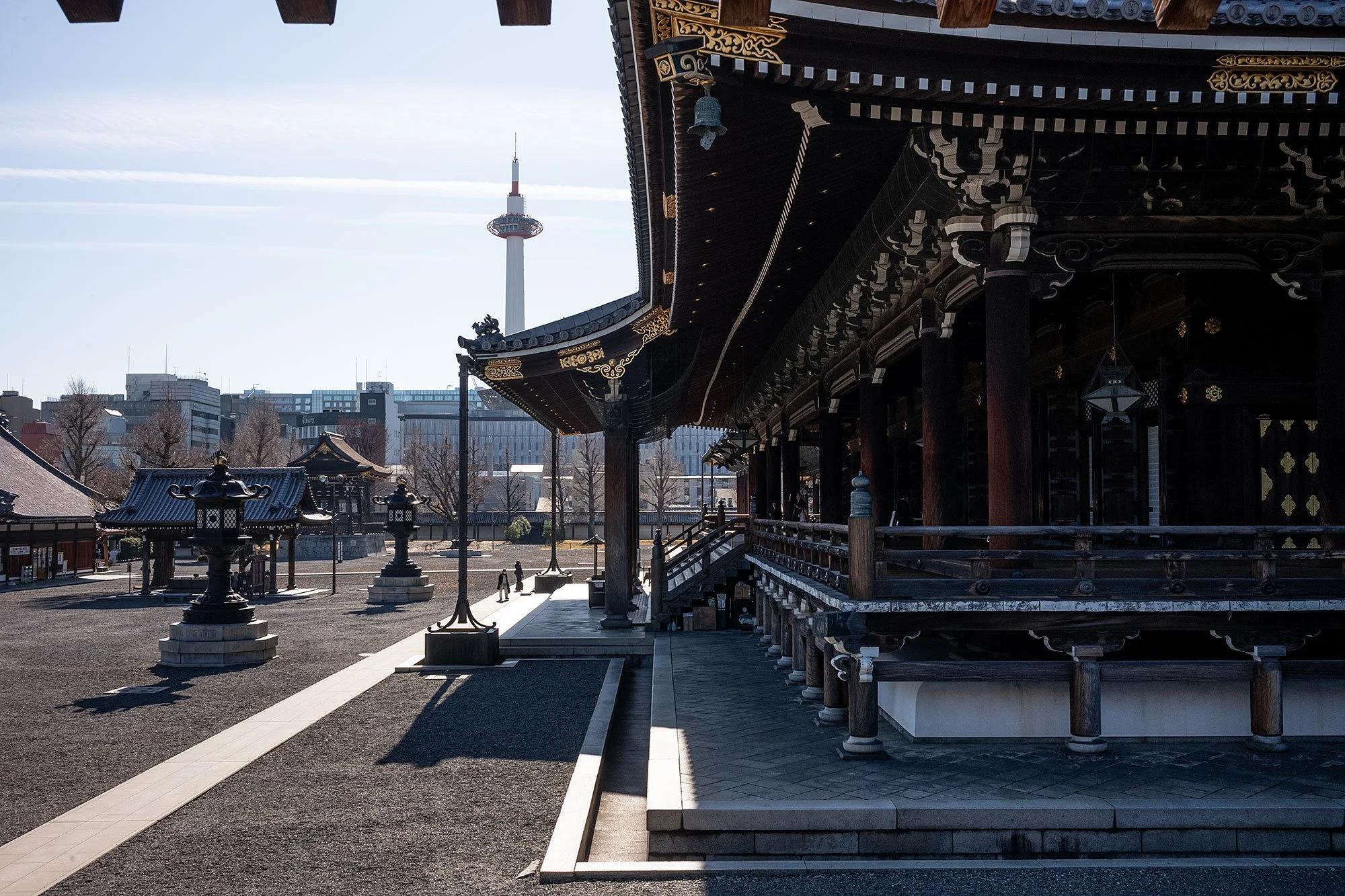
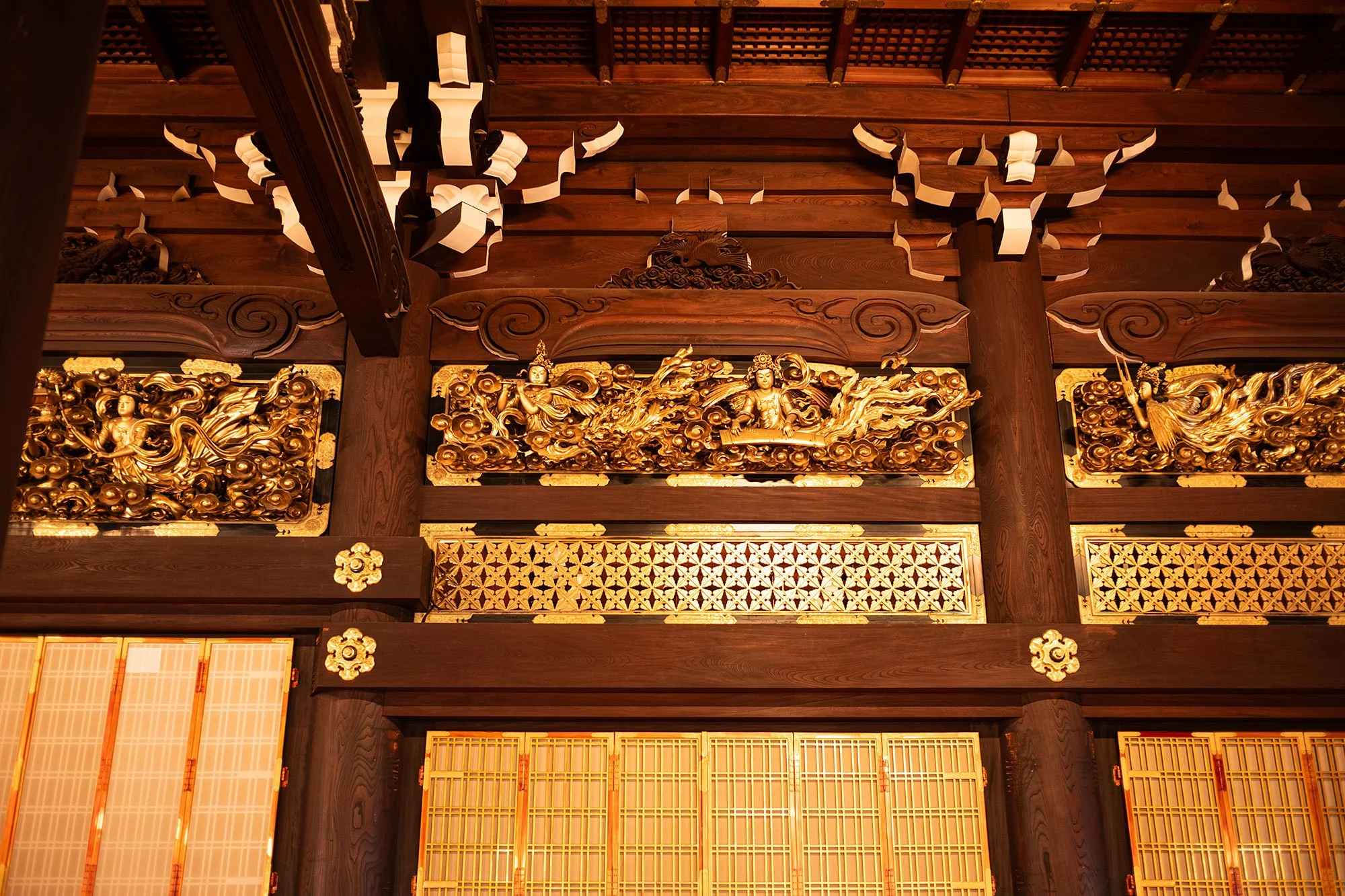
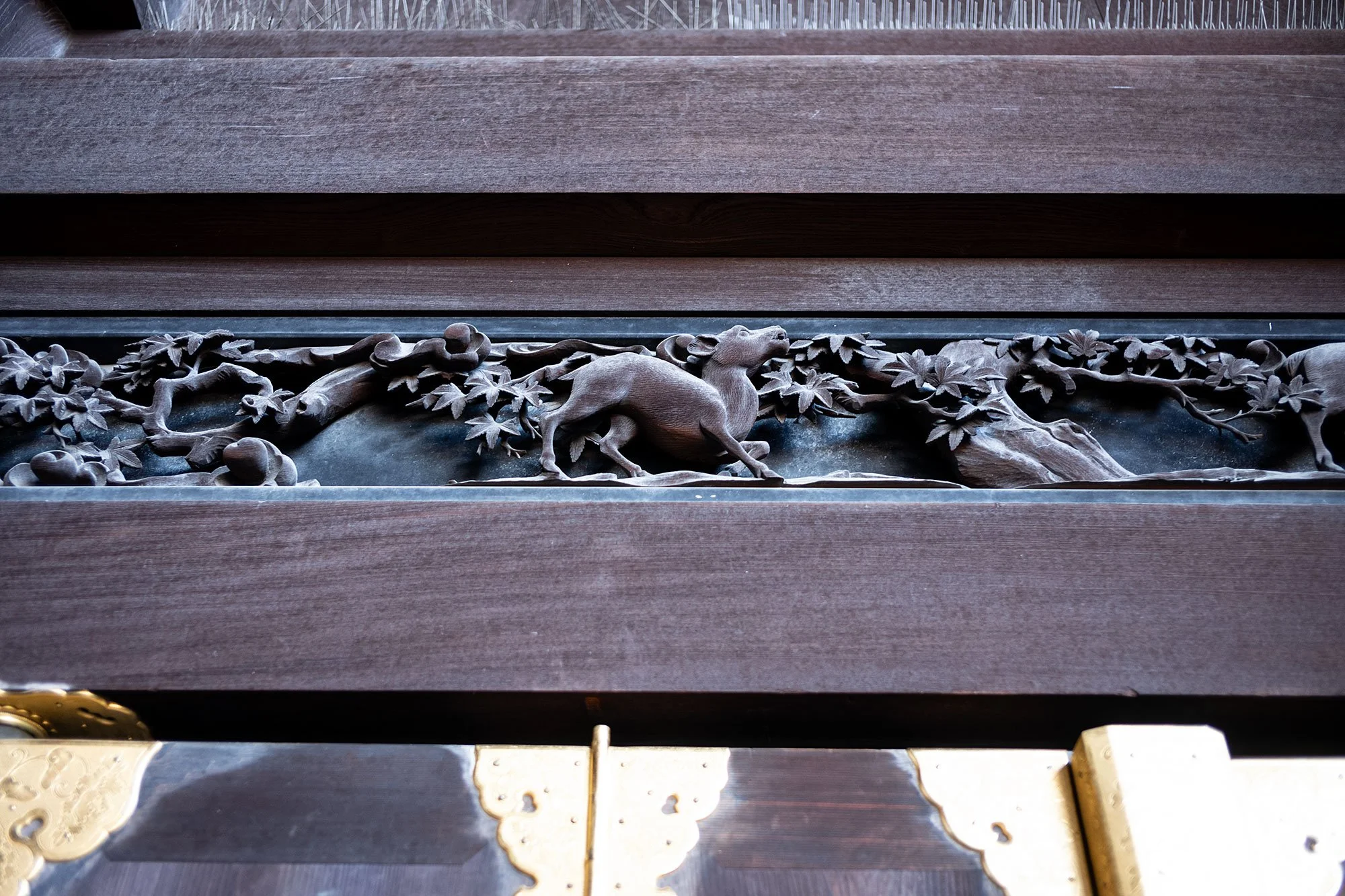
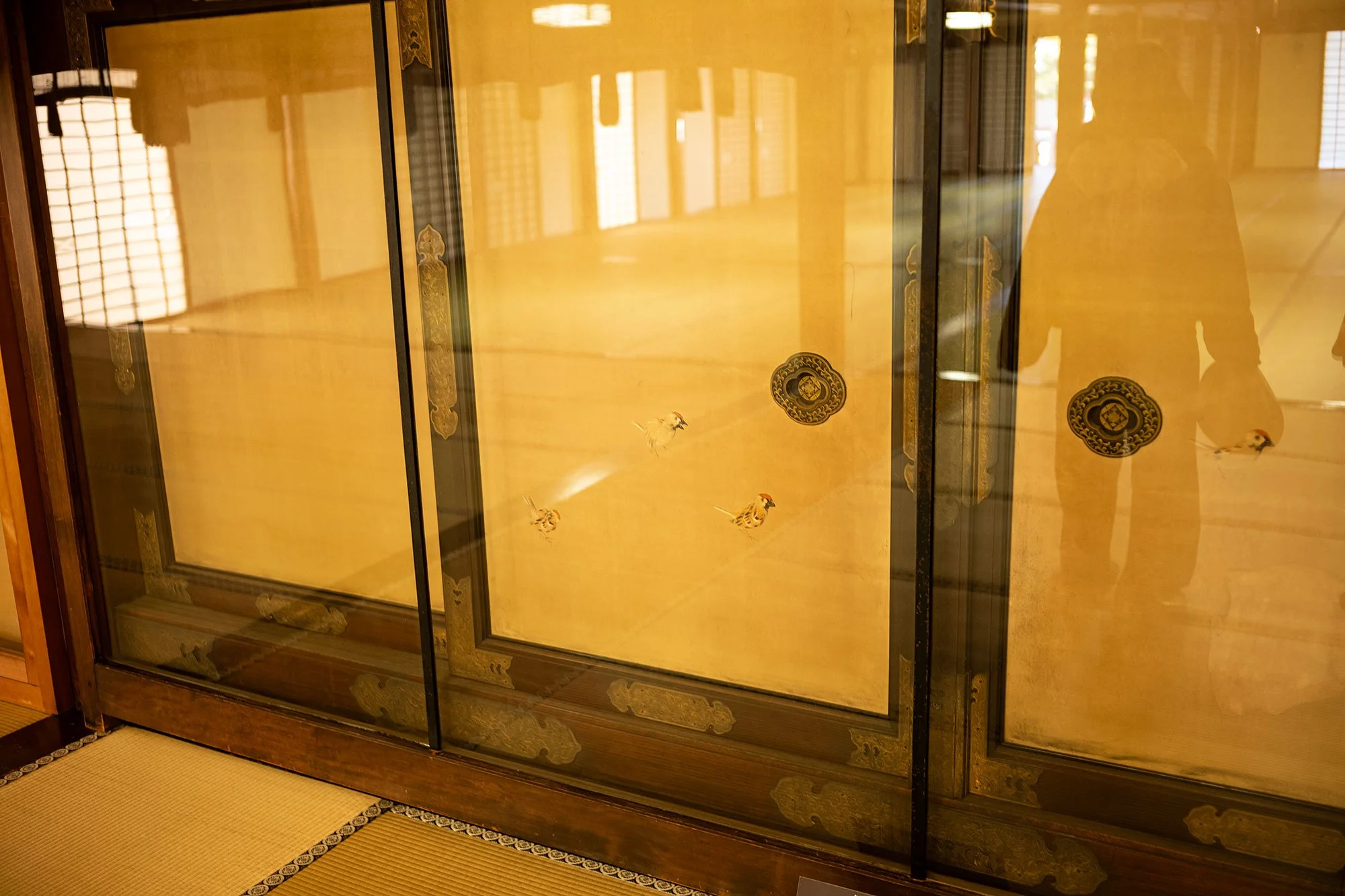
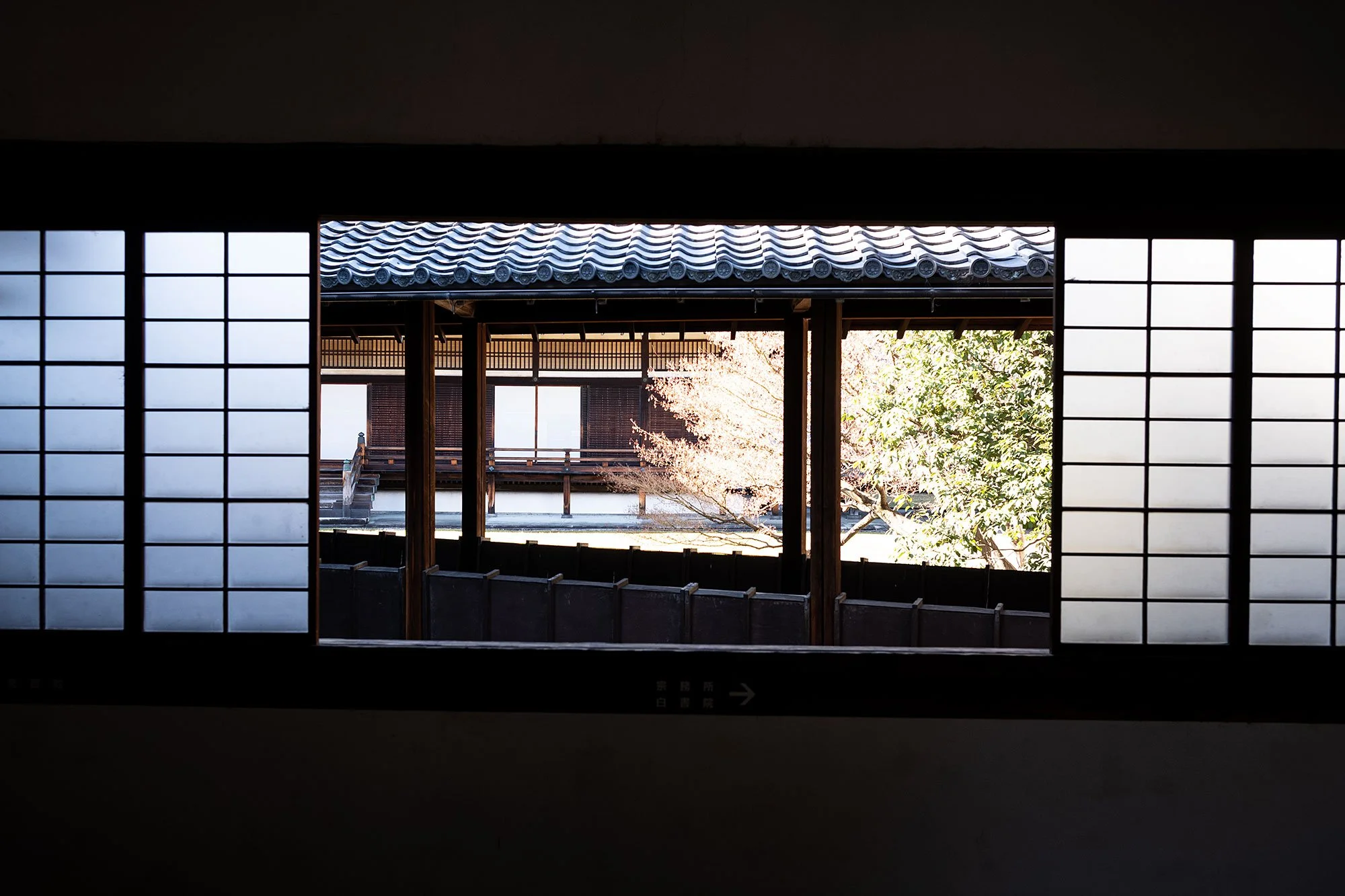
We continue on with the tour and Yukari points out various details in the rafters, over doors. She consults her papers now and again, but does an admirable job of locating the different points of interest and answering our questions. Pausing in front of one set of screens she talks about the birds painted upon them. There should be one more, but it’s said that they are so lifelike that one actually flew away.
We continue walking outside around the temples towards a commissary in the back. She’s arranged for us to have lunch at the temple, and I’m excited to eat the temple food.
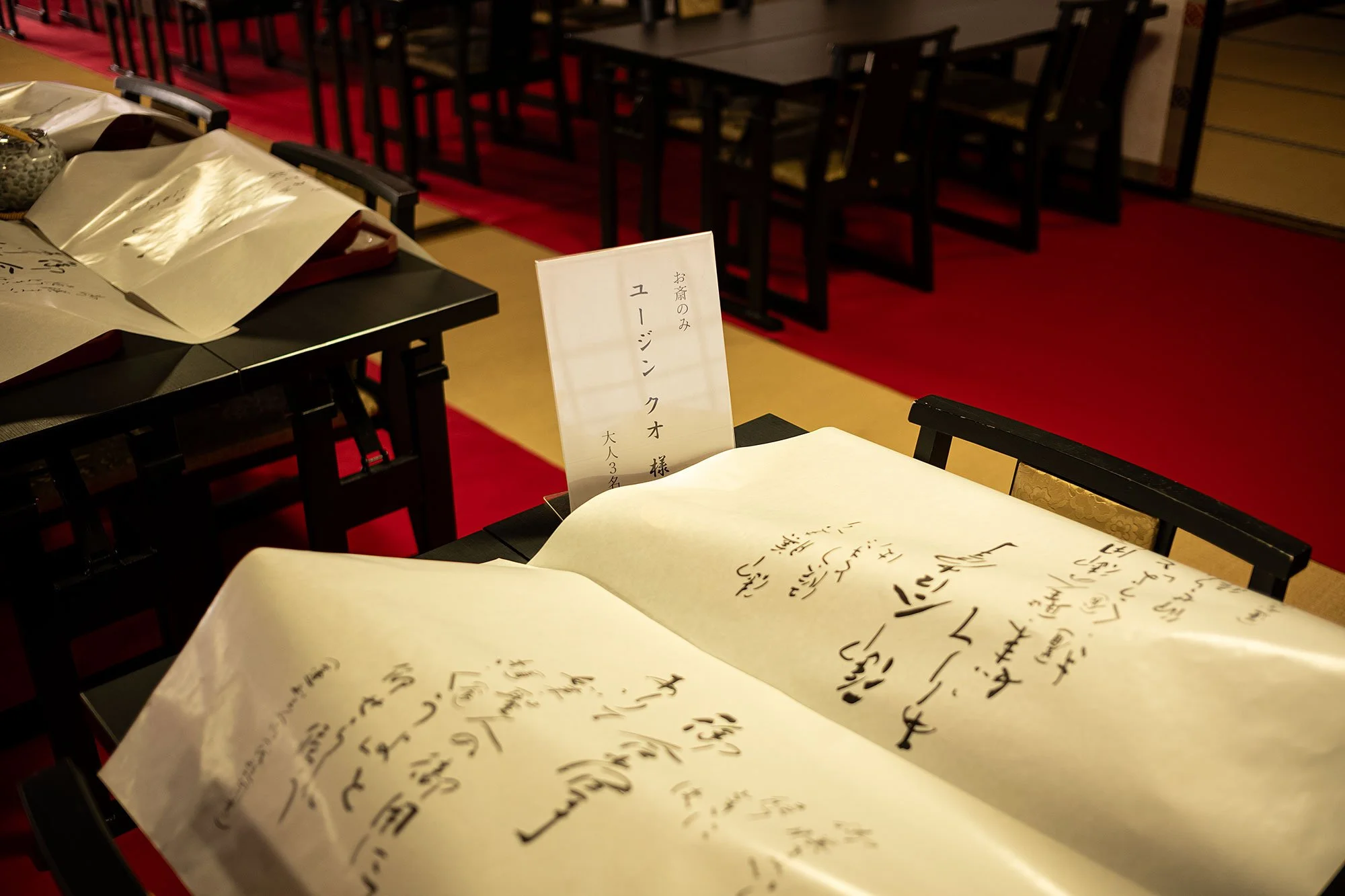
At our table, most of the food has already been laid out, kept under sheets of paper. Yukari translates a smaller sign that indicates that the table is reserved for me. The food is delicious and I’m touched that Yukari has been so thoughtful as to have planned this.
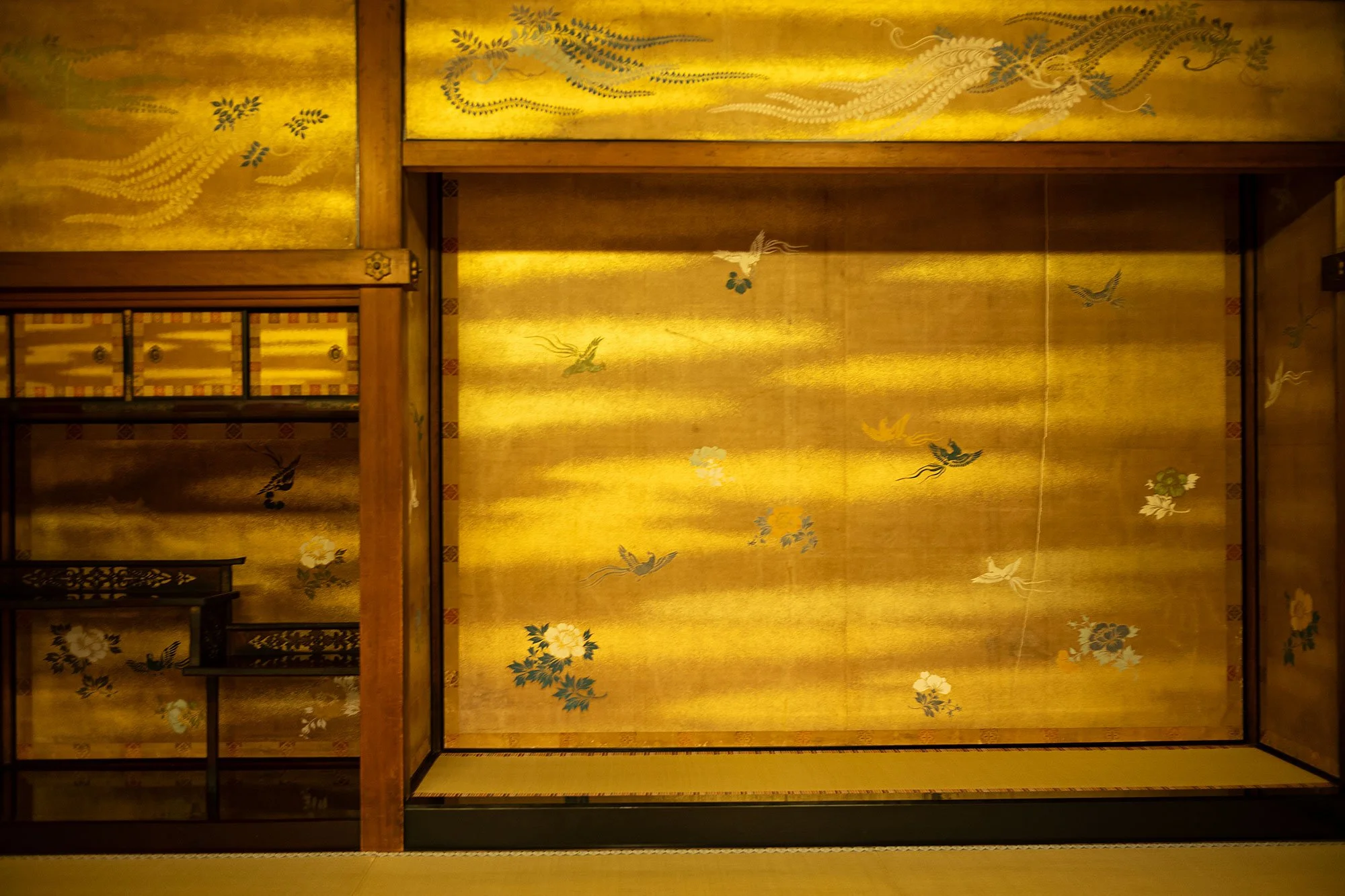
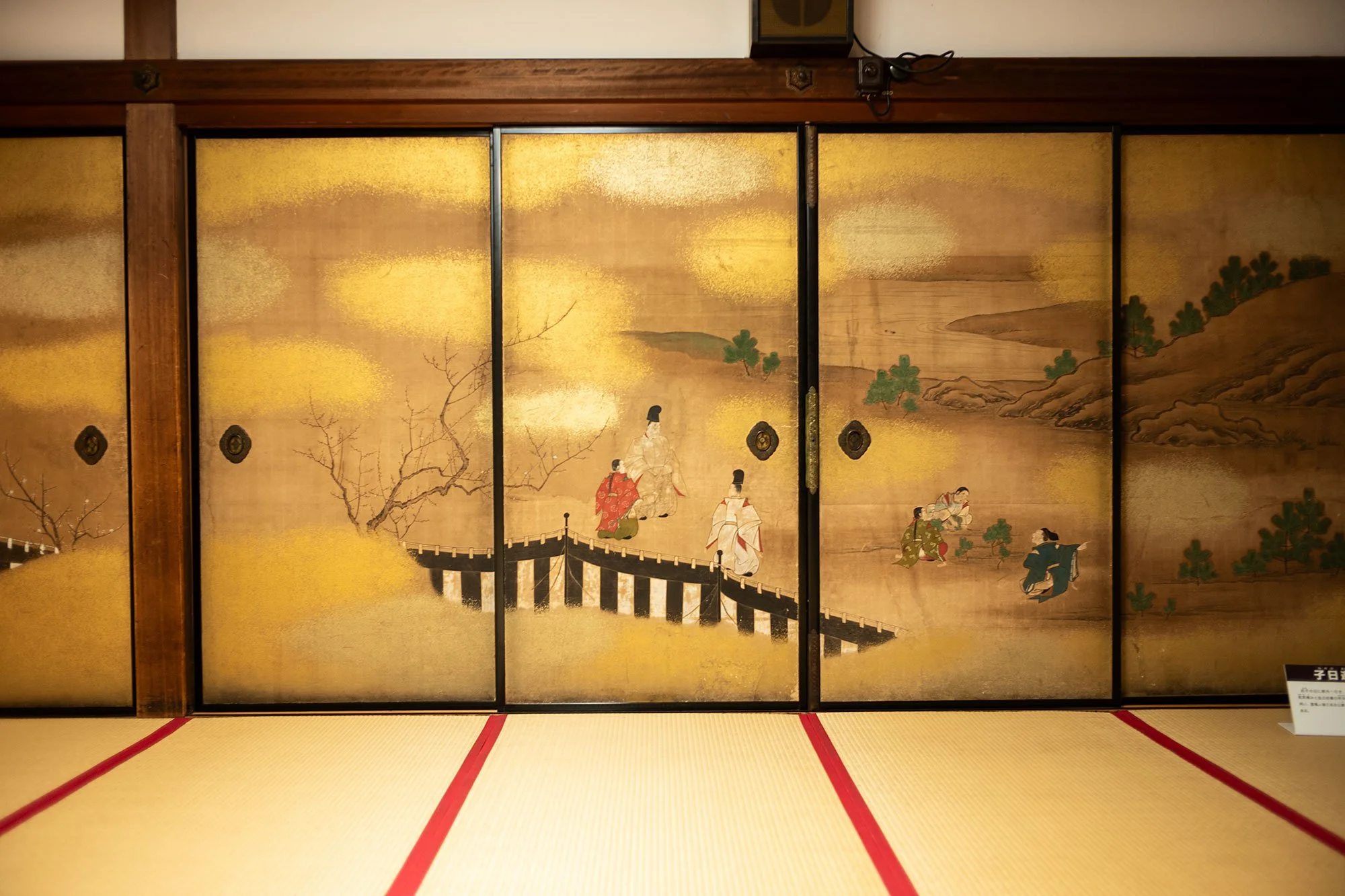
After lunch she takes us to a few more rooms in the temple, showing us more beautiful paintings that adorn the walls and sliding doors. As much as I try to remember the significance and the stories behind them, there’s too much for me to remember.
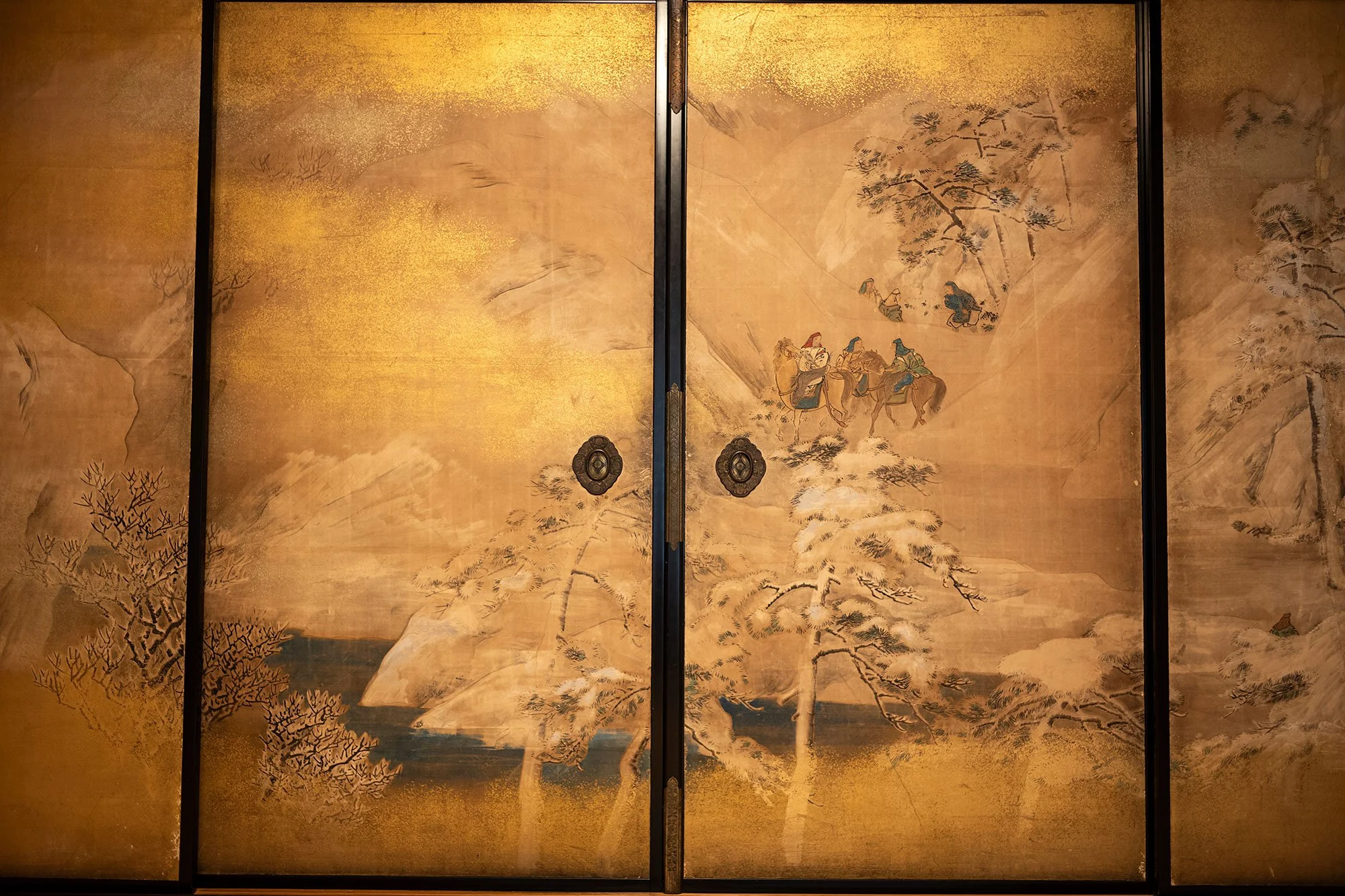
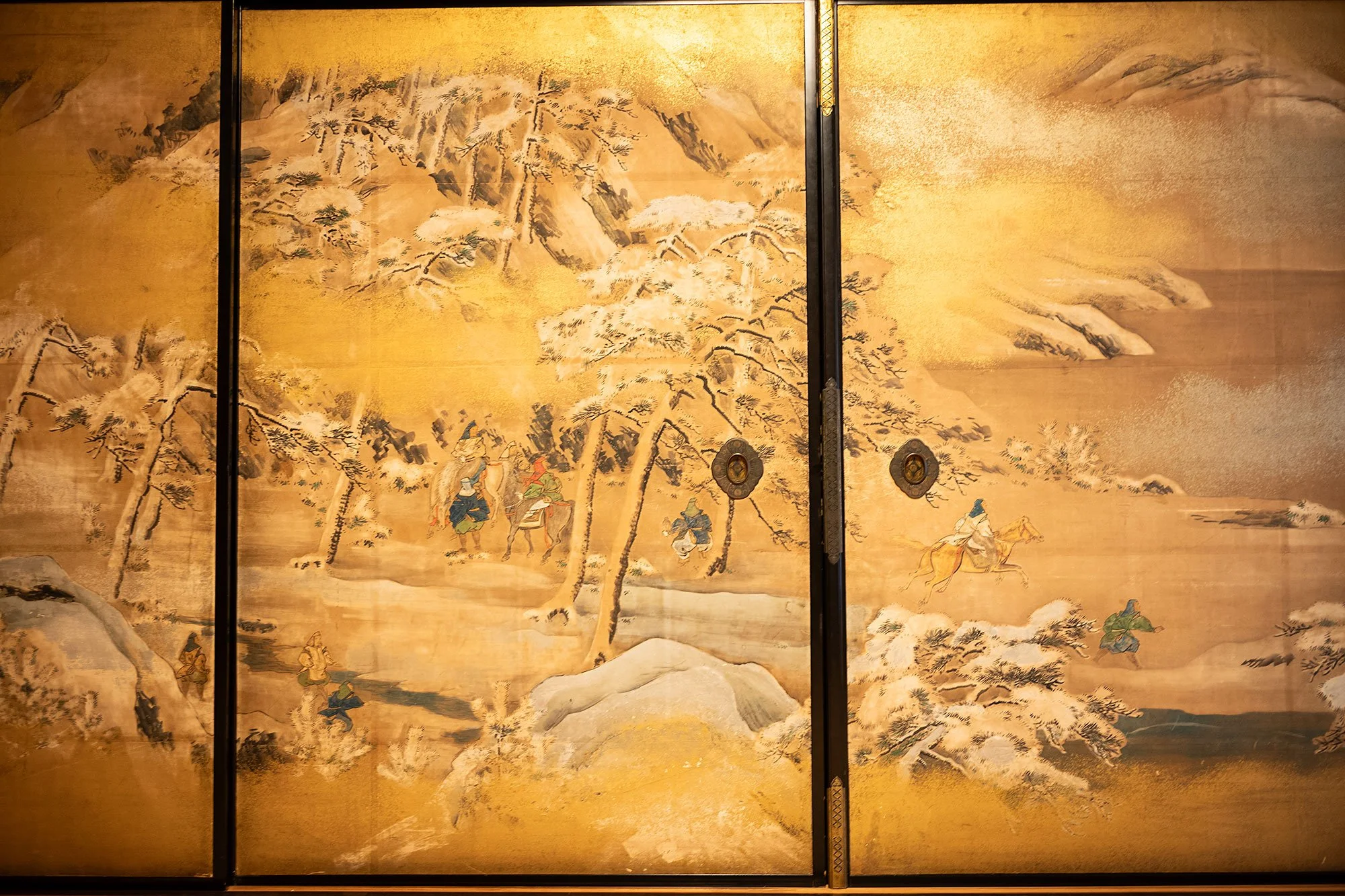
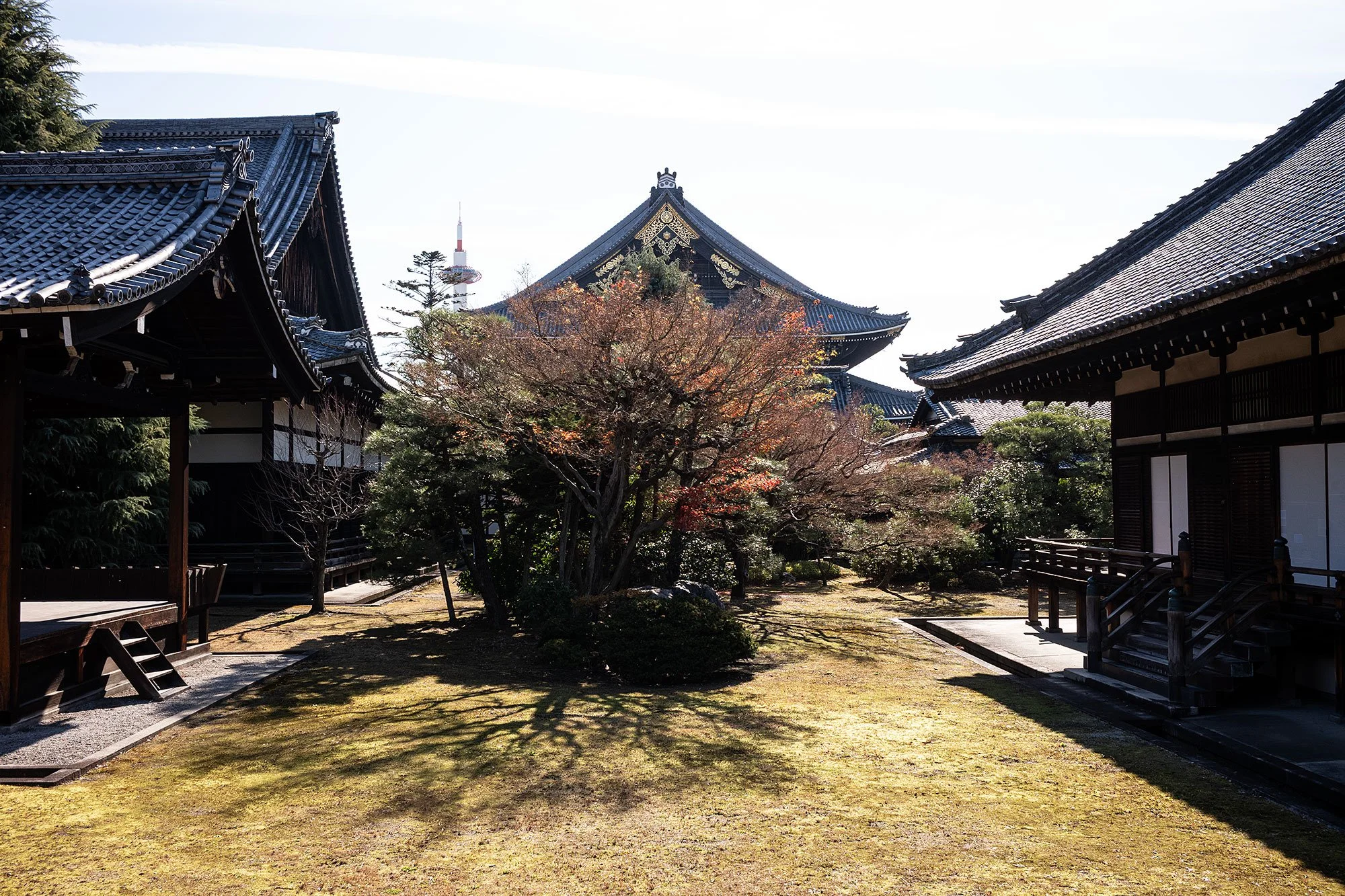
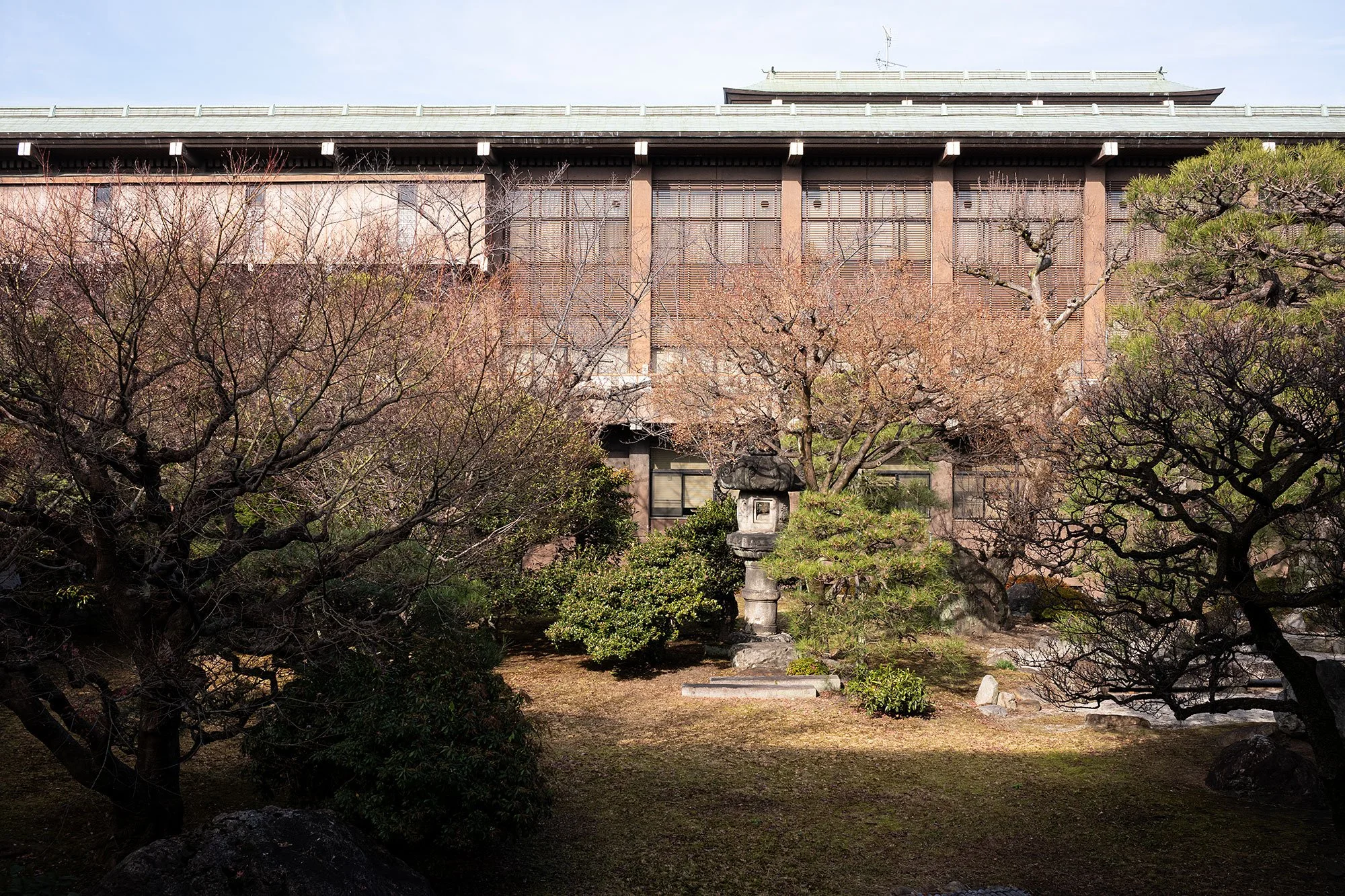
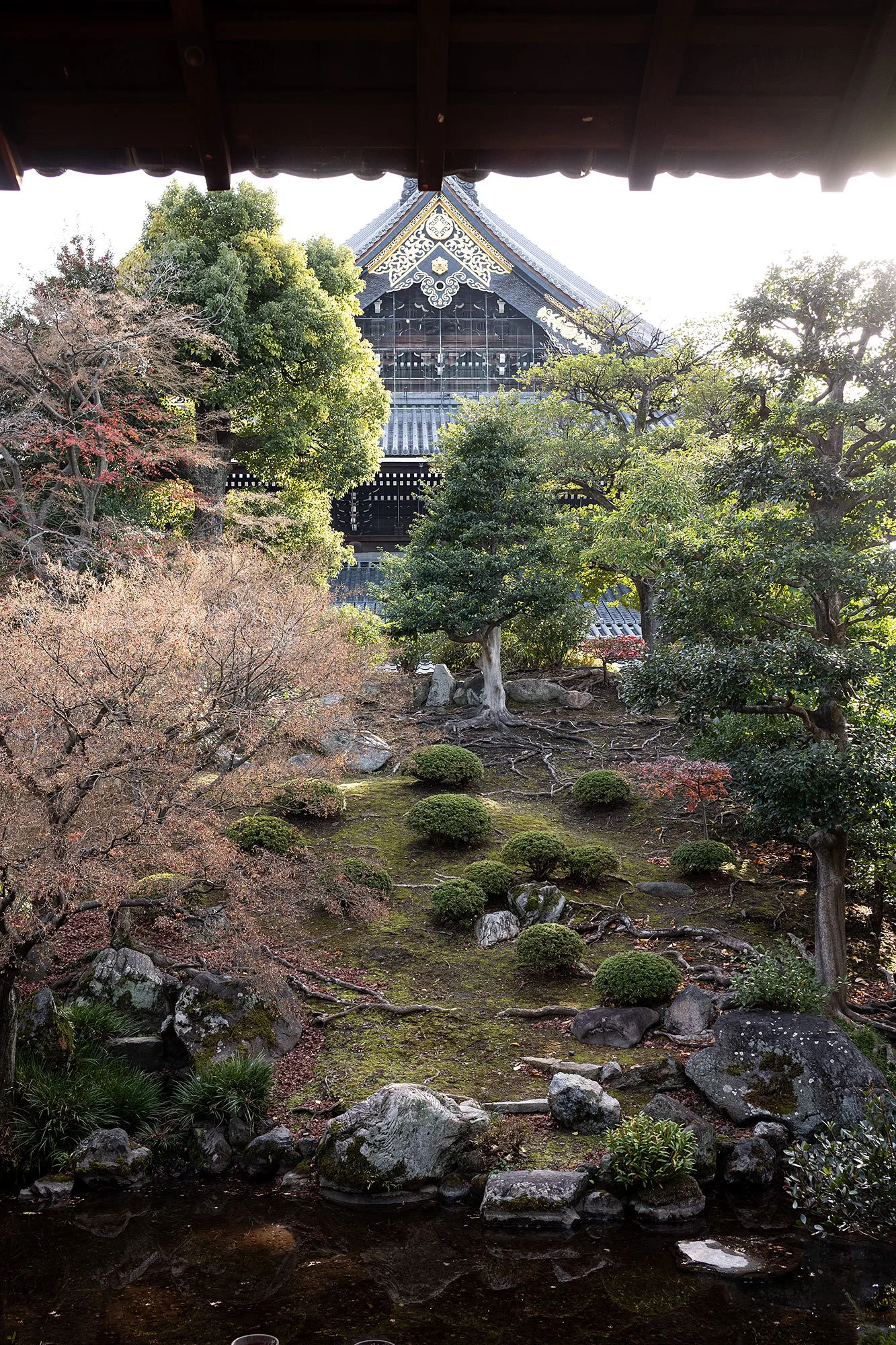
She leads us out the back to a beautiful garden built upon a sloping hill. The sun rises behind the buildings and we need to stay under the awnings in order to appreciate the meticulously crafted space so as not to be blinded by the light.
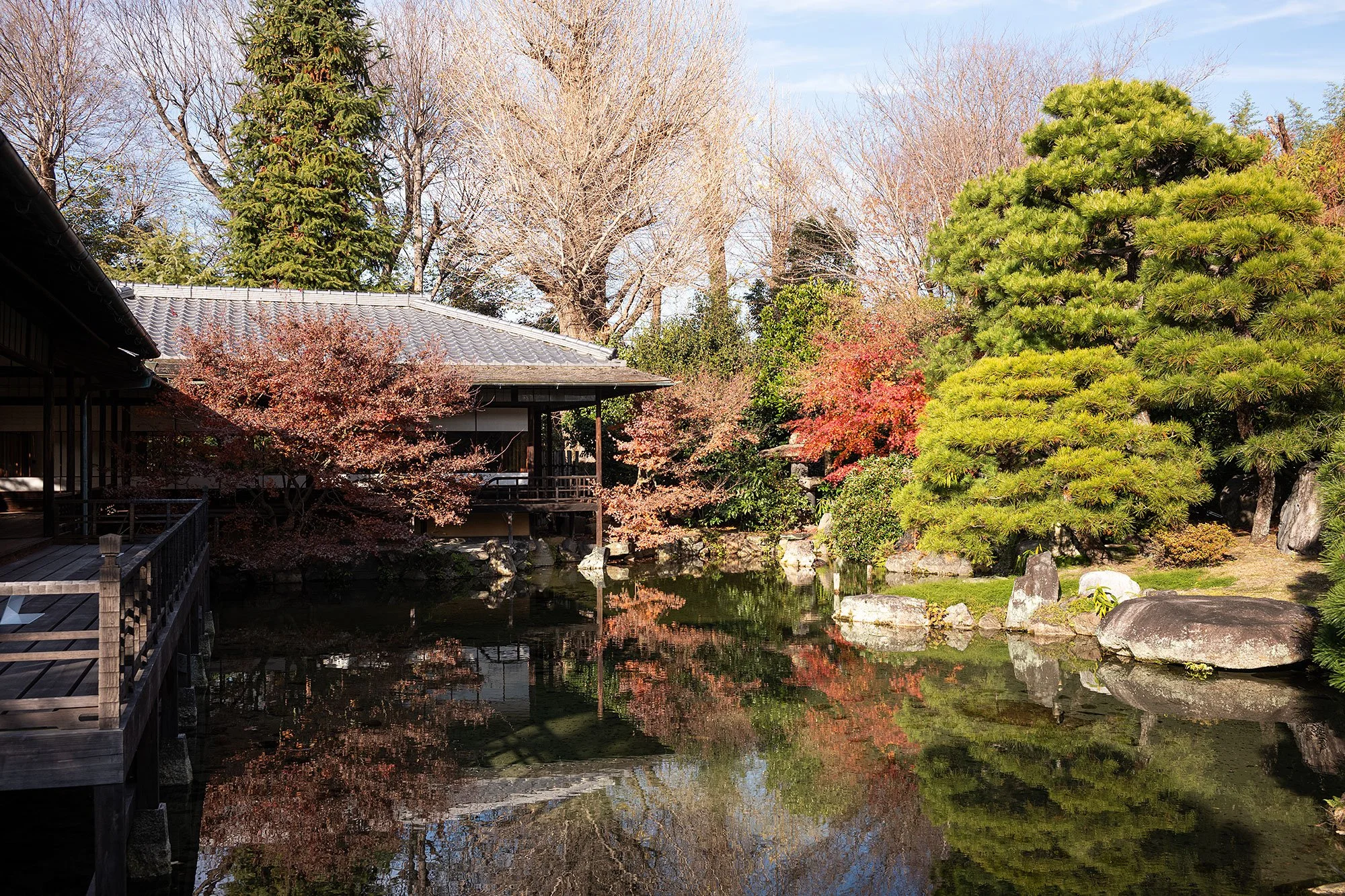
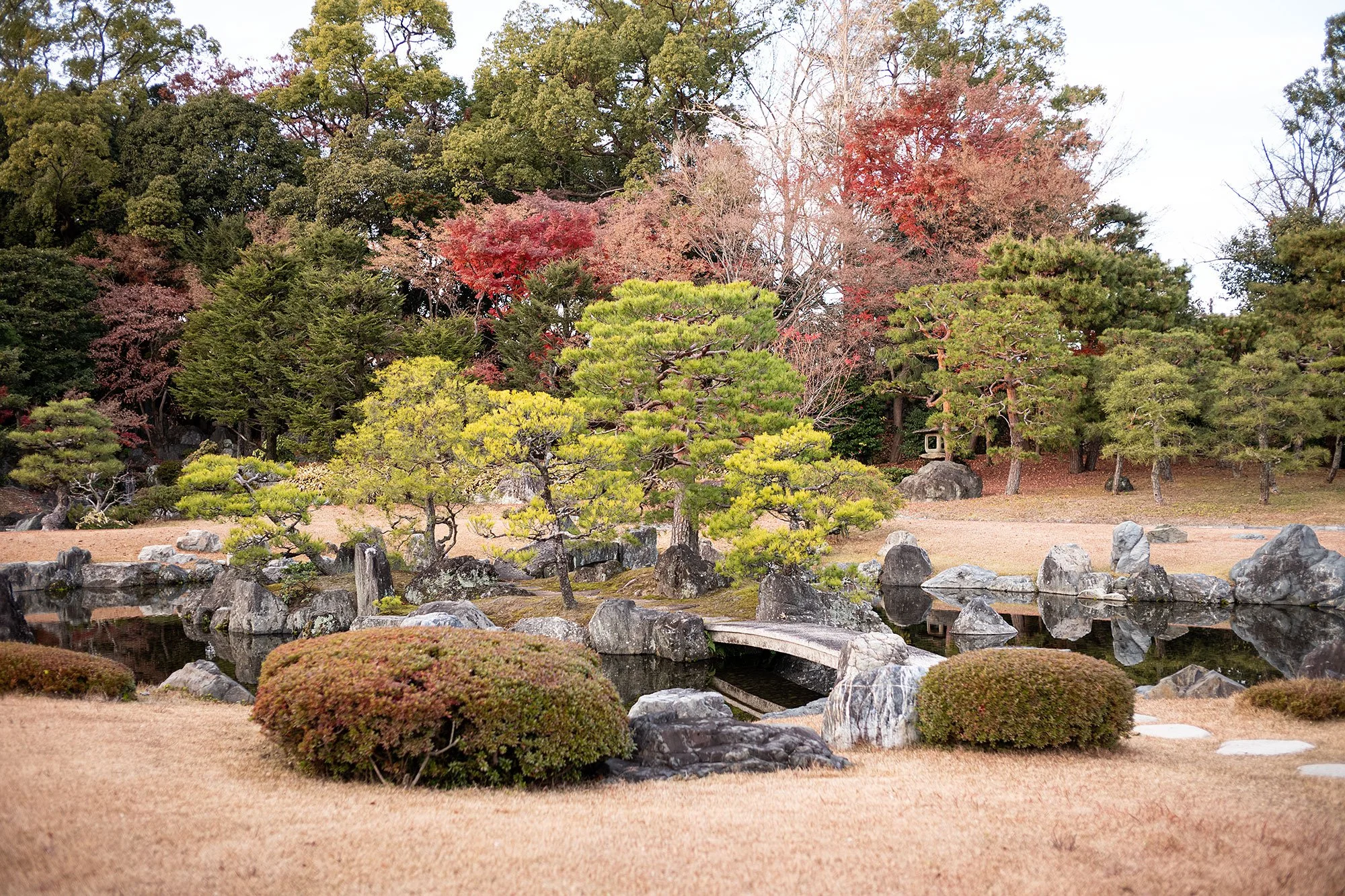
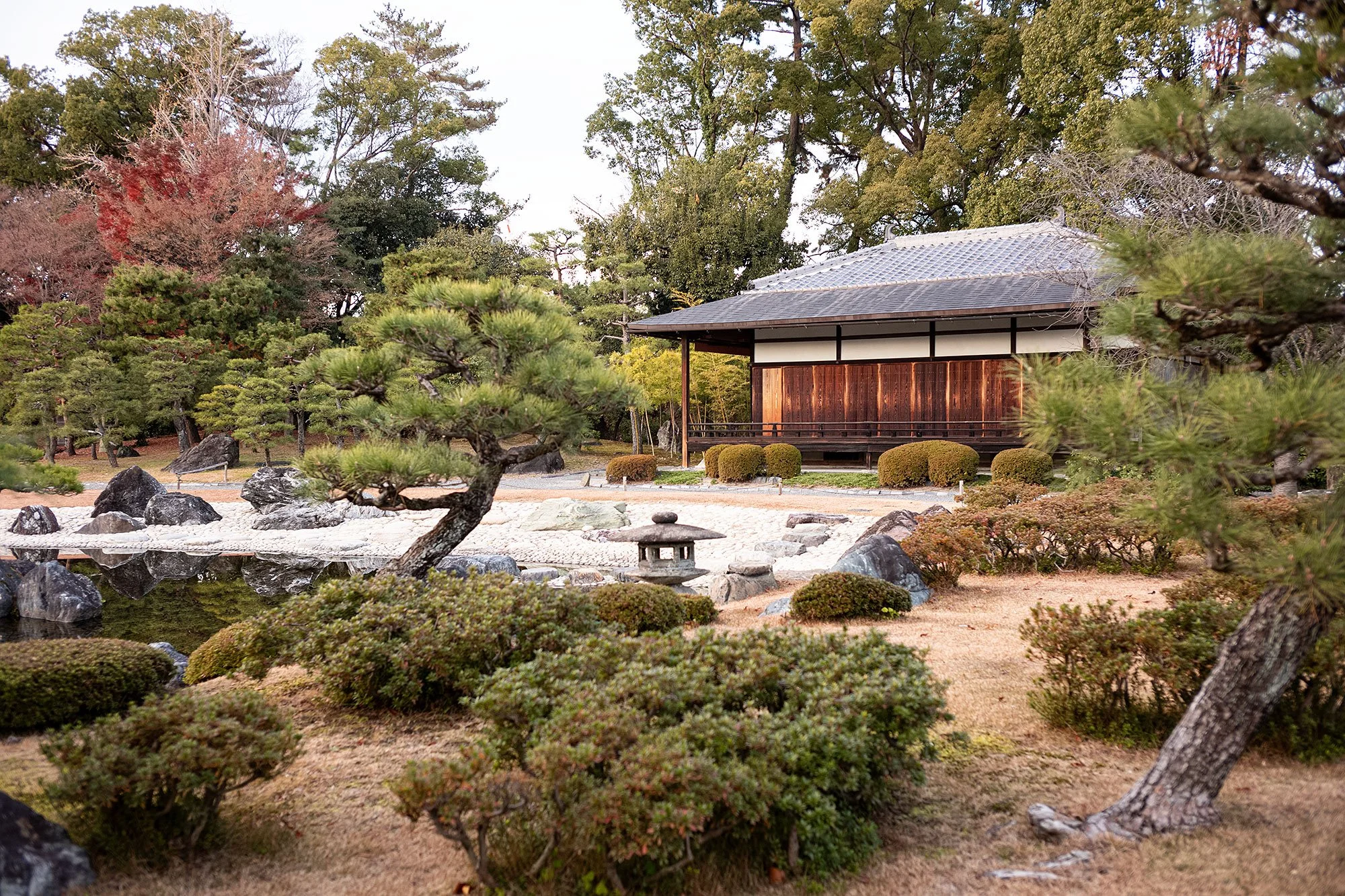
From the temple Yukari leads us to the Shōsei-en Garden, a few blocks away. It belongs to the temple, but we’re to pay a separate admission fee.
The garden dates to 1641 when the third shōgun Tokugawa Iemitsu donated the lnd to the 13th head priest of the Higashi Honganji, who built the garden as part of his retirement residence. Since then it became the retreat for generations of head priests and served as a guesthouse for honored guests.
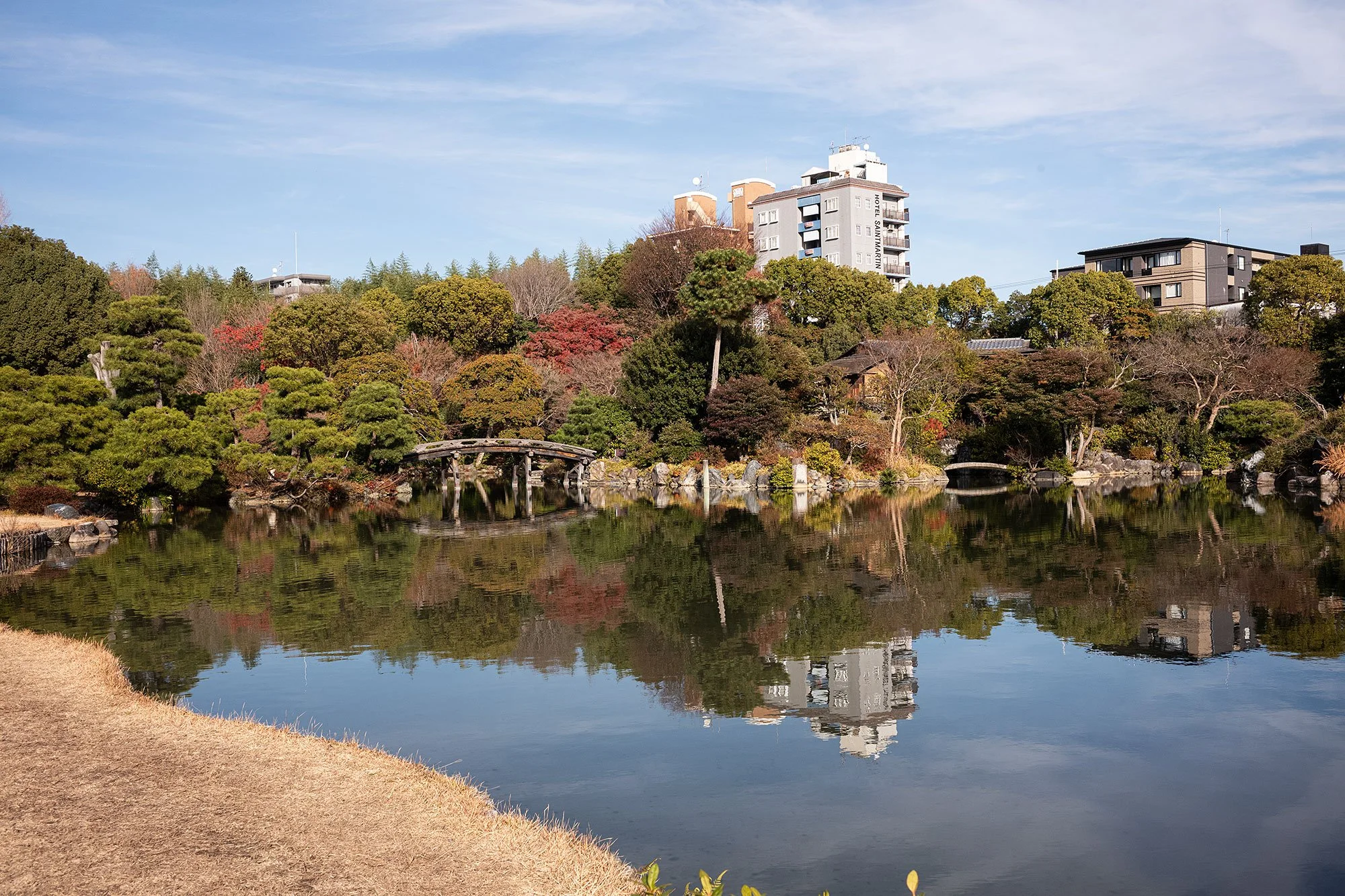
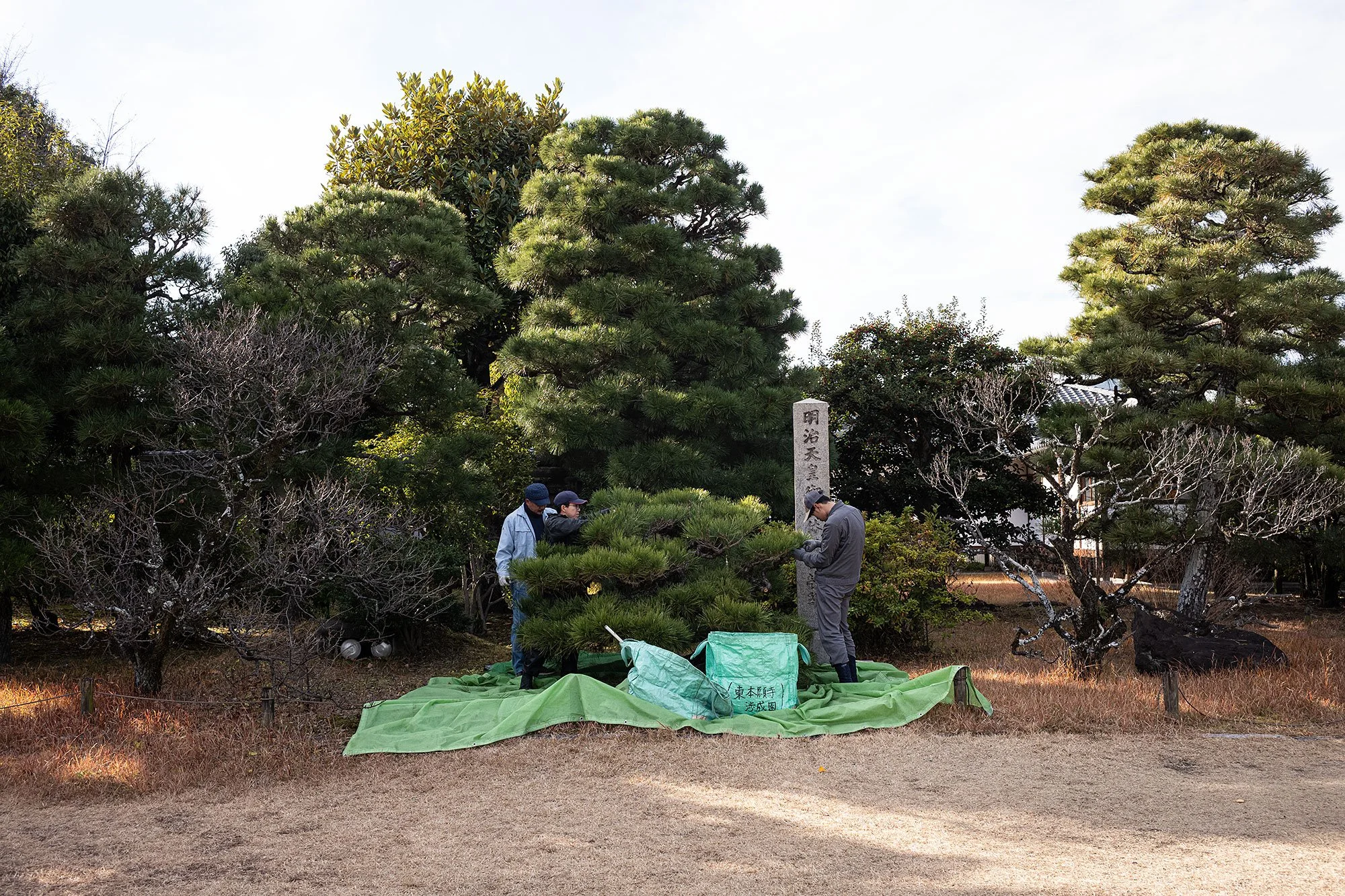
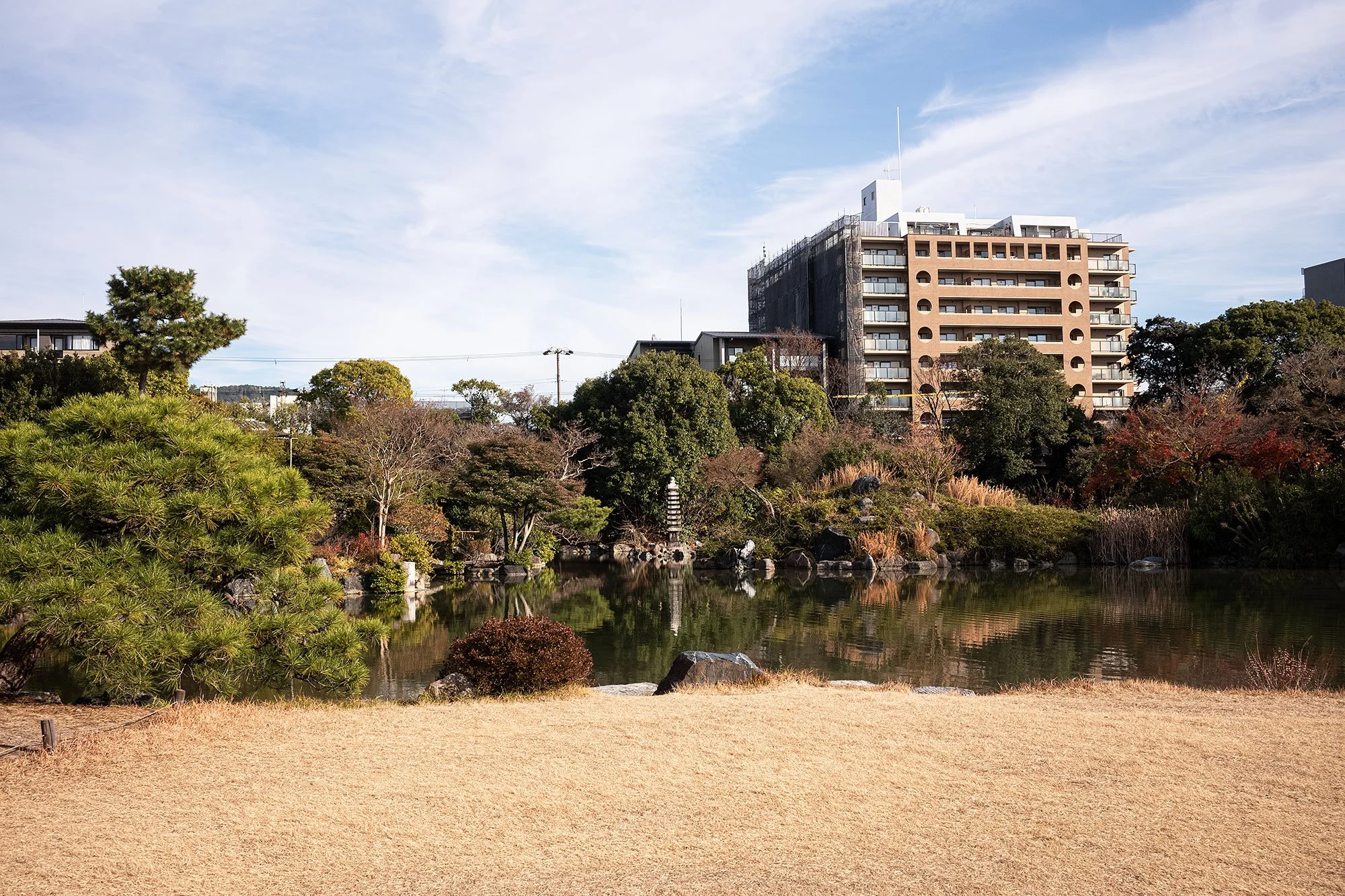

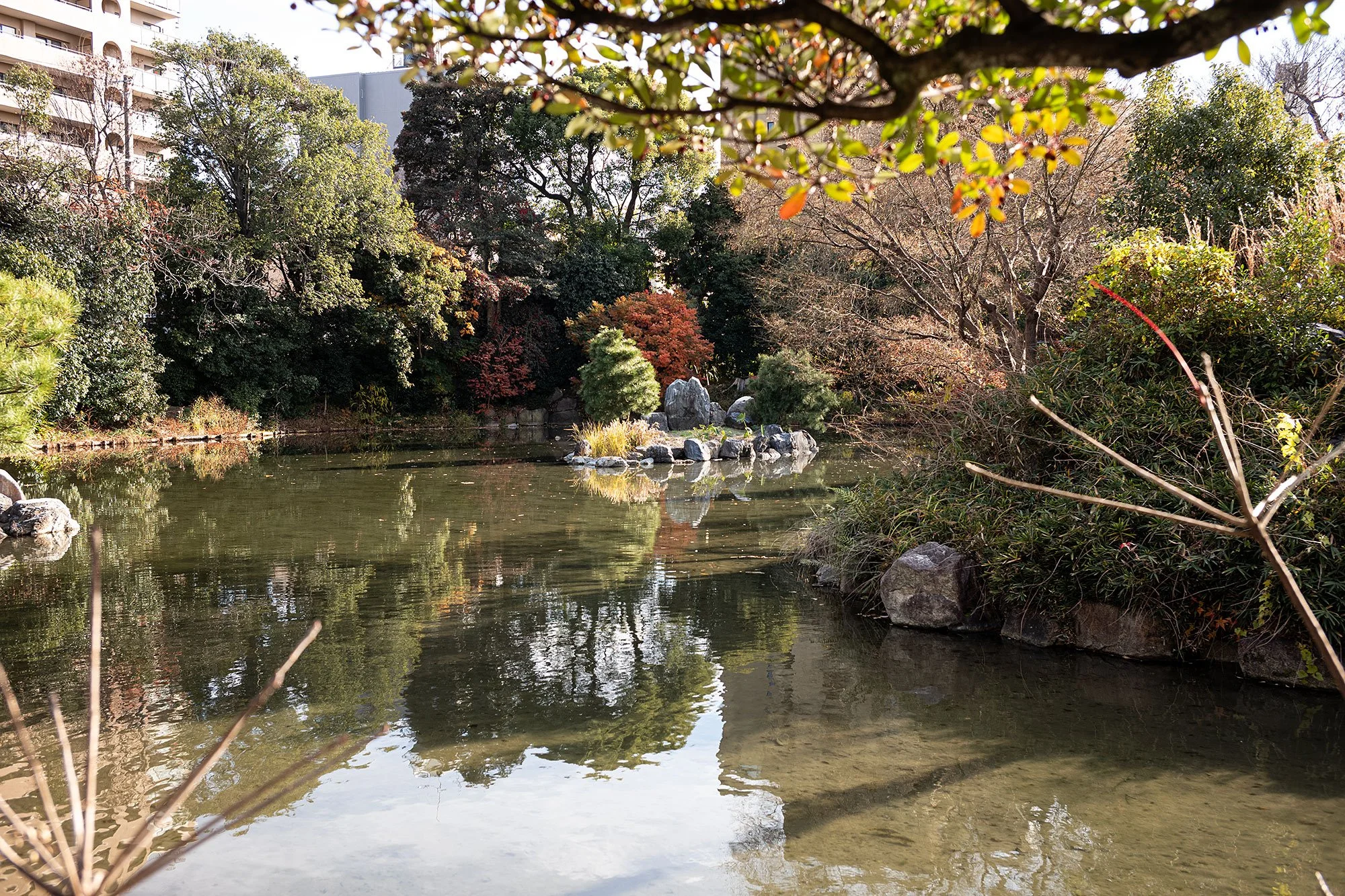
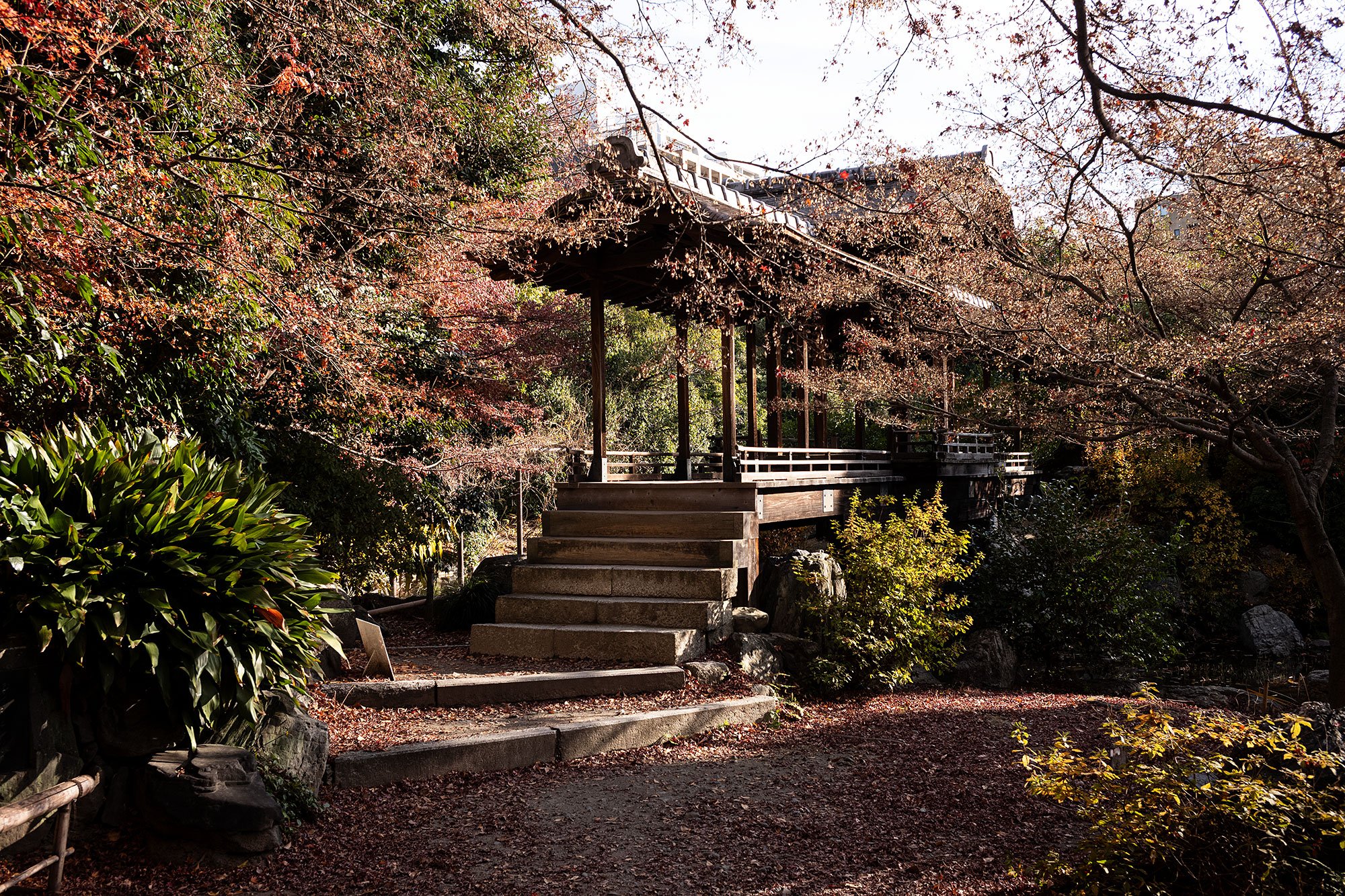
There’s a teahouse and a few halls that dot the landscape, but they’re all closed. Bridges connect islands to the mainland, spanning the ponds. One of my favorites is the Kaitō-rō Bridge, rebuilt in 1884. A metal peg installed in the roof was used to hang a golden-colored lantern for visitors who visited after dark. It’d be great to see it lit thus at night.
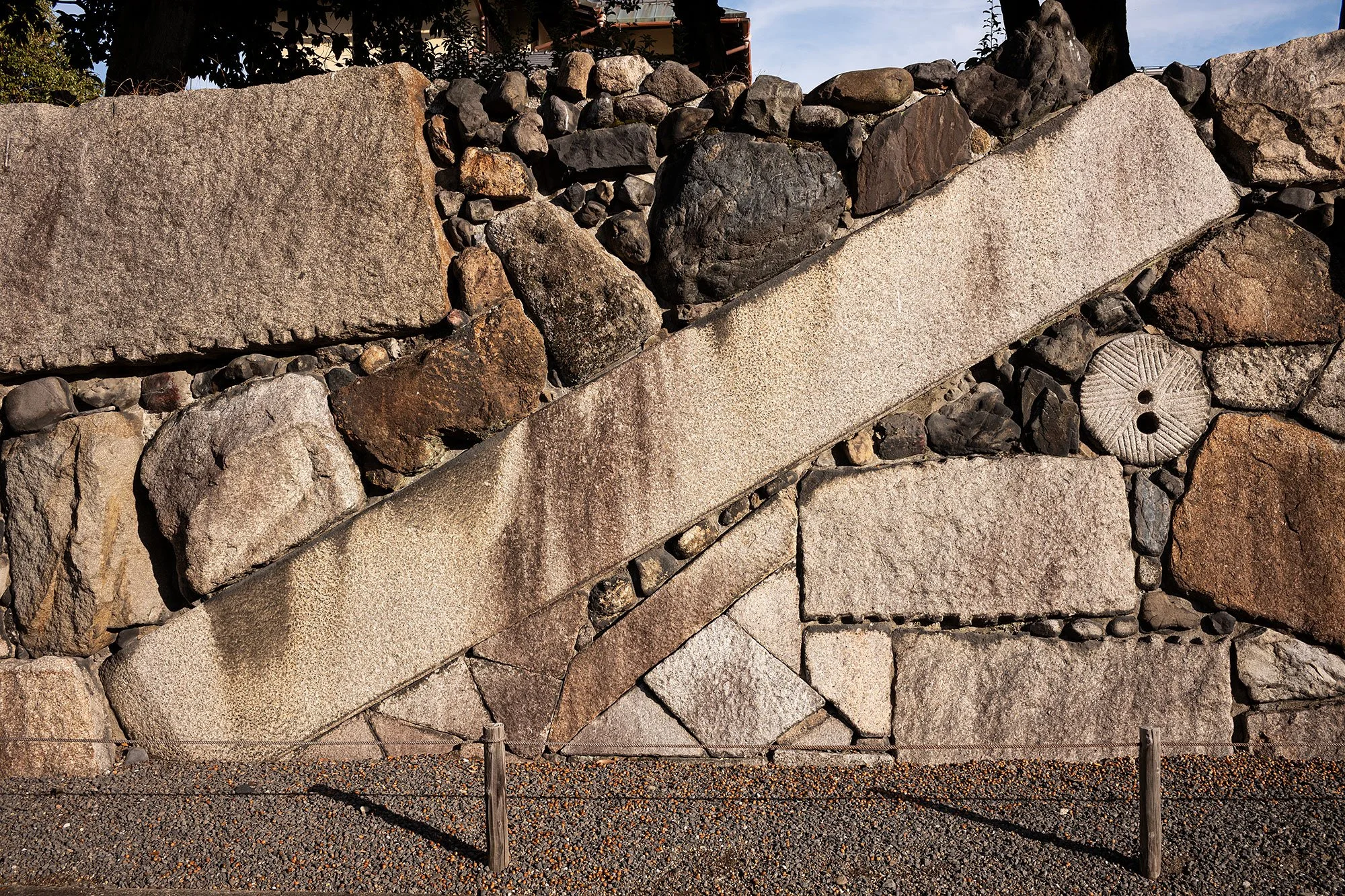
From the garden we walk back in the direction of the temple and then continue heading north towards Nijō Castle. I’m not sure if I’ve been inside before and we have time to kill before our dinner reservation.
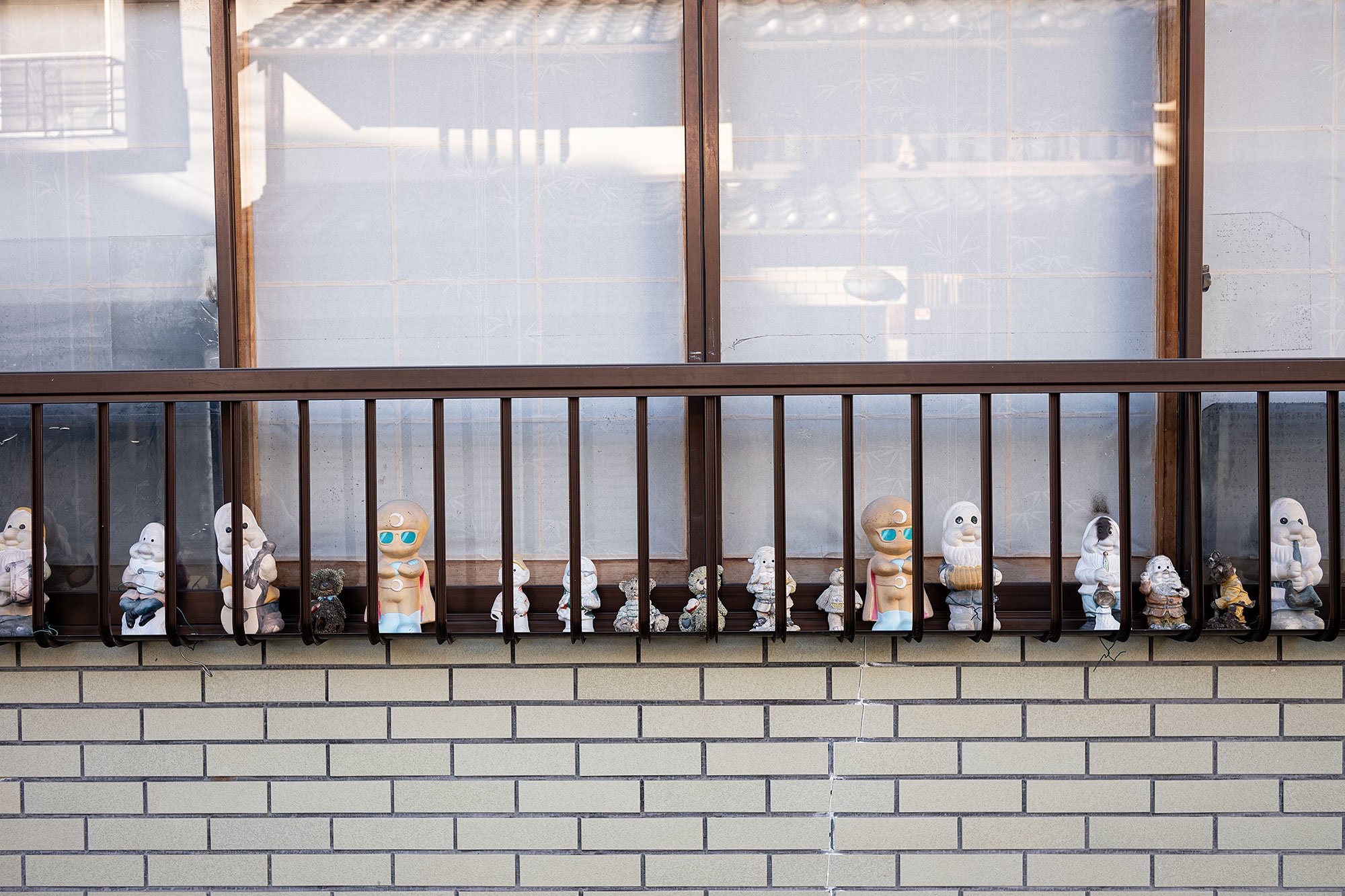
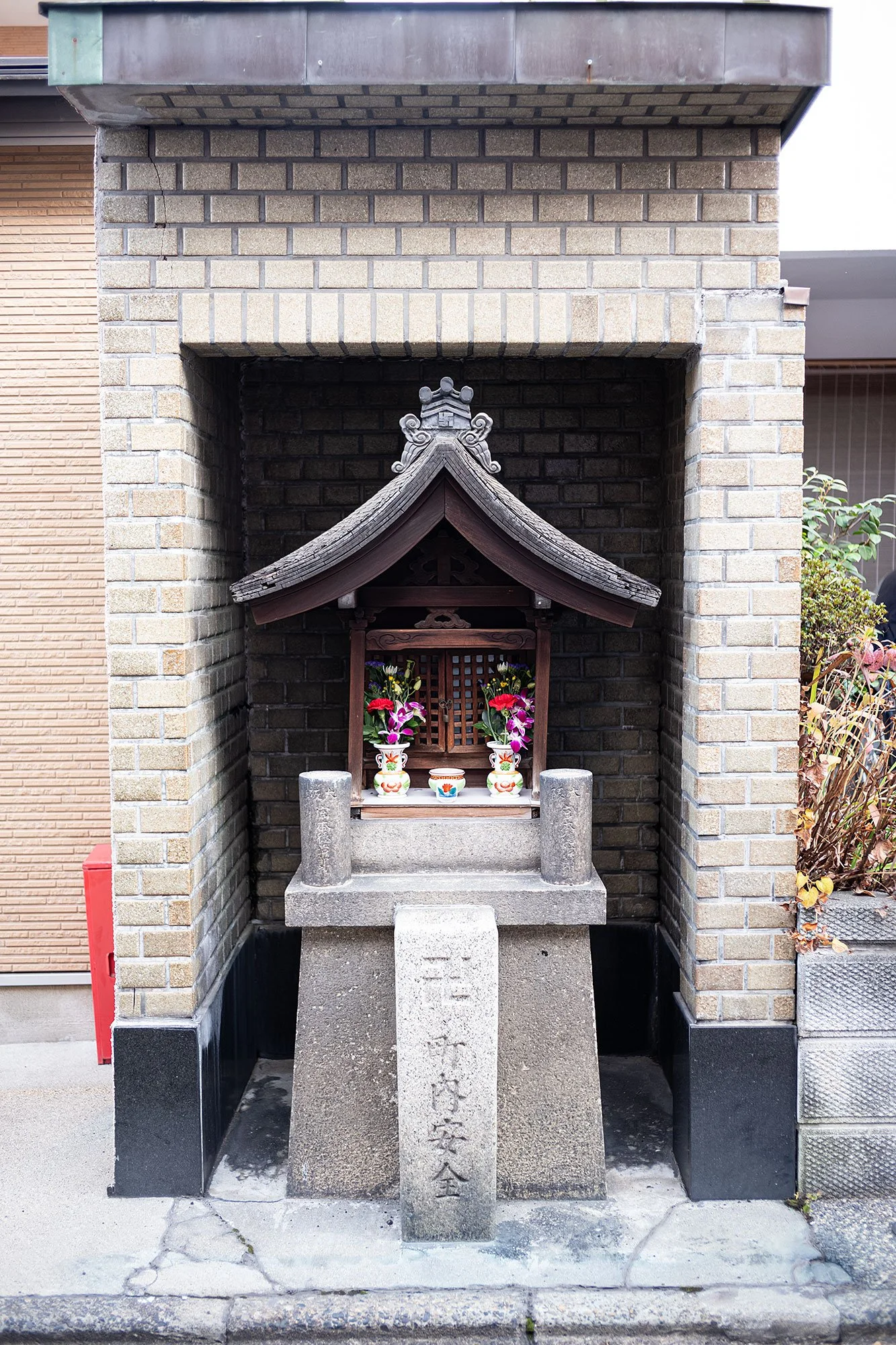
We walk towards Nijo Castle. I stop to take photos of the little things I find interesting: a line of toys and dolls on a windowsill, a shrine tucked away in a residential area. Misai has a way of saying ‘interesting’ whenever she catches me taking a photo of something she’d not give a second glance that I find incredibly endearing.
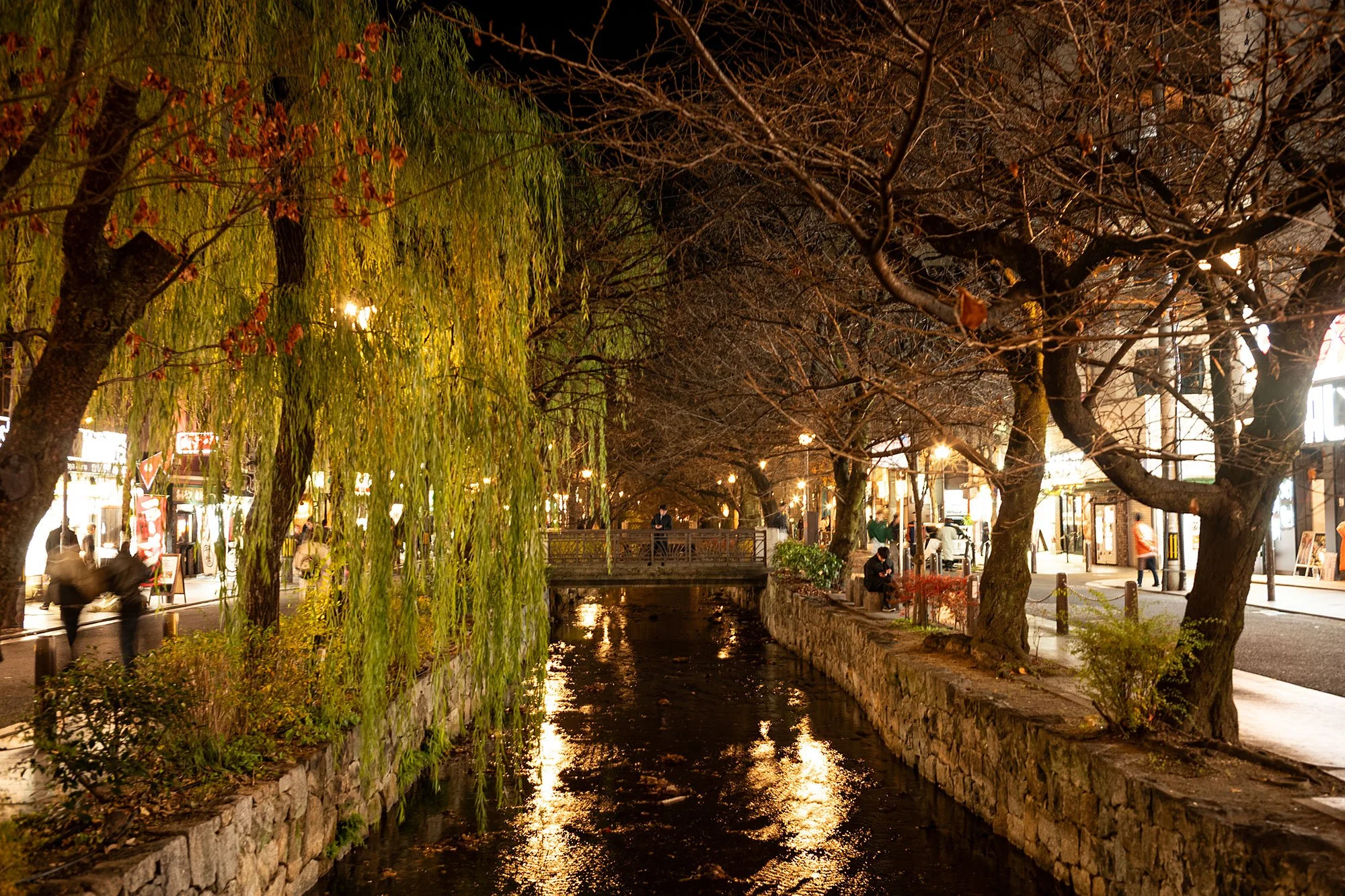
I love how in Kyoto the quieter streets live alongside the large boulevards and how the city manages to seamlessly blend the historic, the modern, and the contemporary. It’s fascinating to see the different layers living harmoniously together.
I don’t remember if I had visited the castle before until we enter. Walking the nightingale floors designed sing when people walk upon them as a security measure brings forth a core memory, as do the tigers painted on to the screens in the halls. As I took photos outside, the frames in my viewfinder seemed to remind me of photos I had taken in the past.
Nijo Castle is one of seventeen Historic Monuments of Ancient Kyoto designated by UNESCO as a World Heritage Site. Built as the Kyoto residence of the Tokugawa shōguns, it was ordered by Tokugawa Ieyasu, the founder of the Tokugawa shogunate, and completed in 1626 during the reign of his grandsom Tokugawa Iemitsu.
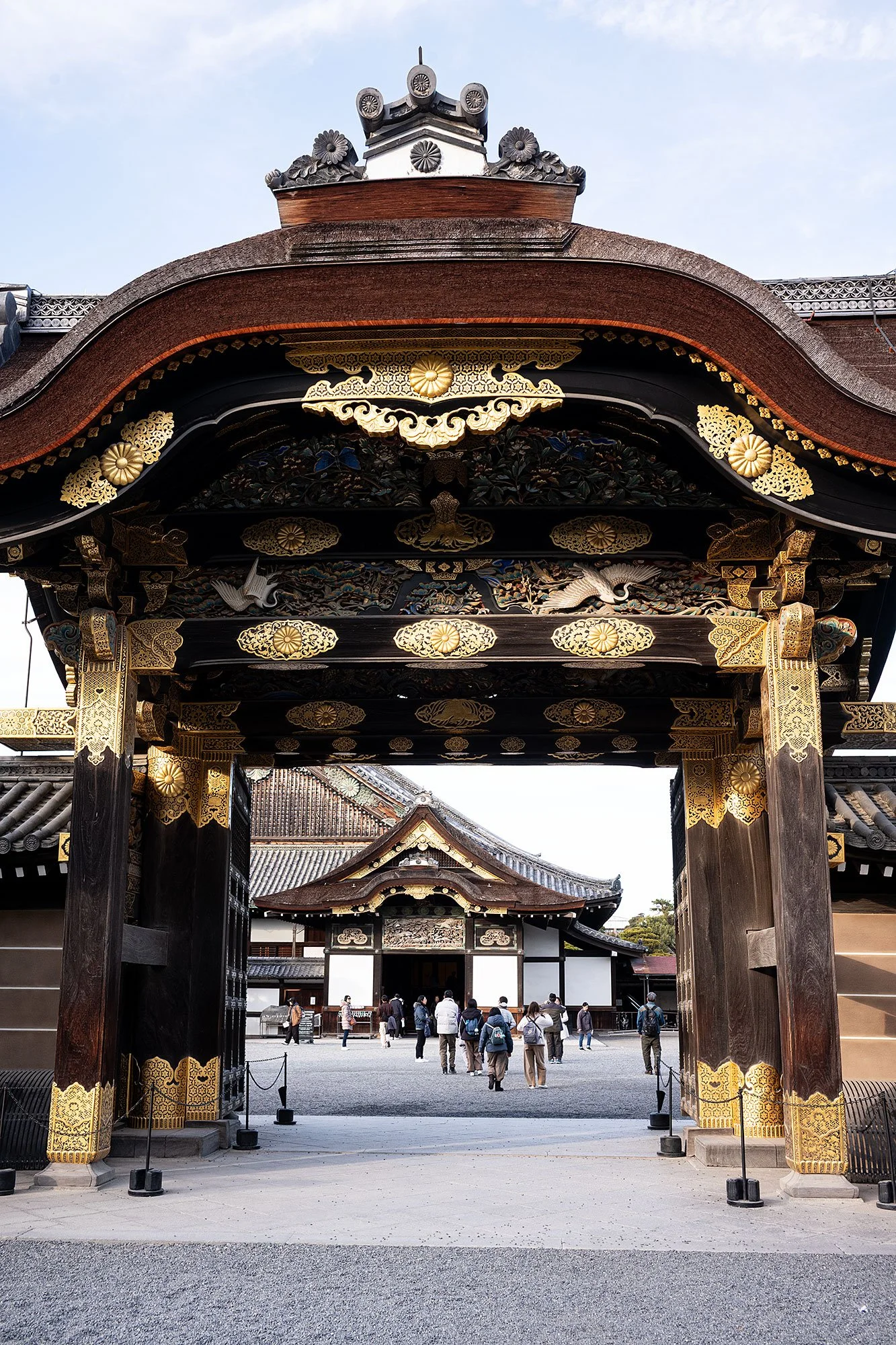
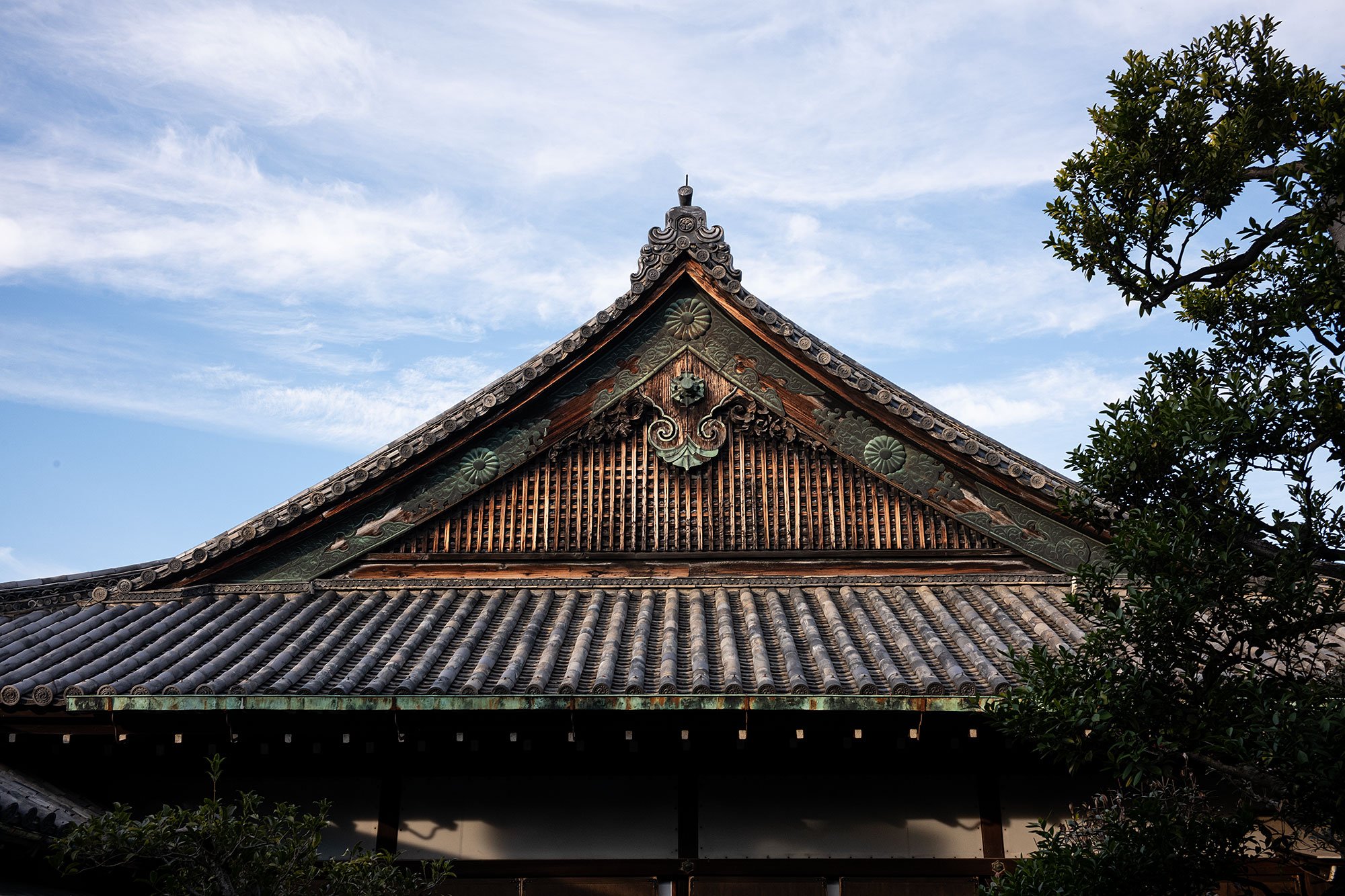
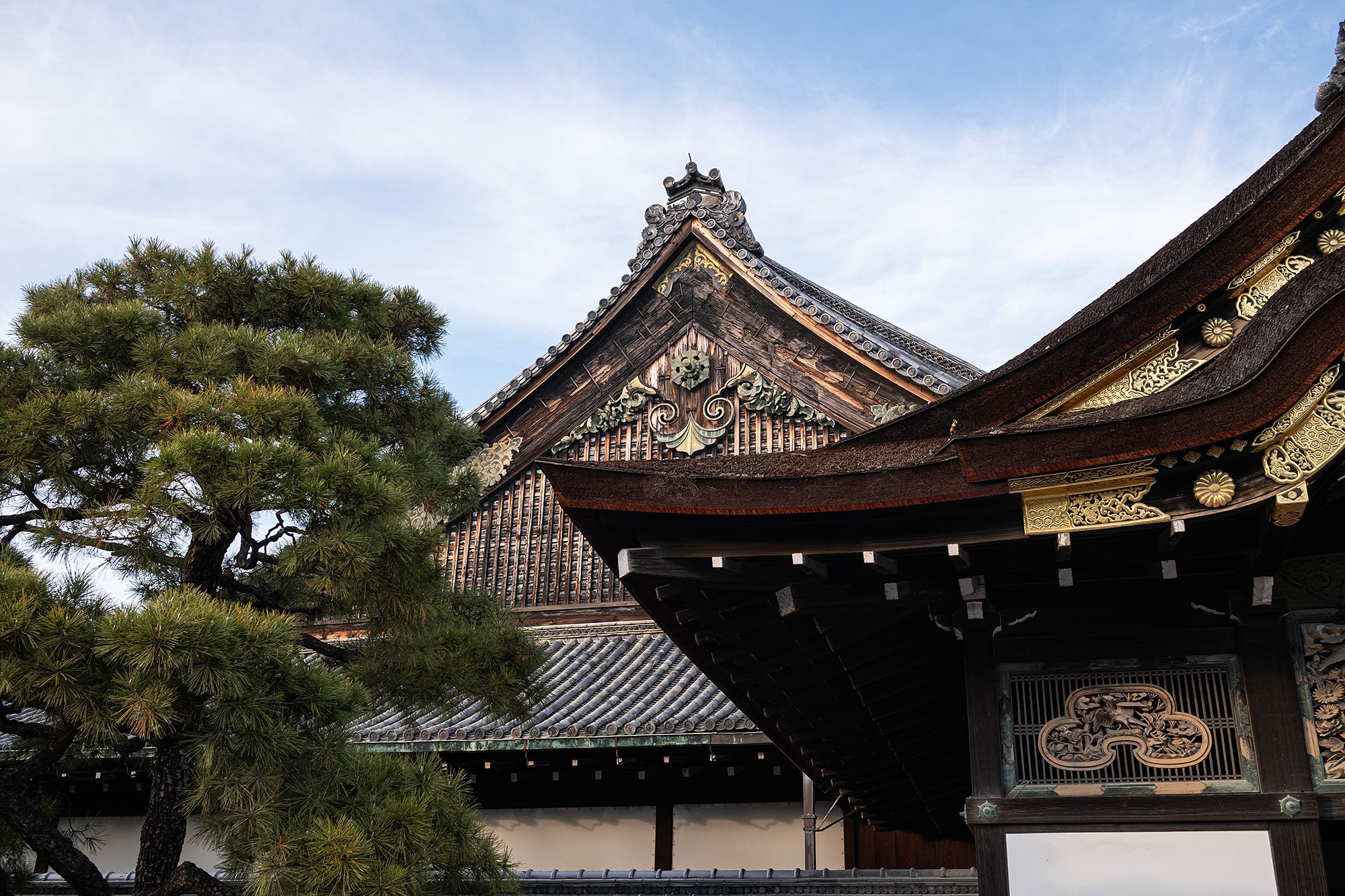
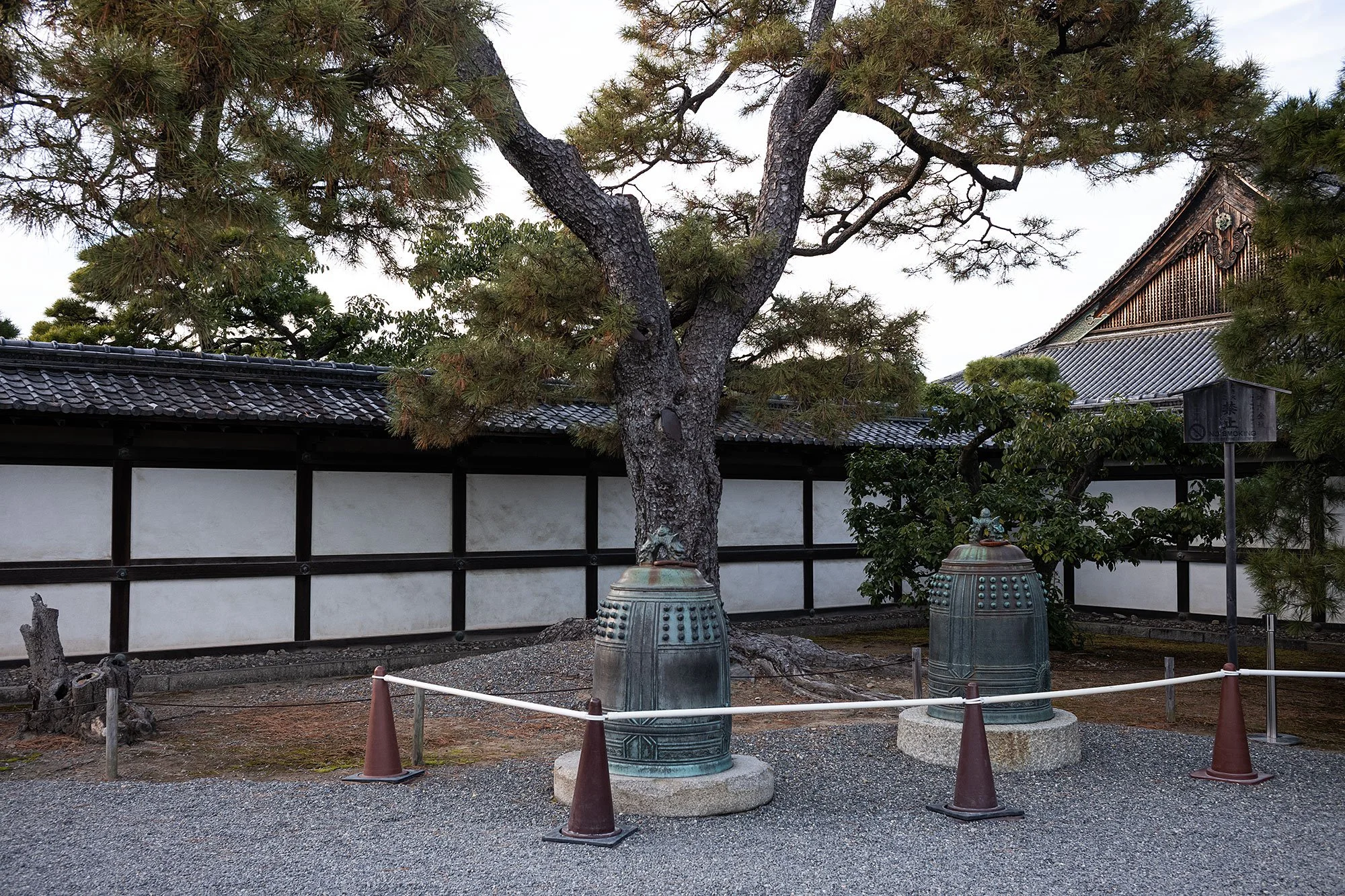
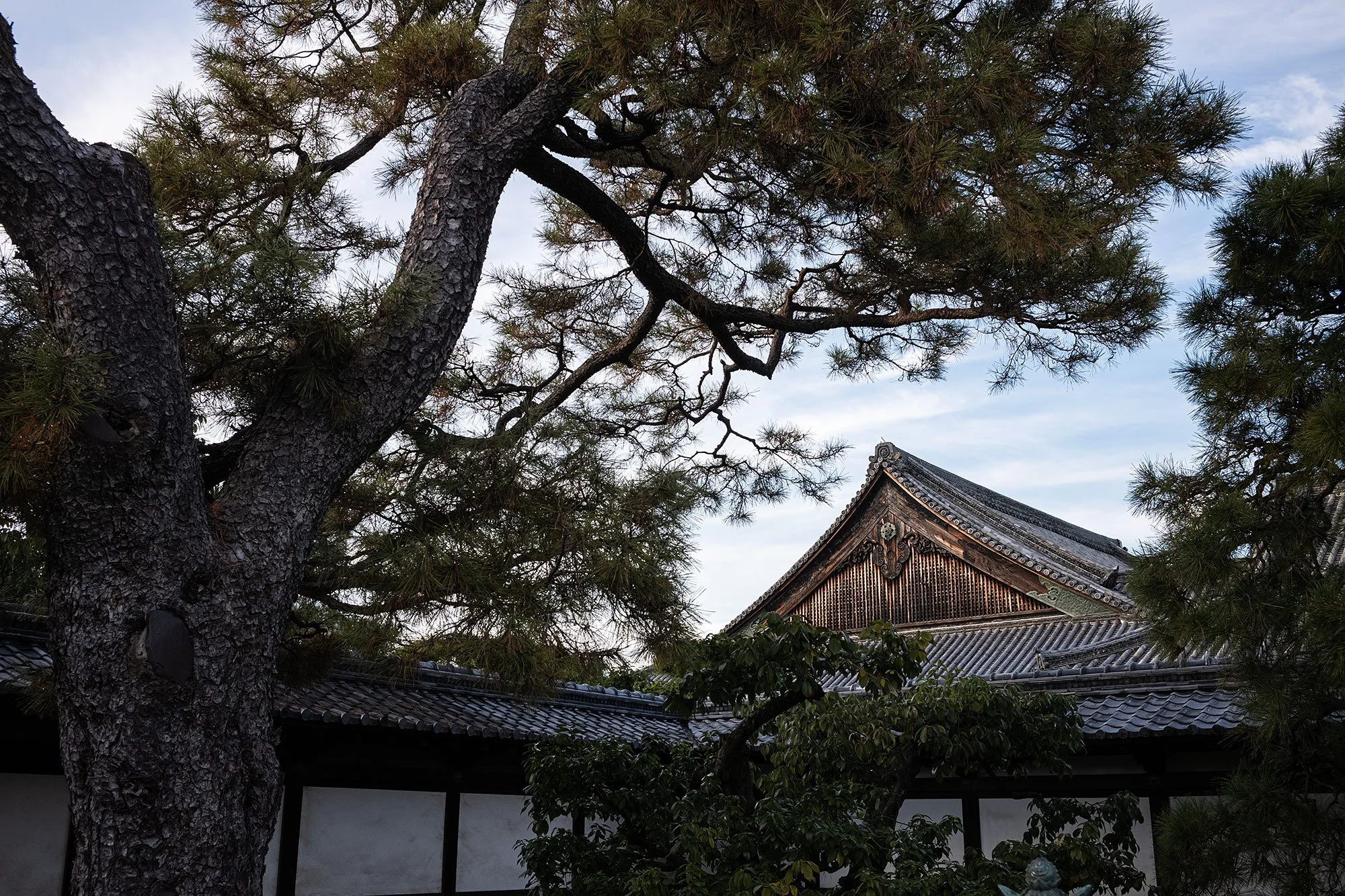
It’s a beautiful castle inside and out. Photographs are not allowed in the main halls and buildings and so the screen paintings exist only in my memories.
Outside, we tour the gardens, following various paths as they wind around the outer buildings and reflective pools.
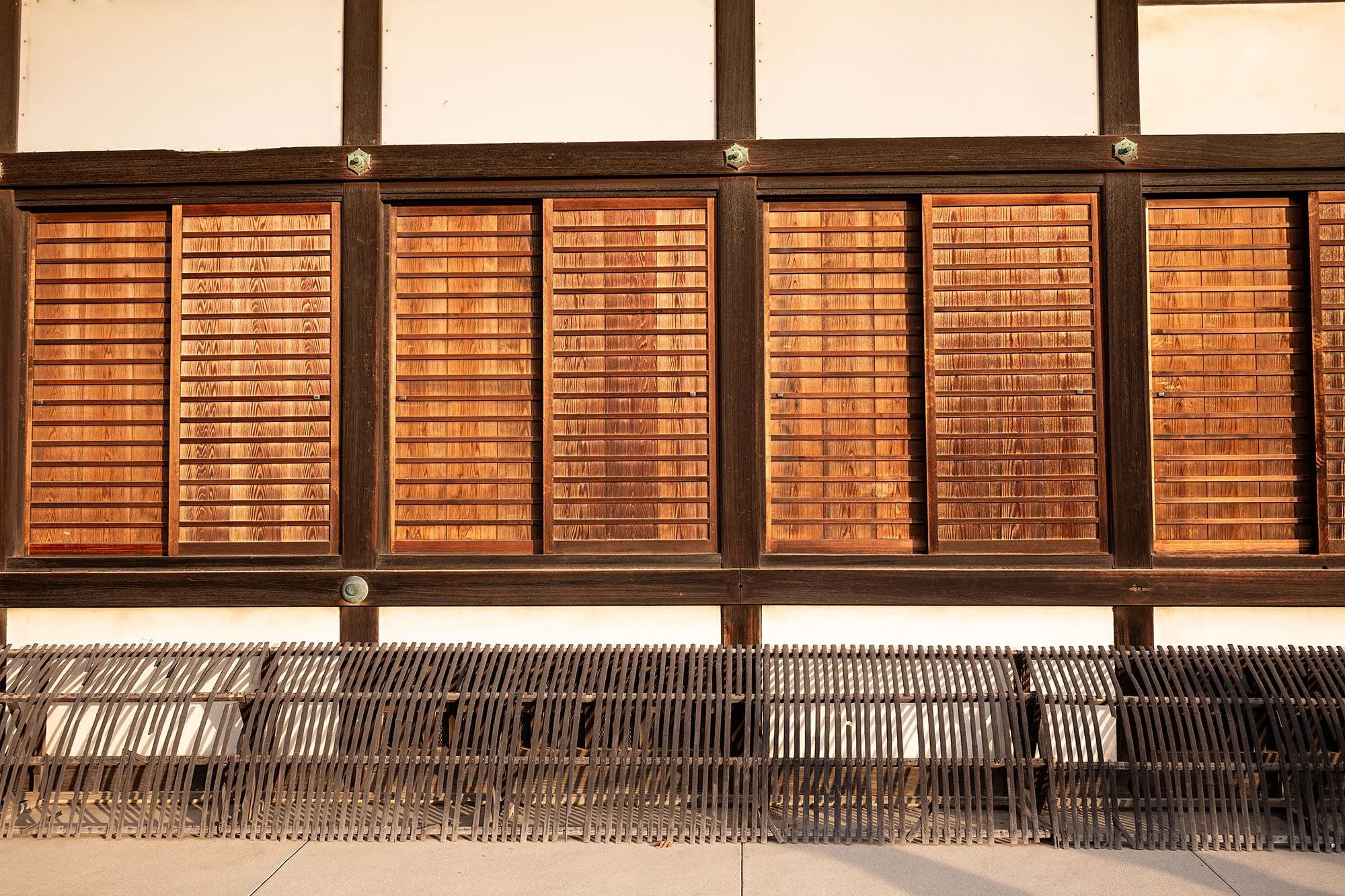
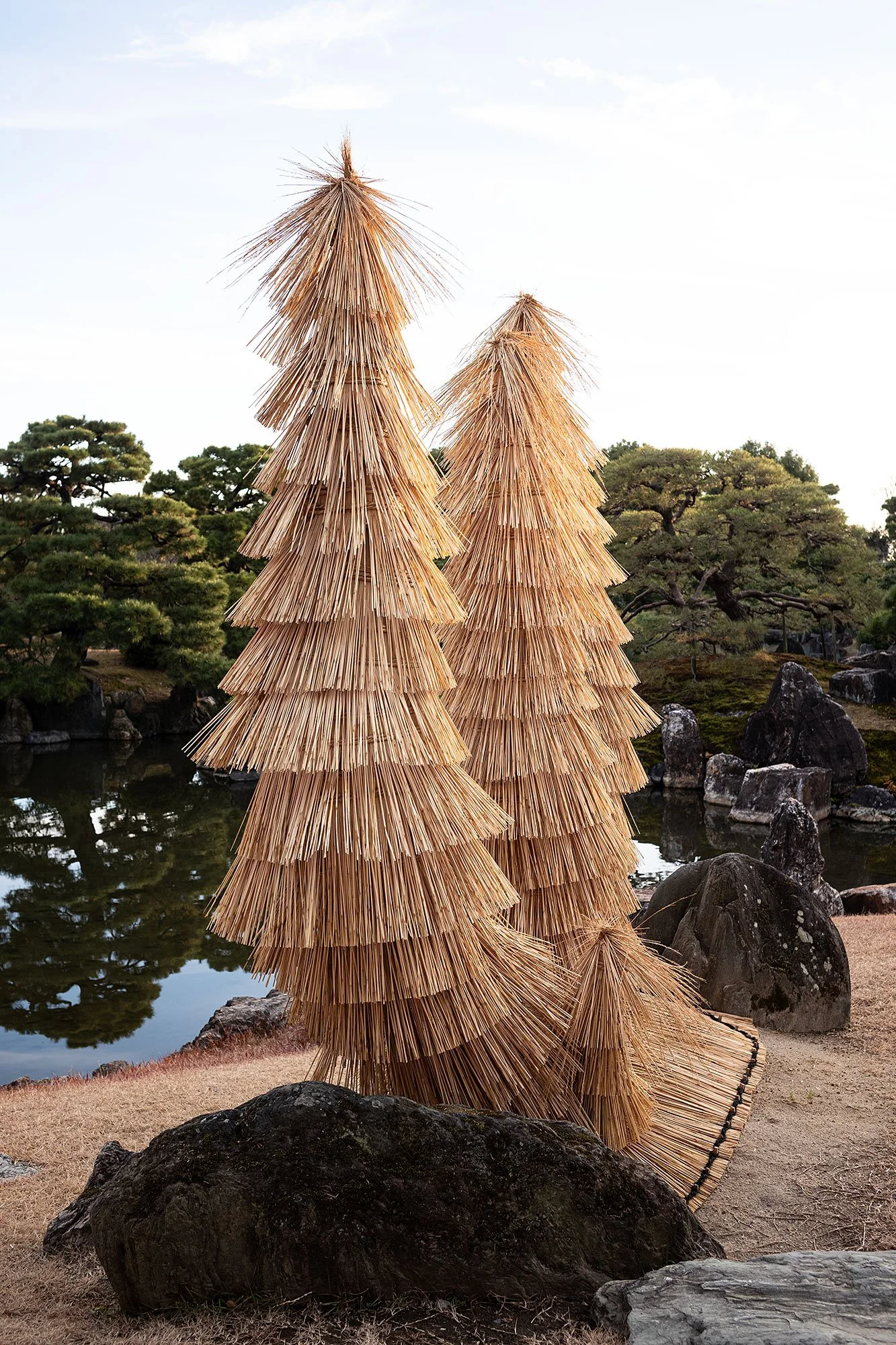
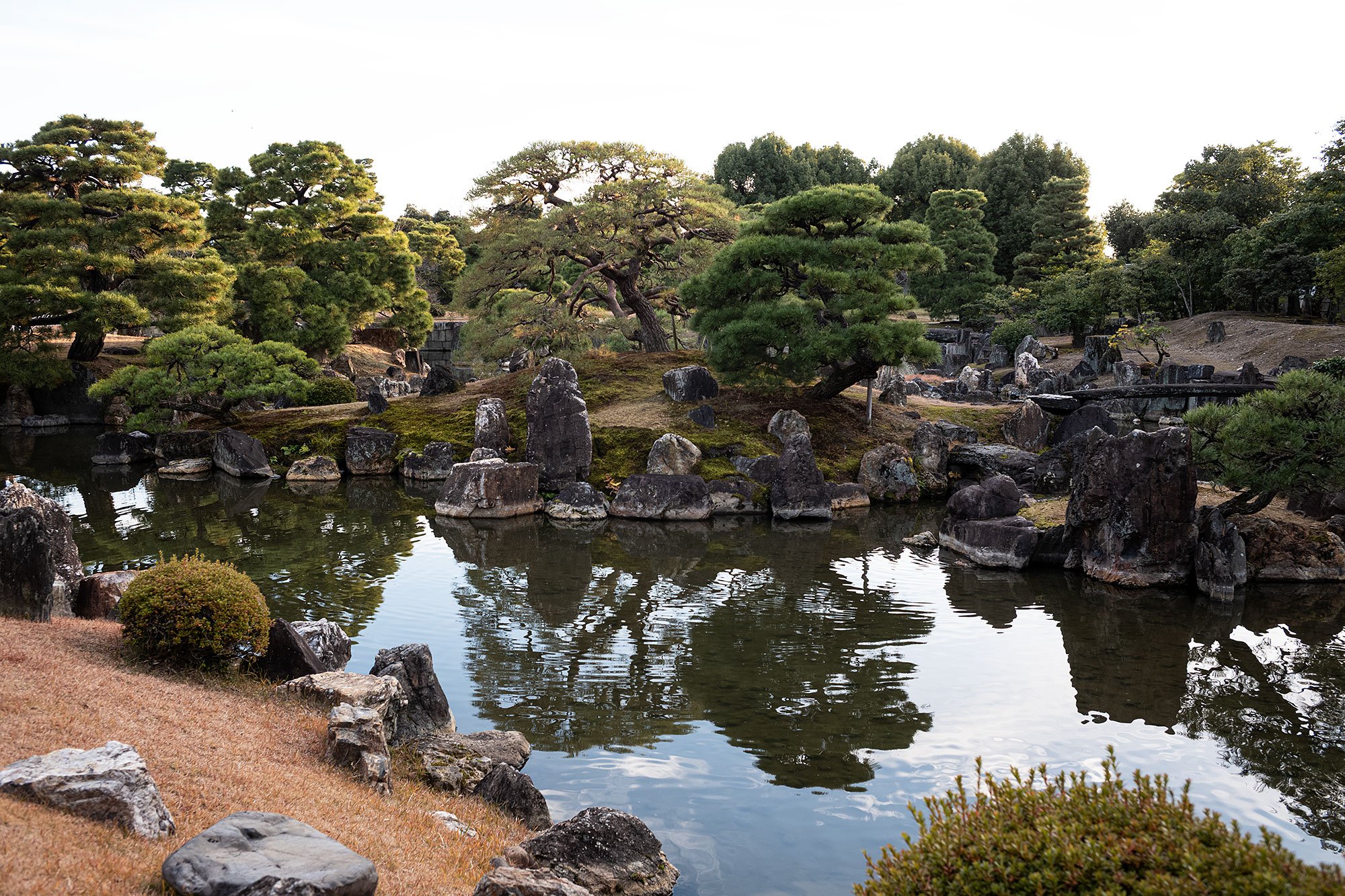
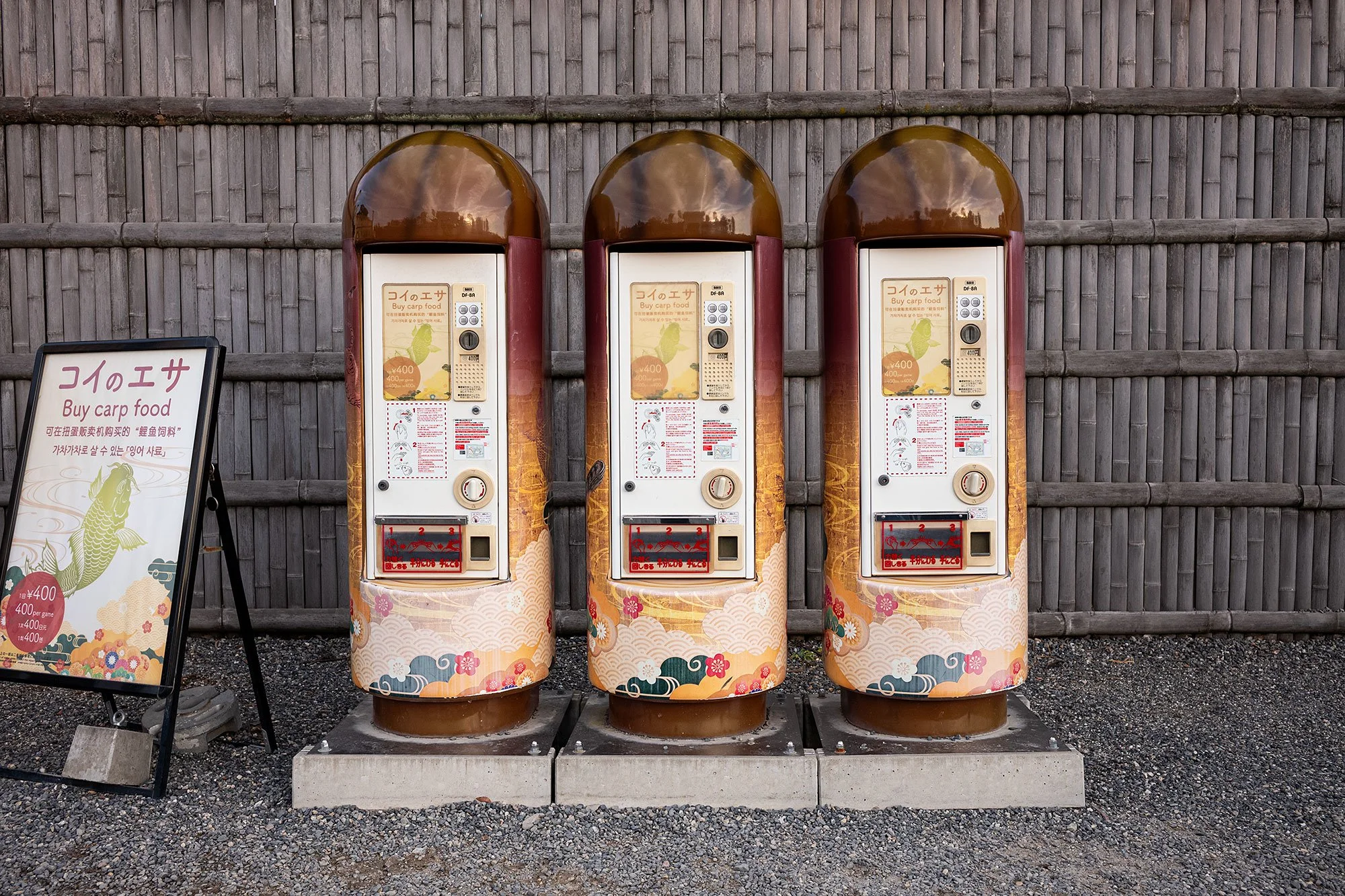
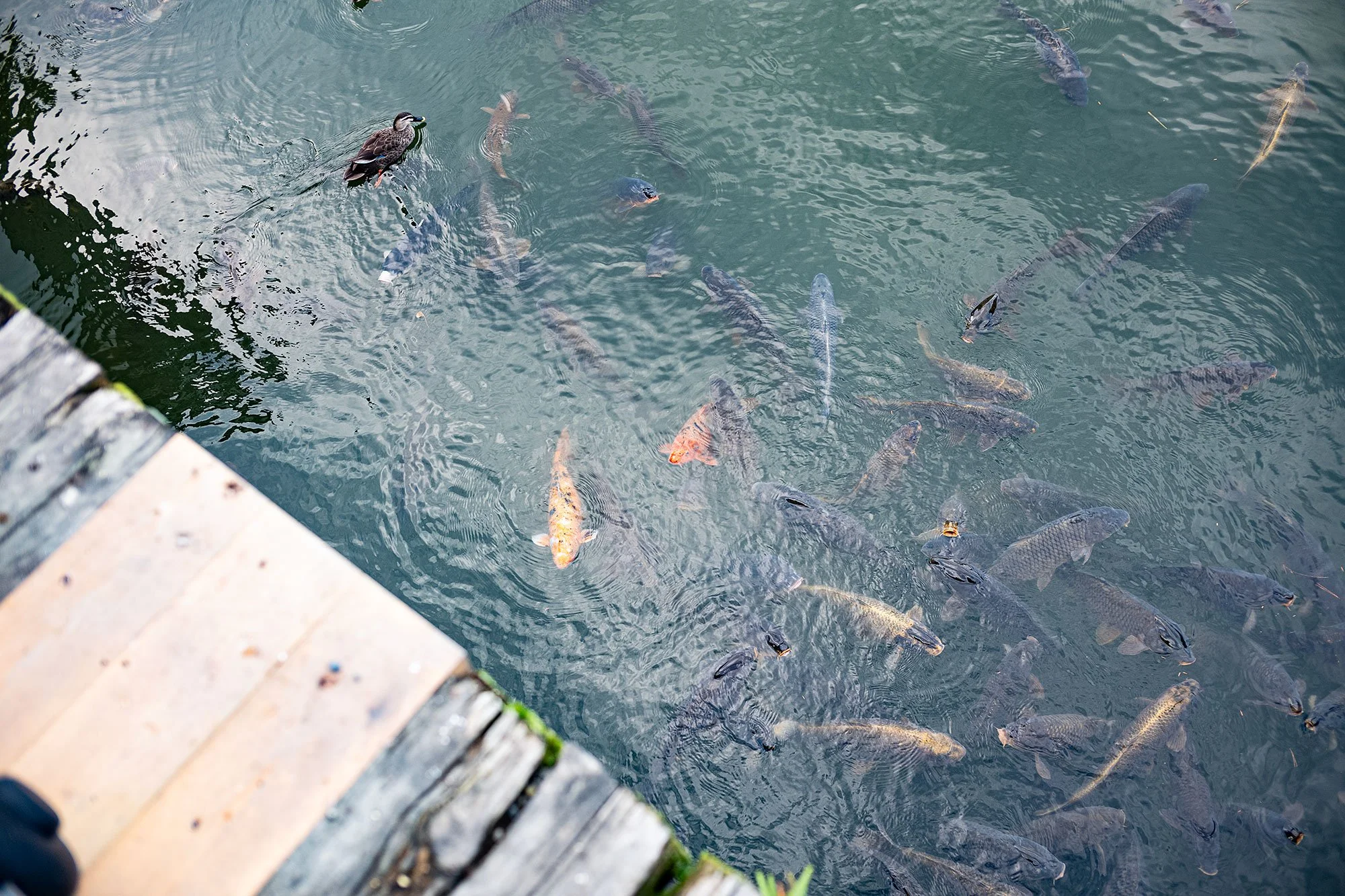
Carp poke their heads out of the water and a convenient vending machine lets you buy food for them. I wonder what percentage of their diet comes from tourists feeding them vs regular feedings. Are there enough tourists to ensure that all the fish are well-fed? How do they monitor it?
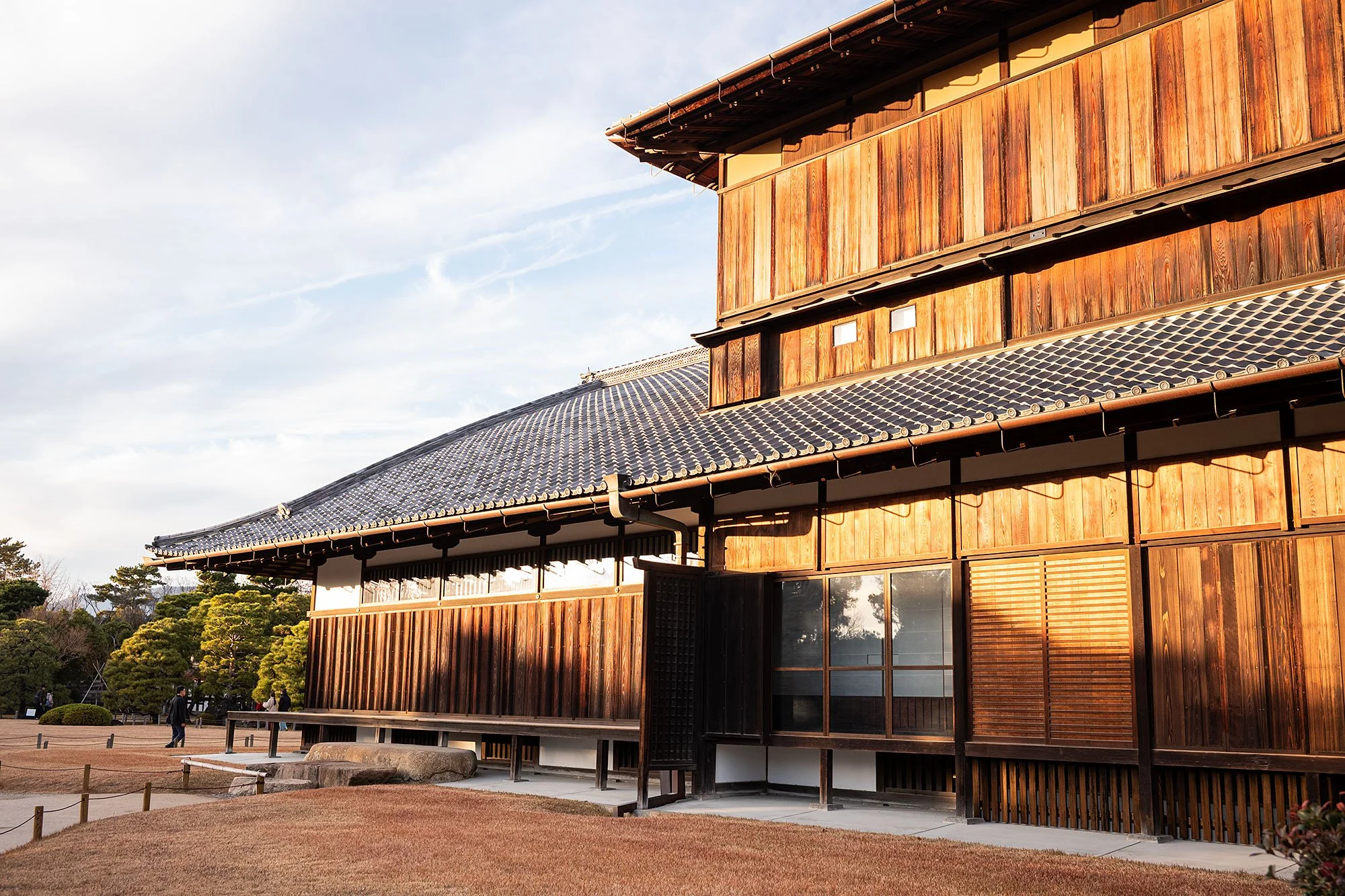
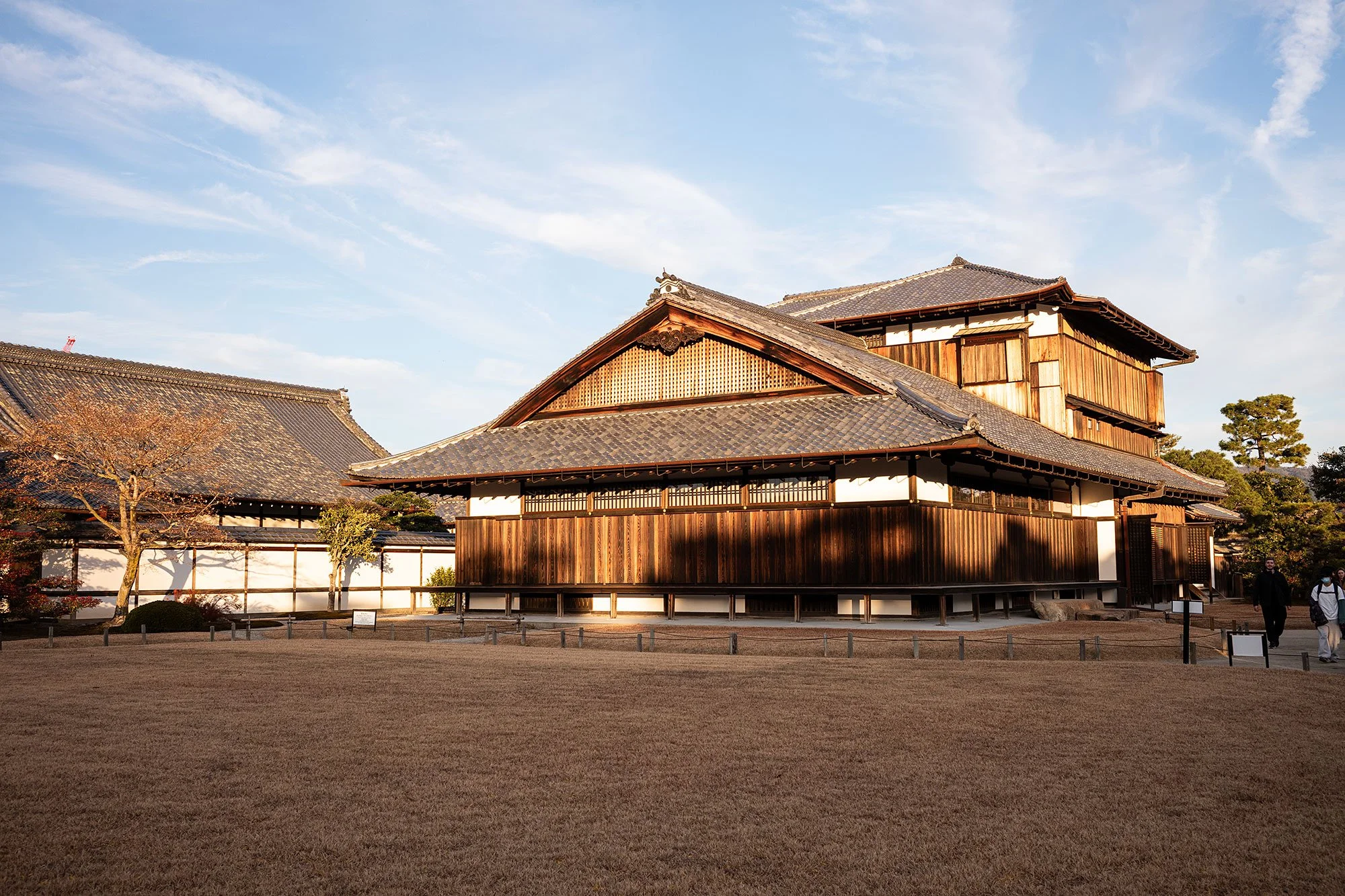
The wooden buildings that sit within the castle grounds are beautifully lit by the late afternoon light, the wood almost masquerading as gold. They remind me of Kinkaku-ji temple, albeit constructed from more modest materials.
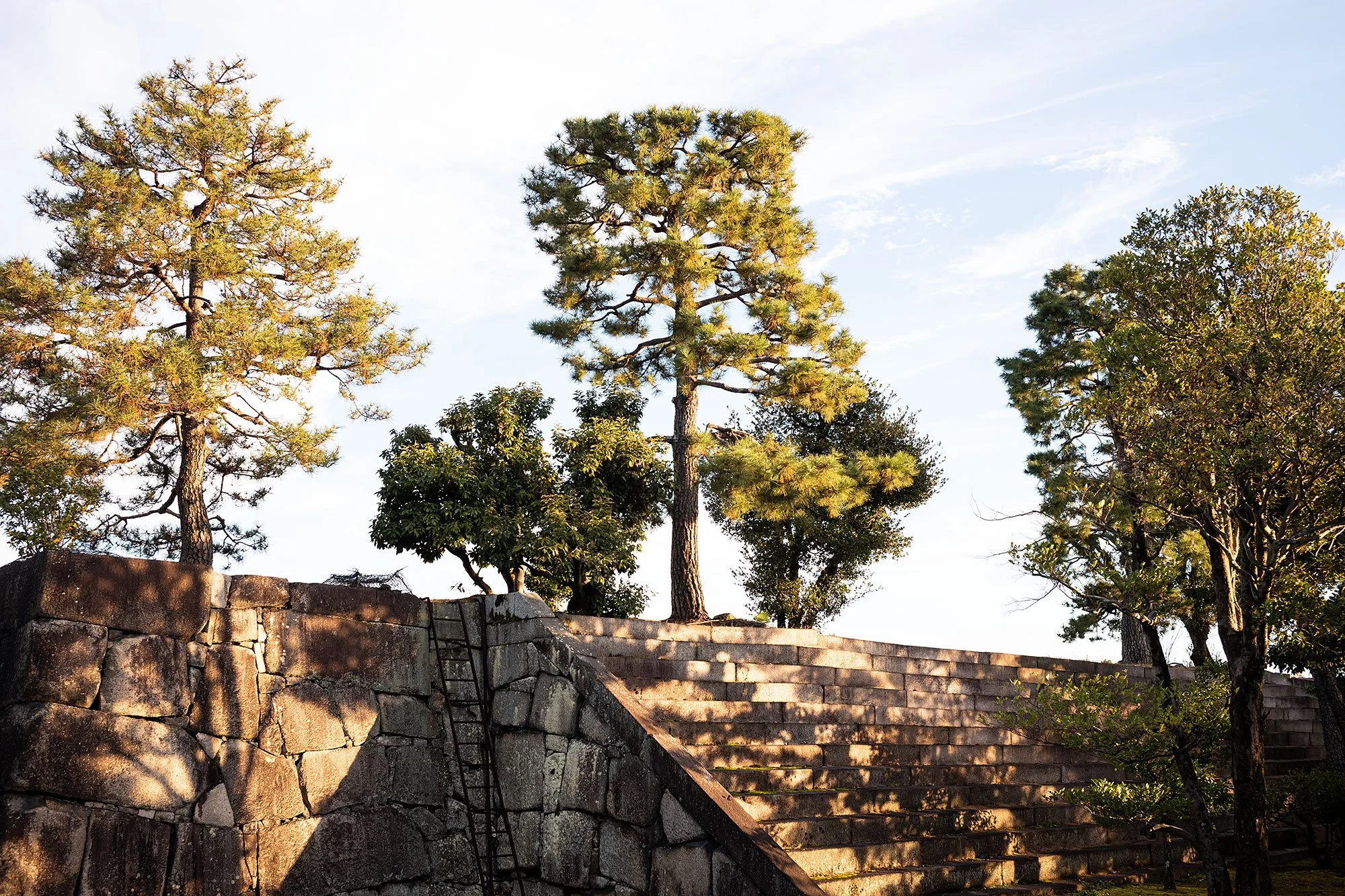
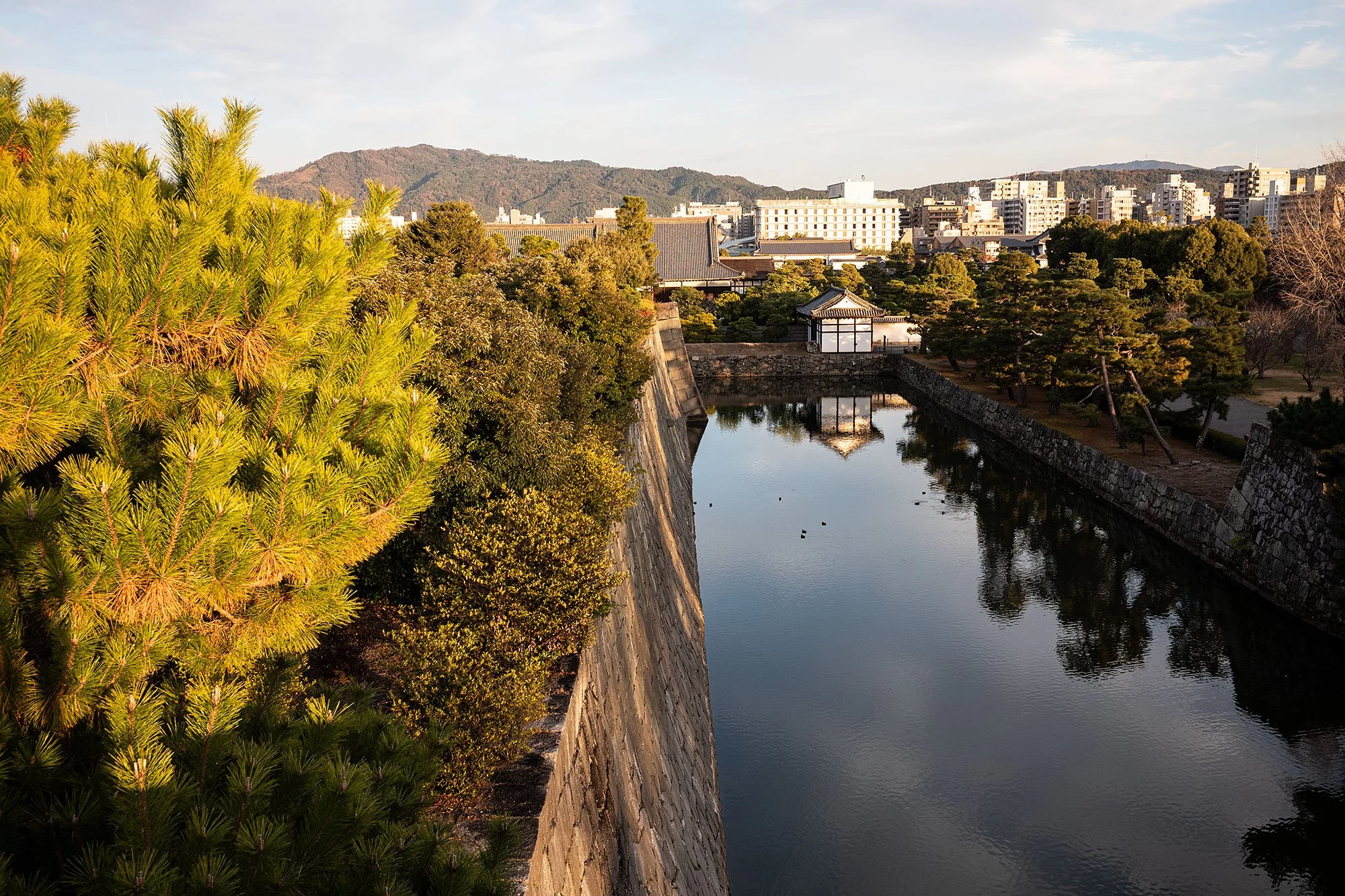
A set of stairs lead up to the ramparts and a raised platform from which you can look out over the castle and the moat and out to the mountains in the distance. Yukari tells me that their house used to be just on the other side of the moat, behind the trees. She points it out but you can’t quite see it through the leaves.
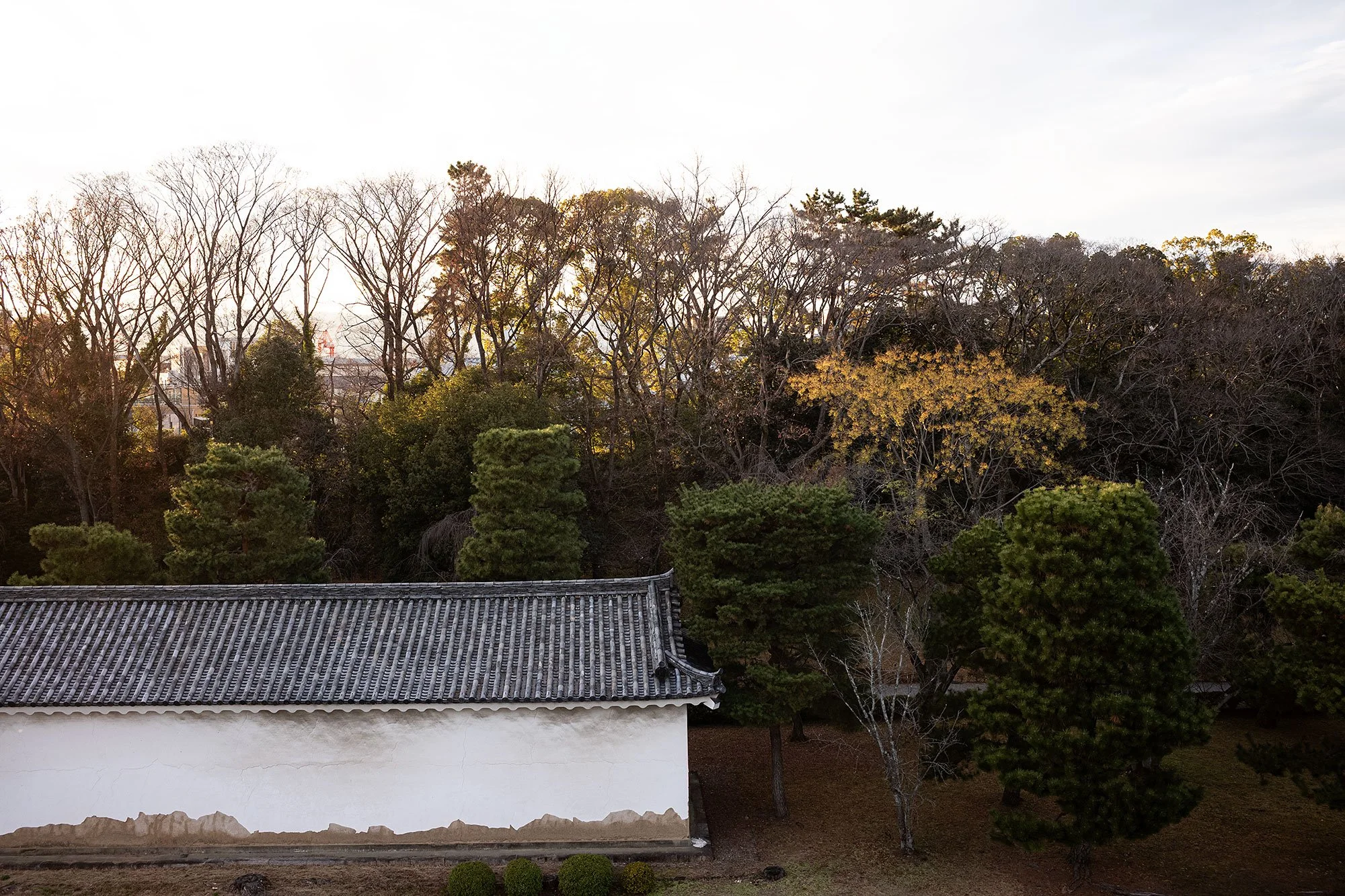
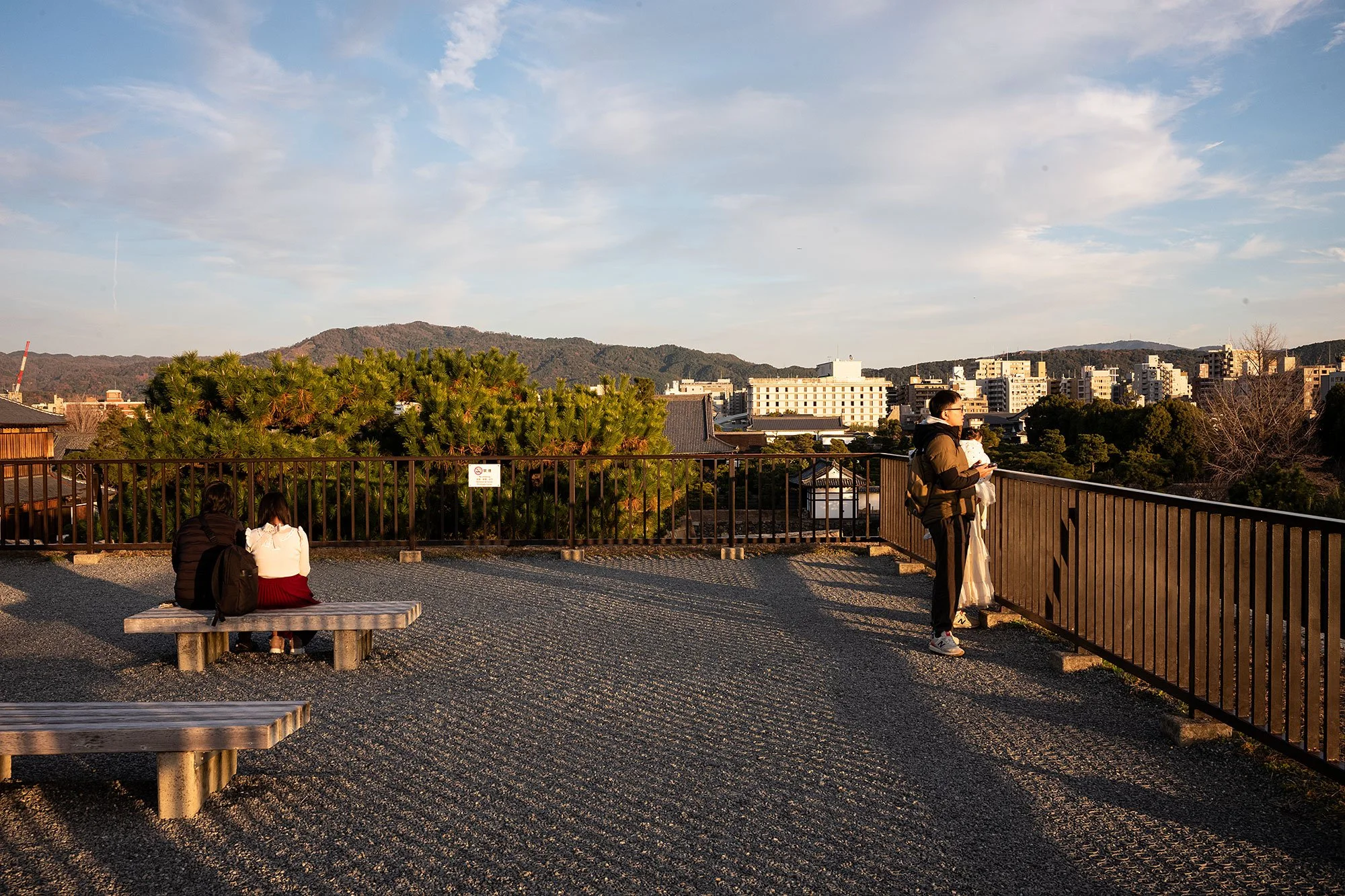
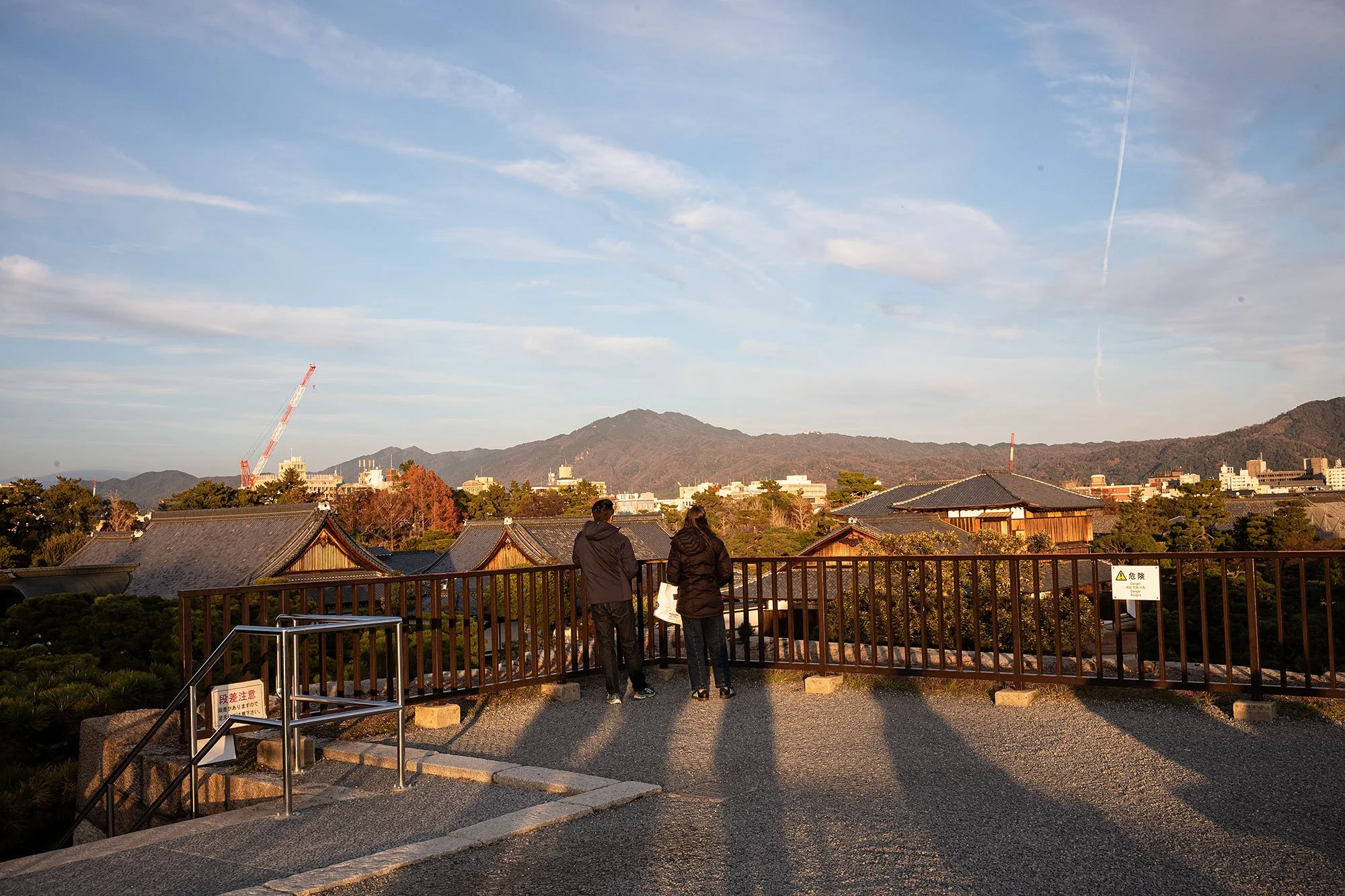
Yukari tells me there’s over a thousand temples in Kyoto of various shapes and sizes. Friends of theirs grew up in temples and she remembers playing in and around them as kids.
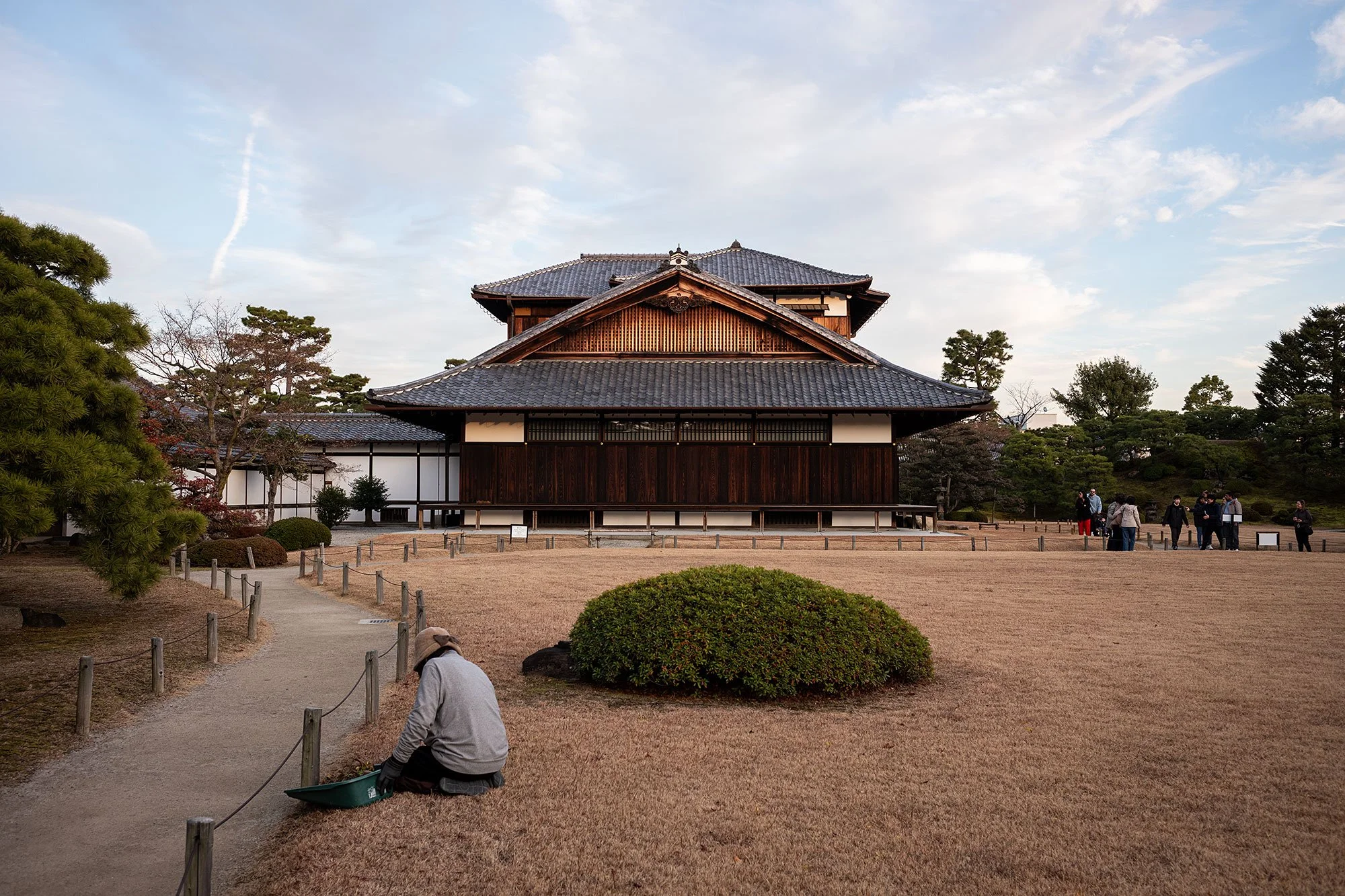
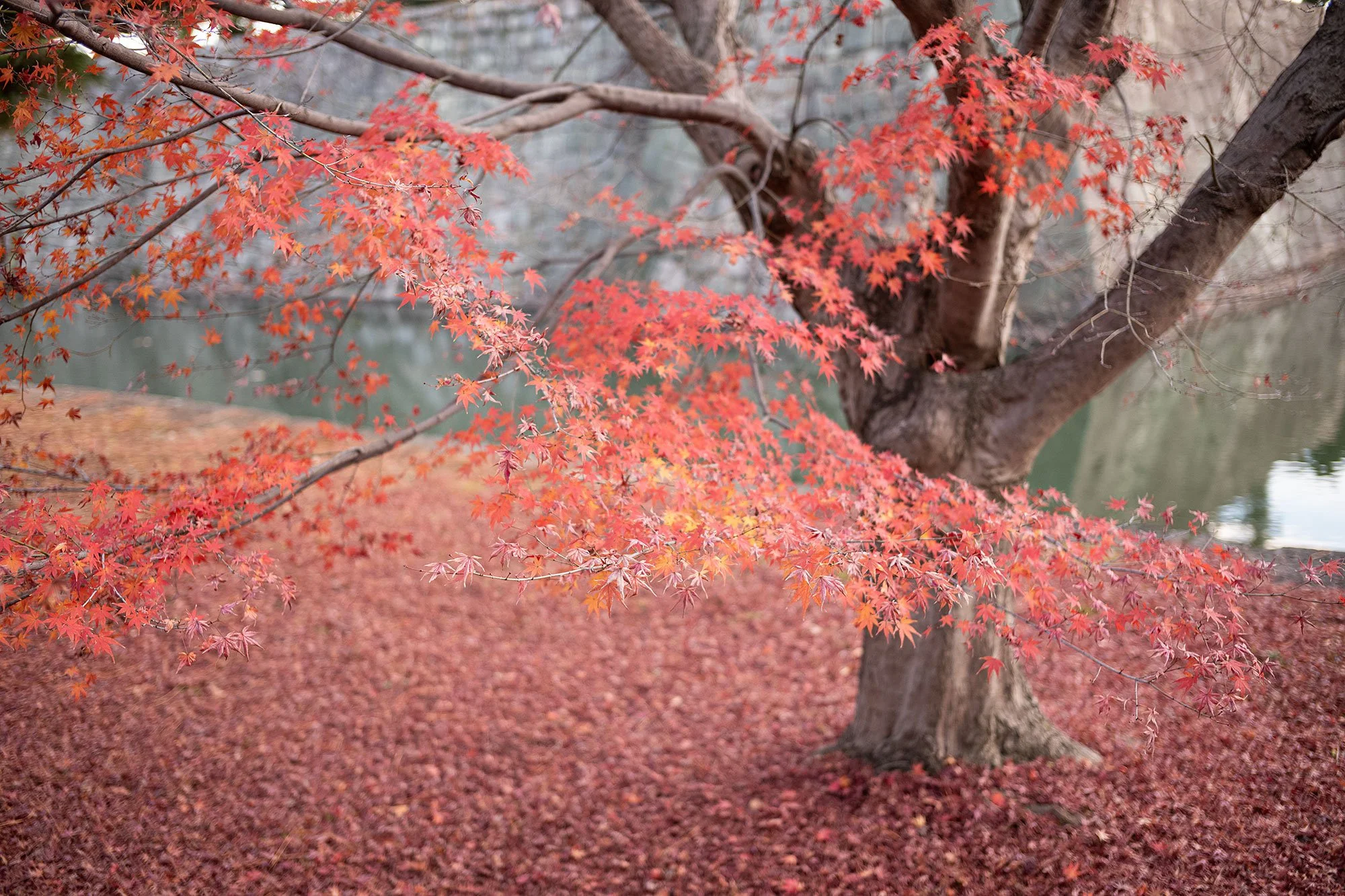
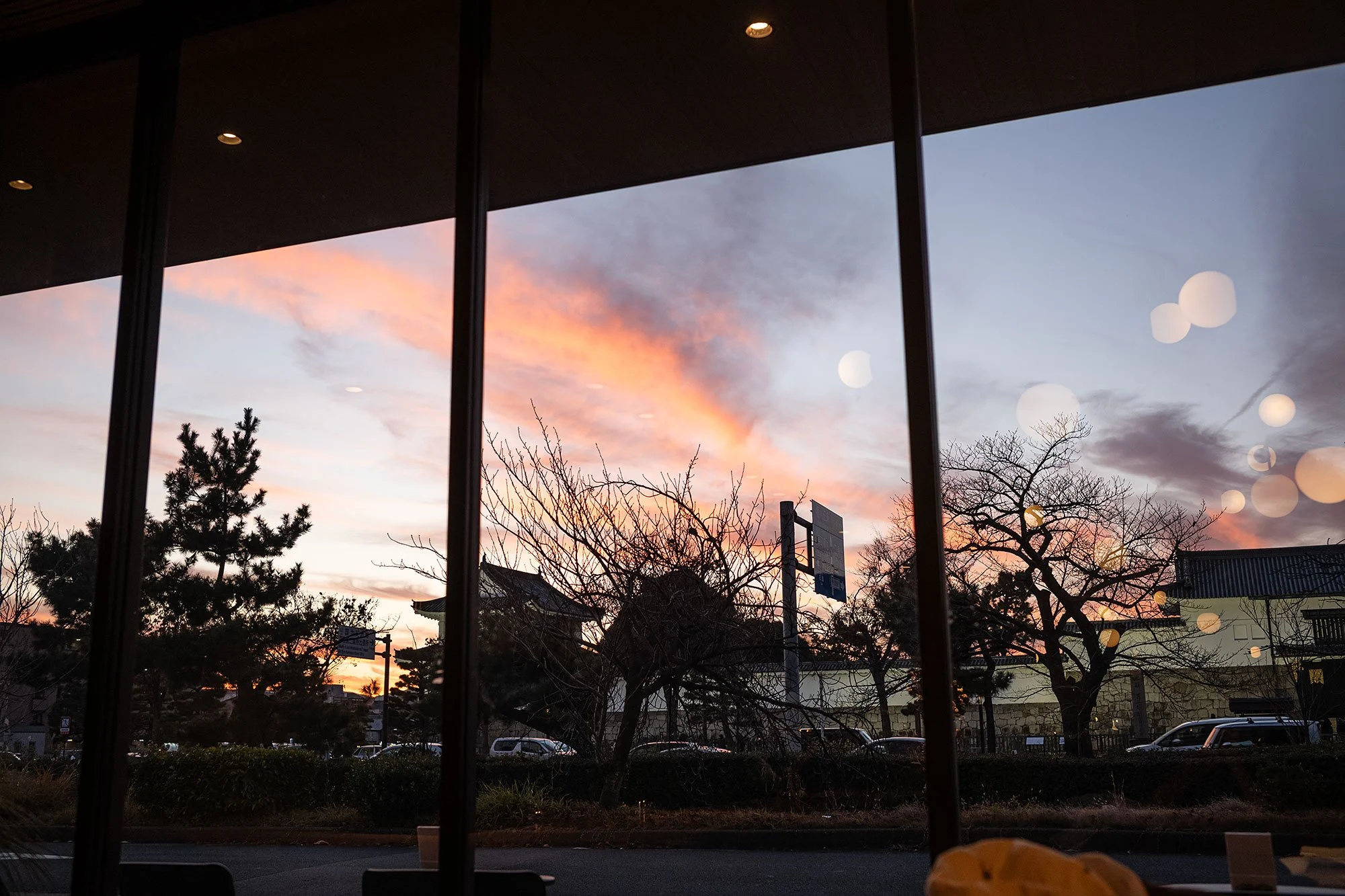
We leave the castle after walking through the gardens in the back, making our way to a bar across the street. We have plans to dine at a modern izakaya not too far away, but it’s too early yet for dinner, and we share a drink before moving on.
The izakaya is great. We end up meeting the owner who shares a drink with us before he has to move on to address other customers. I ask Misai how you say “you’re welcome” in Japanese and she says they don’t really have something that’s exactly the same. She tells me there’s a formal way that shows you’ve really done something for someone; there’s a common phrase that sounds like “EO.” I repeat it after her and she laughs. Not like a donkey!
At one point over dinner Misai calls something kawaii, which extends beyond my understanding of the word. I ask about it and she and her sister tell me that kawaii can mean a lot of different things, depending on context, broadening my definition of the word. I try calling out a few things as kawaii and think I get it, but we’ll see.
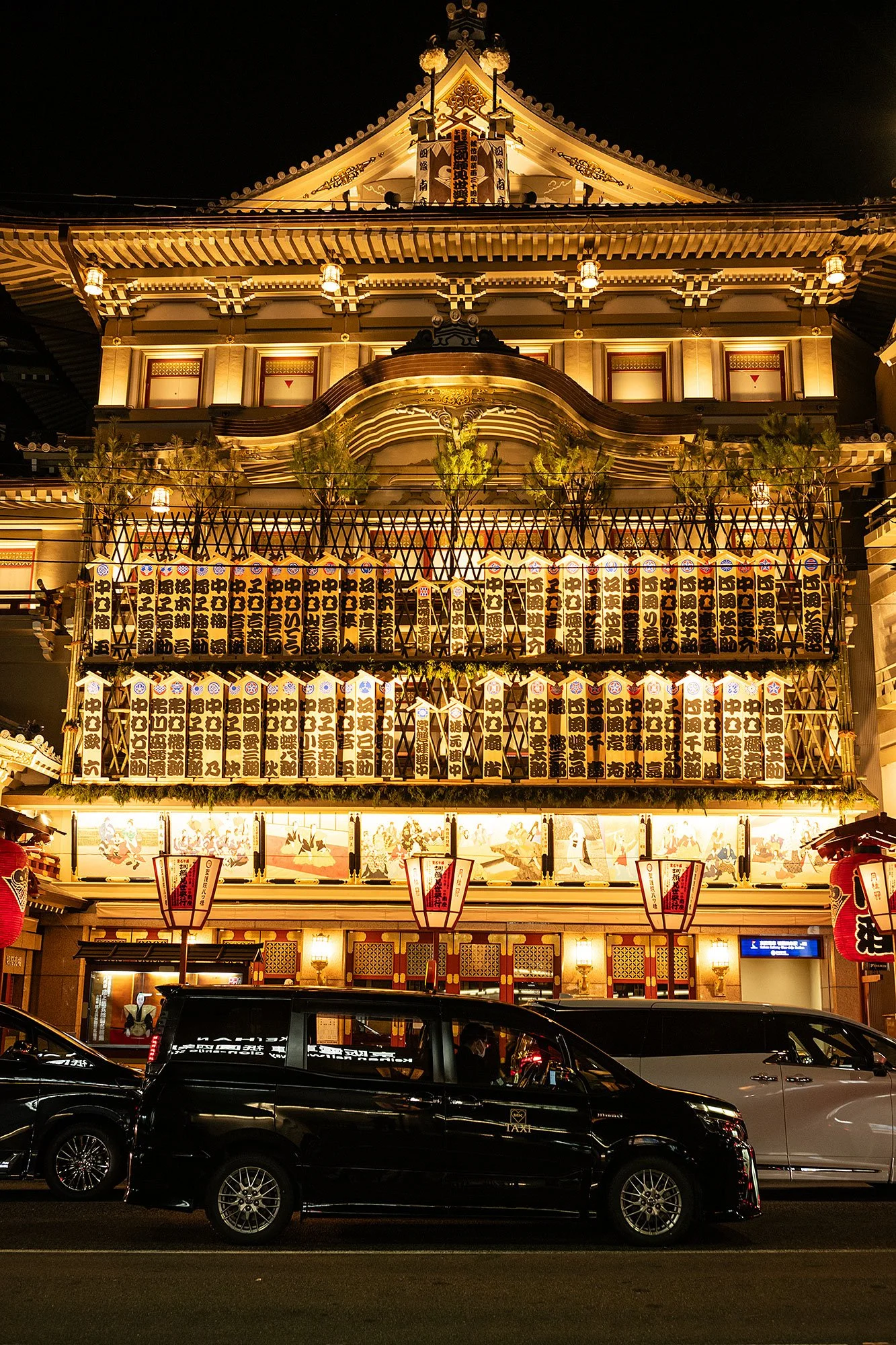
I walk home after dinner, passing a popular street of bars and restaurants, and crossing the river to the Minamiza Theater on the edge of my neighborhood. It’s great to be back in Japan amongst friends eating, drinking, and chatting about everything and nothing. It makes anyplace feel like home. 🇯🇵