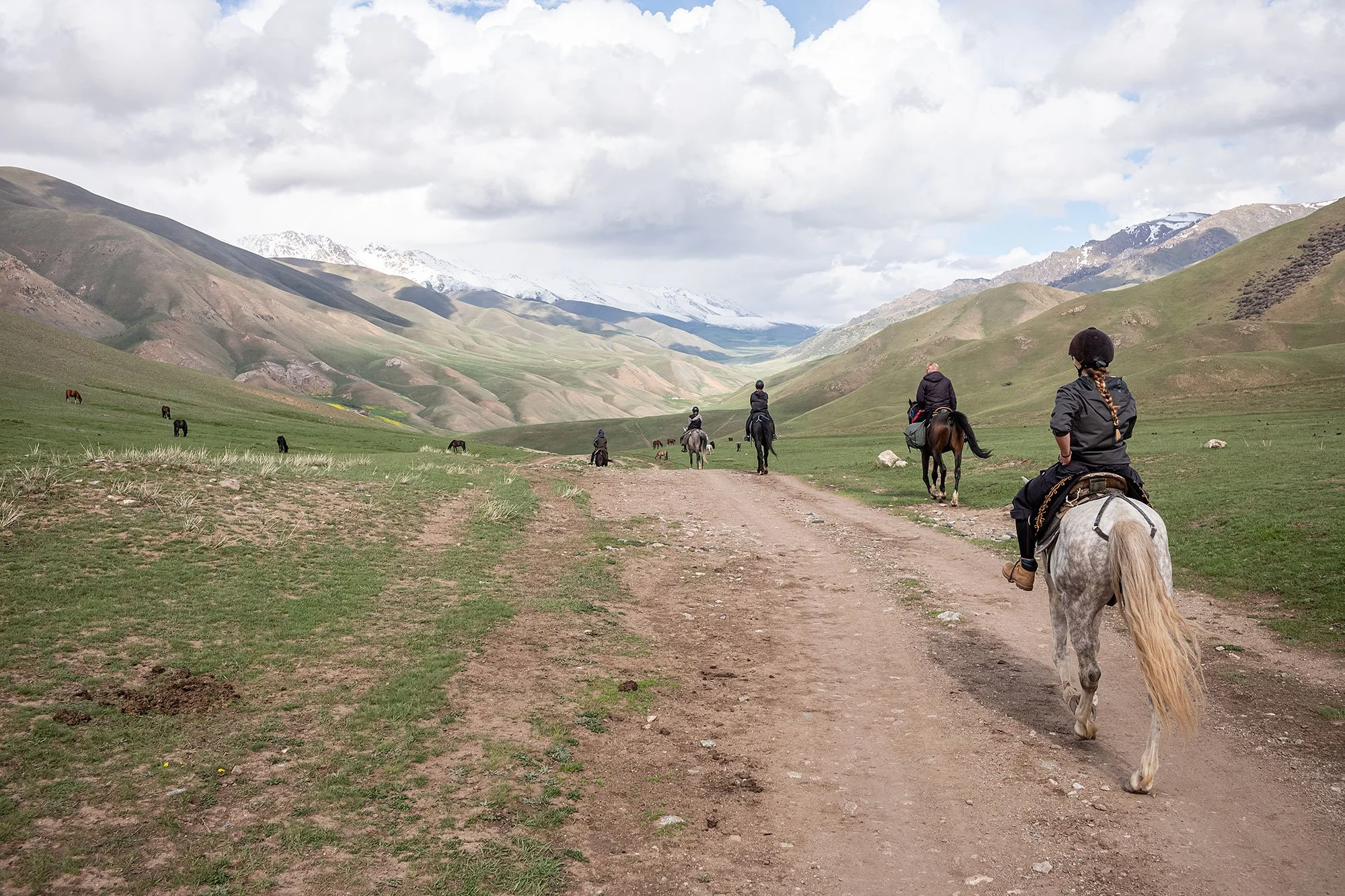
The three-day horse trek from Kyzart to Song Kul (and back), day one.
The past few days in Bishkek have been cold and wet, a marked change from the beautiful Spring weather we’d been enjoying.
Thankfully, the forecast for our horse trek is better: partly sunny skies the first day, sunny days to follow; though it’s always hard to tell what will happen in the mountains. We’ll be at altitude, starting at from Kyzart at 2,120 meters above sea level and climbing to 3,400 when we cross the Jalgyz Karagai Pass. From there, we’ll descend 3,040 meters to our camp by the edge of the lake, sleeping ten to a yurt. At night the temperature will drop to just under 0°C. I’m amazed they offer this trip year-round.
•
I’m running late. A minivan has been arranged to transport our group to Kyzart, leaving from a hostel 20 minutes away from my apartment. I thought I left with enough time, but hadn’t considered the morning Bishkek traffic. We’re stuck at a light for what seems like forever, but I manage to arrive with a minute to spare.
The minivan is parked outside and the driver loads my bags into the back. A father-daughter from the UK are already on board as well as Vietnamese man from Washington State in the United States. I ask to sit in the front. Rain starts to fall as we wait for the remaining passengers to come out from the hostel, two women from the UK—one with a towel over her head—and a South Korean man traveling for six months before his final year at university. It’s the last time we’ll see a shower for the next three days.
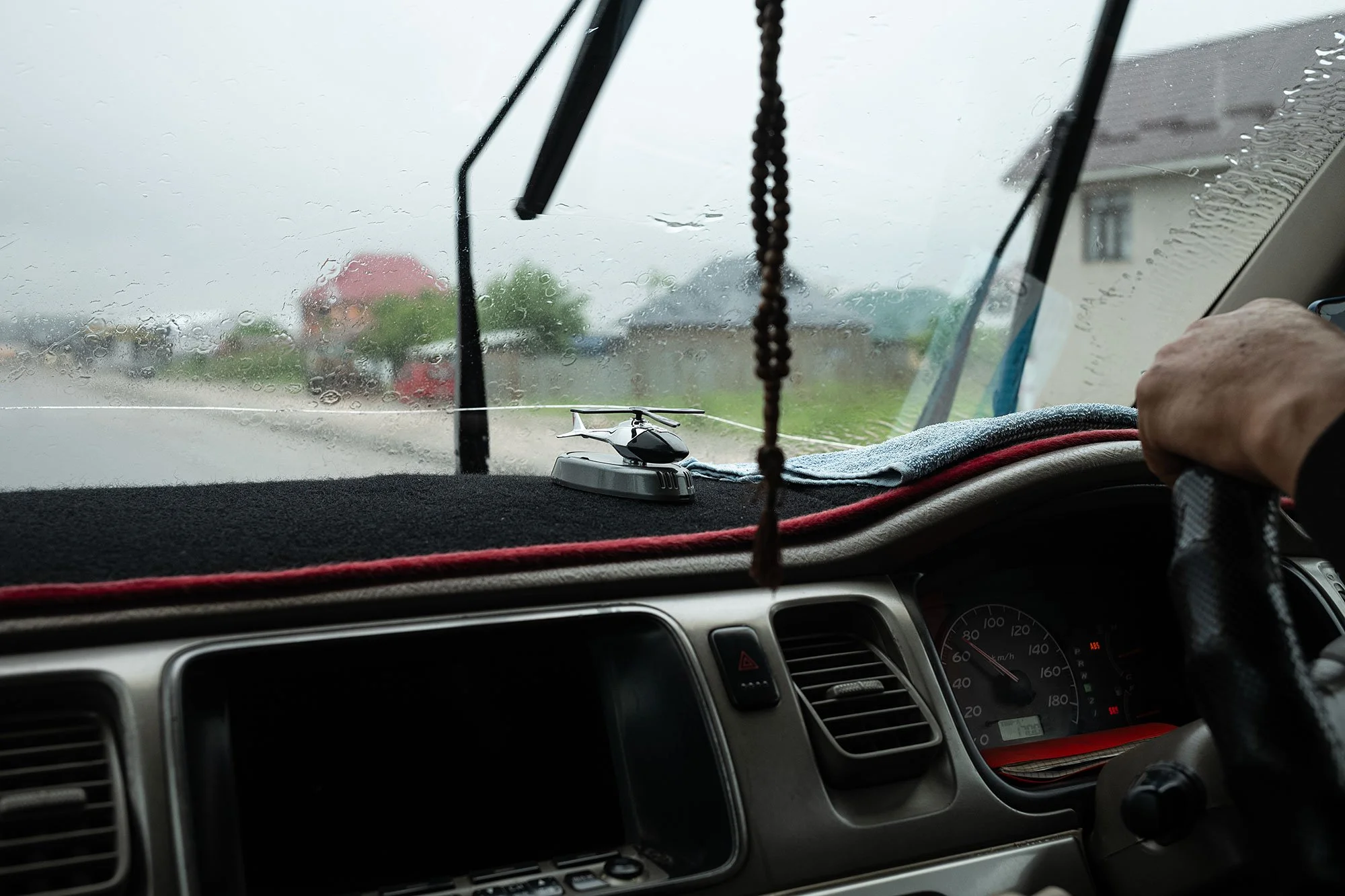
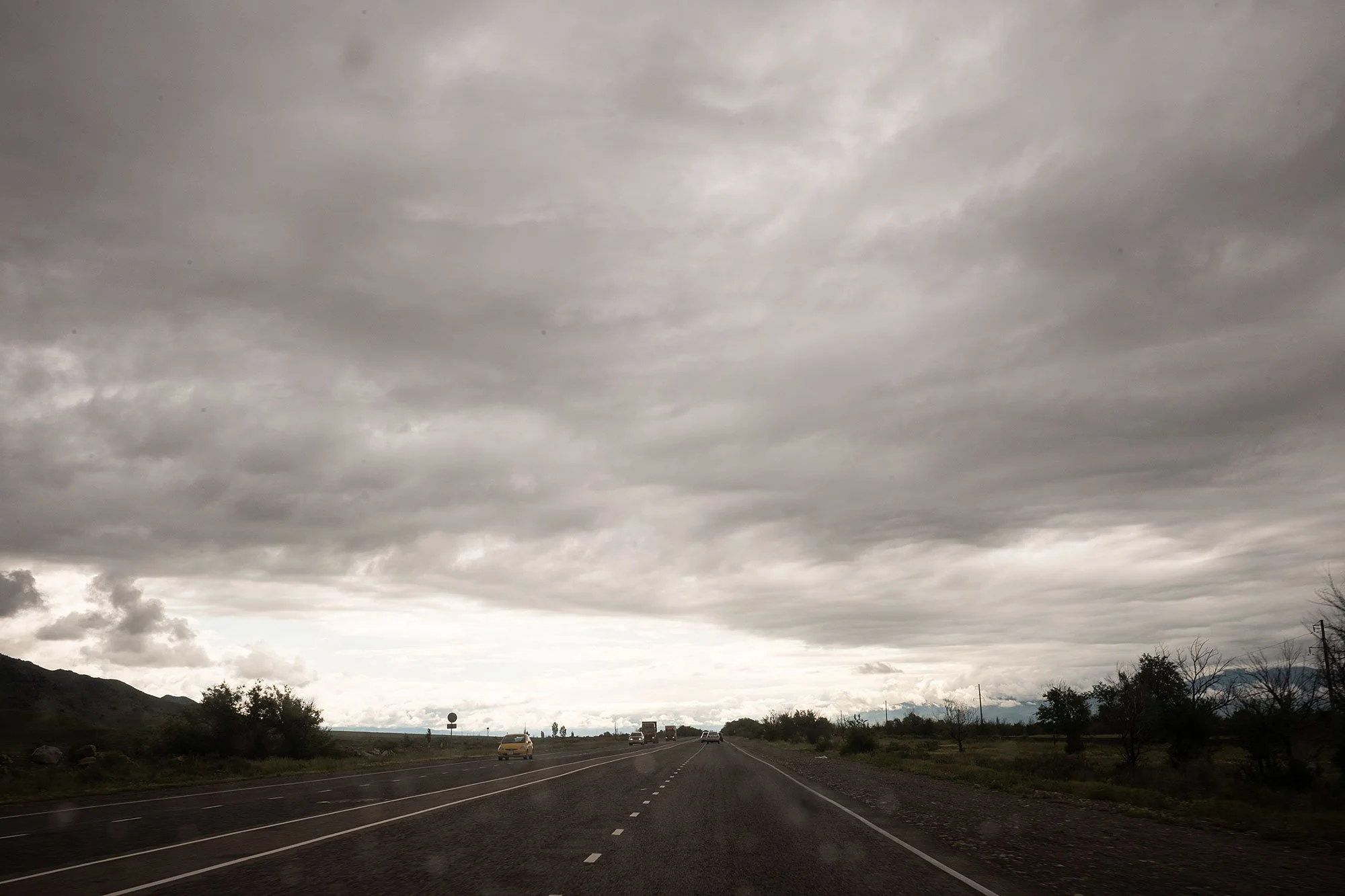
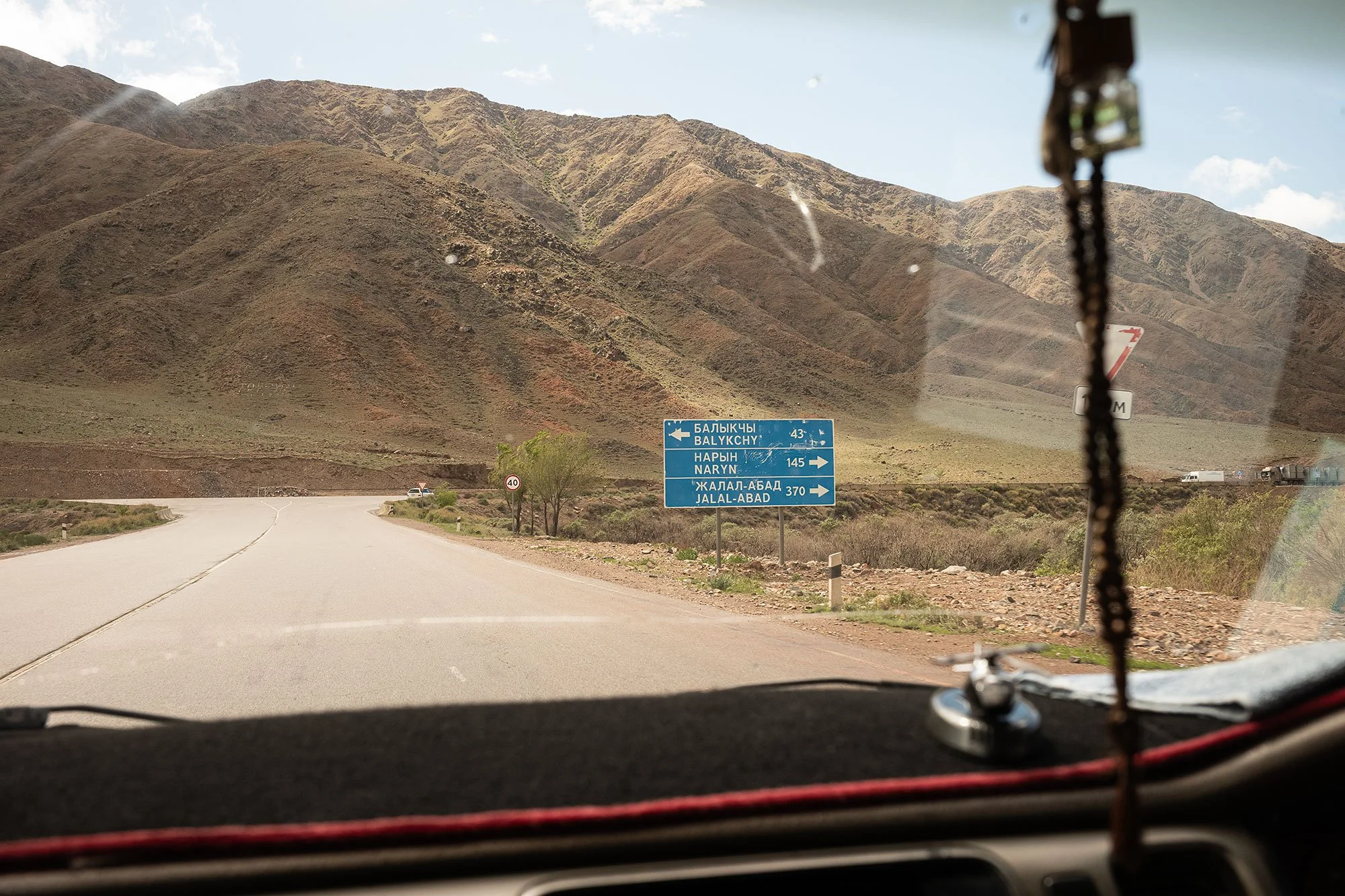
We set out in the rain, the window-wipers beating a steady rhythm as we navigate of the city, our slow pace exacerbated by construction zones that slow traffic to a crawl. Once we reach the outskirts of the city and the highway, however, it’s smooth sailing and soon we are speeding east. We need to make our way around the Kyrgyz Ala-Too Mountain Range to reach Kyzart, an almost four-hour journey covering some 266 kilometers. As the crow flies it’s just under 100.
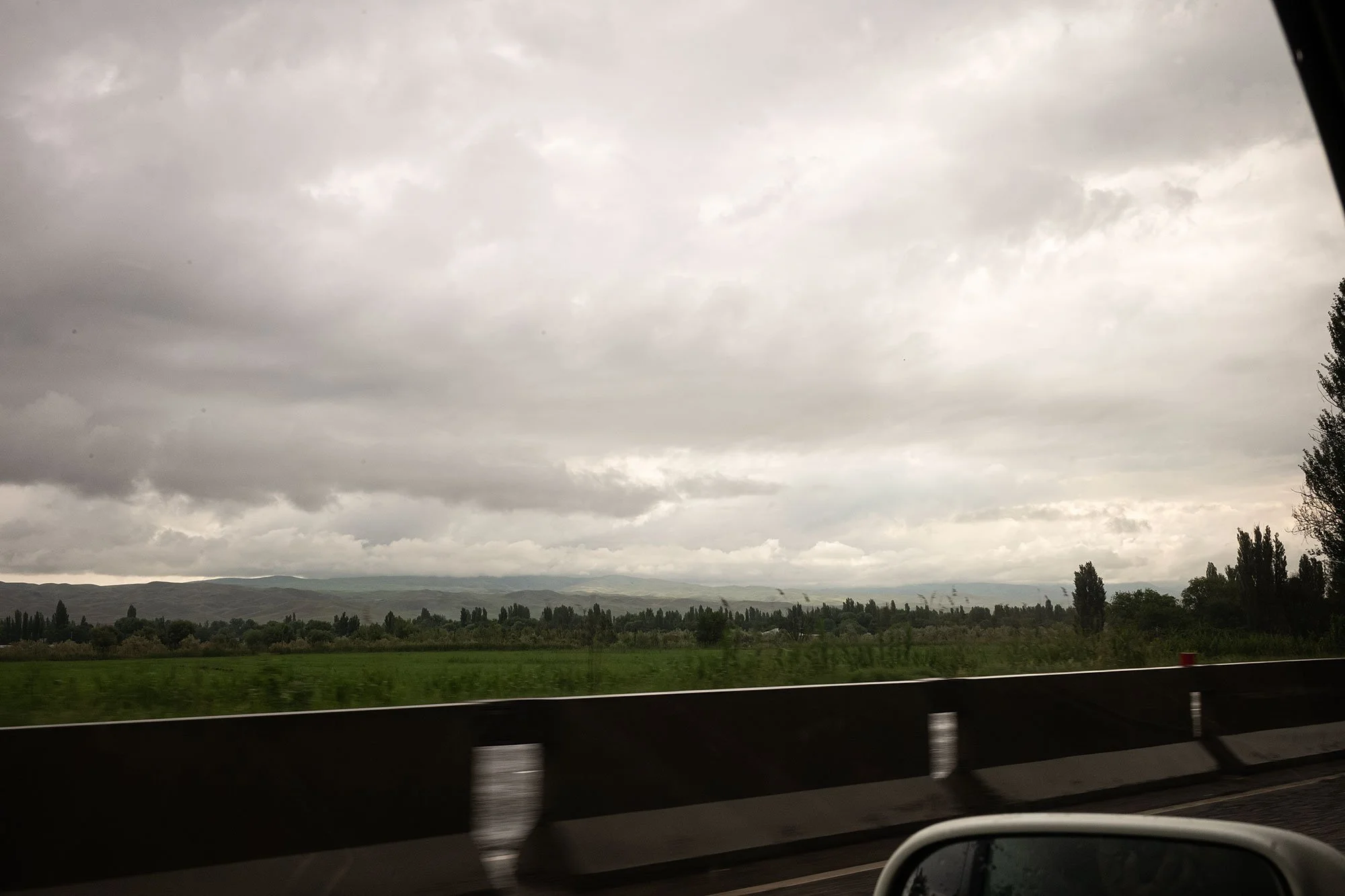
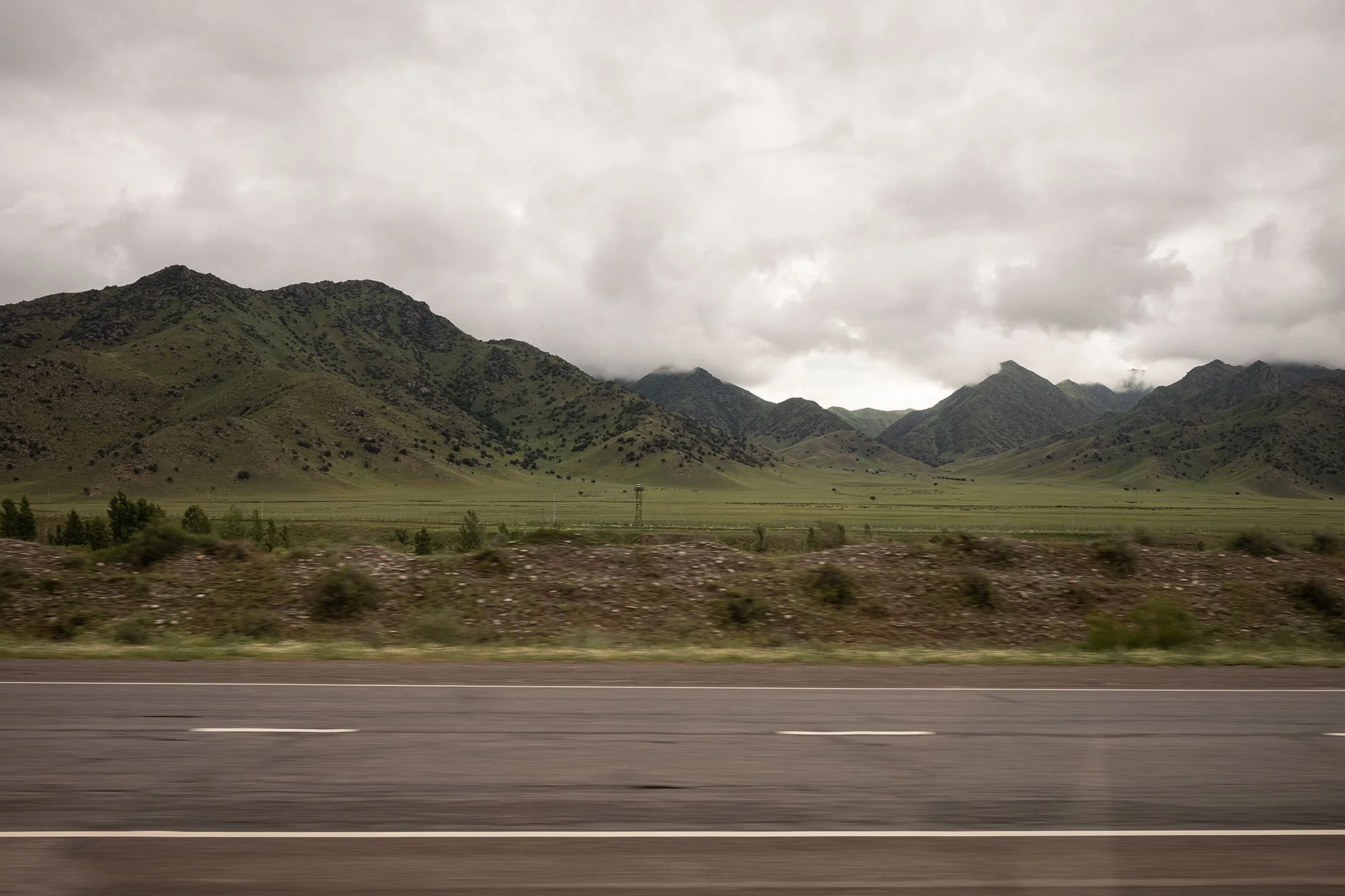
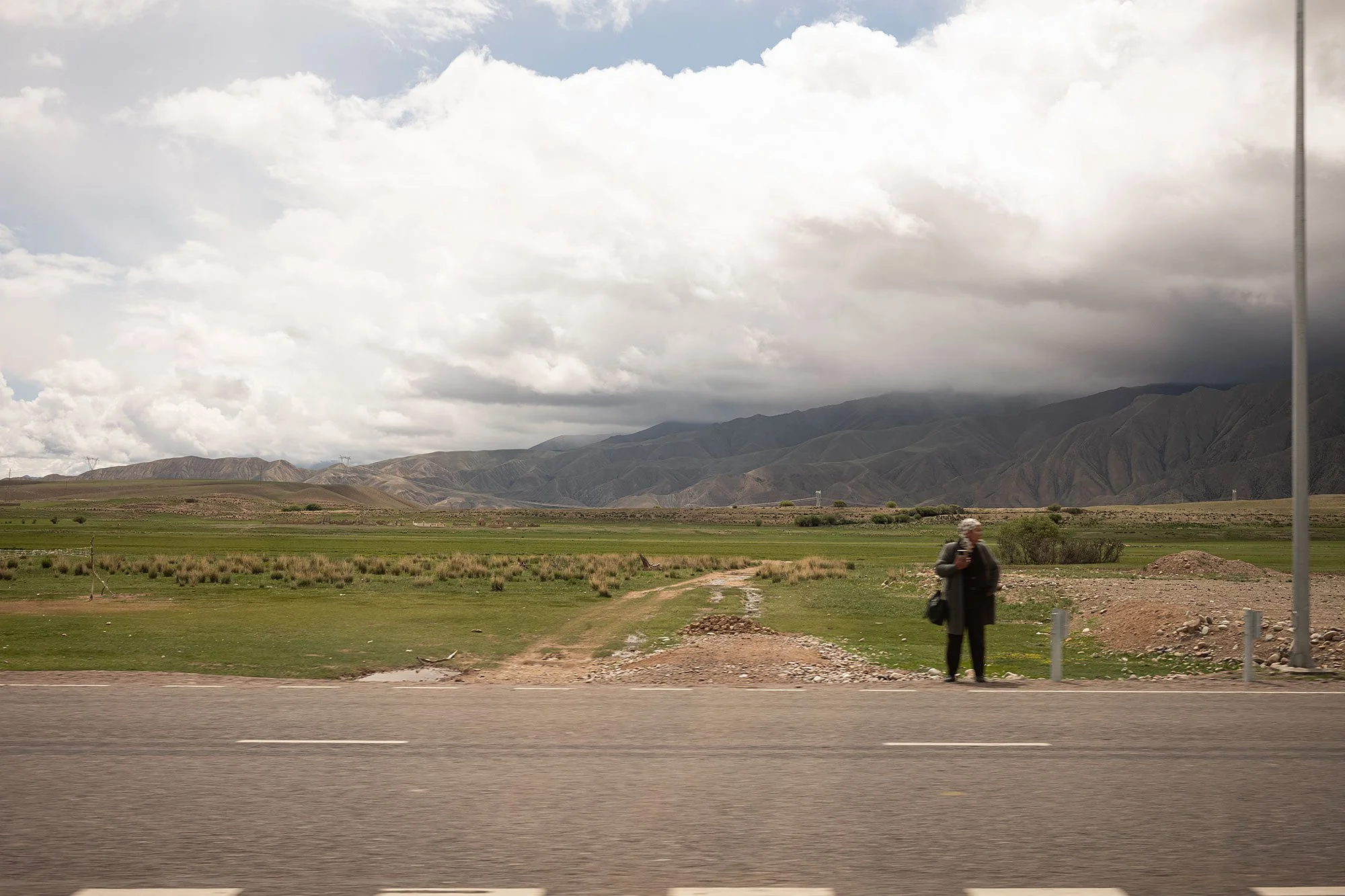
We drive through intermittent storms, a mountain range to our left. The driver sees me taking photos and tells me that there lies Kazakhstan, which explains the fencing and the intermittent watchtowers I’ve noticed.
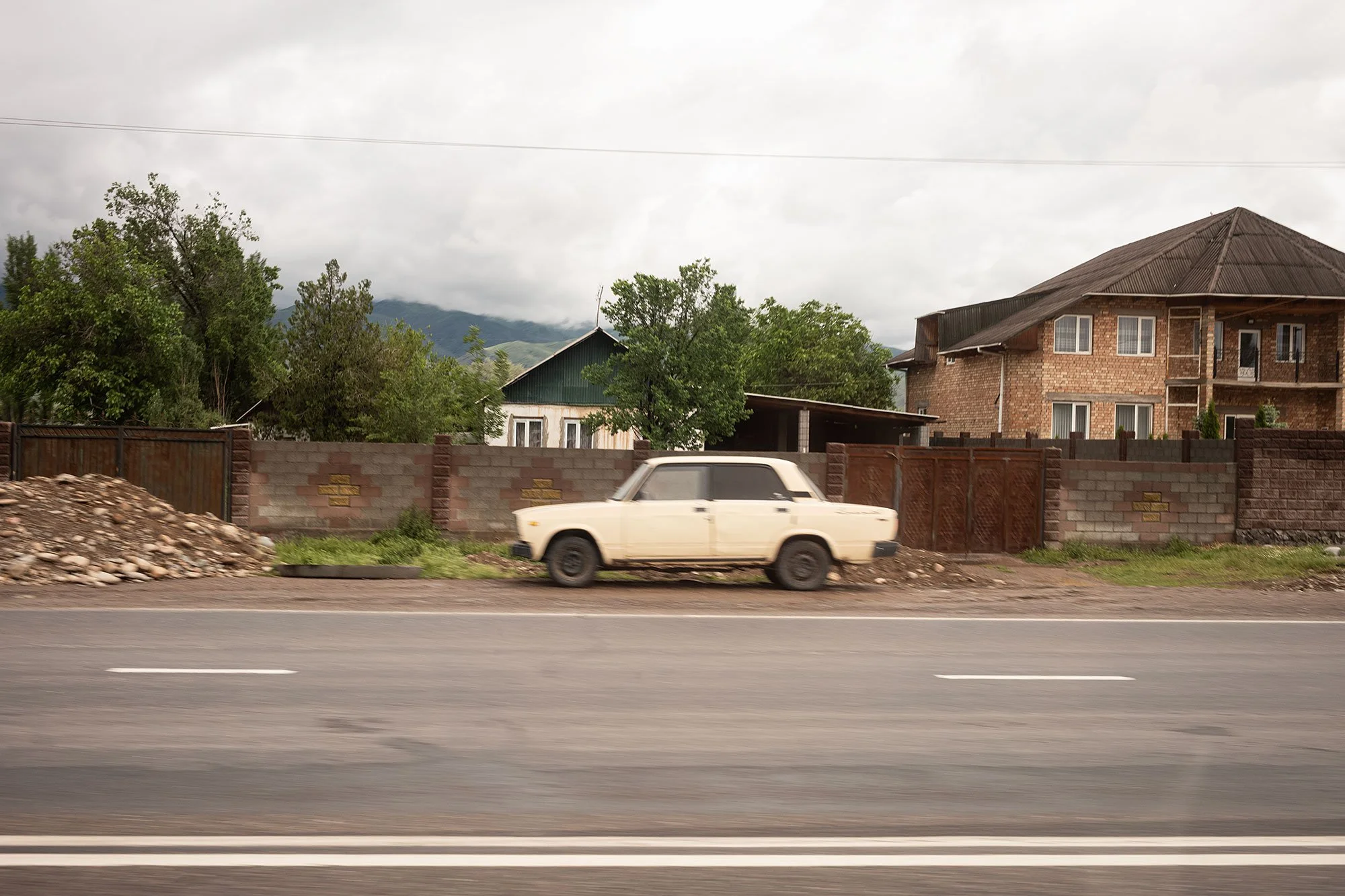
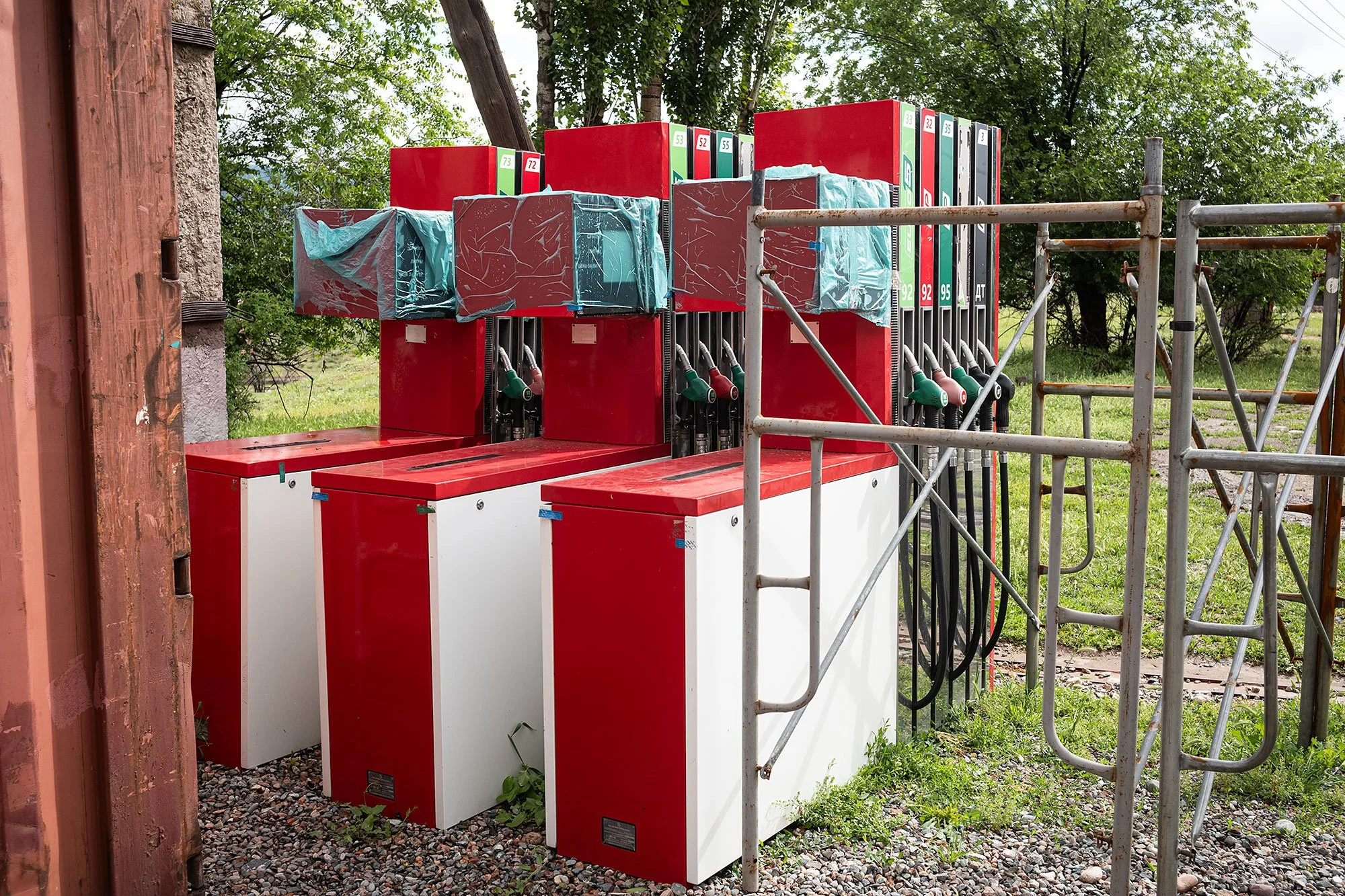
After a few hours we stop in a small town for gas. There’s a small convenience store and I walk in to use the bathroom. The door is locked and the cashier seems to point outside. Seeing the driver, he also points in a general direction outdoors, but it’s difficult to parse what they mean, and I end up walking up to various structures and trying the doors to see if they lead to the toilet; none do.
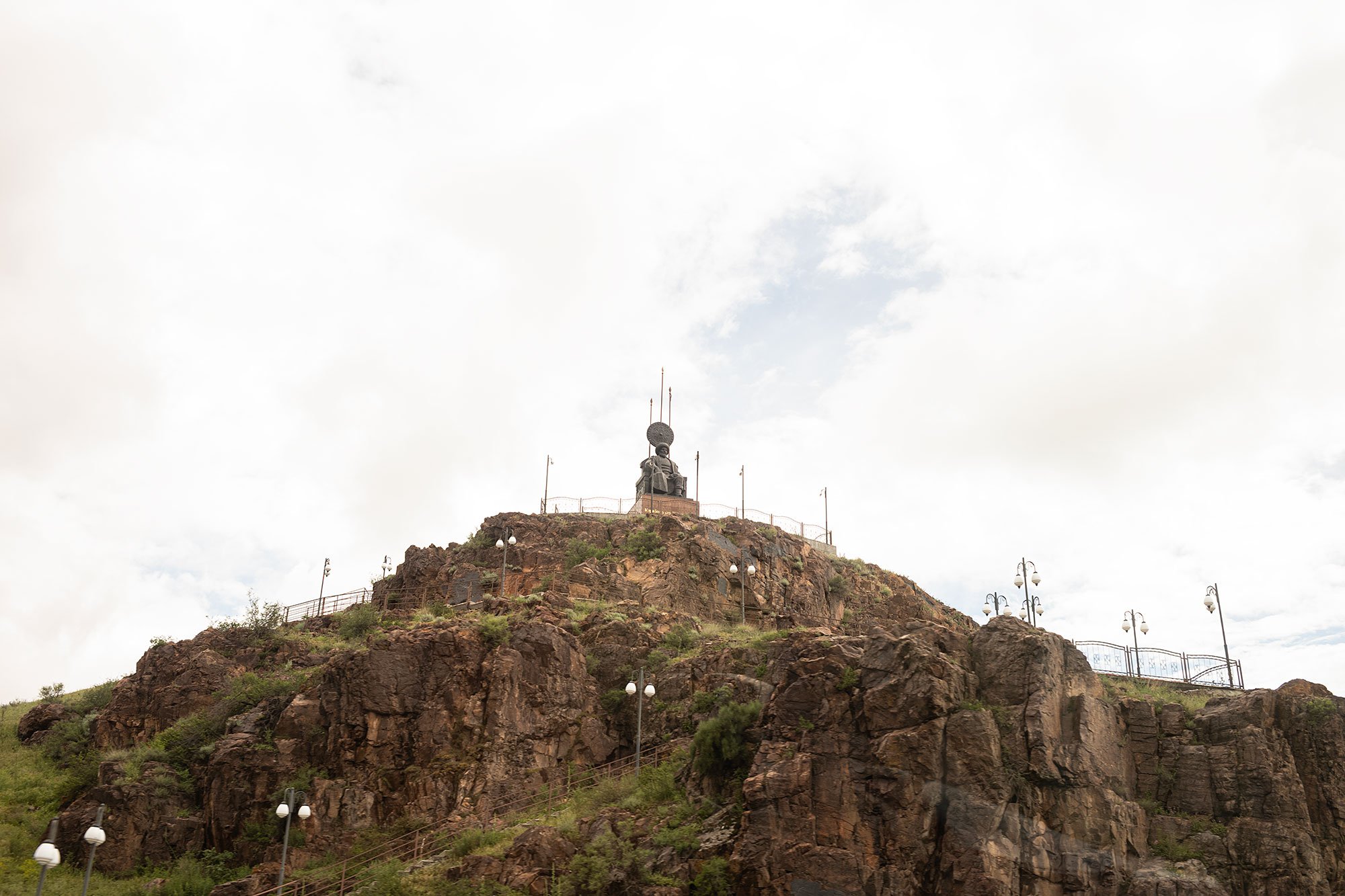
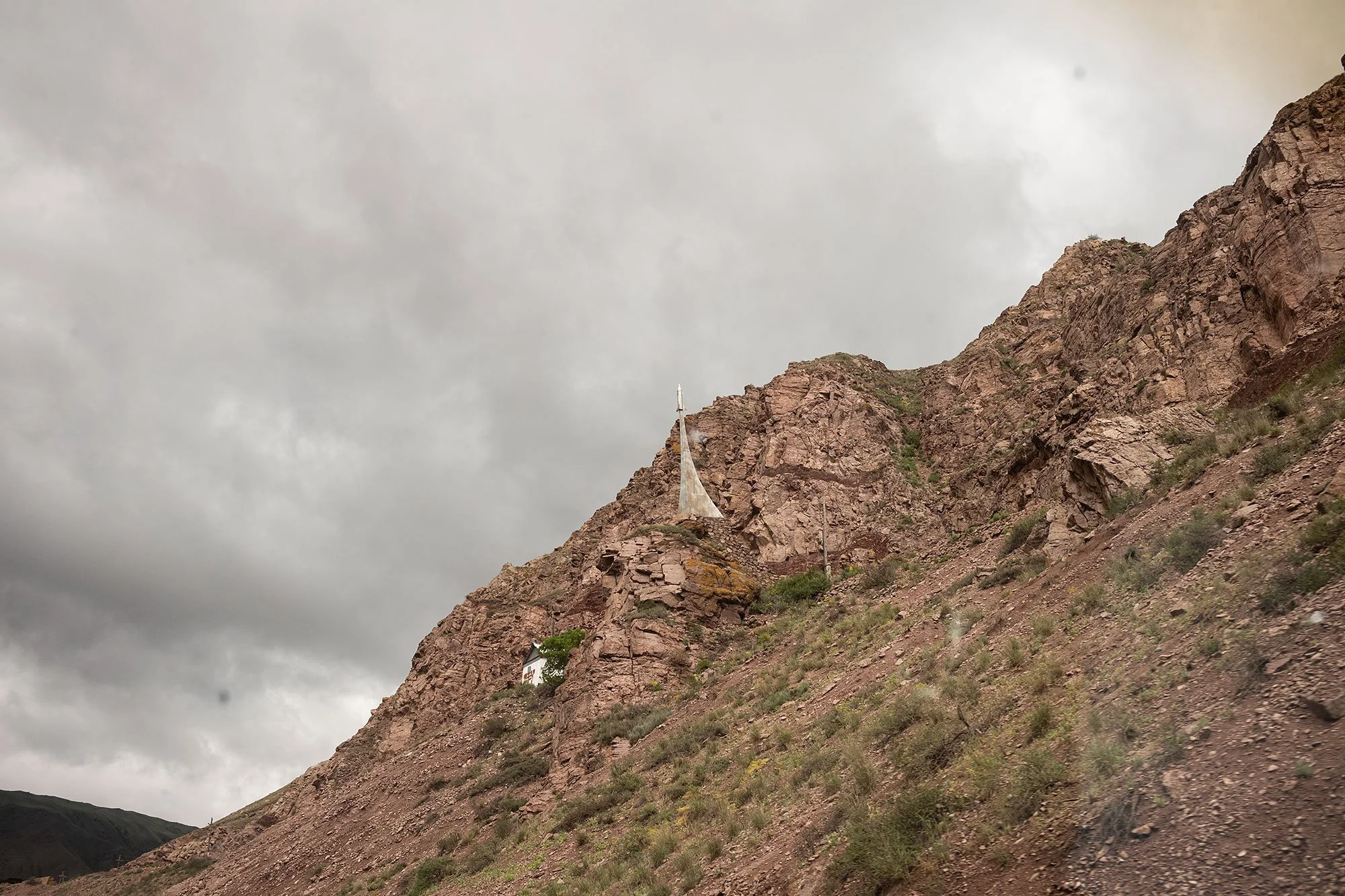
From our rest stop we continue on driving through the Chong Kemin Valley, passing various statues and monuments. On the left we pass a monument dedicated to Jantay Batyr; on the right, a smaller replica of The Rocket Monument to the Conquerors of Space. The original stands in Moscow.
Jantay Batyr was a Kyrgyz manap (tribal noble) and batyr (warrior-hero) in the the mid-19th century. A member of the Sarybagysh tribe's Tynay clan, he assumed the leadership of the Sarybagysh following his predecessor’s death and curbed internal wars and engaged in diplomacy with Russian officials during their imperial encroachment into Central Asia. He is now celebrated for his role in the patriotic, spiritual, and moral education of the people of Kyrgyzstan.
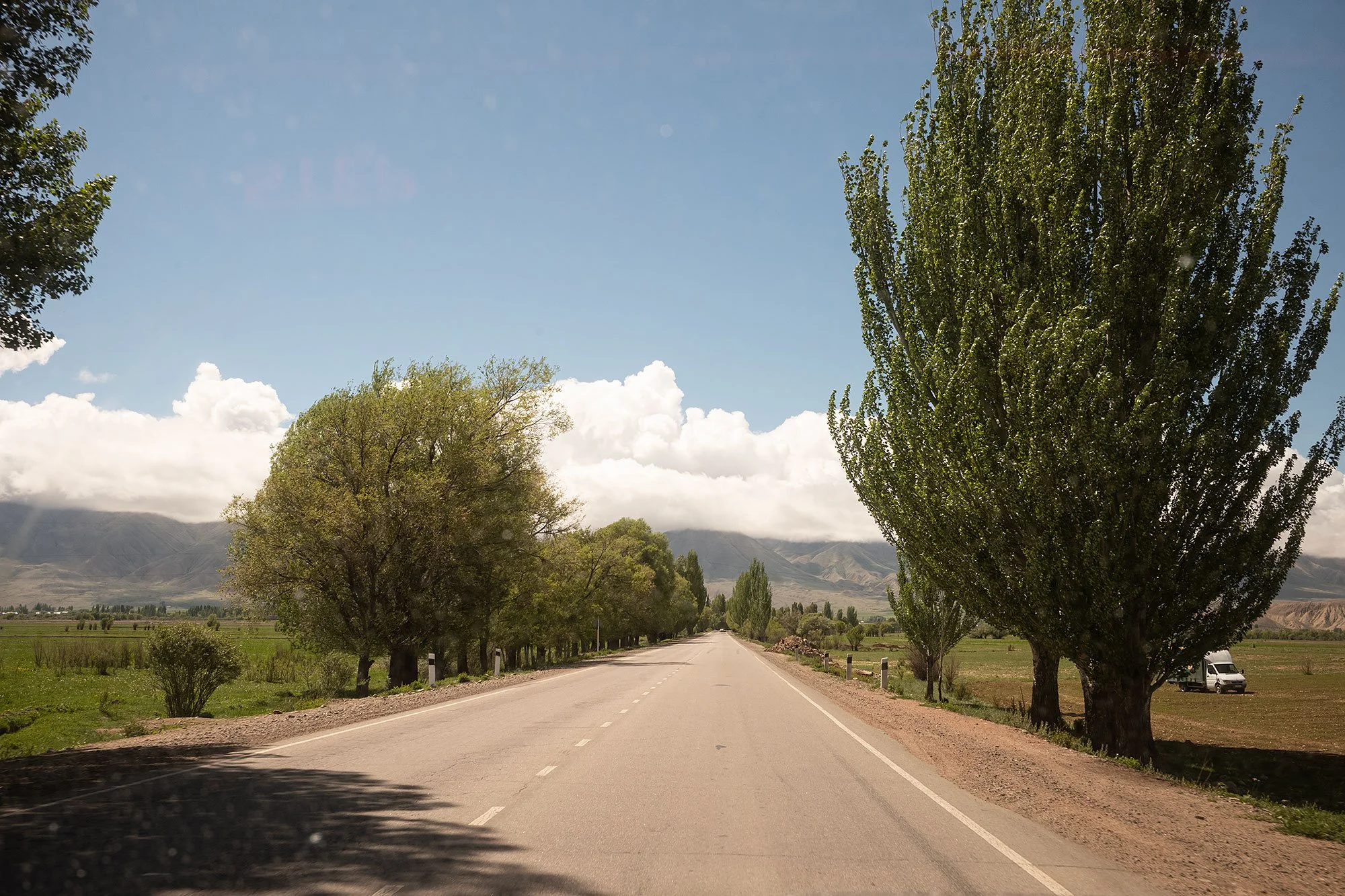
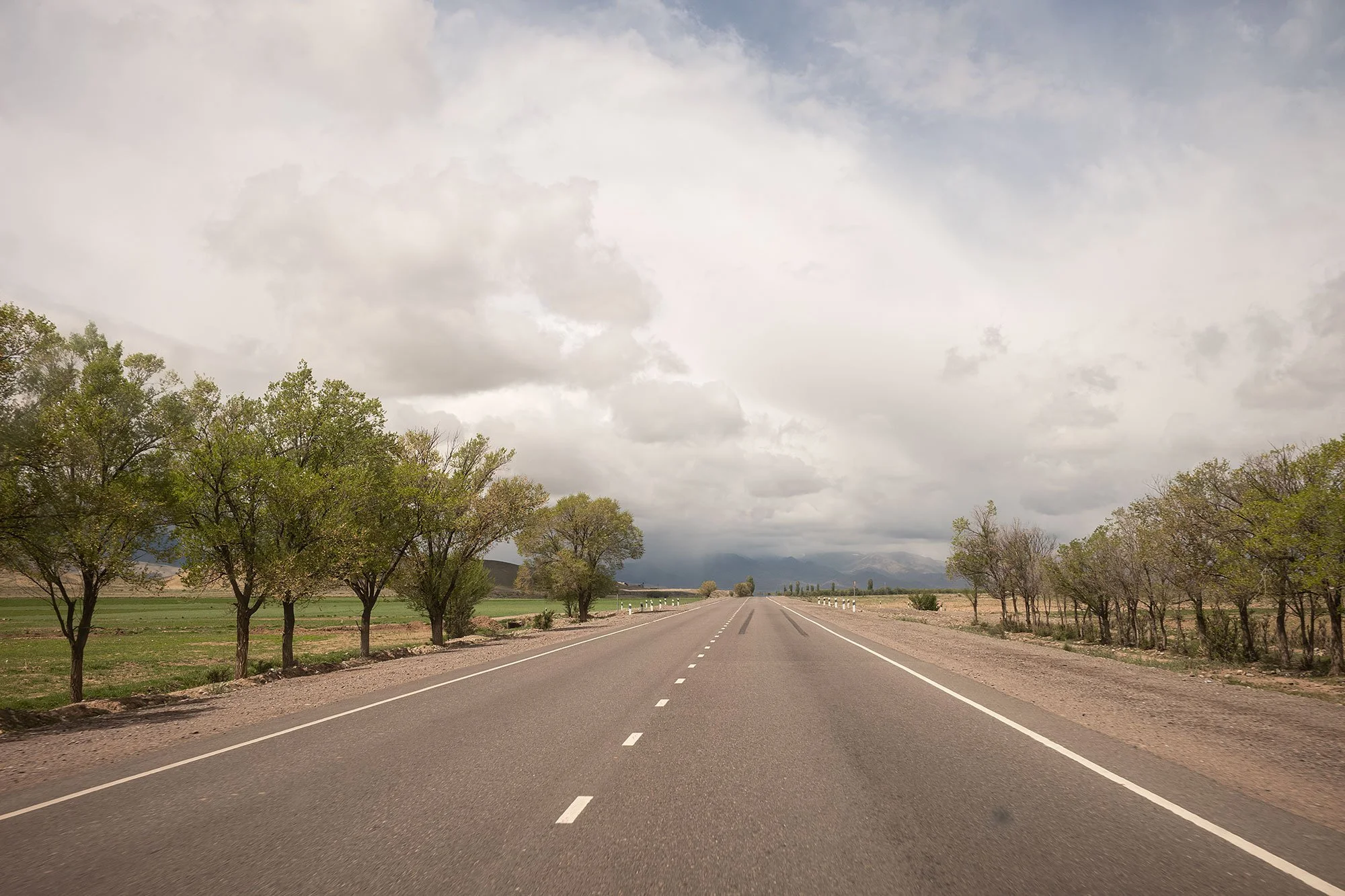
Emerging from the other side of the valley we enter an open plain dominated by blue skies. Trees line the avenue and I feel I could be driving through western Europe past fields being turned for agriculture.
With the sun out, the solar-powered rotors of the helicopter on the dashboard spin wildly.
But as we drive towards the mountains the clouds are soon once again upon us, casting us in shadow.
Arriving in the village of Kyzart we drive to a guesthouse where we’re encouraged to take off our shoes before entering. Our host takes us to a room where a long table adorned with snacks has been arranged along the far wall, and he invites us to sit on cushions on the floor while lunch is prepared.
A woman appears and serves us a simple but hearty meal in preparation for our trek, a hot soup and plov. We introduce ourselves and begin the process of getting to know one another. The women from the UK are Anna and Ella, friends since childhood, the latter quick to laugh. Peter and Shannon are the father-daughter, and the South Korean university student tells us to call him Kim. Somehow I don’t quite catch the name of the Vietnamese-American.
There’s a South Korean man from London who shares our table name Isaac. He’s opted to trek solo. It sounds like he’s interested in becoming a travel vlogger and wants to be able to stop and shoot videos along the way.
He leaves before us and I imagine we’ll meet at the yurt camp, but we never see him again.
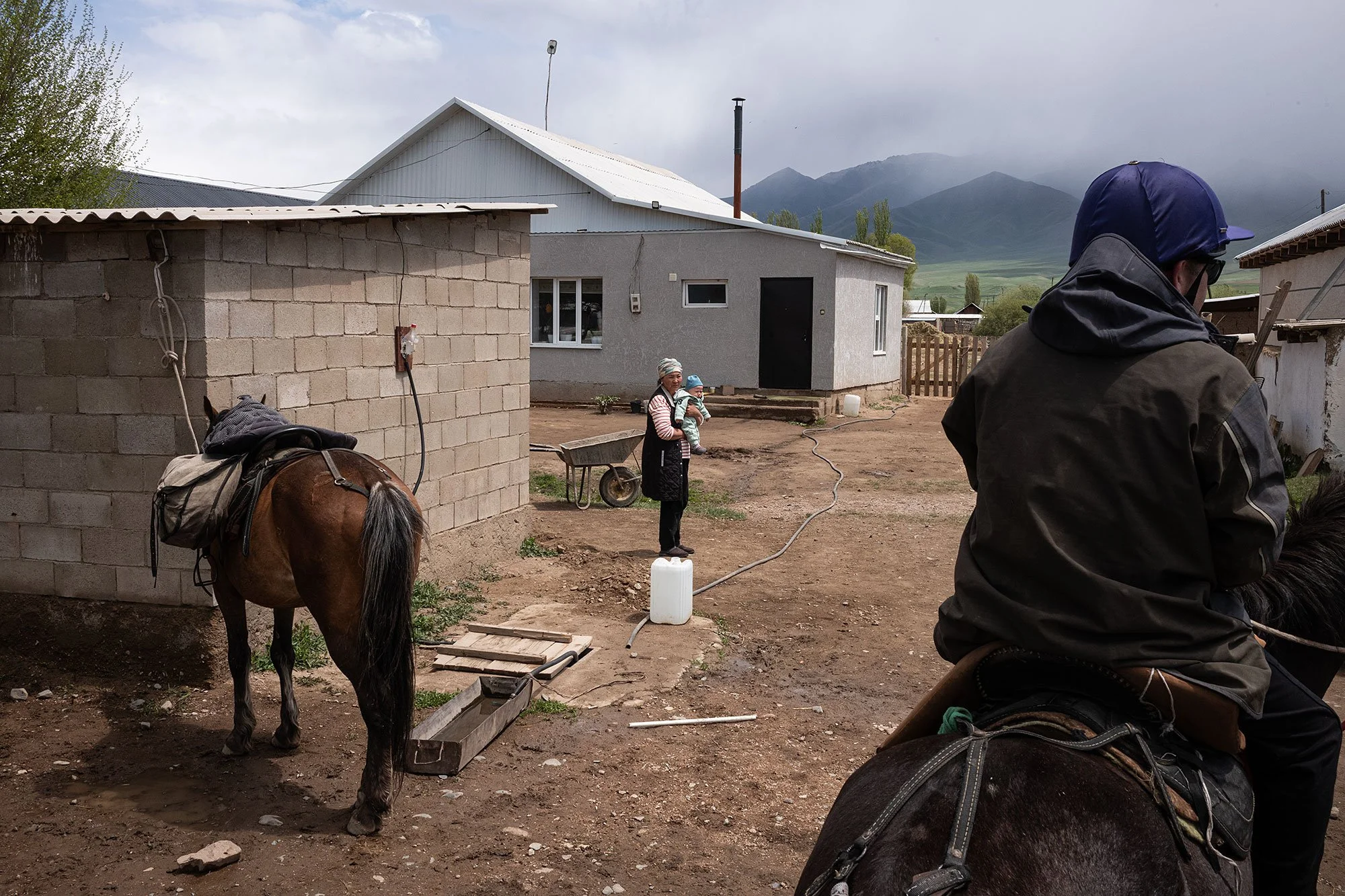
Our host tells us to leave our larger bags, taking only what we need. Our smaller bags will be loaded onto the horses with saddlebags.
I contemplate what to wear for our ride, opting to don a pair of water-resistant track pants over the linen pants I’ve worn on the ride to the village, and a hoodie under the fleece-like jacket I bought in Aktau over which I put on a windbreaker. I’m taking few chances with the possibility of rain.
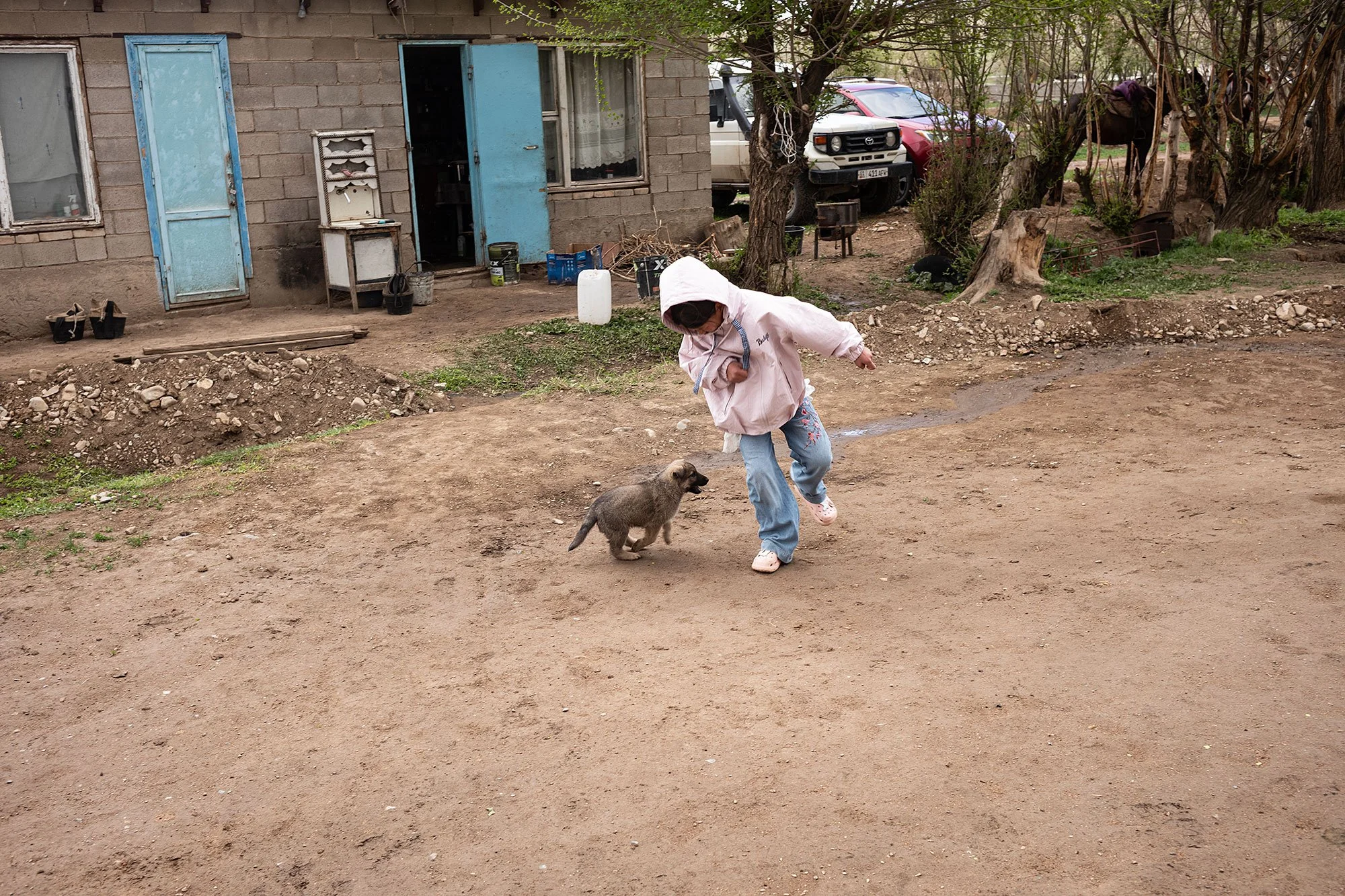
Outside, our guides give us helmuts and ask us to check for fit. A little girl runs around the yard playing with a puppy that engages us all and the guides have to call our attention back to the matter at hand. One shows us how to mount the horse (always from the left side) and how to steer, pulling the reins this way and that.
With that short demonstration we’re lead to our horses and helped to mount. My horse’s name is Jerda.
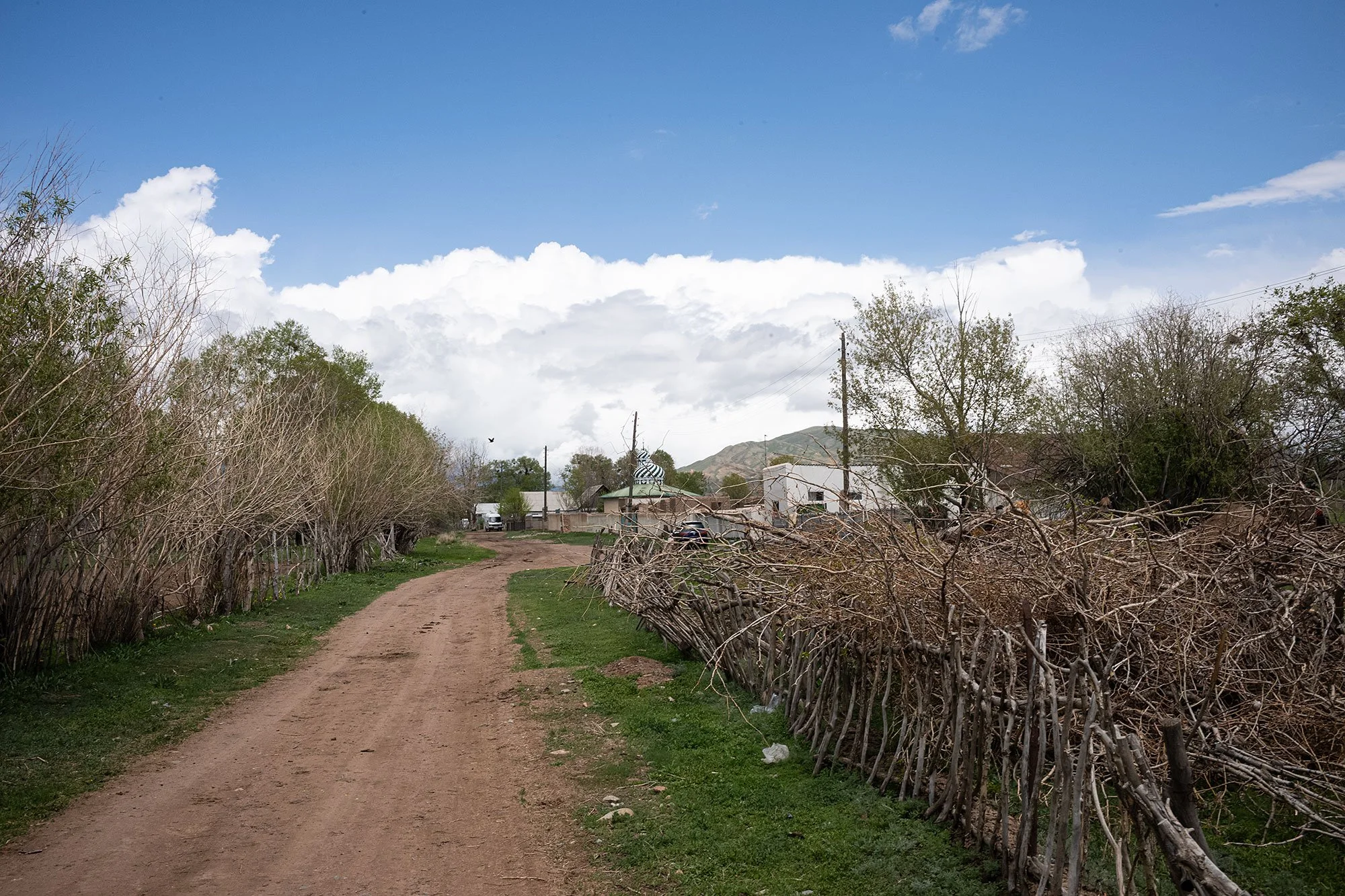
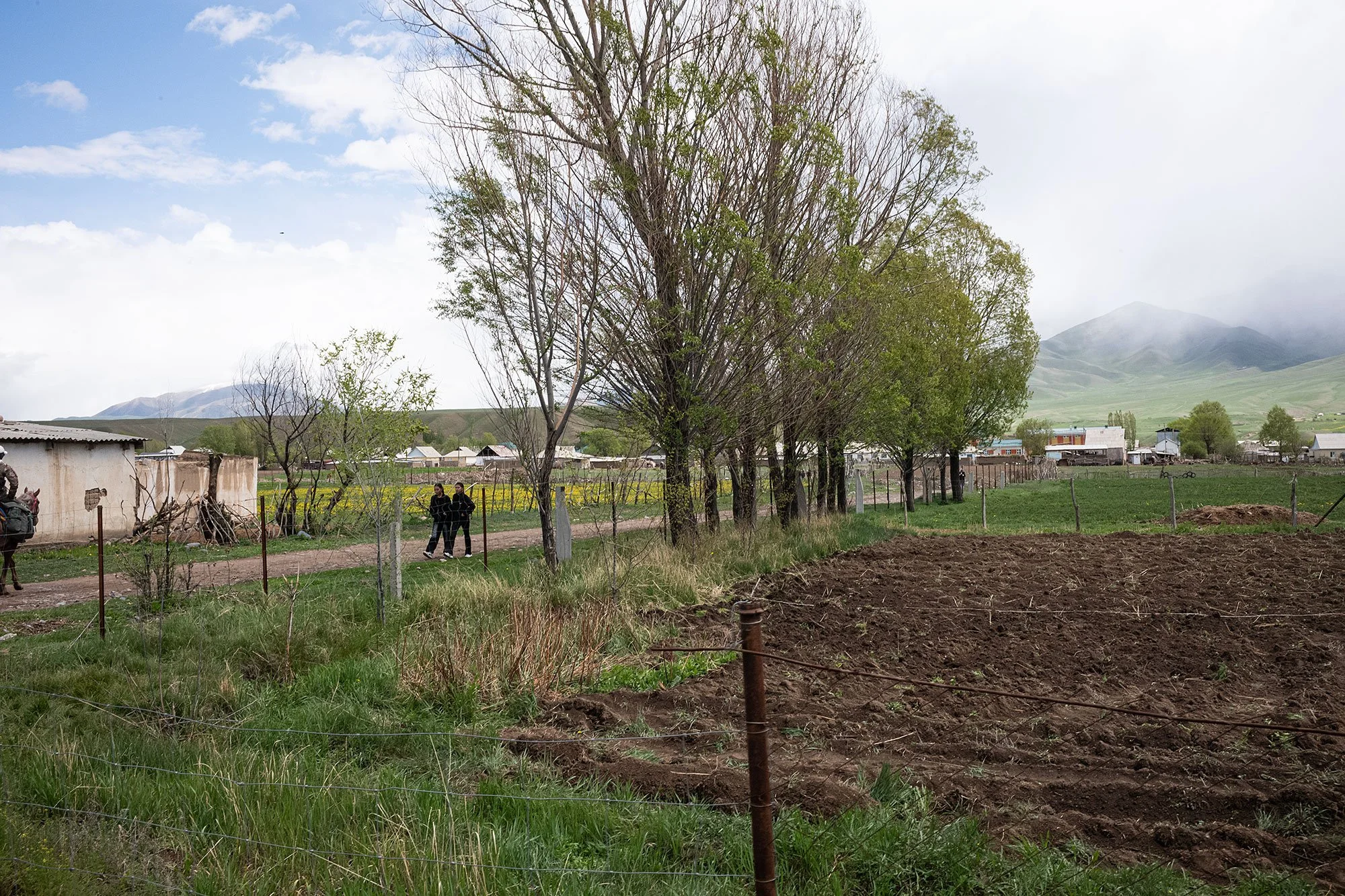
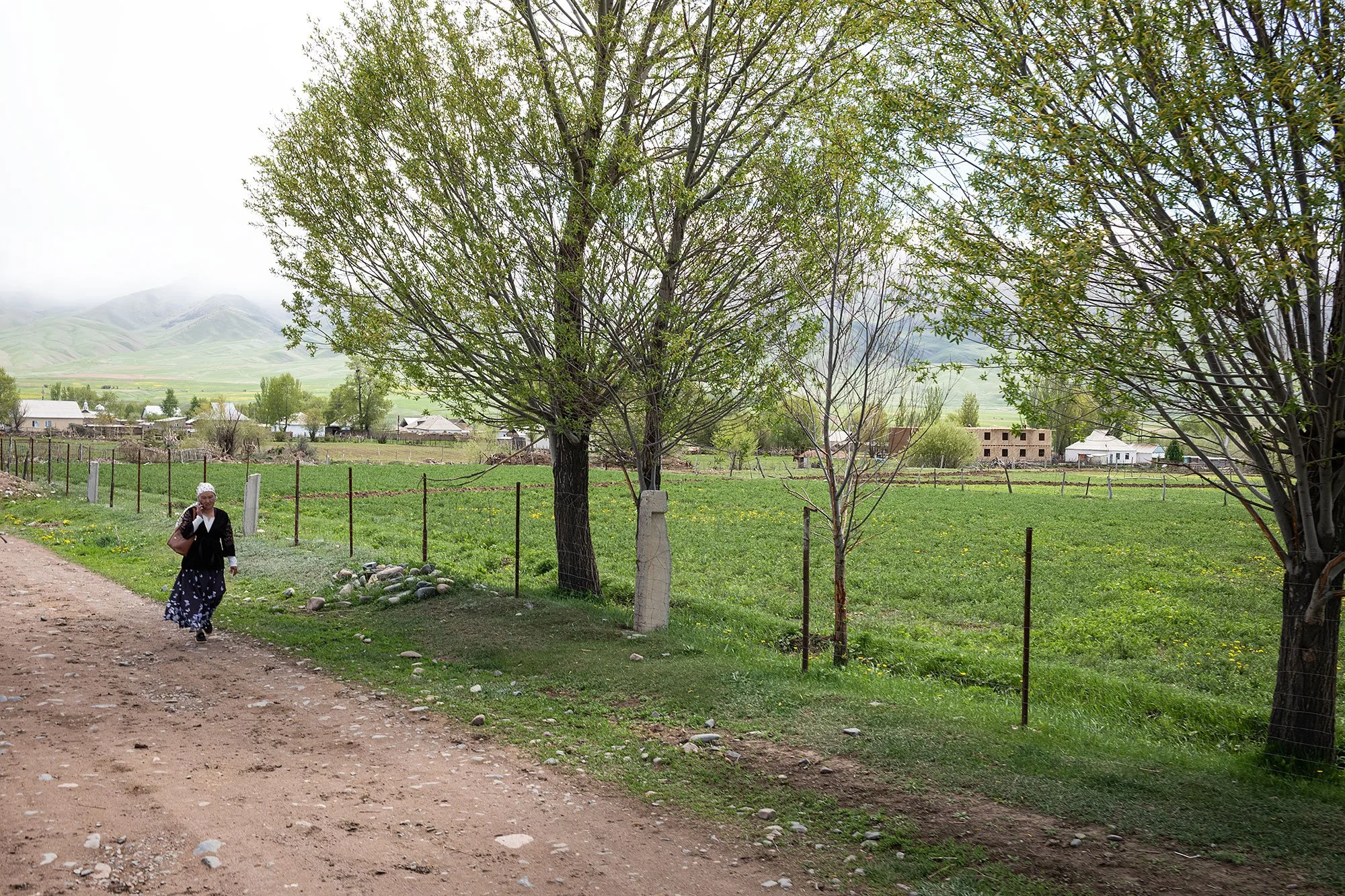
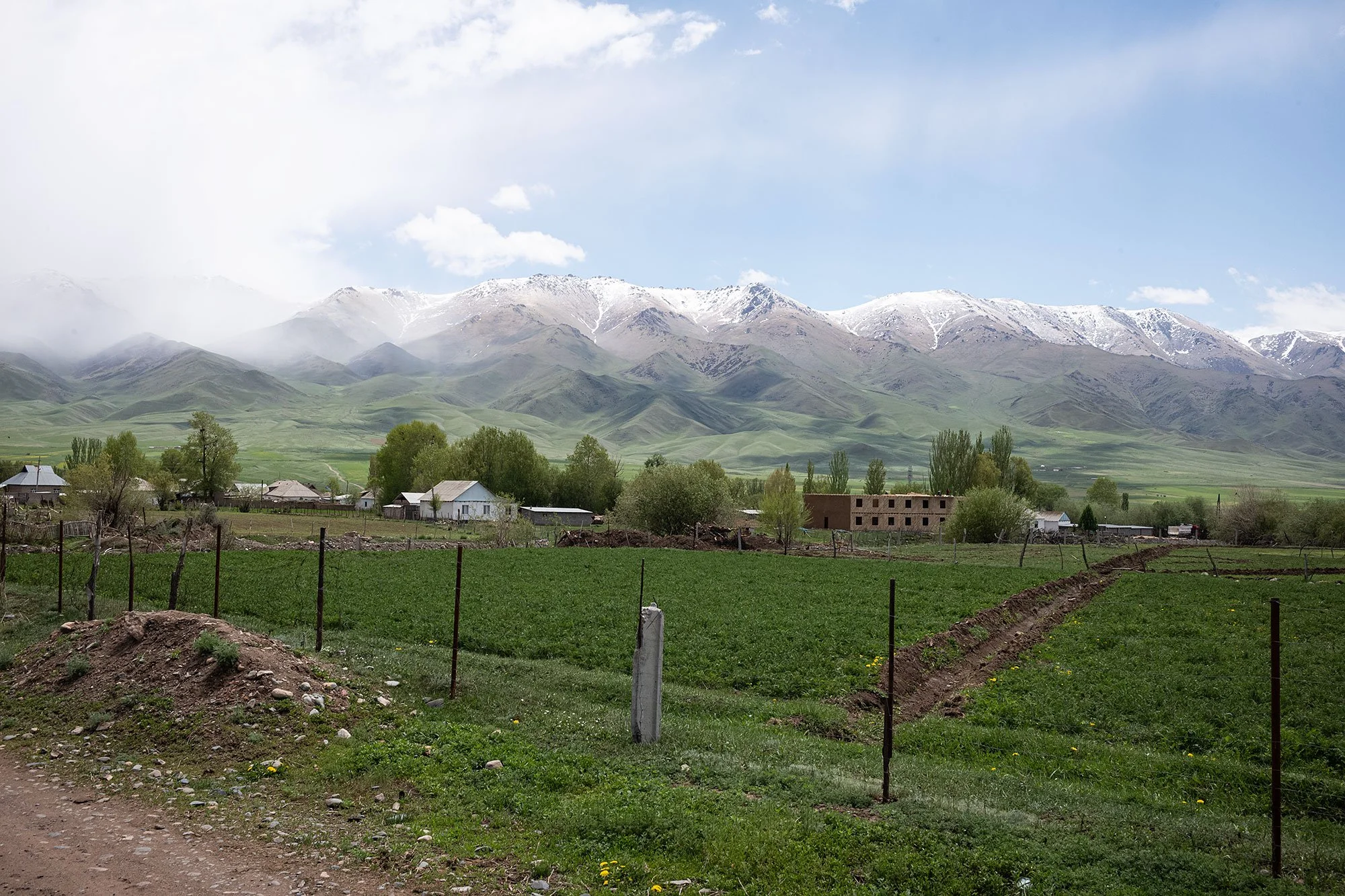
We walk slowly through the village, passing children that look to be on their way to or from school and the occasional villager out for a stroll. Soon we’re past the edge of town and headed up into the mountains along a dirt road that winds its way around the rolling foothills.
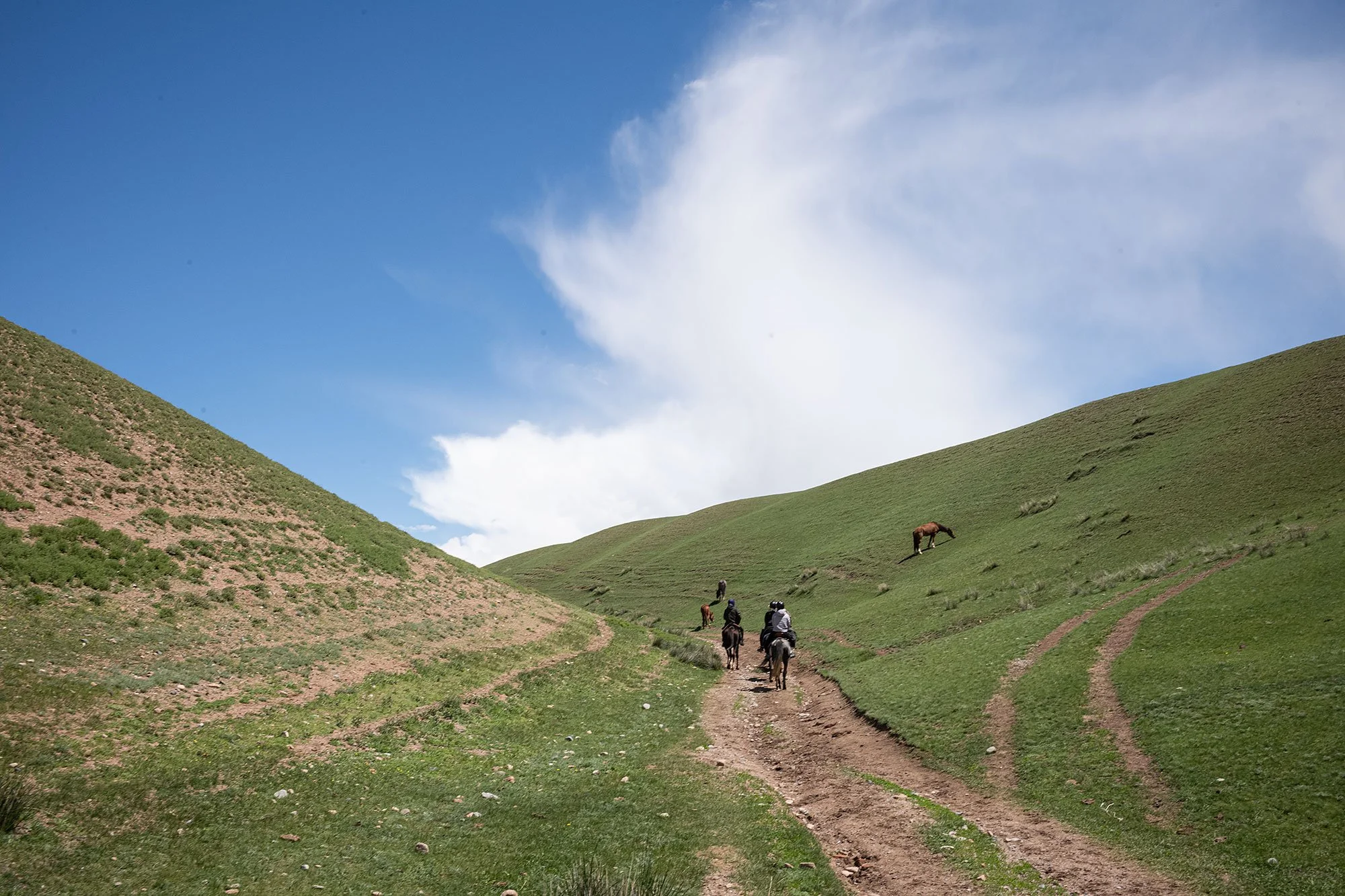
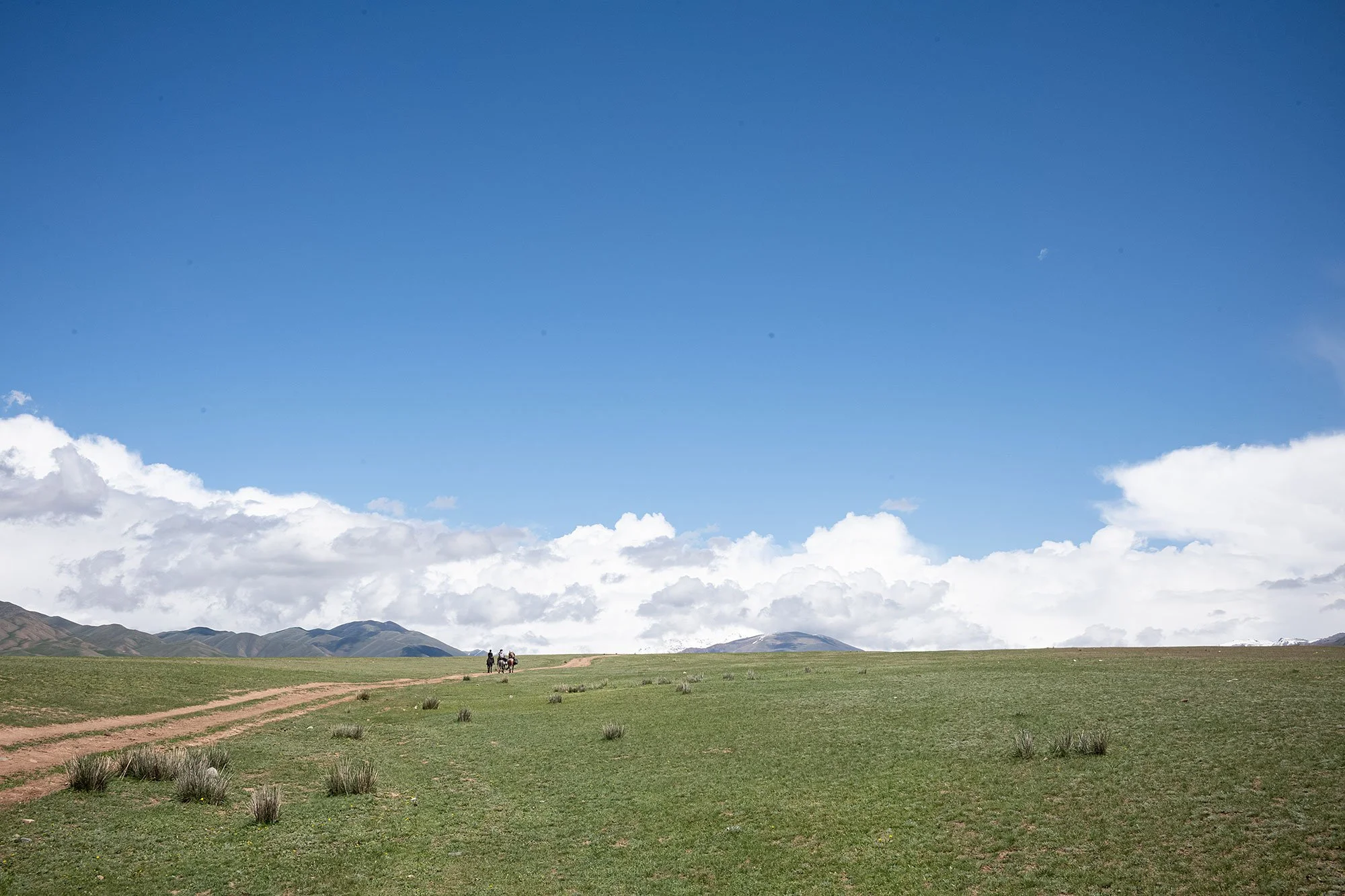
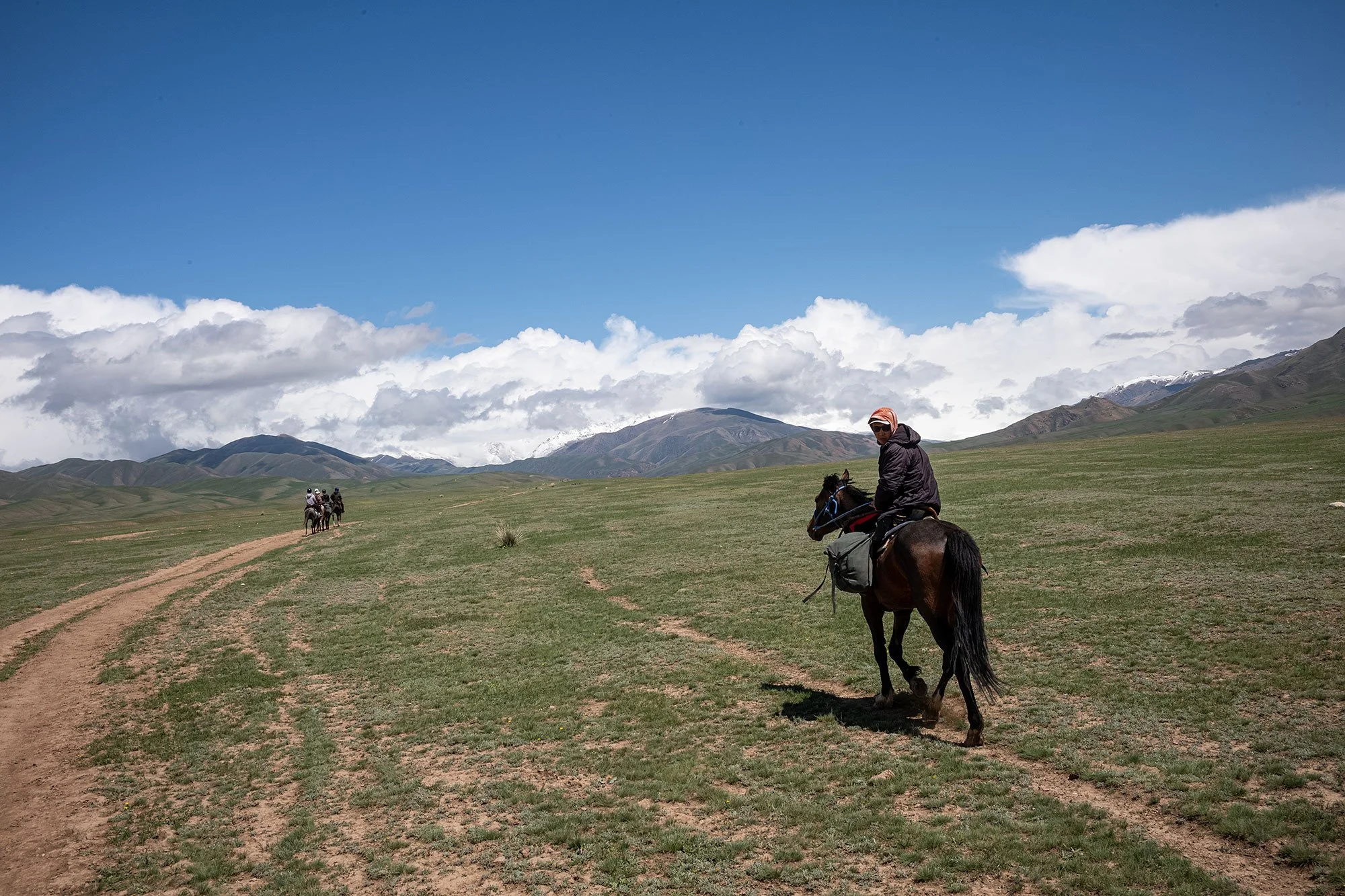
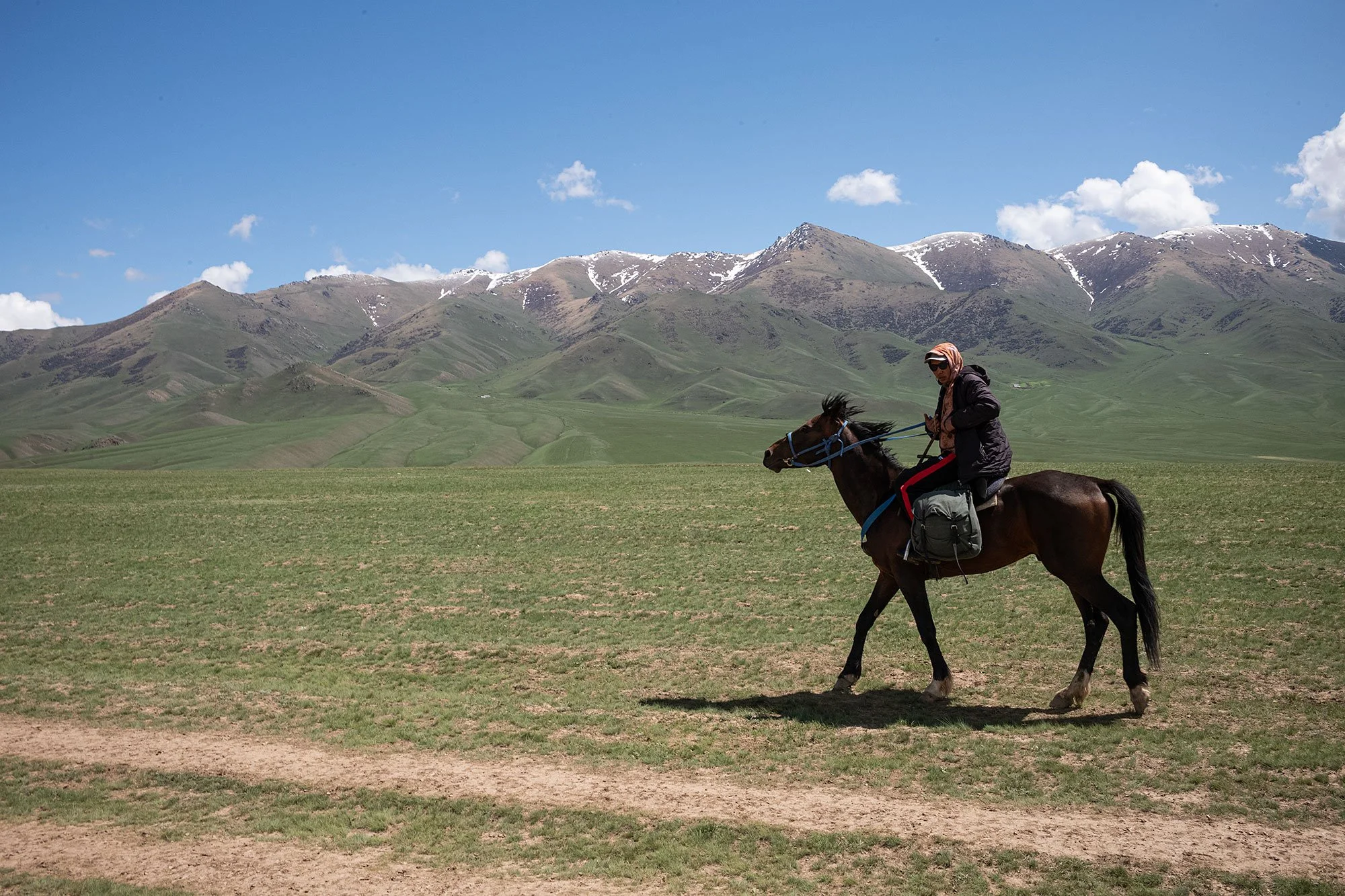
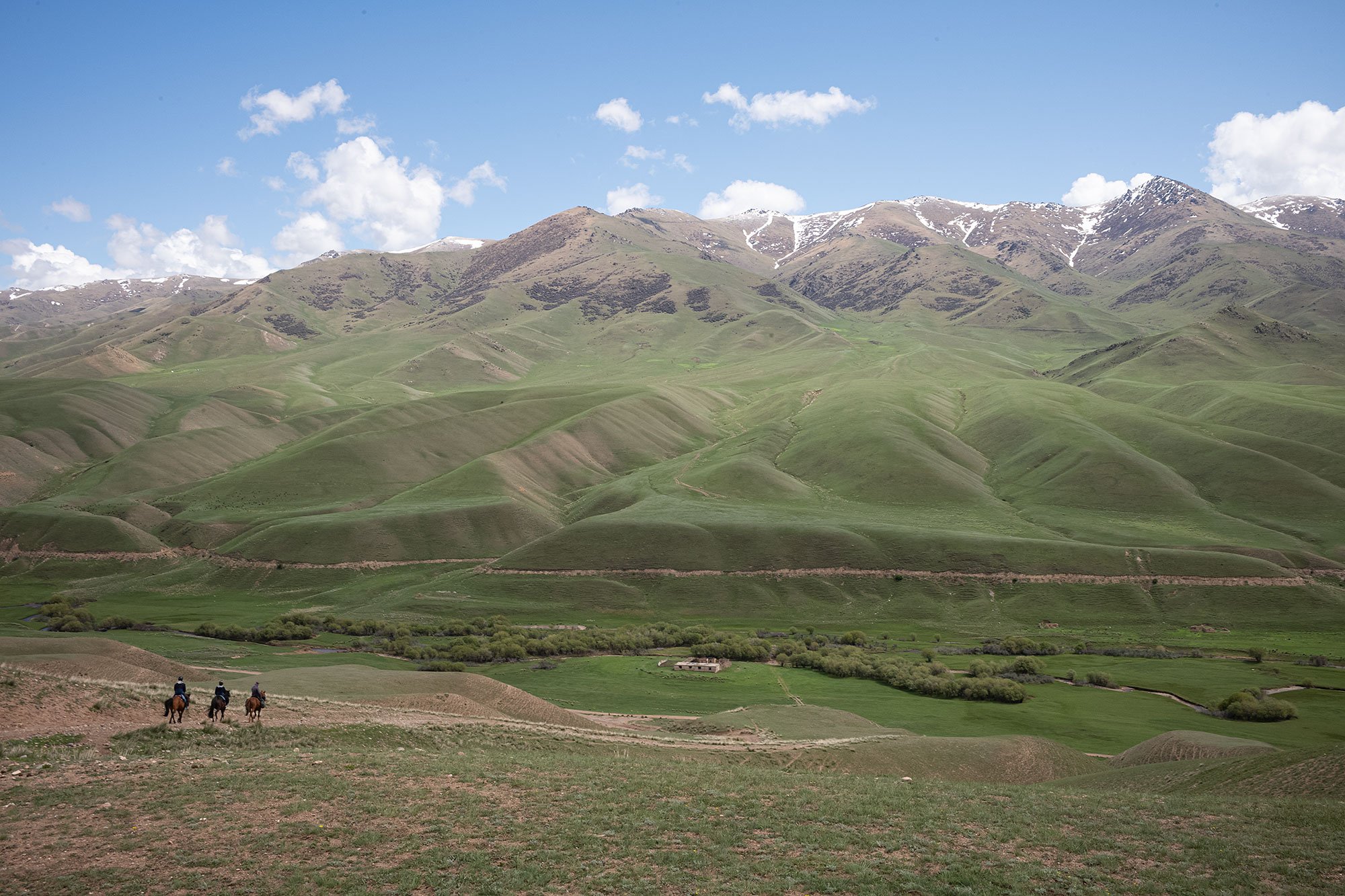
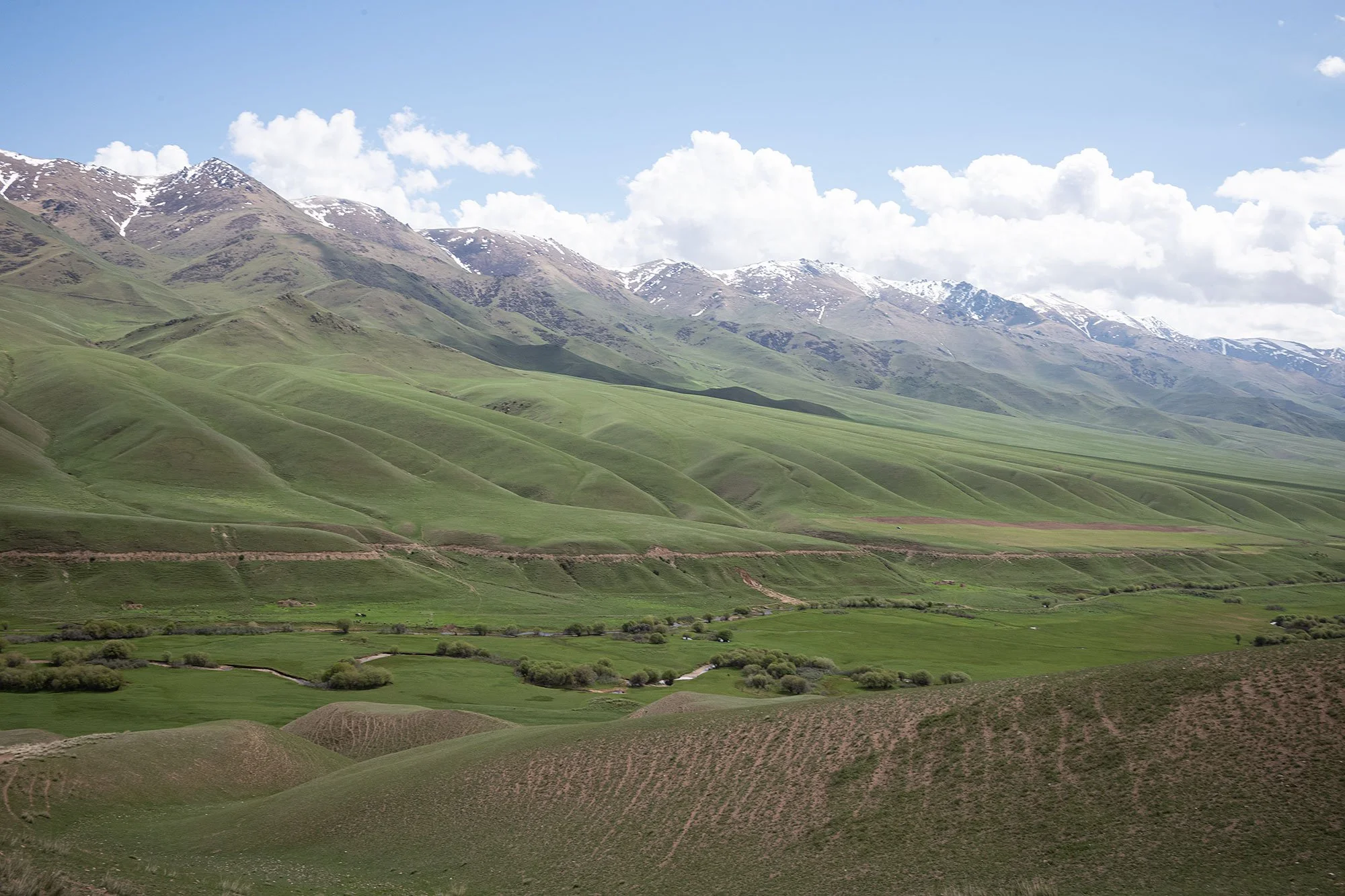
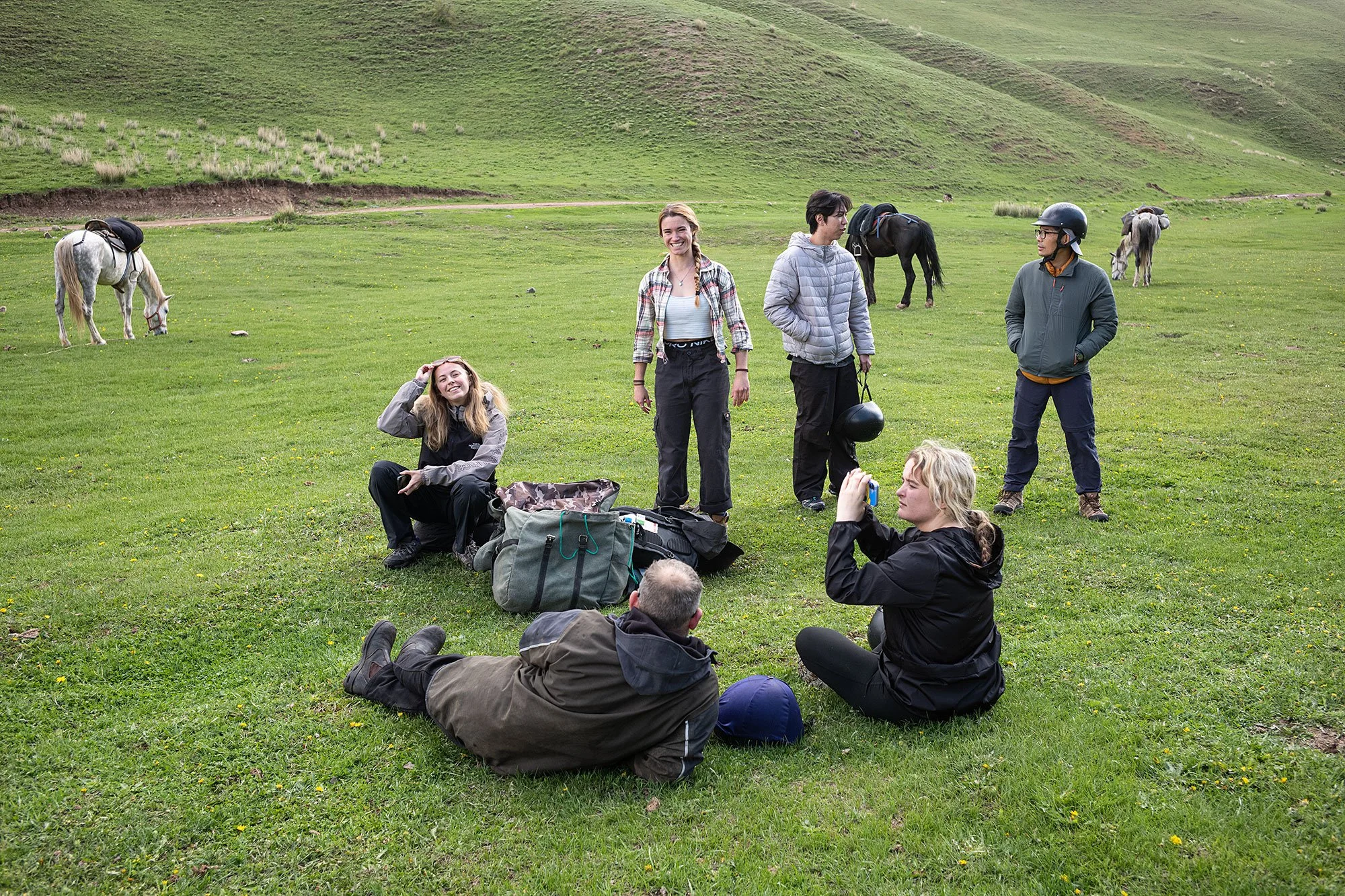
After a couple of hours we stop to rest by a stream, We’ve caught up with another group of trekkers and throughout the journey we’ll cross paths with groups large and small, sometimes seeing them as tiny spots in the distance, sometimes coming across them at passes or in various camps that we’ll share.
Anna asks Elle to braid her hair, which she gladly does, seating Anna in front of her as she brushes her hair with what I at first think is an iPhone. Throughout the trip, Elle will brush and braid Anna’s hair in various styles named after European ethnic groups.
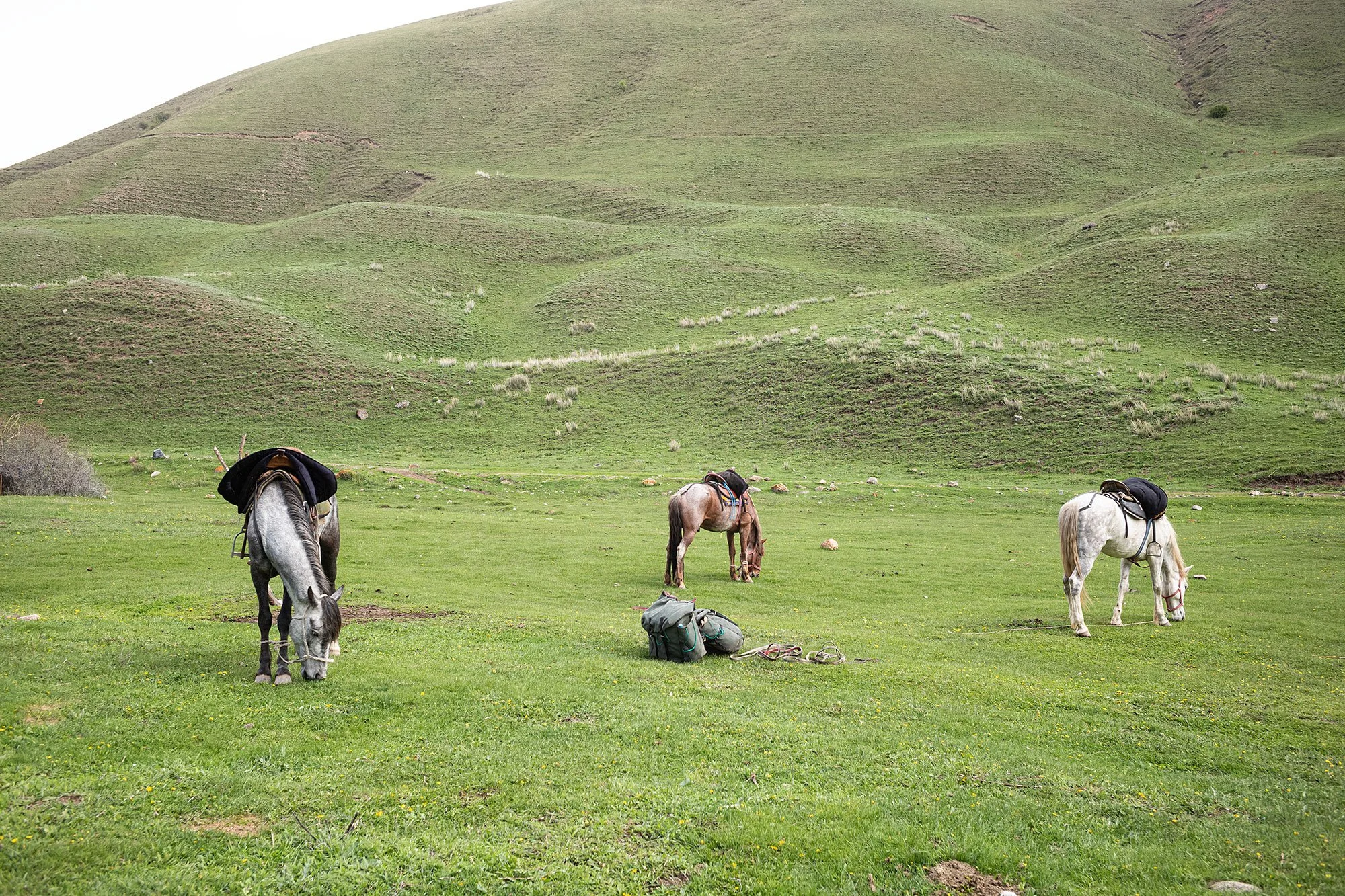
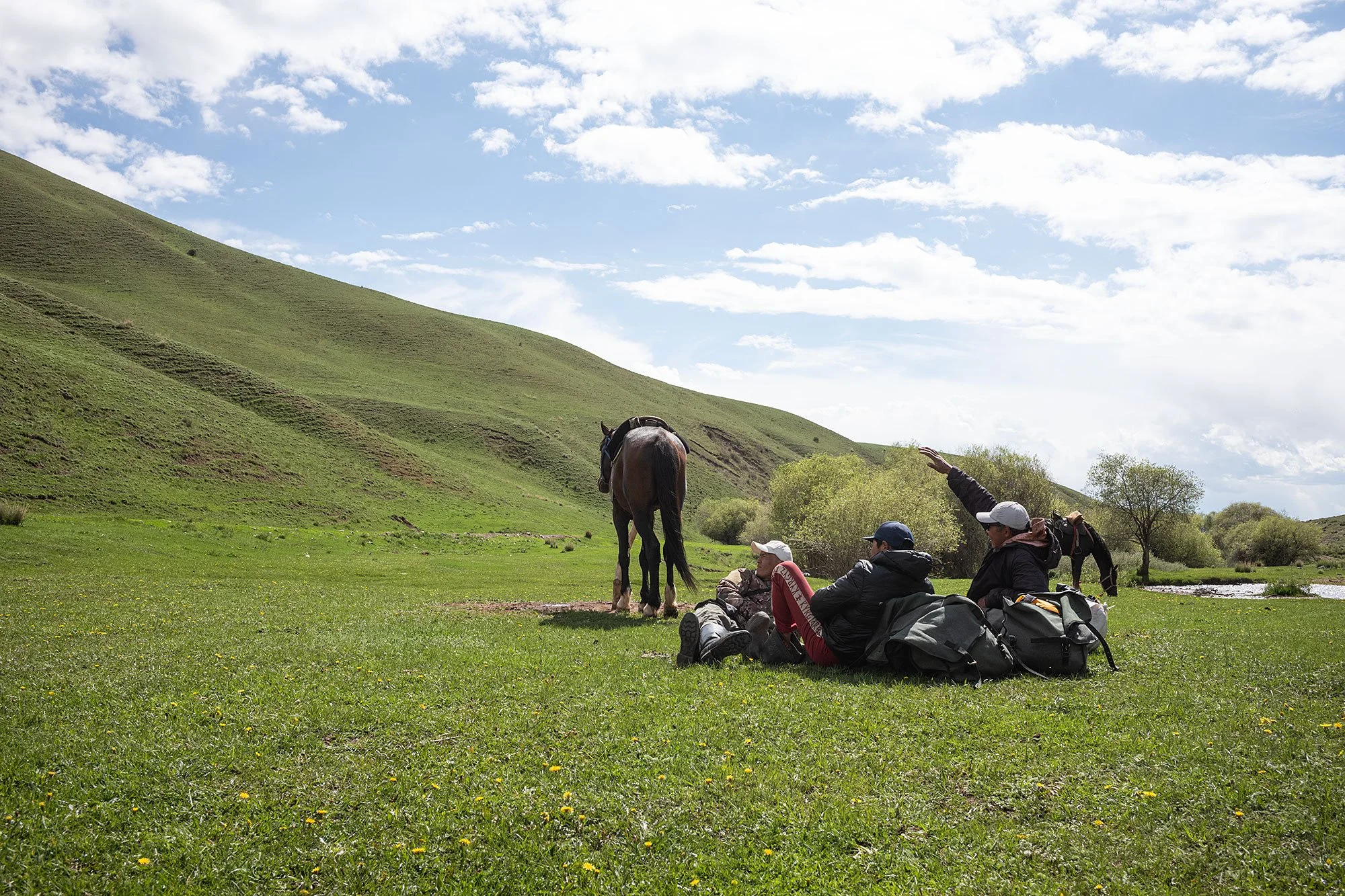
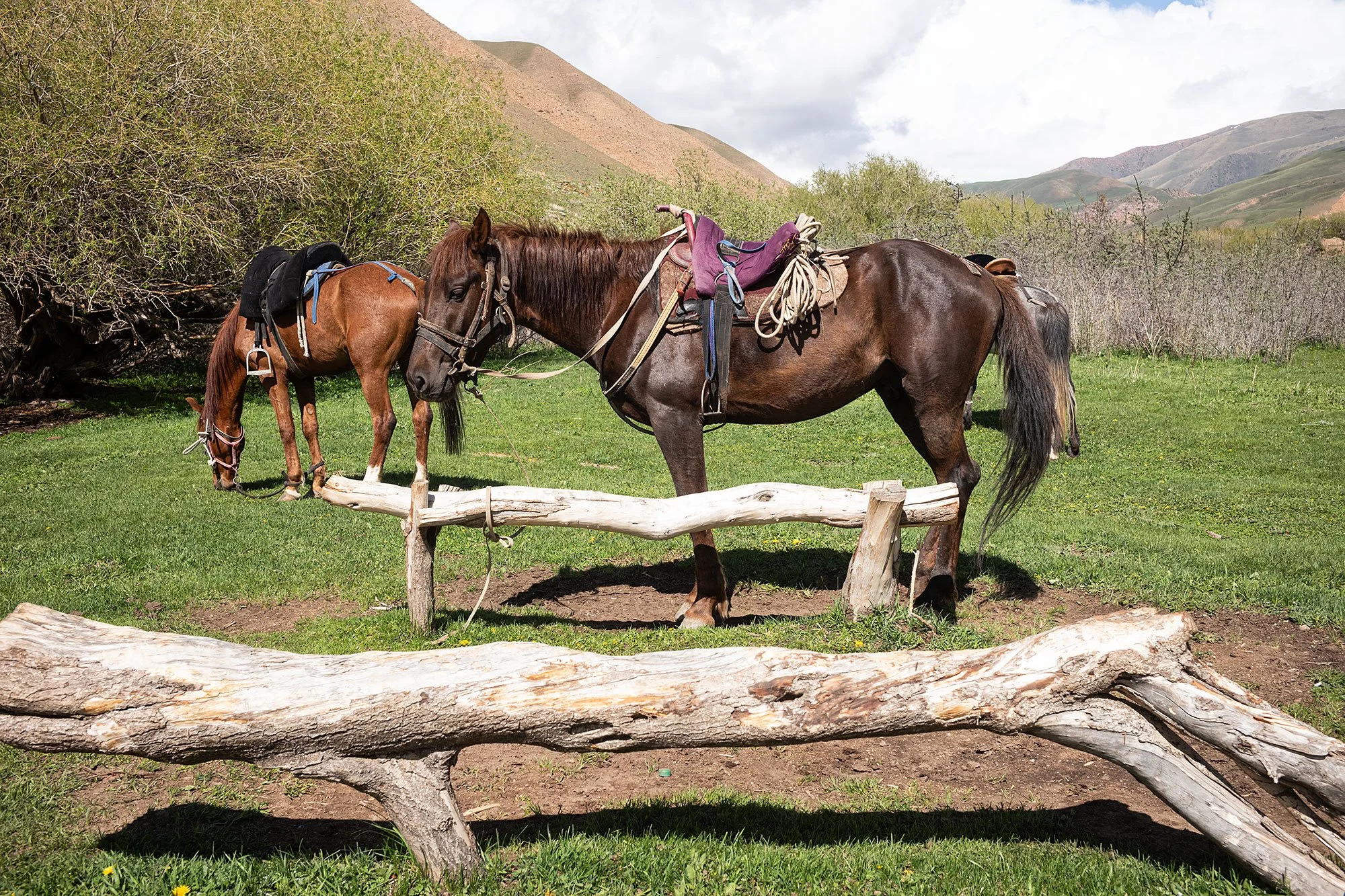
There’s a pillow on the saddle and I’m surprised that my butt doesn’t feel as uncomfortable as I’ve remembered from past horse-riding experiences. I had had some reservations about riding for three days in a row, but feel cautiously optimistic after our first few hours.
Each day we’ll be doing about four hours, broken into two-hour chunks. The information sheet the agency sent said it was a beginner-friendly trek, and many of the people on the trip are first-time riders. After this first chunk it feels manageable.
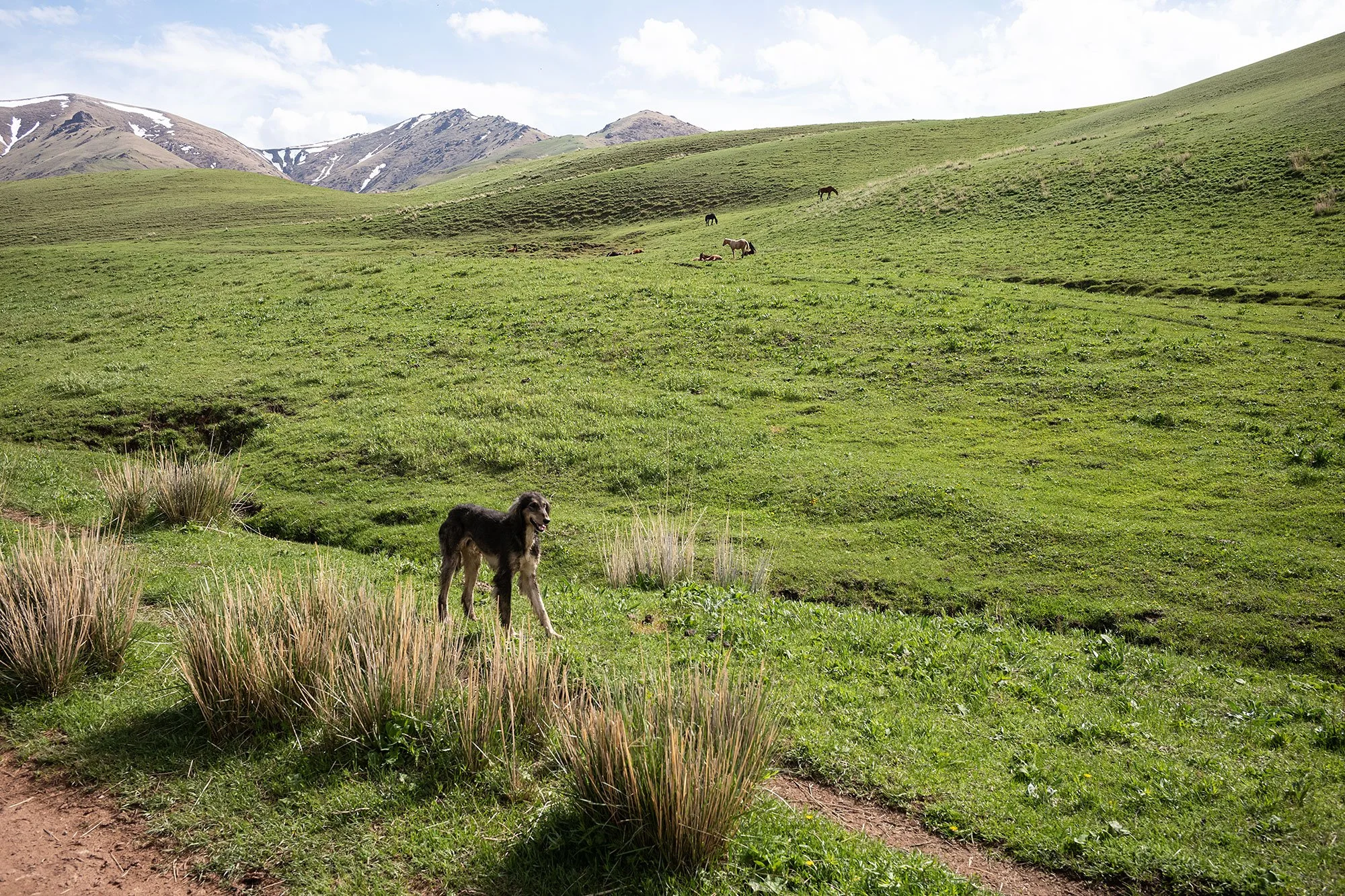
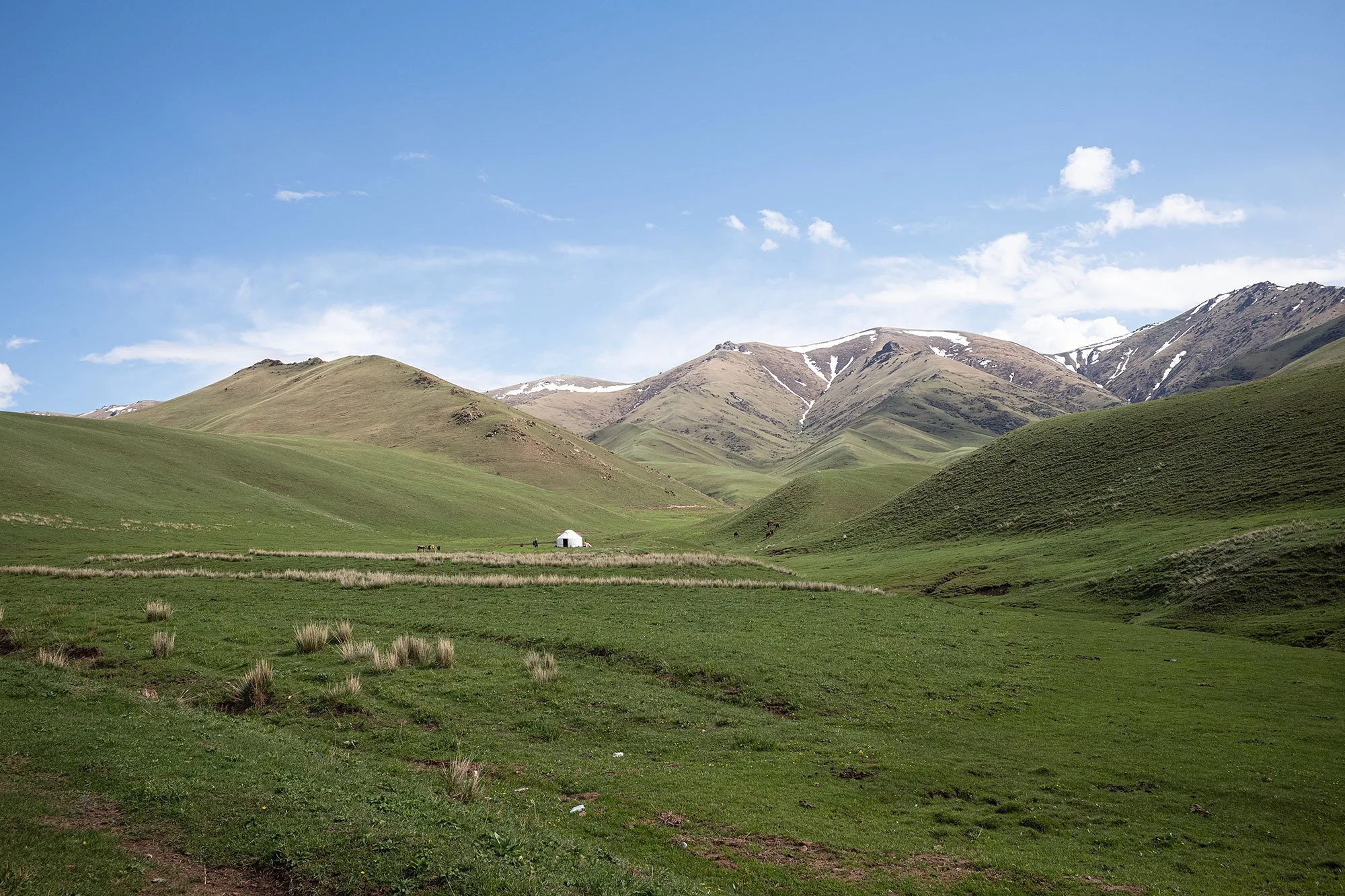
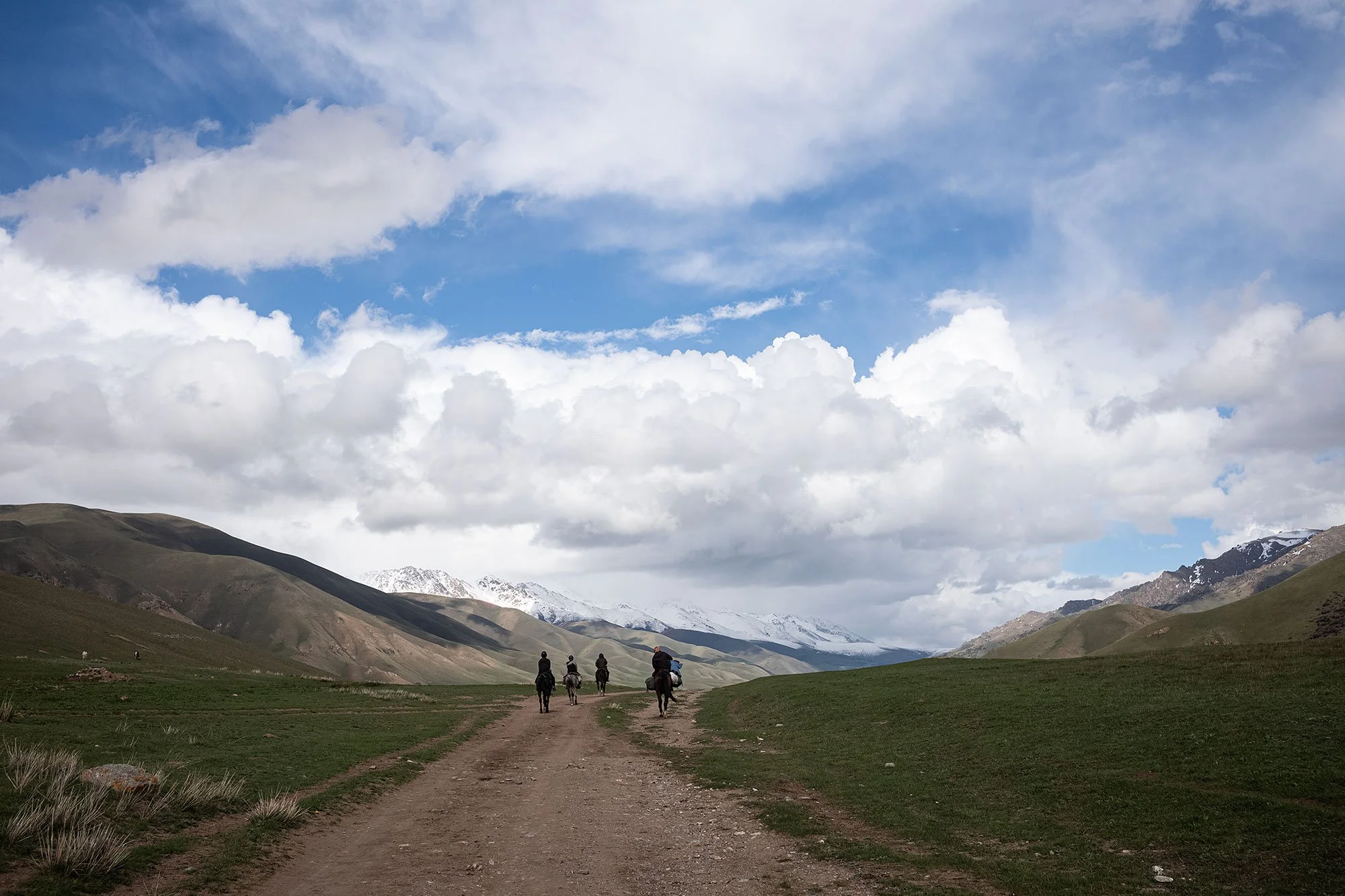
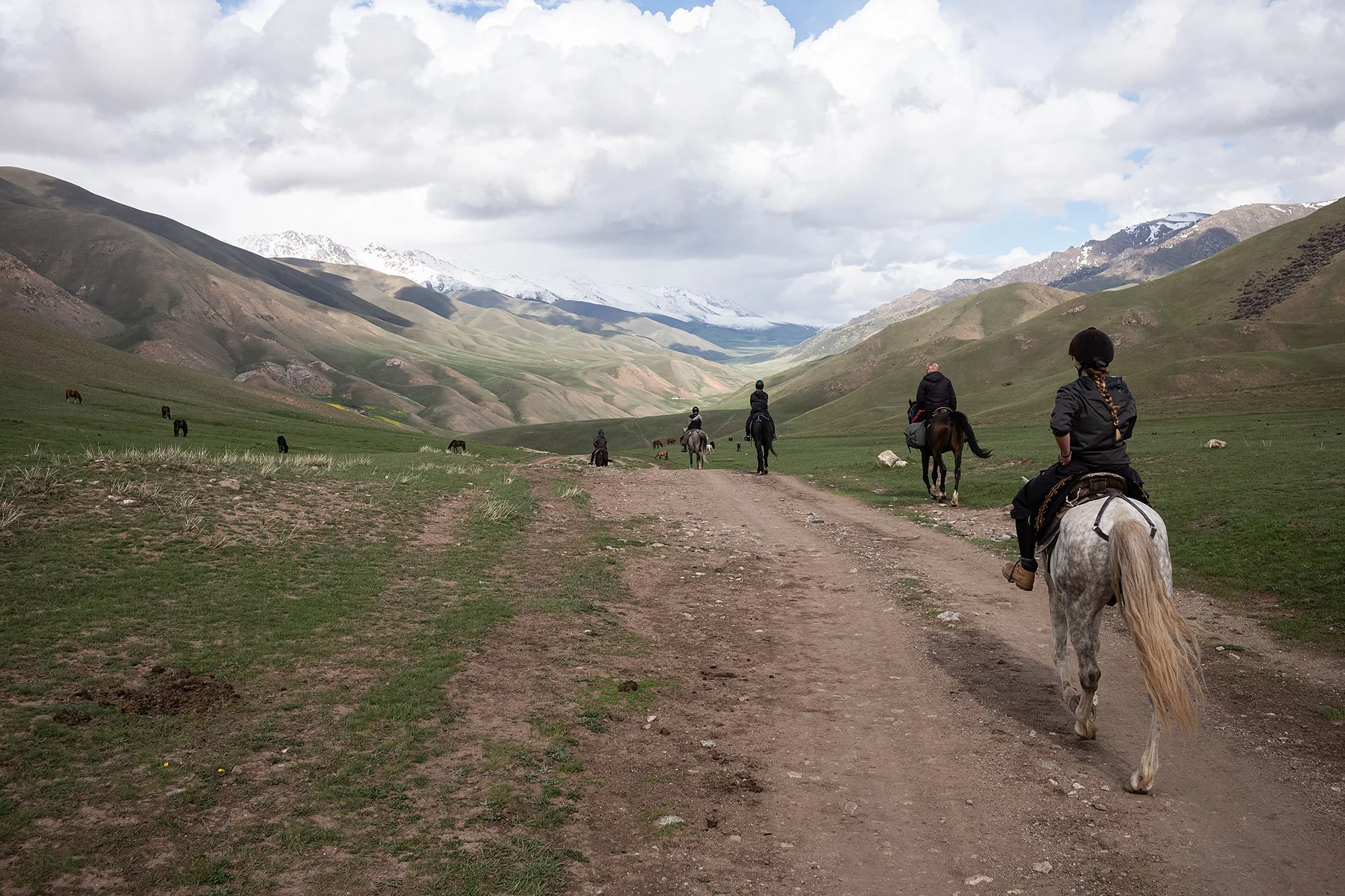
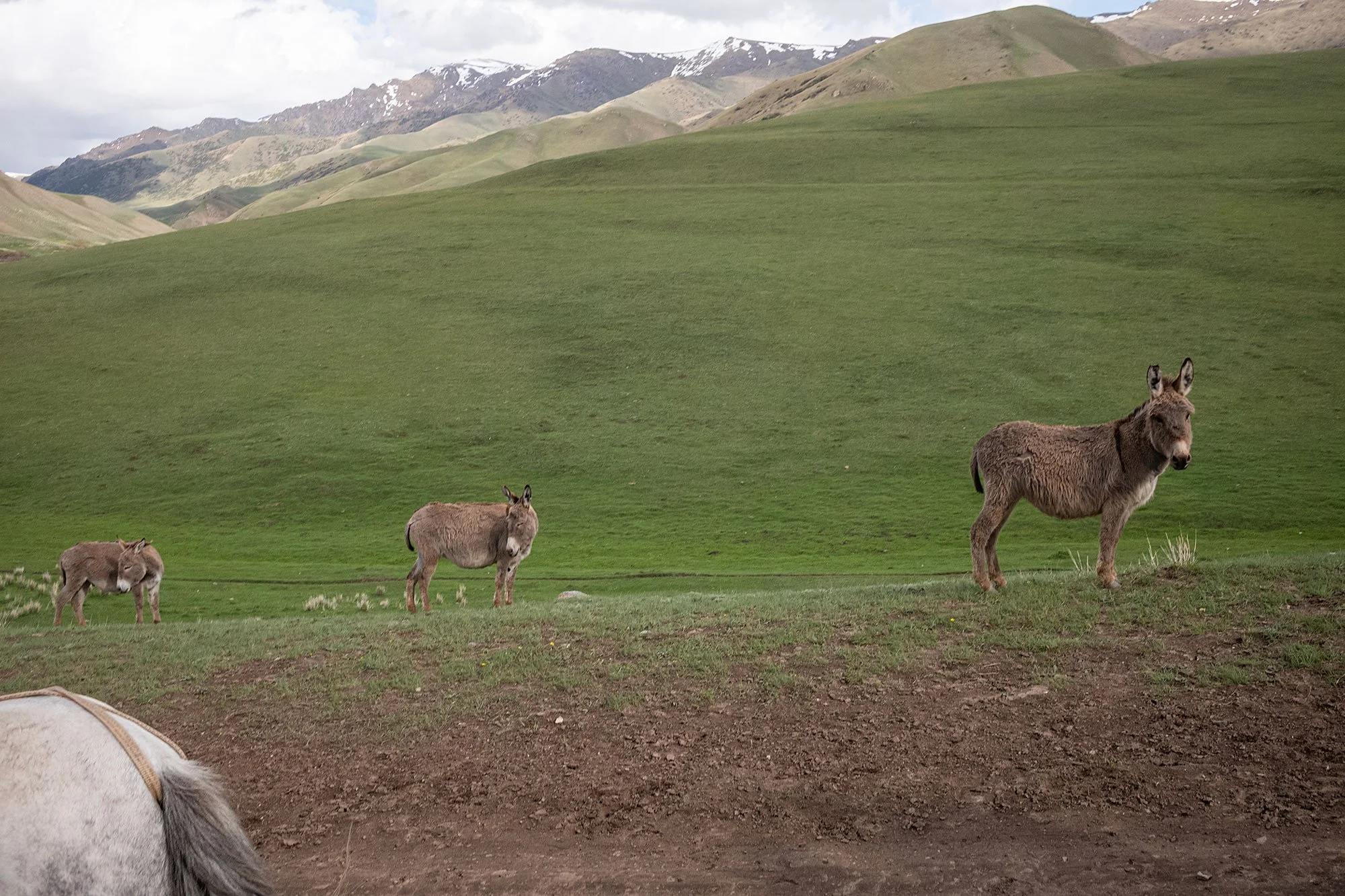
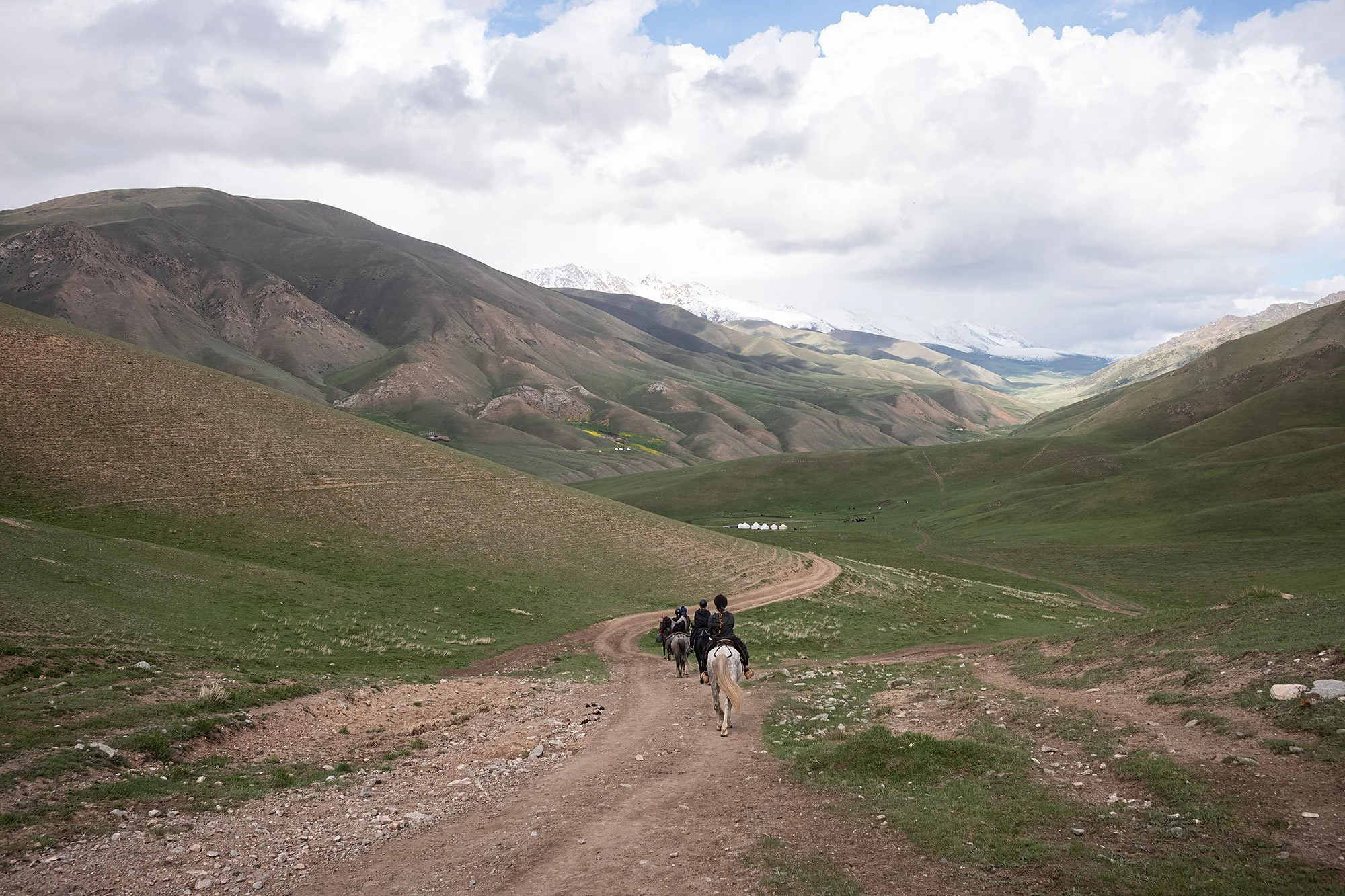
Our ride continues through the hills, the path rising and falling as we make our way to our first camp, which sits on a flat grassy meadow surrounded by mountains and hills. We arrive around 17h and I’m happy to dismount.
We’re led to our yurts and Kimmy and I end up sharing ours with two friends from Australia, Steve and Izaac, the latter on an open-ended 18-month or so jaunt around the world, the former with a return date of July when he has to get back to work. We’ll end up at the same camp as them and another group of three Australian women and two Dutch men the following night as well, and all of us together will share the experience at different paces. The Austrialians had left earlier in the day and had lunch at this camp and had spent the afternoon hanging around the valley.
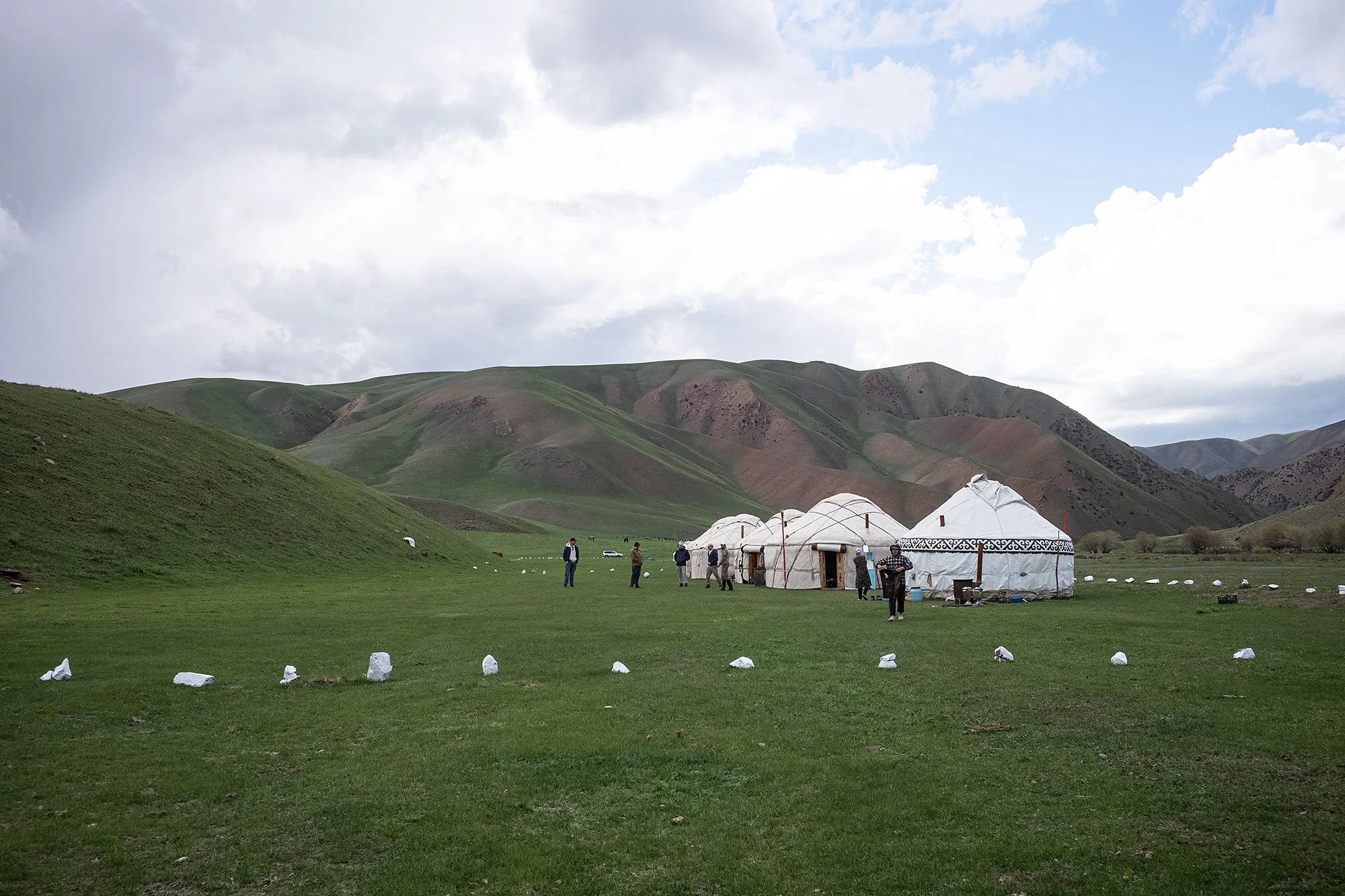
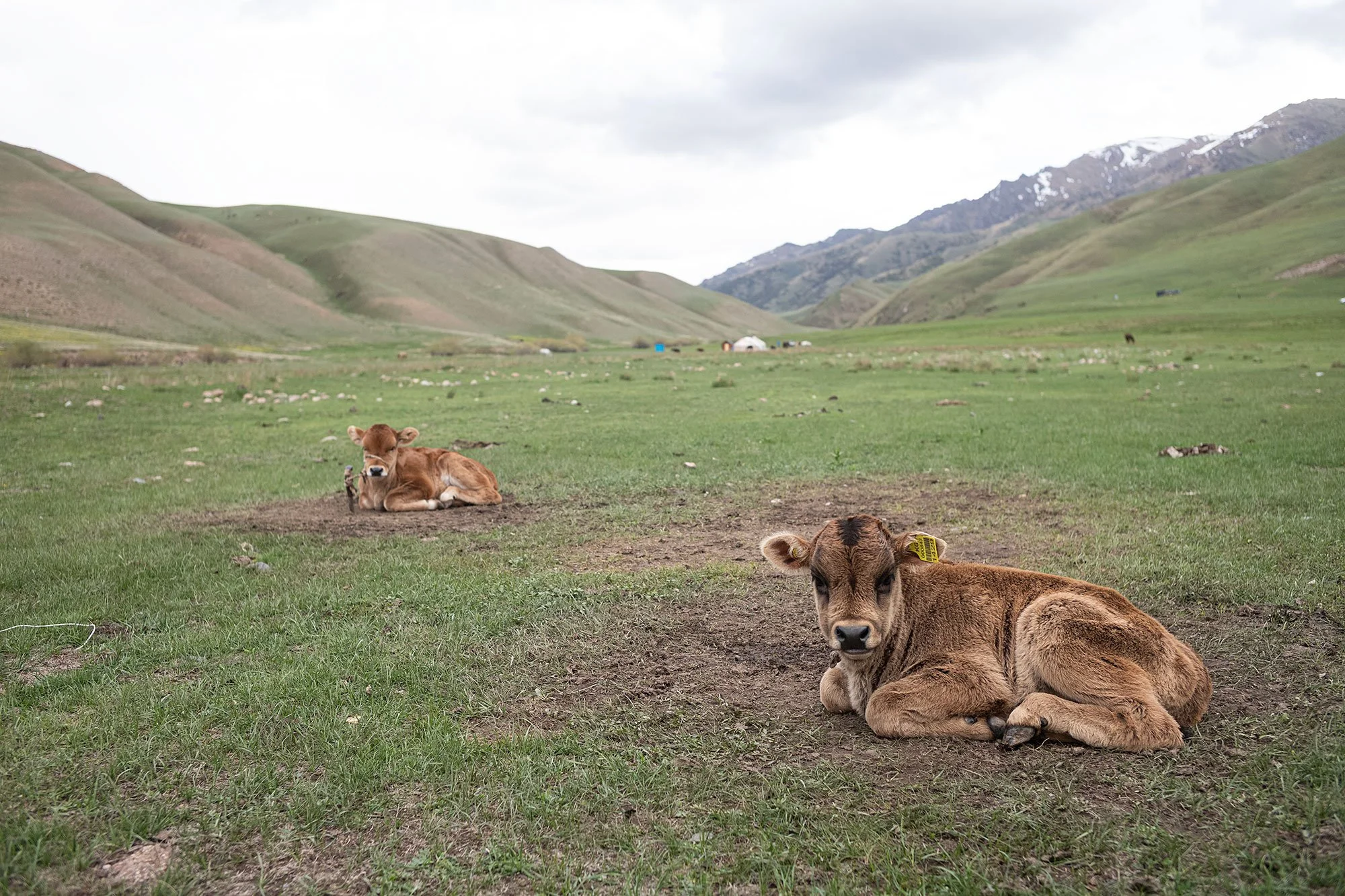
At various points we climb the small hill behind the camp. There are yurts on a hill in front of us and another set of yurts to the east. Kimmy sees a swing by the yurts in the small enclave next to ours and we head over to relax before dinner.
From the swing we watch a small girl emerge from a yurt. She walks back and forth at a distance, watching us warily. She looks angry, Kimmy says. Maybe it’s because we’ve taken over her swing.
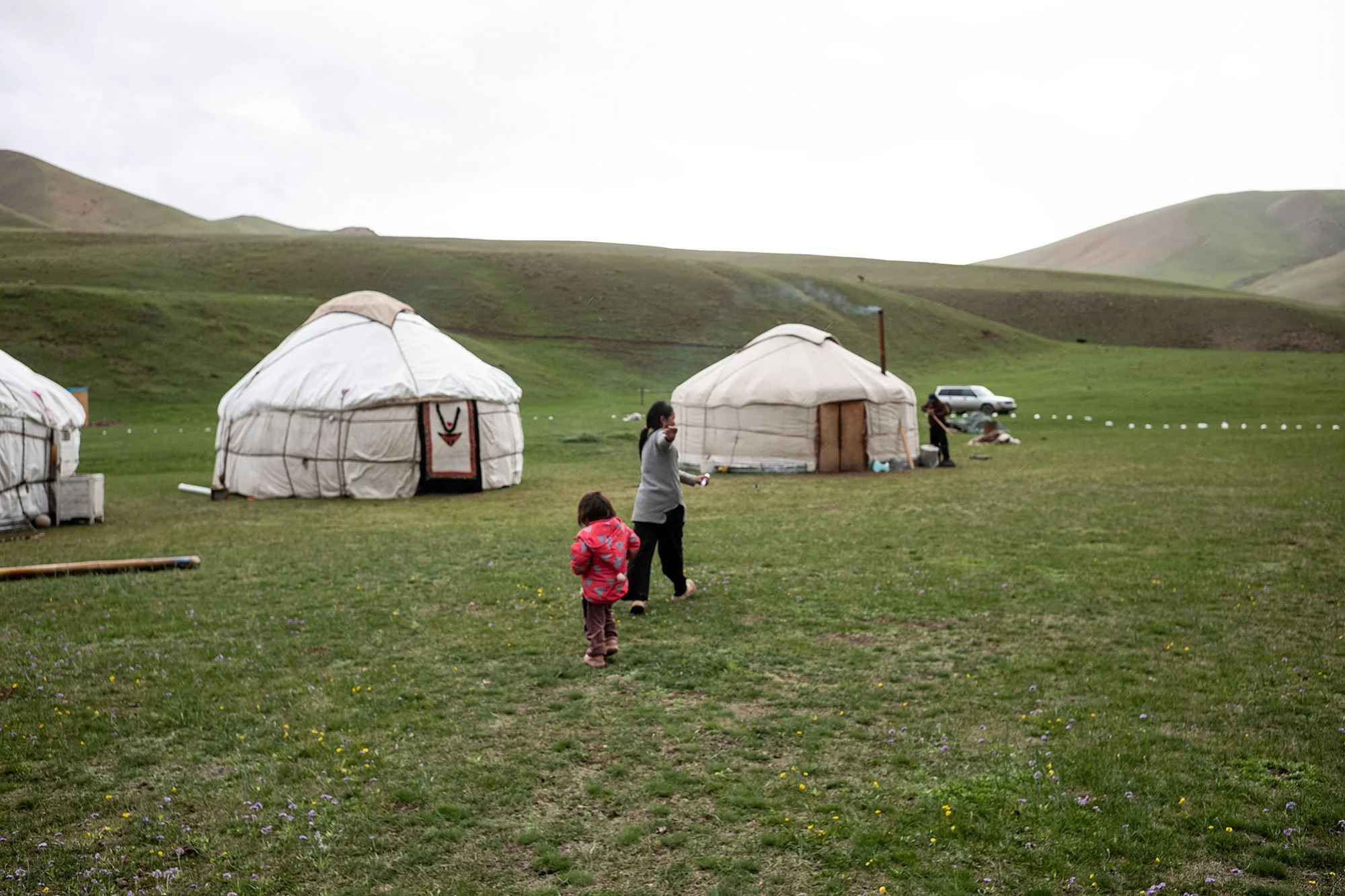
The yurts and swing belong to a family. The father comes in from the fields and picks up the little girl, bringing her over and seats her on the swing between us, but she’s not having it. Soon after he leaves she slips off to play by herself in the field.
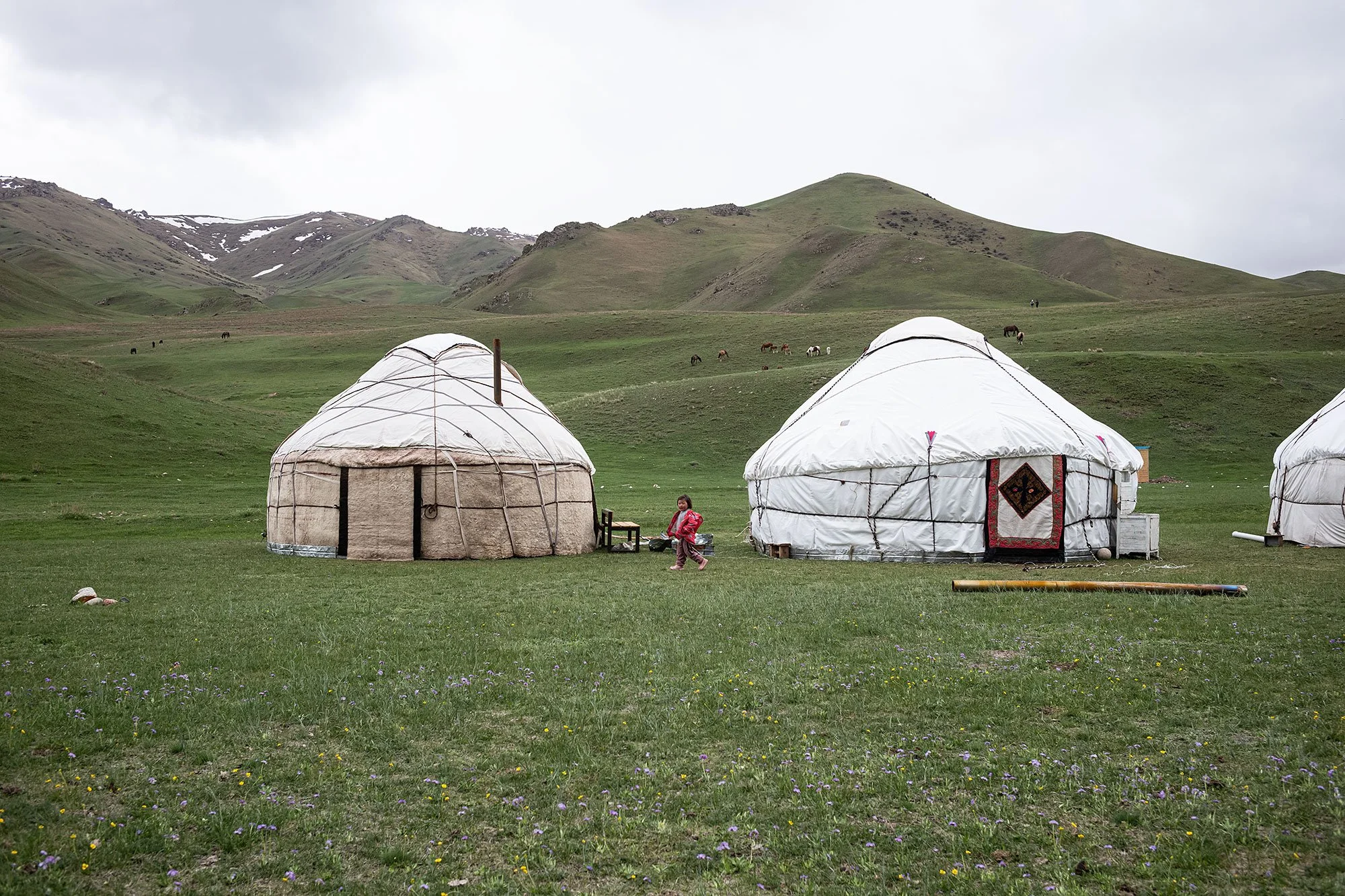
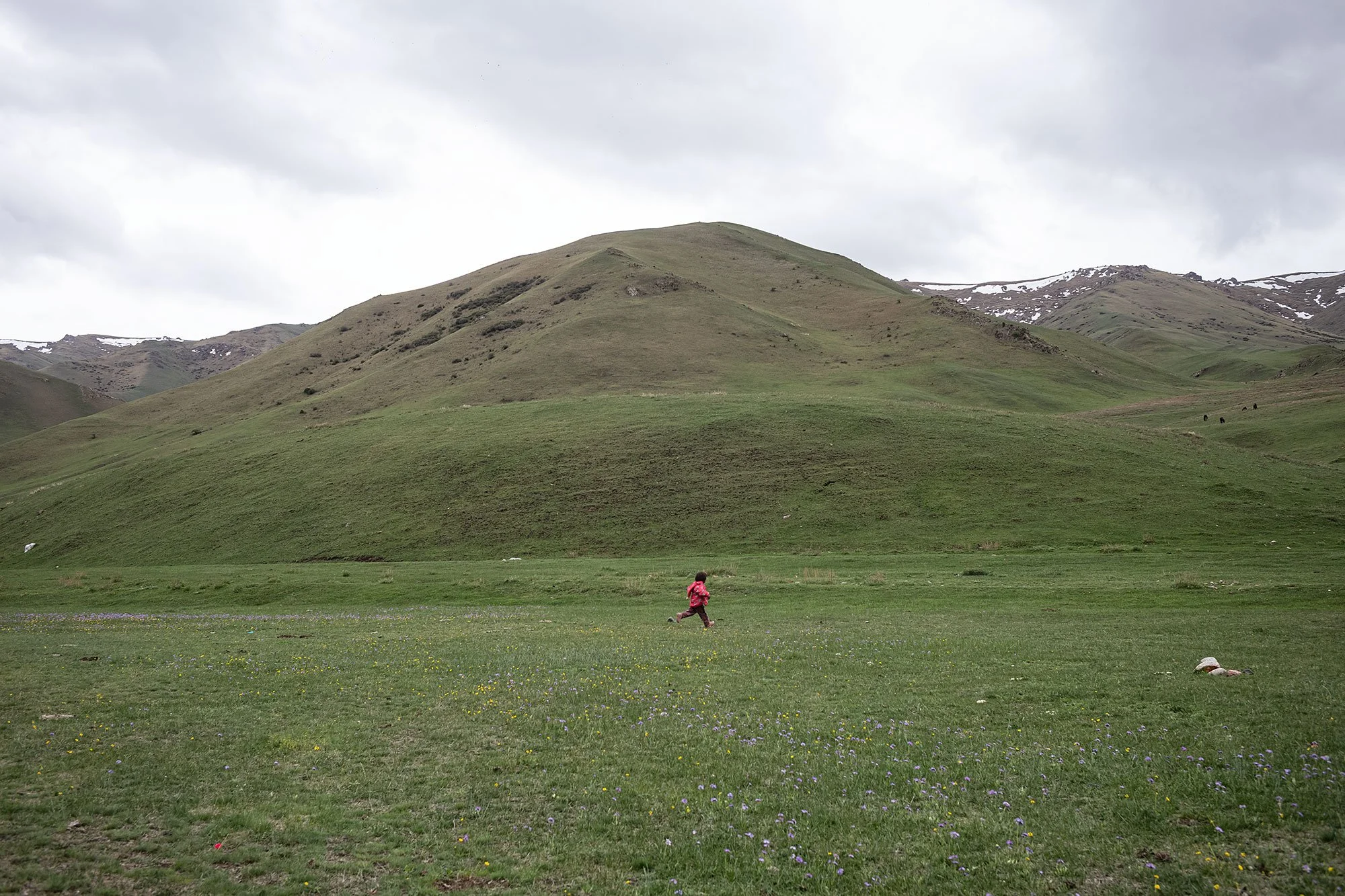
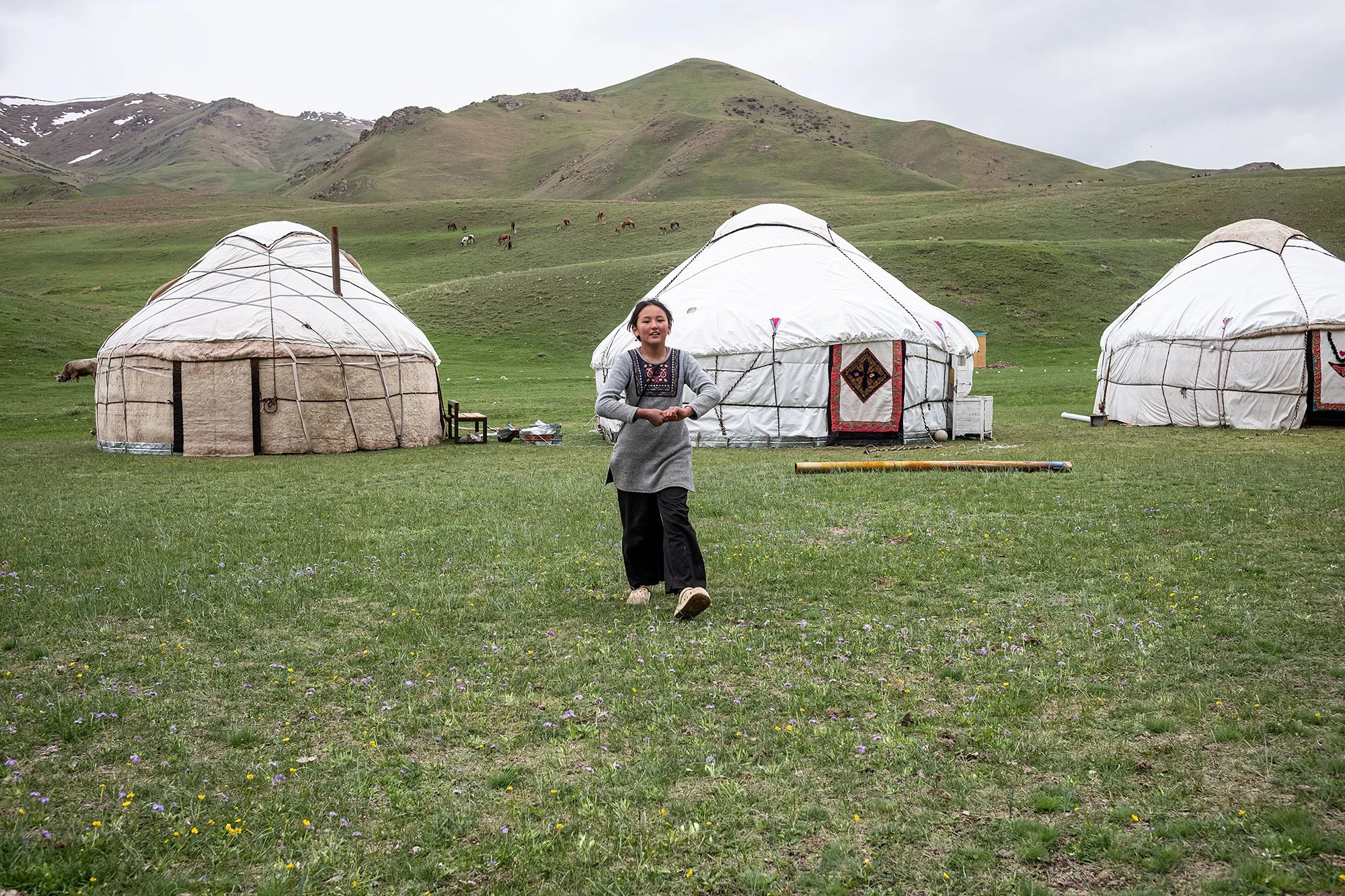
An older girl appears, walking straight towards us. We make room for her on the swing and she sits and starts chatting with us in English. She’s 11, her little sister three. She has at least one older sister if not two and an older brother. A brother and sister live in the village, but she’s been living in the yurt for a while.
Kimmy and I piece together what we can. Her English is good, if limited, and her reactions are adorable as she beams and nods emphatically when understanding or explaining something to us, occasionally reverting to her native language as she searches for a way to make sure we understand. I ask her if the horses nearby are theirs. They are. They have 11, which is coincidentally her age, and two cows.
It starts raining while we’re chatting with her and I notice Kimmy holding up his hand behind her head when the wind picks up. It’s a kind guesture, and I’ll notice kindnesses throughout our trip. He asks her if she’s cold, it looks like she’s wearing just a single wool shirt. She shakes her head and continues to ask us questions, nodding and smiling as we answer. A woman emerges from the yurt and we ask if that’s her mother. No, she says with a shake of her head and a smile. Aunt? Bigger sister. Her family keeps growing.
Her little sister approaches and we seat her between us on the swing. She continues to look angry, refusing to engage with us even as she clings to her sister. We swing for a little while until their mother appears and calls them away, the older sister giving us a final wave as they follow their mother into their yurt.
We’re back in time for dinner, the dining yurt relatively warm with the number of people inside and a small stove that’s lit on the side. Afterwards I linger along with Ella inside the relative warmth and dryness of the yurt as the others slowly head back outside.
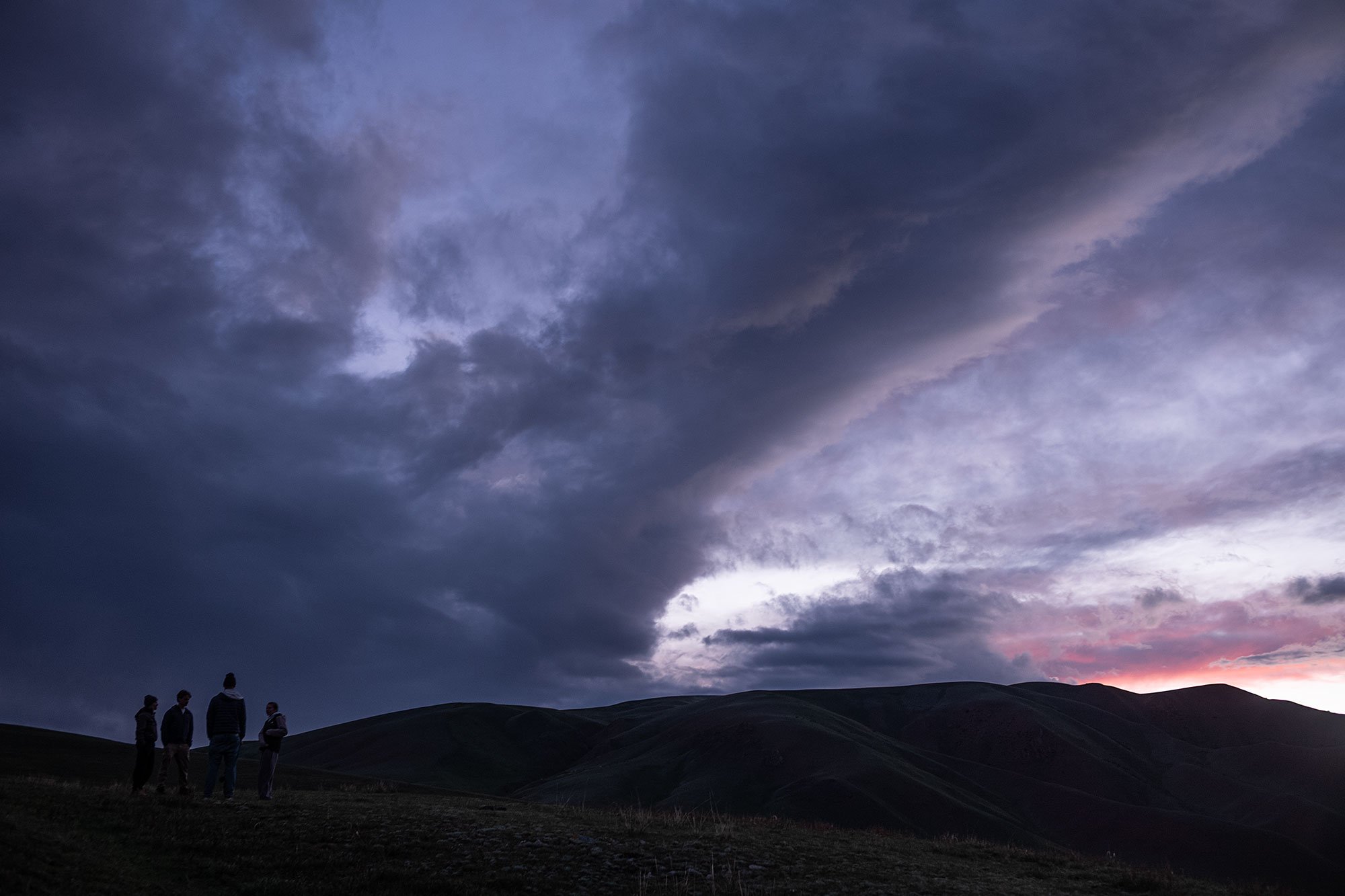
We can hear them talking outside and someone remarks on the sunset. Ella and I gather ourselves and don our outer jackets to join the others. I’m a little reluctant to leave, but it’s worth it, the rain has stopped and the setting sun paints the valley rose.
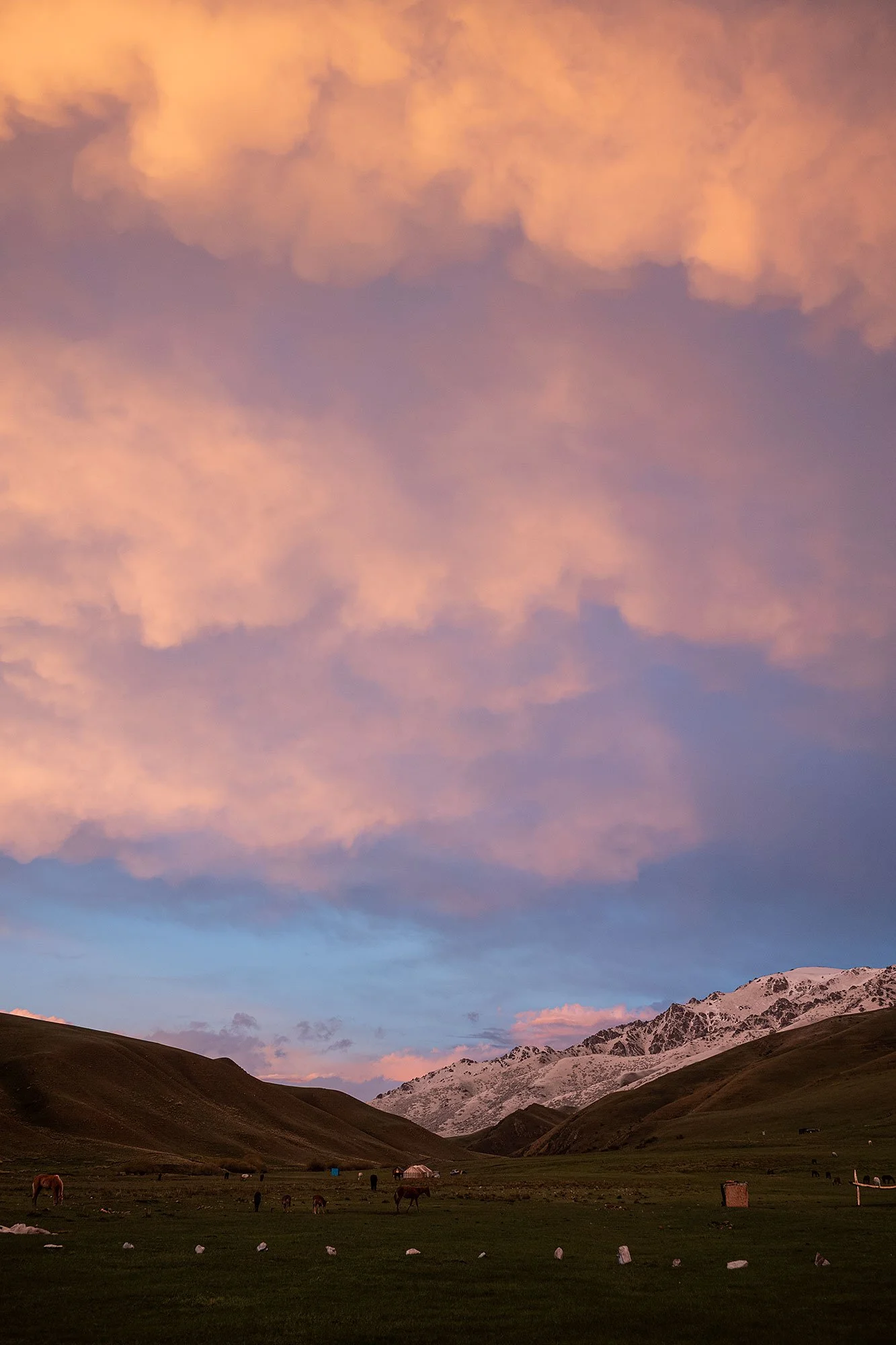
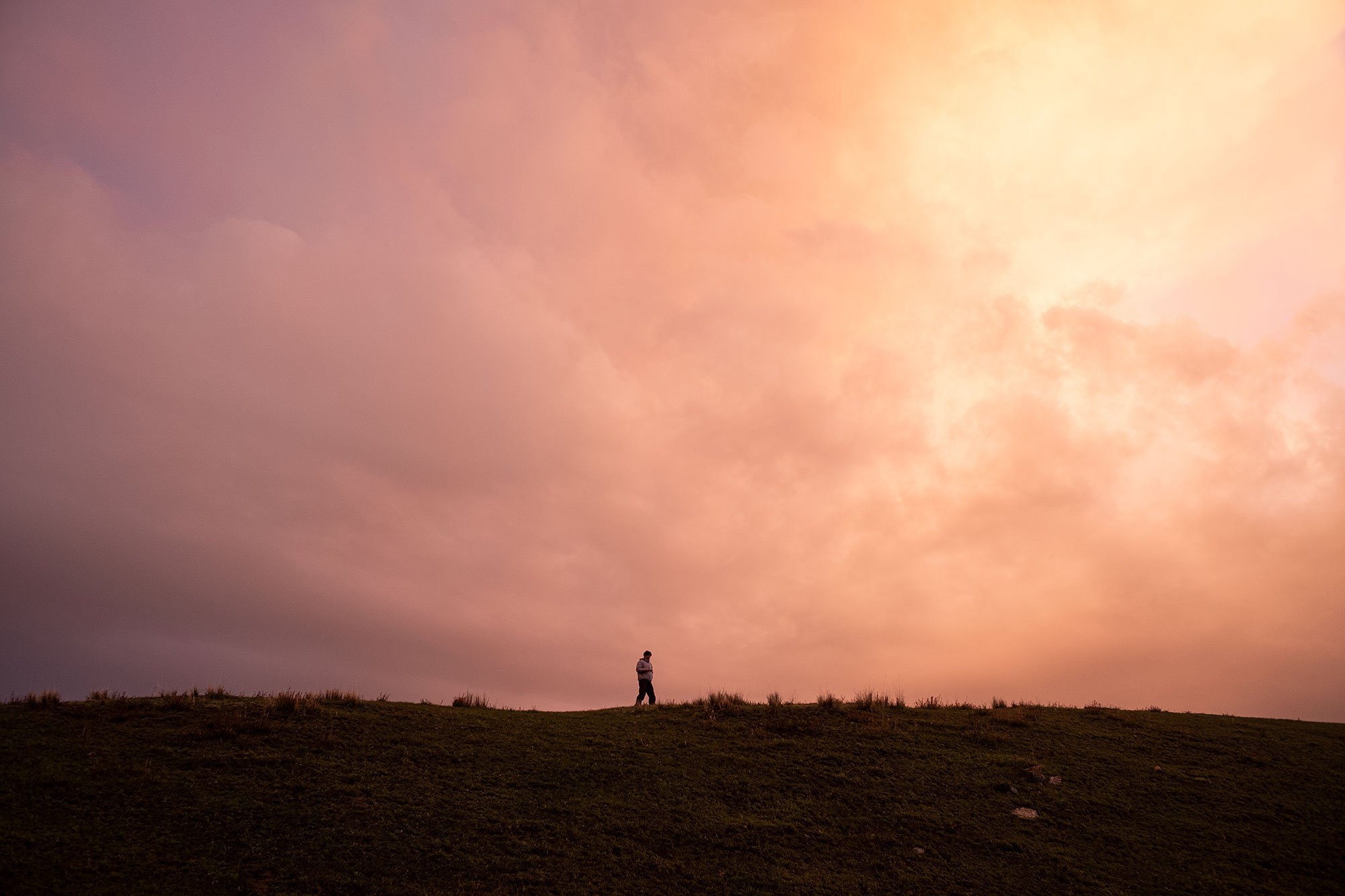
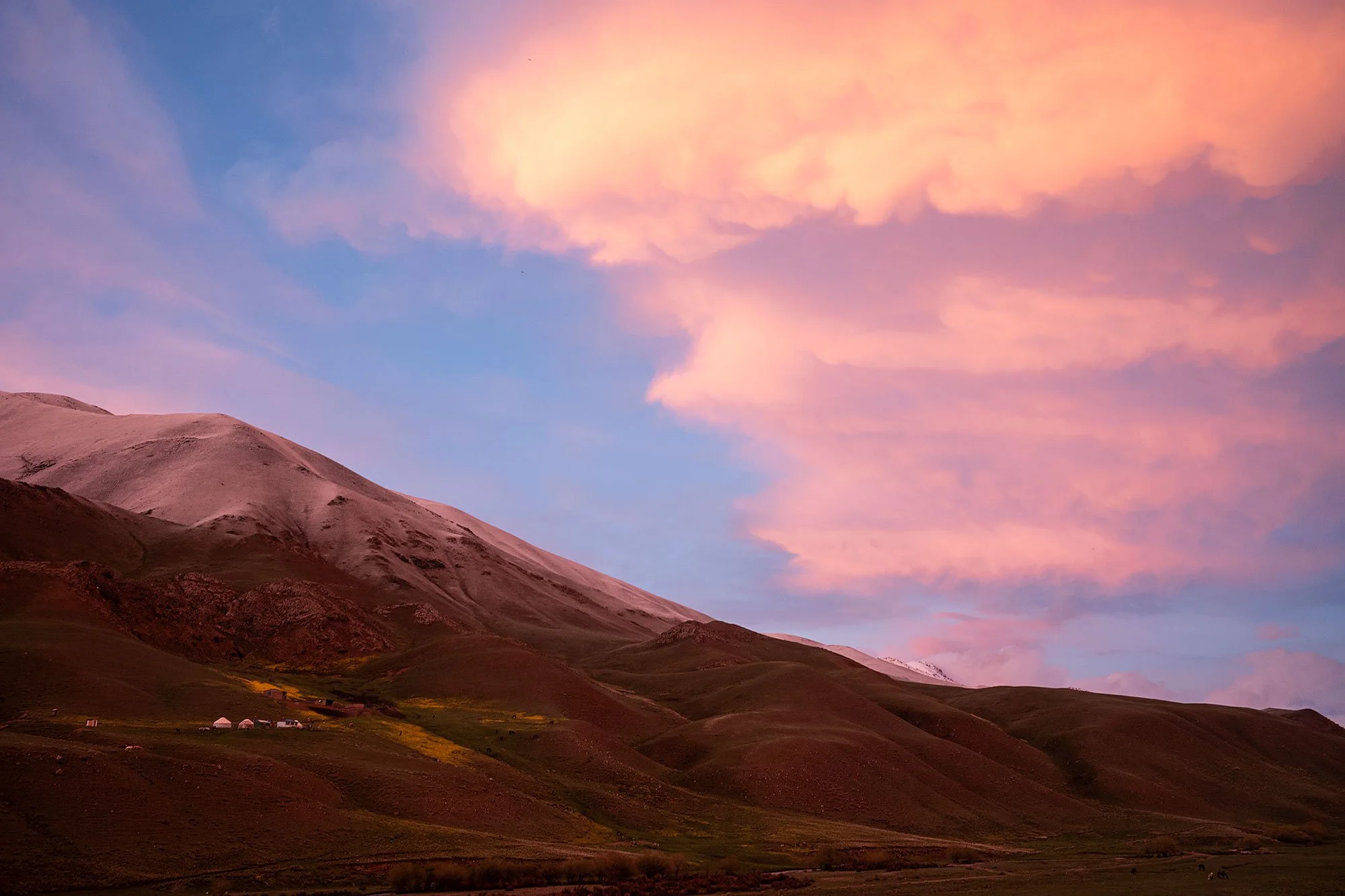
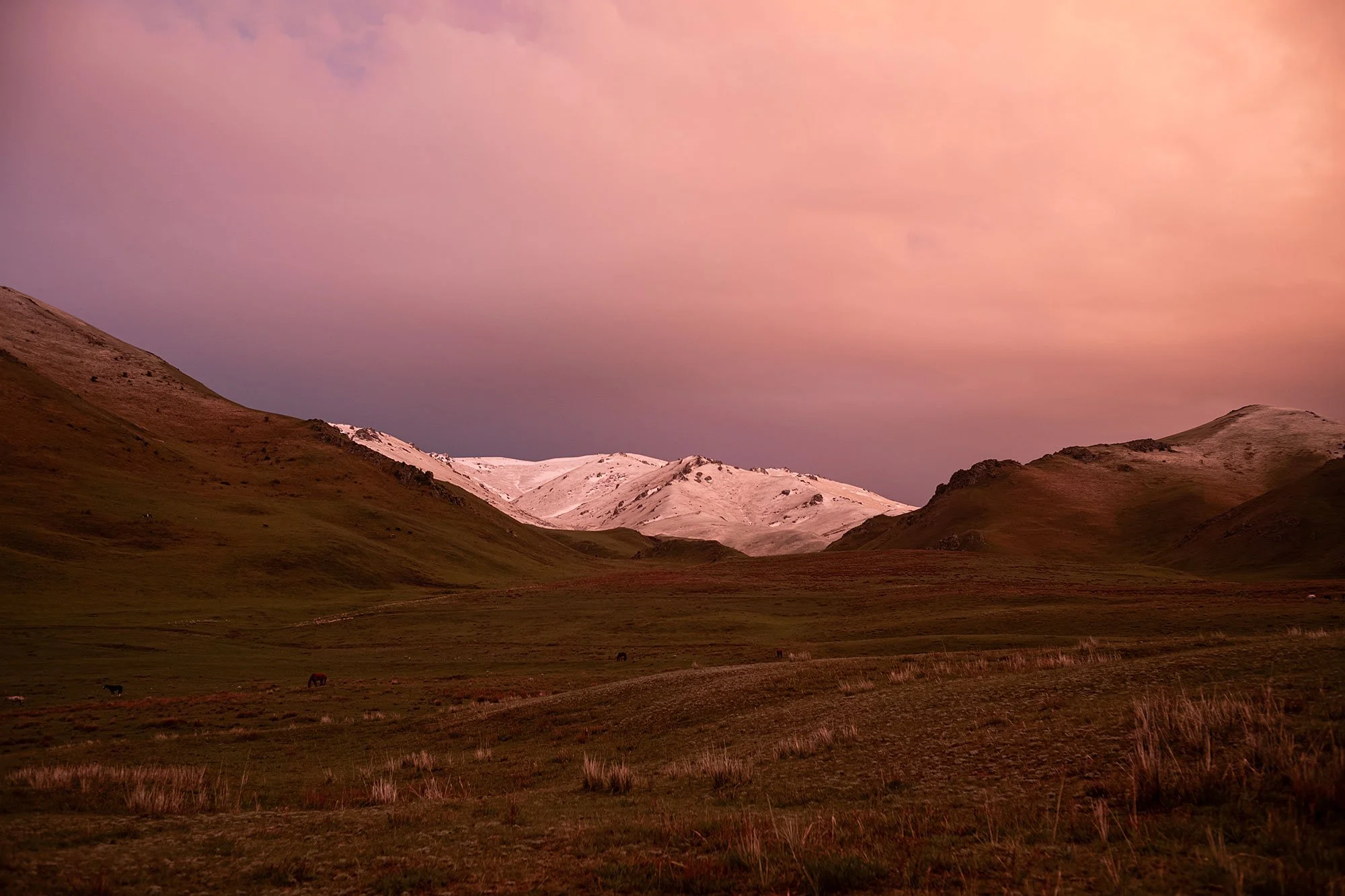
We all climb the hill to look down upon the valley and the yurts below. The swing is empty, the family beside ours nowhere to be seen. Smoke emerges from the chimneys of each of our sleeping yurts as fires have been lit to warm them as best they can.
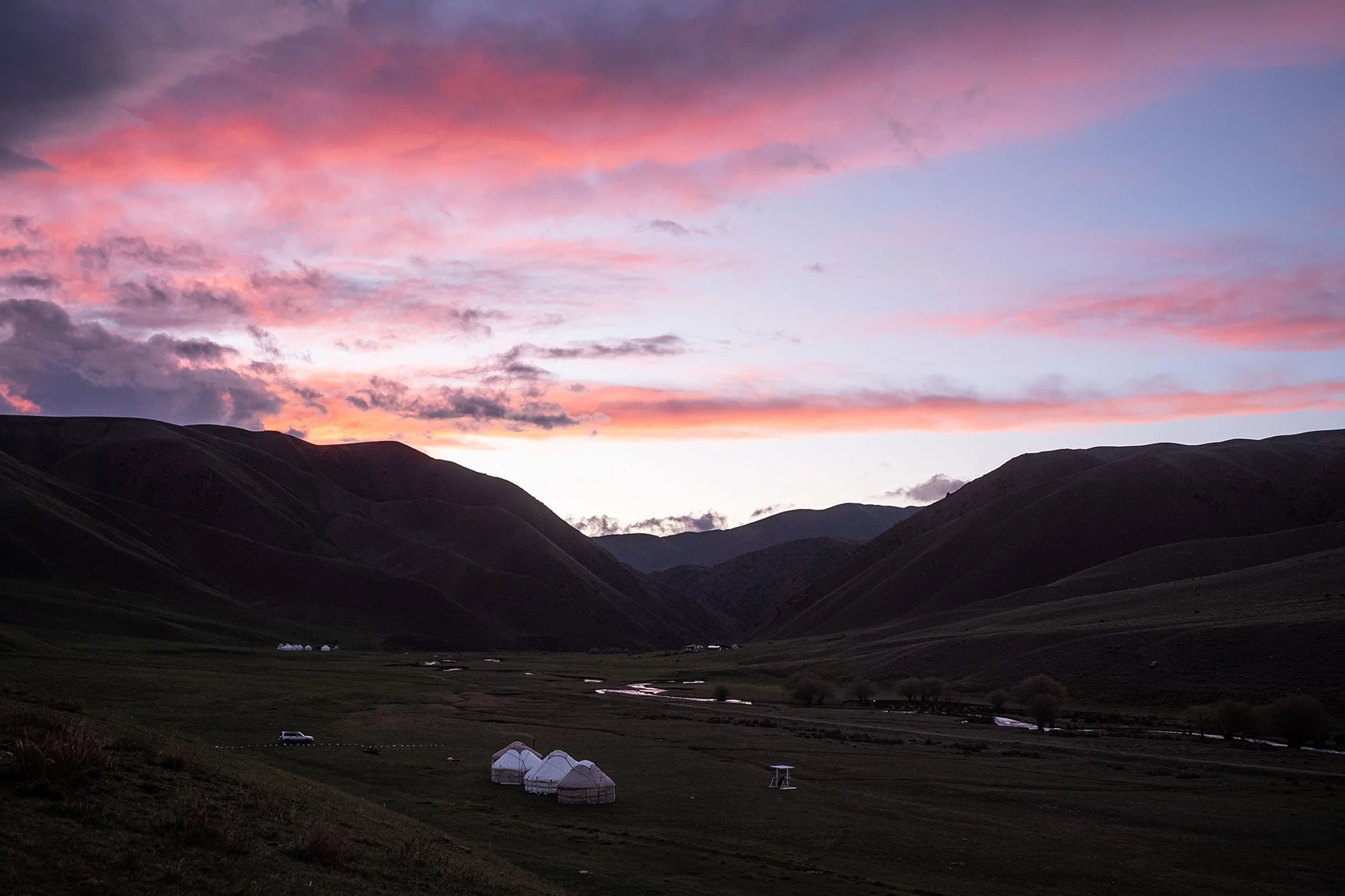
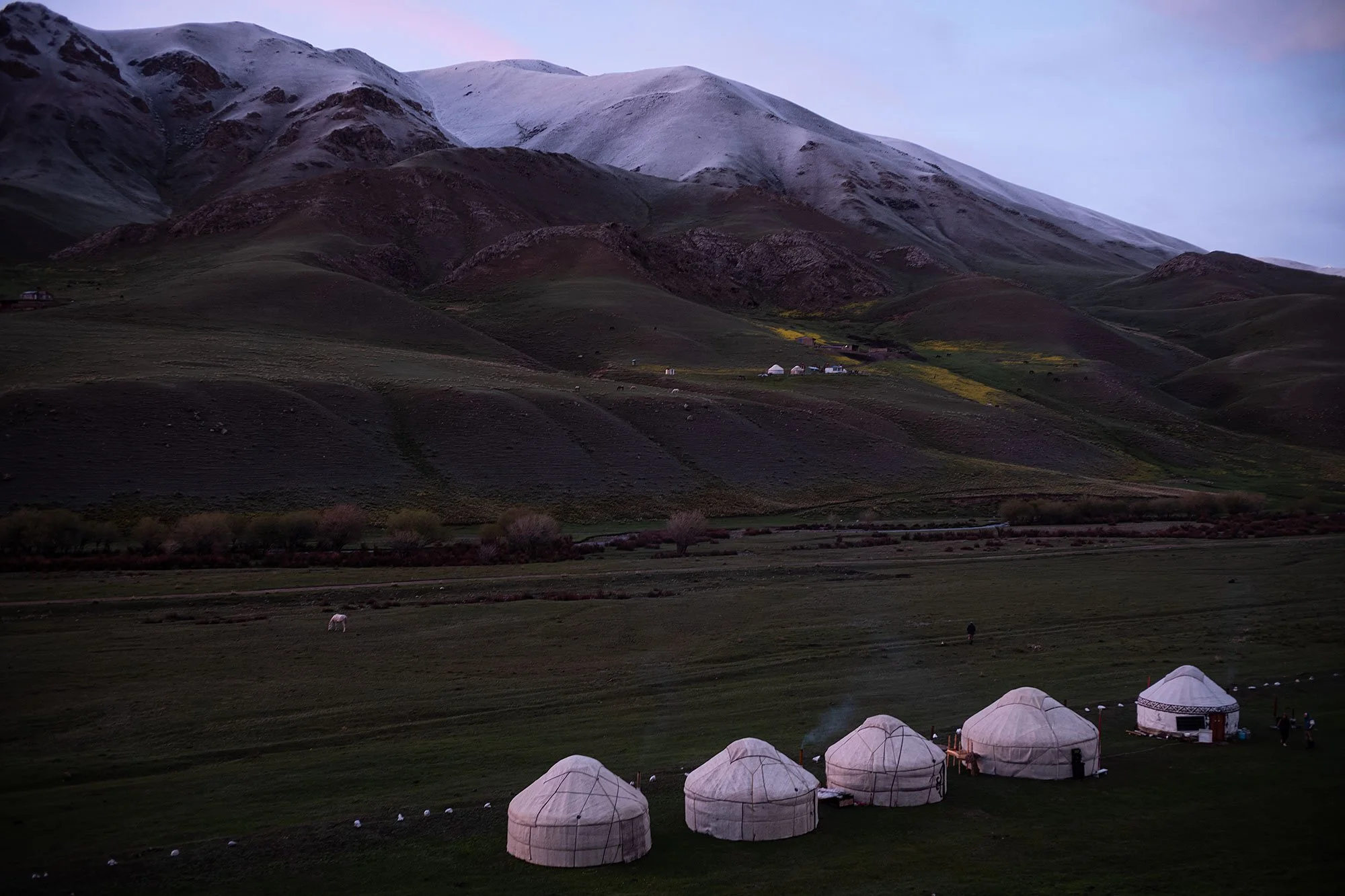
There’s almost no wind and it feels warmer now than it did when we first arrived. As night falls I find myself outside with Izaac and Steve, enjoying the relative warmth. The skies clear and we’re rewarded with a blanket of stars and satellites. A shooting star makes an incision in the velvet darkness, a streak of light marks its passing before the night closes back upon itself. And shortly thereafter I head back to our yurt, lowering the the thick wool flap to secure our shelter against the cold. 🇰🇬