Siem Reap I: Arrival and an introduction to Angkor Wat.
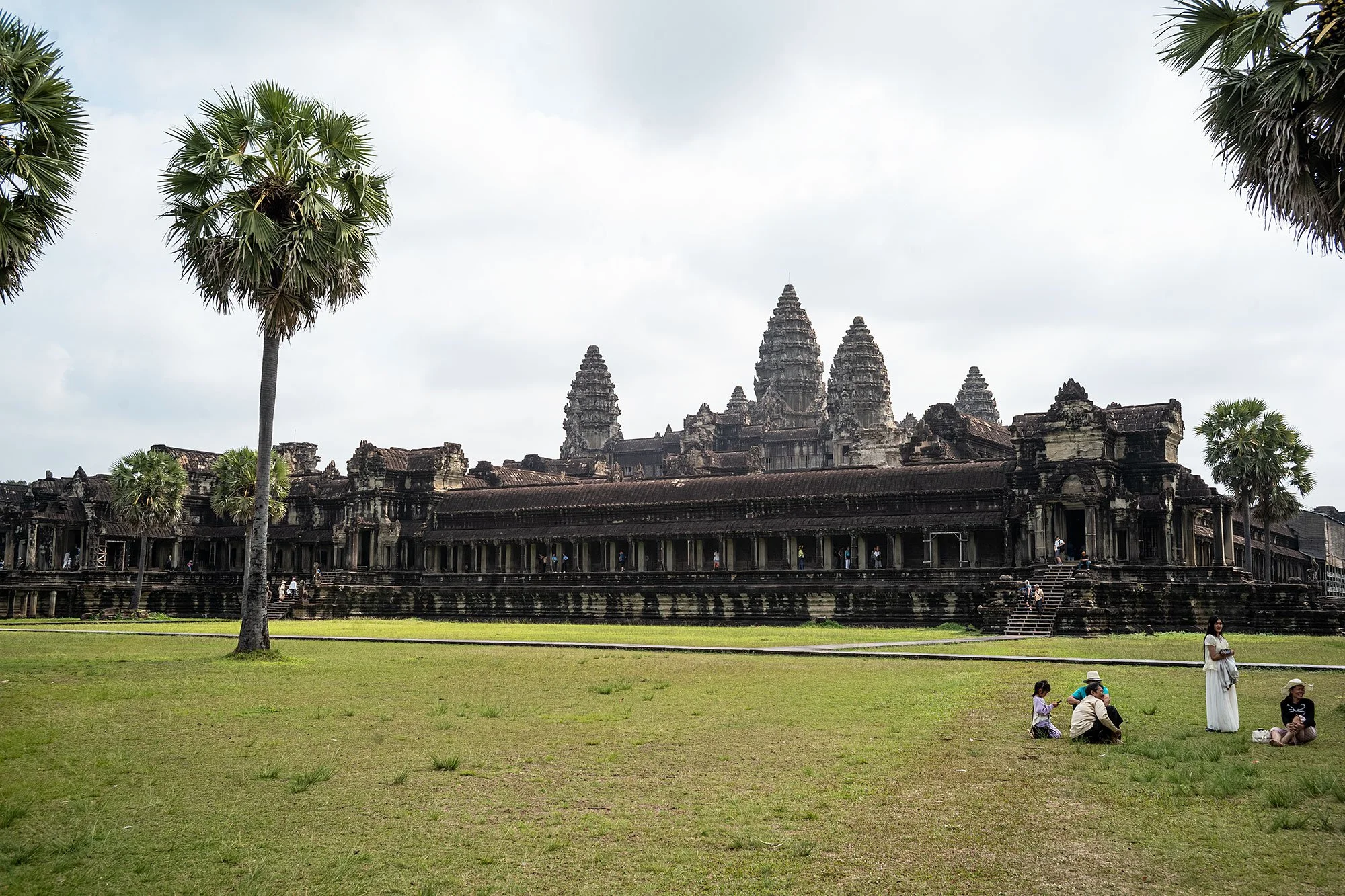
Siem Reap is a place transformed.
I had last visited in 2000 and remember it barely bigger than a village, the roads mostly dirt. Now, it’s a beautiful town: clean, orderly. I couldn’t have imagined it 26 years ago, and I’m happy to see how far it’s come, how well it looks like the growth has been managed.
I’ve come with my cousin and her husband, they taking a short trip after visiting their daughter in Singapore. I had originally planned to fly directly from Colombo to Hanoi, but upon hearing their plans asked if I could join them. I hadn’t intended to return to Siem Reap or Angkor, not having wanted to poke at my incredibly fond memories of the ancient city. I had spent a week amongst the temples on my first backpacking trip through Southeast Asia, studying them and reading up on Khmer art and architecture. It was one of the best weeks of my life.
But given the opportunity to spend time with family, I couldn’t resist asking if I could tag along. Once I was given the go-ahead, I made new arrangements, flying through Singapore and coordinating flights so that we could arrive in SAI together.
Additionally, I had purchased a second camera body, and my updated itinerary allows me toShe drop off my broken camera in Singapore to be repaired while my cousin brings me the spare.
•
My flight to Singapore arrives almost 20 minutes early. Immigration in the country is one of the fastest, most seamless I’ve encountered and, as I’m transiting and my bags are checked through to Siem Reap, I barely break my stride as I walk from the plane through the electronic immigration gates to the curb to catch my Grab. I arrive at the Leica store 30 minutes before they open and content myself by sitting at an empty chair in front of their cafe. This being Singapore, there’s nothing securing the tables or chairs.
The store opens late. Two women wait outside with me. One offers me a baked good and the other asks if I have an appointment. I do, and she tells me that she’ll be my customer care representative.
Kidd arrives, apologizing profusely. It’s no big deal; I have the time. I leave my camera with Anna and Kidd asks me if I’ve shot the 50mm/1.4 Noctilux. They pull out an M-11 so I can try it out. It’s a beautiful lens, the photos magnificent. They tell me the price; it far exceeds any budget I have for photography equipment, especially after purchasing the used camera body I just did. Kidd asks me if I have more time, they’d like to buy me a coffee, but I’m headed out to meet my family.
We have breakfast at a French cafe across from the hotel. It’s great to see my niece; I had left her two months ago and she’s having a great time in Southeast Asia, making the most of her location to visit various countries on the weekends.
She leaves for class and we to the airport, stopping to visit the waterfall at the Jewel before making our way to a lounge to wait for our flight.
Landing in Siem Reap I’m astounded by the new airport. It’s gigantic and modern and new. I learn later it had only opened in 2023, and it looks as though it’s built for expansion. I remember in the past landing at a strip and walking to a small cabin to have my visa processed; this is blowing my mind.
It’s also set about an hour outside of the city. A new tarred road leads from the airport to the main highway, which is likewise tarred and looks as fresh as the one to the airport. The city has expanded; it’s unrecognizable to me.
The driver drops us off at the hotel and we check in. There’s a pool by the reception. Our room is on the second floor with a balcony overlooking the street. The street noise is minimal; like Sri Lanka, no one seems to honk their horns and all you hear is the sound of tires on the pavement.
We haven’t had dinner and my cousin suggests we walk to Pub Street, thinking it’s a small street with a few pubs, but it’s a entire area of pubs and restaurants. I wonder if it’s the same as held the density of restaurants and bars when I was here last, and lament the fact that I’ve donated all my Lonely Planets to Housing Works Book Store. I’d love to be able to look back at where I stayed and to see what hotels and restaurants (if any) remain.
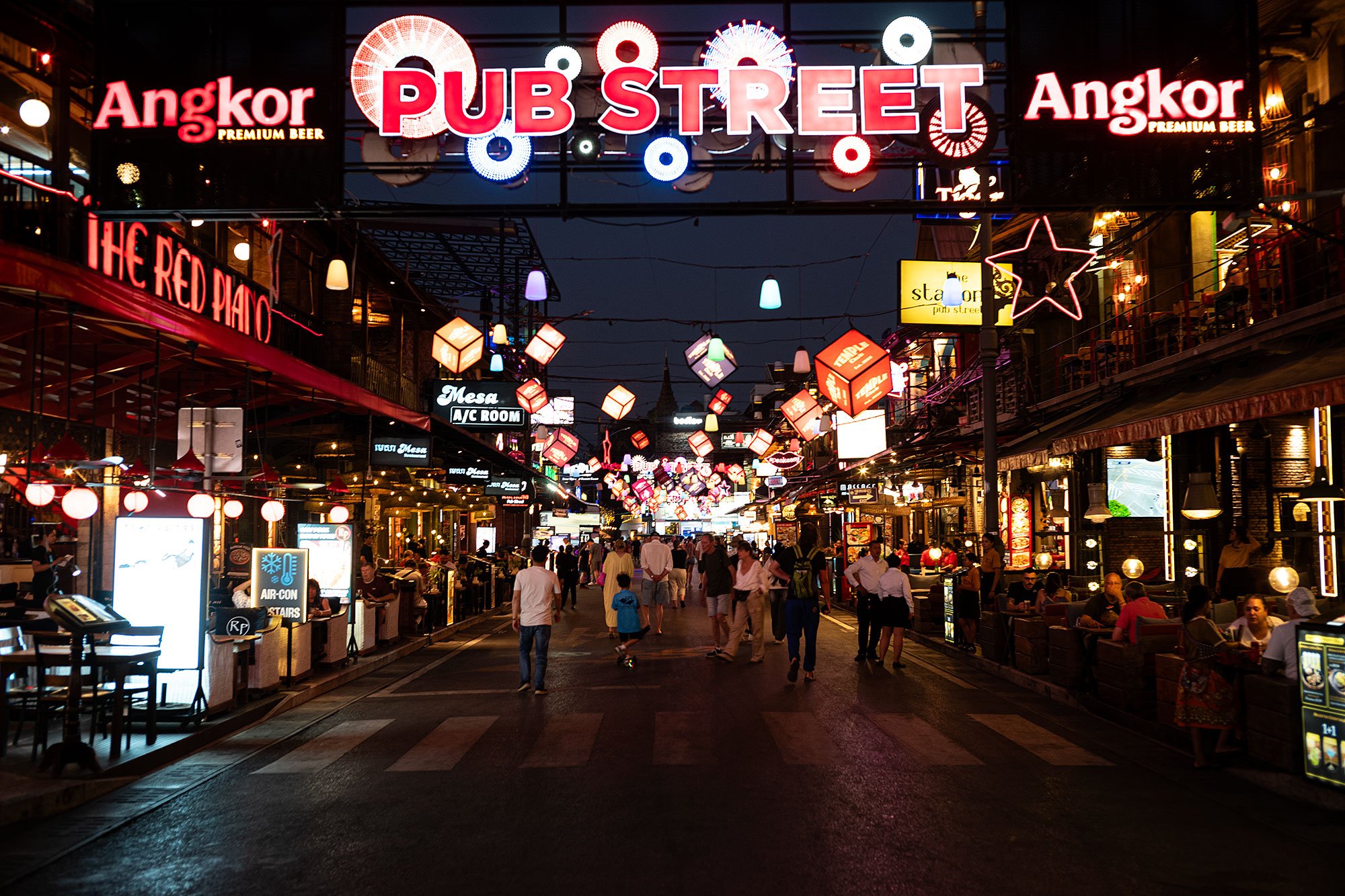
We stop for drinks at a three-story restaurant. There are two-for-one cocktail specials and discounted beers. The third floor hosts an Apsara Show, but we’re disinclined, deciding to sit on the second floor overlooking the street. I can’t get over how much Siem Reap has changed.
After drinks we walk over to the Old Market, checking out the stalls that face the street. We stop at one to buy cashews and dried mango to snack on during our tour and I wander inside to look for scarves. Years ago I remember buying many from the children hawking them at the temples and I’m curious to see what’s on offer here. Other than the food stalls, the shops seem to cater mostly to tourists, selling knick knacks, t shirts, and textiles.
I’m eager to revisit the temples tomorrow, and I’m also curious to see whether children continue to wander the temples with postcards, books, and, of course, scarves for sale.
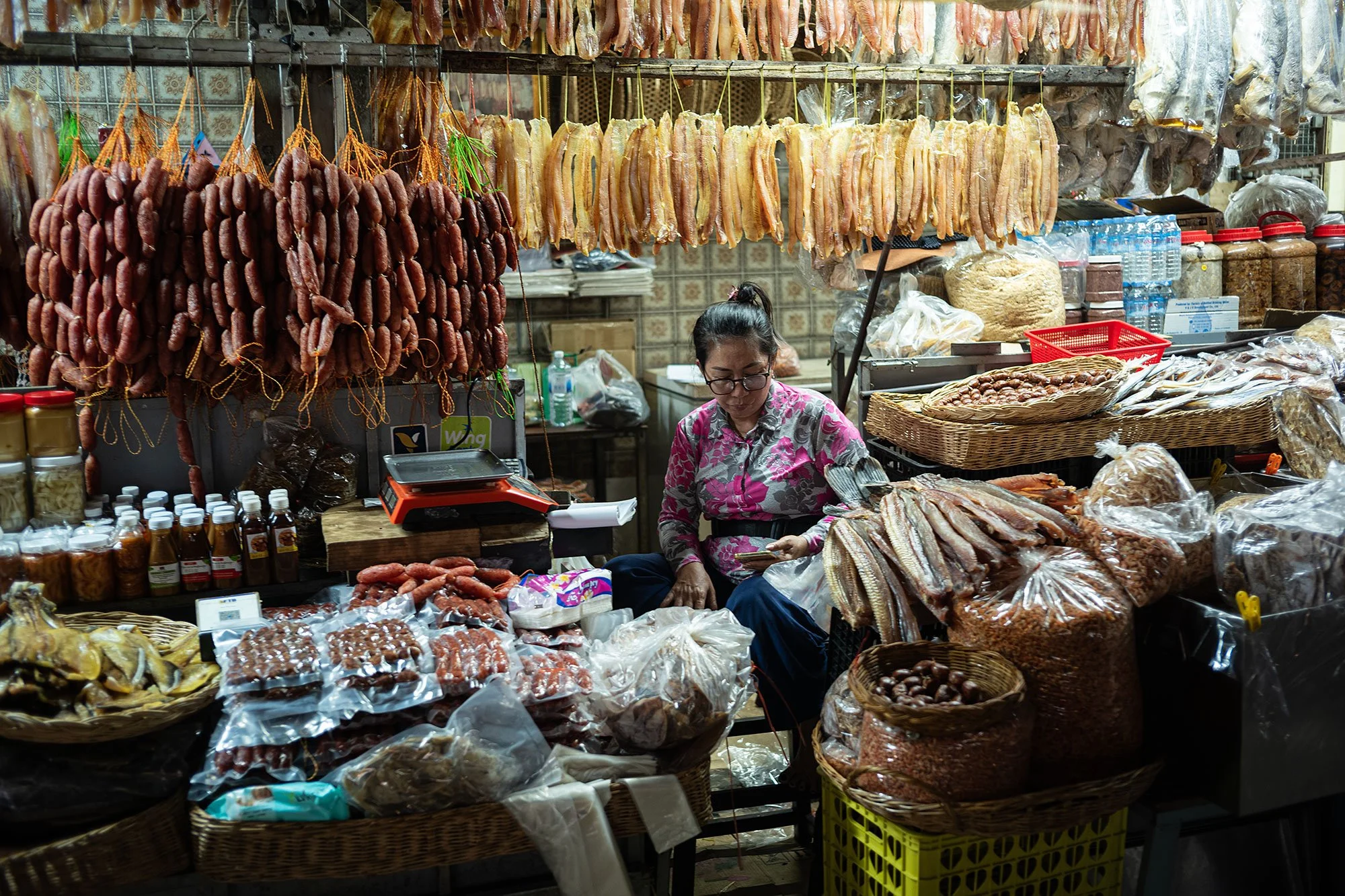
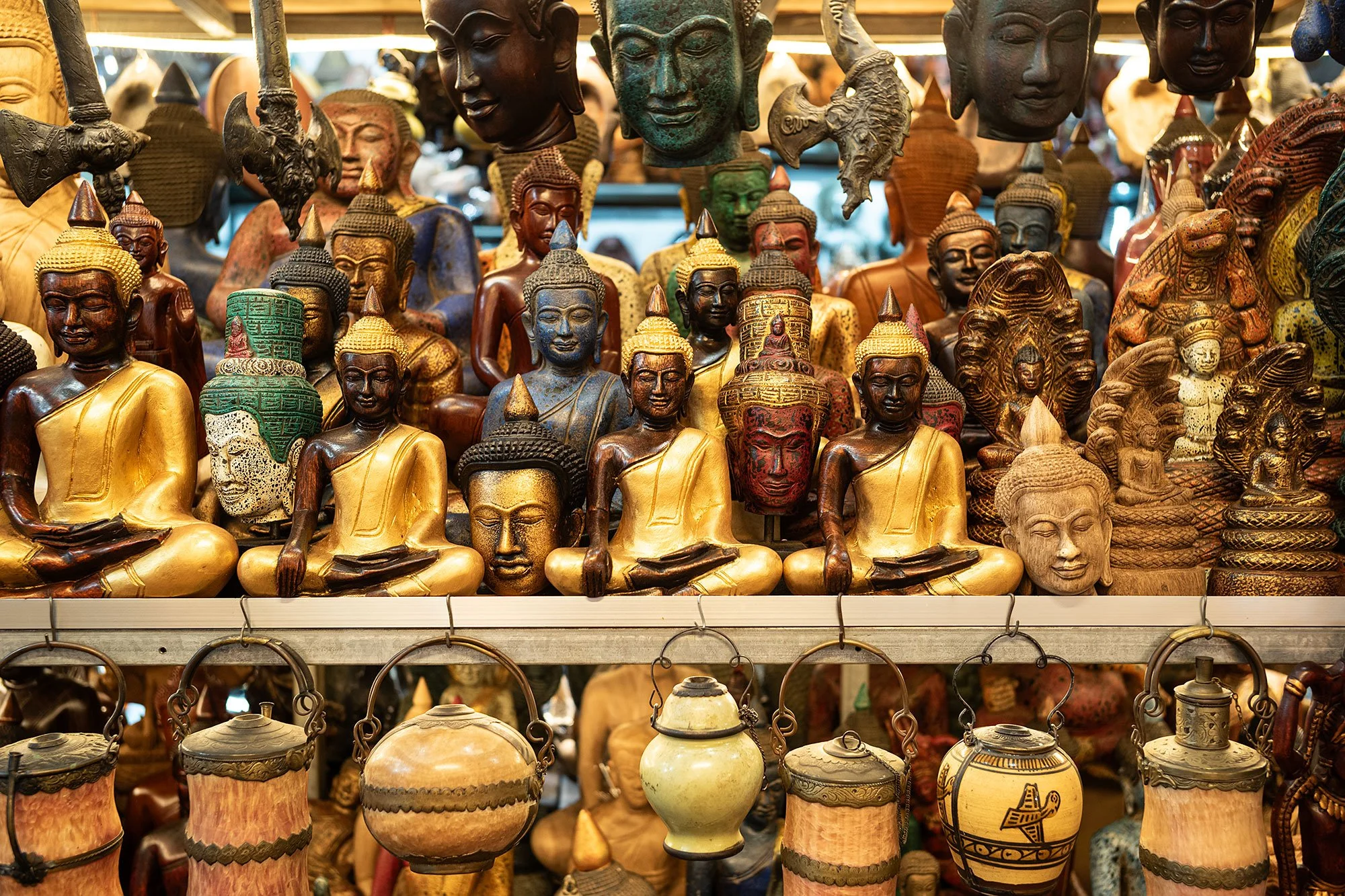
The next morning. Jimmy meets us in the lobby at 0730. Outside, he introduces us to Sreang, our driver. He’s been guiding for a number of years now, after taking a six month training course. I mention it’s a lot of history to cram into six months and he tells me that they learn the history in school. The hardest part for him was learning the language. He has three children and they’ve all far surpassed his English.
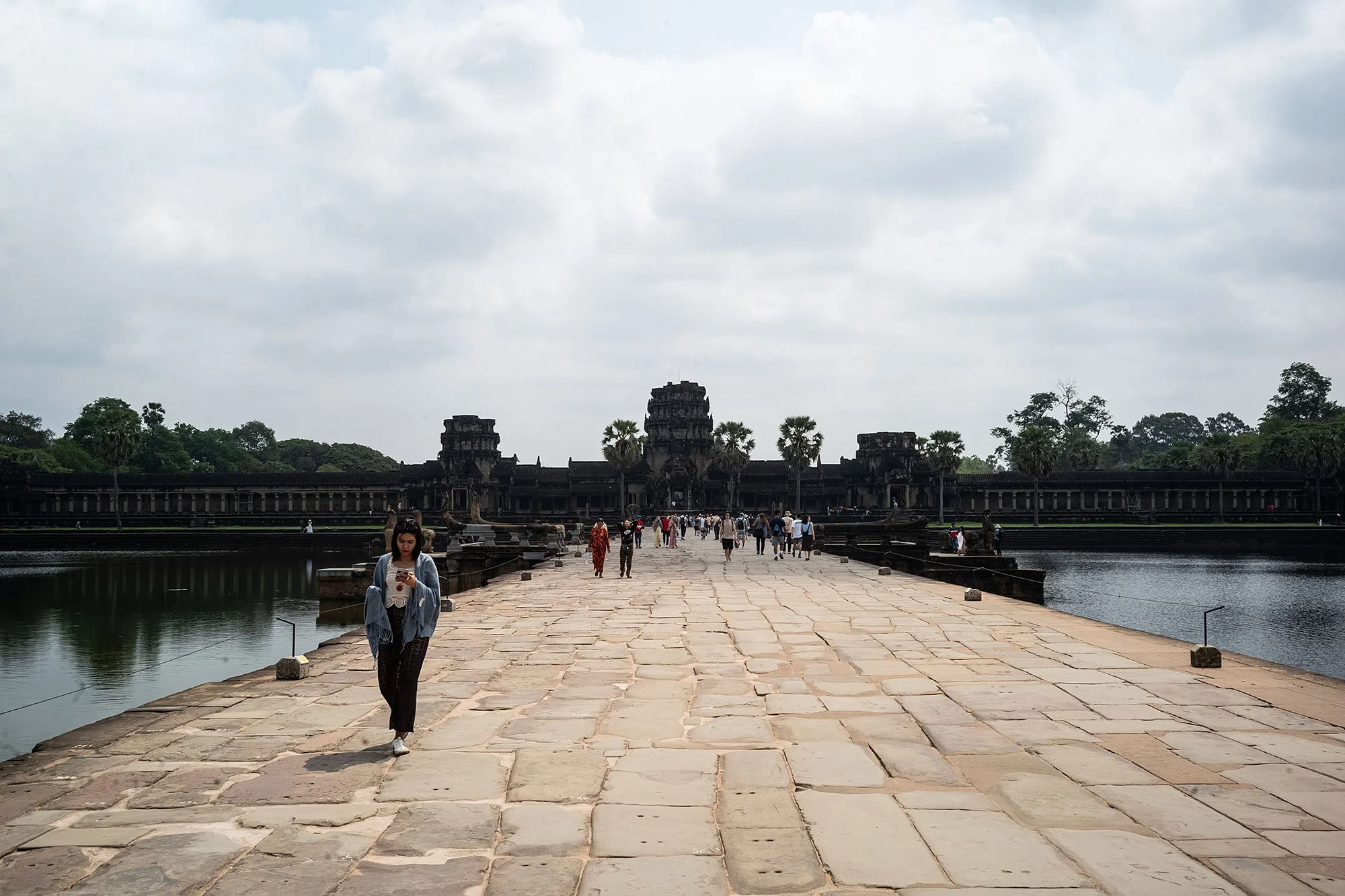
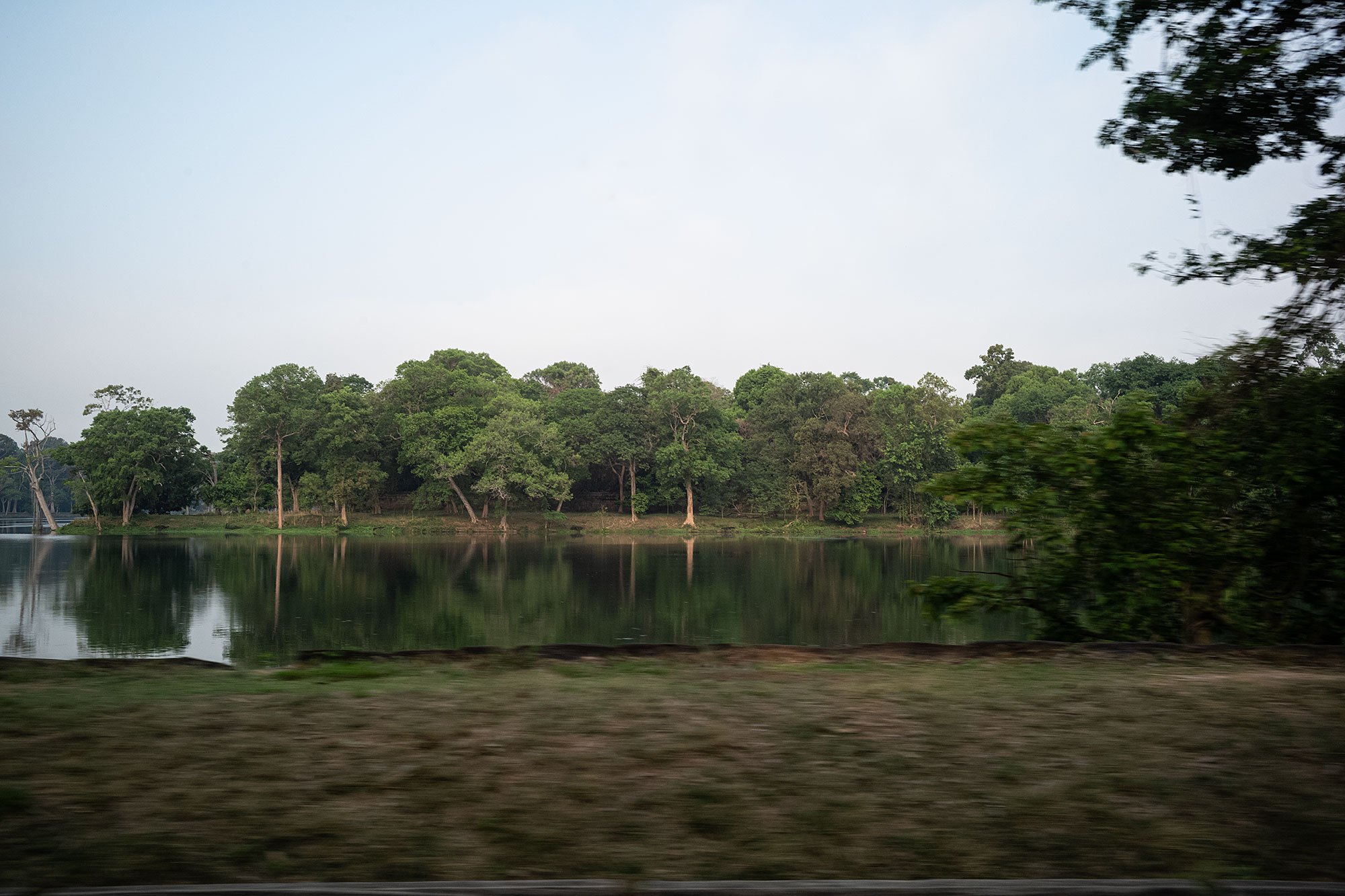
We drive towards the temples and I shoot a few frames out of the window at the moat surrounding Angkor Wat. There’s a huge smudge on the photos and I check the window of the car to see if there’s something blocking the view. There isn’t.
With a sigh I check the sensor to see a piece of lint stuck to it. Having not brought any tools with me I stupidly try to remove it with a kleenex, introducing all sorts of additional dust onto the sensor. I can’t help but laugh at myself, and surrender to the fact that I’ll have to do a lot of Photoshop to clean up any images I decide to keep.
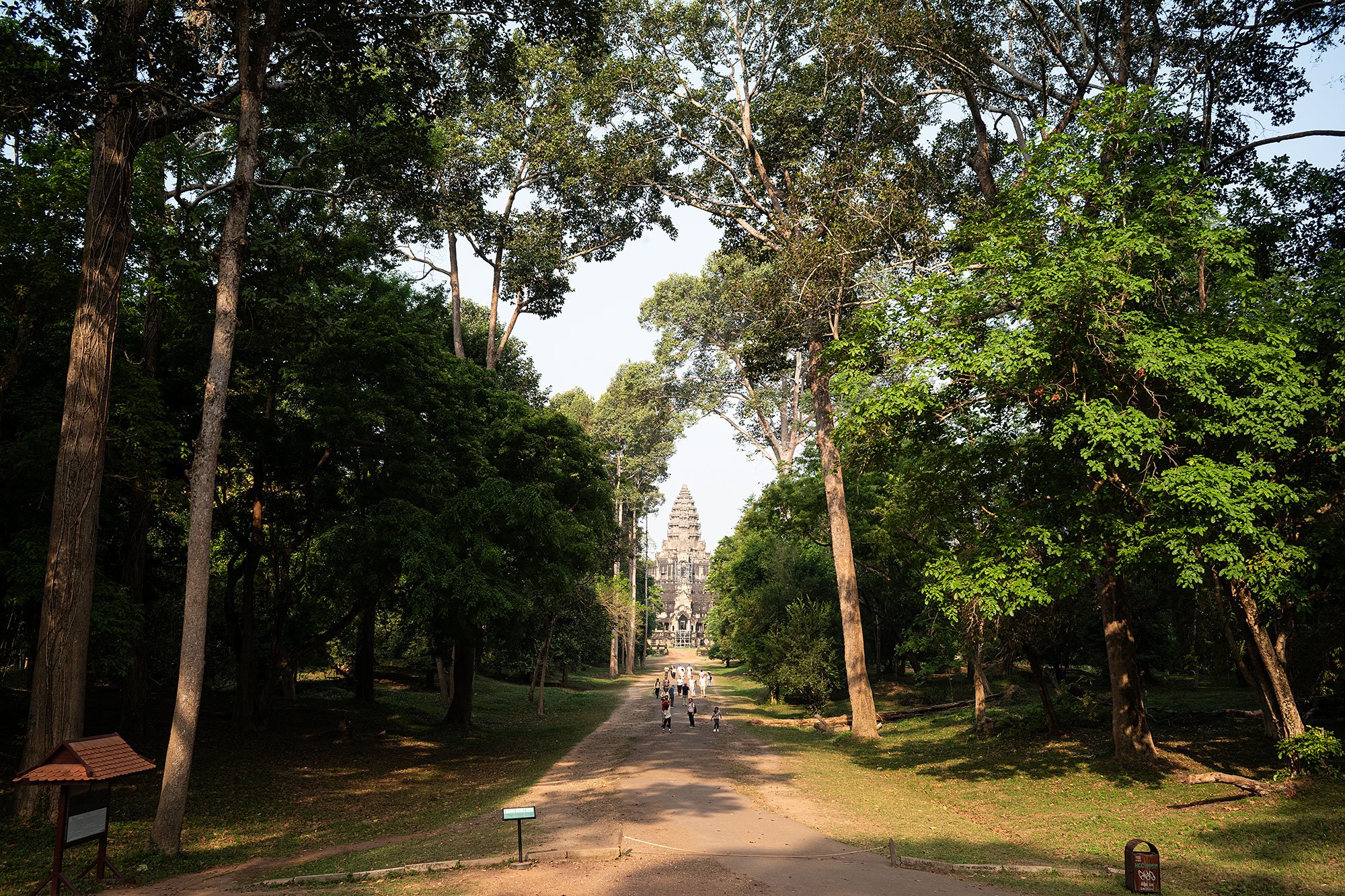
Sreang lets us off at a small lot leading to the east entrance of Angkor Wat. We’re entering from the back. A number of people are exiting the temple, following a recommended path. We swim upstream.
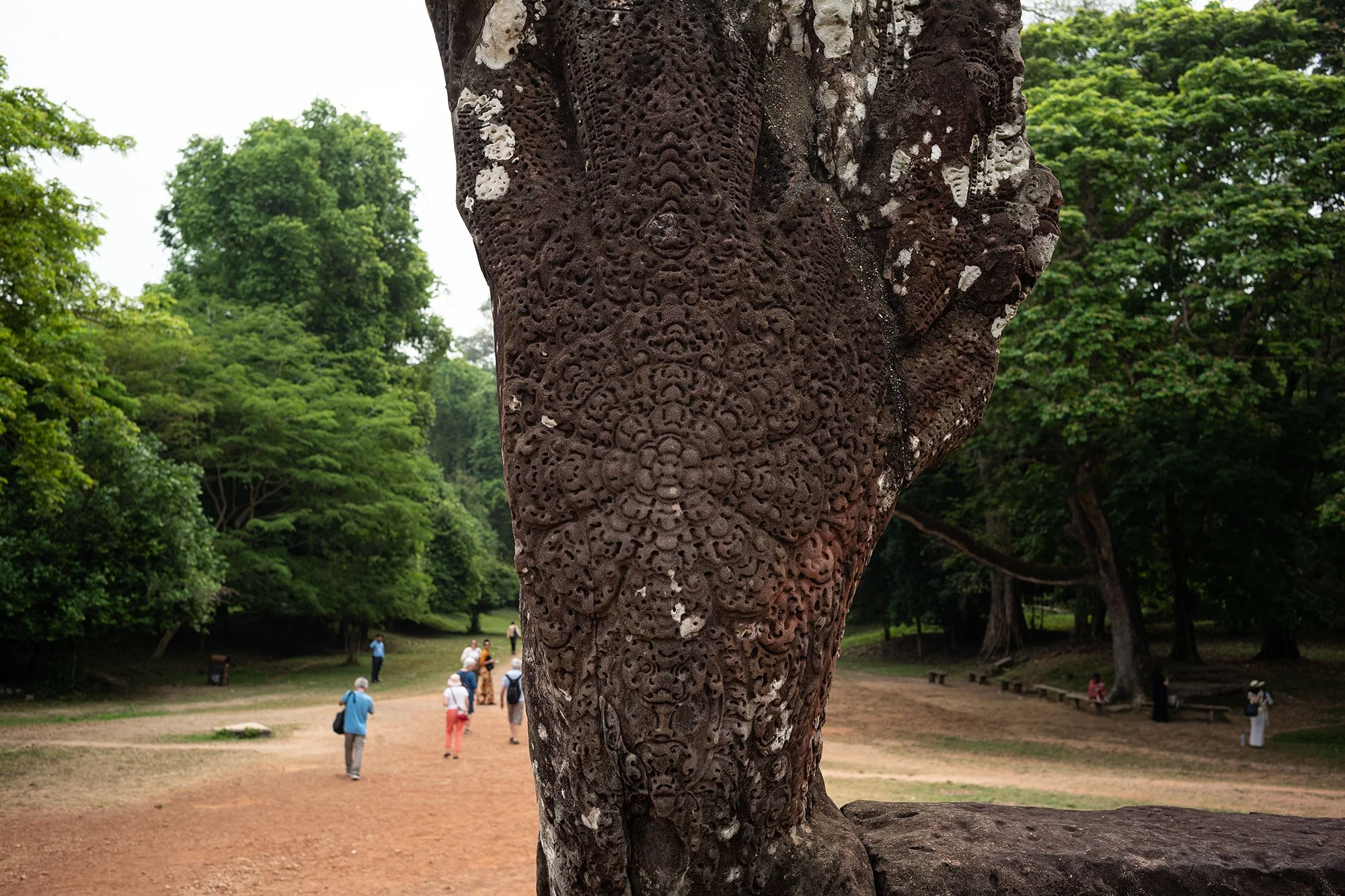
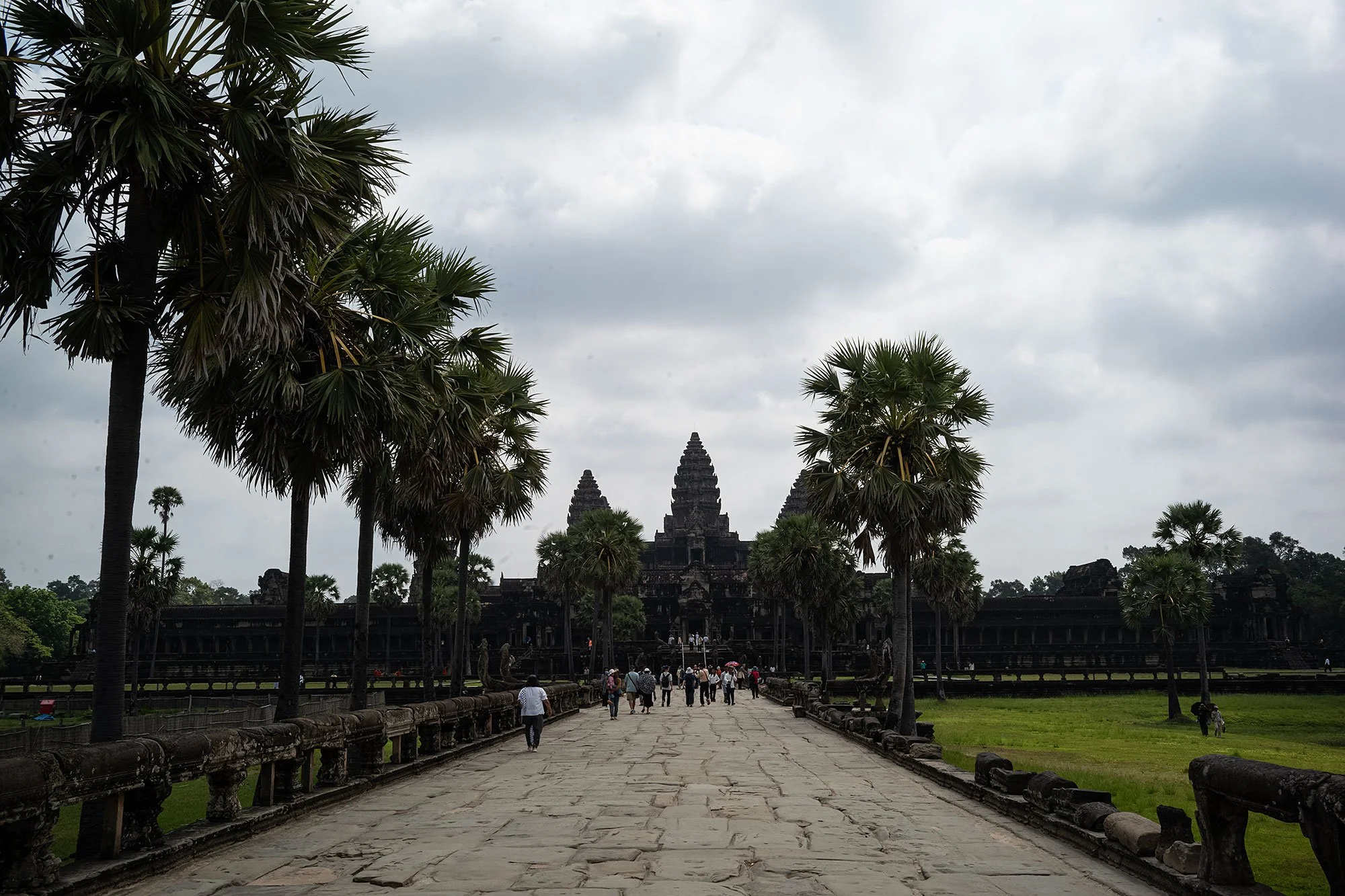
Approaching the temple we pass a rampart. The balustrade ends with naga heads rearing up to face those who enter. On the back of the hoods are carved intricate rosettes, reminding me of the temples and carvings to come and I feel a familiar sense of wonder begin to sweep over me.
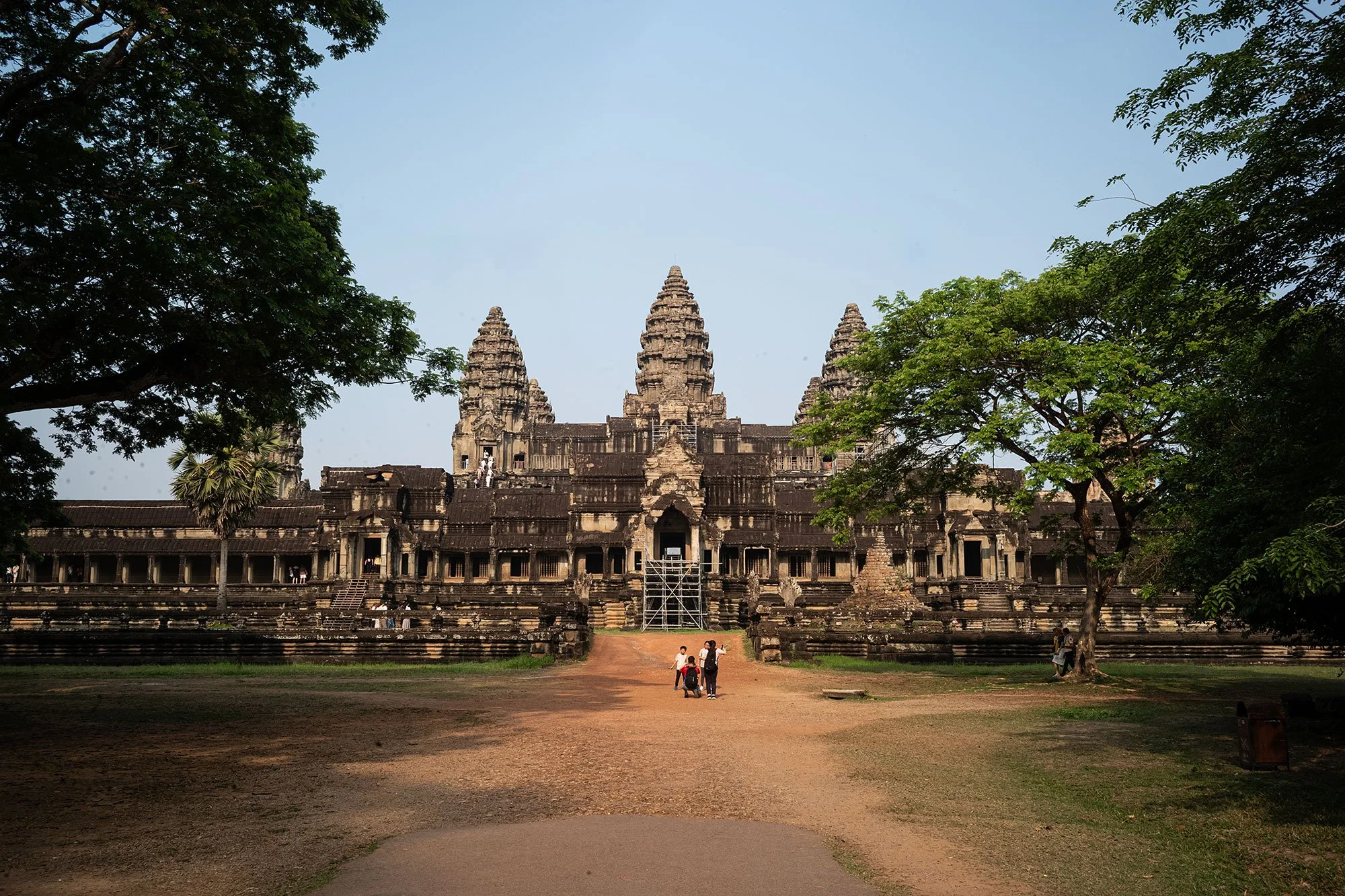
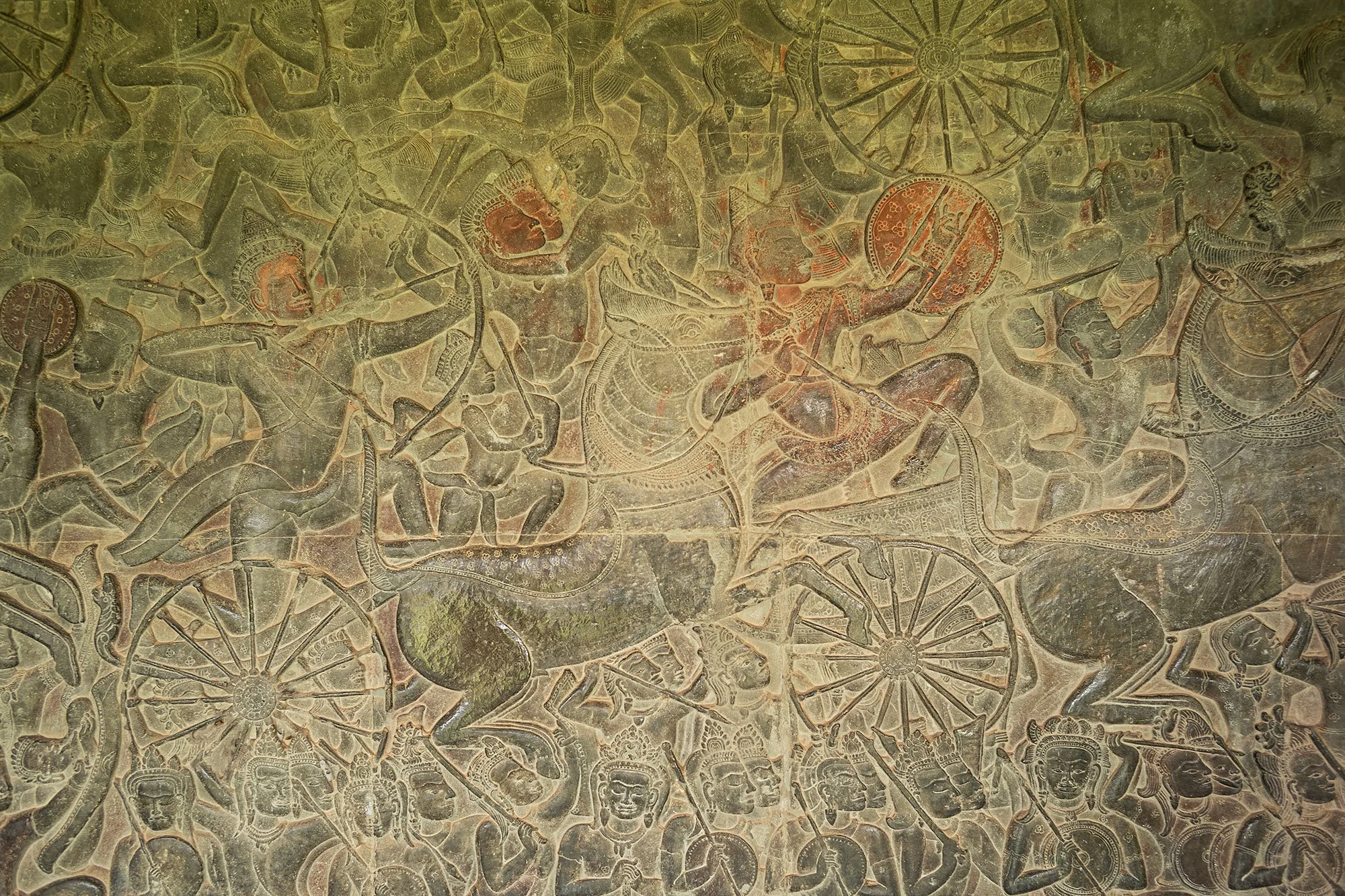
Built by King Suryavarman II in the early 12th century, Angkor Wat is the world’s largest religoius monument. Originally a Hindu temple dedicated to Vishnu and a royal mausoleum, it was converted into a Buddhist temple later in the 12th century. The five central towers symbolize Mount Meru, the center of the universe in Hindu cosmology, and the 13,000 square feet of bas reliefs depict scenes from the Ramayana and Mahabharata, two of the most famous Hindu epics.
Jimmy leads us first to one of the most famous of these bas reliefs, Churning the Ocean of Milk, which depicts 88 asuras (demons) and 92 devas (gods) using the serpent Vasuki to churn the sea in search of the nectar of immortality (amrit). In the center, Vishnu stands upon the turtle Kurma, who also serves to stabilize Mount Mandara, which acts as the churning rod. Symbolically, the work represents the struggle between good and evil, creating order from chaos. The process of churning also releases Apsaras (celestial dancers) and the fish and marine life depicted in the waters below.
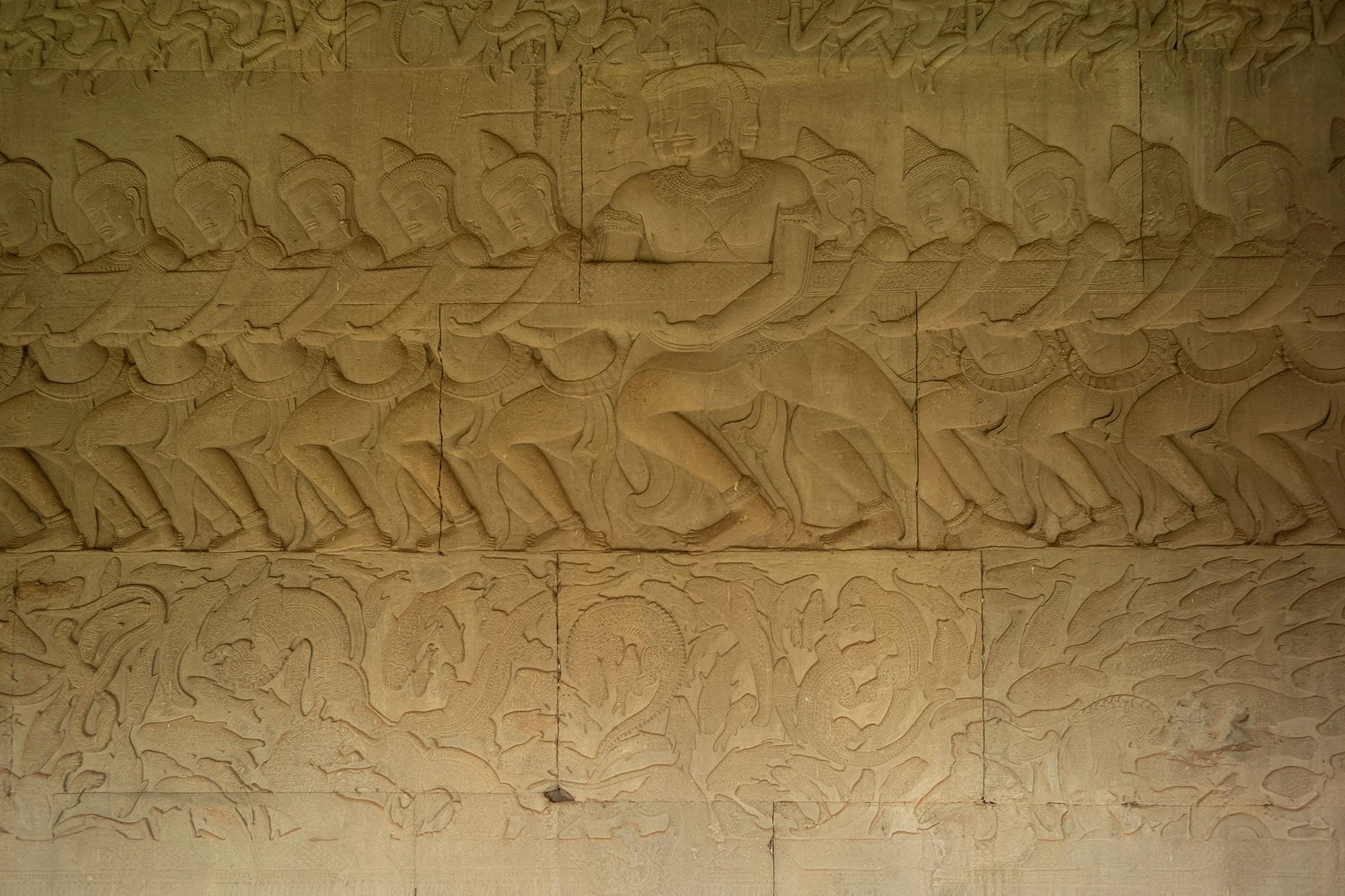
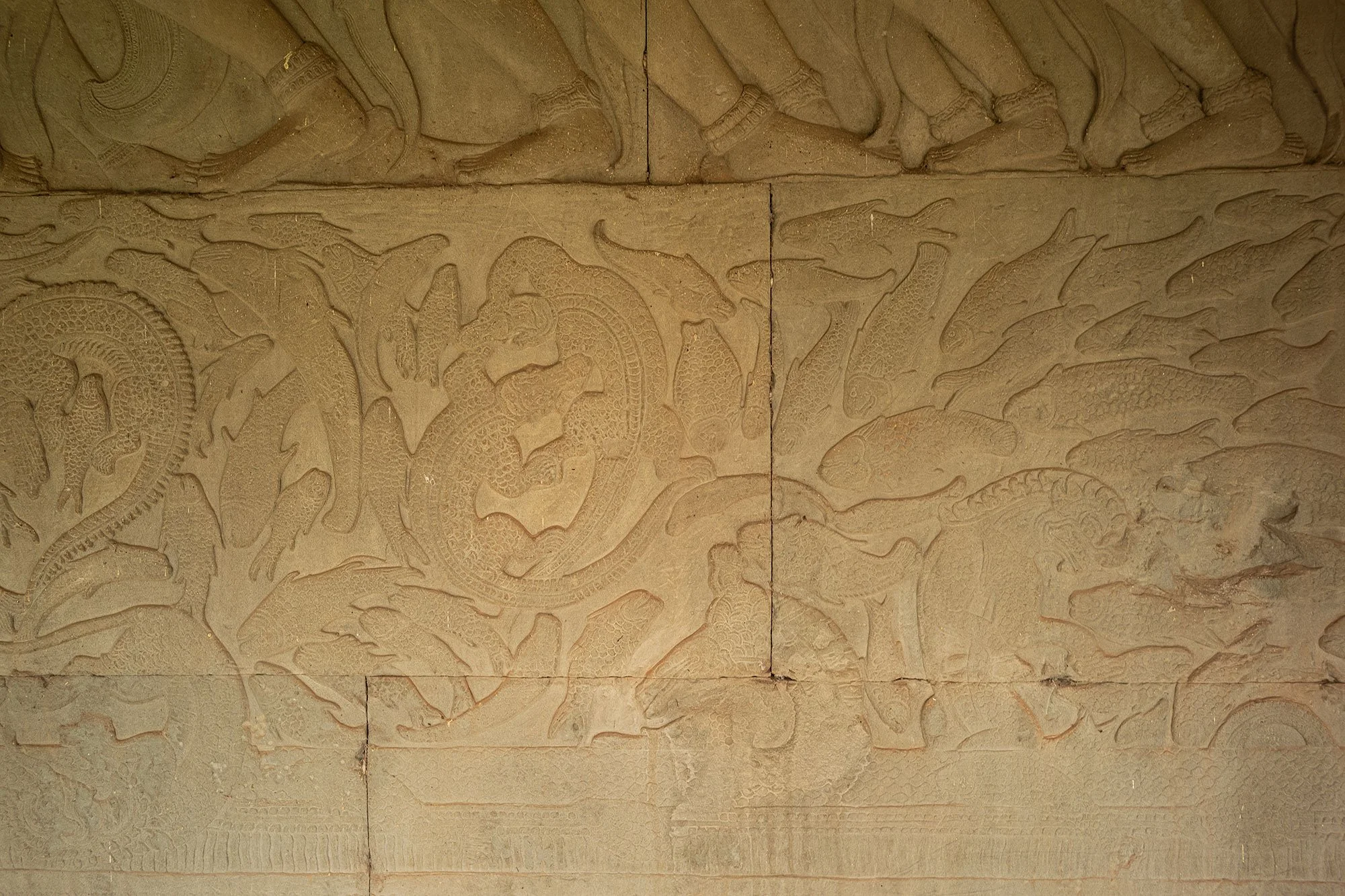
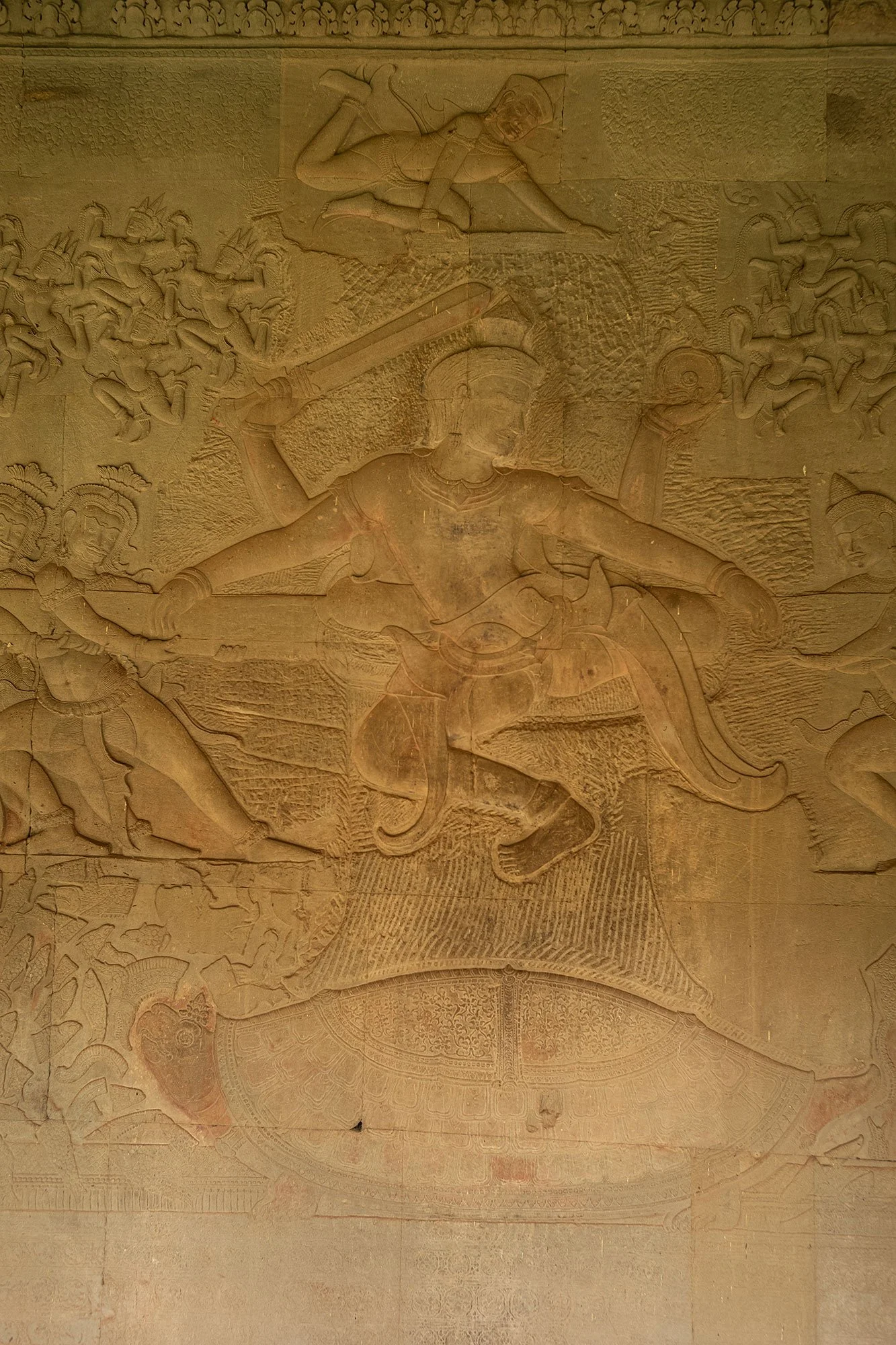
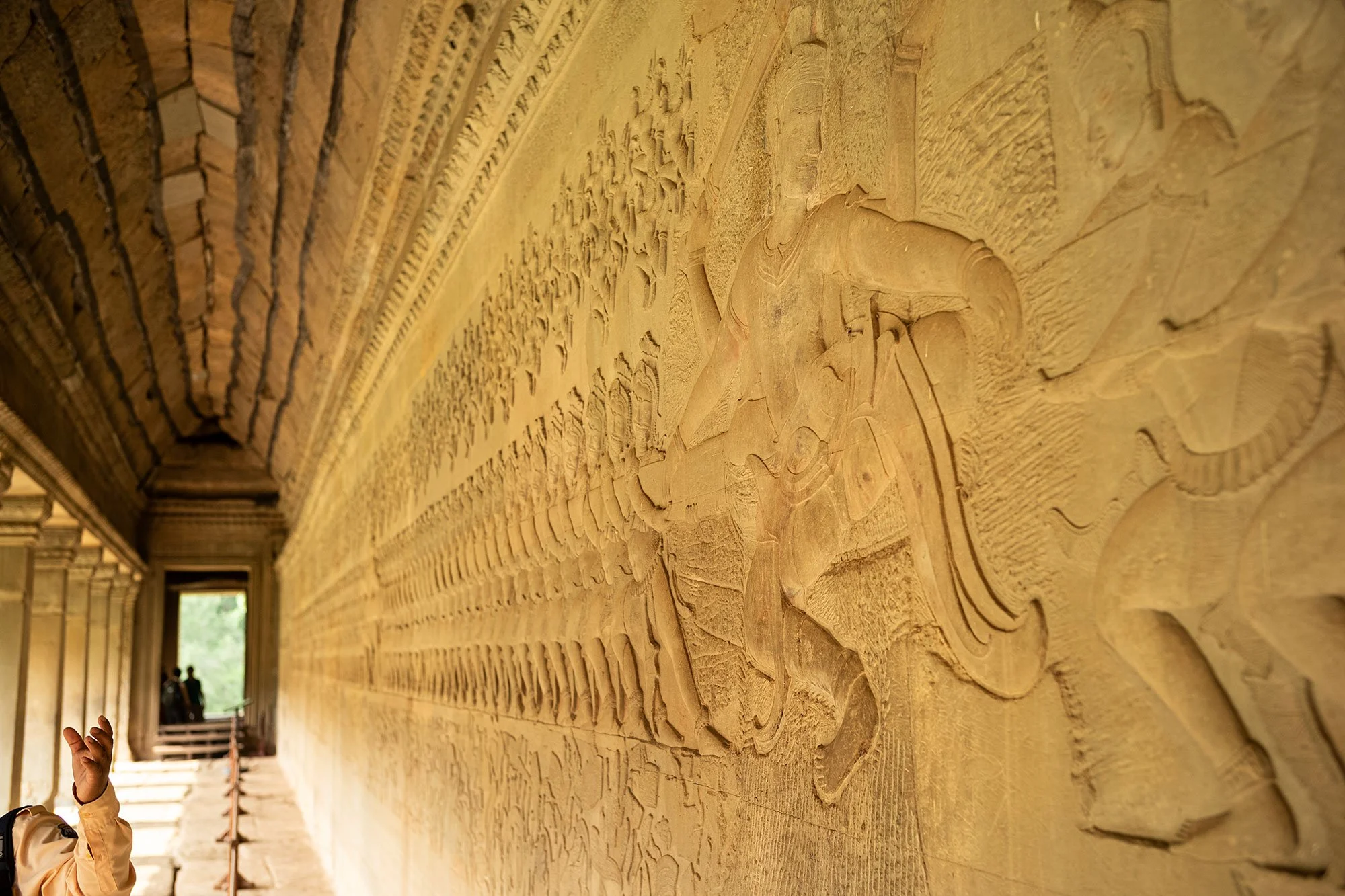
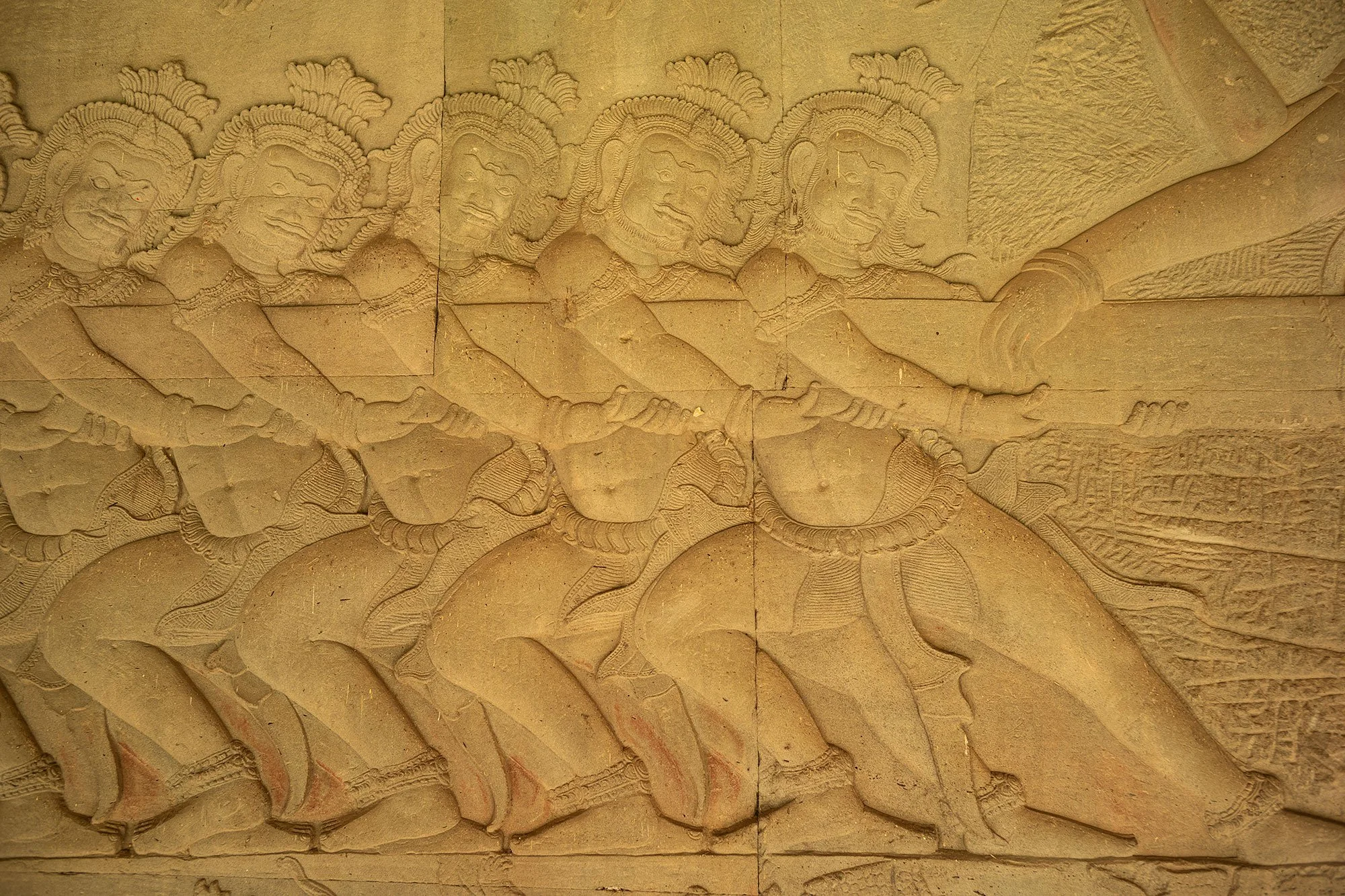
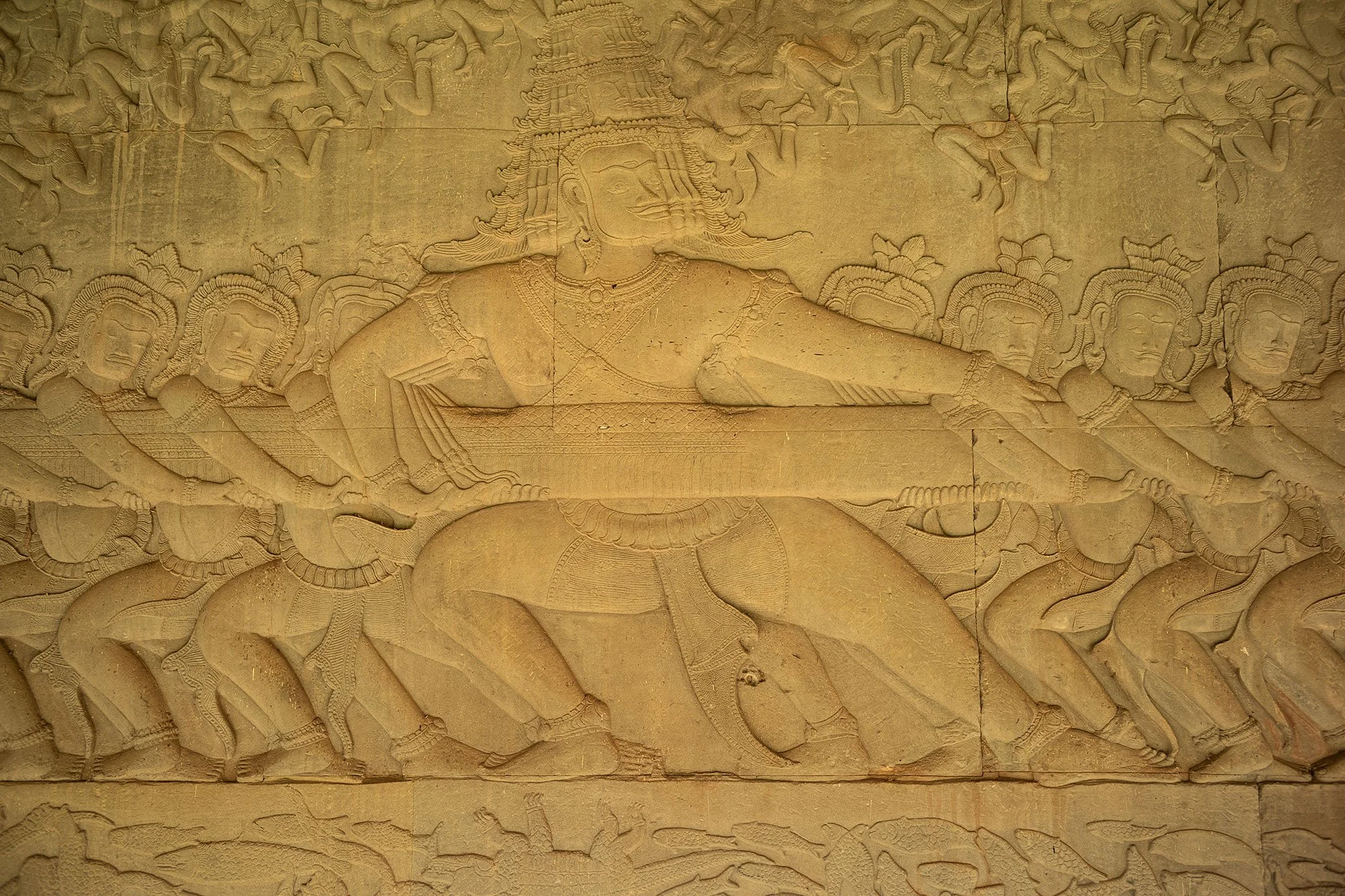
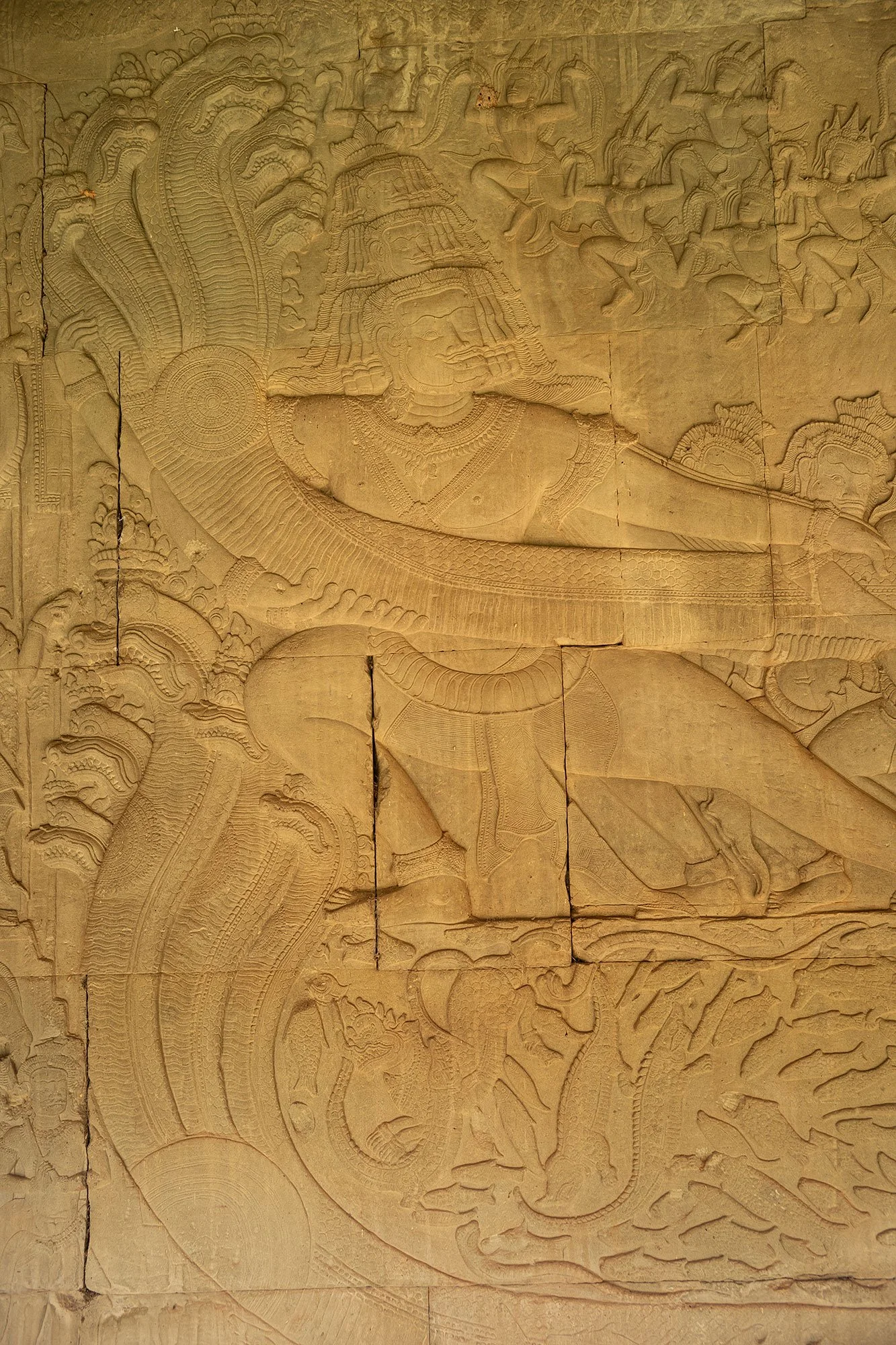
It’s beautiful piece of art, and it’s great being able to see it restored. When I had visited in 2000, I remember parts being behind plexiglass, making some of the detail difficult to discern.
From here we move on to the Judgement of Yama/Heaven and Hell bas relief as described in the Puranas. Yama, The Lord of Justice and Death, conducts his court with the help of his assistant Chitragupta, who holds the records of good and bad deeds. Using these records he assesses each soul, sending them to a swarga (heaven) or naraka (hell). The upper layer of the relief represents 37 swargas, the middle layer represents bhoomi (earth), and the bottom layer shows 32 narakas. At one point in the relief souls can be seen dragged and pushed into a naraka.
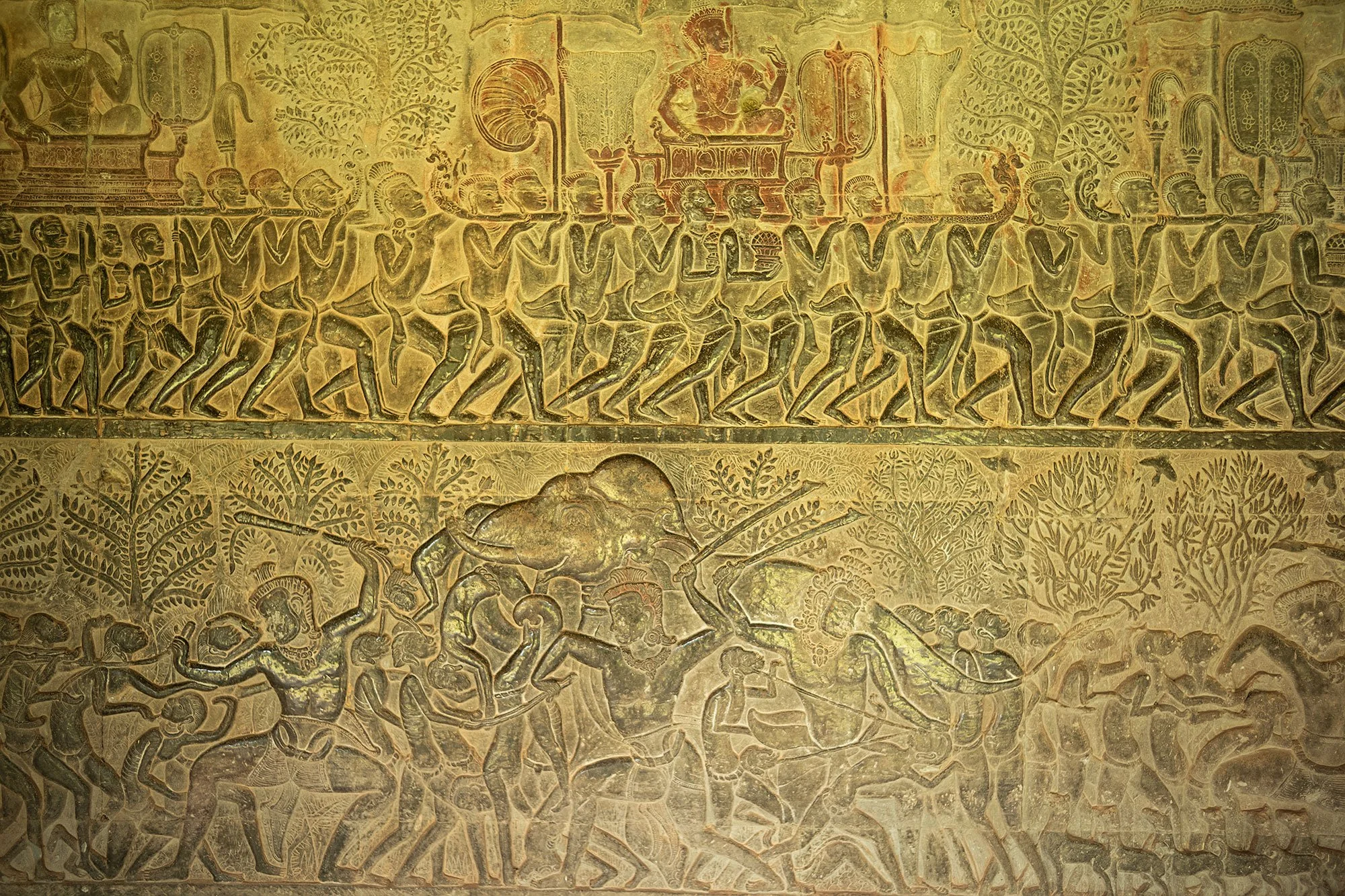
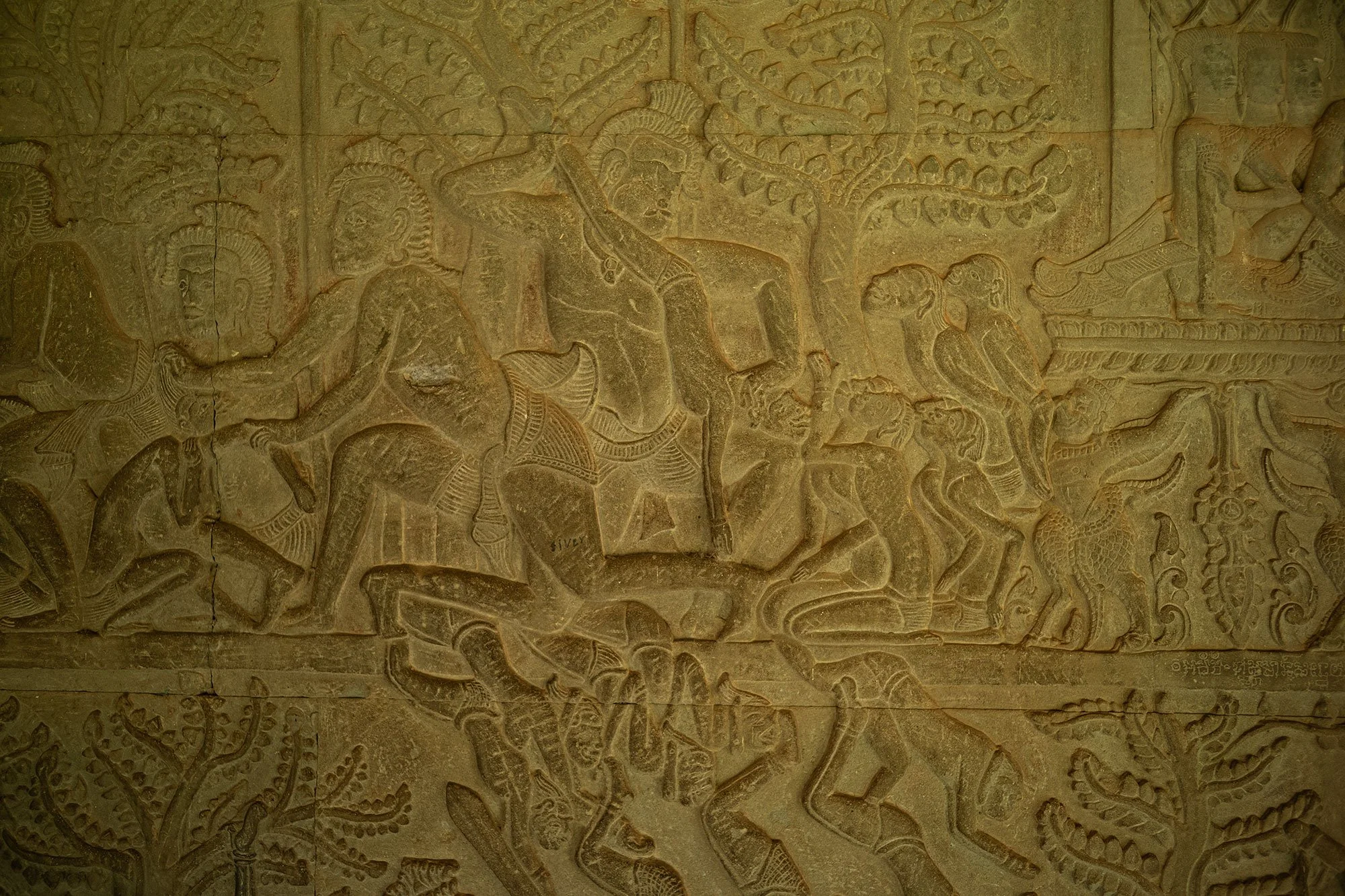
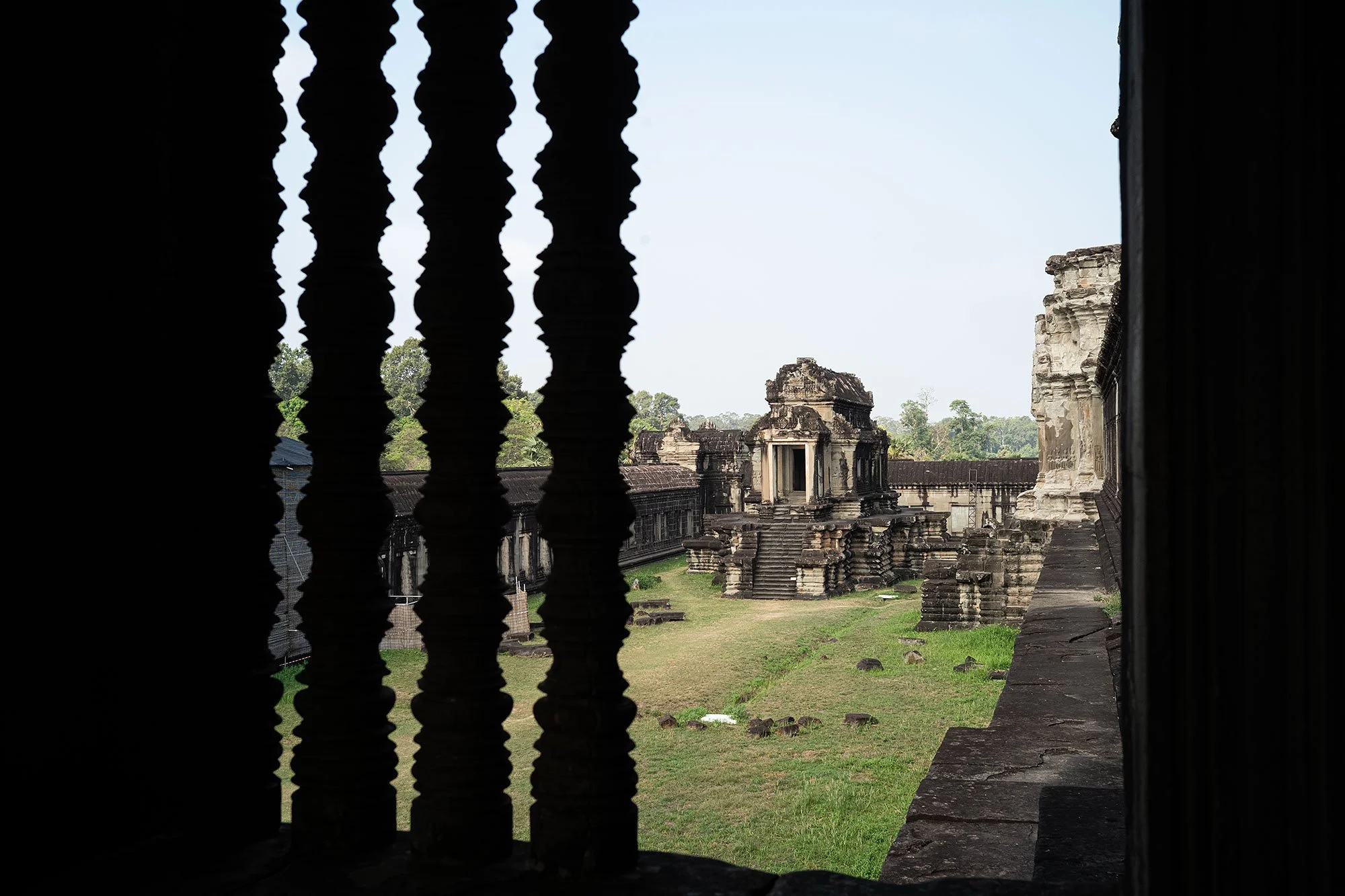
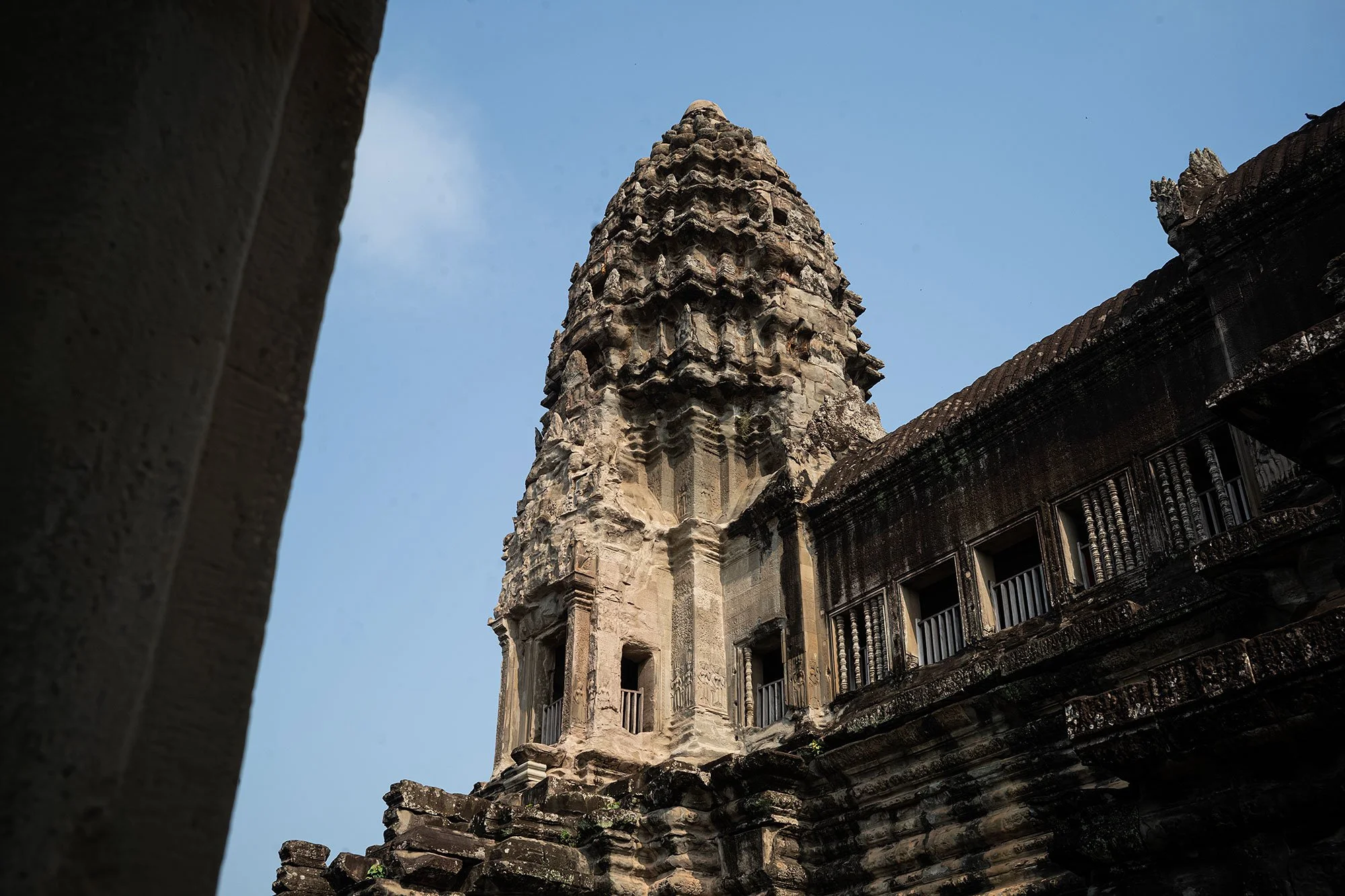
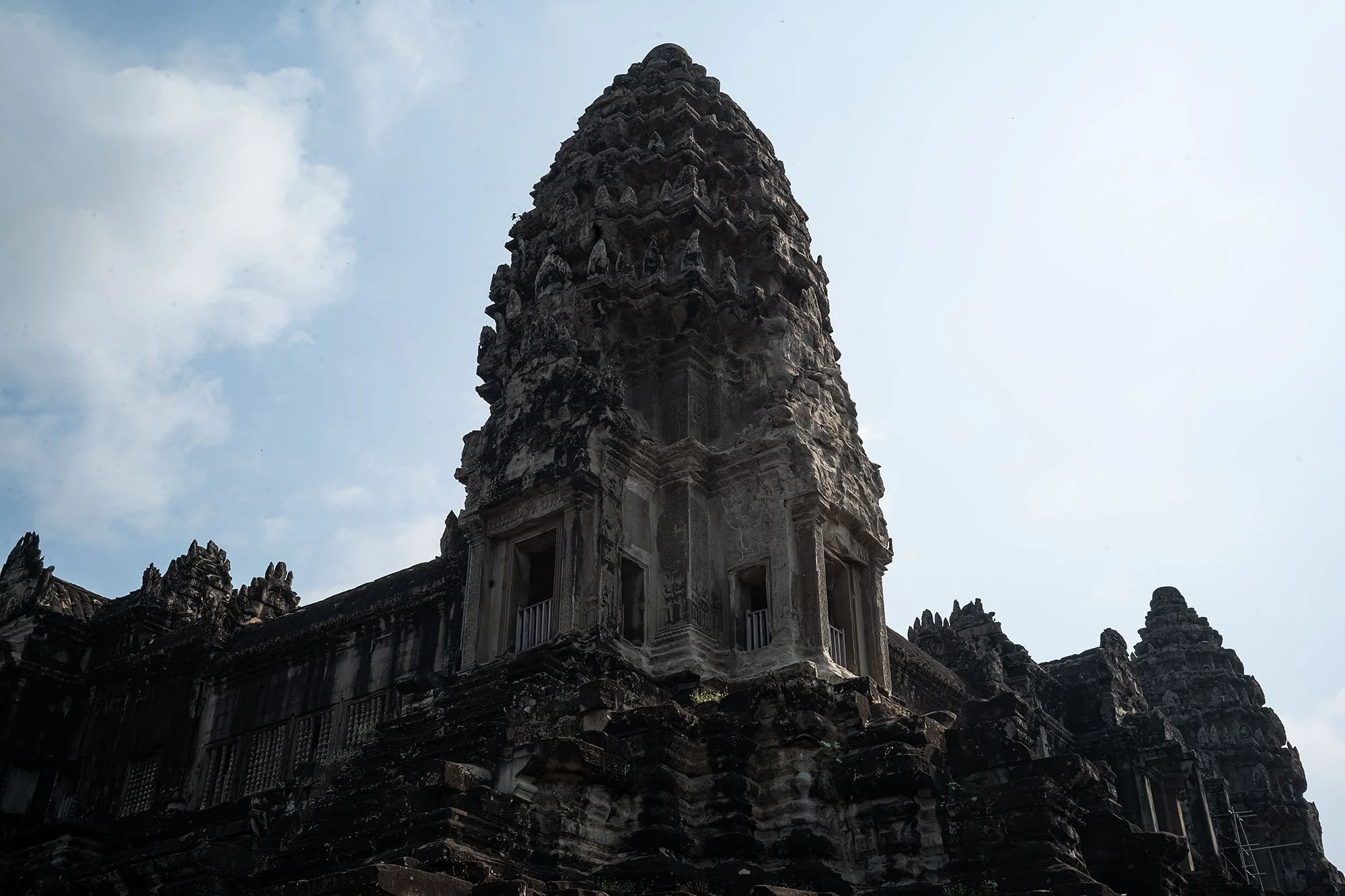
We walk through the lower level and climb up to the middle terrace. Through a set of windows we can see one of the two libraries set in the corners of the lower level. Looking up through the doorway to the middle terrace we can the four towers that anchor the Bakan, the highest and most sacred third level of the temple. I remember especially the balusters that adorn the windows, carved to look like lathe-turned wood, limiting the amount of light that filters into the galleries and halls.
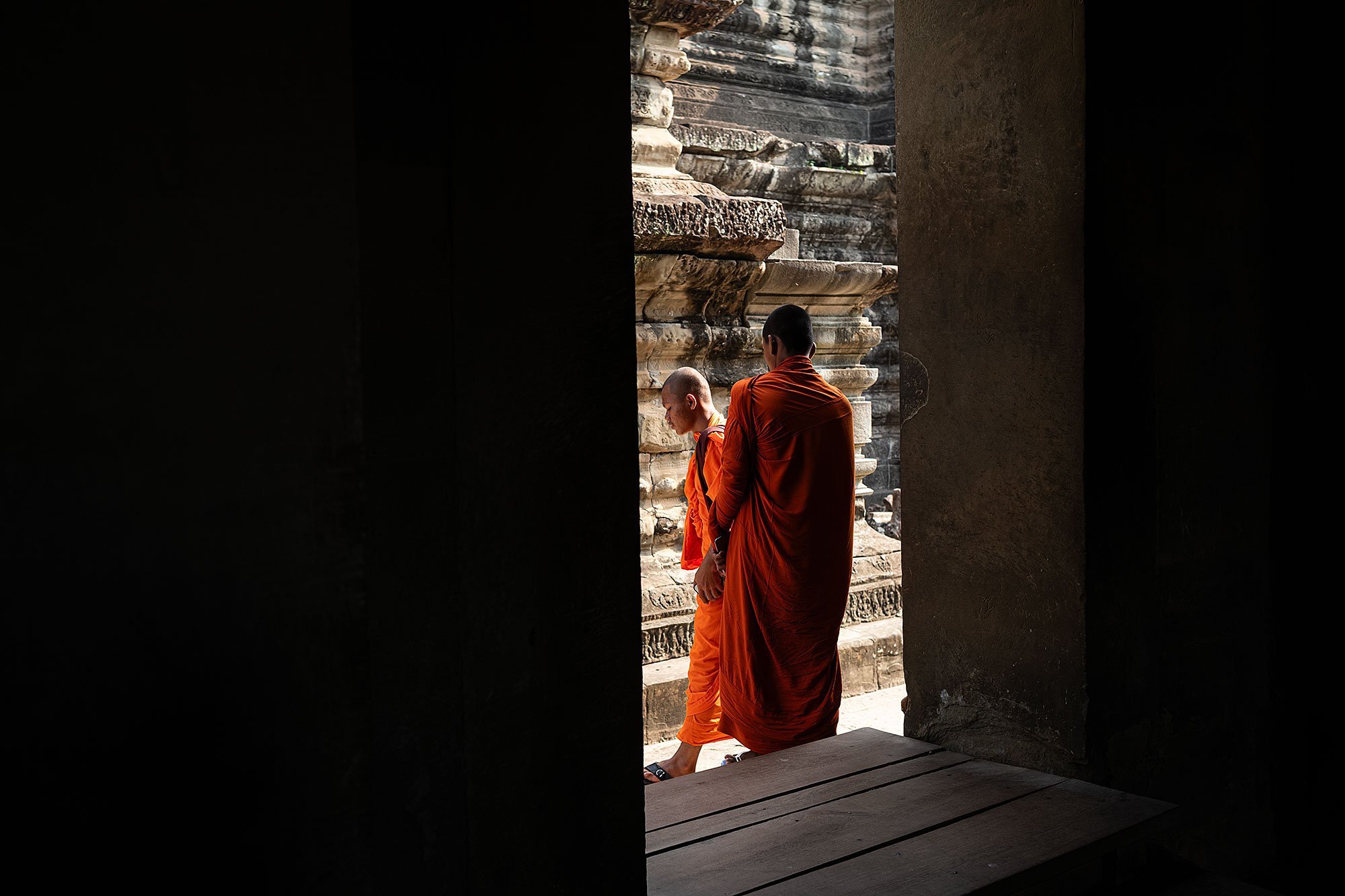
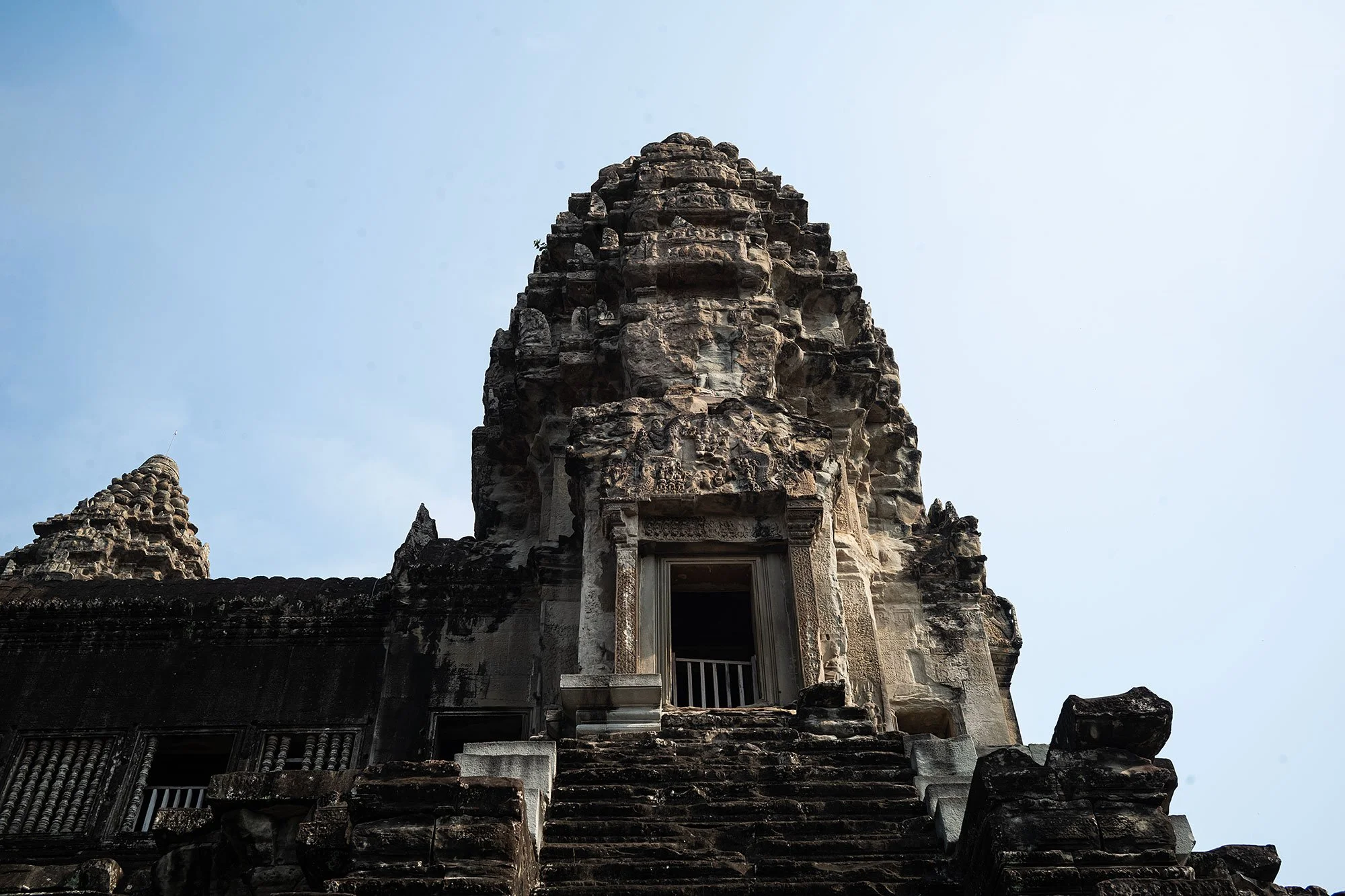
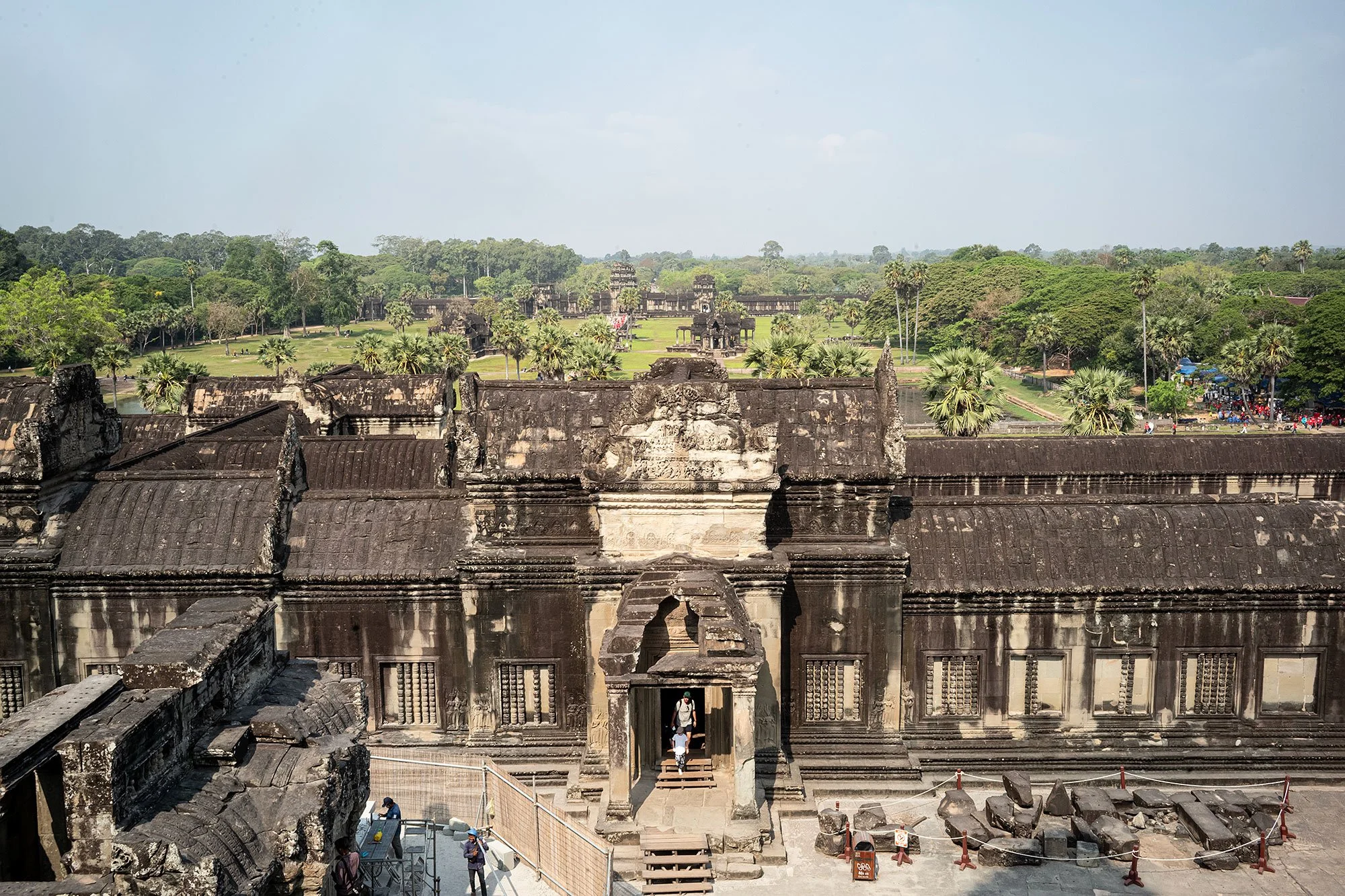
Jimmy leads us to the right, where a set of wooden stairs has been erected to help people reach the Bakan. The number of visitors is also limited and wooden barriers are strewn about, used to create lines for crowd control during peak times. In 2000 none of this existed and I have vague memories of scaling the steep stone stairs to reach the top.
Jimmy tells us he’ll meet us back down where we are when we’re done exploring the top-most level. He’s not interested in the climb. Been there done that, he says. From time to time he’ll break out a colloquial expression that never ceases to surprise and amuse.
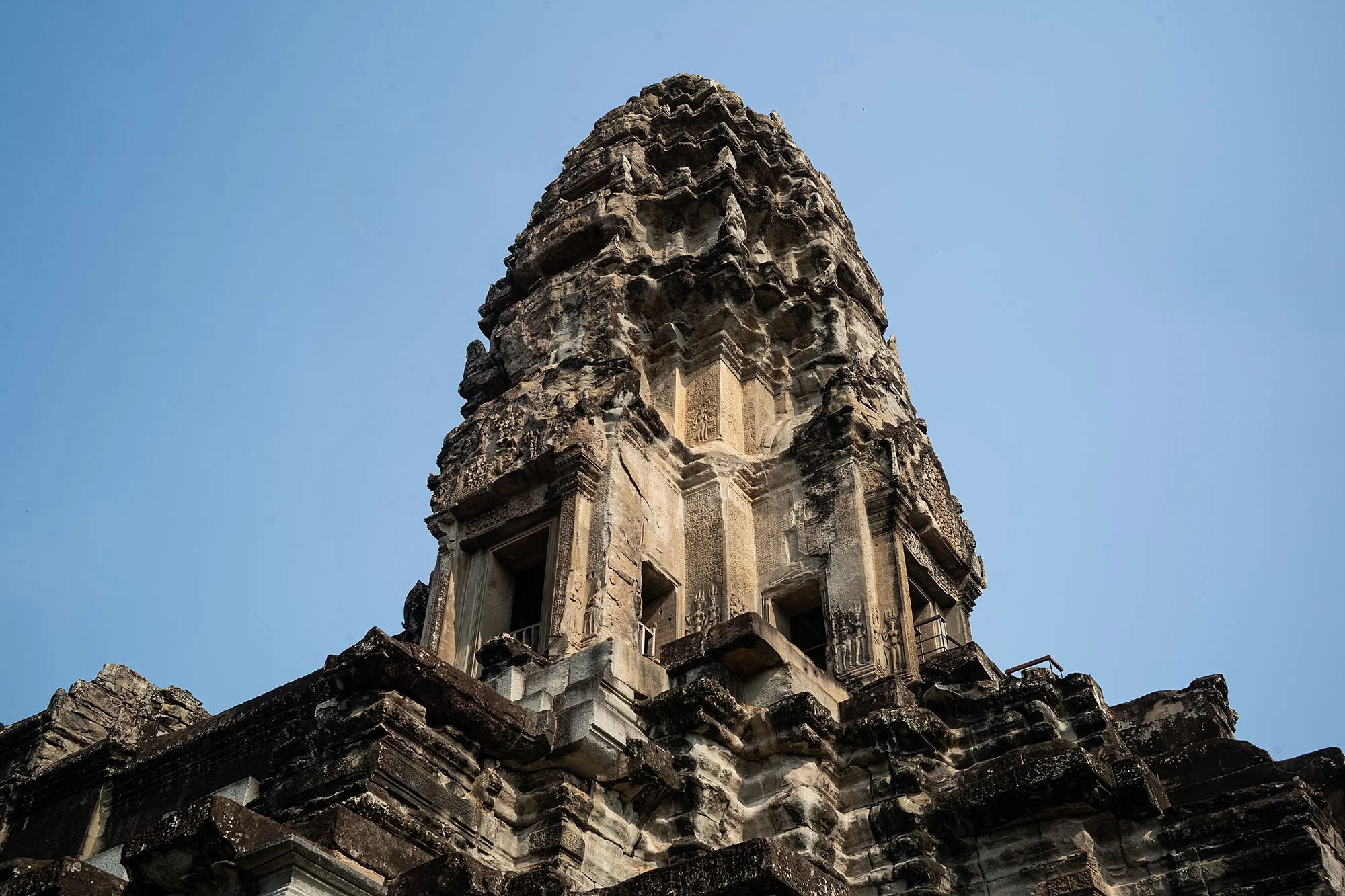
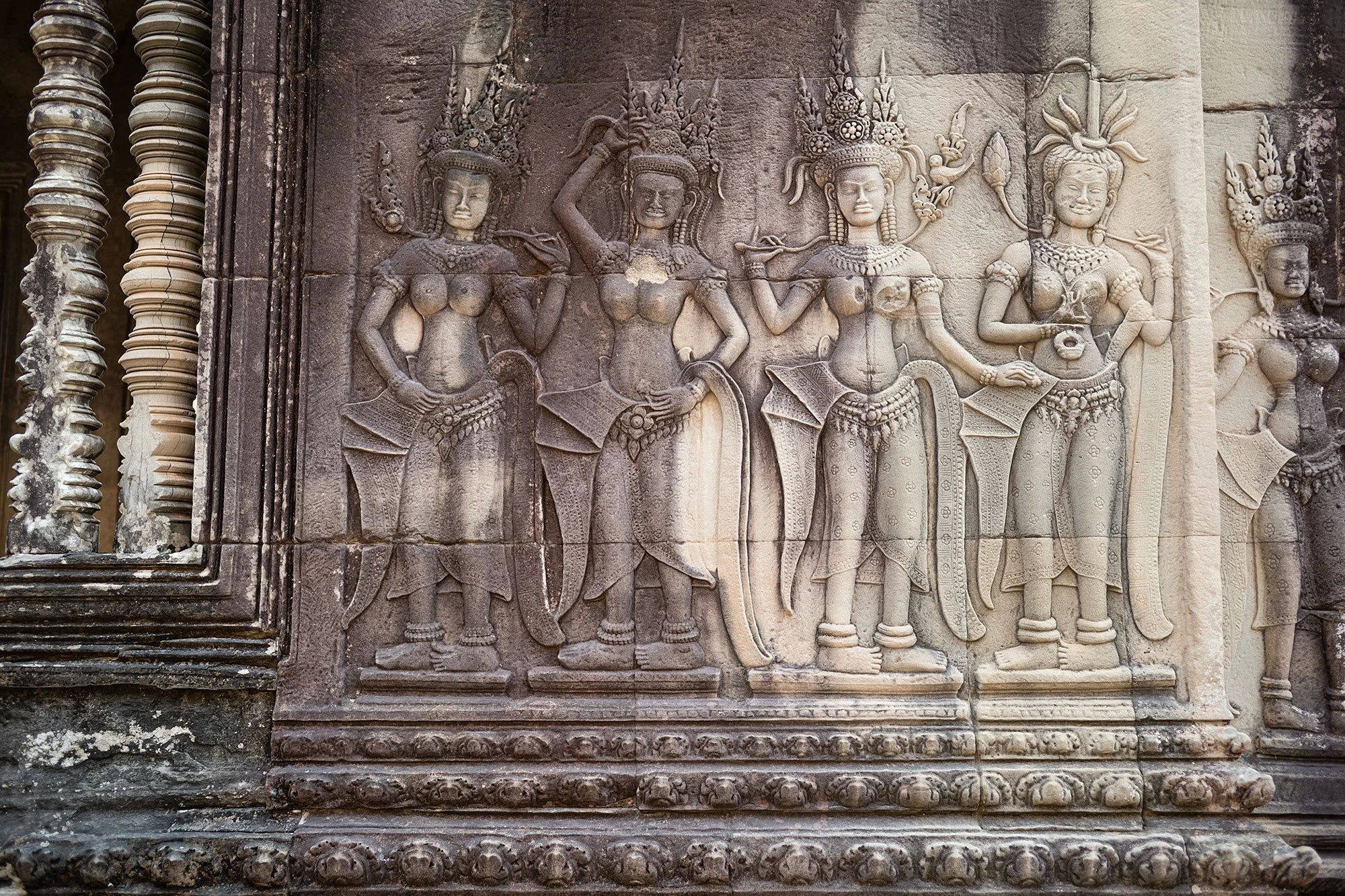
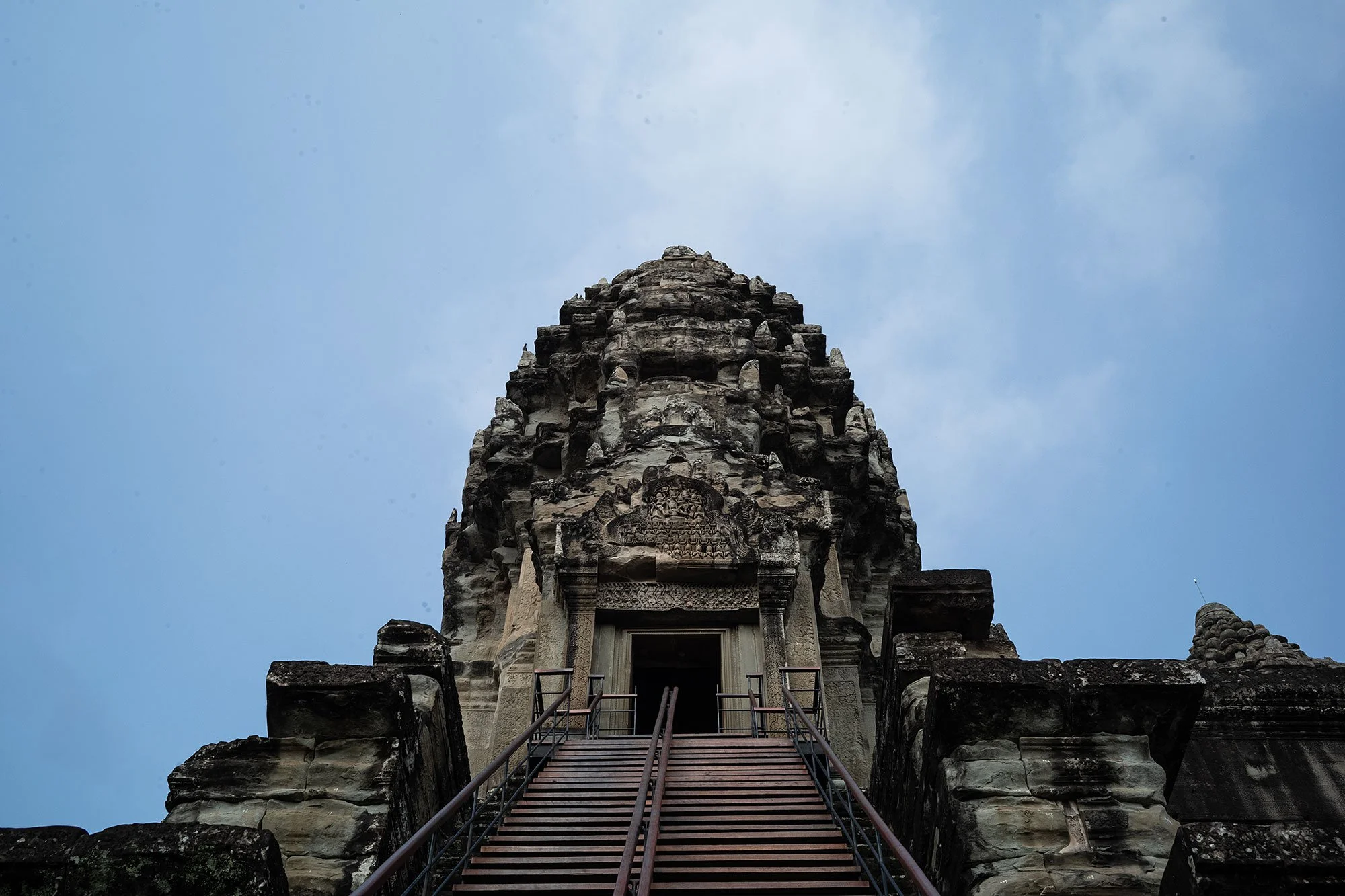
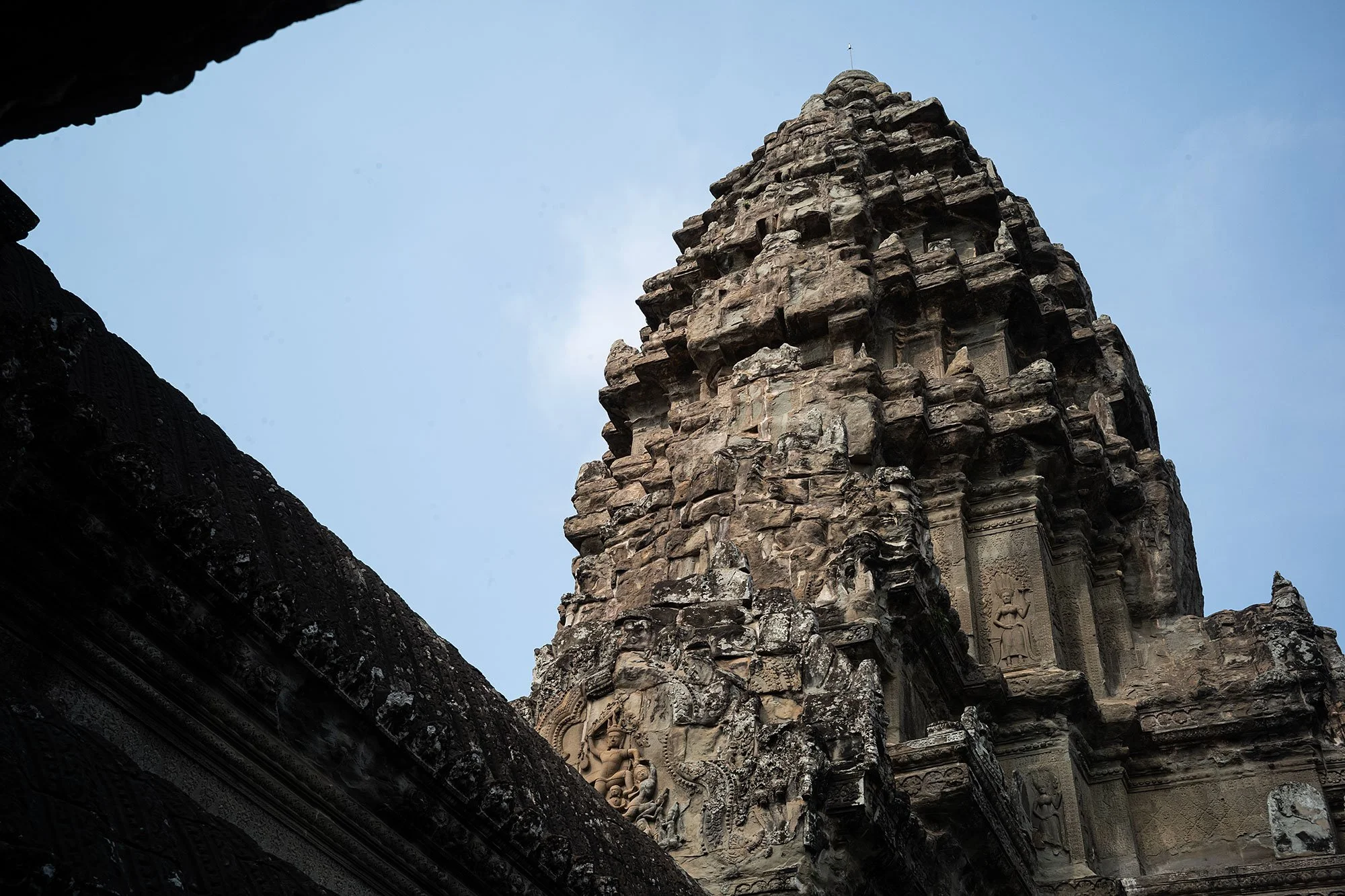
At the top a gallery surrounds a small courtyard in the middle of which stands the central tower. the Bakan, rising 30 meters above the uppermost level. Reaching 65 meters from the ground it connects the earthly realm to the divine.
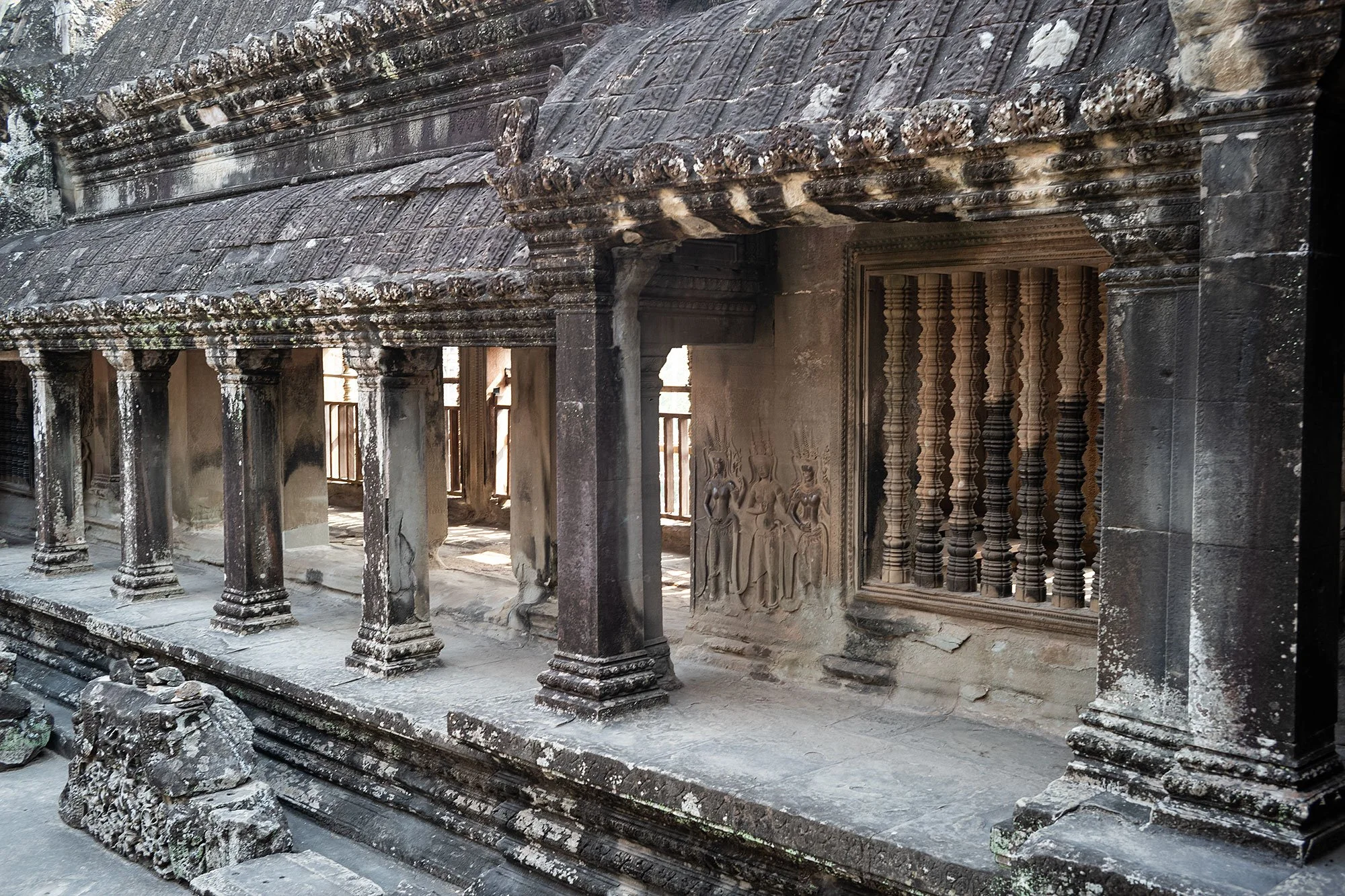
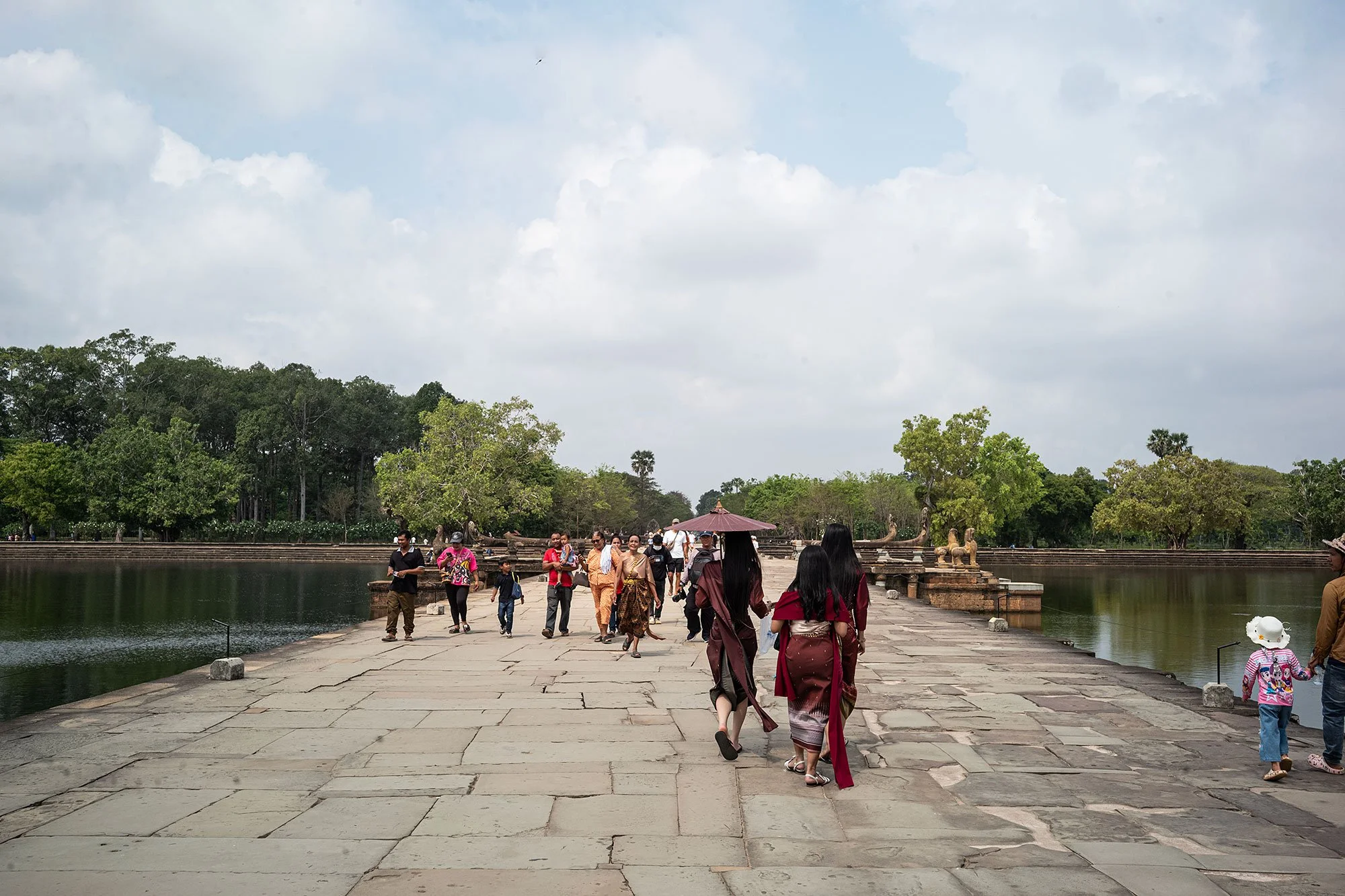
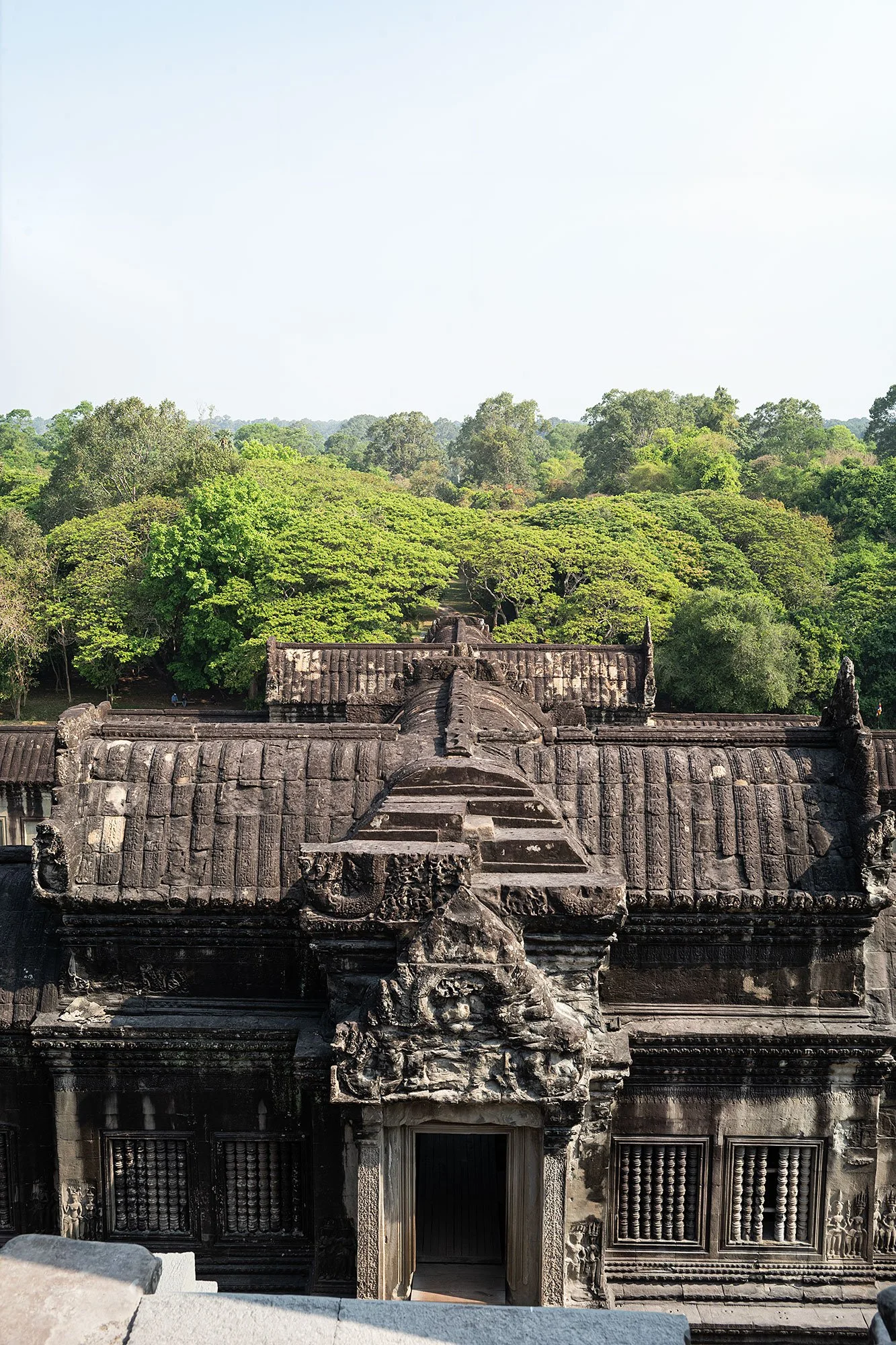
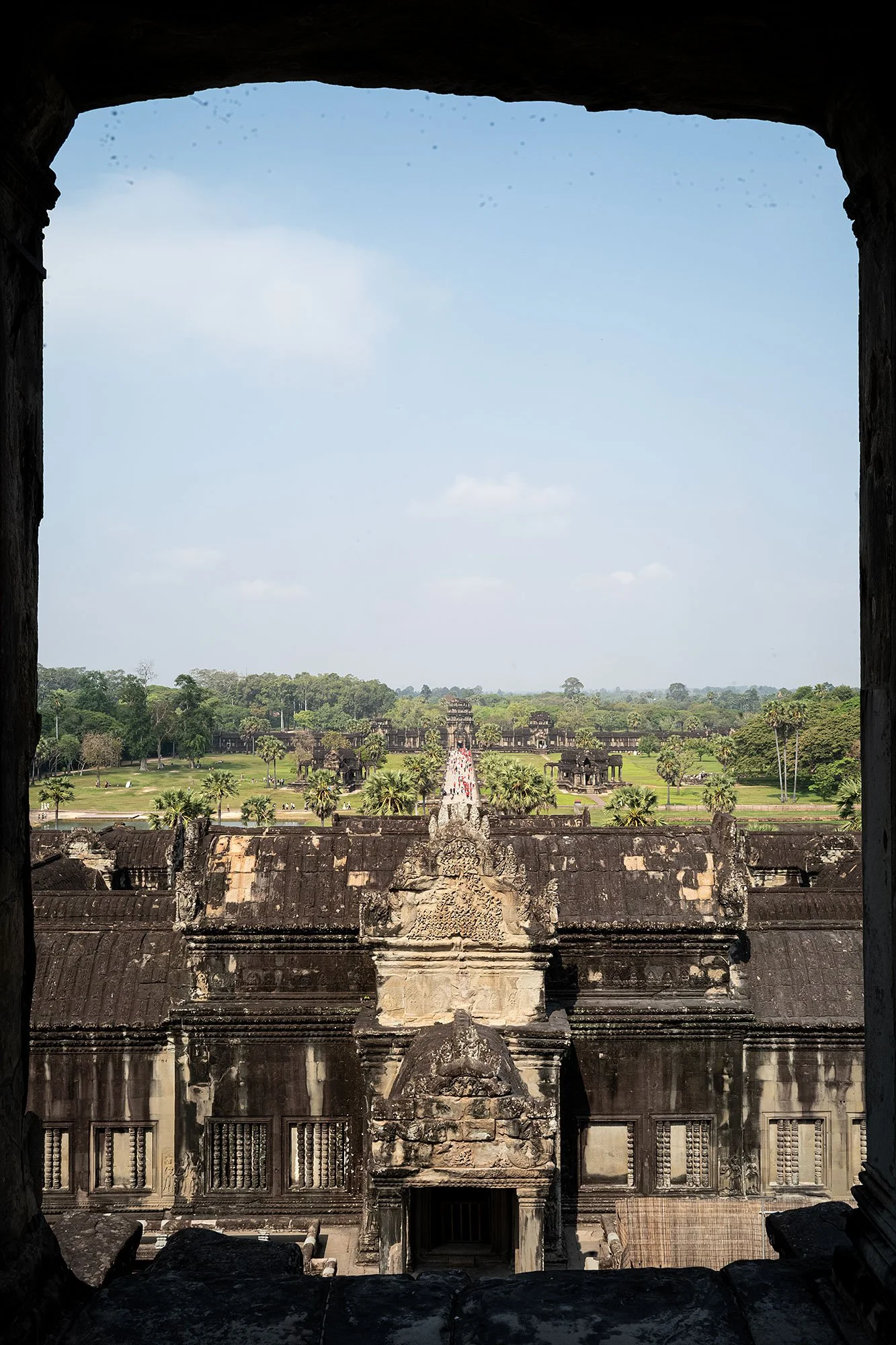
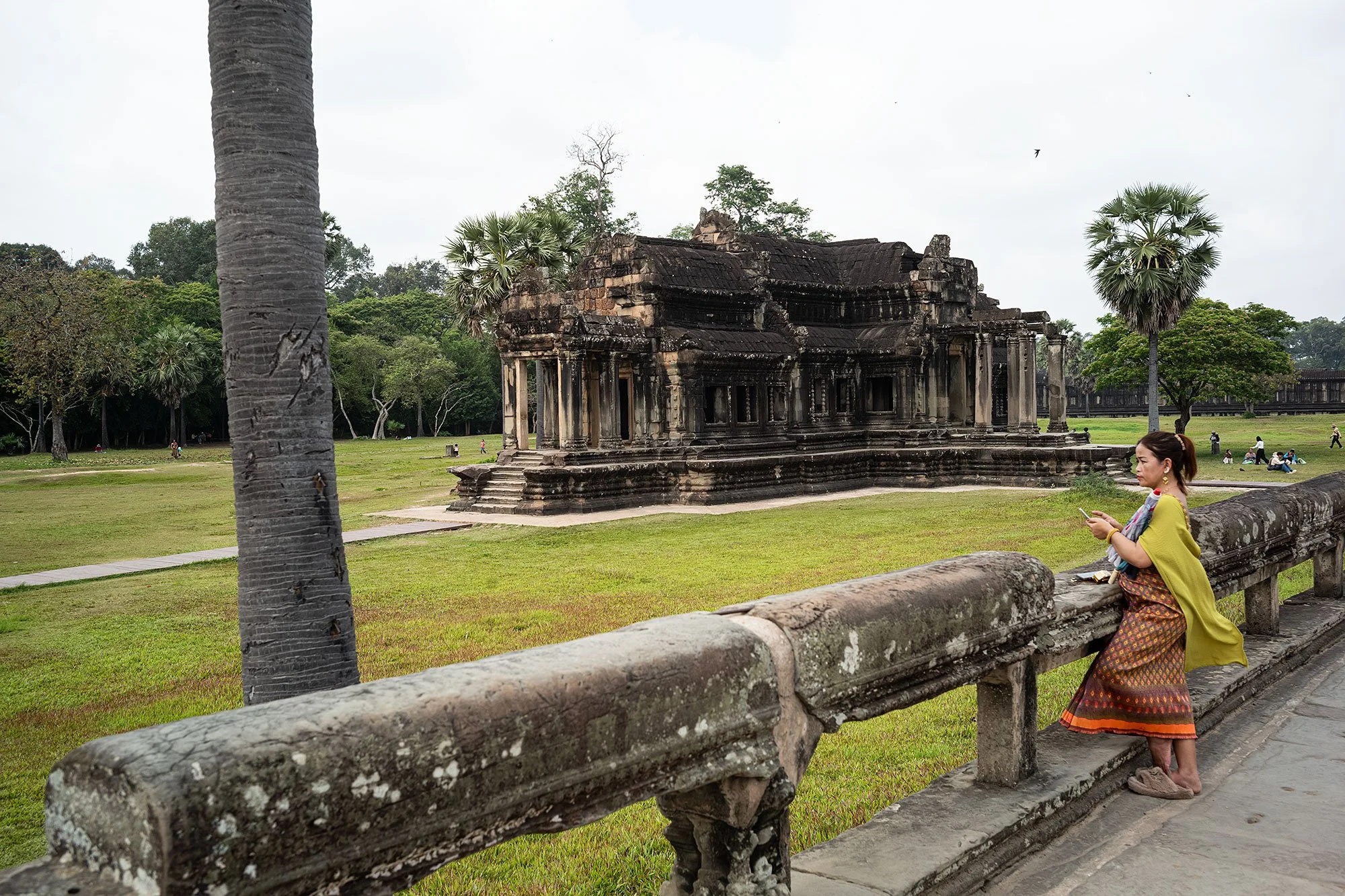
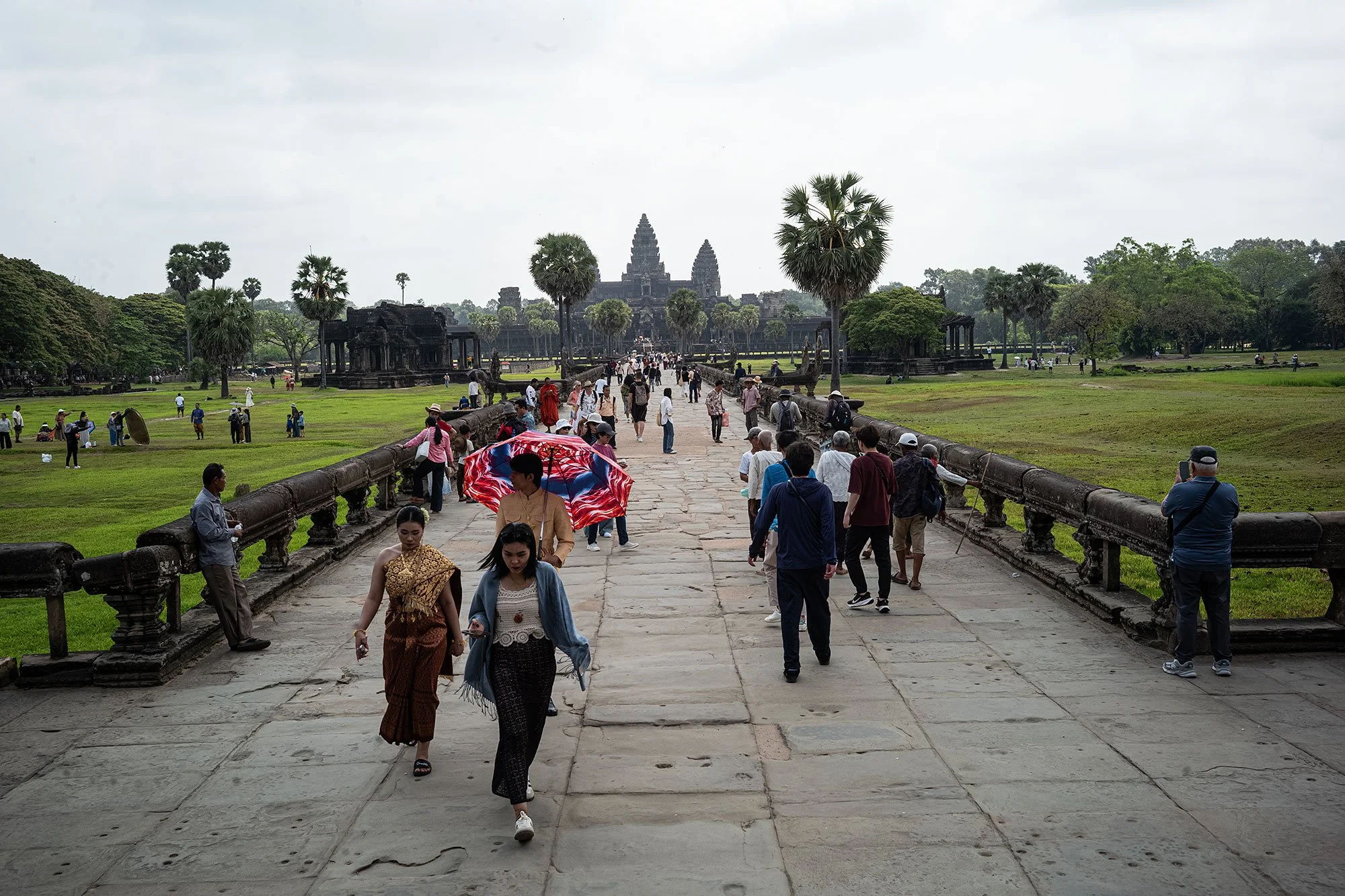
From the galleries there are sweeping views out over the jungle and to the west where a causeway connects the outer walls to the main temple. Two reflecting pools and two libraries flank the causeway, and a steady stream of visitors dot the path.
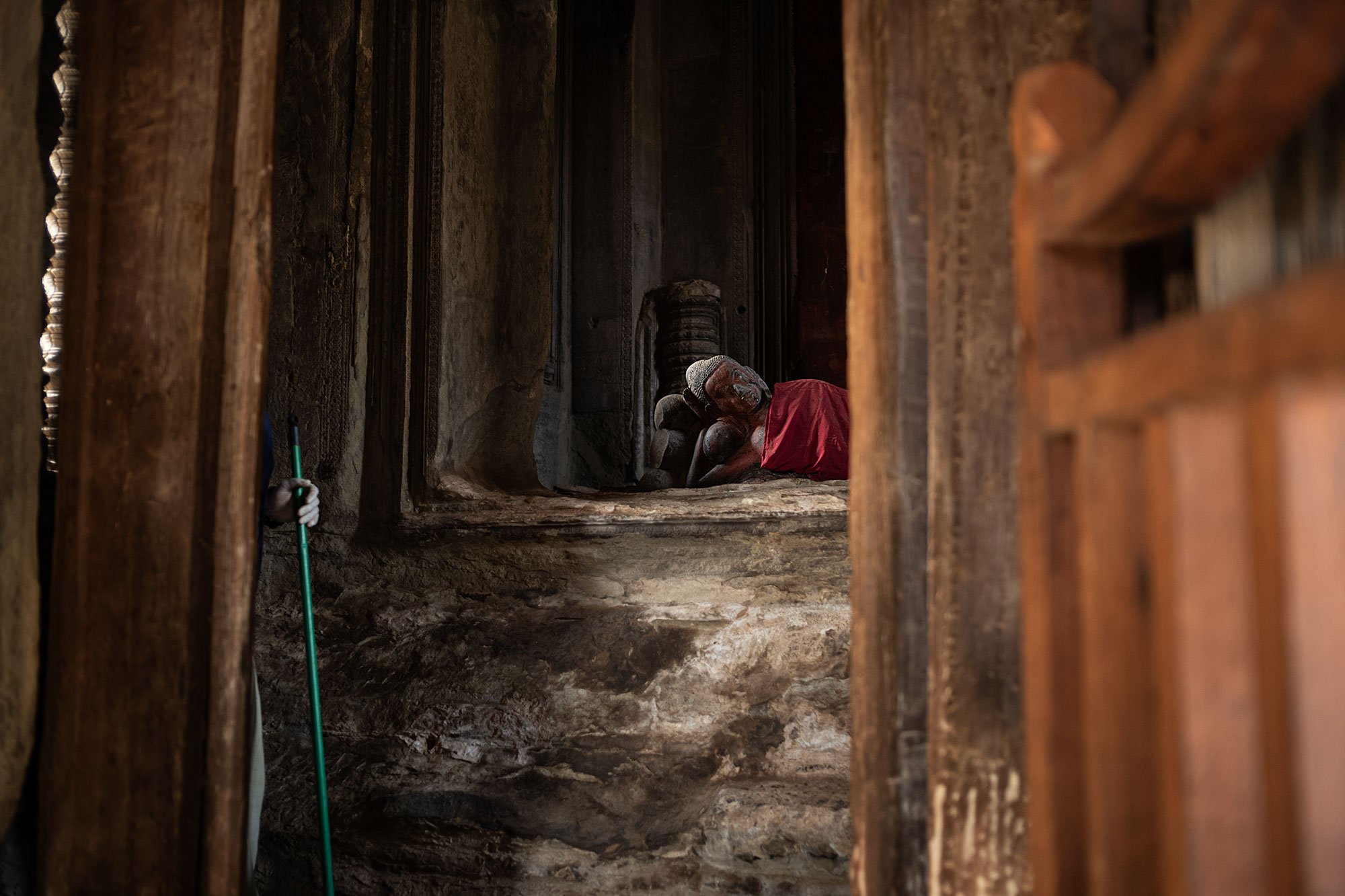
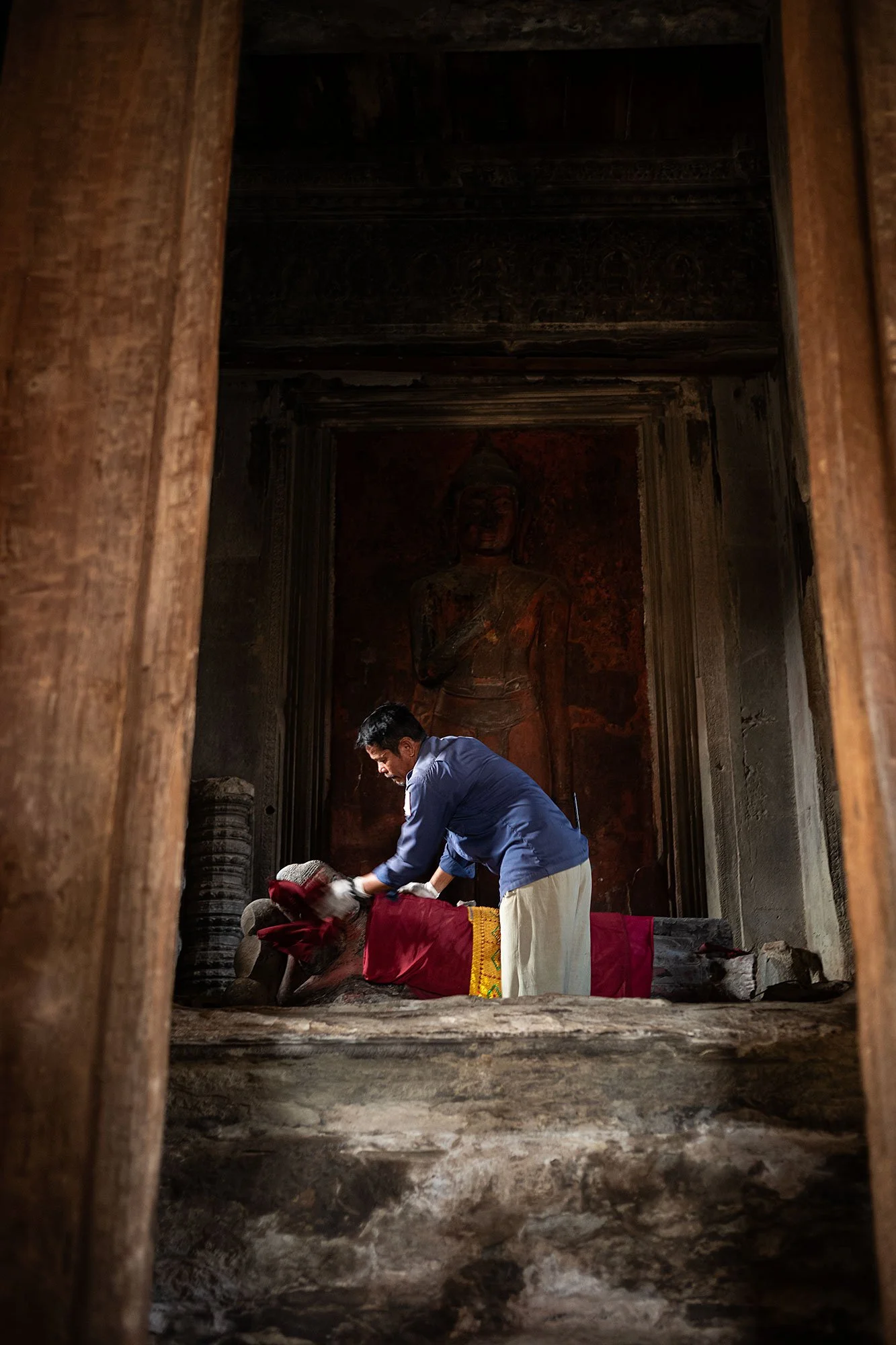
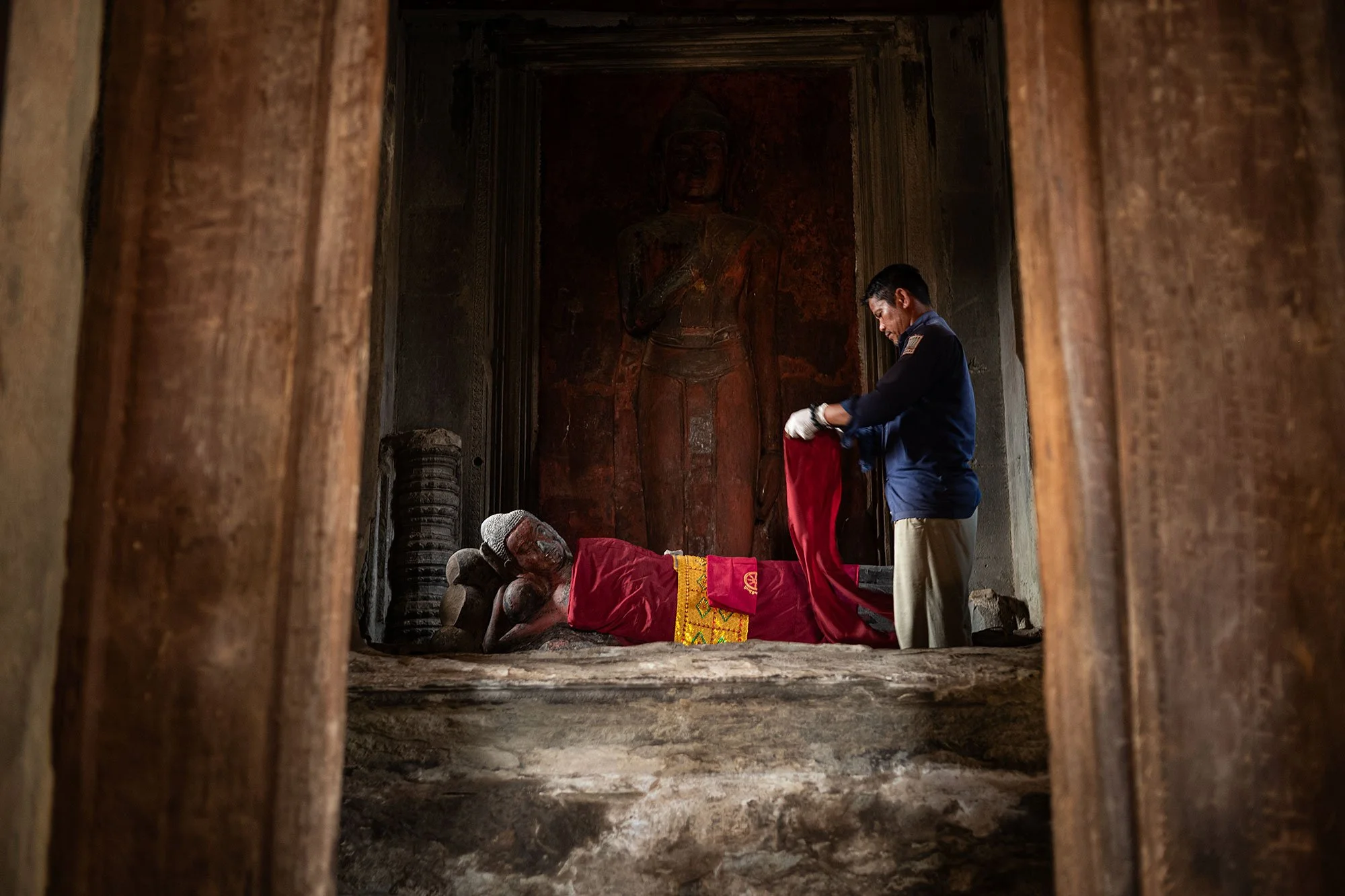
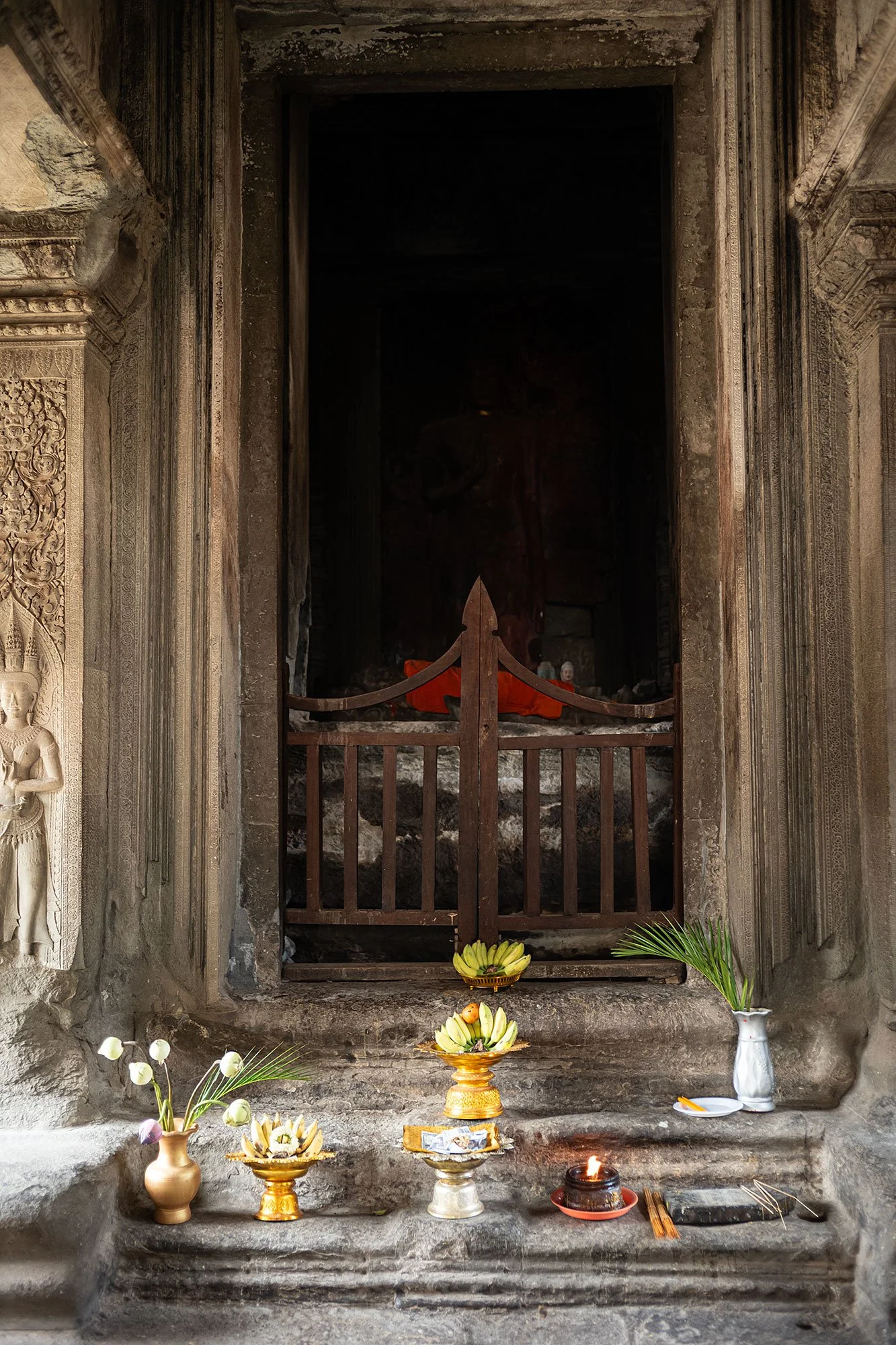
The center tower once contained a statue of Vishnu, but now holds statues of the Buddha in various states. On one side a man wipes down a statue of the Buddha in recline, polishing its face and wiping away the dust of day. I imagine he’s been doing this job for centuries, keeping the statue polished, its image free from the dirt of ages.
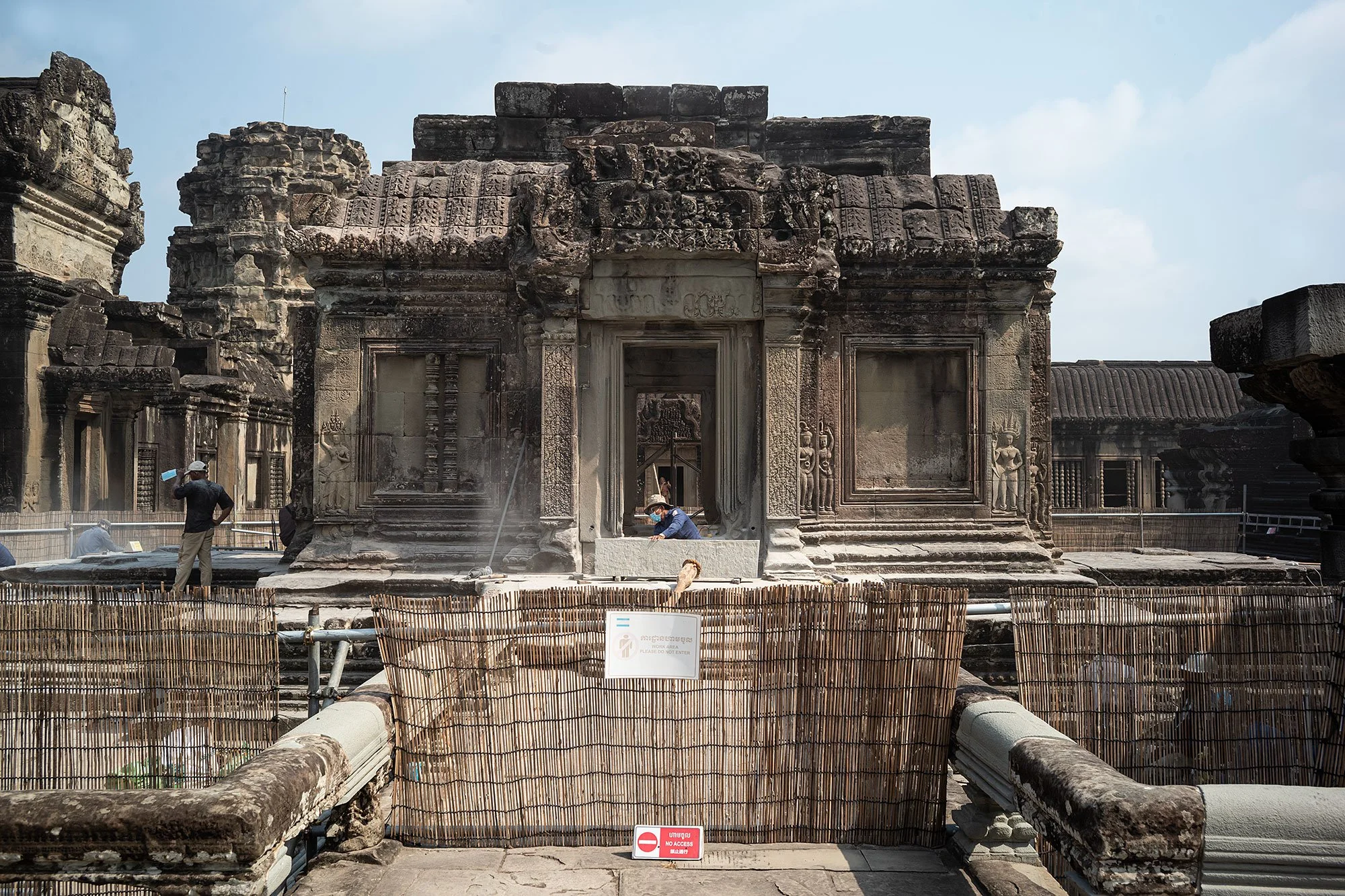
Climbing back down we meet Jimmy in the second courtyard. He asks us how it was (amazing) and leads us through the galleries towards the west. One of the areas is blocked off as conservationists work on preserving one of the libraries.
The conservation efforts are impressive, and I wish I could remember the details of my last visit so that I could compare the work done in the past twenty-six years to what the temples looked like in 2000. I resolve to check my old prints when I visit my parents next.
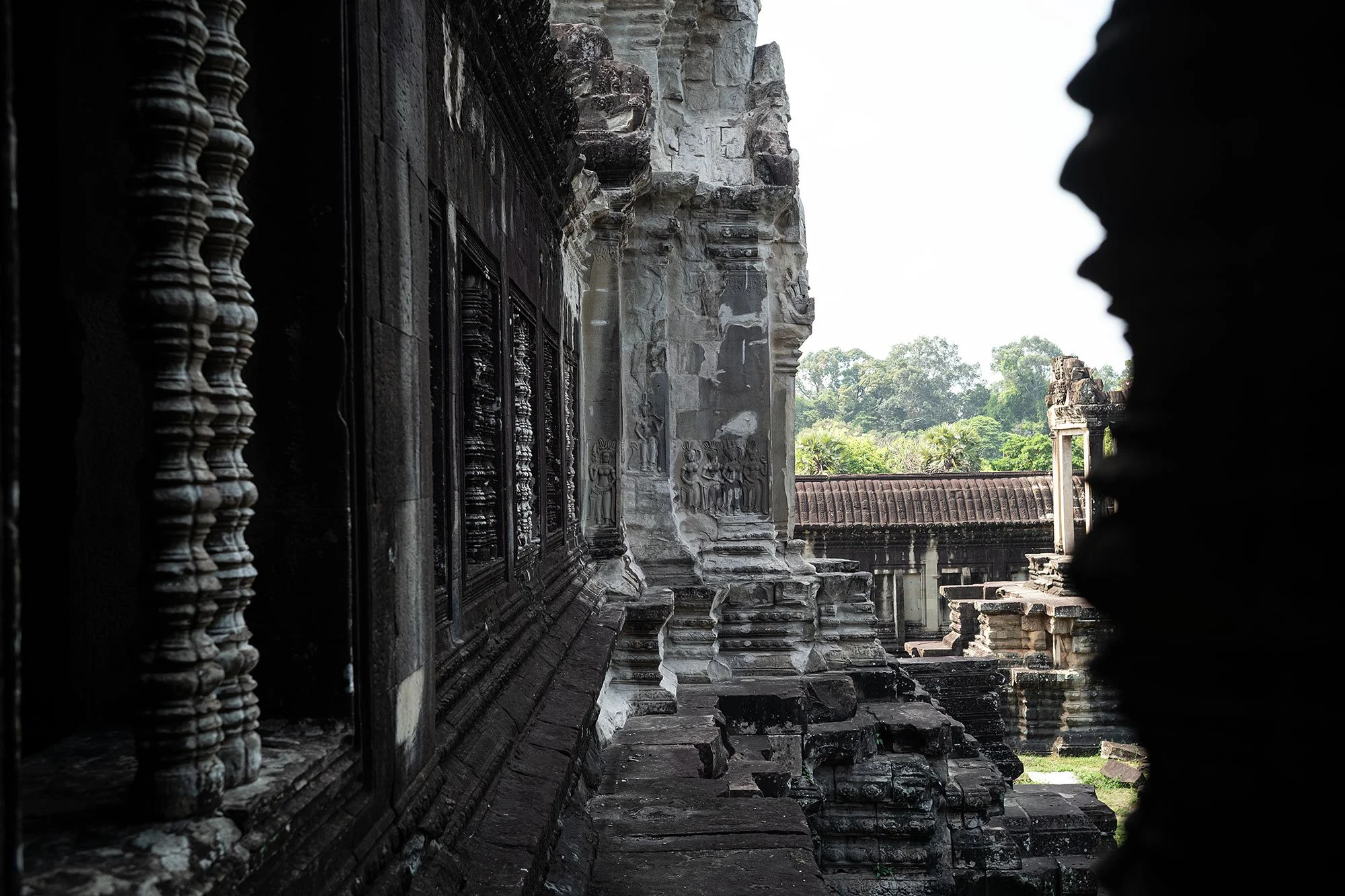
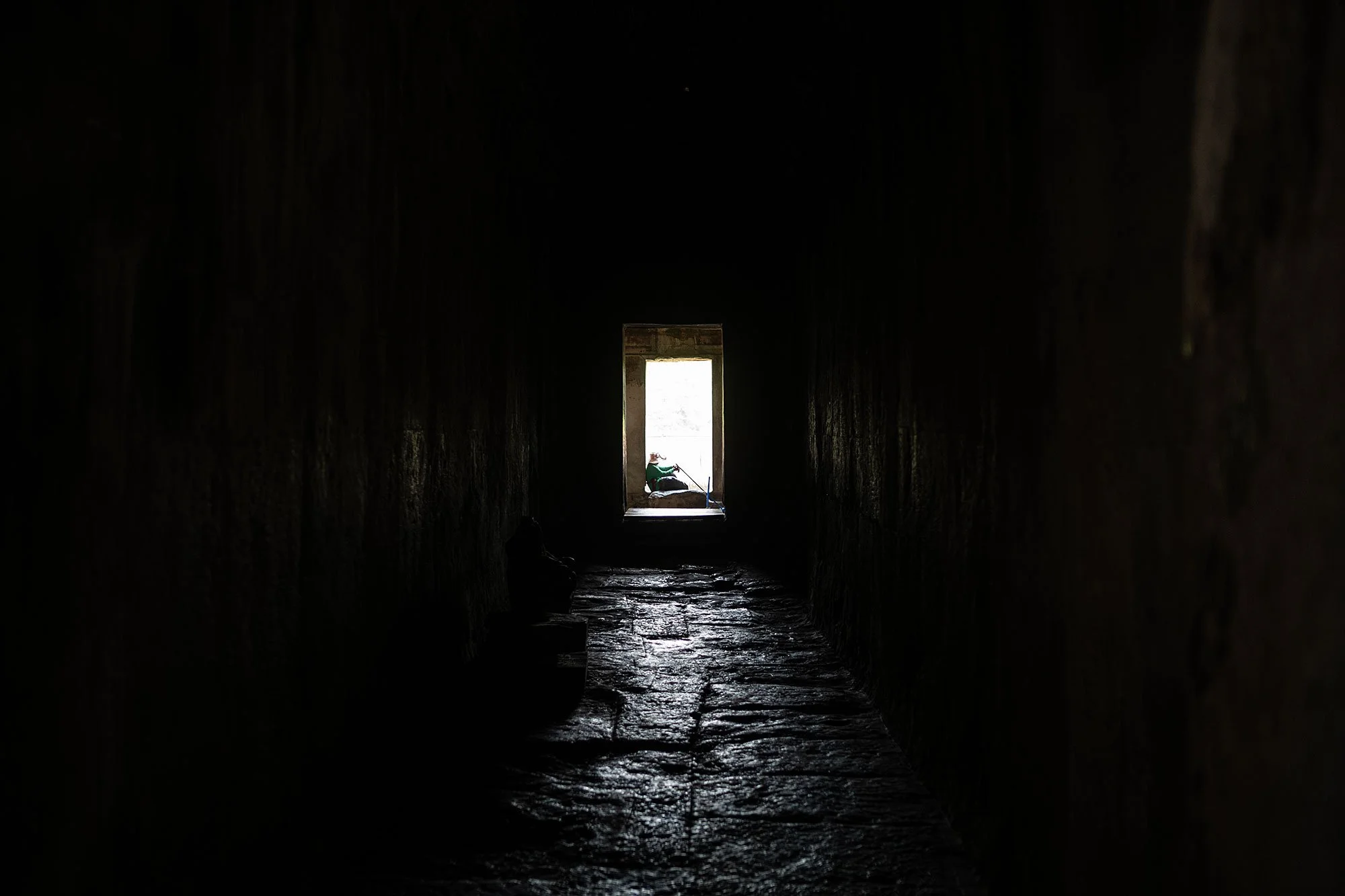
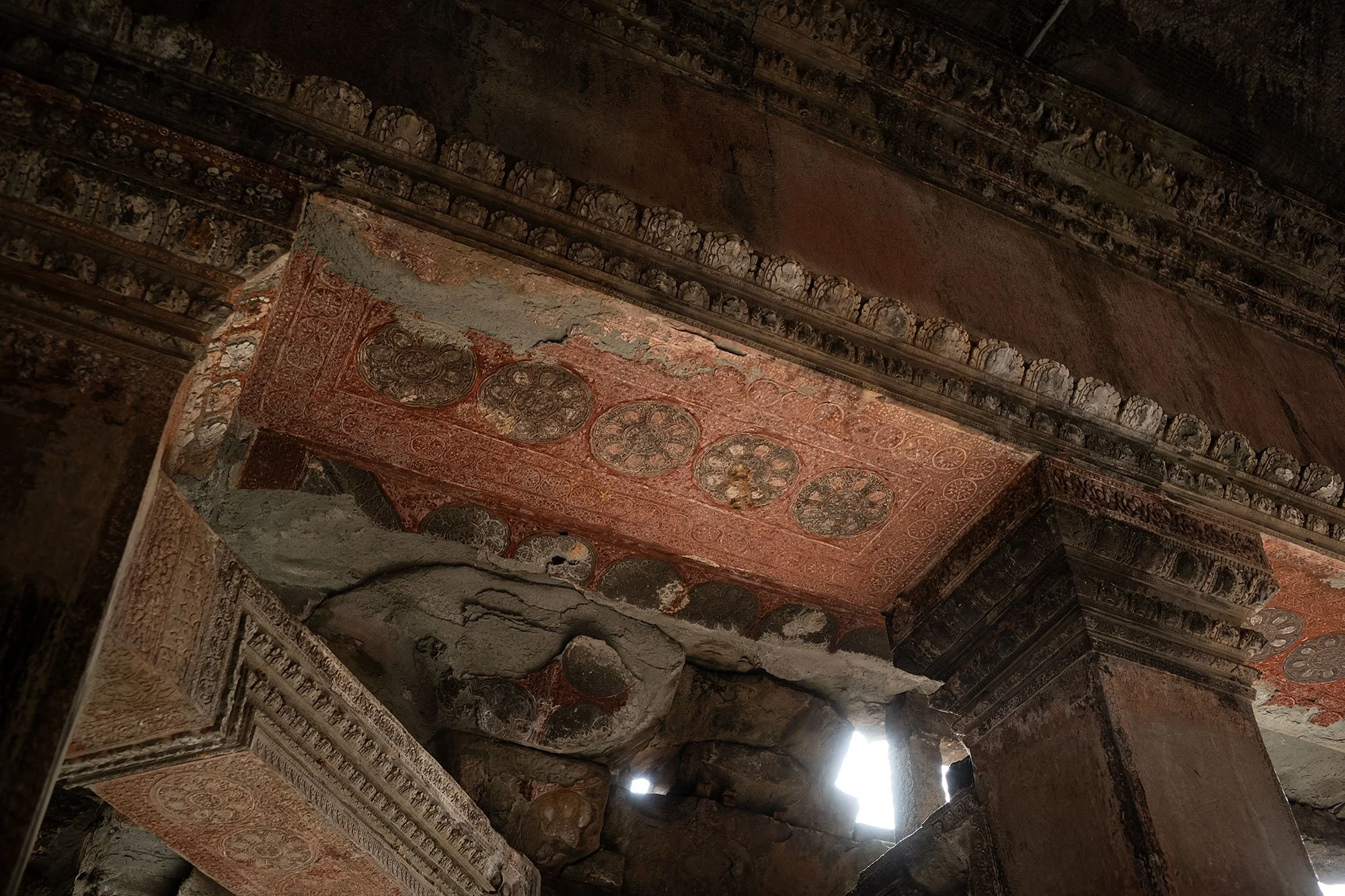
Walking through the Preah Poan west walkway Jimmy points to the ceiling. We had asked before whether the temple was painted and he tells us it was. On the ceiling we can see some of the red paint that used to adorn the walls still intact.
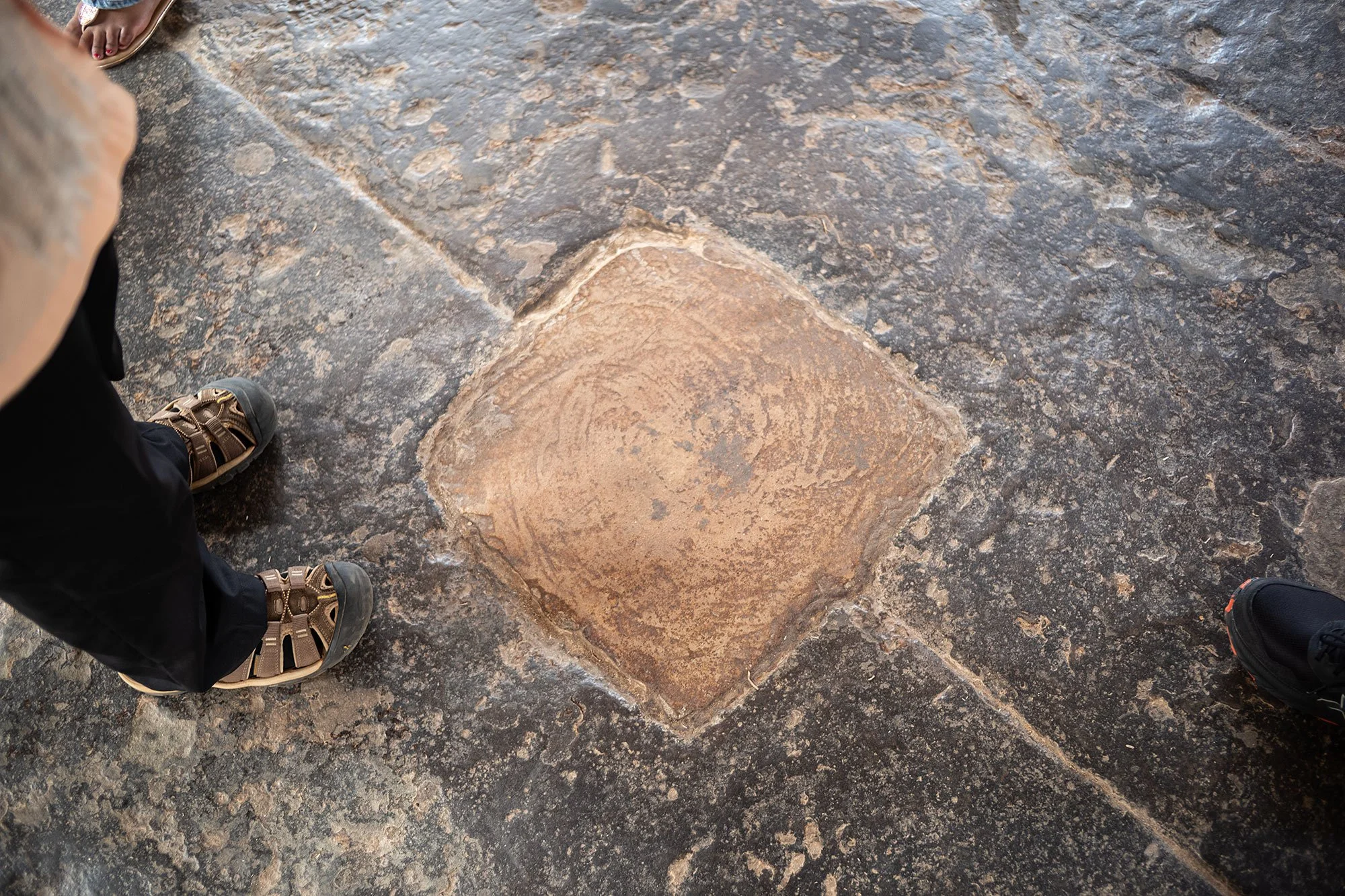
Looking down, he points out a square stone set in the floor that’s a different color from those around it. He tells us this is the geometric center of the temple. Other tourists place their phones on it camera up. They set a timer and lean over it. When the shutter trips their heads mark each of the cardinal directions in the photo.
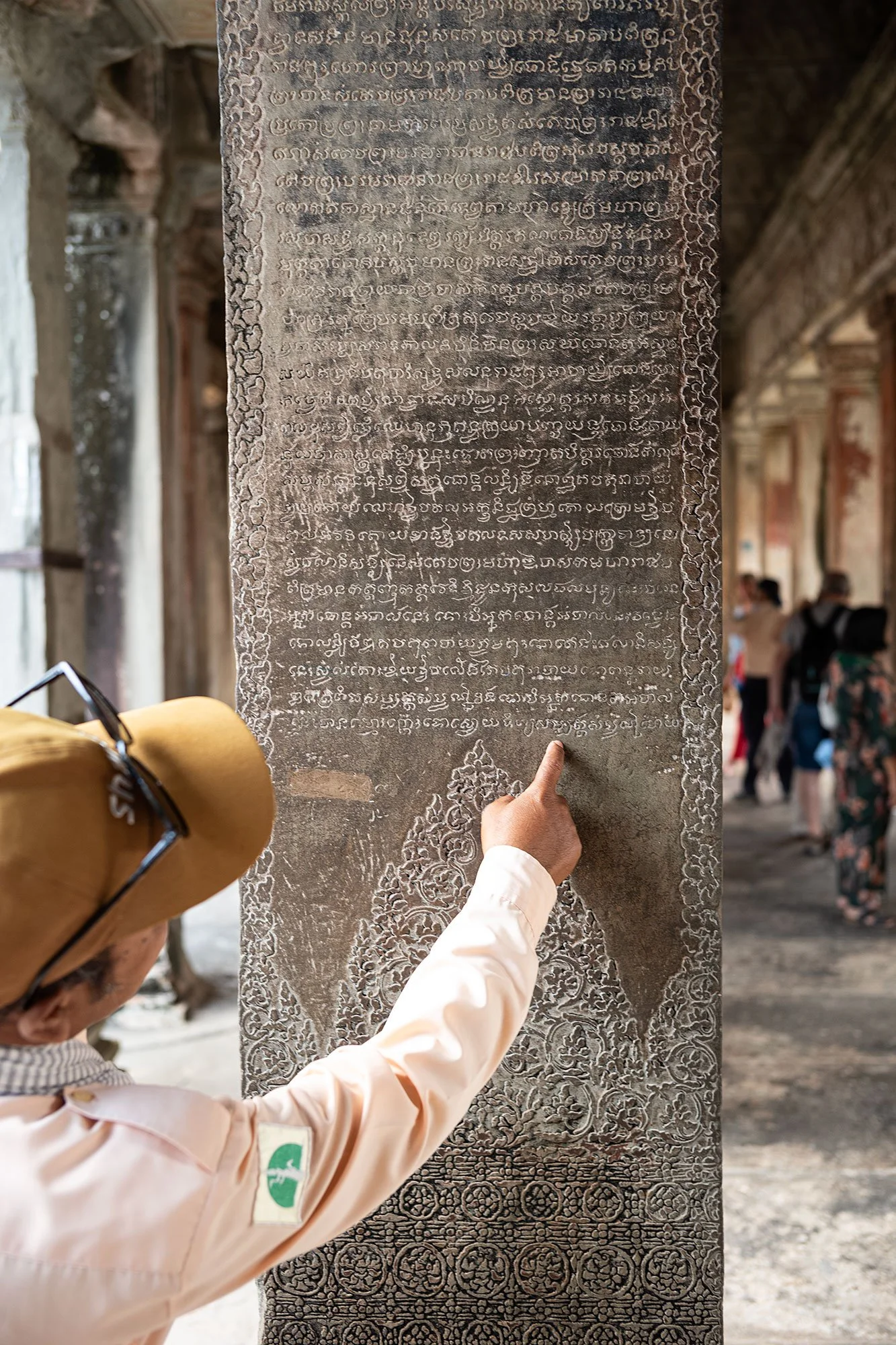
Jimmy points out the inscriptions on the pillars. French researchers have catalogued around 118. Some of them were left by royalty we returned to Angkor around the 15th century, others by monks and pilgrims. Reading up on them afterwards, I learn that there are inscriptions in Japanese and in Thai, and I feel like I could spend a morning searching out and documenting the inscriptions alone.
We ask Jimmy if he can read them. He tells us he can sound them out and read bits and pieces, but not all.
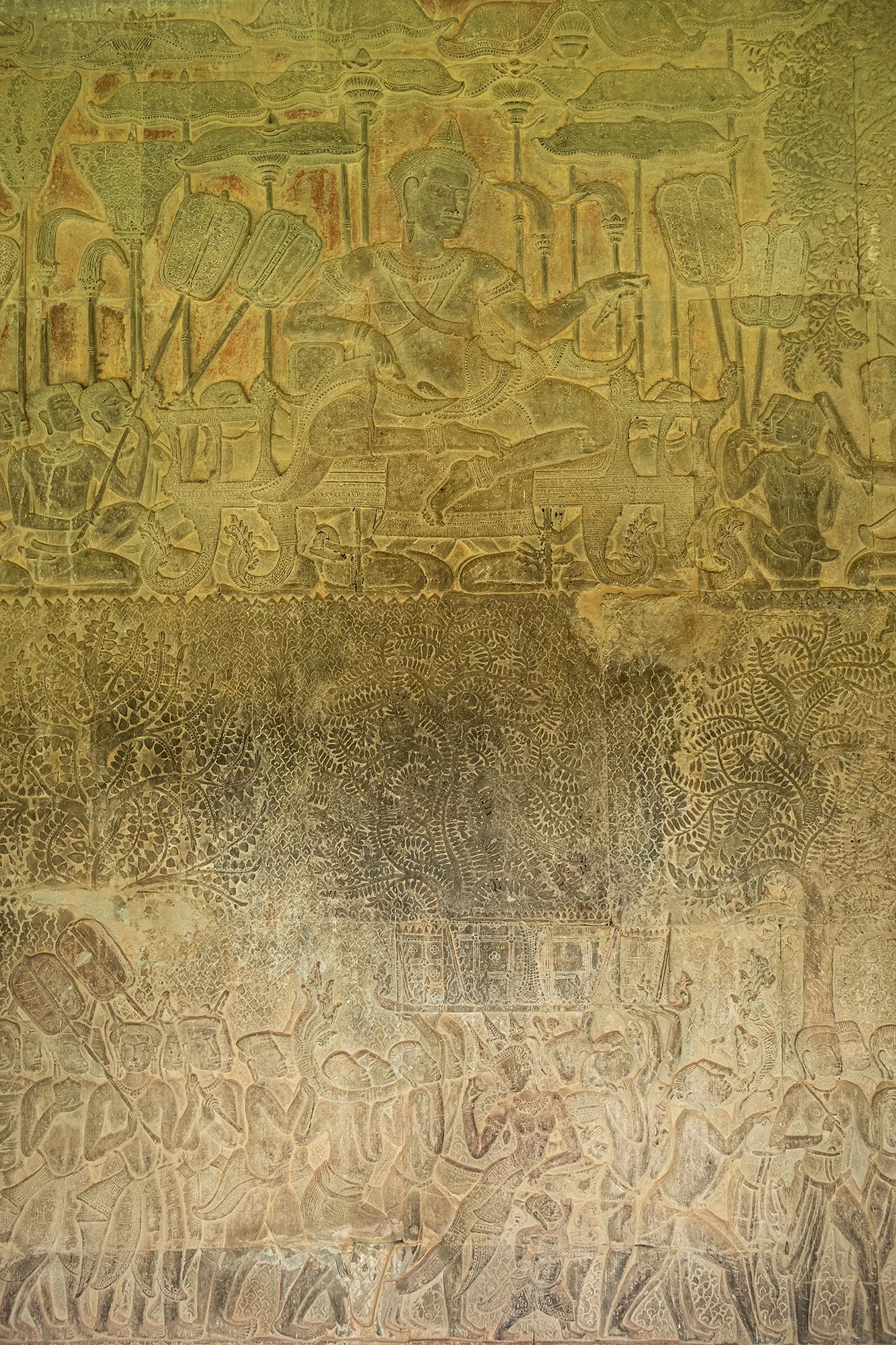
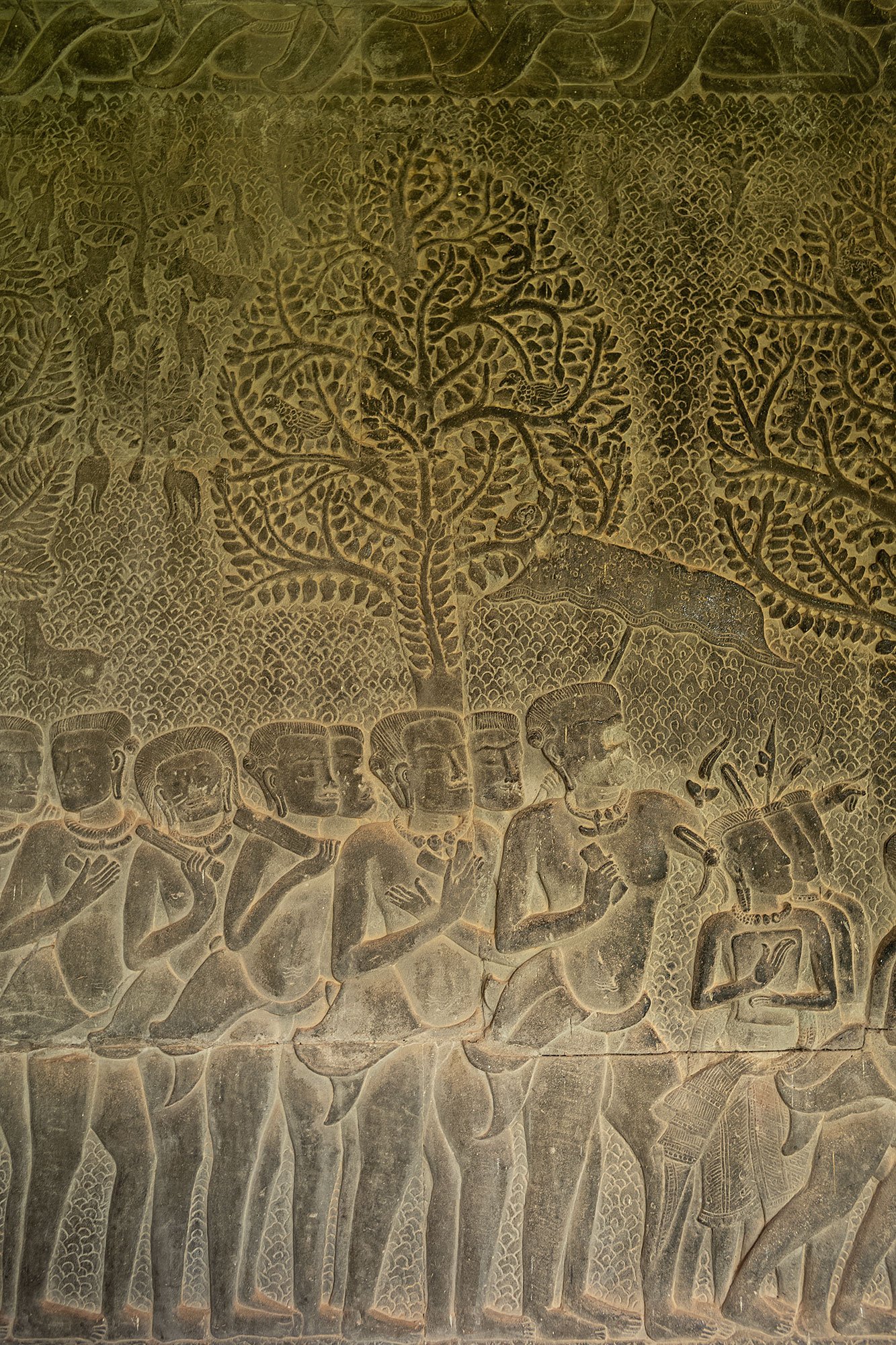
As we’re about to make our way towards the causeway Jimmy shows us the one historical panel, depicting Suryavarman II, the Khmer king who built Angkor Wat. The panel shows the king in a procession, holding court with commanders and soldiers. Reading about the panel later I learn he’s shown twice: once seated (below) and once standing on the back of an elephant. I’d love to go back and see the latter.
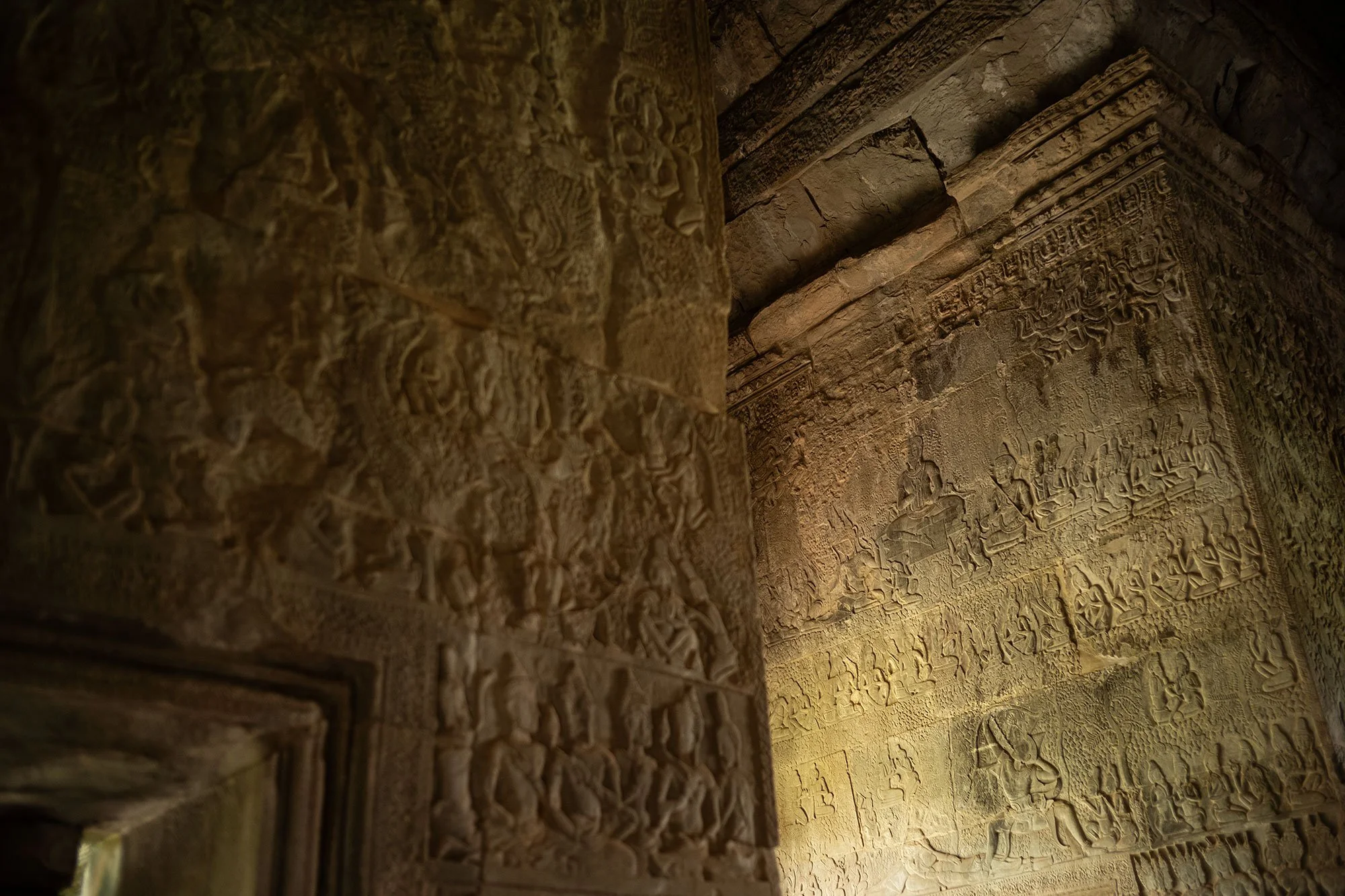
Leaving the main interior area of the temple Jimmy takes us along the southern edge of the southern pool to show us the temple in ¾ profile. He tells us that when the days are still the temple is perfectly reflected in the pool.
There’s a wooden platform to one side and he tells us this is where we’ll watch the sunrise the next morning. He tells us that we’re a few days from the equinox when the sun rises directly behind the central tower. He shows us a picture which superimposes the sun’s position during the equinox and the solstices, showing us the celestial alignments designed by the ancient Khmer architects.
We ask him if the temple is still used for celebrations and he tells us that it is, though they’re limited so as not to disrupt tourism. However, during Meak Bochea (the full moon of the third lunar month) the temple fills with chanting monks. He pulls out his phone to show us a photo. It looks incredible.
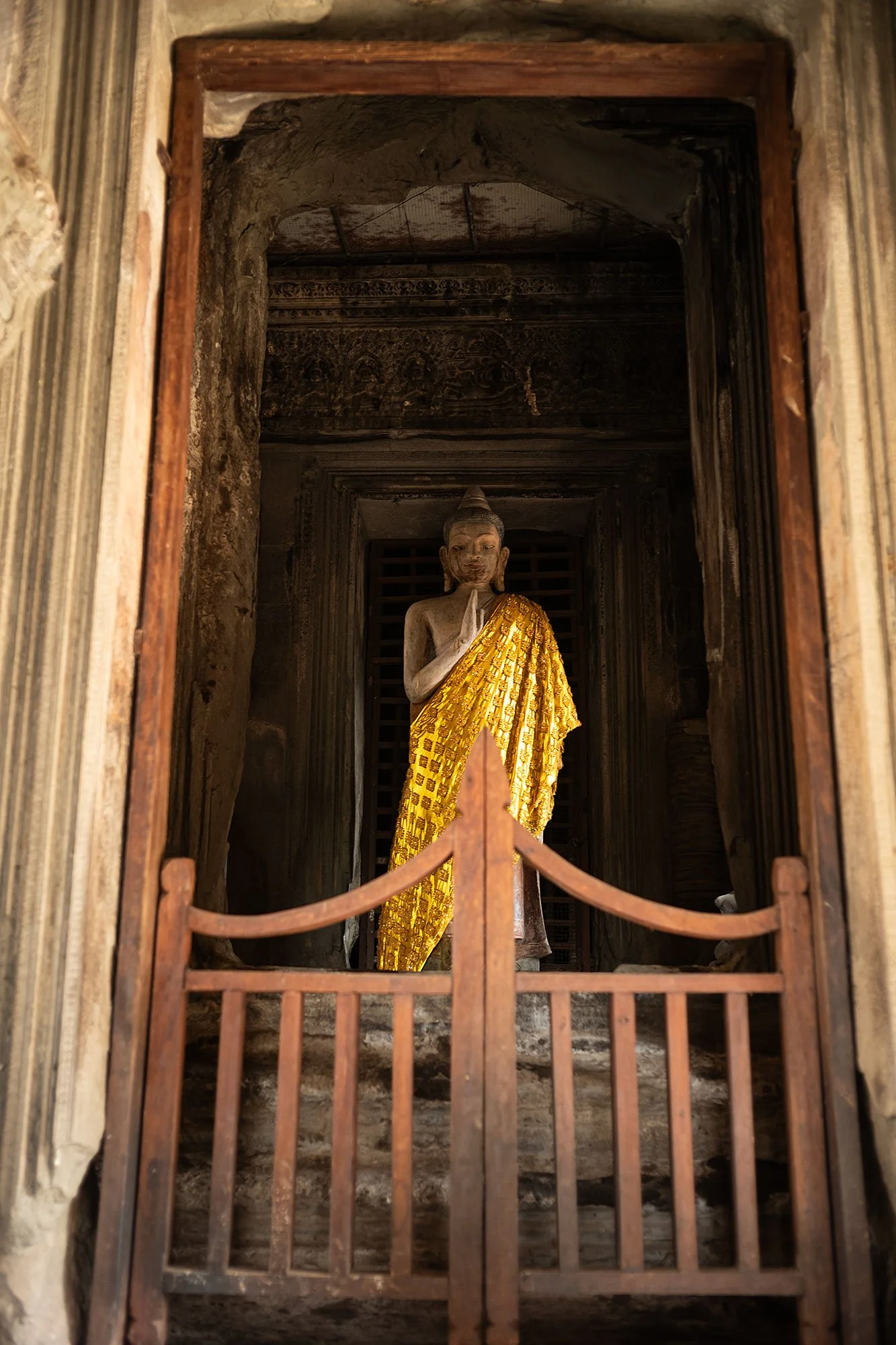
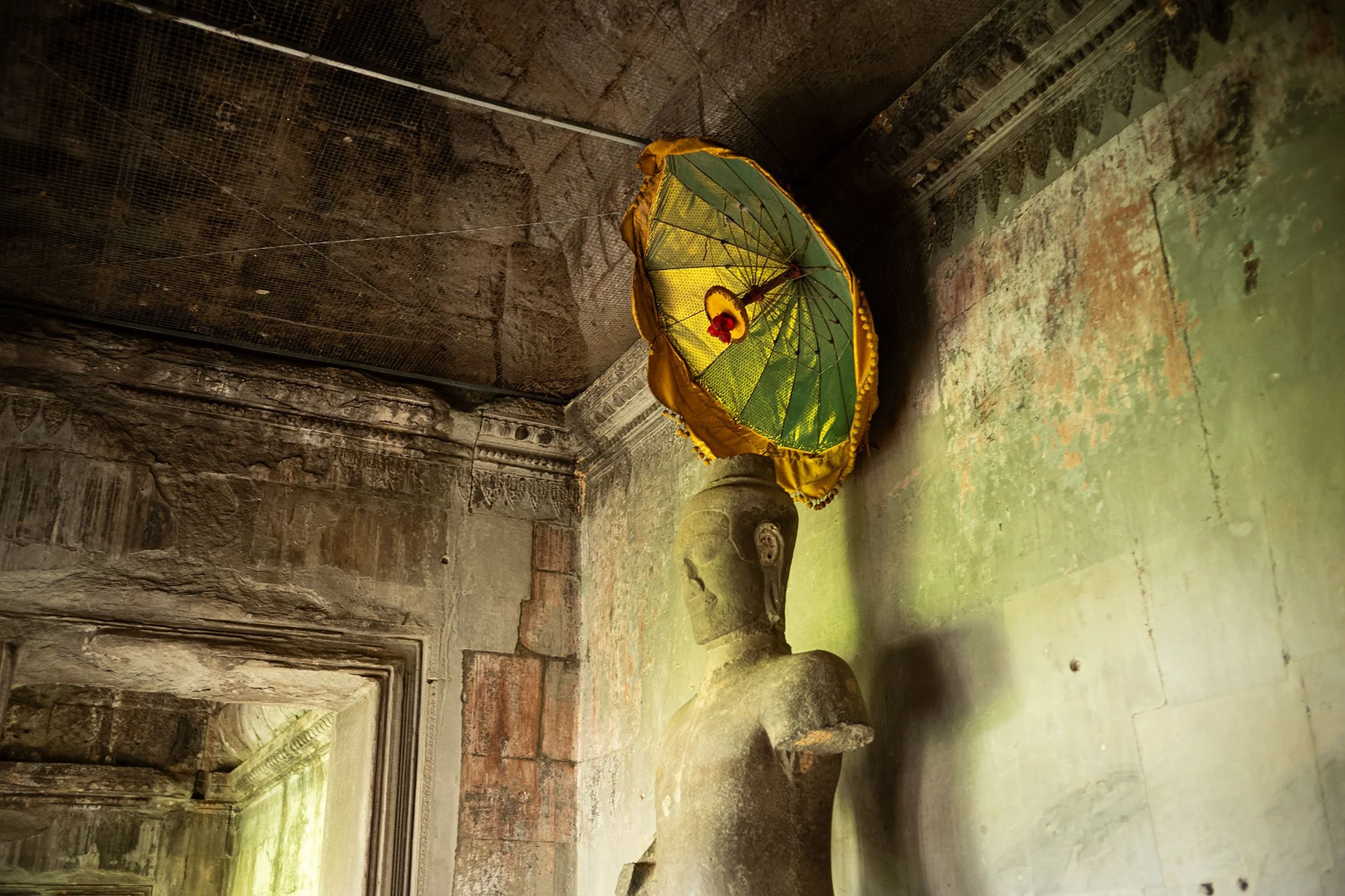
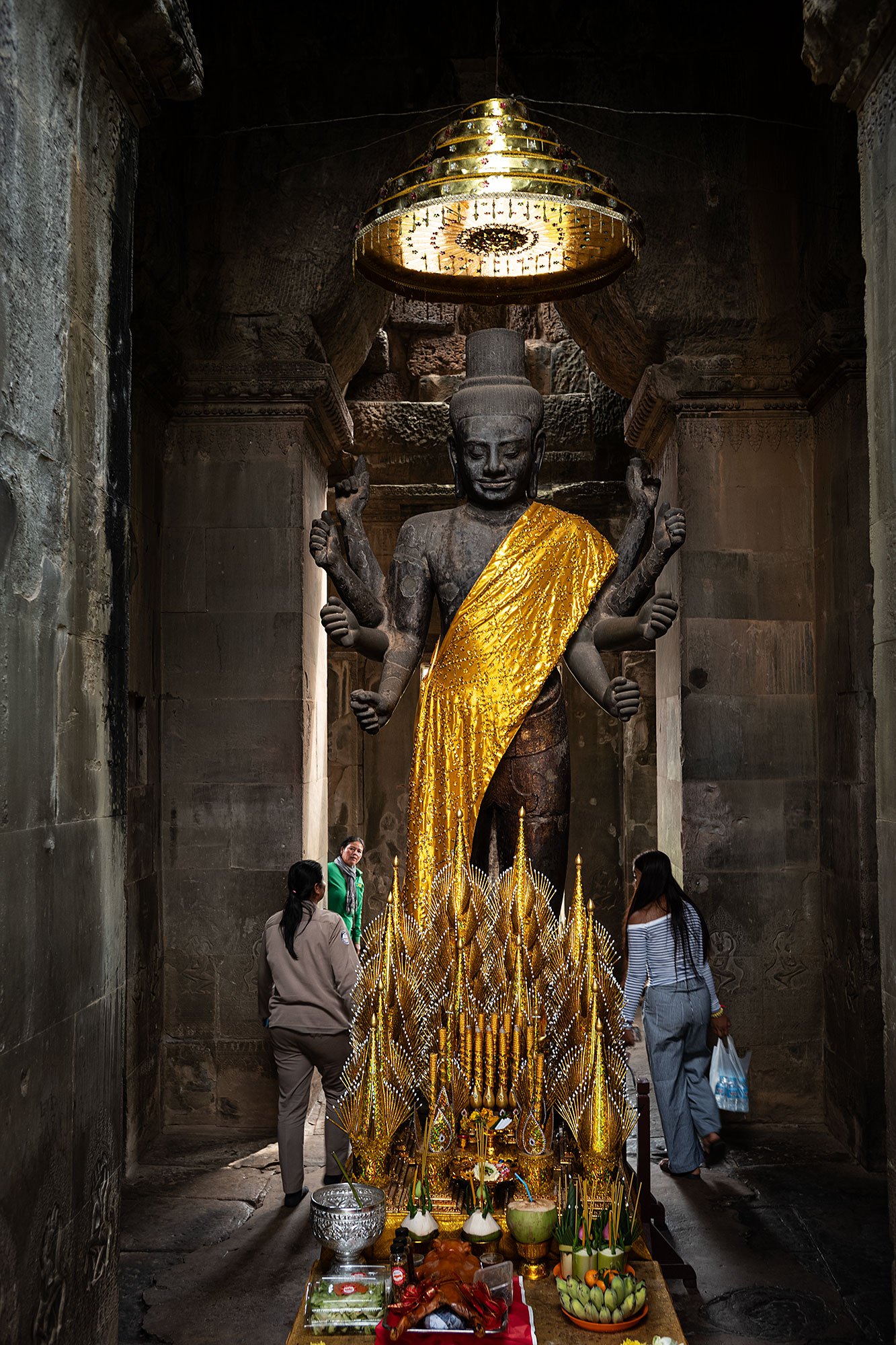
Passing through the final galleries I pause to look at the statues that flank the passage. To the right as we exit an umbrella hovers above one statue while to the left a sash is draped around another. I gravitate to the one on the left, which is being used as an active altar. Entering from the side, I don’t see the sign that asks visitors to remove their shoes and I quickly step out of the chamber once I realize my faux pas.
Leaving the temple we walk past the moat representing the the cosmic ocean that surrounds Mount Meru, the center of the universe in Hindu cosmology. The size and scale of the temple is incredible and a shiver runs up my spine as I look back and feel the symmetry of its design, sense the perfection of its construction. 🇰🇭
— 17 March 2026