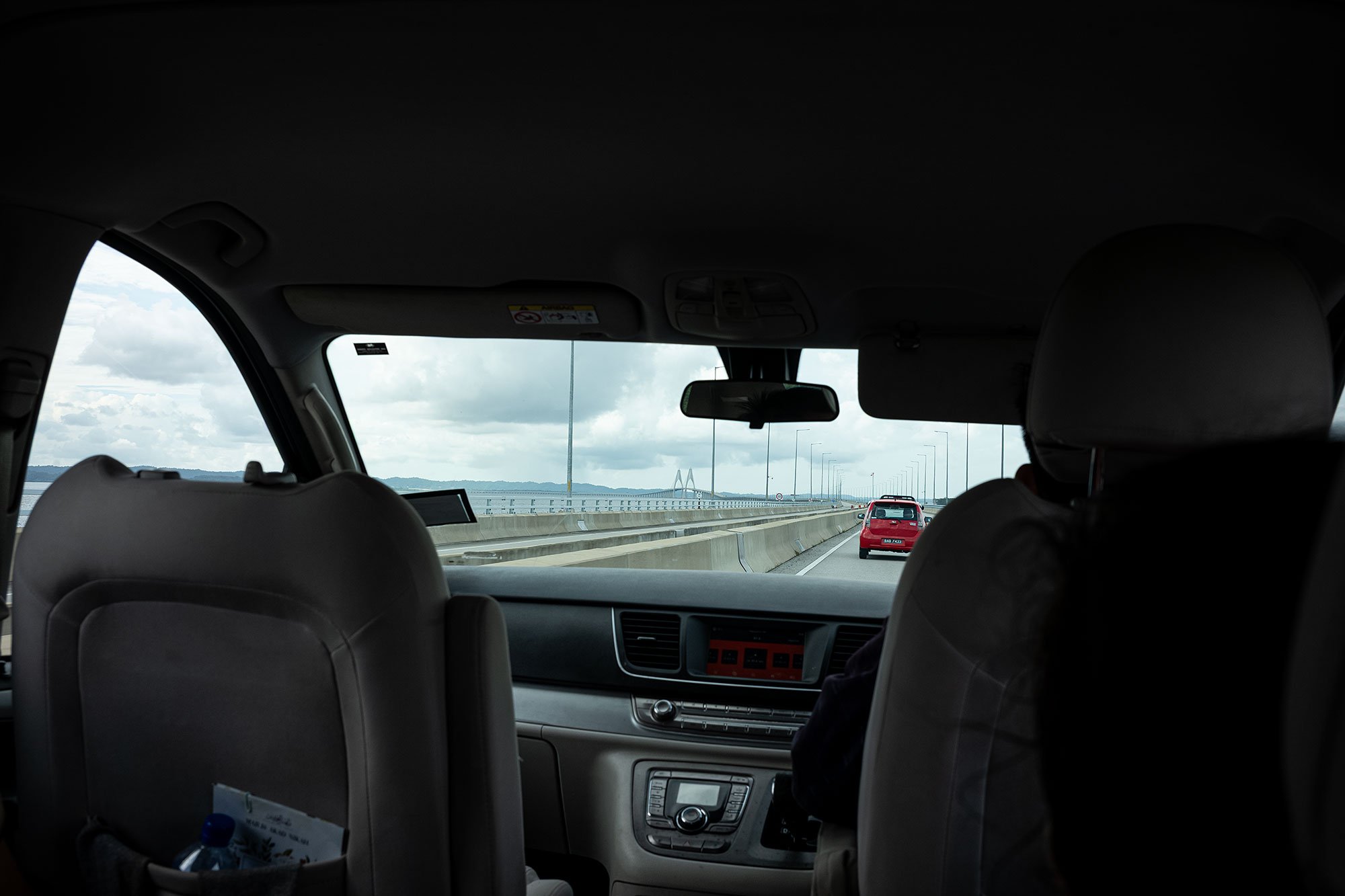
A trip to Ulu Temburong, Brunei’s only National Park.
The driver picks me up promptly from the hotel at 0815.
I’m just stepping into the lobby when one of the receptionists finds me to tell me he’s here. I can’t quite catch his name.
At the Terrace Hotel we pick up an Austrian man dressed for activities; at the Radisson we pick up an older Indian couple from New Delhi dressed for a short promenade on the Lido deck of a Carribbean cruise before settling into deck chairs.
We drive out of the city heading northwest until we reach the impressive Sultan Haji Omar 'Ali Saifuddien Bridge, turning east to cross Brunei Bay. At 30 kilometers in length it’s the longest bridge in Southeast Asia and it feels like forever crossing it (in the best possible way). Alongside the road, the three kalimahs (Islamic declarations) remind us to remember Allah while travelling.
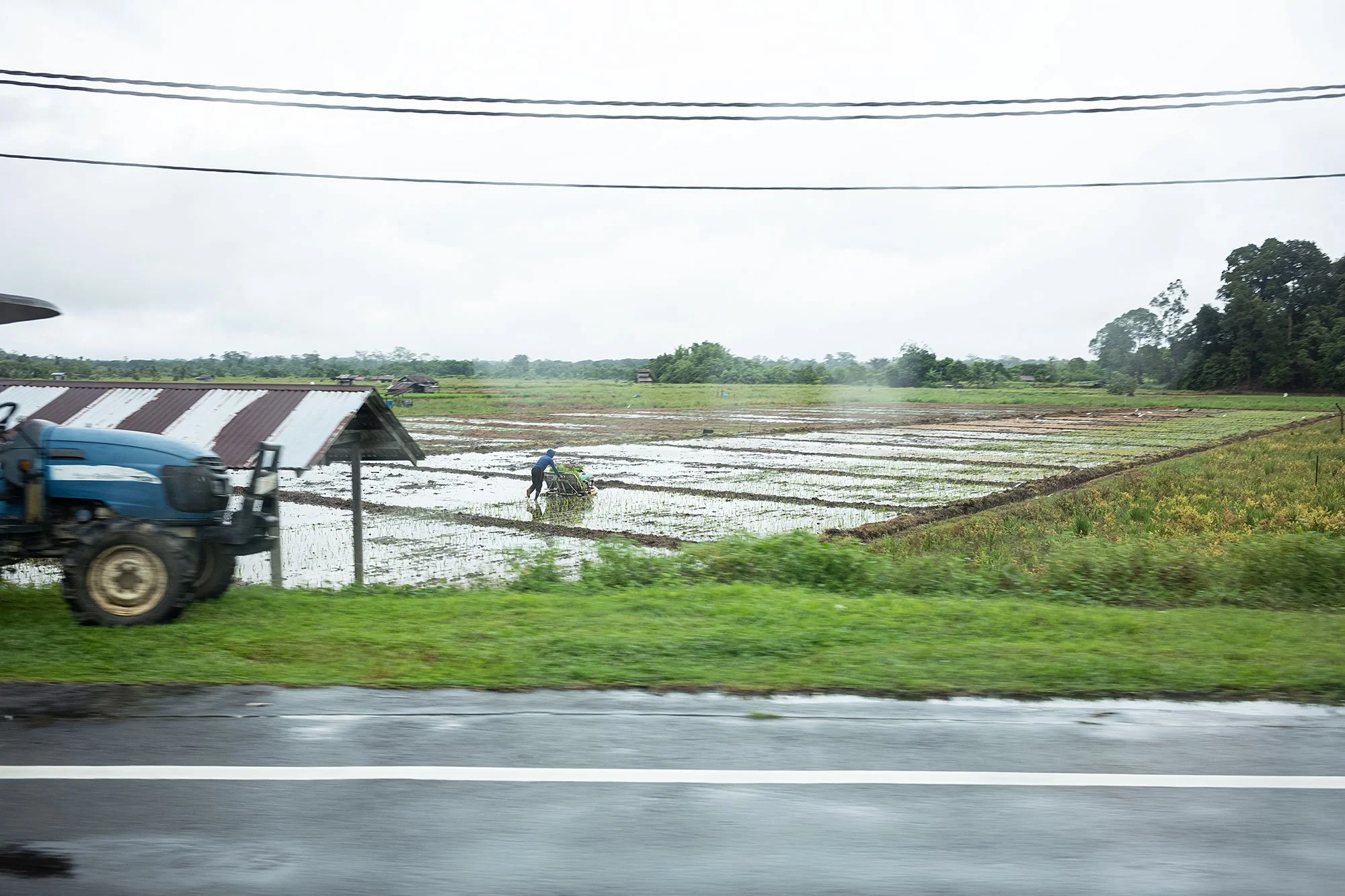
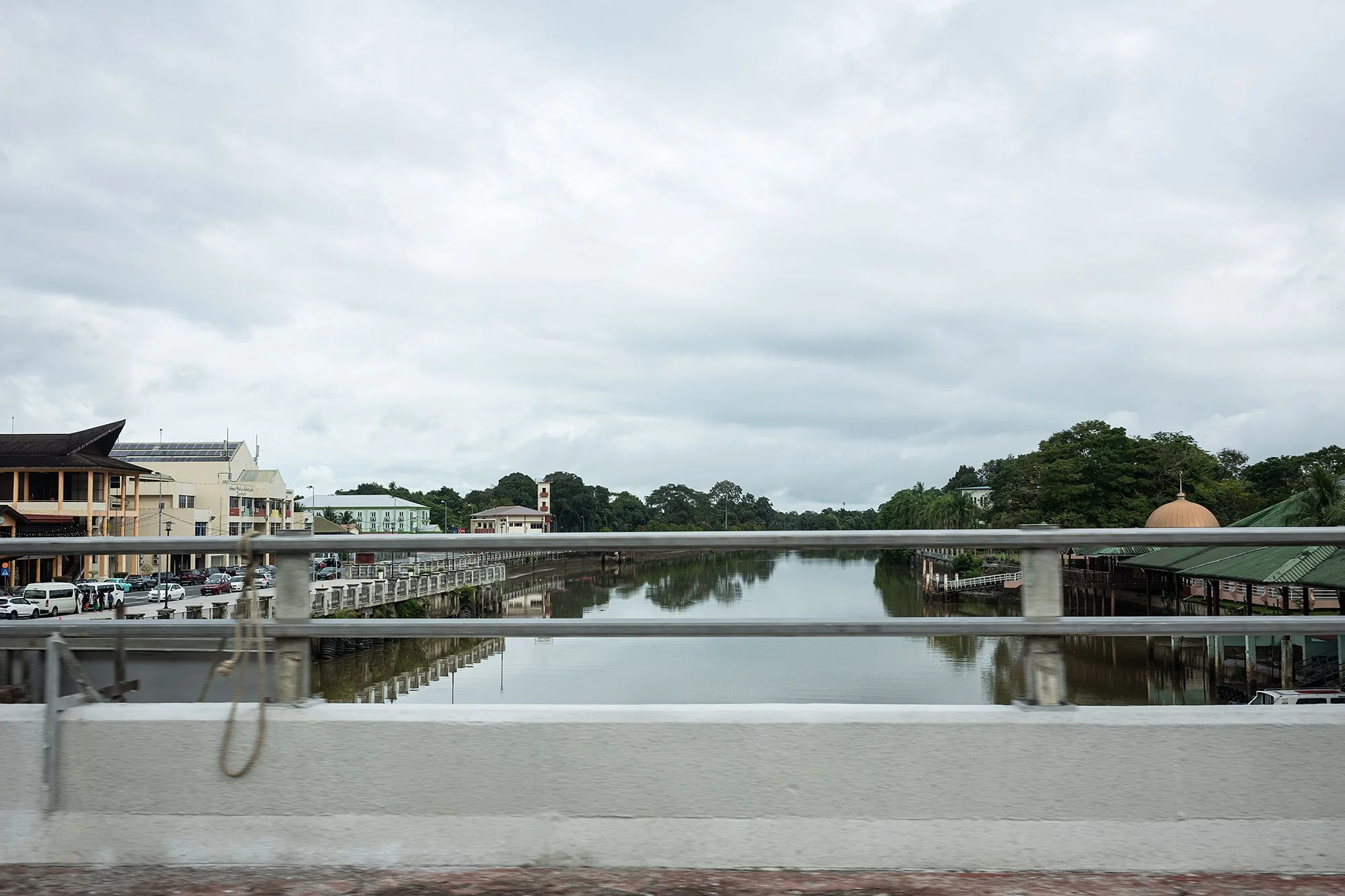
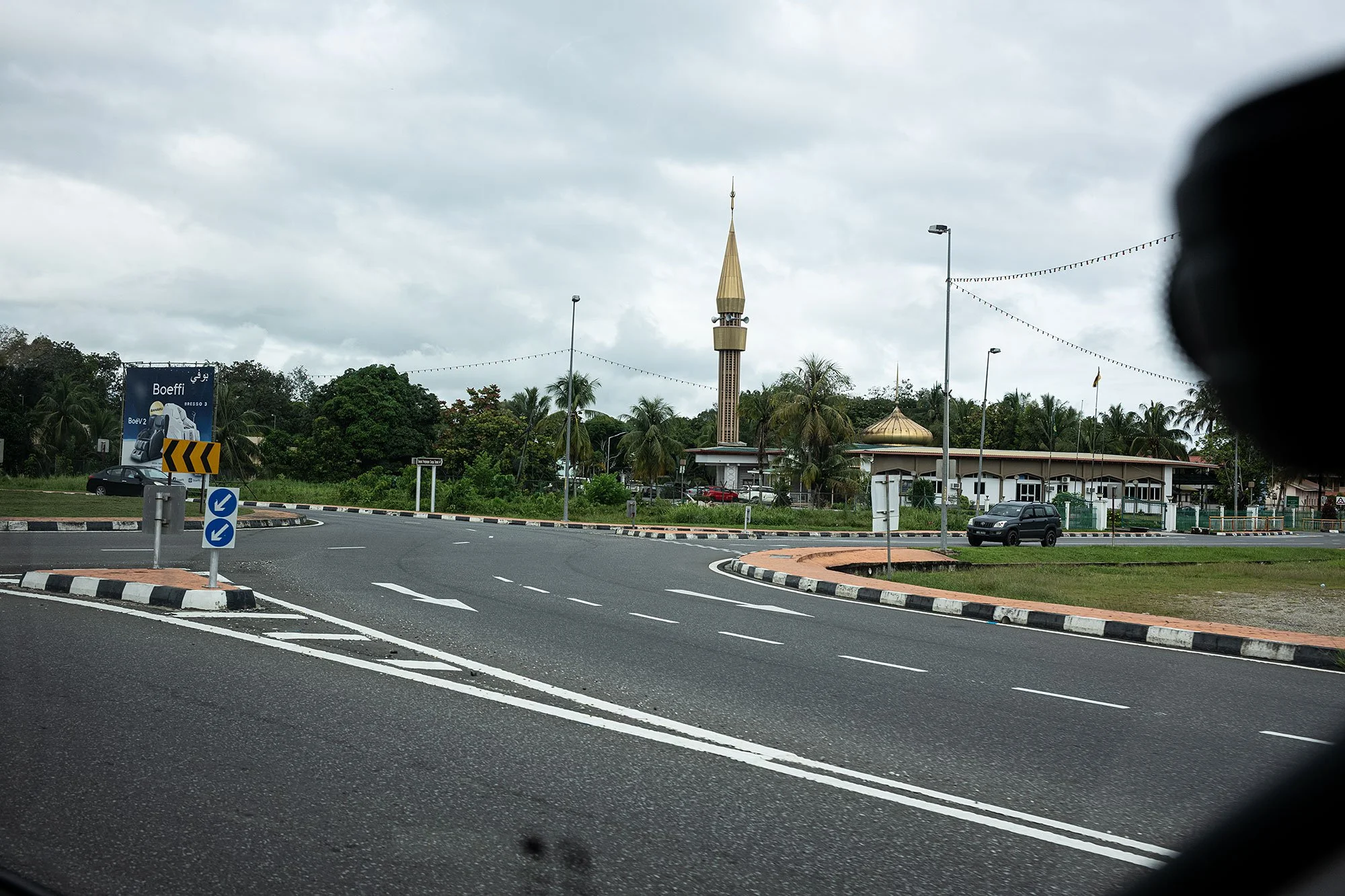
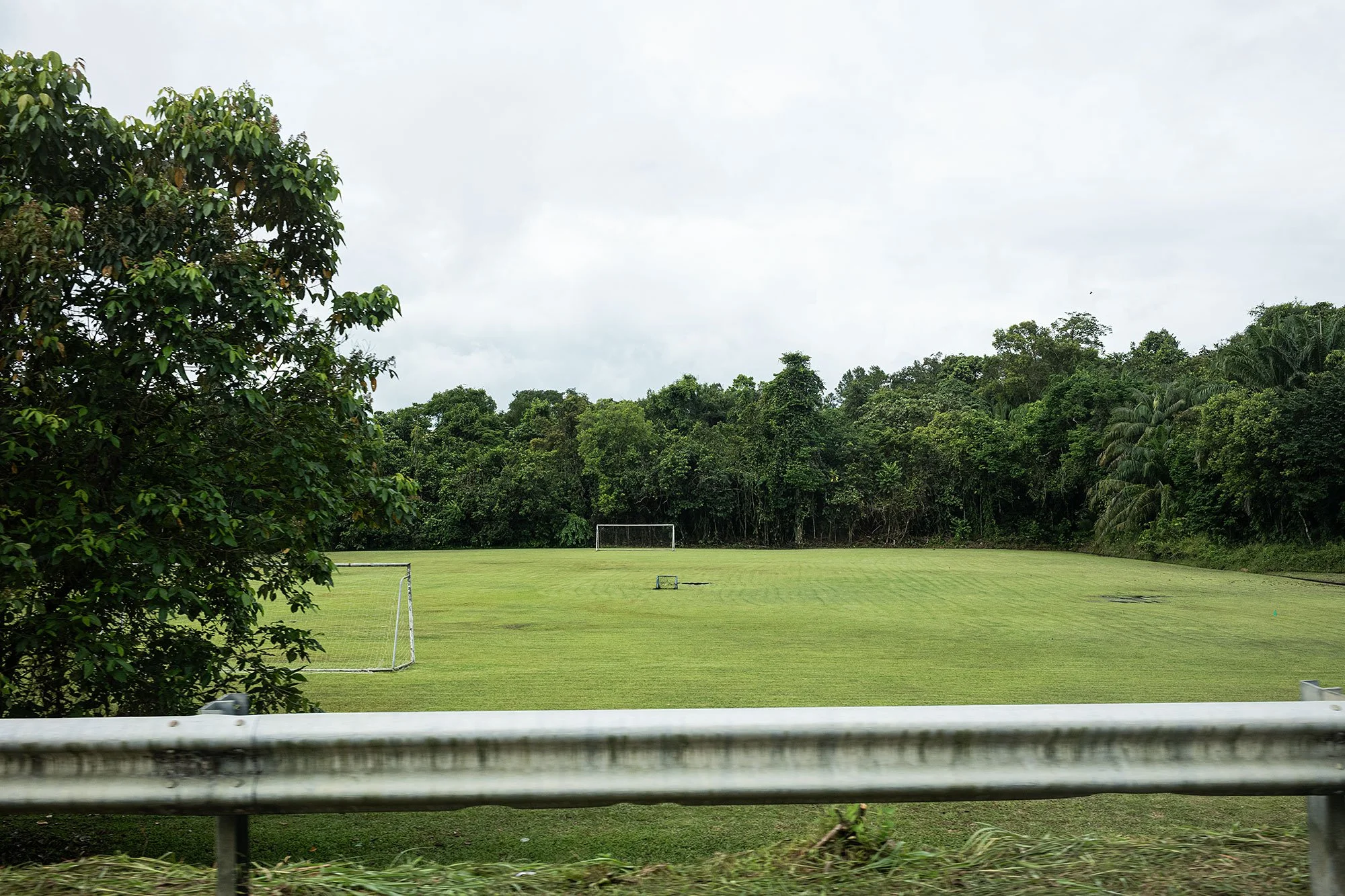
About an hour after departing the Radisson we arrive at the starting point for our excursion, a family home from which the travel company rents out space. Mira, our guide, lives here with her grandmother, aunties and uncles, and her nieces and nephews. All in all there are ten of them living together.
Our drive started in the rain but by the time we crossed the bay and reached the towns neighboring the park it had started to abate, for which I am thankful.
For breakfast, we’re offered rice with a fried egg and small fishes wrapped in banana leaf and pastries. Mira introduces herself and gives a brief overview of what we can expect for our day.
After we finish eating we’ll take a longboat up the river into the national park and commence a 45-minute hike, climbing 800+ stairs to reach the canopy walkway. Afterwards, we’ll come back down and take a short boat ride back down to a small waterfall where we can bathe and where fish will nibble the dead skin off of our feet. We’ll be back around 1430 for lunch after which our driver will take us back to our hotels.
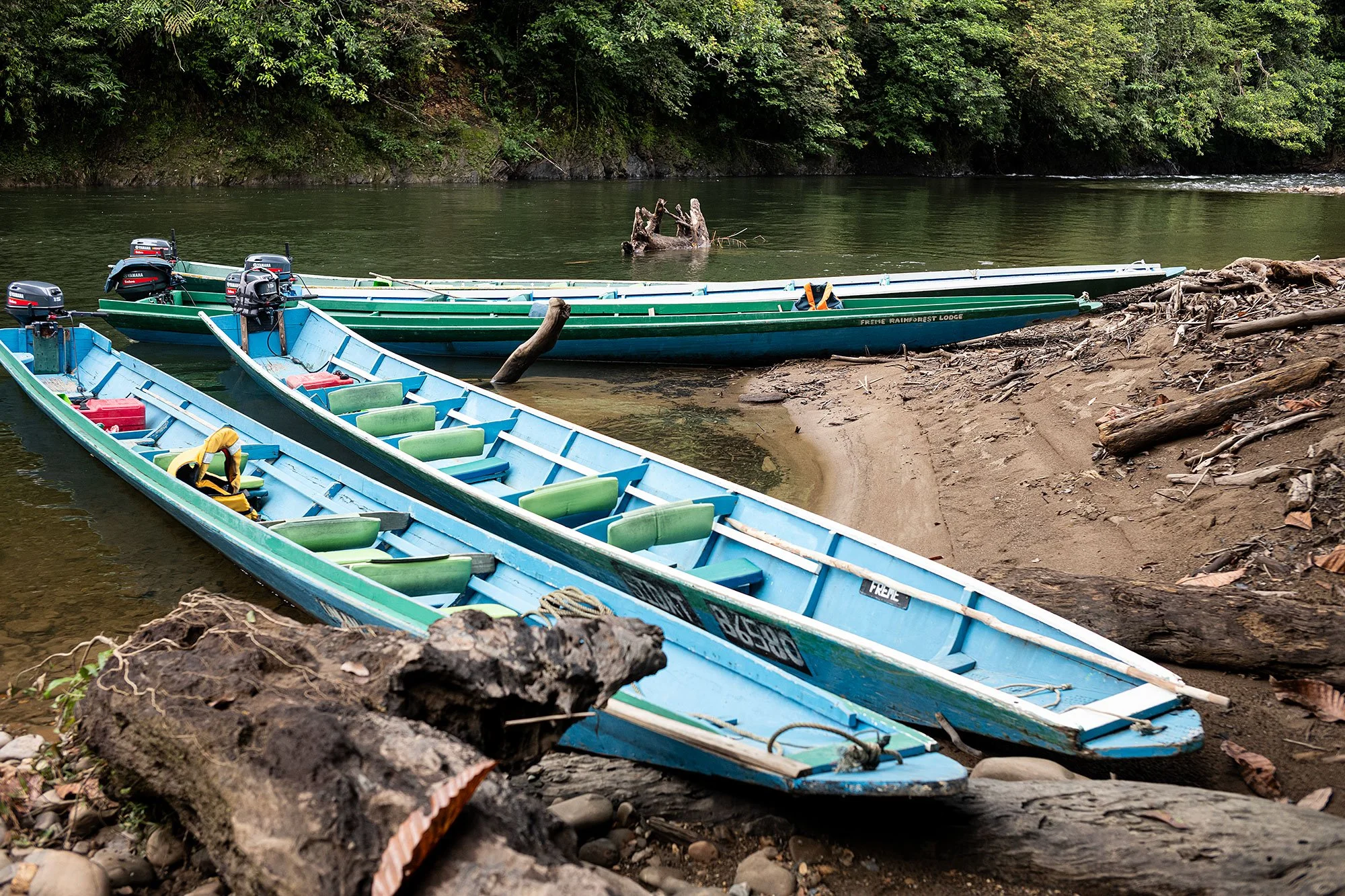
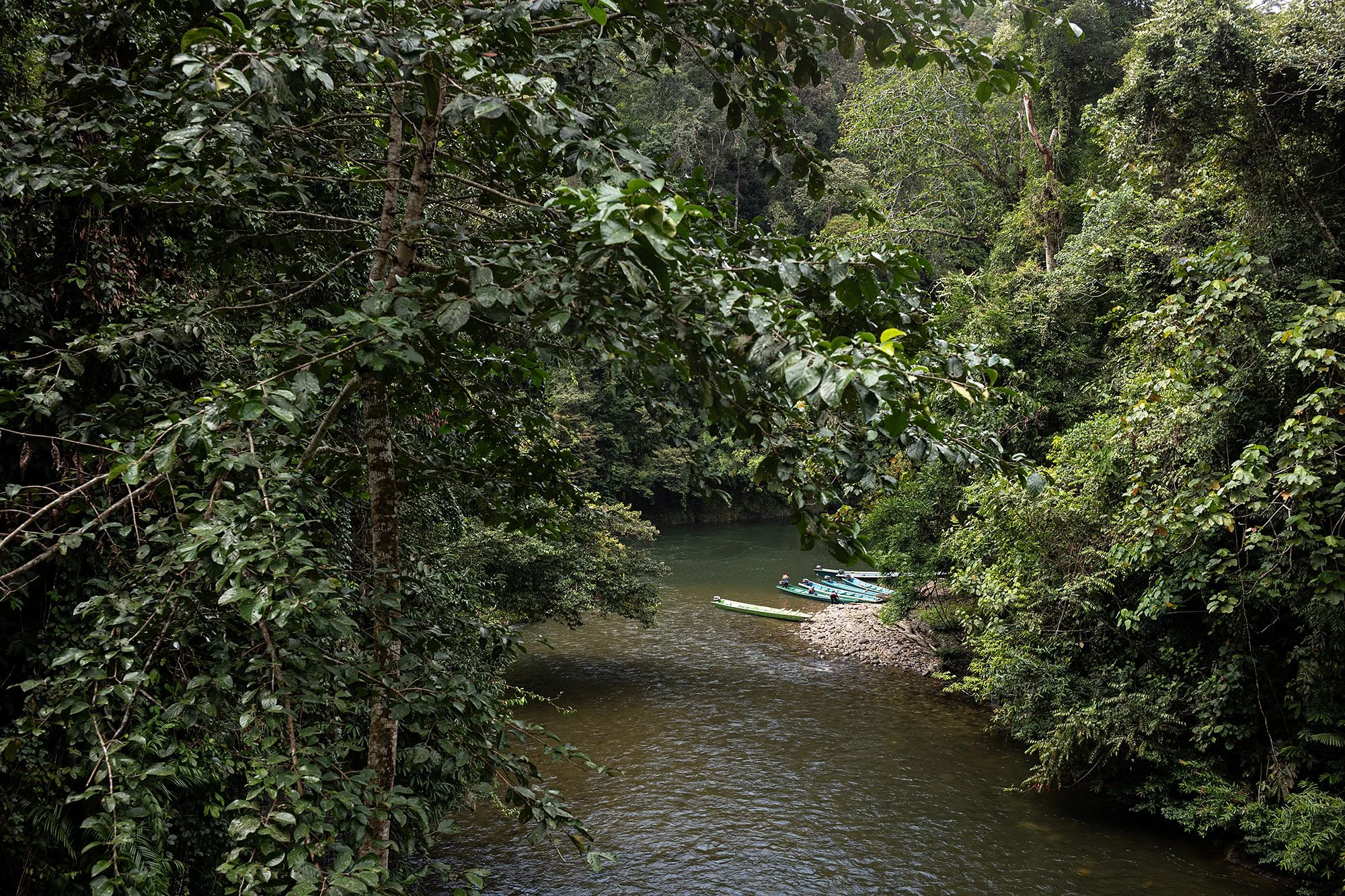
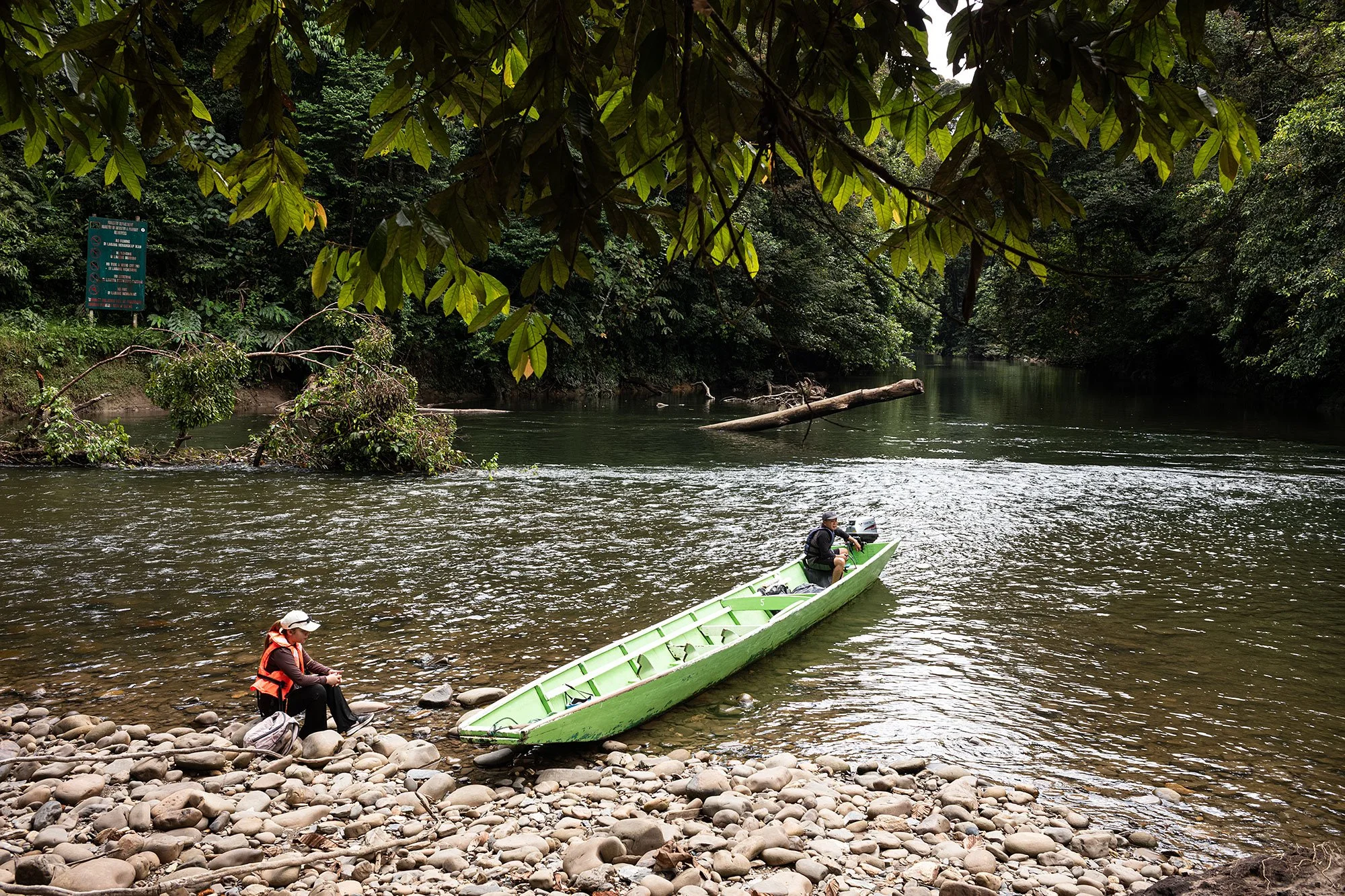
She hands out helmets and life jackets and leads us to the river. She tells us that the longboats are unique to this river—you won’t find them along the river in Bandar Seri Begawan—and introduces us to Jimi, who will be our boatman for the day.
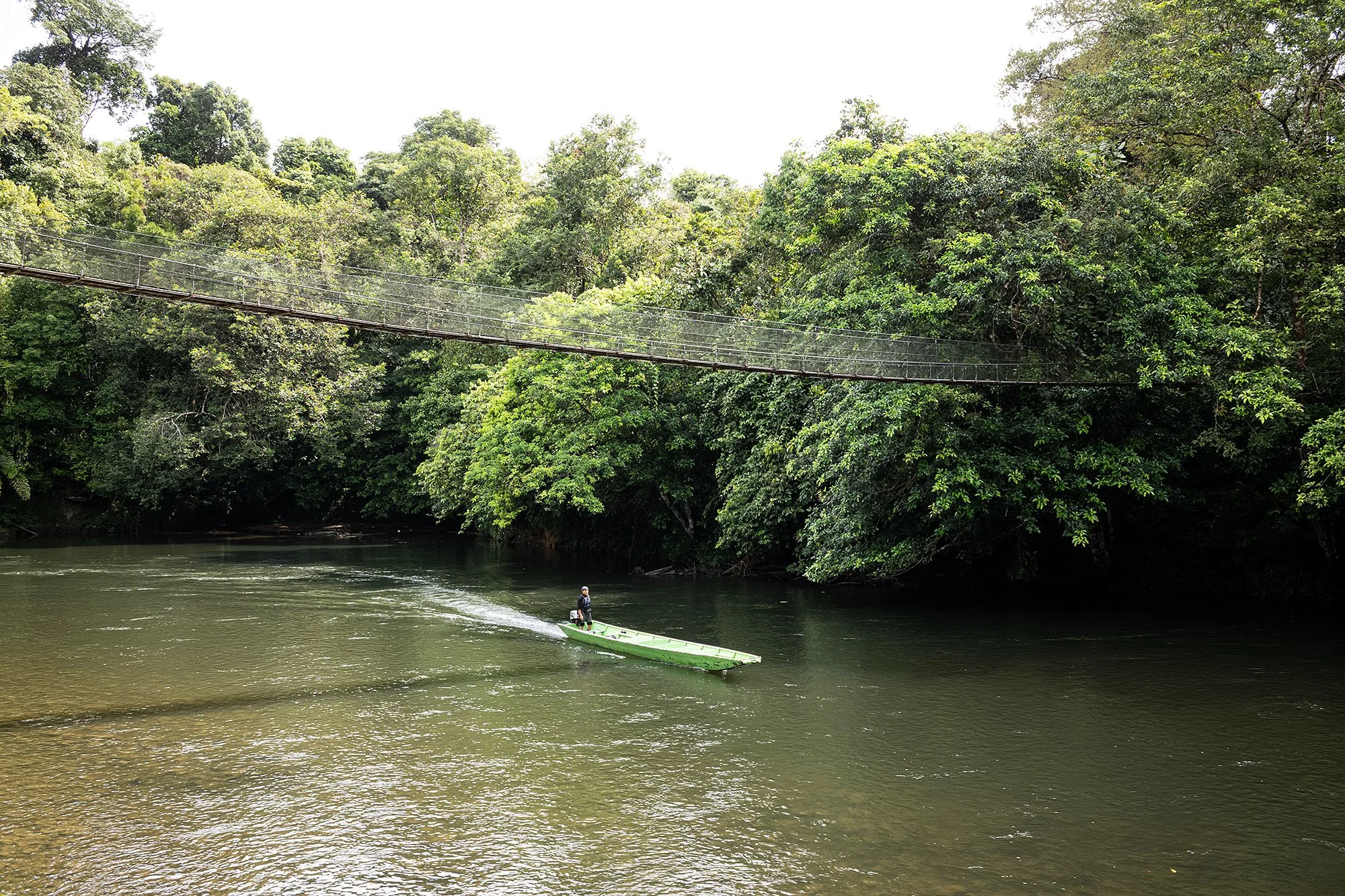
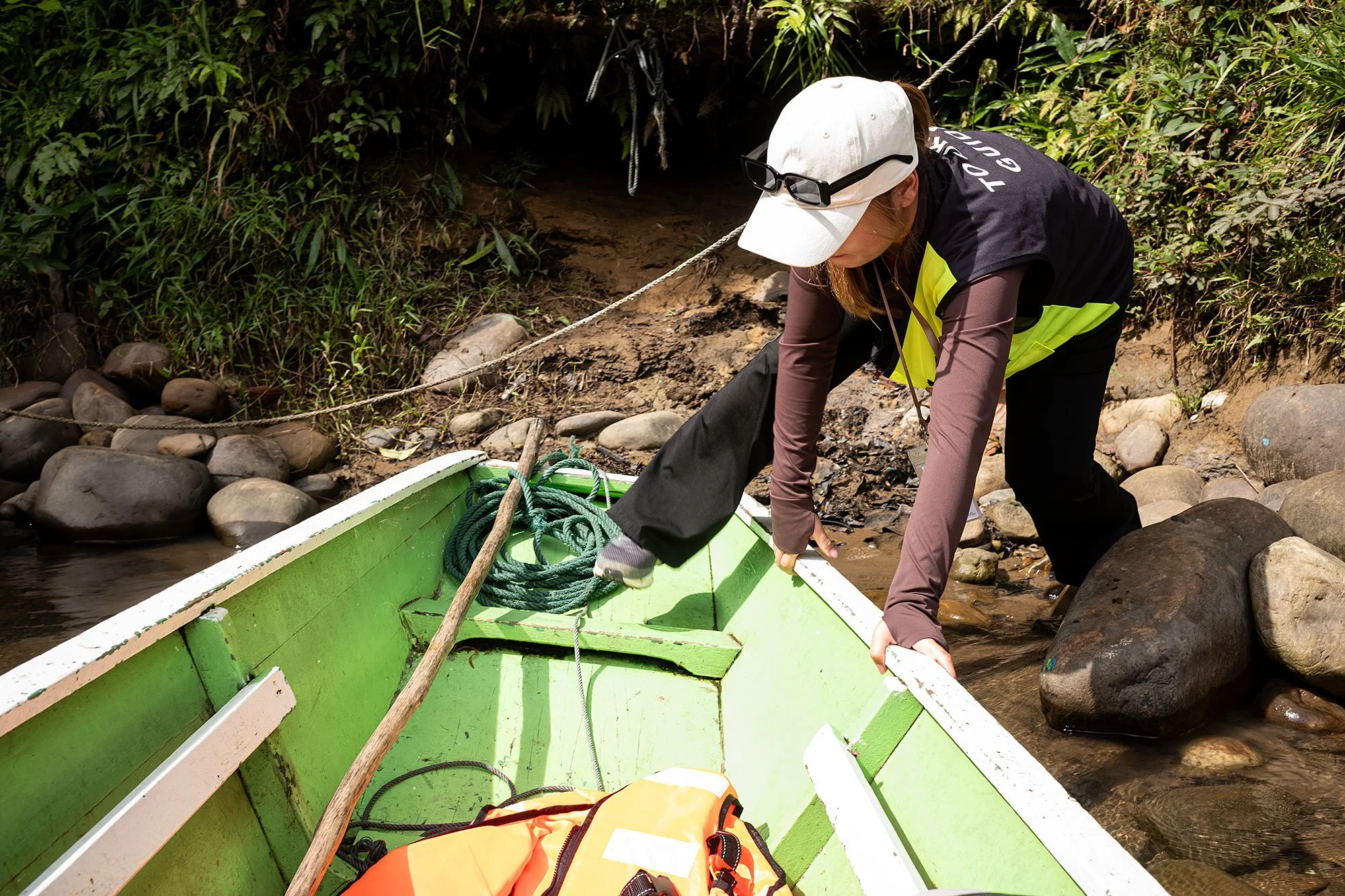
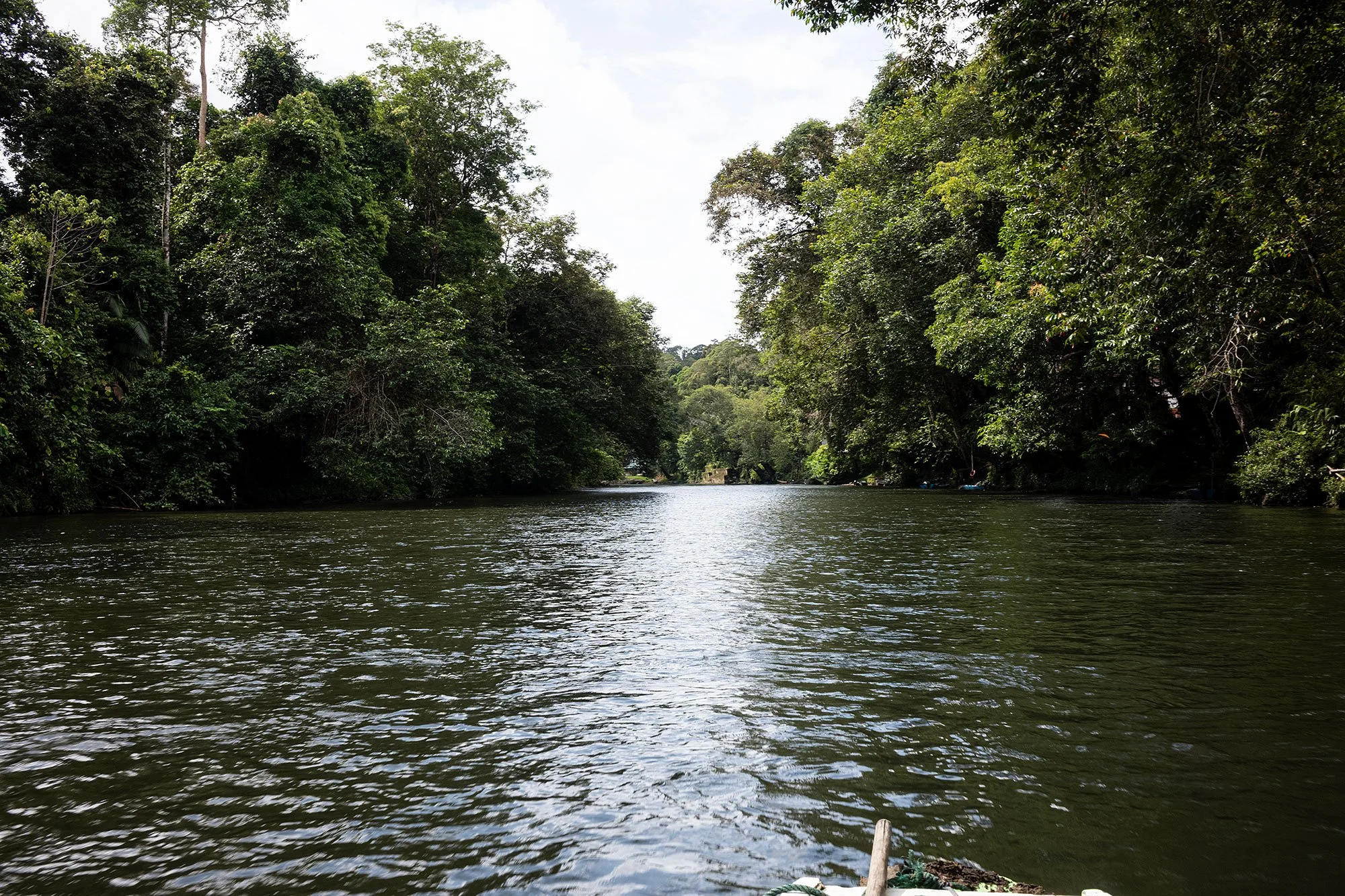
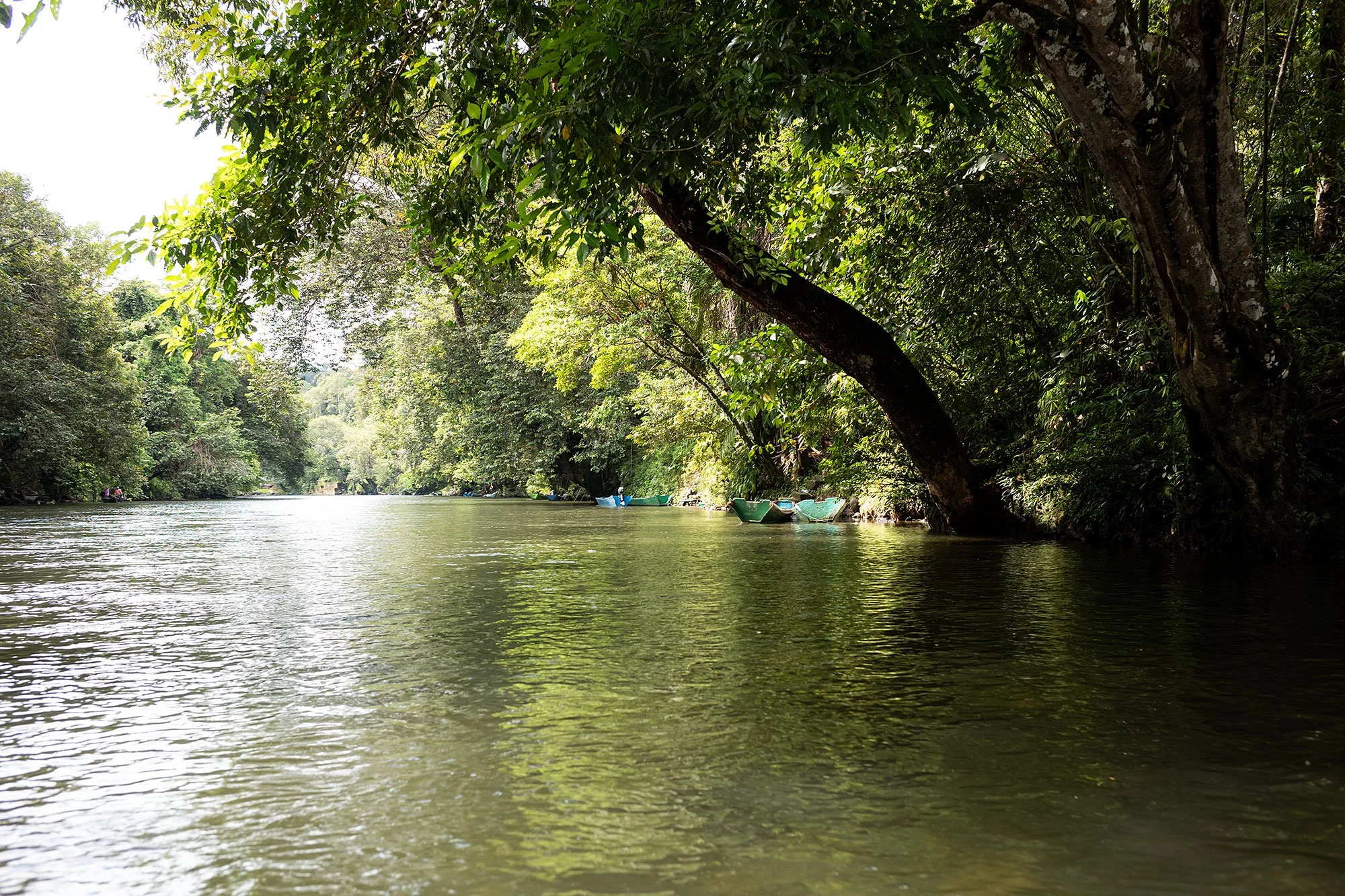
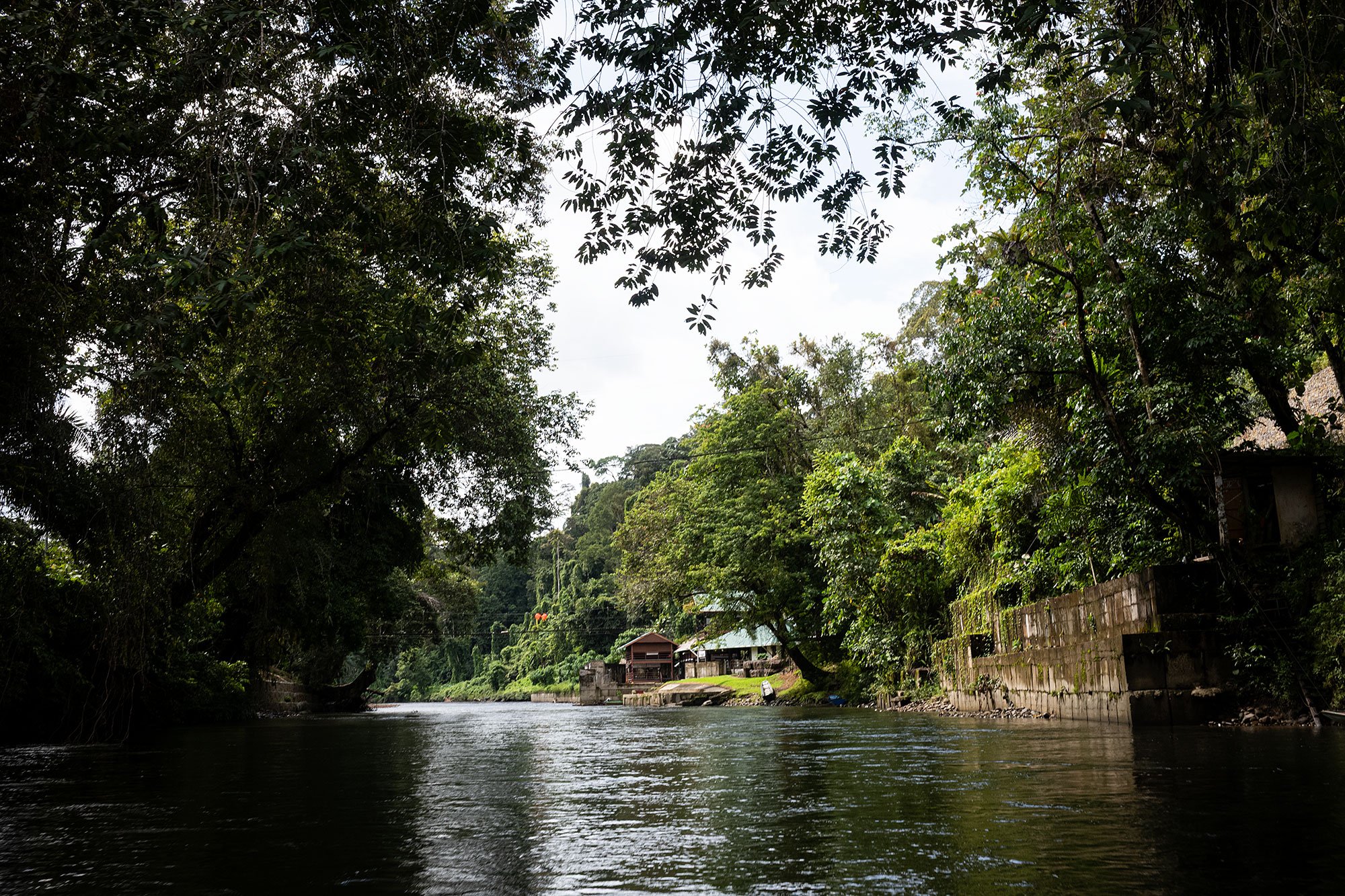
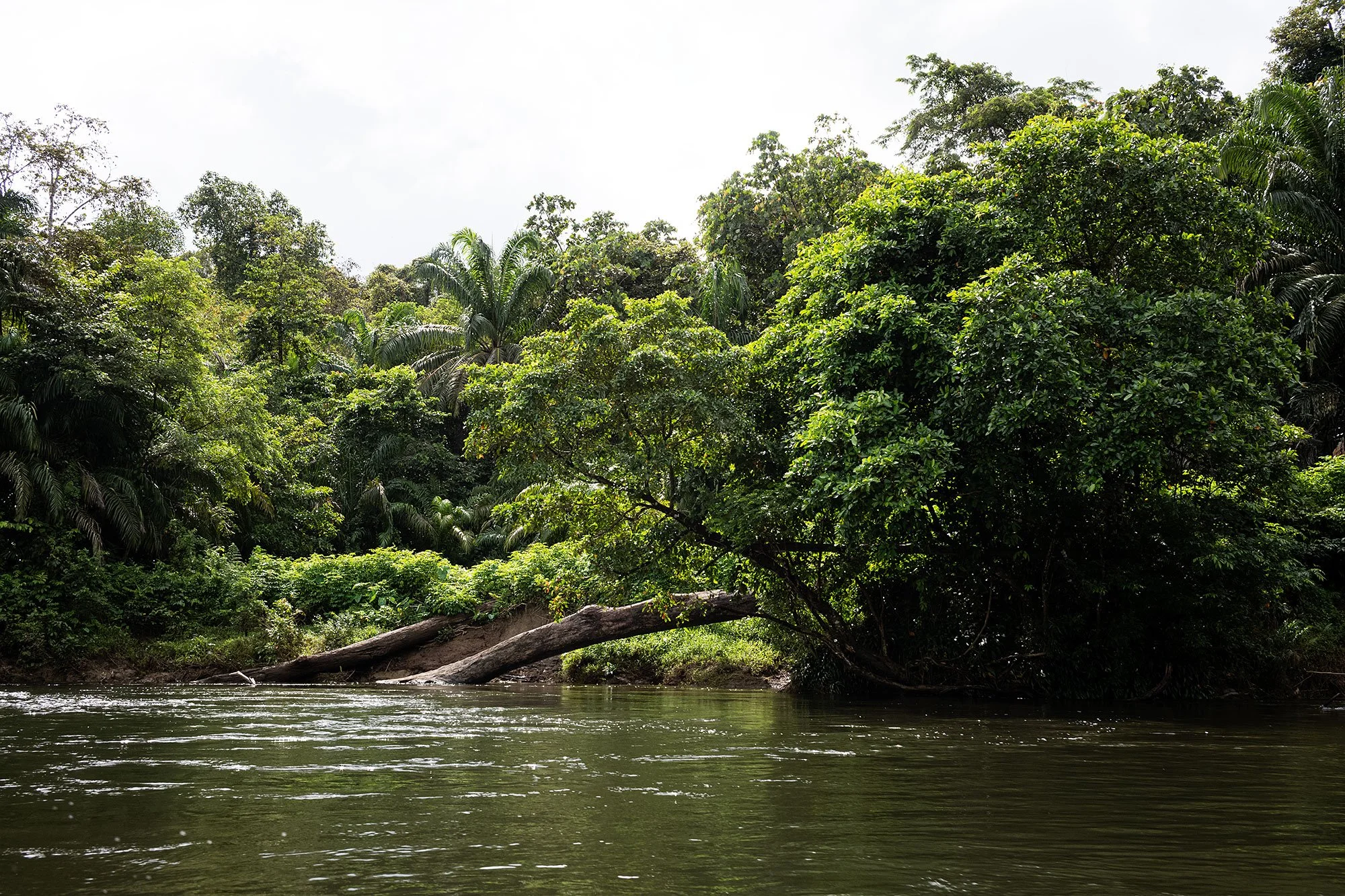
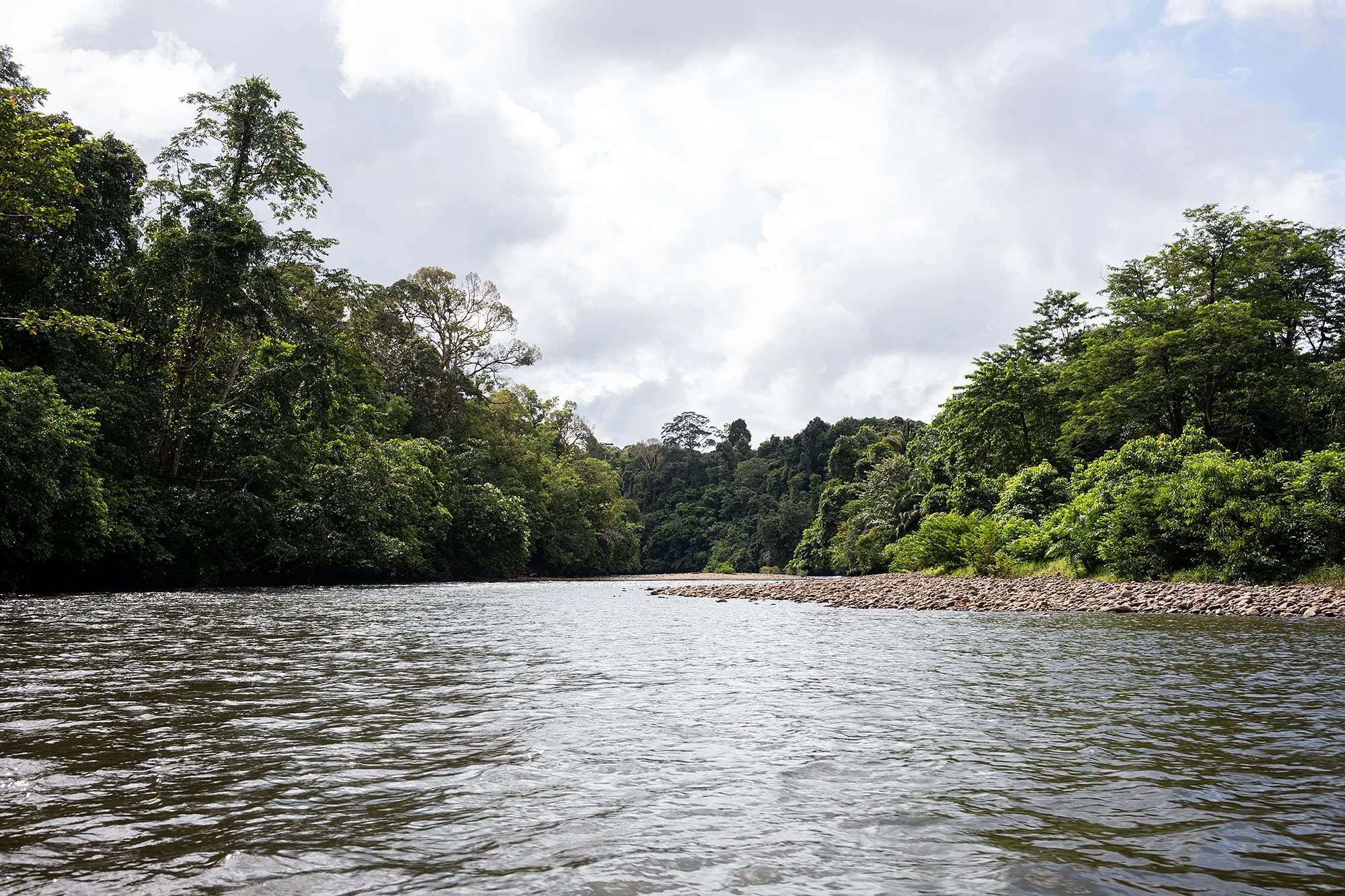
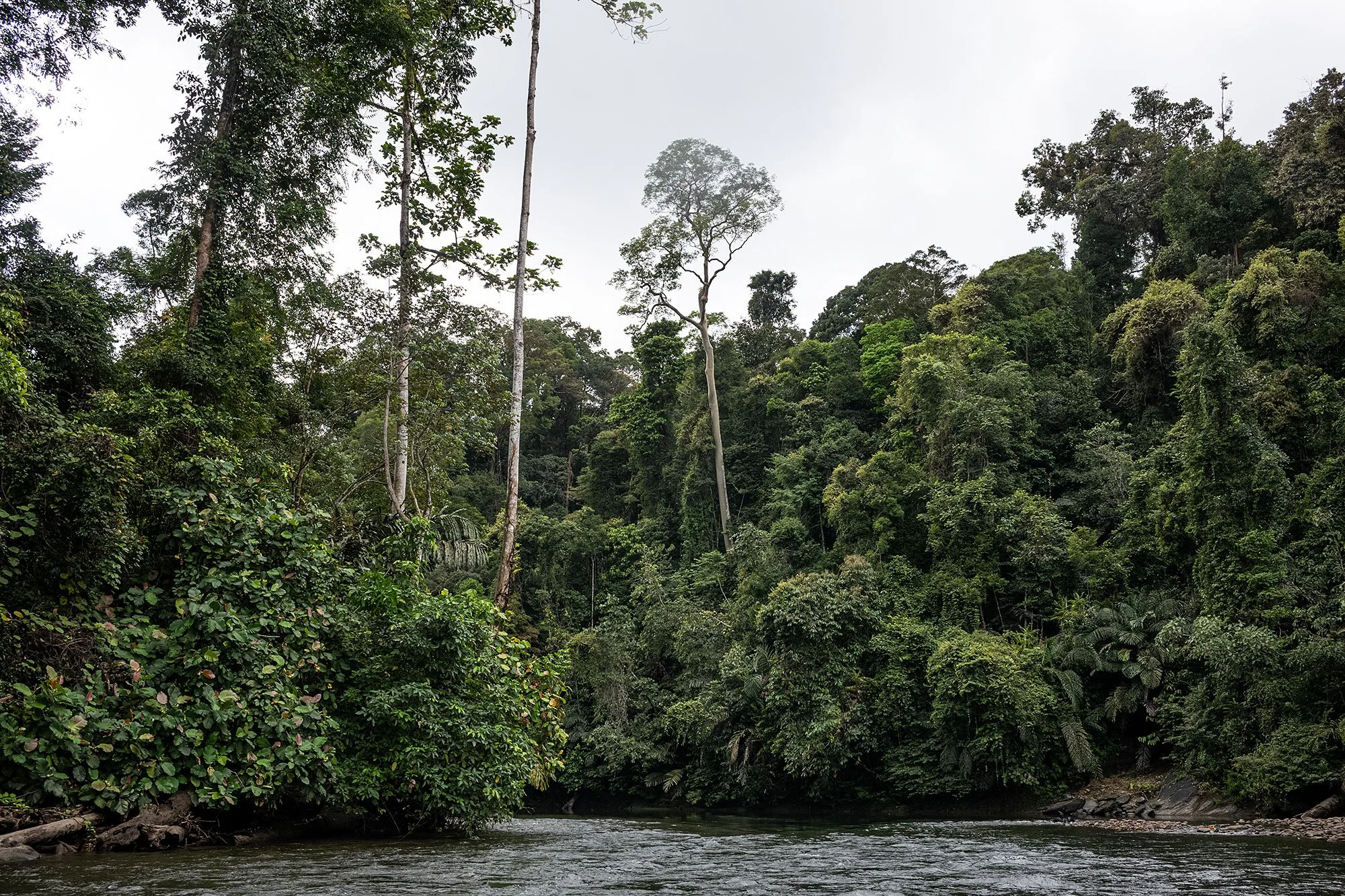
It’s about a thirty minute ride up the river to the registration jetty. The boatman navigates rapids, manouevering the boat to the edges or ramming it up through the middle, wherever the water is deepest. Now and again it sounds like we hit rocks with the engine.
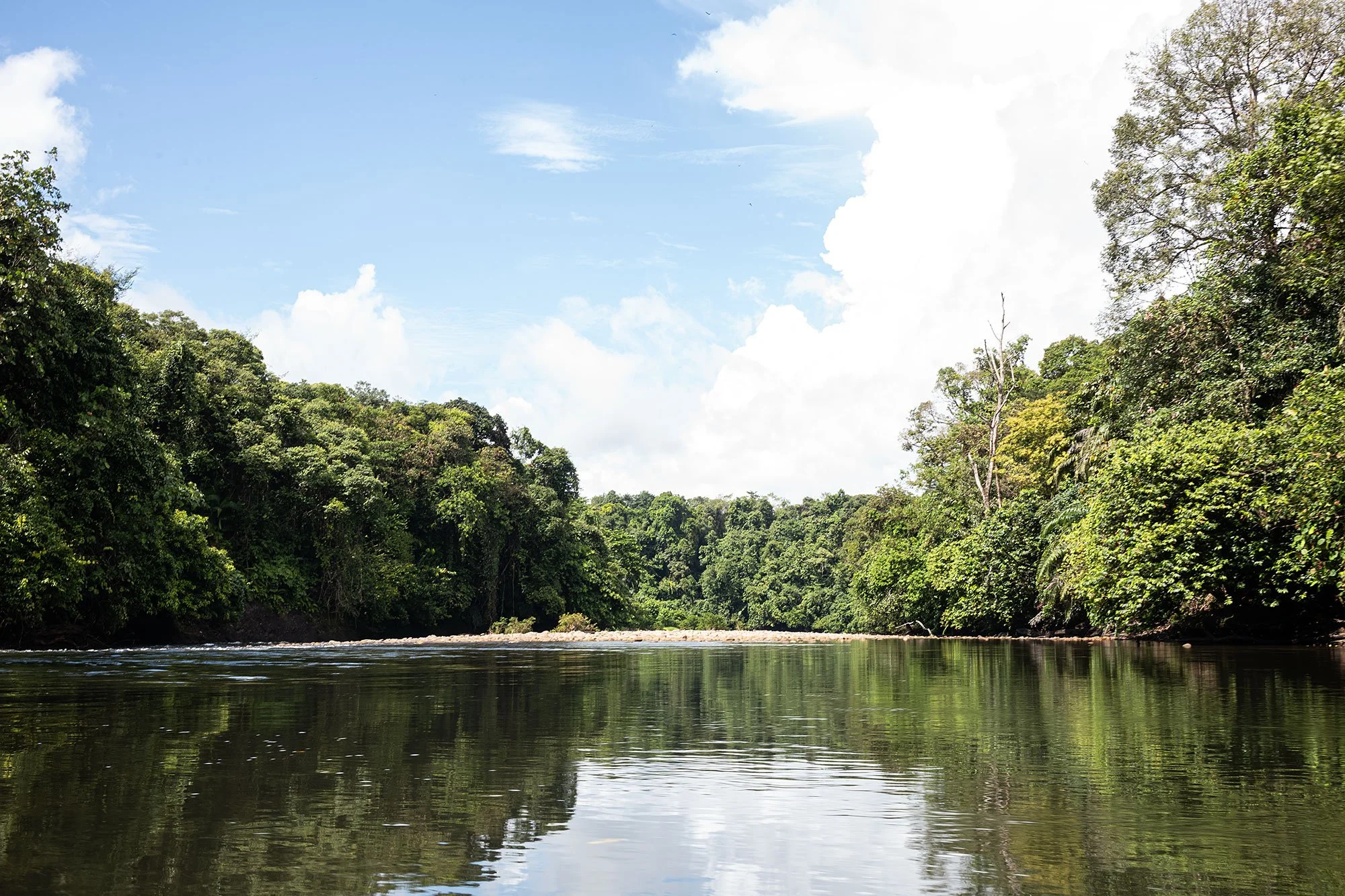
It’s a fantastic boat ride through the jungle. It feels like we could be in a Jurassic Park film, traveling both backwards and forwards through time.
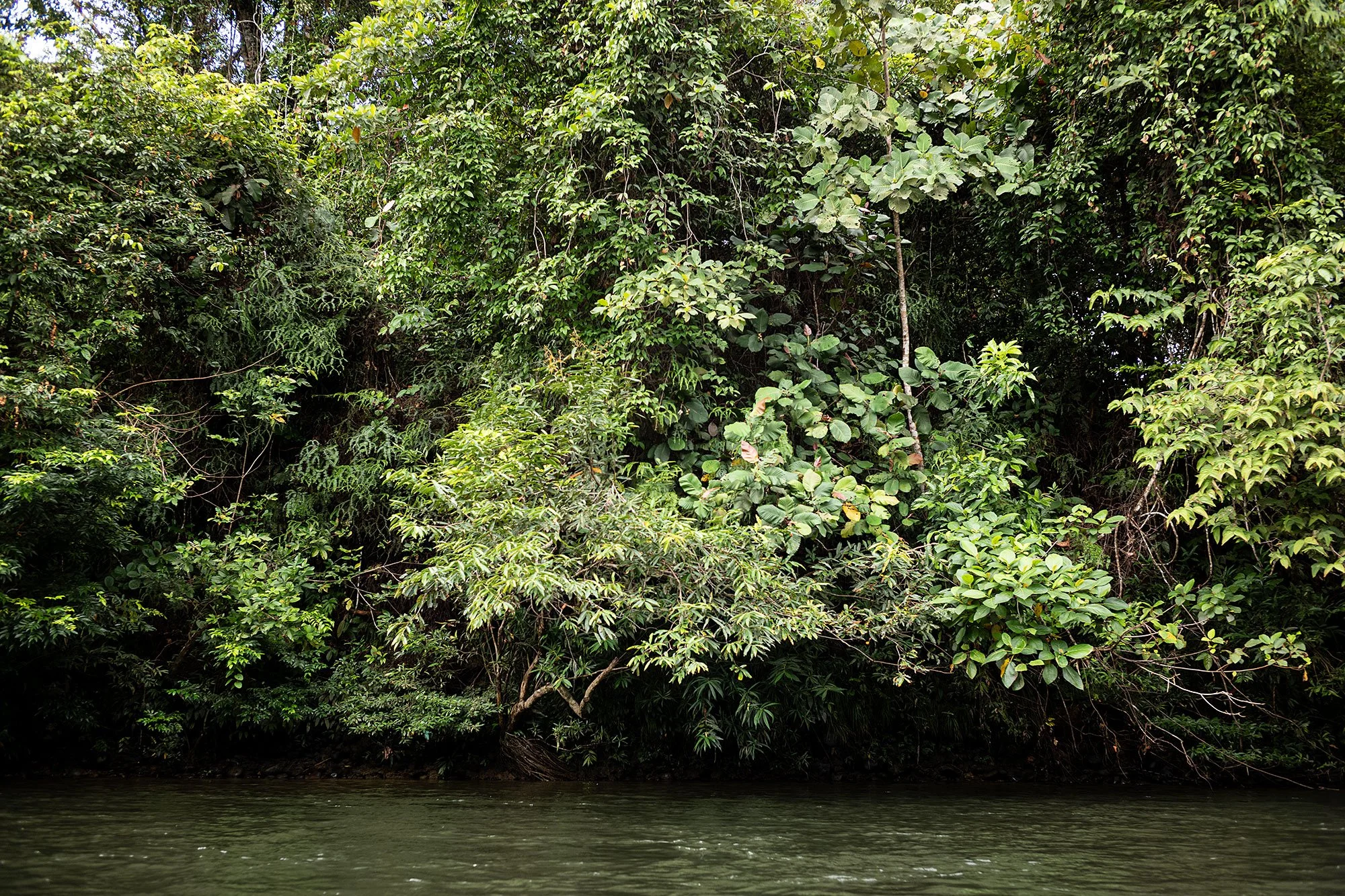
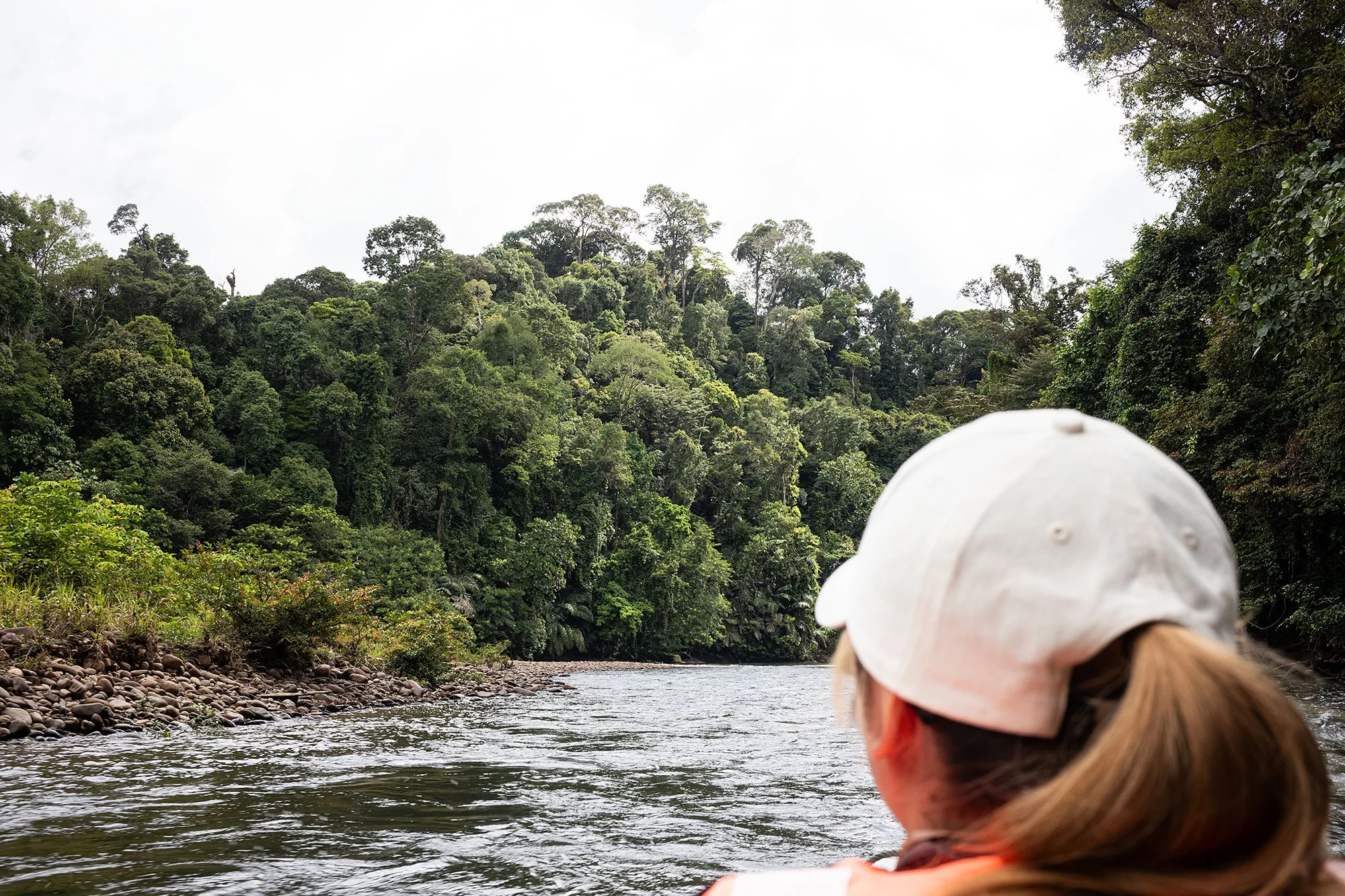
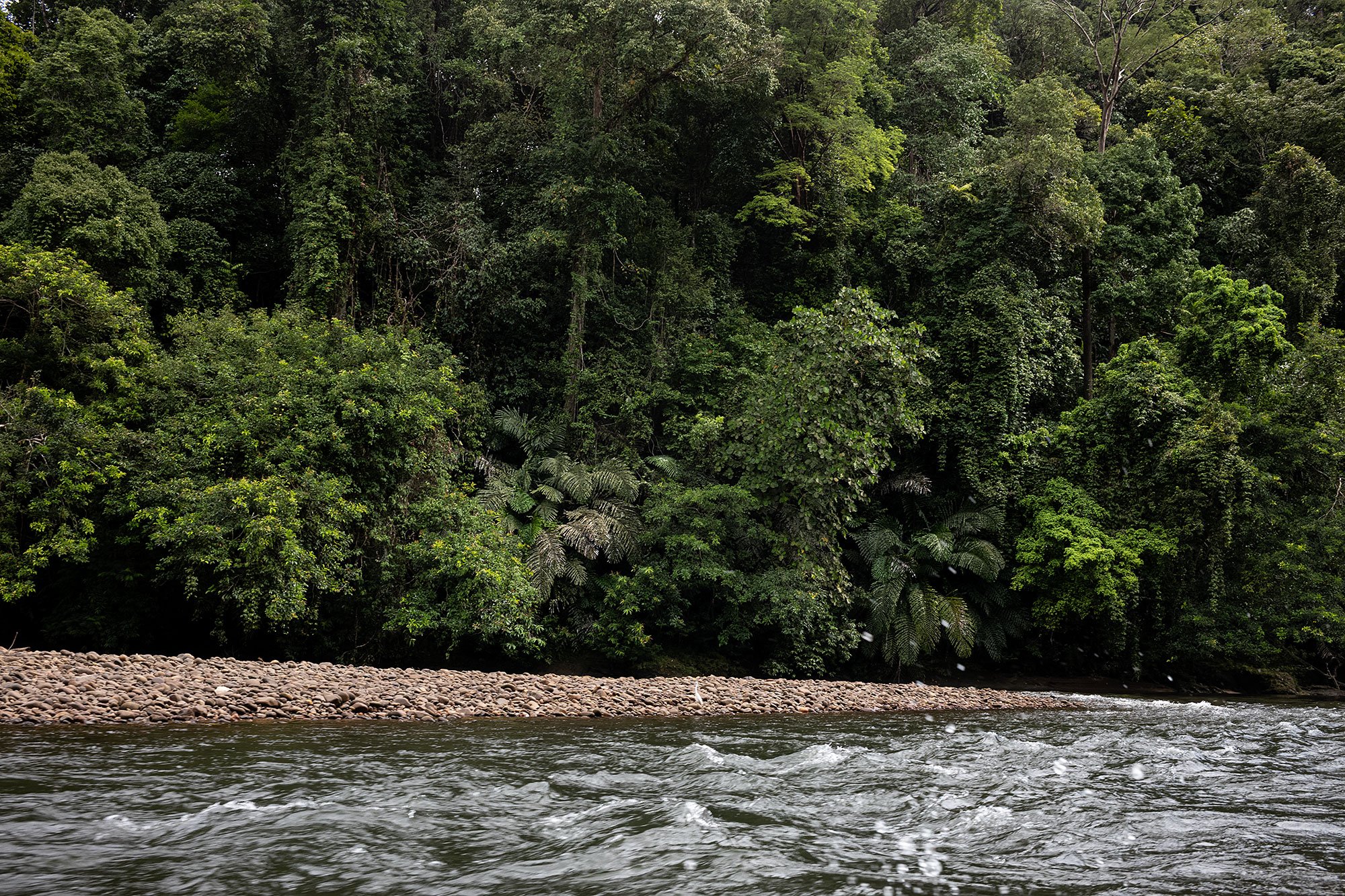
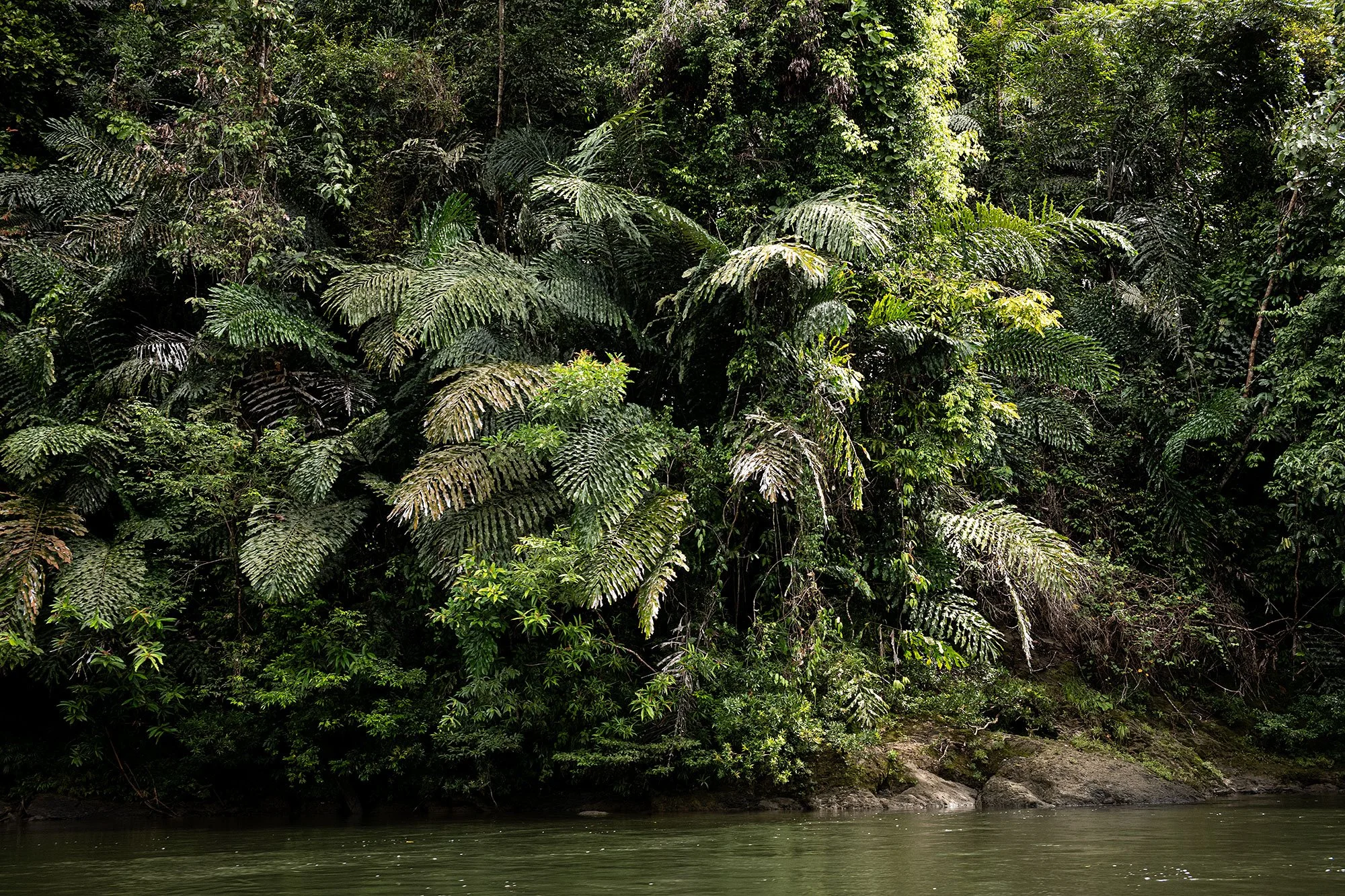
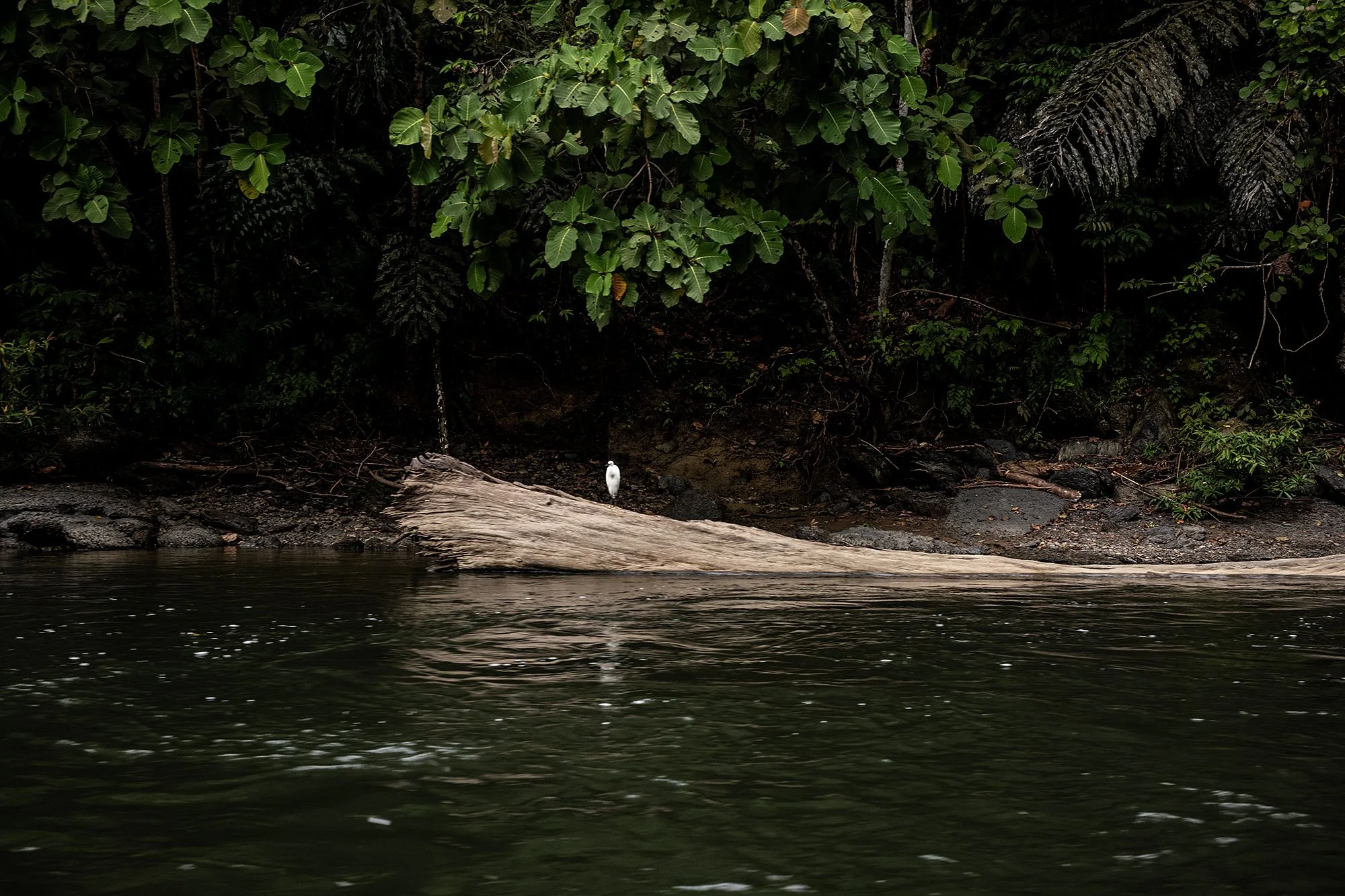
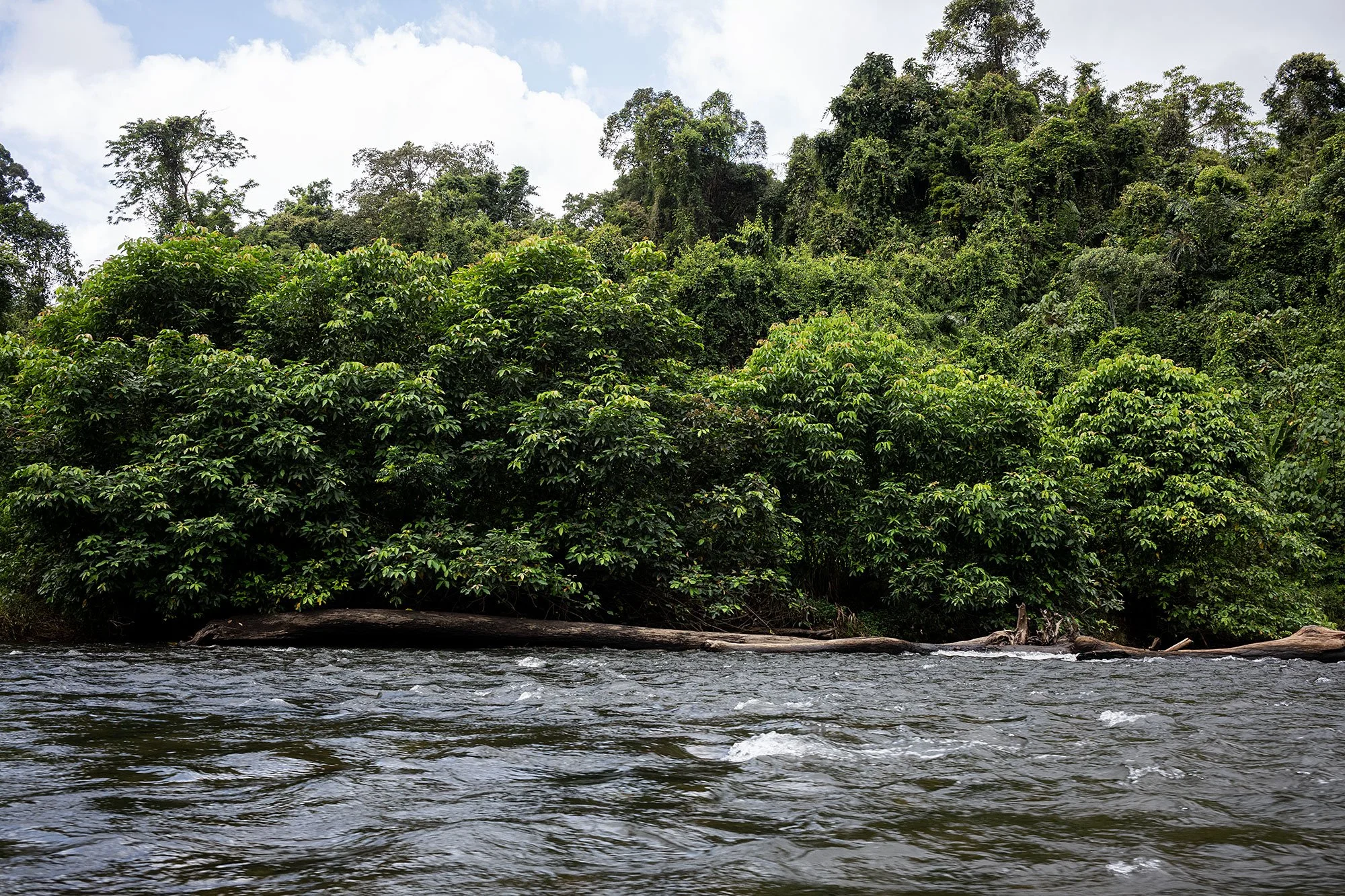
Along the way we spot black and white egrets along the shore along with small birds that flit through the skies.
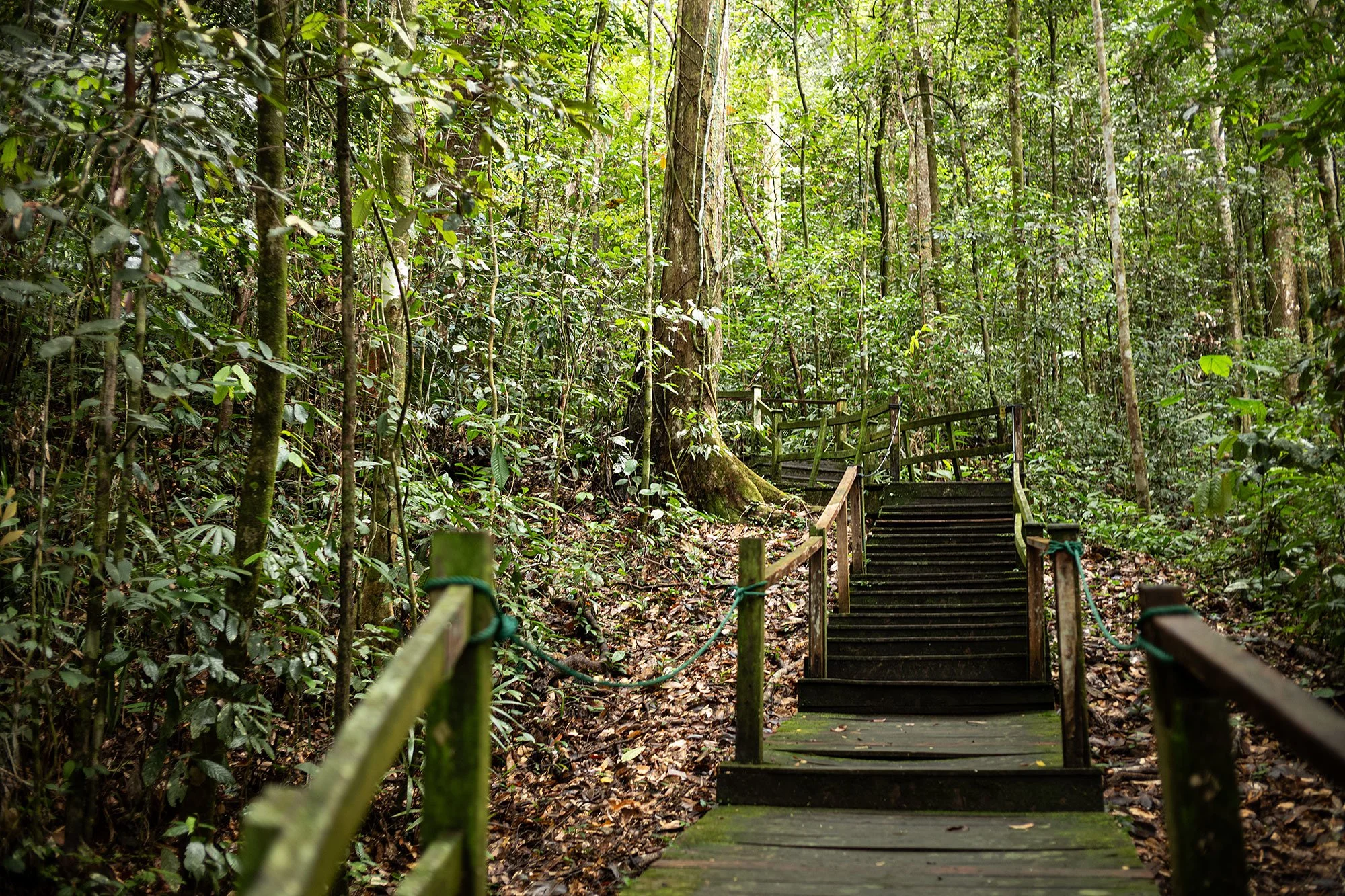
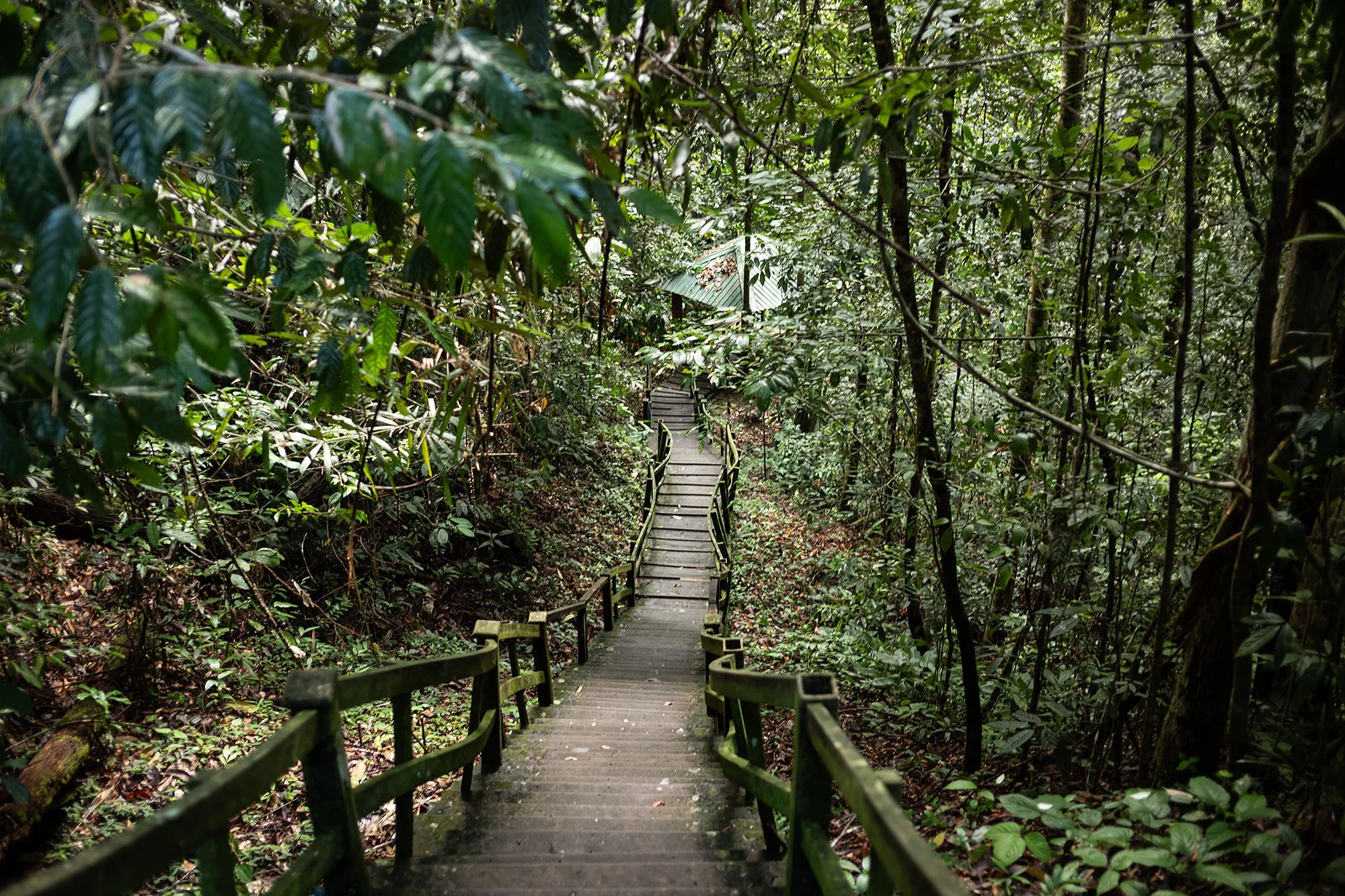
At the registration jetty we disembark and are asked to fill out our names and nationalities in a thick book before Mira gives us another quick briefing and warns us that the steps can be slippery. They’re made of wood and bowed here and there, but thin strips have been nailed into the edges to help with traction. I can’t imagine how much work it is to maintain the path. Mira tells me it’s good work for the local people, though it’s not easy; all the wood has to be brought by boat and then carried up the mountain.
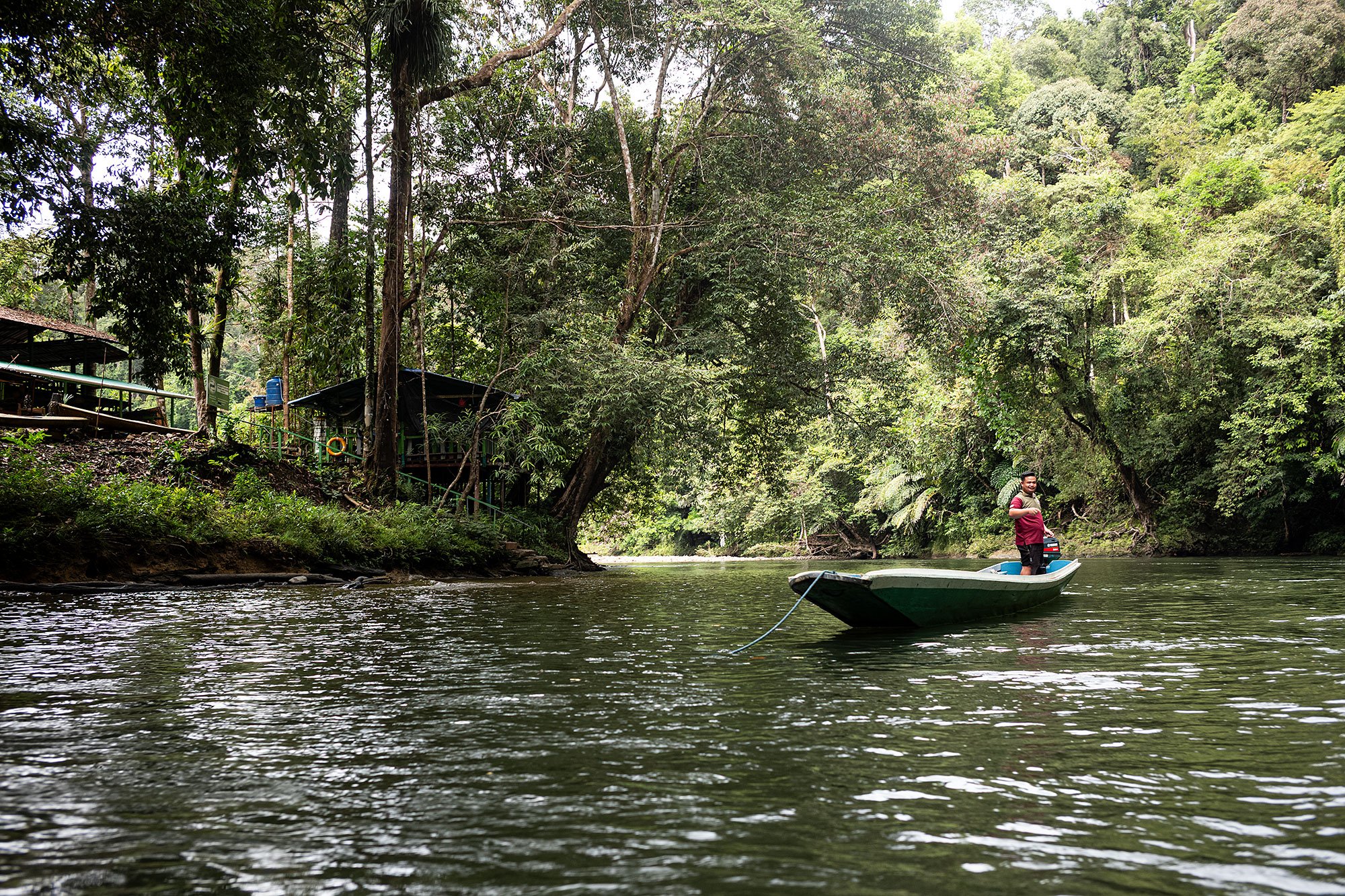
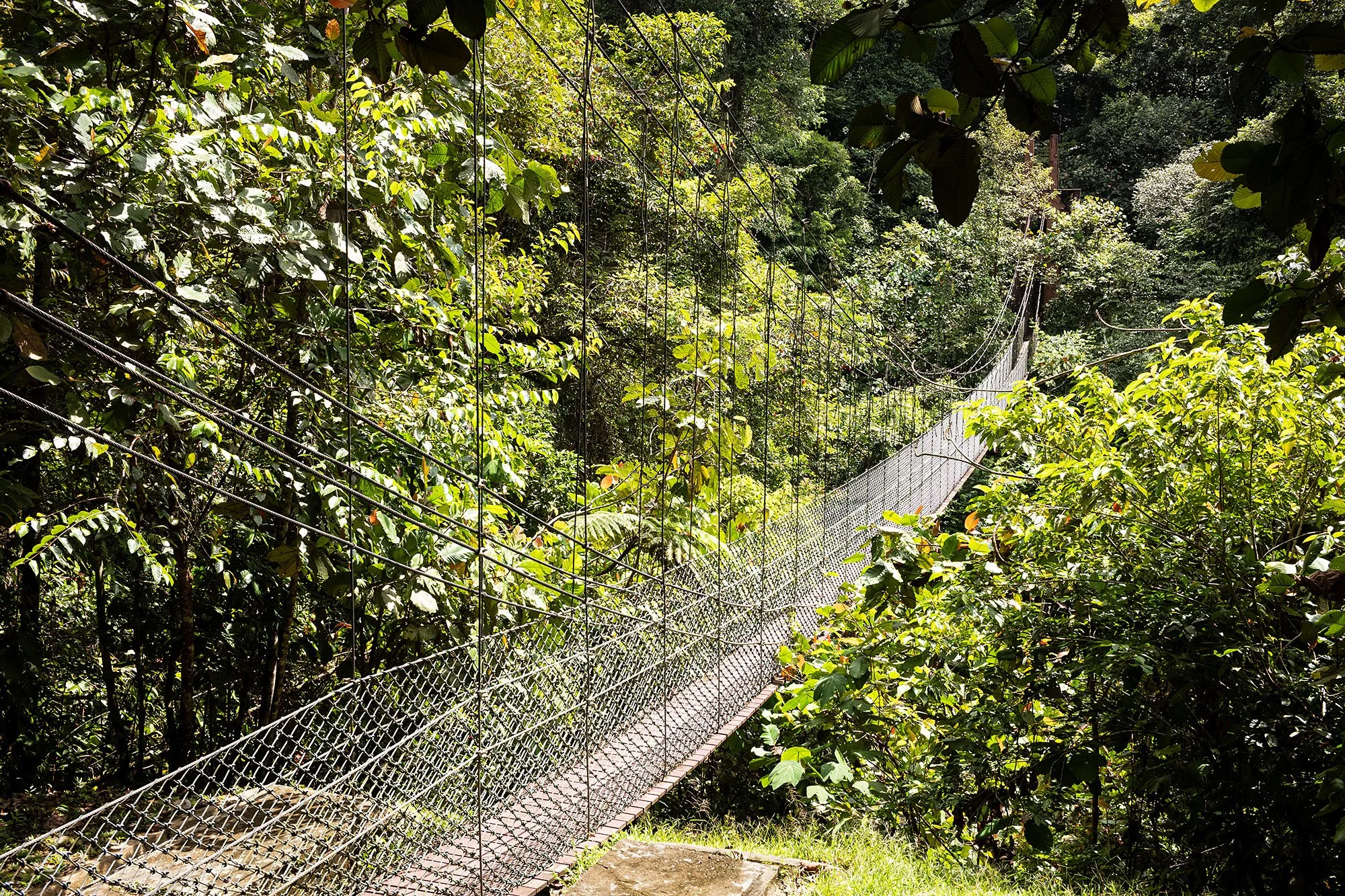
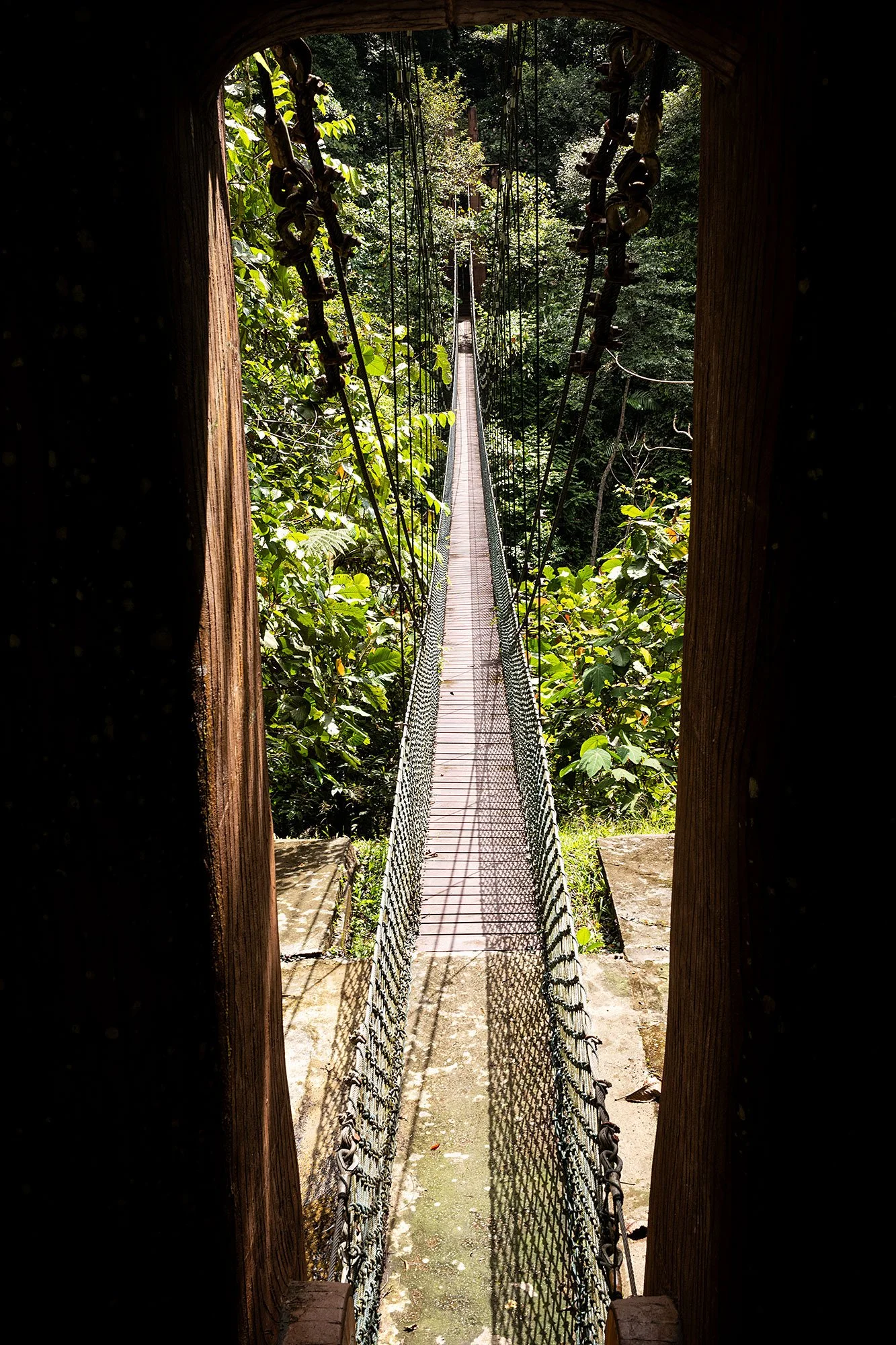
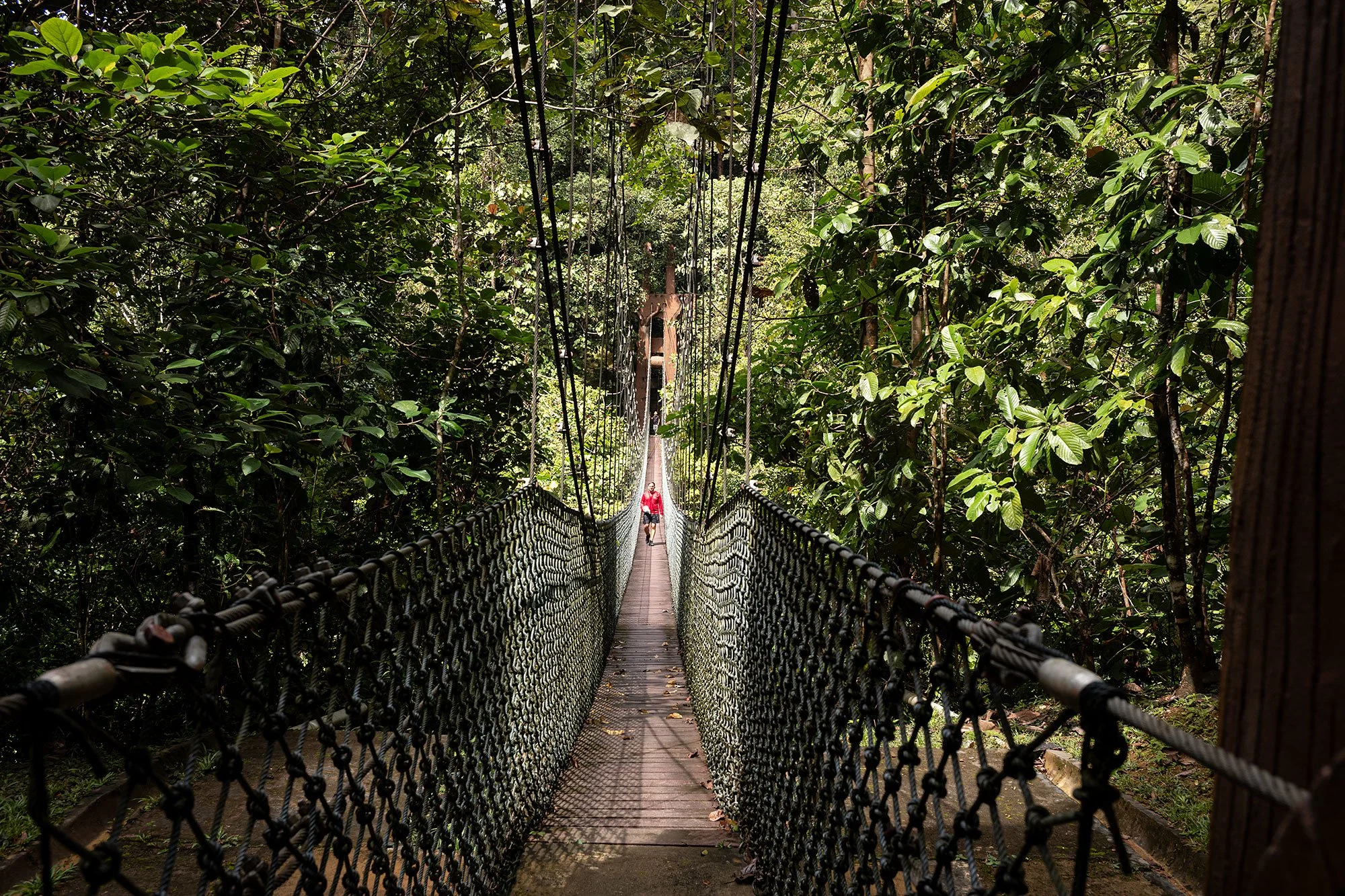
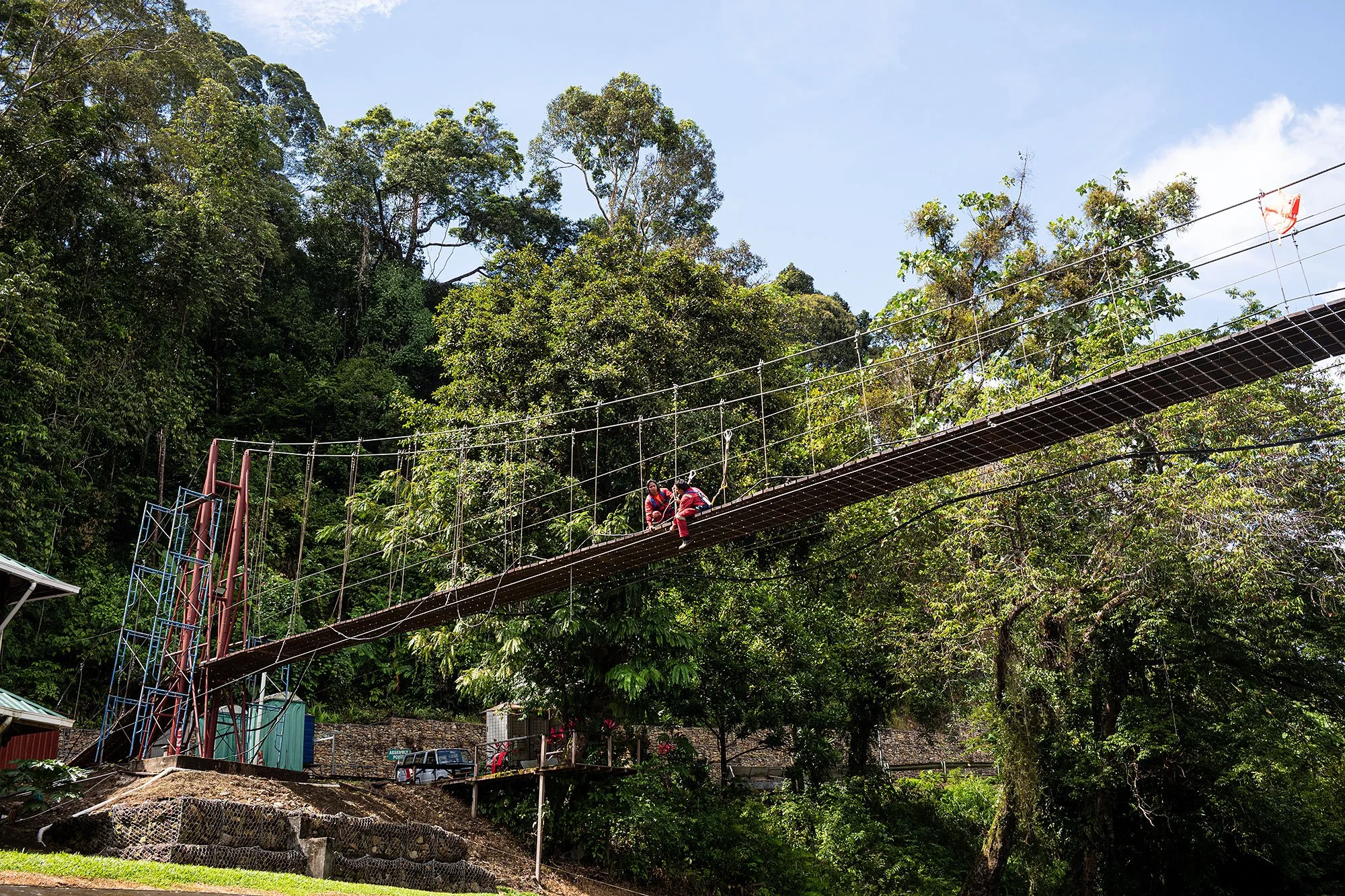
After a short set of stairs we reach a hanging bridge that spans the water. There’s a limit of five people who can cross at a time. We are exactly five, though the husband ends up sending his wife back to wait for us at the starting point; she’s uncertain whether she can navigate all the stairs.
We climb the steps, stopping at each of the huts along the way to rest and stay hydrated. It’s very humid in the rainforest and I can feel my sweat soaking through my shirt.
At one stop I ask Mira how she’s come to be a guide. She said that they were looking for local guides in the area so she took a course and passed the exam. She’s since taken two more, one on birds and the other covering the city. She completed her first course in 2019 and then the subsequent ones in 2024 and 2025. She loves being a local guide, having grown up in the village. Her commute to work is less than a minute.
When we reach the last hut, some 800 steps later, she cuts our rest short, encouraging us to head up the last few steps to the canopy walk before it rains.
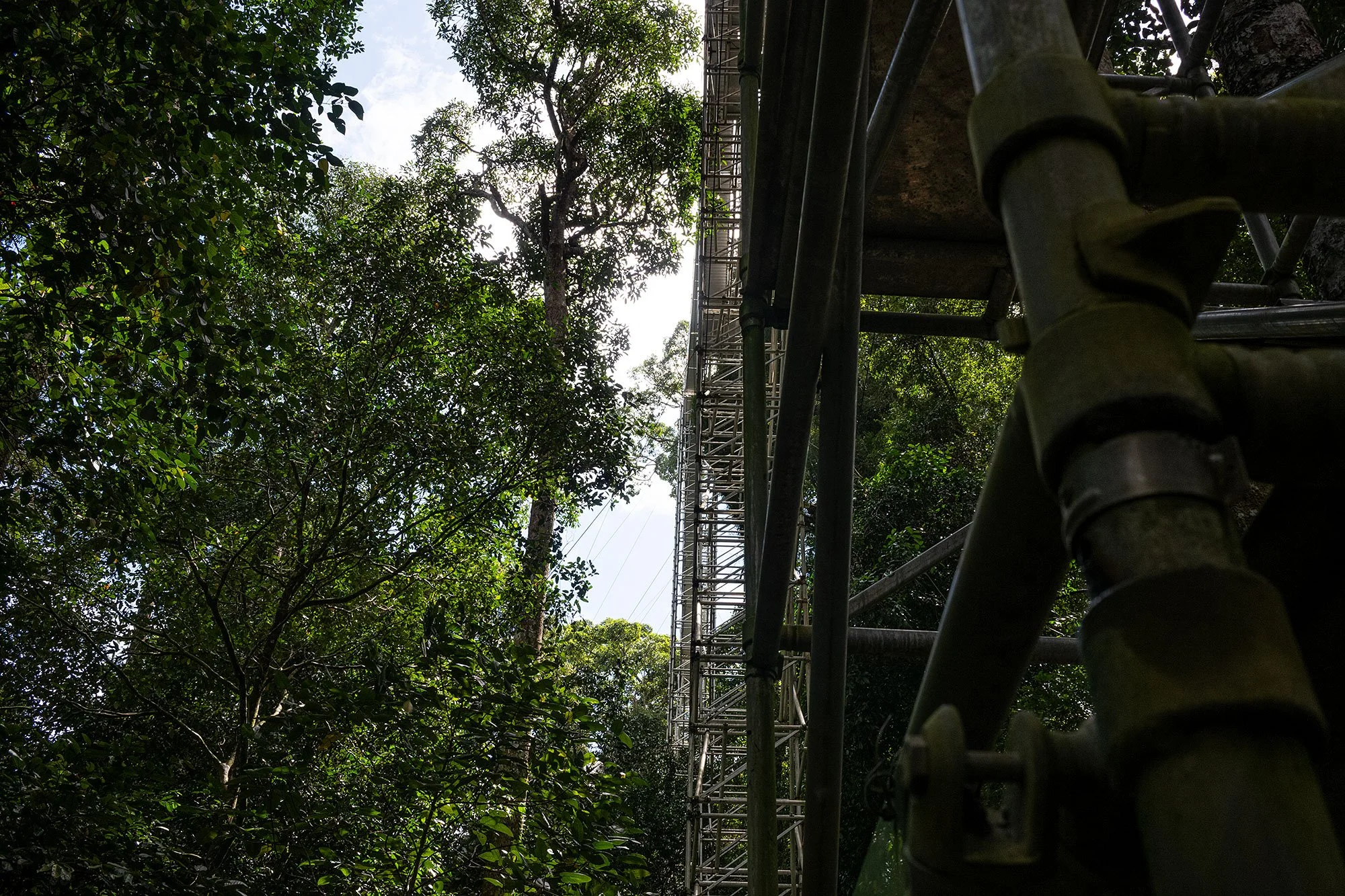
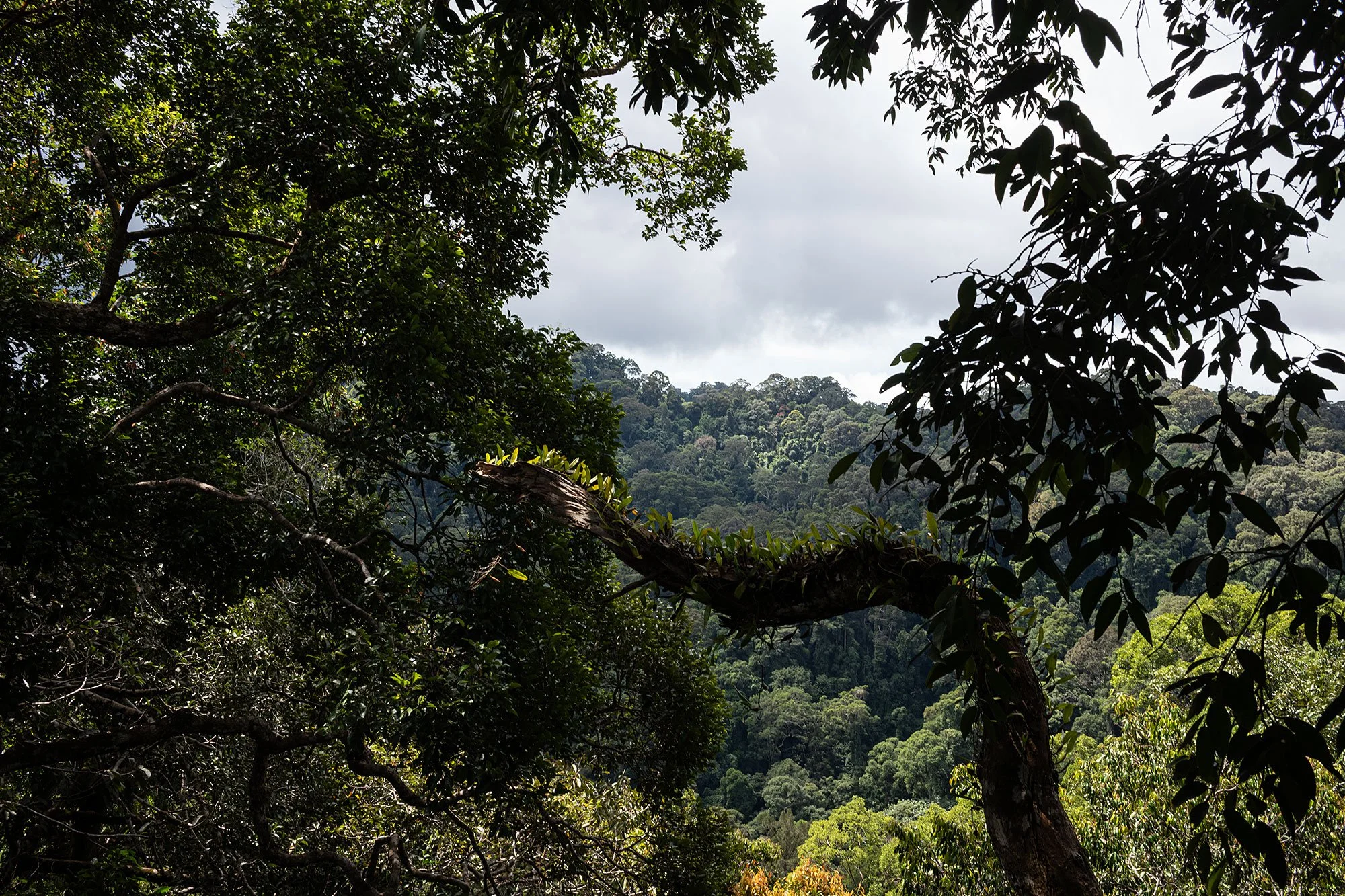
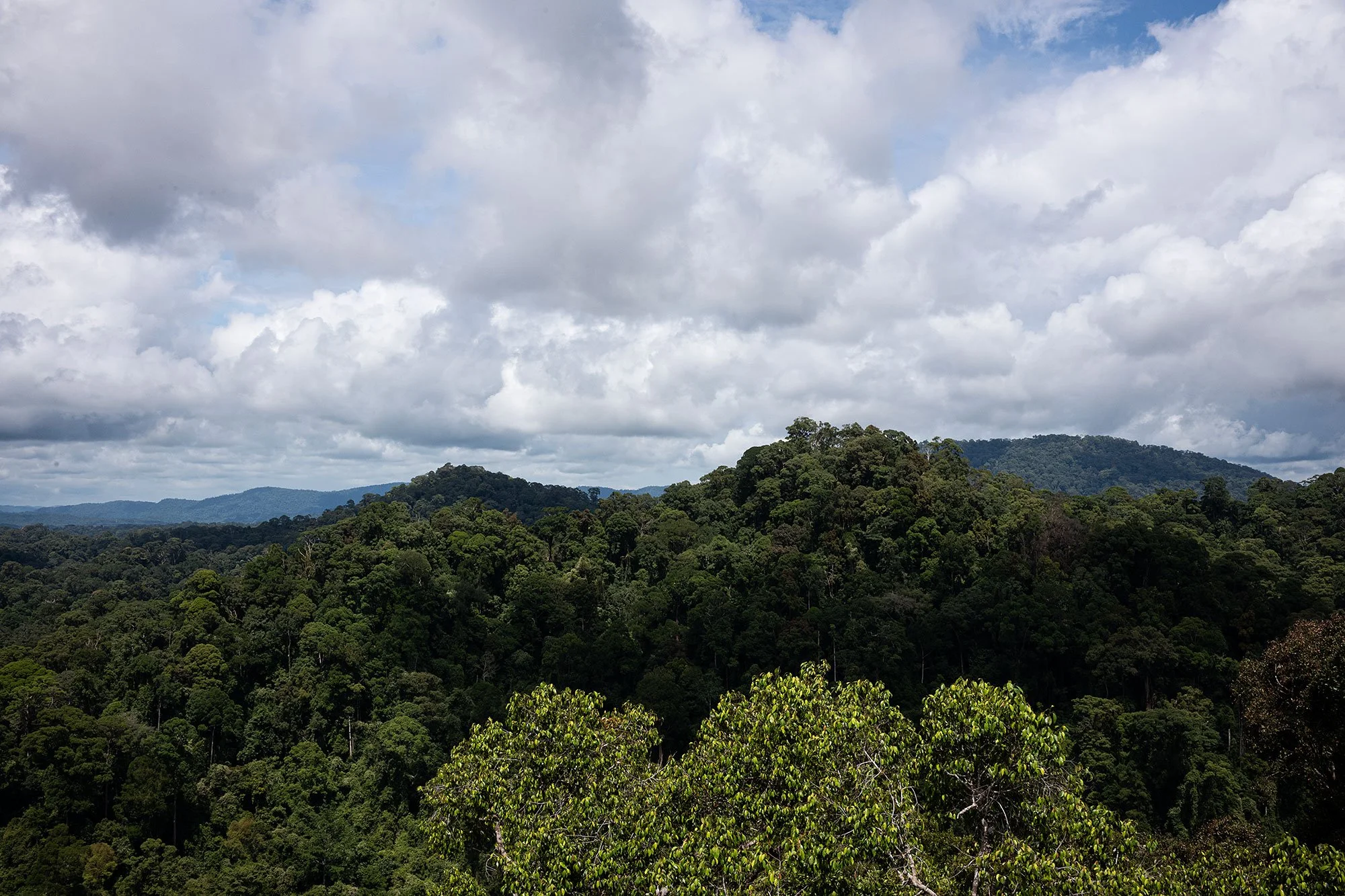
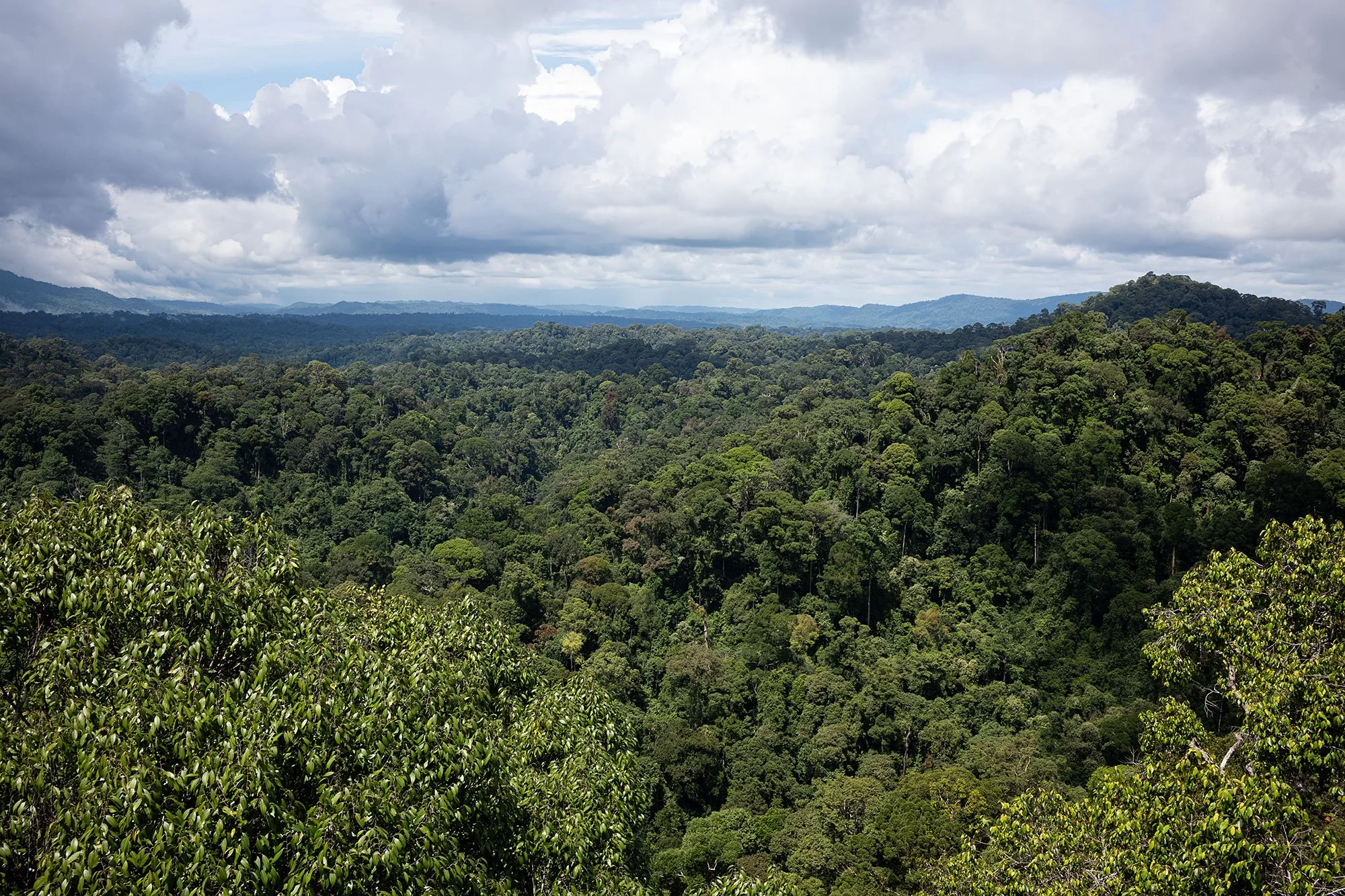
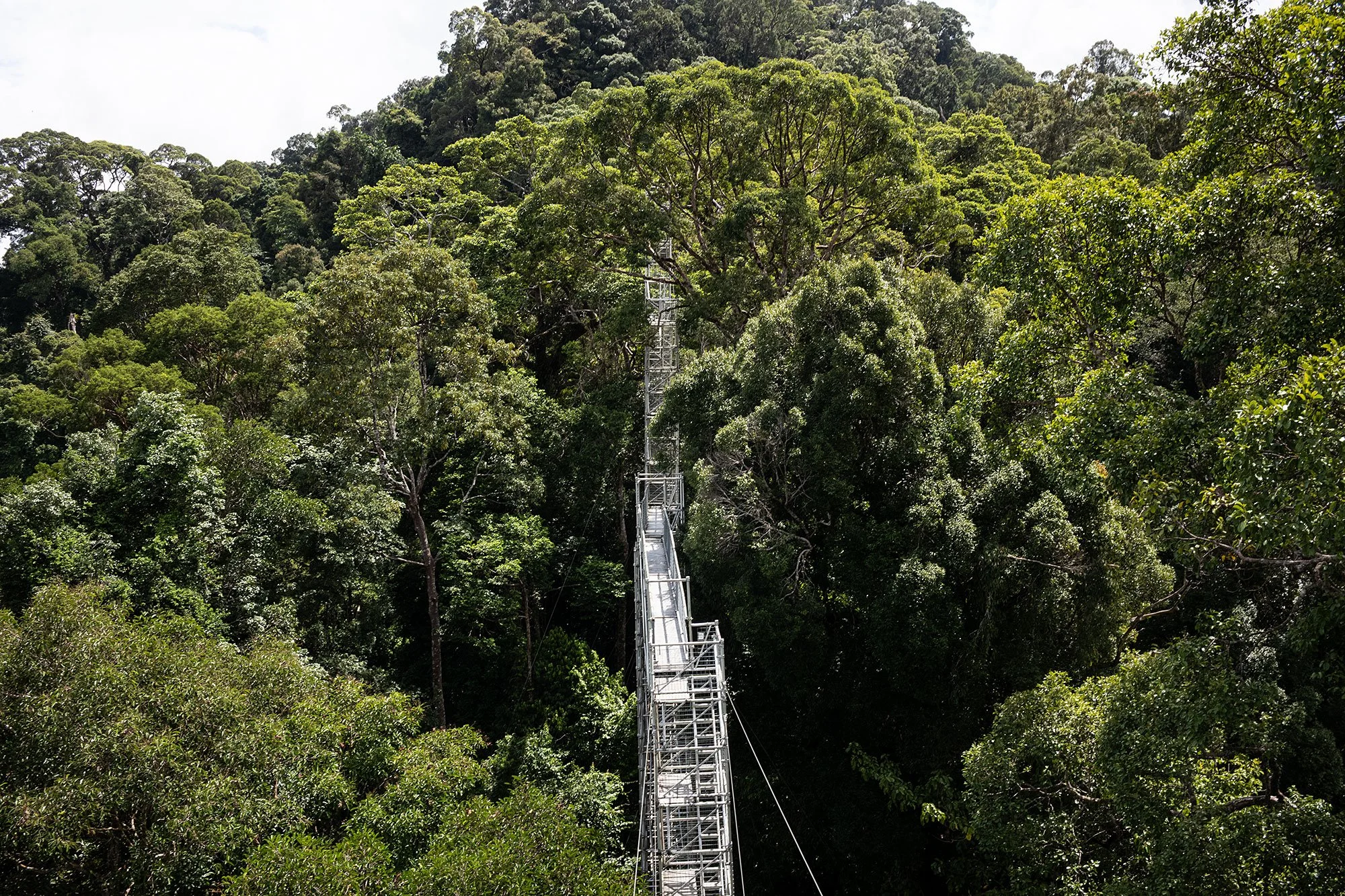
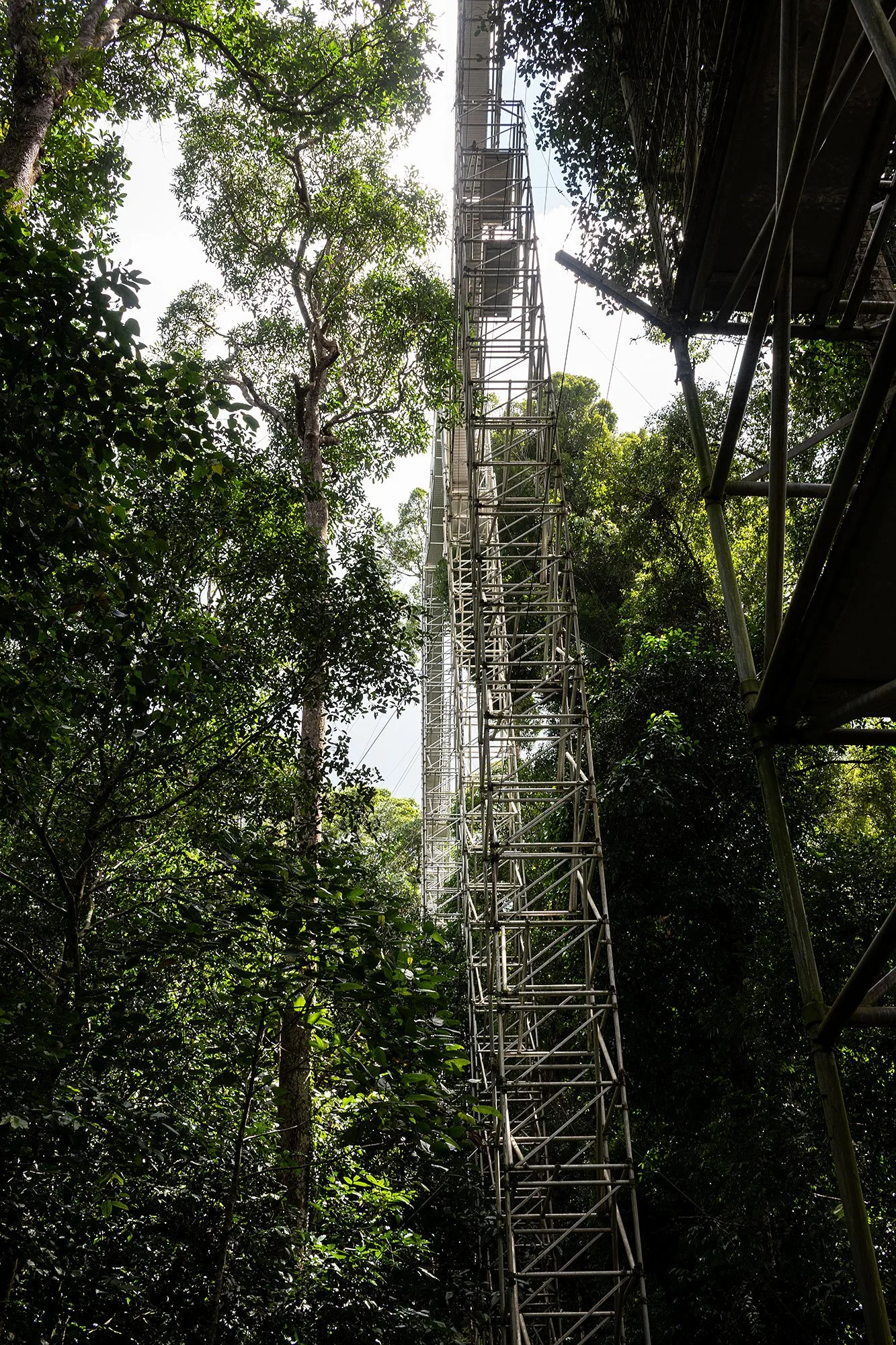
There’s a small group of people at the base of the first tower who are resting after having climbed up for the views. Mira gives us another quick briefing. She tells us that the first tower is the tallest, a climb 43 meters. After going to the top we can come back down to take the bridge to the next tower, where there are stairs up and then another bridge to a third tower.
The first tower is the highest climb, though the third is highest in elevation as it’s further up the mountain, about 400 meters above sea level. She tells us that there’s only three people allowed on the bridge at a time, but the Austrian and I are the only two heading up.
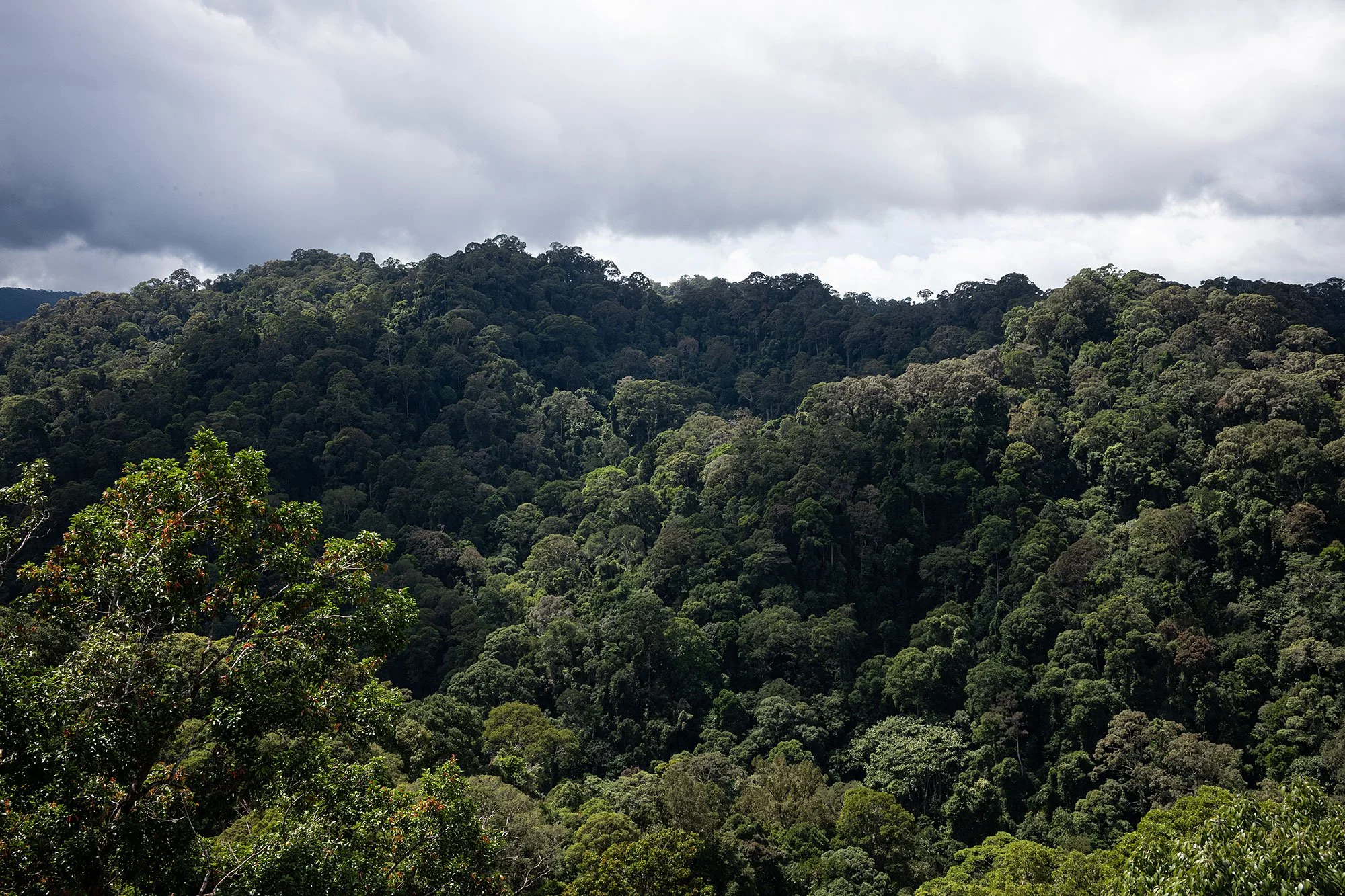
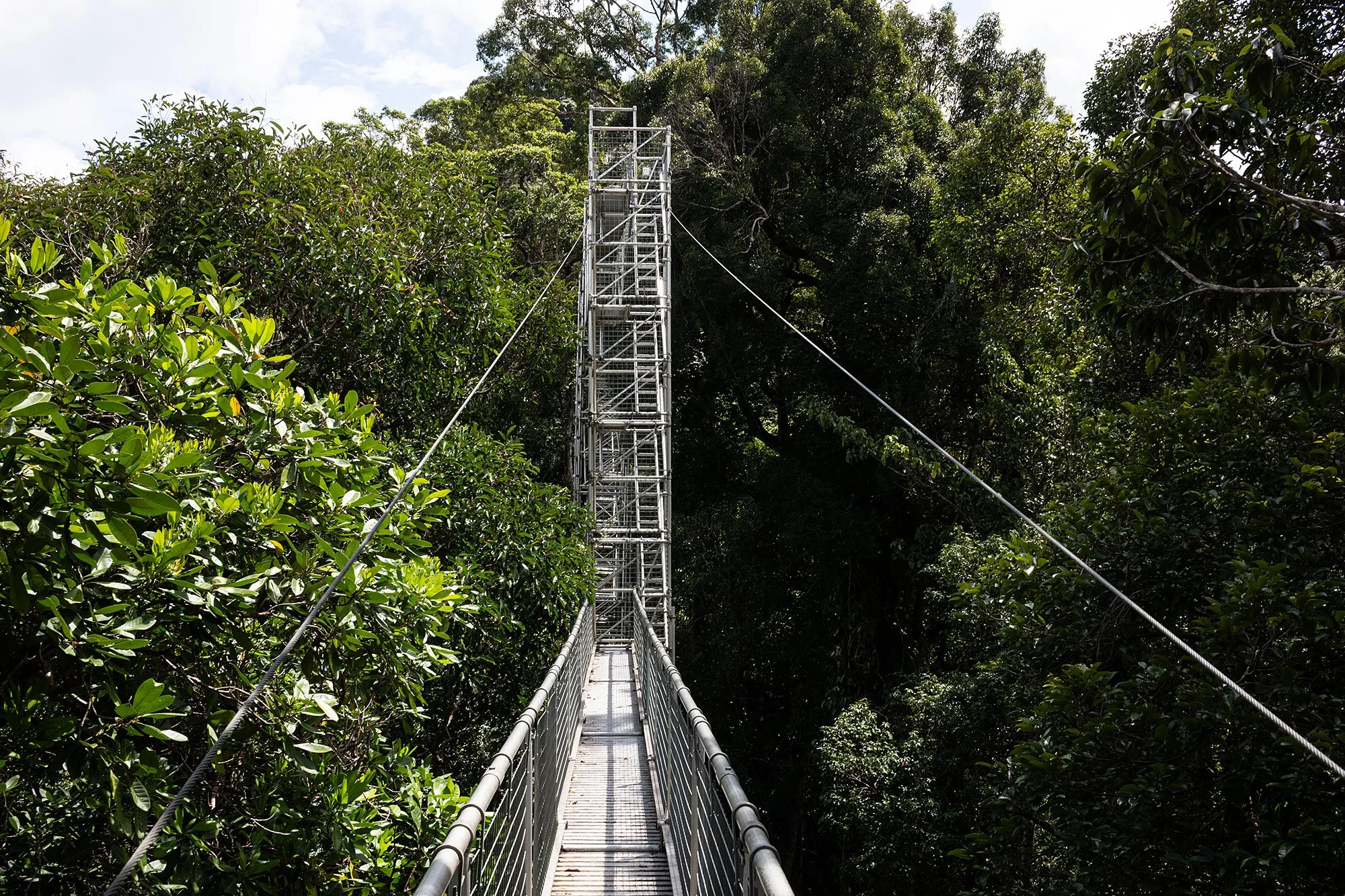
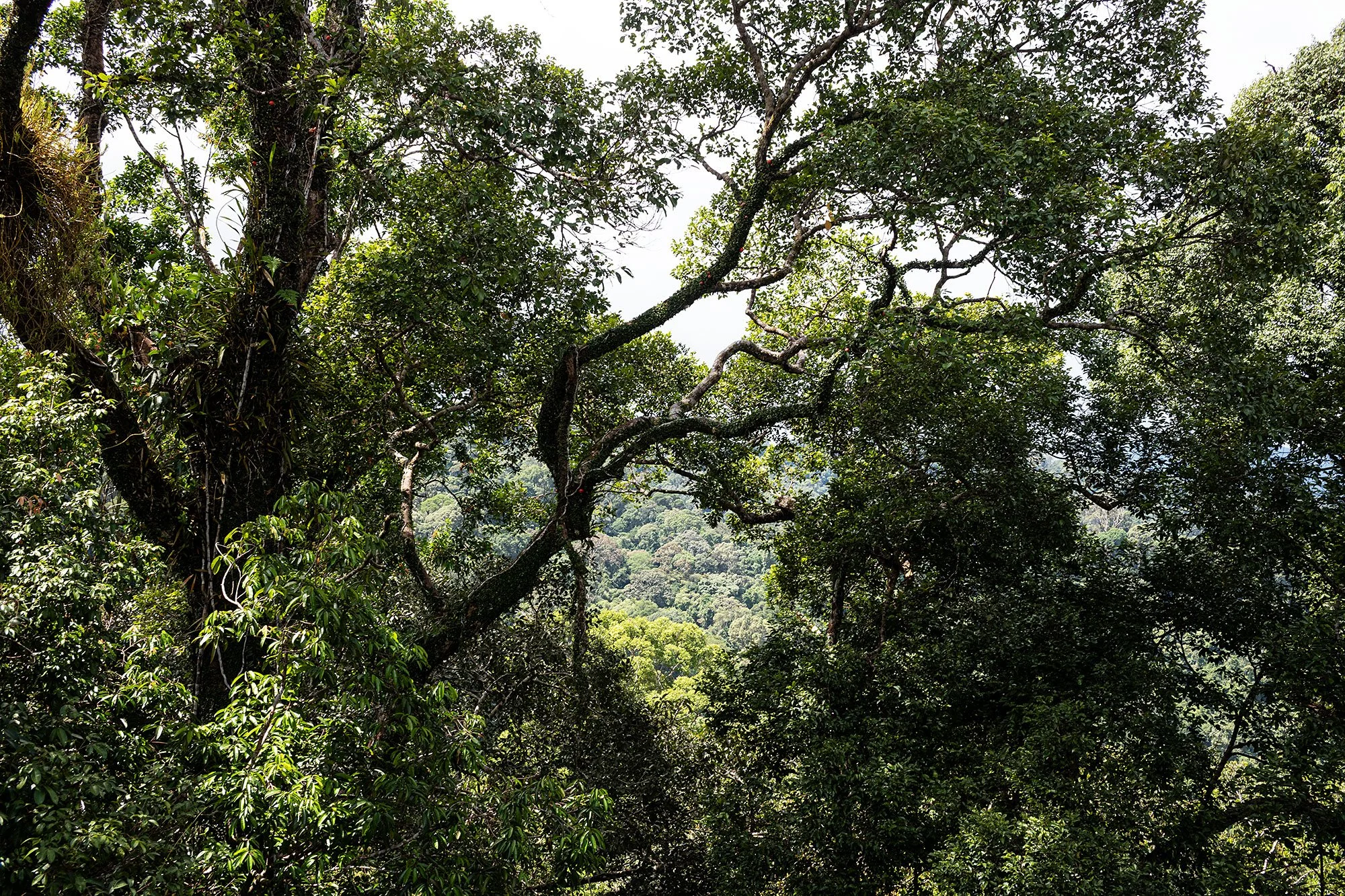
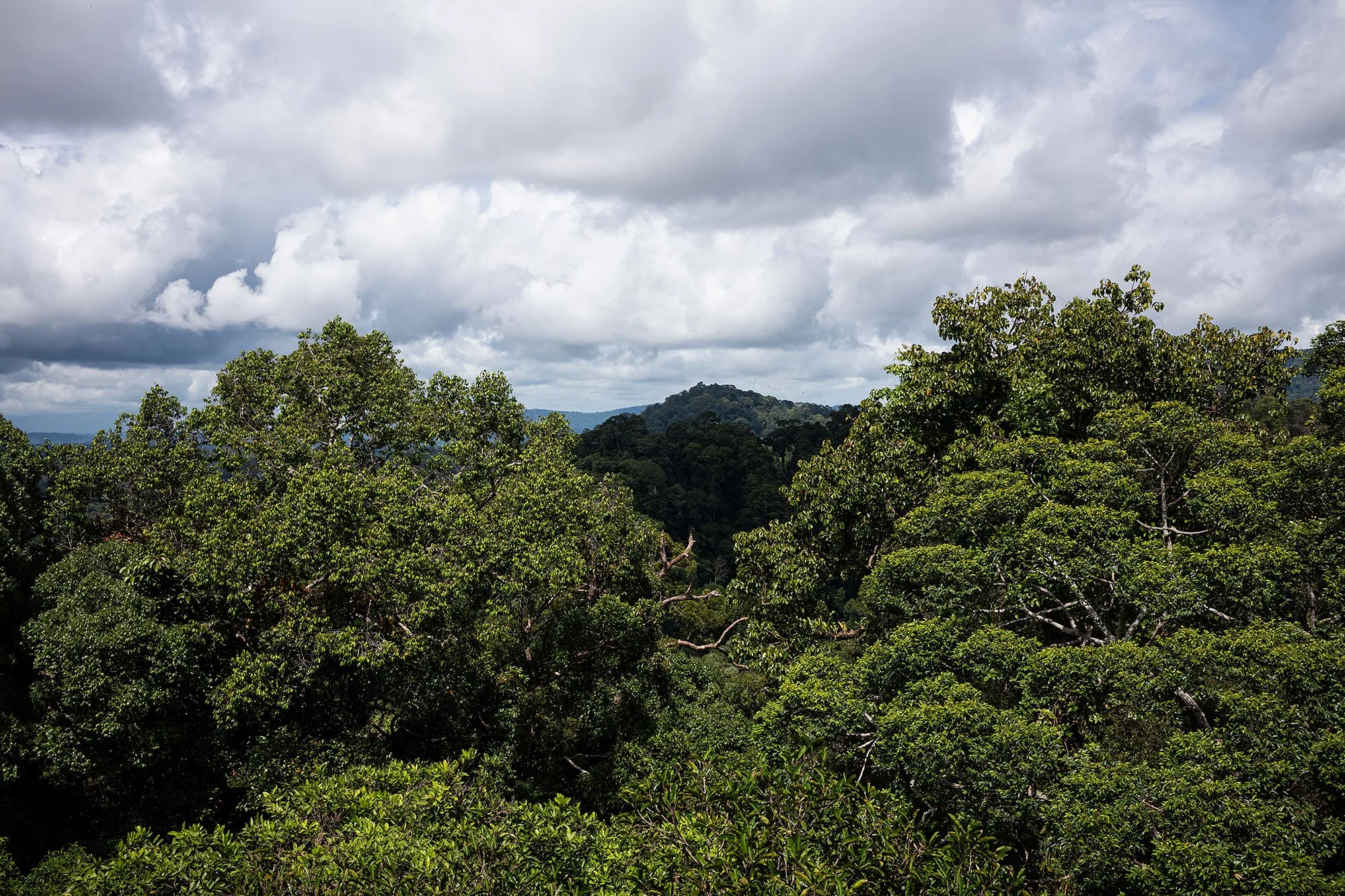
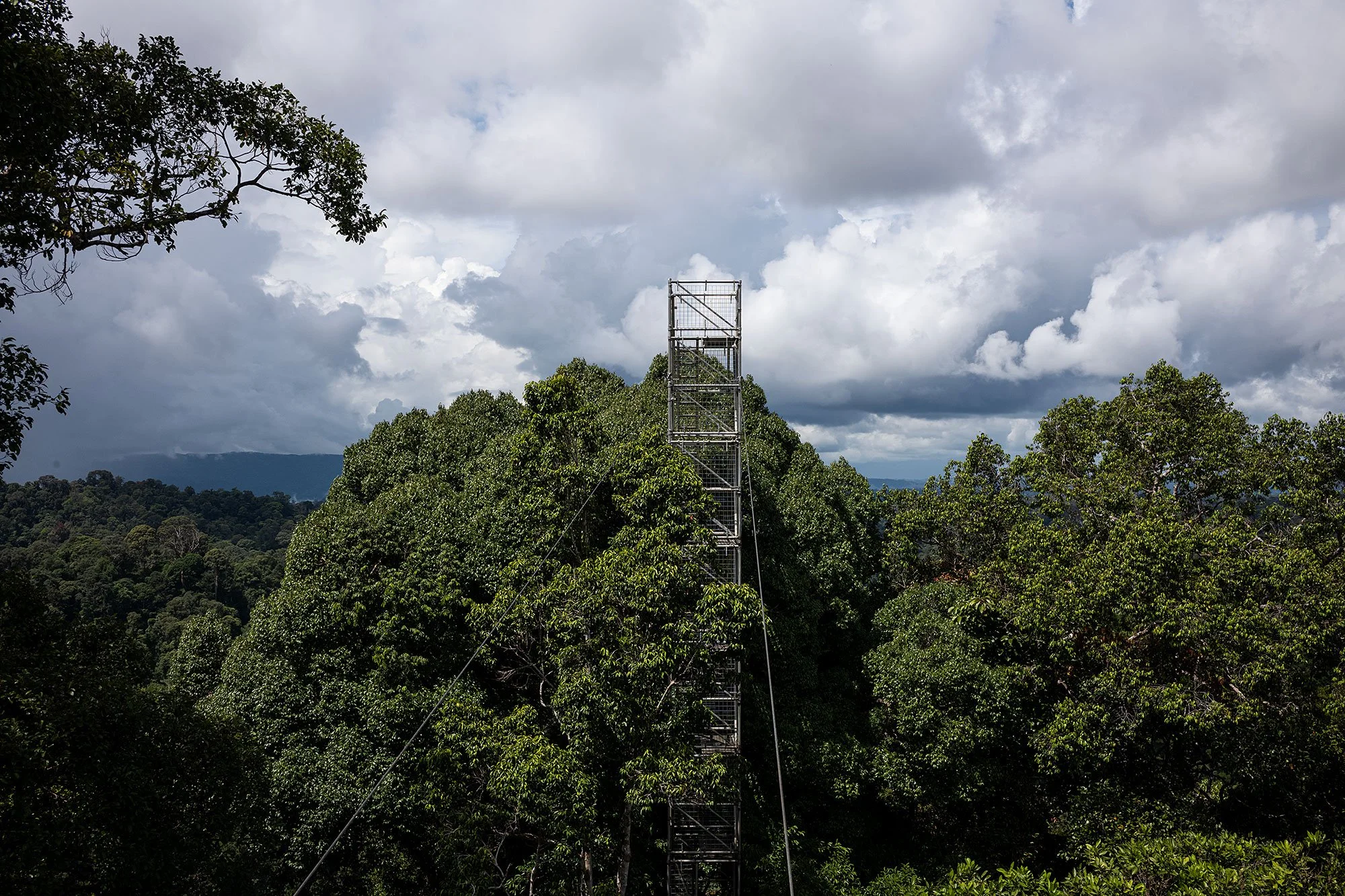
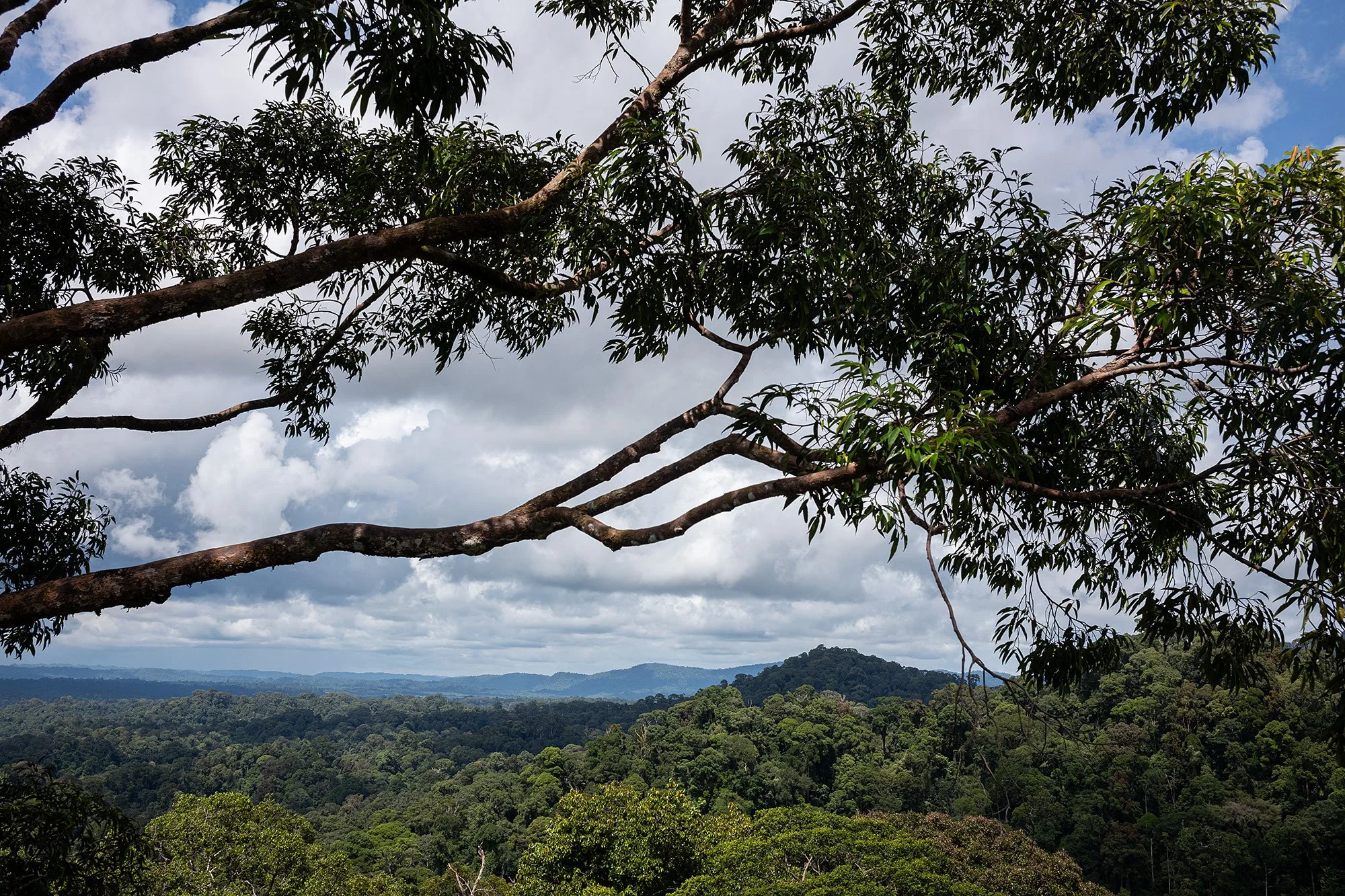
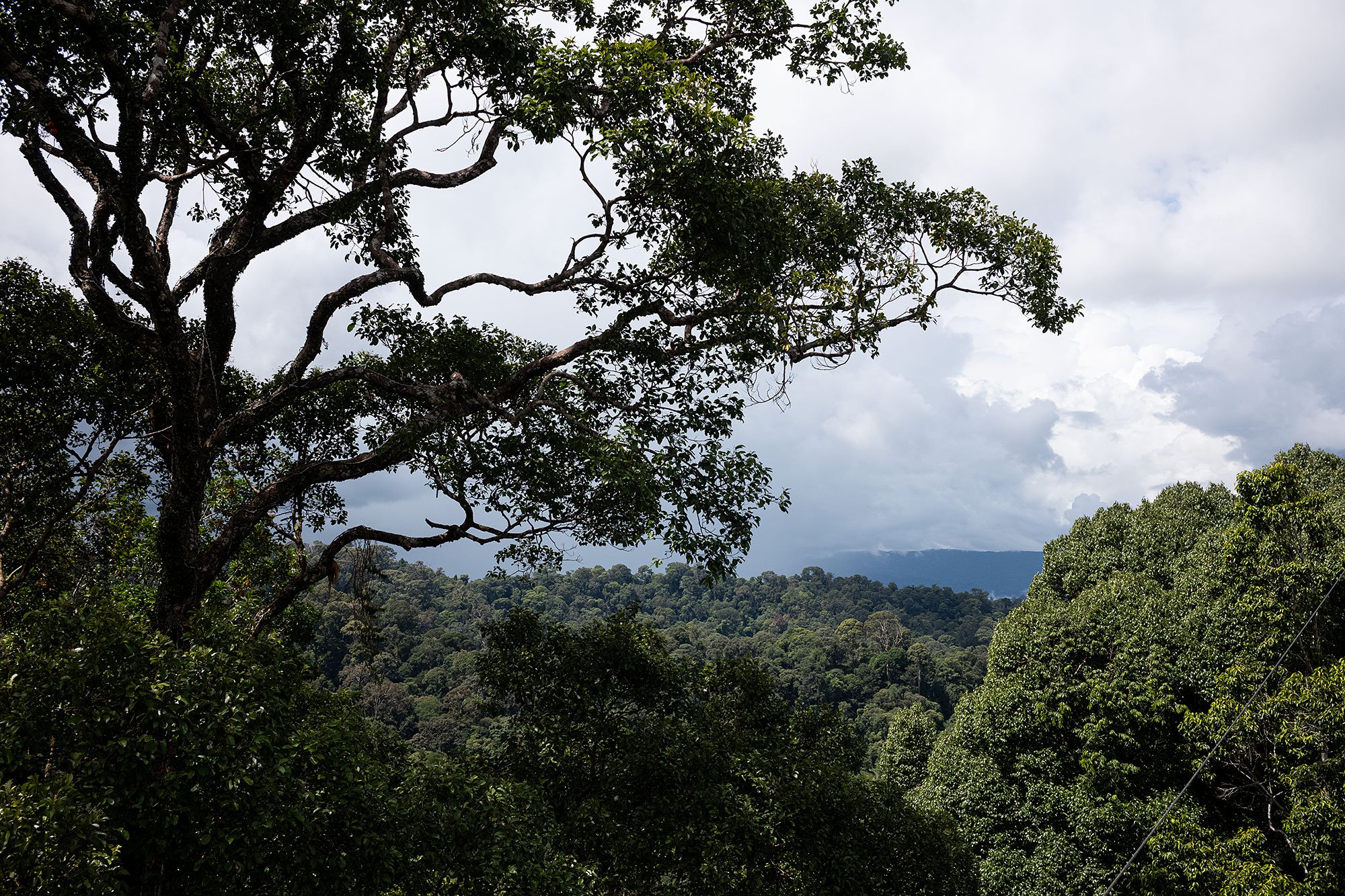
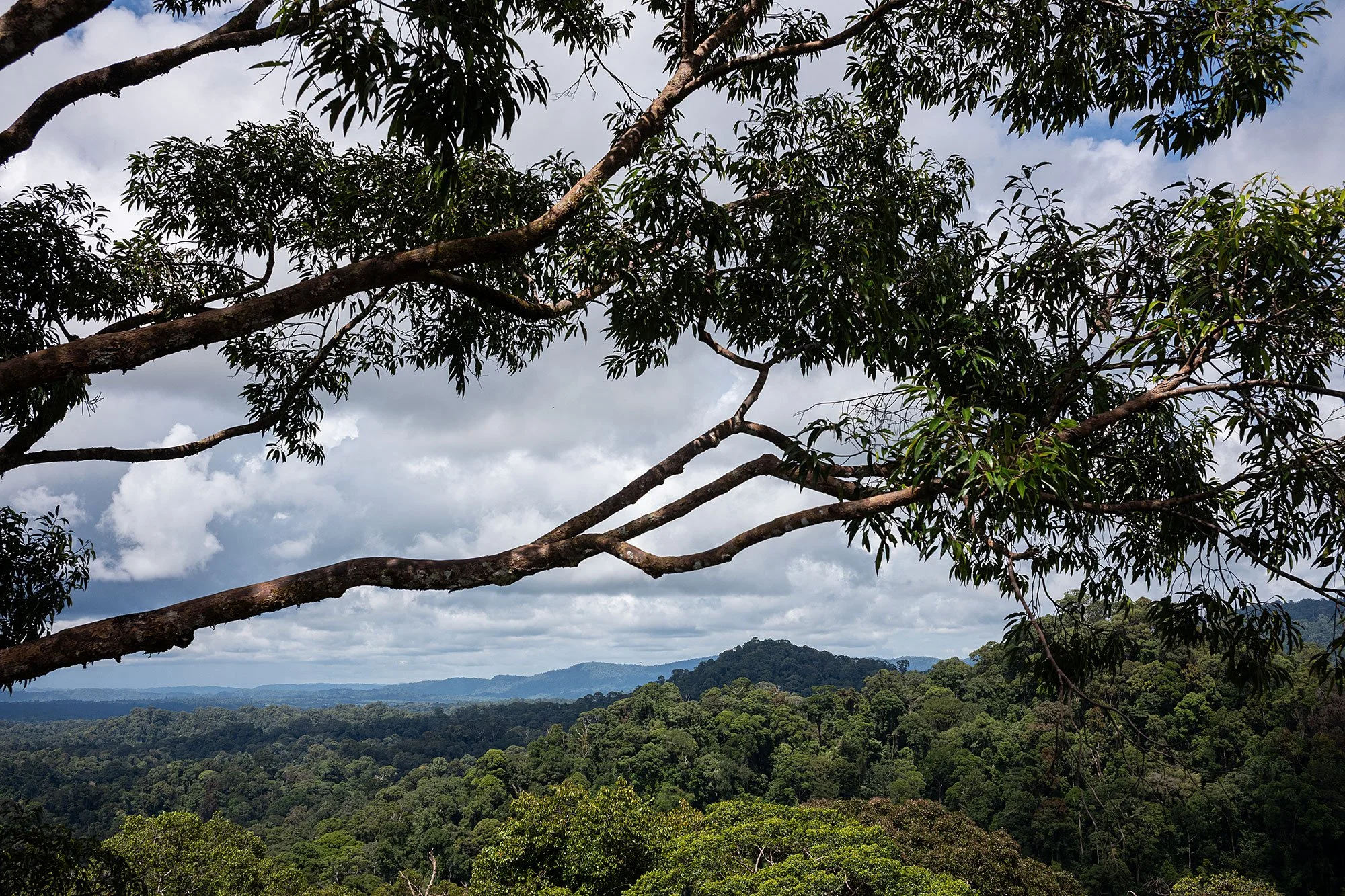
I offer to let the Austrian go first, telling him I’m slightly afraid of heights. That said, the climb is a lot less scary than I had anticipated and the views from the top are stunning. The weather holds and the clouds add drama to the landscape, selectively allowing the sun to illuminate the trees.
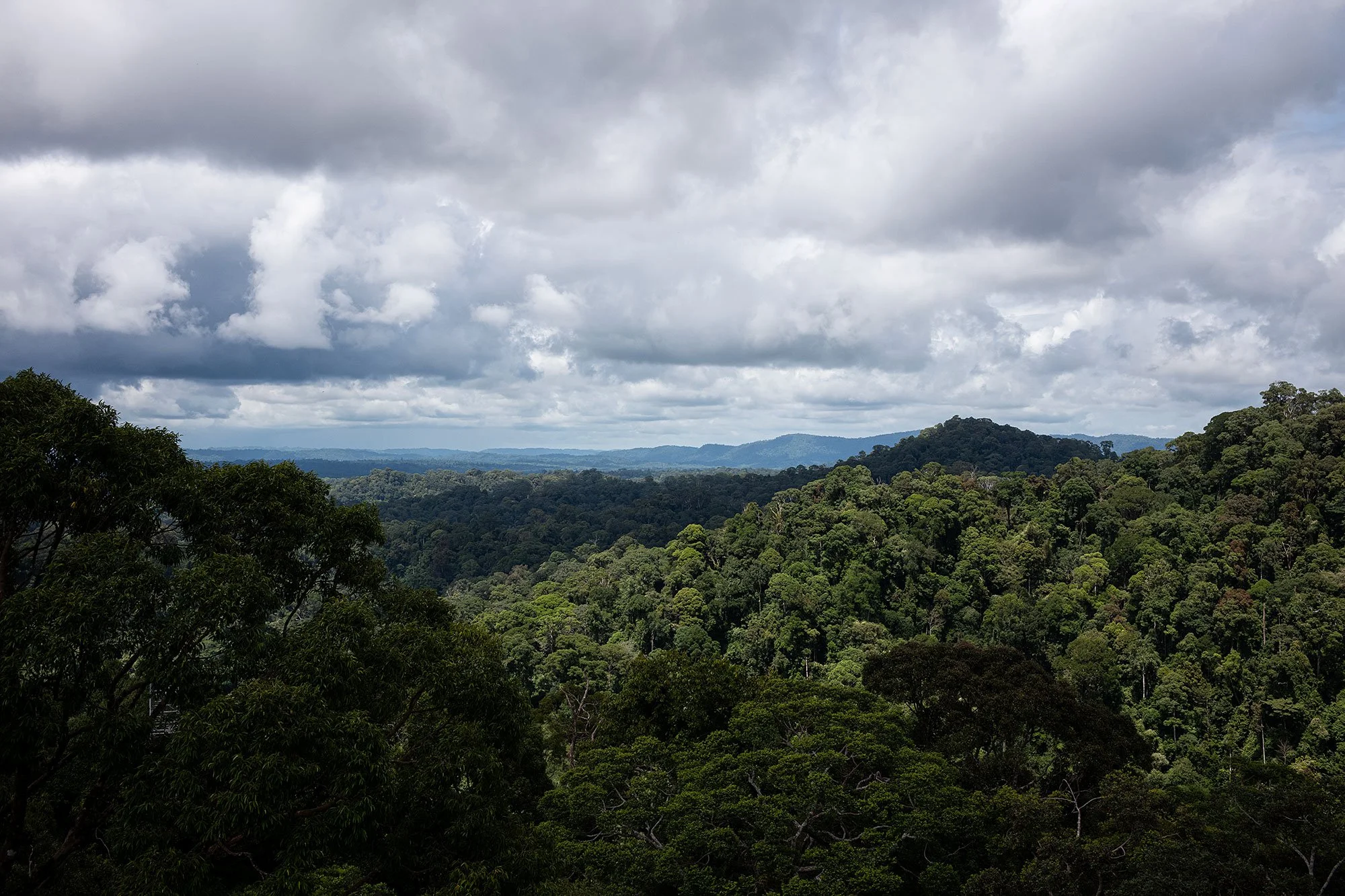
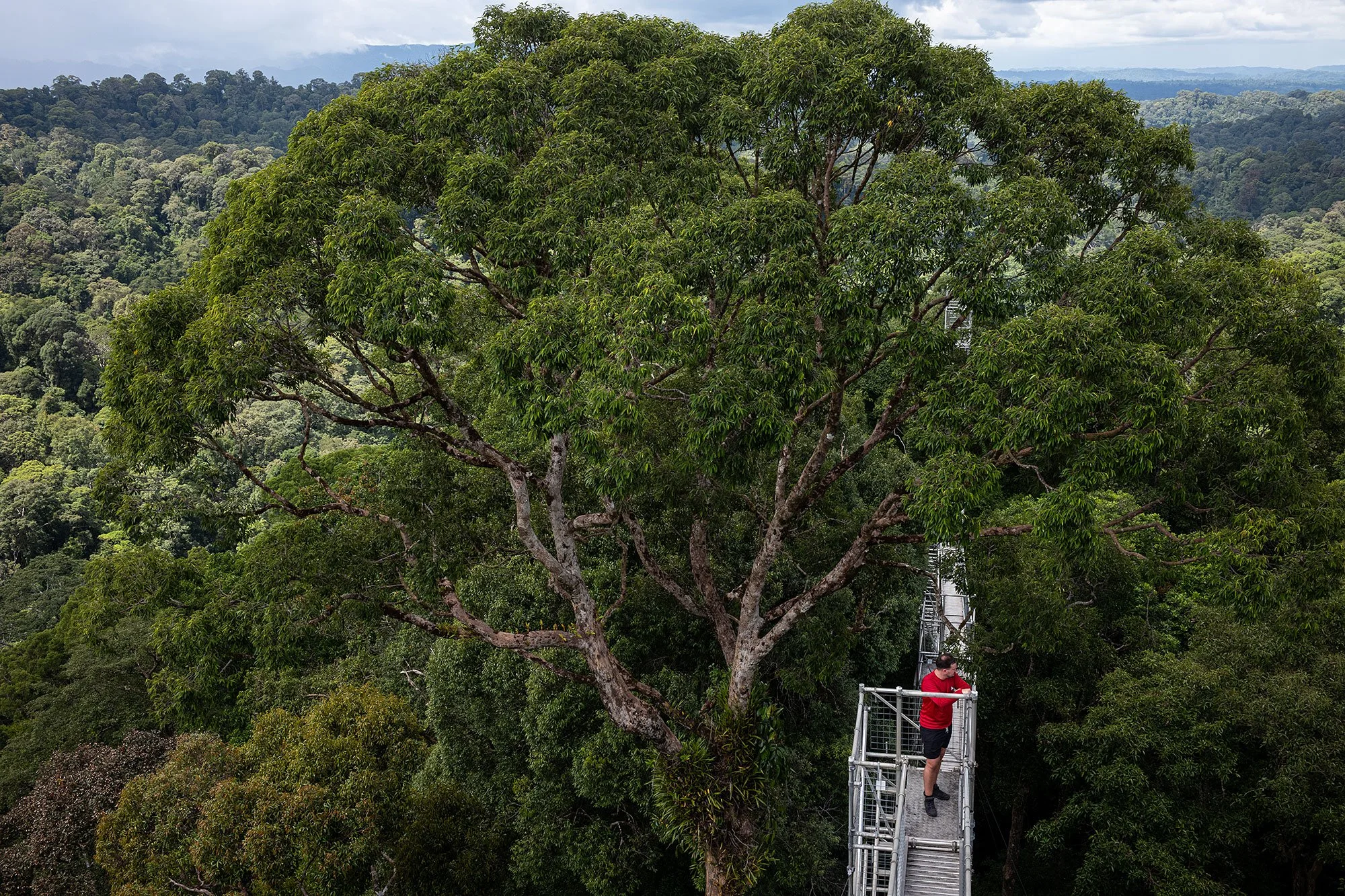
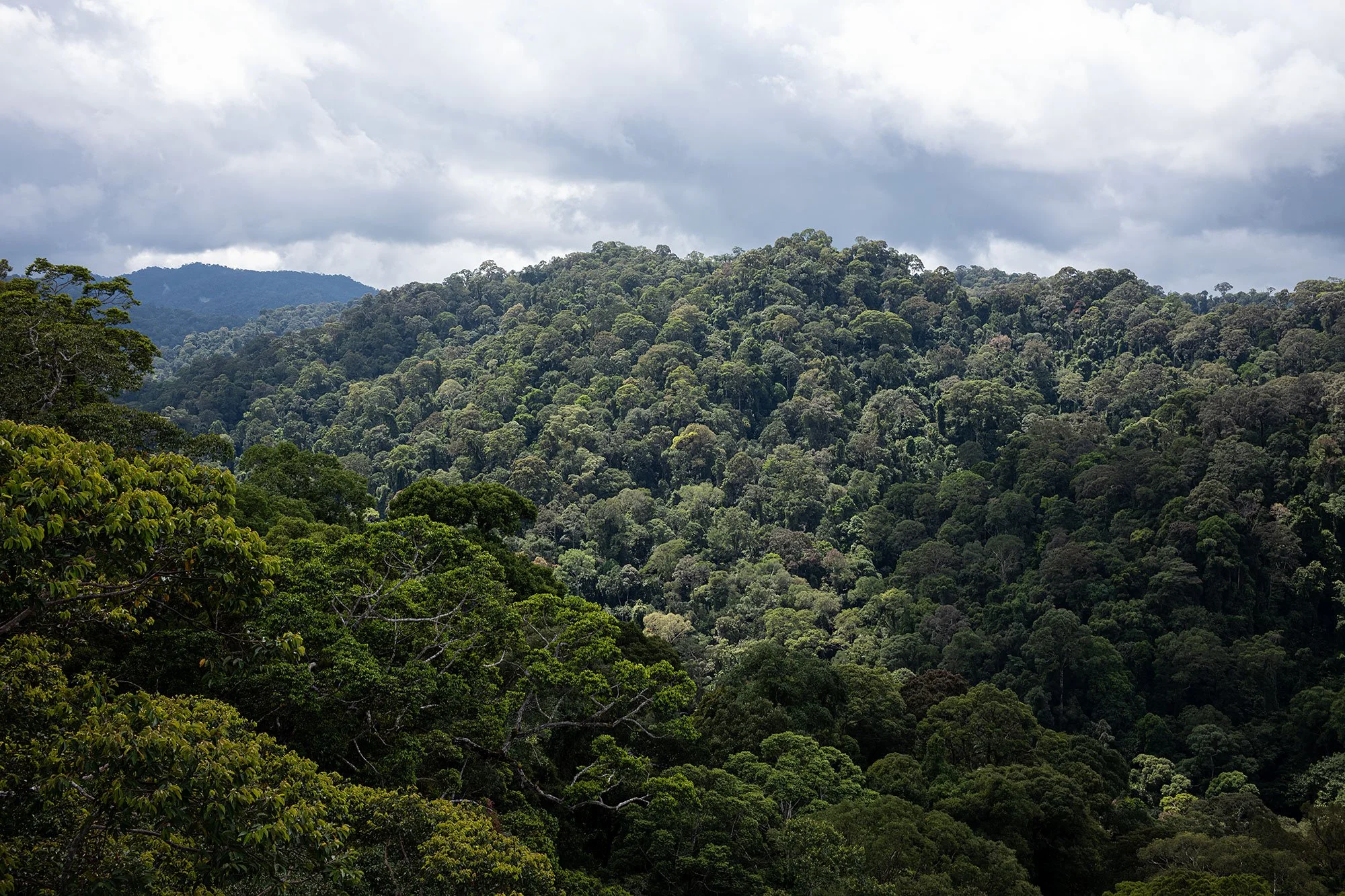
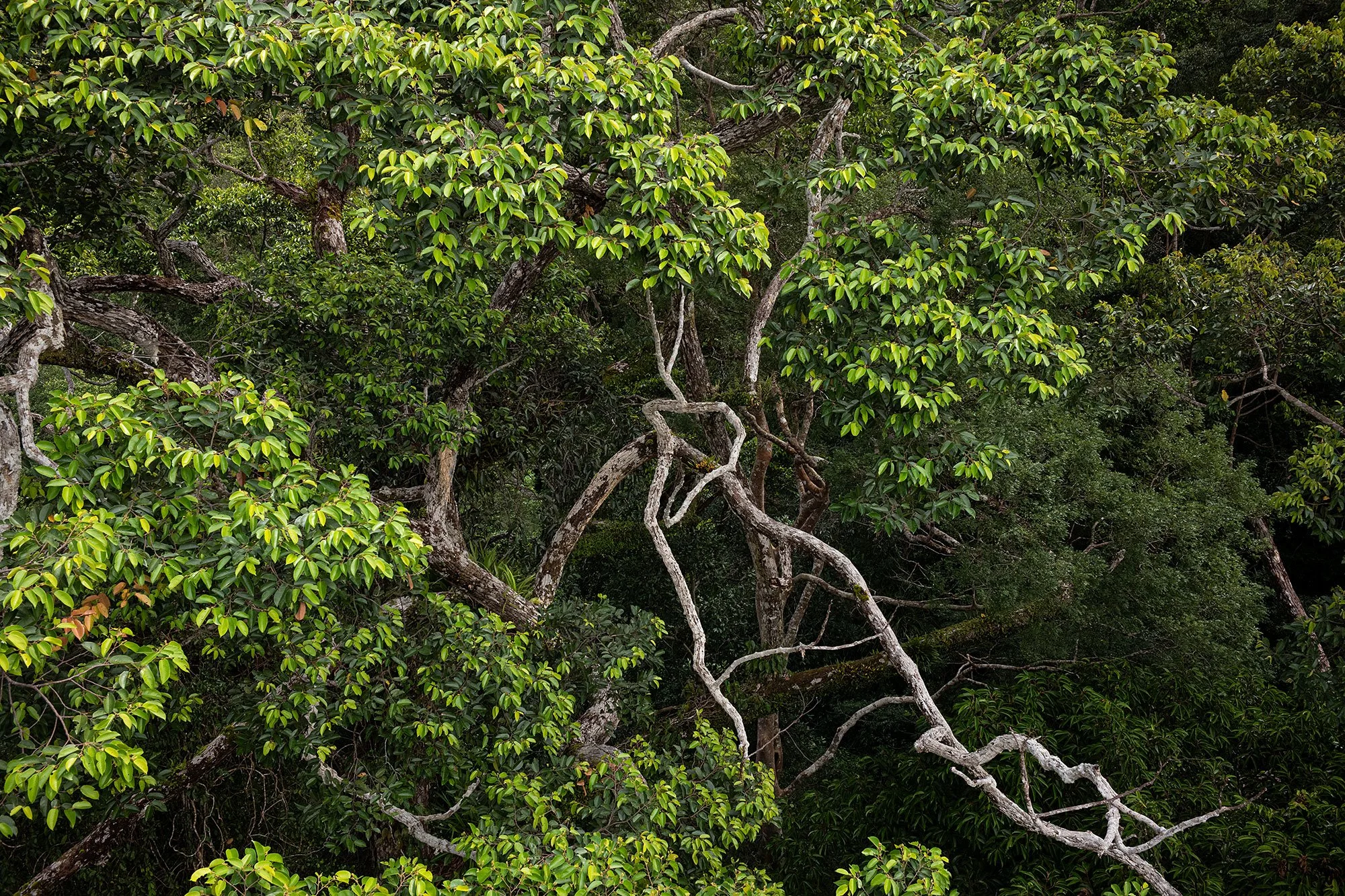
On the way down something bites my hand as I reach for the railing. I wonder if it’s one of the giant ants we saw at the registration jetty but I don’t see anything crawling on the rail.
Back on the ground we find Mira chatting with a ranger in charge of watching over the towers. I tell her something bit me and I show her my hand. She tells me it was probably a stingless bee. They like to buzz around and rest on the towers. She tells me it’ll be fine soon, assures me it won’t kill me.
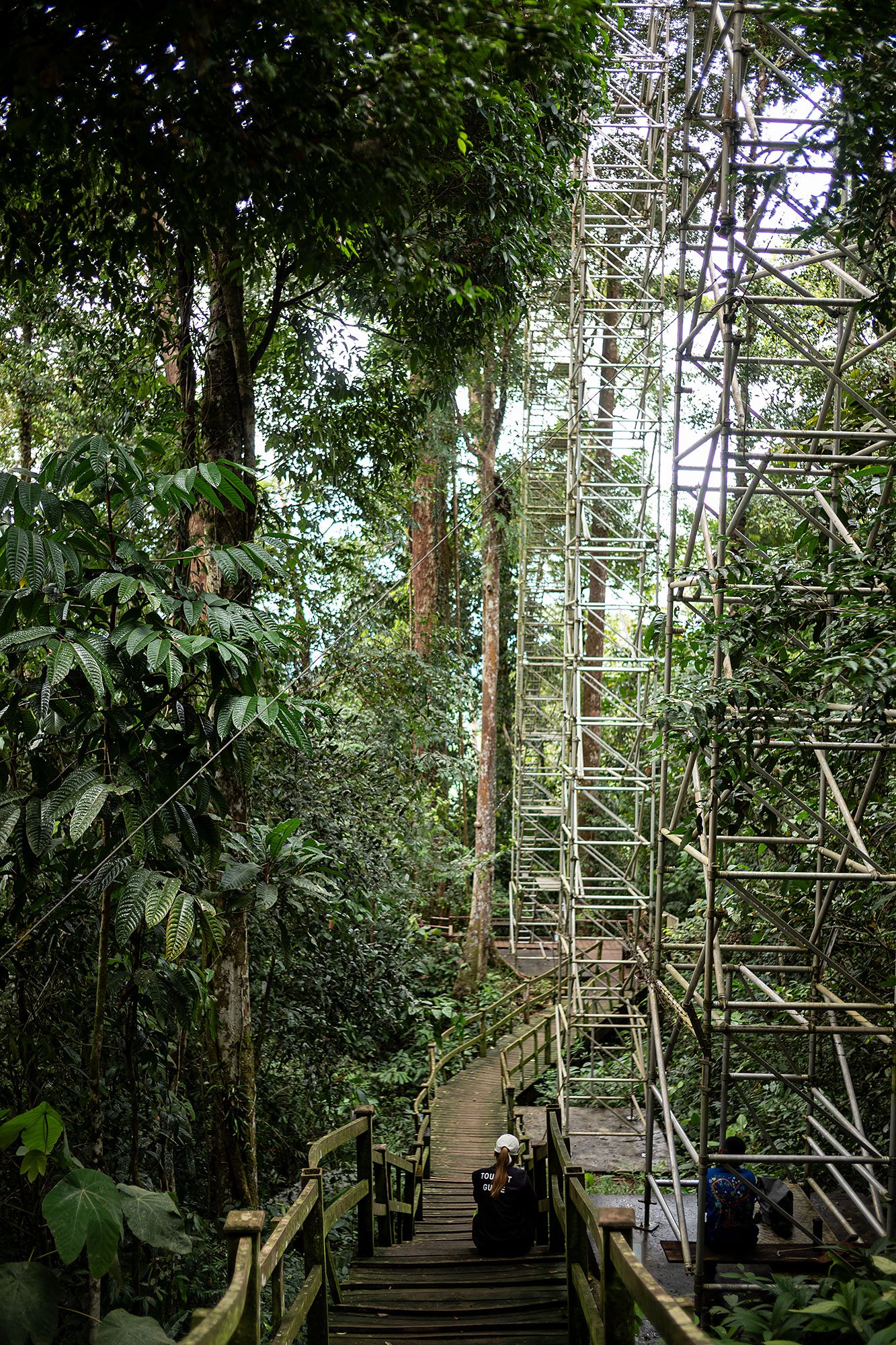
I ask her how many people come to visit. She tells me when there are Chinese or Filipino tourists there can be groups of up to 80, but it’s usually around 20 or so. She tells me that locals don’t tend to come out as much.
On the walk back I ask her about lunch. She tells me it’ll be a chicken curry, a fish fillet dish in a Thai sauce, and some vegetables. I ask her if she cooks and she says she does; she enjoys it. She tells me she cooked the night before and may have some leftover sambal if I’d like to try it. She asks me if I like spicy food; I tell her I do. She tells me she’ll check when we’re back at the house.
I ask her what her favorite non-local food is. She loves sushi. I ask her if there are a lot of Japanese people in Brunei and she says no. But there are so many Japanese restaurants and matcha cafes! She tells me they’re mostly run by Chinese or Filipinos, but that all shops and restaurants need to have at least one Bruneian employee.
Back at the registration jetty we don our life jackets and helmets and take the short boat ride to the waterfall. It’s just behind an Outward Bound eco lodge and we walk up a small stream to reach the falls.
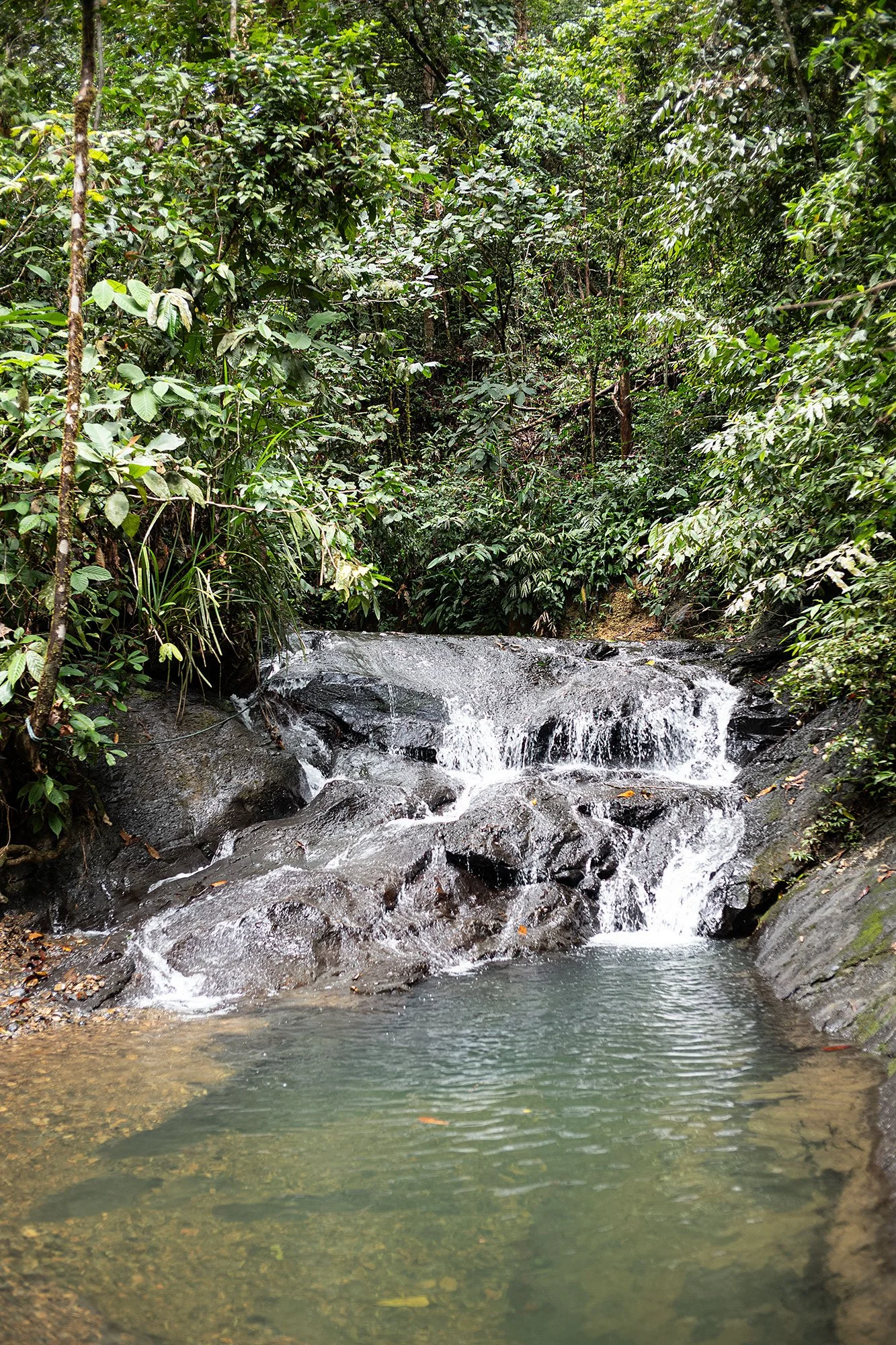
She tells us that the “Doctor Fish” reside in the pools below the falls and we can wade in to have them start exfolating our skin. We’re also welcome to bathe.
The Austrian and I strip down to our bathing suits and dive in. The Indian couple prefer to walk in only up to their ankles. At one point she pulls out her phone and starts filing her husband, singing while her husband dances. Mira joins in and I realize they’re singing the main theme from Kuch Kuch Hota Hai.
The fish tickle my feet as I sit in the shallows. The Austrian and I are both surprised they seem to limit themselves and don’t come towards our hands.
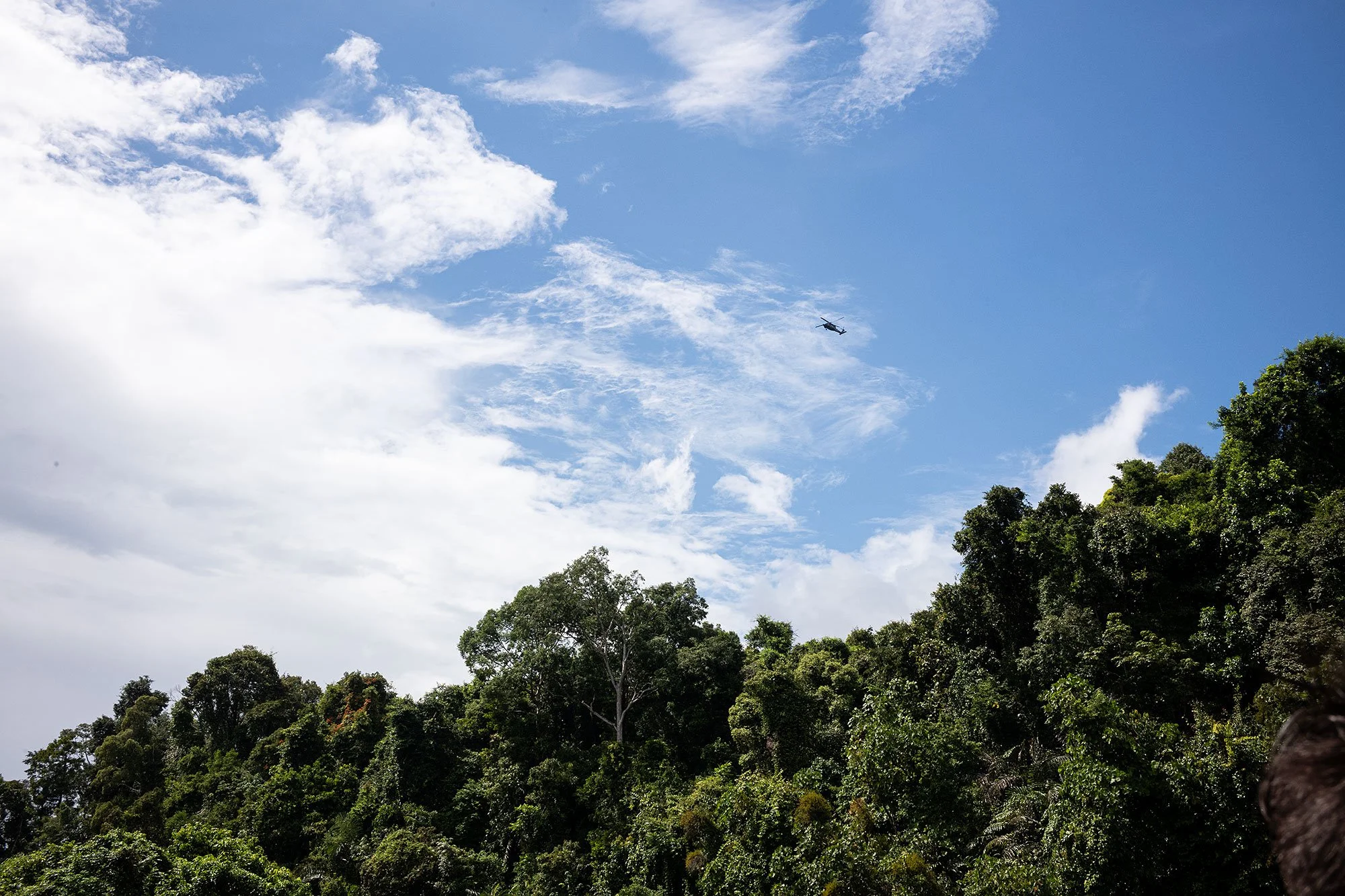
A light rain begins to fall, seemingly to alert us that our time is up. We pack up our things and head back to the boat. Mira tells us we needn’t change, that we can do so when we’re back at the house and Jimi noses the boat downstream.
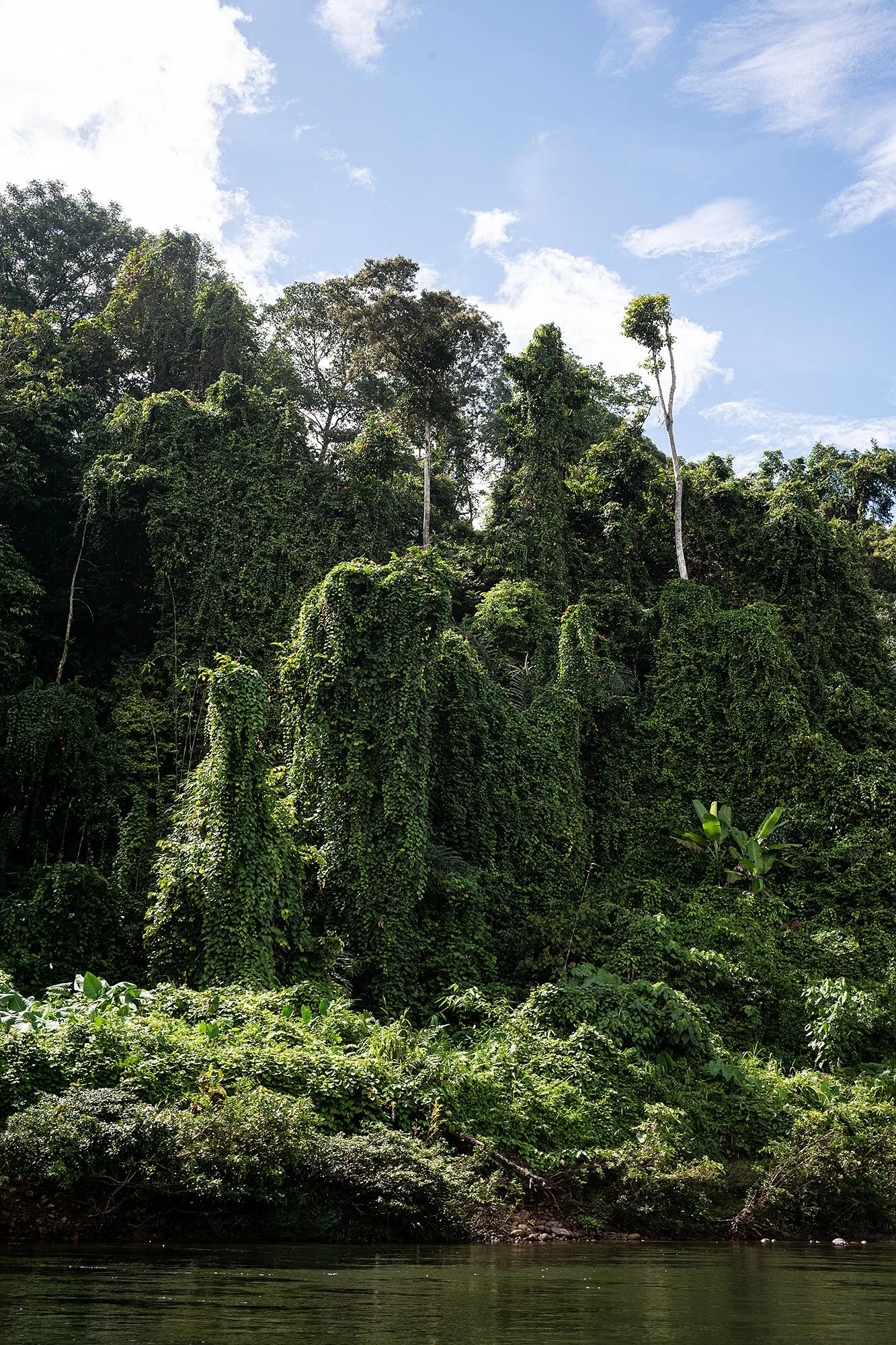
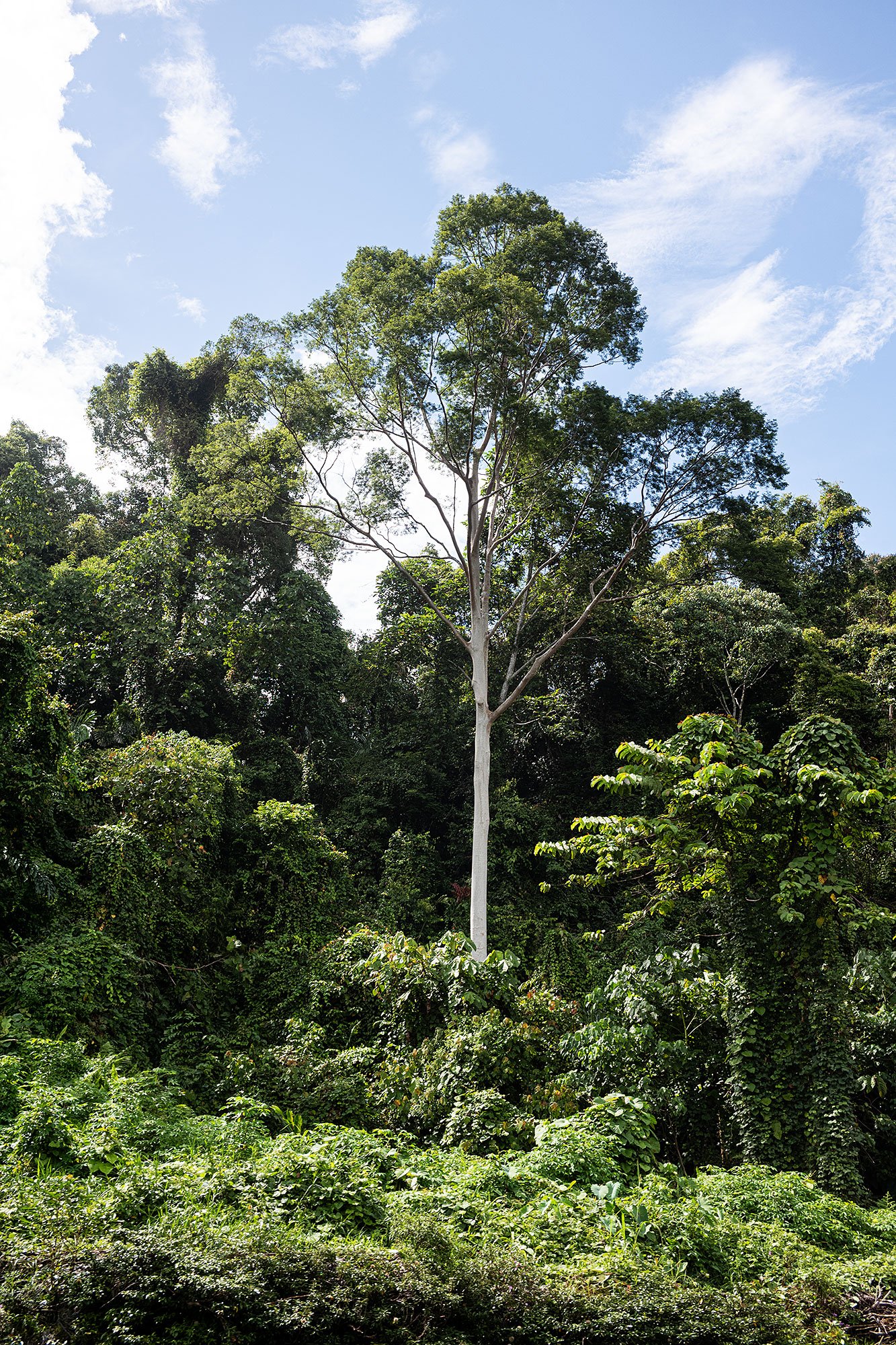
We motor back downriver, rocks occasionally scrape the hull as he navigates the rapids. It’s a fun ride and I’m all smiles once again, happy to be on the water, feeling the wind in my face, the water evaporating from my body.
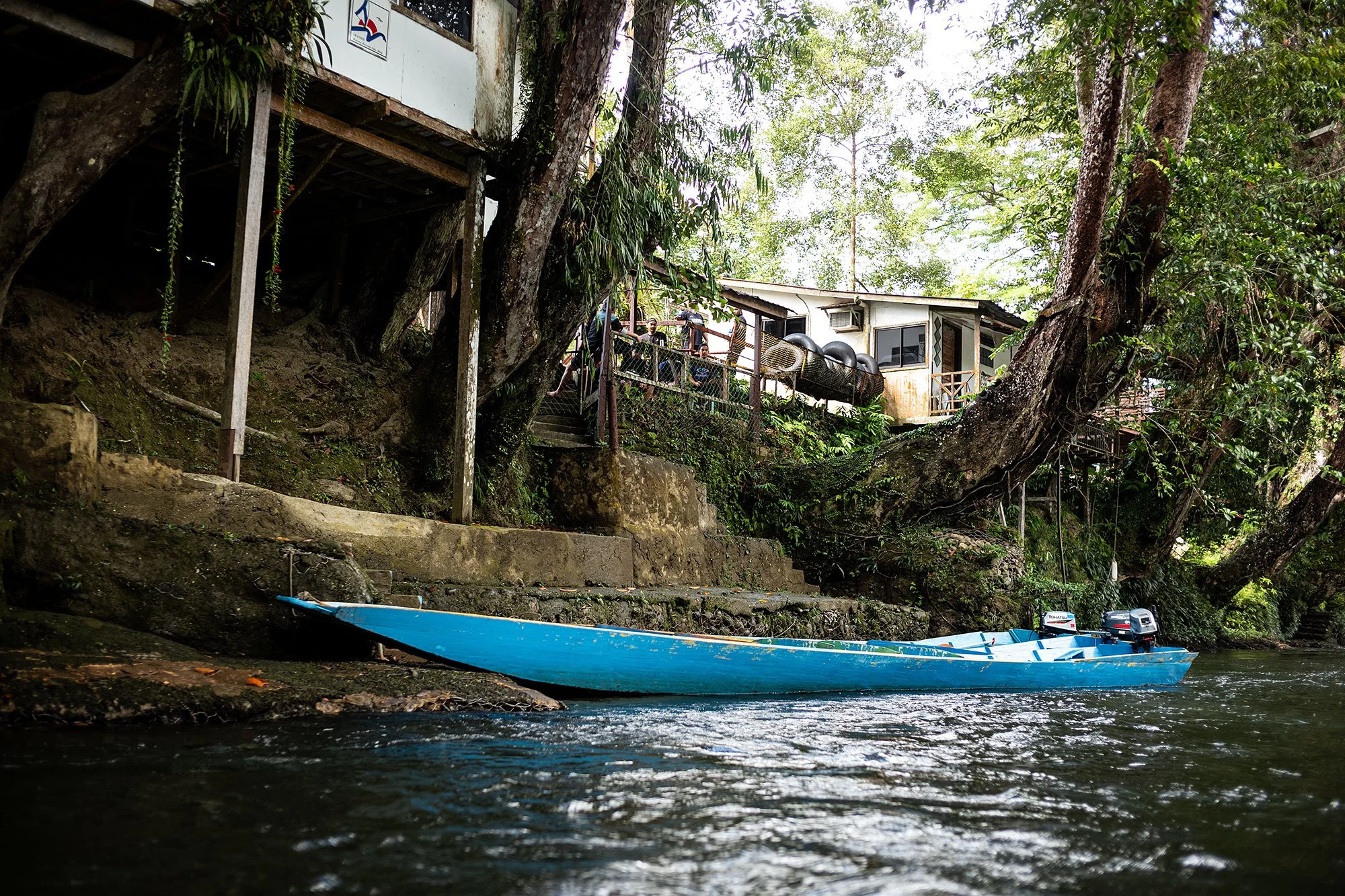
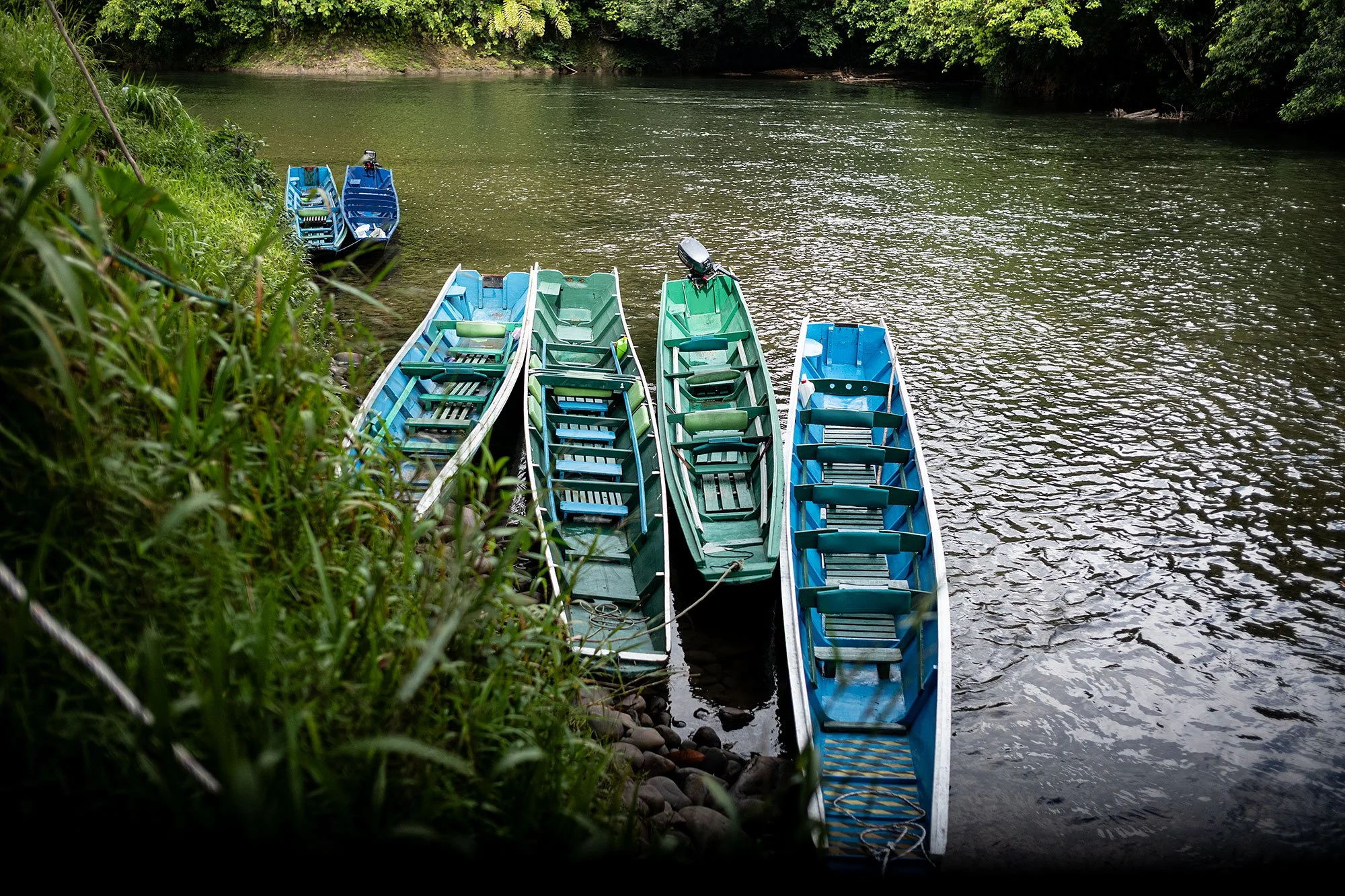
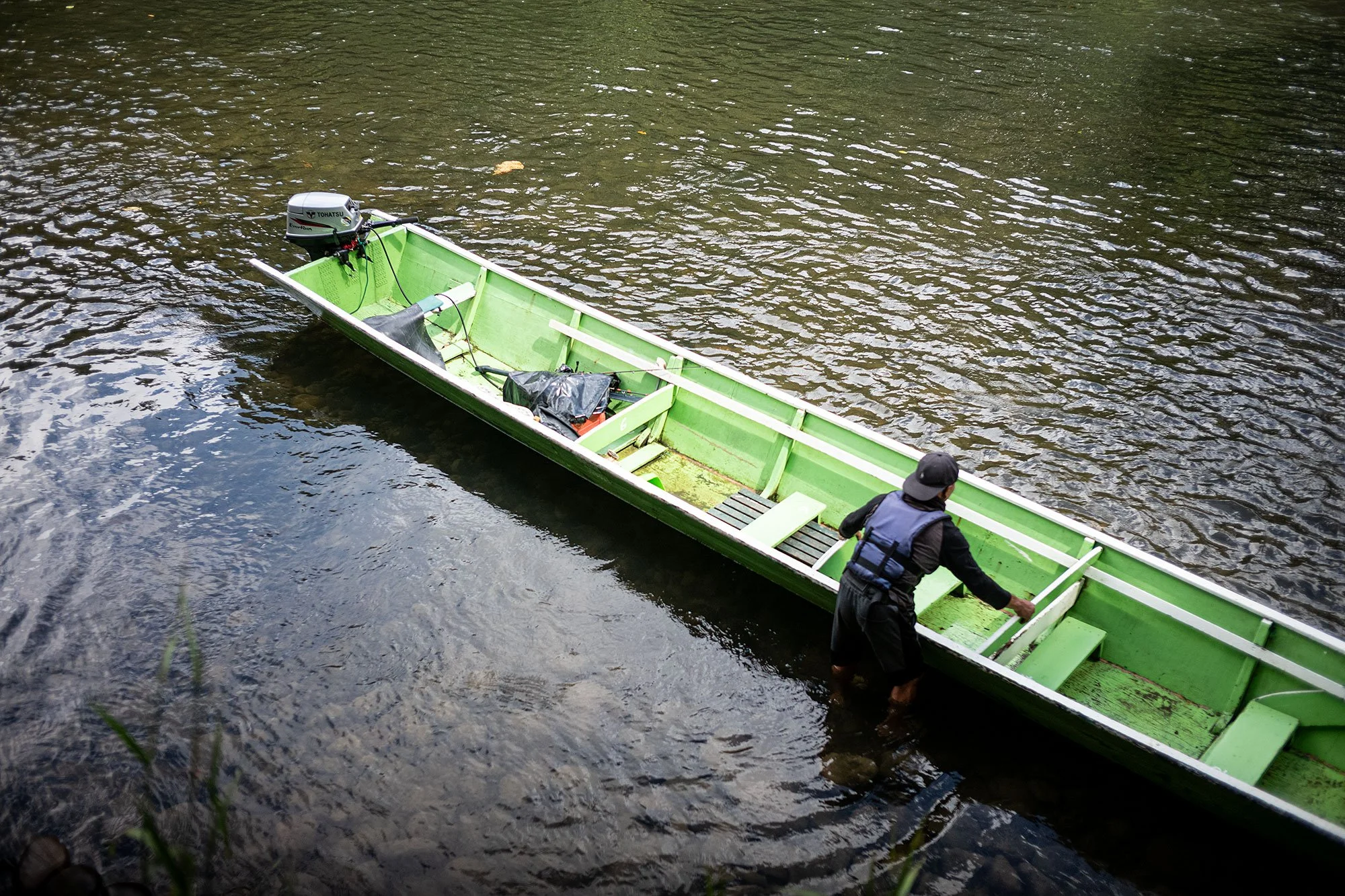
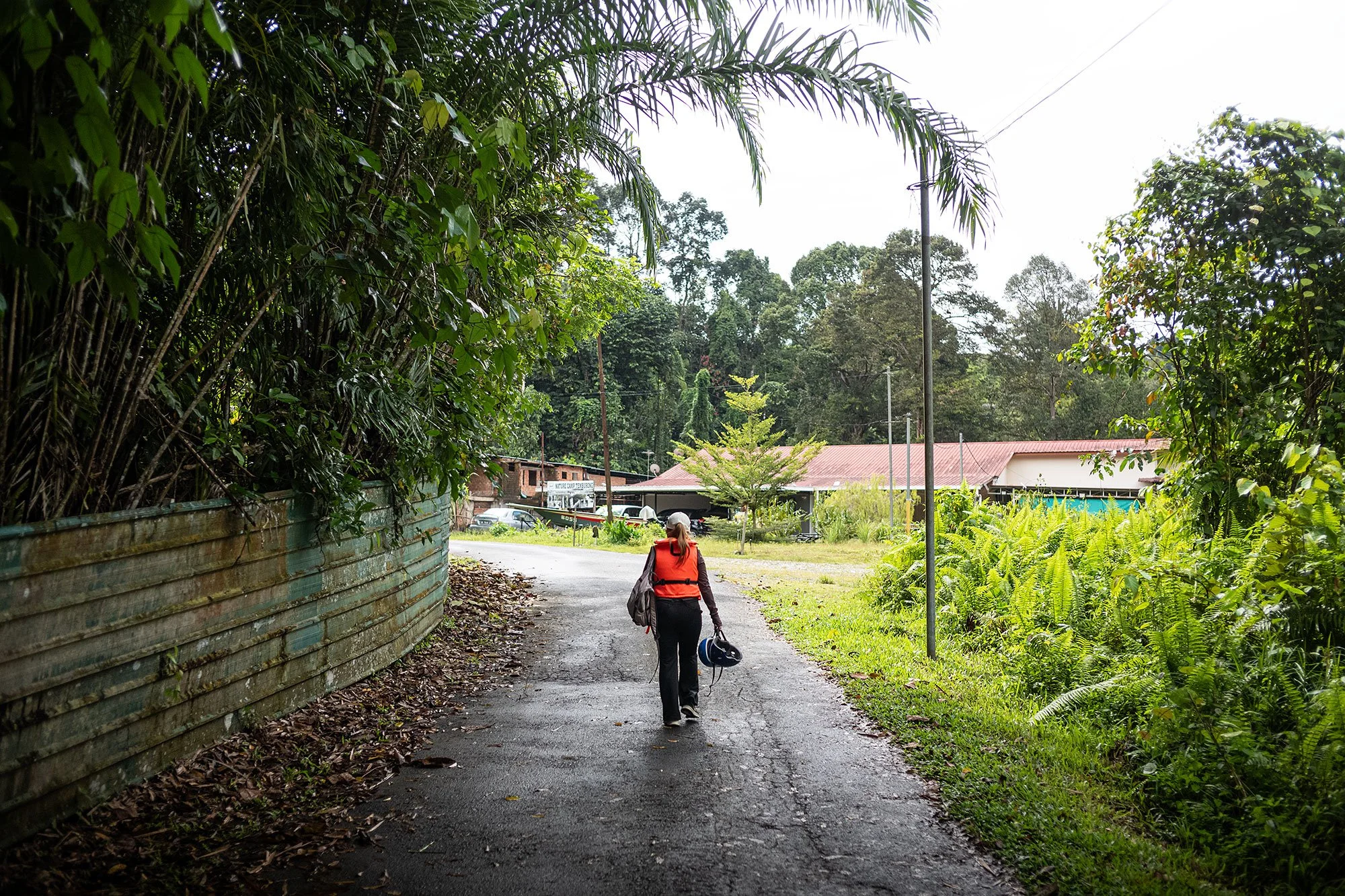
We bid Jimi farewell and I ask Mira how much a long boat costs. She tells me it’s $2,500. The boat will last three to five years and will take two to five months to complete. She tells me that the company itself doesn’t own any boats and that they charter them for $100 a day.
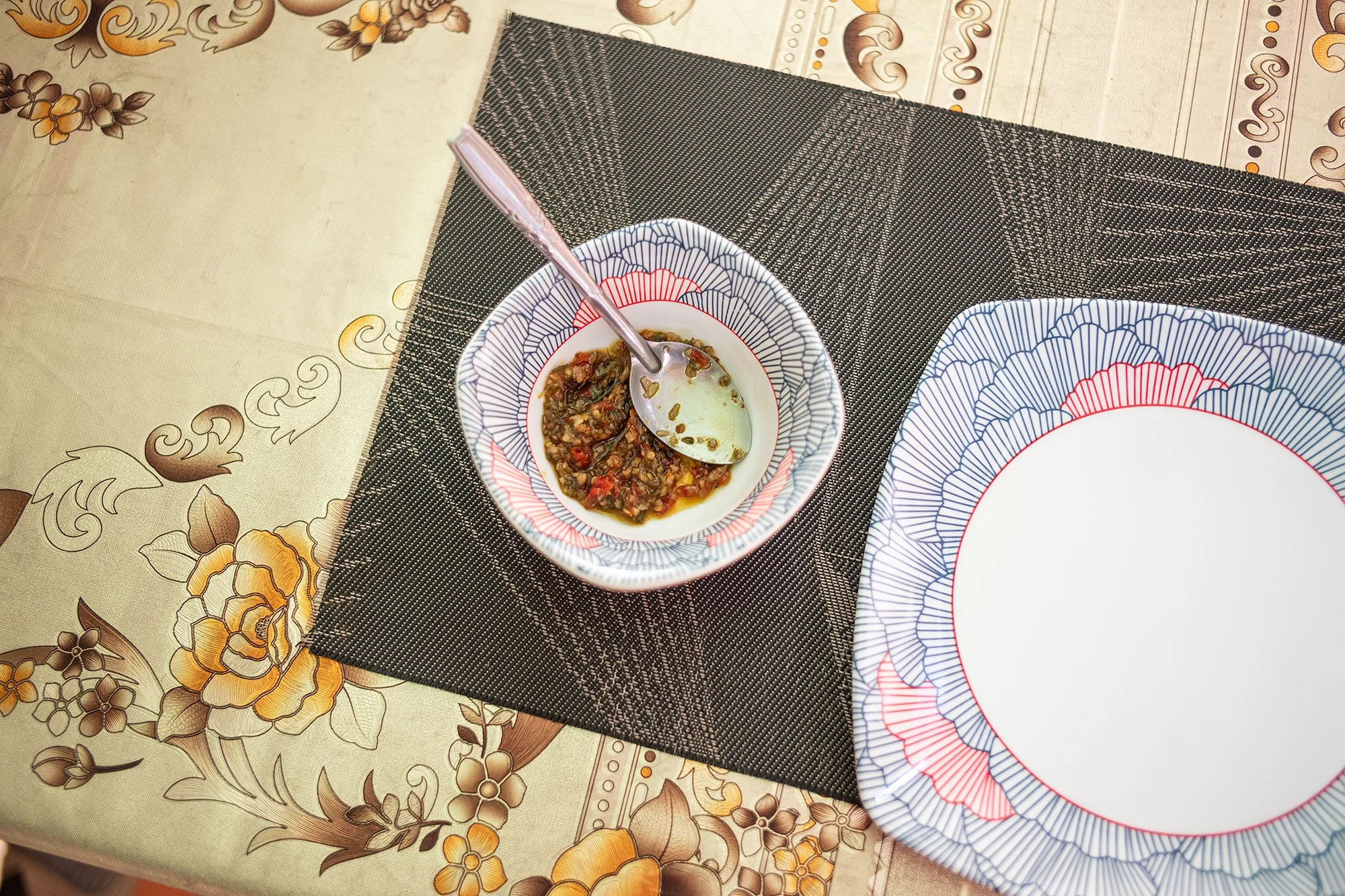
Lunch is already on the table and we dig in. I’m starving and the food is delicious. Mira finds a small lefover serving of sambal and heats it up for me. It’s fantastic and I wish I had asked her for the recipe. I scoop it liberally over my rice.
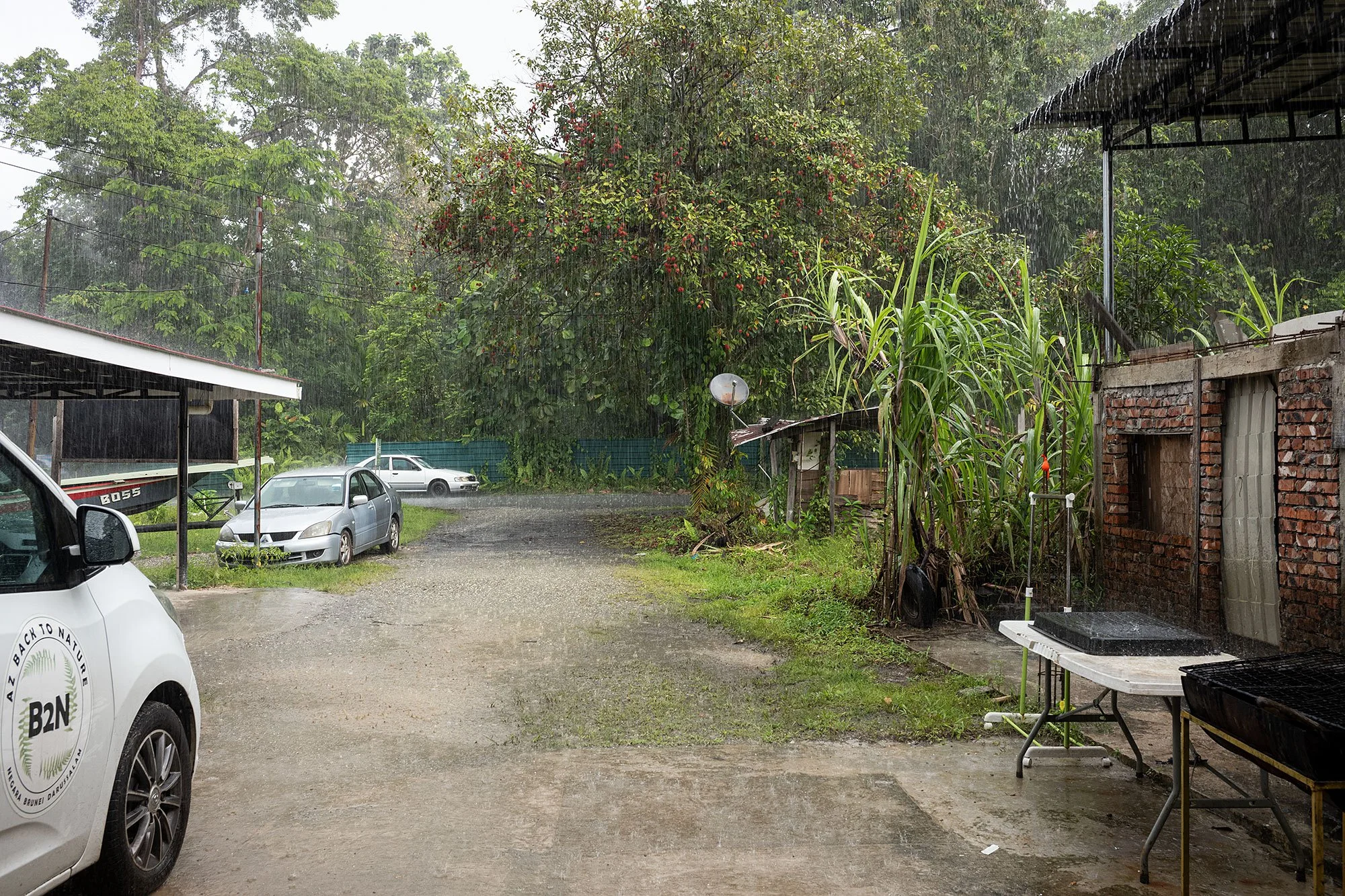
During our lunch the skies open up and it pours. We can’t hear each other over the sound of the rain pounding on the rooftops and resign ourselves to enjoying our food. And then, as suddenly as it started, the rain stops. I look up at the Austrian. I didn’t want to say it before, but now I feel like I can: We got really lucky with the weather.
After lunch Mira bids us adieu. I ask her who cooked the meal and she points to a woman beside her and I thank her for the food. We climb back into the van and retrace our steps back to the city. I fall asleep in the back, rocked by the motion of the vehicle, lulled by the delicious meal and memorable morning filling my soul. 🇧🇳