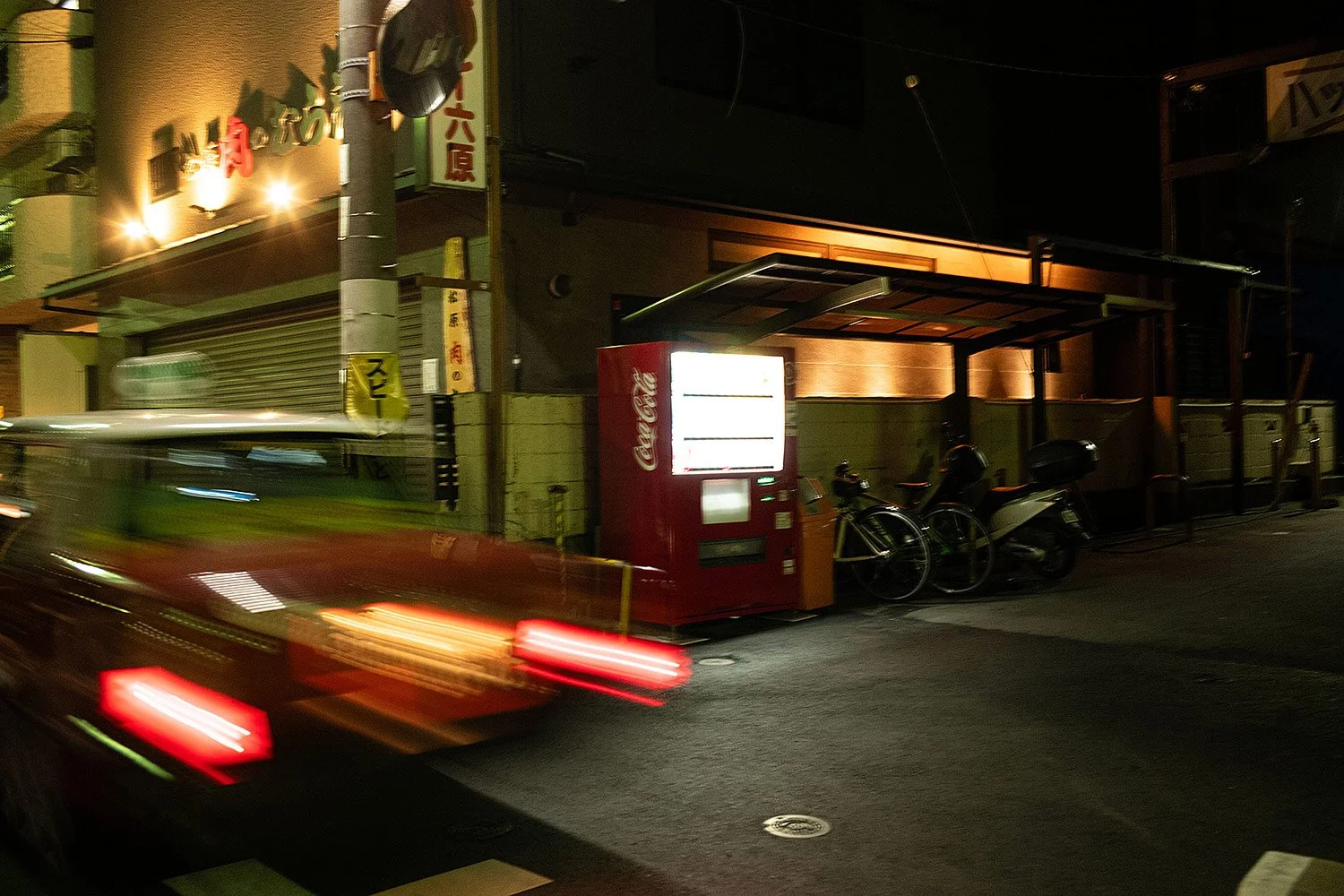
Revisiting the temples and bamboo forests of western Kyoto after twenty years.
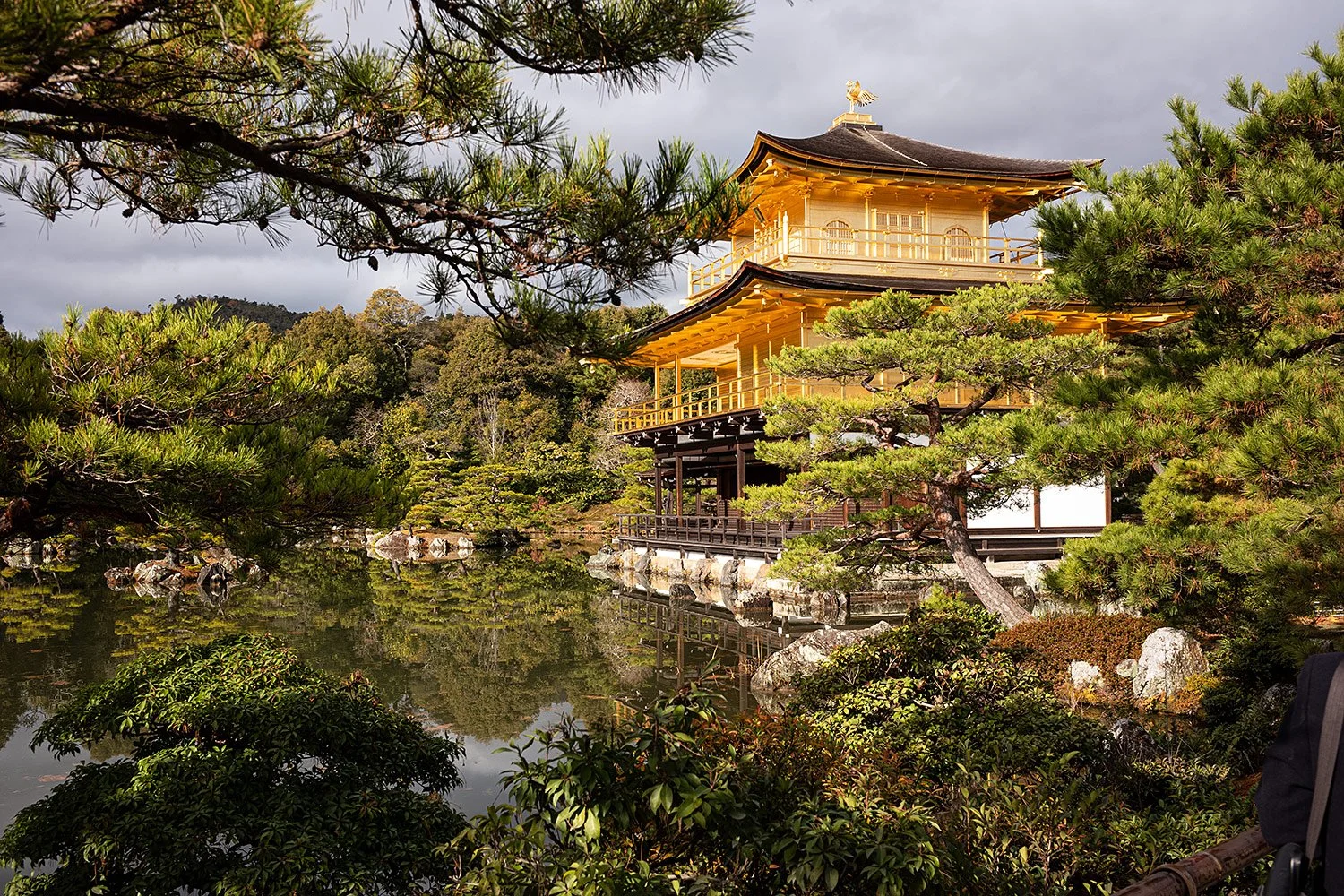
I’ve set the day aside for peak tourism. On the agenda: Kinkaku-ji, the golden temple; Ryōan-ji for its zen garden; and a walk through the Arashiyama Bamboo Forest.
It’s the repeat of an itinerary I set for myself twenty-three years ago on my first trip to Kyoto, and I’m excited to revisit some of the most famous places in the country. As it turns out, I’ll end up visiting even more.
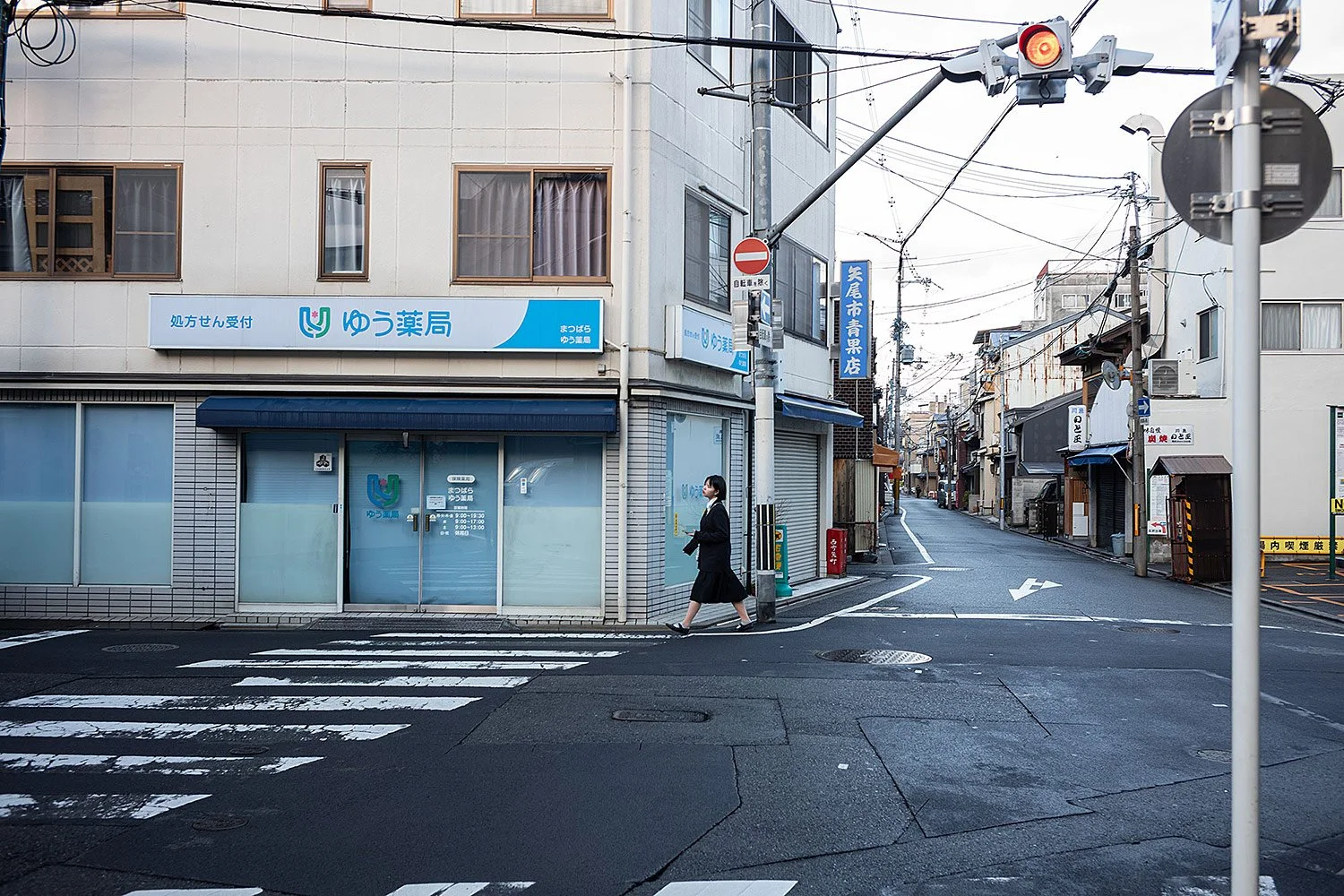
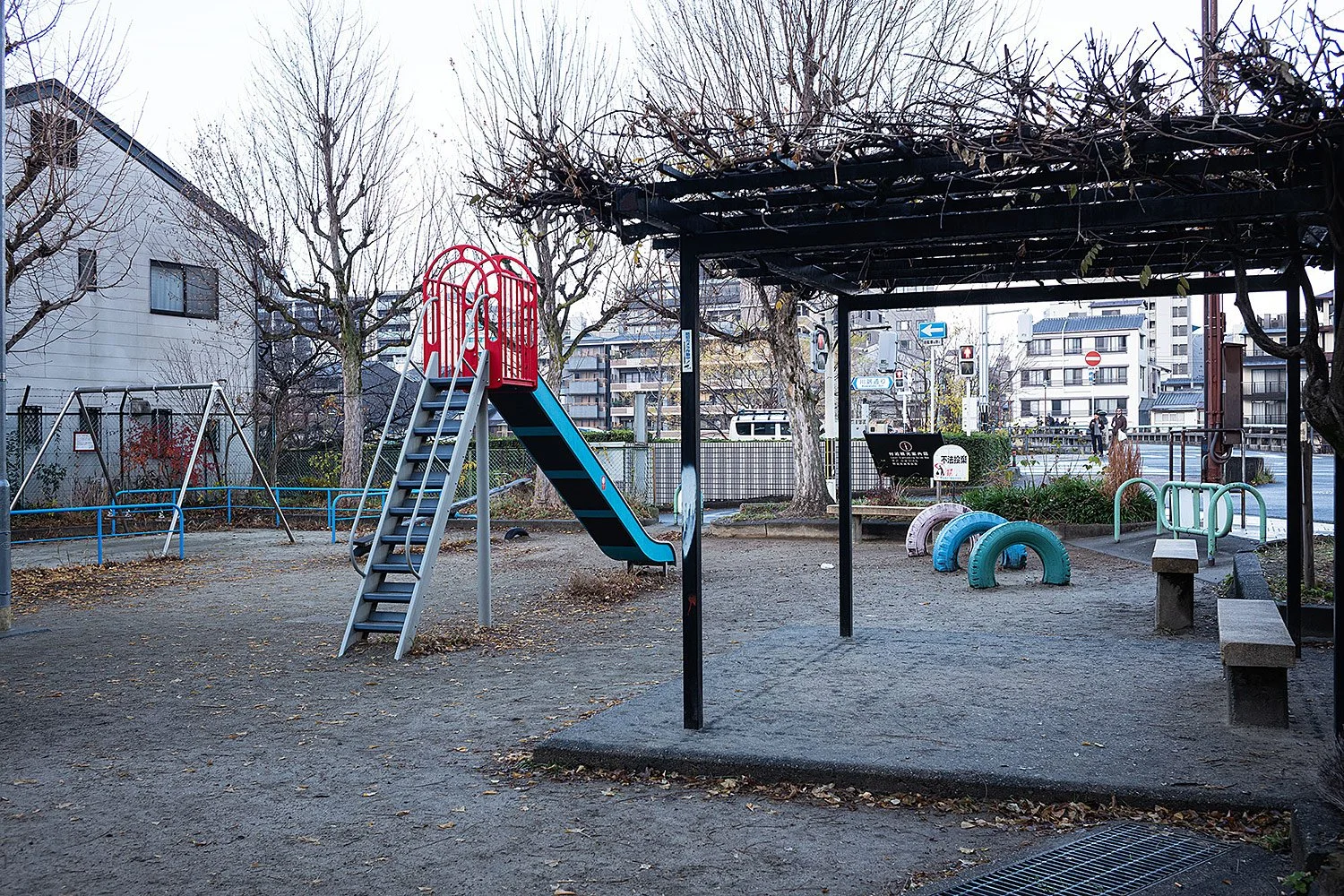
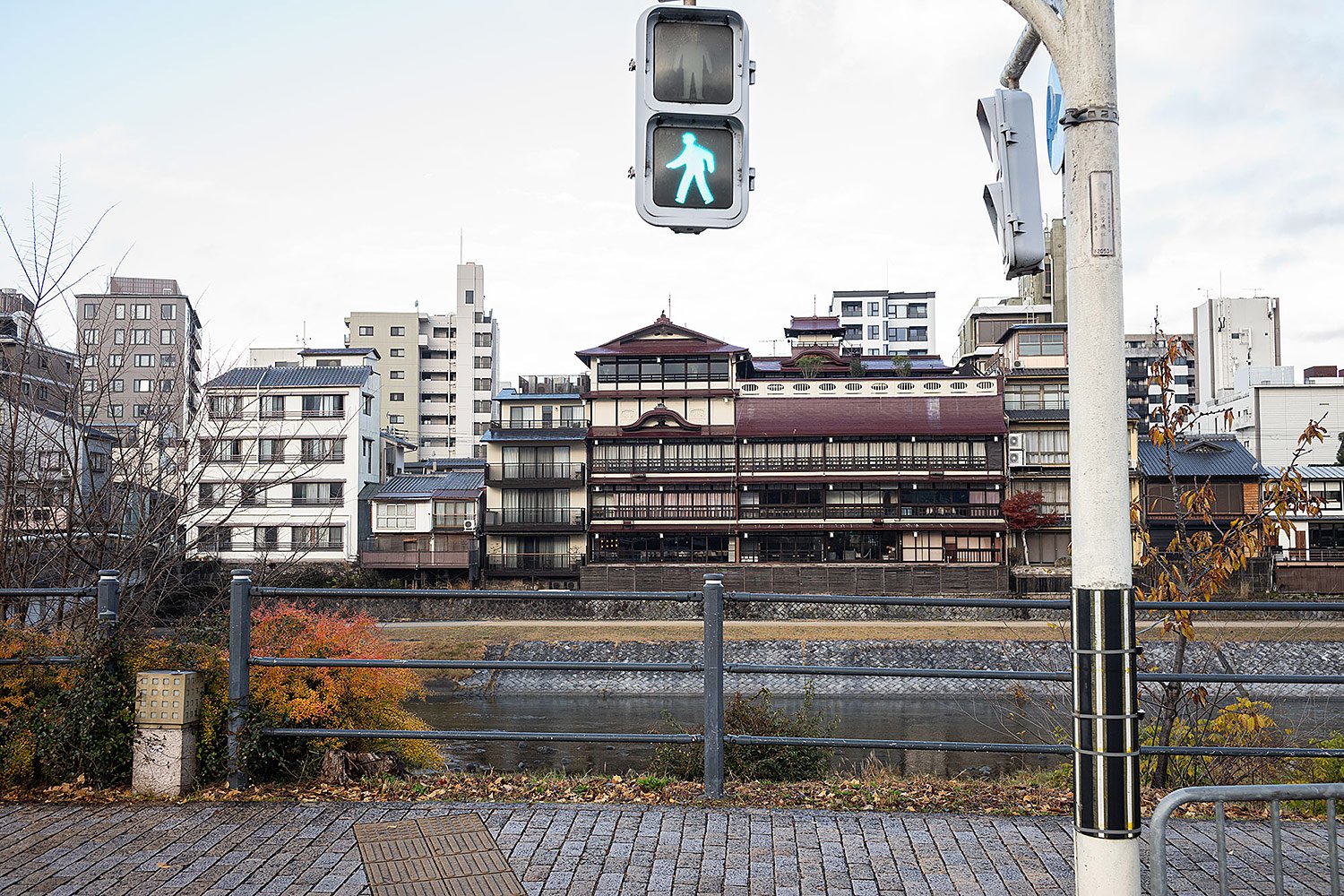
I walk to the nearest bus stop from the hotel, crossing the Kamo River. It’s a quiet morning. I’m not sure if due to the weekend date or the hour or the somewhat overcast skies.
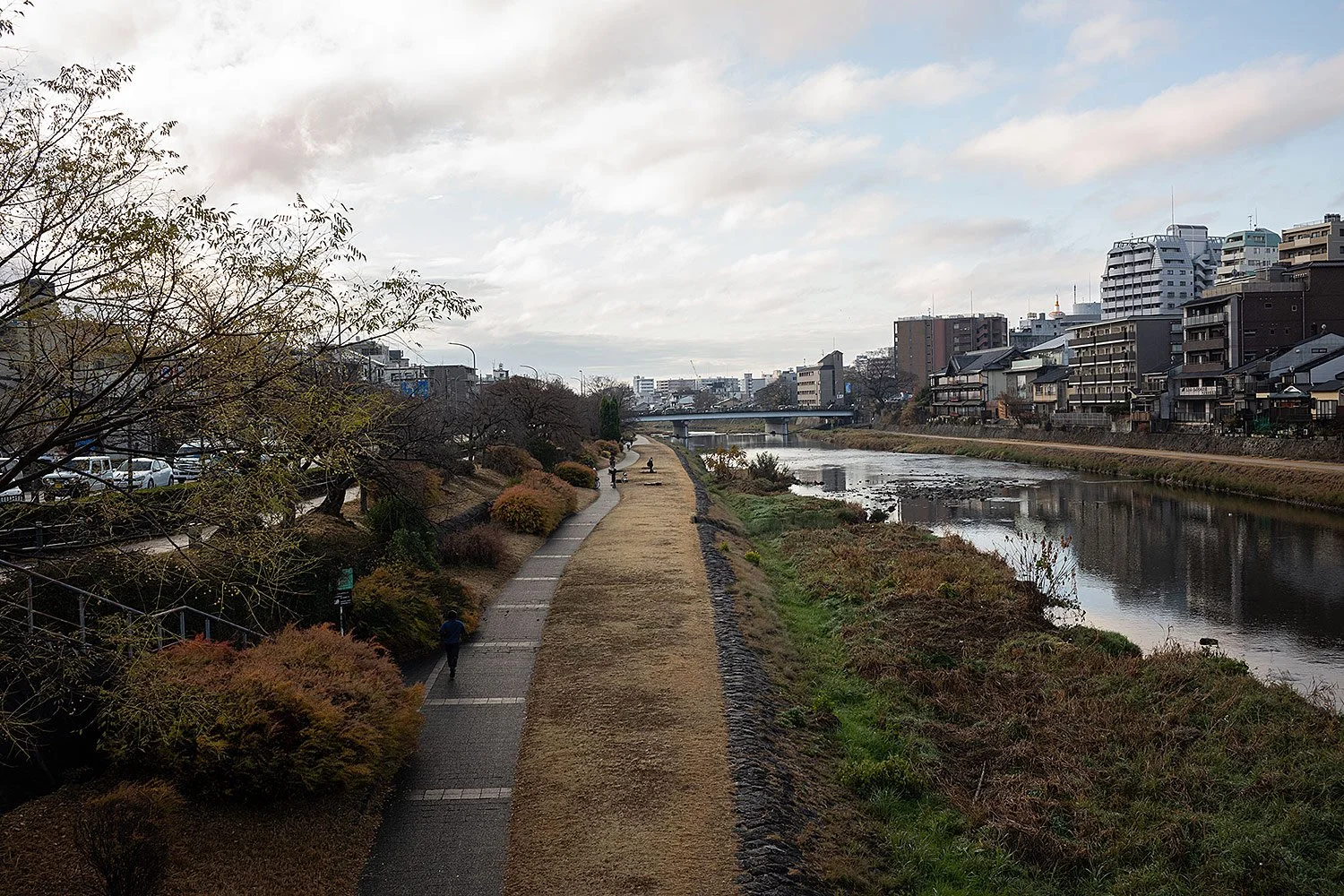
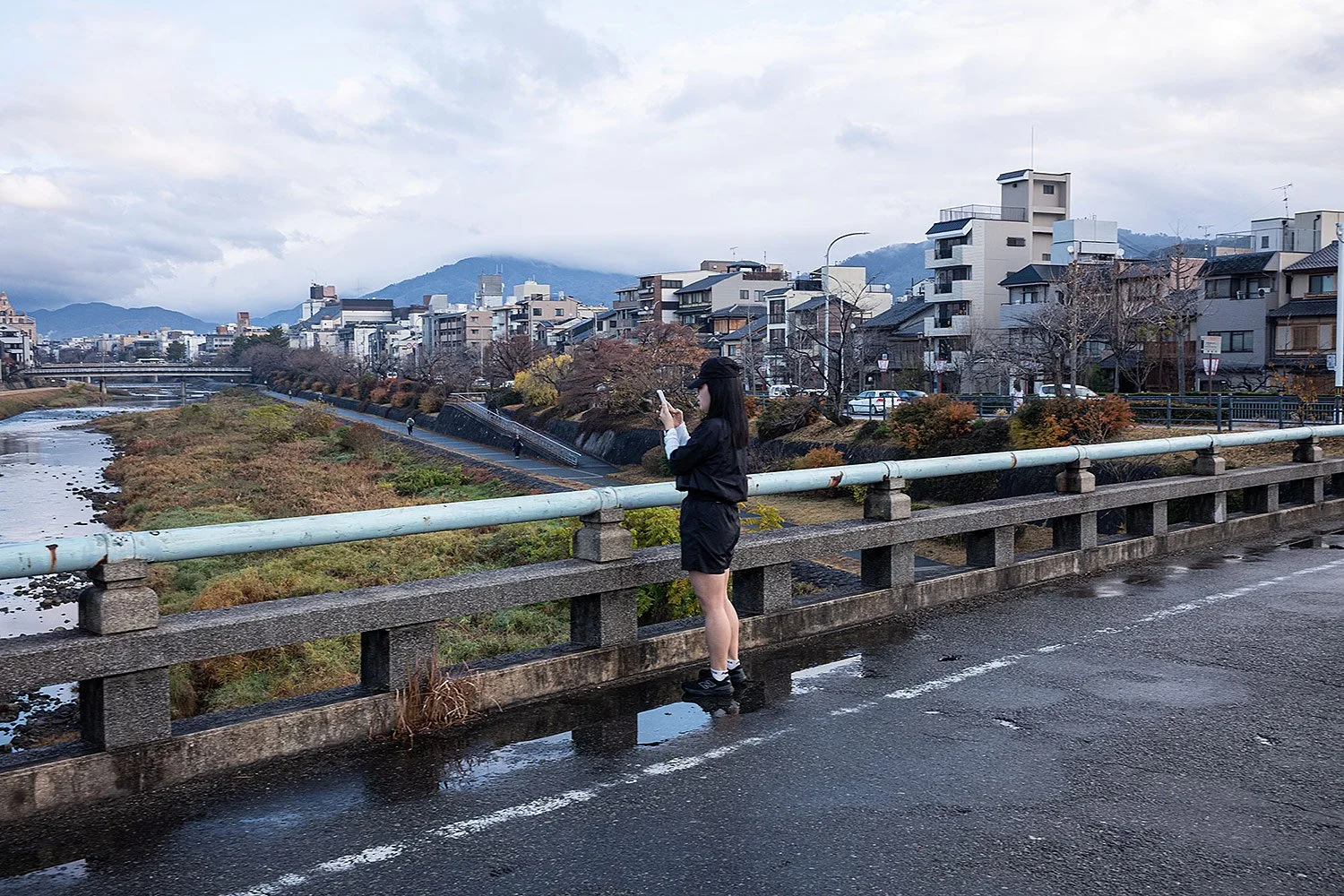
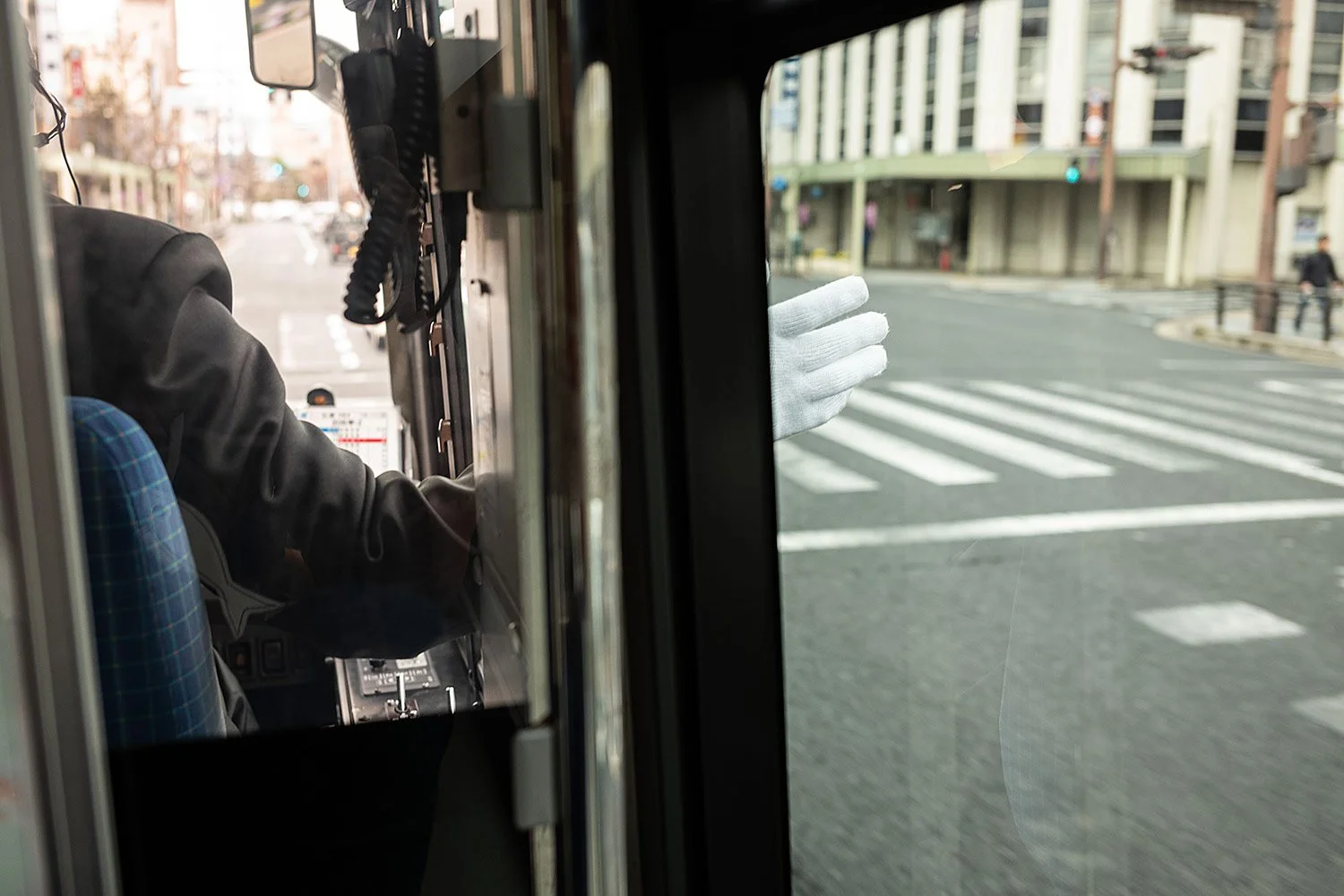
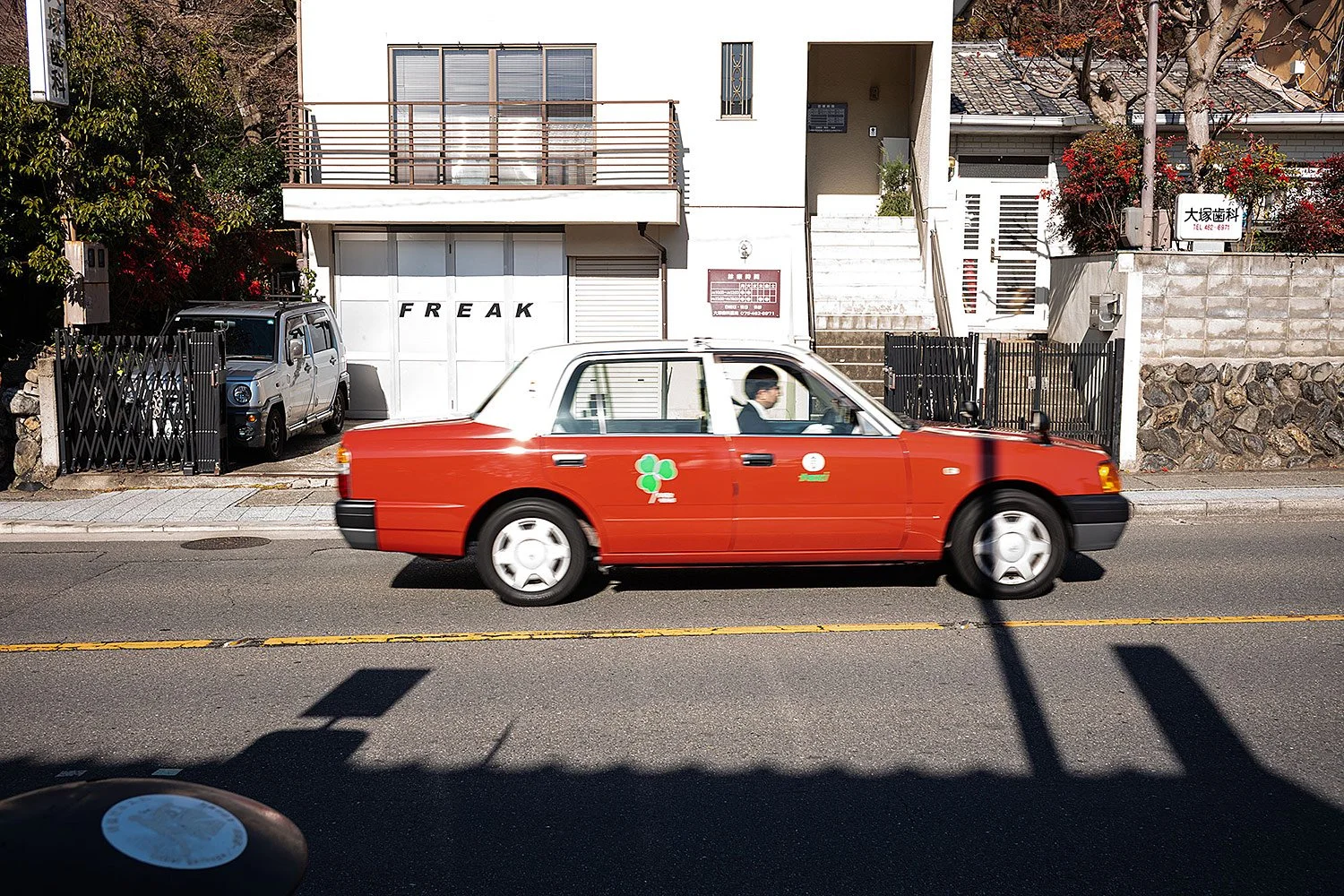
It doesn’t take too long for the bus to arrive. I manage to secure a window seat and happily watch the city pass as we make our way towards the northwestern edge of the city. Now and again I lift my camera to my eye to frame a moment in passing, but for the most part I enjoy the glimpses of daily life..
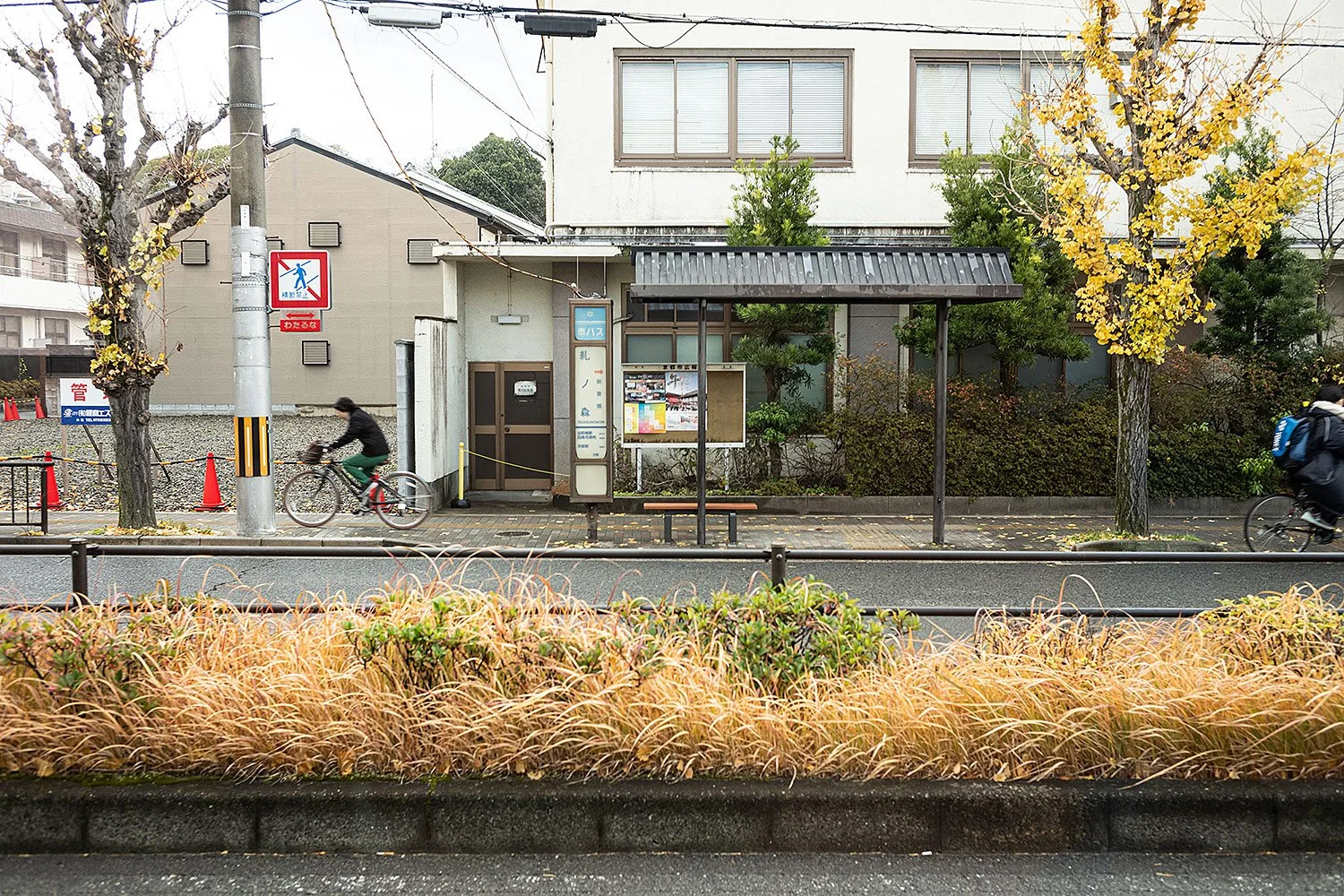
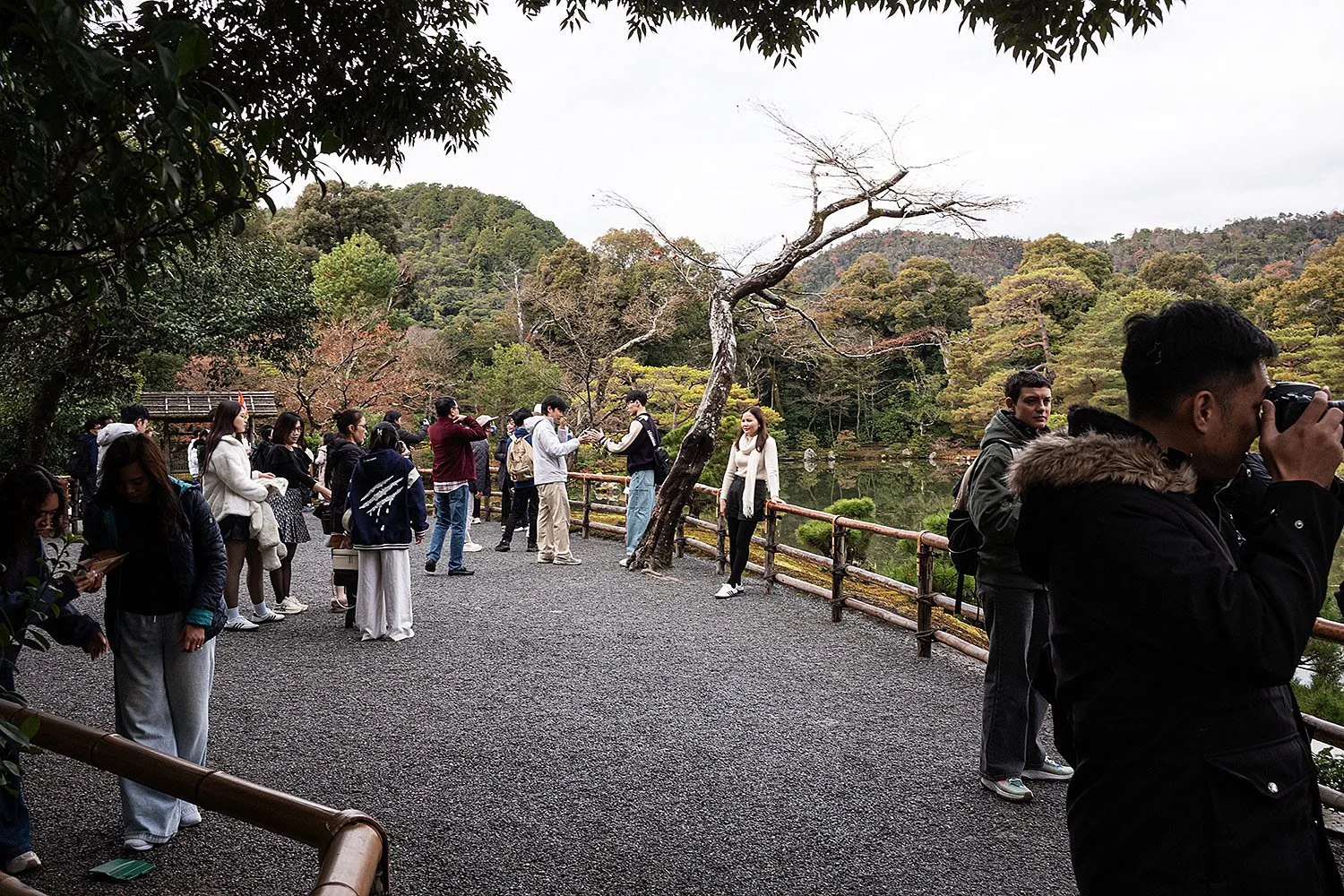
I alight at the stop for the temple and walk a short road to the entrance. I’m hoping to have arrived before the crowds, but there’s a fair amount of people who are already taking photos of each other with the temple in the background. One woman poses as if she’s taking a bite out of it.
The light keeps shifting and I find myself walking back and forth to various photo spots as the sun teases its presence. Finally, the sun breaks through for a moment and I catch the temple’s golden reflection in the pond before moving on to walk the gardens behind it.
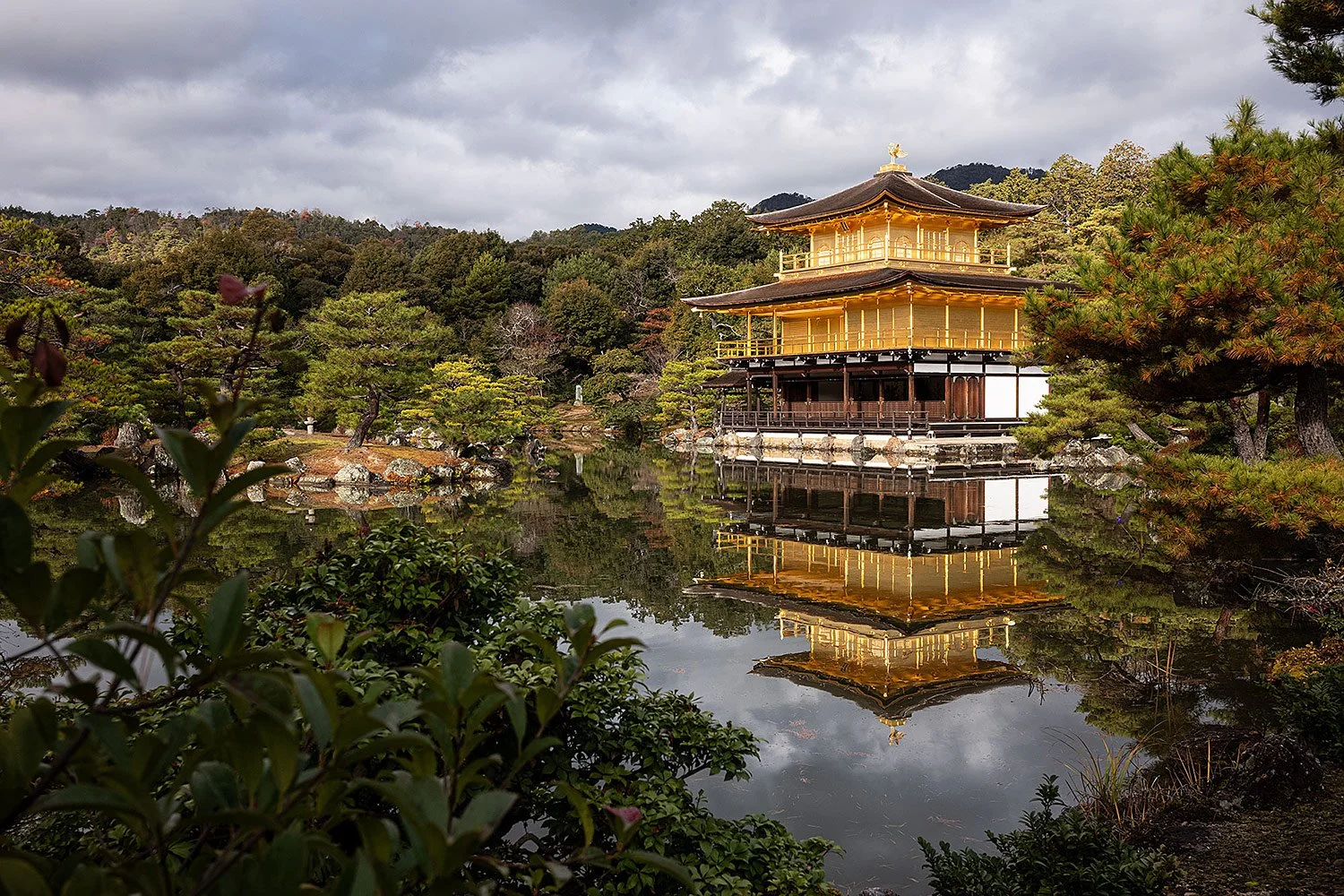
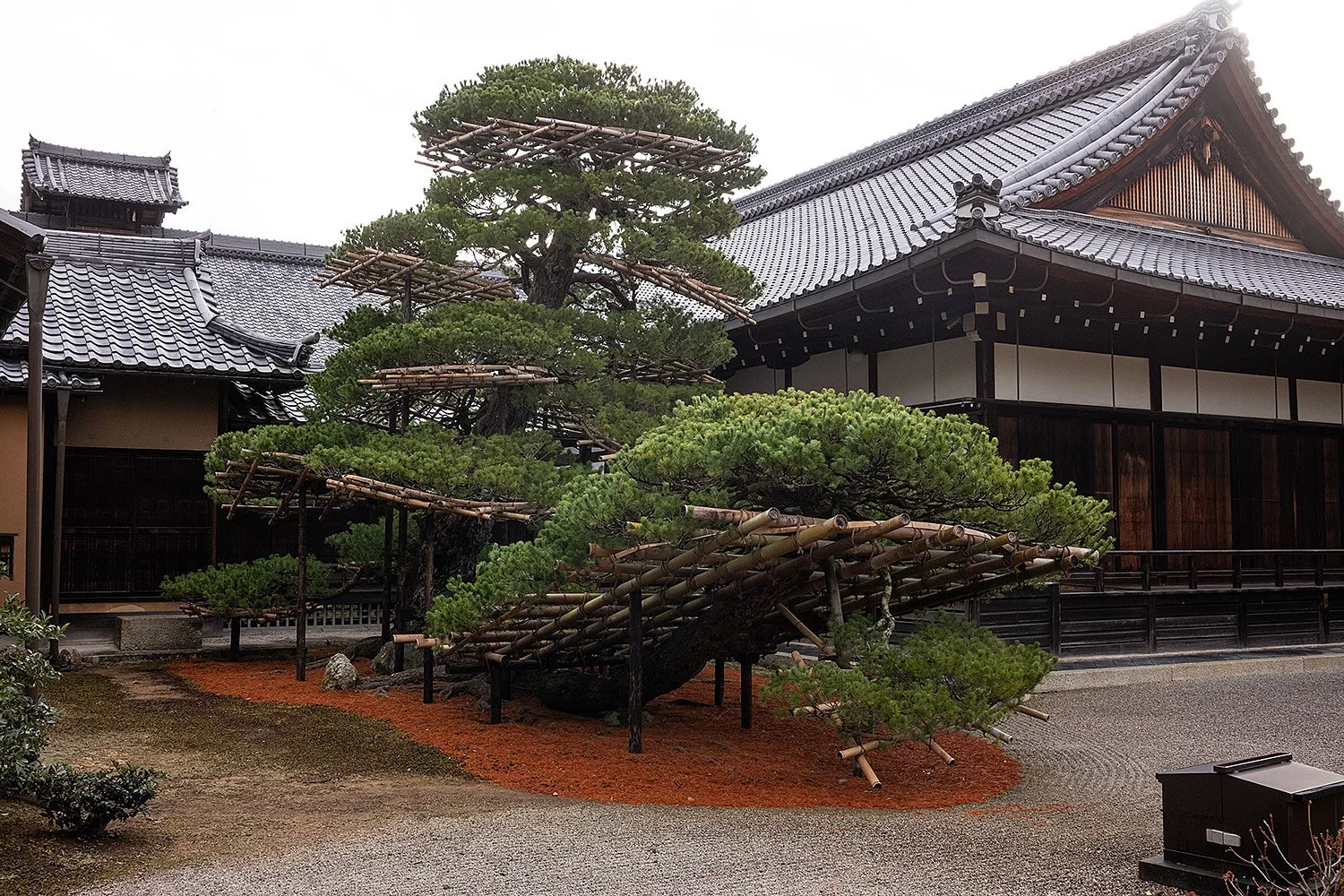
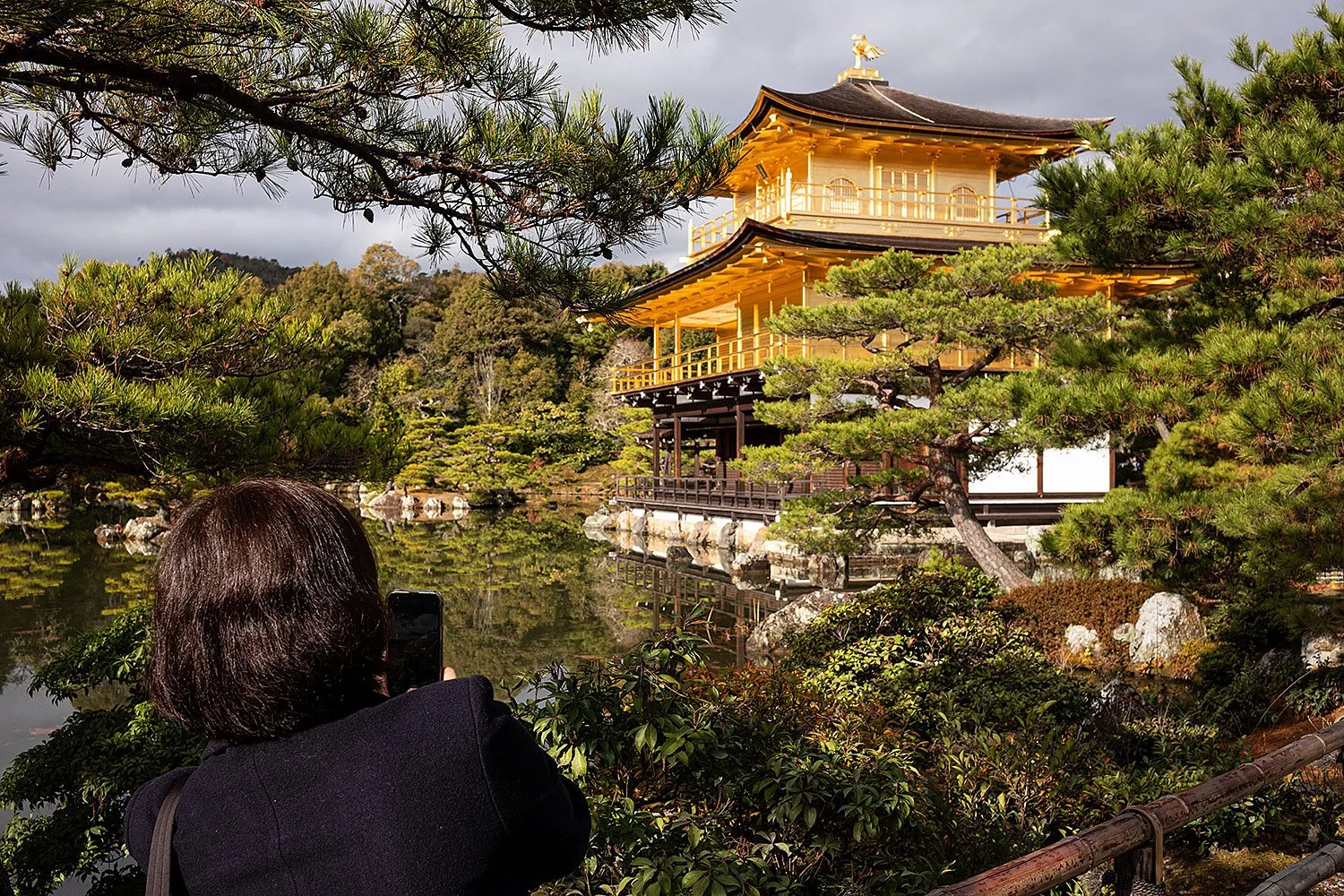
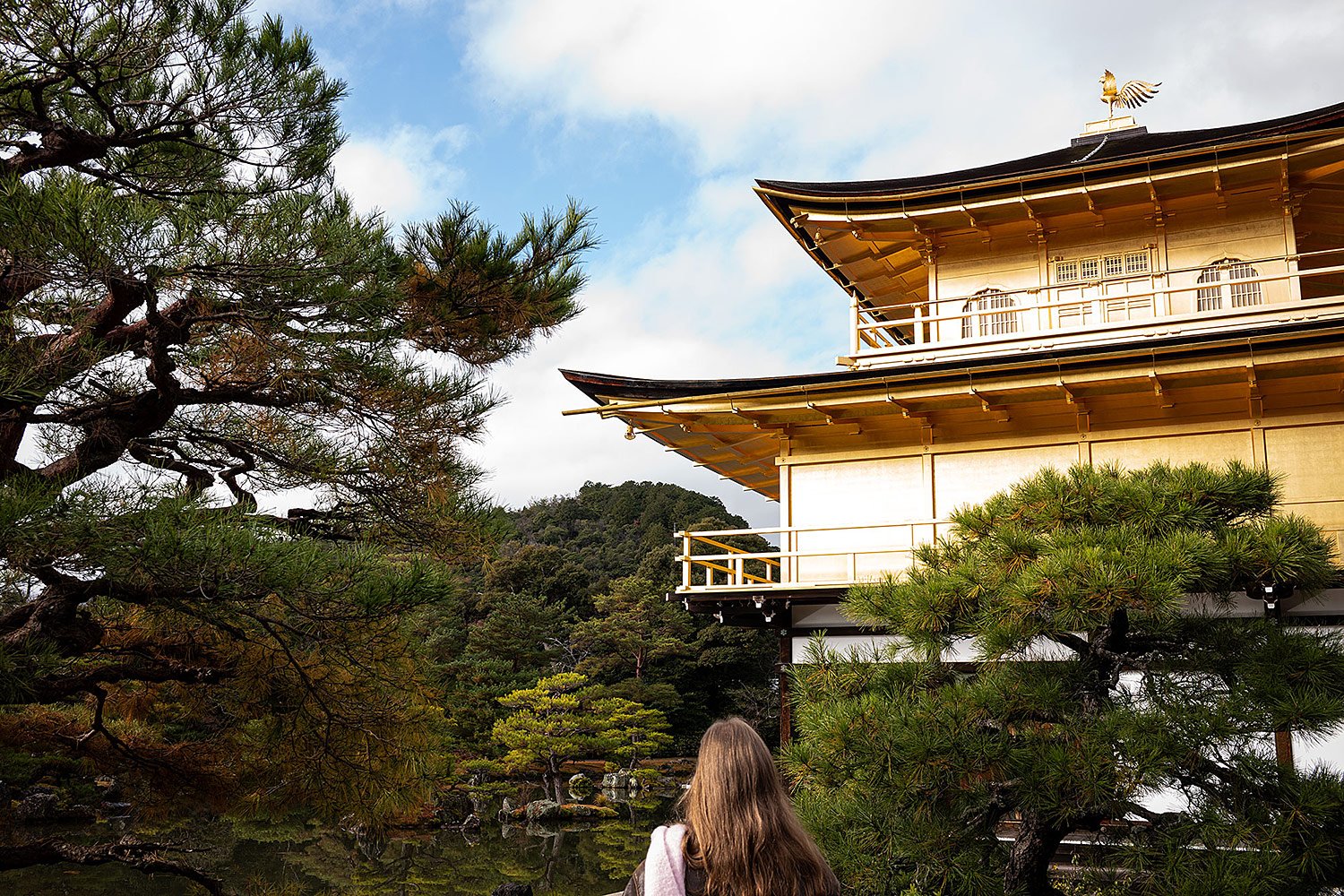
Built in 1397 as a luxurious retirement villa for Shogun Ashikaga Yoshimitsu, Kinkaku-ji was converted into a Zen temple of the Rinzai after his death, in accordance with his wishes.
The pavilion is famous for its top two floors being covered entirely in gold leaf, intended to mitigate and purify any pollution or negative thoughts and feelings towards death.
It’s also known for featuring a different architectural style on each of its three floors, Shinden (palace), Bukke (samurai), and Kukkyocho (Zen).
In 1950 the pavilion was burned down, the target of an arson attack by a novice monk, who was sentenced to seven years in prison, but released on account of mental illness. Yukio Mishima used the incident as the basis for his 1956 novel The Temple of the Golden Pavilion.
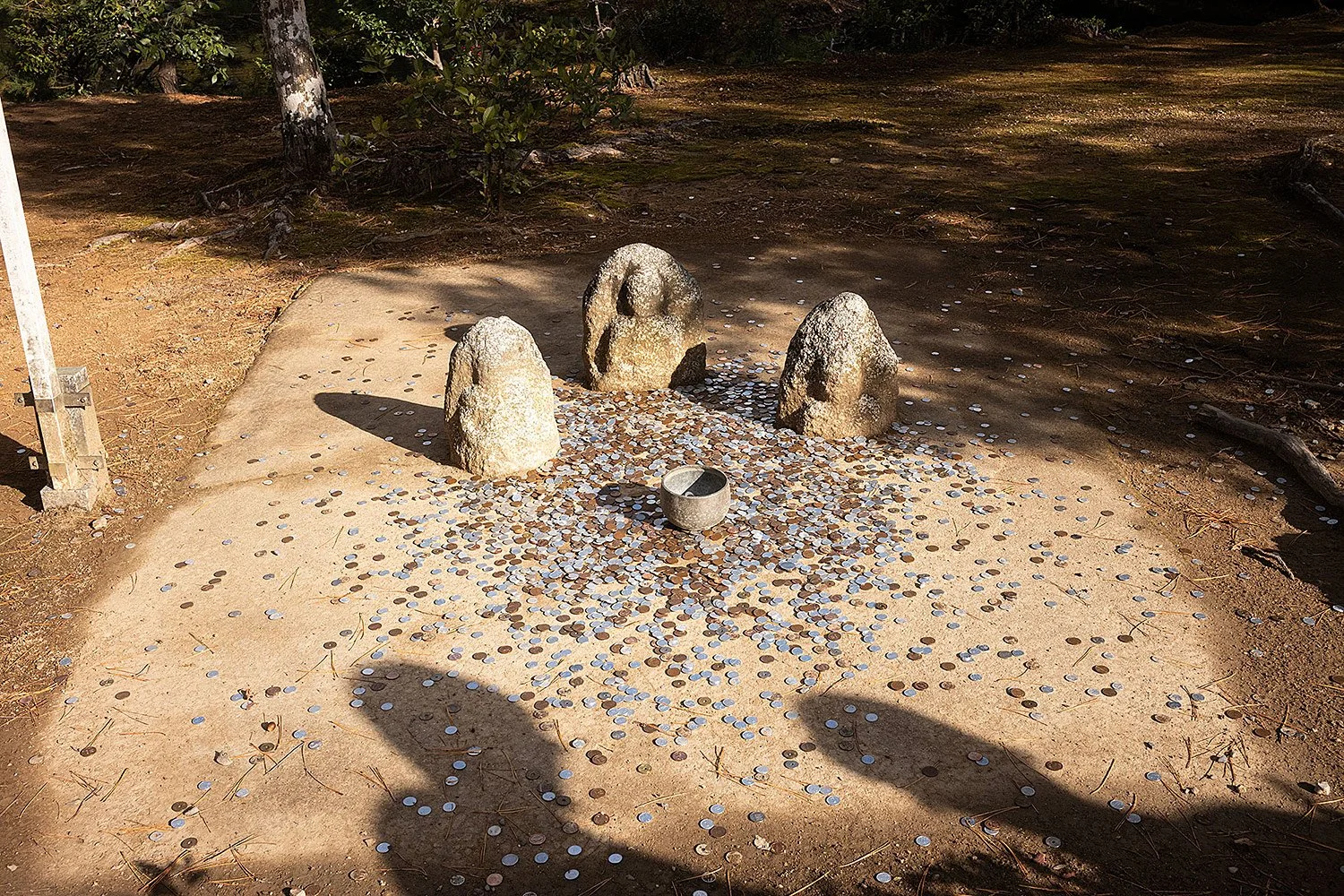
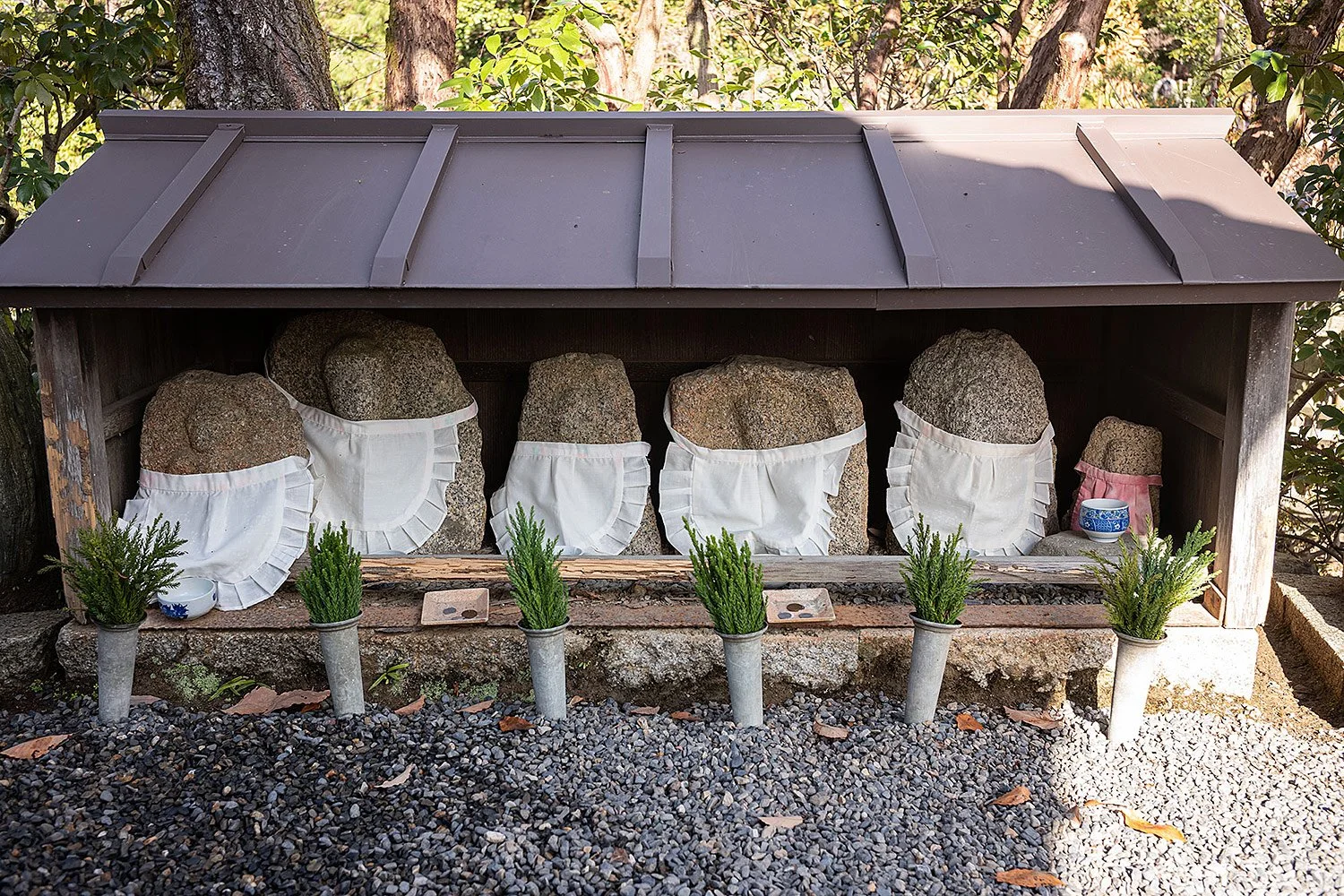
Behind the pavilion there’s a small cup before three stone statues. People try tossing coins into the cup and I dig a few out of my pocket to try my luck. Without success.
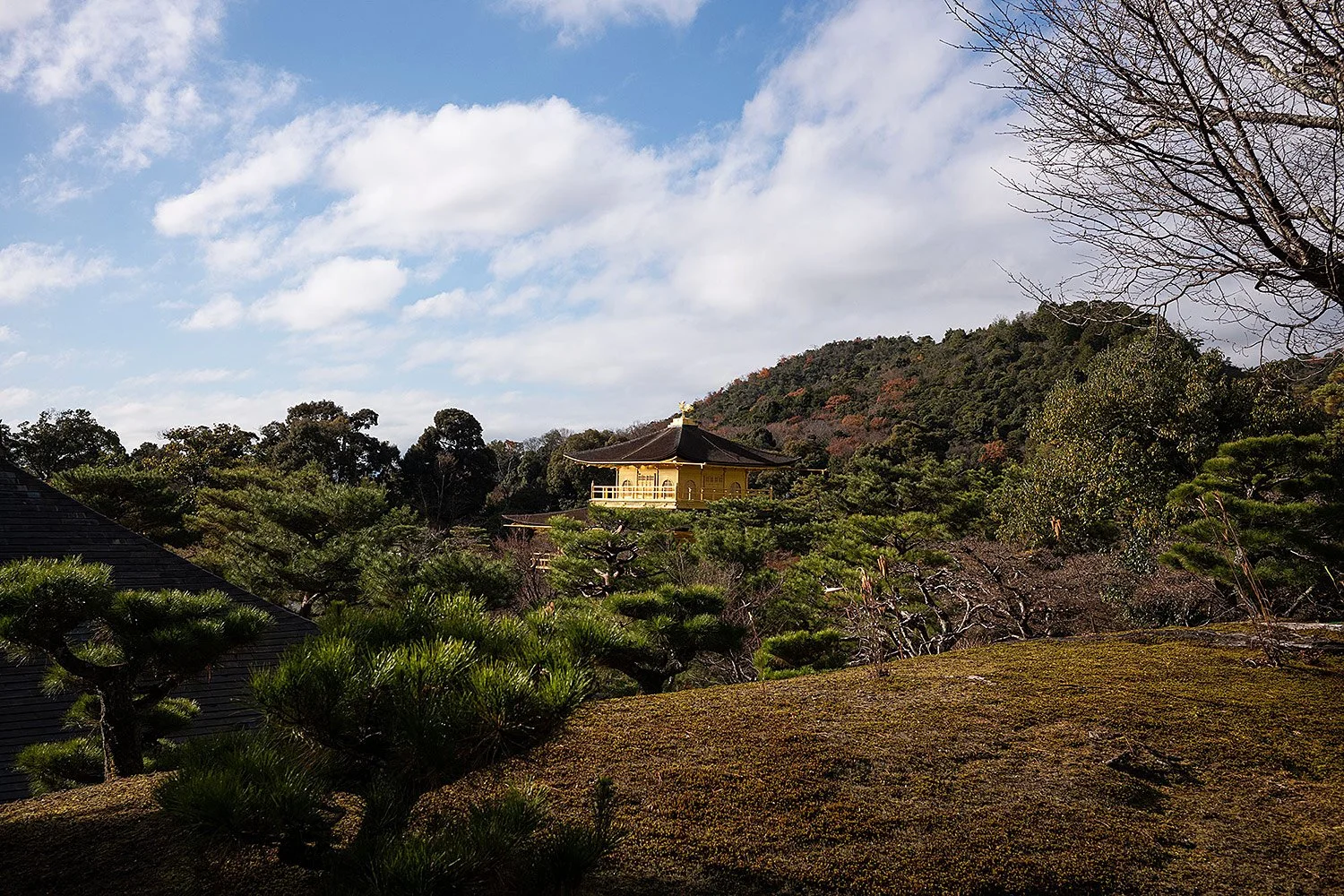
I continue walking the path to the far side of the garden. Looking back, the pavilion peeks up through the trees and brush, only the top floor visible. It looks like a jewelbox set amonst the hills.
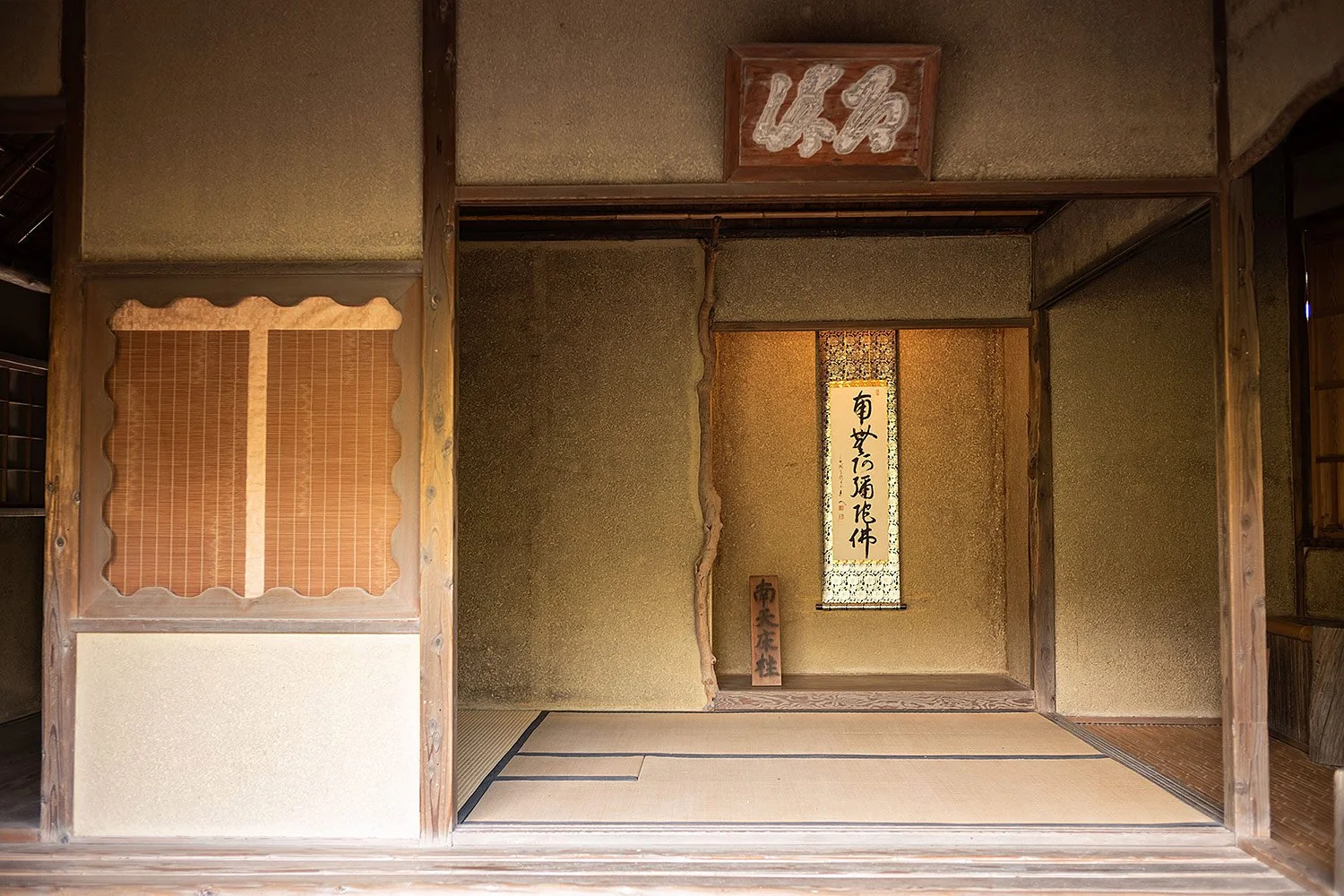
Before leaving I walk by the Sekka-tei Teahouse, a 17th-century structure built for Emperor Go-Mizu-no-O by tea master Kanamori Sowa. The simple design embodies wabi-sabi, an aesthetic and philosophical worldview that finds beauty in imperfection, transience, and simplicity. It serves as an austere counterpoint to the Golden Pavilion in the distance.
Before leaving I take a look at the amulets for sale. I remember buying Hello Kitty amulets when I was here last, some available only at this temple. I end up purchasing a few for myself and some to give to my nieces and nephews, who I will be seeing in a little over a week.
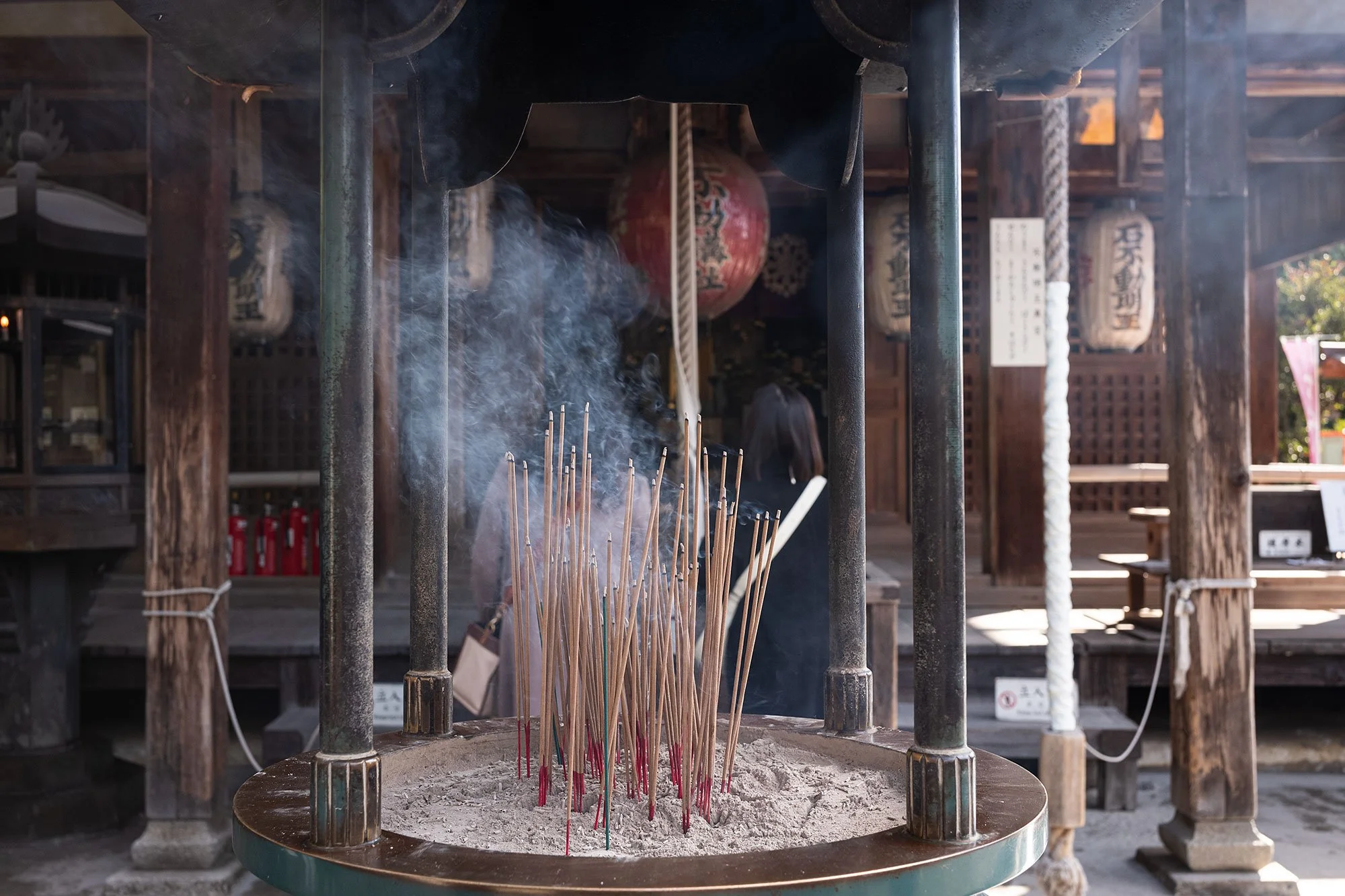
I stop at the shrine just before leaving the complex. There are a few groups who are praying, lighting incense and placing it in the urn in courtyard. I purchase some of my own to light and place amongst the others, paying my respects.
From Kinkaku-ji I walk back to the main road and head to Ryōan-ji, the second temple on my itinerary. They’re two of my favorite temples and I’m excited to be able to visit them both again. I’m amazed at how unchanged everything is; it’s as if no time has passed between my visits, and I’d be curious to compare the photos I’m taking now with those I took in the past.
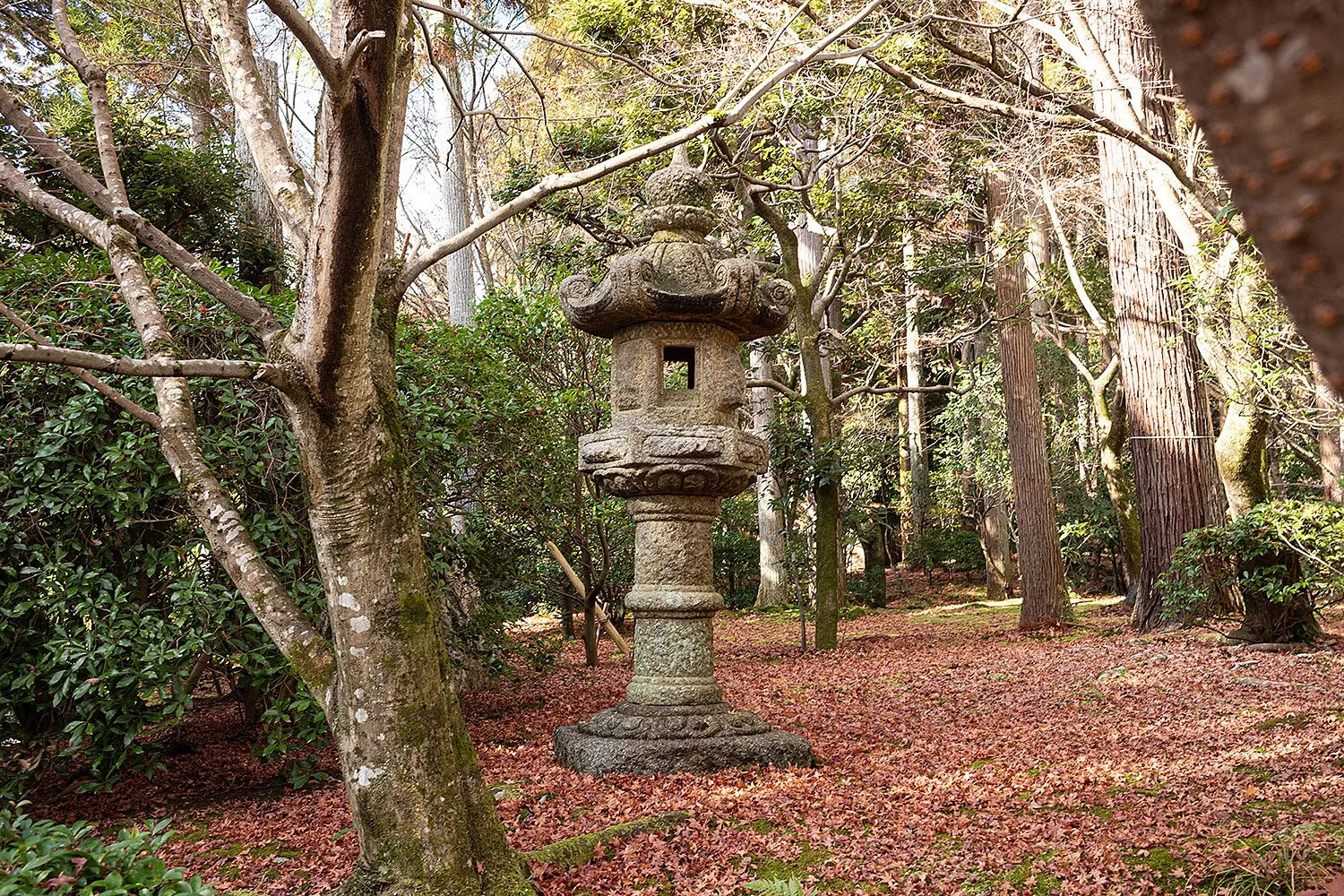
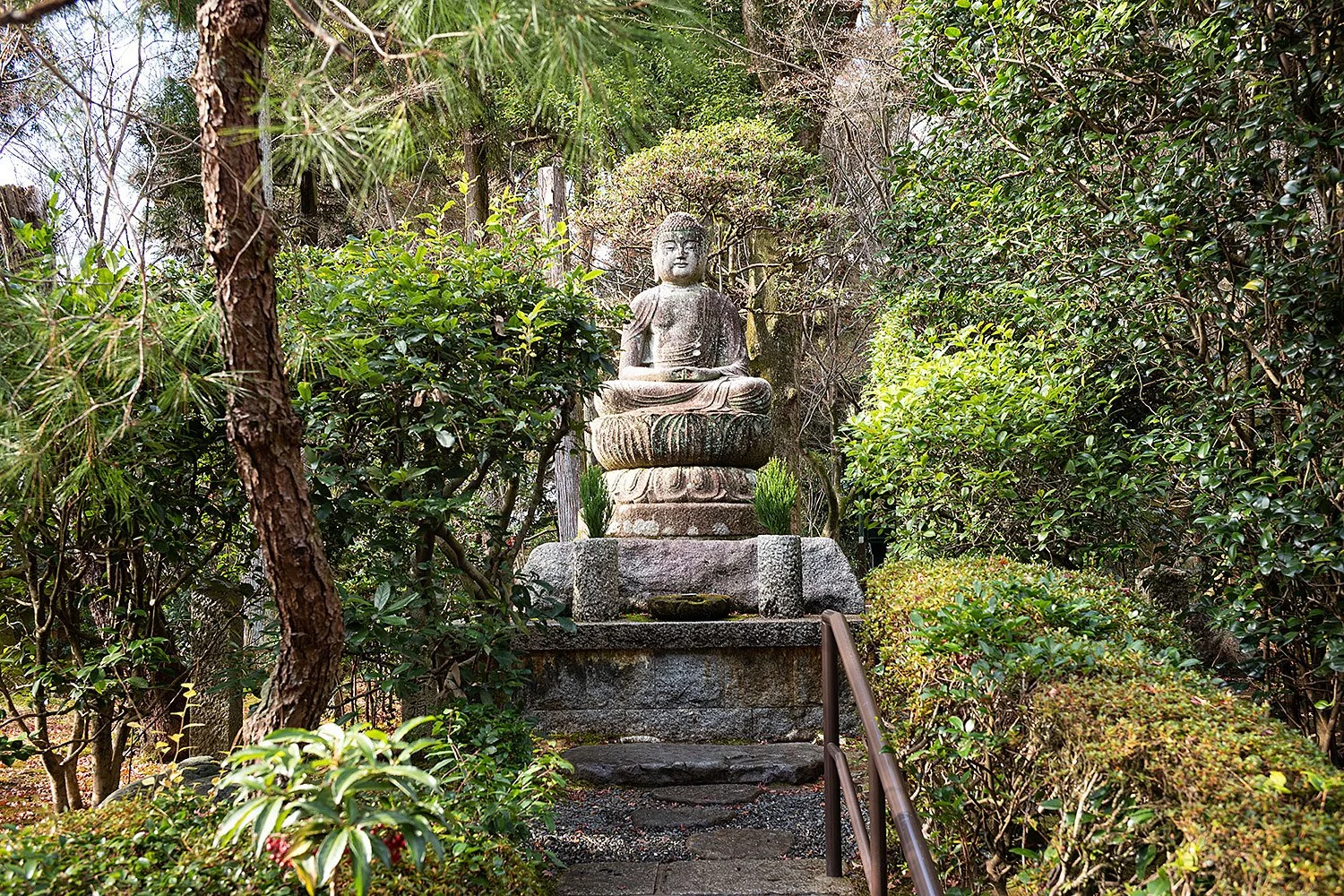
I walk. through the outer gardens to the hōjō (theresidence of the abbot of the monastery) and sit on the wooden veranda in front of the Zen garden. I pull out a the postcards I’ve been collecting since arriving in Japan and lay them out as the sun plays peekaboo through the clouds.
A jumping spider alights on my knee as I write and I watch as it navigates the folds of my jeans before leaping away once more.
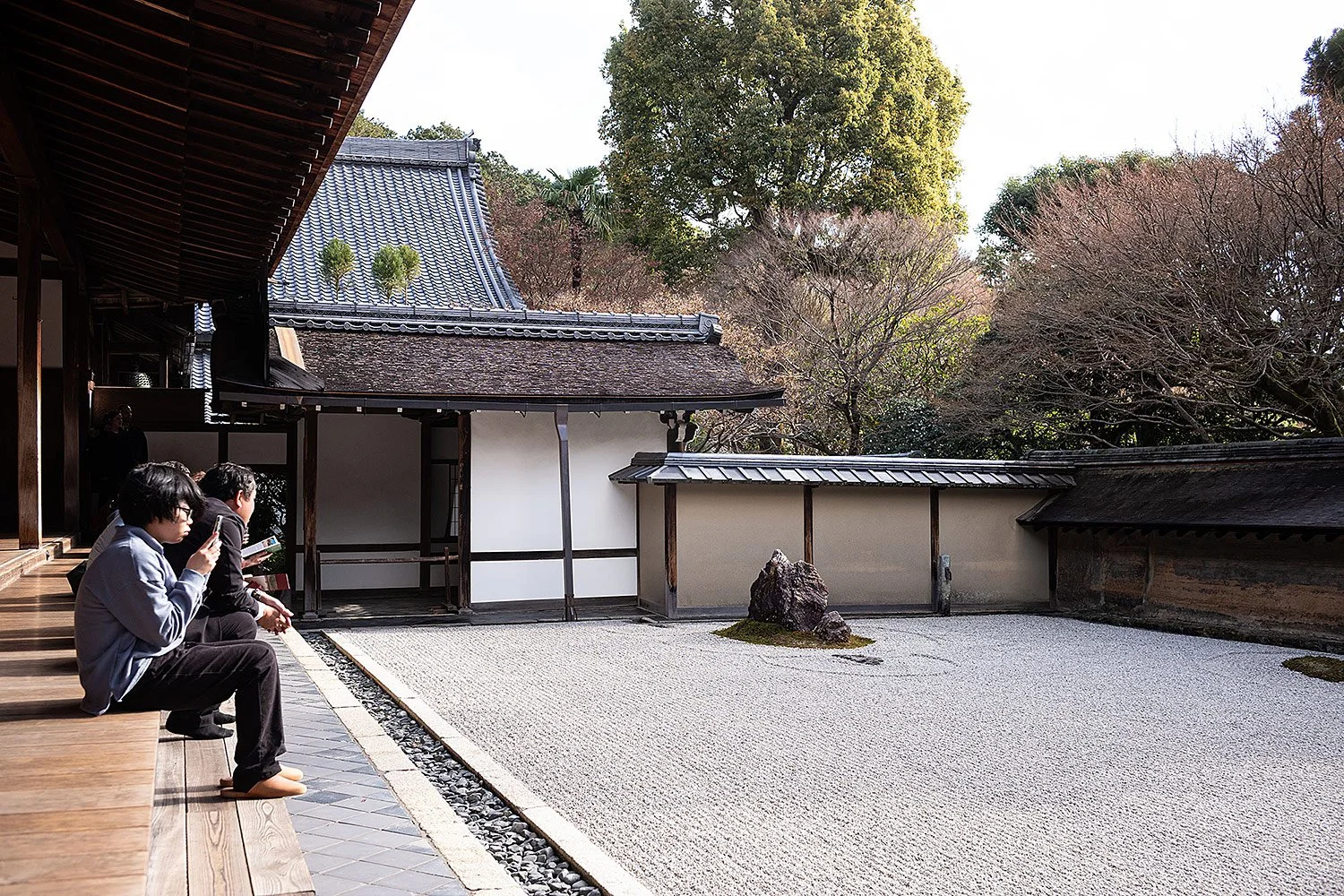
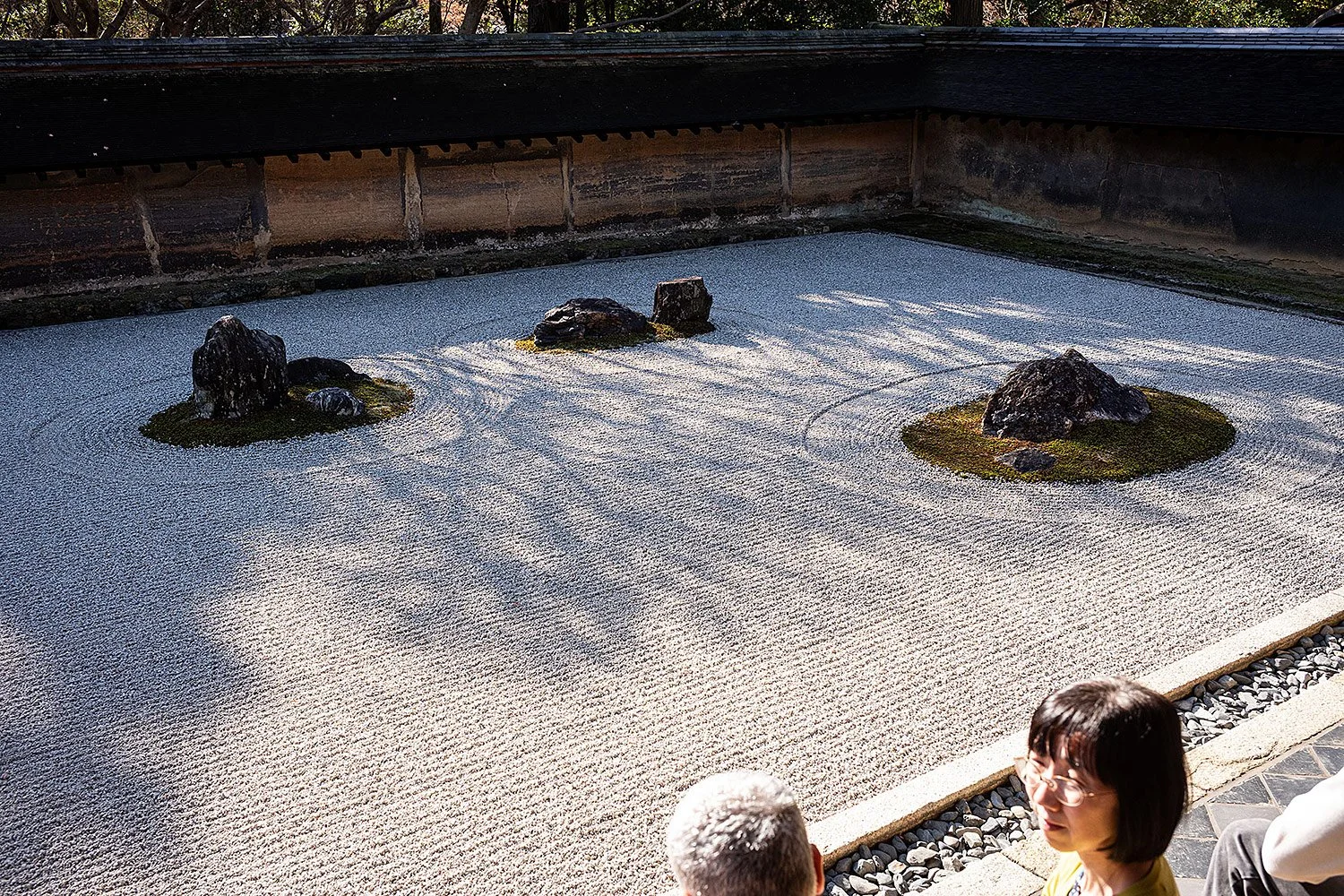
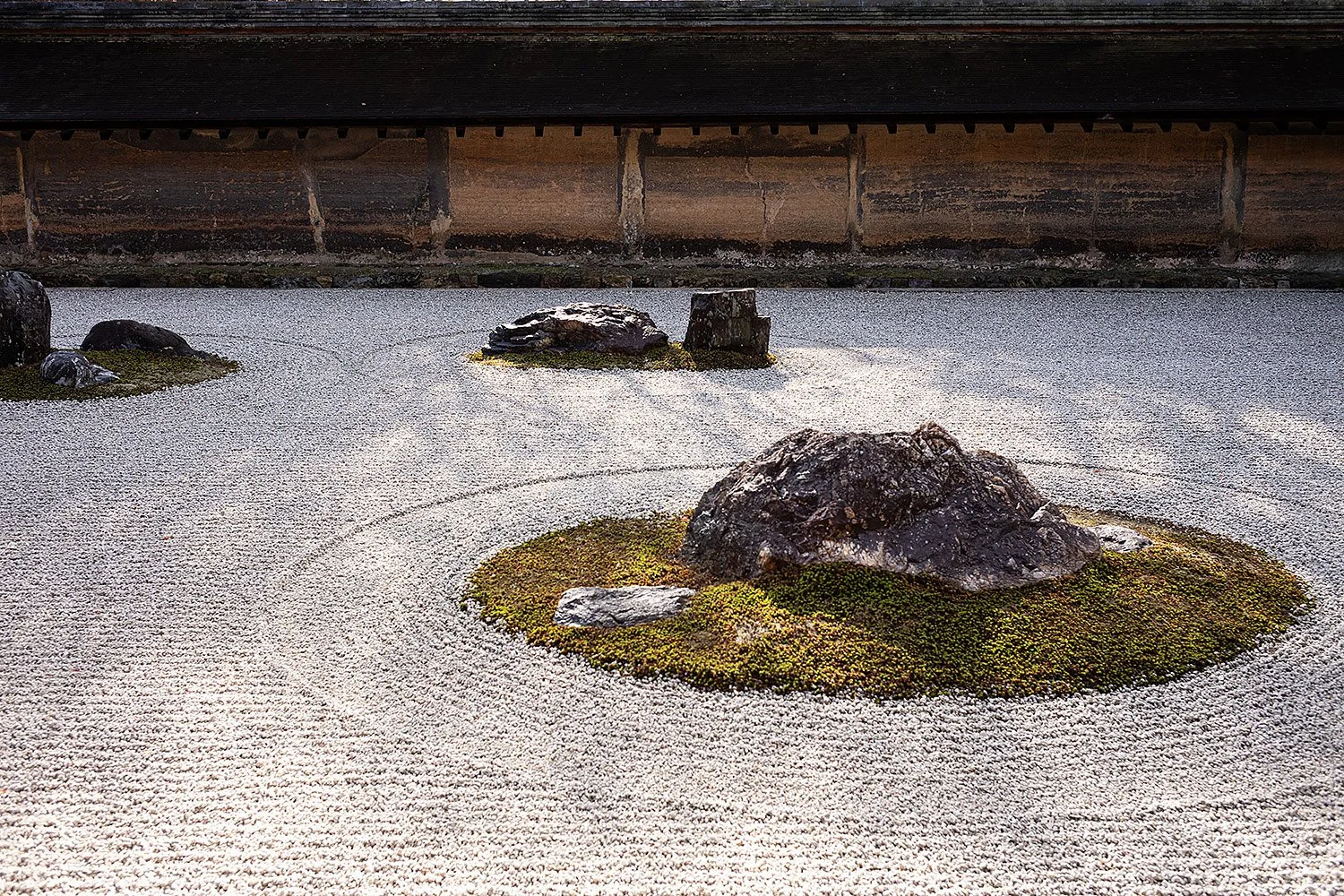
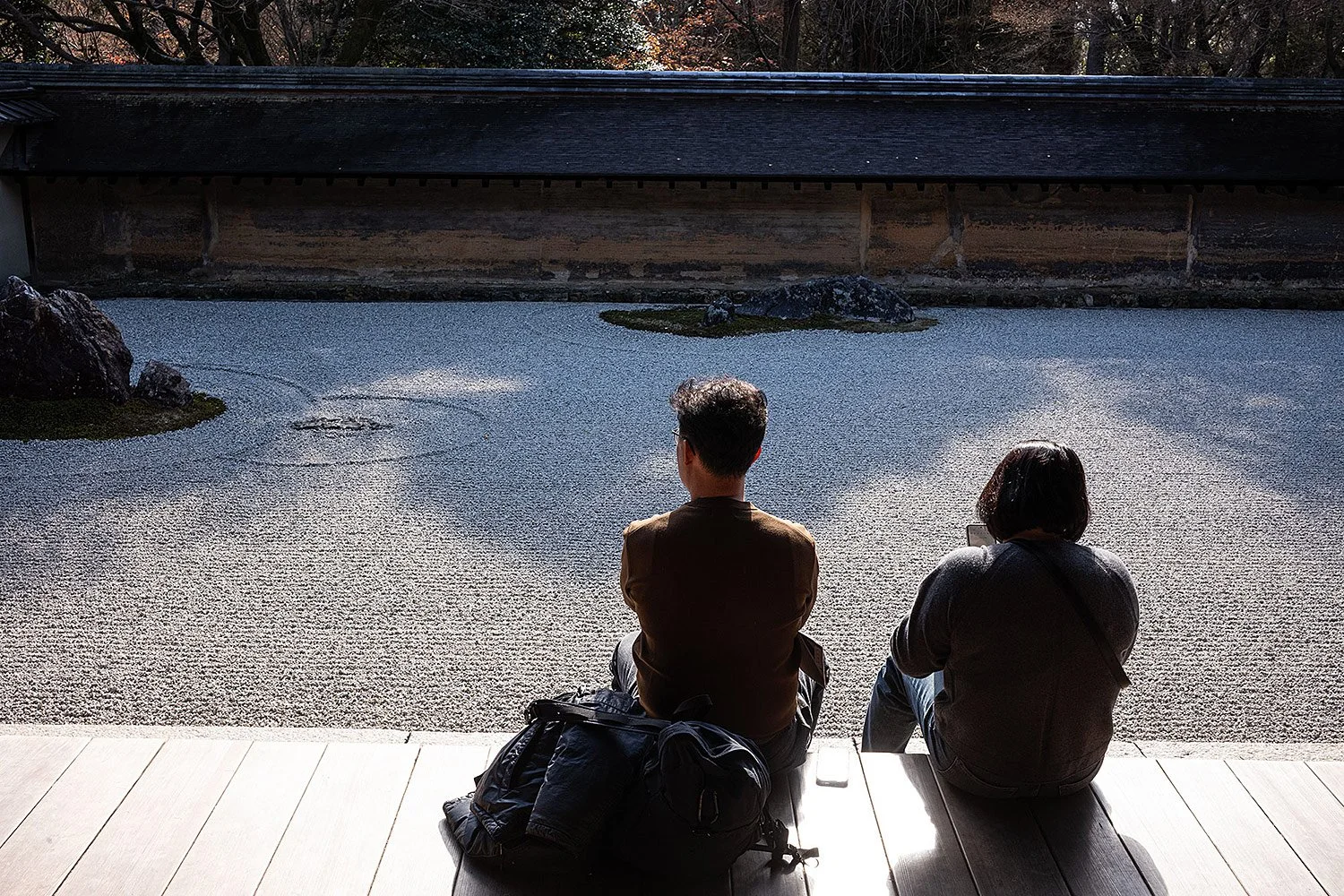
Considered one of the finest surviving examples of kare-sansui (dry landscape), the Zen garden at Ryǒan-ji first appears in descriptions around 1680–1682. The garden described contains only nine stones, however, not the fifteen seen today. The current garden most likely dates to the end of the 18th century when Akisato Rito redid the garden after a fire destroyed the buildings in 1779. He published a picture in his Celebrated Gardens and Sights of Kyoto showing it as it appears today.
I finish writing my postcards and get up to walk around the temple before walking out through the forested paths that run around the temple complex back to the entrance.
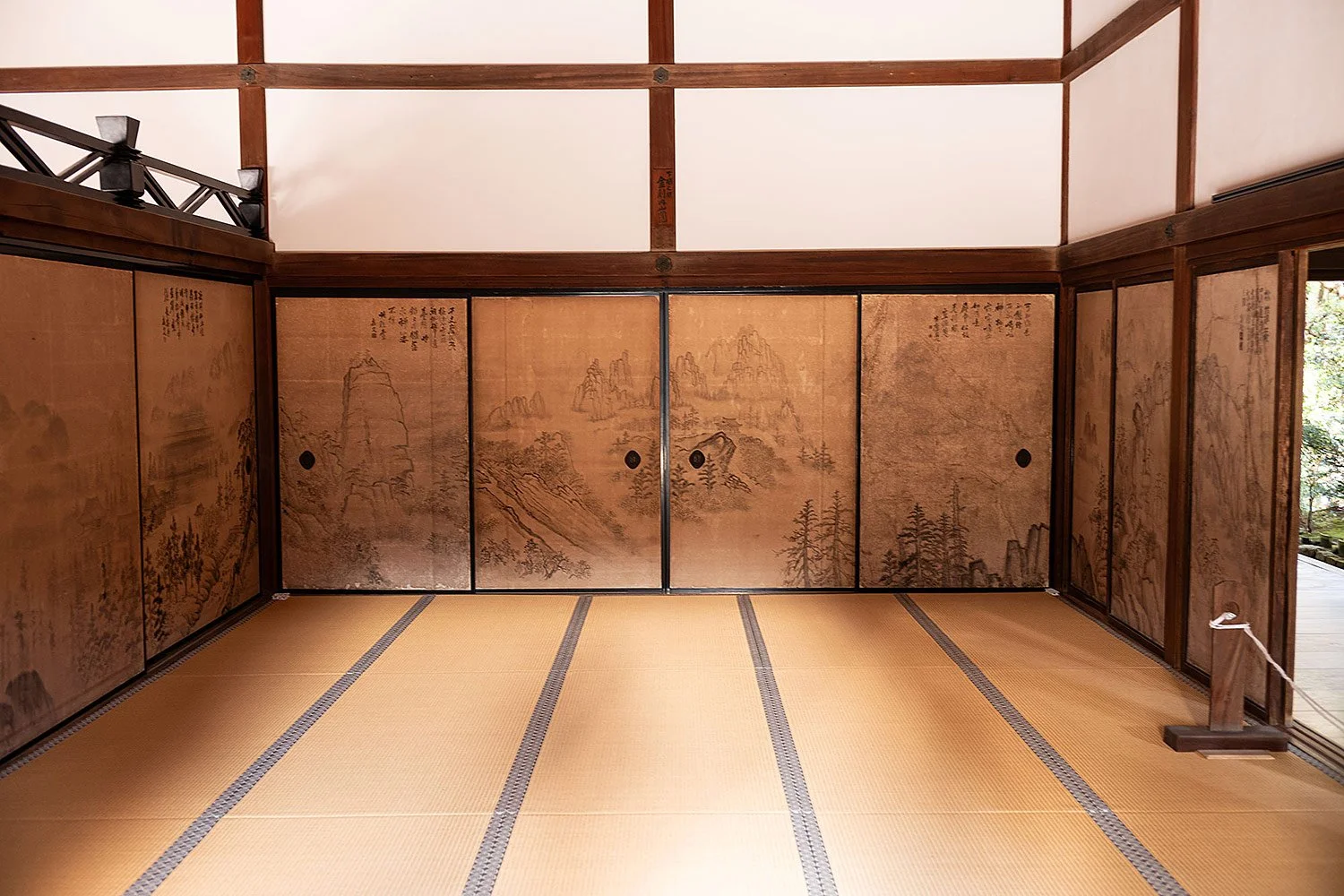
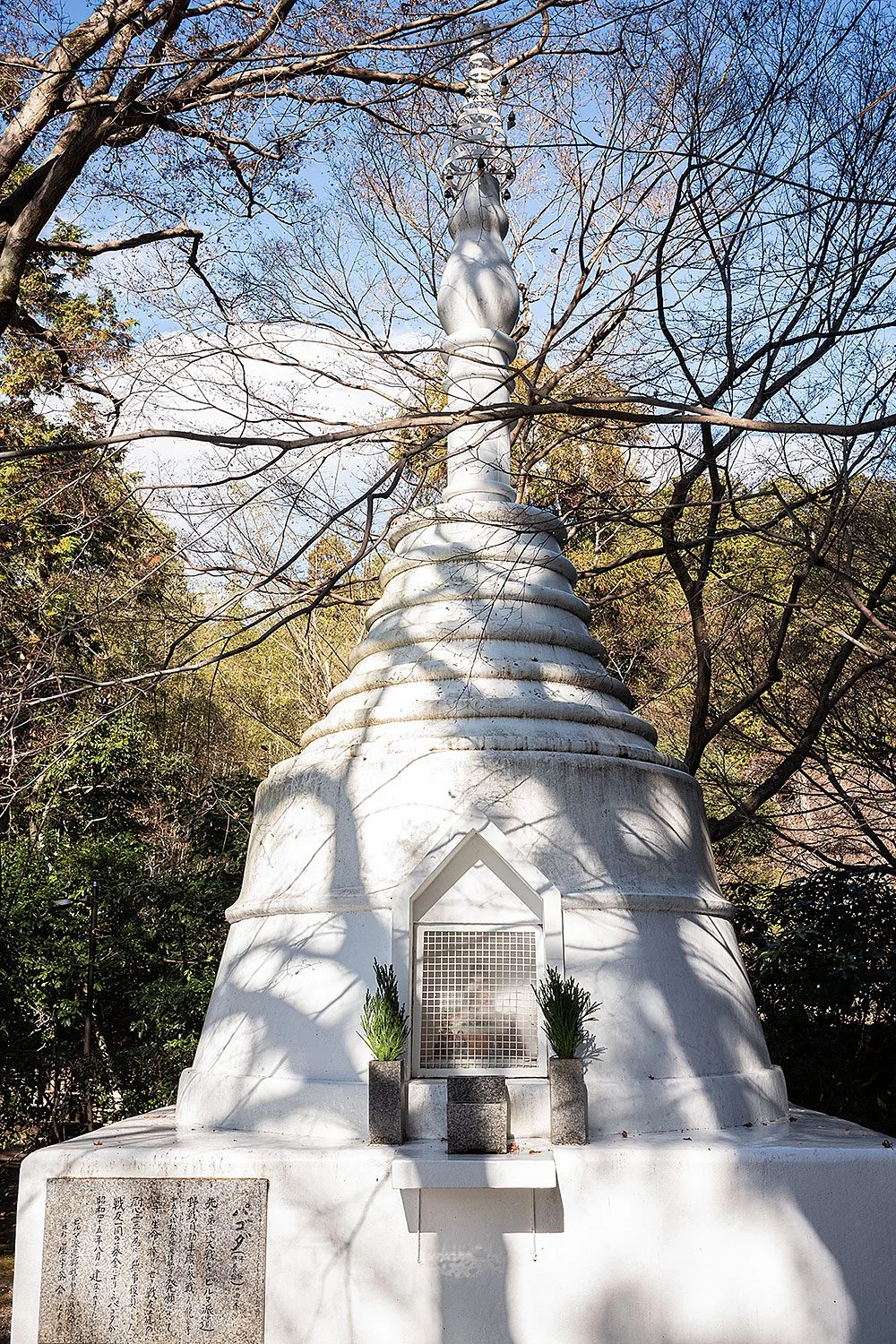
Leaving the Zen garden I walk the grounds, exploring the woods and the path that runs along the pond. A pagoda raised by Joei Matsukura, the 58th Chief Priest of Ryõan-ji, stands in a far corner of the gardens. Matsukura served in Burma during World War II and the pagoda is built in memory of those lost during the Burma Campaign of that war.
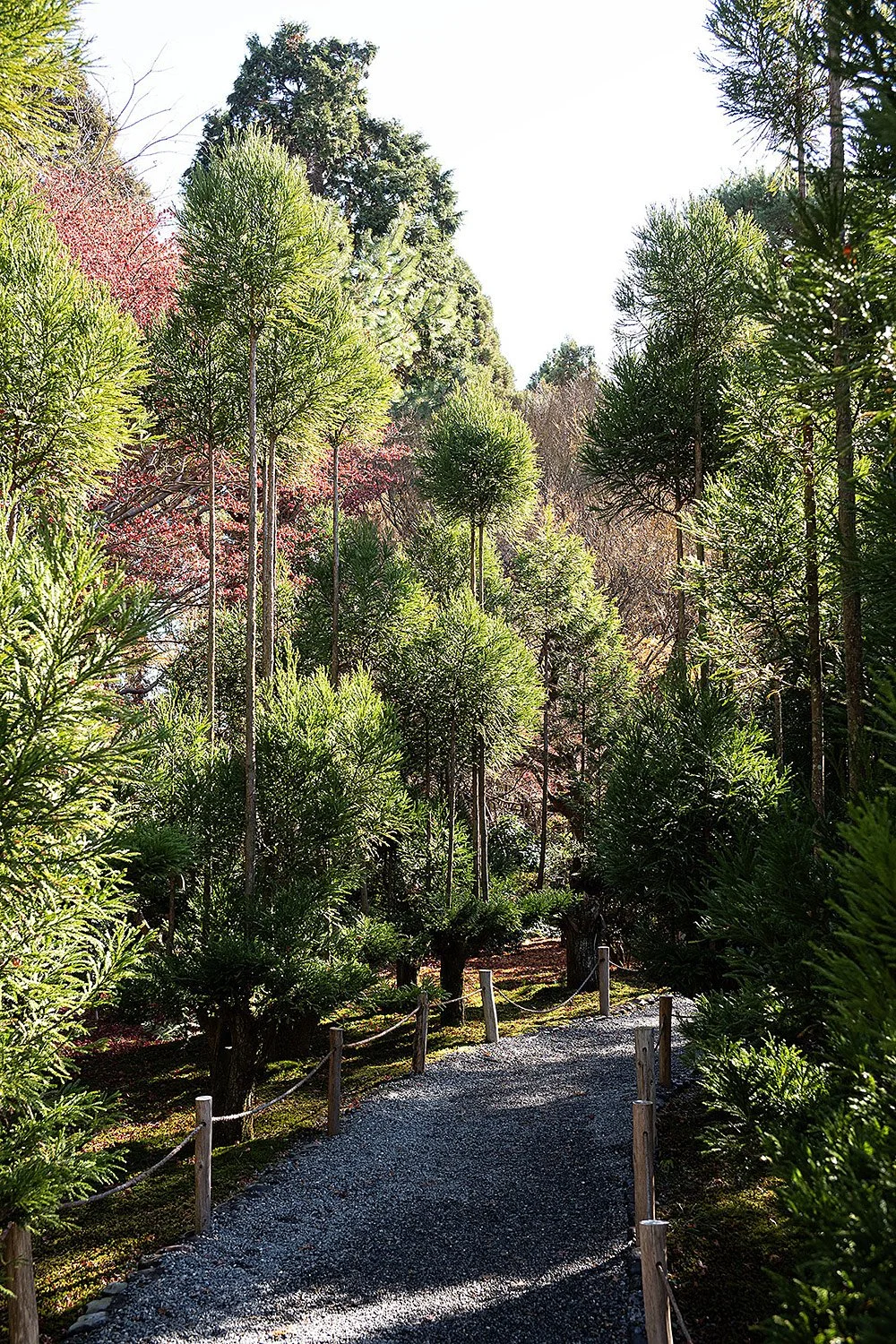
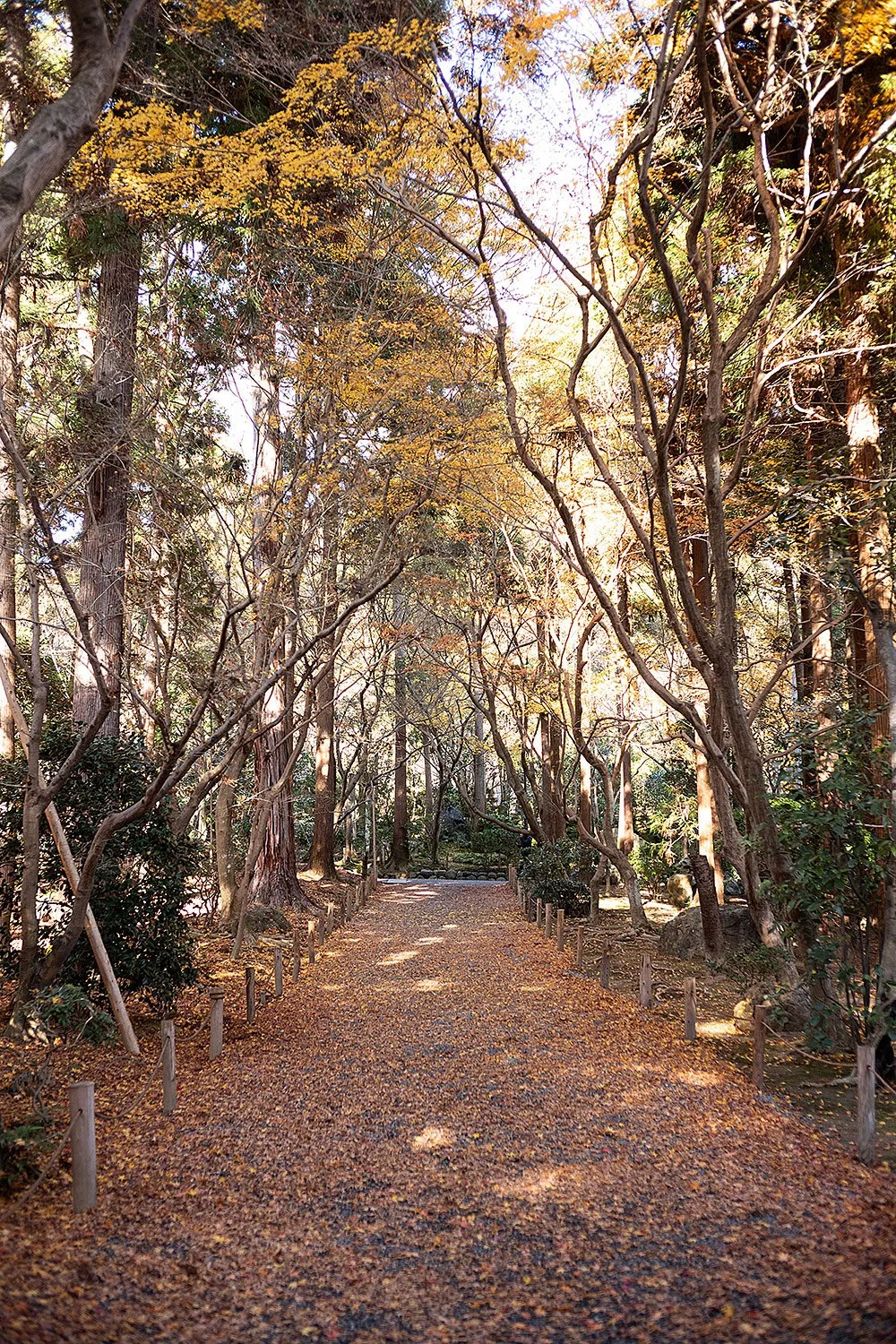
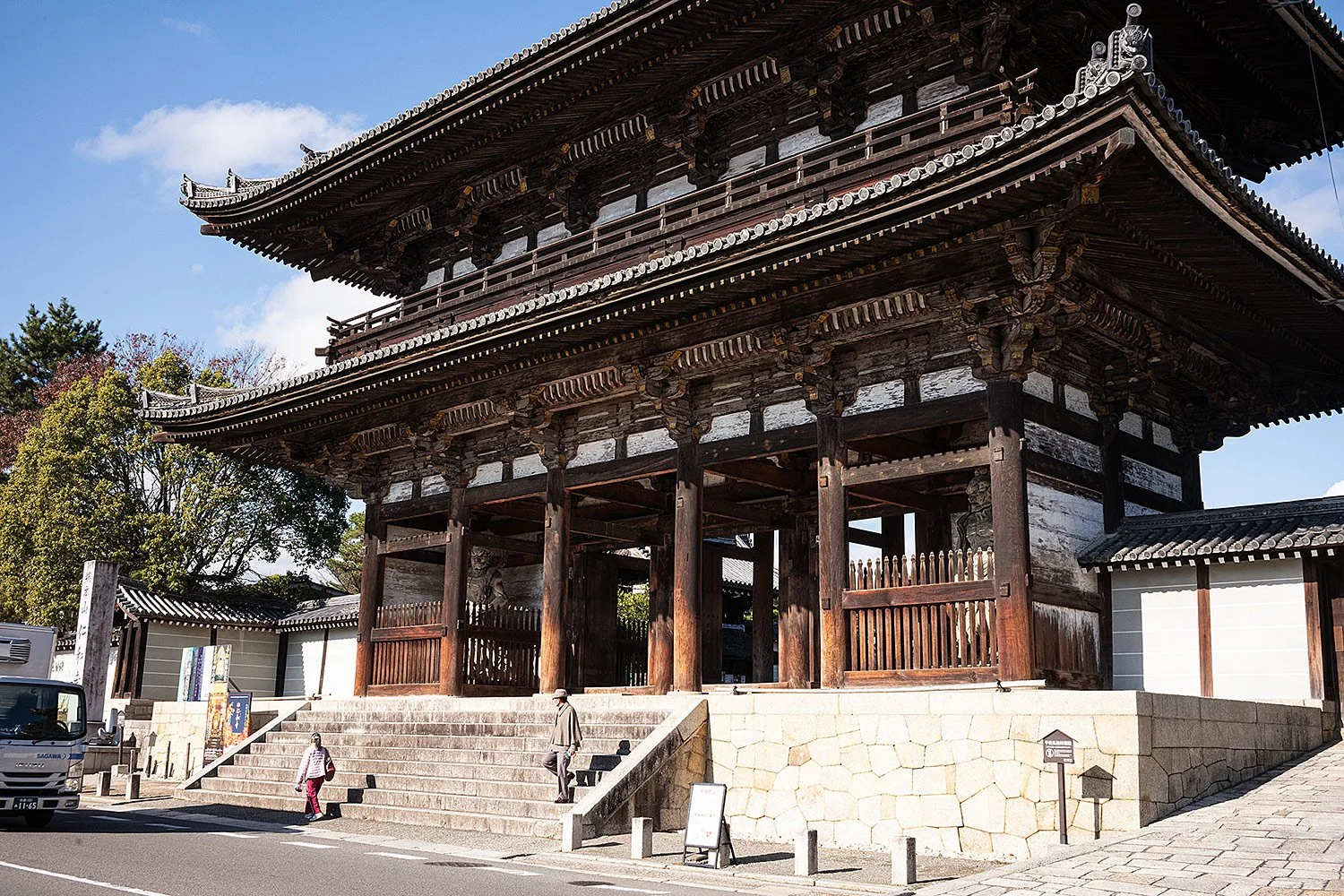
From Ryõan-ji I hop on a bus to Arashiyama, but disembark two stops later when I see Ninna-ji coming up on the right. I hadn’t planned to visit the temple, but seeing it’s large gate makes me curious to see more.
First founded in 888 AD by Emperor Uda, Ninna-ji is the head temple of the Omuro school of the Shingon Sect of Buddhism. It’s also the head temple of the Omuro-ryu school of ikebana, founded by the same emperor. In the Spring, it’s a popular place to view sakura, but I’m far outside of that season, though the day is warm and I could be fooled into thinking it might be Spring.
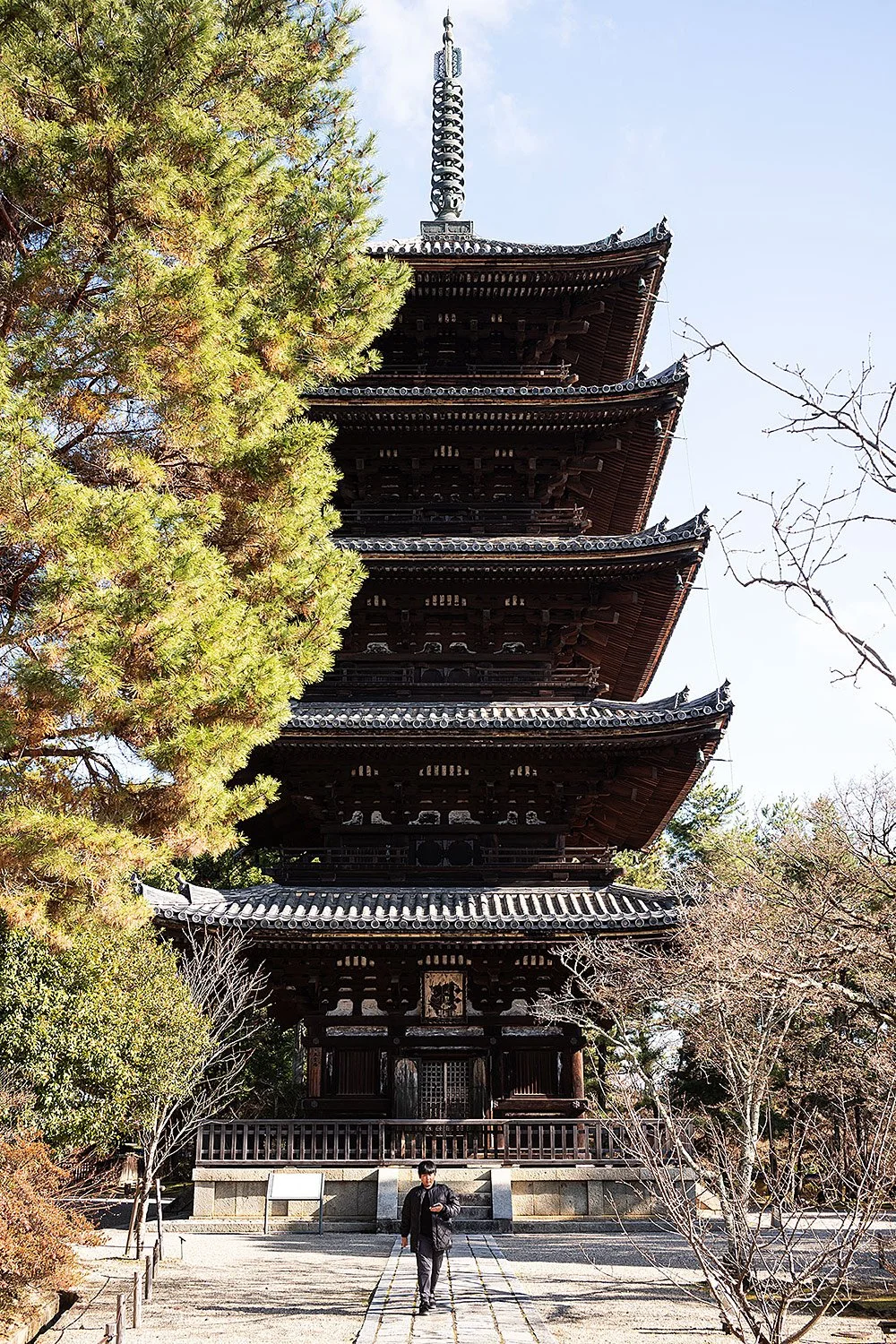
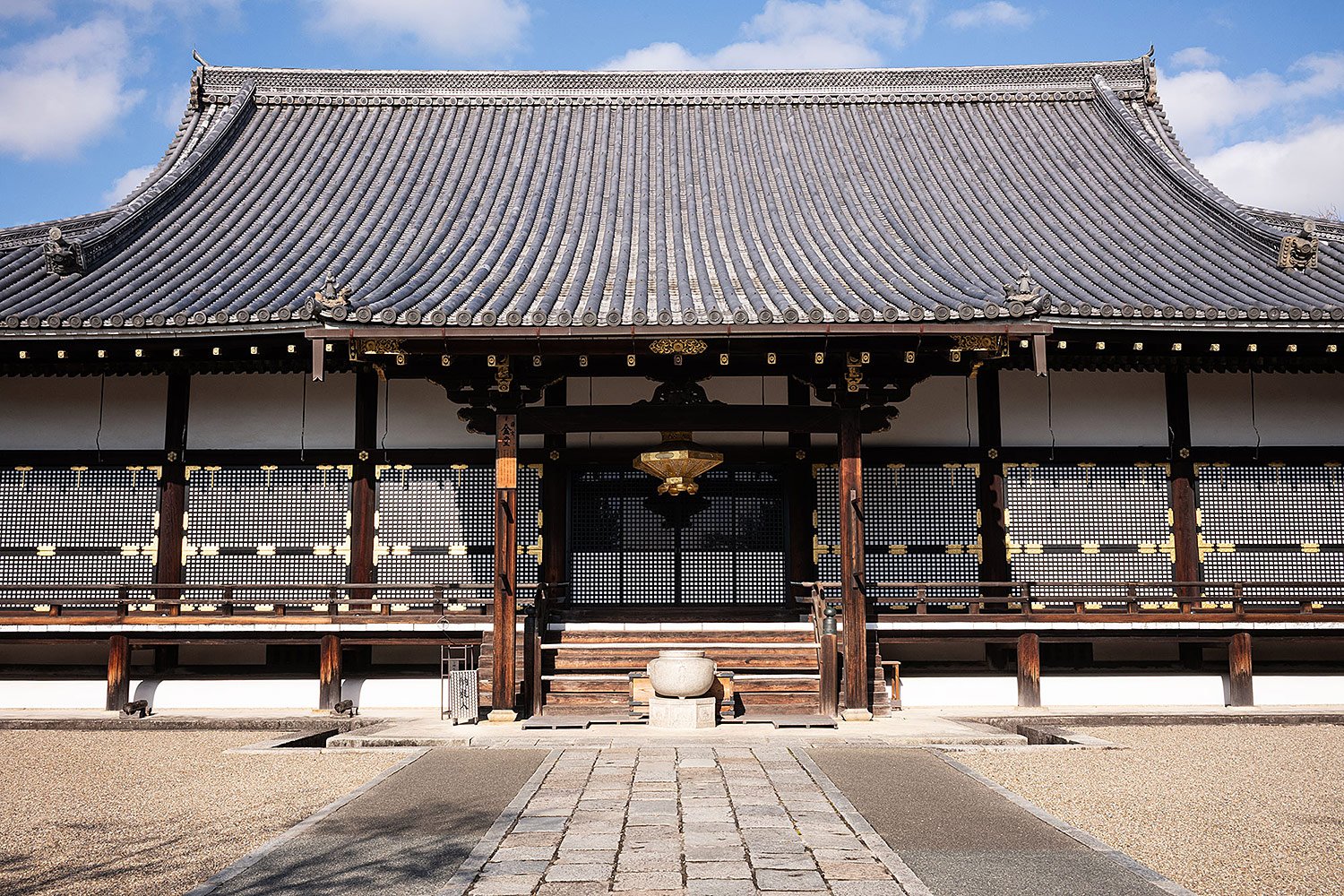
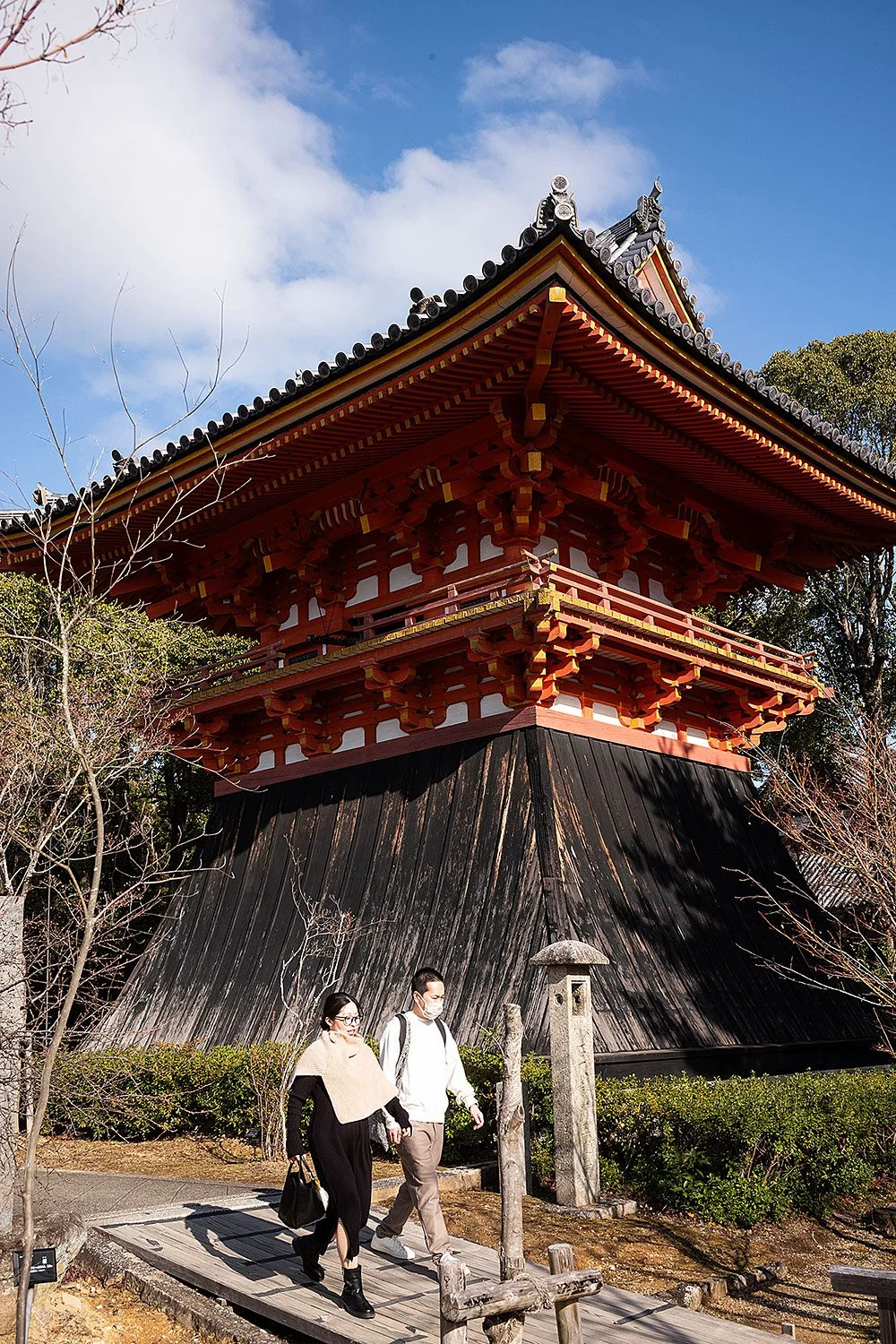
It’s a large complex and I find myself spending a lot more time exploring the grounds than I expect to. And then when I think I’m about done, I see another area off to the side with a set of buildings around a rock garden and pond. This is the Goten, the former residence of the monzeki imperial head priests.
The covered corridors connect buildings built in the shoin-zukuri architectural style, offering views of the interior decorations and outdoor gardens.
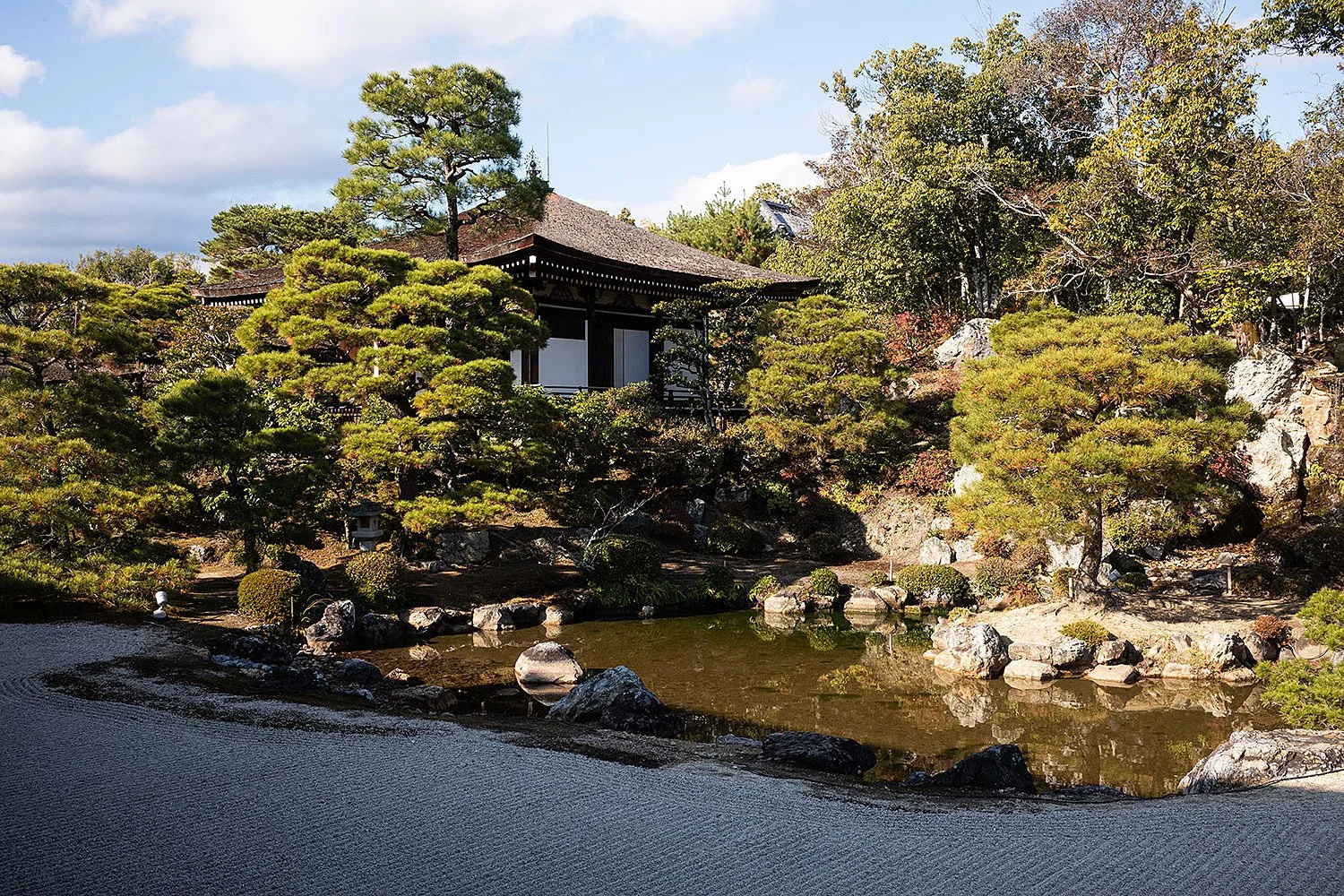
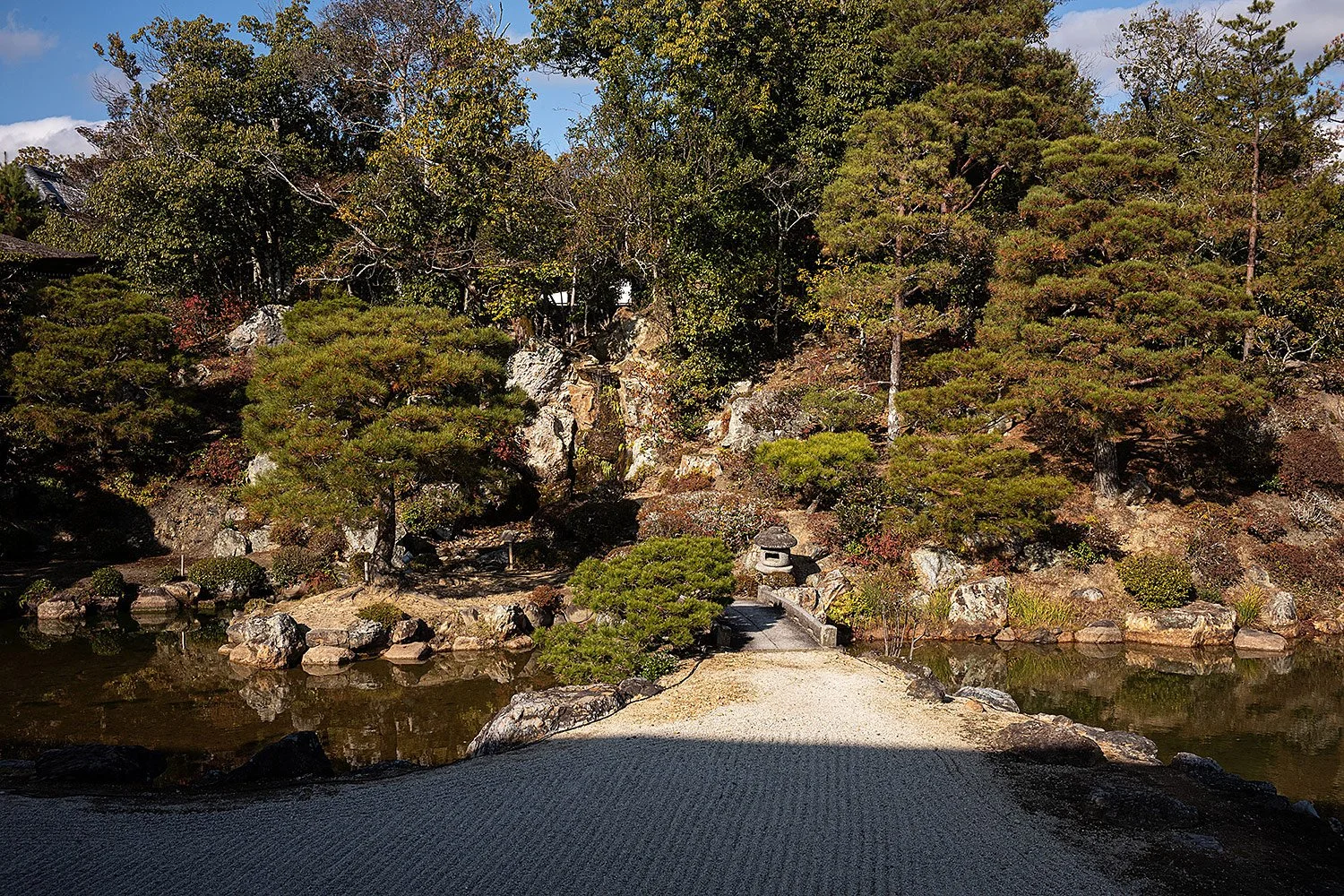
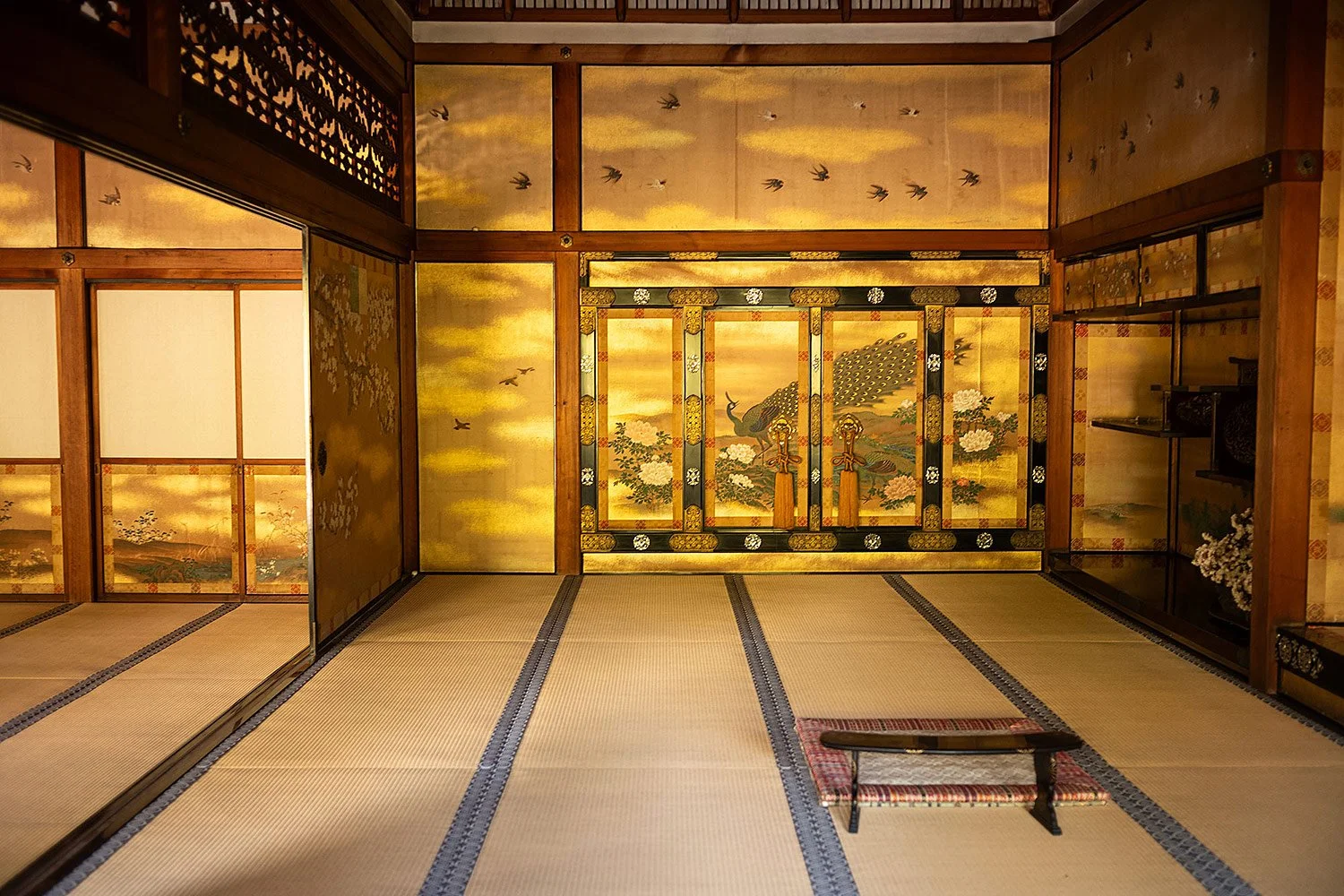
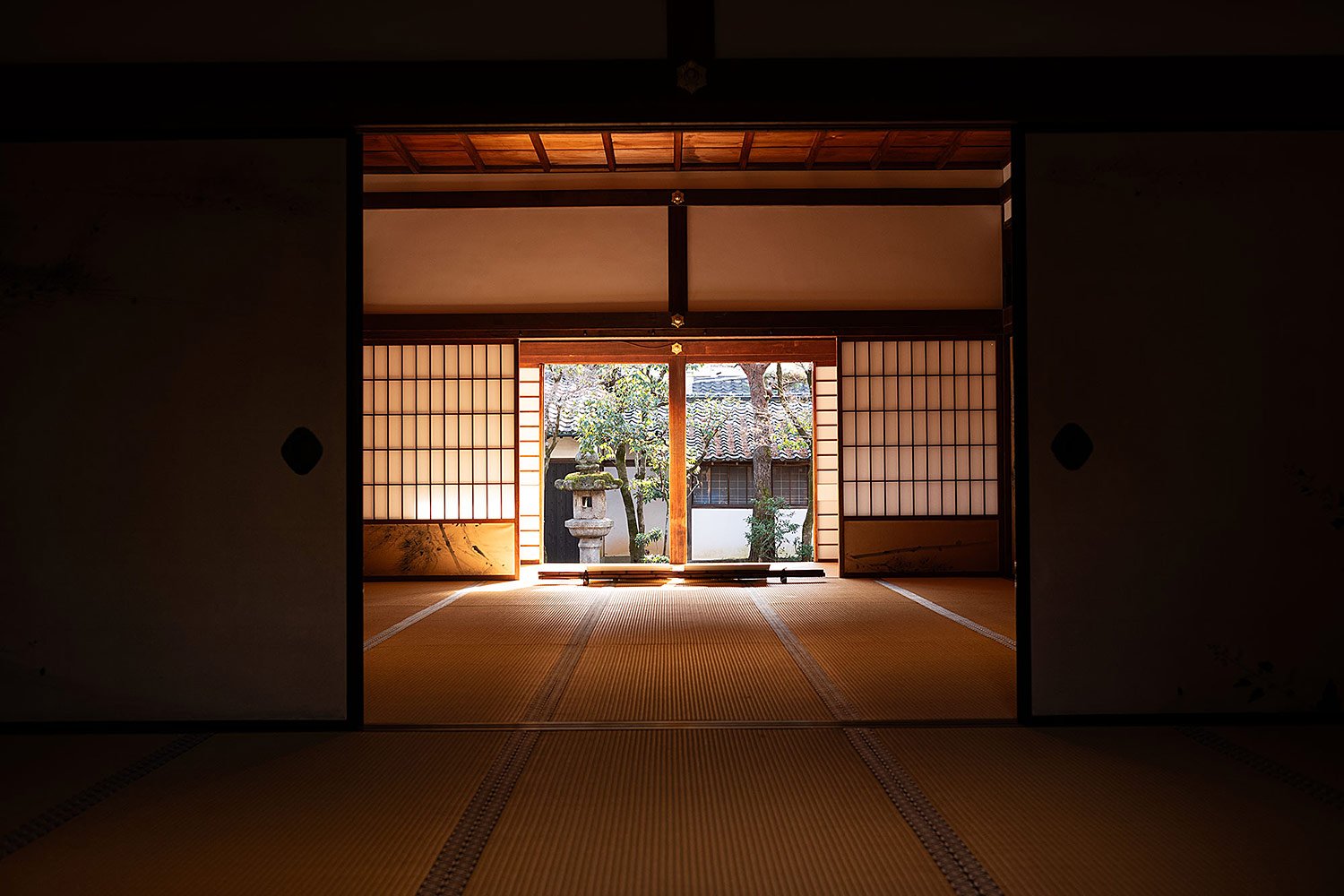
Exiting the Gotan I pause to watch a gardener trimming the trees. I imagine them as giant bonsai, and wonder how long he’s been working at shaping them into what they are now.
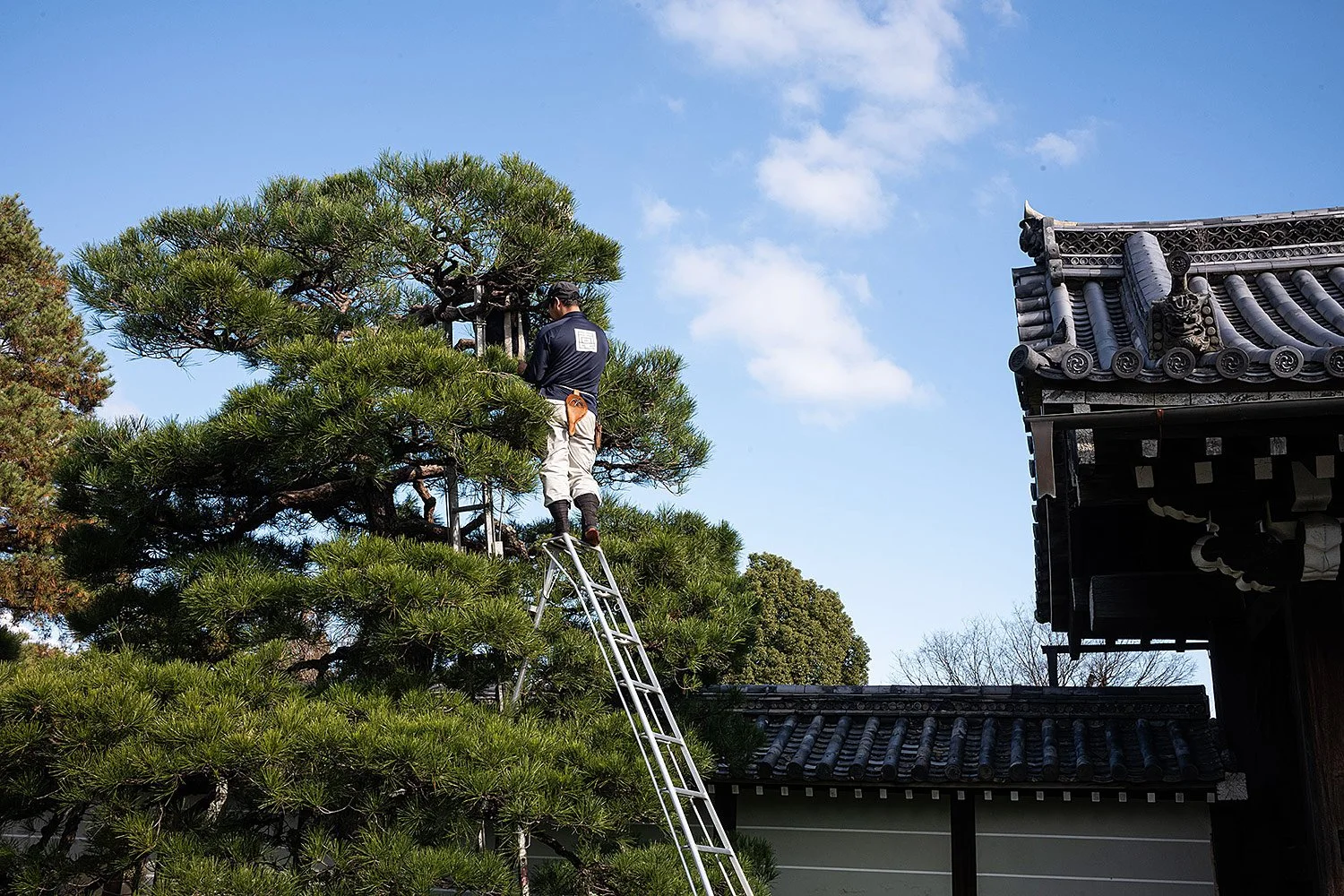
Passing back through the main gate I stop to take in the wooden Nio statues that guard the entrance, Agyo (mouth open) on one side and Ungyo (mouth closed) on the other. The gate itself is built in the traditional Japanese wayō style. Standing at 18.7 meters tall, the Gate of the Guardian Kings is considered one of the Three Great Gates of Kyoto, allowing only the pious to pass through, warding off evil spirits, thieves, and those who harbor ill will towards Buddhism.
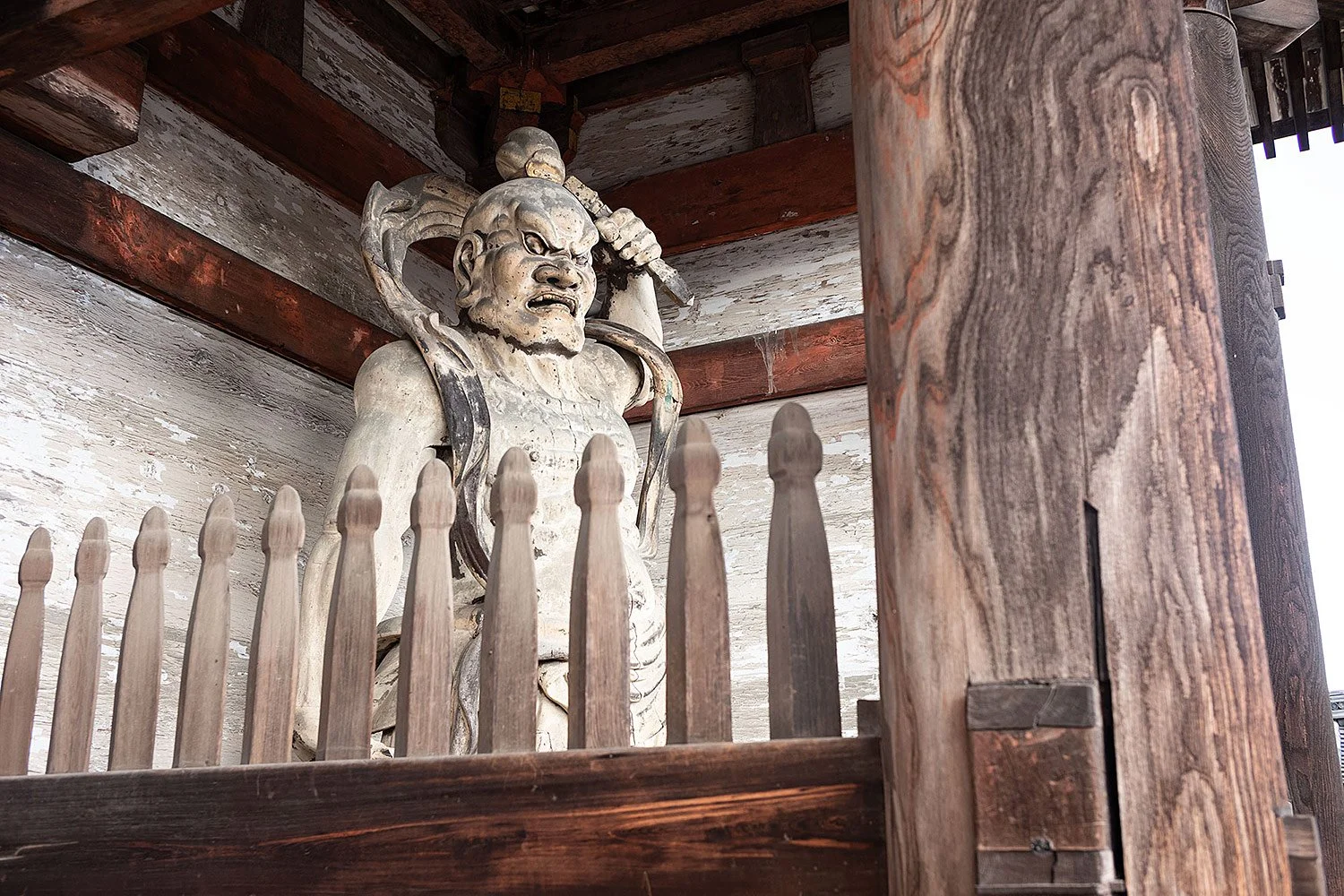
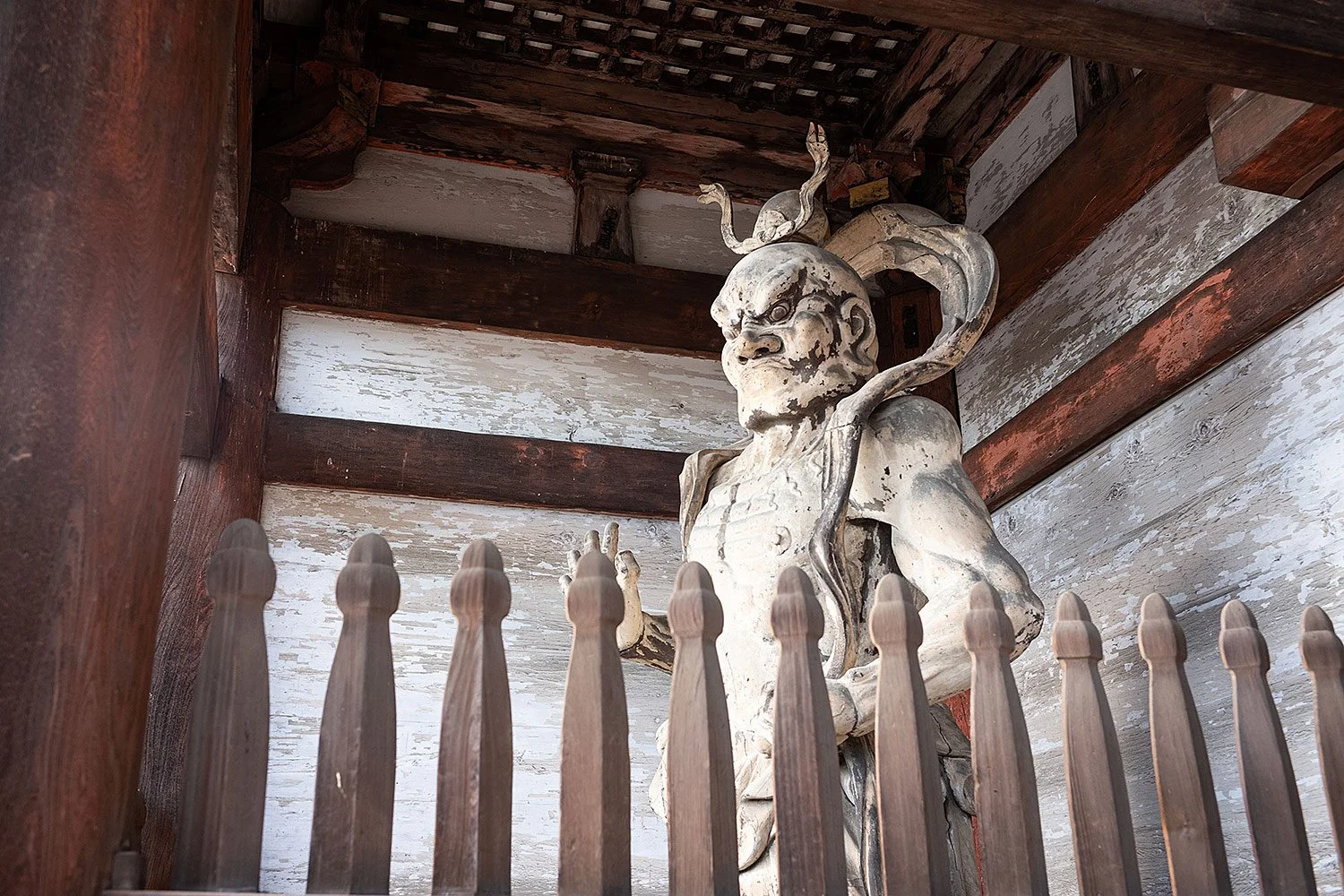
I cross the street with the intent of getting on the same bus with a transfer to Arashiyama, but after rechecking the map see that there’s a direct bus from Narabigaoka, a 17-minute walk away. I check the directions and head south towards my new destination.
Along the way I pass pizzeria otto, set in a cute house in the middle of a residential neighborhood. There seem to be no other restaurants around. I haven’t had a proper meal and decide to stop in for a snack.
There’s a couple seated at a table and an older group of friends enters while I’m pondering the menu. I order a margarita and a bottle of water and rest my feet.
When the pizza comes I dig right in. I hadn’t realize how hungry I was. The dough is great and I’m happy always happy to eat pizza. It’s the perfect stop.
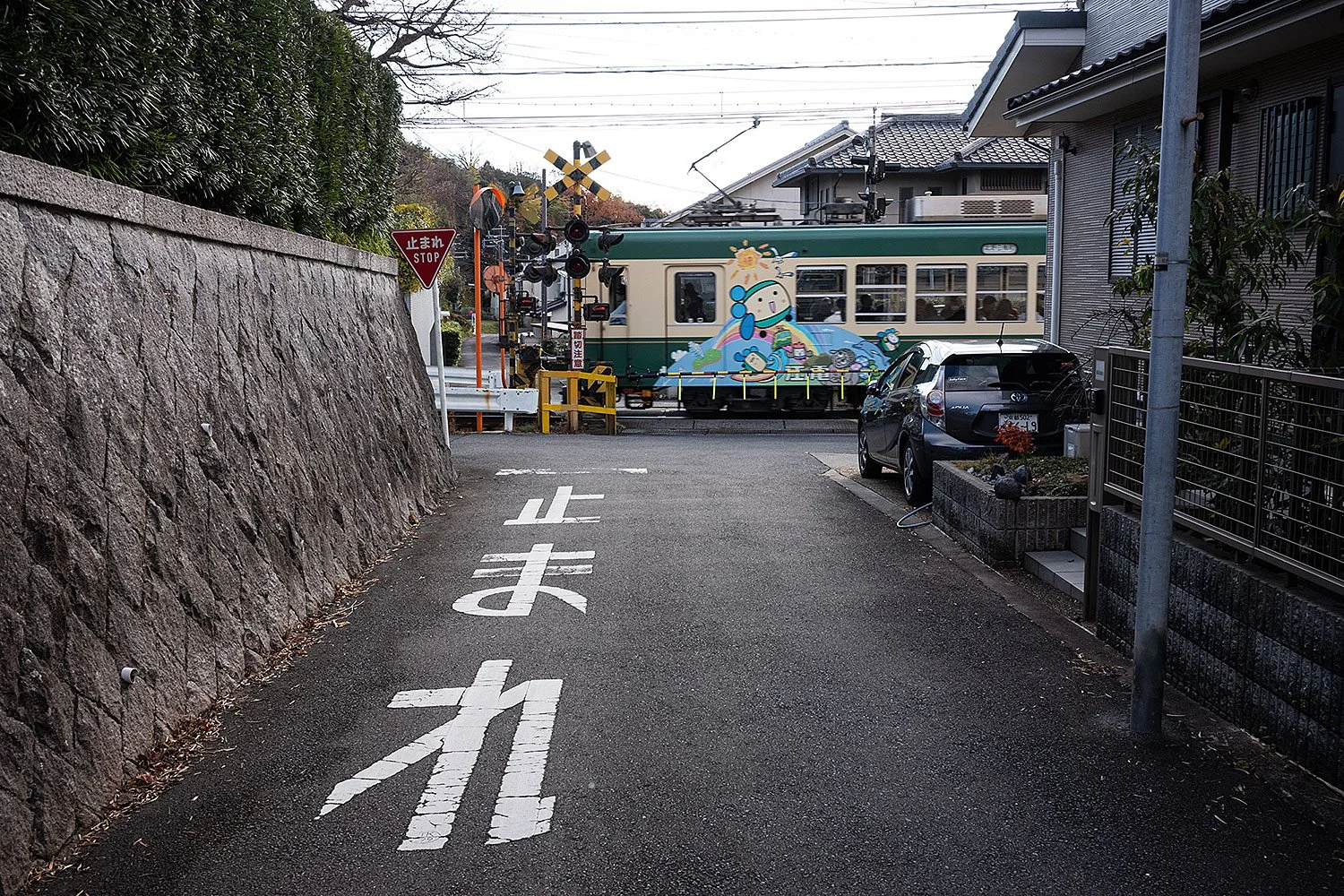
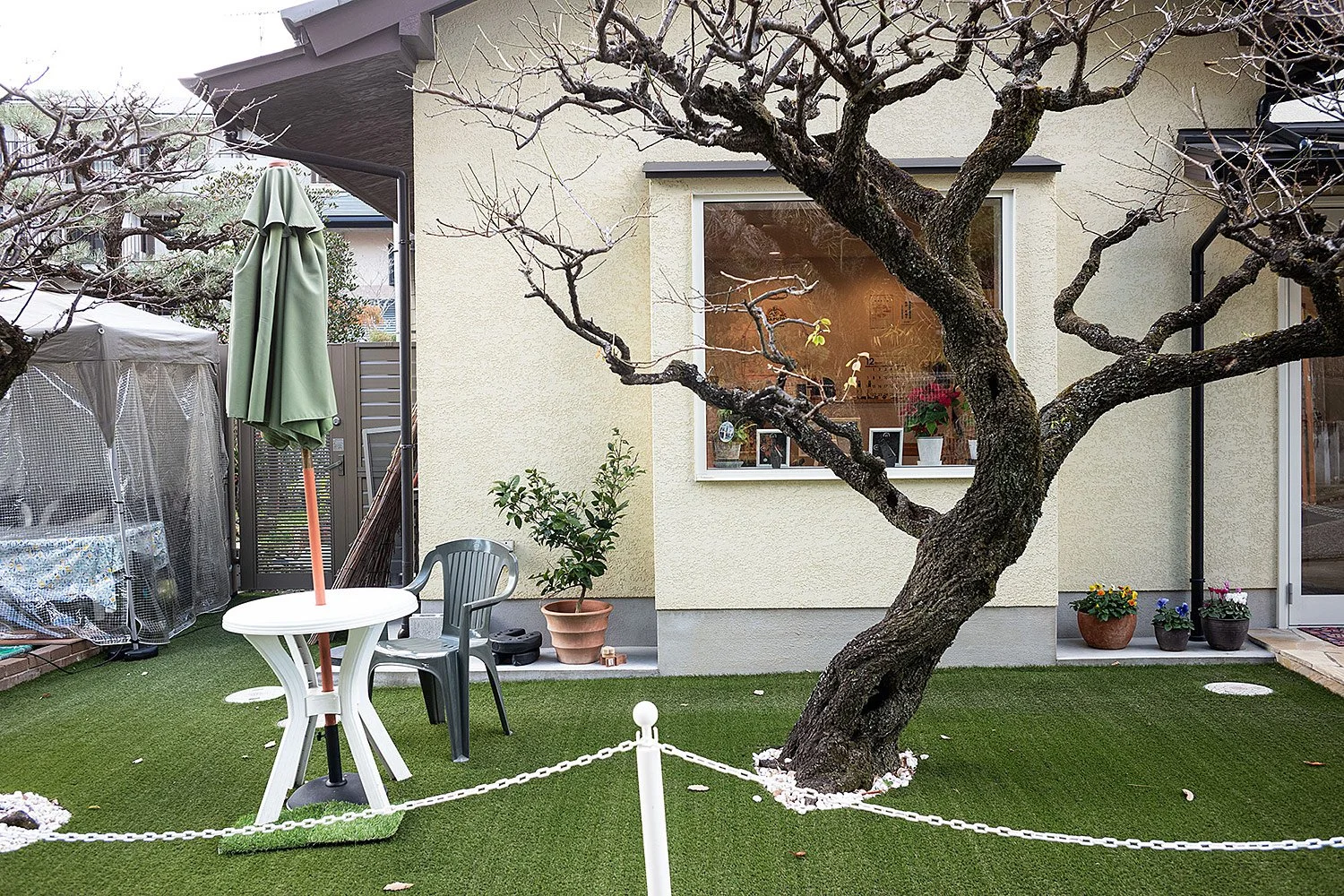
I am lucky with the bus. It comes but once an hour and I reach the bus stop seven minutes before the next one is scheduled to arrive.
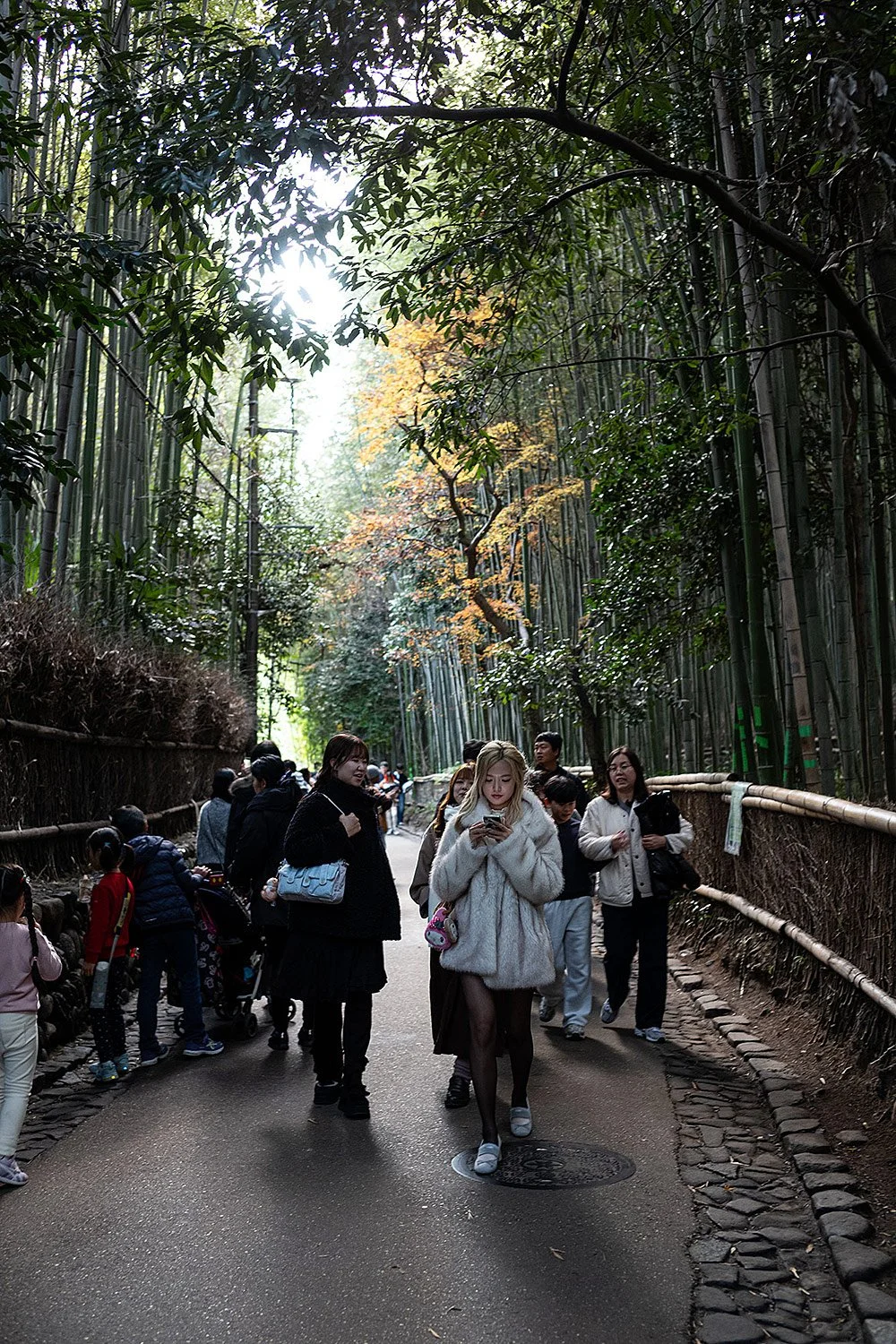
Arashiyama is busy, the crowded streets are lined with shops and restaurants and snacks. I should have expected as much from a Saturday. I had forgotten how much activity the area can generate and had forgotten how much it’s geared towards visitors.
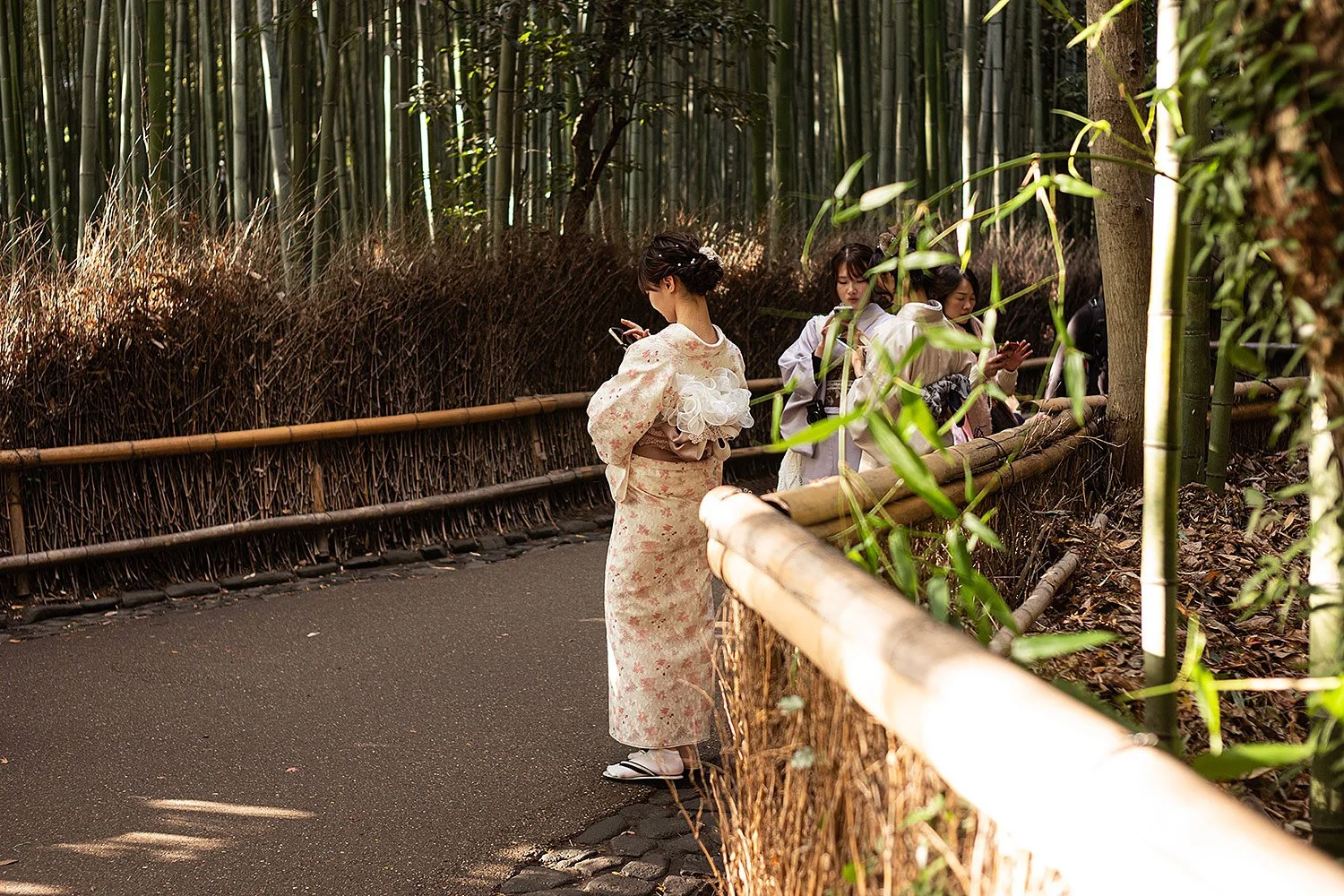
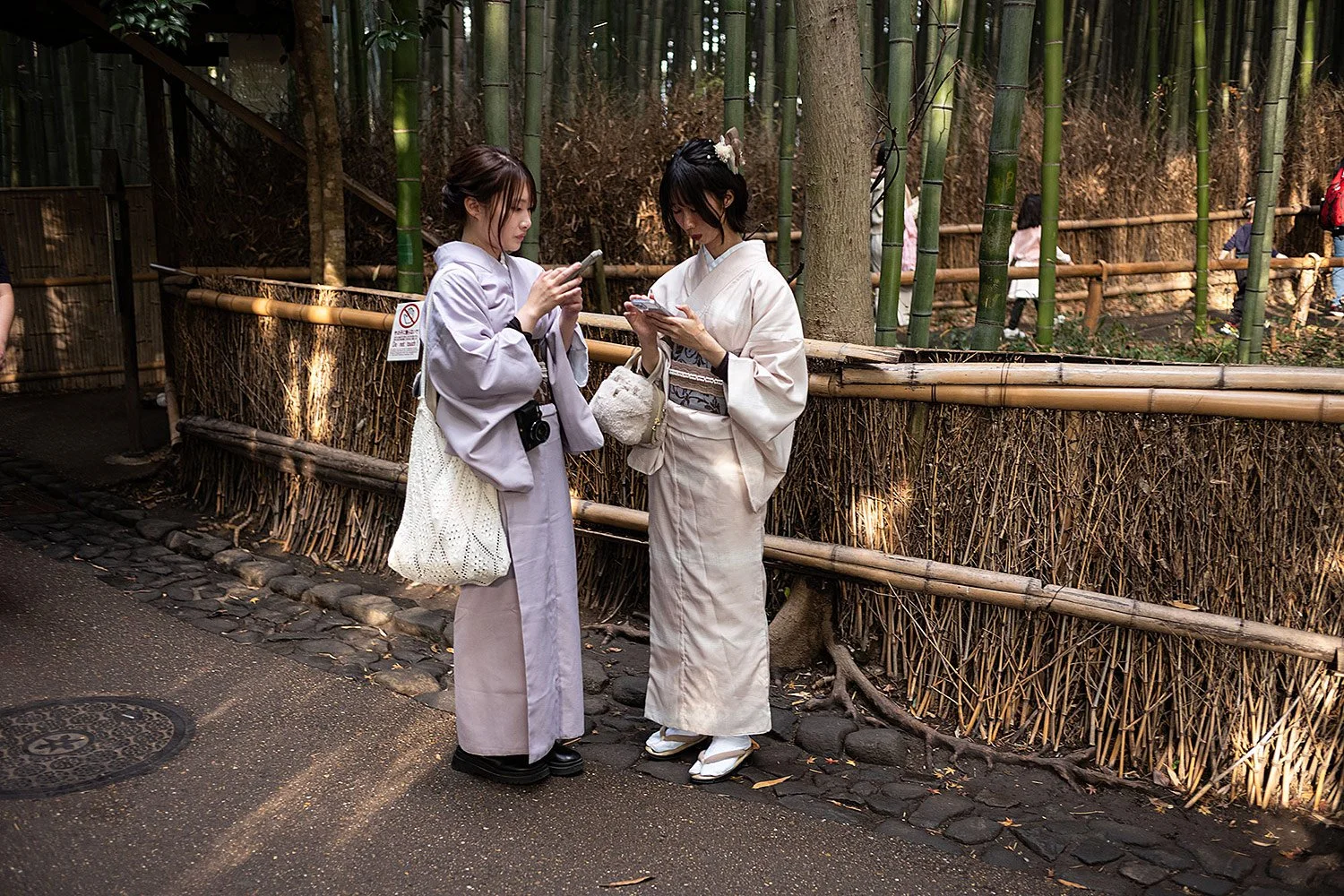
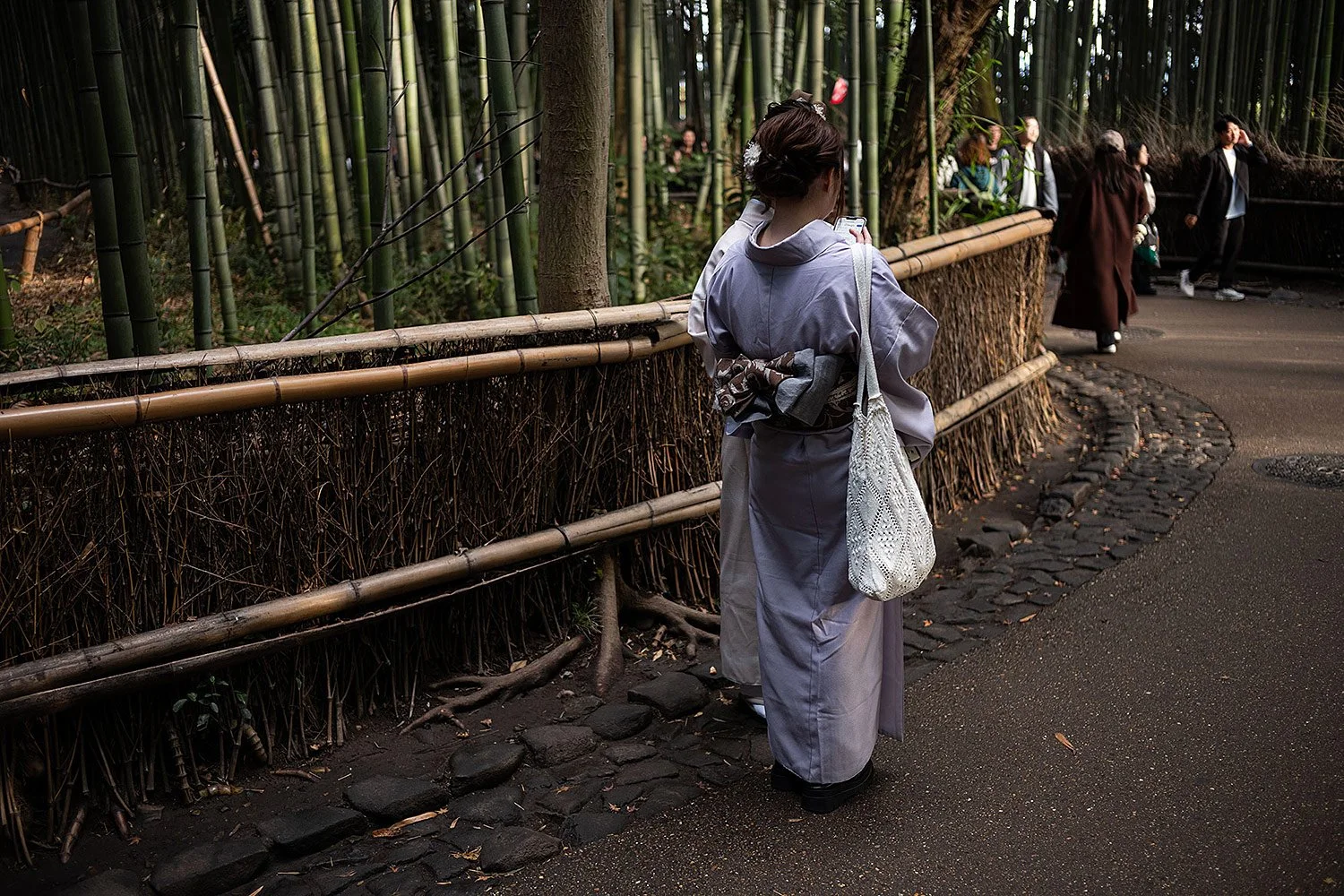
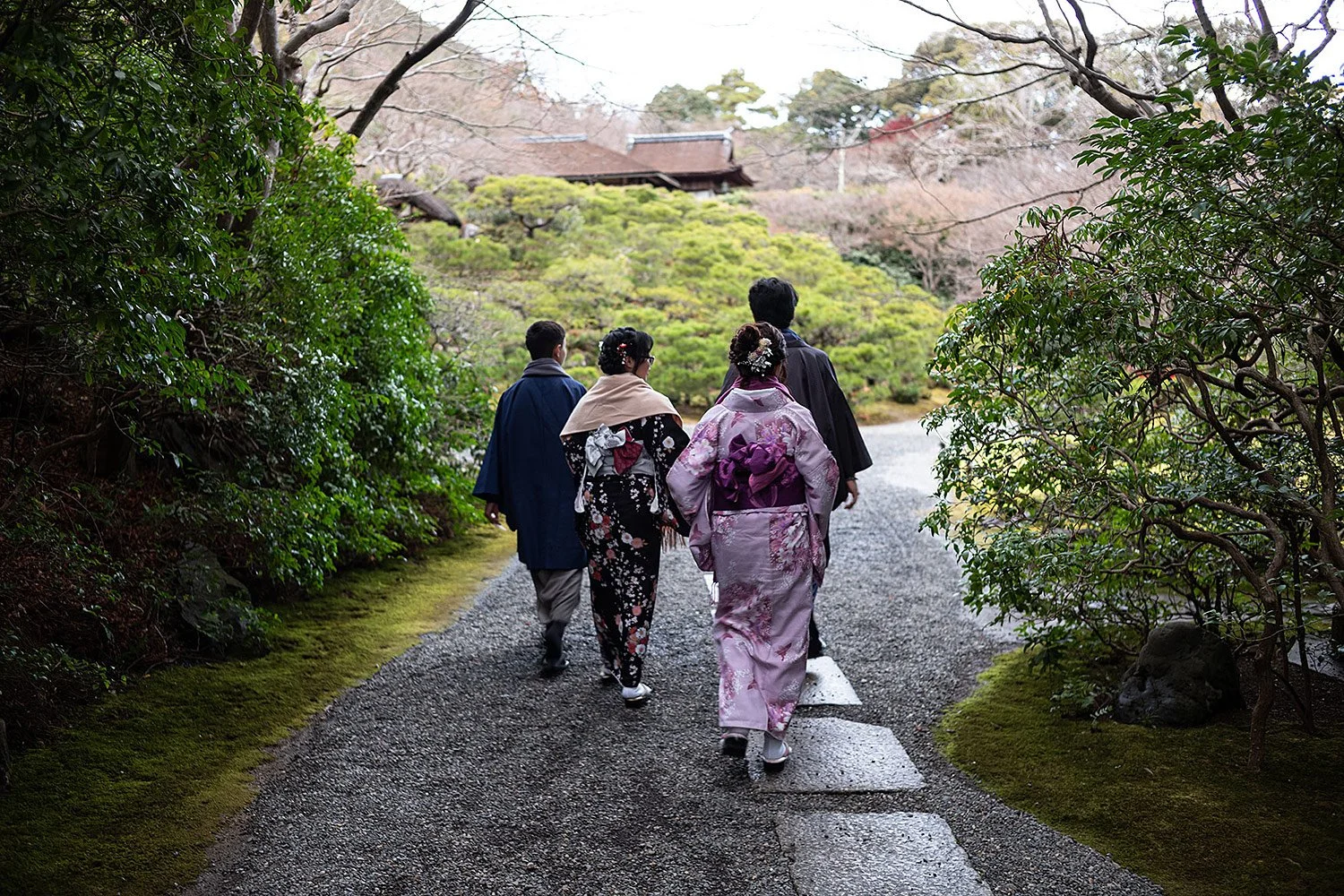
I alight from the bus near the entrance to the bamboo forest and walk a narrow lane into the grove. People dressed in traditional clothes are taking photos of each other and checking the results, doing their best to create portraits devoid of others in the background.
Off to the side I see a path that leads to Tenryu-ji. a temple founded by Ashikaga Takauji in 1339, primarily to venerate Gautama Buddha, and I take the detour to visit it.
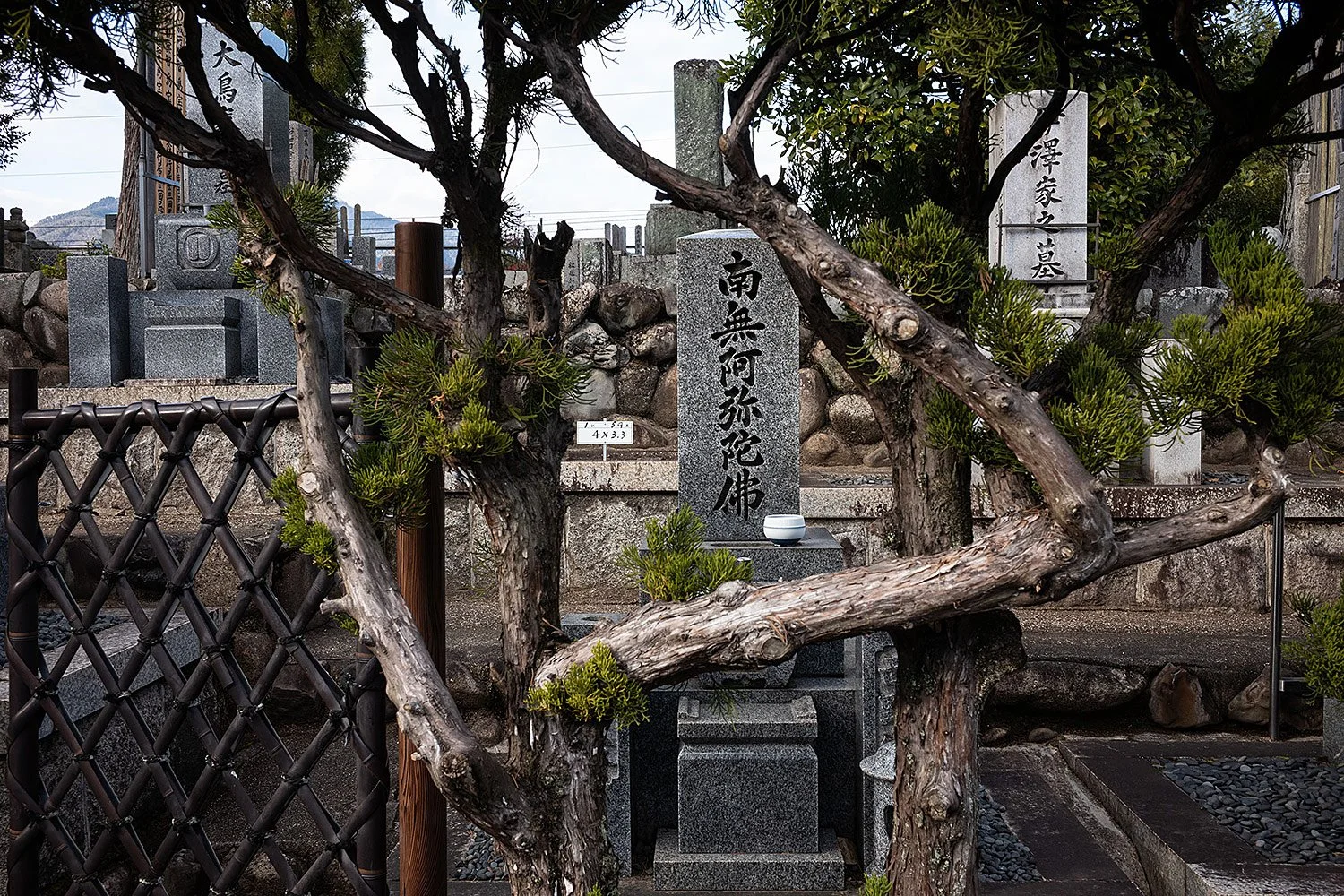
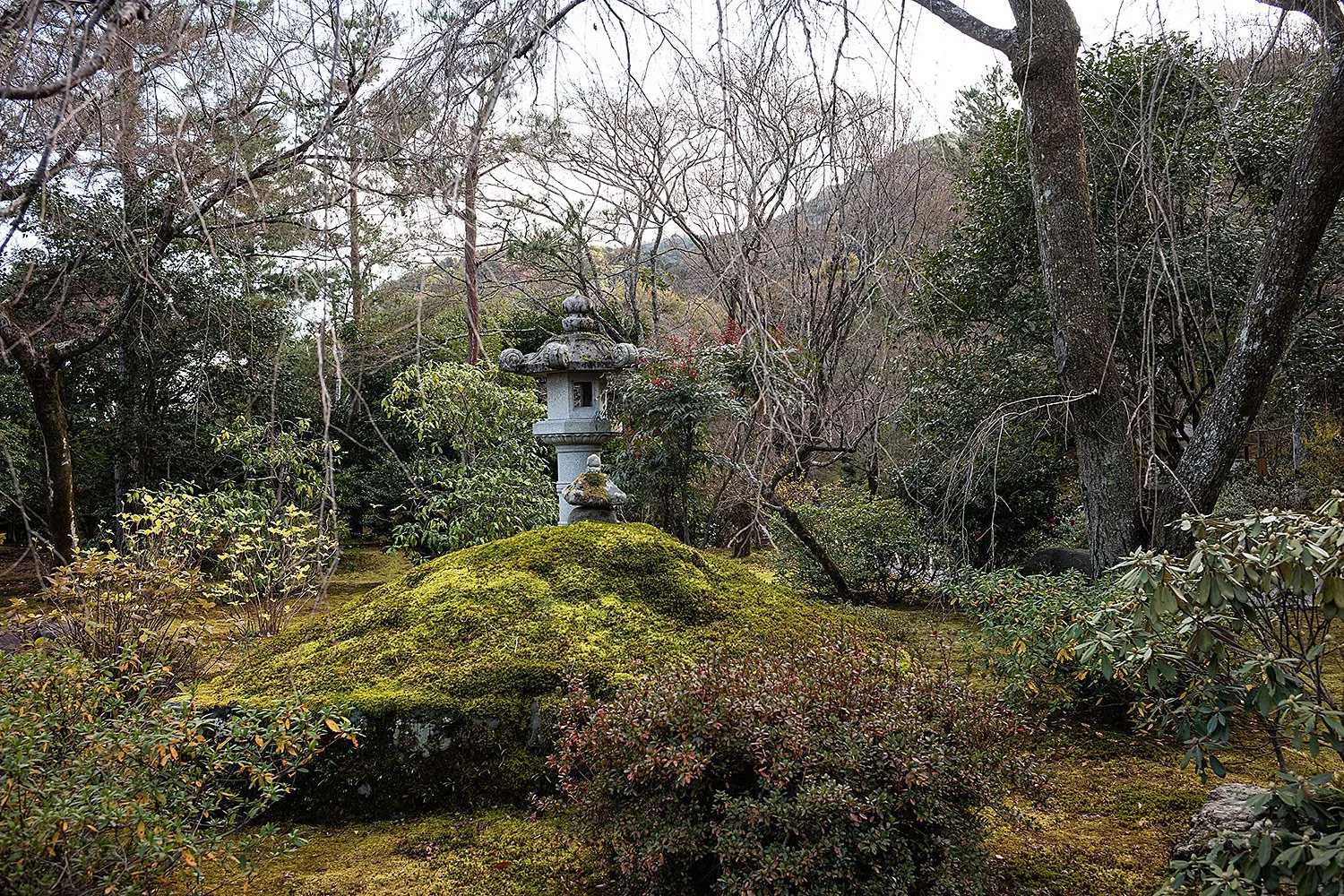
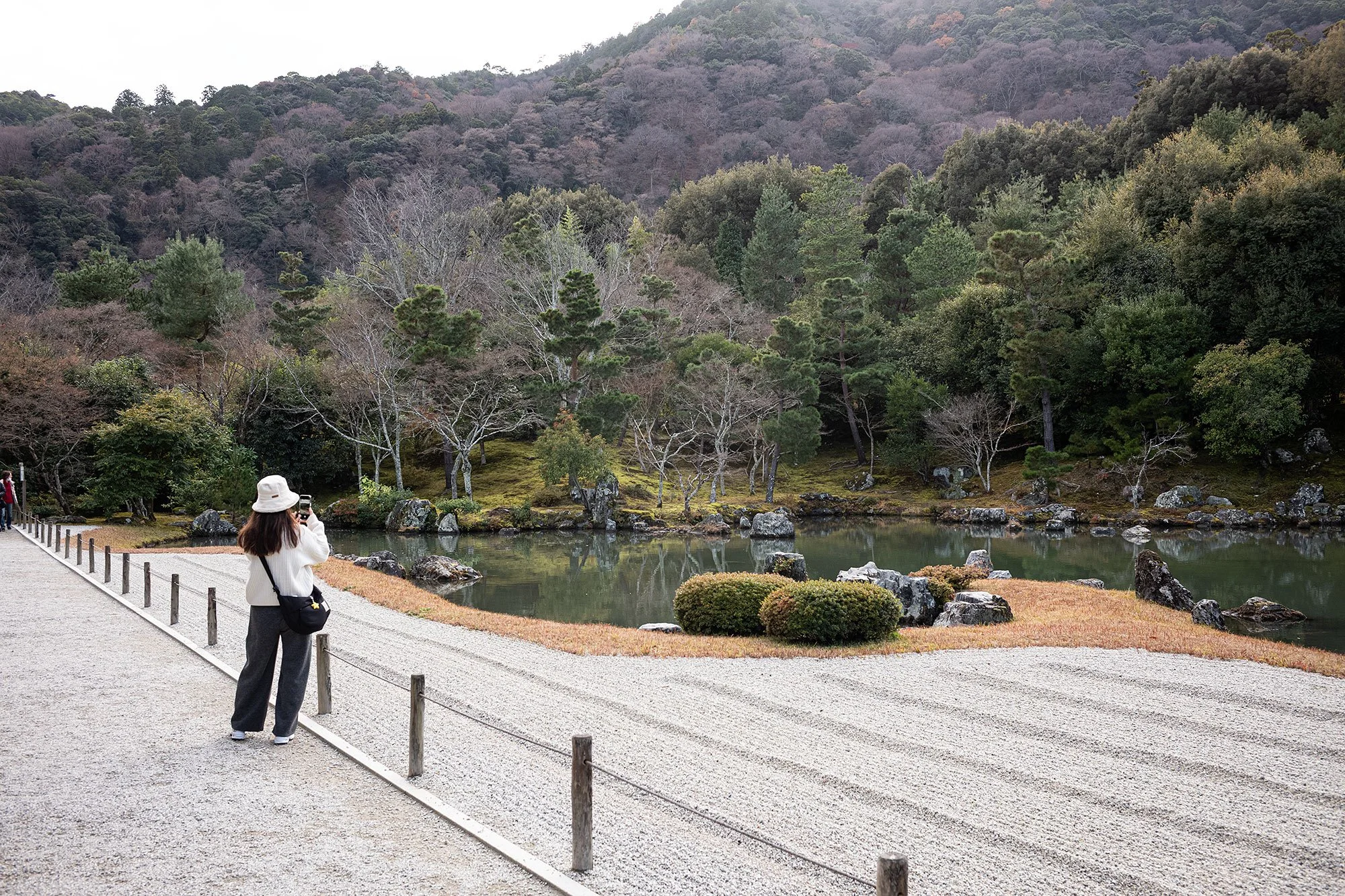
It turns out I’ve come in the back entrance, where people mostly exit, and I have a vague memory of maybe having visited the temple in the past. I’ll have to check the journal entries I’d scratched into a Moleskine when I visit my parents to check.
I walk around the Sogen Pond Garden and head towards the hojo, where I pay a small entrance fee to be able to enter the large and small halls.
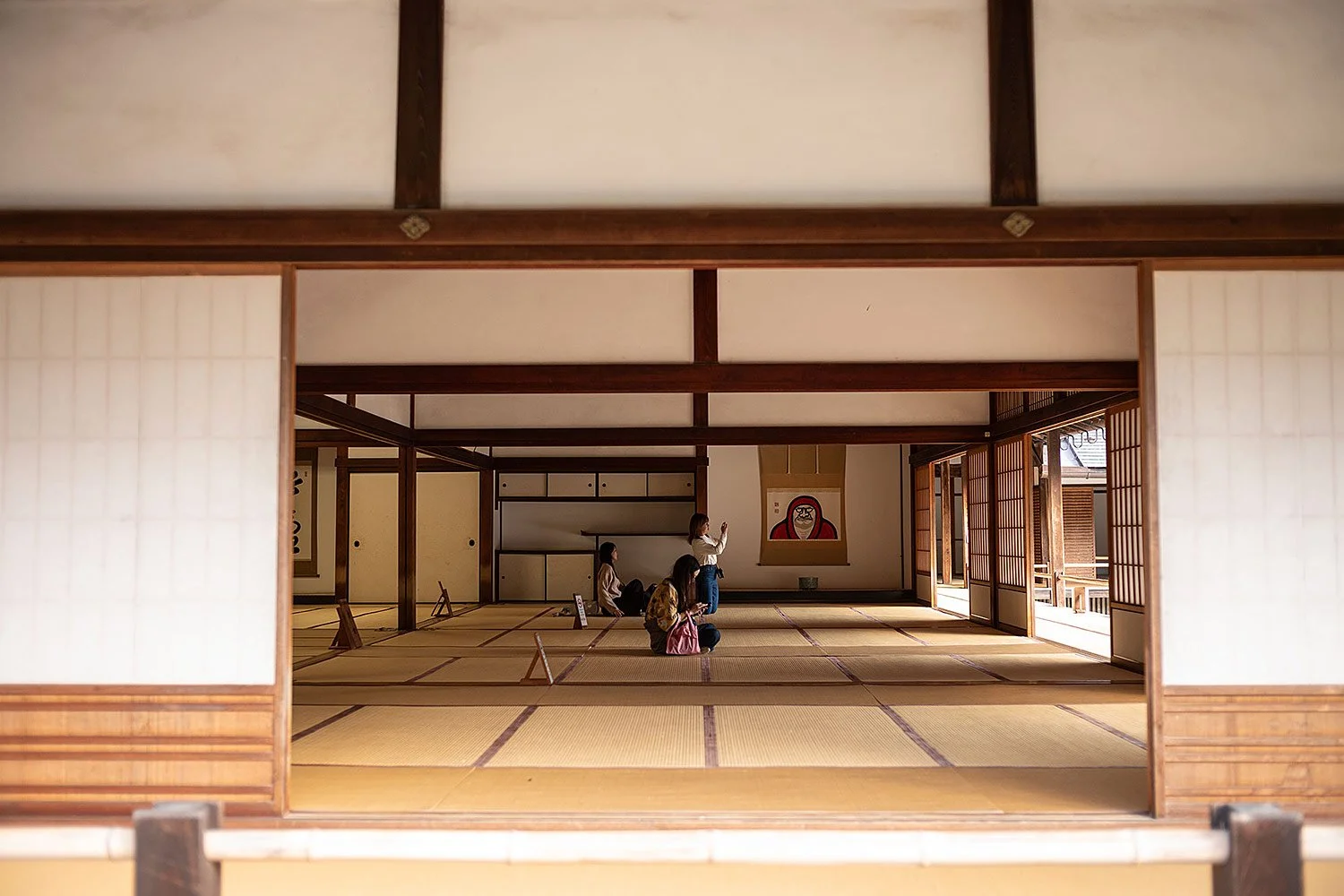
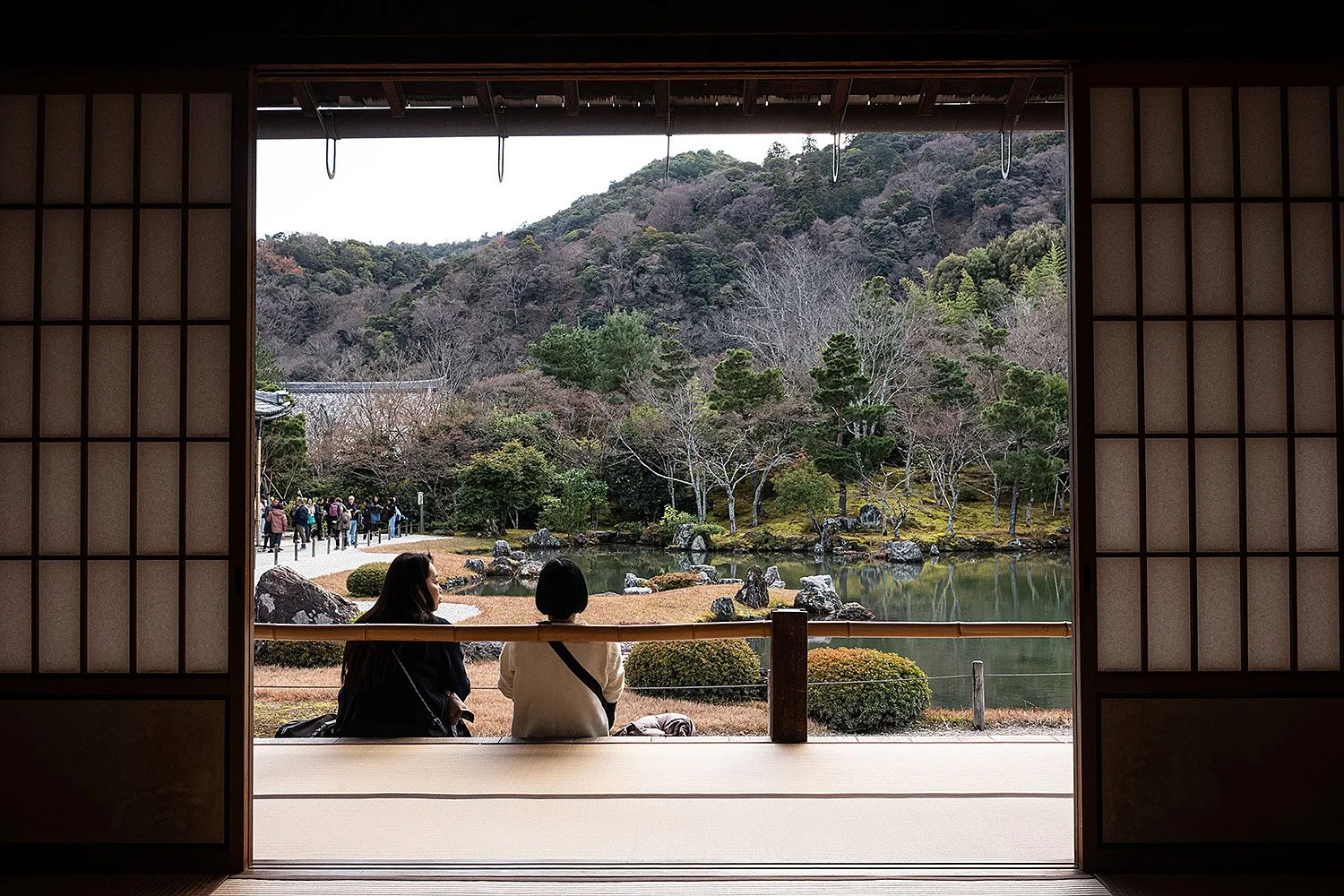
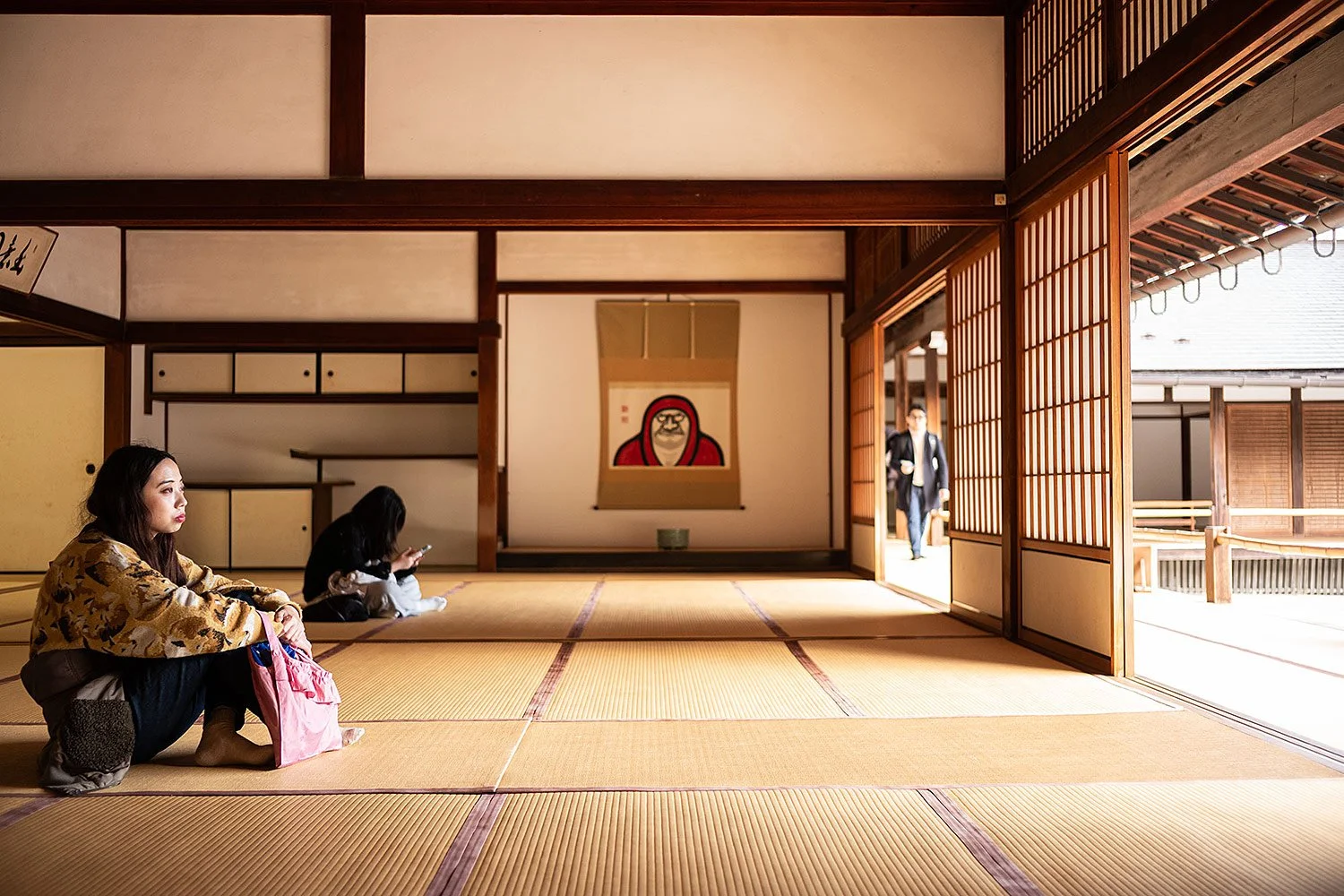
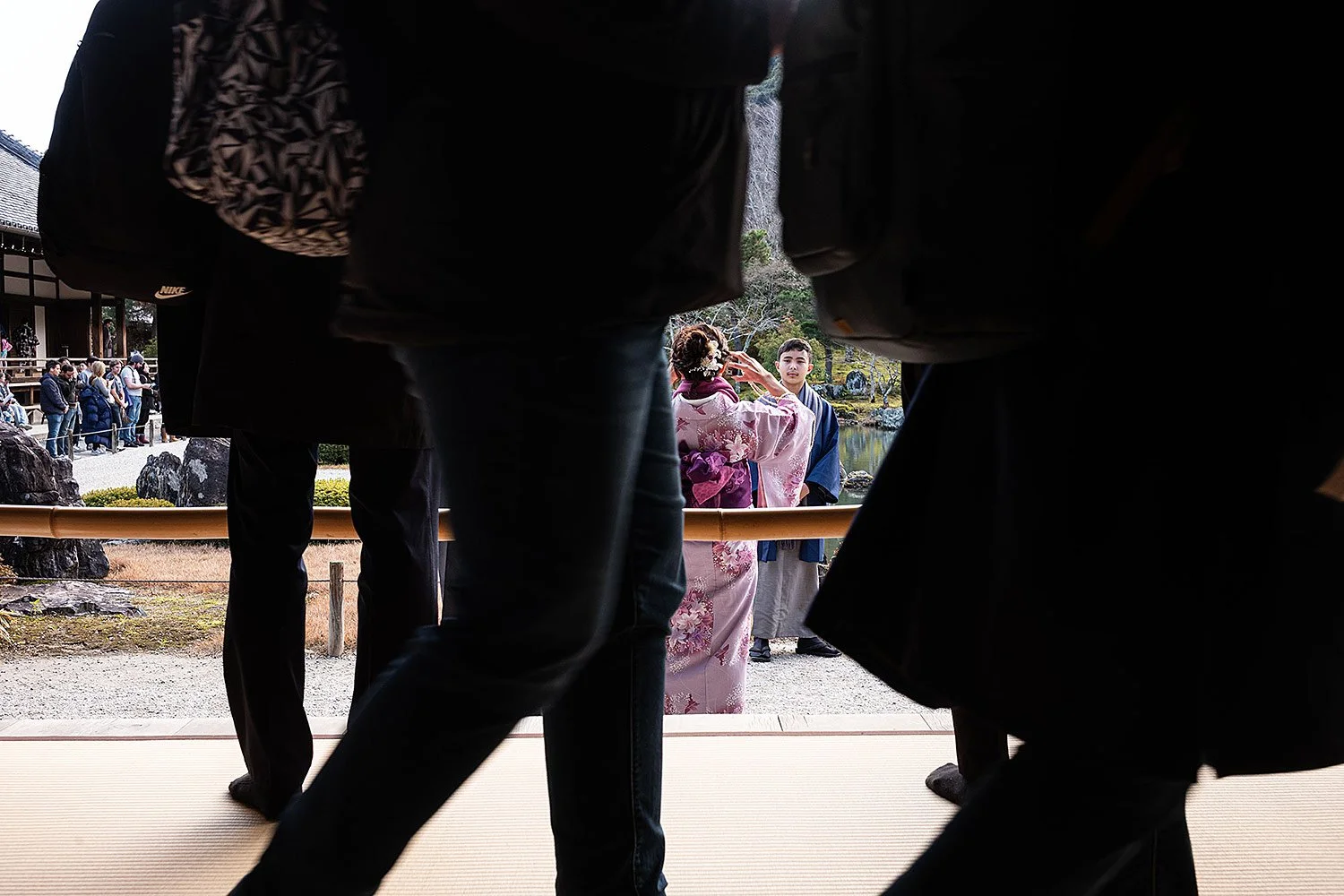
I sit on the tatami mats of the small hojo in order to admire the gardens and pool and people wandering the landscape. It’s a tranquil space, even with the crowds that wander back and forth just beyond the door.
Walking back around the hojo I visit the Shoun-kaku (Auspicious Cloud Pavilion) and Kan'u-tei (Sweet Rain Bower), two teahouses that are reached via a covered walkway. The former is a reproduction of the Zangetsu-tei (Dawn-Moon Pavilion) teahouse, located at the headquarters of the Omotesenke tea family in Kyoto; the latter was originally constructed at Juraku-yashiki by Sen no Rikyu, the founder of the modern tea ceremony. It’s one of the most highly-regarded teahouses associated with the Omotesenke.
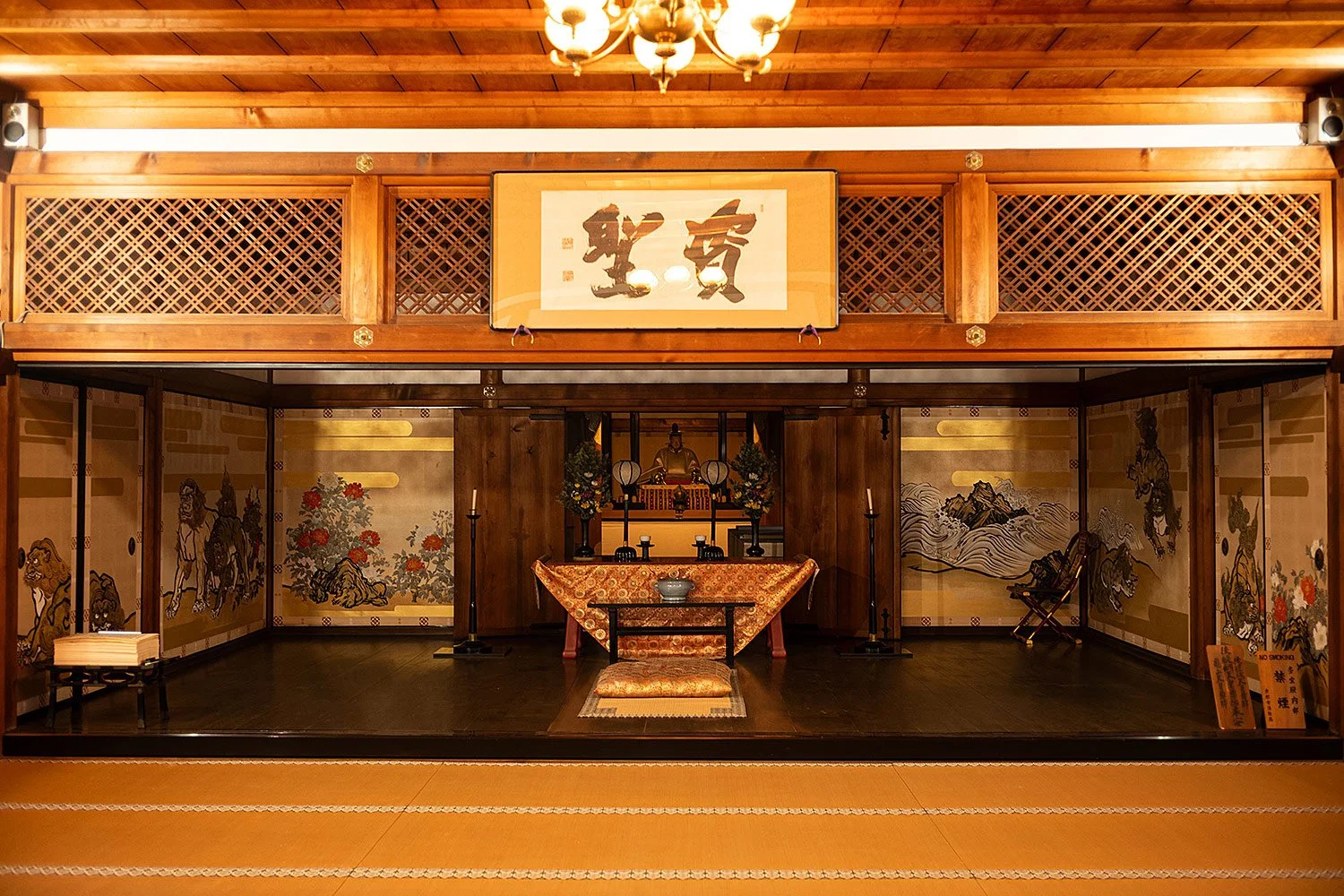
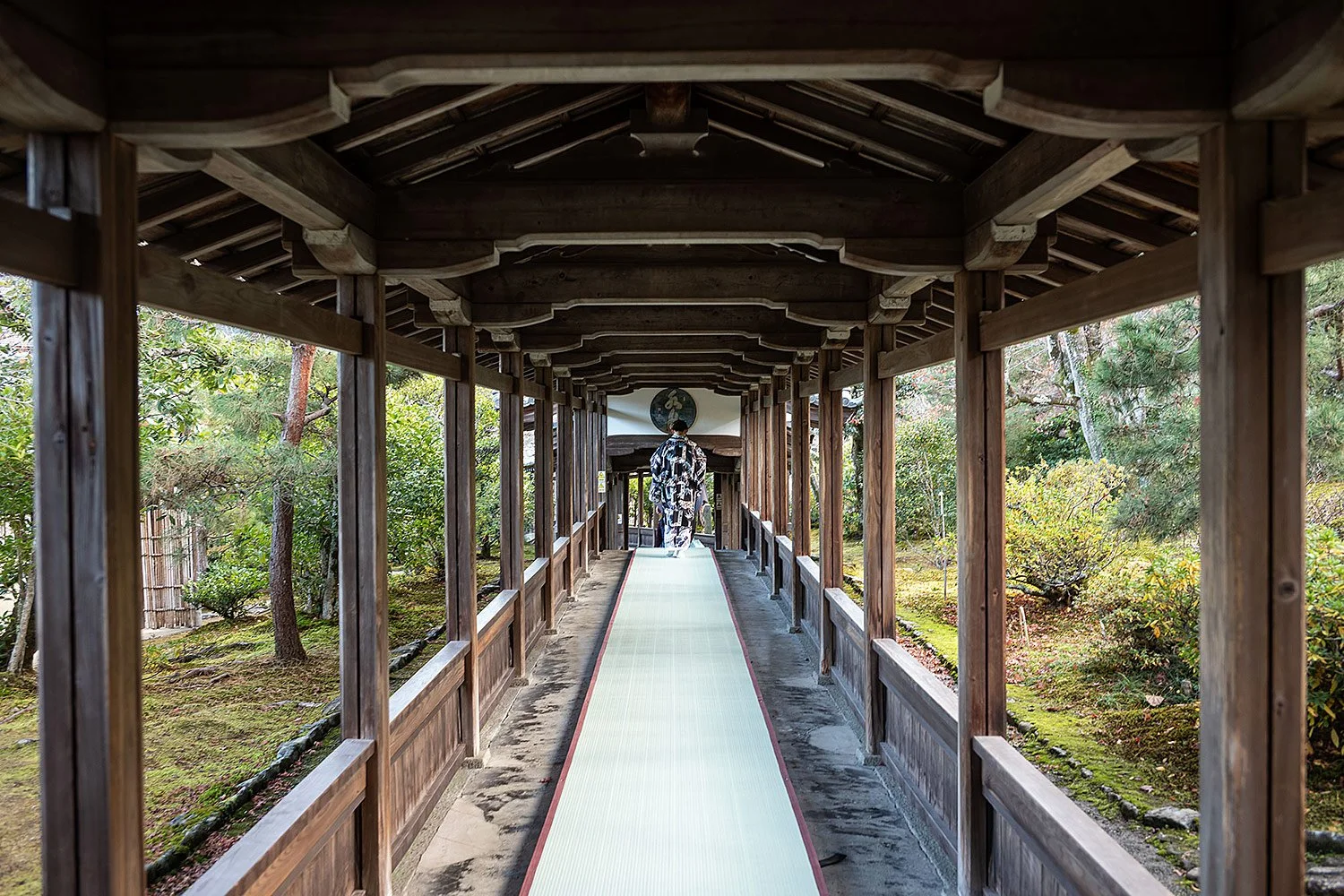
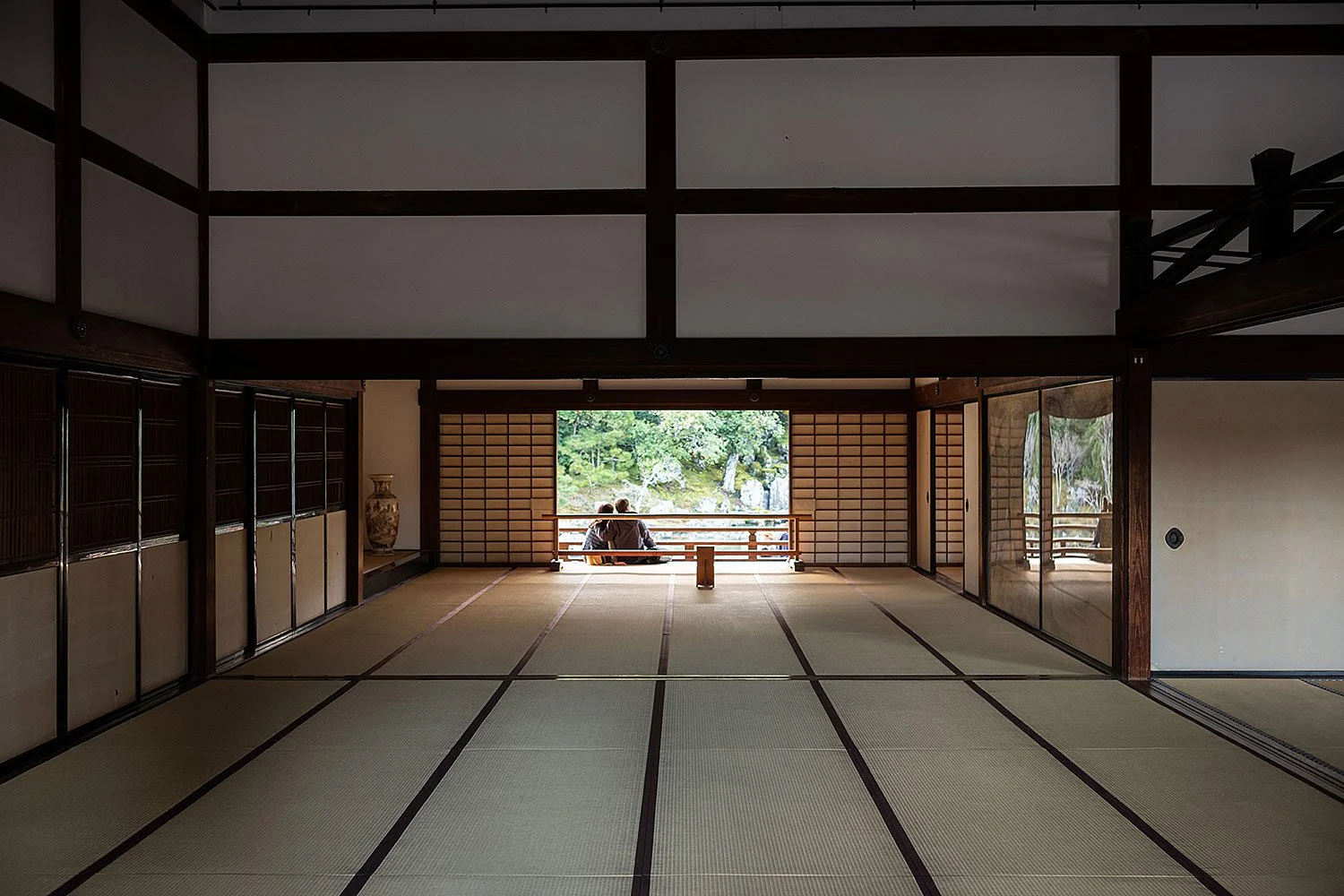
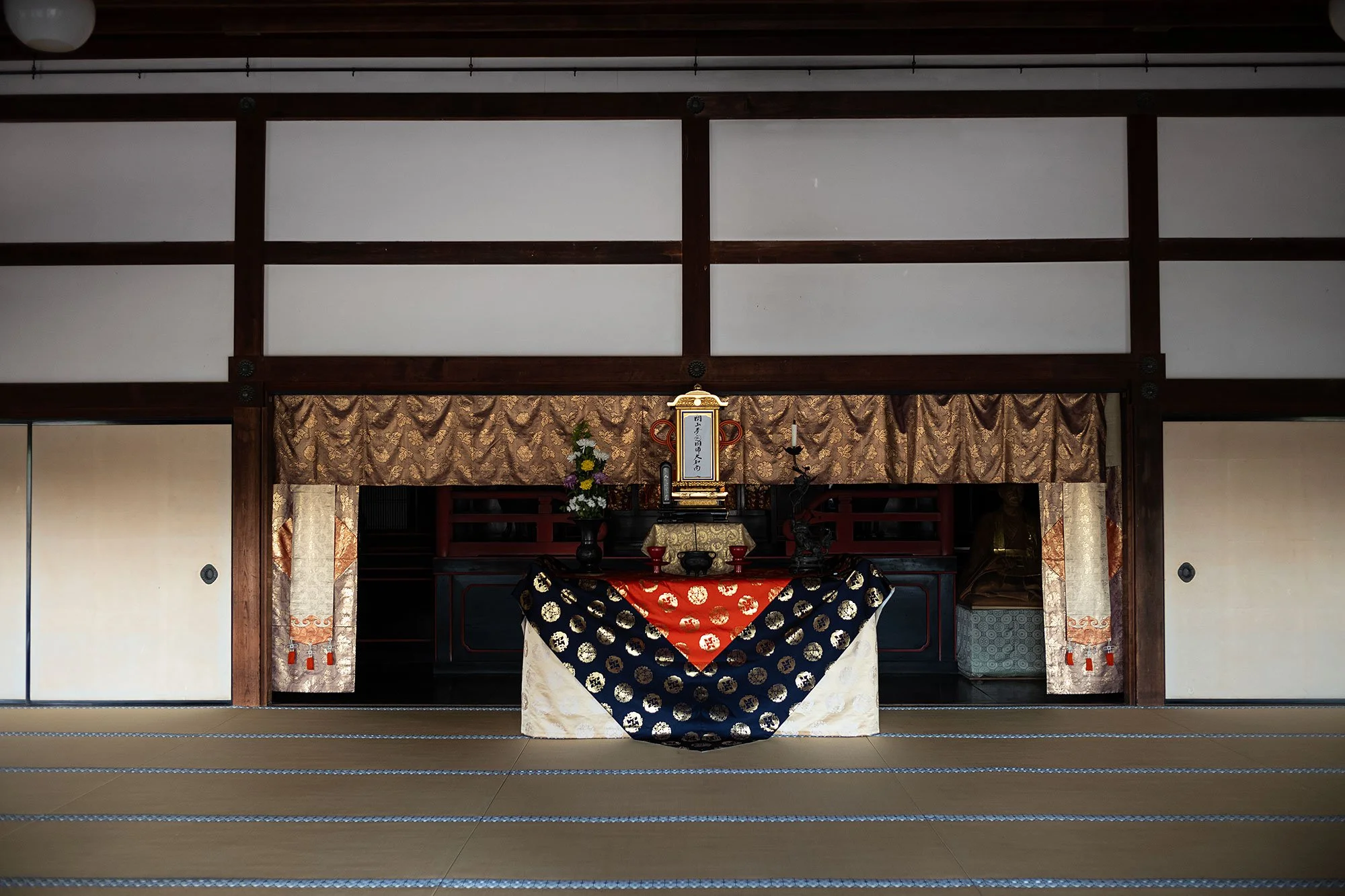
I exit out the front of the temple complex and back out onto the main street where I turn and retrace my steps back towards the bamboo forest.
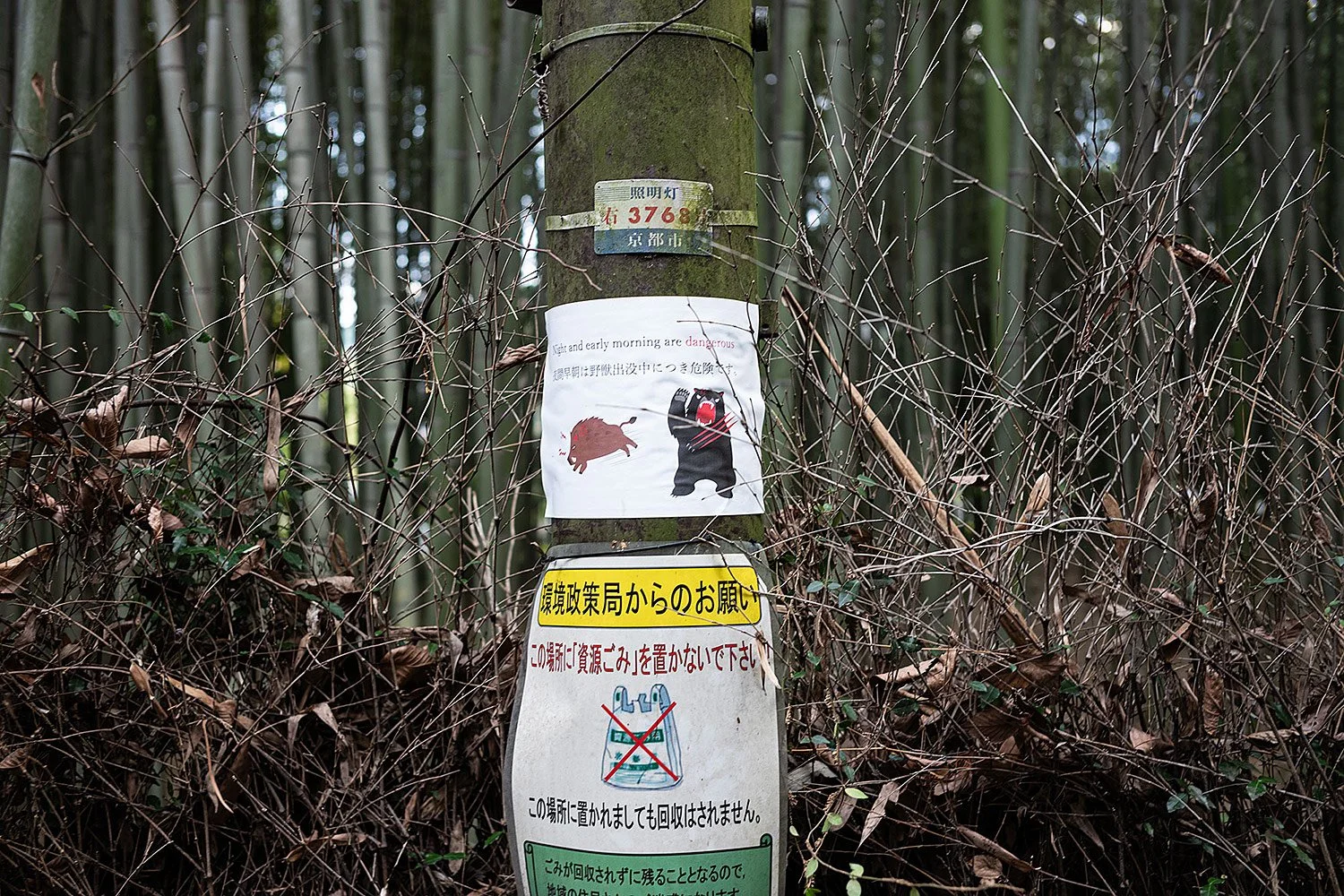
It’s smaller than I remembered, the bamboo groves, and I find myself retracing the steps of my past as I eschew one route and follow the path up the hill. I stop by a sign that I remembered seeing in the past warning of early morning and nighttime dangers. It can’t be the same sign—it’s made of paper and looks far too new—but I remember laughing at it the same way I laugh at it now. I do wonder if there be bears in them woods. Turns out, there are!
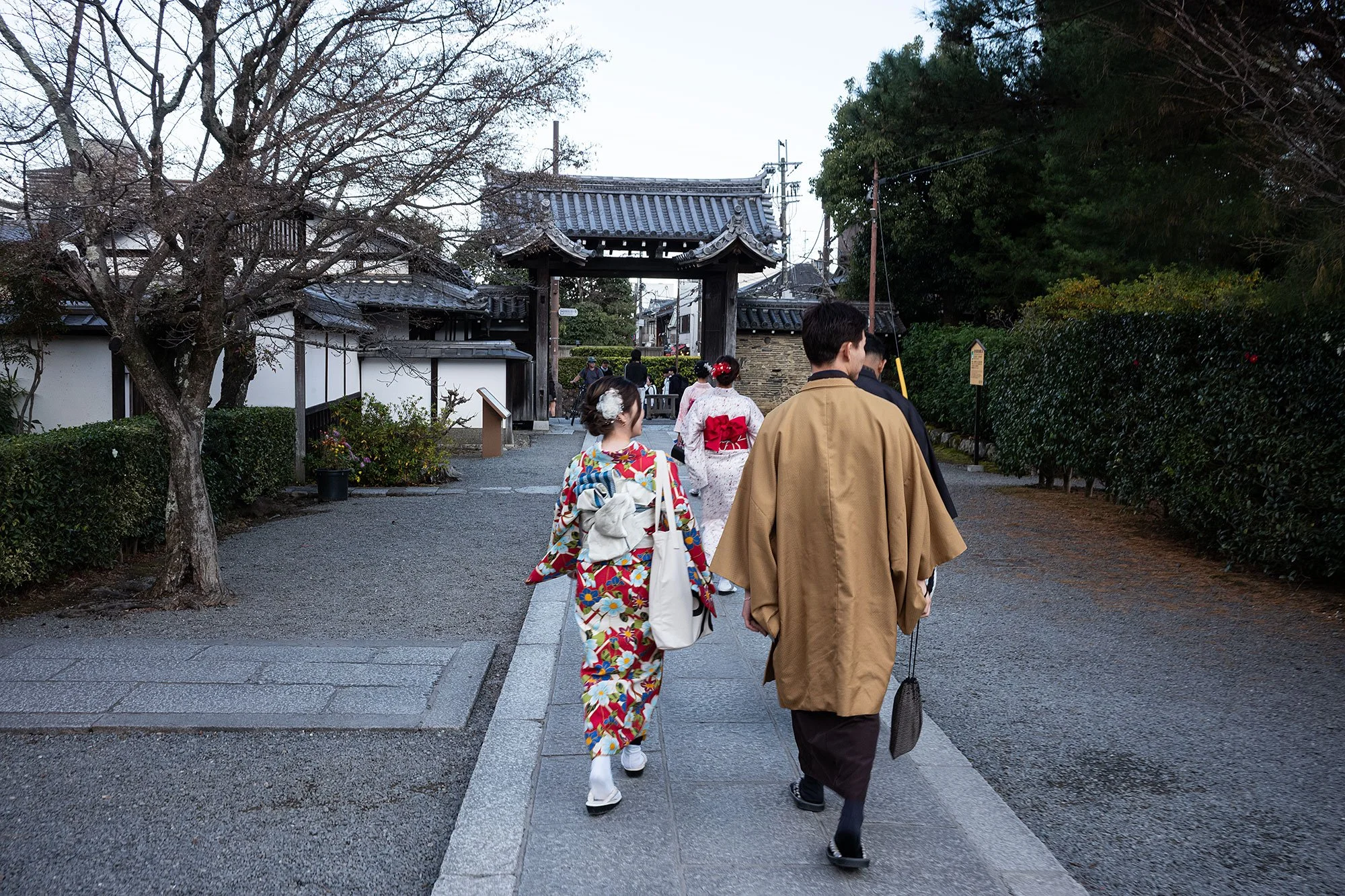
Okochi Sanso Garden, the former home and garden of the Japanese jidaigeki actor Denjirō Ōkōchi, sits at the top of the hill. The sign triggers another memory of the past and I pay the 1000 Yen entrance fee and follow a path up the mountain to a small field overlooking the city.
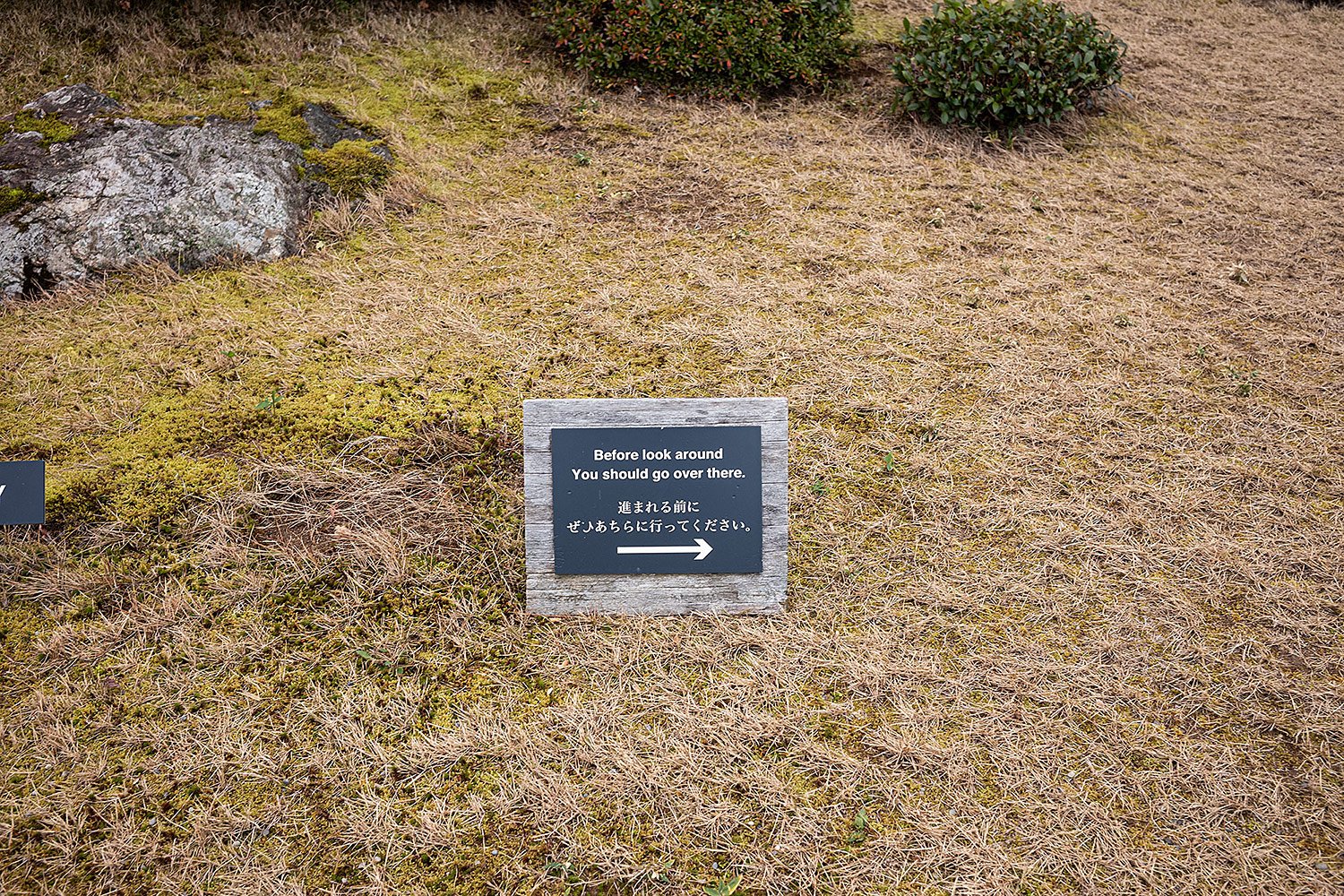
Before I spend any time looking around, however, I follow the instructions of a small sign that’s been left on the ground. I go over to look at the view.
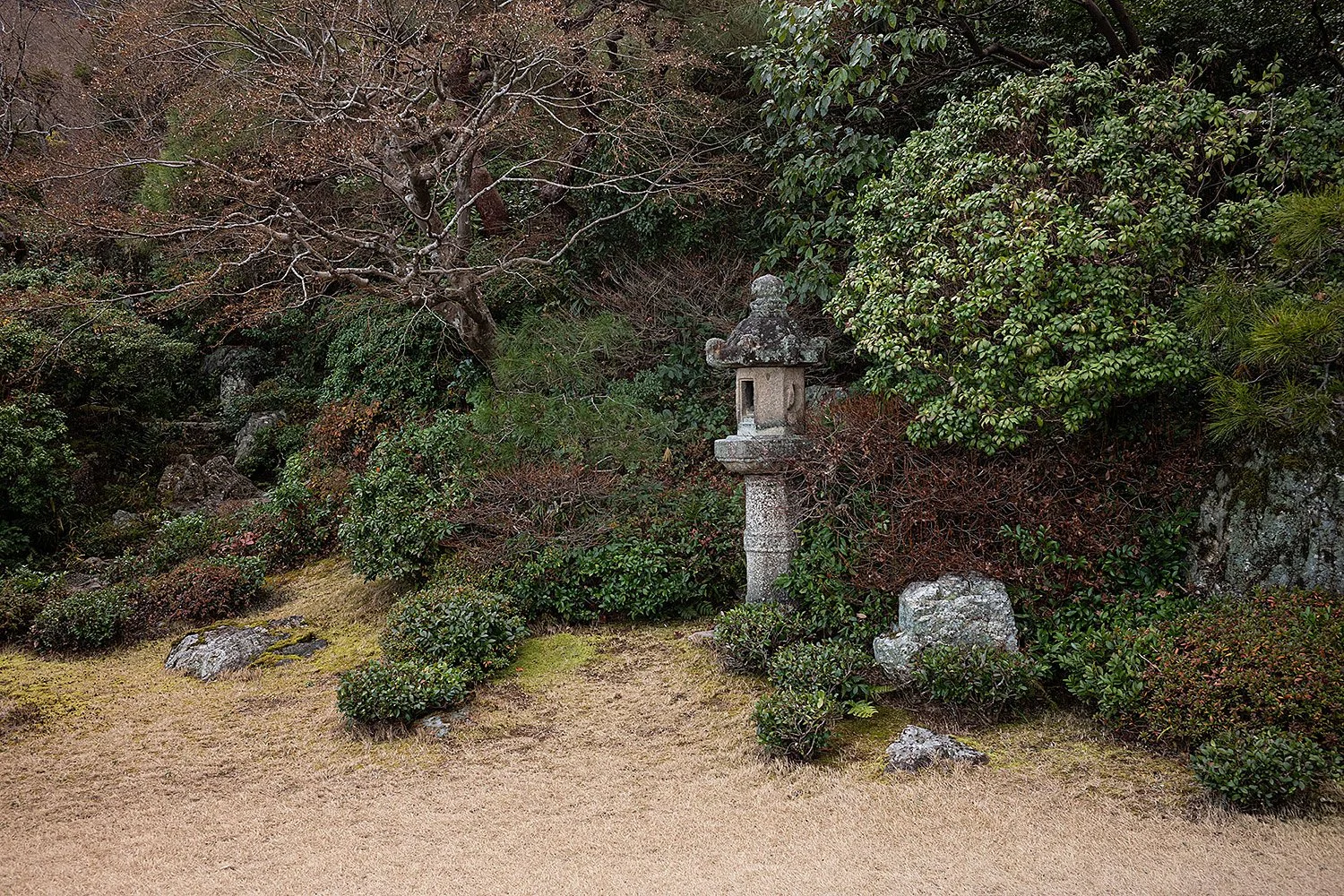
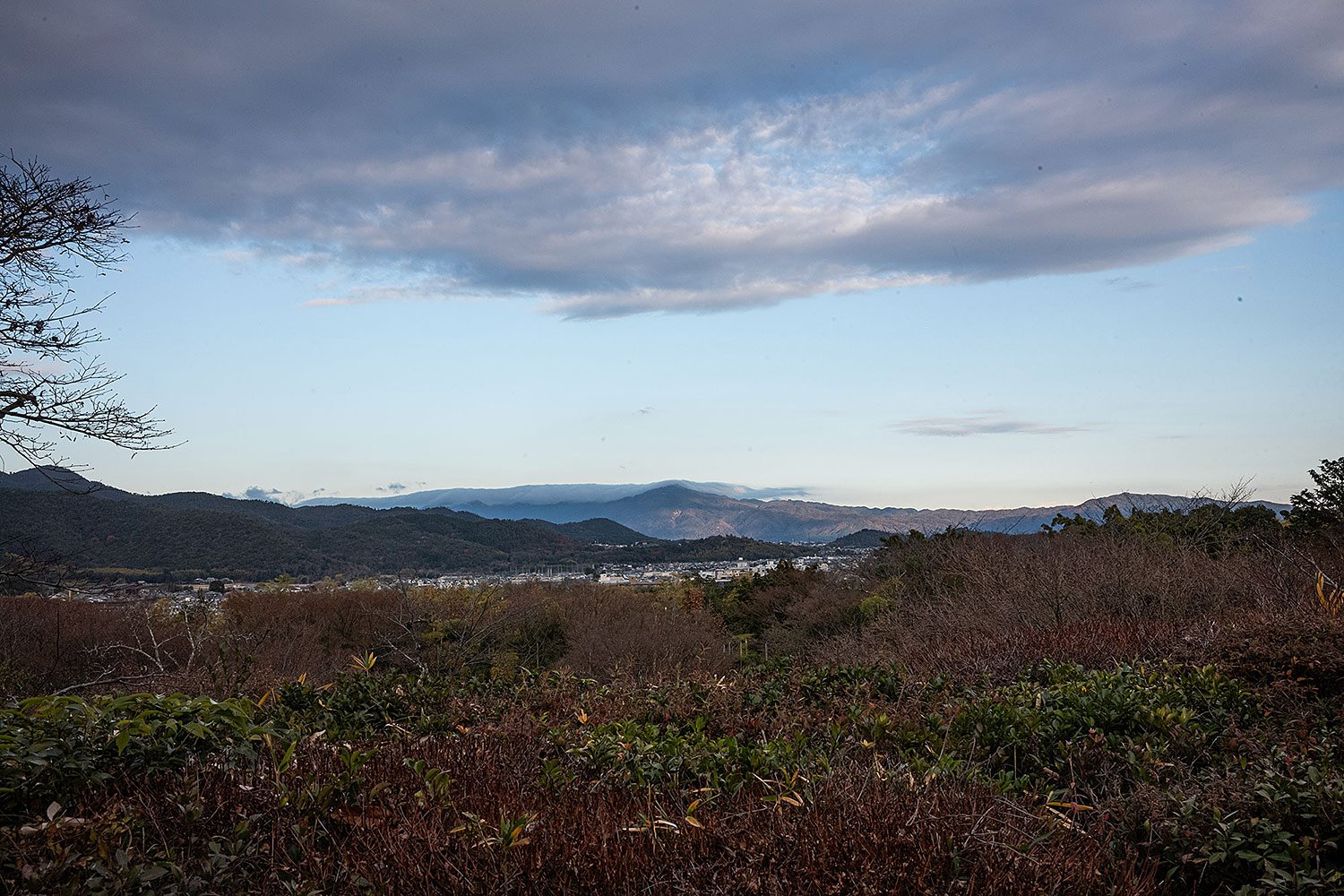
The gardens, designed by Ōkōchi over a period of 30 years, were designed to show off each of the four seasons, with various spots offering views of Kyoto, Mt. Hiei, and the Hozu River gorge.
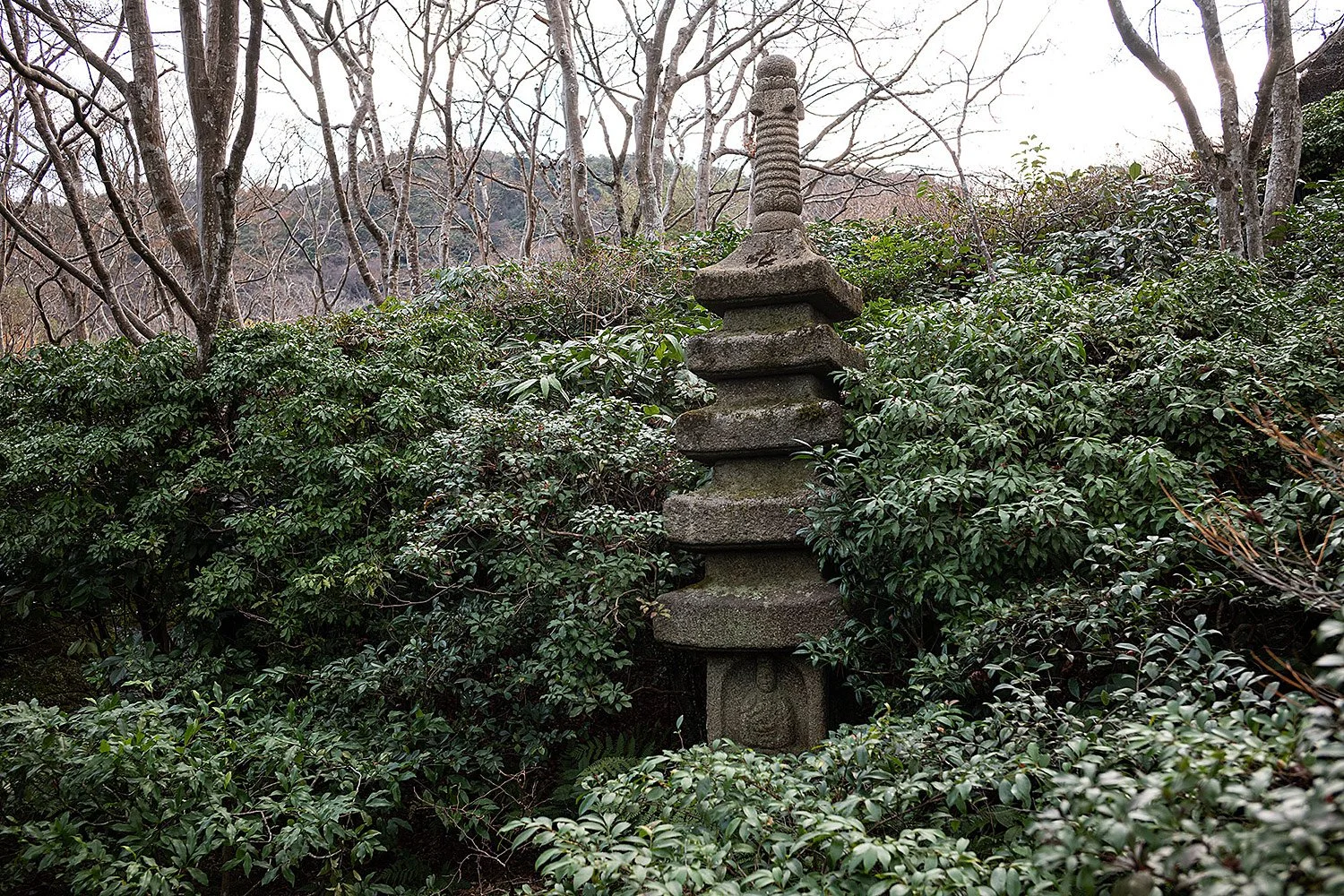
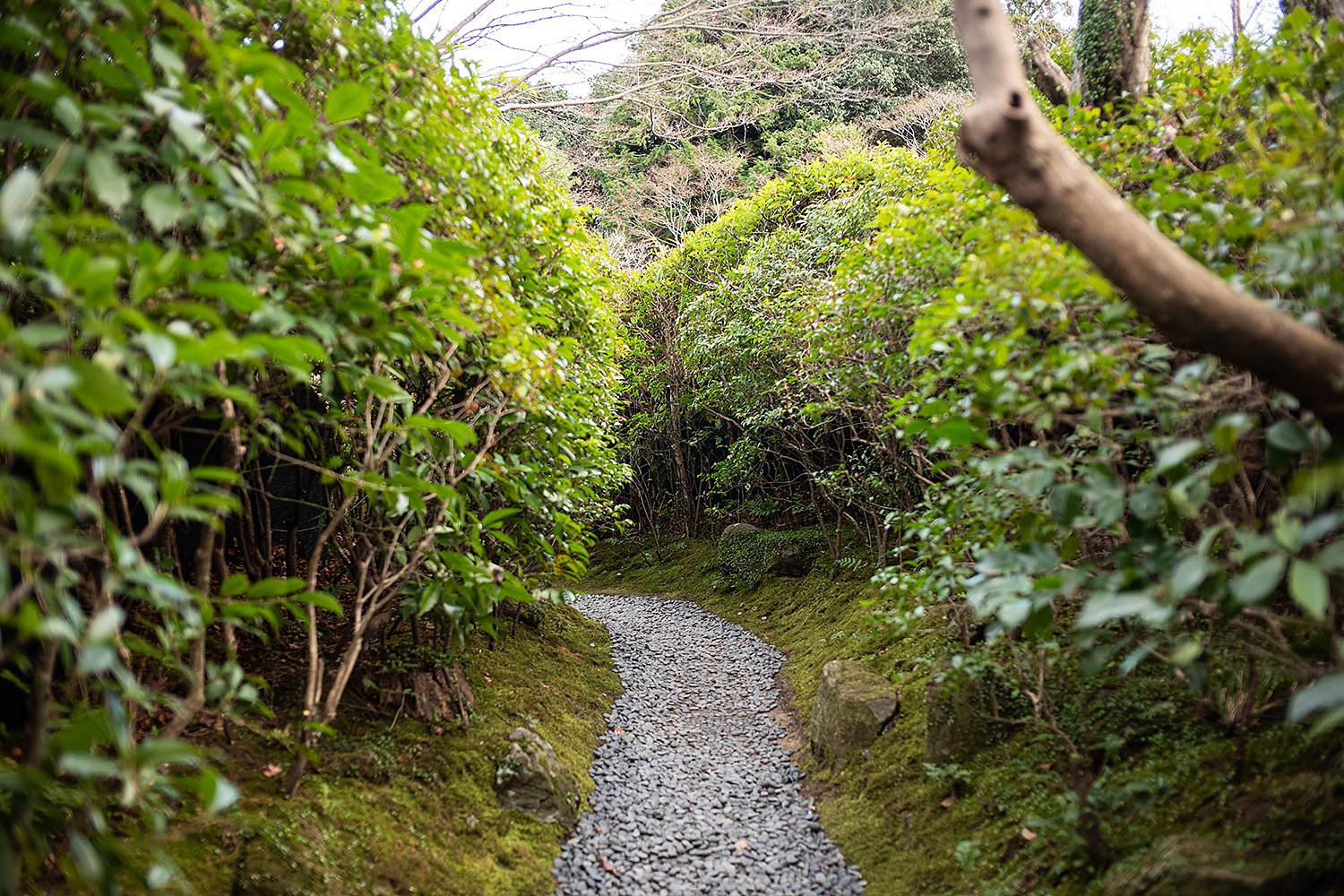
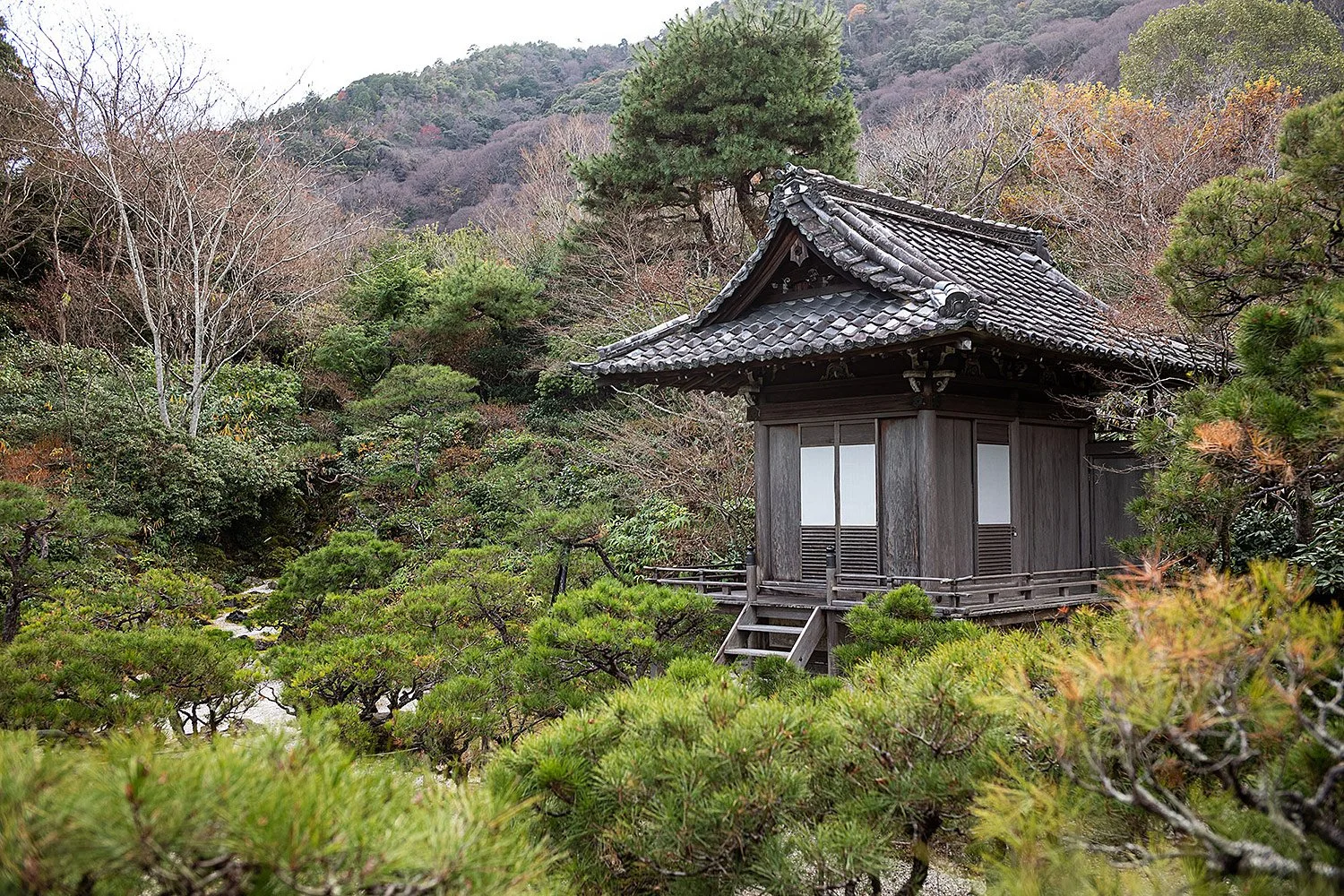
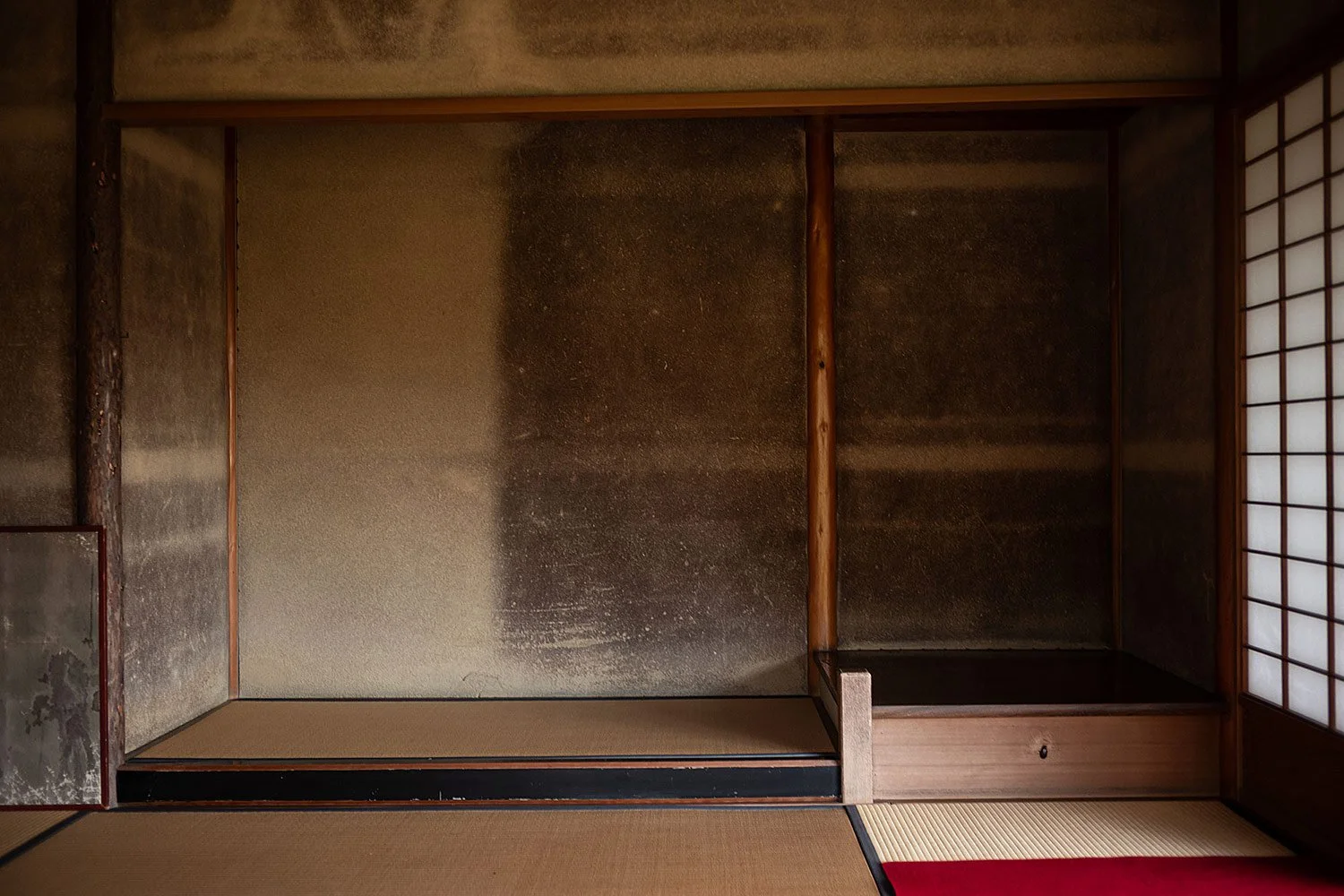
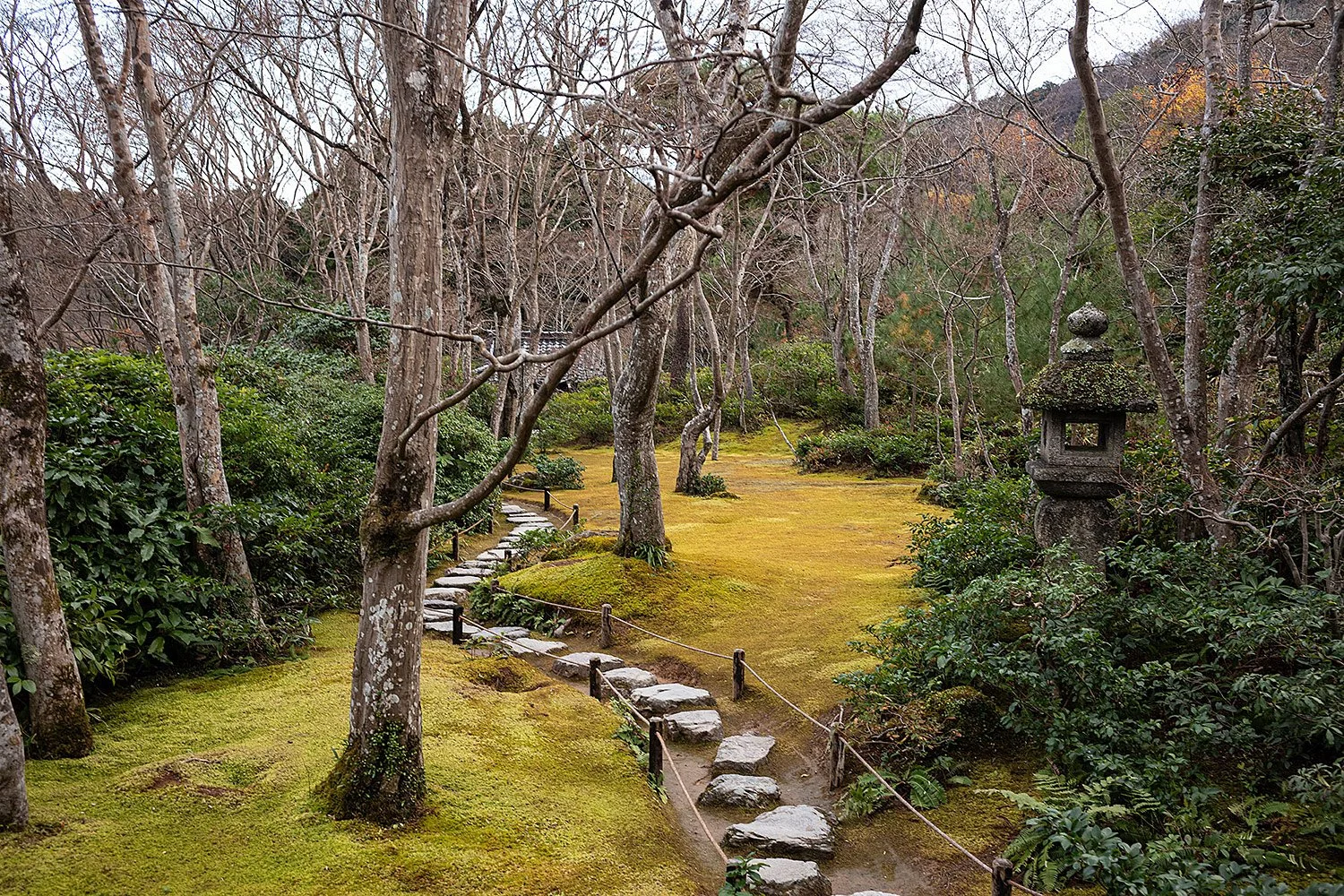
It’s a gorgeous space, and one of my favorite places to visit in Kyoto. A series of paths let you wander the two hectare gardens, and I happily wind my way around the various areas following paths of stone and gravel between the trees.
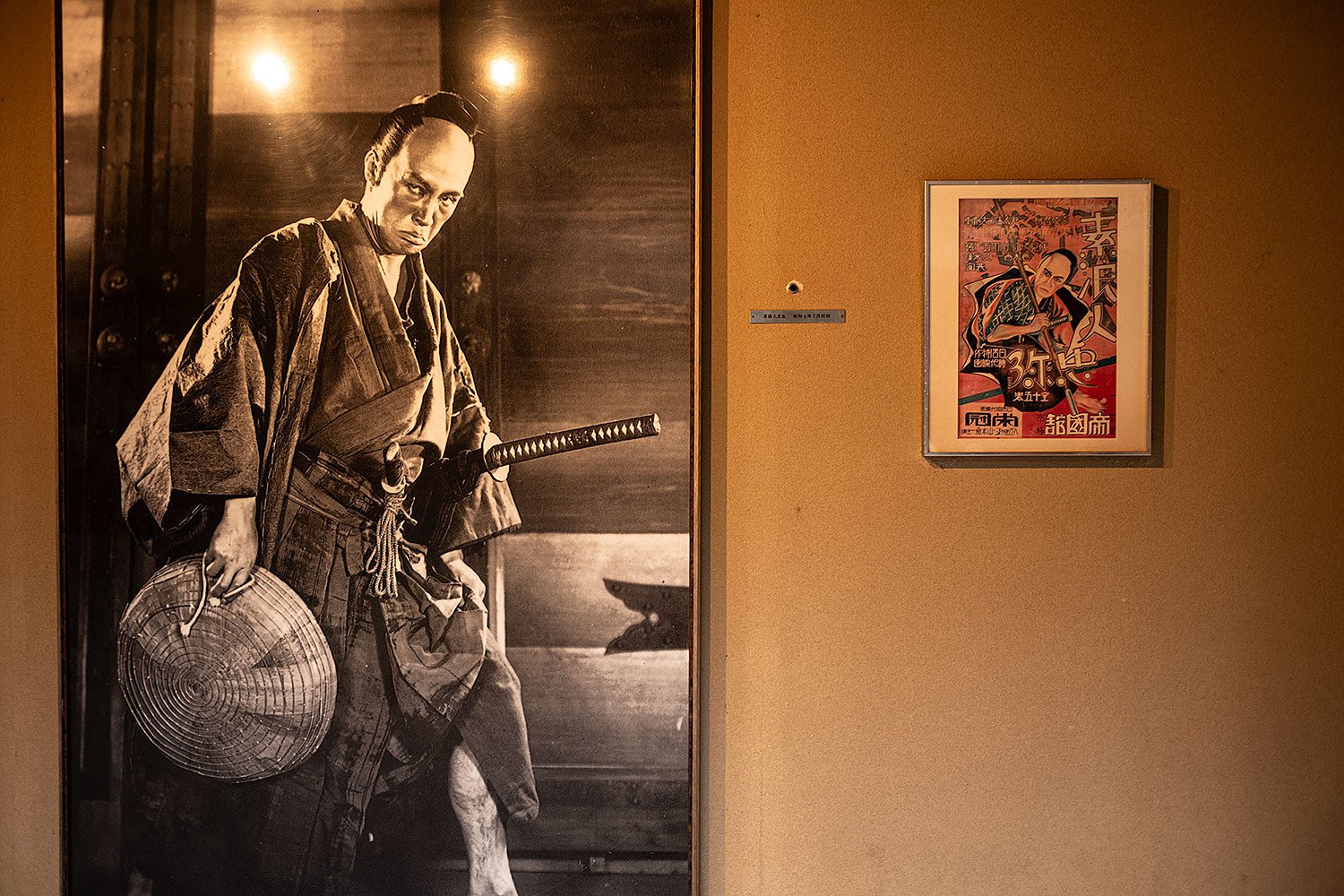
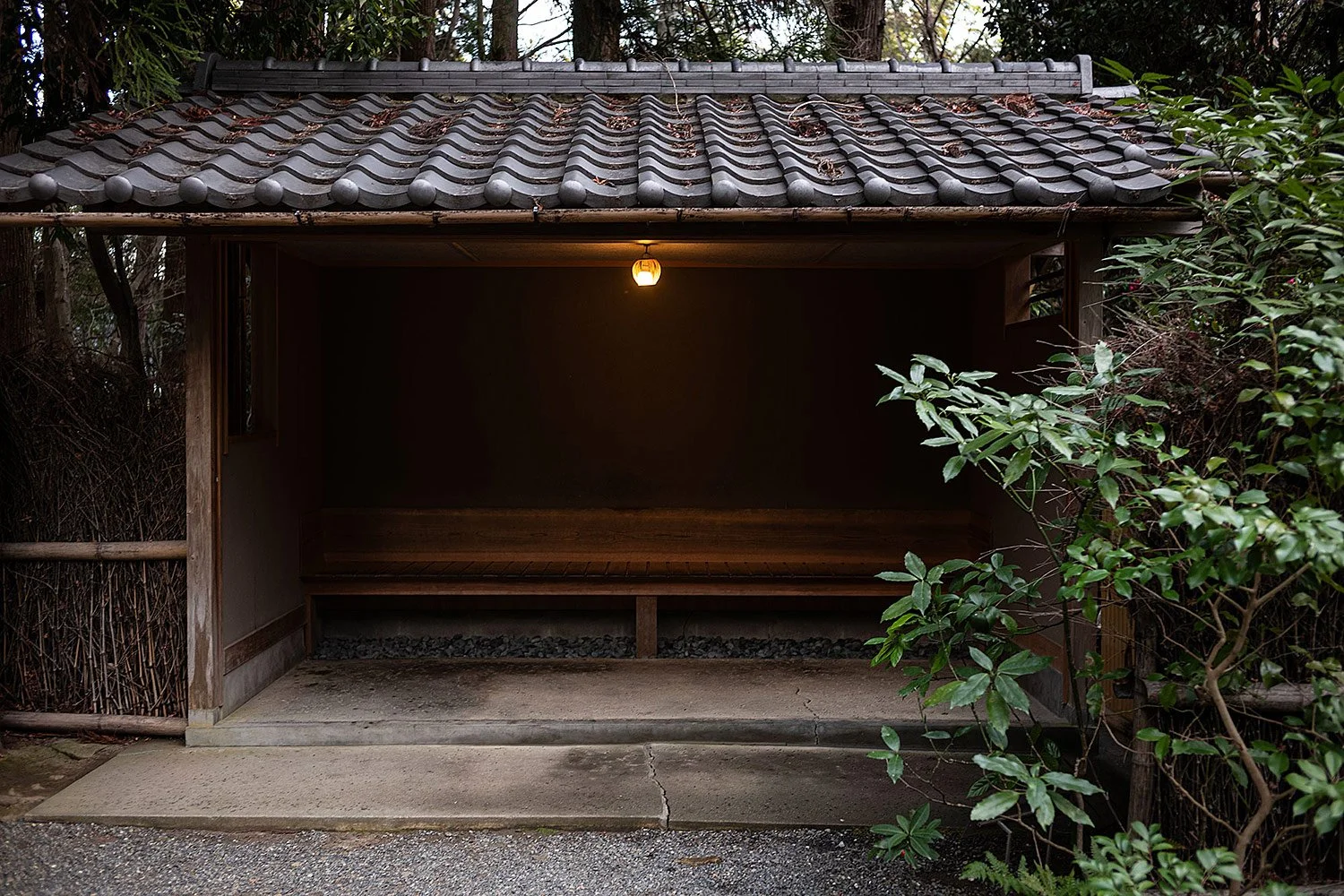
Near the exit there’s a small building with photos of the actor and various memorabilia, and I remember once again standing in the same spots twenty years ago. When I spot a covered bench I stop to take a photo, remembering myself in the same spot making the same photo. I wonder if the frame will match exactly when I compare it to my photo from before.
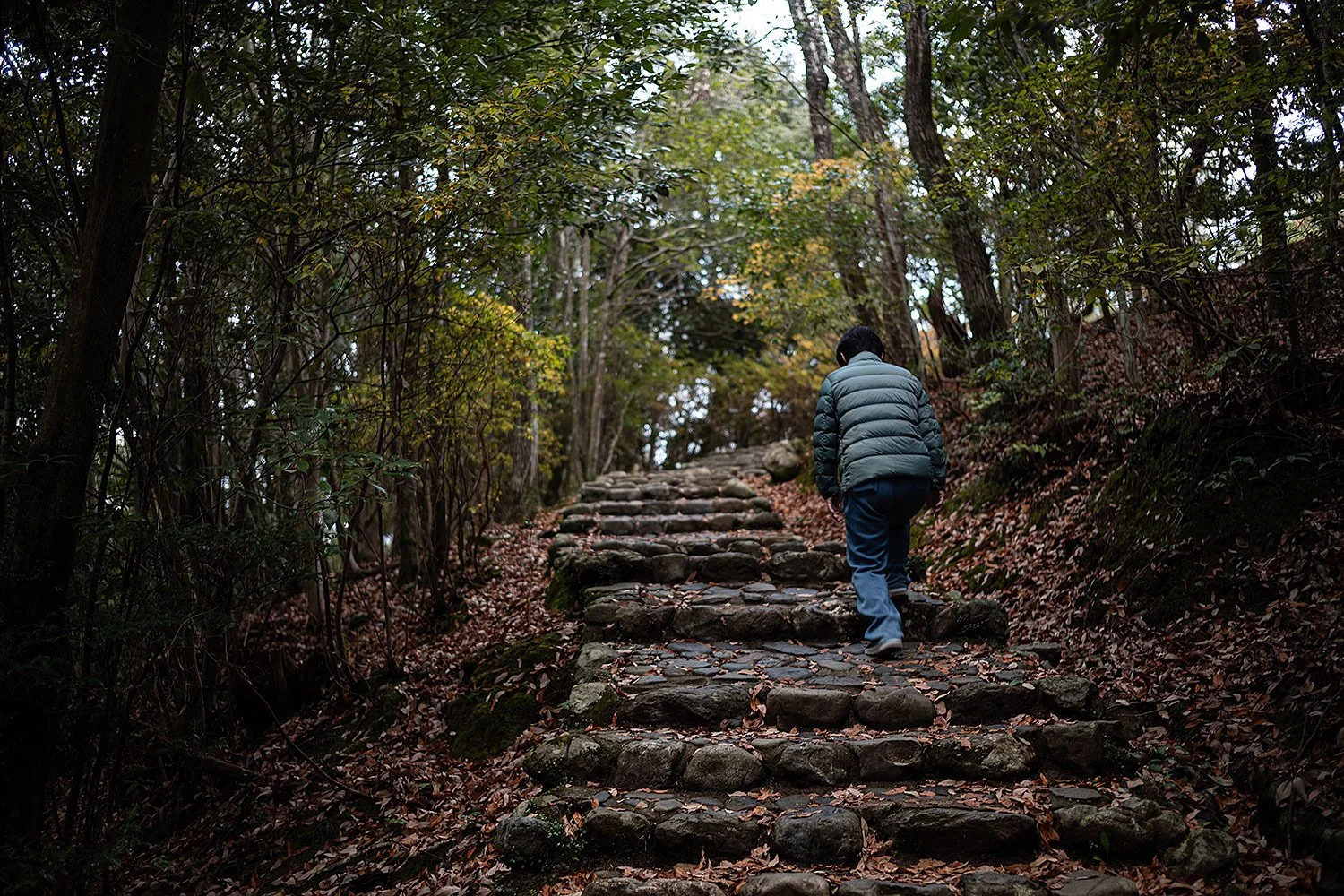
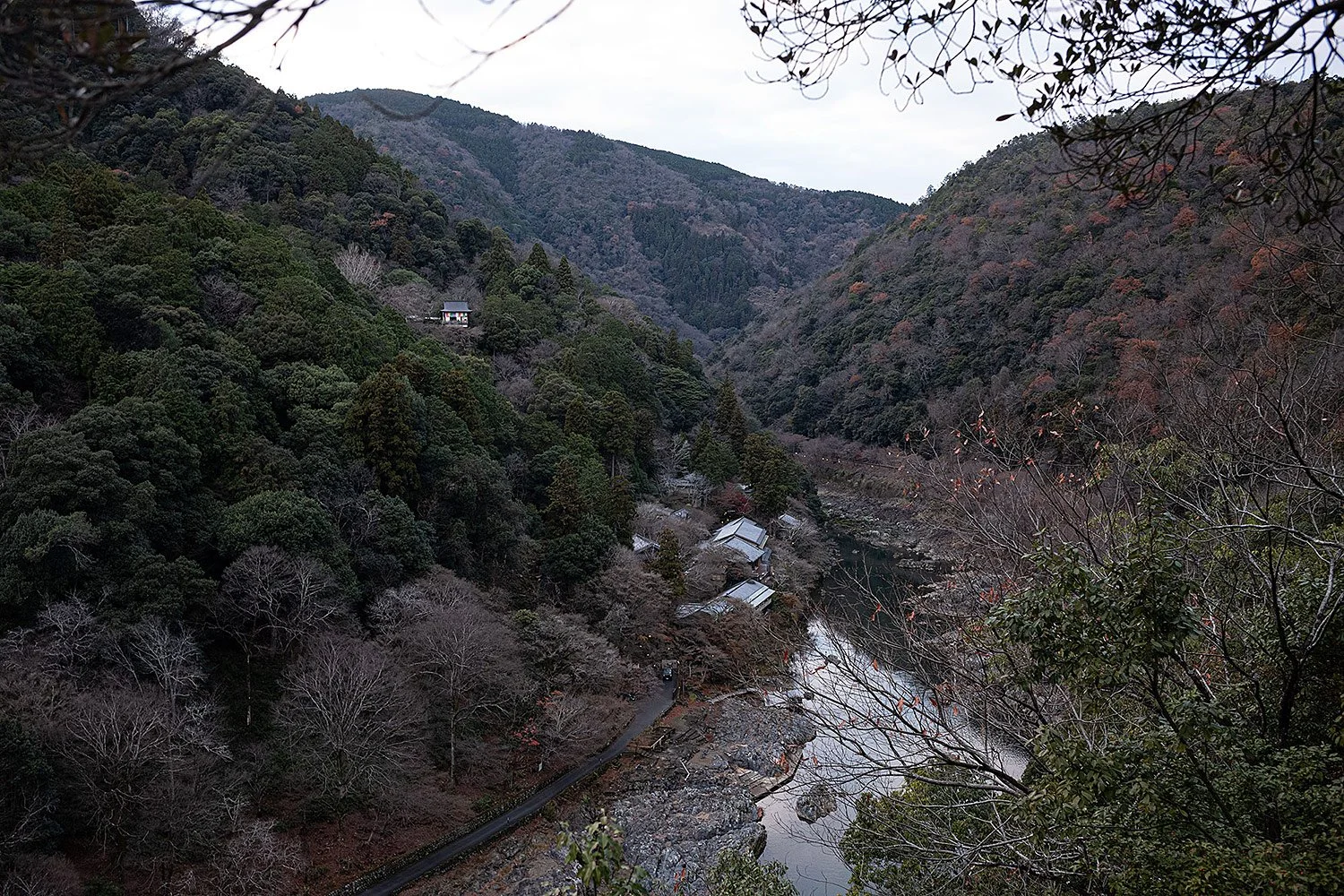
Leaving the gardens I turn right towards Arashiyama Park, following a path down towards the river. A sign points to an observation point 160 meters away. Curiosity gets the better of me and I follow the path up a set of stone steps to a viewpoint over the river.
A temple sits at a bend in the river, a serene spot I’d like to visit someday. I realize that I’ve never crossed the river and vow to return next time I’m Kyoto to spend some time in the mountains exploring the sights on the western banks.
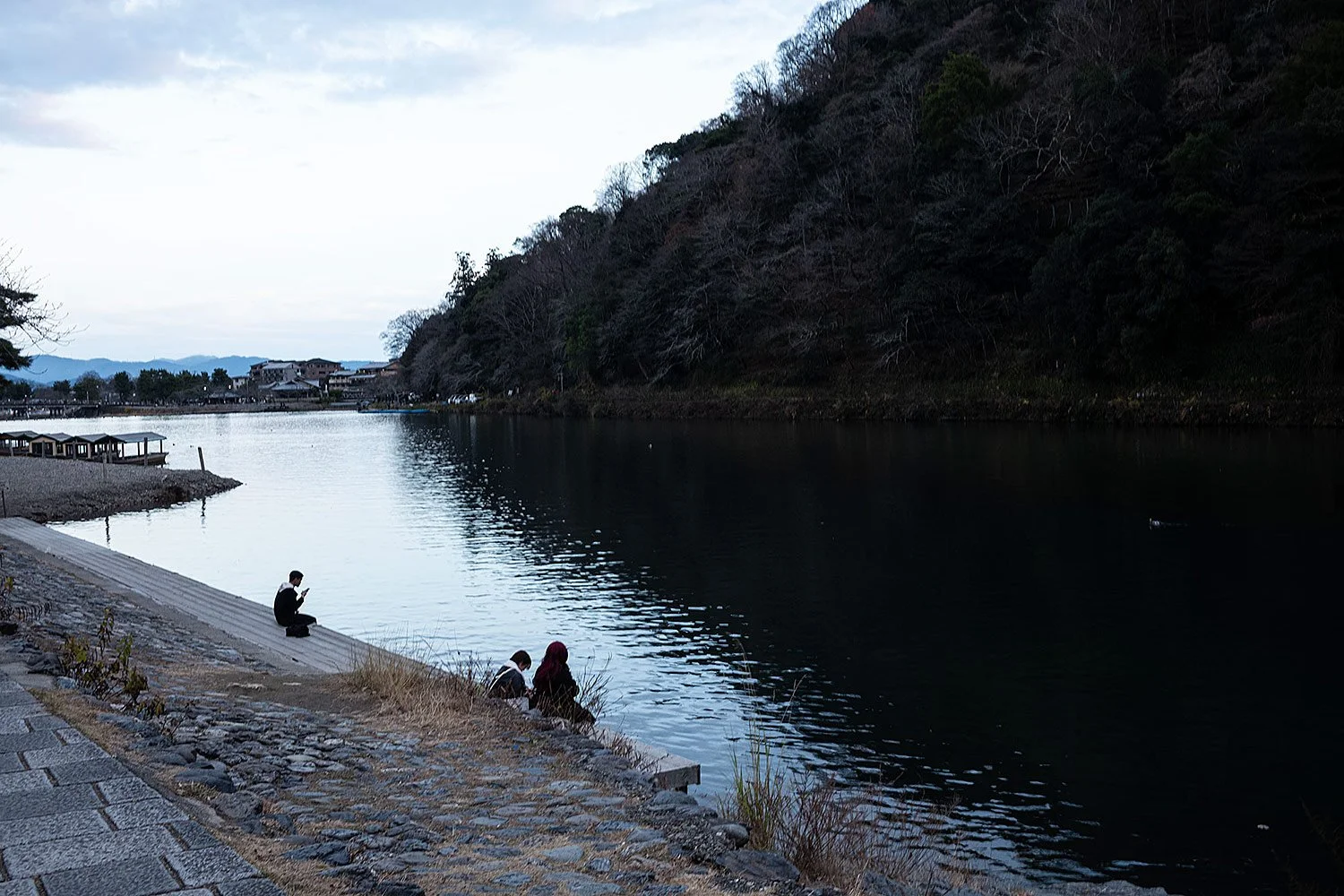
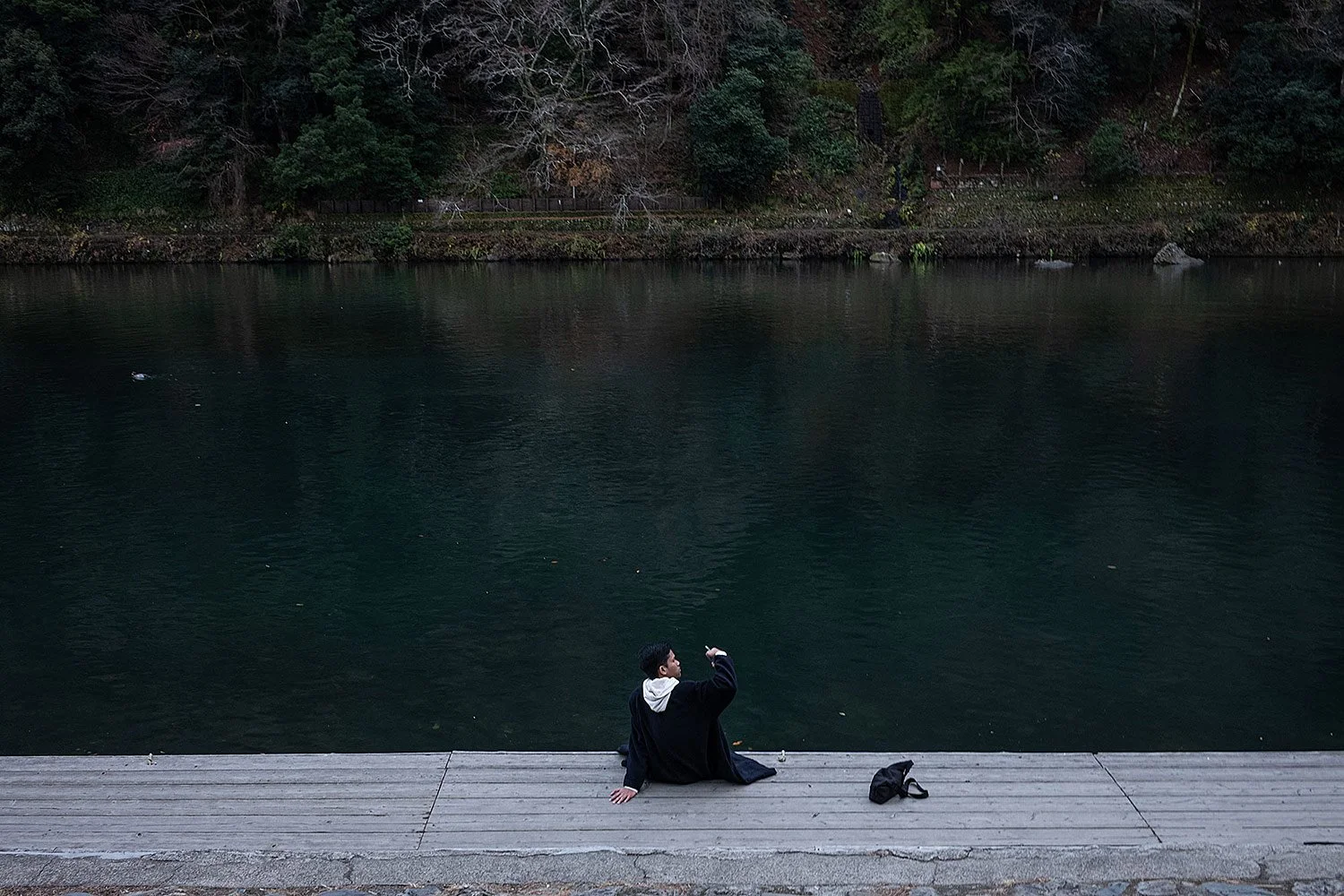
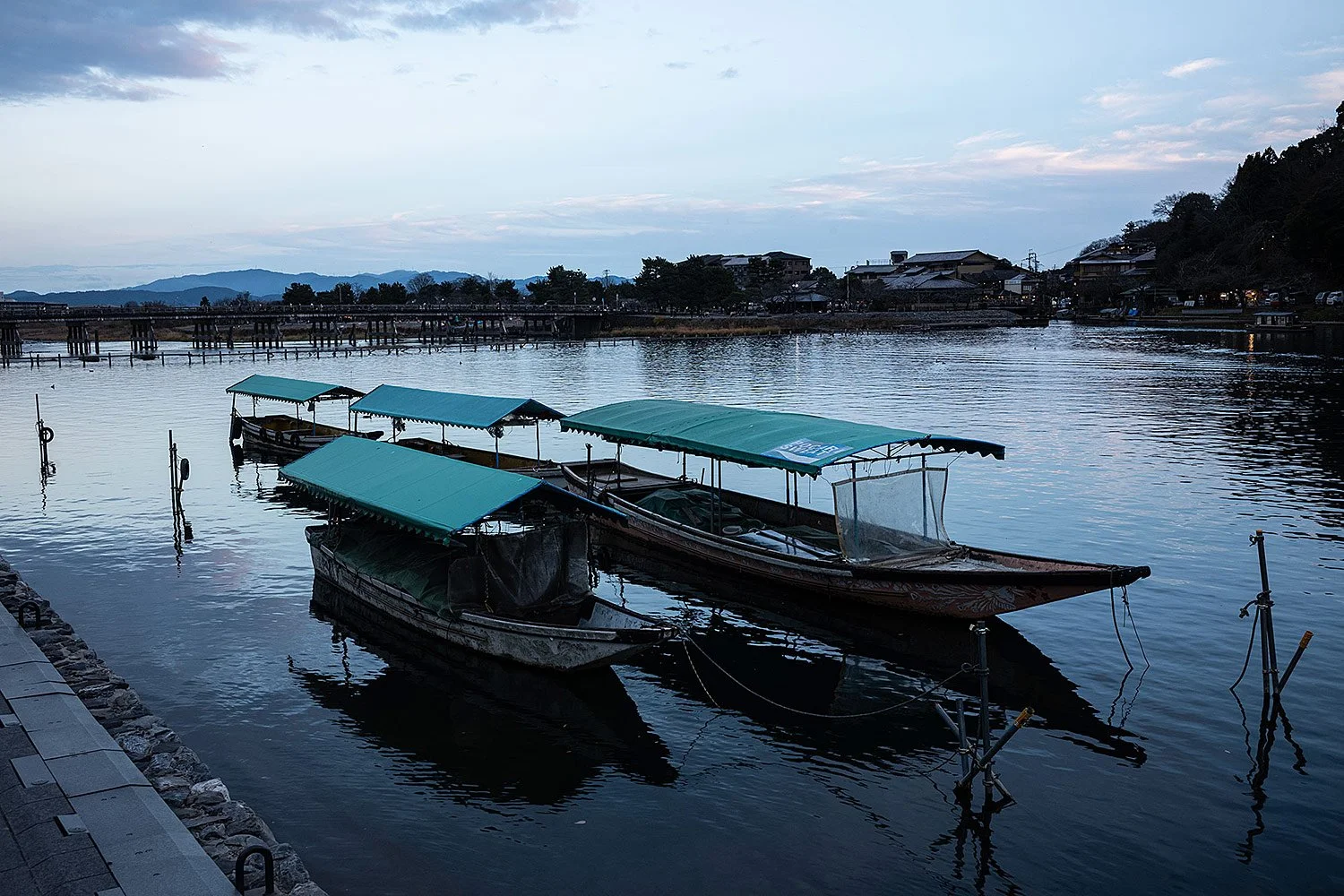
I walk back down the hill towards the Katsura River and the bus stop. The sun has just about set and the water reflects the dusky blues of the early evening skies.
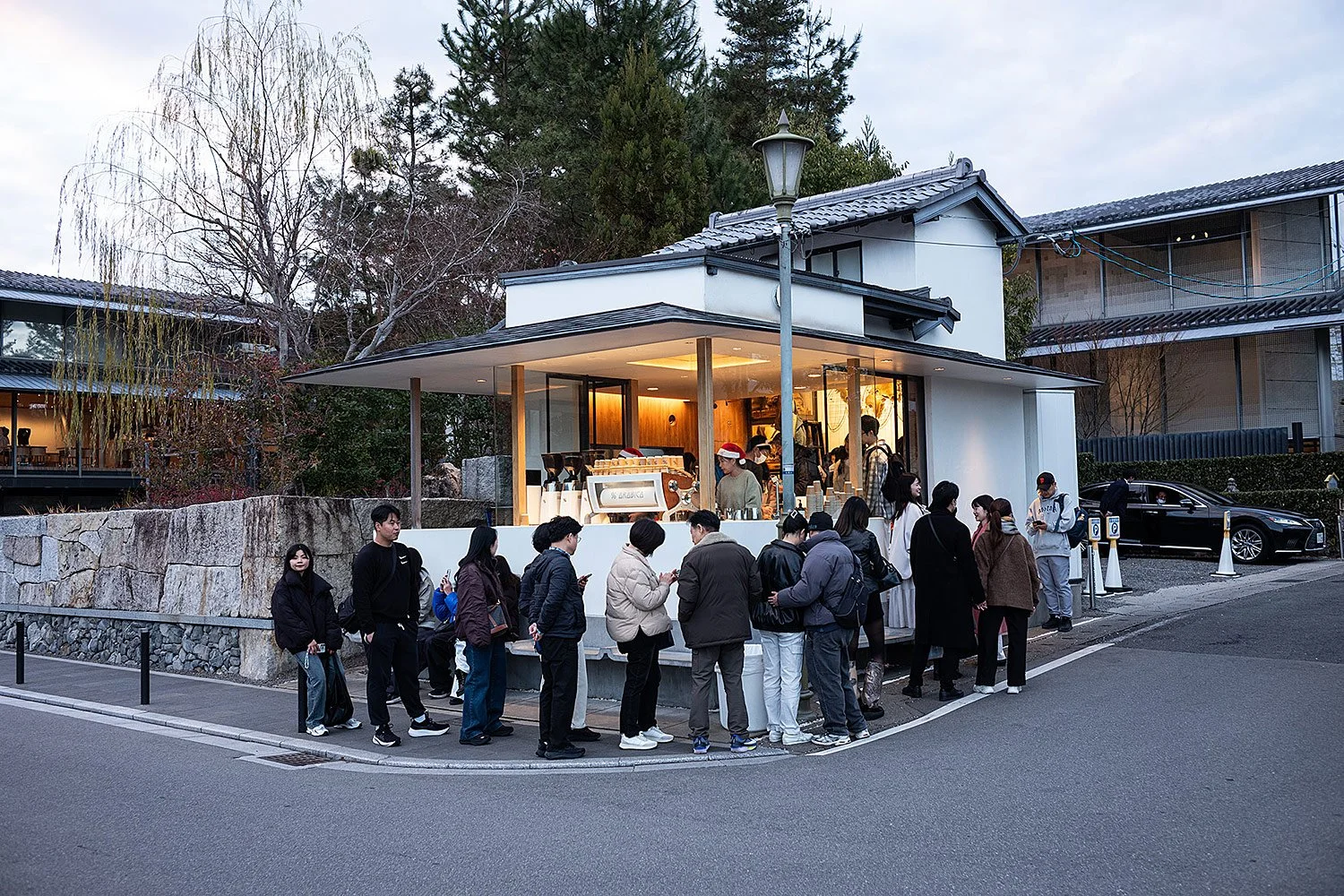
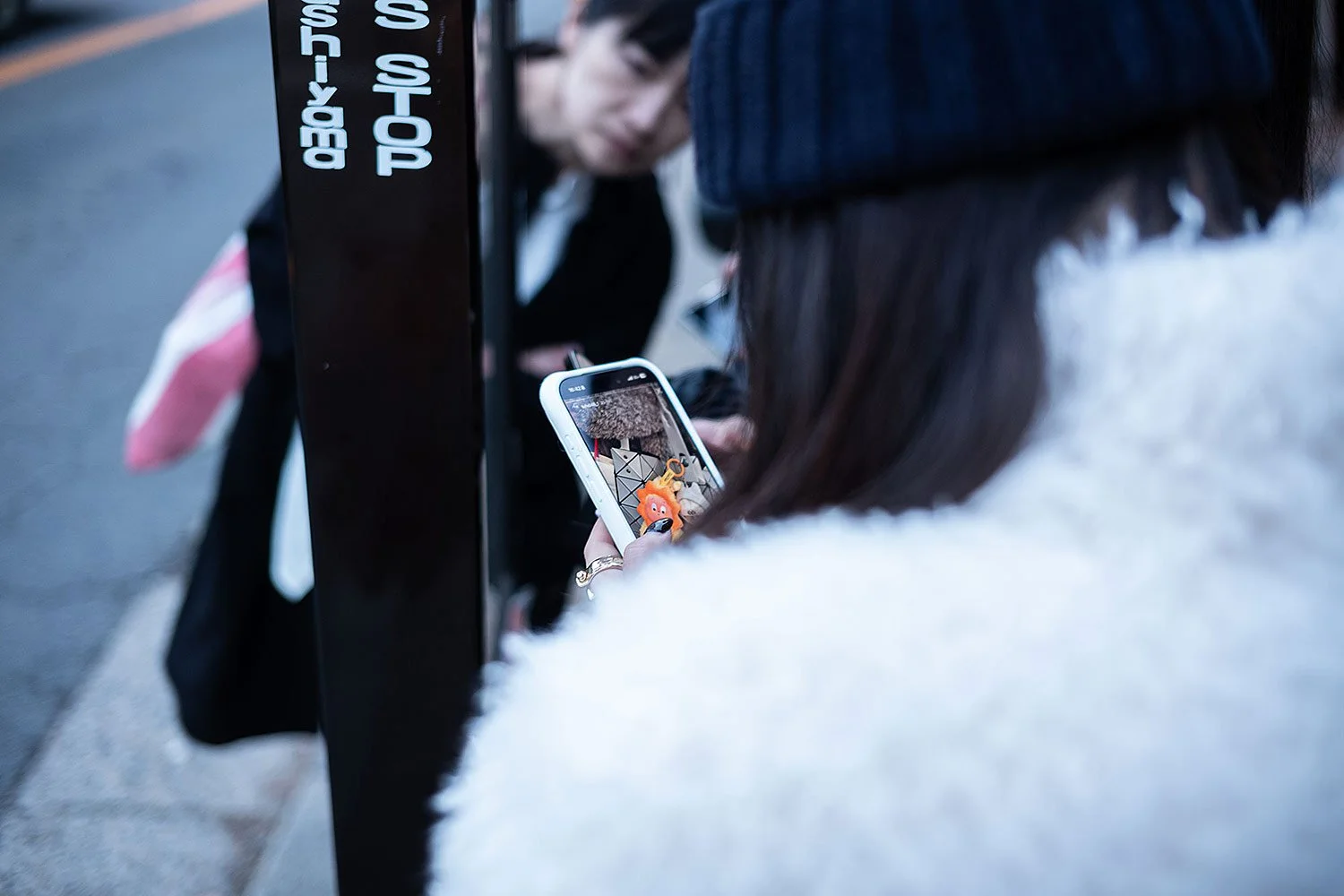
There’s a line in front of a coffee shop near the bus station and I’m tempted to join the queue to see what’s brought the crowds, but I have dinner reservations and I don’t want to miss a bus to find myself waiting an hour for the next one.
I needn’t have worried. I arrive ten minutes before the bus and soon I’m headed back towards the center of the city.
I watch our progress on my phone and as we approach the center of the city I decide to disembark and walk the rest of the way to my hotel. We’re near the western end of Nishiki Market, and I’ve been wanting to revisit it to chase the memory of a red bean ball covered with matcha cake that I had had on my first visit to Kyoto.
It was late November or early December and the barest hint of snow swirled in the air. Christmas carols played over loudspeakers and I remember buying a few of the balls and loving them.
The market is one long covered walk crammed with shops selling all sorts of food items. I’m tempted by so many things and almost wish I had not made dinner reservations so I could buy a little of this and a little of that to serve as a picnic when I got home. Happily, I find the store selling the red bean buns. It’s not where I remembered it being, but it’d be pretty amazing if I had had managed to remember it’s exact location after twenty years. I buy a bunch of them to take home, doing my best to refrain from eating one immediately.
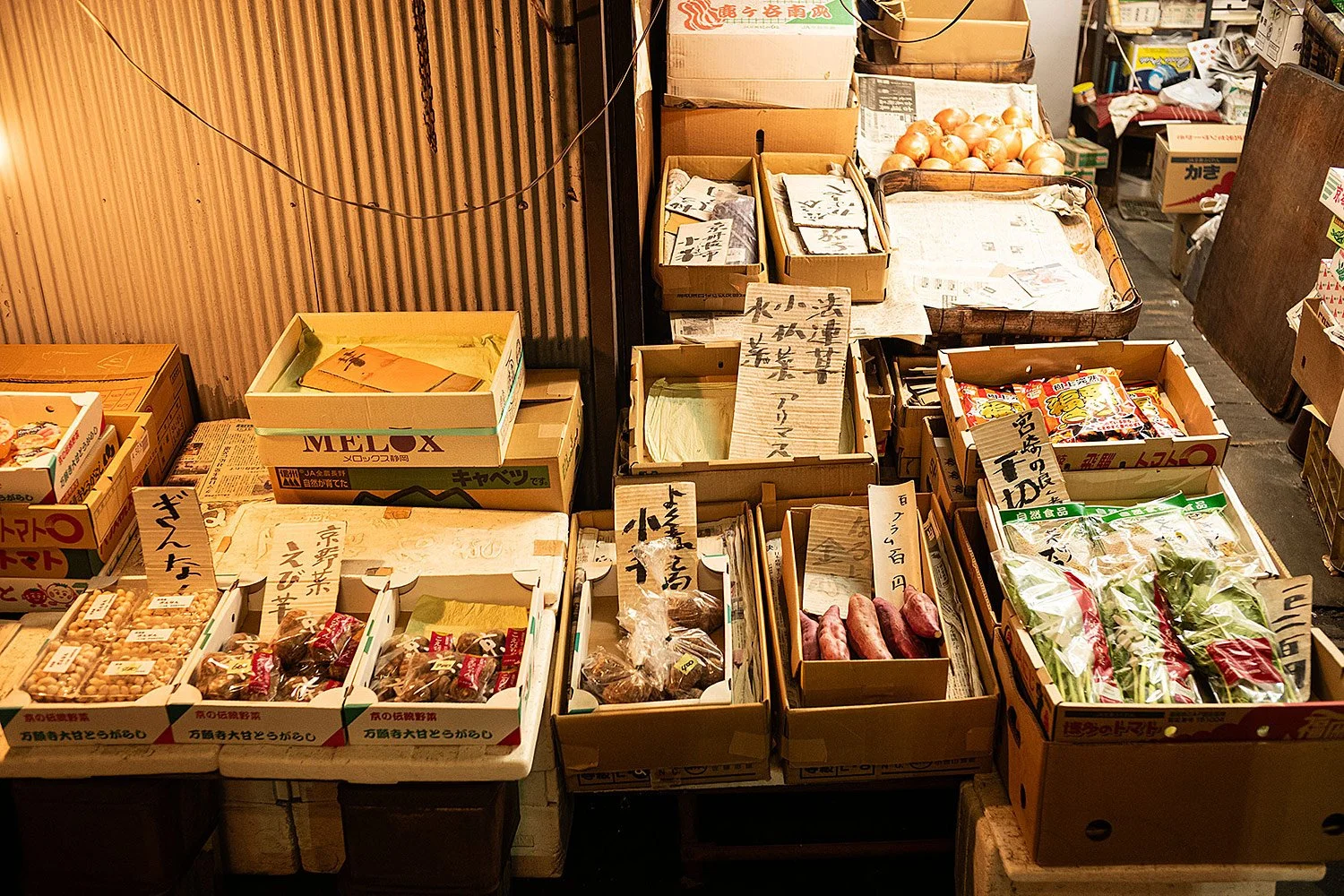
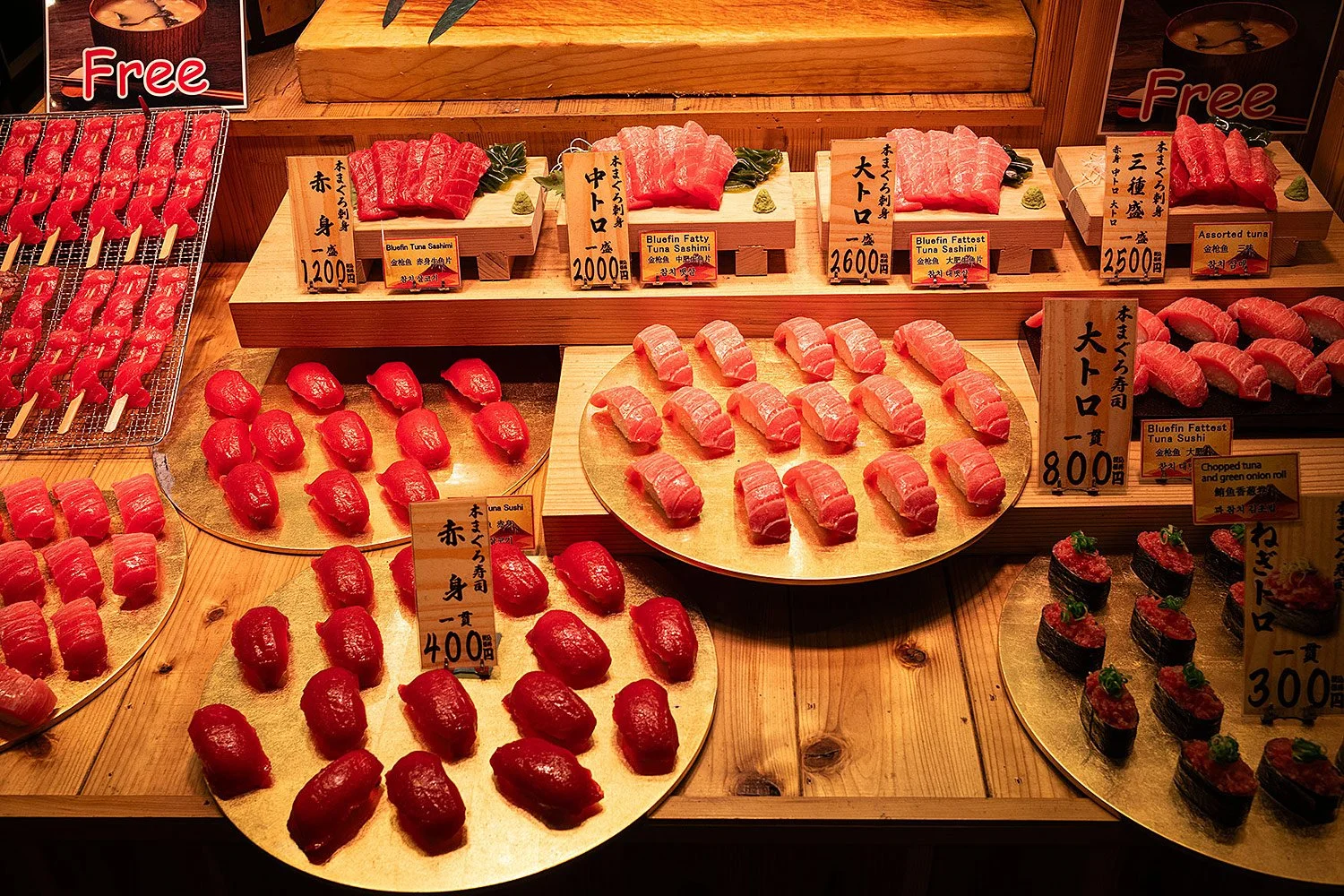
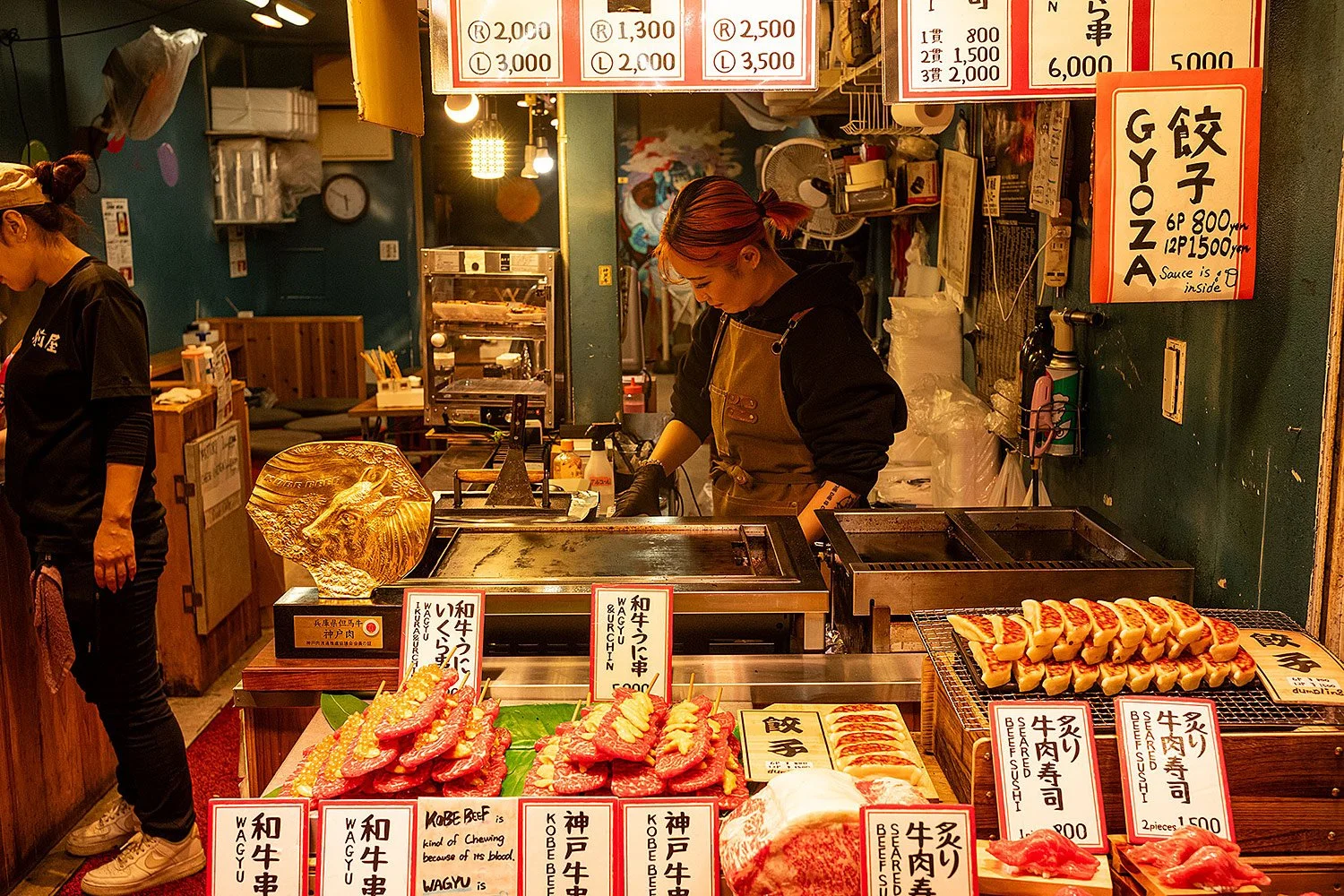
I shower and change and head to dinner. I’ve booked myself a table at Unagi Yondaime Kikukawa, a grilled eel restaurant in the northwestern corner of the Gion neighborhood next to mine.
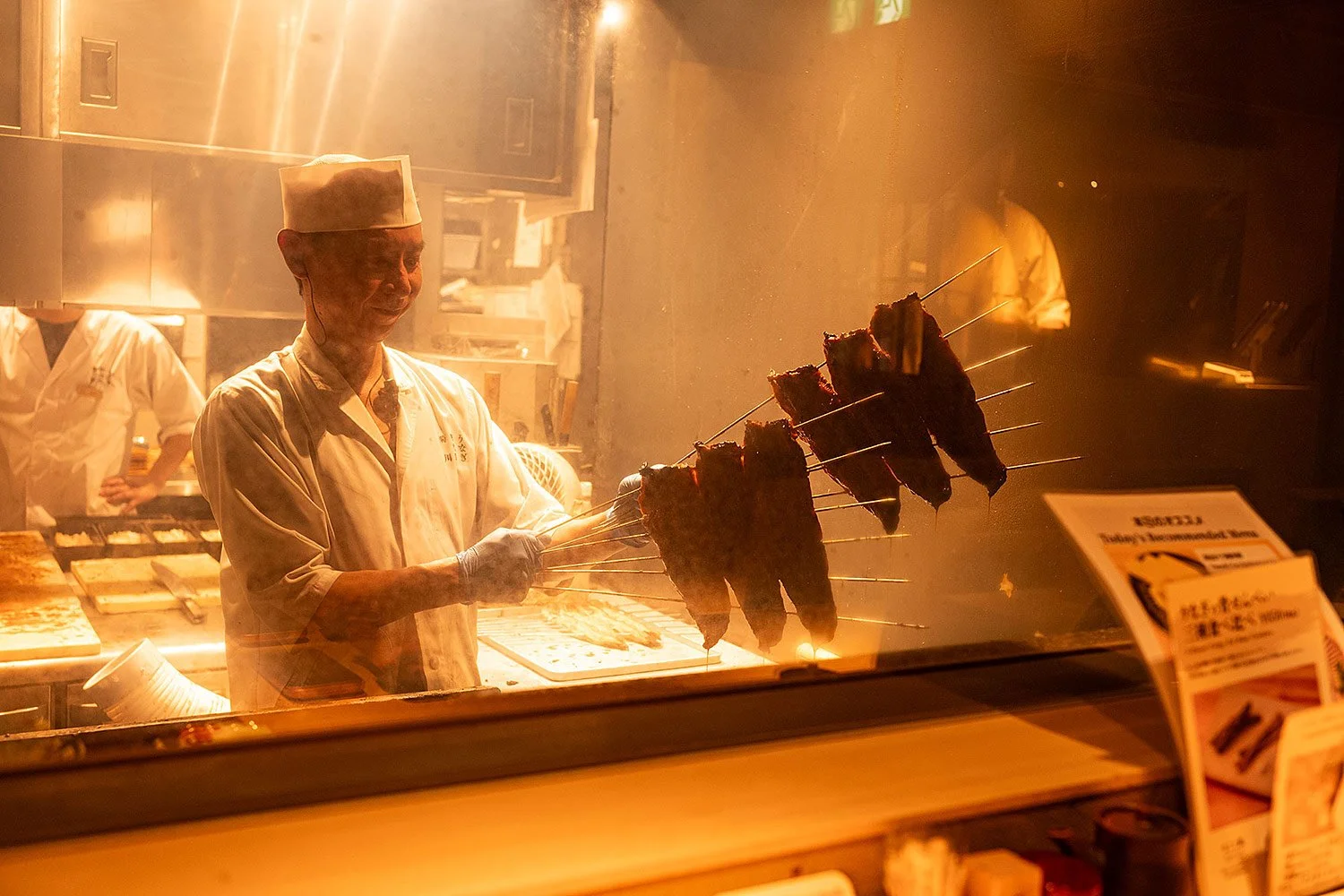
When I arrive they ask me where I’d like to sit and I choose to sit at the counter overlooking the kitchen. I watch as the chef grills multiple eels at a time, fanning out the skewers between his fingers. I watch as eel after eel being prepared, wondering when it’ll be mine.
The eel is delicious. Crisp on the outside like I’ve never had it before, tender on the inside. When I’m done I’m tempted to order another round, but I’m full and only want to relive the experience.
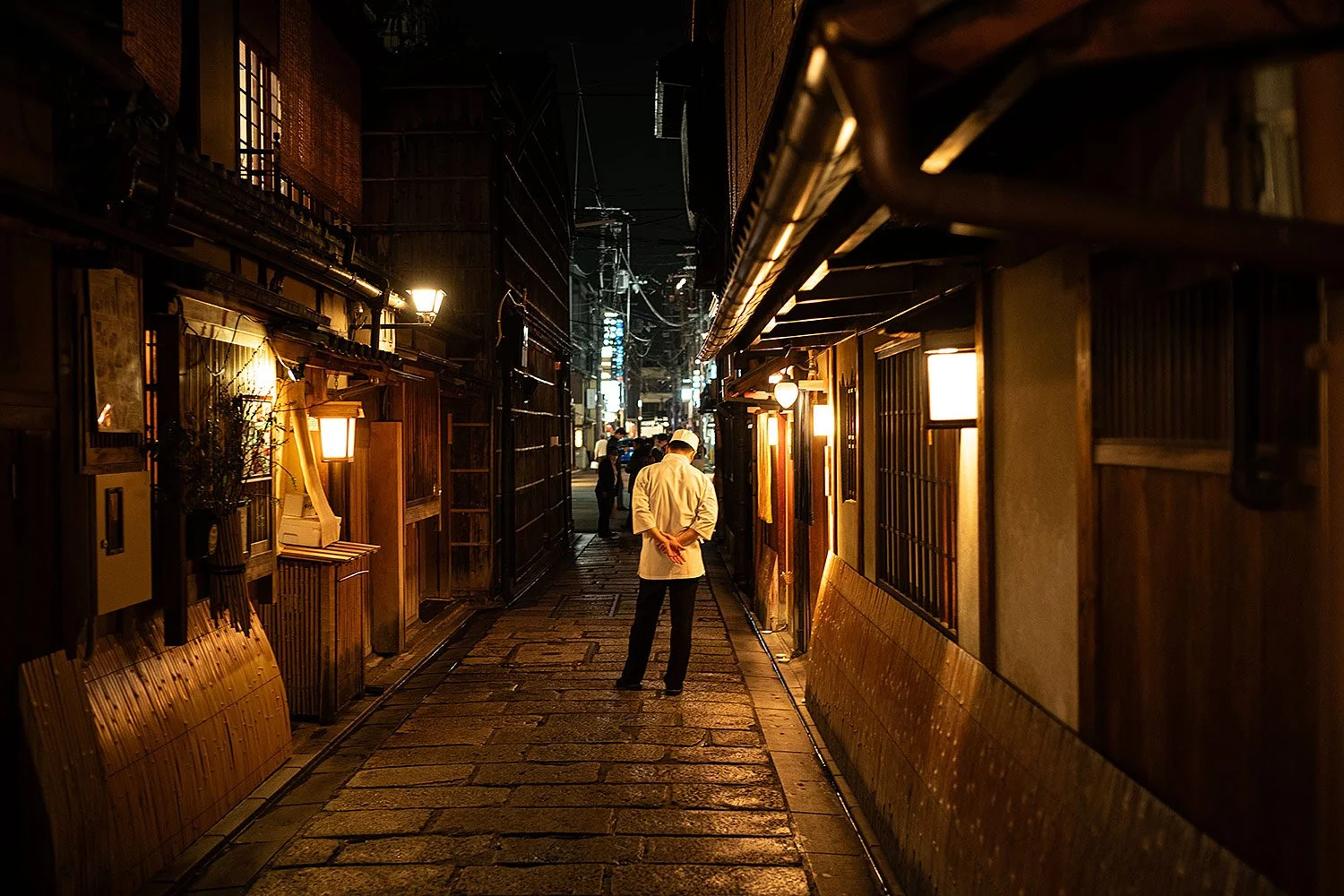
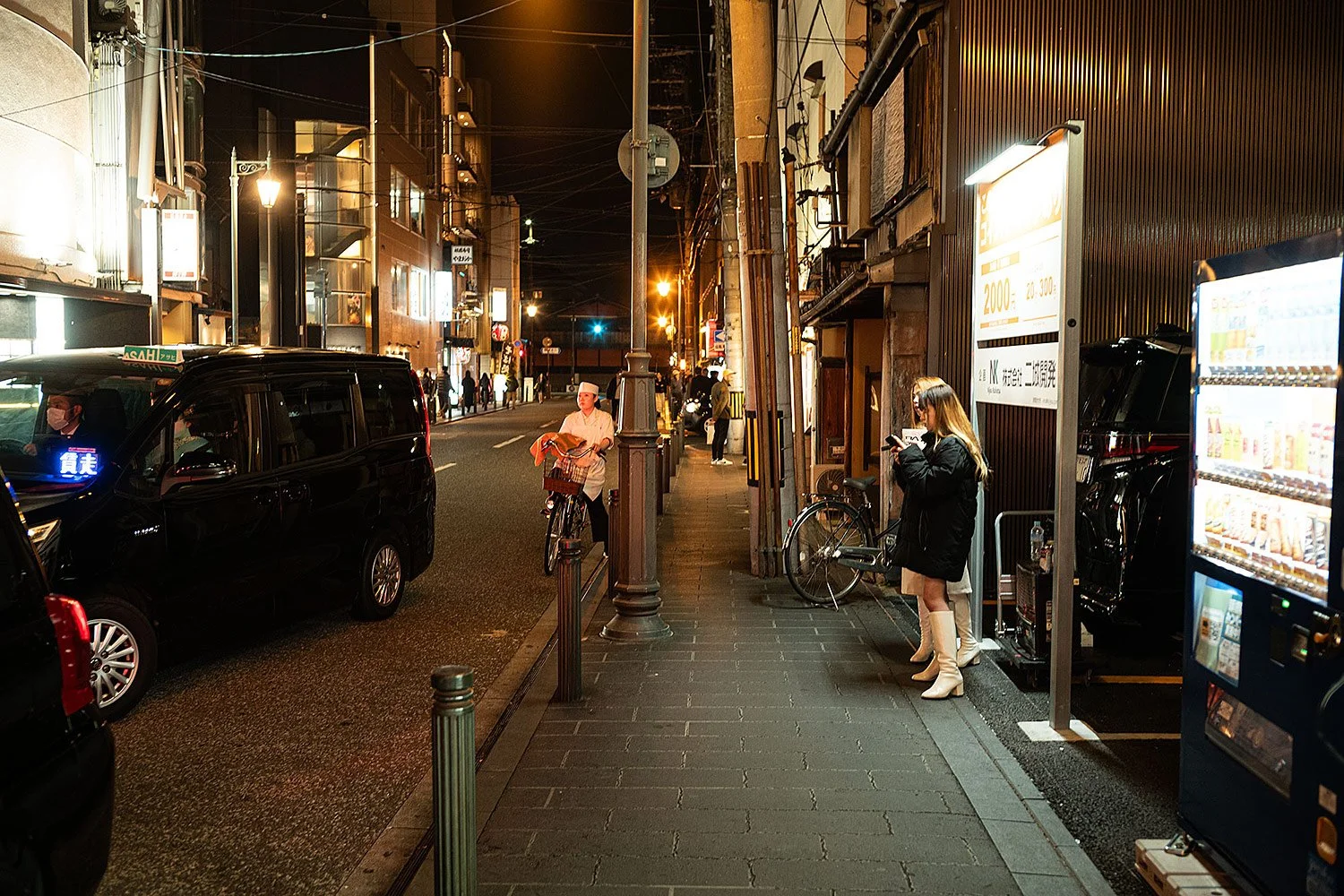
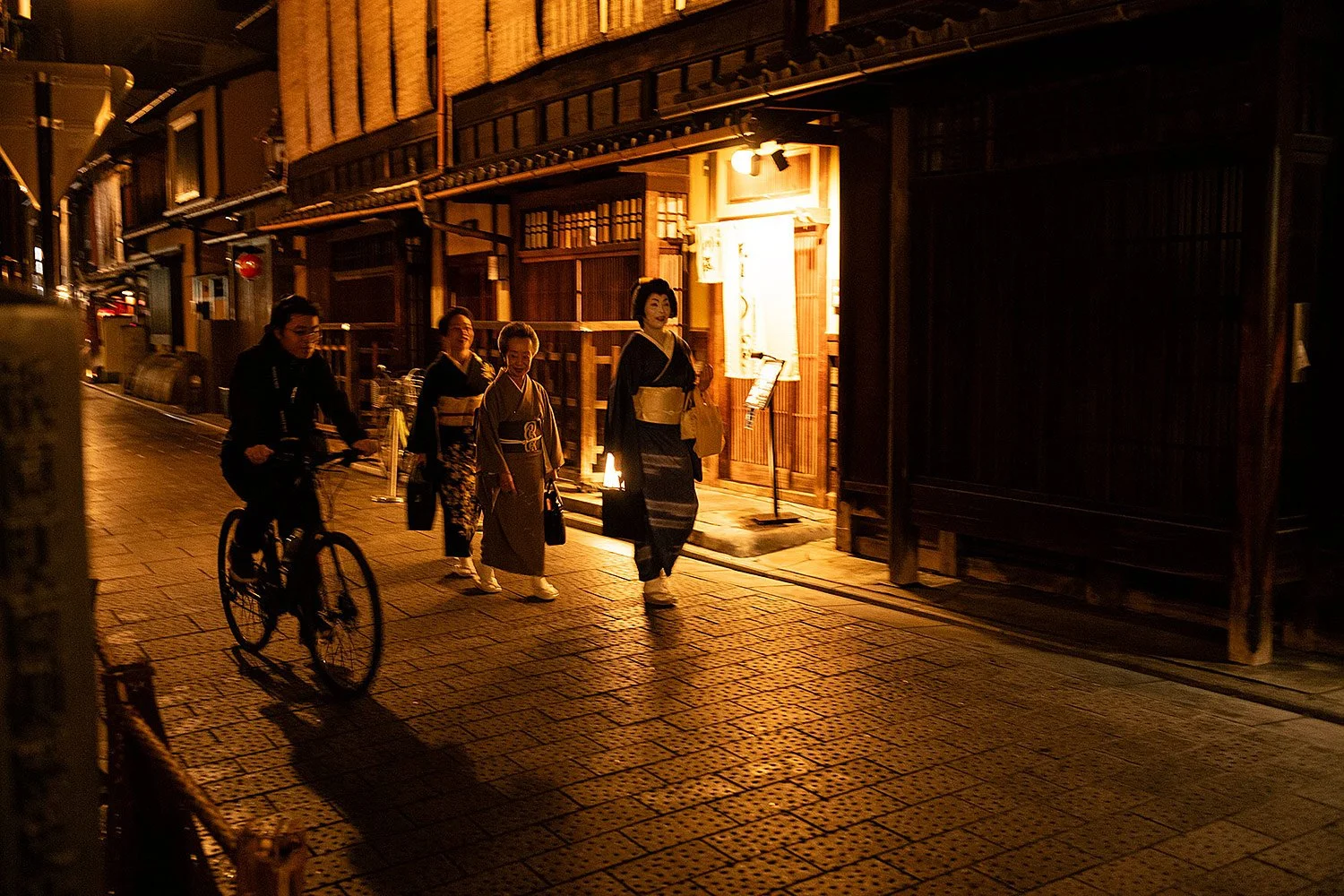
I walk home choosing narrower alleys and smaller streets. It’s a relatively quiet night and the people I encounter catch my eye as I walk. A chef taking a break outside his restaurant, a couple of women texting on their phones, a few people in traditional dress, their wooden shoes clacking against the stone paths.
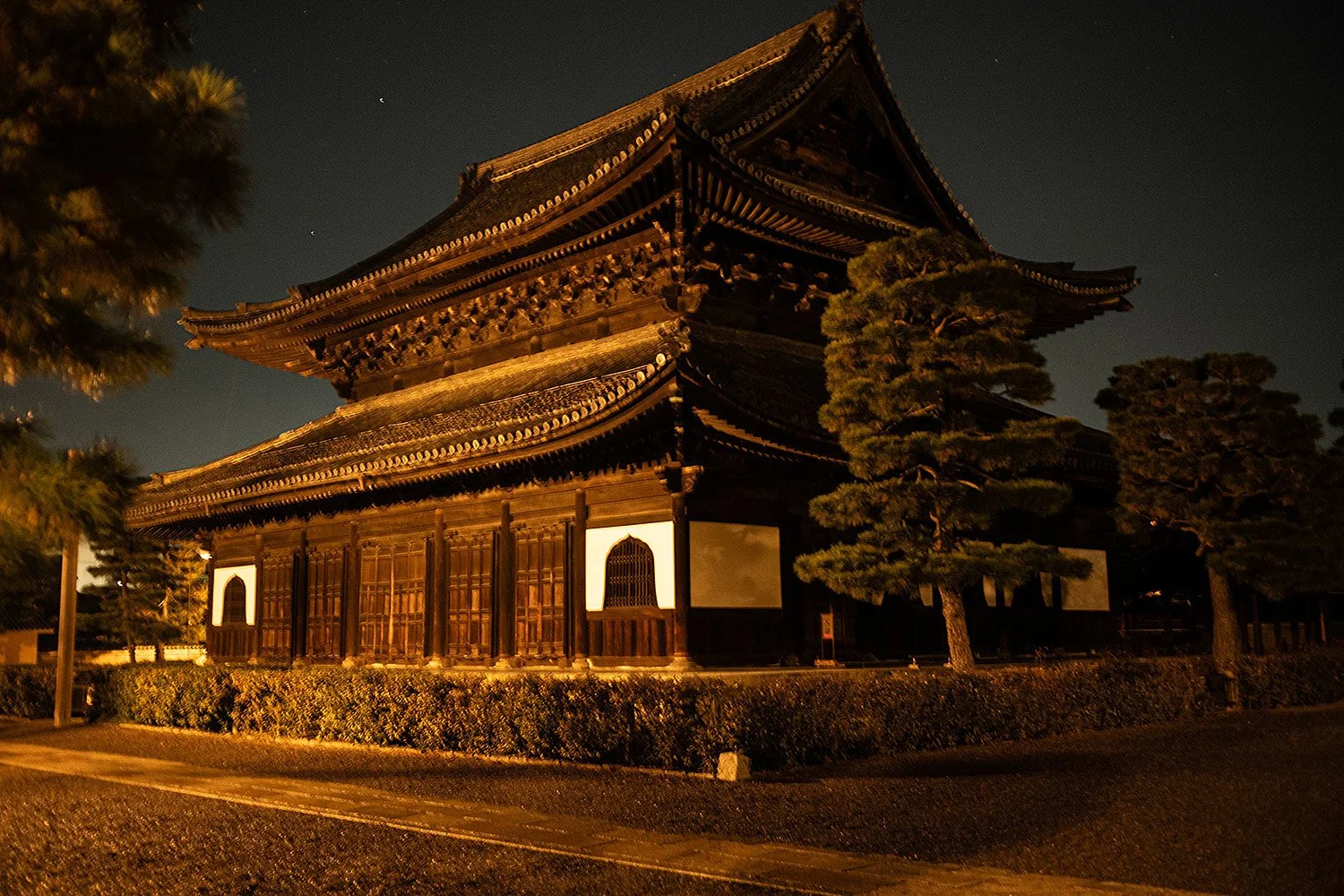
Passing Kennin-ji Temple, the Hatto (Lecture Hall) is beautifully lit up and I steady myself to try and take a photo of it without too much blur. It was one of the first temples I had passed when arriving in Kyoto, and while I’ve walked past it a few times now I have yet to visit it. Once again, the view from the outside is as close as I will get.
By the time I make it back home I’m happily sated and pleasantly fatigued. I pack before getting ready for bed. In the morning I’m taking the train to Hakone. I’ll be staying one night in a ryokan and taking the next day to do the Hakone loop before taking another train to Tokyo. I had only learned about the loop when researching activities between Kyoto and Tokyo and I’m excited to see more of this country, and to experience a traditional inn and onsen. I fall asleep with the memories of a beautiful day spent in Kyoto; the anticipation of what’s to come unable to overcome my weariness. 🇯🇵